
Banking employees across Russia could soon find themselves on the front lines of air defense under legislation passed by the nation’s lower parliamentary chamber.
The proposed law would require financial institutions to fund and install electronic interference equipment at their locations, while designated workers would be trained to destroy approaching unmanned aircraft, according to the measure that received final approval on Tuesday.
State news agency Interfax reported the legislation was initially introduced last August before being broadened in scope. The proposal now awaits consideration by the upper house Federation Council and must receive Russian President Vladimir Putin’s signature to become law.
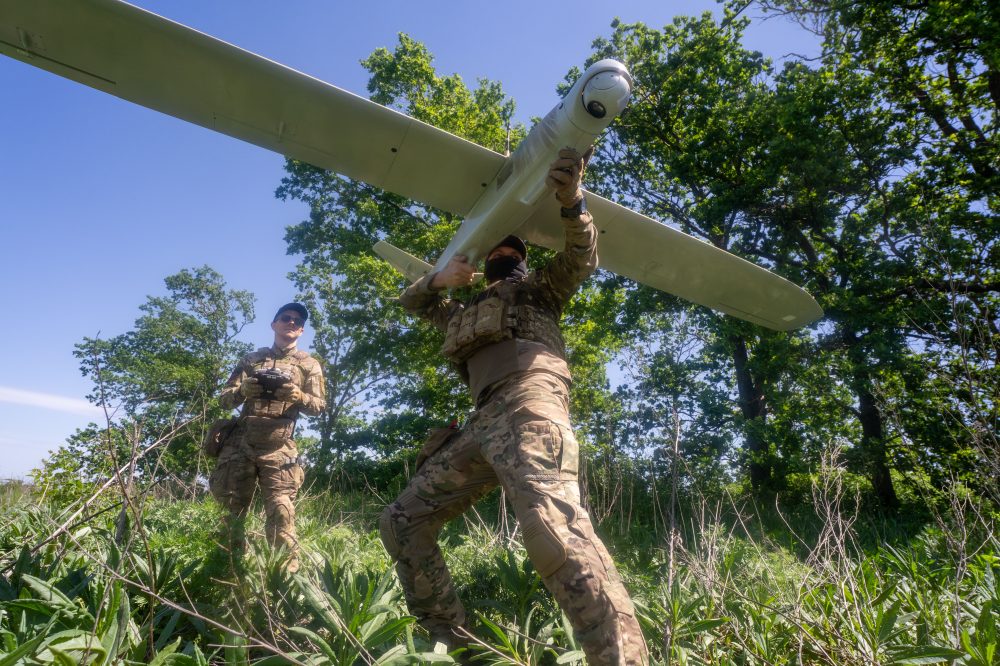
The nation faces mounting challenges defending its vast territory against an increasing number of strikes from advanced Ukrainian long-distance unmanned vehicles. Military experts and Western officials note that smaller aircraft are also hampering Russian forces along the 1,250-kilometer front and disrupting supply operations for the invading military.
Financial institutions have not emerged as primary targets for Ukrainian aircraft during the four years of conflict since Moscow’s invasion began.
The legislation provides limited specifics, creating numerous uncertainties about implementation. Installing equipment nationwide and providing staff training would demand extensive organizational resources.
The initiative would include Russia’s central bank and major institutions, including majority state-owned Sberbank. Given the widespread presence of banking facilities in communities throughout the country, incorporating them into air defense networks could significantly expand protective coverage.
The move could undermine Putin’s attempts to insulate Russian civilians from the conflict by directly involving ordinary citizens in warfare and increasing visibility of the invasion’s impact.
The Duma-approved legislation authorizes bank workers to disrupt or intercept aircraft control transmissions and destroy threatening unmanned aerial, underwater, and ground vehicles at their facilities without awaiting security service coordination.
“Jamming will be used to make it more difficult for (the drones) to target and attack the relevant targets,” Anatoly Aksakov, chairman of the State Duma Committee on Financial Markets, told Russian media outlet RBK. “Plus, we’ll also use means to shoot down these drones, thereby protecting the relevant targets.”
Individual organizations will decide which staff members receive authorization to implement these defensive measures.