
A multinational peacekeeping mission for Gaza announced with fanfare in February has yet to deploy a single soldier, as escalating regional conflicts and diplomatic complications derail the ambitious plan.
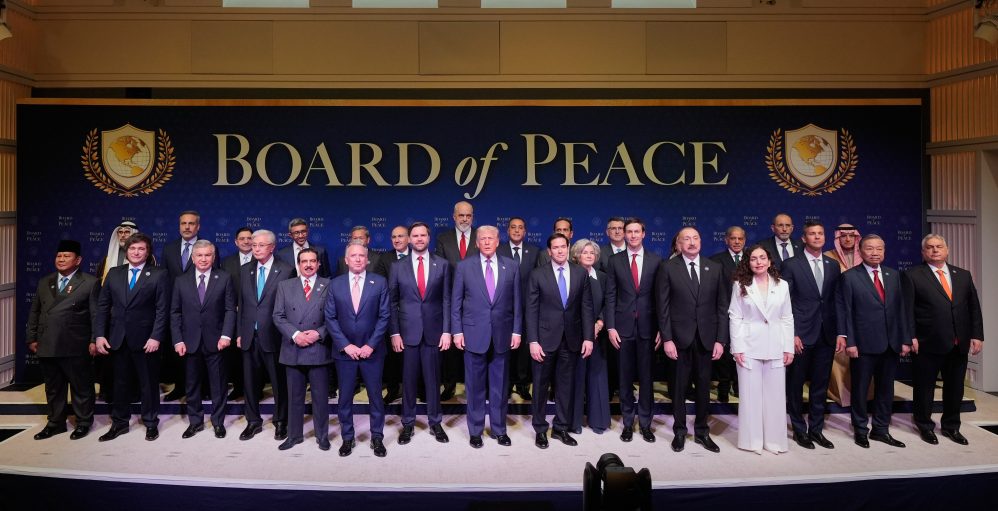
The International Stabilization Force for Gaza was unveiled during the first gathering of U.S. President Donald Trump’s Board of Peace, with an American general selected to oversee the proposed 20,000-person deployment promising to deliver “future prosperity and enduring peace” following the destructive Israel-Hamas conflict.
However, three months later, the designated commander remains without troops as all five nations that committed forces have failed to deliver meaningful deployments.
Peacekeeping efforts have encountered significant obstacles as Hamas continues to resist disarmament while Israel expands its territorial control and maintains military operations against what it identifies as militant positions, frequently resulting in civilian casualties.
The conflict with Iran has created additional challenges for Arab and Muslim nations considering cooperation with the United States and Israel, whom many regional populations perceive as hostile actors, while the accompanying global energy shortage has strained their available resources.
The most significant setback occurred approximately one week following the February 28 U.S.-Israeli strikes on Iran, when Indonesia indefinitely postponed its commitment to provide 8,000 personnel. The original deployment schedule called for 1,000 troops in April with the remaining forces arriving in June.
Indonesia’s contribution represented the largest portion of the multinational commitment, which also included pledges from Morocco, Kazakhstan, Kosovo and Albania. U.S. Maj. Gen. Jasper Jeffers, who addressed the Board of Peace gathering, was designated as the force commander.
Indonesian officials halted their participation due to what Defense Minister Sjafrie Sjamsoeddin described as insufficient commitment from a preoccupied Washington administration, stating “we have not yet received any implementation guidelines.”
“New dynamics have emerged,” he informed parliament. “Because the intensity of the conflict between U.S. and Iranian forces remains very high, the BoP has tended to be left behind. Since the BoP has been left behind, the ISF has also been left behind.”
Internal political considerations may have influenced Indonesia’s withdrawal, according to Muhammad Zulfikar Rakhmat, director of the Indonesia-Middle East/North Africa desk at Jakarta’s Center for Economic and Law Studies.
The Iran conflict faces overwhelming opposition in Indonesia, the world’s largest Muslim nation. Economic hardship from rising prices linked to the fighting has combined with widespread doubt about the Board of Peace initiative.
“If you talk to the people on the street, I don’t think they believe that the Board of Peace will actually help the people of Gaza,” Rakhmat explained. He noted additional concerns about deploying military personnel to the Middle East during domestic economic difficulties.
Indonesia suffered the loss of four peacekeepers serving with the United Nations mission in Lebanon during clashes between Israel and Iran-supported Hezbollah. This incident has further damaged public support for such international military commitments, he said.
The U.S. military’s Central Command refused to provide comments or make Jeffers available for interviews, directing all inquiries to the Board of Peace.
Board of Peace spokesman Brad Klapper similarly declined to discuss Indonesia’s withdrawal or the stabilization force’s prospects, instead referencing May 21 statements delivered at the U.N. by Nickolay Mladenov, a former Bulgarian defense minister appointed by Trump to direct the Board of Peace.
Mladenov indicated the international force could not commence operations without agreement and execution of the ceasefire’s second phase, requiring Hamas disarmament and the beginning of Israeli withdrawal. Israeli forces currently occupy approximately 60% of Gaza.
Mladenov has attributed the impasse to Hamas, declaring its disarmament “non-negotiable” and blocking advancement on other issues, including Israeli withdrawal and reconstruction efforts.
“You cannot build a future with armed groups running the streets, hiding in tunnels and stockpiling weapons,” Mladenov stated in Jerusalem this month. “You cannot deliver reconstruction with militias on every corner.”
Hamas maintains Israel has repeatedly breached the ceasefire, preventing further implementation, and has criticized Mladenov for favoring Israel.
Israeli military actions have resulted in more than 880 Palestinian deaths since the ceasefire began, according to local health authorities. Israel claims these operations responded to truce violations.
Hamas is also demanding Israeli withdrawal from territories captured after the ceasefire’s start, according to an Egyptian official familiar with the negotiations, who spoke anonymously to discuss private discussions. Egypt has traditionally mediated with Hamas.
Multiple countries that promised forces have declined to deploy troops without an agreement on Hamas disarmament, the official said.
Kazakhstan has limited its stabilization force support to “the humanitarian component,” including medical units with a field hospital. Its Foreign Ministry did not respond to requests for comment.
Albania’s Defense Ministry also refused to discuss its troop commitment, describing it as a “dynamic and ongoing process.”
Earlier this month, its chief of staff, Lt. Gen. Arben Kingji, informed reporters that while the military had “participated in reconnaissance activities,” no troops had been deployed. He said only a small number would be sent as part of the stabilization force headquarters, without specifying numbers, adding that additional contributions remained under consideration.
Kosovo, expected to contribute 20 troops, announced in April it was in the “final phase of preparations.” The Defense Ministry did not respond to requests for updates.
Morocco’s Foreign Ministry also failed to reply. At the Board of Peace inaugural meeting, Foreign Minister Nasser Bourita said it would deploy “high-level military officers to the joint military command of the ISF.”
Despite Indonesia’s delays, Rakhmat suggested it was premature to eliminate eventual participation in the stabilization force.
President Prabowo Subianto is a former army general eager to elevate Indonesia’s international standing and avoid damaging economic relationships with the U.S., Rakhmat said.
“Prabowo wants to strengthen ties to Washington and sign different agreements with the U.S., so to completely withdraw and completely cancel the plan, I don’t think it’s on the table,” he said.