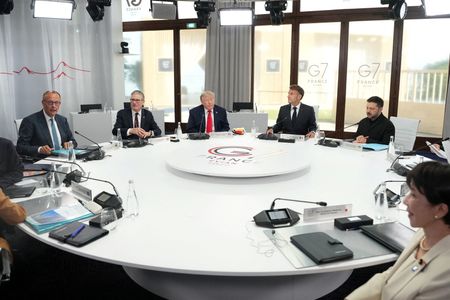

EVIAN-LES-BAINS, France — World leaders meeting at the G7 summit in France are working toward a joint statement on critical minerals that could include steps to lessen the West’s dependence on China and protect investors from retaliatory trade measures and price undercutting, according to diplomats familiar with the discussions.
The final day of the June 15-17 summit in Evian-les-Bains features discussions on securing mineral supply chains — a top priority of France’s G7 presidency — along with efforts to correct what leaders see as dangerous imbalances in the global economy.
Alarm over Western dependence on China intensified last year when Beijing placed export restrictions on rare earth permanent magnets, nearly halting operations in some industries. The episode exposed just how deeply the energy, defense, and technology sectors rely on materials largely controlled by China.
“We are negotiating texts that are significant on critical minerals and, as a consequence, on economic sovereignty,” a French presidency official said ahead of the summit.
Options that have been on the table in recent months include price supports, market standards, government subsidies, guaranteed purchase agreements, and ways to attract more private investment into mineral supply chains outside of China. Analysts expect any announcements from the summit to represent early-stage commitments rather than sweeping solutions.
China has been steadily tightening its grip on exports of niche materials and battery metals. In addition to rare earth restrictions, Beijing has also limited American companies’ access to tungsten and antimony, among other materials.
Western nations are scrambling to secure supply agreements with mines and build their own processing and recycling capacity. However, experts warn it could take years to meaningfully challenge China’s dominant position — one that was built up over several decades.
The United States proposed a critical minerals trading bloc in early 2026, but disagreements remain among participating countries over how such a group would function, particularly given the White House’s “America First” policy priorities.
Beyond minerals, G7 leaders are also taking aim at what France describes as “predatory competition” from China. France has characterized the core imbalance this way: China overproduces, the United States overconsumes, and Europe underinvests.
European officials are increasingly worried about China’s record trade surplus and its expansion into higher-value industries — a trend analysts are calling a “second China shock,” recalling China’s earlier takeover of low-value manufacturing in the 2000s.
French President Emmanuel Macron made a last-minute push to engage China before the summit in hopes of finding common ground. Beijing has pushed back against European Union claims of unfair subsidies and has repeatedly promised “strong” countermeasures against the EU’s proposed “Buy European” policy and updated technology sovereignty rules.
EU leaders are scheduled to hold separate discussions Thursday in Brussels on using trade defense tools more aggressively against a surge of Chinese imports. Last year, the EU posted its largest-ever trade deficit with China, topping €360 billion.
“This is, of course, not sustainable. As you know, in Europe, our strategy is very clear: de-risk not decouple,” European Commission President Ursula von der Leyen told reporters at the opening of the summit.
G7 leaders are also set to discuss artificial intelligence over a Wednesday lunch, covering topics such as the legal liability of AI bots and agents, and how AI systems present information as true or false. OpenAI founder Sam Altman and Anthropic CEO Dario Amodei are expected to take part in the lunch.