
Japan’s central bank took another significant step toward normalizing its monetary policy on Tuesday, raising interest rates to their highest level in 31 years as it works to bring inflation under control following energy market disruptions caused by the Iran war.
The rate increase — the first since December — puts the Bank of Japan in step with other major central banks around the world, including the European Central Bank, which have also been tightening policy to fight inflation.
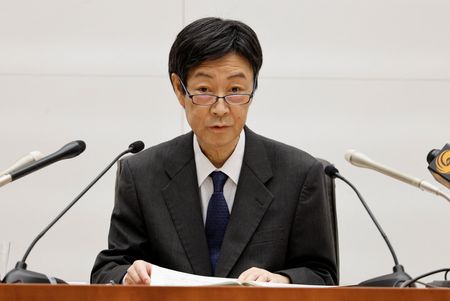
Deputy Governor Shinichi Uchida spoke with reporters following the bank’s policy meeting, which was conducted in Japanese. The following are excerpts from his remarks as translated by Reuters.
On oil supply uncertainty despite U.S.-Iran progress:
“Compared with our previous meeting in April, the U.S. and Iran have signed a memorandum. That is a welcome move. Having said that, there is uncertainty on the pace of improvement in distribution (of oil).”
On the risk of inflation running higher than expected:
“Compared with the previous meeting, the risk of a sharp deterioration in the economy has diminished. On the other hand, price rises are broadening, and there is a risk that underlying inflation may deviate from our target.”
“With underlying inflation approaching 2%, it’s important to ensure we achieve our target stably.”
On the relationship between wages and prices:
“Wage growth is moving roughly in line with levels consistent with our price target. The mechanism by which wages and prices rise in tandem is becoming embedded.”
On how far rates are from a neutral level:
“Even our latest estimates are made in a very wide band, which makes it hard for us to use this in setting policy. We’ll have to gauge the neutral level by looking at how our rate hikes affect Japan’s financial environment.”
On the weak yen:
“We’re always watching currency moves closely. We don’t directly target exchange rates in guiding monetary policy. But we engage in monetary policy discussions on the view that currency moves have a crucial impact on economic and price developments. With companies’ wage- and price-setting behaviour becoming more active, the pass-through (of the weak yen) may have a bigger impact on underlying inflation.”
On coordination with the Japanese government:
“Today’s decision was based on the need to address broadening price rises and the risk of underlying inflation deviating from our target. This would help Japan’s economy achieve sustainable growth and thus is consistent with what the government is doing.”