
LONDON — The United Kingdom announced a broad new set of sanctions on Tuesday, targeting the banking division of Russian technology company Yandex, two additional financial institutions, dozens of ships accused of transporting Russian oil and gas, and a secretive network used to obtain military equipment.
The measures are intended to increase pressure on the financial systems and supply chains that support Russia’s ongoing military campaign in Ukraine. Russia’s major insurance provider, Rosgosstrakh, was also among those hit by the new restrictions.
British Prime Minister Keir Starmer, speaking while attending a Group of Seven summit in France, said the actions were aimed at cutting off critical support for Russia’s wartime economy. “These sanctions target the vessels, the money and the actors propping up Russia’s war economy, and in turn, threatening European security,” he stated.
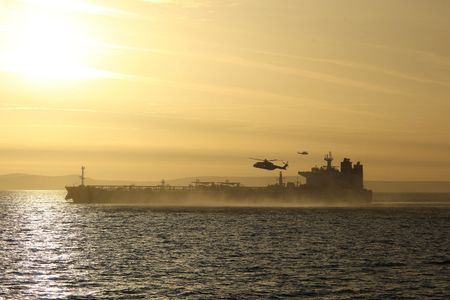
The sanctions cover more than 20 oil tankers along with several ships designed to carry liquefied natural gas. Britain noted it was the first time any G7 nation had sanctioned vessels connected to Russia’s Arctic LNG 2 energy project.
Neither the Russian Embassy in London nor Yandex offered any immediate response to requests for comment.
Russia’s so-called “shadow fleet” consists of vessels registered in other countries — many of them older ships — that are used to move Russian energy exports while sidestepping Western sanctions. Britain has now sanctioned nearly 600 such ships. Over the weekend, British special forces boarded and intercepted one of those vessels, an oil tanker, in the English Channel.
The new round of sanctions also takes aim at what British officials described as a hidden procurement network built around a company called Neptune. According to Britain, Neptune functioned as a front for Russia’s GRU military intelligence service, helping it obtain Western goods and technology for military use.
The package identifies specific individuals believed to be GRU officers, as well as companies operating both inside Russia and internationally that are accused of supplying defense-related technology.
In a separate announcement, Britain said it would provide £210 million — roughly $280 million — in financing to bolster Ukraine’s energy infrastructure. That funding includes support for a loan to supply enriched uranium to Ukraine’s state-run nuclear power company, Energoatom.