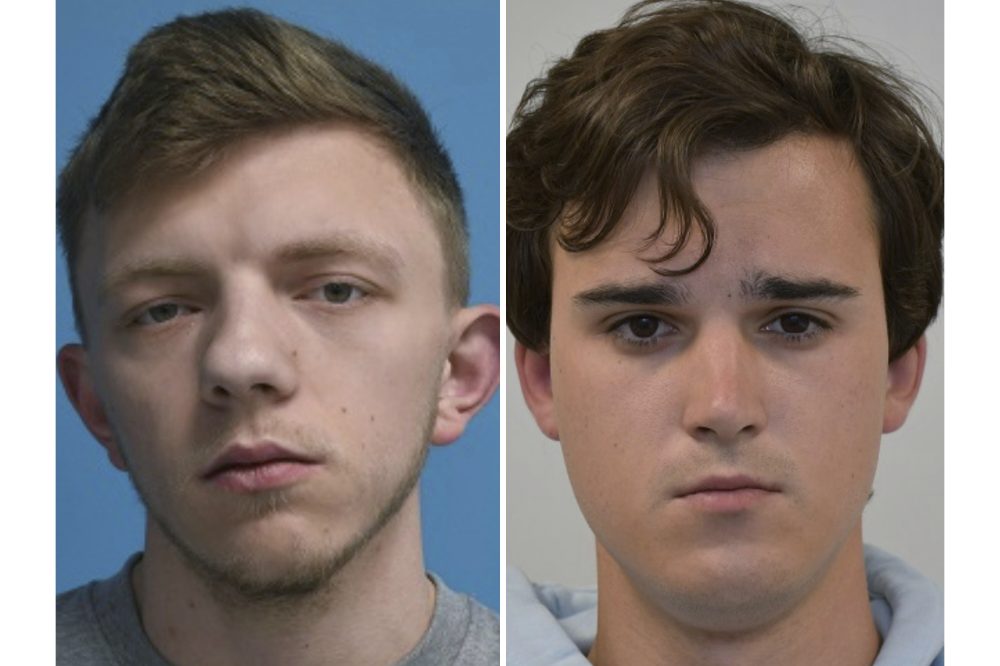

LONDON — A young Ukrainian man has been convicted of carrying out a series of arson attacks targeting a vehicle and two London homes connected to British Prime Minister Keir Starmer, but the shadowy online figure who directed the operation — known only as “El Money” — has avoided any public accountability.
Roman Lavrynovych, who was 21 at the time of the attacks, was found guilty Monday along with an accomplice. The fires occurred over several days in May 2025, according to evidence presented during his six-week trial.
El Money recruited Lavrynovych through the internet, providing step-by-step directions that included the addresses of the targets and instructions on how to combine flammable materials purchased from a hardware store. The handler communicated primarily through the messaging app Telegram.
The attacks did not result in serious injuries or extensive property damage, but Starmer’s sister-in-law, Judith Alexander, said she was left “struggling to breathe” after smoke filled the house during the third attack. She and her family were present at the residence — a home Starmer had lived in before taking office as prime minister.
El Money appeared frustrated that the attacks were not generating media coverage. “It’s all dead quiet so far — not a single article or announcement about the incident on this street,” he wrote to Lavrynovych after one of the fires.
What El Money did not know was that British counterterrorism police were already on the case.
The plot bears the hallmarks of Russian state-sponsored sabotage, according to retired Commander Dominic Murphy, who spent two decades investigating such activities and oversaw the early stages of this investigation before stepping down in March. However, he acknowledged the difficulty of proving state involvement in a courtroom setting.
“We need to keep calling Russia out and we need to ensure our society is as resilient as it possibly can be,” Murphy said, urging a broader public discussion about threats from Moscow, including to critical infrastructure.
Evidence presented at trial showed that El Money speaks Russian and is “likely to be in Russia,” Murphy said, and that the methods used closely mirror those associated with Russian intelligence operations in the United Kingdom. Such operations, he noted, typically require “very senior sign-off.”
Despite those assessments, prosecutors did not file charges under Britain’s National Security Act — legislation passed in 2023 specifically to address state-level threats — meaning no evidence of a broader conspiracy linked to Moscow was placed before the jury.
Helen Flanagan, the current head of counterterrorism police, stated that there is “no evidence to suggest that this was a state-backed threat and target on the prime minister” — referring specifically to police-gathered evidence rather than classified intelligence.
The presiding judge, Justice Neil Garnham, described El Money as the “central figure in the case but a man or group about whom we know very little,” and instructed jurors not to speculate about the handler’s identity.
Before his arrest, Lavrynovych had been paid smaller amounts to put up anti-Islam posters and graffiti in Muslim neighborhoods of London — an apparent effort to stir up social unrest. He told the court he was offered more money to carry out the fires and was threatened when he hesitated. His attorney, James Scobie, described him as a “vulnerable, ignorant” pawn manipulated by a sophisticated operator.
“It must be a bit of a frustration that no part of this case has really looked into the devil in the background,” Scobie said. Without naming Russia directly, he argued the attacks were aimed at Starmer because of his backing for Ukraine, calling them an assault on “the very institutions and fabric of this country.”
Just before police moved in to arrest Lavrynovych, El Money sent him one final message: “Don’t worry, I won’t set you up.” Lavrynovych never received the promised payment.
Scobie told the court there is “only one winner” in the case — “the anonymous devil who manipulated, used and won.”
The U.K. Home Office called the fires an “abhorrent attack” and said those responsible have been brought to justice, but did not respond to questions about whether the British government holds Russia responsible.
European officials have said Moscow is running a broad sabotage campaign against nations that support Ukraine. The Associated Press has documented at least 192 such incidents across Europe since Russia’s 2022 invasion, ranging from arson and cyberattacks to attempted killings.
When the AP asked Russian President Vladimir Putin in June whether Russia is conducting a covert war against Western nations, he deflected the question. “What are the specific facts?” he said. “What has been proven?”
Murphy, who previously led the investigation into the 2018 poisoning of former Russian military intelligence officer Sergei Skripal — an attack the U.K. attributed to Moscow — noted that Russia has since shifted its approach toward recruiting local individuals to carry out attacks on its behalf.