
WARSAW, Poland — Germany and Poland were scheduled to put pen to paper on a new defense agreement Wednesday, setting aside a long and complicated shared history to deepen military cooperation across Europe at a time of heightened tensions with Russia and growing questions about how committed the United States will remain to European security.
The relationship between the two neighboring nations has grown increasingly practical in recent years, shaped by Russia’s full-scale invasion of Ukraine in 2022 and the rise of a liberal government in Poland in 2023.
As the United States considers a partial pullback of its military forces from Europe, Poland is pushing for major European allies to take on a bigger role in defending the continent’s eastern edge. Meanwhile, Germany is looking for partners as it works to rebuild its military — known as the Bundeswehr — after decades of underinvestment. Berlin’s goal is to develop the most capable conventional army on NATO’s European side, positioning itself as a cornerstone of European defense going forward.
Poland’s value as a logistics hub supporting Ukraine, combined with its expanding economy and significant defense spending, has made it an attractive partner for Germany and other major European nations.
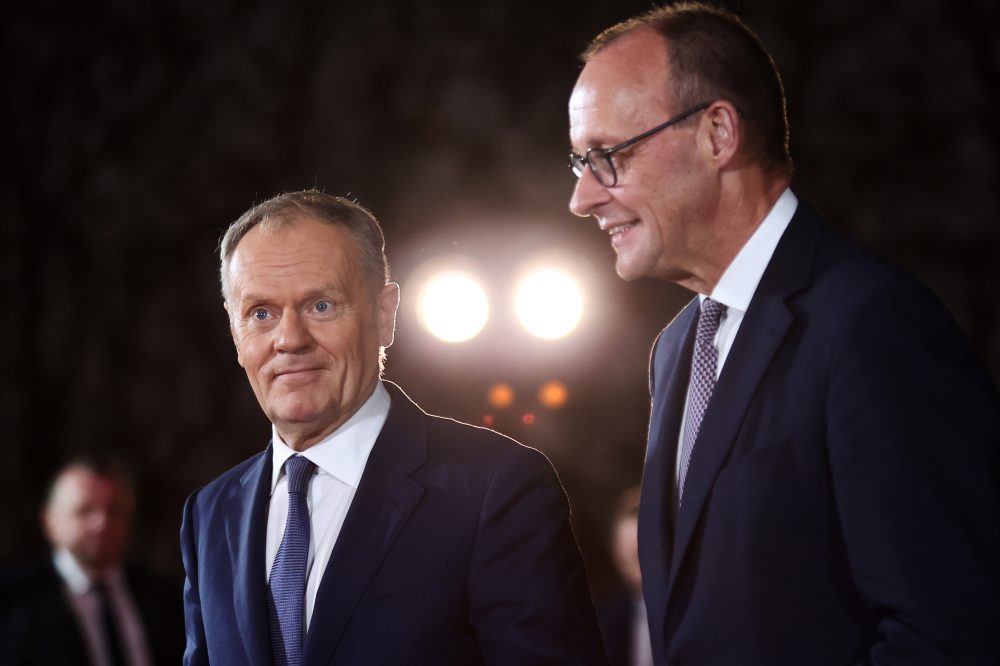
“We Germans need a strong Poland as an equal partner,” German Chancellor Friedrich Merz said in Berlin following a December meeting with liberal Polish Prime Minister Donald Tusk. “This is in our fundamental interest.”
The new defense agreement is expected to outline plans for securing the Baltic Sea region and spell out cooperation on military movement and infrastructure, cyber defense, and emerging technologies.
Justyna Gotkowska, deputy director of the Warsaw-based think tank Center for Eastern Studies, noted that the two countries are already firmly linked through NATO’s defense planning, which assigns Germany a central role in protecting the Baltic region alongside Poland and other central and eastern European nations.
“Germany is largely responsible for the defense of the Baltic states and without cooperation with Poland, that will not happen,” Gotkowska said.
The Baltic countries are frequently cited as the most probable target for a Russian attack on NATO territory if such a conflict were ever to occur.
The agreement is expected to reaffirm the mutual defense commitments already established under NATO and European Union treaties, to which both Germany and Poland belong. However, unlike bilateral treaties each country has separately signed with France and the United Kingdom in recent years, this German-Polish deal is an inter-ministerial arrangement. It focuses on the practical side of military cooperation and does not include the political mutual defense declarations found in those other bilateral agreements.
When asked in June by Polish Radio Trojka why Poland was not pursuing a similar full treaty with Germany, Polish Foreign Minister Radosław Sikorski said that President Karol Nawrocki — who came to power with the backing of the national-conservative Law and Justice party — would never agree to it.
“Hell would break loose here” if such a German-Polish treaty were signed, Sikorski said.
During the period when Law and Justice held power, that government demanded $1.3 trillion in reparations from Germany for its World War II occupation of Poland — a claim Berlin has rejected. The issue is expected to resurface ahead of next year’s general election, and Tusk will be careful not to appear as though he is taking a soft stance or acting in Berlin’s interests. Tusk himself has called on Germany to move more quickly to compensate survivors of the wartime occupation.
Despite Poland’s growing role in Europe’s security framework, Germany has tended to make major decisions on issues like Ukraine or Iran alongside key Western European partners France and the United Kingdom, often leaving Warsaw out of the conversation.
On June 7, those three Western European nations hosted Ukrainian President Volodymyr Zelenskyy in London to discuss the potential role they could play in future peace negotiations with Russia.
At a news conference in Warsaw following that London gathering, Tusk said he had raised concerns directly with Merz that Poland deserved a seat at the table in discussions about Ukraine’s future and the broader region. “Any arrangements made without our participation will not be respected or binding for us,” Tusk said.
Rolf Nikel, a former German ambassador to Poland and vice president of the German Council on Foreign Relations, acknowledged that Poland’s standing within Europe and NATO has grown considerably.
“So Poland must be taken more seriously today and, above all, must be respected more than we have seen in the past,” Nikel said.
Gotkowska echoed that sentiment, pointing out that Germany needs to come to terms with the fact that its economy has stalled while Poland’s economy and military strength have grown.
“The balance of power has changed in Europe in recent years,” Gotkowska said.