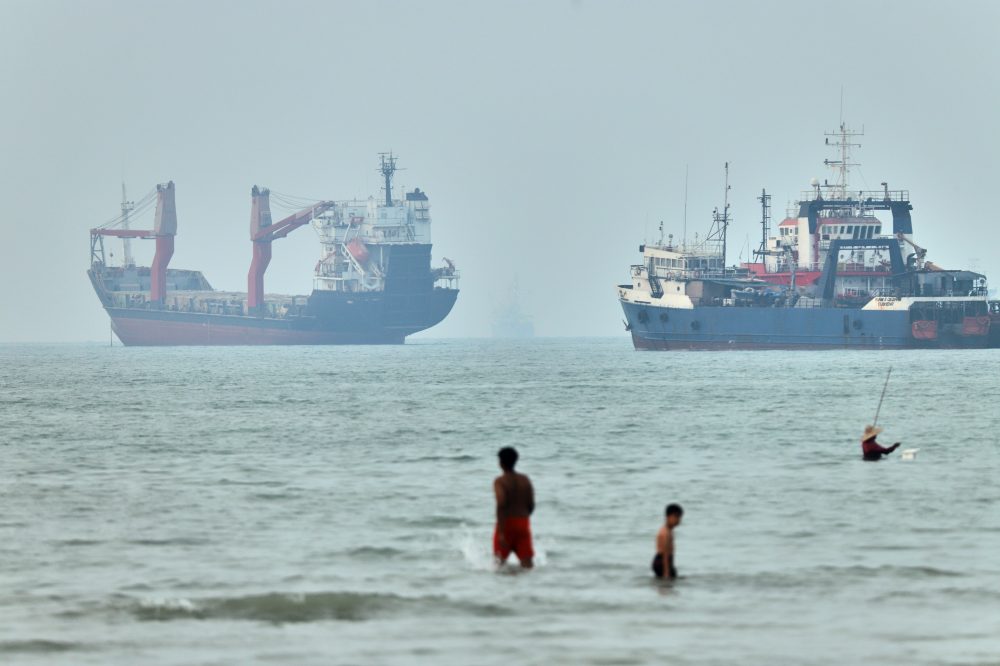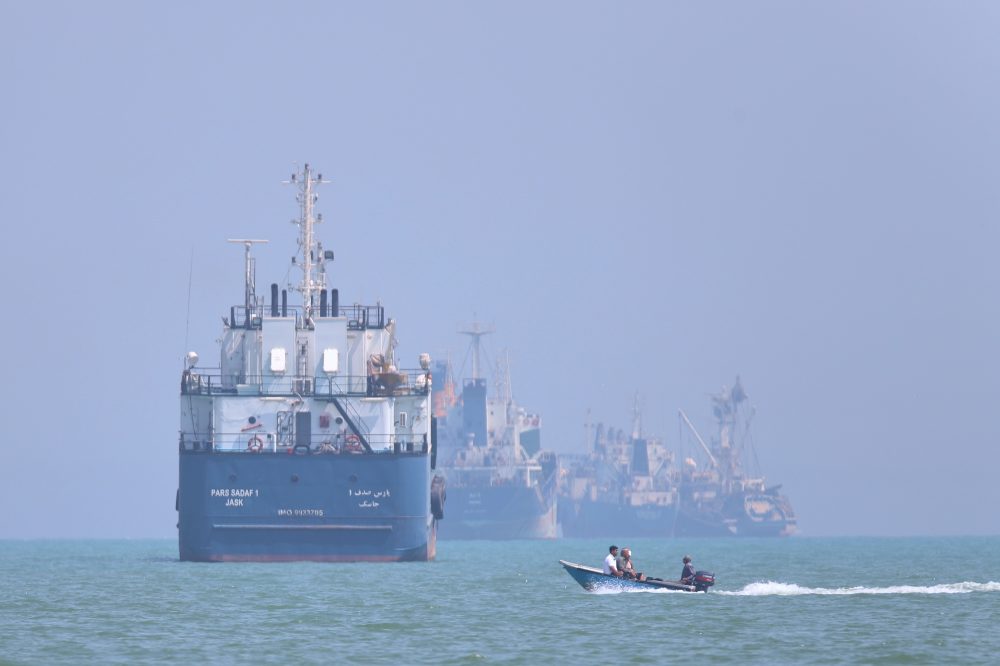

EVIAN-LES-BAINS, France — A group of U.S. allies is pushing for a naval mission in the Strait of Hormuz that would clear underwater mines and potentially provide military escorts for commercial ships, aiming to restore confidence among shipping crews and insurers that the critical waterway is safe to navigate once again.
France and Britain have spent months developing the proposal. French President Emmanuel Macron first raised the concept back in March, during the height of the conflict, suggesting that warships could escort tankers and cargo ships through the strategically vital chokepoint once hostilities wound down.
At the Group of Seven summit, U.S. President Donald Trump told Macron he doesn’t believe there is much need for outside assistance, saying the strait is “going to be open” as a result of the tentative agreement reached with Iran.
“But I don’t think it’s a bad idea to have a ship or two up here from a few countries. You’d be a great country to do it,” Trump told the French leader.
In a joint statement welcoming the framework agreement that would extend the U.S.-Iran tentative ceasefire and lead to the reopening of the strait, the allied nations declared they “are committed to playing our part” to urgently reopen the waterway “with unconditional and unrestricted freedom of navigation.”
That statement came from France, the United Kingdom, Germany, Japan, and Italy, with Canada joining later — all fellow members of the G7 alongside the United States.
The allies proposed “a strictly defensive and independent mission to reassure commercial shipping and conduct mine clearance operations.”
France’s nuclear-powered aircraft carrier, the Charles de Gaulle, is already positioned in the area. Macron sent it first to the eastern Mediterranean in early March before directing it through the Suez Canal and into the Arabian Sea.
Macron said other nations already in the region that could quickly contribute include the Netherlands, Italy, and the United Kingdom.
The French leader told Trump that French fighter jets could begin flying observation missions over the waterway as early as Tuesday, with frigates following “within 48 hours” and the aircraft carrier arriving “within two to three days.”
“Of course, all this supposes that it is desired and requested,” Macron said. “Perhaps it will not be wanted and perhaps it will not be necessary. But in any case, it reflects our willingness to help.”
Mine-clearing vessels would work to eliminate underwater hazards that pose serious dangers to shipping traffic. These mines can be rocket-propelled, cable-anchored, or rest on the ocean floor and detonate in response to sound, movement, or light.
Trump confirmed that mines have already been found and that the search for additional ones is ongoing, but said the strait “is already partially opened.”
Britain’s Royal Navy has been highlighting the specialized capabilities it could bring to the operation, recently inviting journalists aboard one of its vessels, the RFA Lyme Bay, as it waited near Gibraltar to be called into action.
Naval forces from France, the United States, Britain, and other countries already have firsthand experience protecting civilian ships under fire in the region, having previously defended cargo vessels from attacks in the Red Sea launched by Iran-backed Houthi rebels based in Yemen.
French frigates deployed machine guns, cannons, and advanced air-defense missile systems to repel those Houthi assaults. The French frigate Alsace shot down three ballistic missiles in the Red Sea in 2024 while guarding a container ship. The vessel’s commander at the time, Capt. Jérôme Henry, told the AP that enduring those potentially deadly attacks was both nerve-wracking and exhausting. U.S. Navy ships and sailors also bore significant costs during those sea battles.
Should the mission be deployed in the Strait of Hormuz, naval crews would hope for a calmer environment if the ceasefire holds. However, with Iran still believed to possess substantial stockpiles of missiles, drones, and other weapons, warships’ defensive systems would be ready to respond if the ceasefire collapses.
“Once there is a ceasefire, the need for a naval mission is significantly reduced,” said Max Bergmann, an analyst at the Center for Strategic and International Studies, a Washington, D.C.-based think tank.
“A U.K.-French naval presence will no doubt have some security benefits. It might raise the stakes for Iran to rekindle the war; it demonstrates European commitment to Gulf states; and it might reassure shipping and insurance companies,” Bergmann said. “But we should not overstate its utility.”
Planning for the joint French-British mission has drawn in nations from as far away as Australia, South Korea, Japan, Bahrain, Qatar, Canada, and more than a dozen European countries. A meeting of defense ministers and other officials convened last month by France and Britain brought together representatives from 38 nations in total.