
Iceland’s finance minister is calling on the nation to pursue European Union membership, arguing it would bolster the country’s economy and security at a time of growing Arctic competition and international trade tensions.
On August 29, Icelanders will head to the polls to decide whether to restart EU membership talks with Brussels. The vote is not a direct referendum on joining the bloc — any finalized deal would require a separate public vote. Iceland had previously pursued membership negotiations but walked away from them in 2013 after a Eurosceptic government came to power.
Finance Minister Dadi Mar Kristofersson, whose party supports a “yes” vote, told Reuters that EU membership aligns with Iceland’s core interests. “I think that both our economic interests and our security interests are well served by membership,” he said.
He added: “The core values of a small open economy are always going to be free trade and a rules-based order, because we do not have the capacity to defend our interests by force.”
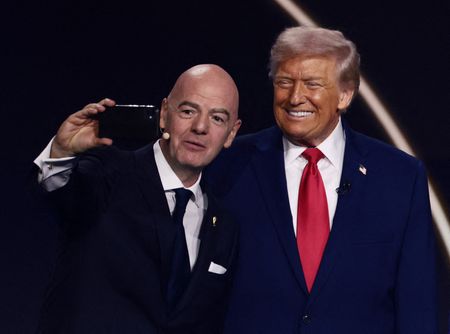
Kristofersson acknowledged that Iceland’s longstanding defense agreement with the United States, dating back to 1951, along with NATO membership, remain the bedrock of the country’s security. However, he noted that Trump’s threats to acquire Greenland had shifted the calculus somewhat. Those threats sparked one of the most serious transatlantic confrontations in recent memory, with the EU threatening broad economic countermeasures against Washington.
“We are the unsinkable aircraft carrier and we will remain the unsinkable aircraft carrier,” Kristofersson said, referring to Iceland’s strategic position between Greenland and Europe along one of the Atlantic’s most closely watched stretches of ocean. He also noted that the U.S. views its sphere of influence as extending beyond Iceland and Greenland — and that “is not going to change.”
Gylfi Zoega, an economics professor at the University of Iceland, said the pace of geopolitical change has been extraordinary. “Changes that might have unfolded over a decade had been compressed into 18 months under the Trump administration,” he said. “Europe is on its own. And then we have to decide whether to be a U.S. military base important for the defence of the U.S. homeland or be part of Europe. And that’s the big question.”
With a population of only 400,000, Iceland would be by far the smallest member of a bloc that represents 450 million people. Even so, the EU views Iceland as an appealing candidate given its geographic position and abundant fishing waters, though Brussels has been careful to avoid appearing to campaign ahead of the vote.
On the economic front, Iceland holds the distinction of being the most expensive country in the world, according to analysis by Viska, Iceland’s largest academic union. Its central bank interest rate currently stands at 7.75%. The island’s economy is driven primarily by fishing, aluminum production, and tourism — and its volcanic scenery has even served as a backdrop for the HBO series Game of Thrones.
The country’s Central Bank Governor recently pointed to lower transaction costs, increased competition, and reduced interest rates as potential benefits of adopting the euro, while cautioning that the transition could drive inflation and that significant labor market reforms would be needed regardless of the outcome.
Kristofersson echoed the optimism on interest rates. “Iceland will never become cheap, but … it might become cheaper,” he said. He also noted that the Icelandic crown is a small currency prone to volatility, and that EU membership would give Iceland three paths forward: letting the currency float freely, pegging it to the euro, or adopting the euro outright.
Not everyone is convinced. Opponents of membership contend that Iceland already benefits from access to the EU’s single market through its participation in the European Economic Area, without taking on the full responsibilities of membership. A major sticking point is fishing — a cornerstone of Iceland’s economy and cultural identity. Critics fear that joining the EU’s Common Fisheries Policy could force Iceland to open its waters to foreign fishing fleets, something the industry strongly opposes.