
Taiwan’s President Lai Ching-te is standing firm on his commitment to boost military spending, declaring he will “not give up” following a setback in parliament last month when lawmakers approved only a portion of a major defense budget proposal.
The island’s opposition-majority legislature passed just two-thirds of a proposed $40 billion supplementary defense budget. While parliament gave the green light to purchases of U.S. weapons, it blocked funding for domestically manufactured drones and missiles — equipment that Lai believes is essential to deterring China, which considers the democratically governed island to be part of its own territory.
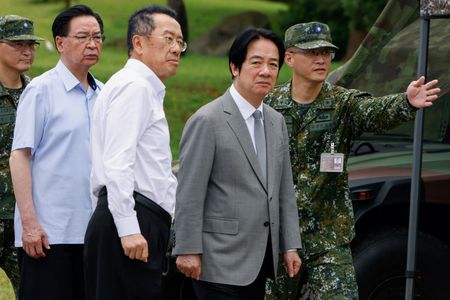
Speaking at a military base in New Taipei, Lai addressed the budget shortfall directly. “Regarding the major cuts to the special national defence budget, we will not give up,” he said.
He outlined potential workarounds to secure the needed funds: “We will propose separate special legislation, or support the armed forces through supplementary budgets and increases to the annual government budget, to ensure that national defence equipment and infrastructure projects proceed smoothly.”
Lai has set an ambitious goal of raising defense spending to 5% of the country’s GDP by 2030, up from roughly 3% today. That target aligns with calls from the Trump administration urging allies to invest more in their own military capabilities. The United States serves as Taiwan’s most important international supporter and weapons supplier, even though the two sides do not maintain formal diplomatic relations.
The president stressed that amid “rapidly changing regional circumstances,” Taiwan’s armed forces must sharpen their combat readiness and make effective use of modern technology, including drones.
Earlier this month, the top U.S. diplomat based in Taipei said Taiwan needs to “spend smarter” on defense and draw lessons from the use of drones in the conflicts in Ukraine and the Middle East to maintain a military balance with China.
During Tuesday’s visit, Lai also toured key radar installations situated in the mountains surrounding Taipei, facilities that continuously monitor Chinese military activity in the region.
“I saw our servicemen and women monitoring aerial activity around the clock, identifying targets in the waters off northern Taiwan, and transmitting intelligence. Their work provides the most immediate and precise support for the overall defence response,” the president said.