
KANCHANABURI, Thailand — A piece of World War II history has emerged from the depths of a Thai reservoir, offering a brief but remarkable window into the past.
When maintenance work at Vajiralongkorn Dam required draining the facility’s reservoir, it uncovered Nithe Station — a site that had been submerged for over 40 years. The station was once a key depot along the notorious “Death Railway,” a 415-kilometer (257-mile) route stretching between what was then Siam and Burma, now known as Thailand and Myanmar.
Researchers are moving quickly to document the site before it disappears again. Once dam maintenance wraps up in August, combined with the region’s rainy season, the area could be flooded once more.
The railway earned its grim nickname during World War II, when the Empire of Japan forced approximately 60,000 Allied prisoners of war — along with hundreds of thousands of Asian laborers — to construct the line. More than 12,500 of those POWs and around 75,000 laborers lost their lives during the brutal construction effort.
For some researchers, the work is deeply personal. Andrew Snow, a researcher at the Thailand-Burma Railway Centre, has a direct family connection to the site. His father was captured in Singapore in 1942 and compelled to work on the railway. “We deal with a lot of relatives of POWs. Some of those POWs worked in the area we’re talking about, up at Nithe, and it’s a good opportunity for us to do some surveying… so that we can show relatives in the future,” Snow said.
Independent researcher Martyn Fryer traveled all the way from Australia to see the fully exposed station — his third visit to Nithe overall. His grandfather perished as a POW while building the railway. Fryer said he made the journey to see firsthand “what infrastructure is lying under the water.”
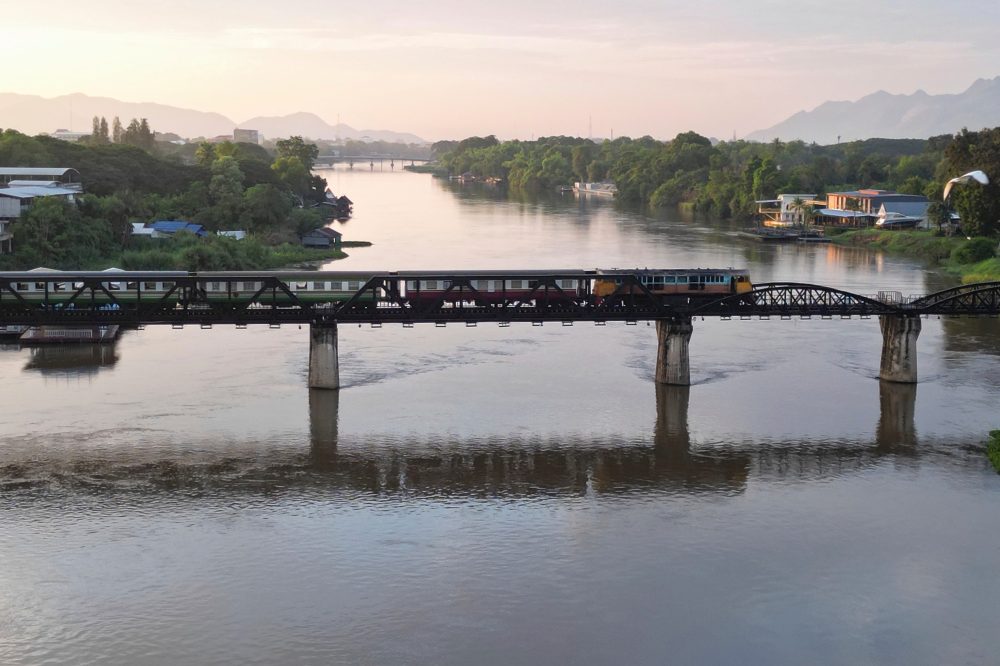
The Death Railway’s legacy continues to draw visitors to Thailand. Portions of the original line remain in operation today, carrying both locals and tourists. Educational facilities such as The Hellfire Pass Interpretive Centre work to preserve and share the railway’s history with new generations.
For some travelers, visiting the region is about more than sightseeing. Michael Weber, a German tourist at Thamkra Sae Station, reflected on what travel means to him. “Traveling presents the chance to learn about the people and the culture of the place you’re going,” he said. “And part of the culture is always the history.”