
Some of the biggest names in artificial intelligence are converging in France on Wednesday, as international pressure mounts over the United States’ commanding grip on the global AI industry.
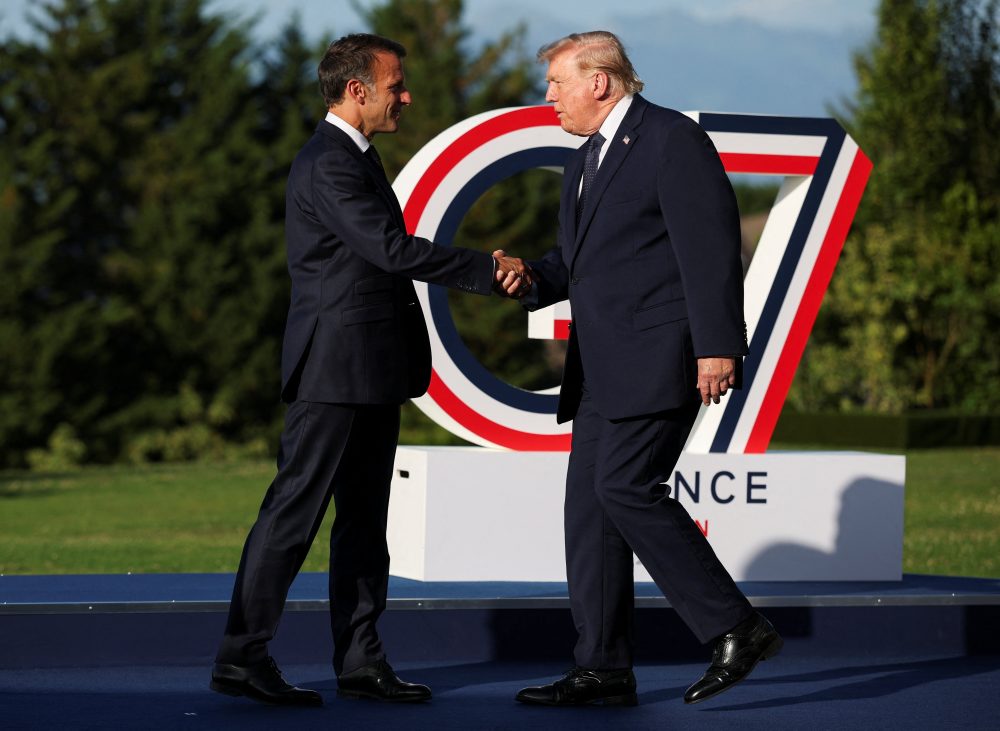
While the ongoing conflicts involving Iran and Ukraine have been at the forefront of this week’s Group of Seven summit — a gathering of the world’s major industrialized nations — artificial intelligence is set to take the spotlight on the meeting’s closing day.
In an unusual assembly of AI heavyweights, the leaders of three of the most influential companies in the field are expected to sit down together for a working lunch centered on the theme of “Ensuring a safe, rapid and effective deployment of artificial intelligence.” Those attending include OpenAI CEO Sam Altman, Google DeepMind CEO Demis Hassabis, and Anthropic CEO Dario Amodei.
Joining them are the heads of several smaller AI firms, representing companies from Canada, France, Germany, Italy, Japan, and the United Kingdom, including Cohere AI, Mistral, Black Forest Labs, Domyn, Sakana AI, and Synthesia.
Across Europe, unease about American corporations controlling AI and broader technology infrastructure has been building. The European Commission recently introduced a tech sovereignty package aimed at nurturing homegrown AI development. Meanwhile, the Vatican drew attention last month when the pope called for strong regulation of artificial intelligence.
A recent episode involving Anthropic drew sharp international concern. The company was compelled to pull its two most advanced AI models — Fable 5 and Mythos 5 — offline after a Trump administration directive cited an unspecified national security issue. The order prohibited non-Americans, regardless of their location, from accessing the models, forcing Anthropic to cut off all users worldwide.
That incident underscored how nations outside the U.S. “can be put in an extremely vulnerable position” when their access to cutting-edge AI is suddenly severed, according to Zach Meyers, director of research at CERRE, a Brussels-based think tank.
“There is a general anxiety about the state of Europe, the fact that we’re relying on other countries for quite important strategic infrastructure and a desire to do something about it, whatever that is,” Meyers said.
Canadian Prime Minister Mark Carney referenced the Anthropic situation while traveling to the G7 summit, telling reporters during a stop in Ireland that it underscores the importance of efforts to “build out and diversify.” In a speech delivered in Dublin, he stated that true sovereignty demands “unhindered access to AI.”
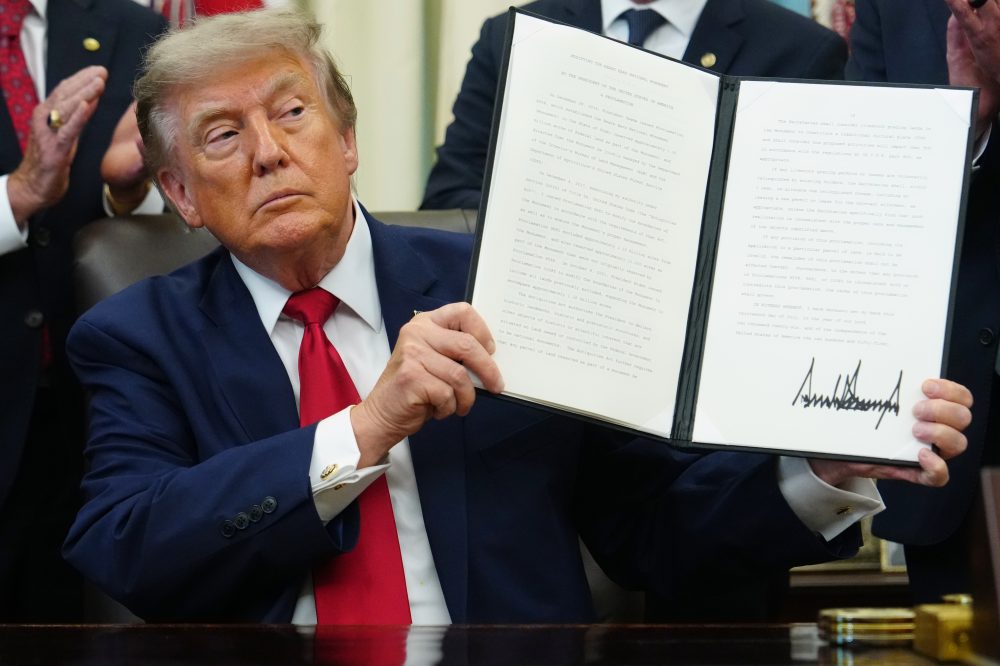
Earlier this month, Canada unveiled a plan to help mid-sized and like-minded nations develop AI alternatives to the dominant American players. Just days before that announcement, a U.S. executive order was signed laying out a framework for overseeing advanced AI systems.
The G7 gathering offers an opportunity for both corporate and government leaders to discuss the potential rewards and dangers of AI, as nations work to leverage the technology for economic growth and geopolitical advantage.
Tech independence has long been a priority for French President Emmanuel Macron, who is hosting this year’s summit. His administration has even directed government workers to abandon platforms like Zoom and Microsoft Teams in favor of a domestically developed video conferencing tool.
Aidan Gomez, CEO of Cohere — which acquired German AI startup Aleph Alpha earlier this year — said the company’s goal at the G7 is “to expand our sovereign AI ecosystem partnerships beyond Canada and Germany to include all G7 nations — and companies — establishing a global standard that guarantees ownership of models, data, and local compute.”
The G7 includes France, the United States, Canada, Germany, Italy, Japan, and the United Kingdom. Several guest nations, including Brazil, India, Kenya, and South Korea, were also invited to take part in select discussions.