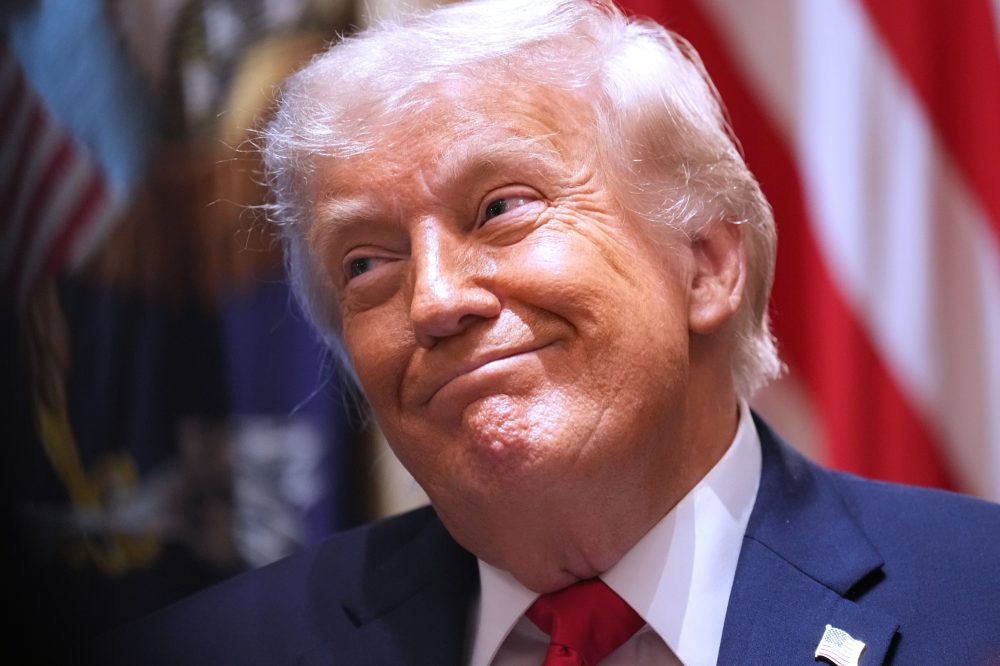
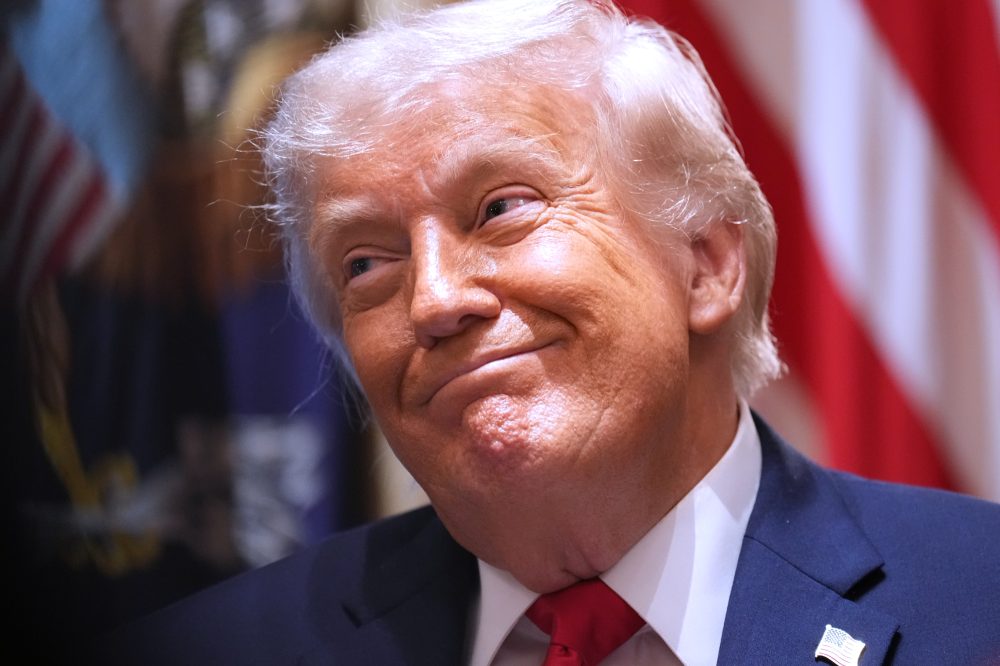
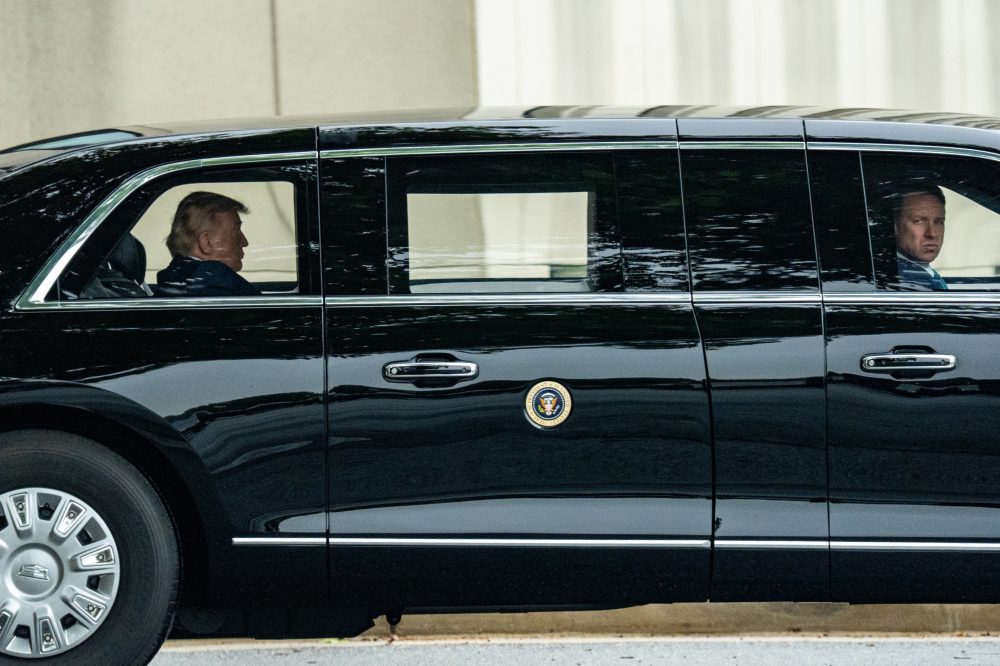
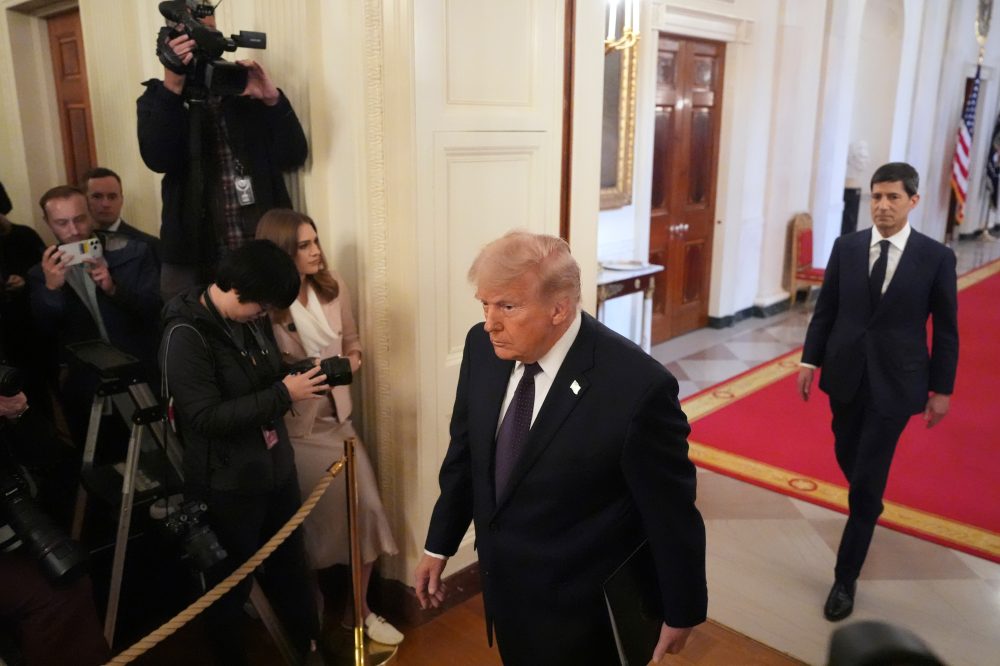
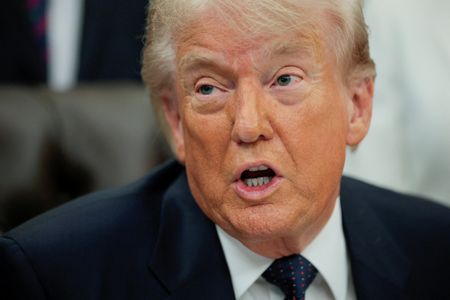
WASHINGTON – President Donald Trump is caught in a challenging political position as he works to resolve the ongoing conflict with Iran, facing pressure to reopen critical shipping lanes and reduce gas prices while simultaneously dealing with potential criticism from hardline Republicans in his own party who oppose making any concessions to Tehran.
Trump’s predicament became apparent during a week of intensive diplomatic activity marked by reports of a developing framework agreement that, according to sources with knowledge of the negotiations, would extend the current ceasefire and end Iran’s control over the crucial oil-shipping route while postponing talks about its nuclear program.
If approved by both Trump and Iranian leadership, such a temporary agreement would represent the most meaningful progress toward peace since he partnered with Israel in launching attacks against the Islamic Republic on February 28, and could help alleviate the rising energy costs the conflict has caused.
However, the deal could also attract criticism from an important part of Trump’s political base – prominent Republicans demanding that he “finish the job” by continuing military strikes to eliminate Tehran’s ability to develop nuclear weapons, which he has cited as his primary justification for the war.
This week, some of Trump’s hardline anti-Iran supporters reacted to news of a possible agreement with disapproval, even suggesting that he might achieve little more than the 2015 Iran nuclear deal that former President Barack Obama negotiated and Trump dismantled during his first presidency.
Prominent Republicans who typically align with Trump, including Senators Lindsey Graham, Roger Wicker and Ted Cruz, encouraged the president to avoid making compromises.
Trump responded by stating he was in “no rush” and would only accept a “great” agreement.
Facing these conflicting pressures – finding a quick fix for high fuel costs while ending Iran’s nuclear aspirations – the president has limited options available.
“Trump’s rhetorical swings and abrupt reversals of the past week suggest a president trying to park a wide war in a tight spot,” said Laura Blumenfeld, a Middle East expert at Johns Hopkins University.
A White House official said “negotiations are proceeding nicely and he has made his redlines clear.”
“President Trump will only make a good deal for the American people, which must ensure that Iran can never have a nuclear weapon,” the official said on condition of anonymity to discuss sensitive internal matters.
UNANSWERED QUESTIONS
Media reports on Thursday about the terms of the “memorandum of understanding” indicate the proposed agreement leaves many of the most difficult issues unresolved.
These include the strait’s future status over the long term, how Iran’s stockpile of near-weapons-grade enriched uranium will be handled, and specific details about possible sanctions relief.
The developing framework, while preventing military escalation, would currently fall well short of Trump’s previous demand for “unconditional surrender” and his promise to eliminate Iran’s nuclear program. Iran has maintained it is only for peaceful purposes.
“If these terms are accurate and if a deal is concluded, the Islamic Republic appears to be getting more in the MOU than the U.S.,” Jason Brodsky, policy director of United Against Nuclear Iran, a nonprofit policy organization, said on X. “A pledge for more nuclear talks? Be wary.”
Iran’s Tasnim news agency reported the agreement text had not been completed. Trump has previously announced that deals were imminent multiple times, and there was no assurance that this latest attempt would succeed where previous efforts have failed.
This week’s diplomatic activity has occurred alongside a new but limited exchange of military strikes that has put stress on the fragile ceasefire between the U.S. and Iran.
Experts say Trump seems to be attempting to find a middle ground between pressuring Iran to make concessions on important matters while offering only modest compromises in return that would still enable him to present the result as a victory.
Reopening the strait would be welcomed globally, but Trump would simply be restoring the free movement of shipping that existed before he initiated the war.
At the same time, political and economic pressures are mounting for the president, whose public approval numbers have reached record lows.
Midterm elections are approaching in November, with fellow Republicans fighting to keep control of Congress, and recent analyses indicate that continued conflict would cause severe harm to the worldwide economy.
TRUMP DISMISSES MIDTERMS
Iran seems to be seeking immediate sanctions relief to help its damaged economy, which Trump’s critics worry he may find difficult to refuse while pursuing a deal to end the war.
During a cabinet meeting on Wednesday, Trump appeared to address his critics by restating hardline positions and claiming he wasn’t concerned about the midterms. His advisers have privately worried that elevated gasoline prices could hurt Republicans’ election chances.
Iran has demonstrated confidence in its strong position, having shown it can withstand the military assault and control one-fifth of global oil supplies, according to analysts.
“The president gives every sign of wanting this over soon,” said Jon Alterman of the Center for Strategic and International Studies think tank. “That makes the Iranians dig in their heels.”
The past week’s dramatic shifts were typical for a president who ran on promises to avoid unnecessary conflicts, only to lead the U.S. into foreign involvement without clearly explaining the reasoning.
How he chooses to conclude the conflict is anticipated to be a significant element in shaping his second-term foreign policy record, experts say.
The chief federal prosecutor in Chicago has publicly refuted claims that his office initiated a criminal probe into E. Jean Carroll, the author who successfully sued U.S. President Donald Trump over sexual assault and defamation allegations.
On Thursday, U.S. Attorney Andrew Boutros issued a statement clarifying his office’s position after reports emerged suggesting the Justice Department had begun examining Carroll’s testimony.
“The Chicago U.S. Attorney’s Office can confirm that it has not opened – and has never opened – a criminal investigation into E. Jean Carroll,” Boutros stated.
The confusion arose after a source with knowledge of the situation informed Reuters on Wednesday that federal prosecutors were looking into potential perjury charges related to Carroll’s testimony in her two victorious civil cases against Trump.
Carroll’s attorney, Robbie Kaplan, has not yet responded to requests for comment regarding the matter.
According to the anonymous source, the alleged inquiry centered on Carroll’s statements during her successful legal battles, which concluded in 2023 and 2024. These cases involved accusations that Trump sexually assaulted her at a New York department store and subsequently defamed her by calling her a liar.
CNN was the first news outlet to report on the purported investigation.
The Trump administration’s Justice Department has initiated multiple investigations targeting the president’s critics and has filed criminal charges in several instances since taking office.
The source indicated that prosecutors were focusing on a 2022 deposition where the former Elle magazine writer stated she had not received external funding for her lawsuit. Her legal team later disclosed that Reid Hoffman, the billionaire co-founder of LinkedIn, had covered portions of her legal expenses.
However, an appeals court ruled in 2024 that “Ms. Carroll plausibly represented that she had forgotten about the limited outside funding counsel obtained in September 2020 when this question was first posed to her in 2022, and the additional discovery did not indicate otherwise.”
In May 2023, a jury determined that Trump had sexually assaulted Carroll and defamed her through false statements, though they did not find him guilty of rape. A separate jury in January 2024 concluded he had defamed her and ordered him to pay $83.3 million in damages.
Trump continues to deny any wrongdoing and remains engaged in ongoing legal disputes with Carroll.
Acting Attorney General Todd Blanche, who has swiftly implemented Trump’s directives since replacing his predecessor, has recused himself from any department investigation due to his previous role as one of Trump’s personal lawyers in the Carroll appeals process, according to the source.
A federal court has dismissed a lawsuit filed by U.S. President Donald Trump’s administration targeting Boston’s sanctuary city immigration policies.
U.S. District Judge Leo Sorokin, based in Boston, determined the U.S. Department of Justice did not have proper legal standing to bring the case forward. This represents one of approximately twelve similar legal challenges the department has pursued against jurisdictions with sanctuary policies led by Democrats.
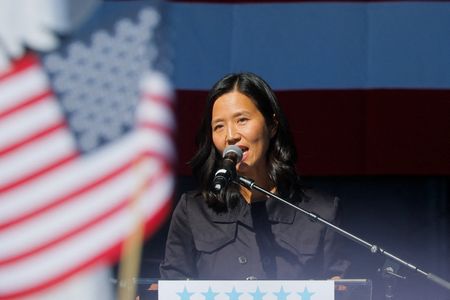
The September lawsuit targeted the city and Democratic Mayor Michelle Wu, specifically challenging the Boston Trust Act, which was originally passed in 2014. City council members renewed their backing of the ordinance in December 2024 ahead of Trump’s return to the presidency.
Under this ordinance, the Boston Police Department and other municipal officials are prohibited from working with federal agencies, including U.S. Immigration and Customs Enforcement, on civil immigration matters. This includes restrictions on holding migrants for possible deportation or providing their personal details.
Federal attorneys contended these restrictions interfered with immigration enforcement activities and violated both the U.S. Constitution and federal immigration statutes.
However, Judge Sorokin, who received his appointment from Democratic President Barack Obama, concluded the administration could not prove it had proper legal standing to contest the policy. He also found they failed to show how a favorable court decision would address the alleged damages the federal government claimed to experience.
The judge noted that even if Boston’s ordinance were struck down, local police still would not be permitted to provide the assistance ICE sought. This is due to a 2017 decision by Massachusetts’ top court during Trump’s initial presidency that prevented state law enforcement from holding non-citizens based exclusively on federal civil immigration detainers.
“In Massachusetts, there is simply no source of authority empowering Boston police officers to do what the United States would like them to do,” Sorokin wrote.
The Justice Department has not provided a response to requests for comment.
Judge Sorokin’s decision indicates the Justice Department has been unsuccessful in all comparable cases against municipalities and states with sanctuary policies, with courts rejecting four additional lawsuits in Colorado, Illinois and New York.
“Today’s ruling is a victory for the rule of law and for local governments across the country,” Jill Habig, whose group the Public Rights Project helped defend Boston against the lawsuit, said in a statement.
WASHINGTON — Television stations owned by ABC nationwide are fighting back against federal communications regulators, condemning what they describe as an improper and unconstitutional early examination of their broadcasting permits as tensions escalate between the network and the Trump administration’s agency.
“It is an extraordinary demonstration of power and coercion directed at disfavored editorial voices which sends a clear warning to every broadcaster in America,” WABC in New York wrote in an objection that accompanied paperwork filed to comply with the FCC’s demand for early applications to renew licenses.
Television stations owned by ABC in seven additional markets submitted comparable protests. Federal communications officials did not immediately provide a response when asked for comment.
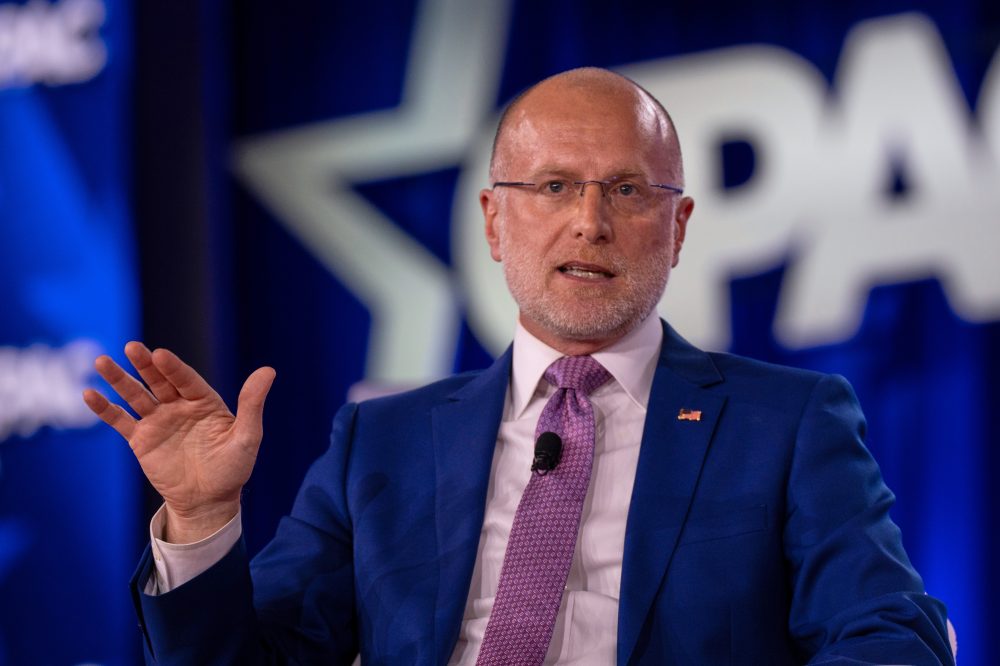
The protest represents part of an escalating clash between the FCC and one of the nation’s leading broadcast networks. Led by Chairman Brendan Carr, the regulatory body has initiated investigations into ABC covering topics ranging from the company’s diversity policies to how the network handled a 2024 presidential debate to programming choices on “The View.” President Donald Trump has also consistently demanded that late-night host Jimmy Kimmel be terminated.
However, the FCC’s decision in April to start premature evaluations of broadcasting permits for ABC-owned stations in eight local markets drew especially significant scrutiny. The permits for stations in Los Angeles, San Francisco, Houston, New York, Chicago and Philadelphia as well as Fresno, California, and Durham, North Carolina, were originally scheduled for renewal between 2028 and 2031.
Commissioner Anna Gomez, the FCC’s sole Democrat, has called the reviews an “egregious assault on the First Amendment.” On Thursday, she said she was glad to see the stations “expose the FCC’s actions as nothing more than naked political retribution and an unlawful assault on free speech and a free press.”
In its objection, WABC said the “ultimate injury here is not to the station or its parent company.”
“It is to the public,” the station said. “When a broadcaster must weigh regulatory retaliation before making editorial decisions, the public loses access to journalism that is free from government influence.”
This represents a dramatic change in ABC’s strategy toward political pressure from Washington. During the weeks before Trump’s return to office, the network agreed to a disputed $15 million defamation settlement, a decision that failed to reduce criticism from Trump and his supporters in subsequent years.
The network presented a stronger defense of free speech principles in documentation filed last month addressing an FCC examination of whether “The View” fell under equal time regulations. The agency contended that the law promoted additional speech, but ABC cautioned that open political dialogue was being suppressed by the Trump administration.
“The Commission’s actions threaten to upend decades of settled law and practice and chill critical protected speech, both with respect to The View and more broadly,” according to a filing on behalf of both KTRK-TV and ABC.
NEW YORK — Former advice columnist E. Jean Carroll faces a federal investigation into whether she provided false testimony during her lengthy court battle with President Donald Trump over allegations of sexual assault, according to sources familiar with the matter.
Carroll has spent nearly seven years in litigation with Trump regarding her claims that he sexually attacked her in a Manhattan department store dressing room in 1996. The legal proceedings have largely favored Carroll, with juries ruling against Trump and awarding her substantial monetary damages for his public statements questioning her truthfulness.
However, Trump’s Justice Department has now launched a probe into potential perjury by Carroll during the civil proceedings, a source told The Associated Press on condition of anonymity due to lack of authorization to discuss the ongoing matter. The investigation focuses on Carroll’s deposition testimony regarding the financing of her legal representation.
The legal saga began when Carroll publicly revealed her assault allegations in June 2019 through an excerpt from her upcoming memoir “What Do We Need Men For?” published in New York magazine. She detailed encountering Trump at Bergdorf Goodman, engaging in flirtation, and then defending herself during a sexual attack in a fitting room.
Trump responded with vehement denials of the accusations. “I’ve never met this person in my life. She is trying to sell a new book — that should be sold in the fiction section,” he stated. He also declared, “Number one, she’s not my type. Number two, it never happened.”
Carroll initiated a defamation lawsuit in 2019, asserting that Trump’s dismissal of her account as fabricated had “smeared her integrity, honesty and dignity — all in the national press.” This case became stalled for years due to disputes over whether Trump’s denial constituted official presidential duties, with Trump arguing his federal employee status protected him from the defamation claim.
When Carroll first filed suit, statutes of limitations prevented her from pursuing the underlying sexual assault allegations due to the passage of time. New York’s 2022 legal reforms created new opportunities for sexual abuse survivors to file claims regarding historical incidents. Carroll quickly utilized this change, filing fresh litigation accusing Trump of rape and addressing his post-presidency statements about her.
This second lawsuit progressed more rapidly through the court system, reaching trial in New York City during 2023. Trump declined to appear, allowing his attorneys to present his defense. The jury determined that while Carroll had not established rape under New York’s legal definition, Trump had committed sexual abuse. Jurors also concluded he made false statements damaging her reputation, resulting in a $5 million award for Carroll.
A second trial occurred in January 2024, with a federal judge overseeing proceedings to assess additional defamatory statements by Trump. The scope was limited since sexual assault had already been established, focusing solely on reputational damage from Trump’s credibility attacks and assault denials.
Trump participated in this second trial, providing approximately three minutes of testimony. “She said something that I considered to be a false accusation,” he informed the jury, adding, “I just wanted to defend myself, my family and, frankly, the presidency.”
Carroll described receiving numerous death threats following Trump’s repeated challenges to her account. The second jury again ruled for Carroll, granting her over $83 million in damages.
Carroll has not yet collected any awarded funds as Trump’s appeals continue through the court system. The 2nd U.S. Circuit Court of Appeals recently addressed questions about Carroll’s honesty regarding legal fee arrangements while reviewing one appeal.
Trump’s legal team had alleged Carroll concealed that her attorneys received funding from an organization supported by Reid Hoffman, the co-founder of LinkedIn. The appeals judges found no evidence suggesting Carroll participated in this funding arrangement or deliberately misled questioners during her 2020 deposition about legal fee payments.
“It showed that Ms. Carroll simply was not involved in the matter of who was or was not funding her litigation costs,” the appeals court stated.
A spokesperson for Carroll’s attorney declined to provide comment on Thursday.
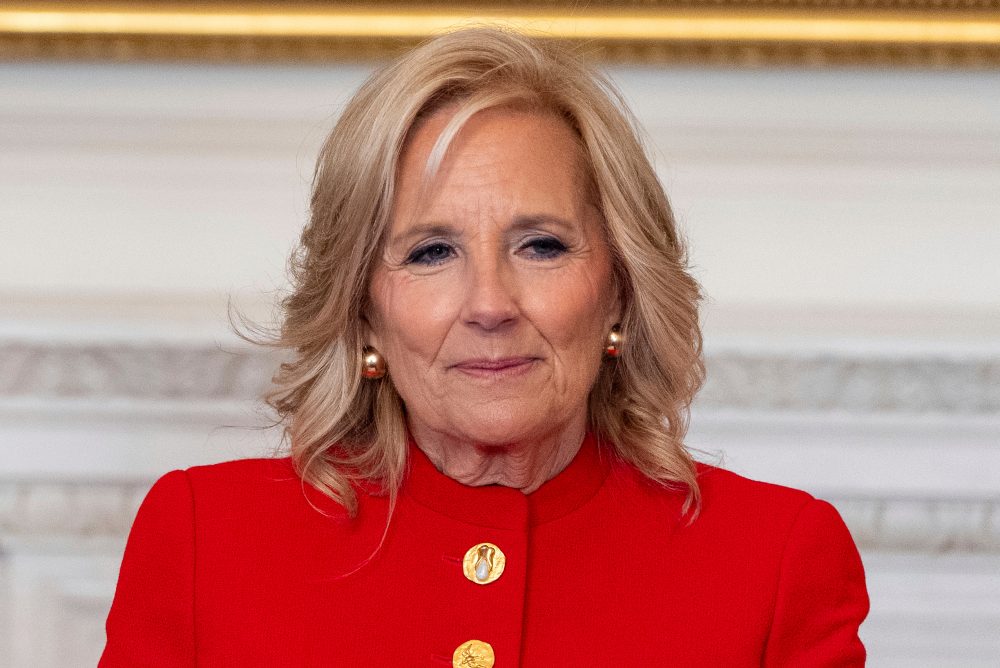
WASHINGTON — The former first lady shares candid reflections about her husband’s challenging debate against Donald Trump in her upcoming memoir, questioning whether being more transparent about his condition might have been the better approach instead of offering reassurance to supporters.
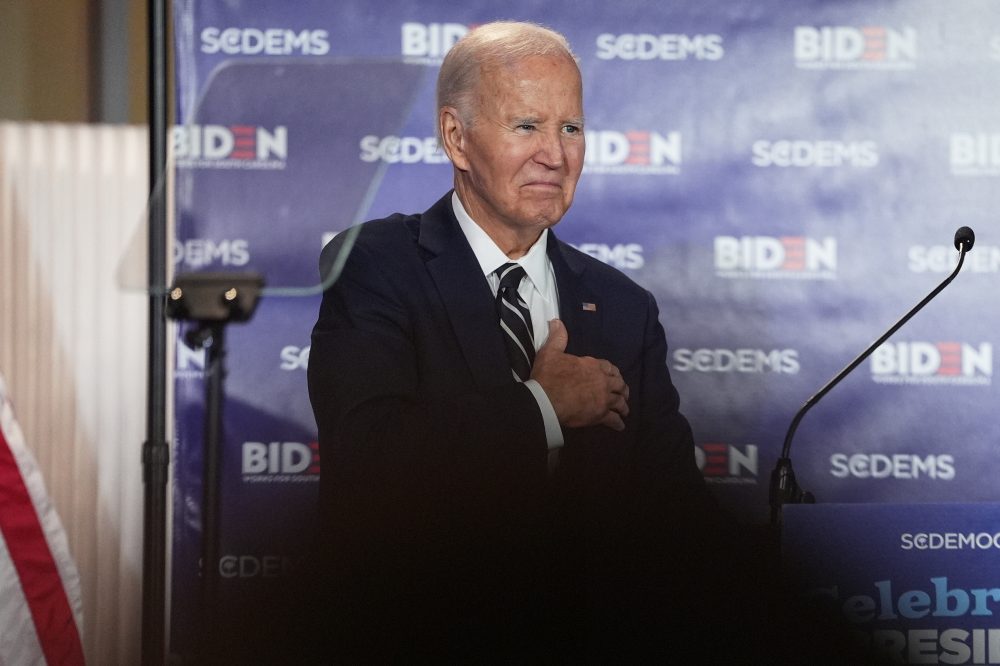
The Democratic candidate’s showing during that debate became a turning point in his reelection campaign, heightening worries about whether the then-81-year-old was capable of serving another four years. Facing mounting pressure from his own party, he eventually withdrew from the race and backed his vice president, Kamala Harris, who ultimately fell to the Republican Trump.
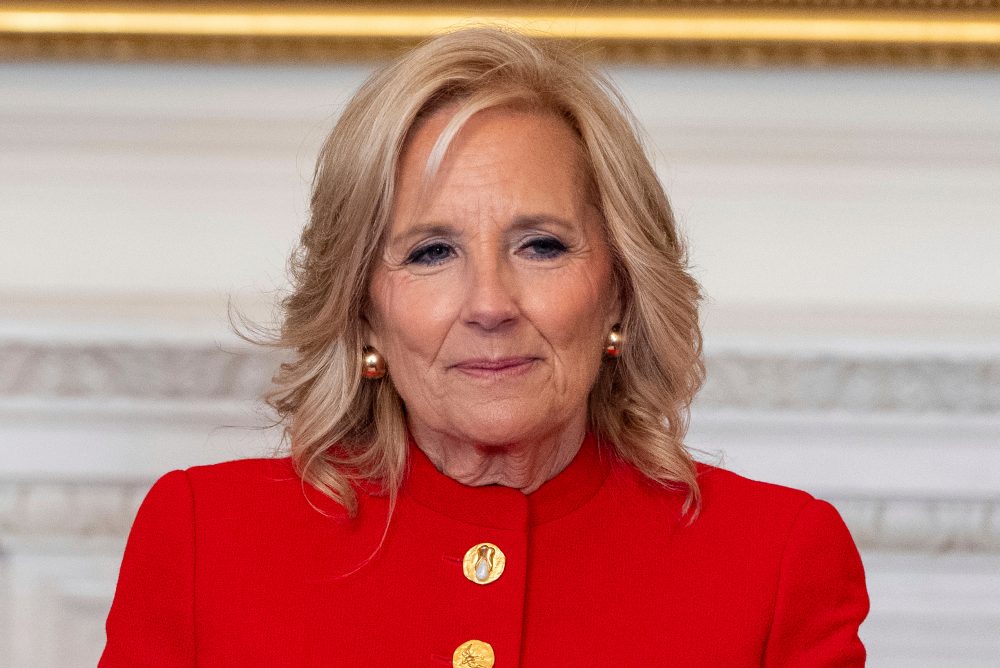
Her memoir “View from the East Wing,” chronicling her White House experience and set for release next Tuesday, reveals she remains puzzled by her husband’s struggles during that crucial evening.
The Associated Press secured an advance copy of the 274-page manuscript, which contains her first public remarks about the debate and the subsequent events that led Joe Biden to return to private life in Delaware earlier than planned.
The memoir also discusses his prostate cancer diagnosis following his departure from office and their son Hunter’s federal gun charges trial, along with other matters from Joe Biden’s presidency and how she balanced first lady duties with her teaching responsibilities.
According to Jill Biden, her husband appeared “bleary” in their Atlanta hotel room before the debate. Despite her confidence that he would perform well since major events typically energized him, she noticed problems immediately when the CNN-hosted event started. “I immediately noticed that Joe didn’t look good. He didn’t seem himself from the opening,” she wrote.
Early in the debate, he made an odd comment about “we finally beat Medicare.”
“Is he short-circuiting? I thought,” she documented. “Is this a stroke? It felt like we were watching an AI hologram of the man we knew, and the hologram was glitching.”
She questioned whether he had been given something harmful or was having a medical crisis.
While he showed improvement as the debate continued, “but not enough to reassure me or anyone watching that he was okay. He clearly wasn’t,” Jill Biden explained. “I’d never seen that look on his face before in my life.”
After leaving the stage, he quietly admitted to her using strong language that he had failed, which she interpreted as “a sign of his having returned to himself.”
“To this day, I still don’t know what happened,” she documented. They participated in a post-debate event and visited a Waffle House before heading to North Carolina for the following day’s scheduled appearance.
While the White House and close associates explained at the time that he was battling a cold, Jill Biden now questions whether they should have been honest about what viewers witnessed — “that he looked very unwell in that debate.”
“The biggest lesson for us, I think, was that if you don’t explain something well enough then the question won’t go away,” she noted. “There was never a satisfying enough explanation offered for Joe’s debate performance, and a lot of people never got over it.”
The debate performance confirmed many voters’ worries that he was too advanced in age to continue as president. It triggered renewed demands for him to step aside as the party’s nominee as fellow Democrats worried about a Trump presidency if Biden stayed in the race.
The calls for his withdrawal began before the debate concluded and, “in the days to come, it would grow louder and louder,” Jill Biden documented.
The NAACP has launched an initiative linking Black student athletes to voting rights advocacy through their Out of Bounds campaign. The organization’s President and CEO Derrick Johnson recently spoke about this effort that aims to address voting rights concerns in certain states.
During a conversation with NPR’s Juana Summers, Johnson explained his organization’s strategy that connects athletic participation with voting access issues. The campaign represents the civil rights organization’s latest approach to addressing what they view as threats to electoral participation.
The Out of Bounds initiative specifically focuses on the role of Black student athletes in the broader conversation about voting rights protections across various states.
According to a ProPublica investigation conducted by Robert Faturechi, a White House advisor made a request to the Pentagon seeking approval for funding to a company that produces rare-earth magnets, a business in which Donald Trump Jr. maintains a financial interest.
The investigation reveals that Peter Navarro, who served as a White House adviser, made the request for the Pentagon to approve the loan to the magnet manufacturing company.
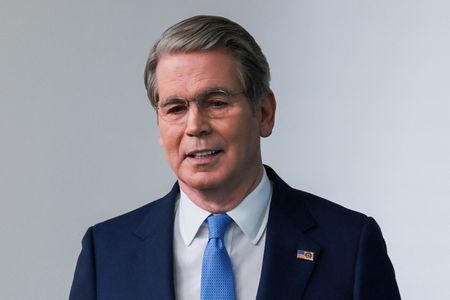
WASHINGTON – Treasury Secretary Scott Bessent confirmed Thursday that he shared breakfast with Kevin Warsh, the newly appointed Federal Reserve chair.
During a White House press briefing, when a journalist questioned whether Bessent urged Warsh to reduce interest rates, the Treasury Secretary deflected by discussing his previous interactions with former Fed chair Jay Powell.
“I had breakfast with Chair Powell 41 times, and I never did that,” Bessent stated, offering no additional details about the nature of those conversations.
The questioning comes amid a backdrop where President Donald Trump has consistently pushed Powell to cut interest rates during his tenure.
Federal officials have begun preliminary preparations for a commemorative $250 bill bearing Donald Trump’s image, even as the congressional proposal remains stuck in legislative limbo, according to a Treasury Department representative.
The proposed legislation, put forward by Representative Joe Wilson, R-S.C., would instruct the federal bureau responsible for currency production to feature Trump on this new denomination as part of commemorating America’s 250th birthday.
Should the measure become law with Trump’s signature, it would represent an unprecedented honor for a current president and aligns with Trump’s efforts to position himself prominently in the country’s anniversary celebrations. The Treasury Department’s advance planning indicates support for the concept within the current administration.
These developments come after a Washington Post investigation revealed that U.S. Treasurer Brandon Beach, appointed by Trump, has been urging the Bureau of Engraving and Printing to accelerate preparations for new currency. The publication also disclosed that the former bureau director was transferred after resisting these efforts.
“In response to active legislation sponsored by Representative Joe Wilson, the Bureau of Engraving and Printing (BEP) is conducting appropriate planning and due diligence,” the spokeswoman said in a statement to The Associated Press. “Should this legislative mandate be signed into law, the BEP is moving proactively to produce a $250 commemorative note which will appropriately recognize the 250th Anniversary of our great nation.”
Wilson’s proposal, which has yet to advance significantly, aims to establish the high-value note honoring Trump during the anniversary of the Declaration of Independence. The bill would supersede existing federal statutes that prohibit living persons from appearing on American currency.
Treasury Secretary Scott Bessent, who oversees the currency production bureau, is expected at the White House Thursday afternoon and may face questions about this initiative.
Beach declined to respond to AP inquiries for comment.
The Post’s reporting indicated that Beach presented the Bureau of Engraving and Printing with a bill design last autumn. The design incorporated Trump’s likeness — identical to the portrait displayed on banners at various federal facilities in Washington — along with anniversary branding. Trump’s signature would also appear on the currency, a feature that distinguishes it from existing paper money.
British artist Iain Alexander confirmed to the Post that he created the bill design and had conversations about it with the president. Alexander did not reply to AP’s request for comment.
The publication further reported that bureau director Patricia Solimene opposed pressure from Beach and his senior aide Mike Brown, emphasizing the complex legal and administrative requirements for introducing new currency. Solimene has subsequently been reassigned involuntarily, according to the Post, with Brown effectively taking control of the bureau.
The Treasury representative declined to address AP’s inquiries regarding any leadership transitions at the bureau.
This currency initiative would represent another instance of Trump incorporating his personal image into his official role since beginning his 2025 presidential term.
Beach and Bessent have already expedited approval for commemorative 250th anniversary coins featuring Trump. The Treasury Department maintains that these special coins are exempt from restrictions on living presidents appearing on legal tender. During the nation’s 150th anniversary in 1926, then-President Calvin Coolidge was featured on a commemorative half-dollar.
The current administration has installed banners with Trump’s portrait at the Department of Justice and other government buildings. Additionally, his appointees to the Kennedy Center’s governing board have added his name to the national arts venue that Congress originally established as a memorial to assassinated President John F. Kennedy. This renaming faces legal challenges due to federal legislation designating the center as the official memorial to the 35th president.
Current federal regulations specify that only deceased individuals may be depicted on American currency and securities.
Wilson’s legislation would create an exception: “except if the individual is or has been the President of the United States.”
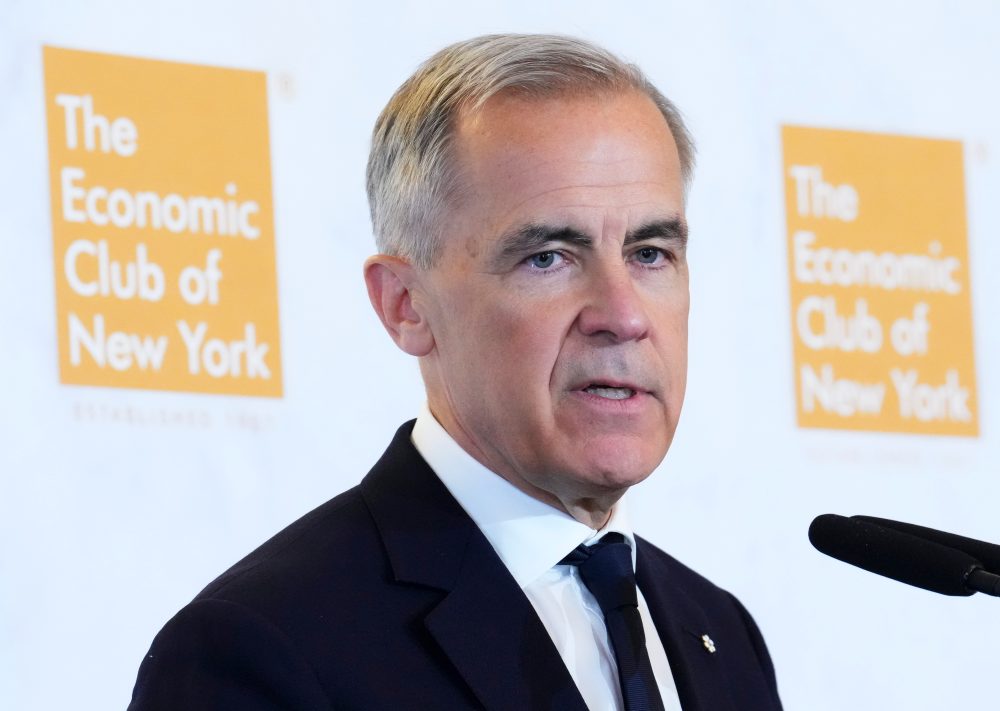
Canada’s Prime Minister delivered a speech Thursday advocating for enhanced cooperation with the United States, speaking just weeks before President Donald Trump makes a decision about extending the free trade agreement between the two nations.
Speaking to the Economic Club of New York, the Prime Minister outlined his vision for what he termed a “true partnership” that would reimagine collaboration in sectors facing challenges from worldwide competition.
His comments came in advance of July’s required evaluation of the United States-Mexico-Canada Agreement, known as USMCA.
The Canadian leader explained that his country is expanding its trade relationships beyond America, establishing commercial agreements with numerous nations globally.
“Our core objective across these partnerships is to increase our strategic autonomy. Because we live in a world where integration has been weaponised. Because a country that cannot feed, fuel or defend itself is not truly sovereign,” the Prime Minister stated.
Recent actions by Trump, including initiating trade disputes and floating the idea of Canada joining the US as its 51st state, have angered Canadians and helped create political conditions that may help the Prime Minister secure his position after pledging to stand up to Trump.
The Canadian leader has become a voice for an international effort encouraging nations to build alliances as a counterbalance to US influence under Trump’s leadership. He has established an ambitious target for Canada to increase its exports to non-US markets by 100% over the coming ten years, citing how American trade penalties are discouraging business investment.
“Canada Strong will help make America great again. The examples are legion where we should work together and compete with the world together. And to those ends, we have made specific, practical proposals to the US Administration,” the Prime Minister declared.
While the Canada-U.S.-Mexico Agreement has shielded Canada from the most severe effects of Trump’s trade penalties, the agreement faces upcoming review, and important industries including aluminum and steel have suffered significant damage from tariffs.
The Prime Minister highlighted that Canadian aluminum shipments to America represent energy equivalent to ten Hoover dams, arguing it would be illogical to seek replacement sources.
“With America’s growing energy needs, does it make sense to build the Gigawatts needed to replace Canada?” the Prime Minister questioned.
Regarding automotive trade, he emphasized that Canada represents America’s largest customer, stating that “an integrated North American market for production is the best and most durable way to confront intense global competition.”
The Prime Minister also discussed critical minerals, explaining that Canada’s extensive deposits of potash, nickel, copper and uranium position the country as America’s most dependable supplier for ensuring affordable food production, strengthening national security, and meeting surging demand for powering artificial intelligence systems.
“At a time of a global energy crisis, Canada provides the United States with the reliable power and critical minerals that help fuel American growth: 99% of U.S. natural gas imports, 85% of electricity imports and 60% of crude oil imports,” the Prime Minister noted.
He pointed out that Canada purchases more American products than China, Japan and Germany combined, making it America’s top customer.
“We know that, when Canada and the United States have had our differences over the years, we have always — eventually — worked through them, because our shared values and common interests run deep. They run through our economies,” he explained.
Canada’s minister for U.S. trade, Dominic LeBlanc, plans to travel to Washington next week for discussions. LeBlanc has previously cautioned that the trade agreement might face yearly reviews, suggesting that creating uncertainty could be part of the Trump administration’s strategy.
Multiple musical acts are distancing themselves from a Washington D.C. festival organized by a group connected to President Donald Trump, saying they never agreed to participate despite being publicly announced as performers.
Morris Day and Young MC released social media statements Thursday contradicting Wednesday’s performer announcement from Freedom 250 for “The Great American State Fair” events. Meanwhile, Milli Vanilli vocalist Jodie Rocco informed The Associated Press that neither she, her sister Linda Rocco, nor other band members had been contacted about participating.
“My sister and I were shocked to see our name, ‘Milli Vanilli’, as one of the performers,” Jodie Rocco wrote in an email.
Freedom 250 representatives have not yet responded to requests for comment regarding the disputed lineup. The organization, established by Trump in recent months, calls itself a “national, non-partisan organization leading the celebration of our Nation’s 250th birthday.” Trump selected Keith Krach, who previously served as an under secretary of state during his first administration, to lead the group as CEO.
The music industry has frequently clashed with Trump and his allies, with numerous artists including Celine Dion, Elton John and Guns ‘N Roses protesting the unauthorized use of their songs at Trump campaign events.
Young MC questioned the event’s claimed neutrality in an Instagram message, stating “The artists were never told about any political involvement with the event.” He expressed interest in “perform in D.C. in the near future at an event that is not so politically charged.” Day posted on Instagram that “Contrary to rumor, Morris Day & The Time will not be performing at the ‘GREAT AMERICAN STATE FAIR.’”
The disputed artists were scheduled for an “I Love the 90s” show on June 26, with Day slated for June 27. Additional announced performers include the Commodores, Flo Rida and Martina McBride. The festival is planned for June 25 through July 10.
However, at least one 90s performer confirmed participation: Vanilla Ice.
“He is proud to help celebrate America’s 250th Anniversary!” a representative for the “Ice Ice Baby” performer told the AP via email. “Everyone is welcome to attend and celebrate USA’s Birthday and our Freedom!”
WASHINGTON — Rock icon Bruce Springsteen has revealed plans for a major protest festival featuring top musical acts, scheduled to take place in the Washington area just weeks before the midterm elections.
The legendary musician, joined by Rage Against the Machine guitarist Tom Morello, made the announcement Wednesday during a performance at Nationals Park in Washington as part of Springsteen’s Land of Hope and Dreams American tour.
During Wednesday’s show, Springsteen delivered many of his most politically charged songs, including “American Skin (41 Shots)” which addresses a deadly police shooting and “Streets of Minneapolis,” written in response to the deaths of Renée Good and Alex Pretti at the hands of federal immigration agents. “The Gestapo tactics of this president and this administration will not stand here,” Springsteen declared.
“This American tragedy can only be stopped by the American people: you. There is no one coming to save us. We’ve got to do it ourselves,” he told the audience. “So join us and let’s fight for the America that we love. Do you hear me, Washington?”
The single-day event, dubbed the Power to the People festival, is scheduled for Oct. 3 at Merriweather Post Pavilion in Columbia, Maryland, featuring two stages and being promoted as celebrating “freedom, justice, equality and rock ‘n’ roll.” Part of all ticket revenue will support VoteRiders and HeadCount organizations.
“It’s about the power everyday human beings have when they come together through music, art, community and action,” Morello stated. “We’re honored to bring this incredible lineup to the DC area for a day that celebrates the spirit of activism, creativity, and hope.”
The lineup will also feature Foo Fighters, Dave Matthews, Brittany Howard, Joan Baez, Dropkick Murphys, Jack Black, Serj Tankian, Killer Mike, Taylor Momsen and the Linda Lindas, among other performers.
The veteran rocker has been a vocal critic of President Donald Trump, who has responded by calling for boycotts of Springsteen’s concerts, labeling him a “total loser who spews hate.”
During Wednesday’s performance, Springsteen guided the audience in chanting “ICE out!” while urging them to make their voices heard at the White House.
“Our democracy, our constitution, our rule of law are being challenged right now as never before by a reckless, racist, incompetent, treasonous president and his ship of fools administration,” Springsteen proclaimed.
“God bless Renée Good, God bless Renée Good, God bless you and God bless America,” he concluded before performing the evening’s final number, “Chimes of Freedom.”
Democratic party officials from five southern states are pushing for South Carolina to maintain its position as the first state to hold presidential primary voting in 2028, contending that the state provides the most effective initial testing ground for White House hopefuls seeking to forge winning coalitions.
Party leaders from Alabama, Arkansas, Louisiana, Mississippi and West Virginia sent correspondence Thursday to Democratic National Committee officials, urging them “to do everything in your power to ensure South Carolina continues to serve as the indispensable first proving ground for Democratic presidential nominees.” The DNC is currently considering which states will vote first in the upcoming presidential primary cycle.
These officials maintain South Carolina deserves the opening slot because it “is not simply a geographic starting point. It is a moral and political compass for our party and our nation.”
The DNC’s Rules and Bylaws Committee is conducting meetings this week, listening to presentations from twelve states vying to lead the 2028 calendar. Additional southern states competing for early positions include Georgia, North Carolina, Tennessee and Virginia.
South Carolina chair Christale Spain, scheduled to present her state’s case Thursday afternoon, has expressed confidence that her state has “more to offer than other states do,” highlighting “the role of Black folks.”
“The fight for voting rights is no longer just a courtroom battle, it is an electoral one,” the Democratic chairs wrote in their letter, which was shared with The Associated Press before public release. “And it begins in South Carolina.”
“Any effort to diminish South Carolina’s role in the primary process would be a step backward for the Democratic Party’s stated commitment to diversity, equity, and inclusion,” they continued. “It would signal to Southern Democrats and to Black voters in particular, that their loyalty to this party is taken for granted. We refuse to accept that, and we will stand firmly against it.”
In additional correspondence to DNC leadership, Rep. Bennie Thompson, a Mississippi Democrat who chairs the Congressional Black Caucus Institute — which has collaborated with the South Carolina Democratic Party on multiple presidential debates previously — echoed similar concerns.
“To remove or diminish South Carolina’s standing in the primary calendar would send precisely the wrong message to Black voters and to every voter who has been told their voice does not matter until after the outcome is already decided,” Thompson stated.
South Carolina has maintained one of the nation’s earliest Democratic primary dates for many years. As the initial southern state to conduct its primary, South Carolina has served as the first measure of candidates’ ability to connect with Black voters, who constitute a significant portion of the state’s Democratic electorate.
During 2020, Joe Biden’s success in appealing to these voters — combined with a key endorsement from Rep. Jim Clyburn, the state’s sole congressional Democrat and formerly the highest-ranking Black Democratic legislator in Congress — enabled him to revitalize a struggling primary campaign, achieve a decisive South Carolina victory, and ultimately claim the nomination.
For the 2024 election cycle, Biden spearheaded a DNC initiative to position South Carolina as the party’s first primary state, emphasizing the state’s greater racial diversity compared to Iowa and New Hampshire, the traditional early-voting states with predominantly white populations. New Hampshire rejected the DNC’s proposal and conducted its own early primary before South Carolina, where Biden — despite not campaigning or appearing on the ballot — won decisively through a supporter-organized write-in effort.
Biden, who also secured a comfortable victory in South Carolina’s 2024 primary, advocated for a restructured primary schedule that placed Nevada second. He also promoted moving Michigan’s Democratic primary — representing a large and diverse battleground state — ahead of Super Tuesday, the early March date when numerous states hold primaries and the majority of delegates required for nomination are awarded.
While the official calendar won’t be finalized until later this summer, potential 2028 Democratic presidential candidates have been actively visiting South Carolina for several months.
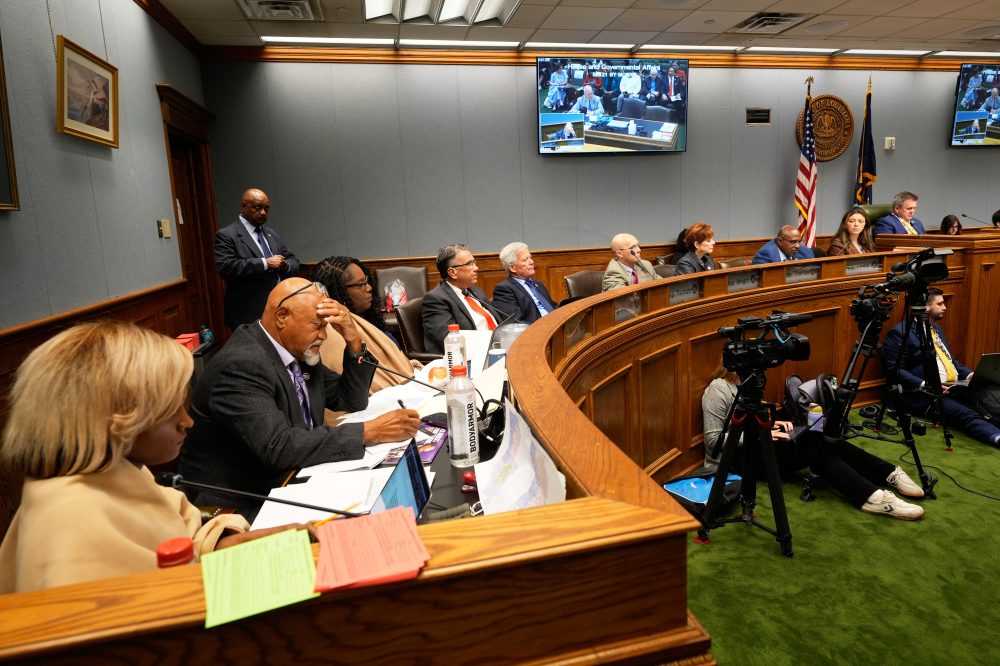
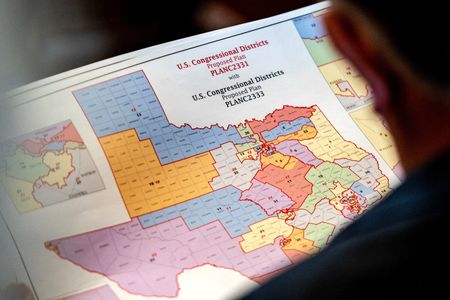
Louisiana faces a deadline to create new congressional district boundaries after the U.S. Supreme Court determined its current map constitutes illegal racial gerrymandering. State legislators are now grappling with how to accomplish this redistricting task.
On Thursday, the House examined a proposal that varies from legislation the Senate has already approved. However, both plans from the GOP-controlled legislative chambers would remove a majority-Black district that was central to the Supreme Court’s decision. Each proposal would also create opportunities for Republicans to gain another seat in the upcoming midterm elections.
“We drew the map to improve Republican strength,” state Rep. Beau Beaullieu said while opening Thursday’s debate.
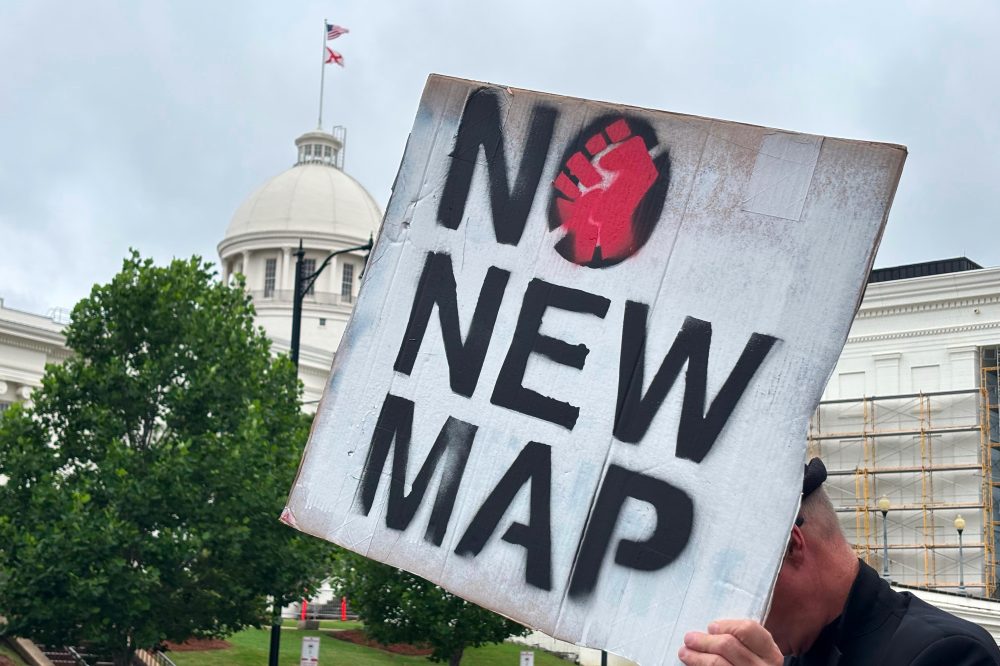
Following the Supreme Court’s late April decision, multiple Southern states have moved quickly to take advantage of a diminished federal Voting Rights Act to redraw their congressional boundaries. This represents the most recent escalation in an intense nationwide redistricting fight leading up to November’s elections, encouraged by President Donald Trump.
Currently, Republicans are prevailing in the redistricting competition. However, this advantage doesn’t guarantee they will control the U.S. House after November. Democrats require only a small number of additional seats to gain chamber control. Trump is dealing with unfavorable approval numbers. Additionally, midterm elections historically result in congressional losses for the sitting president’s party.
In 2022, Louisiana’s Republican-controlled Legislature overturned Democratic Gov. John Bel Edwards’ veto to implement new congressional boundaries based on 2020 census data. Under those district lines, five Republicans and one Democrat secured victories in 2022. However, federal courts ruled the map violated the Voting Rights Act by failing to create a second district with a majority-Black population.
The Legislature addressed this in 2024 by establishing a second majority-Black district that extended over 200 miles (321 kilometers) northwest from Baton Rouge to Shreveport. This configuration led to the election of Democratic U.S. Rep. Cleo Fields. Yet this map also faced legal challenges, and the Supreme Court overturned it as an unlawful racial gerrymander.
Republican Gov. Jeff Landry has delayed the state’s May 16 congressional primary until later in the summer to provide time for another redistricting effort. The state House and Senate are attempting to reach agreement on a plan before their session concludes on Monday.
Beaullieu explained that Republicans rejected a map designed to capture all six of the state’s U.S. House seats because it would have necessitated incorporating more Democratic voters into Republican-held districts, potentially creating problems by threatening the reelection chances of House Speaker Mike Johnson or Majority Leader Steve Scalise.
Louisiana legislative committees have received extensive public testimony from citizens opposing the Republican redistricting proposals.
On Wednesday, Democratic state House leaders from Georgia and Texas joined their Louisiana counterparts to demonstrate regional unity and opposition to Republican redistricting initiatives.
Georgia House Minority Leader Carolyn Hugley characterized Louisiana’s attempt to eliminate one of its two majority-Black districts as regression for Black Americans across the South.
Historically, “the government was used as a weapon against our community. It used the law, it used courts, it used maps to make sure that people who look like me would never have real representation, that we would never be heard, that we would be present but never powerful,” said Hugley, who is Black. She continued, “Republicans are redrawing voting maps to lock in one-party control.”
Democratic state Rep. Edmond Jordan, who chairs the Louisiana Legislative Black Caucus, indicated the congressional district dispute would return to the courts once lawmakers approve a new map.
“We are going to continue to fight for the African Americans, not only of this state but throughout the whole country,” Jordan said.
Since the Supreme Court’s ruling one month ago, several Southern states have already taken redistricting action.
Florida’s Republican-controlled legislature approved new congressional districts within hours of the ruling, finishing a redrawing process that was already underway in anticipation of the decision. A state judge this week refused to prevent the use of those districts, which could provide Republicans with up to four additional seats in the midterm elections.
Tennessee enacted new U.S. House districts one week after the ruling, dividing a majority-Black district centered in Memphis as part of a Republican effort to secure an additional seat.
Alabama also tried to modify its congressional districts, though a federal judicial panel this week stopped a Republican-drawn map that it found intentionally discriminates against Black people. The state’s Republican attorney general has requested that the U.S. Supreme Court allow the map to be used this year. Republican Gov. Kay Ivey also extended a deadline to certify candidates for an Aug. 11 special congressional primary from Friday to next Wednesday, hoping the Supreme Court will render a decision by then.
Despite pressure from Trump, South Carolina’s Senate this week chose against congressional redistricting. Some senators argued it was too late to implement changes since in-person early voting had already begun. Other Republican lawmakers expressed concerns that the plan might backfire by enabling Democrats to win more seats.
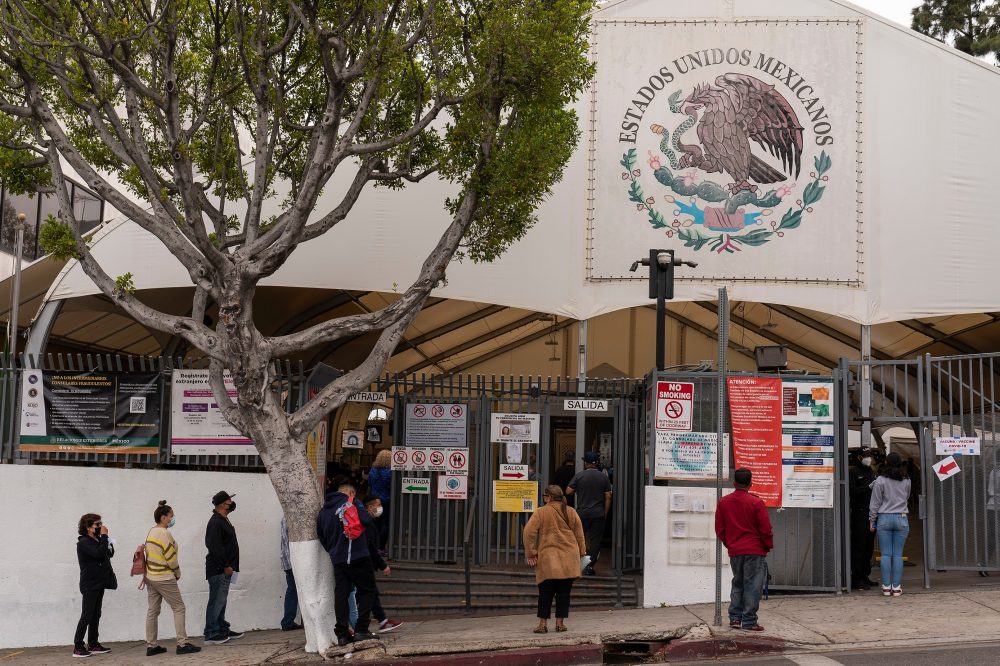
Mexican diplomatic offices across the United States are facing potential closure following a State Department evaluation that has sparked concern among immigrant communities nationwide.
The Los Angeles Mexican consulate alone assists thousands of citizens weekly with birth registrations, passport applications, and increasingly, legal assistance for family members caught up in current immigration enforcement actions since President Donald Trump’s second term commenced.
While all 53 Mexican diplomatic offices throughout the U.S. deliver essential services to Mexican nationals — similar to how nine American consulates in Mexico serve U.S. citizens there — federal officials have begun an assessment that could lead to an undisclosed number of closures.
The State Department has not provided specific reasoning for the evaluation, though it occurs during intensified immigration crackdowns, challenging bilateral disputes, and conservative allegations that these diplomatic offices have meddled in American politics while promoting northward migration.
Azucena Aviles, a 33-year-old mother who traveled over an hour to the Los Angeles facility this month for passport services, emphasized the importance of consular assistance, particularly in California where nearly 13 million residents claim Mexican heritage, including approximately 1.7 million without legal status.
“It wouldn’t be fair if they messed with the Mexican people, especially with our support systems, which come from the Mexican consulate and which, in some way, help or protect our fellow Mexicans,” she said.
Trump has intensified pressure on Mexico, raising concerns about human rights, national sovereignty, and regional diplomacy.
However, his administration has offered only general explanations for initiating the evaluation.
“Department of State is constantly reviewing all aspects of American foreign relations to ensure they are in line with the President’s America First foreign policy agenda and advance American interests,” Dylan Johnson, Assistant Secretary of State for Global Public Affairs, wrote in an email.
The review might connect to the Trump administration’s immigration initiatives targeting deportations of undocumented individuals. Mexicans represent the largest group among such people — approximately 4.3 million according to the Pew Research Center.
Bilateral tensions could also influence the decision, as Trump escalates pressure on Mexico before crucial free trade discussions vital to both economies, adopting more aggressive policies toward America’s southern neighbor and even threatening military action against Mexican cartels.
Mexican President Claudia Sheinbaum has avoided direct confrontations with Trump, instead pursuing diplomatic solutions including dispatching senior officials to Washington and maintaining positive relations through cartel crackdowns. Sheinbaum and her predecessor have also assisted in reducing migration to the U.S. and accelerating deportations of other Latin American migrants.
Yet Sheinbaum has taken stronger positions regarding Mexican deaths in U.S. immigration facilities, calling them “unacceptable” and stating detention conditions were “incompatible with human rights standards and the protection of life.” She directed Mexican consulates to conduct daily detention center visits ensuring citizens face safe conditions.
Diplomatic relations deteriorated recently after U.S. indictments of several Mexican officials on drug trafficking charges, and two CIA officers died during an anti-narcotics operation in northern Mexico — American involvement that Sheinbaum said her government hadn’t authorized. The drug raid raised uncomfortable questions in Mexico about U.S. involvement in domestic security operations. Years of reciprocal tariffs between both countries have also increased tensions.
Foreign consulate reviews typically signal “a bilateral relationship is in a very, very rocky moment,” said Arturo Sarukhan, a former Mexican ambassador to the U.S. For Mexico, it arrives at “the worst moment of the U.S.-Mexico relations” in decades, considering current disagreements, he noted.
Adding strain is a theory promoted by Peter Schweizer, a writer popular among Trump supporters who claims Mexican consulates interfere in U.S. politics and encourage migration. Experts say while some Mexican consulate officials may have attempted influencing domestic politics, no evidence exists of U.S. election interference.
Responding to the State Department review, Sheinbaum called the notion that Mexican consulates are “playing politics in the United States is completely false.” She stated consulates everywhere exist to “always protect” citizens.
Sarukhan also said while consulates defend Mexican citizens’ rights, no evidence supports claims of U.S. election interference.
Regardless of motivations behind the consulate evaluation, it has generated anxiety.
During a weekly public session at the Los Angeles consulate, an unnamed woman whose husband was in U.S. immigration detention requested help finding legal representation, demonstrating crucial services consulates provide citizens.
An elderly man mentioned hearing about the review and inquired about potential closures.
Carlos González Gutiérrez, Mexico’s senior diplomat in Los Angeles, responded that, as Sheinbaum indicated, there would be “no reason whatsoever” for the U.S. to close a Mexican consulate.
Closing consulates “would have significant, devastating effects for Mexican immigrants,” especially in remote areas, Ariel Ruiz Soto, a senior policy analyst for the Migration Policy Institute, told The Associated Press.
Daily, consular officials visit the Immigration and Customs Enforcement facility in downtown Los Angeles to identify and interview detained Mexican nationals.
González Gutiérrez, 62, opens each weekly public session by reporting how many detained Mexicans consular officials have interviewed since last June’s Los Angeles immigration crackdown. At the May 11 meeting, the number reached 1,940. Nearly half maintained deep U.S. connections, he said. About 46% have been deported, 35% have U.S.-born children, 69% entered through official ports, 6% overstayed visas, and 2.5% sought asylum. Most were men working in construction, agriculture, landscaping and service industries.
He also challenged claims that Mexican consulates interfere in U.S. politics.
“We are guests of this country’s government, just as U.S. consuls are guests of the Mexican government. In that sense, we are neither activists nor spies,” said González Gutiérrez, who has served similar roles at other Mexican consulates in the U.S. “We carry out our work openly, within a pluralistic and democratic society.”
The Trump administration has launched federal court challenges against four states that have refused to provide undercover license plates to federal immigration enforcement agents, marking another battleground in ongoing tensions between the White House and states led by Democratic officials.
Federal prosecutors filed separate legal actions on Wednesday targeting Maine, Massachusetts, Oregon, and Washington state, claiming these jurisdictions have created unconstitutional barriers that hamper law enforcement operations and put federal agents at risk.
“By denying undercover license plates to DHS components, including ICE, while issuing them to their own state agencies, these governors are pursuing discriminatory and obstructionist policies against federal law enforcement,” said acting Attorney General Todd Blanche in a statement.
“These actions undermine federal immigration enforcement, allow dangerous criminals to escape justice, and terrorize American communities,” Blanche added.
The federal lawsuits were submitted to U.S. district courts in each affected state. The legal filings accuse the four state administrations of attempting “to obstruct the Federal Government’s immigration enforcement efforts, even though control over immigration and the nation’s borders is an exclusive federal power.”
Federal attorneys also contend in their court papers that the Constitution’s Supremacy Clause prevents state governments from interfering with federal law enforcement activities.
A spokesperson for Massachusetts Attorney General Joy Campbell said the state’s lawyers are “reviewing the complaint and will defend the RMV policy to the greatest extent possible.”
Representatives from other states have supported their policies but had not immediately responded to requests for comment regarding the federal legal action.
The federal government maintains that its agents “frequently investigate and apprehend violent criminals, including cartel members, gang members, sex offenders, human traffickers, and other violent offenders” and argues that making those officers easily recognizable exposes them to greater harassment and potential violence.
The legal challenge follows previous exchanges between federal prosecutors and state leadership. The federal government had earlier sent correspondence to state officials requiring them to explain their policies.
Maine Attorney General Aaron Frey responded to the Justice Department last week, supporting his state’s approach and challenging the federal agency’s claim that it has interfered with enforcement operations.
“Rather, the program reflects a legitimate and constitutional policy choice by the SOS not to allow its resources to be commandeered by the federal government for use in civil immigration enforcement activities that have, in Maine and elsewhere, resulted in multiple incidents of abusive and unconstitutional conduct by DHS officials,” Frey wrote.
Shenna Bellows, Maine’s secretary of state, announced a pause on confidential license plates in January, after federal authorities ramped up their immigration enforcement activities in the state. Bellows said at the time that the state wanted to be “assured that Maine plates will not be used for lawless purposes.”
The federal suit against Maine argues that the state “has issued confidential license plates to law enforcement agencies for many years” and that “such plates are explicitly authorized under Maine law.” The state’s review this year, the suit argues, resulted in unlawful state regulation of the federal government by requiring federal applicants for state license plates to attest that federal vehicles that obtained confidential plates would not be used for civil immigration enforcement. The suit also states that Maine did not impose commensurate requirements on state or local agencies applying for the plates, making the program discriminatory against the federal government.
Bellows said last week that she anticipated the lawsuit.
“When ICE asked for confidential license plates, I said no. We don’t have secret police in a democracy, and covert civil immigration enforcement is not something Maine will facilitate. If the DOJ wants to sue us over that, we’ll see them in court,” Bellows said in a May 22 statement.
The Trump administration’s arguments on the license plates are similar to its defense of federal agents wearing masks on their deployments to American cities. That became a flashpoint in an extended government shutdown over Department of Homeland Security funding, as Democrats on Capitol Hill demanded key changes to how Trump’s mass deportation plans were carried out after masked federal agents killed two U.S. citizen protesters in Minnesota.
The White House and DHS have maintained the agency’s mask policy, and the administration already has won a federal court order blocking a California law that barred law enforcement officials from covering their faces in the state.
Additionally, the administration has been at odds with so-called sanctuary cities where local law enforcement does not assist federal authorities with immigration enforcement. And Blanche has instructed the Justice Department’s Civil Division to identify all state and local laws, policies, and practices that could impede what the administration describes as “lawful federal operations.”
MACKINAC ISLAND, Mich. — Michigan’s Democratic governor has definitively ended speculation surrounding a possible 2028 White House run, announcing Thursday that she will not pursue the presidency after her term concludes at year’s end.
Democratic Gov. Gretchen Whitmer of Michigan had been considered by many within her party as a potential presidential candidate following her strong electoral performances in a key swing state that Republican Donald Trump has won in two presidential elections. Despite months of speculation, she had previously given only vague responses regarding her future political plans.
During a Thursday interview with Fox 2 Detroit, she provided her most definitive statement to date.
“I think there will be a robust group of people running for president. I will not be one of them in 2028,” Whitmer said.
The governor made these remarks while attending Michigan’s yearly Mackinac policy conference, where she was scheduled to receive recognition and speak later in the day.
Previously, she had indicated plans to take time considering her next political steps.
“I don’t know that I’ll put my name on the ballot again. I’m just not sure,” Whitmer said at an April breakfast in Detroit. “But I also am 54 years old. I got a lot of gas in the tank.”
The Mackinac conference has emerged as a center for presidential political discussions, with former Transportation Secretary Pete Buttigieg and U.S. Sen. Elissa Slotkin — both viewed as potential 2028 candidates — also participating in the event.
WASHINGTON – The U.S. Treasury Department announced Thursday it is eliminating 76 individuals, ships and organizations from its sanctions blacklist, describing the entries as outdated in an effort designed to enhance enforcement against more complex and dangerous targets.
According to the department, businesses had expressed concerns about having to dedicate substantial resources to screening low-risk targets. Some of these targets included financial networks that no longer operate, or individuals who had passed away.
“Treasury is exploring ways to relieve that burden while helping to prioritize more impactful activities to implement sanctions, including scrutinizing for sanctions evasion,” the department stated in an announcement regarding the removal of entities from the Specially Designated Nationals list.
Sanctions targeting nations including Venezuela, Iran, Syria and Russia have expanded significantly in recent years. The Treasury Department reported that annual new additions to the list jumped from 880 in 2017 to over 3,000 in 2024.
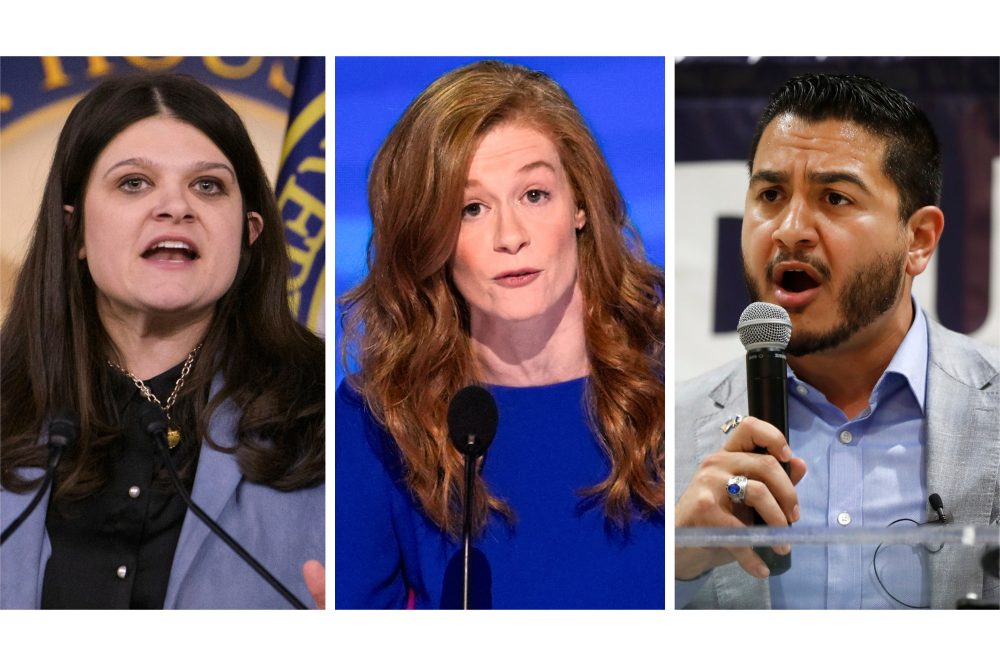
Democratic candidates in Michigan are working to maintain control of an available U.S. Senate position while their party attempts to regain congressional power in Washington. However, internal disagreements must be resolved first.
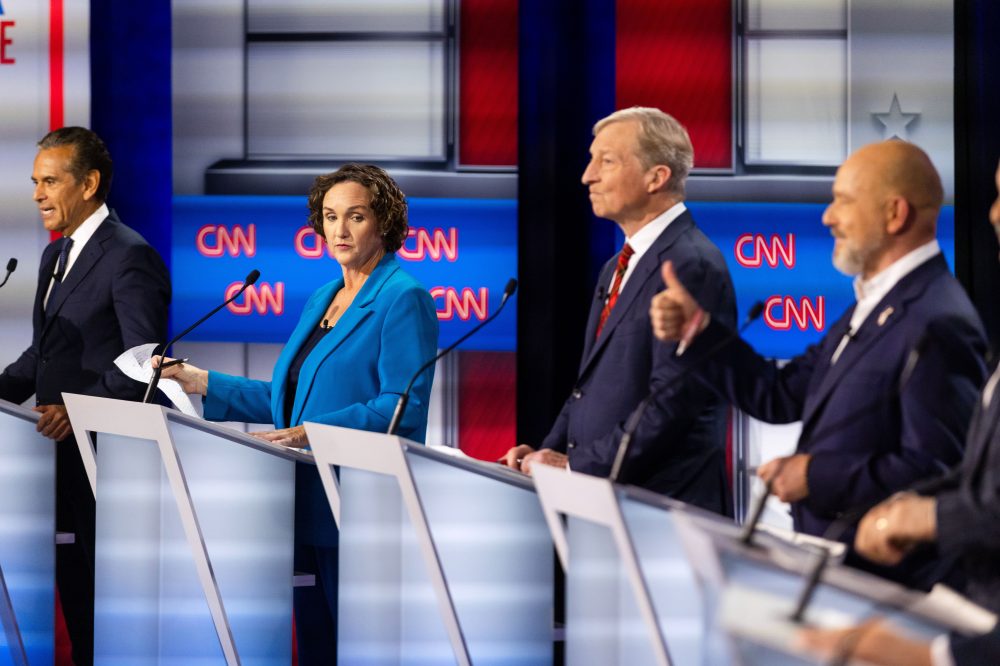
Three leading contenders for the nomination will participate in a debate Thursday during the state party’s yearly policy gathering on August 4th. This represents a significant early chance for the candidates to highlight their differences to voters statewide.
As primary elections conclude nationwide, Michigan’s competitive race has become viewed as an indicator of the party’s direction heading into November’s general election and future campaigns.
Taking the stage will be U.S. Rep. Haley Stevens, state Sen. Mallory McMorrow, and former public health official Abdul El-Sayed. Their Republican opponent is Mike Rogers, a former congressman who lost the 2024 Senate race to Democrat Elissa Slotkin. Democrat Gary Peters is not seeking a third Senate term this year. No Michigan Republican has been elected to the U.S. Senate since 1994.
A difficult primary battle for a crucial Senate position was not what Democrats had hoped for.
Thursday’s debate will highlight the philosophical splits that have challenged Democrats since presidential nominee Kamala Harris and the party experienced major defeats in 2024.
Stevens, serving her fourth congressional term representing an area near Detroit, is viewed as the more centrist, establishment-backed option. She has received support from senators in competitive states, including Ruben Gallego of Arizona and Catherine Cortez Masto of Nevada. Stevens has described herself as a “staunchly pro-Israel Democrat.”
El-Sayed has positioned himself as the progressive choice, receiving early support from U.S. Sen. Bernie Sanders, I-Vt. El-Sayed has advocated for “Medicare for All” and increased taxes on wealthy individuals, while characterizing Israel’s actions in Gaza as a “genocide.” He has faced criticism, including from party members, for appearing with controversial streamer Hasan Piker.
McMorrow won her first Michigan Senate election in 2018 and received national recognition for speeches criticizing Republicans. She has established herself between her two primary competitors. She has questioned the Democratic establishment and stated she would not back New York’s Chuck Schumer for Democratic leader in the U.S. Senate again.
Rogers was defeated by then-U.S. Rep. Slotkin by less than 20,000 votes in a state that Republican Donald Trump won while securing a second presidential term.
Rogers will not have the advantage of Trump leading the ticket this time. However, Rogers enters the general election with his own benefits, including facing no primary opposition.
During a Wednesday phone conversation, Rogers recognized the previous campaign’s challenges, noting that the financial disadvantage following a difficult primary “made it really difficult” to succeed in the general election.
However, he emphasized this year presents different circumstances.
“This is a change election. People want to talk about Washington. This is about Michigan,” Rogers said.
Focusing on local issues may prove challenging in a race influenced by national concerns like tariffs and gas prices, both significantly affecting Michigan. External spending is anticipated to reach nine figures. The Republicans’ U.S. Senate campaign organization has allocated $45 million for advertisements, while Democrats have committed $20 million.
“They’re going to spend a lot of money trying to make you not like me. We’re going to spend our money trying to tell people what we’re going to do for them and make their lives in our state better,” Rogers said.
WASHINGTON (AP) — Federal prosecutors have launched a perjury probe targeting E. Jean Carroll, the advice columnist who alleges Donald Trump sexually assaulted her at a Manhattan department store three decades ago, a source with knowledge of the matter revealed.
The source, who was not permitted to speak publicly about the active investigation, disclosed the inquiry on condition of anonymity. Chicago-based federal prosecutors are spearheading the perjury probe, while acting Attorney General Todd Blanche has recused himself due to his previous role as Trump’s personal attorney, the source explained.
Carroll’s legal team did not respond immediately to Associated Press requests for comment Thursday.
This marks another in a string of probes launched by the Trump administration Justice Department targeting individuals viewed as presidential opponents. These moves, which include last month’s indictment of former FBI Director James Comey, have sparked concern among Democrats and former officials who worry about the politicization of an agency designed to operate independently from White House influence.
According to Carroll’s account, what began as a playful, accidental meeting with Trump in 1996 at Bergdorf Goodman’s Fifth Avenue location turned violent. She alleges Trump pushed her against a dressing room wall, yanked down her tights and sexually assaulted her. Trump has dismissed these claims as a “made-up scam.”
In 2023, a jury determined Trump was liable for sexually abusing Carroll in 1996, ordering him to pay $5 million in damages. A separate jury the next year awarded Carroll $83.3 million in a defamation lawsuit stemming from Trump’s social media posts attacking her.
A recent court filing indicated Trump can postpone payment of the award pending U.S. Supreme Court review or rejection of his appeal. The 2nd U.S. Circuit Court of Appeals granted Trump’s legal team’s request to delay payment to Carroll, though it mandated he post a $7.4 million bond to cover potential additional interest costs, as Carroll’s attorney had requested.
CNN initially reported on the Carroll investigation.
A Baptist pastor who serves as a state representative in northern Ohio is championing legislation known as the American Heritage Act that draws inspiration from Charlie Kirk’s educational philosophy.
The proposed legislation would allow educators to teach about the beneficial influence of Judeo-Christian principles throughout American history. The three-term lawmaker, Republican state Rep. Gary Click, represents constituents in northern Ohio and maintains his pastoral duties alongside his legislative responsibilities.
Critics of the proposed measure contend that it would present a biased perspective on historical events rather than providing students with a comprehensive understanding of the nation’s past.
The bill specifically focuses on permitting instruction regarding how Judeo-Christian values have positively shaped the development of the United States throughout its history.
A Washington federal judge has refused to stop President Donald Trump’s executive order that would establish a federal voter registry and restrict mail-in voting, allowing the controversial directive to proceed as midterm elections approach.
U.S. District Judge Carl Nichols, who was appointed by Trump, turned down the emergency request late Wednesday from Democrats and civil rights organizations. The groups had contended that Trump’s directive would likely violate the Constitution since states and Congress, rather than the president, hold authority over election procedures. Nichols sided with the Trump administration’s argument that it was premature to block the order since no implementation has begun.
“The Court recognizes that the Postal Service may ultimately issue a final rule that directly affects Plaintiffs or their members, or that the Government may develop State Citizenship Lists that omit specific individuals due to particularized flaws,” Nichols wrote. “Plaintiffs may, of course, renew their motions if and when those future actions occur. Until then, however, Plaintiffs cannot show that preliminary injunctive relief is warranted.”
The court fight now moves to Boston, where voting rights advocates have filed another federal lawsuit challenging the executive order.
Trump signed the directive in March following congressional stalling of a voting reform bill he had backed. The order would establish a federal registry of qualified voters and instruct the U.S. Postal Service to mail ballots exclusively to individuals on that registry. Election administrators have warned the plan could lead to widespread problems and potential misuse.
Following his 2020 election defeat to Democrat Joe Biden, Trump has repeatedly made unsubstantiated claims about mail voting fraud and initiated a federal probe into that election, despite numerous audits and reviews, including Republican-led ones, confirming no significant fraud occurred. Trump has also expressed intentions to “take over” election oversight in Democratic regions.
Democrats and civil rights advocates had pressed Nichols for an immediate restraining order, citing the ongoing primary season and states’ preparations for November midterm contests.
This marks Trump’s second executive directive aimed at election reform. His first election order, signed early in his second term, remains blocked by several federal judges. That initial directive sought to mandate documentary citizenship proof for voter registration, along with additional requirements.
A federal judge in Washington D.C. has refused to issue a temporary injunction against President Trump’s executive order targeting mail-in voting restrictions. The judicial decision allows the executive order to remain in effect for now.
The executive order, which President Trump signed in the White House’s Oval Office in March, seeks to impose limitations on voting by mail procedures. The order has faced legal challenges since its implementation.
While this particular judge declined to block the order temporarily, legal proceedings continue as another judge is expected to potentially issue a ruling on the executive order in the near future.
WASHINGTON — What was expected to be straightforward passage of a roughly $70 billion immigration enforcement funding measure for the remainder of President Donald Trump’s administration has hit unexpected snags for Republicans.
The legislation has encountered delays due to disputes over White House ballroom security funding included in the package and the establishment of a $1.8 billion fund for government mistreatment claims. This setback has not only postponed action on a key GOP priority but is also casting doubt on other elements of the party’s legislative plans, including the possibility of passing another comprehensive party-line measure known in Washington as “Reconciliation 3.0.”
In recent weeks, Republicans have been building the foundation for such legislation, viewing it as a crucial final appeal to voters ahead of the midterm elections.
Speaker Mike Johnson and Majority Leader Steve Scalise, both from Louisiana, have been conducting meetings with committee and caucus leaders to evaluate proposals that have solid support from party members. They aim to build on last summer’s major tax and spending reduction bill with legislation that would boost Pentagon funding by hundreds of billions while implementing cuts in other areas to offset costs, which they describe as addressing government waste and fraud.
This represents a significant political risk during an election year. A successful outcome would strengthen the GOP’s narrative of delivering on legislative commitments. A failure would highlight Republican divisions under Trump that might prompt voters to consider alternatives.
Johnson successfully guided the House GOP’s narrow majority through Trump’s tax and spending cuts legislation last summer with a 218-214 vote. Republicans could only afford to lose three votes from their own party at that time, and they lost just two.
While facing another tight margin for error, Johnson expressed greater confidence about success this time.
“It will be just as beautiful, but not as big, so it’ll have less provisions and less things to get everybody to yes on,” he stated.
Rep. Jodey Arrington, who chairs the House Budget Committee, indicated Republicans maintain the same level of motivation they had for last year’s tax cuts measure.
“This one, I think you’ll have potentially money to support our troops in conflict,” said the Texas representative. “I can’t imagine a Republican not wanting to support our troops and military community in a time of conflict.”
The Trump administration has requested that Republicans allocate $350 billion for defense through a reconciliation bill.
However, Rep. Brendan Boyle, the ranking Democrat on the House Budget Committee, believes Republicans will face greater challenges than they encountered with Trump’s major tax and spending cuts legislation.
“I think it will be for a couple of reasons. First is the president’s approval rating. He was at a much higher level a year ago than he is right now,” said the Pennsylvania representative. “Number 2, we are much closer to the November midterm elections. So, if you’re one of a dozen or a couple dozen House Republicans who are really vulnerable in a swing district, you have to think even more carefully about voting for something that has even more health care cuts in it.”
Last summer’s tax cuts bill decreased Medicaid spending by over $900 billion across ten years and reduced nutrition assistance spending by approximately $187 billion over the same period, according to the Congressional Budget Office.
Senate Majority Leader John Thune described a third reconciliation bill to bypass the filibuster as a “potential option,” offering lukewarm support at best.
“We haven’t made any commitments on that, but we’re hearing people out,” said the South Dakota senator.
Sen. Thom Tillis of North Carolina emphasized that lawmakers should understand the bill’s contents before beginning the legislative process to prevent it from falling apart.
“If it just becomes another exercise where you’re not really sure what’s going to be the end product, then I think it’s a mistake even to pursue it,” Tillis stated. “We ought to be smart about it if we do a third one, but it is kind of a moonshot.”
Sen. Lisa Murkowski of Alaska expressed skepticism about the approach.
“A third reconciliation may or may not happen. I’m just being direct,” she said.
The House is scheduled to remain in session for approximately 24 additional days before the August recess begins. This provides limited time to pass a budget framework in both chambers, which serves as the initial requirement for pursuing party-line tax and spending legislation. Committees would also need to complete their work on advancing their sections of the bill.
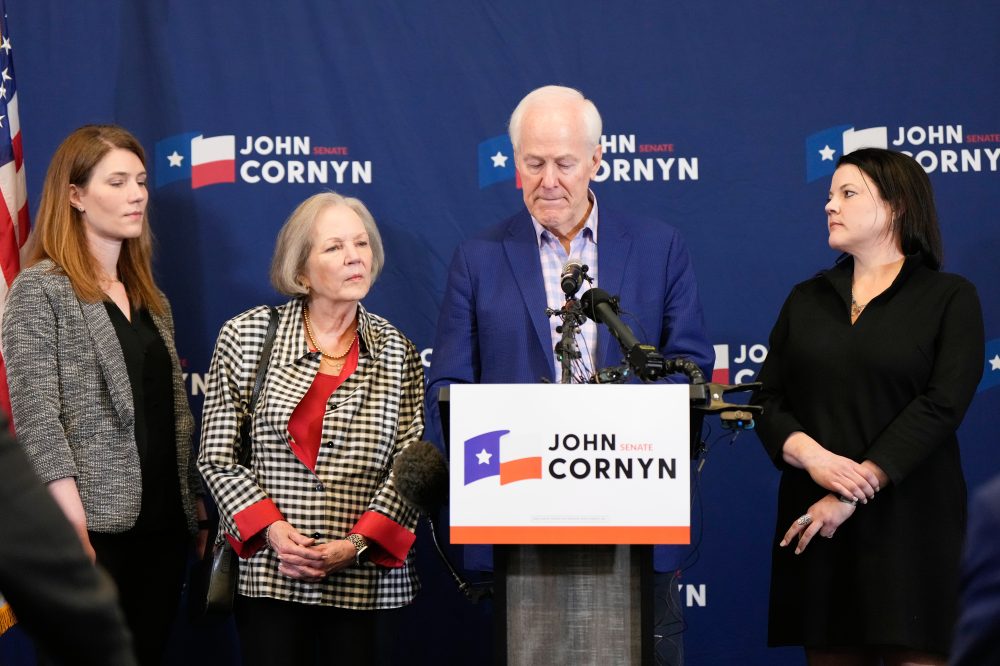
Another obstacle could be Trump’s treatment of current senators whose support he needs for any package to become law. Trump backed challengers against two senators who faced difficult primary contests and ultimately lost — Sens. Bill Cassidy of Louisiana and John Cornyn of Texas.
Cassidy has already demonstrated increased willingness to oppose the president. Following his primary defeat, he voted last week to advance legislation seeking to force Trump to withdraw from hostilities with Iran.
Lawmakers indicated they could modify and revive some proposals that the Senate parliamentarian rejected for inclusion in last year’s reconciliation bill. For instance, Republicans attempted to prevent states from extending Medicaid coverage to immigrants in the U.S. illegally.
Rep. August Pfluger of Texas, who chairs the Republican Study Committee, said the bill should be built on three foundations: making the country more affordable and secure while reducing fraud.
The group’s recommendations include eliminating capital gains taxes on home sales to first-time buyers to stimulate the market, and implementing a 5% tax on funds sent by noncitizens to their home countries.
Arrington said he would also like to strengthen requirements for the earned income tax credit, a program that increases financial benefits for working but has a high rate of improper payments. He also advocated for preventing immigrants in the U.S. illegally from residing in housing units financed by housing tax credits provided to developers who build and renovate affordable rental housing.
“There’s a lot more work to be done to build on what we did in the first one with Medicaid and SNAP (nutrition assistance), with respect to fraud,” Arrington said.
Veterans’ advocacy organizations are raising concerns about the gap between presidential promises and budget reality when it comes to housing assistance for homeless former service members.
An executive order signed by the president was expected by veteran groups to accelerate efforts to provide housing for veterans experiencing homelessness. However, advocates report that the anticipated momentum has not materialized, leaving them seeking explanations for the lack of progress.
The situation has highlighted tensions between policy announcements and the funding necessary to implement meaningful change for veterans in need of housing support. Veterans’ organizations are now pressing for answers about why the executive order has not translated into tangible results.
The disconnect between the administration’s stated commitment to veteran housing and the actual resources allocated has become a source of frustration for those working to address homelessness among former military personnel.
Undecided voters across several battleground states are incorporating fuel costs into their electoral decision-making process, according to ongoing conversations with these key constituents.
Through NPR’s Swing Shift initiative, which maintains regular contact with undecided voters in competitive states, these Americans express differing opinions about responsibility for elevated gasoline prices. However, they unanimously acknowledge that rising fuel costs are affecting their household budgets.
The voters participating in this ongoing project represent multiple swing states including Nevada, Michigan, Georgia, North Carolina, Wisconsin, and Pennsylvania. Their perspectives on energy costs and political accountability continue to evolve as they weigh their electoral options.
The financial strain from higher pump prices appears to be a consistent concern among this diverse group of voters, even as they remain divided on which political figures or policies bear responsibility for the current pricing situation.
A politician in Ohio is throwing support behind proposed legislation known as the Charlie Kirk American Heritage Act, which would allow educators to include instruction about how religion has influenced American historical events.
Those who oppose the measure argue that it presents a one-sided perspective on historical events that has the potential to create controversy and division among students and communities.
NEW YORK – Former President Donald Trump submitted a revised defamation lawsuit on Wednesday demanding at least $10 billion in damages from the Wall Street Journal regarding their coverage of his connections to Jeffrey Epstein, following a federal judge’s dismissal of his original complaint due to legal shortcomings.
The legal action represents one of multiple lawsuits Trump has initiated in his individual capacity targeting news organizations, which critics characterize as part of a broader effort to pressure media outlets.
Trump’s legal filing alleges the Rupert Murdoch-owned publication damaged his standing through an article that depicted a birthday card to the deceased sex offender Jeffrey Epstein as containing Trump’s signature. Trump and his legal team maintain the card is fraudulent, despite its release by lawmakers conducting an investigation into Epstein’s case.
The revised lawsuit seeks at least $10 billion in damages, matching the amount requested in the previous filing.
“At the time of publication, Defendants recklessly disregarded whether the Defamatory Statements were true and/or they purposefully avoided the discovery of the truth,” Trump’s attorneys stated in the updated complaint.
The legal action, submitted in Miami federal court, identifies Rupert Murdoch, Dow Jones, News Corp and its CEO Robert Thomson, plus two Wall Street Journal reporters, Khadeeja Safdar and Joseph Palazzolo, as defendants. The lawsuit claims they defamed Trump and caused him to experience “overwhelming” financial and reputational damage.
Dow Jones has stated it maintains complete confidence in the thoroughness and precision of the Journal’s journalism and plans to vigorously contest the lawsuit.
Epstein, the disgraced financier and sex offender, passed away in a New York detention facility in 2019. His situation spawned conspiracy theories that gained traction among Trump’s supporter base, who suspected the government was concealing Epstein’s connections to wealthy and influential individuals. Trump has stated he ended his relationship with Epstein before the financier’s legal problems became public knowledge in 2006.
U.S. District Court Judge Darrin P. Gayles, an appointee of former President Barack Obama, dismissed Trump’s initial complaint in April. The judge determined Trump had not satisfied the “actual malice” legal requirement for public figures in defamation cases, which demands evidence that a defendant published information they knew or should have known was false.
Trump has also initiated defamation and other legal actions against additional media organizations, including the New York Times, the BBC and Iowa’s Des Moines Register. These outlets have rejected wrongdoing allegations and are contesting the cases in court.
Trump’s administration has moved to limit press access to government agencies and threatened to employ regulatory authority against critical outlets, prompting legal challenges from media organizations.
The White House has characterized Trump as the most transparent and available U.S. president in history, claiming his administration has expanded press access in unprecedented ways.
SACRAMENTO, Calif. — California’s crowded gubernatorial primary has Democratic voters struggling to make their choice as the election approaches its final stretch.
Despite voting starting in early May before the June 2 primary election, Democratic voters have been slower than usual to submit their ballots following a turbulent campaign season filled with unexpected developments. This gubernatorial contest differs from previous ones, lacking a clear leading candidate or celebrity figure comparable to Republican Arnold Schwarzenegger or Democrat Jerry Brown in past races.
“I’m kind of pinching my nose and voting this go-around rather than being excited,” said Colin Culver, a 21-year-old San Diego resident who ultimately voted for Tom Steyer, a billionaire hedge fund manager turned climate activist.
The confusion among Democratic voters stems partly from California’s top-two primary format, which puts all candidates on one ballot without regard to party affiliation. Approximately 60 candidates are competing to replace the termed-out Democratic governor. The field features six major Democratic contenders and only two well-known Republicans.
Due to the large Democratic field, party officials worried months earlier that the two leading Republican candidates, Riverside County Sheriff Chad Bianco and conservative commentator Steve Hilton, might both advance to the general election, eliminating Democrats entirely. This possibility became less probable after former Rep. Eric Swalwell withdrew from the race following sexual assault allegations, though the controversy added to Democratic voters’ unease. President Donald Trump’s April endorsement of Hilton may have unified Republican voters behind him and reduced chances of a Republican surprise in a state that last elected a Republican governor in 2011.
However, voter anxiety persists. Some Democrats are delaying their vote submissions, hoping one candidate will emerge as the clear choice in the final days, using polling data to guide their decisions. Others have found it challenging to decide, reluctantly selecting a candidate after finding the entire field underwhelming.
Even typically reliable Democratic primary voters — usually older, white constituents — have been hesitant to submit their ballots, according to Paul Mitchell, a Democratic strategist who monitors ballot returns.
“My joke is: Call your Democratic parents and tell them to turn in their ballot,” he said. “They are holding onto the ballot because they have seen this kind of topsy-turvy governor’s race. They’re waiting to make sure they’re making the right choice.”
As of Wednesday, approximately 10% of the state’s roughly 23 million registered voters had cast ballots, based on Mitchell’s tracking system. This includes about 15% of Republicans, 10% of Democrats, and 7% of unaffiliated or third-party voters. This pattern is atypical, as Democrats have historically voted early in recent elections while Republicans typically wait until Election Day.
Among the leading Democratic candidates voters are considering are former state attorney general and federal Health secretary Xavier Becerra and Steyer.
A mid-May survey by the Public Policy Institute of California showed that Becerra and Hilton each garnered support from approximately 2 in 10 likely California primary voters. Steyer, Bianco, and former Congresswoman Katie Porter each received backing from 10% to 15% of likely voters in the poll. No other candidates reached double-digit support.
Becerra’s support has grown significantly from just 5% in a PPIC survey conducted in late March and early April, when Swalwell remained in the race.
Some voters are making their decisions independent of polling data. San Francisco native Mary O’Neal chose former Los Angeles Mayor Antonio Villaraigosa based on her approval of his leadership record from 2005 to 2013. Despite participating in debates, he has struggled to build substantial support.
Fresno native Alexa Duran, 22, a recent University of California, Berkeley graduate, said she’s considering Becerra, though she has reservations about his decision as attorney general not to investigate the 2020 killing of a Latino man by a police officer in the San Francisco Bay Area.
“I know he has tons of political experience, but I’m just not sure if he’s the right candidate,” Duran said.
Amber Larson, 41, a judicial analyst for the state living in Chico, favors Ramsey Robinson, a socialist candidate. However, she believes voting for him would be a “waste” given his minimal chances of success.
She’s reluctant to support a career politician like Becerra and has doubts about billionaire candidates like Steyer.
“Are we at a point where only a billionaire can beat an establishment, career politician?” Larson said, referencing Steyer spending millions to largely self-fund his campaign.
Despite her reservations, she planned to vote for Steyer because she supports his energy affordability proposals and recognizes him as one of the frontrunners.
The organization that gained national attention for documenting anti-Asian incidents during the pandemic is now focusing its efforts on voter engagement through a new political initiative.
Stop AAPI Hate has established Stop AAPI Hate Action, a separate nonprofit designed to increase Asian American and Pacific Islander voter registration and turnout at polling stations. The creation of this political advocacy branch comes as a response to President Donald Trump’s actions and Republican legislative efforts to modify electoral districts and weaken portions of the Voting Rights Act.
The group revealed Thursday that this new venture will leverage Stop AAPI Hate’s established reputation for highlighting issues of racism, discrimination and community solidarity. This represents a significant expansion for the organization, which has engaged in policy development and advocacy activities for six years, according to co-founder Manjusha Kulkarni, who spoke exclusively with The Associated Press.
“Those pieces — alongside what we’re seeing from our community in terms of data — really motivated and inspired us to make this move,” Kulkarni said. “Because we see how our communities are being harmed and exactly what needs to be done to address the harm, and prevent it in the future.”
The new organization has been structured as a social welfare entity, allowing leadership to participate in political campaign activities within specific legal boundaries.
Research from an AAPI Data/AP-NORC poll indicates that most Asian Americans, Native Hawaiians and Pacific Islanders view President Donald Trump’s immigration and border security policies during his second term as more detrimental than beneficial.
The organization’s yearly assessment, published during AAPI Heritage Month in May, revealed that approximately half of AAPI adults reported that either they or someone in their personal circle experienced negative consequences from immigration policies or anti-immigrant sentiment in 2025. During the previous year, Trump enacted restrictions on H-1B visa recipients — many of whom originate from Asian nations — and imposed a $100,000 yearly charge for highly skilled international workers.
Additionally, Chinese citizens encounter numerous anti-China regulations across different states.
Navia Gutta, 28, was disturbed by an incident that occurred last summer at a Chipotle location in Atlanta, where a woman confronted her and a companion, labeling the two Indian Americans as “murderers” and “rapists.” The situation intensified when the woman threatened to contact U.S. Immigration and Customs Enforcement to send them “back” to India, which she described as a “dirty country.” Both individuals were born in the United States.
“Our hands were shaking and we full-on cried in the car,” Gutta said. “It made me realize that I grew up still very privileged, and I felt like I lived in a bubble up until then, because nothing like that had ever happened to me.”
She subsequently reported the incident to Stop AAPI Hate, and after extensive conversations with a staff member, was motivated to volunteer with the organization.
“It made me realize I would love to be a part of this solution,” Gutta said. “I would love to educate people. I would look at these issues and continue educating myself further because I think politics can be really scary.”
Stop AAPI Hate Action is preparing to actively participate in the November midterm elections. However, this doesn’t involve automatically endorsing all Democratic candidates, Kulkarni explained. The organization’s primary objective is backing candidates who align with fundamental principles regarding immigration policy and civil rights.
“It is really, at its core, about harnessing the pain felt at an individual level and turning it into a collective power,” Kulkarni said. “This really has been an existential threat to our community.”
The organization also seeks to avoid competing with or replicating existing AAPI-centered civic participation groups. Their strategy extends beyond traditionally blue states and battleground areas. A key objective involves converting red districts with substantial Asian American populations to blue. There are regions in Republican-controlled states “that deserve to be reached out to,” according to Andy Wong, Stop AAPI Hate Action managing director of advocacy.
“The ones in Iowa and Nebraska and Alaska and other places where there are competitive purple districts — many of them with GOP incumbents,” Wong said. “We are going to reach voters in those places,” by recruiting phone bank volunteers fluent in Korean, Vietnamese, Cantonese and Mandarin.
This outreach campaign begins in July, with plans to target individuals who typically vote only during major general elections. To establish connections, they intend to pair volunteers with voters sharing similar ethnic backgrounds.
This new political organization is designed for long-term impact rather than short-term results, according to Stop AAPI Hate personnel. The Asian American and Pacific Islander demographic represents one of the most rapidly expanding populations in the United States, creating opportunities for new voter recruitment with each election cycle.
However, political parties have ignored this reality and failed to invest in voter outreach and civic engagement efforts, Kulkarni noted. “We’ve really been an afterthought. We’re 24 million people.”
Stop AAPI Hate views the coming years as a chance not only to attract voters but also to strengthen AAPI influence as a unified voting constituency. Kulkarni references data suggesting that Latino, Black and Asian Americans who shifted rightward during the 2024 election are moving back toward the left.
“Where you see that especially is the South Asian or Indian American community specifically. You’ve seen that in some of the others, in the Japanese American community,” she said. “How do we harness that?”
The organization must establish infrastructure to maintain engagement beyond major election periods, Wong emphasized. They also aim to support Asian Americans and Pacific Islanders already active in their communities to develop leadership roles in their areas.
“They’re putting in the phone calls. They’re showing up at public hearings, delivering comments,” Wong said. “It’s about building long-term civic and political power.”
HOUSTON (AP) — Democratic candidate James Talarico kicked off his general election bid for the U.S. Senate on Wednesday by characterizing his Republican challenger, state Attorney General Ken Paxton, as a member of a dishonest political system that prioritizes personal gain over public service.
The Democrat has provided his party with their strongest opportunity in recent years to capture a Senate seat in Texas and has improved their challenging prospects of regaining control of the U.S. Senate this November. Talarico, a former educator and state representative from Austin, outlined his campaign approach for the coming months: highlighting Paxton’s ethical controversies to frustrated voters.
“Ken Paxton is the most corrupt politician in America,” Talarico addressed approximately 1,000 supporters gathered at a downtown Houston dance club. “He has failed the character test. He has put his own interests above the laws of Texas. Those are not my words, those are the words of Ken Paxton’s fellow Republicans.”
The candidate also connected what he described as the “rot” within the country’s political framework to daily challenges facing ordinary citizens, emphasizing concerns about increasing expenses that have become central to Democratic messaging for this year’s midterm elections.
“In America, we have an affordability crisis because we have a corruption crisis,” Talarico declared to the audience.
This represented a dramatic shift from the more optimistic, faith-based messaging of Talarico’s Democratic primary race. He is now embracing the same criticisms of Paxton that Republican Senate leadership worried would make the attorney general a less viable candidate than Sen. John Cornyn, whom Paxton defeated in Tuesday’s Republican runoff.
The varied Houston crowd carried signs displaying “Talarico,” featuring a new element. The reverse side showcased the campaign’s updated slogan: “THE PEOPLE vs. KEN PAXTON.”
Designed like legal proceedings targeting the state’s top law enforcement official, this theme debuted on the three-year anniversary of Paxton’s impeachment on charges that he misused his position to assist a wealthy political contributor.
Paxton received acquittals on all 20 impeachment charges, which has strengthened his confidence and energized his base. Many supporters have consistently maintained that both he and President Donald Trump, who backed him, have been subjected to political targeting.
However, the messaging appeared to connect with attendees at Talarico’s event.
Monique Green, a retired Houston elementary school educator, explained that the most significant aspect of “The People vs. Ken Paxton” sign she held while waiting to meet Talarico were the opening two words.
“It’s a declaration that it’s about us,” she explained. “We are the ones, all of us, what we can definitely do together. And he inspires us to act. He doesn’t just talk — he believes.”
Campaign officials reported that Talarico collected $600,000 in small online contributions within two hours of Paxton’s Republican runoff victory Tuesday, marking the most profitable two-hour period for his campaign since announcing his candidacy in September 2025.
Among the initial speakers at the gathering was Democratic state representative Ann Johnson, who jointly led Paxton’s impeachment proceedings with a Republican colleague.
Talarico stressed that the corruption-related impeachment was initiated by the Republican-controlled Texas legislature, Paxton’s own political party. Following his rally, he explained his focus on Paxton’s history because “he has escaped accountability for years.”
Paxton’s campaign did not respond immediately to requests for comment. However, after Talarico concluded his remarks, Paxton shared a link to his campaign donation website on social platform X with a personal criticism of his rival: “James Talarico and his big vegan allies have raised a fortune trying to stop the America First agenda. I need your help!” he posted.
This mirrored Paxton’s statement following his Tuesday runoff win, and Talarico had prepared a comeback for his Houston supporters: “I’ve been eating barbecue since before Ken Paxton’s first indictment,” he responded.
The dietary criticism represents Paxton’s effort to identify perceived vulnerabilities in Talarico’s campaign for potential exploitation. Using tactics similar to Trump, Paxton has also been experimenting with derogatory nicknames for his challenger.
These included “TalaFreako,” which Talarico converted into a campaign advantage Wednesday evening. He informed supporters they could visit his campaign website to purchase T-shirts featuring the new moniker.
During a CBS News interview before Wednesday’s rally, Talarico addressed questions about his views on gender, clarifying that he believes “God cannot be defined by human categories” and acknowledged “two sexes, men and women.”
“I also know there’s a very small percentage of people who have these chromosomal abnormalities, and I believe that they deserve to be treated with dignity and respect,” he stated.
California’s governor put his signature on new legislation Wednesday designed to prevent federal interference in state elections, expressing concerns that President Donald Trump’s administration might attempt to disrupt this year’s midterm contests.
The new statute, which became effective right away and comes just days ahead of next Tuesday’s primary election, bars anyone — federal agents included — from gaining access to voter databases or election systems without obtaining a court order first. The measure also limits law enforcement from interfering with election personnel, except during public safety emergencies.
While Trump administration representatives have stated they don’t intend to deploy immigration agents to voting sites nationwide — a worry expressed by multiple Democratic secretaries of state this year — the governor cautioned that “we have to be prepared for everything” since “there’s no rules anymore with the Trump administration.”
California’s closely monitored gubernatorial primary is already seeing voter participation, with numerous Democratic candidates and two competitive Republicans competing for only two positions on the November general election ballot. The state’s open primary format allows just the top two vote recipients to move forward, without regard to party membership.
The governor, who is term-limited and cannot run again, described the election legislation as addressing “legitimate anxiety” regarding Trump’s methods, especially in states led by Democrats, where the president has sent federal agents despite local officials’ opposition. The Democratic leader cautioned against underestimating someone who “doesn’t believe in free and fair elections.”
“I expect the worst with Trump because he’s done the worst,” he stated during a press briefing.
White House spokeswoman Abigail Jackson responded to The Associated Press Wednesday evening that Trump remains dedicated to ensuring Americans maintain complete confidence in election administration.
“Instead of levying false attacks at the President, Newscum should look in the mirror,” she commented in a statement, referencing Trump’s disparaging term for the governor.
During a Vanity Fair interview last year, White House chief of staff Susie Wiles dismissed suggestions that Trump would use military forces to suppress voting, calling such claims “categorically false.”
The California statute also criminalizes knowingly removing completed ballots from election officials’ control.
Earlier this year, Trump’s FBI confiscated 2020 general election ballots from Georgia’s largest county, which leans heavily Democratic and has been central to the president’s unfounded allegations that fraud caused his electoral loss. The FBI and Justice Department have also requested records from past elections in the biggest counties in Arizona and Michigan.
Trump sparked nationwide redistricting activity before the midterms by encouraging Republicans in Texas and other states to redraw their U.S. House districts to help the party maintain control of the narrowly divided chamber. Missouri, North Carolina, Ohio, Florida and Tennessee have also approved new maps that may favor Republicans, with Louisiana potentially following suit.
Republicans currently believe they could pick up as many as 14 seats through redistricting in November, while Democrats estimate they could gain six in California and Utah.
Federal prosecutors have opened a criminal investigation into writer E. Jean Carroll, who previously brought successful civil lawsuits against U.S. President Donald Trump, according to a source with knowledge of the matter.
The investigation centers on potential perjury charges related to Carroll’s testimony in connection with two civil cases she won against Trump – one involving her claims that he sexually abused her at a New York department store and another concerning defamation in 2019, the source told reporters Wednesday while requesting anonymity due to the ongoing nature of the investigation.
CNN was first to report this development.
The U.S. Attorney’s Office in Chicago is leading the investigation, though the initiation of such a probe does not guarantee that charges will ultimately be filed against Carroll.
Neither the department nor Carroll’s attorney Robbie Kaplan provided immediate responses to requests for comment.
Trump’s Justice Department has initiated numerous investigations targeting the president’s critics since last year, with some resulting in criminal charges.
According to the source, prosecutors are focusing on a 2022 deposition in which the former Elle magazine columnist stated she had not received external funding for her legal case. Her legal team subsequently disclosed that Reid Hoffman, the billionaire co-founder of LinkedIn, had covered portions of her attorney fees.
In May 2023, a jury determined that Trump had sexually assaulted Carroll and defamed her through false statements, though they did not find him guilty of rape. A separate jury in January 2024 concluded he had defamed her and ordered him to pay $83.3 million in damages.
Trump has maintained his innocence regarding all allegations and continues to pursue legal challenges related to Carroll’s cases.
Acting Attorney General Todd Blanche, who has moved swiftly to implement Trump’s directives since replacing his predecessor Pam Bondi, has recused himself from this department investigation due to his previous role as one of Trump’s personal lawyers handling the Carroll appeals, the source noted.
Federal prosecutors in Miami have been instructed by the Trump administration to halt criminal investigations targeting Venezuela’s acting President Delcy Rodríguez, who has long been monitored by the U.S. Drug Enforcement Administration, according to current and former law enforcement officials. The directive signals improving diplomatic relations between Washington and the oil-rich South American nation.
Whether prosecutors had connected Rodríguez to criminal activity or were preparing charges remains unknown. A Justice Department representative stated via email that “there was never an investigation into her to shut down.”
However, DEA documents acquired by The Associated Press this year reveal that Rodríguez has repeatedly appeared in federal law enforcement reports since at least 2018, despite never facing criminal charges in the United States unlike other high-ranking Venezuelan officials.
The order to halt scrutiny of Rodríguez aimed to prevent interference with the administration’s efforts to bring stability to Venezuela following the arrest of her predecessor, Nicolás Maduro, among other considerations, according to an official. Whether the White House participated in this decision remains uncertain, as they directed inquiries to the Justice Department.
“Everybody has been told to stand down,” stated one former official.
The former officials, who received briefings on this development, along with the current official, all spoke to The Associated Press under anonymity because they lacked authorization to discuss internal matters publicly.
Rodríguez, a U.S. attorney representing her, and the Venezuelan Communications Ministry did not respond to comment requests.
Eliminating the possibility of charges, even temporarily, reduces pressure on Rodríguez while the Trump administration attempts to collaborate with the acting leader to stabilize Venezuela after Maduro’s removal and welcome U.S. investment to the country.
President Donald Trump called Rodríguez a “terrific person” shortly after the U.S. military transported Maduro and his wife to New York to face federal drug charges. Both have entered not guilty pleas.
Recently, the U.S. has removed sanctions against Rodríguez and acknowledged her as Venezuela’s singular head of state, enabling her to restore connections with western financial institutions and collaborate more freely with U.S. investors interested in accessing the world’s largest oil reserves. As relations between both governments have strengthened, some point to the Venezuelan approach — marked by oil embargoes, leadership indictments, and military intervention threats — as a blueprint for promoting internal regime change while the U.S. pressures other long-standing adversaries in Iran and Cuba.
Rodríguez and her brother, Jorge Rodríguez, who leads the National Assembly, faced U.S. sanctions during Trump’s first presidency for their involvement in weakening Venezuelan democracy and solidifying Maduro’s authoritarian control.
Rodríguez “is doing a great job,” Trump posted on social media in early March. “The Oil is beginning to flow, and the professionalism and dedication between both Countries is a very nice thing to see!”
In recent months, Rodríguez has organized events with numerous American oil executives, some participating in prominent delegations headed by U.S. Energy Secretary Chris Wright and Secretary of the Interior Doug Burgum.
Absent from all the mutual praise is any discussion of elections, despite Rodríguez exceeding a 90-day deadline last month established by Venezuela’s high court to temporarily occupy Maduro’s role.
“I don’t know,” she answered in English when a visiting U.S. journalist earlier this month called out a question about her timeline for conducting elections. “Some time.”
Sen. Jeanne Shaheen of New Hampshire, the leading Democrat on the Senate Foreign Relations Committee, has requested the administration justify its favorable approach toward Rodríguez, describing her as a “central figure in Nicolás Maduro’s repressive regime.”
“Sanctions have been lifted on Ms. Rodríguez without any indication that she has taken concrete and meaningful actions to restore democratic order,” Sheehan, alongside Sen. Elizabeth Warren of Massachusetts, stated in a letter to Secretary of State Marco Rubio and Secretary of Treasury Scott Bessent last week.
Rick de la Torre, a former CIA chief of station in Caracas, explained that the decision to protect Rodríguez aligns with the Trump administration’s foreign policy objectives in Venezuela.
“She’s a lifelong Marxist and was a senior leader of one of the world’s most corrupt regimes but the U.S. is providing her with breathing space and carrots to lay the foundation for democracy and U.S. investment,” said de la Torre, the CEO of Tower Strategy, which advises companies on Venezuela.
“There’s a shelf life to her utility, however. At some point she will face justice,” he added.
The DEA had compiled an extensive intelligence file on Rodríguez from at least 2018, receiving accusations against her ranging from drug trafficking to gold smuggling, the AP reported earlier this year. One confidential informant told DEA in early 2021 that Rodríguez was using hotels in the Caribbean resort of Isla Margarita “as a front to launder money,” the records show.
Her name has appeared in nearly a dozen DEA investigations — several of which continued as recently as this year — involving field offices from Paraguay and Ecuador to Phoenix and New York. She had also been connected to Maduro’s alleged financial operative, Alex Saab, whom U.S. authorities first detained in 2020 on money-laundering charges, the records show.
Rodríguez expelled Saab this month during a cleanup of insider businessmen accused of enriching themselves through corrupt arrangements with Maduro.
Which Miami investigations mentioned Rodríguez’s name remains unclear. Two former officials said Rodríguez has also been discussed in meetings with investigators in Tampa assigned last year by former Attorney General Pam Bondi to examine financial crimes in Venezuela.
At that time, Rodríguez served as Maduro’s vice president. Justice Department policy requires the attorney general to personally authorize charging any foreign head of state, who typically enjoy immunity from prosecution under international and U.S. law.
The suspension of investigations into Rodríguez occurs as the Trump administration has similarly slowed ongoing federal investigations into another prominent Latin American leftist, Colombian President Gustavo Petro.
The DEA had also labeled Petro a “priority target” due to alleged connections to drug traffickers that federal prosecutors had investigated for months. The New York Times reported in March that U.S. officials recently assured the Colombian government Petro does not face charges in those cases.
Duncan Levin, a former prosecutor who worked for the U.S. attorney’s office in Brooklyn, said it would be “deeply troubling” for law enforcement to be “told to stand down from a legitimate investigation for political or transactional reasons.”
“The White House cannot use criminal enforcement as a diplomatic light switch,” Levin told AP. “DOJ decisions are supposed to be based on law, evidence, policy and public safety — not on whether a foreign official is useful to the administration at a given moment.”
A federal agency responsible for protecting consumers in financial matters announced Wednesday it will bring nearly all of its field staff back to Washington, D.C., in what appears to be another effort to reduce the organization’s scope.
The Consumer Financial Protection Bureau plans to move approximately 450 workers from locations near its previous regional centers in San Francisco, Atlanta, Chicago and New York to its Washington headquarters. The agency will also eliminate remote work options, according to an internal email.
This consolidation is expected to prompt more employees to leave the agency, adding to a trend of departures that has already reduced staffing significantly.
For over a year, the current administration has been fighting in federal courts to gain approval for plans to cut the majority of the agency’s employees, though legal challenges have prevented this so far.
Agency representatives did not provide immediate responses to requests for comment made after regular business hours Wednesday.
High-ranking administration officials, including the president, have characterized the CFPB, which Congress established in 2010, as a politically motivated obstacle to business freedom. Meanwhile, opposition party members and supporters of the agency view elimination efforts as favoring corporations over consumer interests.
Workers currently based at the agency’s headquarters near the White House must return to in-person work five days per week starting in July, the internal communication stated.
Starting August 31, the email specified that “staff whose duty stations are greater than 50 miles from headquarters, staff associated with former regional offices” and all field workers will need to report to the new headquarters location.
The agency will provide relocation expenses for “eligible” employees following existing guidelines, according to a separate memo.
In February, the administration terminated the lease on the CFPB’s well-positioned Washington headquarters near the White House. The building now partially serves as workspace for Office of Management and Budget Director Russell Vought, who also serves as acting director of the consumer protection agency.
The replacement office is located in a different area of the capital with less convenient public transit access, the email indicated.
Since the administration announced plans to eliminate the agency last year and suspended most of its operations, the CFPB has lost roughly one-third of its approximately 1,700 employees, court documents show.
Officials are currently seeking judicial approval to terminate about half of the workers who remain.
WASHINGTON — Texas Attorney General Ken Paxton’s commanding victory over longtime Senator John Cornyn in Tuesday’s Republican Senate runoff delivered President Donald Trump a significant political triumph, but it may have also handed Democrats exactly the matchup they were hoping for in the Lone Star State.
Though Trump’s last-minute endorsement of Paxton proved successful, political analysts warn the outcome could jeopardize the GOP’s slim Senate majority.
Here are five key implications from the race:
CORNYN BECOMES AN UNPREDICTABLE FORCE
Trump’s backing of Paxton created friction with Senate Republican Leader John Thune and Senator Tim Scott, who leads the GOP’s Senate campaign efforts.
With no future election campaigns to consider, Cornyn could now operate as an independent voice during his remaining time in office, similar to retiring Senator Thom Tillis of North Carolina, who successfully opposed Kevin Warsh’s Federal Reserve chair nomination, or Senator Bill Cassidy of Louisiana, who lost his state’s primary runoff and recently joined Democrats in supporting an Iran war powers resolution.
Cornyn now finds himself in that same category of senators, though whether the former GOP leadership member will challenge Trump during his final months remains uncertain, especially after running a campaign closely aligned with the president.
FINANCIAL CHALLENGES LOOM FOR PAXTON
During his victory remarks Tuesday evening, Paxton urged supporters to contribute through his campaign website, cautioning that his Democratic opponent, state Representative James Talarico, will “raise more money than any Democrat in America.”
Recent financial disclosures revealed Paxton held $2.3 million in campaign funds as of early May, while Talarico possessed $9.9 million in early April.
A confidential memo from last year by the Senate Republicans’ campaign organization cautioned that a Paxton candidacy could “cause Republicans to divert hundreds of millions that would otherwise be spent winning key battlegrounds.”
With Paxton now the nominee, the source of that funding remains uncertain. The Senate Leadership Fund, the GOP’s main super PAC, declined to comment, as did MAGA Inc, Trump’s $356 million super PAC.
“This is the wrong election to have someone who’s as weak of a nominee as Paxton up against someone who’s as strong a fundraiser as Talarico,” observed one Texas political consultant, predicting that “MAGA Inc. will have to step in.”
TEXAS BECOMES MORE COMPETITIVE
Both Cook Political Report and Sabato’s Crystal Ball at the University of Virginia’s Center for Politics moved their Texas Senate race ratings from “likely Republican” to “lean Republican,” confirming concerns that Paxton represents a more vulnerable candidate than Cornyn.
Despite Trump carrying Texas by nearly 14 points in 2024, Republicans must now invest millions in what’s expected to be a contentious battle to protect what was previously a secure seat.
A Wednesday campaign memo from Talarico’s team positioned him as “the best positioned candidate in a generation to win Texas.” He characterized Paxton as “the most corrupt and damaged nominee in the modern Texas GOP,” referencing his felony charges, Texas House impeachment proceedings, corruption allegations, and reports of extramarital relationships.
Paxton and his supporters plan to target Talarico on cultural issues, including his support for transgender youth, describing God as nonbinary, his previous “non-meat campaign” purchasing only vegan products, and statements suggesting more than two biological sexes exist.
A Wednesday advertisement also highlighted Talarico’s comparison of the border to a “front porch” with “a giant welcome mat.”
OTHER COMPETITIVE RACES AT STAKE
Republicans currently maintain a 53-47 Senate advantage, meaning Democrats need to gain four seats for control.
Democrats must defend two states Trump carried in 2024 — Georgia and Michigan — while pursuing Republican-held territories including North Carolina, Maine, Ohio, and Alaska.
Lauren French, a spokesperson for the Democratic group Senate Majority PAC, suggested Republicans face a “tough conversation” about reallocating resources from other competitive states.
In North Carolina, former Governor Roy Cooper faces former Republican National Committee Chairman Michael Whatley to replace the retiring Tillis. Ohio features former Senator Sherrod Brown challenging incumbent Republican Senator Jon Husted. Both contests are rated as toss-ups and will be crucial for determining Senate control in November.
“Will it be less in North Carolina, where their candidate is already down?” French questioned. “Less in Ohio, where they put an astronomical amount of money signaling their concern over Husted?”
LOW TURNOUT AIDED PAXTON’S SUCCESS
While Trump may view Paxton’s win as proof of his endorsement power, the general election will feature a vastly different voter pool than the limited Republican runoff participants.
Paxton benefited from minimal runoff turnout, securing fewer than 900,000 votes — significantly below the March primary participation levels. Over 2 million Democrats voted in their primary, with more than a million supporting Talarico.
Without Trump appearing on the ballot, some voters may skip the election or leave the Senate race blank while Talarico appeals to independent and moderate Republican voters.
California’s governor has declared his state will fully tax any money distributed to residents from the Trump administration’s $1.8 billion compensation fund targeting alleged victims of political persecution, according to an announcement made Wednesday.
Governor Gavin Newsom stated his intention during public remarks, saying “One thing I think we’re going to try to do … is tax 100%. Anyone from California who receives any of those funds, we want to tax 100% of those proceeds and that’s an action the state of California can take. It’s an action we look forward to taking.”
The governor’s office took to social media to label the $1.776 billion compensation program as a “slush fund.”
Newsom provided no timeline for when California would begin implementing this taxation policy.
Neither the White House nor the Justice Department offered immediate responses when asked for comment.
The compensation program emerged from a legal settlement between U.S. President Donald Trump and the Internal Revenue Service, following Trump’s lawsuit against the agency for releasing his tax information to news outlets.
More than 1,500 individuals connected to January 6 received presidential pardons from Trump last year. Many of these defendants are now tallying expenses from their legal proceedings, incarceration periods, and lost businesses while seeking reimbursement for what they consider misconduct by the Justice Department during former President Joe Biden’s tenure.
This unprecedented compensation effort already faces court challenges from two law enforcement officers who protected the U.S. Capitol during the January 6, 2021 riots.
Both Democratic and some Republican lawmakers have raised concerns about the fund’s legal foundation, particularly questioning a settlement provision that permanently prevents the IRS from conducting future audits of Trump, his family members, and his business enterprises.
Republican Senator Thom Tillis of North Carolina criticized the program, stating “(The fund) could potentially compensate someone who assaulted a police officer, admitted their guilt, got convicted, got pardoned and now we’re going to pay them for that? That’s absurd.”
Civil rights organizations filed a federal lawsuit Wednesday challenging new regulations from the Consumer Financial Protection Bureau that advocates claim will weaken decades-old protections against lending discrimination targeting Black, Latino and other minority communities.
The legal challenge, submitted in Washington, D.C., targets modifications made this year to the Equal Credit Opportunity Act, which prohibits lenders from discriminating against loan applicants. One key change being contested eliminates the requirement for lenders to evaluate “disparate impact” — seemingly neutral policies that disproportionately harm specific demographic groups.
The organizations contend the regulatory changes would allow lenders to focus their marketing efforts on predominantly white communities, pushing minority borrowers toward dangerous, high-cost lenders offering predatory loans with excessive interest rates.
“This is the deliberate dismantling of 50 years of legal jurisprudence, regulatory guidance, and bipartisan consensus that lending discrimination has no place in America,” Lisa Rice, the CEO and president of the National Fair Housing Alliance, one of the plaintiffs that filed the lawsuit, said in a statement.
“This reversal by the CFPB is a continuation of this Administration’s efforts to gut fair housing and lending protections,” she said. “Eviscerating these guardrails will ultimately result in less credit access for many people, make our markets less sound, and cause our economy to be less productive.”
Paulina Gonzalez-Brito, the CEO of another plaintiff, Rise Economy, a California nonprofit that advocates for economic justice, accused the CFPB of ignoring “public comments, common sense, and decades of precedent in its misguided attempt to turn anti-discrimination law on its head.”
“The CFPB was created to protect consumers and small businesses from financial abuse and discrimination, and this final Reg B rule would do real harm, setting us back in our collective efforts to ensure that all families and small businesses have a fair chance to achieve the American Dream,” Gonzalez-Brito said.
The CFPB did not respond to a request for comment.
Plaintiffs argue that the rule change is part of a broader campaign by the Trump administration to dismantle regulations related to fair housing and lending protections.
The administration, the National Fair Housing Alliance said, has proposed eliminating the budget for the Fair Housing Initiatives Program, which funds nonprofits to ensure access to housing for seniors, disabled veterans, families with children and other groups. It also has cut staffing in half at the Department of Housing and Urban Development’s Office of Fair Housing and Equal Opportunity.
Several high-profile settlements in recent years indicate housing discrimination remains a significant problem.
In 2023, the Justice Department accused Los Angeles-based City National Bank of discrimination by refusing to underwrite mortgages in predominately Black and Latino communities, requiring the bank to pay more than $31 million in the largest redlining settlement in department history. In 2016. the Justice Department and the CFPB fined Mississippi-based BancorpSouth $10.6 million, alleging the bank deliberately discriminated against minorities in its lending practices.
Plaintiffs are asking court to vacate the rule, which they contend is arbitrary and capricious, in excess of statutory authority, and issued outside the procedures required by Congress.
“The Final Rule does not reflect reasoned decision-making or an expert, good-faith effort to implement our nation’s foundational credit antidiscrimination statute,” plaintiffs wrote. “Quite the opposite: The Final Rule is a drastic turn, without justification, from the CFPB’s (and its Federal Reserve Board predecessor’s) longstanding interpretation and enforcement of key ECOA provisions.”
The former first lady has revealed she was terrified during her husband’s catastrophic debate appearance in June 2024, believing the former president might be experiencing a medical emergency during the performance that ultimately ended his reelection bid.
“I was frightened, because I had never ever seen Joe like that before or since. Never,” the former first lady shared during a television interview with CBS News set to broadcast Sunday.
The former president’s unsteady, unclear, and at times bewildered presentation against Donald Trump during the June 2024 face-off reinforced existing concerns among voters regarding his capability to serve another four-year term. His subsequent efforts to dismiss the poor showing and provide confidence about his readiness for the presidency failed to calm voter anxieties. Facing increasing demands from fellow party members, he withdrew from the race, leading Democrats to select Vice President Kamala Harris as their nominee.
“I don’t know what happened,” the former first lady explained during the interview. “As I watched it, I thought, ‘Oh, my God, he’s having a stroke.’ And it scared me to death.”
The former first lady is currently publicizing her upcoming book titled “View from the East Wing: A Memoir,” which will be released next week.
The United States has reinstated Francesca Albanese, a United Nations expert on Palestinian territories, to its sanctions list, as shown on the Treasury Department’s website Wednesday.
Key developments in the case:
• The sanctions were originally imposed in July 2025 because of what the U.S. described as Albanese’s attempts to encourage the International Criminal Court to pursue action against American and Israeli officials, businesses and executives.
• Earlier in May, Albanese was taken off the sanctions list when a federal judge approved an injunction requested by her husband and daughter that temporarily suspended the sanctions.
• U.S. District Judge Richard Leon in Washington determined the Trump administration likely infringed on her free-speech rights by implementing the sanctions following her criticism of Israel’s military actions in Gaza.
• Last Friday, a three-judge panel from the U.S. Court of Appeals for the District of Columbia Circuit granted an administrative stay of Leon’s decision, permitting the government to reinstate Albanese’s status as a sanctioned foreign national.
• The appeals court emphasized that the administrative stay was procedural in nature and “should not be construed in any way as a ruling on the merits” of the government’s larger appeal to suspend the lower court’s injunction while the case proceeds.
Legal representatives for Don Lemon, the former CNN anchor now working as an independent journalist, filed court documents Wednesday requesting access to grand jury transcripts from his federal civil rights case, pointing to a pattern of prosecutorial misconduct nationwide as justification for the unusual request.
The former television host entered a not guilty plea in February to federal civil rights charges connected to a demonstration at a Minnesota church in January, where an Immigration and Customs Enforcement official serves as pastor. Lemon is among 39 individuals facing charges related to the January incident.
Lemon maintains his presence at Cities Church in St. Paul on Jan. 18 was strictly professional, stating he was there to document the protest as a journalist rather than participate in it.
Working alongside fellow independent journalist Georgia Fort, Lemon submitted a motion in February requesting access to grand jury transcripts that led to indictments against them and seven other individuals.
In their most recent submission to U.S. District Court in Minneapolis, Lemon’s legal team contends that “the past 15 months have seen an unprecedented and growing distrust in the Justice Department’s use of the grand jury process,” making the release of his grand jury transcripts necessary.
“In the past two weeks alone, several courts have chastised Justice Department prosecutors for irregularities in the grand jury process and gone so far as to dismiss indictments for grand jury misconduct,” Lemon’s attorneys stated in Wednesday’s filing.
A spokesperson for the Justice Department did not immediately respond to a request for comment.
Lemon references the May 21 dismissal of all pending charges against four remaining activists who protested outside a federal building during last year’s immigration crackdown in Chicago. The dismissal came after a judge scrutinized allegations of grand jury misconduct by the prosecutor’s office.
Lemon also references the May 15 dismissal of nine felony grand jury indictments by three federal judges in Wyoming. The judges cited misconduct by the interim U.S. attorney that could have prejudiced the jurors, including comments he made to the grand jurors.
Lemon cites a third case out of Rhode Island where a federal judge on May 13 blocked the Trump administration’s sweeping demands for confidential transgender patient information from the state’s largest hospital that provides gender-affirming care to minors.
In that case, the judge rebuked actions by prosecutors, saying the Justice Department can no longer be trusted to enforce its power fairly and honestly.
Additionally, Lemon’s legal team highlighted the rejection of search warrants requested by the Justice Department for Lemon’s YouTube channel and account, as well as cellphone data for four other defendants. The magistrate judge determined the government failed to demonstrate probable cause that evidence of criminal activity would be discovered through the requested searches.
The search warrants were rejected in February, but the court record was unsealed on Tuesday.
Multiple judges — including Minnesota’s chief federal judge — determined there was insufficient probable cause to support the initial complaints prosecutors attempted to file against the two journalists, leading them to decline signing arrest warrants for Lemon or Fort before the government pursued grand jury proceedings.
Lemon’s legal representatives contend they deserve access to grand jury records due to the “checkered history of this case” and “numerous examples of grand jury misconduct by DOJ around the country.”
Lemon is “entitled to see whether the government allowed the grand jury to serve its role or whether, as elsewhere, the government interfered with the proper function of the grand jury,” his attorneys argued.
WASHINGTON — During what started as a routine Cabinet meeting, the president transformed into a construction foreman Wednesday, enthusiastically describing municipal improvement projects throughout the nation’s capital to his assembled officials and a national television audience.
The commander-in-chief spent considerable time detailing fountain repairs and pool cleaning operations, carefully explaining the differences between various blasting techniques and describing efforts to fix damaged walkways in a public park.
While the scene might have resembled a local municipal leader updating residents at a community meeting, this was the president drawing on his background in real estate development to showcase Washington renovation efforts.
“I love construction. It’s very exciting,” the president declared, asserting that the improvements he’s overseen mean “D.C. is looking beautiful.”
His construction commentary stretched for 10 minutes and provided more detail than discussions of other significant topics covered during the session, including military action in Iran. The meeting also touched briefly on rising fuel costs across the country and economic concerns that could impact his party’s efforts to maintain congressional control following November’s midterm elections.
The president revealed new aspects of his construction agenda, mentioning for the first time that improvements would reach the fountain at the World War II Memorial.
He reported that crews were enhancing 28 fountains under his supervision, then highlighted efforts to restore what he called the “reflecting lake” or “reflecting pond” — referring to the Lincoln Memorial Reflecting Pool — which he said had undergone steam-cleaning, fumigation and coating with “American flag blue” paint.
“Over the years, I built hundreds of pools,” the president recalled, referencing his construction career in 1970s and 1980s New York. “I always like to build Olympic-sized swimming pools.”
The renovation work included removing “more than 10 dumpsters of garbage,” according to the president.
“Every corner had massive amounts,” he explained, adding, “I guess that’s the way the tide goes” — despite the fact that no tide reaches the pool.
The president indicated the goal was finishing the work by Independence Day and progress was largely on schedule, though recent rainfall in Washington had caused some setbacks.
The most extensive details emerged when discussion turned to power-washing procedures.
Crews “sandblasted it, and then we pebble-blasted,” the president explained, describing it as “a bigger version of sand.”
To prevent leaks, he said workers were applying “a very sophisticated form of rubber.”
The president also claimed credit for rebuilding the park situated across Pennsylvania Avenue from the White House.
“I made a contribution to redoing Lafayette Park. That’s the entrance to the White House. And it was an embarrassment that floors were broken,” the president said, referring to the park’s brick walkways.
Throughout the presentation, most Cabinet officials listened attentively with minimal reaction, except Commerce Secretary Howard Lutnick — already recognized for conspicuous laughter at such gatherings — who nodded frequently and enthusiastically. Interior Secretary Doug Burgum also provided comments about some renovation projects when asked.
Before shifting to city improvements, the president began the meeting by announcing that only selected Cabinet members would be permitted to speak to expedite proceedings.
“Everybody around here has got a lot to say. But we did that once, and it lasted for like four or five hours. It was a little much,” the president said.
While that was an overstatement, previous Cabinet meetings have featured extended remarks — often highly complimentary of the president — from senior officials. One such gathering last summer extended the public portion beyond three hours.
Ultimately, the president’s construction briefing consumed roughly one-eighth of the 80-minute session. Defense Secretary Pete Hegseth attempted to redirect the discussion toward Iran. “I think, actually, your efforts on the reflecting pool are actually a great segue,” Hegseth suggested.
“If you look at Washington and Lincoln, these are two men that faced monumental tasks and stood up in historic fashion and delivered for the American people,” the defense secretary continued. “And, when you step back and look at 47 years of what Iran waged — war against us and our people — there’s only one man, over the course of both presidencies, who has stood up and said they will never get a nuclear weapon.”
NEWARK, N.J. — Several Democratic congressional representatives toured a federal immigration detention facility in New Jersey on Wednesday, amid ongoing protests and claims that detainees are refusing to eat in protest of facility conditions.
Following his tour of Delaney Hall in Newark, U.S. Rep. Adriano Espaillat, a Manhattan Democrat, stated that detainees were declining meals due to what he characterized as “inhumane” conditions.
“We will shut this center down. We will shut it down,” Espaillat declared following the approximately one-hour inspection.
Manhattan Democrats U.S. Reps. Jerry Nadler and Dan Goldman subsequently addressed protesters and relatives of detainees who were demonstrating beyond the facility’s security entrance.
“We want to make sure the conditions here are going to be dealt with,” Goldman stated just before both legislators entered the complex.
Over 50 demonstrators carried placards reading “Stop Family Separation” while chanting “Free Them All” along with other rallying cries.
Several protesters directed comments at the armed, helmet-clad Immigration and Customs Enforcement officers positioned outside, shouting “cowards” and “idiots.”
The demonstrations started Friday and have experienced periods of heightened tension.
On Monday, U.S. Sen. Andy Kim, a New Jersey Democrat, reported being pepper-sprayed when he and New Jersey Gov. Mikie Sherrill attempted to lead a group of Democratic officials to visit detainees but were refused access.
“Instead of engaging with me and others about the poor conditions, ICE sent in an armored vehicle and a line of armed agents that only poured gasoline on the fire,” Kim wrote on social media following Monday’s confrontations. “Civilians were tackled and restrained, and agents fired pepper balls and spray into the crowd.”
Gabriela Soto stated Wednesday that her spouse was among those detainees who joined the food refusal before being moved to a different location.
“At first it was just 300. Then it became a little bit more. Now, every single detainee inside there is participating. Every single one,” she explained, dressed in a black shirt reading “Abolish ICE.”
Amol Sinha, executive director of the American Civil Liberties Union of New Jersey, indicated his group has received “horror stories” about detainees, including expectant mothers, not receiving adequate medical care for their health issues.
“Cruelty is the point,” he stated.
ICE officials have not replied to email requests for comment Wednesday, though the U.S. Department of Homeland Security, which supervises the agency, has rejected claims of any hunger strike, mistreatment or substandard conditions within the center and characterized the complaints as political theater.
“The fact is, we’re giving them the calories they want,” Homeland Security Secretary Markwayne Mullin said Wednesday regarding detainees at Delaney Hall. “This isn’t Holiday Inn.”
President Donald Trump also supported the detention facility.
“We run the finest facilities anywhere in the world — of their type — but we have some horrible killers,” he said Wednesday.
Situated along an industrial section of Newark Bay and operated by a private prison company, Delaney Hall has repeatedly become a center of demonstrations and confrontations between immigrant advocacy groups and immigration enforcement personnel.
Newark Mayor Ras Baraka and U.S. Rep. LaMonica McIver, a New Jersey Democrat, were among individuals detained during protests when the 1,000-bed complex opened last May.
Federal immigration authorities announced Wednesday that roughly 11,000 Lebanese nationals currently residing in the United States will receive extended deportation protections and work authorization through November 27.
The six-month extension was published in the Federal Register and applies to individuals covered under the Temporary Protected Status program, according to a 2024 government estimate.
According to the Department of Homeland Security notice, Secretary Markwayne Mullin has not completed his evaluation of Lebanon’s TPS designation and the protection was automatically renewed as a result.
The federal TPS program, established by Congress in 1990, offers deportation relief and employment authorization to individuals already present in the United States whose home nations face natural disasters, armed conflicts, or other exceptional circumstances. The homeland security secretary designates eligible countries for periods ranging from six to 18 months.
Current regional instability tied to the U.S.-Israeli conflict with Iran and ongoing cross-border violence were referenced in Wednesday’s announcement. Israeli forces conducted extensive airstrikes against Lebanon on Tuesday in what marked one of the most intense bombing campaigns in recent weeks.
Mullin, who previously served as a U.S. senator from Oklahoma, received confirmation as secretary in March following the dismissal of Kristi Noem by the administration.
During her tenure as secretary, Noem had ended TPS designations for various countries during their renewal periods, leading to legal challenges alleging inadequate review processes and discriminatory motivations.
The Supreme Court conducted oral arguments in April regarding the termination of TPS protections for Haitian and Syrian nationals, with a decision anticipated before the court’s term concludes in late June or early July.
The current administration has sought to eliminate most TPS program enrollment, arguing that permitting these immigrants to stay conflicts with national interests.
A battle between congressional generations ended with newcomer Rep. Christian Menefee unseating longtime Rep. Al Green in a Democratic primary runoff for a Houston-area congressional seat that was newly formed through last year’s Republican-controlled redistricting process.
Green, who has held office since 2005 and gained recognition for his demonstrations during President Donald Trump’s addresses, established himself as a champion of progressive racial justice measures that frequently angered Republican colleagues.
“I am so honored to have served for these many years, more than twenty. And I’m honored to have done some things that I’m very proud of,” Green told his supporters during an election night event.
“You probably see me smiling and it’s because it’s because this is not the end,” he added as the audience cheered. “This is the beginning of a new chapter.”
During the campaign, the 78-year-old Green faced attacks from cryptocurrency advocates due to his resistance to digital currency technology.
“Rep. Green’s defeat proves that anti-crypto hostility carries real electoral consequences, making him the first Democratic incumbent this cycle to lose his seat,” said Geoff Vetter, a spokesperson for Fairshake, a pro-cryptocurrency super PAC that spent millions in the runoff to unseat Green. “Fairshake was the difference-maker in this race, and we will continue to aggressively back leaders like Rep. Menefee across the country.”
Menefee, 38, previously served as the chief legal officer for Texas’ most populous county before taking his congressional oath in February following his victory in a January special election to replace the deceased Rep. Sylvester Turner. Turner passed away in February of the previous year, but Texas Gov. Greg Abbott delayed scheduling the special election for several months. Democratic leaders criticized this postponement as a strategy to preserve Republicans’ narrow House majority.
In a statement after his victory, Menefee praised Green’s service record, describing him as an “icon” and promising to continue his legislative efforts.
“For decades, Congressman Green has done what so few in public life are willing to do: he has spoken truth to power, directly to their faces, without flinching,” said Menefee. “He protested with his body, his voice, and his career on the line. He stood in the well of the United States House of Representatives and called President Trump out to his face, even when he stood alone. That is a legacy that will outlast any election.”
Menefee also criticized the state’s voting procedures.
Before Republican state legislators redrafted the congressional boundaries to favor more GOP-leaning districts, Green and Menefee had represented adjacent constituencies under the previous district lines.
“Republicans have made this hard on purpose,” Menefee told his supporters. “They delayed this election. They drew maps designed to dilute our power. They made you come back to the polls over and over again because they were hoping you would get tired and give up. You didn’t. Now it’s time to finish the job.”
Green made history in 2017 as the second Democratic lawmaker to introduce impeachment proceedings against Trump during his initial presidency and maintained his calls for the president’s ouster. In the past year, Green submitted three distinct impeachment articles targeting Trump, citing power abuse and allegedly encouraging threats against government officials and judicial officers.
After Tuesday’s runoff results, Trump described Green as “one of the most mentally deficient Congressmen in the history of our Country” in a social media message celebrating the outcome.
“But I will miss that lunatic not screaming and violently waving his cane at me during my next State of the Union Speech,” Trump wrote.
WASHINGTON — Alabama’s Republican leadership petitioned the U.S. Supreme Court on Wednesday to permit the state to implement a congressional district map that benefits the GOP for upcoming elections, even though a federal court determined the redistricting plan deliberately targets Black voters with discrimination.
State officials submitted an emergency petition to the high court one day after a panel of three judges declined to approve a map the state created three years earlier, which contains only one district with a Black majority among Alabama’s seven congressional seats.
Instead, the judicial panel mandated that Alabama must continue utilizing a court-imposed map that was implemented for the 2024 elections, featuring two districts where Black voters represent a majority or near-majority of the population.
Attorney General Steve Marshall argued before the court that the state did not deliberately target Black residents with discriminatory practices and should be permitted to conduct this year’s elections using a map selected by state legislators rather than federal judges.
This petition represents the most recent chapter in the aftermath of last month’s Supreme Court decision that eliminated a Black-majority district in Louisiana and diminished the strength of the federal Voting Rights Act. Following that decision, Republican officials across multiple Southern states, including Alabama, have initiated efforts to redraw voting districts containing substantial minority populations that have historically supported Democratic candidates.
This redistricting activity forms part of a wider effort by President Donald Trump to maintain Republicans’ narrow House majority heading into November’s elections.
Alabama’s redistricting battle has been ongoing for several years. In 2023, the three-judge panel determined that a map created by Republican state legislators deliberately weakened the electoral influence of Black citizens. The court noted that Alabama, with approximately 27% Black population, should contain two districts where Black voters hold majority or near-majority status. The court-selected map was implemented in 2024.
Following the Supreme Court’s recent Louisiana decision, Alabama officials attempted to put their 2023 state-drawn map into effect. The Supreme Court’s conservative majority agreed to remove the injunction blocking the map’s implementation and returned the case to the three-judge panel for fresh consideration based on the Louisiana decision.
During this period, Alabama voters participated in May 11 primaries, and Republican Gov. Kay Ivey scheduled new special primaries for Aug. 11 in four congressional districts impacted by the map change.
After additional review, the judicial panel maintained its original determination that there was “undisputed evidence” of deliberate racial discrimination, a conclusion that remained separate from and uninfluenced by the Supreme Court’s Voting Rights Act ruling.
The panel stated that the special congressional primaries should move forward using the previously court-approved districts.
Implementation of the court-mandated map resulted in the 2024 election victory of U.S. Rep. Shomari Figures, a Black Democrat. State Republicans are pushing to implement a map that would provide the GOP with a chance to regain the south Alabama congressional seat.
Alabama state officials have petitioned the U.S. Supreme Court to permit the use of a congressional district map that would eliminate one of two districts where Black voters hold a majority or near-majority, as Republicans work to maintain congressional control heading into November’s midterm elections.
The appeal comes after a federal court on Tuesday prohibited the state’s most recent attempt to implement a redrawn map designed to convert a U.S. House seat currently occupied by a Black Democratic representative into a Republican-held district.
Democratic candidates typically receive strong support from Black voters, while Republicans are working to protect slim majorities in both chambers of Congress during the upcoming midterm elections.
State Republicans are requesting that the Supreme Court overturn Tuesday’s judicial prohibition issued by a three-judge federal panel, which determined that the Republican-supported map deliberately discriminated against Black voters and cannot be implemented for the 2026 elections.
This decision represents the most recent chapter in an intense wave of congressional redistricting occurring throughout the South, as Republican-controlled states rush to capitalize on an April Supreme Court ruling that significantly diminished the Voting Rights Act, the landmark 1965 legislation designed to prevent voting discrimination.
Legal battles over Alabama’s congressional boundaries have bounced back and forth between the Supreme Court and the federal three-judge panel over recent years.
State Republican lawmakers are attempting to reinstate a map they enacted in 2023 that the same three-judge panel had previously ruled discriminatory. This map would reduce the number of districts where Black voters constitute a majority or near-majority from two down to one among the state’s seven U.S. House seats. Approximately one-quarter of Alabama’s population is Black.
On May 11, the Supreme Court approved the state’s petition to remove the lower court’s earlier decision preventing Alabama from implementing the map.
In their dissenting opinion, the three liberal justices indicated that the three-judge panel retained the authority to reinstate its judicial prohibition against Alabama Republicans’ preferred map. Tuesday’s lower court decision did precisely that, leading to Alabama officials’ new Supreme Court filing.
President Donald Trump will convene his Cabinet Wednesday during a critical juncture in diplomatic efforts to conclude the conflict with Iran, following his recent assertions that his administration and Tehran had “largely negotiated” a settlement while discussions continue to shift.
The 79-year-old president recently completed another medical examination, stating “Everything checked out PERFECTLY” as he works to address questions about his age and fitness. The White House reported his more than three-hour visit to Walter Reed National Military Medical Center involved routine preventive medical and dental evaluations.
Congressional departures are reaching significant levels, with 73 out of 535 voting members not returning next term — the highest number at this calendar point since President Barack Obama’s time in office, based on an Associated Press review of congressional turnover data from 2013 onward.
Various factors drive these departures: some pursue different offices, others retire following lengthy service careers, and several leave rather than campaign in unfamiliar districts after extensive redistricting. Approximately two-thirds of departing members from both chambers are Republicans.
Construction crews are building a temporary octagon-shaped structure on the South Lawn for next month’s UFC event, scheduled to commemorate the nation’s 250th anniversary and President Donald Trump’s 80th birthday.
Digital designs show the planned wire-mesh-enclosed fighting area for the June 14 event, surrounded by patriotic red, white and blue staging beneath a massive arch displaying stars and stripes designs and two large screens broadcasting live coverage. Thousands of temporary seats will encircle the structure and stage, with ringside areas designated for a complete marching band.
“I have never seen anybody want anything so much as people want those tickets,” Trump said recently. “That’s gonna be something.”
Through social media, Trump praised Paxton for a “tremendous win” and pledged that “I will do some nice, big, beautiful rallies for Ken. Texas, this will be FUN!
Trump also praised Cornyn “for having run a strong and powerful race but, more importantly, having had a truly great career.”
When endorsing Paxton, Trump stated Cornyn “was not supportive of me when times were tough” and that “John was very late in backing me.”
However, Trump said Wednesday that, “John will remain my friend for a long time to come, as we both watch Ken become a fantastic, common-sense Senator.”
Joe Biden filed suit against the Justice Department Tuesday seeking to prevent release of audio recordings and transcripts from the former president’s conversation with a ghostwriter, materials gathered by the special counsel investigating his classified document handling.
Biden’s legal team filed the lawsuit in Washington’s federal court, claiming the Justice Department intends to provide the materials to Congress and a conservative organization, the Heritage Foundation, despite the department’s previous position that they were protected from disclosure under public records law.
Biden’s attorneys contended the release would “constitute an unwarranted invasion of President Biden’s privacy.”
“Every American, including a sitting or former Vice President, has a right to privacy in the personal conversations he has within his own home,” his attorneys wrote. “And when the U.S. Department of Justice obtains that private information through a criminal investigation, the Department bears a particular responsibility to protect it from disclosure.”
The Trump administration seeks to require all current and future federal workers to sign nondisclosure agreements, continuing efforts to prevent media leaks.
A draft notice, released Tuesday on the Office of Personnel Management website, is scheduled for official Federal Register publication Wednesday, requesting feedback on a proposed NDA for federal agencies covering “both new and existing employees.”
“The form is intended to document Federal employees’ acknowledgment of, and agreement to comply with, current legal obligations to safeguard nonpublic, confidential, or proprietary information, created or obtained through their official duties, while expressly preserving the right to make disclosures authorized by law,” the notice said.
The draft notice requests input on various aspects, including whether the NDA should apply solely to unclassified material and what suitable measures agencies might take regarding new or current workers who decline to sign.
Trump continues winning Republican primaries, though his strengthening control over his party may complicate November midterm success, when Republicans must appeal to a wider electorate frustrated with the president’s second term and economic conditions.
Republican operatives note this challenge grows due to the billionaire president’s casual approach to addressing Americans’ economic concerns, worsened by Trump’s trade uncertainties and his continuing Iran conflict.
Republican strategist David Urban, a Trump supporter, recognized the president’s methods are creating difficulties for his party.
“It’s going to be a tough fall unless things dramatically change,” Urban said.
He cautioned that Trump cannot afford a careless Iran war exit to end a conflict that has restricted global oil supplies and increased American gas prices.
“I think the president wants to help,” he said, but “you do not want to give the Iranians a win just because of the midterms.”
Texas Attorney General Ken Paxton secured the Republican Senate nomination Tuesday, soundly defeating four-term Sen. John Cornyn in another race where Trump worked to remove an incumbent he considered insufficiently supportive.
Trump backed Paxton last week, describing him as a “true MAGA warrior.” Paxton’s Tuesday runoff victory makes Cornyn — initially elected to the Senate in 2002 — the first Republican Texas senator to lose his party’s renomination bid.
Celebration erupted throughout the ballroom at Paxton’s election night gathering when results were announced, and he addressed supporters chanting his name. He immediately credited Trump.
“When everyone in Washington told him to abandon me and abandon the people of Texas, he didn’t listen,” Paxton said. “President Trump is the leader of our party, and his endorsement is the most powerful force in politics.”
As he prepares to meet with top advisors, Trump expresses confidence about finalizing an agreement to reopen the Strait of Hormuz and provide justification that Iran’s nuclear capabilities have been sufficiently reduced to claim success, concluding a conflict that has proven politically damaging for Republicans.
However, Trump also faces the possibility that ending his chosen war may produce an unsatisfying conclusion.
The developing agreement delays numerous crucial matters for future resolution and has already subjected the president to sharp criticism — including from some supporters — that Iran’s hardline leadership will exit the conflict damaged but strengthened.
President Donald Trump is scheduled to convene his Cabinet Wednesday during a critical juncture in discussions aimed at concluding the conflict with Iran, coming just days after he claimed his administration and Tehran had “largely negotiated” a settlement while negotiations continue to remain uncertain.
As Trump prepares to meet with his senior advisors, he’s expressing optimism about reaching an agreement that would reopen the Strait of Hormuz and give him credible grounds to argue that Iran’s nuclear capabilities have been sufficiently reduced to claim success, bringing to a close a conflict that has proven politically unpopular among Republicans.
The developing agreement delays numerous crucial matters for future resolution and has already subjected the president to harsh criticism — including from some of his own allies — that Iran’s extremist leadership will come out of the conflict damaged but strengthened.
In other political developments, Texas Attorney General Ken Paxton handily beat four-term Sen. John Cornyn in the most recent race where Trump aimed to remove an incumbent he viewed as not sufficiently supportive. The controversy-ridden Republican will now face Democratic state Rep. James Talarico in November, with Senate control remaining uncertain.
Additionally, the 79-year-old president came out of another medical examination stating “Everything checked out PERFECTLY” after working to address questions about his age and energy levels. The White House reported his more than three hours at Walter Reed National Military Medical Center were dedicated to preventive medical and dental examinations.
Construction crews are building a temporary octagon-shaped cage on the South Lawn for next month’s UFC match, scheduled to commemorate the nation’s 250th anniversary — and President Donald Trump’s 80th birthday. Online designs show what the finished, wire-mesh-fence-surrounded fighting area is anticipated to look like before the June 14 event, surrounded by a red, white and blue stage beneath a massive arch featuring stars and stripes designs and two large screens broadcasting the action live.
“I have never seen anybody want anything so much as people want those tickets,” Trump said recently. “That’s gonna be something.”
Through a social media message, Trump praised Paxton on a “tremendous win” and pledged that “I will do some nice, big, beautiful rallies for Ken. Texas, this will be FUN!
Trump also praised Cornyn “for having run a strong and powerful race but, more importantly, having had a truly great career.”
In his support of Paxton, Trump stated Cornyn “was not supportive of me when times were tough” and that “John was very late in backing me.”
However, Trump said Wednesday that, “John will remain my friend for a long time to come, as we both watch Ken become a fantastic, common-sense Senator.”
Joe Biden filed a lawsuit against the Justice Department on Tuesday attempting to prevent the release of audio recordings and transcripts from the former president’s conversation with a ghostwriter that were secured by the special counsel who examined his management of classified documents. Biden’s attorneys argued in a lawsuit filed in Washington’s federal court that the Justice Department intends to release the files to Congress and a conservative organization, the Heritage Foundation, after the department had previously contended that they were protected from disclosure under public records law.
Biden’s legal team contended that the disclosure would “constitute an unwarranted invasion of President Biden’s privacy.”
“Every American, including a sitting or former Vice President, has a right to privacy in the personal conversations he has within his own home,” his attorneys wrote. “And when the U.S. Department of Justice obtains that private information through a criminal investigation, the Department bears a particular responsibility to protect it from disclosure.”
The Trump administration is seeking to have all current and future federal employees sign nondisclosure agreements, as part of an ongoing effort to prevent leaks to the media. A draft notice, revealed Tuesday on the Office of Personnel Management website, is anticipated to be formally published in the Federal Register on Wednesday, requesting feedback on a proposed NDA to be utilized by federal agencies for “both new and existing employees.”
“The form is intended to document Federal employees’ acknowledgment of, and agreement to comply with, current legal obligations to safeguard nonpublic, confidential, or proprietary information, created or obtained through their official duties, while expressly preserving the right to make disclosures authorized by law,” the notice said.
Texas Attorney General Ken Paxton secured the Republican nomination for U.S. Senate on Tuesday, soundly defeating four-term Sen. John Cornyn in the most recent race where Trump worked to remove an incumbent he considered insufficiently supportive. Trump backed Paxton last week, describing him as a “true MAGA warrior.” Paxton’s success in Tuesday’s runoff makes Cornyn — who was initially elected to the Senate in 2002 — the first Republican senator from Texas to lose the party’s nomination for reelection.
Applause echoed through the ballroom at Paxton’s election night celebration when the race was decided, and he addressed the stage to supporters chanting his name. He immediately credited Trump.
“When everyone in Washington told him to abandon me and abandon the people of Texas, he didn’t listen,” Paxton said. “President Trump is the leader of our party, and his endorsement is the most powerful force in politics.”
Immigration attorney Flavia Santos Lloyd found herself fielding call after call from anxious clients following the Trump administration’s announcement requiring individuals seeking permanent residency to submit applications from their native countries rather than from within the United States.
Lloyd struggled to provide clear guidance to her clients, recognizing that the perplexing new directive would create delays in the application process.
“It has a chilling effect because we have some cases that we were going to proceed and I can tell already, we should wait and see what’s going on,” she said.
On Friday, U.S. Citizenship and Immigration Services revealed that foreign nationals currently in America who desire permanent residency must depart and submit their applications from their native countries, with some undetailed exceptions.
This declaration, which could impact hundreds of thousands of permanent residency applicants annually, represents the most recent immigration directive from the Republican administration that has bewildered attorneys, advocates and immigrants alike. The move also signals a shift by the administration toward restricting legal immigration pathways, following a previous focus on individuals residing in the country without authorization.
“This is simply an attempt to try to limit and scare people away from the legal immigration process,” immigration attorney Charles Kuck said, adding that he expected legal action against the change. “This is a scare tactic.”
With concerned immigrants and their employers overwhelming immigration law firms with inquiries, the actual impact remains uncertain, along with potential exceptions and how the directive will be implemented practically.
Certain permanent residency applicants were already encountering inquiries about their eligibility to apply domestically.
For over fifty years, foreign nationals with lawful status have been permitted to apply for and obtain permanent residence while remaining in America — including spouses of American citizens, work and student visa holders, and refugees and asylum seekers, among others.
This longstanding practice appeared to shift abruptly on Friday when USCIS posted the change on its website.
“From now on, an alien who is in the U.S. temporarily and wants a Green Card must return to their home country to apply, except in extraordinary circumstances,” the agency said. When questioned by The Associated Press, USCIS indicated that only individuals providing an “economic benefit” or “national interest” would likely qualify to apply domestically.
The agency explained that nonimmigrants, including students or temporary workers, maintain temporary status in America and should depart when their authorized period concludes.
USCIS additionally released a comprehensive policy memorandum serving as guidance for staff members who adjudicate these cases. Immigration specialists attempting to interpret the announcement noted the memo contained more subtle language, creating uncertainty about the actual scope of the modification.
Boundless Immigration, an immigration law firm, published a blog post presenting their understanding of the directive, stating that officers were being directed to “apply existing discretionary standards more rigorously” but concluded that the policy doesn’t entirely halt the status adjustment process for “eligible applicants” based on their visa category.
The firm referenced earlier policy memorandums regarding citizenship acquisition that had not resulted in stricter enforcement in practice.
Shev Dalal-Dheini, senior director of government relations at the American Immigration Lawyers Association, suggested the guidance might target individuals who exceeded their visa periods, such as parents of American citizens who remained after visa expiration, company employees who transferred to America, or individuals holding visas designated for clergy and religious workers.
“It seems like maybe who they’re targeting is potentially those whose period of stay lapsed while they were here,” she said.
Kevin Miner, a partner with immigration law firm Fragomen, anticipated that individuals holding employment-based visas, such as H-1Bs, would receive exemptions. These dual-intent visas permit nonimmigrant visa holders in America to pursue permanent residency. The memo specifically identified dual-intent visas as potential exception areas.
“Those probably are cases that will continue to precede business as usual and that we won’t see a significant impact,” said Miner, who noted Friday’s announcement caught people off guard.
Matthew Soerens, the U.S. director of church mobilization for World Relief, an organization assisting refugee resettlement in America, said language in the memo addressing cases requiring domestic status adjustment provides the organization “hope” and “expectation” that the guidance excludes refugees.
Refugees are individuals fleeing their homeland who satisfy specific criteria for U.S. admission following extensive screening. They must complete permanent residency processing one year after arrival and cannot return home due to safety risks, Soerens explained.
The administration has dramatically reduced refugee admissions this year and restricted them to white South Africans.
Individuals who entered through humanitarian parole, which permits presidents to admit people for humanitarian purposes and which President Joe Biden’s Democratic administration significantly expanded, could also face consequences, Soerens noted.
Many such individuals might already have family in America or married American citizens — both situations potentially providing permanent residency pathways that could now become complicated.
These complexities make providing general legal counsel challenging, Dalal-Dheini said.
“It’s going to be a very case by case specific thing,” she said.
The American Immigration Lawyers Association reported that several individuals in permanent residency interviews under the new guidance encountered previously unasked questions on Tuesday.
One applicant seeking permanent residency based on marriage to an American citizen was questioned about why they applied to adjust status domestically instead of returning home and applying at the embassy there. They were asked whether any factors would prevent them from applying in their home country and if they maintained family there.
Another individual was instructed to submit a form demonstrating why they should be permitted to apply domestically and was told evidence should prove they wouldn’t become a financial burden or “public charge” on America, potentially including their 2025 tax return, an employer letter stating their salary, and bank statements.
Lloyd, the immigration attorney, said she has contacted her corporate and individual clients informing them she is monitoring the situation and will contact them once she obtains additional guidance and practical applications.
She believes the policy will discourage some companies from pursuing permanent residency for their clients.
“I don’t want everybody to panic,” she said. “My advice to them is wait and see.”
The administration offered few details regarding President Trump’s medical examination at Walter Reed on Tuesday, marking his third visit to the medical facility within a span of 13 months. The minimal disclosure from the White House has prompted critics to express concerns about transparency surrounding the president’s health status.
Immigration and Customs Enforcement is making a substantial financial investment in iris recognition equipment, marking a significant expansion of the agency’s technological capabilities for identifying individuals.
The federal agency intends to distribute hundreds of these eye-scanning devices throughout the United States as part of its enhanced biometric identification system. This technological advancement allows officials to quickly verify the identities of individuals in immigration proceedings.
However, the expansion of this biometric technology has drawn criticism from privacy advocates who worry about the Department of Homeland Security’s growing collection of personal identification data. These experts raise questions about how this sensitive biometric information will be stored, protected, and potentially shared.
The iris scanning technology represents the latest addition to the federal government’s suite of identification tools, which already includes facial recognition software used during immigration hearings and other proceedings.
WASHINGTON — President Donald Trump plans to convene his Cabinet Wednesday during a critical juncture in discussions aimed at concluding the Iran conflict, coming just days after he declared his administration and Tehran had “largely negotiated” an agreement, though negotiations remain unstable.
While preparing to meet with his senior advisors, Trump expresses optimism about finalizing an agreement that would reopen the Strait of Hormuz and give him grounds to claim Iran’s nuclear threat has been sufficiently reduced to declare success, bringing to a close a conflict that has proven politically damaging for Republicans.
However, Trump also faces the possibility that ending his chosen war may result in an unsatisfying conclusion.
The developing agreement postpones numerous crucial matters for future resolution and has already subjected the president to sharp criticism — including from his own allies — who argue Iran’s extremist leadership will exit the conflict damaged yet strengthened. This situation unfolds as midterm congressional elections approach and Republicans express concern that increasing expenses and fuel costs are souring American voters’ attitudes.
Negotiations became more complex following U.S. military strikes on missile facilities and mine-laying vessels in southern Iran Monday, which the Pentagon described as “defensive” actions. The U.S. claimed it showed “restraint” given the ongoing ceasefire, while Iran condemned the strikes as evidence of “bad faith and unreliability.”
Secretary of State Marco Rubio stated Tuesday that discussions with Iran regarding strait reopening and ceasefire extension — time the administration says could be used to work out nuclear agreement details — will require several additional days. “He’s either going to make a good deal or no deal,” Rubio told reporters.
Trump used social media Tuesday to complain that even if Tehran offered complete surrender, news outlets would portray the conflict’s end as Iran achieving “a Masterful and Brilliant Victory.”
Although Trump maintains an agreement is achievable, significant differences appear to exist between the U.S. and Iran on multiple important matters. The president also faces criticism from Republican allies, including Sens. Roger Wicker of Mississippi, Lindsey Graham of South Carolina and Ted Cruz of Texas, who believe the terms favor Tehran too heavily.
They oppose publicly revealed deal aspects they claim too closely mirror the nuclear pact former President Barack Obama made with Iran, which Trump eliminated during his first presidency.
The proposed agreement would have Tehran surrender its highly enriched uranium stockpile — a central Trump requirement — in exchange for sanctions relief. This information comes from two regional officials and one senior Trump administration official, all speaking anonymously about the sensitive talks.
One regional official with direct negotiation knowledge said the method for Iran’s uranium surrender would be determined during a 60-day period. Some would likely be diluted, while the remainder would go to a third nation, the official explained.
Iran possesses 440.9 kilograms (972 pounds) of uranium enriched to 60% purity, just a short technical step from weapons-grade 90% levels, according to the International Atomic Energy Agency. Iran has not publicly agreed to surrender its uranium.
Trump stated Monday on Truth Social that the uranium, believed buried beneath nuclear facilities damaged by U.S. airstrikes last year, would either be given to the U.S. or “destroyed in place or, at another acceptable location, with the Atomic Energy Commission, or its equivalent, being witness to this process and event.” This comment indicates Trump is softening his previous demand that the U.S. control Iran’s uranium stockpile.
Another unresolved matter is whether the ceasefire will include Israel’s operations against Hezbollah, the Iranian-supported militant organization in Lebanon. Iran has demanded that Lebanon be included in any ceasefire agreement with the United States.
The administration appears to maintain flexibility on Lebanon. The developing memorandum calls for a ceasefire between the U.S. and its allies against Iran and its proxies like Hezbollah, but also emphasizes Israel’s right to act against immediate threats and in self-defense.
Prime Minister Benjamin Netanyahu announced Tuesday that Israeli forces are “deepening its operation” in Lebanon.
Jonathan Conricus, a former spokesperson for the Israel Defense Forces, said Israel anticipates Iran would quickly use sanctions relief to rebuild military capabilities and support proxy groups, including Hezbollah and Hamas in Gaza.
“We’re not done fighting, because the Iranian regime isn’t done,” said Conricus, who is a senior fellow with the Foundation for Defense of Democracies, a hawkish Washington think tank.
Trump said Monday that any Iran war agreement should require several additional nations, including Saudi Arabia, Qatar and Pakistan, to join the Abraham Accords, the U.S.-facilitated agreements from Trump’s first term designed to normalize diplomatic and economic relations with Israel.
Trump’s confidence that other Middle Eastern and majority Muslim nations could quickly join the accords may be overly optimistic.
For instance, Saudi Arabia, the most powerful Arab nation and long considered the most valuable target for normalization efforts, has maintained that establishing a guaranteed pathway to a Palestinian state remains a requirement. This is something Israel strongly opposes.
Trump promoted the Abraham Accords during a weekend call with Middle Eastern allied leaders.
Barbara Leaf, a retired U.S. ambassador to the United Arab Emirates and senior State Department official during the Biden administration, said officials from Gulf nations on the call informed her that Trump’s proposal was met with “stunned silence.” Someone familiar with the call disagreed with that description and said some regional allies responded favorably to the president’s invitation to join the accords. This person spoke anonymously about the private discussion.
Leaf, a distinguished diplomatic fellow at the Middle East Institute, said Middle Eastern U.S. allies understand that Iran will probably use sanctions relief money to strengthen its military capabilities. Nevertheless, they have supported Trump’s efforts to end the conflict.
“They see no other way out,” Leaf said of American regional allies. “And they see no other way out because of many of these early mistakes that the president and the administration made in conducting the war.”
Primary runoff elections in Texas have wrapped up, finalizing the candidate matchups for this November’s general election in key races across the state.
The completion of these runoffs has established the final lineups for major contests, including a significant U.S. Senate race, while providing important insights for both political parties moving forward.
With the primary season now behind them, candidates and their campaigns will shift their focus to the general election battle that lies ahead in November.
Former President Donald Trump continues his winning streak in Republican primary contests, recently backing Ken Paxton before his Tuesday runoff victory over Sen. John Cornyn in Texas.
However, Trump’s increasing control over the GOP may create challenges for winning November’s midterm elections, as Republicans must appeal to a wider voter base that has grown critical of the president’s second term and economic conditions.
The challenge grows more complex, according to Republican operatives, due to the former president’s casual approach to addressing Americans’ economic struggles, which have been worsened by Trump’s trade policies and his continuing conflict with Iran.
Republican strategist David Urban, a Trump ally, admitted the president’s strategy is creating difficulties for his party.
“It’s going to be a tough fall unless things dramatically change,” Urban said.
He cautioned that Trump must avoid a careless withdrawal from the Iran conflict to end a situation that has restricted global oil supplies and increased gas prices for Americans.
“I think the president wants to help,” he said, but “you do not want to give the Iranians a win just because of the midterms.”
Beyond higher prices resulting from Trump’s tariffs and Iran conflict, the president has consistently called affordability worries a “hoax.”
Trump suggested that gas price increases — rising more than 50% in the U.S. since Trump and Israel began attacking Iran — represent “peanuts.” He stated he doesn’t consider Americans’ personal finances “even a little bit” when considering Iran options, claiming that stopping the country from acquiring nuclear weapons remains his sole focus.
This occurs while Trump pressures Congress to authorize $1 billion for his White House ballroom project and approve $1.8 billion for restitution payments to people who claim they faced political prosecution — possibly including those who violently stormed the U.S. Capitol on Jan. 6, 2021.
This series of events creates challenges that Republicans in competitive House districts, Senate races, and statewide campaigns must address this fall.
“You keep the House and Senate by having a message, by dealing with the issues voters are clearly complaining about,” said Republican strategist Rick Tyler, a Trump critic. “The administration has utterly failed to do this.”
More than two weeks have passed since the Republican National Committee sent messaging guidance to supporters mentioning economic issues, according to documents reviewed by The Associated Press.
Last week’s only talking points focused on supporting Trump’s $1.8 billion “anti-weaponization fund.”
“Democrats and the fake-news media are deliberately ignoring the fact that this fund is not limited to Republicans or Trump supporters,” stated the May 23 message.
Two weeks prior, the RNC urged supporters to commend the president and his party for “delivering lower costs.”
The messaging overlooked rising gas costs but highlighted significant decreases in egg, school supply, and butter prices compared to last year.
“President Trump promised to lower prices, and he is doing just that,” the talking points stated.
Republicans started Trump’s second presidency holding a 220-215 House majority. They’ve improved their chances of maintaining control by redrawing congressional boundaries in multiple Republican-controlled states. Democrats remain optimistic about flipping sufficient seats to regain control.
Republicans maintain a larger 53-47 Senate majority. Leaders from both parties acknowledge the chamber’s control remains uncertain. Some Republicans criticize Trump for supporting candidates like Paxton, who has endured years of controversy and may be more susceptible in a general election against Democratic nominee James Talarico.
Viet Shelton, a spokesman for House Democrats’ campaign committee, said Trump’s redistricting efforts reveal his understanding of his party’s difficulties.
“They’ve given up on trying to win over voters fair and square, so they’re resorting to rigging the midterms through illegal gerrymanders and voter suppression,” Shelton said.
Democratic advisers report Trump’s challenges have altered dynamics in numerous races. Their target list of Republican-held House seats now encompasses many districts Trump won by substantial margins. In special and off-year elections since Trump’s second inauguration, Democrats have consistently exceeded their 2024 performance.
Voters should anticipate seeing Trump’s economic statements in Democratic advertisements this fall. Party operatives indicate their broader approach acknowledges the president’s populist appeal while arguing he and his Republican supporters have failed to deliver results.
In U.S. House districts in Iowa, this involves highlighting tariffs’ impact on agricultural economics and how the Iran conflict has raised diesel fuel and fertilizer costs. In Texas’s Rio Grande Valley, this means discussing how Trump’s immigration enforcement has disrupted the local economy in Latino communities.
Republican strategists express concern about Trump’s economic focus deficit and his team’s lack of transparency regarding campaign fund deployment.
The pro-Trump super PAC MAGA Inc. possessed over $356 million at April’s end. Many Republican strategists report receiving no clear indication of Trump’s team’s spending plans for timing, location, and methods, according to multiple operatives speaking anonymously about private discussions.
They identify one positive development in James Blair, Trump’s political general, departing the White House to concentrate on midterm elections.
The White House declined to comment on the president’s strategy and midterm confidence.
Highlighting Republicans’ dilemma, Trump remains a fundraising powerhouse. He assisted House Republicans in collecting $36.8 million at a single fundraising dinner last month, setting a committee record.
Mike Marinella, spokesperson for the National Republican Congressional Committee, said Trump “puts House Republicans in the strongest possible position to defy history and win in November.”
Naturally, candidates must secure Republican nominations to participate in fall campaigns.
“The president has chosen to be aggressive in endorsing candidates he believes are the best advocates for his agenda and have been loyal to him,” Republican campaign veteran Chip Lake said.
Lake leads an independent expenditure effort supporting Georgia Republican Burt Jones, the Trump-endorsed candidate in a June 16 gubernatorial primary runoff.
“It’s difficult, if not impossible to win a primary in today’s environment if the president is working against you,” Lake said. Despite general election consequences, he added, independents and moderates “make up a very tiny, even minuscule portion of Republican primaries.”
Former President Joe Biden has filed a lawsuit against the Justice Department in an effort to prevent the release of audio recordings and written transcripts from his conversations with a ghostwriter, according to court documents.
The materials that Biden seeks to keep confidential were collected as part of a special counsel investigation. The legal action specifically targets both audio recordings and transcripts of interviews between the former president and a ghostwriter.
The lawsuit represents Biden’s attempt to block the Justice Department from making these investigative materials available to the public. The case involves materials that were gathered during the course of the special counsel’s probe into the former president.
President Trump is set to convene his Cabinet on Wednesday during a critical juncture in negotiations aimed at bringing the Iran conflict to an end. The potential agreement has already subjected the president to intense criticism.
The Cabinet meeting comes at a delicate time as diplomatic efforts continue to resolve the ongoing war with Iran.
A wealthy California Democrat has shattered national records for political advertising expenditures in his quest to become the state’s chief executive, according to campaign finance data.
Tom Steyer, a billionaire who previously managed hedge funds before becoming a progressive political activist, has invested or committed over $195 million toward television, cable, and radio advertisements, with spending continuing to climb, based on information gathered by AdImpact, which monitors political advertising.
The massive advertising campaign by the former White House hopeful has sparked accusations that he’s attempting to purchase the state’s top political position. His advertising expenditures dwarf those of his closest Democratic competitor, Xavier Becerra, by more than 2,000 percent as both candidates compete for advancement to the general election in November.
Across the United States, no other candidate approaches Steyer’s spending levels.
In second place nationally, Georgia Republican healthcare business leader Rick Jackson has invested approximately $83 million on campaign advertisements in his gubernatorial primary contest, which is advancing to a June runoff election. The third-highest spender is Jackson’s Republican opponent, Lt. Gov. Burt Jones, who enjoys President Donald Trump’s backing and has committed nearly $31 million to advertising, AdImpact reports.
Behind Jones was Democratic U.S. Rep. Raja Krishnamoorthi of Illinois, who invested more than $28 million on advertisements in an unsuccessful Senate campaign.
Katie Porter, a former U.S. House member competing among seven prominent Democrats in the California contest, has consistently attacked Steyer for utilizing his personal wealth to maintain constant voter exposure while facing minimal financial competition from other candidates.
“She isn’t spending hundreds of millions of dollars of personal wealth trying to buy the governor’s office,” her campaign wrote in an email to supporters.
Steyer’s advertising expenditure has surpassed the previous 2010 benchmark established by Republican Meg Whitman, who invested $178.5 million total in an unsuccessful gubernatorial campaign, primarily using personal funds. That contest represented the most expensive statewide campaign in American political history at the time. However, when accounting for inflation, Whitman maintains the state spending record, though her total covered the complete election cycle rather than just the primary phase.
Despite his unprecedented financial commitment, Steyer hasn’t established a commanding lead in the competitive race. He remains part of a top-tier group of several contenders — including Becerra and Republican Steve Hilton — as the campaign approaches the June 2 primary election. Mail-in voting commenced earlier this month.
Nevertheless, Steyer’s financial resources provide him a significant promotional advantage during the campaign’s critical final phase. He’s maintained consistent advertising and digital content challenging Becerra’s qualifications and track record, while Becerra, a former state attorney general and Biden administration health secretary, lacks comparable resources for effective responses.
One Becerra advertisement attempted to appeal to voters potentially overwhelmed by Steyer’s advertising saturation. It featured peaceful imagery of Joshua trees, ocean waves, and towering redwoods with a subtle message: “You can stop the endless Tom Steyer ads. Vote Xavier Becerra.”
Steyer’s monetary advantage has enabled him to expand his campaign presence beyond conventional television and radio spots, maintaining regular content on digital platforms including YouTube and Instagram. The New York Times revealed his campaign compensated a progressive Texas influencer $100,000 to support Steyer’s election bid. The Sacramento Bee also reported Becerra had engaged an influencer.
Numerous voters have delayed casting ballots in a contest lacking a prominent frontrunner and clear leader. The ballot will feature more than 50 candidates. California employs a “top two” primary format placing all candidates on a single ballot, with only the highest two vote recipients proceeding to November, irrespective of political party.
“In a race this close, it all matters,” said Democratic consultant Andrew Acosta.
Historical evidence demonstrates that financial resources don’t guarantee electoral success.
Billionaire developer Rick Caruso invested more than $100 million in 2022 pursuing the Los Angeles mayoral position, largely using personal funds, but suffered a decisive loss to Mayor Karen Bass, who spent significantly less than Caruso’s total. Billionaire former New York City Mayor Michael Bloomberg committed over $1 billion of personal wealth to his 2020 presidential campaign before withdrawing. Steyer’s financial resources failed to establish him as a viable contender in the 2020 presidential race, leading to his early withdrawal following disappointing results in the South Carolina primary.
Democratic San Jose Mayor Matt Mahan’s gubernatorial campaign received support from independent committees funded with millions from technology executives and venture capital investors, yet he struggled to build momentum in the race.
Steyer has never served in elected office.
During a 2019 Associated Press interview, when asked about accusations of attempting to purchase the presidency, Steyer responded:
“I don’t think that’s possible,” Steyer said at the time, before adding, “I’m never going to apologize for succeeding in business. That’s America, right?”
The election occurs as California faces ongoing homelessness challenges, wildfire insurance availability issues, anticipated budget deficits, and housing expenses beyond many working families’ means. Voters simultaneously confront increasing daily costs for food, utilities, and gasoline.
The AdImpact information excludes advertisements on certain popular streaming platforms like Hulu and YouTube or direct mail campaigns.
Immigration detainees under federal custody are ending their own lives at rates never before seen in the agency’s 20-year existence, exposing what specialists describe as critical breakdowns in medical care and supervision, a new investigation by The Associated Press reveals.
The probe discovered that no fewer than 10 individuals have committed suicide while in Immigration and Customs Enforcement custody since President Donald Trump resumed office in January 2025 and directed the agency to expand arrests and removals. Seven of these fatalities have occurred since October, marking the highest number recorded in any fiscal year. Historically, ICE has documented only one suicide death annually, or sometimes none at all.
This surge in self-inflicted deaths outpaces the expansion of ICE’s detained population, representing almost 20% of the 51 individuals who have perished in agency custody since January 2025.
Lauren Bies, acting assistant secretary for the Department of Homeland Security, characterized suicide deaths within ICE facilities as continuing to be “extremely rare.”
According to Bies, facility personnel adhere to established procedures designed to safeguard detainees displaying warning signs of self-harm, and ICE mandates yearly suicide prevention education. She stated that detainees are provided complete healthcare services, including psychological support.
The investigation’s findings show that nine of the ten deceased were Hispanic males, while one held Chinese citizenship. The victims averaged 32 years of age.
Most had spent fewer than 30 days in ICE custody, with some having been detained for only several days, based on AP’s analysis of agency records, medical examiner reports, coroner determinations and law enforcement files.
The victims included a 19-year-old worker from Mexico, a 27-year-old house painter from Colombia, and a 36-year-old restaurant employee from Nicaragua. Seven of the ten individuals had clean records regarding violent offenses.
These fatalities have exposed significant gaps in care and supervision throughout ICE’s network, where the detained population has grown by 50% to 60,000 individuals during Trump’s current presidency, the investigation determined.
Five deaths occurred at facilities operated by established ICE detention contractors, CoreCivic and the GEO Group. Another death happened at a facility run by an inexperienced contractor that ICE subsequently terminated. Three fatalities took place in sheriff-operated jails, while one occurred at a federal correctional institution.
“We are deeply saddened by and take very seriously the passing of any individual in our care,” stated CoreCivic spokesperson Brian Todd.
GEO Group spokesperson Christopher Ferreira explained that his company provides staff training on suicide prevention and works “to maintain a safe and secure environment in compliance with the standards and requirements set by the federal government.” County jail administrators chose not to provide statements.
The AP investigation determined that ICE detention facilities have consistently failed to meet standards in ways that breach the agency’s own requirements.
Personnel overlooked warning signs of psychological distress, postponed mental health interventions and failed to properly supervise detainees already identified as high-risk. They also allowed detainees access to items that could be used for self-harm.
In certain instances, troubled detainees were placed in solitary confinement, a practice that can worsen feelings of shame and powerlessness, according to specialists.
Three facilities where ICE detainees took their own lives have had difficulty meeting the agency’s mandate that detainees undergo medical and psychological evaluations within 12 hours of arrival, based on inspection documentation and jail records.
Specialists described the record number of suicides as evidence that officials are inadequately supervising the detention of tens of thousands of immigrants caught up in the Trump administration’s intensive removal efforts.
“Something is going profoundly wrong from any kind of public health or mental health perspective,” explained Dr. Sanjay Basu, a University of California-San Francisco epidemiologist who co-authored research documenting rising death and suicide rates among ICE detainees. “This is one of those alarming, sudden increases.”
Dr. Homer Venters, former chief medical officer of New York City jails and a specialist on ICE detainee deaths, described the suicide increase as terrifying.
The rise “reflects failures in how the system’s being operated, and particularly failures in how the first stages of coming into detention are happening so that people aren’t being assessed adequately,” he explained. “And then if that receiving screening picks up red flags, they’re not acted on in a way that reduces the risk of them having preventable death.”
The 2024 suicide of 27-year-old Brayan Rayo Garzon at the Phelps County Jail in Rolla, Missouri, demonstrates shortcomings in how facilities evaluate, monitor and treat such detainees, specialists noted.
The Colombian national had been arrested by police in St. Louis on a minor fraud charge and transferred to ICE custody. The agency transported him to the Missouri jail, which had recently begun accepting ICE detainees to increase revenue.
The facility failed to conduct an intake evaluation on Rayo for 35 hours. At that point, he displayed difficulty breathing, reported feeling anxious and asked for psychological treatment that was never provided.
Rayo became sick with COVID-19 in subsequent days, suffering from body aches, fever, chills and nausea. The jail scheduled him twice for routine mental health appointments, but both were cancelled—first due to staff concerns, then because of his illness.
Rayo was placed in medical isolation, confining him alone in a cell and preventing his nightly phone conversations with his mother. On his fourth day, he wrote notes in Spanish to English-speaking guards pleading to contact her.
Less than an hour later, he was discovered unconscious. He died the following day. An autopsy confirmed he had taken his own life.
Brayan Rayo Garzon was desperate. Held by Immigration and Customs Enforcement, he had spent four days in isolation at a Missouri jail while fighting COVID-19 symptoms of fever and chills.
Medical records reveal his mental health treatment request had been delayed, and jail staff had banned Rayo from his nightly phone calls to his mother to prevent virus transmission.
In handwritten messages, he begged his guards to arrange a conversation with her. “I feel in my heart that she’s very worried about me,” he wrote in Spanish.
A guard took the note and left. Jail records show that within an hour, he was discovered unconscious in his cell. Medical examiners ruled his death a suicide.
Rayo’s April 2025 death marked the beginning of a troubling surge in suicides among ICE detainees that has concerned public health experts and detention specialists. They describe the record number of suicide deaths as evidence that officials are inadequately supervising the detention of tens of thousands of immigrants caught in the Trump administration’s intensive deportation efforts.
A comprehensive Associated Press investigation discovered that no fewer than 10 detainees, all male, have taken their own lives since President Donald Trump assumed office in January 2025, a rate that dramatically outpaces the increase in the detainee population, based on analysis of ICE data, autopsy findings, coroner determinations, and police documentation. Since October, seven deaths have been ruled suicides, already setting a record for any fiscal year in the agency’s existence. ICE typically records one or zero such deaths each year.
“Something is going profoundly wrong from any kind of public health or mental health perspective,” said Dr. Sanjay Basu, a University of California-San Francisco epidemiologist who cowrote a study documenting the increase in mortality and suicide rates among ICE detainees. “This is one of those alarming, sudden increases.”
Nine of those who died were Hispanic men from four different countries, the AP discovered. One individual was a Chinese citizen. They averaged 32 years old. While Trump has described deportation targets as the “worst of the worst,” seven of the 10 had no history of violent offenses in the U.S.
These suicides represent nearly one-fifth of the 51 deaths in ICE custody since January 2025. Most of those deaths resulted from natural causes, and experts believe many could have been prevented with prompt medical attention.
Department of Homeland Security acting assistant secretary Lauren Bies said suicide deaths in ICE custody remain “extremely rare.”
Bies said detention staff follow protocols to protect detainees who show signs of self-harming and that ICE requires annual suicide prevention training. She said detainees receive comprehensive healthcare, including mental health services.
The causes behind any suicide are complicated, and each death typically involves multiple contributing elements, experts note. ICE detainees describe overwhelming stress following detention, anxiety about returning to countries where they may face danger, and frustration and isolation from communication difficulties due to language barriers.
Detainees can also experience hopelessness because of immigration law’s complexity. Unlike those in the criminal justice system, most detainees lack legal representation and their detention for immigration violations is not intended as punishment.
ICE assumes responsibility for their welfare when they enter detention, and experts say properly managed facilities should experience few, if any, suicides. This is because staff can take measures to reduce the likelihood that detainees harm themselves by identifying at-risk individuals, providing them care and monitoring them carefully, the experts explained.
AP’s investigation found that ICE detention centers have repeatedly fallen short in ways that violate ICE’s own standards.
A review of the 10 suicide deaths showed the men died throughout ICE’s detention network, including at centers operated by private contractors for years and county jails that recently became ICE partners. The AP discovered that facility staff overlooked warning signs of distress, postponed mental health treatment and failed to monitor detainees already considered at risk. They also allowed detainees access to materials that could be used for self-harm, according to AP’s examination of ICE inspection reports and death records.
In some instances, they placed distressed detainees in isolation, which can worsen feelings of humiliation and helplessness, experts say.
ICE has consistently stated that it screens detainees within 12 hours of arrival for medical, dental and mental health conditions.
At least three of the nine facilities where ICE detainees died by suicide have had difficulty meeting that standard, according to ICE inspection reports and jail records.
Dr. Homer Venters, former chief medical officer of New York City jails who previously consulted with ICE on preventing detainee deaths, called the rise in suicides terrifying.
The increase “reflects failures in how the system’s being operated, and particularly failures in how the first stages of coming into detention are happening so that people aren’t being assessed adequately,” Venters said. “And then if that receiving screening picks up red flags, they’re not acted on in a way that reduces the risk of them having preventable death.”
Among those who ended their own lives was a 19-year-old from Mexico who had been detained after a misdemeanor traffic violation while riding his scooter.
Another was a 36-year-old restaurant employee who lost touch with his family in Nicaragua after ICE detained him in Minnesota and transferred him to a crowded facility in Texas. A third was a 45-year-old who had repeatedly entered the U.S.-Mexico border illegally and had an extensive criminal history.
Rayo, who took his own life after pleading to speak with his mother, was a Colombian military veteran who had worked as a street vendor in his homeland. A week after celebrating his 26th birthday in 2023, his family crossed the U.S. border in California. He was held for three months before being allowed to live with family in St. Louis, records and interviews reveal.
His mother, Adriana Garzon, said Rayo adapted quickly to American life, forming friendships easily and working as a house painter and food delivery driver. He wanted to save money to hire an attorney to help him remain in the country after a judge in 2024 ordered his return to Colombia, she said.
He was arrested in March 2025 by St. Louis police after being caught using a stolen credit card, which he had received from a friend, at a vape shop, court records show. ICE then took him into custody. An ICE record obtained by AP classified Rayo as a laborer who was a low risk to public safety.
ICE placed Rayo in the Phelps County jail in Rolla, about 100 miles (160 kilometers) from St. Louis.
The deaths have exposed gaps in treatment and oversight across ICE’s system, where the detained population has increased by 50% to 60,000 during Trump’s second term.
Five died in centers operated by longtime ICE detention partners, CoreCivic and the GEO Group. A sixth died at a facility run by an inexperienced contractor that ICE has since replaced. Three died in jails operated by sheriffs, and one at a federal prison.
“We are deeply saddened by and take very seriously the passing of any individual in our care,” CoreCivic spokesperson Brian Todd said.
GEO Group spokesperson Christopher Ferreira said the company trains staff on suicide prevention and seeks “to maintain a safe and secure environment in compliance with the standards and requirements set by the federal government.” Officials at the three jails either declined comment or didn’t return messages.
Leo Cruz Silva, a 34-year-old who had repeatedly illegally entered the country from Mexico, experienced a severe mental health crisis following his detention after an arrest for public intoxication last fall in a St. Louis suburb, records show.
For two nights in Missouri’s Ste. Genevieve County Jail, Cruz screamed, hid under his bed and reported hallucinations, according to an ICE report on his death. Yet he did not get help quickly.
A nurse ordered antipsychotic medications and planned to get him treatment the next week, the ICE report said.
On the third day, he was found dead in his cell.
Chaofeng Ge arrived in ICE custody last summer at a Pennsylvania facility run by the GEO Group in mental distress, having pleaded guilty to a minor gift card fraud and attempted suicide in state custody, said David Rankin, an attorney representing Ge’s family.
In five days at the facility, he did not get mental health treatment and was unable to communicate because no one spoke Mandarin, Rankin said. Ultimately, Ge went unmonitored before he was found hanged in a shower stall.
“It’s clear that ICE has taken very few steps to ensure the safety of these people,” Rankin said. “They appear to want to make this process as cruel and inhuman as possible. It’s completely unacceptable.”
At Camp East Montana in El Paso, Texas, 36-year-old Victor Diaz died by suicide in a medical holding room in January, according to an ICE report. He had been moved into isolation after reporting harassment by fellow detainees, the report said.
Days earlier at the same facility, Geraldo Lunas Campos died of asphyxia after ICE said guards restrained him following a suicide attempt. His death was ruled a homicide by a medical examiner, and Trump administration officials said the FBI was investigating its circumstances.
ICE inspectors visited the facility in February, documenting 49 violations of detention standards at what was then ICE’s largest detention facility, according to their report.
The report found that staff did not record “required checks to prevent significant self-harm and suicide” while inspectors found tools and equipment unsecured and unaccounted for throughout the facility that could be used for harm. Calls to 911 show several other detainees had attempted suicide there.
At the time of the deaths and inspections, Acquisition Logistics was the contractor running the facility. ICE has since replaced Acquisition Logistics with another contractor. Acquisition Logistics did not return messages seeking comment.
The Phelps County Jail had started taking ICE detainees a month before Rayo’s arrival. Sheriff Michael Kirn, a Republican in a county where voters overwhelmingly supported Trump’s reelection, told commissioners his department’s budget was hurting and partnering with ICE could generate millions in revenue.
Records show Rayo’s trouble started immediately. It took the jail 35 hours to conduct the initial medical screening that ICE promises within 12 hours, according to jail records obtained by the AP under the open records law.
Rayo exhibited labored breathing and told a nurse he was anxious and wanted mental health treatment.
A nurse who didn’t speak Spanish used a “handheld translator” to assess Rayo, concluding he denied thoughts of suicide and depression, according to the documents compiled by the Missouri State Highway Patrol during an investigation into Rayo’s death.
She recommended him for the general population, listing his physical and mental condition as stable, records show. And she referred him for a routine mental health appointment.
Two days later, he reported head pain and body aches. Staff learned he was positive for exposure to tuberculosis bacteria. He was sent to a hospital, where he was diagnosed with COVID-19. He was returned to jail the following day.
The mental health appointment was scheduled but canceled due to “mental health clinic time and staff,” a jail record shows. Two days later, they again canceled his appointment, this time citing his coronavirus infection.
The delays violated an ICE standard requiring mental health treatment within a week of a referral.
Bies, the DHS spokesperson, said Rayo received “high-quality medical care during his time in ICE custody.”
To ease his anxiety, Rayo called his mother before bed to share a Catholic blessing. “I gave him strength,” said Garzon, whose first name Adriana was tattooed on her son’s arm.
As Rayo grew sicker with nausea, chills and aches, staff moved him into a cinderblock isolation cell with a surveillance camera overhead for closer monitoring and to prevent the spread of disease. He was not allowed to call his mother.
On his fourth day of isolation, Rayo passed two notes under his door, begging guards to let him talk to his mom. In one, which was reviewed by AP, he appealed to the guard’s humanity. “I know you have family, and you know that they worry about us,” he wrote in Spanish. “God bless you.”
The English-speaking guard used a colleague’s phone to translate the notes, and wrote in a report that he planned to follow up.
Within an hour, guards found Rayo unconscious on his bed with a sheet around his neck.
Emergency responders tried to revive him, transporting him to a hospital. That’s when an official called Rayo’s mother — to let her know her son was in very bad shape and would be flown to a St. Louis medical center. At the hospital, a doctor gave her the devastating news: Her son was dead.
An intense redistricting push before November’s elections has transformed congressional voting maps for millions of Americans across the nation — and the process continues to unfold.
Following President Donald Trump’s call for Texas Republicans to redraw U.S. House boundaries last year, GOP lawmakers in Missouri, North Carolina, Ohio, Florida and Tennessee have also approved new maps that may help their party secure additional seats in upcoming midterm contests. Louisiana appears poised to follow suit, while Alabama Republicans are challenging a court ruling that blocked their preferred map.
To date, Republicans believe their redistricting work could yield as many as 14 additional seats, while Democrats anticipate gaining six seats through new boundaries in California and Utah.
Trump is banking on this uncommon mid-decade redistricting to help Republicans maintain control of the narrowly divided House, even with unfavorable approval numbers and historical patterns showing the incumbent party typically loses seats during midterms.
Here’s an overview of recent developments in the redistricting fight:
The U.S. Supreme Court ruled in April against Louisiana’s congressional map, striking down the plan that included two majority-Black districts represented by Democrats as an unlawful racial gerrymander. This decision led Republican Gov. Jeff Landry to delay Louisiana’s May 16 congressional primary until later in the summer, providing time for map revisions.
The state House is set to review a modified congressional map this week that would boost Republicans’ prospects of capturing one of those two seats. The Senate has already approved a different version of the updated map. Both chambers are working to reach agreement on a redistricting plan before their legislative session concludes on June 1.
Republican Attorney General Steve Marshall announced he is challenging a preliminary injunction issued Tuesday by a federal judicial panel that bars the state from implementing a Republican-designed House map in the midterm elections.
The judges determined the plan, featuring just one majority-Black district, “intentionally discriminated based on race.” They directed the state to keep using a court-mandated map with two districts where Black residents make up a majority or near-majority. Democrats currently represent both of those seats.
The Missouri Supreme Court has already dismissed two challenges to a new U.S. House map that improves Republicans’ odds of winning another seat by reconfiguring a Democratic-held district centered in Kansas City.
Judges will hear arguments Wednesday in a third challenge asserting that no extraordinary circumstances justified Republican Gov. Mike Kehoe’s decision to convene lawmakers for a special redistricting session last year.
As early in-person voting started Tuesday for South Carolina’s June 9 primaries, the Republican-controlled state Senate ended an effort to redraw the state’s congressional districts this year. A proposal previously approved by the House aimed to reshape the state’s sole Democratic-held district to improve Republicans’ winning chances.
However, some Republican senators argued it was too late for any modifications. Others worried the plan might backfire by incorporating too many Democratic voters into Republican-held districts.
Voting rights organizations argue Florida’s new congressional districts should be overturned for violating a state prohibition on intentional partisan gerrymandering. But a state judge on Tuesday refused to grant a preliminary injunction preventing use of the map in the midterm elections.
The judge stated the plaintiffs hadn’t demonstrated their partisanship claims were likely to prevail. Voting rights groups said they were rapidly appealing to a higher court and would pursue the case to the state Supreme Court if needed.
A federal court on Tuesday refused to grant a temporary restraining order in a lawsuit claiming Tennessee’s new U.S. House districts are racially discriminatory. The new Republican-designed map splits up a majority-Black district in Memphis — a city where over half the population is Black — improving Republicans’ chances of winning the state’s only Democratic-held seat.
This case represents one of several challenges to the map currently moving through the court system.
PLANO, Texas — Despite extensive efforts to demonstrate allegiance, it ultimately proved insufficient.
For more than a year, U.S. Senator John Cornyn attempted to demonstrate to Donald Trump and Texas Republicans that he stood firmly with the president.
Cornyn shared an image of himself reading Trump’s “The Art of the Deal.” He introduced legislation to designate a portion of interstate highway in Trump’s honor. Most notably, the Senate institutionalist who had long defended the filibuster changed his stance in an unsuccessful attempt to push forward voting restrictions that represent a key priority for the president.
The strategy failed. Tuesday saw Cornyn join a growing list of Republicans who suffered primary defeats after losing favor with a president who shows little patience for disagreement and appears to have an endless desire for payback. The senator serving his fourth term was defeated by substantial margins by Texas Attorney General Ken Paxton, whom Trump backed last week, calling him “a true MAGA Warrior.”
Regarding Cornyn, Trump declared he “was VERY disloyal to me,” according to his social media post.
Trump’s involvement in the Texas runoff followed weeks of successfully supporting primary opponents in Indiana, Louisiana and Kentucky as payback against sitting officials who opposed his agenda.
Cornyn’s efforts to escape a similar outcome caused discomfort even among his allies.
“You look at the positions he took to please the president and the groveling and whatever,” said former Sen. Jeff Flake of Arizona, a Republican and Trump critic who didn’t seek reelection during the president’s first midterm in 2018. “It was rather painful to watch.”
Cornyn’s defeat occurred despite significant political maneuvering and enormous campaign expenditures.
His campaign launched a commercial last summer — part of a remarkable nearly-$100-million advertising campaign by the senator and supporting organizations — featuring Cornyn addressing the camera directly and declaring, “I voted with President Trump 99% of the time.”
Cornyn’s campaign website prominently displays an image of Trump and Cornyn standing together with upward-pointing thumbs, designed to demonstrate unity. Further into the site, a section labeled “The Trump-Cornyn Record” highlights the senator’s efforts in securing support for Trump’s landmark 2017 tax reduction legislation.
Cornyn has also been promoting elements in Trump’s major tax-and-spending bill that fund construction along the U.S.-Mexico border wall.
The senator had criticized the project as “naive” during Trump’s 2016 campaign. However, in January, he appeared alongside a completed wall section in Texas’ Rio Grande Valley, praising the measure’s $11 billion allocation for Texas contractors’ work “at the direction of the president of the United States, to whom I am very grateful.”
While Cornyn’s support for his party’s leader and president was typical, it contrasted sharply with comments Cornyn made in May 2023, as Trump was launching his presidential comeback effort.
“Trump’s time has passed him by,” he told reporters. “I don’t think President Trump understands that when you run in a general election, you have to appeal to voters beyond your base.”
Trump subsequently secured the nomination easily and won every competitive state in the general election.
Cornyn maintained close alignment with the president throughout the first 16 months of his second term, hoping for either his endorsement or his neutrality.
However, Trump remembered previous criticisms.
“John Cornyn is a good man, and I worked well with him, but he was not supportive of me when times were tough,” he wrote on social media while endorsing Paxton.
Cornyn had lightheartedly attempted to demonstrate Trump support, posting a social media image last year showing himself carefully reading Trump’s 1987 memoir and business guide, “The Art of the Deal.”
In a more direct approach, he proposed naming a section of U.S. highway extending from the Texas Gulf Coast to Montana as “Interstate 47,” honoring a 47th president known for his fondness for having things named after himself. In a news release about the proposal, issued just over two weeks before Tuesday’s runoff, Cornyn stated it would be called the “Trump Interstate.”
The most significant change occurred in March, after Trump had suggested he might endorse either Cornyn or Paxton in the runoff.
Paxton quickly announced he would consider withdrawing from the race if the Republican-controlled Senate eliminated the filibuster and approved the SAVE America Act, a package of voting restrictions that Trump has called a crucial component of his agenda.
The next week, Cornyn published an opinion piece in the New York Post — Trump’s preferred local newspaper — abandoning his previous filibuster support. He promised to “support whatever changes to Senate rules that may prove necessary” to move the bill “through the Senate and on the president’s desk for his signature.”
Flake observed with concern.
“I know John and his long-held positions on the filibuster and the Senate’s institutions,” he said. “No office is worth that.”
WASHINGTON – The Trump administration is developing proposals to potentially suspend international traveler and cargo operations at airports located in sanctuary cities that have refused to assist with immigration enforcement efforts.
Homeland Security Secretary Markwayne Mullin revealed during a Tuesday evening Fox News Channel interview with Sean Hannity that his department is considering such measures. Mullin stressed that while he has discussed the matter with White House officials, no final determination has been reached on whether to move forward.
Earlier this month, Mullin reportedly briefed U.S. travel industry leaders in private meetings about the department’s potential decision to halt customs and immigration services for international passengers, according to Reuters and other news outlets reporting last week.
The cities that could face such restrictions include Denver, Philadelphia, Chicago, Los Angeles, New York City, Newark, Seattle and San Francisco, according to Mullin’s statements.
Former Air Force service member Carlos De La Cruz secured the Republican Party’s nomination on Tuesday for Texas’ 35th congressional district, defeating John Lujan in the primary race, according to projections from U.S. media outlets.
The contest was held for the San Antonio-area congressional seat on May 26.
Former President Joe Biden filed a federal lawsuit Tuesday seeking to prevent the Justice Department from releasing audio recordings and transcripts from his conversations with a ghostwriter, materials that were collected during a special counsel investigation into his handling of classified documents.
The legal filing in Washington’s federal court claims the Justice Department intends to provide these materials to Congress and the Heritage Foundation, a conservative organization, despite previously maintaining the files were protected from public disclosure under records laws.
Biden’s legal team contends the release would “constitute an unwarranted invasion of President Biden’s privacy.”
“Every American, including a sitting or former Vice President, has a right to privacy in the personal conversations he has within his own home,” his attorneys wrote. “And when the U.S. Department of Justice obtains that private information through a criminal investigation, the Department bears a particular responsibility to protect it from disclosure.”
The disputed materials include audio recordings and written records from Biden’s conversations at his residence during 2016 and 2017 with Mark Zwonitzer, who assisted Biden with writing his two memoirs. Special counsel Robert Hur examined these files during his investigation into the president’s inappropriate retention of classified materials from his tenure as a senator and vice president.
Hur’s year-long investigation resulted in a 345-page report that raised questions about Biden’s age and mental fitness but concluded no criminal charges should be filed against the then-81-year-old. Hur determined there was inadequate evidence to successfully pursue prosecution in court.
Biden has also challenged separately the release of audio from his interview with Hur. In 2024, the House voted to find Biden Attorney General Merrick Garland in contempt of Congress for declining to provide that audio after the White House claimed executive privilege, protecting it from congressional review.
Transcripts from five hours of Biden’s interviews with federal investigators were made public that same year. Although Biden insisted he handled classified information responsibly, the transcript revealed he was sometimes unclear about dates and specifics and stated he was unfamiliar with the documentation process for some sensitive materials he managed.
Republicans have claimed Biden received preferential treatment from his own Justice Department and that Trump faced unfair treatment from prosecutors. Democrats emphasized Biden’s cooperation with the investigation and drew sharp contrasts with the separate criminal case involving Trump, who was charged with refusing to return classified documents requested by the National Archives that he kept at his Florida property.
NBC News called the Democratic primary race Tuesday evening for Johnny Garcia, who serves as a spokesperson for the Bexar County sheriff in Texas, declaring him the winner in his bid for a congressional district nomination in the San Antonio area.
Garcia emerged victorious over his primary opponent Maureen Galindo in what was considered a competitive contest for the Democratic nomination.
A federal appeals court has granted additional time for a former Columbia University graduate student to challenge deportation proceedings initiated against him.
Mahmoud Khalil, who holds lawful permanent resident status in the United States, was taken into custody by immigration officials last year following his involvement in pro-Palestinian protests at Columbia during spring 2024.
Government officials contended that Khalil’s continued presence in the United States posed a threat to the nation’s foreign policy objectives.
After spending several months in custody, Khalil was released when a federal judge in New Jersey determined that the government’s actions violated constitutional protections.
The case then moved to the 3rd U.S. Circuit Court of Appeals, which determined that the New Jersey judge lacked jurisdiction to intervene and ordered the matter to proceed through immigration court channels first.
On Tuesday, however, the appeals court announced it would suspend its previous decision while Khalil pursues an appeal with the U.S. Supreme Court.
Brett Max Kaufman, senior counsel with the American Civil Liberties Union representing Khalil, expressed appreciation for the court’s action.
“We look forward to asking the Supreme Court to make clear that the government cannot use the threat of detention and deportation to silence dissent,” he said in a statement.
A Supreme Court appeal is anticipated within the coming months, potentially by late summer.
The U.S. Department of Homeland Security has not yet responded to requests for comment regarding the decision.
Following the court’s instructions, Khalil’s legal team has also presented arguments in immigration court proceedings, though those efforts have been unsuccessful thus far. A separate appeal from those hearings is currently awaiting review by the 5th U.S. Circuit Court of Appeals in Louisiana.
The temporary suspension issued Tuesday by the 3rd U.S. Circuit Court of Appeals offers Khalil additional protection from potential re-arrest and removal while his other legal challenges remain active.
The court provided no explanation for its decision but noted that if no petition is submitted within the required timeframe, all parties must notify the court in writing.
Texas Attorney General Ken Paxton has won the Republican nomination for U.S. Senate after defeating longtime incumbent Senator John Cornyn in a heated primary contest.
The divisive primary battle saw Paxton receive President Trump’s backing as he mounted his challenge against Cornyn’s bid for reelection. The contentious fight between the two Republicans resulted in campaign spending exceeding $100 million.
Paxton, who has faced controversy during his tenure as the state’s top prosecutor, will now advance to face Democratic nominee James Talarico, a state representative, in the November general election.
The primary victory represents a significant upset, with Paxton successfully ousting a sitting senator who had held the seat for multiple terms. The race highlighted divisions within the Texas Republican Party and demonstrated Trump’s continued influence in GOP primaries.
The director of Puerto Rico’s primary economic development agency stepped down Tuesday, launching sharp criticism at the U.S. territory’s administration led by Jenniffer González and alleging government meddling in departmental operations.
Sebastián Negrón Reichard’s exit from the influential Department of Economic Development and Commerce occurs during a crucial period as Puerto Rico works to rebuild its economy and draw in affluent investors.
In his resignation statement, Negrón Reichard revealed that over 10 senior agency officials — including the chief of staff, general counsel and finance director — had also quit following what he described as government interference. He stated this included overturning two summary suspensions he had implemented after an inquiry revealed inappropriate meddling in the agency’s procurement processes.
The administration’s decisions “made it impossible to continue performing the duties of the position with the integrity and autonomy that the role requires and that every secretary owes to the public,” Negrón Reichard stated.
He further noted that these actions left “unprotected the staff who reported alleged irregularities in internal processes.” Negrón Reichard indicated he would refrain from additional comments while legal proceedings are pending.
When reporters asked Gov. González about the resignation, she voiced her disappointment and deflected questions regarding the alleged interference claims.
“I’m disappointed because I think he was a great agency secretary,” she stated. “We accomplished a lot and worked hard.”
Puerto Rico Senate President Thomás Rivera Schatz, who has recently clashed with González despite sharing the same pro-statehood party affiliation, described the resignation as “extremely regrettable.”
“I hope that those responsible for evaluating and understanding the scope of these circumstances will do so and take the corrective actions they need to take, which I’ve been warning them about for quite some time,” Rivera Schatz stated.
“If they don’t, well, I’ll be talking to these people, and if they bring evidence to me that shows something is wrong, I’ll go after them,” he continued.
A prominent evangelical leader who has been a strong supporter of President Donald Trump is already making bold predictions about the 2028 presidential election, claiming that a potential campaign pairing Secretary of State Marco Rubio with Ivanka Trump would be virtually unwinnable for Democratic opponents.
Dr. Mike Evans, who founded the Friends of Zion Museum, shared his thoughts with The Media Line on Tuesday morning, expressing confidence that such a political combination could successfully unite Trump’s core supporters with broader American voters.
“If this opportunity is seized, no one could run against these candidates,” Dr. Evans stated during the interview. “There’s no Democrat who could run and beat them. They’ll 100% win the White House back.”
Dr. Evans conducted this interview as international tensions were escalating, with Israeli forces reportedly advancing further into Lebanon territory, while President Trump simultaneously announced that the United States and Iran were approaching a potential agreement, even as American forces targeted Iranian positions in what Tehran described as a “grave violation” of the fragile ceasefire between the nations.
The evangelical leader praised both potential candidates, saying that Ivanka Trump “has the intelligence, she has the communication skills, she has it all, and she can cross over the base. Marco Rubio is the veteran with all the experience. So, I personally believe, if Marco Rubio and Ivanka run … no one can touch them with a 10-foot pole.”
According to Dr. Evans, Ivanka Trump could potentially reach the presidency within the next ten years, but serving as vice president initially would allow her to continue her father’s political legacy, with “the entire evangelical base, 100% of them, will support that on steroids.”
Shifting focus to international affairs, Dr. Evans discussed his belief that President Trump is currently pursuing a diplomatic agreement with Iran, though he emphasized this doesn’t mean the president would tolerate Iranian uranium enrichment, ballistic missile development, interference with the Strait of Hormuz shipping lanes, or continued funding of regional terrorist activities.
Dr. Evans characterized President Trump’s approach by saying he “plays the long game, so he’s looking at Iran, and he’s also looking at the clock. He knows he has two and a half years [left in office].”
The evangelical leader warned that President Trump refuses to allow anyone to “play him for the fool,” and if they attempt to do so, he will “go for your throat with revenge.” Dr. Evans suggested that if Tehran attempts to deceive or underestimate President Trump, “Iran can’t imagine in their worst nightmare what he will do to them. He will come back in a way they couldn’t possibly imagine.”
Dr. Evans has established himself as an influential evangelical figure who claims to have predicted major political developments, including the Abraham Accords years before their implementation during a speech at a conference hosted by a major publication. He also maintains that he anticipated President Trump’s political resurgence following his 2020 election defeat. During a 2024 speech in Jerusalem, Dr. Evans mentioned correspondence he had sent to President Trump during the period between his presidencies, urging him to use his Republican Party influence to advocate for military action against Kharg Island.
The evangelical leader has consistently positioned himself as one of President Trump’s most dedicated religious supporters and has been a vocal advocate for aggressive policies toward Iran, frequently discussing the conflict through both political and religious perspectives.
Dr. Evans expressed his belief that President Trump recognizes the significance of the upcoming midterm elections and the potential political limitations that could result from Republicans losing control in Washington.
“The Republicans need to stay in power, because then if the Democrats are in power, they can pass legislation to block the president from everything, including war in Iran,” Dr. Evans explained. “So we need to win these midterms. This is very important.”
Based on this political calculation, he anticipates that President Trump will likely delay any major escalation with Iran until after the midterm elections conclude.
However, Dr. Evans also argued that President Trump has already demonstrated his willingness to authorize significant military operations despite potential political consequences.
“I don’t think he’s capitulating over the midterms, because if he was basing his decisions on the midterm, he would have never attacked Iran,” Dr. Evans observed. He noted that President Trump is “dancing with the gorilla in the midterms, and the dilemma you have with this gorilla he’s dancing with is it’s affecting the US economy, affecting the prices of food, affecting the prices of oil, and he doesn’t want to lose the midterms, because we know what the Democrats will do to him in the next two years.”
He suggested that even if President Trump reaches an agreement with Iran, the country should not anticipate significant concessions from the United States. Instead, Dr. Evans argued, President Trump would provide Iran with an opportunity to demonstrate good faith, and if Tehran fails to meet expectations, “he’s not going to allow Iran to play games … He’s had the courage to do the right thing, and the damage he’s done to Iran is unbelievably significant, so I think he’s trying his best to balance both these complicated dilemmas, without compromising.”
Dr. Evans also predicted that President Trump will work to expand the Abraham Accords by bringing Saudi Arabia and other nations into the agreement before the midterm elections and their political ramifications take effect.
“This will be a game changer for the state of Israel, because it builds a firewall for Israel,” Dr. Evans stated.
President Trump facilitated the original Abraham Accords between Israel and the United Arab Emirates, Bahrain, and later Morocco during the final period of his first presidency. Sudan also became a signatory to the accords, though its involvement has been effectively suspended due to the civil conflict that erupted in the country in April 2023. Kazakhstan became the most recent addition to the Abraham Accords when it officially joined on November 6, 2025.
Dr. Evans added that the “greatest military maneuver is sometimes not advancing but retrenching. It’s regrouping for the next battle. So, I’m not one bit worried about Israel.”
In May 2024, Dr. Evans installed prominent billboards throughout Jerusalem displaying an hourglass image overlaid on the Islamic Republic’s flag, accompanied by a prediction that the Iranian Ayatollah regime would fall by October 28, 2028. This date corresponds with the 7th of Aban in the Iranian calendar, which is observed as Cyrus the Great Day.
Many evangelical Christians draw comparisons between President Trump and Cyrus, who is referenced in the Book of Isaiah, as an example of how imperfect, non-believing leaders can still be instruments for advancing divine purposes.
“I still believe by 2028 it’ll happen,” Dr. Evans maintained. “It may not happen in the exact month I’m saying, but I believe it’s going to happen in the fall of that year.”
He explained that the collapse of the Iranian regime requires time and that “Trump knows what he’s doing … I believe he’s playing the long game, and I believe he knows exactly what he’s doing, and it’ll be just fine.”
Dr. Evans also discussed the anticipated Israeli election, which is expected to occur within the next five months. He advocated for Prime Minister Benjamin Netanyahu to seek reelection, stating that “he’s done an enormous amount of good for the state of Israel. No prime minister has done what he’s done.”
He dismissed Netanyahu’s opponents, including former Prime Minister Naftali Bennett, as “characters.”
In 2021, Dr. Evans launched a harsh public criticism of then-Yamina leader Bennett for his role in removing Netanyahu from power. He distributed a letter to Bennett that gained widespread attention on social media, in which he accused the leader of having “betrayed the very principles that a generation gave their blood for and died for. You want to be in bed with the Muslim Brotherhood and leftists. God have mercy on your soul. You’re a pathetic, bitter little man so obsessed with murdering Netanyahu that you’re willing to damage the State of Israel for your worthless cause.”
Dr. Evans subsequently issued a personal apology for that letter.
He informed The Media Line that Christians will continue supporting Israel regardless of who serves as prime minister, but emphasized that “no person on the planet is more loved by evangelicals than Benjamin Netanyahu, not even Donald Trump … If you think of evangelicals globally all over the world, this is the bridge builder, this is the one who speaks our language.”
He suggested that alternative prime ministers would be unlikely to understand how to effectively engage with evangelicals to the same degree as Netanyahu and would probably lack meaningful relationships with this constituency.
“They’ll be at a tremendous disadvantage,” he concluded.
Robert F. Kennedy Jr., the U.S. health secretary, has internet users talking after posting footage of himself bare-handedly capturing two serpents, marking another chapter in his well-documented history of wildlife encounters.
The clip, which Kennedy posted to his personal social media Tuesday, shows him grasping the tails of two harmless black racer snakes while removing them from the outdoor space belonging to Centers for Medicare and Medicaid Services Administrator Dr. Mehmet Oz.
Kennedy, known for his outdoor pursuits, has frequently documented his interactions with various wild creatures through photos and videos over the years. His animal-related stories include a past admission of placing a deceased bear in New York’s Central Park as a joke.
The recent snake footage drew mixed reactions online, with viewers expressing everything from delight to disbelief to criticism. The video captures the serpents attempting to bite toward Kennedy’s hands while Oz inquires about the creatures. Kennedy’s spouse, actress Cheryl Hines, can be heard questioning “Why?” and urging him to release the animals.
Wildlife specialists confirmed the snake species poses minimal threat to people, even when biting occurs. However, they emphasized that handling wild animals creates stress for the creatures and advised against Kennedy’s tail-grabbing technique, which risks spinal damage to the snakes.
“That is not how I would handle the snakes, but I’m a trained professional,” said Bonnie Keller, a herpetologist and former board member of the Virginia Herpetological Society.
Sean McKnight, director of programs at the nonprofit Rattlesnake Conservancy, said he encourages people to minimize the duration that they’re handling any kind of wildlife, because they are “potentially stressing out the animals more than needed.”
Kennedy’s recent animal interactions include a photo from earlier this month showing him holding a bird he described as rescuing a starling at Dulles Airport in northern Virginia.
During his 2024 presidential campaign, he shared footage of himself using a net and small shovel to catch a rattlesnake in his California driveway. That video showed him carefully gripping the poisonous snake with his bare hands and displaying its fangs for the camera. McKnight noted he wouldn’t recommend anyone handle rattlesnakes in this manner, as there’s no safe way to restrain them manually.
Kennedy also drew criticism in 2024 when he revealed he had taken a bear carcass from a roadside and positioned it in Central Park as a prank in 2014. He mentioned at that time having collected roadkill throughout his life and once maintaining a “freezer full of it” at his residence. His campaign spokesperson Stefanie Spear, now a senior adviser at the nation’s health department, explained that roadkill served as food for Kennedy’s birds, as he has long practiced falconry.
WASHINGTON (AP) — Attorneys for the Southern Poverty Law Center told a federal judge Tuesday that criminal charges against their organization represent a politically motivated prosecution that should be thrown out, claiming the case stems from a coordinated effort to target President Donald Trump’s perceived adversaries.
The civil rights organization based in Alabama faces fraud and money laundering allegations filed in April, with prosecutors claiming the group deceived contributors by compensating informants within white supremacist and extremist organizations to gather intelligence about their operations.
Defense attorneys for the SPLC previously contended that law enforcement has been aware for years that the organization compensated informants to monitor hate group activities. They also pointed out that acting Attorney General Todd Blanche made inaccurate statements during a press conference and media appearances when he claimed the organization withheld information gathered from informants from law enforcement agencies. Blanche later seemed to modify his position in a television appearance, acknowledging the SPLC had “selectively” provided information to law enforcement throughout the years.
In Tuesday’s dismissal motion, the organization’s legal team built upon these arguments, describing the prosecution as the “culmination of a top-down, retributive campaign” where Trump pressured the Justice Department “to go after those individuals and groups he deemed his political enemies, including the SPLC.”
The filing comes amid other controversial prosecutions that have sparked worries about the Justice Department being used as a tool against Trump’s critics. The motion attempts to connect the SPLC case with the human smuggling charges against Kilmar Abrego Garcia, which a judge dismissed Friday on similar vindictive prosecution grounds, calling it an “abuse of prosecuting power.”
The SPLC has explained that its discontinued informant compensation program was created to gather crucial intelligence about hate group activities to help protect potential targets. While an earlier federal probe into these practices ended without charges, the current motion portrays the Justice Department as pursuing the matter with renewed and hasty determination.
According to the defense filing, the department moved forward with the indictment without interviewing any current SPLC staff members and didn’t request documents from the organization until after informing defense counsel that criminal charges would be filed. When defense lawyers requested a meeting hoping to prevent the indictment, Justice Department officials told them the charging decision had already been finalized, the motion reveals.
“These procedural irregularities show that the charges against the SPLC were a foregone conclusion based on prosecutorial vindictiveness — driven by the White House and FBI leadership’s retribution campaign — rather than the result of a good faith examination of the evidence,” the motion states, describing the indictment as “premised on conclusory accusations but devoid of provable facts or a proper statement of the law.”
The motion also references whistleblower reports that alleged senior Justice Department officials rushed the indictment despite internal doubts about the case’s merit and evidence quality.
“For weeks, we have been arguing against these false allegations levied against the SPLC — an organization that for 55 years has stood as a beacon of hope fighting white supremacy and various forms of injustice to create a multiracial democracy where we can all live and thrive,” Bryan Fair, the interim president and CEO of SPLC, said in a statement. “The government can’t prosecute the SPLC as payback for its protected speech — it violates basic constitutional rights.”
Established in 1971 as a civil rights organization, the SPLC has spent decades using legal action to combat white supremacist organizations. The group also monitors the activities and locations of domestic extremists. However, this work has made it a frequent target among Republicans who view it as excessively liberal and partisan.
The organization gained renewed scrutiny last year following the assassination of conservative activist Charlie Kirk, as the SPLC had featured a section about the organization Kirk established and headed, Turning Point USA, in a publication called “The Year in Hate and Extremism 2024.”
FBI Director Kash Patel announced in October that the bureau would end its relationship with the SPLC, characterizing it as a “partisan smear machine” and accusing it of defaming “mainstream Americans” through its “hate map” that documents alleged anti-government and hate groups across the United States.
The defense motion argues that “animus” from high-ranking administration officials influenced the indictment.
Among the examples cited, the motion includes Trump’s own remarks calling the SPLC “a total scam run by the Democrats,” along with a media interview where Harmeet Dhillon, the Justice Department’s top civil rights official, described the indictment as “personal” to her because she had “a lot of journalist friends … and groups that I’ve represented who have been targeted by the Southern Poverty Law Center.”
WASHINGTON — Construction workers are busy installing a temporary but elaborate project on the White House grounds that’s unlike anything seen before at the presidential residence.
An eight-sided fighting arena is being assembled on the South Lawn to accommodate a UFC event scheduled for next month, serving as part of the country’s 250th anniversary celebration and President Donald Trump’s 80th birthday.
Digital mockups show the planned appearance of the wire-mesh-enclosed combat area before the June 14 event. The fighting space will be encircled by a patriotic red, white and blue platform beneath a massive archway decorated with star and stripe designs and two jumbo screens broadcasting the action in real time.
The arena and platform will be encircled by thousands of temporary bleachers, including front-row areas designated for a complete marching band that will provide loud musical accompaniment to the entire spectacle.
This construction represents one element of multiple events planned to commemorate the semiquincentennial of when the Declaration of Independence was signed on July 4, 1776. Additional scheduled activities include an IndyCar race route that will travel past the White House and the Great American State Fair happening on the National Mall.
Trump has described the completed UFC installation as featuring “a 5,000-seat arena right outside the front door of the White House.” Extra jumbo screens showing the matches will be positioned in a park at the nearby Ellipse, with the UFC planning to distribute up to 85,000 complimentary tickets for viewers at both venues.
“I have never seen anybody want anything so much as people want those tickets,” Trump said recently regarding attendance demand for the UFC event, adding, “That’s gonna be something.”
Online fans have criticized the fight lineup as disappointing, with only two title matches scheduled. Brazil’s Alex Pereira will face France’s Ciryl Gane for the interim UFC heavyweight title. Then Spanish-Georgian lightweight champion Ilia Topuria takes on interim champ Justin Gaethje, one of just two Americans who currently hold even a share of the UFC’s 11 championship belts.
The eight-sided ring and accompanying infrastructure represent the newest addition to the White House construction surge Trump is overseeing.
The president’s additional efforts to create his legacy include removing portions of the Rose Garden to create patio areas similar to his Mar-a-Lago property in Florida, installing partisan plaques along the colonnade wall for a Presidential Walk of Fame, remodeling the bathroom connected to the Lincoln Bedroom and updating the Palm Room, adding new flag poles to the north and south lawns and completely demolishing the East Wing for an expansive ballroom.
The president also plans to repaint the Eisenhower Executive Office Building next to the White House and construct a 250-foot arch at the nearby Lincoln Memorial — the same location where weigh-ins for the upcoming UFC event are scheduled to occur, according to event organizers.
WASHINGTON/MEXICO CITY – The Trump administration’s chief trade official announced Tuesday that the United States intends to impose tariffs on its North American free trade partners while highlighting major trade disputes with Canada.
Speaking at a forum, U.S. Trade Representative Jamieson Greer stated that tariff implementation will continue as long as the country faces substantial trade deficits.
“We’re going to have tariffs as long as we have a giant trade deficit,” Greer explained during his remarks. “The reality is we’ve spent the past year and a half going to countries telling them we have to have some level of tariff.”
The Trump administration has put forward a proposal requiring federal workers throughout the government to sign nondisclosure agreements as part of an effort to prevent information leaks.
According to the plan, both newly hired federal employees and those currently working for the government would be required to sign these confidentiality agreements.
The initiative represents a government-wide approach to addressing concerns about unauthorized disclosure of information from federal agencies.
A Maine Democratic Senate candidate turned a pulled advertisement into a campaign opportunity over Memorial Day weekend, using the controversy to advance his message against private equity influence.
Graham Platner, seeking to challenge longtime Republican Sen. Susan Collins, launched a commercial during Red Sox game coverage that criticized the team’s ownership for damaging the beloved franchise. The network removed the advertisement partway through the broadcast, giving Platner additional ammunition for his populist campaign themes.
“We ran an ad during last night’s Red Sox game exposing how private equity is making everything in our lives worse, and it got pulled midway through the game by a station owned by Red Sox ownership,” Platner stated on Saturday. “And of course, the Red Sox blew a 4-0 lead to lose the game.”
New England Sports Network, which removed the advertisement, is primarily owned by Fenway Sports Group – the same conglomerate that controls the Red Sox and Liverpool soccer club.
“NESN removes advertisements when credible concerns arise regarding the use of intellectual property,” the network explained in a statement. “The advertisement in question was removed because the creative included unauthorized use of third-party intellectual property and did not comply with NESN’s advertising standards.”
Network officials declined to specify which elements of the commercial violated their policies. The Red Sox organization also remained silent when asked for comment.
Collins’ campaign dismissed Platner’s Red Sox criticism as a distraction from “questions about his judgment and character.” The candidate has faced scrutiny over a tattoo linked to Nazi symbolism that he later covered up, plus controversial social media posts about women, police, veterans and rural residents. Platner has apologized for these issues and claimed ignorance about the tattoo’s significance when he got it following a drinking session.
The 15-second commercial featured the oyster farmer pledging to “reverse the private equity curse” if elected, while lamenting the absence of Mookie Betts – referencing fan anger over FSG’s 2020 trade of the homegrown star to the Los Angeles Dodgers. The phrase echoes “reverse the curse,” a popular fan rallying cry from the 1990s and 2000s referencing the team’s championship drought before 2004.
The advertisement also targeted private equity for “buying up our homes, our sports and our lives” while citing a March 2021 Axios report about RedBird Capital Partners acquiring an 11% stake in FSG.
During that period, FSG also brought on Los Angeles Lakers star LeBron James as an investor, with James expressing interest in eventual NBA team ownership.
FSG subsequently acquired the NHL’s Pittsburgh Penguins in late 2021, winners of five Stanley Cup championships. The group agreed to sell the Penguins to Chicago-based Hoffmann Family of Cos. for approximately $1.7 billion in 2025, with the sale receiving approval this year.
John Henry, FSG’s founder and principal owner, donated hundreds of thousands of dollars primarily to Democratic candidates during the late 1990s and early 2000s. Campaign records show no political contributions from him after 2004.
The Red Sox currently occupy last place in their division with a 22-30 record, sliding into mediocrity since the RedBird Capital partnership began. Frustrated fans have chanted “sell the team” during some home games this season in Boston.
Before the RedBird Capital arrangement, the franchise enjoyed considerable success, capturing World Series titles in 2004, 2007, 2013 and 2018. Since then, the team has struggled, reaching the American League Championship Series just once.
Federal civil rights officials have taken legal action against the University of California Los Angeles, claiming the school allowed a dangerous atmosphere for Jewish and Israeli students to persist on campus.
The Civil Rights Division of the U.S. Department of Justice filed the federal lawsuit on Tuesday, charging that UCLA violated Title VI, the federal statute that bars discrimination based on race, color, or national origin in programs receiving federal funding. Officials accused the university of showing “deliberate indifference to this pervasive on-campus antisemitism.”
The legal complaint focuses on an unauthorized encampment established on UCLA’s campus during April 2024. Federal prosecutors characterized this encampment as unlawful and claim that Jewish students faced physical attacks during this period.
“Universities have an obligation to maintain safe and inclusive campuses for all students,” stated Bill Essayli, the first assistant U.S. attorney for the Central District of California.
“Universities that violate our nation’s civil rights laws by repeatedly failing to shield Jewish students from antisemitism will be held accountable.”
UCLA officials had not provided a response when contacted for comment about the lawsuit.
The Justice Department revealed this legal action on the same day that a federal appeals court partially supported an injunction requiring the restoration of University of California grants that the Trump administration had cancelled last year due to concerns about diversity, equity and inclusion programs.
This lawsuit represents another enforcement action by the Trump administration targeting what officials characterize as antisemitism at American universities following the October 7, 2023, attacks by Hamas against Israel.
The 2023 assault killed more than 1,200 people and sparked the ongoing Israel-Gaza conflict. The war has claimed over 75,000 lives to date.
Student activists across the United States and Europe organized protests following the outbreak of war, demanding an end to hostilities through a ceasefire. Some demonstrations involved students taking over university buildings.
South Carolina’s Republican state senators have declined to move forward with a redistricting proposal that received endorsement from Trump, according to recent legislative developments.
The redistricting effort was designed to potentially impact the congressional district currently represented by prominent Democrat Jim Clyburn. Trump had encouraged the Republican senators to pursue the redistricting changes as a strategy to help flip the House seat.
However, the GOP senators, who are not up for reelection this year, chose to reject the redistricting plan despite the former president’s advocacy for the measure. The proposal faced resistance within the state legislature.
Maps displaying the proposed new congressional districts were presented in the South Carolina Senate antechamber on Friday, but the legislative body ultimately decided against implementing the changes.
WASHINGTON — The nation’s highest court delivered a victory Tuesday to President Donald Trump’s administration in a legal battle concerning speech limitations placed on immigration judges, a case that highlighted broader questions about federal worker rights.
The justices reversed a previous court decision that had permitted the lawsuit to move forward, while simultaneously raising concerns about whether the federal employee grievance process remains effective following the Republican president’s removal of several key officials from the system.
Despite holding the title of judges, these immigration officials are classified as federal employees who sought to challenge through the courts a policy that limited their ability to speak publicly. This restriction began during Trump’s initial presidency and was maintained under President Joe Biden’s Democratic administration. The immigration judges contended this represented a violation of free speech rights that warranted federal court intervention.
The Trump administration took the opposite position, maintaining that these officials should pursue their grievances through the established federal employee complaint process managed by the Merit Systems Protection Board.
While the court’s decision focused on procedural matters, Justice Clarence Thomas, with Justice Amy Coney Barrett’s agreement, issued criticism directed at the 4th U.S. Circuit Court of Appeals for engaging with “political controversies of the day.”
This Tuesday ruling arrives as the court considers a separate case regarding Trump’s authority to dismiss leaders of independent agencies. The resolution is anticipated to influence dismissal powers concerning Merit Systems Protection Board members as well.
The immigration judges initially filed their lawsuit in 2020, and the Supreme Court had previously provided them temporary support through an emergency ruling in December.
Republican lawmakers in South Carolina’s state Senate delivered an unexpected setback to President Donald Trump on Tuesday, voting down a proposed congressional redistricting plan that would have targeted Democratic U.S. Representative James Clyburn’s district.
The rejection of the new map represents an uncommon instance of members of Trump’s own party breaking ranks with the president’s agenda. The proposed redistricting effort had been designed to create a more competitive landscape in Clyburn’s congressional seat.
WASHINGTON — Federal workers across the country could soon be required to sign non-disclosure agreements under a new proposal from the Trump administration aimed at preventing unauthorized information from reaching the press.
The Office of Personnel Management published a request for public feedback Tuesday in the Federal Register regarding a draft agreement that would apply to both current federal workers and new hires.
According to the notice, the agreement would serve to “document Federal employees’ acknowledgment of, and agreement to comply with, current legal obligations to safeguard non-public, confidential, or proprietary information, created or obtained through their official duties, while expressly preserving the right to make disclosures authorized by law.”
Officials cited multiple recent cases where internal government communications about policy decisions and rule development were shared without permission. The agency specifically mentioned unauthorized disclosures by workers at the FBI and Department of Homeland Security regarding planned immigration operations.
The request highlighted one incident where the New York Times and Washington Post obtained advance knowledge of a U.S. operation in Venezuela last January and chose to postpone “publishing what they knew to avoid endangering U.S. troops.”
Neither newspaper responded immediately to requests for comment.
Stopping unauthorized disclosures that the administration considers damaging to its communications strategy has become a key focus across government agencies since President Donald Trump’s return to office. As part of these efforts, federal investigators in January confiscated electronic equipment belonging to a Washington Post journalist, drawing criticism from news organizations and press freedom advocates.
Another significant confrontation happened last year when numerous reporters surrendered their Pentagon press credentials rather than accept new restrictions from Defense Secretary Pete Hegseth that could result in their removal for attempting to report on any information — whether classified or not — that Hegseth had not personally authorized for publication.
The American Federation of Government Employees has not yet provided a response to the proposal.
COLUMBIA, S.C. — Tuesday marked the start of early in-person voting for South Carolina’s primary elections, while state senators deliberated on potentially canceling congressional elections to implement new district boundaries crafted to assist Republicans in defeating an established Democratic representative.
U.S. Rep. Jim Clyburn, the Democratic congressman Republicans aim to unseat through redistricting, was among the initial voters casting early ballots in Orangeburg. The veteran lawmaker declared his intention to seek reelection despite potential changes to his district boundaries.
“I’m OK if it’s Trump plus 20,” Clyburn stated when discussing the possible Republican edge in a redrawn district. “I would be running where I live.”
This South Carolina political maneuvering represents part of a broader Republican initiative — driven by President Donald Trump — to redraw electoral boundaries favoring the GOP as they attempt to maintain their narrow House majority during midterm elections. Republicans have moved swiftly to capitalize on a recent U.S. Supreme Court decision that reduced minority protections under federal Voting Rights Act provisions.
However, Republicans encountered a significant obstacle Tuesday in Alabama, where a three-judge federal panel issued a preliminary injunction preventing the state from implementing a Republican-designed congressional map that could secure the GOP an additional seat. The court determined the Republican proposal “intentionally discriminated based on race” by establishing only one Black-majority district and mandated continued use of a court-imposed map featuring two districts with substantial Black populations.
Alabama Attorney General Steve Marshall, a Republican, pledged a swift appeal to the U.S. Supreme Court and predicted ultimate success.
Democrats, who have experienced their own losses in the nationwide redistricting conflict, celebrated the Alabama development.
The “fight for justice is far from over in states across the country where politicians are enacting gerrymanders on top of gerrymanders to erase equal representation for communities of color,” said Marina Jenkins, executive director of the National Redistricting Foundation, a nonprofit affiliate of the National Democratic Redistricting Committee.
Electoral districts are customarily redrawn following a census at each decade’s beginning. However, Trump has encouraged Republican-controlled states to redistrict before November elections to counter political challenges, which typically cause the president’s party to lose congressional seats during midterms.
Following Trump’s initial push for Texas to redraw its electoral districts last summer, Republicans have also implemented new House districts in Missouri, North Carolina, Ohio, Florida and Tennessee. Simultaneously, California voters approved new Democratic-drawn districts, and a court imposed a favorable map for Democrats in Utah. Democrats faced disappointment in Virginia, where the state Supreme Court invalidated a voter-approved redistricting plan that might have helped Democrats secure additional seats.
Redistricting conversations continue in Louisiana after an April high court decision that overturned a majority-Black congressional district as an illegal partisan gerrymander. The Louisiana House may vote this week on a new map that could eliminate a seat held by Democratic U.S. Rep. Cleo Fields and enhance Republicans’ prospects of winning six of the state’s seven seats.
The Congressional Black Caucus on Tuesday urged major corporations throughout the U.S., including those that previously supported voting rights and racial justice, to oppose redistricting efforts by Republican-led states seeking to eliminate majority-Black U.S. House districts. This follows the caucus’s previous call for Black athletes to boycott public universities in states gerrymandering congressional maps to eliminate districts held by Black lawmakers.
Over 26,000 ballots were cast in South Carolina by midday Tuesday during the first day of early voting for the June 9 primary after Democrats urged opponents of the proposed new map to vote in large numbers. In 2022, approximately 125,000 early votes were cast during the entire two-week period.
The Republican-controlled House has already approved a proposal that would restructure Clyburn’s district, invalidate current congressional primary results and conduct new U.S. House primaries in August.
Trump has advocated for the proposal, placing at least two phone calls to Republican state Senate Majority Leader Shane Massey and also calling into a private Republican senators’ meeting earlier this month. He has also continued applying pressure through social media.
Discussion has stalled in the Senate, where Democrats strongly oppose the plan and some GOP legislators worry that aggressive redistricting might backfire by making certain Republican-held seats vulnerable to losses due to adding Democratic voters.
Clyburn observed that when state lawmakers previously redrew congressional districts following the 2020 census, they spent months conducting statewide meetings to collect public input. Although that map created a 6-1 seat advantage for Republicans over Democrats, the process was systematic and equitable, he explained.
“When the map was challenged, the U.S. Supreme Court said, yes, this is constitutional,” Clyburn said. But now, “this White House says, to hell with the process, to hell with the Constitution, just do what we want done.”
PORTLAND, Maine — A ballot measure in Maine designed to restrict transgender students’ participation in athletics has been struck from the November ballot due to insufficient valid signatures, state officials announced Tuesday.
The initiative, backed by the parents’ organization Protect Girls Sports in Maine, sought to have voters decide whether public schools should limit bathroom and sports access based on the gender listed on a student’s birth certificate.
Maine Secretary of State Shenna Bellows, who is running for governor as a Democrat, announced Tuesday that her office discovered more than 12,000 signatures on the referendum petition were invalid. This finding left the campaign several hundred signatures below the necessary 67,682 needed to qualify for the ballot, Bellows explained.
The ruling represents a blow to the broader national effort to restrict or prohibit transgender student participation in athletics. Maine became a focal point for this debate last year amid a public dispute between Democratic Gov. Janet Mills, who is serving her final year due to term limits, and President Donald Trump.
“We take the integrity of the petitions just as seriously as we take the security of voting. It’s really important that anyone seeking to place a initiative on the ballot follow the law,” Bellows said.
The petition organizers have a 10-day window to challenge Bellows’ ruling. Representatives from Protect Girls Sports in Maine did not respond immediately to requests for comment Tuesday, though they indicated last week they would continue efforts to get the measure on the ballot. The organization retains the option to pursue placing the initiative on a future ballot, Bellows noted.
Last week, the secretary of state’s office issued a preliminary recommendation stating the petition “does not meet the constitution threshold” for valid signatures. Leyland Streiff, the principal officer of Protect Girls Sports in Maine, responded with a statement saying the group was “continuing our defense of the Protect Girls Sports ballot measure.”
Currently, at least 19 states have enacted legislation prohibiting transgender girls and women from accessing girls’ and women’s restrooms in public schools, with some extending to other government buildings, private schools, or public spaces. A court has temporarily suspended enforcement of one such law in Montana.
Additionally, at least 30 states have implemented laws or policies aimed at preventing transgender girls and women from participating in girls’ and women’s athletics. Legal challenges have blocked some of these measures from taking effect.
None of these bathroom or sports restrictions originated through voter initiatives. Two other Democratic-led states, Colorado and Washington, have sports-related measures appearing on their November ballots.
These limitations on both issues have been enacted within the last five years and have received support from Trump. Following his return to office last year, he ended agreements with school districts designed to protect transgender students and issued an executive order restricting transgender athlete participation in sports.
Those opposing the Maine ballot question expressed support for Bellows’ decision Tuesday. The petition organizers “failed to follow the rules,” stated David Farmer, campaign manager for the Campaign for Free and Fair Schools, which worked against the proposed question.
WASHINGTON — Federal officials announced Tuesday they will accept an additional 10,000 white South Africans as refugees this year, expanding the nation’s historically limited annual ceiling while continuing to deny entry to people from other nations seeking refuge.
The administration halted the refugee program on its first day and has since transformed it into a pathway specifically for Afrikaners — white South Africans primarily descended from Dutch colonists — to enter the United States. Advocacy organizations argue that directing a program with decades of history toward a single demographic has stranded individuals worldwide who are escaping violence and conflict with limited alternatives.
Officials claim Afrikaners face persecution in their homeland, an allegation that South Africa’s government rejects.
In Tuesday’s Federal Register announcement, President Donald Trump cited “an unforeseen emergency refugee situation” as justification for expanding the refugee ceiling. He criticized South Africa’s government for “recent increases in the incitement of racially motivated violence” without providing specific details.
“I hereby determine that the admission to the United States of Afrikaners from South Africa in response to this emergency is justified by the grave humanitarian concerns and is otherwise in the national interest,” Trump stated in the announcement.
Officials previously indicated they would accept up to 7,500 individuals, primarily Afrikaners, during the fiscal year running from October 2025 through September 2026. However, in a recent congressional notification about the increase, the administration cited “unforeseen developments in South Africa created an emergency refugee situation.” The revision increases the ceiling to 17,500.
The State Department has already processed more than 6,000 individuals through the refugee program since the fiscal year began in October, according to government statistics. All but three of those individuals came from South Africa, with the remaining three originating from Afghanistan.
Presidential authority determines annual refugee admission limits, and traditionally, these numbers have been distributed across different global regions while considering conflicts or wars that create humanitarian crises worldwide.
The refugee program, overseen by the State Department and Department of Homeland Security, operates separately from asylum procedures. Refugee applicants must reside outside the United States and complete screening and verification processes before admission, while asylum seekers are already present on American territory.
During his previous term, the administration dramatically reduced annual refugee admissions. The subsequent administration rebuilt the system, establishing a goal of accepting 125,000 refugees in its final year.
Organizations that have spent decades assisting refugee resettlement in America have filed lawsuits seeking admission for individuals who were undergoing the refugee application process but are now stranded.
“For nearly half a century, the U.S. Refugee Admissions Program embodied a simple but powerful, bipartisan idea: that the United States would offer safety to the world’s most vulnerable refugees,” said Beth Oppenheim, President & CEO of HIAS, in a statement. “This administration is now dismantling that legacy in plain sight.”
Texas voters head to the polls Tuesday to decide a Republican U.S. Senate primary runoff between longtime incumbent Senator John Cornyn and state Attorney General Ken Paxton, in a costly and prolonged campaign that has drawn President Donald Trump into the fray.
Trump’s backing of Paxton, whom he described as ‘a true MAGA Warrior,’ arrived in the final stretch of the contest and represents another attempt by the president to target Republican officials he considers inadequately supportive.
The Republican victor will face off against Democratic state Representative James Talarico in the November general election.
The March 3 primary results showed no distinct regional patterns. Close vote tallies in Houston, Dallas and neighboring communities highlight how the competition crosses through, rather than cleanly dividing, Texas’ metropolitan and suburban territories.
Cornyn — who Paxton criticized as overly connected to Washington Republicans and insufficiently devoted to Trump — captured victories in the state’s most populous counties, including metropolitan areas around Dallas-Fort Worth, San Antonio, Austin and Houston. However, Paxton stayed within striking distance, losing by approximately 1,900 votes in Harris County, which includes Houston, and 4,100 votes in Bexar County, which contains San Antonio. Tuesday’s runoff may hinge on which candidate establishes stronger regional support, especially around Houston, where Representative Wesley Hunt, who placed third, exceeded his statewide performance.
Dallas-area contractor Raymond Schramm stated Tuesday that healthcare concerns him, particularly Republican-led reductions in Affordable Care Act subsidies, and he questions how the conflict with Iran has been handled.
While he supported President Donald Trump, he believes the Senate requires someone who will “have a little bit of a difference.” He favors Talarico for his apparent kindness.
“I like him. He’s a nice guy. He speaks well,” he said. “I don’t believe in the party system.”
“My situation is a little different than Massie’s or Cassidy’s,” said Cornyn, referring to two other Republican incumbents who criticized Trump more openly and recently lost their primaries amid pressure from the president and his endorsed candidates.
Regarding his circumstances, Cornyn explained on Fox News Radio’s The Brian Kilmeade Show that Trump is “frustrated I think with the Senate as a whole.”
There are “grifters,” the senator added, who are “claiming I am opposed to the president’s agenda and I think that’s caused some confusion with the president himself, but I’ve been supportive.”
Legal assistant Calise Perry describes herself as “100%” Republican and cast her ballot Tuesday for challenger Ken Paxton over incumbent Cornyn in Texas’ GOP runoff.
The 65-year-old Garland resident said Paxton, the Texas attorney general, fights hard, “and that’s what we need right now.” The runoff occurred one week after President Donald Trump endorsed Paxton.
“Cornyn’s been in way too long, and it’s time for him to retire,” she said. “He’s been in office a long time and really hasn’t done much, as far as I can see.”
WASHINGTON — The nation’s highest court turned away Florida’s ambitious legal challenge on Tuesday, declining to hear the state’s lawsuit against California and Washington over their policies of granting commercial driving permits to truckers who cannot speak English and lack legal authorization to remain in the country.
The legal dispute originated from a deadly collision in Florida last year that claimed three lives. The motorist responsible, Harjinder Singh, stands accused of executing an unlawful U-turn that triggered the fatal accident. Singh, an Indian national, possessed a current commercial driving permit issued by California and had previously obtained similar authorization from Washington state.
Florida’s Republican leadership has charged the Democrat-controlled Western states with deliberately flouting federal immigration statutes and petitioned the justices to declare that states cannot lawfully grant CDLs to individuals who lack citizenship or permanent legal residency status.
While the nation’s top court generally reviews decisions from lower tribunals, it occasionally considers what legal experts call original cases where states directly challenge one another before the highest judicial authority.
Two justices, Clarence Thomas and Samuel Alito, registered their disagreement with Tuesday’s decision, following their customary practice of objecting when the court declines to hear original state-versus-state disputes, maintaining that the court must accept jurisdiction over such matters.
In related developments, a federal appellate court has halted a Trump administration initiative that sought to establish new limitations significantly restricting immigrant eligibility for commercial driving credentials needed to operate large trucks or buses.
A federal court issued a temporary order on Tuesday halting Alabama’s attempt to implement new congressional district boundaries that would potentially benefit Republican candidates in November’s midterm elections.
The three-judge panel overseeing the state’s ongoing redistricting litigation granted a preliminary injunction stopping Alabama from adopting the revised map. The decision mandates that the state maintain the existing court-mandated districts used in the 2024 congressional elections.
Legal representatives for Black voters in the redistricting lawsuit had requested the preliminary injunction, contending that the same judicial panel determined in 2023 that Alabama’s proposed map deliberately discriminated against Black voters. The attorneys also maintained that Alabama was generating confusion by attempting to alter district boundaries during an active election cycle.
The decision represents a setback for state Republicans seeking to implement a map for November’s midterm contests that would provide the GOP an opportunity to regain the seat currently occupied by Democratic U.S. Rep. Shomari Figures. The state retains the option to challenge the decision before the U.S. Supreme Court.
This court decision marks the most recent chapter in the complex legal and political developments following a U.S. Supreme Court decision that eliminated a Black-majority district in Louisiana and diminished the federal Voting Rights Act. The Supreme Court’s ruling has prompted Republicans across multiple Southern states, including Alabama, to pursue efforts to reconfigure voting districts containing substantial minority populations that have historically elected Democrats.
The redistricting activities represent part of a wider effort by President Donald Trump to maintain Republicans’ narrow House majority in November’s elections.
Additional states have also contemplated modifications to their primary election schedules to accommodate congressional redistricting following the U.S. Supreme Court’s Voting Rights Act decision. Louisiana rescheduled its congressional primaries from May 16 to later in the summer, with Republican Gov. Jeff Landry making the change to allow state legislators time to evaluate a new U.S. House map eliminating a majority-Black district.
In South Carolina, the Republican-controlled legislature examined a proposal to invalidate votes from its June 9 congressional primary and conduct a new August primary using modified districts that could enhance Republicans’ prospects of securing an additional seat.
Tennessee also acted swiftly to establish new U.S. House districts following the Supreme Court’s decision by dividing a Black-majority district centered in Memphis that had elected the state’s sole Democratic representative. The revised map provides Republicans the possibility of capturing all nine state seats. Tennessee temporarily reopened its candidate qualification period for August congressional primaries as part of the plan, permitting new candidates to join races while allowing existing candidates to change districts or withdraw.
Following Trump’s initial call for Texas to redraw its U.S. House districts last summer, approximately six Republican-controlled states have adopted new voting districts, although some continue to face legal challenges. Democrats responded with new districts in California and anticipate gaining a seat through new court-imposed districts in Utah.
On the 88th day of conflict with Iran, President Donald Trump maintains that a peaceful resolution is within reach, though Iran criticized recent U.S. military actions as demonstrating “bad faith and unreliability” while diplomatic talks persist. State media from Lebanon reported that an Israeli attack resulted in 12 additional fatalities. Iran continues to insist that any agreement must encompass cessation of fighting in both Lebanon and Gaza.
The president has a medical examination scheduled in Washington, while political battles over redistricting persist. The Congressional Black Caucus is pushing for corporate involvement to protect voting rights, marking an end to their collective withdrawal during Trump’s second term. In Texas, Ken Paxton, who has Trump’s endorsement despite scandal allegations, is expected to defeat Sen. John Cornyn in Tuesday’s Republican primary runoff.
Following the Memorial Day break, U.S. crude oil prices dropped 3.8% to $92.99 per barrel on Tuesday, while American stock markets gained ground, catching up with international markets that had already climbed after Trump described Iran negotiations as “proceeding nicely.”
The S&P 500, Dow Jones Industrial Average and Nasdaq composite all advanced Tuesday, approaching record highs despite continued Middle East fighting and U.S. military acknowledgment of strikes against Iranian missile facilities and mine-laying vessels on Monday. Financial markets have previously surged on expectations of war’s end, only to watch the conflict continue while driving up global inflation.
The Congressional Black Caucus is requesting that major American corporations stand against Republican redistricting initiatives aimed at eliminating House districts with Black majorities.
A Tuesday letter to over 250 companies calls for condemnation of “coordinated efforts to silence Black voices at the ballot box.” Some companies had previously joined a 2021 message to Congress supporting the John Lewis Voting Rights Act, Democratic legislation to renew and modernize the Voting Rights Act.
The Business for Voting Rights coalition from 2021 featured Apple, Amazon, Google, Meta, Microsoft, Tesla, Salesforce, Target, PayPal, Intel and Starbucks.
“Corporations that have profited from Black consumers, relied on Black workers, and amassed wealth in part from Black communities cannot look away while Black political power is dismantled in plain sight,” caucus chair Rep. Yvette Clarke stated during an interview.
The White House announced Trump would greet service members and hospital personnel before undergoing extensive medical evaluation by a physician team.
This marks the Republican president’s fourth public medical examination since returning to office in January 2025, as the nearly 80-year-old leader seeks to demonstrate vitality ahead of November elections that will measure his influence with voters.
Officials describe the visit as routine annual preventive medical and dental care. Trump’s previous Walter Reed visits occurred in October and April 2025.
Last July, the White House revealed Trump had been diagnosed with an age-related condition causing blood accumulation in veins, explaining ankle swelling visible in photographs.
Officials have also attributed hand bruising seen in images to frequent handshaking.
No legal mandate exists for such disclosures, and transparency levels differ among administrations.
For decades, presidents have published medical findings to demonstrate their fitness for the demanding position.
However, presidential approval is required for all releases, creating uncertainty about withheld information.
Medical experts have previously questioned Trump’s health reports for lacking detail and containing questionable data.
The White House will need several hours before sharing Tuesday’s examination results.
WASHINGTON – The Trump administration has unveiled a plan that would require federal employees to sign non-disclosure agreements designed to prevent unauthorized information sharing with news outlets, according to an official government announcement released Tuesday.
The Office of Personnel Management, which serves as the federal government’s human resources department, revealed its intention to develop standardized non-disclosure forms that individual agencies could implement for both current staff members and new hires. The agency is currently soliciting public comments on the proposal and noted that each federal department would decide independently whether to adopt the agreements.
Should the plan move forward, these agreements would provide clearer guidelines to government workers about potential employment termination if they release information to reporters without proper authorization from their supervisors.
Reuters attempted to contact the Office of Personnel Management for additional details but did not receive an immediate response.
The nation’s highest court delivered a victory to President Donald Trump’s administration on Tuesday in a legal battle over restrictions limiting public statements by federal immigration judges.
In an unsigned decision, the justices overturned a lower court ruling and sent the matter back for additional proceedings. The court’s decision did not examine whether the speech limitations, which were put in place during Trump’s previous presidency, violate constitutional protections.
The Trump administration had asked the Supreme Court to intervene after a lower court required findings about whether Trump’s dismissals of agency leaders handling federal employee grievances had compromised the independence from executive branch influence that Congress intended. The lower court indicated such a determination could allow the immigration judges to pursue their case in court.
An organization representing the immigration judges had also challenged the lower court’s ruling that their speech restriction case should go before the agencies – provided they remain operational – rather than through the court system. The Supreme Court rejected that challenge on Tuesday.
Under the disputed rule, immigration judges must obtain advance permission for any “official” public speaking. These events include situations where a judge “is invited to participate in an event because of their official position, is expected to discuss agency policies, programs or a subject matter that directly relates to their official duties or otherwise appear on behalf of the agency,” court documents show.
The Executive Office for Immigration Review, which employs approximately 750 immigration judges and manages the country’s immigration court system, implemented this rule during Trump’s first presidency. Democratic President Joe Biden’s administration reviewed but kept the policy in place, and Trump’s current administration has continued it.
The National Association of Immigration Judges filed suit in 2020 seeking to halt the policy, claiming it breached First Amendment free speech protections guaranteed by the Constitution.
A federal judge in Virginia dismissed the court challenge in 2023, determining that a 1978 law known as the Civil Service Reform Act required the complaint to go through independent federal agencies that handle federal worker grievances instead of the courts. This law directs certain federal employee complaints to the Office of Special Counsel, which determines whether to present the case to the Merit Systems Protection Board for resolution.
However, the 4th U.S. Circuit Court of Appeals based in Richmond ruled in June 2025 that Trump’s removal of these agency heads created significant concerns about whether immigration judges could receive fair treatment from the agencies. The appeals court directed the lower court to investigate this issue, leading to the Trump administration’s Supreme Court appeal.
On Tuesday, the justices criticized the 4th Circuit for making its decision based on reasoning that neither side in the case had presented.
Trump has dismissed many independent agency leaders despite laws designed to protect these officials from arbitrary removal.
In a related case, the Supreme Court is anticipated to decide by late June whether the Trump administration’s position that such removal protections unconstitutionally limit presidential authority is correct.
The immigration judges’ association contended in its appeal that challenges to speech restrictions should be permitted in court regardless of whether federal agencies face operational difficulties.
Since Trump returned to office, the Supreme Court has supported his administration in multiple immigration-related emergency rulings, including permitting deportations to countries other than migrants’ home nations and allowing the cancellation of temporary legal status for hundreds of thousands of Venezuelan immigrants.
The court is also expected to rule by the end of June on Trump’s order to limit birthright citizenship in the United States and the administration’s effort to end temporary legal protections for more than 350,000 Haitians and approximately 6,100 Syrians residing in the United States.
WASHINGTON – A Reuters analysis reveals that President Donald Trump has made false assertions about the 2020 election being stolen from him no fewer than 107 times during the past six months, maintaining this grievance as a central focus while facing new political challenges from international conflicts and approaching midterm elections.
The analysis of Trump’s public appearances, interviews and social media activity shows he addresses this topic almost daily, often in concentrated bursts. During one April Saturday, while a delicate ceasefire with Iran was in place, Trump made allegations about the 2020 election – which he lost to his predecessor Joe Biden – seven times on his Truth Social platform.
Trump has brought up these assertions during no fewer than six meetings with international leaders, two professional sports team celebrations, and White House ceremonies for Hanukkah and Christmas. During impromptu comments at the World Economic Forum in Davos, Switzerland, this past January, he stated “people will soon be prosecuted for what they did.”
He brought up his assertions of election manipulation at a White House gathering for lawmakers last week and once more when speaking with reporters before getting on Air Force One.
“If we had Jesus Christ come down and count the votes, I would have won California,” Trump stated about the consistently Democratic state where he lost by 29 percentage points in 2020 and more than 20 percentage points in 2024. “But it’s a rigged vote.”
Staff members and interviewers frequently dismiss his remarks, while critics characterize them as complaints from someone who cannot accept defeat.
However, Trump’s persistent emphasis on 2020 indicates a forward-thinking approach designed to support new voting limitations, strengthen party allegiance and motivate supporters before November elections that will decide Congressional control, according to two White House officials and two people familiar with the situation who received anonymity to speak openly.
By portraying the 2020 election as invalid, he is also preparing to contest Republican defeats and weaken Democrats should they regain power, several election experts stated.
“He’s not looking back; this is about the midterms,” said Alexandra Chandler, an election expert at the nonpartisan advocacy organization, Protect Democracy. “He’s trying to create a fog of disinformation with this. So then if he dials it up further with federal interference, the public will not react as surprised.”
This past April, despite having initiated a nationwide redistricting battle months before, Trump criticized Virginia’s election results for redrawing U.S. congressional district maps as “rigged,” without offering evidence of fraud.
“President Trump is committed to ensuring that Americans have full confidence in the administration of elections, and that includes totally accurate and up-to-date voter rolls free of errors and unlawfully registered non-citizen voters,” White House spokeswoman Abigail Jackson said in a statement.
REPUBLICAN VOTERS SYMPATHETIC TO FALSE CLAIMS
Trump’s messaging has found support among Republican voters. A Reuters/Ipsos poll from April showed that 63% of Republican voters accept Trump’s false assertion that the 2020 election was stolen, a percentage that has stayed mostly consistent in recent years.
An even larger portion of Republicans – 82% – expressed agreement that significant numbers of fraudulent ballots are submitted by non-citizens in U.S. elections.
In contrast, just 9% of Democrats and 21% of independents stated they believed Trump lost in 2020 because of misconduct, and 18% of Democrats and 38% of independents expressed worries about non-citizens submitting fraudulent ballots.
Numerous courts, state officials and previous investigations found no evidence of widespread fraud in the 2020 election.
Despite this, Trump appointed an election-security czar last year to reinvestigate his 2020 defeat. Those new investigations have produced no fresh evidence, Reuters reported in April. Administration officials also attempted last year to prohibit voting machines used in more than half of U.S. states while considering how the federal government could assume control over state-managed elections, Reuters reported last week.
Trump’s 2020 messaging became more intense in December after he attempted to pardon Tina Peters, a Colorado county clerk who was convicted by the state of interfering with voting machines following that election. He repeated the accusations while urging congressional Republicans to approve his Save America Act, which would mandate proof of citizenship for voting, and again while increasing criticism of mail-in voting.
While the U.S. Senate has not moved forward with Trump’s national voting modifications, many states have enacted similar proof-of-citizenship requirements and more stringent identification rules. Trump has also issued executive orders attempting to restrict mail-in voting, but those measures are currently being contested in court by Democrats.
SOME REPUBLICANS PUSH BACK
Meanwhile, Trump has employed his 2020 assertions to shift responsibility for difficult global conflicts and domestic policy disagreements.
In December, as the Ukraine war continued despite Trump’s 2024 campaign promise to end it within a day, the U.S. president informed Ukrainian President Volodymyr Zelenskiy that the “rigged” U.S. election enabled Russia’s 2022 invasion. In February, he told families who had lost relatives in immigration-related crimes that they would be “home with your son, daughter” if the election had not been “rigged.”
The 2020 election has also become a test of allegiance for many of Trump’s nominees for important federal positions, including judicial candidates, who have declined under oath to confirm to Democratic senators that Biden won. Instead, they state only that Congress certified the election in his favor.
However, some Republicans are resisting.
RightCount, a group of Republicans in competitive states, recently restarted a campaign to protect the integrity of state-run elections and oppose Trump’s attempts to federalize them.
“All the accusations that have been made have all been refuted, but he doesn’t want to listen,” said former Arizona Governor Jan Brewer, a supporter of Trump and a member of the group.
After losing his Republican primary in Louisiana last week when Trump declined to endorse him, U.S. Senator Bill Cassidy criticized the president’s election manipulation claims in his concession speech. Cassidy angered the president by supporting his impeachment following the January 6, 2021, Capitol attack by Trump supporters attempting to halt the 2020 election certification.
“When you participate in democracy, sometimes it doesn’t turn out the way you want it to,” Cassidy said. “But you don’t pout. You don’t whine. You don’t claim the election was stolen.”
President Trump will receive his yearly medical examination on Tuesday at Walter Reed National Military Medical Center, just weeks before celebrating his 80th birthday on June 14th.
The scheduled checkup follows twelve months of heightened public focus on what appear to be minor health concerns affecting the president.
Trump regularly portrays himself as having greater energy and physical fitness compared to his Democratic predecessor, who departed the White House last year at 82 years old amid ongoing discussions about his capacity to serve.
However, recent photos displaying a patchy skin condition on his neck have sparked additional health-related inquiries, coming after July 2025 images revealed swollen ankles and a bruised hand that appeared to be covered with cosmetics.
When Trump started his second presidential term in January 2025, he became the oldest individual ever to take the oath of office.
The president continues playing golf regularly, though he made light of his exercise habits during a recent Oval Office gathering where health secretary Robert F. Kennedy Jr noted that the president covers nine miles each time he plays golf.
“When I am not using the cart,” Trump responded.
White House physician Sean Barbabella has indicated Trump applies a standard topical medication as “a preventative skin treatment” for the neck condition, though he hasn’t provided specifics about what ailment requires treatment.
Following publication of the photographs showing the president’s leg and hand issues last July, Barbabella wrote in a statement that the conditions were harmless and showed no signs of deep vein thrombosis or arterial problems.
White House spokesperson Karoline Leavitt explained to reporters that Trump’s leg swelling resulted from a “common” vein issue, while his hand injury came from extensive handshaking.
Trump revealed last October that he had undergone a magnetic resonance imaging scan that month. The White House initially refused to provide additional information about why the scan was ordered. Leavitt stated only that results showed “exceptional physical health” for Trump.
The president subsequently explained to reporters that he received the MRI during a second physical examination.
“Getting an MRI is very standard. What, you think I shouldn’t have it? Other people get it. … I had an MRI. The doctor said it was the best result he has ever seen as a doctor,” Trump stated.
Healthcare professionals observed that MRIs aren’t normally included in standard physical exams and are typically ordered to obtain detailed internal body images.
In a written statement following the second examination, Barbabella reported that the president’s “cardiac age – a validated measure of cardiovascular vitality via ECG – was found to be approximately 14 years younger than his chronological age.
Trump has also encountered questions after seeming to doze off during multiple meetings, including one with his Cabinet members.
“Some people said, he closed his eyes. Look, it got pretty boring,” Trump told amused officials in February. “I didn’t sleep. I just closed them because I wanted to get the hell outta here.”
His predecessor was diagnosed last year with an “aggressive form” of prostate cancer that had spread to his bones and received radiation treatment.
WASHINGTON — Members of the Congressional Black Caucus reached out to major corporations nationwide on Tuesday, asking them to take a stand against Republican-controlled states’ efforts to redraw congressional maps that would eliminate districts with Black majorities.
The lawmakers sent correspondence to more than 250 businesses, including many that have previously voiced support for voting rights and racial justice causes. The letter asks these companies to speak out against what the caucus members characterize as “coordinated efforts to silence Black voices at the ballot box.” Many of these same corporations had joined together five years ago to urge Congress to pass the John Lewis Voting Rights Act, legislation aimed at strengthening voting protections.
The 2021 business coalition, known as Business for Voting Rights, included some of America’s largest and most influential corporations such as Apple, Amazon, Google, Meta, Microsoft, Tesla, Salesforce, Target, PayPal, Intel and Starbucks.
This latest appeal represents another attempt by the Congressional Black Caucus and supporters to build opposition against Republican-controlled states that are redrawing electoral boundaries in ways that could weaken Black political influence. Multiple states have begun eliminating congressional districts currently represented by Black Democratic officials following a recent Supreme Court decision that significantly reduced protections under the Voting Rights Act.
“Corporations that have profited from Black consumers, relied on Black workers, and amassed wealth in part from Black communities cannot look away while Black political power is dismantled in plain sight,” Rep. Yvette Clarke, chair of the Black Caucus, said in an interview.
Clarke characterized the correspondence as “putting corporate America on notice,” though she emphasized the caucus wasn’t seeking confrontation with businesses. The letter recipients included international companies with substantial U.S. operations.
Last week, the caucus also urged Black athletes to boycott public universities in states engaging in gerrymandering to eliminate Black-held districts. The Congressional Black Caucus has 59 members, all Democrats, with more than one-third representing Southern states.
Several lawmakers have suggested that widespread demonstrations and federal legislation may be needed to counter the redistricting efforts in Republican-led states. Any new federal voting rights legislation would likely require Democrats to control both congressional chambers and the presidency.
Company responses to these requests remain uncertain. The Associated Press was making efforts to contact them.
“Many companies that previously issued statements after the murder of George Floyd, pledged billions toward racial equity initiatives, and spoke forcefully in defense of democracy following January 6 now face a defining test of whether those commitments were rooted in principle or convenience,” the caucus’ letter states.
This action also highlights ongoing tensions between the caucus and corporate America. A 2024 Black Caucus analysis found that lawmakers were “troubled that some corporations that made pledges in 2020 have taken several steps in the opposite direction,” including backing away from or failing to implement workplace diversity commitments.
“We understand who the occupant in the White House is and the reality of Republicans being in charge,” Democratic Rep. Steven Horsford of Nevada said of the caucus’ message. “But what corporate America also understands is that there will be a shift at some point.”
The correspondence requests that companies publicly denounce the redistricting plans, schedule meetings with Black Caucus members to discuss corporate responsibility in protecting voting rights, and reveal their political contributions to Republican officials in states conducting congressional redistricting.
President Donald Trump initiated this uncommon mid-decade redistricting wave last year by encouraging Texas legislators to redraw their maps to create additional Republican seats. While Democratic-controlled California also responded, primarily Republican states have been redrawing boundaries as the party works to preserve its House majority in this year’s midterm elections.
The Supreme Court ruling accelerated these efforts by permitting even more Republican states to redraw congressional boundaries that had previously safeguarded minority communities.
Horsford, who led the Black Caucus during President Joe Biden’s Democratic administration, said the caucus is insisting that companies “stand on the side of democracy, fairness and equal representation.”
“This is about power, who holds it and what it’s used for,” he said. “And when you’re diluting Black economic and political power, we need to know where these companies stand in this moment, and what side of history they’re on.”
The president has a medical examination scheduled for Tuesday at Walter Reed National Military Medical Center, bringing fresh attention to ongoing questions about his age and physical condition.
At 79 years old, the president will undergo what the White House calls routine annual preventative medical and dental examinations. This marks his fourth publicly announced medical evaluation since beginning his second term, occurring as he seeks to demonstrate vigor before upcoming midterm elections that will gauge his influence with voters.
Presidential administrations have traditionally shared select findings from these medical checkups for decades, providing citizens with limited insight into their leader’s wellbeing. However, these reports go through White House review and require presidential approval, creating uncertainty about what information reaches the public.
The president will turn 80 next month, making him the oldest individual ever elected to the presidency. His predecessor, former President Joe Biden, was 82 upon leaving office after withdrawing from the 2024 race due to widespread age-related concerns.
A Washington Post/ABC News/Ipsos survey from April revealed that fewer than half of American adults believe the president possesses the mental acuity or physical fitness needed for effective leadership.
“I think concern for the president’s physical health is probably at an all-time high, and I think advanced physical age is the No. 1 concern,” said Dr. Jeffrey Kuhlman, who served as a White House physician for more than a decade under former presidents Barack Obama, George W. Bush and Bill Clinton.
According to Kuhlman, a comprehensive examination for someone of the president’s age would typically encompass advanced cardiac testing, cancer screenings, cognitive evaluation, plus standard measurements including height, weight and blood pressure.
While the White House hasn’t revealed specific details about the upcoming visit, officials expressed optimism about the anticipated results.
“President Trump is the sharpest and most accessible President in American history who is working nonstop to solve problems and deliver on his promises, and he remains in excellent health,” White House spokesperson Davis Ingle said in a statement.
Recently, the president has claimed to feel as energetic as he did fifty years ago, despite joking about his preference for fast food and limited exercise routine. However, he remains conscious of age perceptions, mentioning extra care when walking down Air Force One steps to prevent stumbling headlines.
No legal mandate exists requiring presidents to make their health information public, and transparency levels have differed across administrations. The president’s previous medical reports have drawn criticism for lacking detail and containing statistics that medical professionals questioned.
During public events, the president frequently uses makeup to hide hand bruising, which the White House explains results from handshaking and regular aspirin usage. He has occasionally appeared tired during meetings and closed his eyes for extended periods, though he disputes claims of falling asleep.
The president regularly claims to have “aced” cognitive evaluations while often criticizing Biden, who faced mental acuity questions. Some previous physicals included the Montreal Cognitive Assessment, designed to detect dementia and cognitive problems. His doctors reported perfect 30 out of 30 scores for the president in 2018 and 2025 examinations.
Nevertheless, critics point to the president’s rambling speeches and sometimes aggressive language as indicators of cognitive deterioration.
Last month, over 30 neurologists, psychiatrists and other medical professionals issued a statement declaring the president mentally unfit for office, warning of an “increasingly dangerous decline” in his conduct based on what they termed “objectively observable signs of serious medical concern.” They acknowledged never having examined him personally.
“Any so-called medical professionals engaging in armchair diagnosis or false speculation for political purposes are clearly breaking the Hippocratic Oath they’ve sworn to,” Ingle said.
Like any patient, presidents control what health information becomes public, explained Sara Rosenthal, a bioethicist at the University of Kentucky studying presidential health. Transparency concerns have intensified as America chooses older leaders like the current president and Biden, she noted.
“I think we can expect very little disclosure about the true health status of any president unless they’re in perfect health,” said Rosenthal, who has suggested an independent medical organization to review and report on the health of the president and those in the line of succession.
The president’s initial medical report of his second term appeared last April. In July, he received a diagnosis of chronic venous insufficiency, a typical condition among older adults causing blood to collect in veins. Photos have captured the president with swollen feet, ankles, and calves, which the White House describes as chronic venous insufficiency symptoms causing “mild swelling” in his lower legs.
After his most recent publicly announced examination in October, characterized as a routine follow-up, the president’s doctor released a single-page summary declaring him in “exceptional health” without revealing many concrete findings.
The regularity of the president’s medical appointments is typical for his age group, according to S. Jay Olshansky of the University of Illinois-Chicago, who researches past presidents’ health. This approach helps identify issues while they remain manageable, Olshansky explained.
Olshansky believes citizens deserve more than White House medical summaries that “may be subject to editorial discretion.” Complete, unedited medical records should be released publicly, he argued: “Nothing should be hidden.”
The White House hasn’t indicated whether the president’s appointment will involve procedures requiring anesthesia. His most recent colon examination occurred in 2024 with a recommended three-year follow-up interval.
Should the president receive anesthesia, Vice President JD Vance would temporarily assume office duties under the 25th Amendment. This last occurred in 2021 when Vice President Kamala Harris briefly took control while Biden underwent a colonoscopy. Former President George W. Bush previously transferred power twice to Vice President Dick Cheney.
A diverse group of West Texas residents has formed an unexpected partnership spanning different political viewpoints to oppose plans for border wall construction in their region.
Throughout the Big Bend area, opposition messaging has emerged on signs, flyers, and at local establishments, including a liquor store in Marfa, Texas, demonstrating the breadth of community resistance to the proposed barrier.
The coalition represents residents from various backgrounds who have found common ground in their opposition to extending border wall infrastructure through their area along the Mexican border.
WASHINGTON — Each morning, Anna Gomez reaches for her phone with the same question: Has the president terminated her employment today?
As the only remaining Democratic member of the Federal Communications Commission, Gomez finds herself in an increasingly urgent battle against what she characterizes as government efforts to silence media outlets and restrict free expression.
Disney, which owns ABC, has become her primary concern as the company faces multiple FCC investigations initiated under Chairman Brendan Carr, an ally of the current administration.
Earlier this month, Gomez sent an extraordinary four-page communication to Disney CEO Josh D’Amaro, detailing what she termed the FCC’s “sustained, coordinated campaign of censorship and control” targeting the entertainment giant. Her letter highlighted investigations spanning diversity policies, ABC’s handling of a 2024 presidential debate, guest selections on “The View,” and administrative demands for late-night host Jimmy Kimmel’s dismissal.
Gomez expressed particular alarm over the FCC’s decision to expedite reviews of ABC’s broadcasting licenses for its owned stations, viewing this as an intimidation tactic. She characterized this move as “the most egregious assault on the First Amendment this FCC has taken to date.”
Her core message was direct: Resist these pressures. Gomez criticized Disney’s controversial choice to settle a $15 million defamation case just before the administration change, arguing it failed to protect the company and established a dangerous industry precedent.
“That settlement did not buy you peace,” she stated in her letter, which she simultaneously shared on social media platforms. “It only bought you time.”
While D’Amaro has not publicly addressed Gomez’s letter, he has indicated a shift in strategy through recent filings, claiming the FCC’s actions threaten to “chill critical protected speech.”
Speaking from her Washington headquarters, Gomez expressed encouragement about Disney’s new stance and urged other broadcasting companies to prepare for similar confrontations. She represents a rare presence in the capital – among the few Democrats retaining federal agency positions after widespread dismissals aimed at reshaping government bureaucracy.
The Supreme Court is currently examining the legality of these dismissals, with a ruling expected in coming weeks.
Gomez’s current term concludes June 30, though she can continue serving unless dismissed or replaced. Her continued presence enables the commission to maintain quorum, allowing Carr to advance his policy objectives. Given the Senate’s tight margins and limited time before midterm elections, securing a replacement would prove challenging.
Key excerpts from her recent interview:
When asked about her motivation for contacting Disney, Gomez explained: “At the beginning of this administration, I was growing increasingly alarmed by what I saw as this administration’s campaign to control and censor speech. And so I embarked on a tour across the country where I was talking to journalists, local broadcasters, legal scholars, press freedom advocates. And what I came back with was more of a conviction that we really needed to do something.”
She continued: “Then I started watching the capitulation. We saw CBS settle its lawsuit with the president and then agree to terms that basically require an ombudsperson to oversee the content of the network in order to get its transaction approved by the FCC. We saw ABC, of course, settle its lawsuit and I grew more and more and more concerned about the fact that this capitulation breeds capitulation.”
Regarding her strategy, Gomez stated: “I wrote the letter and the letter had two goals in mind. One was to basically put on the record and call out everything that this FCC has done to try to bring Disney to heel but also to encourage it and other broadcasters to stiffen their spine. We know, based on the record of this administration, every time it gets taken to court for these violations of the First Amendment and against the freedom of the press, it loses.”
On potential court challenges, she said: “In the end, what I want is for companies to push back because if this gets to court, any entity that challenges what this FCC is doing is going to win.”
Discussing the FCC’s proper role, Gomez explained: “Traditionally, the FCC has licensed the local broadcast stations, and what we license is actually their spectrum, their airwaves over which they broadcast their television, their radio. And it has done so with three basic principles in mind. Competition, because competition’s always good for consumers and for viewers and for the market. Localism, which really means serving your local market, whether that means actually airing 24 hours a day the content, but truly local content. And finally, viewpoint diversity. We want to encourage more voices, not fewer. And that is, I think, the right role for the FCC. Being a censor is not the right role for the FCC.”
Reflecting on her unexpected role, she noted: “No, never in my entire career did I think that I would be having to speak up this strongly for the First Amendment in our Constitution and our democracy. As you said, I’m a bit of a technocrat. I’m used to talking about the airwaves and I’m used to talking about broadband and how important it is for everyone to have access to broadband. I’m used to talking about really boring things like how to attach to light poles. But media wasn’t something that I particularly thought I would have to really delve into. But, like I said, this administration has just been alarming me so much and so I’ve had to pivot.”
On maintaining professional relationships despite disagreements: “You know, we do have a collegial relationship and we do work well together. He has been in my position and he understands my need to speak out and I do so freely, knowing that some day I may face the consequences for it. But we do work at maintaining a cordial relationship.”
Regarding potential dismissal: “Yes, especially when I saw last year when the administration was firing all the Democratic members of different independent commissions and bodies. I just checked my email every day. Literally every day I pick up my phone and I say, ‘Am I going to work today?’ And so far, so good.”
About her future plans: “I can continue serving for another year and a half-ish after my term expires as long as no one else is nominated and confirmed for my particular slot. So I intend to continue working and to continue speaking out as long as I can.”
PLANO, Texas (AP) — Texas Republicans are deciding their U.S. Senate nominee in Tuesday’s runoff election, concluding a prolonged, contentious and costly primary campaign where President Donald Trump made a late intervention to influence the outcome in his ongoing effort to remove GOP officials he considers insufficiently loyal.
Trump’s backing of state Attorney General Ken Paxton against four-term Sen. John Cornyn provides the challenger with crucial momentum and threatens to make Cornyn the first Republican senator in Texas to lose a primary battle for renomination.
This comes even though Cornyn’s campaign and supporting organizations have invested approximately $90 million in television advertisements since last year, with most of those funds used to attack Paxton.
The race represents another GOP primary where Trump has attempted to retaliate against a Republican he views as not sufficiently faithful. This month, he has successfully supported challengers against sitting officials in Louisiana, Kentucky and Indiana, demonstrating his continued sway over primary election voters.
Paxton’s campaign team and a supportive super PAC launched advertisements highlighting the endorsement within one day of Trump’s announcement. Cornyn recognized that Trump’s intervention would affect the race but indicated he would continue fighting.
“I know who gets to choose our senators, and it’s the people of Texas,” he said hours after the endorsement.
The victor will face Democratic state Rep. James Talarico in November’s general election.
Tuesday’s runoff elections will also determine Democratic U.S. House candidates for districts in Dallas and Houston that strongly favor Democrats, plus a San Antonio-area seat the party aims to capture.
Cornyn outpaced Paxton in the March primary but couldn’t secure a majority in the three-candidate race that also featured U.S. Rep. Wesley Hunt, who placed a distant third.
This occurred following a sustained advertising effort by Cornyn’s campaign and allied organizations, primarily targeting Paxton over ethical and personal controversies. The two-term attorney general was cleared in a 2023 impeachment proceeding when accusations of extramarital relationships emerged. Last year, Paxton’s wife initiated divorce proceedings, citing “biblical grounds.”
The coalition of pro-Cornyn organizations has maintained its offensive strategy, outspending Paxton’s campaign and two allied super PACs $16.5 million to $5.9 million since March 3, according to ad-tracking firm AdImpact.
Trump had promised to make an endorsement right after the primary, requesting the unselected candidate to step aside. However, he delayed action until after early voting commenced on May 18.
“Ken Paxton has gone through a lot, in many cases, very unfairly, but he is a Fighter, and knows how to win,” Trump wrote in a social media post endorsing him. “Our Country needs Fighters, and also Loyalty to the Cause of Greatness.”
Pro-Cornyn organizations recently have broadcast advertisements criticizing the attorney general office’s management of a Waco sex abuse case. Pro-Paxton organizations have highlighted Cornyn’s strained relationship with Trump.
The hostile atmosphere could reduce participation in an election already challenged by occurring one day after Memorial Day, Texas Republican strategist Tyler Norris said. Approximately 2 million of Texas’ 18.7 million voters took part in the GOP primary.
The situation could benefit Paxton, whose supporters come more from the most dedicated Trump base in Texas, said Norris, who isn’t connected with either campaign.
“The defining battle lines are based around hyper-negative messaging, which dampens turnout to begin with,” he said. “So who is going to show up is the hardest of the hard core.”
Trump in his endorsement also criticized Cornyn, as he has done with other Republicans who don’t align completely with the president.
He attacked Republican Louisiana Sen. Bill Cassidy as “a Disloyal Disaster” on May 16, before Cassidy lost a GOP primary for the position he has occupied since 2015. The two-term senator had voted to find Trump guilty after his 2021 impeachment trial regarding the Jan. 6, 2021, attack on the U.S. Capitol. Trump supported U.S. Rep. Julia Letlow, who moved forward to a runoff with John Fleming, the state treasurer. Cassidy placed far behind them.
Last week, Trump expressed satisfaction as Kentucky Rep. Thomas Massie, a critic of the Trump administration’s approach to the Jeffrey Epstein files, lost his primary to Ed Gallrein. Trump labeled Massie “the worst congressman in the history of our country.”
In supporting Paxton, Trump said Cornyn “was not supportive of me when times were tough” and that “John was very late in backing me.”
Cornyn indicated in 2023 that Trump couldn’t secure the presidency again in 2024 and that his “time has passed him by.” He also initially opposed Trump’s proposal for a border wall between the U.S. and Mexico — a project he now endorses.
Senate GOP leadership supported Cornyn, arguing he would perform better in the general election. Some GOP strategists have contended a Paxton nomination would require millions of additional dollars to promote in the fall, when resources could be used defending Republican seats in more competitive states. Democrats need to gain a net of four seats to control the majority.
Newly elected Rep. Christian Menefee and veteran Rep. Al Green are competing for the party nomination in Texas’ 18th District, which the Republican-controlled Texas Legislature redesigned last year to assist the GOP. The new boundaries created a race between incumbents and concludes a complex series of elections in the Houston region. Menefee was elected in a special runoff in January to the seat previously held by the late Rep. Sylvester Turner, who died in March 2025.
Menefee finished slightly ahead of Green in the March 3 primary but didn’t achieve a majority to prevent the runoff.
Former Rep. Colin Allred and U.S. Rep. Julie Johnson are contending in the Dallas-area 33rd District. Johnson was elected to the position in 2024, the year Allred lost his U.S. Senate challenge to Republican Sen. Ted Cruz. Allred was seeking Senate office again this cycle but abandoned his campaign and instead is attempting to return to the House.
Near San Antonio, Democratic leadership is working to stop Maureen Galindo, who has made antisemitic statements, from winning the party’s runoff against Johnny Garcia. While Texas lawmakers redrew the 35th District to favor Republicans, Democrats consider it attainable and don’t want Galindo’s previous remarks to hinder them.
TACOMA, Wash. — A group of four immigration judges in Washington state implemented a controversial detention policy years before it became a nationwide immigration enforcement strategy that overturned decades of established practice.
The refusal to grant bond for numerous individuals facing immigration charges has triggered more than tens of thousands of legal challenges since July, with plaintiffs claiming their constitutional protections against unlawful detention have been violated. The current administration faced a significant legal defeat this month when an appeals court struck down the policy, though two other appeals courts had previously upheld it, potentially leading to a Supreme Court review.
This approach had been in effect for years in Tacoma, where immigration judges at the Northwest ICE Processing Center began refusing bond requests early this decade. Outside of local immigration lawyers, the practice received little attention. However, when the Trump administration implemented the policy last year, it mirrored the judges’ legal reasoning.
Neil Floyd, the sole judge among the four Tacoma officials willing to speak with The Associated Press, explained that court clerks spent approximately six months researching before the judges concluded that Congress had not given them authority to approve bond requests.
“We made the decision that we were going to do it collectively because it was too big a decision for someone to step out that far on their own,” said Floyd, who became the top federal prosecutor in Seattle during President Donald Trump’s second term.
The judges based their decision on a 1996 statute declaring that “applicants for admission” to the United States must remain in custody. This law had traditionally been understood to apply to individuals who recently crossed the border illegally. Those who had lived in the country for extended periods fell under different regulations that permitted bond hearings.
The Tacoma judges appear to be unexpected leaders of such significant policy changes. All four officials — Theresa Scala, who served as chief Tacoma judge at the time; John Odell; Tammy Fitting; and Floyd — began their legal careers representing U.S. Immigration and Customs Enforcement, yet each approved asylum requests at rates somewhat above national averages.
Floyd, who departed Tacoma following Trump’s inauguration last year to provide immigration law guidance to the FBI before assuming his current role, described the judges’ determination as a fairness issue rooted in legal interpretation.
“It is the right interpretation of the law, and it’s the only fair one, because if you enter the United States the right way, by coming and knocking on the door to ask for asylum at a port of entry, the law is 100% clear,” Floyd said. “And it has been from the beginning that you are detained until we decide whether or not we’re going to let you in.”
Immigration attorneys in Tacoma expressed shock at the development. They searched nationwide for similar practices but found none.
“It was from our perspective, a pretty blatantly prosecutorial push to keep people locked up,” said Matt Adams, an attorney for Northwest Immigrant Rights Project, which sued over the practice. The case has not yet been scheduled for trial.
The lawsuit, filed in March 2025, alleges that the Tacoma judges ignored decades of precedent.
The Justice Department’s Executive Office for Immigration Review, which operates more than 70 immigration courts nationwide, did not respond to requests for comment.
In July, ICE announced a major change that mirrors the Tacoma judges’ view, stating that immigrants who have been in the U.S. for years are “applicants for admission” if they didn’t enter the U.S. legally and, as a result, were subject to mandatory detention.
The agency started opposing all bond hearings. The Justice Department’s Board of Immigration Appeals, which establishes policy for courts, supported ICE’s position in September.
The population in ICE custody approximately doubled last year, reaching a peak of around 75,000 in January. ICE intends to spend $38.3 billion to expand detention capacity to 92,300 beds by November’s end, primarily through opening warehouses, or “megacenters,” designed to hold up to 10,000 individuals each. Judges report that extensive ICE raids have intensified the burden.
Previously eligible for bond consideration, approximately 2 million immigrants now face mandatory detention if apprehended. Immigrant detainees have submitted more than 40,000 lawsuits since Trump returned to office 16 months ago, according to an AP tally.
Despite the Trump administration’s position, many immigrants have found success in federal courts. Some federal judges have ordered immediate release, while others return cases to immigration court for bond proceedings.
Victor Cruz, a handyman in Portland, Oregon, spent 24 days in the Tacoma detention center after ICE agents arrested him without a warrant. An immigration judge granted him a bond hearing, and he was released in October. He won his immigration case in February.
Cruz, 56, has U.S. citizens in his immediate family and spends weekends playing with his grandchildren. He keeps a folder in his car with all his immigration documents, wary that immigration authorities could detain him again. He said that he met people in detention who had “been there six months, nine months.”
On a recent Friday in Tacoma, Fitting — one of the original four judges — held bond hearings under orders of a federal judge.
She denied bond for an Oregon dishwasher with a 2002 drunken-driving conviction. But she granted $14,000 bond to another immigrant with no criminal record, while saying that his pathway to legal status is tenuous.
Proposed border barrier construction in West Texas’s Big Bend region has sparked unexpected opposition from both sides of the political aisle. While the Trump administration appears to be reconsidering plans for physical barriers in certain sections of the area – including protected national and state parkland – officials continue pushing forward with more than 170 miles of border fencing planned across agricultural areas and small border towns. This region experiences some of the state’s lowest rates of illegal border crossings, and area residents argue that constructing physical barriers makes little sense in terrain where steep canyon walls and harsh landscape already create natural obstacles. The planned construction would slice through what experts consider the state’s oldest continuously farmed agricultural land, would separate a local rancher from her family’s burial ground, and would disrupt the operations of cattle ranchers located upstream in the area.