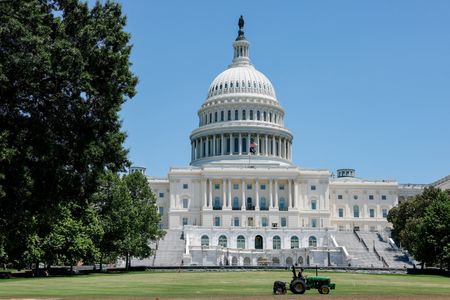
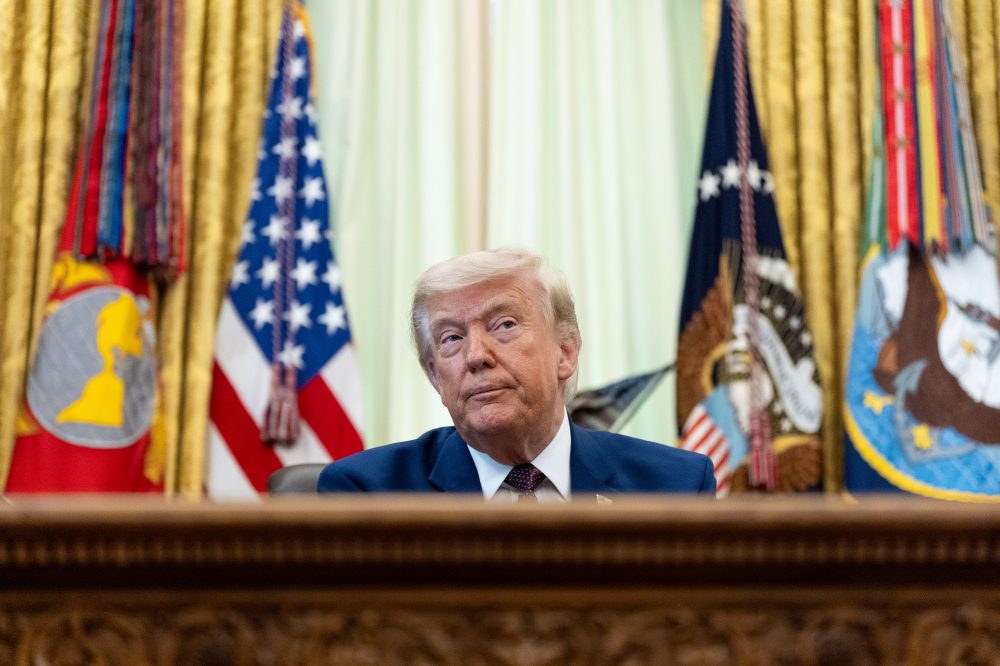
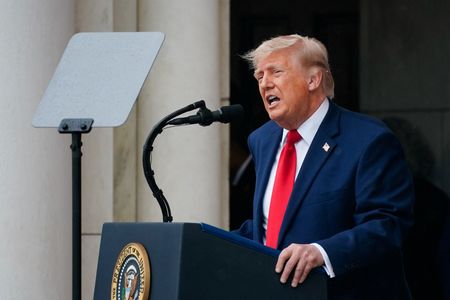
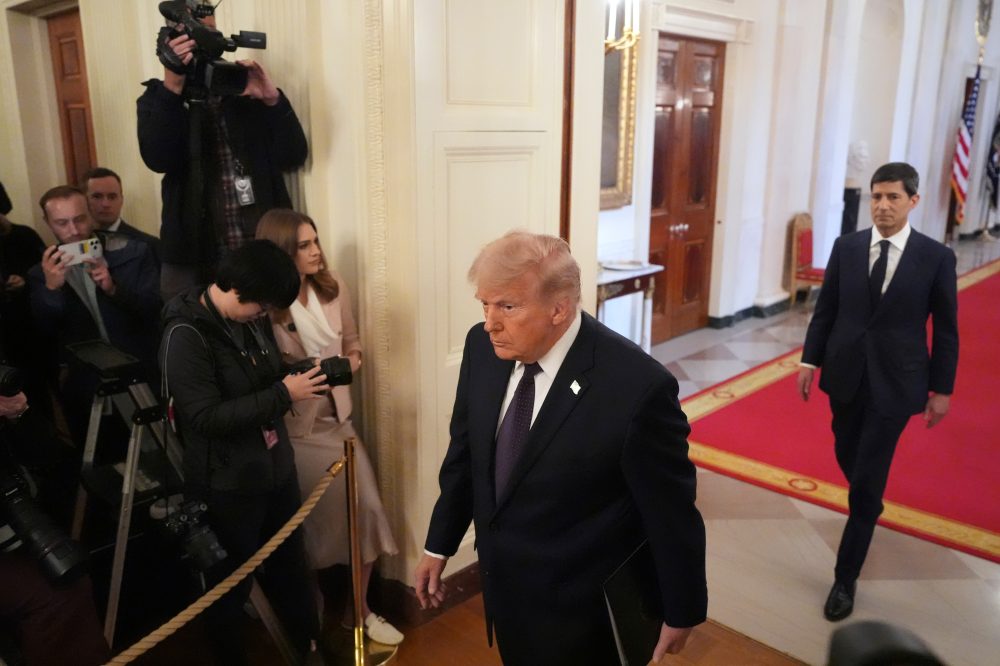
WASHINGTON — President Trump plans to unveil a nearly $700 million federal investment package Thursday aimed at revitalizing America’s declining coal sector through support for power plants and export facilities.
According to a White House official, the administration will invoke Cold War-era defense legislation to back 13 coal facilities nationwide and facilitate construction of new coal plants in Alaska and West Virginia — marking the first such projects built in the U.S. since 2013. The funding will also revive a shuttered coal plant in Maryland and advance a stalled coal export facility in Oakland, California.
The combined initiatives are projected to generate or preserve over 14,000 positions across coal, construction, railroad and shipping sectors, the White House official noted. The official requested anonymity as they lacked authorization to reveal specifics before Trump’s scheduled Thursday afternoon announcement.
Interior Secretary Doug Burgum, Energy Secretary Chris Wright and Environmental Protection Agency Administrator Lee Zeldin are anticipated to join Trump for the White House event.
This represents Trump’s latest effort to halt the coal industry’s prolonged downturn. Last fall, the administration announced plans to make 13 million acres of federal territory available for coal extraction and allocate $625 million for upgrading or restarting coal power facilities. Shortly after returning to office, Trump signed executive directives to revive coal — a dependable yet polluting energy source that has steadily contracted due to environmental rules and competition from less expensive natural gas.
Bloomberg News initially disclosed the new coal funding.
Following Trump’s directives, the Energy Department has mandated fossil fuel plants in Michigan, Indiana, Colorado and Washington state continue operations beyond planned closure dates to address growing electricity needs driven by data center expansion, artificial intelligence development and electric vehicle adoption. The department has issued temporary extensions for these measures and ordered oil and gas facilities in Maryland and Pennsylvania to delay scheduled shutdowns.
Wright stated that the administration’s emergency directives keeping older coal plants running helped avert significant power outages during the severe cold snap that affected much of the nation in late January and early February.
Environmental organizations criticized the latest coal support measures, which coincide with the Trump administration’s restrictions on renewable energy — including halting offshore wind permits, eliminating clean energy tax incentives and preventing wind and solar developments on federal property.
“Propping up coal billionaires with taxpayer money is one more way for the Trump administration to put polluters first and put the rest of us at risk,” said Kit Kennedy, managing director for power at the Natural Resources Defense Council. “What’s next, a taxpayer bailout to build new phone booths?”
Kennedy and other opponents argued Trump’s directive will lead to increased electricity costs and worse air quality. “The best thing for the air, the climate and our utility bills is to let these plants retire peacefully,” she stated.
While coal previously supplied over half of America’s electricity generation, its portion fell to roughly 15% in 2024, declining from approximately 45% in 2010. Natural gas currently accounts for about 43% of U.S. electricity, with nuclear power and renewable sources like wind, solar and hydroelectric providing the balance.
American coal shipments overseas decreased during Trump’s second term’s first year, primarily because fewer exports went to China following its retaliatory tariffs on U.S. goods in response to Trump’s broad tariff policies, the Energy Information Administration reported. While worldwide coal consumption reached historic highs recently, the International Energy Agency expects demand to level off or drop in upcoming years.
U.S. companies face challenges expanding into new markets due to abundant coal reserves worldwide.
Trump plans to utilize the Defense Production Act, a 1950 statute providing presidents extensive powers over industries related to national security.
Six Democratic senators have formally challenged two major tobacco corporations about their political contributions and lobbying activities following a recent shift in federal tobacco policy.
The senators sent official letters on Thursday to Reynolds American and Altria, questioning their donations and lobbying efforts directed at the Trump administration. The lawmakers accused the companies of receiving a “lucrative payday” after investing millions of dollars to gain favor with the president.
The inquiry stems from the Food and Drug Administration’s recent announcement of a new “enforcement discretion” policy. Under this approach, the agency will permit certain manufacturers to market vapes and nicotine pouches without obtaining the required legal authorization. This policy shift could potentially allow hundreds of additional vaping products to enter the marketplace and came after the White House pushed for regulatory changes.
The policy modification occurred following political contributions from both Reynolds, which operates as the American division of British American Tobacco, and Altria, with donations made as recently as April. A meeting between President Donald Trump and tobacco industry executives also took place in May.
“Money well spent,” the June 4 letters stated, claiming that the donations and lobbying activities allowed tobacco manufacturers to bypass federal regulations for selling addictive vaping products, thereby undermining the FDA’s independence.
“But for you and your shareholders, this was a lucrative payday after years of unsuccessful legislative and regulatory efforts to weaken federal tobacco oversight,” the correspondence continued, requesting specific information about donations, meetings and products that would benefit from the regulatory change.
Neither Reynolds, Altria nor the White House provided immediate responses to requests for comment.
Both companies have long argued that FDA policies have contributed to a thriving market for unauthorized devices, primarily manufactured in China. Reynolds estimates this illegal marketplace generates approximately $9.41 billion in revenue.
The tobacco companies have pursued various strategies including lobbying efforts and legal challenges, suspended sales objectives and warned they might introduce their own unauthorized products to remain competitive.
Following the “enforcement discretion” policy announcement, tobacco companies have already revealed plans to introduce new products to the market.
The letters bore the signatures of six Democratic senators: Dick Durbin of Illinois, Elizabeth Warren and Edward Markey of Massachusetts, Jeff Merkley of Oregon, Richard Blumenthal of Connecticut and Jack Reed of Rhode Island.
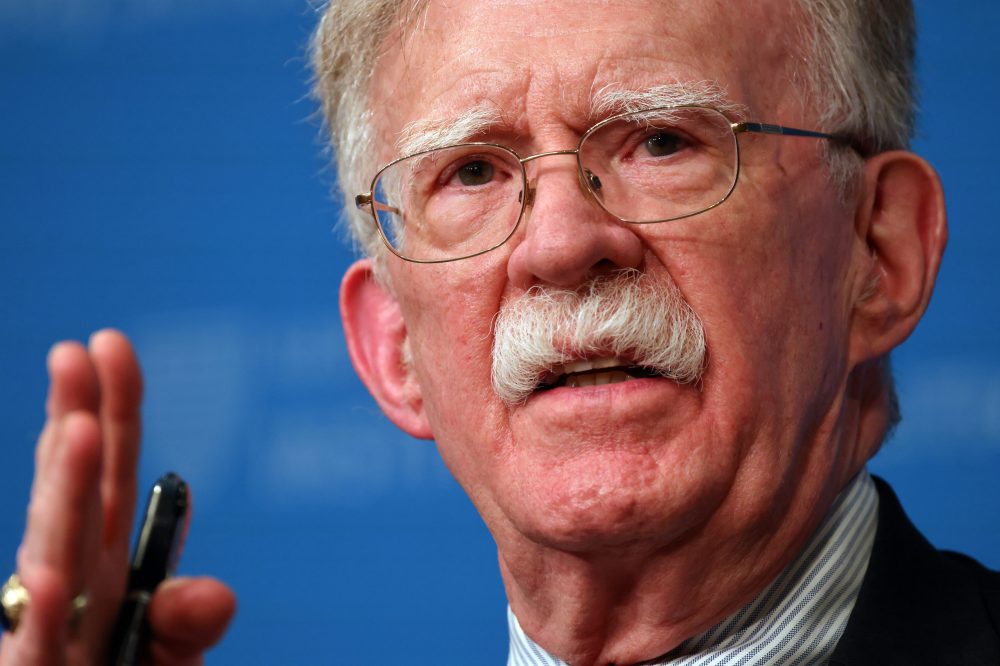
WASHINGTON — John Bolton, who previously served as national security adviser in the Trump administration, has reached a plea agreement with federal prosecutors that will allow him to admit guilt to one charge of keeping classified information while potentially avoiding incarceration, according to a source with knowledge of the arrangement announced Thursday.
The plea bargain would settle criminal charges brought in October that accused Bolton of 18 separate violations involving either keeping or sharing classified materials, including personal notes resembling diary entries from his government service that authorities say he gave to family members while working on a book about his White House experience.
According to the source, who requested anonymity because the agreement hasn’t been publicly announced, Bolton would pay a $2.25 million penalty under the deal. While any jail term would be limited to five years maximum, the arrangement provides a path for him to serve no time in prison, though final sentencing decisions rest with the judge.
Bolton joins several other Trump critics who have faced prosecution during the past year under the Republican administration. Federal agents brought the investigation into public attention in August when they executed search warrants at Bolton’s Maryland residence and workplace.
A veteran figure in Republican national security policy known for his aggressive stance on projecting American strength, Bolton worked in Trump’s first term for over a year before his dismissal in 2019, after which he released a book critical of the former president.
The administration attempted without success to prevent publication of “The Room Where it Happened,” arguing the book could expose classified materials. The plea agreement Bolton will accept relates to notes he provided to family members rather than content from his published work.
Court records show a rearraignment hearing, which commonly indicates a plea deal, is set for June 26 at the federal courthouse in Greenbelt, Maryland.
The Justice Department has not provided any statement regarding the matter.
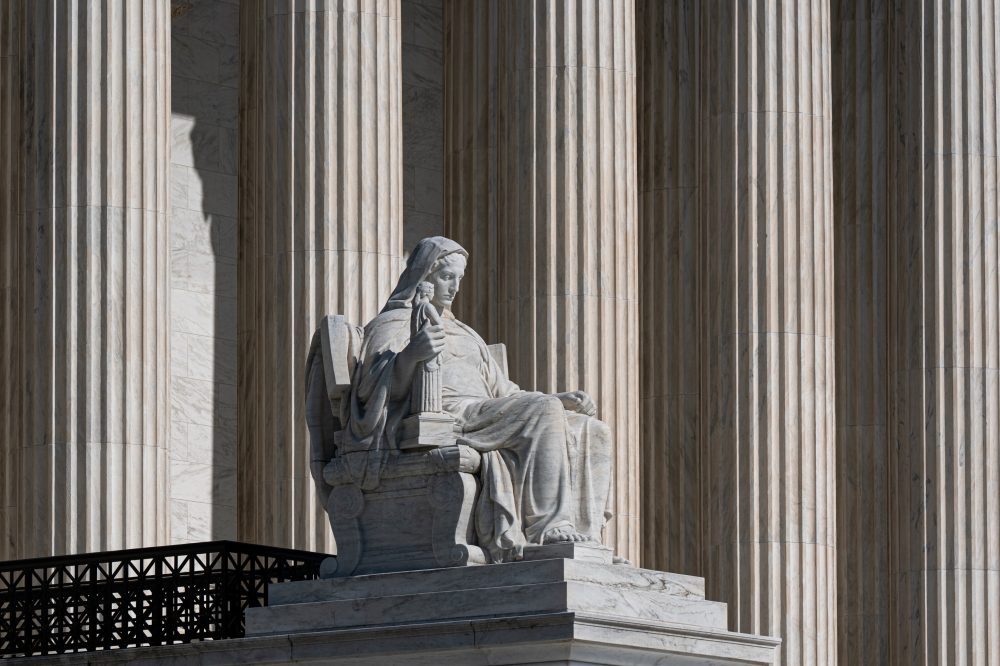
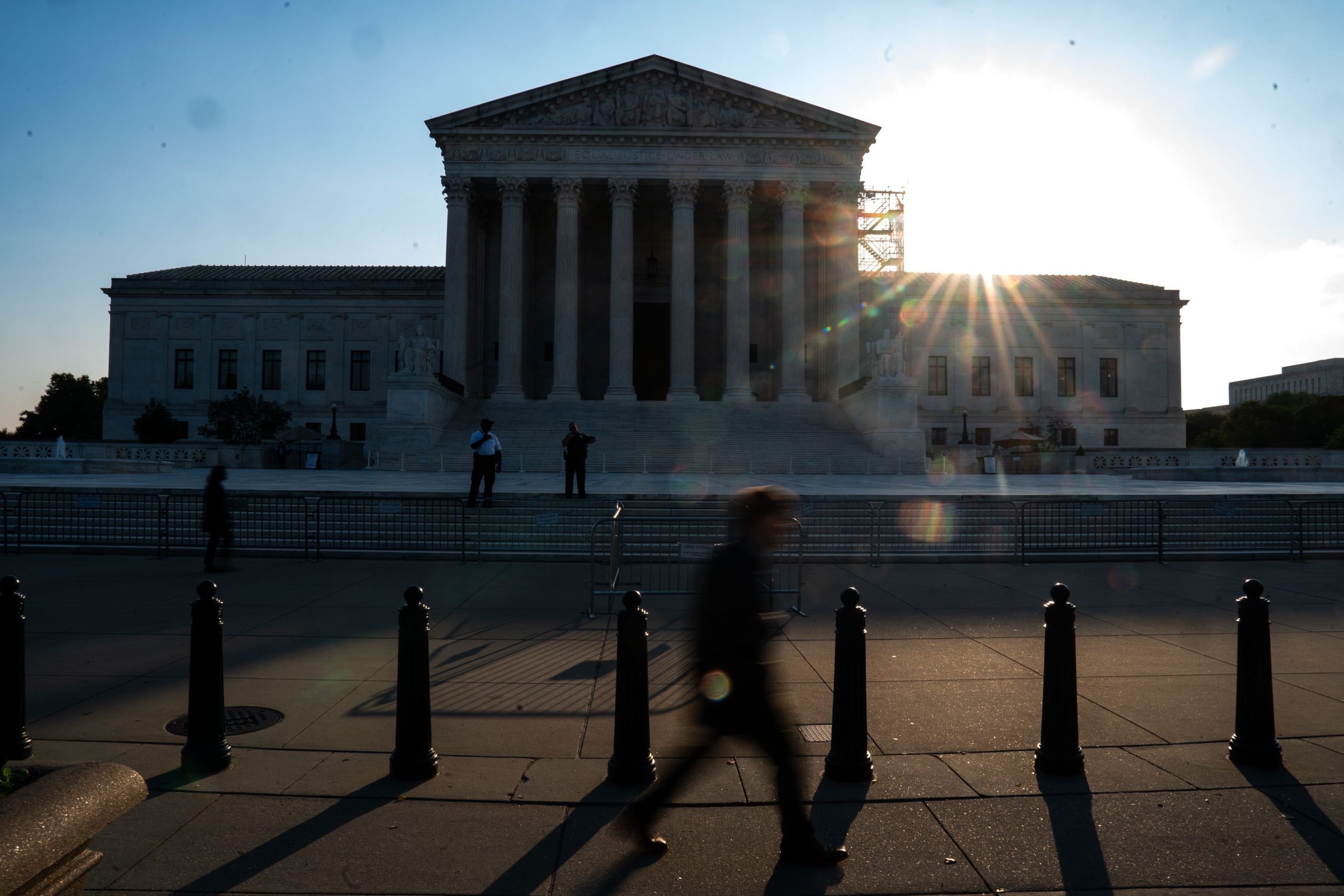
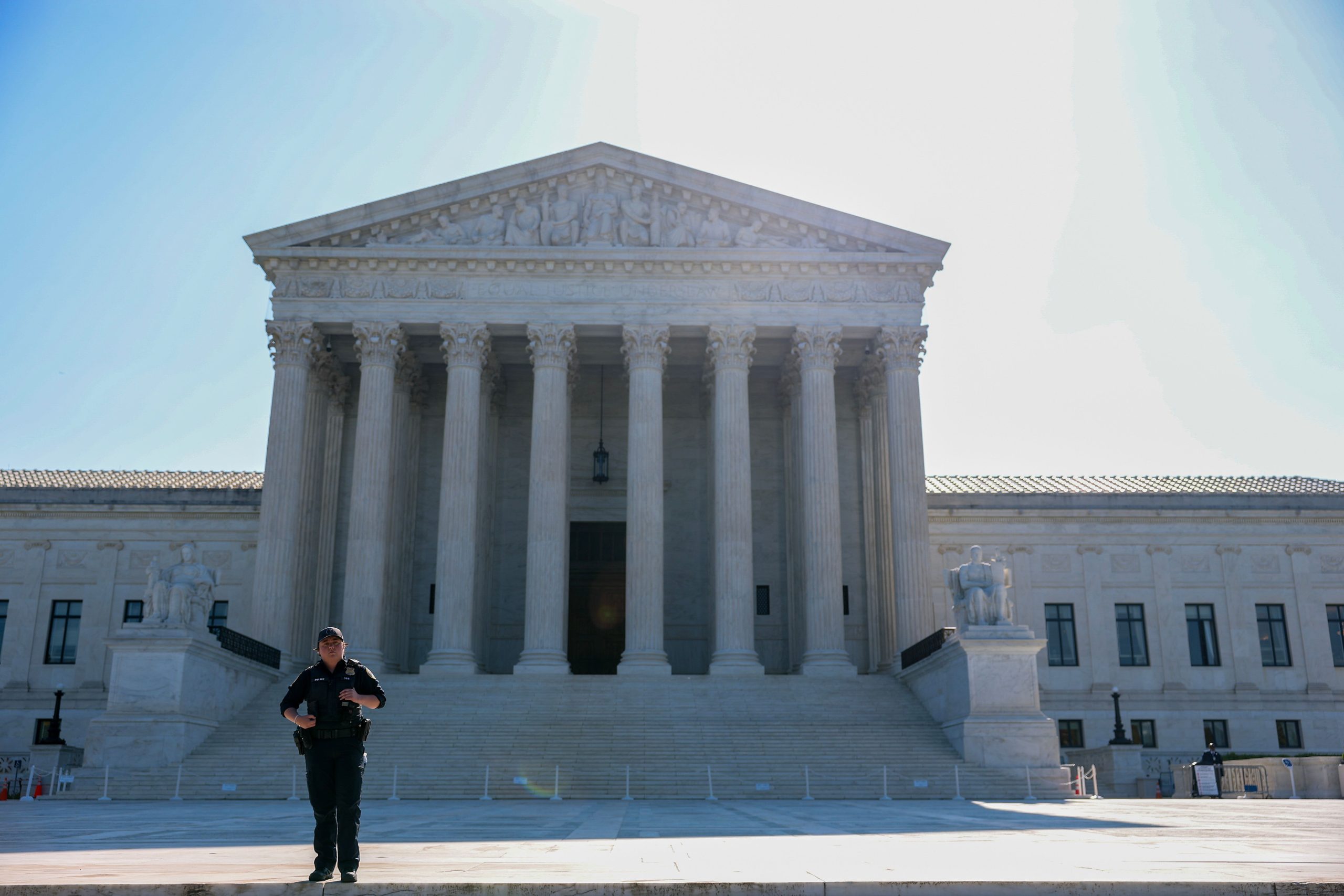
WASHINGTON — The nation’s highest court delivered an 8-1 ruling Thursday supporting federal regulators’ authority to enforce data privacy regulations against major telecommunications firms.
The decision preserved a crucial enforcement mechanism for the Federal Communications Commission, while telecom companies secured a regulatory concession from the Republican administration that may alter the oversight environment.
Verizon and AT&T had contested a total of $100 million in fines levied after regulators found the corporations inadequately protected customer location information.
The telecommunications giants contended the FCC’s procedures violated constitutional standards by providing insufficient opportunities for them to present their defense before a jury.
While the administration supported the penalties as a vital regulatory mechanism, officials also indicated companies wouldn’t need to immediately remit the fines, representing a regulatory adjustment favoring the corporations.
The high court concurred with this approach.
“The orders at issue did not settle the carriers’ legal obligations because, stated simply, they did not create an obligation to pay,” Chief Justice John Roberts wrote for the majority.
Justice Clarence Thomas dissented, saying he would have gone further on limiting the agency’s power.
Similar enforcement procedures are employed by other agencies, meaning a comprehensive win for AT&T and Verizon might have created broader implications, according to advocates.
The Supreme Court’s conservative majority has previously moved to restrict federal agency authority, including reversing a long-standing precedent that favored regulators in legal proceedings and removing another agency’s significant tool for combating securities violations.
John Bolton, who previously served as national security adviser to U.S. President Donald Trump before becoming a sharp critic, plans to enter a guilty plea regarding his handling of classified materials, CNN reported Thursday based on information from three sources with knowledge of the situation.
According to CNN’s report, Bolton will plead guilty to a single charge of unlawfully keeping sensitive national security documents and has agreed to pay fines exceeding $2 million.
Federal court documents filed Thursday show Bolton is set to appear before a judge on June 26 to enter a revised plea in his case. The court filings did not specify what plea Bolton would enter.
When initially charged on October 17, 2025, Bolton entered a not guilty plea to accusations of improperly handling classified materials.
Bolton held the position of White House national security adviser under Trump’s first administration before becoming one of the president’s harshest public critics. The former U.S. ambassador to the United Nations wrote in a 2020 memoir that Trump was unsuitable for the presidency.
Federal prosecutors allege in their indictment that Bolton provided classified information to two family members for potential inclusion in a book project, including his notes from intelligence briefings and meetings with high-ranking government officials and foreign leaders.
The charges, filed in federal court in Maryland, include eight counts of transmitting national defense information and 10 counts of retaining national defense information, all violations of the Espionage Act.
Senate Republicans face a critical decision Thursday regarding President Donald Trump’s controversial $1.8 billion “anti-weaponization” fund during an extended voting session on a $70 billion immigration enforcement bill.
Amendment voting on the legislation is scheduled to start just before noon. Democratic lawmakers plan to force a vote aimed at eliminating what they describe as a “slush fund” benefiting Trump’s political allies, attempting to put Republicans in a difficult position given the president’s recent track record of ending political careers of lawmakers who oppose him.
“The first Democratic amendment of vote-a-rama will force every senator to answer a basic question: should taxpayer dollars fund Trump’s slush fund, or should it be eliminated once and for all?” Senate Democratic leader Chuck Schumer’s office said in a statement.
The controversial fund, which opponents argue would enable Trump to use public money to benefit his political associates, has already been suspended by the White House and Justice Department following strong resistance from Senate Republicans.
Democratic leadership hopes their legislative strategy will damage Republicans in November’s midterm elections, where Democrats are expected to gain House control and potentially win the Senate as well.
However, it remains uncertain whether Republicans will support the Democratic amendment, which needs only 51 votes to pass but would also torpedo the three-year funding package for U.S. Immigration and Customs Enforcement and Border Patrol.
Republican Senators Thom Tillis and Bill Cassidy, who recently lost his reelection campaign to a Trump-endorsed opponent, are also planning to introduce their own amendments targeting the fund.
“I don’t want to join with some Democratic initiative, I want this to be led by Republicans for Republicans,” Tillis told reporters. “We’ve got a sufficient number of Republicans who have been very clear that they’ve got concerns here.”
Cassidy has additionally proposed an amendment that would cancel an agreement blocking the Internal Revenue Service from examining Trump’s tax returns.
Several recent Trump actions, including his request for $1 billion in taxpayer money for White House ballroom and security improvements and his appointment of political ally Bill Pulte as U.S. intelligence chief, have drawn public criticism from some Republican lawmakers.
Democrats are preparing additional amendments that would compel Republicans to vote on various issues including IRS tax protections, the Iran war, Trump’s trade tariffs, and immigration enforcement actions, including the deadly shootings of two U.S. citizens earlier this year.
WASHINGTON — The U.S. Senate kicked off a lengthy voting process Thursday on legislation that would provide funding for President Donald Trump’s immigration enforcement operations, pushing toward approval of three-year financing as Democrats have prevented the money for months in opposition.
The approximately $70 billion measure to finance U.S. Immigration and Customs Enforcement and the Border Patrol would break through the Democratic roadblock that has persisted since lawmakers sought policy reforms following the deadly shootings of two demonstrators by federal officers in January. The legislation would provide agency funding for three years, lasting until Trump’s term concludes.
However, Republicans must first overcome a series of potential amendments that Democrats intend to propose, including efforts to permanently eliminate Trump’s $1.776 billion settlement fund designed for supporters he considers victims of political persecution. Democrats announced their initial amendment Thursday morning would remove the fund and return the immigration spending measure to committee.
Senate Republicans are employing a complex procedural strategy to bypass the filibuster and approve the budget measure without any Democratic support. Yet it has required weeks to bring the bill to the Senate floor as Republicans worked through multiple hurdles to passage established by Trump and the White House — including a $1 billion White House security proposal they ultimately abandoned and strong opposition from both parties regarding the settlement fund.
“The thing we’re trying to do here is to keep the focus on funding for ICE and CBP,” Senate Majority Leader John Thune stated Wednesday evening, following the Senate’s vote to begin debating the measure. “This was narrow and targeted from the very beginning and clean, and we’re trying to maintain it that way.”
However, it remains uncertain whether Republicans will possess sufficient votes to defeat the Democratic amendments. Acting Attorney General Todd Blanche announced this week that the fund would not proceed, and numerous GOP senators said Wednesday they were pleased with his statements.
Nevertheless, Trump, who has disagreed with Senate Republicans recently, created fresh uncertainty about the settlement’s fate Wednesday afternoon when he informed reporters that the settlement is “very important” and stated “I don’t know” whether it is terminated or postponed.
“I’d have to ask the lawyers,” he stated.
To advance legislation through the budget procedure known as reconciliation, the Senate must first conduct an extended series of votes. Democrats are utilizing that mechanism to attempt banning the settlement through law — and also defeating the immigration spending bill.
Following Trump’s remarks about the fund, Schumer wrote on X that “this is EXACTLY why” Democrats would be compelling votes to prohibit it.
Several Republicans also intended to formalize Blanche’s commitment in writing. Sen. Thom Tillis, R-N.C., has indicated he will propose an amendment to prevent any effort at reviving the fund.
“We’ve got a sufficient number of Republicans who have been very clear they’ve got concerns there,” Tillis said.
Democrats argue any funding legislation for the Homeland Security Department should impose limitations on federal immigration authorities, including improved identification for federal officers and increased use of judicial warrants, among other demands.
Following the shooting of Renee Good and Alex Pretti in Minneapolis by federal agents, Trump accepted a Democratic proposal that the Homeland Security bill be separated from a broader spending package that became law. But bipartisan discussions failed, and the DHS funding expired in mid-February without agreement on modifications to the Trump administration’s immigration enforcement methods.
Congress ultimately funded the remainder of the Homeland Security Department at April’s end with Democratic backing. But ICE and Border Patrol continued without regular funding, and Republicans initiated a fresh attempt to approve three years of financing for those agencies without Democratic votes.
Progress on the legislation was also slowed by Republican resistance to $1 billion in security funding for the White House, including for Trump’s new ballroom, that was incorporated into the original bill.
Democrats and some Republicans challenged using taxpayer funds for the extensive project, and Republicans excluded it from the final bill when released Wednesday.
Thune said he was coordinating with his GOP conference to attempt defeating any amendments and ensuring he possesses adequate votes for a simple majority to approve the bill in the 53-47 Senate.
“Keep in mind, we’ve got to keep them all together, make sure we’ve got 50 votes for it,” he said.
Republican House leaders said Wednesday they would prefer to complete the legislation before week’s end, if the Senate can finish it. House Majority Leader Steve Scalise, R-La., said that House leaders were conducting internal discussions about the schedule.
“We just need to make sure everybody’s there,” Scalise said.
A nonprofit organization dedicated to gun control advocacy has filed a federal lawsuit against two government agencies for withholding information about the country’s top sellers of firearms used in crimes.
Brady has taken legal action against both the Bureau of Alcohol, Tobacco, Firearms and Explosives and the Department of Justice after the agencies declined to provide requested documents and data identifying which gun dealers are responsible for selling the most weapons that end up being used in criminal activities across the United States.
The lawsuit centers on the organizations’ efforts to obtain transparency regarding firearms trafficking patterns and the sources of weapons that law enforcement agencies recover from crime scenes nationwide.
For the first time, the U.S. House of Representatives has passed a war powers resolution designed to stop American military operations against Iran, challenging President Donald Trump as several Republicans crossed party lines to join Democrats in ending the three-month conflict that has reshaped domestic and international politics.
At the same time, the Republican-controlled Senate is advancing legislation to provide funding for immigration enforcement agencies. This comes after they compelled the Trump administration to announce it would abandon its settlement fund for political allies and removed a separate White House security proposal from the bill.
Additionally, Trump announced Wednesday his intention to nominate Todd Blanche as attorney general, selecting his former personal attorney who has vigorously advanced the Republican president’s priorities while serving in an acting capacity at the Justice Department.
An unusual attraction has emerged at Bangladesh’s national zoo: an albino buffalo named Donald Trump, whose golden hair and 700-kilogram (1,500-pound) frame has been drawing visitors from across the country since his arrival last week.
The unusual pale buffalo gained fame after a farmer observed that his blonde hair tuft bore a striking resemblance to the American president’s signature hairstyle. Following a viral social media video of the light-colored horned animal, crowds began flocking to the farm outside Dhaka to witness him firsthand.
Originally destined for slaughter during the Muslim festival of sacrifice, the animal was relocated to the capital’s zoo due to security considerations, where large crowds now endure intense heat to see him.
“There is a resemblance to Donald Trump in its eyes, hairstyle, and skin color,” said Mohammed Nasim, a student in Dhaka. “And just as Donald Trump has a distinctive personality and lifestyle, this buffalo, after going viral, is now living a similar kind of life, enjoying a lot of attention and special treatment.”
The president dismissed the symbolic House vote on the war powers resolution as “meaningless.”
However, Trump expressed anger that four House Republicans sided with Democrats in supporting the measure.
“The Democrats are fueled by Trump Derangement Syndrome,” Trump said in a post on his social media site. “They would rather have our Country fail than give me another, of many, victories. The four Republicans, that’s a whole other story – They’re GRANDSTANDERS! They should be ashamed of themselves.”
Bessent declined to specify Wednesday whether Trump and his family would continue receiving immunity from IRS audits following the administration’s decision to scrap plans for a $1.776 billion compensation fund that would have benefited the president’s allies.
“There’s continuing litigation, and I’m unable to comment on ongoing litigation,” Bessent told lawmakers at the Senate Finance Committee hearing.
This response frustrated Democratic lawmakers seeking clarity from Bessent during a hearing supposedly centered on the Treasury Department’s budget. The hearing occurred one day after acting Attorney General Todd Blanche appeared to suggest that the settlement’s IRS audit immunity provision would remain active for the Republican president.
Following multiple unsuccessful attempts to obtain an answer from Bessent, Sen. Catherine Cortez Masto, D-Nev., said, “It’s been very clear you’re dodging this and you’re trying to use it as an excuse. It’s just outrageous on behalf of the American public.”
Trump announced Wednesday his plan to nominate Todd Blanche as attorney general, choosing his former personal attorney who has zealously promoted the Republican president’s agenda while heading the Justice Department in an acting capacity.
During a White House dinner, Trump revealed his intention to formally nominate Blanche on Thursday, based on a video of the gathering shared on social media by a White House aide.
“We are going to make him permanent attorney general,” Trump said at the Rose Garden event.
Blanche joined the Justice Department as deputy attorney general and was promoted following Bondi’s removal after her unsuccessful attempts to prosecute Trump’s perceived political adversaries. While Blanche maintained he wasn’t campaigning for the permanent position, his high-profile actions since assuming leadership clearly demonstrated his commitment to proving his allegiance to Trump.
The Republican-controlled Senate is proceeding with legislation to fund immigration enforcement agencies after compelling the Trump administration to announce it would eliminate its settlement fund for political allies and removing a separate White House security provision from the bill.
Wednesday’s Senate vote of 53-46 initiated debate on the approximately $70 billion bill to fund U.S. Immigration and Customs Enforcement and the Border Patrol. The legislation faced weeks of delays as Republican senators worked through various passage obstacles created by President Donald Trump and the White House, but they are now moving rapidly toward approval after reducing it to its original scope.
“Right now, the goal is to get the base bill across the finish line,” said Senate Majority Leader John Thune, R-S.D.
Nevertheless, Republicans must secure sufficient votes to defeat multiple amendments that Democrats — and some Republicans — pledge to propose for permanently prohibiting Trump’s $1.776 billion settlement fund.
Trump is receiving warnings from both opponents and supporters that he’s becoming trapped regarding the Iran conflict, a military engagement he promoted as a short-term operation but which has evolved into a stalemate.
Nearly a week has passed since U.S. and Iranian negotiators reached a preliminary agreement to extend the conflict’s ceasefire by 60 days and begin new discussions on Iran’s nuclear program, requiring Trump’s approval.
Yet Trump has demanded unspecified modifications to the agreement, and Iranian officials — possibly calculating that he is hesitant to resume bombing after depleting key weapons systems — show no indication of yielding to new demands.
Recent strikes by both the U.S. and Iran this week have heightened concerns that the ceasefire might fail. Trump minimized the importance on Wednesday.
Growing worry exists within the administration and among key advisers and allies that Trump now faces a difficult situation, according to a U.S. official and another person familiar with the administration’s internal discussions.
Wednesday marked the first time the House passed a war powers resolution aimed at stopping U.S. military action against Iran, challenging Trump as several Republicans joined Democrats to end the three-month conflict that has transformed politics domestically and internationally.
House Speaker Mike Johnson had attempted to avoid an outcome demonstrating increasing opposition to the conflict, abruptly halting floor proceedings two weeks earlier when the resolution neared approval. However, dissatisfaction has only intensified as the conflict continues and Trump struggles to negotiate a peace plan.
“Enough is enough,” said Rep. Gregory Meeks of New York, the top Democrat on the House Foreign Affairs Committee, who led the effort.
“It is time for the president to do the right thing,” he said. “The people are tired of suffering because of his war of choice — suffering at the gas pump, suffering at the supermarkets.”
WASHINGTON — Federal officials have shifted their approach toward higher education, moving away from targeting individual campuses to proposing sweeping regulatory changes that would impact universities across the nation.
Over the past year, the administration launched numerous investigations into college campuses and threatened to withdraw federal funding from institutions that didn’t align with the Republican president’s political objectives. Now, officials are pursuing broader regulatory reforms that would affect thousands of schools simultaneously.
“We’re coming over the higher education system and course correcting,” Nicholas Kent, undersecretary for the Education Department, told the Associated Press. He explained that unlike probes focusing on specific campuses, this new strategy has the capability “to affect 6,000 institutions.”
This tactical change follows court decisions that prevented the administration from implementing severe financial penalties against Harvard and the University of California, Los Angeles. The shift also comes after numerous civil rights attorneys who typically oversee university investigations left their positions. Despite these setbacks, the president continues his effort to eliminate what he describes as “wokeness” run amok in academia.
The regulatory approach targets similar issues previously addressed through investigations, including diversity, equity and inclusion programs, transgender athletes, antisemitism, and various practices viewed as anti-white discrimination.
A new Education Department proposal would restructure the accreditation system that determines which colleges qualify for federal funding. The plan would mandate that accreditors ensure colleges maintain “intellectual diversity,” which represents a coded request for increased conservative representation.
Higher education officials express concern about a proposal from the Office of Management and Budget requiring agencies to confirm federal grants “advance the President’s policy priorities.” Officials would verify grants aren’t supporting DEI initiatives, “anti-American values,” or anything rejecting “the sex binary in humans,” according to last week’s proposal. An OMB spokesperson stated the rule promotes transparency.
The General Services Administration has proposed another rule requiring federal grant recipients, including universities and their contractors, to verify they don’t maintain DEI policies the administration considers illegal.
The Education Department has introduced at least 11 new proposed regulations, including one designed to “streamline the process” for reducing funding to schools violating the administration’s civil rights law interpretations.
Creating federal regulations involves months of bureaucratic debate and procedures. However, unlike previous strategies that pushed presidential authority limits, the rulemaking process represents an established method for implementing federal policy without congressional approval.
Some higher education leaders view this change positively. Ted Mitchell, president of the American Council on Education representing college and university presidents, said the new approach allows for dialogue, unlike last year’s confrontational tactics.
“We’re playing a game that has rules and referees, and that’s good,” said Mitchell, a former Education Department official under President Barack Obama, a Democrat. “It gives us an opportunity to talk about where we might agree with the administration. That was impossible to do when these were just straight-on attacks.”
Meanwhile, the Education and Justice departments have announced fewer higher education investigations, releasing statements about roughly a dozen at U.S. universities this year. During the same period last year, they announced more than 70, according to AP analysis. The precise number of new investigations remains unclear since a public database hasn’t been updated since January 2025.
Kent stated the Education Department will continue opening investigations when necessary, describing it as using a “scalpel to cut out the bad.” He noted that colleges have begun complying with the administration’s priorities.
“Folks realize that it’s a new day and that we’re paying attention,” Kent said.
Most investigations launched last year remain active. The White House reached agreements with Columbia, Brown, and several other institutions, but most cases remain unresolved without public updates for months.
Catherine Lhamon, who directed the Education Department’s Office for Civil Rights under President Joe Biden, a Democrat, characterized the investigation surge as “performance art” that attracted attention but achieved little impact. She believes the administration is retreating after facing school resistance.
“It stopped putting itself in a position to lose,” said Lhamon, who currently leads the Edley Center on Law and Democracy at the University of California, Berkeley.
However, some conflicts have escalated. The White House has intensified battles with Harvard and UCLA after federal judges prevented the administration from eliminating research funding from these campuses.
The Justice Department has filed four lawsuits against Harvard and UCLA since February, claiming both institutions permitted antisemitism and that Harvard withheld admissions data requested by the administration. Leadership at both universities maintains they have actively combated antisemitism.
A White House official attributed the investigation reduction partly to increased focus on college admissions. The administration has been developing cases against colleges allegedly considering race in admissions decisions despite the Supreme Court’s affirmative action ruling. These investigations require more time due to extensive data collection needs, according to the official who spoke anonymously about internal strategy.
Some of these cases are now producing results.
The Justice Department recently determined that medical schools at Yale and UCLA discriminated against white and Asian American students by supposedly preferring Black and Latino applicants. The universities have defended their admissions procedures, maintaining they were thorough and merit-based.
Officials are taking an uncompromising stance against any racial consideration in admissions, conflicting with colleges that allow students to discuss their race in application essays. In its 2023 ruling, the Supreme Court indicated schools could consider how applicants’ race relates to broader qualities.
“We are making sure,” Kent said, “that we are elevating our best and our brightest and that we’re not putting the thumb on the scale because of somebody’s skin color.”
Facing last year’s aggressive campaign, many campuses quietly implemented changes to avoid scrutiny. Some eliminated DEI offices. The NCAA moved to restrict transgender athletes. Universities from UCLA to Columbia strengthened campus protest policies after pro-Palestinian demonstrations became subjects of federal investigations.
Research has been reduced as leading schools face ongoing funding cuts.
In classrooms, there’s been a chilling effect as professors worry that their words or teachings could draw federal attention, said Todd Wolfson, president of the American Association of University Professors.
Still, he remains optimistic that the power balance is shifting toward universities. Students and faculty at several campuses built pressure to reject a White House invitation last fall to endorse aspects of the president’s agenda in exchange for favorable research funding access, he said. The AAUP has filed several lawsuits against the administration, including one that halted funding cuts at UCLA.
“The sector is getting its feet under it, and it’s only getting stronger,” Wolfson said. “I can promise you that we will fight them tooth and nail.”
The appointment of David Venturella as acting director of Immigration and Customs Enforcement represents the continuation of a well-established trend of personnel exchanges between the private prison corporation GEO Group and the federal immigration agency.
Venturella’s new role at ICE follows a recurring pattern where numerous former GEO Group staff members have transitioned to positions within the federal agency, while agency personnel have also moved in the opposite direction to work for the private prison company.
This revolving door between the private detention corporation and the immigration enforcement agency demonstrates the deep institutional relationships that have developed between the two organizations over time.
A memorial arch proposed by President Trump is drawing criticism from those who say the structure would interfere with an important historic sight line. The planned arch would be constructed between the Lincoln Memorial and the former residence of Confederate Gen. Robert E. Lee, according to opponents of the project.
Critics argue that placing the arch in this location would disrupt the symbolic sight line that currently exists between these two significant locations. They contend that this unobstructed view carries important meaning about national reconciliation and unity.
The controversy centers on concerns that the proposed memorial would fundamentally alter the visual connection between the Lincoln Memorial and Lee’s former home, potentially diminishing the symbolic significance that many believe this sight line represents.
During a White House dinner event, President Trump announced his intention to formally nominate Todd Blanche for the position of attorney general, based on video footage from the gathering that was shared on social media by a White House aide.
The announcement marks Trump’s selection of Blanche, who currently serves as Acting Attorney General, for the permanent role leading the Department of Justice.
CHICAGO (AP) — After more than ten years since the former president selected Chicago as the location for his presidential library project, the Obama Presidential Center is set to welcome visitors on June 19. The facility features exhibits of campaign artifacts and presidential memorabilia, while the surrounding grounds include community amenities such as a basketball court, public library branch, and children’s playground.
Here’s a breakdown of the key figures associated with the former President Barack Obama’s presidential library.
The estimated construction cost for the 225-foot museum tower and the nearly 20-acre site, funded entirely through private contributions to the Obama Foundation. This figure represents a significant increase from original projections of $350 million.
The anticipated yearly attendance for the museum, which will charge admission fees. Additionally, up to 1 million visitors annually are expected to use the complimentary facilities throughout the campus.
The estimated count of book titles that the Obamas chose themselves for inclusion in a “Presidential Reading Room” within the new public library branch located on the grounds.
The total count of campaign buttons featured in exhibits from Obama’s political campaigns, including specialized designs created for specific states.
The quantity of specially commissioned artwork created by 30 different artists.
The count of beehives located on the property. The apiary serves as part of the gardens and comprehensive landscaping throughout the campus.
CHICAGO (AP) — The personal touch of former President Barack Obama permeates every corner of his presidential museum, from its Chicago South Side setting to the textured stonework on its striking tower and the striped reading chairs that mirror those found in his personal residence.
Following a ceremonial dedication ceremony attended by dignitaries in Chicago, the Obama Presidential Center will welcome the general public on Juneteenth. Thousands of visitors — including museum staff family members, students and media representatives — have already received preview tours of the nearly 20-acre facility while workers complete final art pieces and grounds work.
The approximately $850 million development encompasses both the political career and private life of America’s first Black president. While the ticketed museum tower displays campaign artifacts and presidential memorabilia, the expansive campus’s public areas highlight other Obama priorities: a new library branch, basketball facility and picnic space with grilling stations.
“This serves as a welcoming environment where people can come to contemplate the significant moments from this presidency and the campaigns, while also gathering as a community to consider what changes you might implement in your own neighborhood,” Josh Harris, the Obama Foundation’s vice president of public engagement, explained during a recent Associated Press tour.
Here are the main highlights of the campus anticipated to attract up to 1 million annual visitors.
This presidential museum breaks new ground as the first completely digital facility of its type, abandoning traditional displays of official documents.
Visitors will instead encounter high-tech and interactive exhibits covering the campaigns, pivotal moments from Obama’s presidency and White House experiences.
Among the most popular features is a full-scale recreation of the Oval Office.
During a recent visit, a steady flow of guests, including schoolchildren, moved through the circular space, pausing to sit at the desk for photographs. The top drawer contains a handwritten letter copy from his predecessor, former President George W. Bush, and Obama’s cherished BlackBerry device.
“We aim to ensure that individuals from every background get the chance to sit at the Resolute Desk,” Harris stated. “You consider the potential that if a young community organizer from Chicago’s South Side can become president, you might become president as well.”
Additional museum sections explore the Affordable Care Act and immigration policies, alongside intimate moments such as Obama’s spontaneous singing during a 2015 memorial service for victims of a South Carolina church attack. A large display screen shows Obama performing “Amazing Grace.”
Scattered throughout are spaces for personal contemplation, which museum planners consider essential.
“We’re handing over that responsibility and encouraging people to take change back to their communities, however change might be understood, whether modest or significant,” explained Louise Bernard, the museum’s director.
During the museum’s 2021 groundbreaking ceremony, Obama anticipated one of the major attractions.
“We want this center to be more than a static museum or a source of archival research,” Obama remarked at the location. “It won’t just be a collection of campaign memorabilia or Michelle’s ballgowns, although I know everybody will come see those.”
About twelve outfits displayed on mannequins sit behind protective glass, including a black and red Narciso Rodriguez creation that the former first lady wore during 2008 Election Night in Chicago.
Guests can also feel fabric samples, including the rose gold chain mail Atelier Versace evening dress she selected for her last state dinner in 2016.
The museum sits close to where Barack Obama launched his political journey, served as a law professor at the University of Chicago, and where the family resided. Michelle Obama also spent her childhood on the South Side.
As a lifelong basketball enthusiast, Obama requested a glass-walled professional-quality basketball court for community programming.
The former first lady created a garden where lettuce and strawberry plants were growing during a recent visit. Charcoal grills will be publicly available, fulfilling Obama’s vision from community meetings almost ten years ago.
“President Obama frequently discussed his connection to Chicago and one of his cherished memories involved grilling in the park,” Harris noted.
The Obamas’ aesthetic preferences and appreciation for history are clearly visible.
The museum campus displays dozens of specially commissioned artworks while various campus sections honor notable figures. The central “John Lewis Plaza,” honoring the late congressman and civil rights champion, serves as a public meeting place.
Within a new Chicago Public Library branch, a 70-foot artwork portrays literary icons including Walt Whitman and James Baldwin. At its center stands a boy in an orange shirt being read to by Toni Morrison, representing young Obama.
The presidential reading room contains thousands of books selected by the Obamas, spanning presidential biographies to popular fiction. Obama particularly favors two tall-backed chairs with blue, yellow and black stripes, chosen by the former president as excellent reading chairs resembling ones in his home.
Admission costs $30, the steepest price among all U.S. presidential museums or libraries. The Richard Nixon Presidential Library and Museum in California follows at $29.
Obama Foundation executives justify the pricing for the cutting-edge facility.
The neighboring Griffin Museum of Science and Industry charges $25.95. In downstate Illinois, the Abraham Lincoln Presidential Library and Museum in Springfield costs $15.
Besides complimentary days and Illinois resident discounts, Obama Foundation representatives emphasize that most campus areas are free, with only four museum tower floors requiring admission.
Visitors can freely explore the campus, utilize the playground, library, sledding hill or grilling facilities. The tower’s uppermost floor, offering sweeping views of the nation’s third-largest city, is also complimentary.
“The concept behind this institution, this campus, centered on making it available to the greatest number of people possible,” Harris said.
WASHINGTON — President Donald Trump is receiving criticism from both political opponents and supporters who warn he’s becoming trapped in a difficult position regarding the Iran conflict, a military engagement he initially described as a short operation that has now entered a prolonged stalemate.
Almost a week has passed since American and Iranian negotiators reached a preliminary deal to extend the current ceasefire by 60 days and begin fresh discussions about Iran’s nuclear activities, an agreement that needed Trump’s approval.
However, Trump has requested unspecified modifications to the deal, and Iranian leaders — possibly believing the Republican president is hesitant to resume bombing after depleting crucial weapons stockpiles — appear unwilling to accommodate additional requirements.
Recent strikes between the U.S. and Iran this week have sparked new worries that the ceasefire might fail. Trump minimized these concerns on Wednesday.
“It’s a different part of the world,” Trump told reporters in the Oval Office. “You know, I’d say in that part of the world, a ceasefire is when you’re shooting in a more moderate manner.”
This uncertain situation comes after Trump has repeatedly claimed since the 14-day ceasefire began on April 7 — after 38 days of U.S. and Israel attacks on Iran — that an agreement is imminent and that Iranian leaders are desperate for a settlement. Trump suggested on Wednesday that something might materialize “over the weekend.”
Without a temporary agreement in place to reopen the Strait of Hormuz, worldwide energy costs continue to be high and are contributing to global concerns about the effects of increased expenses from the three-month war on food, fuel and other commodities.
Following multiple reports this week that Iran was ending discussions, Trump told CNBC he “couldn’t care less” if negotiations had stalled and even suggested they had become “boring.”
Growing worry exists within the administration and among key advisers and allies that Trump now faces a difficult situation, according to a U.S. official and another person familiar with the administration’s internal discussions, both of whom spoke to The Associated Press anonymously to discuss private conversations.
He’s caught between Democrats exploiting oil prices and warnings from hawkish supporters that an early withdrawal from the conflict would represent surrender.
Trump is privately receiving advice from other Republican lawmakers, Pentagon officials and Gulf allies that returning to the bombing strategy would be unwise.
Those recommending against resuming military operations point out that the U.S. has depleted ammunition too quickly. Restocking some essential weapons systems could require three years.
Meanwhile, Gulf allies worry that Iran will strike back against them and their vital infrastructure and energy assets, further damaging their economies.
Simultaneously, Trump has rejected accepting a deal that looks like the 2015 nuclear agreement negotiated by Democrat Barack Obama’s administration, which limited Iran’s nuclear program in return for removing international economic sanctions.
During his first presidency, Trump withdrew from the agreement, claiming it failed to permanently halt Iran’s nuclear program, ignored Iran’s ballistic missile development, and didn’t punish Iran for backing militant proxy groups throughout the Middle East.
Currently, Trump, according to those aware of internal discussions, has expressed strong feelings that he cannot make “a bad deal” and is very conscious that he’s at a critical moment where he risks damaging his legacy if he makes an error.
White House spokeswoman Anna Kelly rejected the idea that Trump has been cornered or that there’s any worry within the administration about the negotiation timeline.
“These mysterious so-called ‘administration officials’ have no idea what they’re talking about — those actually involved in sensitive discussions know to trust in President Trump, who will always do what is best for U.S. national security,” Kelly said in a statement.
Israeli and hawkish allies in Washington have argued to Trump that a deal now would represent unconditional surrender, encouraging him to increase economic pressure on Iran and support Israel’s assault on the Hezbollah militant group in Lebanon.
However, Trump earlier this week in a tense call with Israeli Prime Minister Benjamin Netanyahu ordered Israel to stop, and on Wednesday, Israel and Lebanon announced they agreed to extend a ceasefire. Hezbollah was not involved in the Israel-Lebanon discussions, which have occurred at the ambassadorial level in Washington since early last month.
Staying in the current situation with Tehran — neither fully resuming fighting nor completing an interim agreement to restart nuclear discussions — is a circumstance that Iran seems better positioned to use, argues Behnam Ben Taleblu, a senior fellow at the hawkish Washington think tank Foundation for Defense of Democracies.
Despite being the weaker side, Iran appears to be calculating that the longer the stalemate continues, the better their chances of “boxing in” Trump, he added.
“Either way, Tehran appears more resolute than ever to not provide Trump with a victory image, hence why it isn’t budging on the battlefield or negotiating table,” Taleblu said.
Meanwhile, Democrats are attempting to benefit from Trump’s management of the unpopular war before November’s midterm elections. The House of Representatives on Wednesday passed for the first time a symbolic resolution demanding a stop to military action against Iran, with four Republican lawmakers joining Democrats in criticizing Trump’s war.
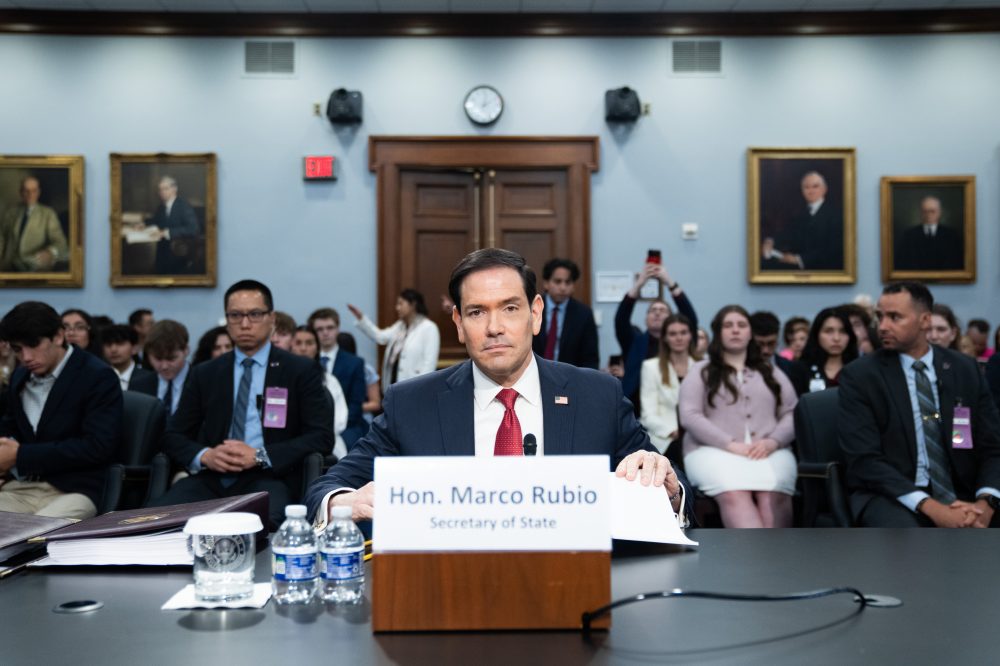
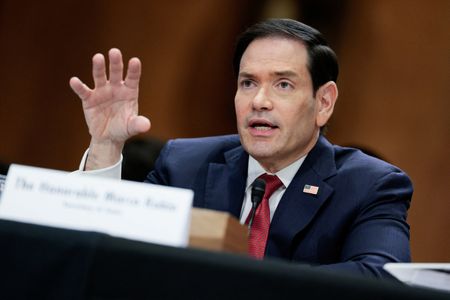
During extensive hearings on Capitol Hill on Tuesday and Wednesday with Secretary of State Marco Rubio, Democrats attacked Trump for dismissing the economic effects of the conflict on Americans and for failing to predict that Iran would close the Strait.
In one heated exchange, New Jersey Democratic Sen. Cory Booker cited the unstable ceasefire as evidence that Iran holds the advantage.
“We are the strongest nation on the planet Earth, and we’re in a stalemate with Iran,” Booker said. “And now we’re begging to get back into a deal that you all trashed in the first place.”
Rubio rejected the criticism, emphasizing that Iran has been put at a disadvantage with the strikes that eliminated multiple levels of senior leadership and devastated Iran’s economy.
“There’s no one begging,” Rubio responded. “I don’t know where you’re getting this perception that Iran is stronger.”
Another Democrat, Sen. Chris Van Hollen of Maryland, focused on Trump’s comments last month that voter concerns about living costs were “not even a little bit” of a motivating factor for him to reach a deal to end the war.
The president continues to minimize the rising costs for Americans at gas stations and predict that fuel prices would drop dramatically after the conflict concludes.
Christopher Borick, the director of the Muhlenberg College Institute of Public Opinion in Pennsylvania, said that Democrats campaigning in competitive districts nationwide are already focusing on Trump’s statements about the war’s impact on Americans’ finances.
“There’s significant risk in having this thing drag on for Republicans,” Borick said. “It’s certainly going to hurt if Trump ends up in a place where the war ends and Iran’s nuclear program is in the same place. But for Republicans in some of these tough swing districts, there’s a case to be made to rip the bandage off now, get some easing in the oil markets and hope there’s enough time for voters to turn the page.”
President Donald Trump announced Wednesday evening his intention to formally nominate Todd Blanche for attorney general, selecting his former personal attorney who has been leading the Justice Department in an interim capacity.
Speaking at a White House dinner, Trump revealed plans to submit the nomination Thursday, with video of his remarks shared on social media by a White House staff member.
“We are going to make him permanent attorney general,” Trump declared during the Rose Garden gathering.
Since taking over in an acting capacity, Blanche has worked to establish himself as the top candidate for the permanent position following the dismissal of Pam Bondi in April. He has ramped up investigations targeting Trump adversaries and unveiled a proposed $1.776 billion compensation program for the president’s supporters who allegedly faced political targeting. The controversial fund sparked opposition from both parties, forcing the Justice Department to abandon the proposal earlier this week in a dramatic reversal.
Originally joining the department as deputy attorney general, Blanche was promoted after Bondi’s removal due to her unsuccessful attempts to prosecute Trump’s political enemies. Though Blanche denied seeking the top job, his high-profile decisions since assuming leadership have clearly demonstrated his commitment to Trump’s agenda.
Critics, particularly Democrats, have condemned Blanche’s approach, claiming he continues operating as Trump’s personal attorney rather than serving the public interest in his pursuit of the president’s revenge agenda. The “Anti-Weaponization Fund” also drew criticism from Senate Republicans, whose approval Blanche will require for confirmation.
On Tuesday, Blanche informed Congress the Justice Department was dropping the fund proposal after political opposition threatened to derail funding for Trump’s immigration enforcement operations.
Despite Blanche’s claims of independence from presidential influence, the Justice Department has intensified its focus on Trump’s long-standing opponents during his tenure.
In April, former FBI Director James Comey faced indictment related to a social media image showing seashells on a beach, which authorities characterized as a presidential threat. Comey has denounced the charges as politically driven and expressed expectation of additional prosecutions.
Blanche has also named Joseph diGenova, an 81-year-old former Reagan-era Justice Department prosecutor, to lead a Florida investigation examining whether former law enforcement and intelligence personnel conspired to target Trump over the past decade.
A former New York federal prosecutor, Blanche gained national recognition leading Trump’s legal defense, including during the Republican’s hush money case in New York. He has stated this experience provided him direct insight into what he describes as the weaponization of criminal justice against Trump.
Legal analysts are sounding the alarm that a recent Supreme Court ruling involving Alabama’s electoral maps could trigger additional disorder in the redistricting process nationwide.
The high court’s rejection of a lower court’s ruling represents just the most recent instance where the justices have influenced congressional boundary modifications across Louisiana, Texas, Virginia, and California.
Experts worry this pattern of judicial intervention in redistricting matters could create more uncertainty as states work to finalize their electoral maps.
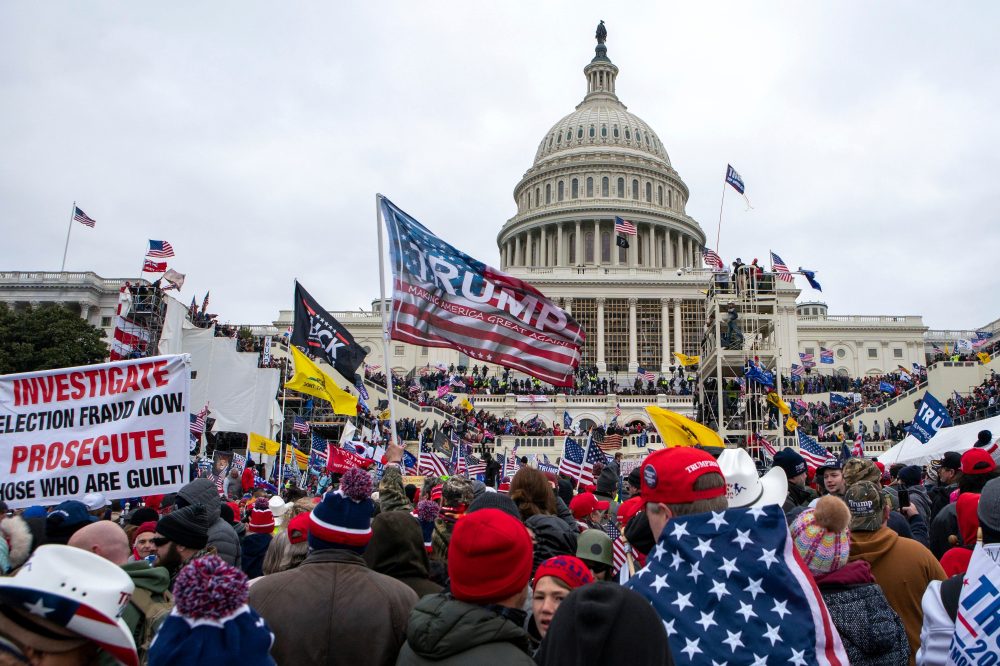
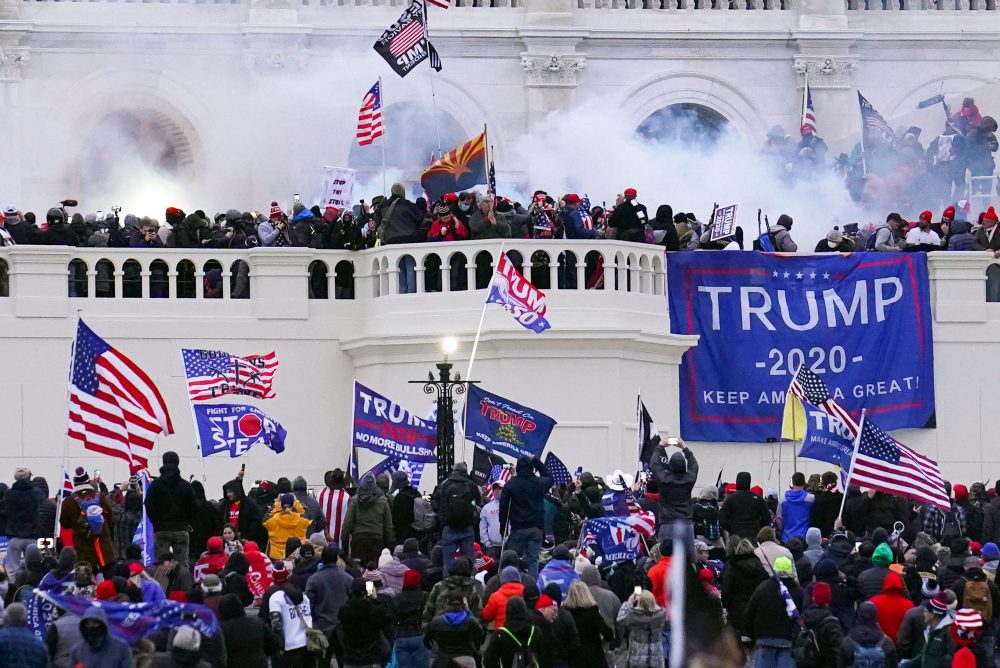
WASHINGTON — A man who was found guilty of participating in the January 6, 2021, Capitol riot has been appointed to a position within the Pentagon’s policy division by the Trump administration, according to government officials and internal documentation.
Acting Pentagon press secretary Joel Valdez defended the hiring decision in a social media statement this week, saying “Mr. Elias Irizarry is a qualified, patriotic young professional, and we are proud to have him as a political appointee.”
The Washington Post initially broke the story of Irizarry’s appointment. He was found guilty in 2023 on a misdemeanor trespassing count following the attack on the Capitol by supporters of President Donald Trump. Court records indicate he expressed remorse during his 2023 sentencing, which resulted in a two-week jail term.
According to internal Pentagon documentation shared with The Associated Press, Irizarry has been placed within the office of the undersecretary of defense for policy. This department is responsible for delivering national security guidance and assistance regarding military strategy and planning to the defense secretary.
Valdez’s statement did not specify the duration of Irizarry’s employment, and the Pentagon refused to share additional details.
Sen. Mark Warner, the ranking Democrat on the Senate Intelligence Committee, expressed outrage on social media, writing: “This administration thinks a convicted Jan. 6 rioter should be doing that kind of work?????”
Court documentation reveals that Irizarry was 19 years old and attending his freshman year at the Citadel military college in South Carolina as a Civilian Air Patrol cadet when he participated in the Capitol attack. The records indicate he entered through a damaged window, went into a conference room, carried a metal pole throughout the Capitol building, and photographed the scene before departing.
In a court document, prosecutors stated: “Because of his training, Irizarry was undoubtedly aware of the safety threat posed by a mass of angry rioters to the Congressional members and staff inside the building.”
Irizarry entered a guilty plea to the misdemeanor trespassing charge in October 2022. In March 2023, U.S. District Judge Tanya Chutkan imposed a 14-day jail sentence.
During his sentencing hearing, Irizarry addressed the judge, saying he brought “great shame upon myself, my family and even my country,” according to court transcripts.
“The idea of Americans being willing to fight other Americans and tear down the very institutions that millions of other Americans sacrificed and built and protect is horrible. It is something I have to live with being a part of,” he stated.
Irizarry is not alone among January 6 riot participants who have secured positions in the Trump administration.
Former FBI agent Jared Wise, who faced charges for joining the crowd, was brought on at the Justice Department last year as an adviser to the department’s pardon attorney.
Wise was undergoing trial in Washington when Trump resumed office in January and issued pardons, reduced sentences, or ordered case dismissals for nearly all 1,600 individuals charged in connection with the attack. Wise’s case was dropped before jury deliberations concluded.
In April, he posted on social media about his resignation from the department, explaining: “I returned to Washington to fully expose the abuses by the FBI and DOJ against J6 defendants, but it became clear that this will only happen from outside of government. So I left and will do so.”
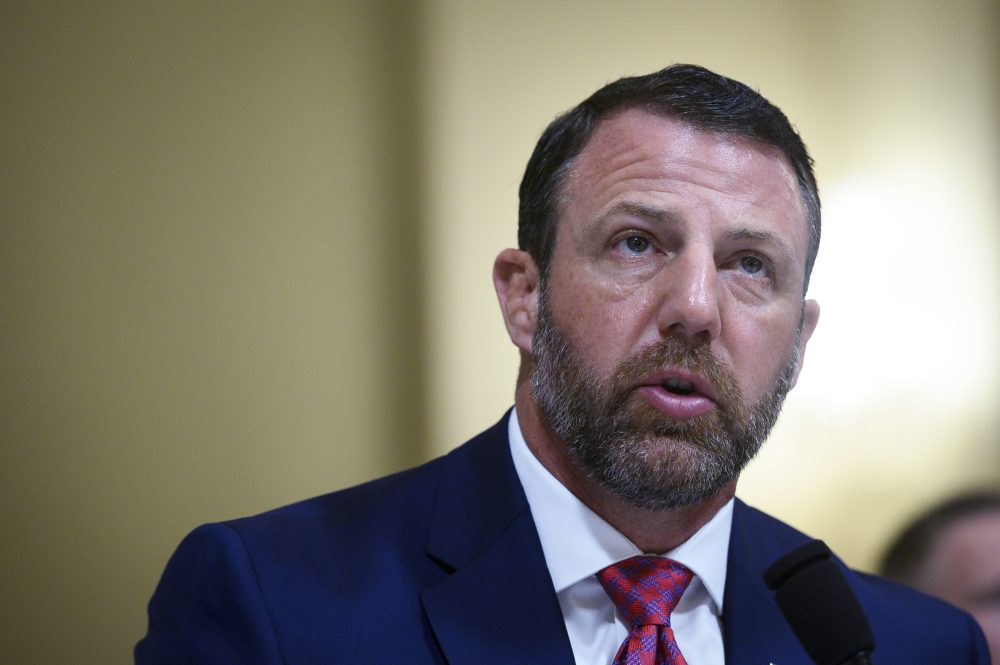
WASHINGTON — The Department of Homeland Security will extend the training period for new Immigration and Customs Enforcement officers starting next month, Secretary Markwayne Mullin announced Wednesday during a congressional hearing.
When questioned about reports of shortened training programs for ICE recruits, Mullin stated the department would restore training from the current 42 days back to 72 days.
“July 1st. We bring it back up. We had to rewrite the curriculum. All training starting July 1st will be back up to the regular standards,” Mullin said. The secretary did not explain the reasoning behind the timing of this change or respond to criticisms about the current training schedule.
The agency had modified its training procedures as part of an effort to rapidly recruit and prepare an additional 10,000 deportation officers, funded by billions of dollars allocated by Congress last summer. The agency previously employed approximately 6,500 deportation officers.
These changes sparked accusations that the department was compromising training quality to deploy officers more quickly, which both Homeland Security and ICE officials consistently disputed.
In February, Ryan Schwank, a former U.S. Immigration and Customs Enforcement attorney who oversaw training for new deportation officers, criticized the agency’s preparation program as “deficient, defective and broken.”
Speaking at a Democratic-sponsored forum, Schwank alleged that the department had dismantled the training curriculum for new deportation officers, reducing its length while being dishonest about their actions.
“DHS told the public the new cadets receive all the training they need to perform their duties, that no critical material or standards have been cut,” he said. “This is a lie. ICE made the program shorter, and they removed so many essential parts that what remains is a dangerous husk.”
Both ICE and Homeland Security officials have disputed claims that new recruits were receiving inadequate preparation. Responding to Schwank’s statements, Homeland Security emphasized that officers received firearms training, learned “de-escalation tactics” and received constitutional instruction. Officials also maintained that no training hours were reduced.
During an August visit to the ICE training facility in Georgia with media representatives, acting ICE director Todd Lyons acknowledged the agency had implemented changes to make the process more efficient but rejected suggestions that standards were lowered.
Department officials explained they expanded training at the federal facility to six days weekly, incorporated additional instruction before and after recruits’ arrival at the facility, and eliminated a Spanish language requirement.
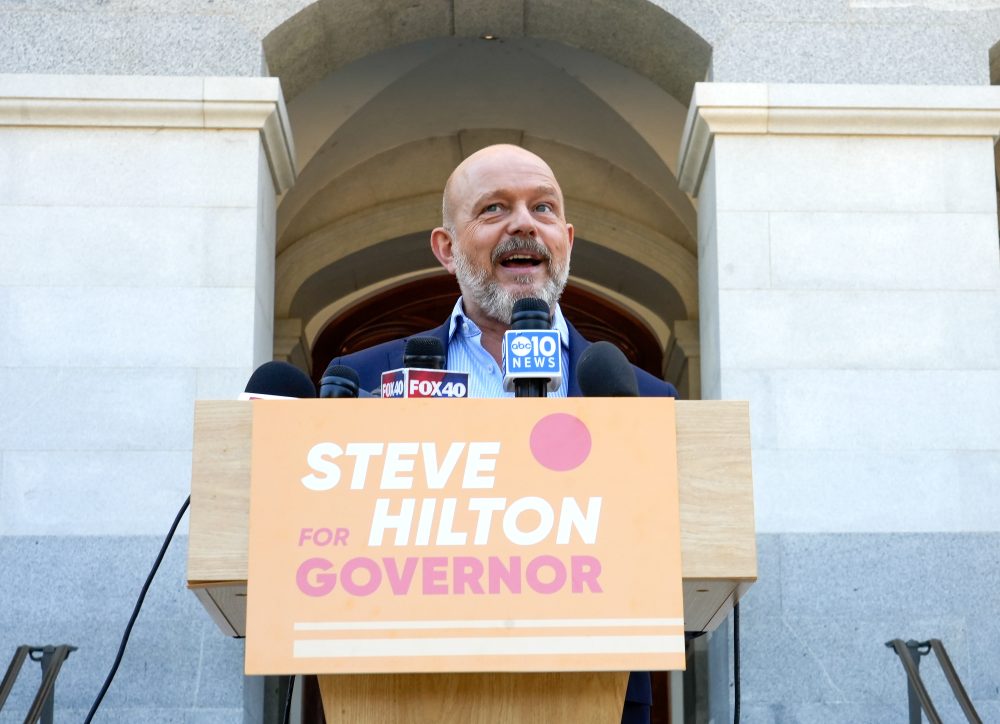
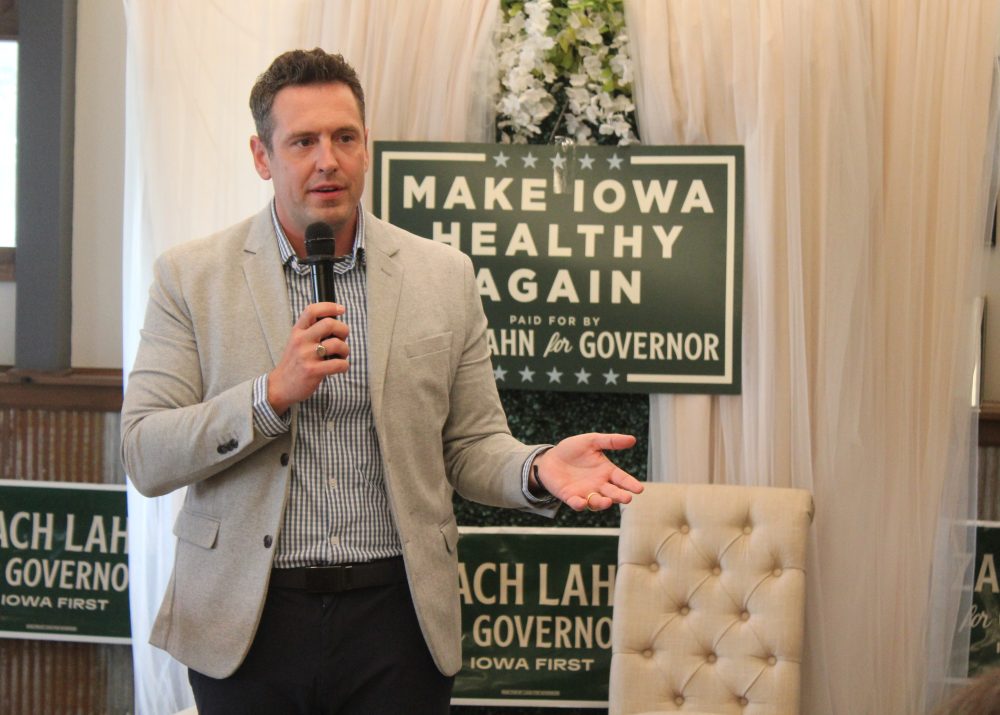
Republican gubernatorial candidate Steve Hilton is positioning California as a state filled with untapped promise that has been mismanaged by Democratic control as he campaigns to become the first GOP governor in over a decade and a half.
“We have a responsibility to revive California so it is once again that symbol of everything that is great about our nation: energy and optimism and ambition,” he declared Tuesday during an election night address in Southern California.
By Wednesday, Hilton expressed confidence about advancing to the November general election while ballots were still being tallied. California’s primary system places all contenders on one ballot regardless of party affiliation, with the top two vote-getters moving forward to the general election.
As of Wednesday afternoon, The Associated Press had not declared a winner in the primary race. Early results showed Hilton and Democrat Xavier Becerra in the lead, with Democrat Tom Steyer trailing close behind. California typically sees significant ballot updates following Election Day as mail-in and drop-off votes arrive and get processed, sometimes altering election results.
Hilton, who lacks experience in elected positions, has vowed to shake up the state’s established political system, which he claims has abandoned Californians who cannot afford living costs in the notoriously pricey state. The candidate is relatively new to both California politics and California itself. He relocated to the state in 2012 from the United Kingdom, where he served as an advisor to Conservative Party leaders including former Prime Minister David Cameron. He hosted a Fox News program from 2017 to 2023 and obtained U.S. citizenship in 2021.
Should Hilton make it to November, he confronts significant challenges in a state that last elected a Republican governor when Arnold Schwarzenegger departed office in 2011. Currently, Democrats represent 45% of registered voters while Republicans account for just 25%. Despite these statistics, Hilton maintains he can overcome the odds.
“When people say, ‘How are you going to win in California as a Republican?’ My question is, how will a Democrat win based on the record that they are putting before the people?” he questioned reporters outside the state Capitol on Wednesday.
His campaign platform includes commitments to reduce costs across sectors from gasoline to housing, cut income taxes, establish a loan program for first-time homebuyers, and maintain current in-state tuition rates at public universities.
Another potential hurdle in attracting voters outside the typical Republican base comes from President Donald Trump’s backing.
“I know Steve — He is a hard driving WINNER, and he will turn California around, quickly — and the Federal Government will be there, with him, to help!” Trump wrote in a social media post.
Though Trump’s endorsement likely strengthened Hilton’s Republican primary support, it may prove problematic in November given the president’s low approval ratings in a state he frequently criticizes. Throughout primary debates and campaign events, Hilton has downplayed Trump’s endorsement since receiving it in April. However, he indicated enthusiasm about potentially having a cooperative federal partner if elected.
“It’s about, what does that endorsement mean for the practical things we can get?” Hilton explained Wednesday, noting he would collaborate with federal authorities to attempt lowering gas prices and eliminating government waste to enable tax reductions.
Hilton’s pledge to restore the state to an undefined era when conditions were better for most residents echoes Trump’s familiar “Make America Great Again” message.
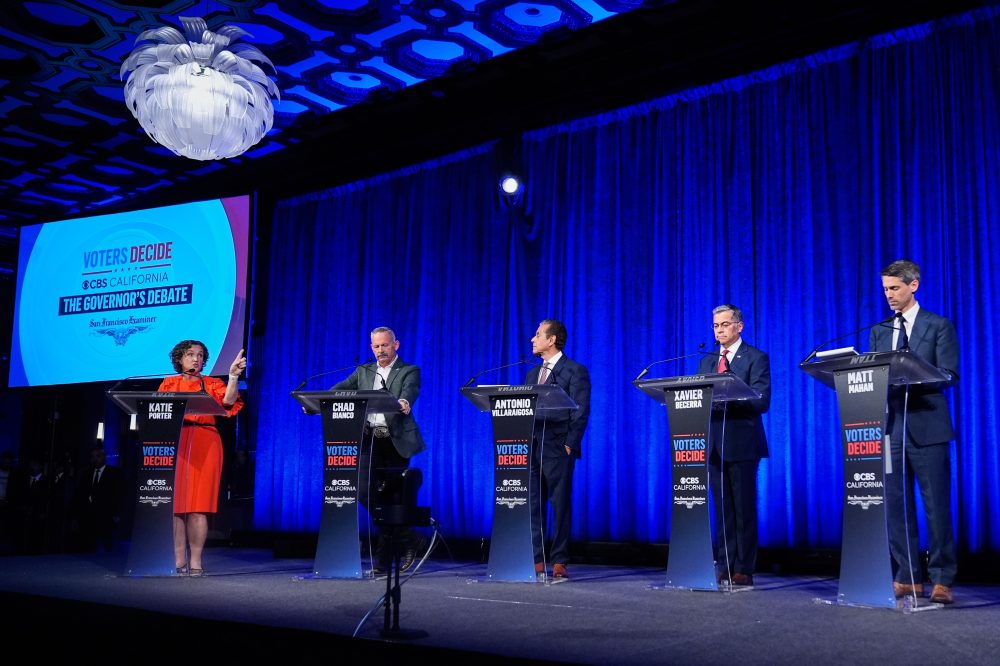
During the primary campaign, Hilton competed against Republican Chad Bianco, the Riverside County sheriff, for GOP support.
In the campaign’s closing phase, Hilton cautioned about the potential for Becerra and Steyer to both advance to the general election, eliminating Republican representation. Becerra highlighted his extensive political background as evidence of his leadership capabilities, while Steyer emphasized his progressive advocacy record to show how he would support struggling families.
However, Hilton argued that neither opponent would change the established order following years of Democratic governance.
“The progressive experiment in governance — we can see the results. It’s a disappointment all around,” he stated. “I don’t know how much longer we have to wait for this experiment to actually work.”
WASHINGTON — In a historic first, the U.S. House of Representatives voted Wednesday to pass a war powers resolution aimed at stopping military action against Iran, delivering a sharp rebuke to President Donald Trump as several Republicans crossed party lines to join Democrats in ending the three-month conflict that has reshaped domestic and international politics.
House Speaker Mike Johnson had attempted to block an outcome that would demonstrate growing opposition to the war, abruptly halting floor proceedings two weeks earlier when the resolution appeared headed for passage. However, dissatisfaction has continued to mount as the conflict continues and Trump faces challenges in negotiating a peace agreement.
Wednesday’s vote tally stood at 215-208, though what happens next remains unclear. Trump would probably veto any congressional measure aimed at restricting his authority as commander-in-chief. Nevertheless, the count, which saw four Republicans side with Democrats, represented a clear rejection of the president’s military strategy, prompting applause to break out on the House floor.
“This reckless and costly war of choice needs to end today,” House Democratic Leader Hakeem Jeffries of New York stated earlier this week.
“All we need are a handful of Republicans to join us and we can end this reckless and costly war of choice — a war that has cost the American taxpayer over $100 billion — that’s extraordinary — and left our country in a weaker position relative to Iran.”
This marks the fourth attempt by the House to restrict the U.S. military campaign against Iran. The Senate moved forward with its own war powers resolution last month when several GOP senators broke with the Republican president in an uncommon display of political resistance from within his party.
With each Democratic push for the war powers resolution, vote counts have gradually increased as political discomfort with the U.S. military engagement grows. Trump had run for president pledging to conclude U.S. military involvement overseas and concentrate on domestic priorities, but the conflict has redirected focus back to the Middle East.
Johnson maintained that Trump remains “laser focused” on domestic matters, especially with midterm elections approaching that will decide congressional control.
The speaker revealed he spent three hours at the White House with the president this week as Trump seeks allied assistance to reopen the Strait of Hormuz for commercial traffic, particularly oil shipments.
Following the U.S. decision to join Israel in launching Feb. 28 attacks on Iran, Americans have experienced rising fuel costs, contributing to inflationary pressures on consumer expenses.
Iran has succeeded in disrupting maritime traffic through the Strait of Hormuz, a crucial waterway for a significant portion of global oil, natural gas and related commodities like fertilizer.
“We’re working on that final piece,” said Johnson, R-La. “The entire world has an interest in the Strait of Hormuz being reopen for commerce. That what he’s working on.”
Although a ceasefire was announced in April, it remains fragile and unpredictable. Negotiations for a more lasting resolution to the hostilities have stalled, made increasingly complex by Israel’s expanding conflict with Iran-supported Hezbollah fighters in Lebanon. At the same time, military exchanges between the U.S and Iran persist.
The House war powers resolution would not immediately halt the conflict, but it would represent a symbolic and potentially legal move against additional military operations.
The measure now moves to the Senate, where four Republican senators last month joined Democrats in advancing similar legislation to limit the U.S. campaign against Iran. The Senate has not yet held a final vote to pass or defeat its own war powers resolution.
Secretary of State Marco Rubio cautioned Wednesday during testimony before a House Foreign Affairs Committee hearing that Iranians would believe the administration’s “hands are going to be tied” if Congress passed a war powers resolution. He argued they would think “we won’t be able to do anything to them, so why make a deal?”
This isn’t the only national security action Congress is pursuing as Democrats, though in the minority, attempt to gain Republican support for measures extending beyond the Iran conflict.
The House is also voting Wednesday on another Democratic-sponsored initiative that would authorize U.S. assistance for Ukraine’s military operations in its fight against Russia and help rebuild the devastated nation. The House this week is also anticipated to review a war powers resolution to prevent U.S. involvement in Lebanon.
While Congress holds constitutional authority to declare war, the president also possesses commander-in-chief powers to engage in military operations, establishing a legal conflict over which governmental branch has final authority in war and peace decisions.
According to the war powers act, the White House has 60 days to obtain congressional approval for military action. The administration has suggested that since a ceasefire has been declared in the current Iran conflict, hostilities have ended.
WASHINGTON, June 3 – The U.S. House of Representatives approved a Democratic resolution Wednesday requiring congressional authorization before military action against Iran can proceed, demonstrating increasing legislative unease about the conflict even within President Donald Trump’s own party.
The measure passed by a margin of 215 to 208, with four Republicans crossing party lines to support the Democratic-sponsored war powers resolution. The vote represents another legislative challenge for Trump despite his party holding narrow control in both congressional chambers.
The action carries primarily symbolic weight. For the resolution to take effect, it must also clear the Senate and secure two-thirds support in both houses to override what would likely be a certain presidential veto.
Nevertheless, the vote follows three earlier war powers measures that failed in the House by progressively smaller vote counts. Additionally, the Senate moved forward with a comparable resolution in a procedural vote last month, following seven unsuccessful previous attempts.
The current administration has chosen to grow a federal initiative that was created during the previous presidency, specifically focusing on dismantling human trafficking operations.
This enforcement program, which targets criminal networks involved in smuggling people, represents one area where the new administration has decided to build upon rather than reverse policies established under Biden.
President Trump has issued an executive order affecting thousands of federal employees across the nation, removing employment protections for approximately 8,000 senior government workers.
The order creates a new employment classification for these high-level civil servants, stripping away job security measures that previously protected them from arbitrary dismissal. Under this new category, these federal employees can now be terminated without requiring specific justification.
The policy change targets senior-level government positions, fundamentally altering the employment status of thousands of federal workers who previously enjoyed civil service protections.
A 50-year-old technology support worker named Michael Stansfield launched a Republican congressional campaign in the Sacramento suburbs of California to send a message to his party’s religious supporters.
His goal was to highlight the importance of Middle Eastern peace and demonstrate how Islam aligns with Christian values.
The former seminary student and father of two borrowed against his house to cover the $17,000 required to file his candidacy paperwork. He collected no additional contributions, ran no visible campaign operation, and worked without any staff.
However, following California’s primary election on Tuesday, Stansfield managed to secure enough voter support to maintain second place, which could prevent Democrats from advancing to November’s general election in a House contest central to their nationwide redistricting efforts.
“I wanted to show Christianity and Judaism a God from the Bible who loves Muslims,” Stansfield said in a telephone interview before rushing to his son’s sixth-grade graduation. “I wasn’t necessarily going after it to win a race.”
While it remains unclear which two candidates will move forward in the 6th Congressional District, the preliminary outcomes already demonstrate the risks Democrats face when making assumptions about gerrymandering strategies designed to increase their influence. California Democrats secured voter approval last year to redesign the state’s congressional boundaries as a response to Republican redistricting efforts ahead of this year’s midterm contests. The party anticipated gaining five seats statewide, including the 6th District, which extends from Sacramento eastward into Republican-favoring suburban areas.
Democrats expected one of the top two vote-getters would represent their party. However, Stansfield’s performance shows how carefully crafted partisan redistricting schemes can fail when confronted with unpredictable campaign dynamics.
Kevin Kiley represents the congressman whose conservative district was divided and combined with a more Democratic region. Kiley departed the Republican Party to run as an independent candidate and has captured the highest vote share thus far. This positioned Stansfield as the sole candidate displaying an “R” beside his name, helping him currently rank above nine Democratic candidates who divided the majority of votes counted so far.
Strategic advisors from both parties anticipate that heavily Democratic-leaning mail ballots numbering in the tens of thousands and still uncounted will favor Democratic candidates, likely allowing one to overtake Stansfield in final results.
“I would think there’d be an advantage to Democrats,” said Rob Stutzman, a GOP consultant in Sacramento.
State regulations permit mail ballots postmarked by Election Day to count if received within seven days. Officials must also reach out to mail voters whose signatures don’t match records and provide alternative identity verification opportunities. Tight races in the state frequently require weeks to determine.
Stansfield, who reports being married to a Muslim woman from the Middle East and was expelled from seminary for arguing Palestinians possess biblical rights to the Holy Land, previously mounted an unsuccessful congressional bid. In 2018, he pursued an Oregon House seat as a Democrat, joining that party following the Iraq War.
He suffered a decisive primary defeat, earning approximately 4% of votes in a district encompassing part of Portland, though a candidate questionnaire from that period revealed additional details about his positions. When asked about his top priorities if elected, Stansfield stated he opposed “ignorance in all its forms.”
“If we are ever going to call ourselves a tolerant society we need to learn to embrace the diversity of our world with love,” he wrote.
In the questionnaire, he identified himself as Jewish and cited supplying water and medical equipment in Gaza among his most passionate policy interests.
Stansfield explained he abandoned the Democratic Party after the Israel-Hamas conflict began during Democrat Joe Biden’s presidency, citing what he termed “genocide” in Gaza. Following his California relocation, he chose to seek office in the congressional district before last year’s boundary changes, when it reliably supported conservatives, hoping to reach the maximum number of Republican voters with his message.
“I wanted to go to the Republican Party and say ‘Guys, I love you, but you’ve messed up,’” Stansfield said.
He never anticipated finding himself in such a potentially decisive position.
Democrats worried about losing access to one of five seats they expected to capture through redistricting, but their concerns focused on a San Diego-area district featuring a similarly crowded candidate field. San Diego City Councilwoman Marni von Wilpert surged forward to claim a general election spot and will compete against Republican San Diego County Supervisor Jim Desmond in November.
In another redesigned congressional district, Republican Rep. Ken Calvert earned a November ballot position following an intense campaign against fellow Republican Rep. Young Kim. The second position in that contest remained undecided Wednesday.
Three experienced Democratic House members facing challenges from younger party rivals appeared to have prevented upsets.
Reps. Brad Sherman and Mike Thompson became top vote recipients in their respective contests and will advance to the general election. Rep. Doris Matsui led vote counting Wednesday in her Sacramento district, though uncertainty remained about which two candidates would proceed to the general election.
ATLANTA (AP) — A Georgia prosecutor has filed a constitutional challenge against legislation mandating nonpartisan elections for most local positions in the five largest counties surrounding Atlanta while exempting the remainder of the state from this requirement.
DeKalb County District Attorney Sherry Boston — joined by Fulton County District Attorney Fani Willis, Clayton County District Attorney Tasha Mosley and Cobb County District Attorney Sonya Allen — declared Wednesday from a park located across from the state Capitol that she was submitting a legal challenge to the legislation. Boston, who serves as the sole plaintiff in the case, claimed the legislation breaches both state and federal constitutional protections and singles out Democratic strongholds while pretending to eliminate politics from these elections.
“Republicans here at the state Capitol want to make it harder for voters in our counties to choose the people who best represent us and our values,” Boston said. “But today we are here at the state Capitol to tell those lawmakers that we will not shy away from speaking up for the people of Clayton, Cobb, DeKalb, Gwinnett and Fulton counties.”
She rejected claims that the legislation aims to enhance public safety or eliminate political considerations from the process.
“I think the intent of the law when you look at who they’ve targeted is very clear,” Boston said. “They have chosen to go after Democratic strongholds where Democratic DAs and Democratic officials have been successful in these races.”
The legal action targets the state of Georgia. Through an emailed response, Kara Murray, a spokesperson for state Attorney General Chris Carr, stated, “We will defend the law as enacted and signed by the Governor.”
Willis and Boston had earlier warned of potential litigation regarding the law after Republican Georgia Gov. Brian Kemp approved it last month. They indicated that one motivation for Republicans focusing on these five counties was that all currently have Black women serving as their elected district attorneys.
Willis has faced repeated criticism from Republican state legislators following her prosecution of President Donald Trump and associates regarding efforts to reverse Democrat Joe Biden’s victory in Georgia’s 2020 presidential contest. That legal proceeding was thrown out last year.
State Sen. John Albers, a Republican from the Atlanta suburb of Roswell who championed the legislation, stated during the legislative session that he expected it would enhance public safety, although the counties’ elected sheriffs will remain under partisan election systems. Albers did not respond immediately Wednesday to a message sent through his legislative office seeking comment regarding Boston’s lawsuit.
The legislation, scheduled to begin in 2028, would mandate nonpartisan elections for district attorneys, solicitors general, county commissioners, court clerks and tax commissioners.
It will shift elections for all impacted positions except district attorneys to May, when voters select nonpartisan judges. This creates a smaller voting pool than in November, with participation primarily influenced by partisan office primaries conducted simultaneously. Should no candidate secure a majority, nonpartisan runoffs would occur in June.
The policy affects Fulton County, which encompasses most of Atlanta, along with the suburban areas of Clayton, Cobb, DeKalb and Gwinnett counties. Fulton, DeKalb and Clayton counties represent the three most significant Democratic jurisdictions statewide. Cobb and Gwinnett, previously reliable Georgia Republican territories, have shown increasing Democratic support since 2016.
Boston argued the law breaches Georgia’s uniformity clause, which she stated demands laws function identically statewide. It also violates equal protection provisions in both state and federal constitutions because legislators provided no legitimate justification for treating these five counties and their voters and elected officials differently, she stated. Additionally, she claimed lawmakers violated procedural requirements during the voting process.
Chicago’s leading federal prosecutor has acknowledged making a direct appeal to grand jurors before they issued indictments against demonstrators who protested immigration enforcement actions during the previous administration. The unusual admission sheds light on his involvement in typically confidential proceedings that weren’t progressing as federal officials had hoped.
U.S. Attorney Andrew Boutros issued a five-page statement on Tuesday, including portions of transcripts, responding to defense attorneys’ allegations that he had improper “personal contact” with the grand jury last October before charges were filed on a third attempt.
Boutros maintained that his appearance was simply to emphasize jurors’ duty to remain impartial and denied attempting to influence their decision-making.
However, Boutros also instructed jurors to “please raise your hand” if they “cannot set aside their personal feelings” regarding immigration or other matters. This occurred during a period when the Justice Department under President Donald Trump was experiencing difficulties with grand juries in other locations.
“It’s not normal,” Sol Wisenberg, a former federal prosecutor, said Wednesday. “Typically it’s a judge who might make remarks.”
The federal case against the demonstrators has since crumbled for additional reasons. Boutros dismissed charges against four activists on May 21 because of alleged improper conduct by an assistant U.S. attorney during grand jury proceedings. There were also allegations that jurors who opposed issuing an indictment were excluded from participation.
When the case was thrown out, Boutros told a judge: “No one acted with the intent to mislead, your honor.”
A federal grand jury consists of 16 to 23 individuals who convene privately. A prosecutor presents evidence without defense attorney involvement. The grand jury doesn’t require unanimous agreement, though 12 votes are needed for an indictment. All jurors, prosecutors and investigators are bound by confidentiality.
It’s unusual for a U.S. attorney in a large city to personally appear before a grand jury. Boutros stated he didn’t discuss legal applications or evidence regarding the protesters at a Chicago-area immigration detention facility.
Instead, he indicated his purpose was merely to provide encouragement while his team managed the case specifics. Boutros argued that a grand jury unwilling to consider “evidence impartially without fear or favor” undermines law enforcement.
“In such unchartered and unprecedented circumstances, extraordinary measures may be required to restore the rule of law,” he said regarding his appearance.
Defense attorney Josh Herman, representing defendants in the case, expressed concern about Boutros’ actions. He called it “chilling” that Boutros asked jurors to identify themselves if they couldn’t set aside personal feelings when reviewing evidence in certain cases before the grand jury issued an indictment on the third try.
“The fact that the indictment has now been dismissed due to other misconduct before the grand jury does not cure the many wrongs that happened here,” said Herman, who along with other lawyers is requesting a judge order the government to cover their legal fees.
The Chicago situation reflects a broader pattern of Justice Department challenges with grand juries during the second Trump administration.
Judges in Wyoming recently threw out charges against nine individuals after the U.S. attorney there called the defendants “bad guys” and “murderers” to jurors. He distributed business cards and encouraged individual contact.
In November, a federal magistrate judge criticized a Trump supporter who obtained an indictment against former FBI Director James Comey, stating Lindsey Halligan had shown a “disturbing pattern of profound investigative missteps.”
These irregularities have been referenced by attorneys seeking grand jury transcripts in the case involving independent journalist Don Lemon. He faces charges related to an immigration enforcement protest at a Minnesota church.
Boutros was named U.S. attorney in 2025 for northern Illinois by the Justice Department, with his term extended last year by U.S. District Court judges. U.S. Sens. Dick Durbin and Tammy Duckworth, both Illinois Democrats, have demanded his resignation, citing turmoil and “deep internal dysfunction” within his office.
Worcester County officials have finalized their spending plan for fiscal year 2027, keeping property taxes at the current rate while providing additional resources for local schools.
The approved budget maintains the property tax rate at 81.5 cents per $100 of assessed value, meaning homeowners will not see an increase in their tax bills. At the same time, county leaders allocated 8 percent more funding for education compared to the previous year.
The budget was announced on the county’s website on Wednesday afternoon, marking the completion of the annual budget process for the Maryland county.
The nation’s highest court has given Alabama the green light to proceed with a congressional district map that benefits Republican candidates in the upcoming midterm elections.
The Supreme Court’s decision ensures that Alabama voters will cast ballots in six districts that favor GOP candidates and just one district that leans toward Democratic candidates during the midterms.
WASHINGTON — During a Senate Finance Committee hearing on Wednesday, Treasury Secretary Scott Bessent declined to clarify whether President Donald Trump and his relatives will continue receiving protection from IRS audits following the administration’s decision to cancel a controversial $1.776 billion compensation fund that would have aided the president’s supporters.
“There’s continuing litigation, and I’m unable to comment on ongoing litigation,” Bessent responded to lawmakers during the committee session.
The evasive response frustrated Democratic senators seeking clarity from Bessent during a hearing supposedly centered on the Treasury Department’s budget. This came one day after acting Attorney General Todd Blanche appeared to suggest that the settlement’s IRS audit protection provisions would remain active for the Republican president.
Following multiple unsuccessful efforts to obtain a direct answer from Bessent, Sen. Catherine Cortez Masto, D-Nev., declared, “It’s been very clear you’re dodging this and you’re trying to use it as an excuse. It’s just outrageous on behalf of the American republic.”
A White House representative failed to respond to an Associated Press request regarding the settlement’s current status. The president has not made any public statements about the compensation fund’s elimination.
The administration chose to eliminate the compensation fund plans, which might have included payments to those who participated in the Jan. 6, 2021, Capitol riot, following widespread bipartisan criticism and intense political opposition that threatened to derail important White House priorities. However, the IRS immunity agreement’s status within the disputed settlement designed to resolve the president’s $10 billion IRS lawsuit remained uncertain, despite Blanche’s Tuesday statement that “nothing has changed” regarding that matter.
A federal judge in Florida supervising the president’s IRS lawsuit, who had previously thrown out the case, reopened it last week and directed the president’s legal team to address accusations that the president dropped his claims to prevent court examination of the agreement.
When initially dismissing the case, Kathleen Williams, the judge overseeing the lawsuit, criticized the Justice Department for insufficient transparency and stated no agency “submitted any settlement documents nor filed any documents ensuring that the settlement was appropriate where there was an outstanding question as to whether an actual case or controversy existed.”
Matt Platkin, a former New Jersey attorney general currently with the law firm Platkin LLP, which represents lawmakers and judges contesting the settlement agreement, described it as “one of the greatest scams in American history.”
He informed The Associated Press that Blanche’s Tuesday testimony regarding plans to eliminate the weaponization fund while granting the president audit immunity “underscores the need for the court to continue its inquiry in Florida.”
Senate members attempted unsuccessfully to question Bessent about the agreement on Wednesday.
“Secretary Bessent owes the committee an explanation of what the Treasury knows about the dirty settlement. That’s because his department was involved from beginning to end,” stated Sen. Ron Wyden, D-Ore.
Wyden questioned Bessent: “Does the IRS audit immunity given to Trump, his family, and his businesses still stand?”
Bessent refused to provide an answer, referencing the ongoing legal matter.
Should audits and investigations into the president’s tax records be dismissed under the settlement, an unknown amount could be eliminated from his obligations to the federal tax agency.
Earlier reporting by the New York Times and ProPublica revealed that a continuing audit of a method the president allegedly employed to evade taxes in previous years might have led to an estimated $100 million assessment if the IRS had discovered violations.
Some Republicans also voiced concerns Wednesday about the proposal to protect the president from IRS oversight.
Sen. Bill Cassidy, R-La., told reporters outside the chambers, “I don’t think any American should have a deal like that.”
Nina Olson, founder of the Center for Taxpayer Rights, which has filed suit against the administration over IRS disclosures to immigration authorities, characterized the settlement as “the lowest point for the IRS since the 1970s and President Nixon’s efforts to help his friends by trying to stop IRS audits of them and hurting his enemies by urging IRS audits on them.”
An online prediction platform has terminated its business relationship with former congressman George Santos while federal authorities examine whether he engaged in illegal trading practices on a competing betting site.
According to sources familiar with the investigation, Santos wagered against his own presence at President Donald Trump’s State of the Union address on February 24th through the prediction marketplace Kalshi. This occurred after he had publicly declared his plans to attend the speech. Santos later cited flight delays as the reason for his absence.
Kalshi discovered the questionable betting activity and forwarded the information to the Commodities Future Trading Commission, which has launched an investigation into Santos for potential insider trading violations, according to a second source with knowledge of the probe.
Both individuals spoke with The Associated Press under anonymity because they lacked authorization to discuss the ongoing matter.
At the time of the State of the Union event, Santos was already serving as a paid influencer for Polymarket, leveraging his significant social media presence to promote the company. He had been released from federal prison in October following a clemency grant from Trump in connection with fraud charges.
When contacted by the AP for comment, a Polymarket representative confirmed the company was proceeding with contract termination following this week’s disclosures.
Santos did not return phone calls or text messages from the AP seeking comment.
During episodes of his podcast “Doing Time with George Santos,” the former congressman has discussed his participation in prediction markets, describing them as “easily manipulable.”
“There’s definitely some space for speculation. There will be investigations. There will be scrutiny,” he stated in March. “I just want to make sure that people understand: It is not straightforward. It is not a crime to do prediction market.”
He added: “I think it’s fun and you can make a little money and you can have fun with it, but just understand that there will always be advantaged players in this game and it’s very hard to understand who they are.”
Santos secured his congressional seat in 2022 by campaigning with a fabricated identity as a successful Wall Street businessman, despite having no financial industry experience and facing personal financial difficulties including rent payment struggles.
He faced expulsion from Congress and entered guilty pleas to wire fraud and identity theft charges in a criminal case involving the theft of donor funds, which he used for personal purchases including luxury apparel.
After receiving a sentence exceeding seven years in prison, Santos completed 84 days of incarceration before Trump commuted his sentence.
WASHINGTON — Senate Republicans are preparing to vote Wednesday on legislation providing funding for immigration enforcement agencies following the White House’s decision to abandon a controversial settlement fund for political allies and remove proposed White House security funding from the measure.
The approximately $70 billion legislation would provide resources for U.S. Immigration and Customs Enforcement and the Border Patrol. The bill faced weeks of delays as Republican senators worked through various hurdles to passage that arose from President Donald Trump and the White House. GOP leaders now say they’re prepared to advance the legislation in its streamlined form.
“Right now, the goal is to get the base bill across the finish line,” said Senate Majority Leader John Thune, R-S.D.
However, Republicans must secure sufficient votes to defeat numerous amendments that Democrats — and possibly some Republicans — plan to introduce. The GOP is utilizing budget reconciliation procedures that allow passage without Democratic support, though they must first navigate an extensive series of amendment votes that could create challenges for the bill.
The main concern during amendment voting, which could start Wednesday evening, involves anticipated Democratic proposals regarding Trump’s $1.776 billion settlement fund. The administration eliminated this fund Tuesday following strong Republican opposition. Despite acting Attorney General Todd Blanche informing Congress that “we are not moving forward with the fund, period,” Democrats want the prohibition codified in law.
“It is only a matter of time before Blanche and Trump go back on their word,” said Senate Minority Leader Chuck Schumer, D-N.Y.
Thune characterized Blanche’s statements as “extremely helpful” and believes most GOP senators were pleased with the decision. “We’ll find out,” he said.
Sen. Thom Tillis, R-N.C., has indicated he may propose an amendment preventing any attempt to revive the fund, which was included in a settlement resolving Trump’s lawsuit against the IRS regarding his leaked tax returns.
Thune said he’s collaborating with Tillis and other senators who have discussed amendments while working to secure enough votes for a simple majority in the 53-47 Senate.
“Keep in mind, we’ve got to keep them all together, make sure we’ve got 50 votes for it,” Thune said.
The bill also faced delays due to opposition to $1 billion in White House security funding, including resources for Trump’s new ballroom, that was added to the original legislation.
Both Democrats and some Republicans questioned spending taxpayer funds on the large-scale project during a period of economic difficulty for many Americans. Democrats had planned amendments to remove that language as well.
While various side issues temporarily stalled the legislation, Republicans have emphasized their primary focus remains passing the ICE and Border Patrol funding that Democrats have blocked for months in opposition to the administration’s immigration enforcement policies. Success requires Republican unity in both the Senate and House before reaching Trump’s desk.
The GOP has emerged victorious from an intense partisan redistricting fight across the nation. Whether this translates into maintaining congressional control will ultimately depend on November’s voters.
The redrawn electoral maps could deliver Republicans approximately 10 extra U.S. House seats if they perform as designed in the upcoming elections. The key question remains whether this advantage will be sufficient for the GOP to maintain their chamber majority, given that Democrats require only a handful of seat gains to seize control.
Historical trends and current political dynamics work in Democrats’ favor. President Donald Trump’s approval numbers remain in negative territory. Additionally, the party holding the presidency has consistently lost House seats during midterm elections for the past twenty years.
This electoral cycle has already proven extraordinary. Typically, voting boundaries are redrawn exclusively following each decade’s census. However, Trump pushed Republicans last summer to redraw congressional maps to their benefit in an effort to minimize losses during the 2026 midterms.
Following that push, Republicans believe they could capture up to 16 extra seats through new House maps implemented across eight states — Texas, Missouri, North Carolina, Ohio, Florida, Tennessee, Louisiana and Alabama. Democrats, whose response efforts encountered multiple obstacles, estimate they could gain up to six additional seats through new boundaries in California and Utah.
Approximately 145 million Americans — roughly two out of every five U.S. citizens — reside in states implementing new congressional districts for this election.
However, the mid-decade redistricting effort didn’t reach its full potential.
Kansas Republicans and Illinois Democrats both rejected party pressure to pursue redistricting. In Republican-controlled Indiana and South Carolina, plus Democratic-led Maryland, new congressional maps passed state House chambers but ultimately failed in state Senates. Virginia’s Supreme Court struck down new voter-approved districts that might have helped Democrats secure up to four extra seats. Meanwhile, the U.S. Supreme Court overturned a lower court ruling that could have assisted Democrats in gaining a congressional seat in New York.
Below is an examination of states implementing new U.S. House maps:
Current map: 13 Democrats, 25 Republicans
New map: Republican Gov. Greg Abbott signed a revised House map into law last August that could help Republicans win five additional seats. Democrats think they could still win some of those seats.
Current map: two Democrats, six Republicans
New map: Republican Gov. Mike Kehoe signed a revised House map into law last September that could help Republicans win an additional seat by reshaping a Democratic-held district based in Kansas City. Republican Secretary of State Denny Hoskins has until Aug. 4 — the date of Missouri’s primaries — to decide whether to reject an initiative petition seeking a statewide vote on the map.
Current map: four Democrats, 10 Republicans
New map: The Republican-led General Assembly gave final approval in October to revised districts that could help Republicans win an additional seat.
Current map: five Democrats, 10 Republicans
New map: A bipartisan panel composed primarily of Republicans voted in October to approve revised House districts that improve Republicans’ chances of winning two additional seats. Democrats think they could still win those seats.
Current map: 43 Democrats, nine Republicans
New map: Voters in November approved revised House districts drawn by the Democratic-led Legislature that could help Democrats win five additional seats.
Current map: no Democrats, four Republicans
New map: A judge in November imposed revised House districts that could help Democrats win a seat in the Salt Lake City area.
Current map: eight Democrats, 20 Republicans
New map: Republican Gov. Ron DeSantis signed revised House districts in May that improve the GOP’s chances of winning four additional seats. Legal challenges are pending.
Current map: one Democrat, eight Republicans
New map: Republican Gov. Bill Lee signed new House districts in May that improve the GOP’s chances of winning an additional seat by carving up the lone Democratic-held seat, a majority-Black district based in Memphis. Legal challenges are pending.
Current map: two Democrats, four Republicans
New map: Republican Gov. Jeff Landry signed off on new House districts in May that improve Republican chances of winning an additional seat by eliminating a majority-Black district held by a Democrat that the U.S. Supreme Court struck down as an illegal racial gerrymander.
Current map: two Democrats, five Republicans
New map: The U.S. Supreme Court in June allowed the state to use a congressional map approved by Republican state lawmakers that improves the GOP’s chances of winning an additional seat by reshaping a Democratic-held district that has a large number of Black voters.
MILWAUKEE (AP) — A federal judge delayed sentencing Wednesday to consider overturning the conviction of former Wisconsin Judge Hannah Dugan, who was found guilty of felony obstruction for assisting an immigrant in avoiding federal authorities.
The proceedings represented an early judicial test of how courts would handle President Donald Trump’s extensive immigration enforcement efforts.
While Dugan was originally set to receive her sentence Wednesday, U.S. District Judge Lynn Adelman delayed the hearing without setting a new date to instead review arguments about potentially reversing her conviction.
Adelman made no immediate ruling and gave no timeline for a decision. Dugan and lawyers from both sides exited the courtroom without speaking to the media.
Defense attorney Steven Biskupic contended that Dugan’s conviction should be reversed and declared invalid. He cited a federal appeals court decision from April that overturned a crucial Virginia immigration case that both the judge and prosecutors had referenced in Dugan’s proceedings.
Based on the 4th U.S. Circuit Court of Appeals reversing that decision, Biskupic maintained that Dugan was wrongfully convicted under procedural aspects of federal law.
“Our primary argument is this was an invalid theory of conviction,” Biskupic stated.
The Virginia case involved an immigrant who was in the country without authorization and was detained by U.S. Immigration and Customs Enforcement agents before escaping. After being captured again, he faced charges for obstructing a pending immigration proceeding.
The federal appeals court determined that the ICE action did not qualify as a “pending proceeding,” which federal obstruction law requires.
Dugan’s legal team maintains she should never have faced charges because no “pending proceeding” existed against the immigrant in her courtroom that ICE agents were pursuing, only an arrest warrant. Filing a warrant doesn’t constitute a “proceeding” under the law, Biskupic contended.
Government prosecutors argued that the Virginia case facts differ and don’t relate to Dugan’s situation. They also pointed to other cases that support upholding Dugan’s conviction.
“The court should stick with its ruling,” stated Richard Frohling, acting U.S. attorney for the eastern district of Wisconsin.
When questioned by the judge, he maintained that the appeals court erred in overturning the Virginia case. The judge also questioned Frohling about what legally constitutes a proceeding and its duration.
“It could be a couple minutes, it could be a couple years,” Frohling responded. “It all depends on the context.”
Dugan, 67, could face up to five years in prison following her December 19 jury conviction. However, prison time appears unlikely for Dugan. Federal sentencing guidelines typically recommend probation for defendants without criminal records convicted of nonviolent offenses.
She stepped down from her Milwaukee County circuit judge position two weeks after her conviction as Republican state lawmakers threatened impeachment. She had served as a judge for nine years.
Dugan attended Wednesday’s hearing but remained silent throughout.
The Trump administration pursued charges against Dugan as the president advanced his comprehensive immigration enforcement agenda. Trump’s administration and supporters characterized Dugan as an activist judge, while her attorneys claimed she was being unfairly prosecuted and unsuccessfully argued she had judicial immunity from charges.
Dugan’s case became the first instance of a Wisconsin state judge facing trial for obstructing immigration agents. She was cleared of a misdemeanor charge for concealing an individual to prevent arrest.
On April 18, 2025, immigration officers arrived at the Milwaukee County courthouse after discovering Eduardo Flores-Ruiz had illegally reentered the country and was scheduled to appear before Dugan for a state battery case hearing.
Dugan approached agents outside her courtroom and sent them to the chief judge’s office, telling them their administrative warrant was insufficient for arresting Flores-Ruiz.
Following the agents’ departure, she escorted Flores-Ruiz and his attorney through a private jury exit. Agents noticed Flores-Ruiz in the hallway, pursued him outside and arrested him after a foot pursuit. FBI agents arrested Dugan at the courthouse a week later, escorting her out in handcuffs.
Former President Donald Trump has verified that he used harsh language to describe Israeli Prime Minister Benjamin Netanyahu during a recent phone conversation, specifically calling the Israeli leader “crazy” amid discussions about military operations in Lebanon.
During a Wednesday interview on the “Pod Force One” podcast, Trump was questioned about whether he had used profanity when speaking to Netanyahu and criticized him for being ungrateful, referencing an earlier Axios news report.
“I did,” Trump confirmed. “I wouldn’t say angry. I was a little bit perturbed at his constantly fighting with Lebanon, you know.”
Despite the heated exchange, Trump emphasized that his relationship with Netanyahu remains positive.
The Axios report, which referenced an unnamed U.S. official, detailed Trump’s Monday phone call with Netanyahu where he allegedly said: “You’re fucking crazy. You’d be in prison if it weren’t for me. I’m saving your ass. Everybody hates you now. Everybody hates Israel because of this.”
Trump elaborated on the conversation during his interview: “At some point, I said, Bibi, we got to stop this. We got to stop it.”
When asked about the reported conversation, Netanyahu chose not to discuss specifics but maintained that his relationship with Trump remains unchanged.
“We have common goals. Sometimes we have, as in the best of families, you have these tactical disagreements,” Netanyahu stated during a Wednesday CNBC interview.
“He’s been the greatest friend that Israel has ever had in the White House, and he respects me; I respect him. We always find a way to work out our differences.”
Iran has indicated it will not accept any agreement with the United States to conclude the conflict that Trump and Netanyahu initiated in late February without including a ceasefire for Lebanon, which Israel entered in March while pursuing the Iran-supported Hezbollah militia that launched attacks across the border in support of Tehran.
Fighting has persisted despite a U.S.-brokered agreement announced Monday that resulted in Israel reducing attacks on Hezbollah-controlled areas in southern Beirut, while the Iran-backed organization ceased cross-border attacks.
Israeli drone attacks resulted in at least six deaths in southern Lebanon and targeted a vehicle south of Beirut on Wednesday, according to Lebanese security sources. Israel reported intercepting a hostile aircraft believed to be launched by Hezbollah.
Trump reacted defensively when questioned whether Netanyahu had “tricked” him into attacking Iran, calling his critics “the enemy.”
“I mean, I’m the one that started it,” Trump responded. “I started because we can’t let them have a nuclear weapon.”
“Now that pertains to Israel, because they probably would have been the first one to get hit. There would be no Israel. Tell you what, if there wasn’t me, there would be no Israel right now.”
Trump argued that Israel’s situation would be significantly worse if he had not withdrawn from a 2015 agreement negotiated by President Barack Obama and other world leaders with Iran, where Tehran committed to limiting its nuclear program in exchange for sanctions relief.
Following Trump’s 2018 withdrawal from that agreement during his first presidency, Iran accumulated stockpiles of near-weapons-grade highly enriched uranium, which Trump now insists it must surrender. Trump’s opponents argue that Iran is now closer to developing nuclear weapons, making it more difficult for Trump to secure a better agreement.
Trump has previously used profanity regarding Israel, including publicly stating last year that Israel and Iran “don’t know what the fuck they are doing.”
WASHINGTON — For decades, federal agencies have enforced civil rights legislation with a focus on correcting historical and systemic discrimination against Black Americans and other minority groups. The Justice Department pushed educational institutions toward integration. The Education Department championed equal access and held schools responsible for racial prejudice.
However, under the current Republican administration, initiatives designed to tackle deep-seated inequalities for minority students are being characterized as discriminatory toward white students. Long-standing programs that previously survived legal challenges are now rapidly labeled as “illegal DEI” — diversity, equity and inclusion — by the White House. Educational institutions that refuse to comply have faced funding threats, with some losing federal grants entirely.
Civil rights attorneys characterize the Republican administration’s approach as a complete reversal of legal precedent.
“It’s literally flipping the purpose of civil rights law on its head, not just harming Black students and students of color, but entire school communities,” said Michael Pillera, director of the Educational Opportunities Project at the Lawyers’ Committee for Civil Rights Under Law. “It’s unmoored from the actual history of our country and untethered to the reality of life in this country.”
The administration has launched investigations or joined lawsuits targeting various initiatives aimed at addressing racial disparities. The Justice Department is examining programs designed to boost the number of minority educators in Rhode Island and Iowa. Funding for districts to prepare teachers or recruit school mental health professionals has been terminated due to diversity language in recruitment materials.
In a statement, the Education Department said programs receiving federal money must follow the law, which prohibits discrimination based on race.
“Serving student needs and following the law are not irreconcilable mandates. Advocates and educators have no reason to stress if they abide by the law,” said Amelia Joy, a department spokesperson.
The administration investigated Chicago Public Schools and withheld more than $20 million when the district refused to end its Black Student Success Program, which aims to increase access to advanced coursework for Black students and reduce overly harsh discipline.
A similar effort to close racial achievement gaps in Los Angeles is under the same pressure.
The Los Angeles Unified School District created the Black Student Achievement Plan after an outpouring of student activism following the 2020 murder of George Floyd in Minneapolis. It supports schools with extra teachers, counselors and curriculum in Black history.
Initially, the district chose schools partially based on the number of Black students enrolled. In 2023, Defending Education, a Virginia-based conservative group, filed a complaint to the Education Department, alleging discrimination against non-Black students. The district said it would no longer consider Black enrollment and instead focus solely on metrics such as high absenteeism and low test scores, emphasizing that all students could take part.
After the changes, the Education Department in 2024 said it saw no evidence of a violation. But when Defending Education filed its complaint again this year, the department’s Office for Civil Rights opened an investigation.
Sarah Parshall Perry, senior legal fellow at Defending Education, said it refiled the complaint after district leaders were recorded saying the program had not materially changed, despite the new criteria.
“Our goal is not to make LA Unified a target, but rather to make sure that when people say that they are eliminating racially discriminatory aspects of programs, that they’re actually making good on their word,” Perry said.
In a written statement, the school district said its programs are aligned with state and federal laws and are open to all students.
Makeda Walker-Deen, a junior at Dorsey High School in Los Angeles, said the program has supported her in several ways through high school.
A program counselor directed her toward college preparation programs, which made it possible for her to visit the University of California, Berkeley, and Stanford, colleges where she is thinking of applying. Psychologists and social workers she connected with have helped her navigate pressure and anxiety.
“I think that the things a lot of critics are saying are so unreasonable,” she said. “They’re saying that a program that’s meant to help Black students, other students of color, is discriminatory. We’ve been discriminated against in school systems basically our entire lives.”
The district has seen signs of impact. In recent state testing, Black students in the district outperformed the average Black student in California.
“When you provide teachers and school personnel with knowledge and skills to help your lowest performing students, everyone wins,” said Tyrone Howard, an education professor at UCLA who consulted on the initiative.
Organizers worry pressures on the program will slow efforts to address inequities for Black students.
“Where is the uproar about the failings of the public education system for Black children?” said Christian Flagg, director of youth organizing at Community Coalition, which lobbied for the creation of the achievement plan. “We have had this student group at the bottom for so long, these massive gaps for so long. But when we do something to try to address it, there’s a problem.”
The change in the federal government’s approach to civil rights in schools has taken several forms under the current administration.
The Justice Department has released school districts from court-ordered desegregation plans dating to the Civil Rights Movement, describing them as outdated and burdensome. The Education Department has stripped funding from some districts that used it to create magnet schools intended to be more diverse.
In correspondence discouraging districts’ diversity programs, the administration has repeatedly cited a broad interpretation of the Supreme Court’s ruling on affirmative action, which prevented colleges and universities from directly considering race in admissions.
While that ruling pertained only to admissions, the administration last winter notified schools that any differential treatment based on race was unconstitutional. A federal court struck down that guidance last year, but advocates say schools may still preemptively end equity programs to avoid drawing federal scrutiny.
In Los Angeles, the Justice Department has tried to end another racial equity effort.
In the 1970s, courts ordered the district to address the harms of its segregated schools. The case led to a short-lived period where Black students and white students were bused to different schools. The more lasting programs included the district’s magnet schools, and a special designation for “Predominantly Hispanic, Black, Asian or Other Non-Anglo” schools.
That program offers smaller class sizes and additional parent-teacher conferences when 70% of the students zoned for that school are students of color. The vast majority of district schools qualify.
In January, the conservative 1776 Project Foundation filed a lawsuit challenging the designation, describing it as “a program of overt discrimination against a new minority: White students.” The next month, the Justice Department filed its own complaint and asked to join the lawsuit.
The district’s “desegregation program has outlived its usefulness to the point of being unconstitutional,” a federal prosecutor said in a news release.
Decades of inequity show that is not true, said lawyer Mark Rosenbaum, who years ago represented students of color in L.A.’s desegregation case.
“The opponents of desegregation always said, ‘Drop desegregation, and we will put resources into these schools,’” Rosenbaum said. “You know, we are still waiting for that to happen.”
A Senate committee will convene next Wednesday to review the nomination of Brett Matsumoto for commissioner of the Bureau of Labor Statistics, according to congressional schedules.
The Committee on Health, Education, Labor and Pensions will examine Matsumoto’s qualifications for the federal post. The White House selected Matsumoto to fill the position after President Donald Trump removed Erika McEntarfer from the role in August.
The president had alleged that McEntarfer altered employment data from July without providing supporting evidence. That monthly jobs report revealed slower-than-anticipated job creation and significant downward adjustments to employment figures from the previous two months.
Before settling on Matsumoto, Trump had originally chosen conservative economist E.J. Antoni, who had been critical of the Bureau of Labor Statistics. However, that nomination was pulled back when it faced resistance from Republican lawmakers. Economic analysts in the private sector had raised concerns about the reliability of bureau statistics after McEntarfer’s dismissal.
Matsumoto earned his doctorate in economics from the University of North Carolina at Chapel Hill and specializes in inflation analysis. He began working at the Bureau of Labor Statistics in 2015 and is currently taking time away from that position to serve with the White House Council of Economic Advisers.
A Virginia senator who holds the top Democratic position on the Senate Intelligence committee has voiced concerns regarding Bill Pulte’s appointment to acting director of national intelligence.
The senator, who was interviewed by NPR’s Steve Inskeep, discussed Pulte’s transition from his role as a mortgage industry chief to the intelligence leadership position.
The conversation focused on the implications of placing someone with a background in the mortgage sector into such a critical national security role.
The appointment has drawn attention from lawmakers who oversee intelligence operations, particularly given the significant responsibilities that come with directing the nation’s intelligence community.
DES MOINES, Iowa (AP) — In a surprising turn of events Tuesday night, businessman Zach Lahn defeated President Donald Trump’s endorsed candidate, Rep. Randy Feenstra, in Iowa’s Republican primary for governor, marking an uncommon primary loss for Trump after a series of recent electoral successes.
The close victory exposed divisions within Trump’s support base in the traditionally conservative state, giving hope to Democrats who believe they can capture the governor’s mansion this fall. The outcome also represents a significant moment for the Make America Healthy Again movement, which has criticized the Trump administration’s support of pesticides and rallied behind Lahn’s advocacy for sustainable farming practices and opposition to large agribusiness companies.
“I will take on the big ag cartels. I will break up their monopolies, and I will get Iowa farmers a fair deal,” Lahn declared during his victory address Tuesday evening.
Supporters of the MAHA movement, a varied group backing Health Secretary Robert F. Kennedy Jr. with goals spanning from ending vaccine requirements to promoting soil health and organic agriculture, celebrated the victory as evidence their political agenda was connecting with voters.
“This election is a signal that pro-pesticide does not mean pro-farmer,” stated Tony Lyons, the president of the Kennedy-aligned MAHA PAC, which endorsed Lahn. “Zach Lahn made transitioning away from toxic chemicals the cornerstone of his campaign and won this election decisively with strong farmer support.”
Until launching his gubernatorial bid in November, Lahn, a farmer and former conservative political director, remained largely unknown across Iowa. Throughout his campaign, he promoted positions that resonated with the state’s conservative base, including complete abortion restrictions and removing liberal concepts from educational curricula.
The candidate, who operates an investment firm and resides on a century-old family farm in eastern Iowa, took advantage of activist concerns about Feenstra, attacking him for avoiding primary debates and maintaining minimal campaign presence.
Additionally, he established himself within the MAHA movement, strongly criticizing corporate farmland consolidation and recognizing health issues related to agricultural practices and water contamination.
The agricultural powerhouse state maintains an influential farm lobby that has resisted mandatory chemical reduction regulations in waterways. However, severely contaminated drinking water has emerged as a pressing concern as agricultural runoff has driven nitrate levels higher, necessitating costly filtration systems in Des Moines, the state capital.
During a May debate, Lahn characterized water treatment facility improvements as a “Band-Aid.” He stated his gubernatorial objective would be to “decrease the nitrate load in the water in the future so we have less stress on that system.”
Over recent months, MAHA movement supporters strongly endorsed Lahn as their frustration mounted with the Trump administration and its Environmental Protection Agency for policies they consider contrary to improving America’s health.
This year, they protested after Trump signed an executive order designed to increase production of glyphosate, a disputed herbicide component. They also staged a demonstration at the Supreme Court in April opposing glyphosate manufacturer Monsanto’s Trump-supported attempt to avoid legal liability.
Lahn has rejected liability protections for pesticide manufacturers. He emphasized campaign themes related to these concerns during his primary victory remarks Tuesday night.
“Iowa has the fastest growing cancer rate in the world,” Lahn stated. “We all know something is terribly wrong. But too many politicians from Washington, D.C., to Des Moines have had their heads stuck in the sand while big ag and big pharma printed money. This will not go on when I’m governor.”
MAHA movement leaders responded to Lahn’s win by claiming it as their achievement.
“MAHA has done its job proving it’s politically radioactive to stand with chemicals over children,” Turning Point USA podcaster Alex Clark posted on social media. “Iowa knows pesticides are causing cancer which is exploding in their state. Tonight they opted for change.”
The president remained silent about Iowa’s gubernatorial contest until the previous week, when he endorsed Feenstra as “MAGA all the way” and promised he would “fight tirelessly” for the state on matters including economic issues, border protection and law enforcement support.
Earlier primary victories had demonstrated the president’s endorsement influence, helping to overcome two senators — John Cornyn of Texas and Bill Cassidy of Louisiana — along with Rep. Thomas Massie of Kentucky.
However, Feenstra’s defeat represents a blow to the president and provides an opportunity Democrats will likely attempt to exploit.
State Auditor Rob Sand, the only Democrat currently in statewide office, secured the party’s gubernatorial nomination. Running uncontested in the primary, Sand has refined his centrist message, highlighted his rural background and accumulated an $18 million campaign treasury.
Following his Tuesday loss, Feenstra conceded to Lahn and expressed willingness to unite for party benefit. He revealed calling Lahn to encourage him to “carry the torch.” In his victory speech, Lahn previewed his November campaign against Sand using conventional conservative rhetoric.
“Rob Sand wants you to believe he’s a moderate,” he declared. “We’ve seen this movie before.”
The current administration has abandoned its controversial $1.8 billion compensation fund for presidential allies following intense political pushback that threatened to derail key White House priorities, Acting Attorney General Todd Blanche announced. However, officials are maintaining their agreement to permanently dismiss tax claims against President Donald Trump, representing a significant use of executive authority that may protect the president from additional scrutiny of his financial and legal affairs.
Trump’s endorsed candidates in GOP primaries have largely succeeded in defeating incumbents across Indiana, Louisiana, Kentucky and Texas as he works to remove party members he considers disloyal. However, Tuesday brought a notable defeat when Rep. Randy Feenstra failed to secure victory in Iowa’s Republican gubernatorial primary, creating what Democrats view as a prime opportunity to capture a governor’s seat this election cycle.
In a dramatic shift from decades of federal civil rights enforcement, the current administration is reframing longstanding efforts to address racial inequities in education as discrimination against white students. Programs previously considered legally sound are now being labeled as “illegal DEI” – diversity, equity and inclusion – initiatives by the White House. Educational institutions refusing to comply have faced funding threats and lost federal grants in some instances.
Civil rights lawyers characterize the administration’s approach as a complete reversal of established legal precedent.
Federal authorities have launched investigations or joined lawsuits targeting various programs designed to combat racial inequality. The Justice Department is examining initiatives to increase minority teacher representation in Rhode Island and Iowa. Additionally, grants for teacher training and school mental health worker recruitment have been terminated due to diversity language in their recruitment materials.
President Trump issued an executive order Tuesday establishing oversight protocols for artificial intelligence, just under two weeks after delaying a White House signing ceremony due to concerns that similar policies might weaken America’s technological competitiveness.
The directive creates a federal framework allowing government review of national security risks from advanced AI systems for up to 30 days before public launch. Developer participation remains voluntary under the order’s terms.
“Advanced AI capabilities make our Nation stronger, but also introduce new national security considerations that require coordinated action across executive departments and agencies,” the order states.
Officials did not immediately clarify how this order differs from the version Trump declined to sign on May 21.
The administration is recommending tariffs of 10% or higher on imports from numerous major trading partners following an investigation into products allegedly manufactured using forced labor.
A Wednesday report from the U.S. Trade Representative indicated that Canada, Mexico, Taiwan, the United Kingdom and other nations would face 10% additional tariffs for allegedly failing to enforce forced labor import restrictions.
China, Japan, India, South Korea, Brazil, Switzerland and dozens of additional countries would see 12.5% supplementary tariffs imposed.
“The failure of our most important trading partners to address the importation of goods made with forced labor is unacceptable. This creates a dynamic where American workers are forced to compete globally on an unlevel playing field,” USTR Ambassador Jamieson Greer stated.
He emphasized that “each of our trading partners must do more to ensure that trade does not perversely encourage and entrench forced labor globally.”
The USTR declared that preventing such imports represents conduct that “unreasonable and burdens or restricts U.S. commerce.”
During a House hearing on the Justice Department budget Tuesday, Acting Attorney General Todd Blanche confirmed the administration’s retreat from the compensation fund that had generated significant political opposition threatening to obstruct major White House initiatives.
“We are not moving forward with the fund, period,” Blanche stated when questioned by lawmakers.
“Not moving forward ever?” inquired Rep. Grace Meng, a New York Democrat.
“Correct,” Blanche confirmed.
This definitive statement represents an unusual reversal for the Trump administration amid growing political resistance to a fund officials claimed would compensate individuals believing they were improperly targeted by the criminal justice system. Since its creation two weeks prior, the fund has been suspended by judicial order and criticized by both Democratic and Republican officials concerned about insufficient oversight and potential payments to participants in the January 6, 2021, Capitol riot.
A betting market company has turned over former U.S. Representative George Santos to federal authorities following what sources describe as questionable trading behavior related to his attendance at a presidential address.
According to someone with knowledge of the matter, Kalshi – an online prediction marketplace – contacted the Department of Justice after Santos publicly declared his plans to attend President Donald Trump’s State of the Union speech on Feb. 24, but then wagered against his own appearance.
The source, who requested anonymity due to lack of authorization to speak publicly about the investigation, said the platform also notified the Commodity Futures Trading Commission about the trades. The CFTC has pledged to pursue insider trading violations within prediction markets.
Neither the Justice Department nor the CFTC provided immediate responses to inquiries on Tuesday.
Santos did not answer text messages or phone calls seeking comment.
NPR initially broke the story about the referral. When contacted by NPR, Santos claimed ignorance of any investigation and refused to confirm or deny having an account with Kalshi.
“I’m not saying yes, I’m not saying no,” Santos stated to NPR.
The former congressman had publicly and repeatedly expressed his plans to attend the State of the Union address, which occurred four months after Trump granted him clemency in a fraud case that resulted in his removal from the U.S. House.
Before Trump’s speech began, Kalshi had calculated Santos’s attendance probability at approximately 75%.
However, shortly after the address started, Santos posted on X claiming he had been delayed at an airport. Social media users quickly suggested he was operating another fraudulent scheme.
“Santos talking to his accountant and telling him to open his Kalshi account and bet all his money on No,” wrote one user, posting a meme featuring Al Pacino handling money from the film Scarface.
Santos responded to the criticism during his podcast in March.
“I guess people lost money,” he commented. “Some people made unexpected money. That’s to show you how fragile these markets are.”
The former Republican representative, who gained office using a fabricated background as a Wall Street financial professional, received a seven-year prison sentence after admitting guilt to fraud and identity theft charges in 2024.
Trump ordered his release after Santos served only 84 days, describing him as a “rogue” while arguing he didn’t merit a severe punishment and should receive recognition for supporting Republican votes.
Betting platforms like Kalshi and its primary competitor Polymarket face increasing oversight as their operations grow, with some legislators pushing for stronger protections against insider trading.
Both platforms claim they report questionable trading activity to federal authorities. Some investigations have resulted in criminal prosecutions. In April, a military member involved in operations targeting Venezuelan President Nicolás Maduro faced charges for using classified intelligence to earn over $400,000 by predicting his capture date on Polymarket.
The Senate passed a bipartisan measure in April prohibiting its members from participating in prediction markets.
Republican party officials launched a series of cultural attacks against Democratic Senate candidate James Talarico before final results were even tallied in last week’s GOP primary in Texas.
Texas congressman Brandon Gill posted on X on May 22 that Talarico “wants to trans your kids.” Several days afterward, White House Deputy Chief of Staff Stephen Miller incorrectly stated that Talarico was “transgender.” Online attack advertisements featured past controversial statements from the state representative and seminarian, labeling him a “woke weirdo.”
As Republicans find themselves struggling with high gas prices and an unpopular war in Iran, they’re shifting to more familiar ideological ground before November’s midterm elections – focusing on gender identity and other divisive cultural topics in a contest that could decide whether they maintain control of the U.S. Congress.
Several attacks target Talarico specifically, the 37-year-old rising Democratic figure who regularly discusses how his progressive views stem from his Christian beliefs. Other criticisms are designed for Texas, which last elected a Democratic senator in 1988.
Political experts say this approach reflects a broader Republican strategy that helped the party achieve nationwide victories in the 2024 election cycle, and which they hope will help them overcome challenges across the nation in 2026.
The implications are significant: Democrats have a narrow and challenging route to regaining Senate control, but a Texas victory would likely provide them with a genuine opportunity. Democratic strategists consider the Republican nominee, state Attorney General Ken Paxton, an unusually vulnerable candidate burdened by corruption scandals and marital problems.
A Friday poll from Texas Public Opinion Research revealed both candidates in a close competition, with Talarico ahead of Paxton 47% to 44% among likely voters.
Political analysts describe Talarico’s campaign as an early examination for Democrats on handling a familiar challenge: addressing culturally inflammatory attacks without being characterized by them or alienating important voter groups.
“Republicans need to mobilize voters,” said Daron Shaw, a professor of politics at the University of Texas at Austin and a member of the bipartisan Fox News polling team. “Painting Talarico as just unacceptable to Texas voters,” isn’t simply a play for the base, he said, but will be “targeted at non-MAGA Republicans and independents.”
Thus far, Talarico has focused on economic matters and criticized Republicans for attempting to revisit “old, tired culture war fights.” He admitted in a CBS interview that certain previous comments “missed the mark,” including a 2021 remark that “God is nonbinary.” However, his campaign has also embraced the criticism, offering “I’m a Talafreako” T-shirts to supporters.
“This is how puppet politicians like Ken Paxton stay in power,” Talarico told Reuters, when asked about the attacks at a campaign stop in San Antonio on Friday. “They divide us by party, by race, by gender, by religion, by culture … And I think Texans are done being divided.”
The Paxton campaign did not respond to a Reuters request for comment. Samantha Cantrell, a spokeswoman for the National Republican Senatorial Committee, the party’s Senate campaign arm, said it was important for Texans to know Talarico’s position on issues.
“Saying that God is non-binary is a very, very radical leftist viewpoint,” she said.
Yemisi Egbewole, a Democratic strategist and former adviser to President Joe Biden, praised Talarico for his direct approach to countering the attacks.
“He just addressed straight to camera across multiple outlets that his comments were cringe, and characterized himself as being a bit provocative,” she said. “I think you’ve just got to knock it out of the way, right away.”
Other Democratic candidates should take note, Egbewole and other strategists said, as Republicans seek to shift the conversation away from pocketbook issues. Polls show a clear majority of Americans are dissatisfied with President Donald Trump’s handling of the economy, usually an area of strength for him and his party.
The cultural traditionalism message particularly resonates in Texas, a deeply religious state and birthplace of the U.S. conservative movement. “James Talarico is a threat to our values, our way of life, and the future of Texas,” Paxton posted on X on Saturday.
“This is a fight about: Is Talarico a nontraditional Democrat who would be acceptable to God-fearing people in East Texas?” Shaw said. “Or is he the kind of left-wing, progressive, mask-wearing, vegan wannabe who appeals to Austin intellectuals?”
One recurring Republican criticism – including from Paxton and Trump – has been incorrectly claiming Talarico follows a vegan diet, attempting to portray him as un-Texan. Talarico has responded by saying he has been eating barbecue since before Paxton’s first indictment.
Using cultural issues, particularly transgender rights debates, proved successful for Republicans in 2024. One of the most impactful attack advertisements featured the phrase: “Kamala is for they/them, President Trump is for you,” highlighting Democratic nominee Kamala Harris’s comments supporting tax-funded gender-affirming care for prisoners.
“Those are frankly the things that stick the most with voters,” said Egbewole, saying Democrats need to do a better job of communicating their own values to ordinary voters. “They just want to know: What do you stand for?”
WASHINGTON — After nearly every scheduled musical performer withdrew from a concert series celebrating America’s 250th anniversary — worried the event had become too connected to President Donald Trump — he made the connection official.
Trump declared he would become the main attraction at the Great American State Fair.
This eliminated any possibility that a president who has constructed his personal and political identity around commanding attention might step aside to prevent overshadowing a national milestone larger than himself. The decision also provides insight into how the president will likely handle hosting the coming World Cup.
From his television reality programs before entering politics, to countless hours entertaining at events both planned and spontaneous, to enthusiastically showcasing his various properties and White House renovation efforts, the president enjoys being a host. He even joked last year about potentially leaving office to return to full-time television hosting.
Trump can serve as a charming, engaging and compelling master of ceremonies — though he’s also someone who typically centers every occasion around himself.
“The president has an outsized personality,” said Timothy Naftali, former director of Richard Nixon’s presidential library and professor at Columbia University’s School of International and Public Affairs. “There’s a predictability to the way in which the president frames his actions — or any actions around any event associated with him — and that’s just part of who he is, and his makeup and his professional background.”
The fair serves as a prime example, starting June 25 and originally planned to showcase concerts but now launching with a Trump rally instead. This follows a UFC event at the White House on June 14. Trump has long been a fan of mixed martial arts and the event celebrates his 80th birthday, though the president has worked to present it as part of the anniversary celebrations.
Andrew Jackson opened the White House for an 1829 Inauguration Day celebration so chaotic that staff finally scattered the crowd by relocating whiskey barrels and ice cream to the lawn. Franklin D. Roosevelt prepared pre-dinner drinks for friends and staff at White House events he jokingly called “The Children’s Hour.” Audrey Hepburn was among the celebrities Ronald Reagan welcomed at the White House.
Trump regularly held first-term dinners with business executives but has more completely embraced the hosting role since his return to the White House. He constructed a patio space resembling one at his Mar-a-Lago resort and regularly visits Florida and his properties in Bedminster, New Jersey, and Sterling, Virginia, to lead fundraisers and other upscale events.
When asked whether Trump might overshadow events designed to unite the country and the world, White House spokesman Davis Ingle highlighted the president’s efforts to lead major renovations at the White House and throughout Washington. He stated that the “historic beautification” provides the city “the glory it deserves during our nation’s historic semiquincentennial celebration — something everyone should celebrate.”
Nevertheless, Trump has discovered unique ways to insert himself into the anniversary.
The State Department is creating passports featuring the president’s picture and officials have developed a new $250 bill displaying his image. The Trump Organization, managed by Trump’s children during his presidency, sought to trademark “Trump 250” logos and related products.
The U.S. Mint is also creating a 24-karat gold commemorative coin featuring Trump’s face, though this mirrors a half-dollar silver coin showing President Calvin Coolidge’s likeness to help commemorate America’s 150th anniversary in 1926.
Ulysses S. Grant launched a Centennial Exposition in Philadelphia to celebrate the 100th anniversary of the Declaration of Independence’s signing in 1876. Richard Nixon, in 1971, began a five-year “Bicentennial Era” before the 200-year milestone, though he stepped down before the major day occurred.
Nixon’s replacement, Gerald Ford, then fighting an ultimately losing reelection battle, started the week of July 4, 1976, by opening the Smithsonian Institution’s National Air and Space Museum and attending a Kennedy Center program featuring Bob Hope, OJ Simpson and others reading patriotic passages.
On Independence Day, Ford delivered remarks at historic Valley Forge, then traveled to Philadelphia’s Independence Hall, stating, “Liberty is a living flame to be fed, not dead ashes to be revered.” He also visited New York Harbor for a tall ship parade, oversaw naturalization ceremonies at Thomas Jefferson’s Monticello estate and held a state dinner for Britain’s Queen Elizabeth II.
However, “while Ford certainly hoped to use the bicentennial to promote his reelection campaign, he didn’t do it in such a self-aggrandizing, self-centered, narcissistic way,” said Marc Stein, a history professor at San Francisco State University and author of “Bicentennial: A Revolutionary History of the 1970s.”
Ford, Naftali added, “knew when to step out of the limelight and make sure the focus was on what mattered, which was the United States of America and the Declaration of Independence.”
Trump, by comparison, “generally has contempt for norms” and seldom references “the great sweep of history,” Naftali said.
Congress assigned a national organization, America250, with organizing commemorative events. Before the 2024 election, the group created a memo requesting that whoever became president would activate federal agencies and welcoming presidential participation in events and programs.
When asked about Trump, America250 Chair Rosie Rios said the group “has had a very supportive and collaborative relationship with the organizations planning initiatives on behalf of the president.”
But Rios’ organization operates separately from Freedom 250, a combination of public and private partnerships that the Trump administration created to fund and organize anniversary events — which has led to confusion.
America250 seeks to “inspire our fellow Americans to reflect on our past, strengthen our love of country, and renew our commitment to the ideals of democracy through programs that educate, engage, and unite us as a nation.”
This might appear different from the “Restoring Truth and Sanity to American History” executive order Trump signed last year. It aimed to counter a “revisionist movement” responsible for “replacing objective facts with a distorted narrative driven by ideology rather than truth.”
Stein, currently serving a one-year term as president of the Organization of American Historians, is helping coordinate “We Want More History,” an effort to organize local events celebrating the public’s appreciation for the subject in fact-based ways.
He said Trump’s version of history is “closer to propaganda, and it’s closer to cheerleading.”
The president has similarly applied his beyond-normal-boundaries approach to the soccer tournament the U.S. is co-hosting with Mexico and Canada.
He established a federal World Cup task force, and leads it. He received a peace prize from soccer’s governing body, FIFA, and announced he would be on stage to present the tournament’s golden trophy to the winning team.
Trump even supervised the tournament’s draw at the Kennedy Center, which he’s attempted to rename for himself, prompting legal challenges.
He returned to the same venue to headline December’s Kennedy Center Honors, observing, “We never had a president hosting the awards before.” He later posted on social media, “Would you like me to leave the Presidency in order to make ‘hosting’ a full time job?”
Naftali observed, “Whatever filters there were in the first term — and there weren’t many — are gone.”
Tuesday’s primary election results are being examined as several significant federal announcements emerged from Washington.
The acting Attorney General revealed that the Justice Department plans to eliminate a disputed fund designed to address what officials termed anti-weaponization efforts. The controversial program had drawn criticism since its establishment.
In a separate development, a housing department official has been selected to serve as the acting director of national intelligence, marking a notable personnel change in the intelligence community.
The race for California’s governorship remains unresolved following the state’s primary election, with multiple candidates still battling for the two positions that will advance to the November general election.
Under California’s distinctive primary system, candidates from both major parties compete against each other simultaneously to secure spots in the final matchup this fall. Currently, two Democratic hopefuls and one Republican contender are locked in a tight race for those coveted positions.
The state’s unusual electoral process allows all candidates to run together in a single primary, regardless of party affiliation, with the top two vote-getters moving forward to face off in the general election.
BOGOTA, Colombia (AP) — The bright yellow soccer jersey that typically represents Colombian national pride and unity has transformed into a divisive political symbol ahead of the nation’s presidential runoff election.
What was once worn primarily during soccer matches and patriotic celebrations is now a regular fixture at campaign events for Abelardo de la Espriella, who secured the highest vote count in Sunday’s initial election round. The outspoken attorney, who refers to himself as “the tiger,” frequently appears in the national team jersey while addressing crowds from stages secured with bodyguards and protective glass barriers.
His opponent in the June 21 runoff, Sen. Iván Cepeda, has strongly criticized this practice. Cepeda, who represents the ruling party and serves as an ally to President Gustavo Petro, condemned his rival’s clothing choice as theft of a national emblem.
Writing on social platform X this Monday, Cepeda described the practice of wearing national team jerseys during political events as an “opportunistic act” that deserved legal scrutiny.
“The national (soccer) team belongs to all of us,” stated Cepeda, who finished second in Sunday’s voting while representing Petro’s Historical Pact party. “Stop stealing things that belong to the entire nation.”
In contrast to his opponent’s jersey-wearing approach, Cepeda appears at his own events dressed in dark sweaters and white shirts with mandarin collars. He has requested that his followers avoid wearing Colombia’s jersey or other national symbols during his campaign gatherings.
“Let’s run a clean, transparent campaign,” Cepeda declared.
The conservative celebrity lawyer has remained silent regarding Cepeda’s jersey criticisms. However, his campaign team is now actively promoting increased use of the jerseys among supporters as a form of resistance against Cepeda and the current administration.
“This jersey, besides showing support for our players, now also represents the defense of the freedoms that Cepeda wants to take away from us,” stated Daniel Briceño, a congressman backing de la Espriella, in a recorded message.
This political battle over national soccer attire mirrors recent events in Brazil, where supporters of former President Jair Bolsonaro claimed the country’s distinctive gold and green jersey during the previous decade.
Bolsonaro, currently under house arrest for attempting a coup following his 2022 election defeat, actively encouraged jersey-wearing at his political gatherings and voting locations.
Brazilian President Luiz Inácio Lula da Silva has since worked to reclaim the jersey’s symbolism during his current term, wearing it publicly and encouraging supporters to do likewise to prevent “the colors or Brazil” from being “taken over by any fascist.” Musicians supporting Lula have also worn the soccer shirt during performances as part of these reclamation efforts.
Political marketing expert Carlos Andrés Arias from Bogota noted that politicians from Cepeda’s party, including President Petro, have also incorporated Colombia’s yellow jersey into rallies and campaign advertisements, though with less frequency.
According to Arias, de la Espriella gains advantage from the jersey because it symbolizes patriotism, a core theme of his campaign messaging. The candidate has promised stricter security measures and an end to negotiations with rebel organizations.
Arias warned that Cepeda’s attempts to prevent opponents from using the jersey during political events could prove counterproductive by strengthening the association between de la Espriella’s campaign and the national team’s colors.
“People will now think that wearing the jersey is a sure way to support de la Espriella,” Arias explained.
The National Football Federation of Colombia, which holds marketing rights for the jerseys, announced this week that it lacks authority to regulate shirt usage at non-commercial gatherings, while expressing disappointment about their use for non-sporting purposes.
Raúl Cardona, who volunteers for Cepeda’s campaign in Bogota, indicated that the candidate’s supporters will begin wearing jerseys at their own political events. He mentioned observing some Cepeda supporters already wearing Colombia’s national team shirts during recent marches in the capital.
“We need to democratize the use of the jersey,” Cardona emphasized. “And stop the rival campaign from monopolizing this symbol.”
Support for same-sex marriage in America has leveled off following more than twenty years of consistent growth, with Republican backing continuing to decline, a recent Gallup survey reveals.
The poll shows that roughly 65% of American adults now support legal same-sex marriage, representing a drop from the 71% recorded in both 2022 and 2023.
The shift stems primarily from decreased Republican support. The May survey found that just 37% of Republicans believe same-sex marriage should be legally recognized, while 35% consider gay and lesbian relationships “morally acceptable.”
Survey results released Wednesday indicate that Democratic and independent viewpoints have remained relatively steady, with majorities in both groups continuing to support marriage equality and viewing same-sex relationships as morally sound.
This growing political divide mirrors policy debates surrounding LGBTQ+ matters nationwide, especially concerning transgender individuals, and increased efforts in certain states to prohibit same-sex marriage.
Though modest, the decline in marriage equality support stands out given the dramatic transformation in American attitudes over recent decades.
Gallup’s historical data shows that just 27% of American adults favored legal same-sex marriage in 1996. From that point forward, support climbed consistently until recent years, reaching a peak where approximately 7 out of 10 adults endorsed marriage equality.
Attitudes toward the morality of same-sex relationships showed similar trends. Around 4 out of 10 American adults deemed same-sex relations morally acceptable in 2001. This figure rose by nearly 30 percentage points over the following twenty years.
Recent Gallup findings suggest a reversal may be underway. Beyond the marriage equality decline, the latest poll discovered that 62% of American adults now view gay and lesbian relationships as morally acceptable, down from 71% in 2022.
Same-sex marriage gained nationwide recognition through a 2015 Supreme Court decision. This ruling concluded a 12-year period during which judicial decisions and state legislation had established marriage equality in most states.
Data from the Williams Institute at the University of California Los Angeles School of Law indicates that by last year, more than 800,000 same-sex couples had married.
Opposition has persisted, however. An appeal seeking to overturn the 2015 ruling reached the Supreme Court last year, citing Justice Clarence Thomas, who has advocated for reversing the decision. The court dismissed the appeal without commentary.
The Southern Baptist Convention voted overwhelmingly last year to call for overturning the marriage equality ruling and implementing a prohibition.
According to an Associated Press review of legislation tracked by Plural, lawmakers in no fewer than 11 states have introduced bills during current or recent sessions seeking to ban same-sex marriage. While most proposals failed to gain traction, Tennessee’s House approved a measure allowing private individuals and organizations to refuse recognition of such unions, and Idaho’s House passed a resolution urging the Supreme Court to reverse the 2015 ruling.
A comparable number of states have recently seen legislation introduced to safeguard same-sex marriage rights.
Suggesting broader shifts in LGBTQ+ attitudes, the new Gallup survey found that roughly 4 out of 10 Americans consider gender transition morally acceptable, declining from nearly half in 2021.
Transgender rights have become a contentious political topic this decade.
Most Republican-led states have enacted legislation within the past five years prohibiting gender-affirming medical care for transgender youth, limiting transgender individuals’ access to school restrooms, and excluding transgender girls and women from certain athletic competitions.
Trump has issued executive orders pursuing similar federal policies.
Earlier this week, one such policy faced a setback when a court determined that the military’s transgender service member ban was illegal.
The Gallup survey was conducted from May 1-17 through telephone interviews with a randomly selected sample of 1,001 American adults. The sampling error margin for the overall adult population is plus or minus 4.0 percentage points.
Two candidates from opposite parties are heading to the November general election following Tuesday’s primary contest in California’s 48th congressional district, according to media projections.
Jim Desmond, a Republican who serves as a county supervisor, and Democrat Marni von Wilpert have secured their spots in the fall campaign after emerging from the open primary race.
The congressional position became open when Republican incumbent Darrell Issa decided not to pursue reelection. His decision came after the Southern California district underwent redistricting changes through voter-approved Proposition 50, which altered the boundaries to give Democrats an electoral advantage.
The outcome of this November contest will contribute to determining which party controls the U.S. House of Representatives following the election on Nov. 3.
Iowa’s primary elections have determined the candidates who will compete in what are expected to be closely contested November races for major state offices.
In the Senate contest, Democratic state Rep. Josh Turek secured his party’s nomination and will go head-to-head against Republican U.S. Rep. Ashley Hinson in the general election. Hinson earned the Republican nomination to fill the seat being vacated by Sen. Joni Ernst.
For the governor’s race, voters selected Democrat state Auditor Rob Sand and Republican businessman Zach Lahn as their respective party nominees. Both candidates will now advance to compete in the November general election.
The primary results set up competitive battles in both races, with candidates from different backgrounds – including current legislators, a state auditor, and a business leader – vying for these significant positions in Iowa government.
WASHINGTON — Federal officials announced Wednesday they want to place additional tariffs on products from numerous countries after investigating allegations that imported goods were manufactured using forced labor.
According to a report from the U.S. Trade Representative, nations including Canada, Mexico, Taiwan and the United Kingdom would see 10% additional tariffs imposed for reportedly not properly enforcing bans on forced labor imports.
Higher tariffs of 12.5% would target China, Japan, India, South Korea, Brazil and Switzerland, along with many other nations.
“The failure of our most important trading partners to address the importation of goods made with forced labor is unacceptable. This creates a dynamic where American workers are forced to compete globally on an unlevel playing field,” USTR Ambassador Jamieson Greer said in a statement.
Greer also stated that “each of our trading partners must do more to ensure that trade does not perversely encourage and entrench forced labor globally.”
The proposed tariff increases won’t go into effect right away, as they must first go through public comment periods and additional review processes.
Officials used Section 301 of the Trade Act of 1974 to conduct their investigation into countries’ alleged failures to block imports of products made through forced labor. This approach allows U.S. President Donald Trump to work around Supreme Court restrictions on his tariff authority.
According to the report, forced labor means “work or service exacted from a person under the menace of any penalty for its nonperformance and for which the worker does not offer himself voluntarily.”
In February, the Supreme Court determined that Trump had exceeded his presidential powers when he used the International Emergency Economic Powers Act (IEEPA) of 1977 to place broad tariffs on U.S. trading partners.
Iowa’s primary election results have established the candidate lineups for several high-profile races heading into November’s general election.
In the U.S. Senate contest, state Representative Josh Turek secured the Democratic nomination and will square off against U.S. Representative Ashley Hinson, who claimed the Republican nomination. The Senate seat became available after it was vacated by Senator Joni Ernst.
For the gubernatorial race, state Auditor Rob Sand faced no opposition in the Democratic primary. Meanwhile, Republican vote counting was still underway as of the latest reports.
These primary outcomes set the stage for what political observers anticipate will be highly competitive general election contests in the fall.
Iowa’s first congressional district is set for another closely watched election battle as Republican incumbent Mariannette Miller-Meeks and Democrat Christina Bohannan have both secured their party nominations for the November general election.
The 70-year-old physician and three-term House Republican successfully fended off a challenge from MAGA Republican candidate David Pautsch in Tuesday’s primary, according to media reports. On the Democratic side, Bohannan defeated Travis Terrell to earn her party’s nomination, as projected by news outlets.
The upcoming contest marks the third time these two candidates will compete against each other in the general election. Miller-Meeks faces significant political headwinds as she ranks among the most at-risk House Republicans during a period when elevated costs for fuel and consumer goods, along with an unpopular military conflict with Iran, have contributed to declining approval numbers for President Donald Trump, including within his own party.
Bohannan, who serves as a law professor at the University of Iowa and previously held office as a state representative, is 54 years old and has twice mounted unsuccessful campaigns against Miller-Meeks. Her most recent attempt in 2024 came remarkably close, with Miller-Meeks prevailing by a margin of approximately 800 votes. Bohannan’s policy platform centers on addressing cost-of-living concerns, broadening healthcare access, and rolling back Medicaid reductions implemented through Trump’s One Big Beautiful Bill Act.
Political observers have classified the November matchup as a toss-up race. Both campaigns enter the contest well-funded, with each candidate maintaining campaign war chests exceeding $4 million, based on their most recent filings with the Federal Election Commission.
WASHINGTON — The nation’s highest court ruled Tuesday that Alabama may proceed with congressional district boundaries that benefit Republican candidates in upcoming elections, overruling a lower court decision that found the redistricting plan deliberately discriminates against Black voters.
The court’s decision grants the state’s urgent request to implement district maps created three years ago, which include only one congressional district out of seven with a Black majority population. Three liberal justices opposed the ruling.
This latest court action represents another chapter in ongoing redistricting battles connected to President Donald Trump’s efforts to maintain Republicans’ narrow House majority heading into November elections. The timing is significant, coming just before a crucial deadline that the state’s Republican governor had previously pushed back to accommodate using these maps for special primary contests scheduled for August.
Alabama’s Republican officials petitioned the high court last week, one day after a three-judge panel denied the state permission to use its chosen district map.
The judicial panel had directed Alabama to utilize the same court-created map from the 2024 elections, which resulted in two Black Democrats winning congressional seats. Under that arrangement, Black voters formed a majority or near-majority in two of the state’s seven congressional districts.
“The Supreme Court’s decision gives cover to Alabama and others to deliberately and openly discriminate against Black voters without fear of any consequence. The Court’s shameless decision to reinstate an intentionally racially discriminatory map defies any thoughtful or consistent application of the law,” said Deuel Ross, director of litigation for the NAACP Legal Defense Fund, on Tuesday evening.
Ross pledged that his organization will “continue to throw all of our resources into the fight to ensure that Alabama voters have the fair representation that they deserve.”
The state’s attorney general argued before the court that Alabama did not deliberately discriminate against Black citizens and should be permitted to conduct this year’s elections using maps selected by elected officials rather than judges.
This legal challenge stems from recent fallout following last month’s high court decision that eliminated a Black-majority district in Louisiana and reduced protections under federal voting rights legislation. That precedent has encouraged Republicans across multiple Southern states, including Alabama, to pursue changes to voting districts with substantial minority populations that typically elect Democratic candidates.
The Alabama legal battle spans several years. In 2023, the three-judge panel determined that maps created by Republican state legislators intentionally weakened Black citizens’ voting influence. The court noted that the state, where approximately 27% of residents are Black, should maintain two districts where Black voters comprise a majority or near-majority.
Following the recent Louisiana decision, Alabama officials sought to put the 2023 state-created map into effect. The high court’s conservative members agreed to remove the legal block preventing the map’s implementation and returned the matter to the three-judge panel for fresh consideration based on the Louisiana precedent.
During this period, Alabama voters participated in primary elections on May 19, and the governor scheduled new special primaries for August 11 in four congressional districts impacted by the map change.
After reviewing the case again, the judicial panel maintained its original conclusion that “undisputed evidence” demonstrated intentional racial discrimination.
The panel determined that the special congressional primaries should move forward using the previously court-approved districts instead.
The high court’s conservative majority disagreed with this assessment, writing in an unsigned decision that the lower court “did not heed the presumption of legislative good faith.”
In her dissenting opinion, Justice Sonia Sotomayor criticized her colleagues for allowing what she described as “a chaotic election, held under a never-before-used congressional map that intentionally discriminates against Black Alabamians.”
The court-mandated map enabled the 2024 election victory of U.S. Rep. Shomari Figures, a Black Democrat. The district boundaries established by Tuesday’s ruling provide Republicans with a chance to regain the south Alabama congressional seat.
NEW YORK (AP) — The former first lady expressed regret Tuesday that she remained largely silent about Hunter’s battle with drug addiction during her White House years, acknowledging that discussing substance abuse struggles openly could provide hope to families facing similar circumstances.
During an extensive conversation with “The View” co-host Whoopi Goldberg while promoting her White House memoir, the former first lady shared Tuesday that former President Joe Biden’s prostate cancer diagnosis has helped her gain new perspective on life.
She revealed she no longer harbors resentment toward Democrats who pushed her husband to abandon his reelection campaign following his poor performance in a 2024 debate against Republican Donald Trump.
“No, I’m not angry. I mean, what’s the purpose of anger now?” the former first lady stated during the initial event for her book, which launched Tuesday at the 92nd Street Y in New York.
In her memoir titled “View from the East Wing,” she revealed that addiction remained a topic she and her husband avoided discussing. “I think we were partly in denial,” she admitted, expressing confusion about why someone with a loving family, quality education and successful career would resort to drugs.
“It’s hard for me to say this, but Hunter was a drug addict,” she stated Tuesday.
She described Hunter’s descent into addiction as “a really hard time for our family to go through.” Hunter began struggling with alcohol and drugs following his older brother Beau’s death in 2015 from an aggressive brain cancer. She noted that Hunter has maintained sobriety for several years now.
“I’m sorry that I didn’t talk about it a little bit more,” she said during the event.
The former first lady spoke about her pride in Hunter’s transformation, highlighting his work as an artist and his efforts to support other people in recovery.
“And I hope that by talking about it more as I go forward I hope that it offers other people hope,” she explained. “It is such a tough, tough thing to deal with.”
Hunter published his own memoir about his struggles with drugs and alcohol in 2021.
His addiction resulted in federal charges for lying about drug use on gun purchase forms. Following his conviction and potential prison sentence, he ultimately received a pardon from his father, who had previously insisted he wouldn’t use presidential powers to help his son before changing course just before leaving office to Trump.
The former first lady previously acknowledged anger over how the Democratic Party handled her husband after the debate, but has moved past those feelings since Joe Biden received a diagnosis a year ago of aggressive prostate cancer that has metastasized to his bones.
“I think Joe’s cancer diagnosis, it really puts life into perspective and you really do appreciate each and every day and a lot of anger that you have, you think, ‘What’s the point?’ You know, ‘What is the point?’ she said. “And I think that’s why Joe and I try to, you know, just take each day that comes and try to find the joys.”
The 83-year-old former president attended the event alongside numerous Biden family members, receiving multiple standing ovations from the capacity crowd.
She said when medical professionals informed them that her husband of nearly five decades had a health issue, “I never ever thought it was going to be prostate cancer.” While avoiding specifics, she indicated the former president’s treatment and medications are creating difficulties for him.
The medications and treatments have “consequences,” she noted, “and I think those consequences are pretty tough.”
She recalled cherished White House moments, including Camp David weekends and collaborating with military families.
She identified the most challenging aspect of serving as first lady as the complete loss of personal privacy.
“You really do live in a fishbool,” she explained. “Everybody knows everywhere you are. It’s the truth. I couldn’t even walk downstairs to my office.”
She demonstrated how U.S. Secret Service officers would communicate through their devices while tracking her movements throughout the White House, using her assigned code name.
“‘Capri on elevator. Capri walking down hallway. Capri walking up steps. Capri walking outside,’” she recounted to audience laughter. She also mentioned the intense scrutiny of her fashion choices, including media coverage of a Washington appearance where she wore her hair in a ponytail secured with a scrunchie.
“I wore a scrunchie and they wrote about it,” she said. “Who cares?”
Iowa State Representative Josh Turek secured the Democratic Senate nomination Tuesday night, positioning himself for what could be a pivotal November contest that might determine control of the U.S. Senate.
The candidate, who calls himself a “common-sense prairie populist,” claimed victory over state Senator Zach Wahls with 63.7% of the vote compared to Wahls’ 36.3%, based on 30.6% of ballots tallied by the Associated Press. National Democratic leaders and former Democratic Senator Tom Harkin had thrown their support behind Turek’s campaign.
Come November, Turek will face Republican U.S. Representative Ashley Hinson, who secured her party’s nomination for the available seat. Both candidates are vying to fill the position currently held by Republican Joni Ernst, whose retirement announcement has sparked Democratic optimism about flipping the seat and potentially gaining Senate control.
The 47-year-old Turek brings a unique background as a Paralympic wheelchair basketball gold medalist and has demonstrated success winning elections in traditionally Republican territory. His supporters believe this track record could prove valuable in attracting disenchanted Republicans and independent voters during a period of growing economic concerns. His platform emphasizes healthcare accessibility, living wages, affordable housing, and other priorities affecting working families.
Hinson, 42, serves her third congressional term and previously worked as a news anchor. She has earned endorsements from President Donald Trump, Senate Majority Leader John Thune, and Ernst herself. Her campaign focuses on supporting Trump’s 2025 tax-cut and spending legislation, while she previously voted against measures that eventually protected same-sex marriage rights.
Political experts consider Iowa’s open Senate position likely to stay in Republican hands. However, polling suggests a competitive race ahead, with data from RealClearPolitics.com showing Turek holding a narrow one-point advantage over his Republican challenger.
The nation’s highest court has approved the use of congressional boundaries in Alabama that benefit Republican candidates.
The decision ensures that when Alabama holds its 2026 midterm elections, the state will operate with six districts that lean toward Republican candidates and one district that favors Democratic candidates.
JUNEAU, Alaska — A Republican U.S. Senator from Alaska is facing an unprecedented challenge in his reelection bid: competing against someone who shares his exact name.
Sen. Dan Sullivan, who is seeking another term, finds himself among 15 candidates on the primary ballot, including another Republican also named Dan Sullivan. The incumbent senator believes this situation represents a calculated political maneuver orchestrated by Democrats and supporters of his main challenger, former Democratic U.S. Rep. Mary Peltola.
Speaking to reporters in Washington, D.C., on Tuesday, the senator expressed his frustration and indicated he might pursue legal action to investigate the matter.
“Everybody in Alaska knows I’m Dan Sullivan-R. So he’s trying to do that. Why?” the senator said regarding his namesake competitor. “He’s not an R. He’s purposely trying to trick my constituents to rig the election for Peltola.”
Representatives from Peltola’s campaign and the Alaska Democratic Party have denied any connection to the situation. Harry Child, a spokesman for the Peltola campaign, stated it “has no involvement with either Sullivan campaign.” Jenny-Marie Stryker, executive director of the Alaska Democratic Party, confirmed her organization “is in no way affiliated with either Dan Sullivan.”
The unusual circumstances surrounding the duplicate candidates on Alaska’s August primary ballot have caught the attention of Republican officials at both state and national levels. They argue that having two candidates with identical names will create voter confusion that could ultimately benefit Peltola.
Alaska’s electoral system allows the top four vote recipients from the primary, regardless of party membership, to proceed to a ranked-choice general election.
Blake Murphy, representing the National Republican Senatorial Committee as legal counsel, addressed Alaska election officials in a Monday letter expressing concerns about potential voter confusion. Murphy questioned the legitimacy of the challenger’s party registration and labeled the other Dan Sullivan a “sham” candidate.
Murphy indicated in his correspondence that the NRSC might pursue legal remedies “to ensure that the Alaska electoral process remains fair.”
Carmela Warfield, who chairs the state Republican Party, noted in a statement that accompanied Murphy’s letter that the challenger had been registered as undeclared until recently. She also mentioned that previous ballots have not distinguished incumbent candidates from challengers.
Steve Kirch, representing the Alaska Division of Elections, did not provide immediate comment on the letter and indicated that accessing details about the challenger Sullivan’s voter registration history would require a formal records request.
The incumbent senator, who maintains ties to President Donald Trump, is pursuing a third term in office. Both he and Peltola represent the most prominent candidates in a contest that has drawn national attention as Democrats work to regain Senate control in the upcoming midterm elections.
Election officials have confirmed that Republican Dan J. Sullivan from Petersburg, a fishing community in southeast Alaska, has been certified as a candidate in the U.S. Senate race. Attempts to contact him on Tuesday were unsuccessful, and he does not appear to have registered with the Federal Election Commission.
According to his campaign website, he describes himself as a Midwesterner who relocated to Alaska for employment with the U.S. Forest Service and has resided in Petersburg for nearly five decades. After growing frustrated with government inefficiency and what he perceived as “lack of long-term thinking,” he transitioned to a career in elementary education, his website states.
The challenger Sullivan wrote on his campaign website that Alaska deserves representation from someone who “puts Alaska first every single day. That’s the commitment I’m making to the people of this state, and together, we’re going to elect a Sullivan that actually stands up for Alaska.”
The incumbent senator, using strong language during his remarks to reporters in Washington, characterized the presence of his namesake on the ballot as a scandalous effort to deceive Alaskan voters: “That’s an insult.”
Rebecca Bennett secured the Democratic nomination Tuesday night following a hard-fought primary battle, positioning herself for a November face-off against Republican U.S. Representative Thomas Kean in New Jersey’s seventh congressional district, according to media projections.
The Republican incumbent faced no challenger in his party’s primary for the competitive district. However, Kean has been away from his congressional duties since early March while dealing with a medical condition that has not been publicly disclosed.
The seventh district is considered a swing seat that could play a significant role in determining control of the House of Representatives in the upcoming general election.
During congressional testimony on Tuesday, Secretary of State Marco Rubio revealed that America continues negotiating with multiple nations to relocate over 1,000 Afghan allies who supported U.S. military operations, while justifying the current administration’s approval of refugee status for thousands of white South Africans.
Rubio’s appearance before lawmakers occurred over a month following reports from The Associated Press and other news organizations that war-ravaged Congo was being evaluated as a potential destination for the 1,100 Afghans and family members of U.S. military personnel who remain stuck in Qatar for over 12 months.
Advocacy organizations warn that these refugees face only one alternative: returning to Afghanistan where Taliban retaliation awaits them.
During the annual budget hearing, Democratic members of House and Senate panels pressed Rubio about America’s failure to honor commitments to accept hundreds of allies who underwent extensive screening before President Donald Trump issued executive orders in January 2025 restricting asylum and refugee cases.
“We’re obviously operating right now under a directive that prohibits the entry of Afghans into the United States,” Rubio said. Despite the restrictions, he said officials had been “engaging every single day” on this issue and that several countries have already indicated their willingness to take in some of those waiting in limbo.
Rep. Grace Meng, a Democrat from New York, told Rubio that regardless of U.S. immigration policy, Congo would be “a death sentence” for those living at the camp in Doha, including Afghans who served as interpreters and with Special Operations Forces as well as the immediate families of more than 150 active-duty U.S. military members.
The African nation has endured prolonged conflict between government troops and Rwanda-supported insurgents in its eastern territories and currently faces an Ebola epidemic.
“Can we rule out deporting people to conflict zones?” Meng asked Rubio. After some deflection, he responded that he doesn’t think any of the countries being discussed would be conflict zones.
However, he noted that the challenge remains determining how many Afghan refugees each nation will accept.
“I don’t think there’s one country that’s going to take all 1,000, but it has to be countries that are willing to assume some of this responsibility and numbers that are manageable to them, but also places that give more options to these individuals that they would be comfortable going to,” Rubio said.
Discussions between America and cooperative nations, including Botswana and Malaysia, began several months ago, according to Shawn VanDiver, a Navy veteran who heads a coalition that supports Afghan resettlement efforts called #AfghanEvac.
VanDiver and fellow advocacy organizations have criticized the administration’s approach to Afghan allies during the past 18 months, claiming America is abandoning those who fought beside U.S. troops throughout the nation’s longest military conflict.
“These are not strangers. They are the spouses, the children, and the parents of men and women wearing our uniform right now,” VanDiver said in a statement Tuesday. “We told them, with the full faith of the United States, that if they stood with us we would stand with them.”
He added, “That promise did not come with an expiration date, and it did not come with conditions.”
Rubio justified certain restrictions, explaining why Afghans who completed extensive background checks and biometric screening face obstacles while the administration has opened America’s refugee program to Afrikaners — a group of white South Africans descended mainly from Dutch settlers.
“Everything we do has to be geared by the national interest, and it is in our national interest if we are allowing people to enter our country — be people who can quickly assimilate into society and be successful,” Rubio said.
Meng challenged this reasoning, pointing to the substantial Afghan community in her Queens, New York district who have integrated successfully, contributed to society and paid taxes.
“We’ve already assumed a lot of Afghan refugees, as you said, you have them in your district. We’ve already assumed a large number in the past,” Rubio responded.
WASHINGTON — The president attempted to establish a settlement fund worth nearly $1.8 billion that could have benefited his supporters while resolving a lawsuit he brought against the federal government, claiming he “gave up a lot of money in allowing” the arrangement.
Following significant criticism from Congress and legal challenges, acting Attorney General Todd Blanche informed legislators Tuesday that the administration was abandoning the fund proposal. This development could revive the original lawsuit and maintain the possibility of future financial gain for the president.
The current administration has not hesitated to leverage the presidency for personal financial advantage, spanning merchandise sales to cryptocurrency investments to expensive political gatherings at properties owned by the president.
When questioned about potential self-dealing, the White House dismissed such concerns as “the same, tired narrative that Democrats have pushed against President Trump, his family, and his administration for a decade.”
“President Trump only acts in the best interests of the American public — which is why they overwhelmingly re-elected him to this office, despite years of lies and false accusations against him and his businesses from the fake news media,” spokesperson Anna Kelly said in a statement. “There are no conflicts of interest.”
Several notable examples illustrate how the president has generated financial benefits for himself, his family members and associates during his current term:
The previous year, the president filed a compensation claim demanding $230 million from the Justice Department following an FBI search of his Mar-a-Lago property in Florida during an investigation into potential classified document violations.
This January, the president, his two oldest sons and the family business, the Trump Organization, initiated a $10 billion legal action against the IRS and Treasury Department after a former IRS employee illegally disclosed the president’s tax information.
To settle these disputes, the administration proposed distributing $1.776 billion in public money to individuals claiming they faced politically motivated prosecution by previous administrations — including supporters who were jailed for assaulting law enforcement during the 2021 Capitol breach.
After receiving criticism from some Republican lawmakers, the Justice Department announced it would honor a court order temporarily halting the fund. Blanche provided clearer confirmation Tuesday, telling a House committee that, “We’re not moving forward with the fund.”
However, another aspect of the agreement allowing the government to cease ongoing IRS audits of the president and relatives received less attention. Blanche confirmed the Justice Department was maintaining that portion of the arrangement.
Additionally, the Air Force has committed to buying interceptor drones from Powerus, a Florida company with family connections. ProPublica also revealed that White House intervention preceded the Pentagon’s decision to provide $620 million in loans to Vulcan Elements, a North Carolina startup associated with Donald Trump Jr.
Trump Organization spokesperson Kimberly Benza rejected claims of ethical conflicts between the White House and family business operations.
“The Trump Organization operates completely separate from the presidency and is in full compliance with all ethics and conflict-of-interest laws,” Benza stated.
Regarding Powerus, Benza explained that Eric Trump was “a passive investor in a vehicle that, among many others, holds an interest” in the company, but wasn’t involved in its decision-making or management.
The president has engaged in stock and bond trading at levels unprecedented for a current U.S. president.
Office of Government Ethics records indicate the president completed over 3,600 stock transactions during the first quarter of 2026 alone — deals worth more than $100 million combined.
Numerous transactions included substantial purchases of technology and artificial intelligence company shares like Nvidia, Dell, Oracle and Palantir before administrative policy decisions that benefited these corporations.
Previous year’s filings reveal the president acquired over $300 million in bonds from various companies, states and local governments while repeatedly urging the Federal Reserve to reduce interest rates — a policy change that could increase his investment values.
The president’s family has generated substantial cryptocurrency profits since the reelection. A primary factor has been the $TRUMP meme coin, announced one day before taking office. Approximately 220 major investors received invitations to a private presidential reception.
The family also controls World Liberty Financial, a cryptocurrency company co-founded with the president’s special envoy Steve Witkoff and managed by his son Zach. The firm operates its own stablecoin, USD1, and received significant support when a United Arab Emirates-linked investment fund purchased a major stake before the inauguration.
MGX, an Abu Dhabi government-backed investment company, later committed to using $2 billion worth of USD1 to buy into Binance, the world’s largest cryptocurrency platform — a transaction that further strengthened World Liberty Financial.
Outside digital ventures, numerous companies pay licensing fees to use the president’s name on physical merchandise, including Bibles, guitars and sneakers as well as watches, fragrances and a gold-colored cellphone.
The president has advertised many such items on social media, especially during his 2024 campaign, and they have also appeared prominently at the White House.
During visits from French President Emmanuel Macron and Ukrainian President Volodymyr Zelenskyy last summer, the president showed them a merchandise room adjacent to the Oval Office filled with items sold on his website. Months later, video surfaced of the president at the White House spraying Syrian President Ahmad al-Sharaa with bottles of his “Victory 47” cologne and perfume, which he presented as gifts.
The president placed hats reading “Trump 2028” on the Resolute Desk during meetings with congressional Democrats last year. During a televised Cabinet session in May, red hats commemorating America’s 250th anniversary were positioned at every seat.
Each hat retails for $55 on the president’s website.
The Republican National Committee and various political organizations connected to the president and GOP have conducted fundraising events at Mar-a-Lago, plus the president’s Bedminster, New Jersey estate and golf facilities in Doral, Florida, and Sterling, Virginia.
The LIV Golf league, managed by the Saudi Public Investment Fund under Crown Prince Mohammed bin Salman’s leadership, has organized tournaments at Doral. The president will host the G20 summit there in November.
This arrangement means world leaders, staff members, business leaders, media representatives and numerous other participants will pay the Trump Organization, which bought Doral in 2012, for attendance. The president has attempted to address self-dealing criticism regarding the summit, stating that government participants will be charged “at-cost” and “We will not make any money on it.”
Qatar provided the president with a $400 million aircraft he plans to use as Air Force One, then house at his presidential library after leaving office. The aircraft has received extensive taxpayer-funded modifications and security enhancements that legislators estimate may cost over $1 billion.
The president has also commissioned numerous renovation projects designed to establish his legacy in Washington while transferring expenses to taxpayers.
He previously claimed wealthy donors would fund the $400 million ballroom he built after demolishing the White House’s East Wing — only to later request $1 billion in federal money for security improvements he says military and Secret Service officials requested for the project.
Public funding of at least $15 million is supporting a ceremonial arch construction. The National Park Service is also paying a contractor $13.1 million to complete the president-ordered renovation of the Lincoln Memorial Reflecting Pool.
WASHINGTON — Speaking rapidly, Dr. Mehmet Oz outlined the administration’s initiatives to reduce prescription medication costs, fight healthcare fraud, and prevent Ebola’s international spread during his White House briefing appearance.
However, when journalists attempted to question the Centers for Medicare & Medicaid Services administrator about urgent current events — the very purpose of the administration briefing he was conducting — Oz offered minimal responses, repeatedly stating his limitations.
The briefing highlighted the administration’s challenges in addressing breaking news developments — a significant vulnerability as public opinion has grown increasingly critical of the president. This occurs while President Donald Trump has been less accessible to media inquiries than typical.
When questioned about Trump’s selection of Bill Pulte as acting director of national intelligence, given that the Federal Housing Finance Agency head lacks obvious national security experience, Oz expressed confidence in the president’s decision-making, adding, “I think Bill’s a great guy. I know him socially.”
Following additional questioning on the same matter, he responded, “Ma’am, you’re asking me a question that’s out of my lane.”
A reporter noted that the administration had provided so few details about Pulte’s appointment that seeking answers from Oz during the briefing was necessary, despite it falling outside his expertise. Oz responded, “I appreciate you want an answer. I’m not not going to be the one giving it to you.”
Further persistence finally led him to declare, “I don’t know anything more about Bill Pulte than you do. I did not think that the questions would even come up here. I hadn’t even heard the news when I walked out.”
The administration has featured some of its most telegenic officials to conduct briefings during White House press secretary Karoline Leavitt’s maternity leave. The series began with Vice President JD Vance, followed by another potential 2028 presidential candidate, Secretary of State Marco Rubio. Treasury Secretary Scott Bessent took his turn last week.
“I did watch them all, by the way,” Oz explained, describing how it helped him prepare. “I’m a doctor. I try and do my homework. I prepped for the case.”
While Vance, Rubio and Bessent addressed questions about the conflict in Iran and various other subjects, Oz, a former unsuccessful Pennsylvania Senate candidate and former television doctor, focused primarily on healthcare matters.
According to the administration, Oz appeared to reveal that 160 additional medications would join the government’s reduced-price drug platform TrumpRx, increasing the site’s total drug offerings to over 750.
“Dr. Oz authoritatively and articulately discussed the latest updates on several key Trump administration priorities, from lowering prescription drug prices to rooting out pervasive fraud in federal programs,” White House spokesman Kush Desai stated, while also criticizing reporters for inquiring about “topics that President Trump himself has already weighed in on.”
Reporters repeatedly questioned Oz about Trump’s four publicly reported health examinations since his White House return, receiving varying responses, including “I think he likes the results,” while offering extensive praise for his supervisor, who reaches age 80 this month.
“That amount of energy, and that amount of mental acuity does not exist in a vacuum,” Oz stated. “You have to have a vessel to carry it.”
The White House Correspondents’ Association is moving forward with a second attempt at their annual dinner following April’s violent interruption by a gunman who authorities say was attempting to kill President Donald Trump.
Association president Weijia Jiang announced the July 24 date for the rescheduled gathering, promising “significantly enhanced safety measures and new access procedures” for what she described as a “more intimate gathering.”
While Jiang didn’t reveal the location in her announcement, President Trump disclosed on his Truth Social platform that the event would take place at the Waldorf Astoria Hotel on Pennsylvania Avenue, which previously housed the Trump International Hotel.
Trump confirmed his acceptance of an invitation to return and address the gathering, describing the decision to reschedule as “a sign of Strength and Fortitude.”
“This announcement is a very good thing in that we cannot allow Lunatics to change our way of life, or even its scheduling,” Trump posted.
The president remained undecided about delivering his original remarks, which many anticipated would target the press. “I don’t know whether or not I will give the same rather nasty statements, at least as it concerns certain people, but we will soon find out,” he wrote. “In any event, it will be a ‘HOT’ ticket!”
Jiang stressed that “rescheduling was not automatic” and required extensive deliberation among board members.
She highlighted the dinner’s core mission as “a celebration of a free press and the vital role of journalism in our democracy for over a century.”
“We will not allow an act of violence to have the last word, especially during a year when we are reflecting on the 250th anniversary of America and everything we stand for,” Jiang stated.
Details about the size and format of the July event remain unclear. The original gathering at the Washington Hilton drew nearly 3,000 attendees, but Jiang indicated the rescheduled version would be considerably smaller, with specifics to be communicated directly to participants.
Her comments aligned with recent discussions suggesting any rescheduled event would need to be scaled back due to both financial and security considerations.
Jiang also acknowledged the Secret Service officer wounded in April’s incident, who continues to recover. “Our thoughts remain with the officer who was injured and with everyone who experienced that evening,” she said. “We are indebted to the US Secret Service, law enforcement and the hotel staff whose swift response protected our guests and our staff.”
Despite Jiang’s consistent advocacy for rescheduling, the decision faced opposition from some quarters.
Critics argued the entire event should be permanently canceled, citing not only security risks but concerns about the appropriateness of journalists socializing formally with those they cover.
“It undermines the public faith in how the press does its work, and it makes it look like we are pals with the people we cover,” said Kelly McBride, an ethics expert at the Poynter Institute, a journalism think tank, in May.
BOSTON (AP) — Voting rights advocates and representatives from two dozen states presented their case Tuesday before a federal judge, seeking to block President Donald Trump’s executive order that would establish a national voter database and impose restrictions on mail-in voting.
In separate legal challenges, the groups contended that Trump’s directive — designed to ensure only citizens participate in elections — violates the Constitution by giving the president authority that belongs to states and Congress. They warned the court that implementing the order would create expensive burdens for state election administrators and could intimidate officials with threats of prosecution.
“This is going to be a sea change in way that some states administer their ballots,” said Michael Cohen, who was part of a team representing California, adding that “it will be difficult to overstate the disruption that this will cause.”
The American Civil Liberties Union, representing the League of Women Voters in a separate case, has described the order as “a dangerous attempt to disenfranchise eligible voters nationwide.” The organization claims the directive converts “the U.S. Postal Service from a neutral mail carrier to an arbiter of who may cast a ballot by mail.”
“This case challenges an extraordinary and abusive assertion of executive power over the administration of federal elections,” the organization stated in its legal filing.
Tuesday’s proceedings follow another judge’s decision last week to reject a similar request to suspend the order. U.S. District Judge Carl Nichols, appointed by Trump and based in Washington, sided with the Republican administration’s position that blocking the order would be premature since implementation has not yet begun.
The Trump administration’s legal team argued in their dismissal motions that the challengers do not have proper standing to file their complaints. They also contended the requests are too early and that the groups lack proper legal grounds for their Administrative Procedure Act claims, which govern federal agency rule-making processes.
Stephen Pezzi, representing the Trump administration, characterized the alleged harms cited by opponents as speculative, noting that significant changes could occur with the voter database before completion. He assured the court that no prosecutions would result from violations of the executive order.
Missouri Solicitor General Lou Capozzi, speaking on behalf of states that support the database, maintained it was premature to determine how his state might utilize the system but called it “unlikely” that any voters would be removed from registration rolls this year because of it.
“We are not exactly sure how we would use it,” Capozzi stated, adding that “we don’t want this process to be strangled in the crib so to speak.”
U.S. District Judge Indira Talwani said she would consider both the requests to block the order and the motions seeking case dismissals.
During the courtroom proceedings, Talwani voiced worries about whether the federal system could be operational for approaching elections and potential risks for election workers who depend on state lists that differ from the federal version. She also questioned the accuracy of a federal database — pointing out, for instance, that women who changed surnames after marriage or individuals who relocated between states might not be included.
“Isn’t there a reasonable fear and concern on behalf of voters that they will be precluded?” Talwani inquired.
Trump signed the order in March following the stalling of voting reform legislation he had endorsed in Congress. The directive would require the federal government to compile a registry of qualified voters and instruct the Postal Service to deliver mail ballots exclusively to individuals on that registry. Election administrators have warned the plan could lead to misuse and create disorder, while the postal workers’ union has opposed the concept of mail carriers monitoring ballots.
The Postal Service has released a proposed regulation mandated by Trump’s executive order in the Federal Register. The rule would exclude primary elections and overseas ballots from its requirements, among other provisions.
Following his 2020 presidential defeat to Democrat Joe Biden, Trump has repeatedly made unsubstantiated claims that mail-in voting involves widespread fraud and has initiated a federal probe into that election, despite numerous audits and investigations — including Republican-led ones — confirming it was conducted without significant fraud. Trump has also expressed intentions to “take over” election oversight in Democratic regions.
Sources close to the matter revealed Tuesday that President Donald Trump’s deal with the Justice Department blocking future tax investigations into his and his family’s financial records will continue, despite uncertainty surrounding his controversial weaponization fund.
Two anonymous sources indicated that while the $1.8 billion fund has been temporarily suspended, Trump hasn’t made a final decision on whether to permanently shut it down. White House staff reportedly spent Monday reaching out to Congress members to promise no fund disbursements would occur following significant Republican opposition.
These assurances haven’t satisfied Republican critics who plan to confront acting Attorney General Todd Blanche during his House subcommittee appearance Tuesday afternoon. Lawmakers want a clear commitment that the fund will be eliminated entirely.
Republican Senator John Kennedy described the situation as a “multi-vehicle pile-up,” explaining that his fellow Republicans need clarity from Blanche before supporting a $72 billion immigration enforcement measure.
Congressional anger stems from the fund’s creation as part of a Justice Department settlement with Trump, where he agreed to withdraw his $10 billion legal action against the Internal Revenue Service.
White House insiders suggest Blanche’s prospects for attorney general nomination depend heavily on his testimony performance.
“He has to come back with some answers,” one official stated.
The Justice Department declined to comment on the matter. On Monday, DOJ confirmed it would follow a court directive temporarily halting the fund until June 12, but avoided discussing the fund’s long-term status.
Trump addressed the controversy Tuesday afternoon by sharing a Substack article titled “The Truth the Media Won’t Tell You About the Anti-Weaponization Fund.” The piece defended Trump’s efforts to compensate individuals claiming government mistreatment while criticizing media outlets and Democrats for characterizing it as a slush fund.
Following a Republican Senate meeting Tuesday, Senate Majority Leader John Thune reported speaking with Blanche earlier and expressed confidence the acting attorney general would address lawmakers’ concerns during the House hearing.
“I think his statement is going to be very definitive,” Thune commented.
Thune has advocated for keeping the immigration bill focused solely on enforcement measures, opposing inclusion of $1 billion for securing a 90,000-square-foot ornate ballroom on White House property that Trump desires.
Democratic leaders are pushing for legislation to eliminate the fund entirely.
“Let’s be clear, Trump has not killed this slush fund,” Senate Minority Leader Chuck Schumer told reporters Tuesday. He emphasized that any legislation should also cancel the tax audit protection agreement.
Images from primary election contests nationwide showcase the competitive landscape as political hopefuls work to earn spots on midterm election ballots.
The visual documentation highlights the electoral process taking place across various states as candidates participate in primary races that will determine who advances to the general election.
These primary competitions represent a crucial step in the electoral timeline, with winners moving forward to compete in the upcoming midterm elections.
WASHINGTON — The head of the Department of Homeland Security faced questioning from senators Tuesday regarding the agency’s funding needs during a period of heightened focus on immigration policies and upcoming World Cup preparations.
Secretary Markwayne Mullin testified before the Senate appropriations subcommittee on homeland security as lawmakers consider legislation to provide long-term funding for immigration enforcement through the remainder of President Donald Trump’s administration. This approach would eliminate the need for Democratic support, though Democrats have insisted on restrictions before approving agency funding.
However, efforts to secure extended funding for these agencies have hit roadblocks due to Republican resistance to a $1.776 billion settlement fund intended to compensate Trump allies who claim they faced political persecution.
Mullin, selected by Trump to head Homeland Security following the dismissal of his predecessor Kristi Noem, made his first Senate appearance since his March confirmation hearing. He is scheduled to testify before the House Wednesday on budget matters.
The secretary, who has positioned himself as bringing stability to a department that experienced turmoil under Noem’s leadership, has recently caused concern in the travel sector by suggesting he might remove U.S. Customs and Border Protection personnel from airports in designated “sanctuary cities.”
This potential action could disrupt international travel just as millions of visitors prepare to visit the United States for the World Cup.
During a Monday press conference, Mullin revealed he has developed contingency plans to reassign CBP officers from airports to assist with security at the Delaney Hall ICE facility in Newark, New Jersey, where protesters have been demonstrating against facility conditions. However, he noted that state cooperation in providing security makes this unnecessary at present.
New Jersey state police stepped in Friday to replace federal immigration enforcement personnel who had been confronting protesters at the location for several days. Newark’s mayor also established a curfew around the facility Sunday.
“As long as we continue to have this partnership with local and state law enforcement then there will be no need to do so,” Mullin stated to reporters at a Dallas news conference Monday when asked about relocating CBP officers from airports.
The secretary also anticipated facing inquiries about a recent U.S. Citizenship and Immigration Services policy change requiring most green card applicants to seek permanent residency from their home countries rather than from within the United States. This shift from established procedures has created widespread uncertainty among immigration attorneys and their clients.
WASHINGTON – President Donald Trump announced Tuesday that he will participate in the annual White House Correspondents’ Association dinner after accepting their speaking invitation.
The traditional event has been rescheduled and will take place on July 24, Trump confirmed.
President Donald Trump issued an executive order concerning artificial intelligence on Tuesday, nearly two weeks following his decision to delay a White House event due to worries that a comparable policy might weaken America’s competitive advantage in AI development.
The directive creates a system for federal agencies to evaluate national security threats posed by the most sophisticated AI technologies for as long as a month prior to their public launch. According to the order, the government will collaborate with reliable partners “that will have early access to covered frontier models to promote secure innovation and strengthen the cybersecurity of critical infrastructure.”
The degree to which this order differs from the version he chose not to sign on May 21 remains unclear.
Trump called off an Oval Office meeting with technology industry leaders last month due to his dissatisfaction with the earlier draft’s language. “We’re leading China, we’re leading everybody, and I don’t want to do anything that’s going to get in the way of that lead,” Trump stated to reporters during that time.
The previous proposal was described as a voluntary partnership with participating American technology firms, including Anthropic, OpenAI and Google.
President Donald Trump modified import duties on steel, aluminum and copper through an executive order issued Monday, reducing rates on certain farming machinery and broadening coverage for other industrial equipment.
Through the executive action, Trump reduced import duties on farm machinery such as combines and harvesters, along with heating, ventilation, and air conditioning systems, bringing the rate down to 15% from the previous 25%.
The president also broadened the existing industrial equipment category that receives a 15% tariff rate to encompass mobile industrial machinery like bulldozers and forklifts — provided they come from nations that maintain trade agreements with the United States.
The executive action establishes that nations using a minimum of 85% melted and poured or smelted and cast steel or aluminum by weight may receive a reduced 10% duty rate, designed to incentivize foreign companies to utilize American metals.
The modifications became effective Monday and are scheduled as temporary measures ending in 2027.
“In my judgment, this temporary modification appropriately accounts for these products’ roles in productive economic activity in the United States,” Trump stated in his executive order.
Import duties on copper, steel and aluminum were first established during Trump’s initial presidency in 2018 through Section 232 of the Trade Expansion Act of 1962 — legislation that permits tariffs on imports considered threats to national security. He reinstated those duties in April 2025.
Trump has continued modifying metal and metal product tariffs since that time. In June 2025, he increased nearly all steel and aluminum import duties to a severe 50% from the previous 25%.
In April 2026, he established a uniform 50% rate for items manufactured entirely or nearly entirely from aluminum, steel, or copper — including steel coils or aluminum sheet — while creating a 25% tariff rate for derivative items made “substantially” from steel, aluminum or copper.
Barry Appleton, a law professor and co-director New York Law School’s Center for International Law, suggested the modifications seem more connected to upcoming midterm elections than genuine assistance for agricultural producers.
“Farm bankruptcies are soaring, farm sentiment is declining, and Republican senators are openly warning their party is heading toward midterm losses in key agricultural states,” he stated. “This proclamation is the White House’s response: throw the farm belt a bone before voters go to the polls.”
Two embattled U.S. Senate candidates made their way to Washington Tuesday, seeking to solidify party backing despite mounting concerns about their troubled campaigns. Texas Republican Ken Paxton and Maine Democrat Graham Platner are both working to convince party leaders they can win crucial races this November.
Both politicians are visiting the nation’s capital as their respective parties worry these candidates might jeopardize winnable seats during the midterm elections, with Senate control hanging in the balance for Trump’s remaining two years in office.
Paxton’s Washington agenda includes a White House meeting with President Donald Trump, following the president’s endorsement that helped him defeat Sen. John Cornyn in last month’s Texas runoff. A source familiar with the president’s schedule confirmed the planned meeting but wasn’t authorized to speak publicly about it.
Republican senators have expressed doubts about Paxton’s viability against Democratic challenger James Talarico this fall. The Texas attorney general carries significant baggage, including criminal charges, impeachment proceedings, and public revelations about extramarital affairs.
Paxton is also scheduled to sit down with Senate Majority Leader John Thune, who had supported Cornyn in the primary race. During the campaign, the Senate Republicans’ fundraising organization harshly criticized Paxton, calling his conduct “repulsive and disgusting” and highlighting his estranged wife’s statement that she sought divorce “on biblical grounds.”
On the Democratic side, Platner plans to meet with multiple Democratic senators following recent revelations about his marriage troubles and counseling sessions after he allegedly sent explicit text messages to other women.
Sen. Martin Heinrich, scheduled to meet with Platner today, expressed doubt that Maine voters care much about Platner’s marital issues. When asked about Platner’s chances in the race, Heinrich responded “we’ll have to see” and “I suspect so.”
These latest personal revelations have intensified Democratic concerns about Platner, who previously faced criticism over old Reddit comments that minimized sexual assault and a tattoo associated with Nazi imagery. Platner has issued apologies for the posts and had the tattoo covered.
Similar to Paxton’s situation in Texas, Platner wasn’t the party establishment’s preferred choice, as Senate Minority Leader Chuck Schumer had endorsed Maine Gov. Janet Mills. However, Platner became the likely nominee after Mills ended her campaign several weeks ago due to fundraising challenges.
Maine’s primary election is set for June 9, where Platner would face Sen. Susan Collins, a Republican seeking her sixth term. Unseating Collins represents a key component of Democratic efforts to reclaim Senate control.
Collins has successfully fended off Democratic challengers repeatedly throughout her career. During the 2020 election, she secured reelection despite Democrat Joe Biden winning Maine by nearly nine percentage points over Trump.
In Texas, some Republicans worry they may need to redirect valuable resources to help Paxton compete against Talarico, who has emerged as a national fundraising success story.
Despite Republican dominance in Texas spanning decades, leading party figures acknowledge this race could genuinely be competitive.
During Trump’s first term midterms eight years ago, Texas Sen. Ted Cruz barely survived a challenge from Democratic fundraising star Beto O’Rourke, winning by fewer than 3 percentage points.
Republicans currently maintain a 53-47 Senate majority and appeared well-positioned to keep control earlier in the election cycle. However, as Trump’s approval ratings decline and primary battles produce challenging nominees, Democrats have grown increasingly optimistic about their opportunities.
With Senate control at stake, party members have generally rallied behind both Platner and Paxton, despite reservations about their political vulnerabilities.
“My priority is to make sure that Republicans control the majority so we can continue the agenda that we’re on,” said Sen. Roger Marshall, R-Kansas, on Tuesday. “Ken Paxton is absolutely necessary as far as keeping that majority. I have faith that the people of Texas will support him, and he’ll get across the finish line.”
Sen. Bernie Sanders, a Vermont independent who caucuses with Democrats, confirmed Monday his continued support for Platner. “Of course,” he said. “Why would I not?”
The independent senator, who plans to meet with Platner, suggested the nation should “focus on issues more important than the Platner marriage.”
Democratic lawmakers in New York have entered the national battle over congressional district boundaries, though any changes won’t impact this year’s midterm contests.
State legislators introduced legislation Monday aimed at gaining greater influence over how district lines are drawn, potentially setting the stage for more favorable congressional maps in the 2028 election cycle.
The initiative represents Democrats’ response to Republican redistricting activities in other states, though current state constitutional requirements prevent immediate map changes. Any constitutional modification must receive legislative approval twice across separate years before appearing on a voter referendum.
The proposed changes would alter existing redistricting regulations in the state constitution, making it easier for Democrats to create new districts while eliminating current restrictions on politically advantageous boundary drawing.
While the amendment wouldn’t influence this year’s congressional races, it could become significant in future cycles following a U.S. Supreme Court decision that weakened key Voting Rights Act protections, sparking intensified redistricting conflicts nationwide.
Similar efforts are developing in other states. Maryland’s Democratic-controlled legislature may examine a constitutional amendment this summer for congressional redistricting before 2028. Georgia’s Republican legislators plan to modify congressional and state legislative boundaries following the Supreme Court decision.
Mississippi’s Republican governor has indicated expectations that lawmakers will redraw districts for the U.S. House, state legislature and state Supreme Court by 2027.
This redistricting activity followed President Donald Trump’s encouragement for Republicans to utilize available methods for creating district lines that could help maintain the GOP’s slim House majority in November’s midterm elections. Democrats responded with counter-efforts in various states, though anti-gerrymandering regulations sometimes limited their options.
Democratic Gov. Kathy Hochul described her state’s proposal as giving “New Yorkers the power to fight back against attempts by Donald Trump and his allies to rig our elections.”
“As Republicans across the country redraw maps to shield themselves from accountability, it’s more important than ever that New Yorkers have a voice in the process,” she said.
The constitutional amendment maintains the existing bipartisan independent redistricting commission while establishing stricter deadlines for redistricting proposals. It would also permit map approval through simple legislative majority votes.
Legislative passage is anticipated this week, but another approval will be required next year before the measure reaches voters in 2027. If voters approve, Democrats could begin adjusting districts for 2028 elections.
New York Republicans have criticized Democrats for attempting to undermine the state’s redistricting procedures.
“New York Democrats, who proclaim to want to protect democracy, they only protect it when it’s convenient, when it suits their purpose, when it helps them gain power,” said U.S. Rep. Mike Lawler, a Republican who controls a purple district in New York’s Hudson Valley.
“They don’t care one iota about our elections, they don’t care one iota about the integrity of our elections when it doesn’t serve their purpose,” he said.
Earlier this year, the U.S. Supreme Court dismissed a Democratic challenge to the boundary lines of New York City’s sole Republican-controlled congressional seat.
State legislative Democrats modified the congressional map in 2024 to provide modest advantages in several competitive districts, helping their party secure additional seats. Democrats presently hold most of the state’s congressional districts.
WASHINGTON, June 2 (Reuters) – America’s premier intelligence agency has withdrawn from participating in key national security assessments, including reports on the Iran conflict, as tensions with the nation’s top intelligence office reach a breaking point, according to sources with knowledge of the situation.
The conflict between the CIA and the Office of the Director of National Intelligence (ODNI) has been escalating for over twelve months, undermining the cooperative intelligence analysis that presidents have historically depended on for navigating international crises, according to a government official and three individuals with direct insight into the matter.
The sources requested anonymity when discussing confidential internal issues.
Central to these disputes is disagreement over a special team established in April 2025 by Tulsi Gabbard, the director of national intelligence, according to the sources.
The CIA, under Director John Ratcliffe’s leadership, argues that Gabbard’s Director’s Initiatives Group has operated irresponsibly by bypassing established intelligence-sharing and declassification procedures, according to two sources. ODNI representatives counter that the CIA has repeatedly prevented the team from accessing intelligence materials.
This breakdown in intelligence agency cooperation occurs during a critical period for the Trump administration, as the United States remains engaged in the Iran conflict while confronting security threats from Chinese military buildup to Russia’s ongoing war in Ukraine.
The situation also indicates that reforms implemented after September 11, 2001, which established a director of national intelligence to coordinate America’s 18 intelligence organizations, have failed to eliminate institutional dysfunction.
“ODNI is supposed to be the oil in the system that keeps the arteries of the intelligence community flowing, that removes blockages,” said Beth Sanner, a former deputy director of national intelligence during President Donald Trump’s first term.
“When you’re not doing that, then you set up the potential that agencies are just going to kind of pull back into their stove pipes and you set yourself up for intelligence failures.”
Gabbard announced last week her intention to resign as Trump’s top intelligence official on June 30, citing her husband’s health issues. Trump announced Tuesday his selection of Federal Housing Finance Agency chief Bill Pulte as acting director of national intelligence.
“The president and policymakers continue to receive the best intelligence and analysis” from the intelligence agencies, said Olivia Coleman, an ODNI spokeswoman, adding that ODNI and the agencies it oversees “communicate and collaborate daily with CIA counterparts across the full spectrum of intelligence products and operations.”
The Director’s Initiatives Group “operated within ODNI’s oversight authorities and in support of the president’s executive orders,” Coleman said.
Reuters reported in February that Gabbard had disbanded the team and moved its staff to other positions within her agency following congressional examination of its operations.
“Under Director Ratcliffe, CIA quickly moved out on President Trump’s priorities with a more aggressive agency taking smart risks to outmaneuver our adversaries and give the United States a decisive advantage,” CIA Director of Public Affairs Liz Lyons said.
White House spokesman Davis Ingle said Trump’s “peace through strength foreign policy is a tried-and-true approach that keeps America safe and deters global threats,” and media efforts to sow internal division would fail.
“President Trump has full confidence in his entire exceptional national security team,” Ingle said.
REDUCED PARTICIPATION IN INTELLIGENCE REPORTS
The CIA’s decision to substantially reduce its involvement in reports produced by Gabbard’s office represents one of the most significant outcomes of the agencies’ mutual mistrust.
The CIA has traditionally been a primary contributor to analyses produced by the National Intelligence Council (NIC), America’s leading intelligence analytical organization. These reports hold considerable influence, particularly during wartime.
Two sources with direct knowledge indicated that reports concerning Iran — where U.S. military forces have been engaged since February — are among those the agency no longer routinely contributes to.
The CIA and ODNI now function essentially as separate analytical entities, the sources indicated.
At one time last year, the CIA, responding to tensions between the agencies, temporarily stopped publishing NIC reports on the internal intelligence community distribution platform it manages, briefly restricting access to the analytical products, sources said.
A government official described the reports being withheld for “a few hours” due to a “processing issue.”
The inter-agency tensions began shortly after Gabbard took office in February 2025, the four sources indicated.
One of her initial actions was to establish stronger oversight of the Presidential Daily Brief production, sources said. The CIA had historically played a leading role in assembling the brief, a top-secret daily collection of intelligence reports prepared for the president.
Relations deteriorated further with the establishment of the Director’s Initiatives Group to “root out” alleged politicization of the intelligence community, sources said.
The team also worked to declassify materials concerning the assassination of former President John F. Kennedy, while investigating election voting machine security and COVID-19 origins.
Critics, including former intelligence professionals, allege the team was created as a mechanism for retaliation against Trump’s perceived political opponents.
Team members repeatedly requested the CIA provide intelligence and materials necessary for ODNI-directed investigations, but felt insufficient information was supplied, according to two knowledgeable sources.
REMOVAL OF CIA PERSONNEL
In May 2025, Gabbard removed two senior CIA officials who headed the NIC.
An intelligence official speaking anonymously about internal government affairs said ODNI dismissed the two “because they created a toxic work environment, as documented in a workforce survey, and because they had a history of politicizing intelligence.”
The official provided no evidence supporting these allegations.
In August, Gabbard revoked security clearances from 37 current and former officials, inadvertently exposing the identity of an undercover CIA operative working abroad.
Gabbard accused the 37 of politicizing and leaking intelligence, but provided no supporting evidence.
Former officials and others alleged the action was partially retaliatory for a 2017 intelligence assessment concluding Russia had conducted an extensive influence campaign to favor Trump in the 2016 presidential election.
The CIA-ODNI disputes became public last month when a CIA officer assigned to the Director’s Initiatives Group testified to a Senate committee that the agency prevented the group from accessing intelligence regarding COVID-19 origins.
This disagreement has prompted an investigation by the intelligence community inspector general’s office, an independent oversight body located at ODNI, according to two sources familiar with the inquiry.
Reuters was unable to establish the investigation’s parameters.
Rehoboth Beach has scheduled its annual municipal election for Saturday, August 8, 2026, following the city’s tradition of holding the vote on the second Saturday in August.
Voters will select a mayor and fill two commissioner seats during the election. Candidates had until June 1 to submit their nominating petitions.
Four individuals have filed to run for mayor:
Commissioner Suzanne Goode
William J. Raak
Commissioner Susan Stewart
Commissioner Craig Thier
Three candidates are seeking commissioner positions:
Jeffery Goode
Commissioner Patrick Gossett
Commissioner Mark Saunders
According to the city charter, the Board of Commissioners will review each candidate’s qualifications during their regular meeting on June 18.
Election day voting will run from 10 a.m. to 6 p.m. at the Convention Center. Additional information about the election process, voter requirements, and absentee ballot procedures is available on the city’s website at Local Elections section.
President Donald Trump has issued an executive order targeting artificial intelligence advancement and security measures, the White House announced Tuesday.
The directive instructs federal agencies to create cybersecurity standards for sophisticated AI systems, based on the order’s text made public by the White House. The mandate also tells agencies to focus on strengthening cyber protection throughout the government.
The directive requests that the U.S. Treasury secretary establish an AI “cybersecurity clearinghouse, in voluntary collaboration with the AI industry and operators of critical infrastructure, that coordinates and deconflicts scanning for software vulnerabilities, discovers and validates such vulnerabilities, and coordinates and prioritizes remediation and distribution of vulnerability patches,” according to the order’s language.
WASHINGTON, June 2 – America’s top diplomat emphasized Tuesday that the United States has not altered its stance regarding Taiwan and continues to support maintaining the existing situation.
“The most important thing to understand is we want to see the status quo preserved as-is at this moment. That’s our policy, that’s what we’ve said, that’s what we continue to say,” Secretary of State Marco Rubio told lawmakers during testimony before the Senate Foreign Relations Committee.
“It’s a very … delicate relationship to balance, but our policy on Taiwan is not changing,” Rubio added.
Concerns arose in Taipei last month following a summit meeting in Beijing between U.S. President Donald Trump and Chinese President Xi Jinping, with questions emerging about America’s dedication to supporting the democratically governed island’s ability to protect itself.
Seven states filed a federal lawsuit Tuesday challenging the Trump administration’s controversial agreement to pay a French energy company $1 billion to abandon offshore wind developments.
The agreement, which became public in March, allows TotalEnergies to receive what amounts to a full refund of its offshore wind lease payments for projects off New York and North Carolina, provided the company redirects that money toward fossil fuel investments instead.
New York led the legal challenge, joined by attorneys general from Connecticut, Maine, Massachusetts, New Jersey, Rhode Island and Vermont. The states are specifically contesting the cancellation of the New York lease, which represents the larger project and most of the financial settlement. They argue the cancellation will damage their states’ economies, power systems and environmental objectives.
“This administration cooked up a sham deal to pay a foreign energy company hundreds of millions of taxpayer dollars to abandon offshore wind and invest in oil and gas instead,” New York Attorney General Letitia James said in a statement. “We are fighting back to stop this illegal agreement that threatens to erase over a thousand union jobs and cheat millions of New Yorkers out of clean, affordable energy.”
New York Gov. Kathy Hochul said she and James will continue to aggressively fight back against President Donald Trump’s “overt and never-ending hostility toward offshore wind.” Trump, who often talks about his hatred of wind power, has said his goal is to not let any “windmills” be built.
The legal filing in District Court for the District of Columbia names administration officials, including Interior Secretary Doug Burgum, as defendants, and argues that they canceled the lease without following proper procedures. The states are asking a federal judge to vacate the lease cancellation and settlement agreement with TotalEnergies’ subsidiary, Attentive Energy.
The Interior Department did not immediately respond to a request for comment Tuesday, but Burgum defended the deal last month during a hearing at the House Natural Resources Committee.
U.S. Rep. Dave Min, a California Democrat, asked Burgum if it’s appropriate for Interior to send $1 billion to a foreign oil company to stop producing energy, while people are dealing with sky-high utility bills.
Burgum said TotalEnergies was simply refunded their money, which they have already invested in other energy projects in the U.S.
“They essentially gave the U.S. government an interest-free loan and their money was refunded to them,” he said.
Min said the cancellation of TotalEnergies’ offshore wind leases is a case study on Interior’s “economically illiterate and unlawful energy strategy.”
TotalEnergies purchased the lease off New York and New Jersey, in 2022, for $795 million. This was planned as a larger project, with the potential to generate 3 gigawatts of clean energy to power nearly one million homes. It would have brought $10 billion in savings to ratepayers across New York, with $500 million in savings for low-income households, on electricity bills, according to the complaint filed Tuesday.
TotalEnergies also purchased a lease for its Carolina Long Bay project in 2022 for about $133 million. It aimed to generate more than 1 gigawatt there, enough to power about 300,000 homes.
Burgum has said companies were sold a product that was only viable when propped up by massive taxpayer subsidies when they bid for these offshore wind leases in 2022, under former President Joe Biden.
The Trump administration is spending nearly $2 billion to get energy companies to walk away from U.S. offshore wind projects. It adopted this strategy after federal courts thwarted Trump’s efforts to stop offshore wind development through executive action.
Democrats in Congress are investigating the TotalEnergies agreement, and California is investigating a deal that ended a floating offshore wind project, Golden State Wind, proposed off the state’s central coast.
Bluepoint Wind also agreed to end its lease for an offshore wind project in the early stages of development off the coasts of New Jersey and New York. Tuesday’s complaint does not challenge this agreement, as the lease has not been canceled yet.
Voters across multiple states are heading to the polls today for primary elections that could reshape the political landscape heading into November’s general election.
In California, despite being the entertainment capital of the world, the gubernatorial contest lacks celebrity appeal. However, Los Angeles is seeing a reality TV figure seeking the mayor’s office as the city gears up to welcome the Olympics.
Tuesday’s primary battles extend beyond California. Democratic leaders see a unique opportunity to make gains in Iowa, a predominantly rural state that has consistently slipped from their grasp in recent election cycles. On the Republican side, concerns are mounting over a New Jersey House member whose mysterious prolonged absence threatens the party’s narrow congressional majority.
The Golden State’s voters are selecting candidates to lead America’s largest state by population, with no frontrunner emerging among those seeking to replace Democratic Gov. Gavin Newsom. Congressional races and the Los Angeles mayoral contest also appear on ballots statewide.
New Mexico’s primary slate features competitions for House seats, a Senate position, and numerous statewide positions, though the governor’s race commands the spotlight. Former Interior Secretary Deb Haaland is seeking the Democratic nomination, potentially marking a groundbreaking moment for Native American political leadership.
In New Jersey, attention centers on one of this cycle’s most watched House races in the competitive district currently held by Rep. Tom Kean Jr. The incumbent has faced intense public questioning after failing to cast more than 100 House votes while dealing with an undisclosed health matter. Today’s Democratic primary will determine his November challenger.
Rep. Tom Kean Jr. faces no Republican opposition in Tuesday’s primary for New Jersey’s 7th congressional district. However, his unexplained medical leave spanning over three months has intensified criticism as he missed more than 100 congressional votes.
Trump offered support via social media Monday night, claiming Kean was “working tirelessly” to advance the MAGA agenda.
While Kean avoids primary competition today, he’s campaigning for reelection in one of the nation’s few truly contested congressional districts this fall. Multiple Democrats competing to challenge him in November have centered their campaigns around his absence and the mystery surrounding it.
Political observers nationwide focus every two years on a Democratic-leaning Central Valley congressional district in California. Republican Rep. David Valadao has successfully defeated multiple Democratic opponents, with the exception of 2018 when he narrowly lost. He regained the position two years afterward.
Democratic strategists redrew district boundaries to create additional obstacles for Valadao. They recruited Assemblywoman Jasmeet Bains, a moderate representing the region in the state capital, as their candidate. However, she faces competition from political science professor and school board member Randy Villegas, who holds more liberal positions. Today’s primary outcome will decide Valadao’s general election opponent.
California’s electoral system places all candidates on a single ballot without regard to party membership. The state has operated under this framework for over ten years.
This arrangement has sometimes produced general elections between two candidates from the same party. This occurred notably in Senate contests during 2016 and 2018, when Democrats competed against each other.
However, the governor’s race has consistently advanced one Republican and one Democrat to November. Democratic officials worried about being shut out this year due to their crowded candidate field, though these concerns have lessened as the race nears conclusion.
Maintaining control of Iowa represents a crucial element in the GOP’s strategy to preserve its Senate majority.
A super PAC connected to Senate Republicans has committed $29 million to keep the seat under GOP control.
Democratic leadership has controlled the governor’s mansion since 2011, when Jerry Brown succeeded Republican Arnold Schwarzenegger.
Democrats have maintained strong control over the state Legislature as well.
Republican candidates Steve Hilton and Chad Bianco argue Democratic leadership bears responsibility for the state’s high gas and housing costs, homelessness problems, and various other challenges. Both have promised to cut regulations and taxes.
Hilton has secured President Donald Trump’s endorsement, which may benefit him in the primary while potentially harming him in the general election within the heavily Democratic state.
The Republican candidates include U.S. Rep. Randy Feenstra, state Rep. Eddie Andrews, businessman and former conservative political director Zach Lahn, former state Rep. Brad Sherman, and former director of the state Department of Administrative Services Adam Steen.
Should no candidate receive at least 35% of Republican primary votes, the nomination would be decided at a contested state party convention.
Trump endorsed Feenstra on Friday, declaring on social media that “Randy is MAGA all the way!”
Generational tensions dividing the Democratic Party are playing out in California’s primary contests.
In the Los Angeles area’s 32nd District, 42-year-old attorney Jake Levine is mounting a challenge against Brad Sherman, 71, who has served 15 terms in the House of Representatives.
Similarly, in the 7th District near Sacramento, 40-year-old city councilwoman Mai Vang is challenging Doris Matsui, 81, who has occupied the seat since her husband, himself a longtime congressman, passed away in 2005.
Tom Steyer, the former hedge fund executive turned environmental activist, invested nearly $200 million of his personal wealth on advertising alone.
The billionaire’s advertising campaign represents the most expensive in the nation this election cycle, according to data from advertising tracker AdImpact.
Steyer’s gubernatorial opponents and critics have alleged he’s attempting to purchase the election.
He has defended his expenditures, stating he’s battling powerful corporate forces that are inflating living costs throughout the state. Pacific Gas & Electric, a major California utility company, is among the corporations and business groups funding advertisements opposing Steyer.
“I’m only working for the people of California,” Steyer stated last week.
The candidates include former mayor of rapidly expanding Rio Rancho Gregg Hull, cannabis business owner Duke Rodriguez, and public relations professional Doug Turner.
While Hull and Turner have not connected their campaigns to the MAGA movement, Rodriguez recently received a cease-and-desist order from attorneys representing Trump for “deceptive use” of the president’s image in campaign materials. The winner of this contest faces significant challenges in a state where no Republican has won statewide office in a decade.
WASHINGTON — President Donald Trump announced Tuesday his selection of Bill Pulte, who leads the Federal Housing Finance Agency, to serve as interim director of national intelligence, stepping in for Tulsi Gabbard.
The unexpected decision was revealed by Trump on Truth Social, highlighting Pulte’s role as head of the Federal Housing Finance Agency and his oversight of mortgage giants Fannie Mae and Freddie Mac. In his announcement, Trump praised Pulte’s qualifications, stating he “has deep experience managing the most sensitive matters in America, the safety and soundness of the Markets, and over 10 Trillion Dollars at Fannie Mae/Freddie Mac, a substantial increase from where it was just 12 months ago.”
According to Trump’s announcement, Pulte will continue in his current roles while temporarily serving as intelligence director, following Gabbard’s departure last month when she stepped down after disclosing her husband’s cancer diagnosis.
A nationwide investigation has uncovered disturbing allegations of medical neglect affecting immigration detainees held in facilities across the United States, with some individuals resorting to desperate measures like extracting their own teeth due to untreated pain.
An investigation conducted by KFF Health News and The Associated Press discovered that detainees in at least 33 states have filed federal lawsuits claiming immigration detention centers are providing inadequate healthcare. The investigation analyzed thousands of court cases and interviewed more than 50 detainees, family members and attorneys.
The allegations include stories of an Albanian man who removed his own tooth after enduring months of pain at a New Mexico facility, a Honduran mother who required hospitalization for heart issues after being denied blood pressure medication in Florida, and a Venezuelan man whose leg became infected with flesh-eating bacteria when staff failed to transport him to a scheduled medical appointment in Vermont.
Detainees report missing critical medications for serious conditions such as diabetes, high blood pressure, depression, epilepsy, Parkinson’s disease and HIV. According to court documents, requests for medical assistance have gone unanswered for weeks, leading to rising blood sugar levels, worsening infections, untreated cancers, and incidents of collapse and seizures.
The detention system is experiencing significant strain as the detained population has surged to more than 75,000 immigrants as of mid-January, compared to approximately 40,000 one year prior.
Research published in JAMA in April indicated that ICE custody has become more deadly than it has been in two decades. The Department of Homeland Security has reported 51 deaths in detention since the start of the current administration, with suicides reaching unprecedented levels.
The Department of Homeland Security did not respond to requests for comment made six days before publication. However, the department’s acting chief medical officer, Sean Conley, has previously stated that “it is both policy and longstanding practice for aliens to receive timely and appropriate medical care from the moment they enter ICE custody” and emphasized that DHS recruits healthcare professionals to maintain high standards. “This is better, more responsive healthcare than many aliens have ever received in their entire lives,” he said.
Individual facilities and private prison companies contracting with DHS that responded to inquiries said they adhere to ICE standards and provide medical care when required. Some claimed unfamiliarity with the allegations detailed in court documents, while others attributed medical care gaps to the detainees themselves.
Vardan Gukasian, a political dissident and former paramedic who spent years imprisoned in Armenia, described his experience in a March court declaration while contesting his 13-month detention in Henderson, Nevada. “I have never seen such disregard or medical neglect like this anywhere,” he wrote.
Madeleine Skains, a spokesperson for the city of Henderson, stated that medical care is always available at the facility and that the court had not ordered changes to his care.
In June, when Gukasian experienced symptoms of uncontrolled high blood pressure including dizziness, nosebleeds and headaches, his cellmate attempted to get help by banging on their door. “When it did not arrive, the rest of the block banged on their doors,” he wrote. Gukasian was hospitalized that same day.
The current administration’s mass deportation efforts have resulted in hundreds of thousands of people being detained during routine immigration check-ins, traffic stops, at their homes and in hospitals. Approximately 70% of detainees have no criminal conviction, and their immigration proceedings are civil rather than criminal in nature.
A father of six in Georgia described being injured while shackled during transport to an Atlanta facility when the vehicle jolted, throwing him into a metal armrest. “I couldn’t understand why they treated me so harshly,” he said. His wound became infected with E. coli, he reported, because he had to sleep on a dirty concrete floor amid leaking toilets.
Court records indicate that staffers at Stewart Detention Center in rural Lumpkin, Georgia, did not adequately respond to that man’s medical requests until he lost consciousness and was transported to a hospital approximately one hour away. There, he said, a doctor informed him he had narrowly avoided amputation of his left leg. Brian Todd, a spokesperson for CoreCivic, the private prison company operating the facility, said medical staff found no records of a case matching this description.
The 48-year-old man, who moved to the U.S. from Guatemala more than two decades ago, was released in October and is now a legal permanent resident. However, he remains uncertain about returning to his construction job because he says he can no longer lift heavy objects due to his injury.
Some detainees and their attorneys report being denied even basic care, including gauze for open foot wounds, prenatal care for high-risk pregnancies, pillows to ease pain for those with advanced stomach cancer, and sanitary pads for postpartum bleeding.
During an October hearing concerning a 70-year-old woman who alleged the government lost her glasses during arrest, Judge Benita Pearson, a federal judge in Ohio, stated: “I would like to believe the government has the best interest of those it holds in detention for whatever period of time. If one is unable to see due to the loss of glasses when detained, that should be fixed.”
Dora Schriro, who previously worked for ICE and now serves as a special adviser to the American Bar Association, explained that case law requires the government to provide people in immigration detention with the same care afforded to those in traditional jails awaiting trial. However, administrators have discretion and medical care standards vary.
Frequent transfers of detainees across the country, often without warning, interrupt ongoing treatment. A woman from El Salvador reported missing a week of HIV medication when she was transferred from Colorado to a county jail in Wyoming.
A Russian man wrote that he consulted with a gastroenterologist about painful gallstones while detained in Texas and scheduled an appointment with a surgeon. “Unfortunately, I never got to see him, due to my being moved around various detention centers.”
Advocates say even obvious disabilities, such as legal blindness, are being ignored. A detainee who lost one eye and had severe glaucoma in the other required twice-daily eye drops to preserve his remaining vision. However, he said some days the drops never arrived.
“Now, I can only see a little bit straight in front. It now often looks like I’m seeing through gauze,” the man wrote in a court declaration. “This makes me very afraid that one of these times I am going to open my eyes and not be able to see anything at all.”
He expressed fear that he wouldn’t be able to see his infant son grow up.
“It’s just sort of brazen indifference to really obvious problems, things you would have thought absurd a decade ago — like the fact that you can’t see,” said the man’s attorney, Brian Hoffman. “Before, you could attempt to work with folks on the government side and maybe shame them into doing the right thing. Now, it’s sort of like anything you want done you have to go to court and sue over.”
Even court orders don’t always guarantee compliance. One California judge ordered the government to take a man showing signs of prostate cancer to a specialist for diagnosis and treatment, but records show they failed to do so. Lawyers representing ICE told the judge that officials missed the appointment due to an “internal scheduling error.” CoreCivic, which operates that facility, said it was unable to comment on active litigation.
When immigrants file habeas corpus petitions, they exercise a right to challenge unlawful imprisonment that dates back to medieval times. More than 40,000 such petitions have been filed during the current administration, driven by decisions last year to deny bond to many people held on immigration charges. Judges are divided on whether this practice is legal, and the question appears headed to the Supreme Court.
Many habeas claims have succeeded, but judges typically cite reasons unrelated to the medical neglect described in the petitions, such as being held too long before deportation.
The more than 300 medical neglect claims identified in this investigation represent only a fraction of the problem. Details of habeas corpus cases are often hidden due to a federal rule preventing public online viewing of such documents. KFF Health News and AP obtained some documents directly and received records on 4,400 cases from Habeas Dockets, a project of the nonprofit Immigration Justice Transparency Initiative. However, tens of thousands more remain largely inaccessible.
Some judges have written that the habeas process is not the appropriate venue for raising medical neglect allegations and have declined to release detainees based on those claims. Not every detainee who believes they experienced medical neglect files a habeas petition or mentions their medical issues if they do.
Jose-Antonio Segismundo’s petition made no mention of being unable to see an oncologist for abdominal cancer while detained for more than seven months at the Florida detention facility known as Alligator Alcatraz and Folkston D Ray ICE Processing Center in Georgia. Medical records in his court filings show he was arrested approximately five weeks before his scheduled appointment with a cancer specialist.
His wife, Maria Jose Gonzalez, said he received no treatment despite her sending his medical records and explaining his condition to officials at Folkston. When his stomach pain erupted, often suddenly and intensely, she said they provided him with Tylenol.
Christopher Ferreira, spokesperson for Geo Group which operates Folkston, said the company follows ICE standards and provides healthcare and access to off-site medical specialists when needed.
This spring, Segismundo, 48, was deported to Mexico, a country he left nearly 30 years ago, Gonzalez said. Now, she said, he will have to restart his search for care in the Oaxacan village where he grew up.
Detainees receiving inadequate healthcare have limited recourse. DHS last year eliminated most functions of the Office of the Immigration Detention Ombudsman and shut the office entirely in early May, citing lack of funding from Congress.
Previously, ombudsman staff could facilitate medical care or investigate complaints of neglect, according to Matt Boles, an immigration attorney in Georgia. Now, he said, there’s no one to contact.
Meanwhile, detainees’ families report feeling helpless, making desperate calls to facilities, the government and their legislators while watching their loved ones deteriorate.
Riya Khan watched her mother become sicker at the California City Detention Facility, owned by CoreCivic. When she visited a week after her mother arrived at the Mojave Desert facility, Riya said the 64-year-old woman stumbled into her seat, shaking with labored breathing.
Masuma Khan came to the U.S. from Bangladesh in 1997. She has no criminal history according to her records and was detained in October when she appeared for her regular ICE check-in.
During the month she was detained, according to her daughter, she only intermittently received medications for conditions including high blood pressure, hypothyroidism and prediabetes.
Todd said CoreCivic treats chronic conditions in line with applicable medical standards. “Nothing matters more to CoreCivic than the health, safety and well-being of the people in our care,” Todd said.
Khan said she received her asthma medication for the first time two days before release and her glaucoma eye drops never arrived. Staff told Khan she needed to purchase some medications from the commissary, but it didn’t stock them, her daughter said.
Before ICE detained Masuma Khan, she made friends with everyone, her daughter said. She had worked for years at Lucky Boy, an iconic Pasadena fast-food restaurant, and in her free time fed birds and left out fruit for bees that visited her apartment’s balcony.
Now she’s too scared to go outside. She still must regularly check in with ICE, and she’s terrified each time.
Previously, detainees with serious medical needs would likely have been released on humanitarian parole, partly to avoid the cost of their care, said Vermont attorney Andrew Pelcher.
In fiscal year 2023 — before the detained population soared — ICE spent more than $390 million on healthcare for detained noncitizens, according to its most recent annual report to Congress. At a May conference, then acting director Todd Lyons said ICE has spent “almost half a billion dollars” on detainee healthcare this year.
Now, under “mandatory detention,” attorneys say people are remaining locked up with serious — and expensive — conditions.
A Romanian citizen underwent several heart surgeries, including an emergency triple bypass in April 2025, before his July arrest. As part of his recovery, the 52-year-old was required to take 16 daily medications. While at an ICE field office in Baltimore, his court filings allege, he went two days without any medication before officials moved him to a New Jersey facility.
He was hospitalized three times while detained, complaining of chest pains — partly because, according to medical records and court documents, despite “countless requests,” the detention center did not provide all his medications. Hospital discharge papers cited by his lawyer show he received only eight of the 16 medications after his second hospital release.
“Can you please talk to the ICE facility to make sure they give him his medications?” his treatment providers wrote in medical records included in his court filings. “He was admitted last week for chest pain and today he was readmitted again for chest pain secondary to non compliance for medications.”
Several weeks later in August, he suffered a stroke while on a video call with his daughter, according to court filings. “He was struggling to breathe, and was pointing at his chest where he was again experiencing pain, and suddenly stopped speaking.” His daughter screamed for help through the video monitor, according to his petition. “Eventually an officer came in to assist him and cut the feed.”
The man lost his ability to speak for four days, the document states. He was returned to detention, where he remained until a federal judge ordered his release in November.
Cassandra Amador waits for the phone to ring every morning, desperate to ask her husband the question that has awakened her every night for months: “Did you get your medicine?”
Her husband, Pedro Javier Amador Gutierrez, 36, has high blood pressure and depends on the state-run Florida facility nicknamed “Deportation Depot” to administer the prescriptions that have kept him alive for years. Many mornings, he tells his wife he did not receive them.
When she talks to him, she said, he sounds weaker and more frightened every day, unlike the upbeat man who would take her kids out for ice cream.
“You can hear in his voice how he feels,” she said.
Now, she said, he’s considering returning to Cuba, which he fled due to political persecution, out of fear that he will die in detention without his medicines. Amador and her children would accompany him, she said, even though she was born in New Jersey, has never been to Cuba and doesn’t speak much Spanish.
He has already collapsed twice at the Baker Correctional Institution in Sanderson, Florida, his wife said. She’s terrified that next time, he won’t get up.
Secretary of State Marco Rubio is scheduled to appear before Congress on Tuesday, where lawmakers are expected to grill him on the Trump administration’s foreign policy initiatives worldwide, particularly regarding Iran, marking his first Capitol Hill testimony since the Iran war commenced.
Republican senators are planning to convene Tuesday to determine their next course of action following the Justice Department’s announcement that it would honor a court directive temporarily halting the rollout of a $1.776 billion compensation fund intended for President Donald Trump’s political supporters.
Acting Attorney General Todd Blanche is also scheduled to appear on Capitol Hill Tuesday for testimony before the House Appropriations Committee. While the session was originally planned to address the Justice Department’s budget matters, congressional members will likely concentrate their inquiries on the compensation fund issue.
Former First Lady Expresses Shock at Former Vice President’s Election Criticism
The former first lady revealed Tuesday her astonishment that the former vice president documented in her personal memo that Joe Biden’s pride and political aspirations essentially harmed Democratic chances in the 2024 presidential race.
“I was a little surprised she wrote that,” Jill Biden said on MSNOW’s “Morning Joe,” adding that “Joe and Kamala, me, Doug (Emhoff), I thought we were a great team.”
She continued by stating that “when Joe got out, he handed over the reins to Kamala” and “had full confidence in her.”
The television appearance is part of Jill Biden’s promotional campaign for her recently published memoir documenting the Bidens’ White House experience.
The former first lady indicated that her spouse and Harris maintain a positive relationship and that Harris “just called two days ago” to inquire about his well-being.
Federal Court Strikes Down Military’s Transgender Service Ban
A federal appeals court panel determined Monday that a Pentagon regulation unlawfully prohibited transgender individuals from serving in the military, marking another judicial defeat for President Donald Trump’s comprehensive policy agenda.
The prohibition continues to be enforced. The U.S. Supreme Court permitted the Pentagon to begin implementing it last year while legal proceedings remain ongoing.
The majority decision from a three-judge panel of the U.S. Court of Appeals for the District of Columbia circuit determined that the Trump administration’s regulation was crafted to bar individuals from military service based on their gender identity.
The panel’s recent decision would prevent the military from discharging current service members identified in the legal case, but would not permit new transgender individuals to enlist. However, the judges suspended their ruling to allow the administration to pursue additional review.
Tuesday Primary Elections Feature California Governor Race and Iowa Democratic Hopes
Despite being the entertainment capital’s home state, California’s gubernatorial contest lacks notable celebrity involvement. Los Angeles presents a different scenario, where a reality TV figure is seeking the mayor’s office as the city prepares for Olympic hosting duties.
Additional primary contests are occurring Tuesday. Democrats are counting on an unusual opportunity to recover territory in Iowa, a predominantly rural state that has consistently eluded their grasp in recent election cycles. Republicans are confronting challenges with a New Jersey congressman whose unexplained absence could jeopardize their narrow majority.
Defense Department Restricts Media Access to Press Office
As part of a series of actions limiting media access at the Pentagon, the Defense Department has designated its press office as a classified area off-limits to journalists.
Acting Pentagon press secretary Joel Valdez confirmed the change on X, stating there was “nothing controversial” about the decision and explaining it resulted from speechwriters who handle classified materials now using the space.
“The Pentagon Press Office has been redesignated as a Sensitive Compartmented Information Facility due to speechwriters from the Office of the Secretary of War sharing the facility,” Valdez wrote.
“These speechwriters routinely handle classified material … as a result, journalists will no longer be permitted to enter the office space. There’s nothing controversial about that.”
GOP Senators Seek Clarity on Settlement Fund as Trump Weighs Options
Senate Republicans plan to meet Tuesday to plan their response after the Justice Department announced it would honor a court directive suspending implementation of a $1.776 billion compensation fund created for victims of political lawfare.
GOP senators who opposed the settlement before departing for a Memorial Day break two weeks prior indicate they want additional details from the administration regarding the fund’s future, which could potentially benefit Trump supporters who assaulted police and stormed the Capitol on Jan. 6, 2021. Sources familiar with his thoughts suggest Trump is reconsidering whether to proceed with the plan.
Immigration enforcement funding legislation has become entangled in the controversy, providing three years of funding for Trump’s immigration agencies. Republicans suddenly departed without approving it after Democrats threatened amendments to eliminate or reduce the settlement fund, which would force Republicans to take public positions and potentially threaten funding for Immigration and Customs Enforcement and Border Patrol.
Acting Attorney General Todd Blanche is returning to Capitol Hill following the Trump administration’s indication it was suspending controversial plans for the nearly $1.8 billion fund that could compensate victims of political lawfare. Tuesday’s House Appropriations Committee hearing was originally planned to discuss the Justice Department’s budget, but lawmakers will likely concentrate on questioning about the fund’s creation, which was established to settle the Republican president’s lawsuit against the Internal Revenue Service regarding his tax return leak. Numerous Republican senators have urged the administration to impose restrictions or abandon the concept entirely.
Secretary of State Marco Rubio is scheduled to appear before Congressional committees on Tuesday, marking his initial testimony since the Iran conflict commenced, where he will address questions regarding the Trump administration’s struggling diplomatic initiatives worldwide.
Republican senators plan to convene Tuesday to determine their next course of action following the Justice Department’s announcement that it will honor a court directive halting the execution of a $1.776 billion settlement fund intended to provide compensation to President Donald Trump’s political supporters.
Acting Attorney General Todd Blanche is also scheduled to appear on Capitol Hill Tuesday for a session with the House Appropriations Committee. While the meeting was originally planned to address the Justice Department’s budget proposals, legislators are expected to concentrate their inquiries on the settlement fund controversy.
In other developments, a federal appeals court panel ruled Monday that a Pentagon directive prohibiting transgender individuals from serving in the military violated federal law, delivering another judicial blow to President Donald Trump’s policy agenda.
The majority decision from the three-judge panel of the U.S. Court of Appeals for the District of Columbia circuit determined that the Trump administration’s directive was crafted to bar individuals from military service based on their gender identity.
The prohibition continues to be enforced. The U.S. Supreme Court permitted the Pentagon to begin implementing it last year while legal challenges proceed.
The panel’s latest decision would prevent the military from dismissing current service members identified in the case, though it would not permit new transgender individuals to enlist. However, the judges suspended their ruling to allow the administration to pursue additional review.
In election news, several states are conducting primary elections Tuesday. Democrats see an opportunity to make gains in Iowa, a predominantly rural state that has consistently favored Republicans in recent cycles. Republicans face challenges in New Jersey where a congressman’s unexplained absence could jeopardize their narrow majority.
The Defense Department has implemented another restriction on media access, designating its press office as a classified area where journalists are no longer permitted.
Acting Pentagon press secretary Joel Valdez confirmed the change on X, stating there was “nothing controversial” about the decision, explaining that speechwriters who handle classified materials now work in the space.
“The Pentagon Press Office has been redesignated as a Sensitive Compartmented Information Facility due to speechwriters from the Office of the Secretary of War sharing the facility,” Valdez wrote.
“These speechwriters routinely handle classified material … as a result, journalists will no longer be permitted to enter the office space. There’s nothing controversial about that.”
This development, initially reported by The Washington Post, occurs amid growing friction between news organizations and the second Trump administration, with conflicts emerging in public forums and courtrooms.
Regarding the settlement fund, GOP senators who opposed the measure before departing for Memorial Day recess two weeks ago are seeking additional details from the administration about the fund’s future. The fund could potentially benefit Trump supporters who assaulted police officers and stormed the Capitol on Jan. 6, 2021. Trump is reportedly reconsidering whether to proceed with the fund, according to someone familiar with his deliberations.
The controversy has complicated legislation that would provide funding for Trump’s immigration enforcement agencies over three years. Republicans departed Washington without approving the measure after Democrats threatened to propose amendments eliminating or reducing the judgment fund, which would force Republicans to take public positions on the issue and potentially threaten funding for Immigration and Customs Enforcement and Border Patrol.
During Tuesday’s hearings, the former Republican senator will appear before House and Senate committees to present the State Department’s annual budget proposal. However, attention will likely turn to the unstable ceasefire between Washington and Tehran, which has faced additional strain from recent retaliatory strikes.
Cabinet officials, including Rubio, have supported Trump’s choice to initiate the conflict despite previous commitments to avoid “forever wars” in the Middle East. This defense has become more challenging due to Trump’s changing objectives for the conflict.
Since the war’s beginning two months ago, a small but increasing number of Republicans have joined Democrats in questioning the enormous costs and broader economic impact of the conflict as they approach fall midterm elections.
The nation’s highest court faces a busy period ahead as justices prepare to announce decisions on more than 20 pending cases before their summer break begins in July. Among these upcoming rulings, one case stands out as particularly significant regarding transgender issues.
The court will determine whether states possess the authority to prevent biological males from participating in female athletic competitions at both high school and college levels. This decision could have far-reaching implications for student athletics across the country.
The upcoming ruling follows a previous significant decision from last year, when the justices issued a major ruling supporting state legislation that prohibits minors from receiving gender transition surgeries.
The Department of Justice has announced it will follow a federal court ruling that temporarily halts its $1.8 billion anti-weaponization initiative.
Acting U.S. Attorney General Todd Blanche previously testified during a Senate Committee hearing on Capitol Hill on May 19, 2026, regarding the program.
In addition to the court ruling, six states are conducting primary elections today, with political observers monitoring several important contests across the nation.
California conducted primary elections Tuesday that will determine the final two candidates for governor and Los Angeles mayor, while simultaneously evaluating redrawn congressional districts that might alter the balance of control in the U.S. House of Representatives.
The primary contest centers on the open gubernatorial race, as the current governor faces term limits and is widely viewed as positioning for a potential White House bid in 2028. Sixty-one candidates are vying for position under the state’s jungle primary system, where the top two vote recipients proceed to the general election regardless of their party affiliation.
Recent polling indicates that Democrat and former cabinet secretary Xavier Becerra holds the lead, while Democratic billionaire Tom Steyer and Republican television figure Steve Hilton are also contending for advancement to the November 3 general election.
Tuesday’s outcomes will reveal whether Democrats can prevent internal division and if a Republican can take advantage of a split voter base. Additionally, the primary represents the initial evaluation of new congressional boundaries that could transform the midterm competition into a crucial fight for Congressional control.
Following encouragement for Texas to create new district boundaries aimed at securing five Republican seats last year, the current governor responded by guiding a voter initiative designed to shift five California seats toward Democratic control. Under California’s previously independent redistricting process, Democrats already maintained a 43-9 majority within the state’s congressional delegation.
Despite California’s strong Democratic lean, early polling in the governor’s race indicated two Republicans might secure the top positions, as Hilton and Riverside County Sheriff Chad Bianco were leading.
However, Democrats may now be positioned to claim both spots, according to current polls showing Becerra and Steyer near the front.
Since implementing the jungle primary in 2014, California has not nominated two Democrats for governor, although this outcome has occurred in other contests, including a U.S. Senate election in 2016.
Among Republicans, Hilton, a former television news host, gained separation from Bianco after receiving an endorsement from a former president.
The Democratic field seemed to unite behind Becerra after previous frontrunner Eric Swalwell withdrew from the race and resigned from the U.S. Congress in April amid sexual assault allegations from a former staff member. Swalwell has denied these claims.
Mark Baldassare, survey director at the Public Policy Institute of California, indicated that voters appeared to value Becerra’s experience, viewing him as a reliable choice following Swalwell’s exit.
“His message about his time as attorney general defending California, particularly around issues involving the Trump administration, seems to have resonated with many Democratic voters who overwhelmingly are disapproving of President Trump’s job performance,” Baldassare said.
Steyer, who has presented himself as the most progressive among the Democratic frontrunners, has maintained strong polling position after investing approximately $200 million of personal funds in his campaign. He has pledged to increase taxes on billionaires, including himself.
In other races across the state, Los Angeles Mayor Karen Bass confronts more than a dozen opponents amid voter worries about homelessness, housing costs, and consequences from the 2025 Palisades fire.
She faced competition from within her party by city Councilmember Nithya Raman, while surveys indicate the top Republican contender is reality television figure Spencer Pratt.
Regarding congressional races, political analysts consider the 22nd district contest in the agricultural Central Valley the most competitive, with Republican Representative David Valadao pursuing reelection against two Democrats, state Assemblymember Jasmeet Bains and educator Randy Villegas.
Democrats are targeting the 48th district as a potential pickup opportunity, after liberal Palm Springs was relocated from its Riverside County district to inland San Diego County, where Republican incumbent Darrell Issa chose not to seek reelection.
Voting locations operated from 7 a.m. to 8 p.m. PDT on Tuesday, though final results in tight contests may require several days as California permits voters to submit mail-in ballots through Election Day.
WASHINGTON — Acting Attorney General Todd Blanche will face lawmakers on Capitol Hill Tuesday as the Trump administration takes a step back from controversial plans for an almost $1.8 billion compensation fund designed to pay allies of President Donald Trump who claim they were wrongfully investigated and prosecuted.
While the House Appropriations Committee hearing was originally scheduled to discuss the Justice Department’s budget, legislators are expected to focus heavily on questioning about the proposed fund that has generated fierce criticism due to concerns that violent pro-Trump demonstrators who attacked the U.S. Capitol on Jan. 6, 2021, might qualify for compensation.
The Republican president is now having second thoughts about proceeding with the fund, which was created to settle his legal case against the Internal Revenue Service regarding the disclosure of his tax documents, according to someone with knowledge of his considerations who spoke Monday. This reconsideration comes amid Republican criticism and court challenges. The Justice Department announced Monday it would follow a Virginia court’s temporary prohibition of the administration’s “Anti-Weaponization Fund,” essentially agreeing to suspend the program for a minimum of two weeks.
A separate judge in Florida suggested potentially reopening the IRS legal case due to “grievous allegations” of inappropriate conduct leveled against the administration by those opposing the settlement.
The Trump administration has justified the fund as a proper remedy for what officials claim was a politicized Justice Department under President Joe Biden’s Democratic administration, an accusation the Biden administration firmly rejected. While some Trump supporters, including those involved in the Capitol demonstration, have welcomed the announcement, Congressional Republicans have responded with considerably more opposition, putting Blanche in the position of trying to calm a GOP base that typically supports the administration closely.
The controversy has particularly created problems in the Senate, where Republicans boldly departed Washington 10 days ago without approving funding legislation for Trump’s immigration enforcement departments. Republicans who came back to Washington on Monday indicated they lack sufficient votes to approve the Homeland Security spending measure until the White House collaborates with them to establish restrictions on the fund. Many have urged the administration to impose limitations or abandon the concept entirely.
During a Senate budget hearing last month, Blanche declined to eliminate the possibility that those who committed violence on Jan. 6 might qualify for compensation and has consistently stated in interviews that anyone who believes they were targeted by the criminal justice system may submit an application. A five-member commission selected by Blanche will determine compensation awards.
However, he appears to have adopted a more cooperative approach in private discussions when facing Republican frustration.
Blanche faced significant resistance last month during a heated closed-door session with GOP senators, where more than half expressed concerns, including by yelling at the Justice Department’s top official, Republican Sen. Ted Cruz of Texas revealed in a recent podcast episode.
“There were fireworks at an epic level — and I’ve got to say, it’s one of the roughest meetings I’ve seen in my entire time in the Senate,” Cruz said.
In private discussions, Blanche was “adamant” that no one who attacked police at the Capitol would receive money, according to Cruz.
“He said not just ‘no,’ but ‘hell no,’” the senator recalled.
Congressional representatives will have an unusual opportunity this week to publicly question Secretary of State Marco Rubio regarding President Donald Trump’s international policies, amid increasing Republican unease about the ongoing Iran conflict.
Rubio, who simultaneously holds the position of Trump’s national security adviser, is scheduled to appear before multiple committees across two days of hearings. He will address the State Department’s budget proposal to both the Senate Foreign Relations Committee and House Foreign Affairs Committee, along with appropriations subcommittees from both chambers.
The current administration is requesting congressional support for a proposed 30% reduction in foreign affairs funding while simultaneously pursuing a 50% boost in defense spending.
Before assuming his current role in January 2025, Rubio represented Florida in the Senate. Legislators expressed hope that their former colleague will outline a clear plan for concluding the Iran conflict, which began with coordinated strikes by the United States and Israel on February 28.
While Rubio has participated in private congressional briefings alongside other senior administration officials regarding the Iran situation, he has not provided public testimony about the conflict until now.
Speaking on CBS’s Face the Nation program Sunday, Democratic Senator Chris Murphy of Connecticut stated, “We just need this war done, no matter the terms at this point.”
Murphy highlighted how escalating fuel costs are affecting American families and businesses, while also criticizing Trump’s decision to reduce sanctions on Russian oil as a means to address the energy price surge caused by the conflict.
Growing public dissatisfaction with increased costs has prompted Trump’s Republican allies to push for reopening the Strait of Hormuz and reducing domestic fuel prices before November’s elections, which will determine whether their party maintains narrow congressional control.
Simultaneously, Trump faces pressure from hawkish members of his own party who resist making any compromises with Tehran.
Trump and his allies maintain the military action will prove valuable if it prevents Iran from developing nuclear capabilities. The president continues to promise that fuel prices will decrease and has repeatedly claimed he will negotiate a favorable agreement to end the hostilities.
Congressional members from both parties, including some Republicans, have requested additional details from the administration regarding its Iran strategy and other international policy objectives.
Last month, the Senate moved forward with a war powers measure that would terminate the Iran conflict without congressional authorization for Trump’s actions. Subsequently, House leadership suddenly delayed voting on comparable legislation when passage appeared likely.
Legislators have indicated they seek more details about Venezuela following Trump’s deployment of American forces to capture Venezuelan President Nicolas Maduro on January 3. Maduro’s deputy currently serves as Venezuela’s interim leader with no scheduled elections.
Questions also persist about U.S. forces engaging boats near Venezuela’s coastline since September, part of what the administration describes as anti-“narco-traffickers” operations that have resulted in over 200 deaths.
Additional concerns have emerged regarding Trump’s intentions toward Communist-controlled Cuba, as worries mount about potential U.S. military action while his administration intensifies pressure on the island nation.
The president’s campaign promise to remove citizenship from Americans on a large scale is encountering substantial legal and administrative challenges, according to immigration advocates, constitutional experts, and naturalized citizens who are monitoring the situation closely.
Despite the strong campaign rhetoric about revoking citizenship, the actual implementation of such a policy appears to be far more complicated than the initial promises suggested, raising questions about the feasibility of mass denaturalization efforts.
The proposal has generated significant anxiety among immigrant communities and legal experts who are concerned about the potential impact on naturalized Americans and the broader implications for citizenship rights.
A federal appeals court has determined that a policy from the Trump administration that prohibited transgender individuals from serving in the armed forces violated the law.
The decision came from a divided panel of appellate court judges who reviewed the controversial military policy.
The ruling addresses a significant policy that affected transgender service members’ ability to serve openly in the U.S. military during the previous administration.
WASHINGTON (AP) — President Donald Trump attempted to establish a nearly $1.8 billion taxpayer-funded settlement that would benefit his supporters after filing lawsuits against federal agencies — even claiming he “gave up a lot of money in allowing” the arrangement.
Following significant opposition from Congress and the courts, the White House is now reconsidering the controversial fund. This development could revive the lawsuit — and the potential for the president to benefit financially.
Trump has openly transformed his presidential role into a source of significant personal gain, encompassing everything from product licensing agreements to cryptocurrency investments to expensive political and official gatherings at his properties.
When questioned about potential conflicts of interest involving the president, the White House dismissed such concerns as “the same, tired narrative that Democrats have pushed against President Trump, his family, and his administration for a decade.”
“President Trump only acts in the best interests of the American public — which is why they overwhelmingly re-elected him to this office, despite years of lies and false accusations against him and his businesses from the fake news media,” spokesperson Anna Kelly said in a statement. “There are no conflicts of interest.”
Here are some key ways Trump has reaped rewards for himself, his children and allies in his second term:
The president filed a claim last year demanding $230 million in damages from the Justice Department following an FBI search of his Mar-a-Lago estate in Florida during an investigation into whether he retained classified documents from the White House.
This January, Trump, his two eldest sons and the family’s business, the Trump Organization, filed a $10 billion lawsuit against the IRS and Treasury Department after a former IRS contractor illegally leaked Trump’s tax returns.
To settle these legal disputes, Trump’s administration agreed that $1.776 billion in public funds would be distributed to individuals who claim they were politically targeted for prosecution by previous administrations — including Trump supporters jailed for attacking police during the January 6, 2021 Capitol breach.
Following criticism from even some congressional Republicans, the Justice Department now says it will honor a court order temporarily halting the fund.
However, there was less controversy surrounding another aspect of the agreement that would allow the government to abandon ongoing IRS audits of Trump and his family members.
In separate developments, the Air Force has agreed to buy interceptor drones from Powerus, a Florida-based company connected to Trump’s family. Additionally, ProPublica reported that direct White House intervention led to the Pentagon agreeing to provide $620 million in loans to Vulcan Elements, a North Carolina startup linked to Donald Trump Jr.
Trump Organization spokesperson Kimberly Benza denied any ethical conflicts between the White House and the family business.
“The Trump Organization operates completely separate from the presidency and is in full compliance with all ethics and conflict-of-interest laws,” Benza said in a statement.
Regarding Powerus, Benza said Eric Trump was “a passive investor in a vehicle that, among many others, holds an interest” in the company, but wasn’t involved in its decision-making or management.
Trump has conducted stock and bond trading in ways unprecedented for a sitting U.S. president.
Office of Government Ethics filings show Trump made more than 3,600 stock trades in the first quarter of 2026 alone — transactions far exceeding $100 million in value.
Many of those trades involved sizable purchases of shares of technology and artificial intelligence giants like Nvidia, Dell, Oracle and Palantir before Trump’s administration took policy actions favoring those firms.
Similar disclosures last year show that Trump bought up more than $300 million in bonds issued by companies, states and municipalities even as he repeatedly pressed the Federal Reserve to lower interest rates — a move that could help drive up the value of his holdings.
Trump’s family has generated substantial profits in the cryptocurrency sector since his reelection. A major factor has been the $TRUMP meme coin, announced the day before Trump took office. Some 220 of the top investors were invited to a subsequent, private reception with the president.
Trump’s family also holds a controlling stake in World Liberty Financial, a crypto firm co-founded with the president’s special envoy Steve Witkoff and run by his son Zach. It has its own stablecoin, USD1, and received a major boost when, just before Trump took office, an investment fund linked to the United Arab Emirates bought a large stake in it.
An Abu Dhabi state-backed investment firm, MGX, subsequently pledged to use $2 billion worth of USD1 to purchase a stake in Binance, the world’s largest cryptocurrency exchange — a move that further bolstered World Liberty Financial.
Outside the digital arena, dozens of companies pay to license the president’s name for physical products, from Bibles, guitars and sneakers to watches, fragrances and a gold-hued cellphone.
Trump has promoted many such goods on social media, particularly during his 2024 campaign, but they’ve also made conspicuous appearances at the White House.
When French President Emmanuel Macron and Ukrainian President Volodymyr Zelenskyy visited last summer, Trump showed them a merchandise room off the Oval Office stocked with goods for sale on his website. A few months later, video emerged of Trump at the White House spraying Syrian President Ahmad al-Sharaa with bottles of his “Victory 47” cologne and perfume, which he gave him as a gift.
The president displayed hats emblazoned with “Trump 2028” on the Resolute Desk while meeting with congressional Democrats last year. And, during a televised Cabinet meeting in May, at every seat was a red hat commemorating America’s 250th anniversary.
Each hat sells for $55 on Trump’s website.
The Republican National Committee and various political groups associated with Trump and the GOP have held fundraisers and political events at Mar-a-Lago, as well as Trump’s estate in Bedminster, New Jersey, and his golf clubs in Doral, Florida, and Sterling, Virginia.
The LIV Golf league, controlled by the Saudi Public Investment Fund, which is helmed by Crown Prince Mohammed bin Salman, has held events at Doral. Trump will host the G20 summit there in November.
That means world leaders, support staff, business executives, journalists and the bevies of others involved will be paying the Trump Organization, which purchased Doral in 2012, to attend. The president has already tried to head off criticism of self-dealing around the summit, saying that government attendees will be billed “at-cost” and “We will not make any money on it.”
Meanwhile, conservative groups and Republican committees have spent at least $26 million at Trump properties since 2015. The actual figure is likely higher since some groups don’t have to detail their spending.
Qatar gave Trump a $400 million jet that he intends to employ as Air Force One, then store at his presidential library after he leaves office. The gift has undergone extensive taxpayer-funded rebuilding and security upgrades that lawmakers estimate may exceed $1 billion.
Trump has also ordered up scores of renovation projects meant to leave his mark on Washington while passing on the costs to taxpayers.
He long insisted that wealthy donors would pay for the $400 million ballroom he demolished the White House’s East Wing to build — only to seek $1 billion in federal funding for security upgrades he says the military and Secret Service have sought as part of the project.
At least $15 million in public funds is going for the ceremonial arch Trump wants built at an entrance to the nation’s capital. The National Park Service is also paying a contractor $13.1 million to carry out the Trump-directed renovation of the Lincoln Memorial Reflecting Pool.
Federal officials announced they will comply with a court order that temporarily stops the establishment of a controversial $1.8 billion anti-weaponization fund that has faced criticism from lawmakers across party lines.
The Justice Department confirmed it will honor the federal judge’s decision to pause the creation of the fund, which has generated opposition from both Republican and Democratic members of Congress.
A former county clerk from Colorado who was imprisoned for election interference has been released from custody earlier than expected. Tina Peters, who served as a county clerk and was found guilty of meddling in the 2020 election process, walked free after President Trump applied pressure to the state’s Democratic governor.
Peters had been serving time for her conviction related to tampering with voting equipment during the 2020 election cycle.
A political analyst who previously worked as a speechwriter for a former president recently discussed the current administration’s approach to marking America’s upcoming 250th anniversary celebration.
During a conversation with an NPR host, David Frum, who served as a speechwriter for former President George W. Bush and currently writes for The Atlantic, provided commentary on how the Trump administration is preparing for the nation’s semiquincentennial milestone.
The discussion centered on the planning and vision behind what will be a historic moment for the United States as the country reaches its 250th year of independence.
WASHINGTON — Senate Republicans are planning a Tuesday meeting to chart their course forward after the Justice Department announced it will follow a court ruling that temporarily suspends a $1.776 billion settlement fund intended to provide compensation to President Donald Trump’s political supporters.
GOP lawmakers who opposed the settlement before departing for Memorial Day break two weeks earlier are demanding additional details from the administration regarding the fund’s future. The money could potentially benefit Trump backers who assaulted law enforcement officers and stormed the Capitol on January 6, 2021. Sources close to Trump indicate he is now questioning whether to proceed with the entire settlement.
Immigration enforcement funding legislation has become entangled in this controversy. The bill would provide three years of funding for Trump’s immigration agencies, but Republicans suddenly departed Washington without voting on it. Democrats had threatened to propose amendments eliminating or reducing the settlement fund, which would have forced Republicans to take public positions on the matter and potentially jeopardized funding for Immigration and Customs Enforcement and Border Patrol.
Upon returning to Washington Monday night, Senate Majority Leader John Thune expressed uncertainty about whether the immigration spending measure would advance this week.
“To be determined,” he said to reporters.
This unprecedented conflict emerged after Trump revealed the fund without informing Congress, announcing it as part of a settlement resolving his legal action against the IRS regarding leaked tax documents. When news of the settlement surfaced, the Senate was already managing difficult negotiations on immigration legislation that included an additional $1 billion for White House security expenses, including Trump’s ballroom project.
Angered Senate Republicans removed the White House security funding from the bill and declared they would block the entire legislation unless the administration significantly modified the settlement.
“I do think the best way to handle it is if the administration decides to shut it down themselves,” Thune told reporters Monday, speaking about the fund.
He indicated Republicans will have clearer direction on how to move forward following their weekly conference lunch meeting Tuesday.
The Justice Department confirmed it will honor Friday’s decision by U.S. District Judge Leonie Brinkema, who imposed a two-week temporary suspension on the fund. The judge has set a June 12 hearing to consider arguments about extending her injunction.
The department issued a statement expressing strong disagreement with the ruling while pledging compliance.
Republican senators remained unsatisfied Monday evening, stating they require more comprehensive information from the administration about post-deadline plans before determining their response.
“It’s pretty clear that the president has to say very explicitly that there’s not going to be a weaponization fund,” stated Senate Judiciary Committee Chairman Chuck Grassley, R-Iowa.
Oklahoma Sen. Jim Lankford emphasized that Trump administration officials “need to say what they actually mean.”
“They need to say, we’re setting this whole thing aside,” Lankford stated.
Alaska Sen. Lisa Murkowski indicated that complete withdrawal of the settlement would satisfy her concerns. “But I haven’t heard anybody say that,” she noted.
Republican Sen. John Kennedy of Louisiana pointed out that the administration must already follow the court ruling, “that’s in the Constitution. I have to know more about their position.”
“Right now, the reconciliation bill looks like a broken arm with the bones sticking out,” Kennedy observed. “It won’t move this week, in my opinion, unless we have some resolution on the weaponization account.”
Opposition to the fund reached a breaking point last month during a private meeting between senators and acting Attorney General Todd Blanche. Republican Sen. Ted Cruz of Texas characterized it on a recent podcast episode as “one of the roughest meetings I’ve seen in my entire time in the Senate.”
GOP senators had been exploring various approaches to restrict the fund, including limitations on recipient eligibility, restructuring the commission overseeing settlement decisions, implementing judicial review for applicants, or eliminating the fund entirely.
Following the intense criticism, a source familiar with the situation, who requested anonymity to discuss the president’s deliberations, revealed Monday that Trump was reassessing whether to continue with the fund. However, the president has not made any public statements about his intentions.
The situation is further complicated by Trump’s campaign-year effort to challenge GOP legislators he considers disloyal, including some of Thune’s most dependable Republican supporters in the closely divided 53-47 Senate. Sens. Bill Cassidy of Louisiana and John Cornyn of Texas both suffered primary defeats in May after Trump backed their opponents, raising questions about their future support for the president’s legislative priorities.
“I think it’s hard to divorce anything that happens here from what’s happening in the political atmosphere around us,” Thune commented before the Senate’s departure from Washington.
California’s Democratic Party convinced state voters to allow redistricting changes aimed at potentially securing five additional U.S. House seats as a response to Republican map changes in Texas. The upcoming Tuesday primary will serve as the initial test of whether this strategy will succeed.
The state uses an unusual primary format where the two highest vote recipients move forward to the general election, regardless of their party affiliation. This system creates a risk for Democrats in the San Diego suburban area, where former Republican Rep. Darrell Issa’s district received new boundaries favoring Democratic candidates.
Following Issa’s retirement, Republican San Diego County supervisor Jim Desmond entered the race. Nine Democratic candidates also joined the contest, creating concerns that vote splitting could result in Desmond and fellow GOP candidate Jim O’Neil becoming the top two finishers. Such an outcome would prevent any Democratic candidate from reaching the November election.
“After millions of dollars and a nationwide effort to redraw these districts in response to Texas, Democrats being shut out would be a nightmare,” said Ammar Campa-Najjar, a former Obama administration official who is one of the Democrats running.
The Golden State has provided Democrats with their most successful outcome in a redistricting battle initiated by President Donald Trump to maintain his party’s House control. Following Texas’s map changes that could make five additional seats favorable for the GOP, California voters permitted Democrats to bypass their state’s independent redistricting commission and develop a retaliatory map.
However, when Virginia Democrats attempted similar action, their state Supreme Court prevented them. Additionally, the conservative-controlled U.S. Supreme Court weakened an important Voting Rights Act provision, enabling Republicans to eliminate certain majority-Black congressional districts across the South.
Leading Democratic contenders for Issa’s former seat include Campa-Najjar, San Diego City Councilwoman Marni von Wilpert, and self-funding investor Brandon Riker. Many party members remain hopeful that Democratic voters will unite behind a single candidate, creating a competitive November race against Desmond.
The 48th district represents just one of several potentially competitive fall contests for Democrats.
In the Central Valley region, party leaders modified Republican Rep. David Valadao’s seat to increase Democratic advantages. Valadao has withstood multiple targeted Democratic campaigns and remains one of only two Republican House members who supported Trump’s impeachment following the January 6, 2021, Capitol attack.
Valadao’s advancement to the general election appears likely, making the primary a contest to determine his Democratic opponent — either state Assemblywoman Jasmeet Bains, a moderate receiving Democratic Congressional Campaign Committee support, or Randy Villegas, a College of the Sequoias political science professor and school board member representing the party’s progressive faction.
The divide between establishment Democrats and younger progressive challengers characterizes numerous primaries this election cycle.
In a secure Democratic San Francisco district, state lawmaker and former San Francisco Board of Supervisors member Scott Wiener appears positioned to advance to November’s race for retiring former House Speaker Nancy Pelosi’s seat. The question remains whether he’ll compete against Saikat Charkrabati, a wealthy former technology entrepreneur who backed Rep. Alexandria Ocasio Cortez’s 2018 insurgent primary, or Supervisor Connie Chan, who received Pelosi’s endorsement.
In Sacramento, city council member Mai Vang is challenging 81-year-old Rep. Doris Matsui, who assumed office following her late husband’s death in 2005.
Rep. Brad Sherman, representing a Southern California district spanning from the San Fernando Valley to Malibu, faces opposition from Democrat Jake Levine, a 42-year-old attorney arguing for change from the 15-term incumbent.
In a reconfigured district extending from Napa Valley into conservative Northern California agricultural areas, 14-term Democratic Rep. Mike Thompson confronts a younger opponent, former venture capitalist Eric Jones.
California’s congressional primaries will also decide the future of Republicans targeted through Democratic redistricting efforts.
In Southern California, incumbent Republican Reps. Ken Calvert and Young Kim were placed within the same conservative district and are competing based on their pro-Trump positions.
In Sacramento’s suburban areas, Rep. Kevin Kiley, who departed the GOP to become an independent critic of partisan gerrymandering, seeks survival in one of two Democratic-leaning districts where his previous conservative district’s voters were redistributed.
In the San Francisco suburbs, six Democrats and two Republicans are seeking the seat previously held by Democratic Rep. Eric Swalwell, who resigned and abandoned his gubernatorial campaign amid sexual harassment allegations. The top two candidates will advance to November’s ballot for the seat beginning in 2027, while a special election scheduled for June 18 will fill Swalwell’s remaining term.
SACRAMENTO, Calif. — Voters in California concluded their gubernatorial primary election Tuesday, selecting from approximately 60 candidates seeking to succeed term-limited Democratic Governor Gavin Newsom.
The voting period, which started in early May, wrapped up a disorganized campaign without an obvious leader. Contenders pushed against one another in the campaign’s final days as each attempted to persuade voters they were most qualified to govern the nation’s most populous state and one of the globe’s biggest economies.
The state uses a system where all candidates appear on one primary ballot regardless of political affiliation, with the two highest vote-getters moving forward to the November general election. Around 60 candidates appeared on the ballot, with most remaining largely unfamiliar to the state’s approximately 23 million voters.
Among Democratic frontrunners are Xavier Becerra, a former state attorney general and U.S. health secretary; Tom Steyer, a billionaire climate activist; Katie Porter, a former member of Congress; and Matt Mahan, the mayor of San Jose.
The most notable Republicans in the race are conservative commentator Steve Hilton and Riverside County Sheriff Chad Bianco.
Democratic candidates focused their campaigns on resisting Trump administration attacks on the state’s progressive policies, while Republican hopefuls promised to bring change following more than 15 years of Democratic control in Sacramento. However, the central theme throughout the campaign was addressing the state’s famously expensive cost of living.
Gas prices reached $6.08 per gallon by the end of May, exceeding the national average by $1.65, according to AAA data. The nonpartisan Legislative Analyst’s Office calculated that typical homes cost approximately $775,000, more than twice the national average. California residents also face the nation’s second-highest residential electricity costs, trailing only Hawaii, based on U.S. Energy Information Administration figures.
Various candidates suggested pausing the state’s gas taxes, which amount to roughly 70 cents per gallon, while others considered subsidizing in-state tuition at public universities. Several Democrats proposed eliminating private health insurance in favor of a government-operated system without premiums, while Republican candidates pledged to boost oil and gas production and cut regulations.
“The truth is that we’ve gone off track — we’ve got one-party rule,” Hilton stated during a May debate. “The results have been such a disappointment. It is time for some balance.”
Early in the campaign, Democrats expressed concern about potentially being excluded from the general election despite representing 45% of the state’s registered voters compared to Republicans’ 25%.
The worry centered on their relatively large candidate pool potentially dividing Democratic support enough for both Republicans to advance under the single primary format, which debuted at the statewide level in 2014.
California has never seen two candidates from the same party reach the general election in a gubernatorial race, though this occurred twice in U.S. Senate contests in 2016 and 2018.
Recent developments, however, reduced Democratic concerns as several candidates emerged as frontrunners. In the campaign’s closing days, Hilton cautioned that Republicans might be excluded if they didn’t unite behind his candidacy.
Democratic Representative Eric Swalwell’s resignation and exit from the race following sexual assault allegations created an opportunity for Becerra, who had previously struggled to build momentum.
Emphasizing his extensive political background, Becerra began increasing fundraising and secured endorsements from influential labor organizations and Latino legislative leaders.
However, this progress also made him a target, with opponents criticizing his tenure as health secretary, including his management of an influx of unaccompanied migrant children at the U.S.-Mexico border in 2021, when Becerra’s Department of Health and Human Services oversaw shelters housing them. Some facilities faced criticism for inadequate living conditions, and concerns arose about authorities failing to properly screen sponsors who received some children.
“The secretary has never met a crisis that he couldn’t ignore,” Mahan remarked during an April debate.
Steyer’s campaign invested or reserved more than $203 million for broadcast television, cable, and radio advertisements, according to AdImpact tracking. During campaigning, he faced criticism over previous investments in fossil fuels and private prisons through a hedge fund he established in the 1980s and departed over a decade ago. Some critics accused him of attempting to purchase the election.
“This race will come down to those who’ve earned it versus those who are trying to buy it,” Becerra told CNN in April.
Republicans never unified around a plan to advance both Hilton and Bianco to the general election, with the two competing to consolidate support. President Donald Trump’s April endorsement of Hilton, a former political adviser to a conservative British prime minister, likely strengthened his position among GOP voters and weakened Bianco’s advancement prospects.
Trump reiterated his support for Hilton Monday evening, claiming Democrats have performed an “absolutely horrendous job” governing the state.
“Steve can turn it around, before it is too late, and, as President, I will help him to do so!” Trump wrote on his social media platform.
Every California voter receives a mail ballot, and election officials tally those received up to one week after Election Day provided they bear proper postmarks. This frequently creates extended counting periods, with winners sometimes not declared for days or weeks.
This marks the first time in over twenty years without a political celebrity in the governor’s race. In 2003, A-list actor and Republican Arnold Schwarzenegger surged to victory in a recall election removing then-Governor Gray Davis; in 2010, former Democratic Governor Jerry Brown secured a political comeback by winning nearly three decades after his initial two terms; and in 2018, Newsom had already built a national reputation through roles as lieutenant governor and San Francisco mayor before winning decisively.
Democratic voters in New Jersey headed to the polls Tuesday to select their candidate for a competitive congressional race against Republican incumbent Tom Kean Jr., who has been away from his duties in Washington for several months while addressing an undisclosed health matter.
The contest is taking place in New Jersey’s 7th District, an area that encompasses suburban communities and rural farmland, along with one of President Donald Trump’s golf properties. This primary has drawn significant attention as both political parties view the district as crucial for control of the closely divided House of Representatives.
Four Democratic contenders are seeking the nomination to face Kean, whose staff has indicated he intends to run for a third term. The candidates include Rebecca Bennett, a former Navy helicopter pilot whose background mirrors Gov. Mikie Sherrill’s, Michael Roth, a former Small Business Administration official, Tina Shah, an intensive care unit doctor, and Brian Varela, a businessman with backing from progressive groups.
Kean’s prolonged absence from Congress, with his most recent vote occurring in early March, has intensified focus on this race. The congressman posted on X last month that he’s addressing a “personal medical issue” and expects to return shortly, though he offered no specifics about his condition and his team has refused to provide additional information.
The Democratic primary has been fiercely competitive, with all four candidates raising seven-figure sums while trying to balance appeals to party loyalists and more moderate voters who will be crucial in November.
Bennett’s campaign has faced criticism from a political action committee that has invested approximately $650,000 in attacking her from the left. In a recent interview, Bennett expressed her belief that the organization, which has not revealed its funding sources, is backed by Republicans attempting to damage her prospects because they consider her a formidable general election opponent.
The Democratic candidates are focusing on increasing prices for food and fuel resulting from the Iran war and Trump’s extensive tariff policies. They’re directing criticism toward Republicans, particularly Kean, whom they characterize as unsuitable for the district while highlighting his endorsement of the president’s major tax reduction package.
This district has experienced significant political shifts in recent cycles. Following redistricting after the latest census, the boundaries were adjusted to favor Republicans, though control has alternated between parties. Kean defeated incumbent Democrat Tom Malinowski in 2022, after Malinowski had previously beaten Republican Rep. Leonard Lance in 2018. District voters have removed two sitting representatives during midterm elections in the past ten years.
Tuesday’s elections also feature a Republican Senate primary that political observers are monitoring closely. The party has struggled to find direction in New Jersey following last year’s defeat when its Trump-endorsed gubernatorial candidate lost by a substantial margin. Four candidates are competing: attorney Justin Murphy, surgeon Robert Lebovics, Army veteran Richard Tabor, and former TV reporter Alex Zdan.
The Republican Senate nominee will challenge Democratic Sen. Cory Booker, who is campaigning for a full third term.
Additional House races could generate significant attention during the fall campaign season.
Rep. Jeff Van Drew is pursuing a fifth term representing southern New Jersey’s 2nd District. Originally elected as a Democrat, Van Drew switched his party affiliation to Republican during Trump’s initial presidency.
Rep. Bonnie Watson is stepping down from the strongly Democratic 12th District, where numerous candidates are competing in a crowded primary to replace her.
Dr. Adam Hamawy, a surgeon and Army veteran, has gained prominence through endorsements from independent Sen. Bernie Sanders and other progressive leaders. Recently, some of his primary opponents have criticized his past connection to Sheik Omar Abdel-Rahman, a blind Egyptian cleric who was convicted in 1995 of plotting to bomb the United Nations and other New York-area targets.
Hamawy served as a defense witness during the sheik’s trial but faced no accusations of misconduct. Throughout his campaign, he has denounced violence and separated himself from the sheik’s actions. Abdel-Rahman passed away in federal custody in 2017.
In northern New Jersey’s 9th District, Republicans are selecting between attorney Tiffany Burress and Clifton City Councilwoman Rosie Pino to challenge first-term Democratic Rep. Nellie Pou. Pou’s victory margin in 2024 was smaller than her long-serving predecessor, Rep. Bill Pascrell, achieved, and occurred as Trump carried a county within the district.
WASHINGTON — Secretary of State Marco Rubio is scheduled to appear before congressional committees Tuesday, marking his first testimony since the Iran conflict commenced, where he’ll encounter numerous inquiries about the Trump administration’s struggling diplomatic initiatives worldwide.
The former Republican senator will address both House and Senate panels to present the State Department’s yearly budget proposal. However, attention will likely turn rapidly to the fragile truce between Washington and Tehran, which has faced additional strain from recent reciprocal attacks.
Cabinet officials, including Rubio, have supported President Donald Trump’s choice to initiate the conflict, despite previous commitments to avoid “forever wars” in the Middle East. This defense has become more challenging due to Trump’s changing objectives for the conflict.
Although Rubio is appearing before Congress for his first public testimony since the Iran war started on Feb. 28, he participated in a confidential briefing for legislators following the initial U.S. and Israeli strikes. He encountered Democratic criticism regarding the absence of congressional authorization while receiving strong backing from most Republicans for confronting one of America’s long-standing enemies.
In the two months following the war’s beginning, a small yet expanding group of Republicans have aligned with Democrats in challenging the enormous cost and broader economic impact of the conflict as they approach fall midterm elections.
Last month, the Senate succeeded in advancing legislation for the first time that would have compelled Trump to exit the conflict after GOP Sen. Bill Cassidy — following a primary election defeat where Trump supported his rival — united with Democrats to move it forward.
The House had also planned a vote on a war powers resolution, but GOP leadership prevented it from reaching the floor after determining the majority party lacked sufficient votes to block it.
These developments demonstrate the GOP’s difficulty in sustaining political support for Trump’s war management as rank-and-file Republicans increasingly oppose the president regarding the conflict.
After his Tuesday appearances before the Senate Foreign Relations Committee and House Appropriations subcommittee overseeing the State Department, Rubio will return to Capitol Hill Wednesday to testify before the House Foreign Affairs Committee and corresponding Senate Appropriations subcommittee.
Rubio — the son of Cuban immigrants — will likely face questions about the administration’s aggressive stance toward Cuba, as Trump has suggested the small island nation might become the next U.S. target once Iran operations conclude.
Despite multiple meetings between U.S. and Cuban officials, Trump and Rubio have renewed warnings against the island’s government, which carry additional significance following the administration’s announcement of criminal charges against former President Raúl Castro.
Throughout his congressional tenure and now as America’s chief diplomat, Rubio has insisted that Cuba poses a national security threat due to its connections with U.S. adversaries and that Trump is determined to address it.
LOS ANGELES (AP) — Following a turbulent first term marked by catastrophic wildfires and persistent homelessness challenges, Democratic Los Angeles Mayor Karen Bass is seeking re-election Tuesday while confronting opposition from across the political divide.
Republican candidate Spencer Pratt, formerly of the reality show “The Hills,” has criticized Bass for inadequate fire response and insufficient progress addressing homelessness. His campaign has gained national notice as a measure of frustration with progressive city leadership and due to supporter-generated artificial intelligence videos that went viral.
Progressive city council member Nithya Raman, a Democrat who previously supported Bass and won office with backing from the Democratic Socialists of America, is running on a platform to address inequality, revitalize the struggling entertainment sector, and increase housing development.
Bass, who previously served in Congress and became the city’s first Black female mayor, has secured endorsements from most Democratic establishment figures, including former Vice President Kamala Harris and former House Speaker Nancy Pelosi, plus major labor organizations.
Should Bass fail to capture a majority, the contest will advance to a November runoff. Political analysts expect this outcome given the crowded field of 14 candidates, which includes technology entrepreneur Adam Miller and community activist Rae Huang.
The election comes during a period of uncertainty for Los Angeles.
Bass continues dealing with criticism over her absence when the city’s most destructive wildfire erupted in an affluent coastal area in January 2025. The mayor was traveling in Ghana as part of a presidential delegation during the crisis. Pratt’s residence was destroyed in the Palisades Fire, which claimed 12 lives, and some residents believe recovery efforts are progressing too slowly.
Though data indicates Bass has achieved some success reducing homelessness, temporary camps and deteriorating recreational vehicles remain visible throughout the city. Citizens regularly voice concerns about increasing living costs for housing, taxes, and food. Damaged and dirty streets and walkways are widespread.
Additionally, Hollywood employment has been relocating to less expensive production locations for years. Immigration enforcement actions under the Trump administration have also impacted the community.
The previously growing region is experiencing population decline — Los Angeles County saw approximately 54,000 residents leave between July 2024 and July 2025, representing the country’s largest numerical population decrease, according to federal data.
While crime figures have dropped, public safety remains a concern. World Cup matches are scheduled to begin in Southern California in June, and Los Angeles is preparing to host the 2028 Olympics. Although federal authorities lead Olympic security, there are already worries that the Los Angeles Police Department lacks sufficient funding and staffing for its responsibilities.
Bass has admitted to making errors but contends that reduced homelessness and a record-low murder rate demonstrate her effectiveness. “I’ll keep fighting for LA,” she said.
Pratt has centered his campaign on homelessness reduction and police force expansion, claiming an outsider perspective is necessary to reform city government. Appealing to voter dissatisfaction, he describes himself as “an Angeleno who’s had enough” and condemns “homeless drug zombies” in public spaces.
He gained recognition — though not a formal endorsement — from President Donald Trump, who recently stated, “I heard he’s a big MAGA person.”
This comment could damage Pratt’s prospects in a city where Trump lacks popularity outside conservative circles and Republicans comprise fewer than 15% of registered voters.
WASHINGTON — While California has produced Hollywood legends and political superstars, this year’s gubernatorial contest lacks the typical celebrity appeal. Meanwhile, Los Angeles voters will decide whether a reality TV star can challenge the current mayor in a city gearing up for Olympic hosting duties.
Tuesday brings additional primary contests across the nation. Democratic leaders see a unique opportunity to reclaim territory in Iowa, a predominantly rural state that has consistently rejected their candidates in recent election cycles. On the Republican side, concerns mount over a New Jersey representative whose mysterious prolonged absence threatens their fragile House majority.
Voters in six states — California, Iowa, Montana, New Jersey, New Mexico and South Dakota — will make their choices today.
Ronald Reagan. Arnold Schwarzenegger. Jerry Brown. Gavin Newsom.
California’s gubernatorial position has historically drawn some of the most prominent political figures, but this cycle breaks that pattern.
Former Vice President Kamala Harris and Sen. Alex Padilla declined to enter the contest. With Newsom prohibited from pursuing a third consecutive term, the succession battle became an expansive and frequently chaotic affair.
As the campaign concludes, focus has centered on Democrats Xavier Becerra, the former congressman and state attorney general who also served as health secretary under President Joe Biden, and Tom Steyer, a billionaire recognized for his environmental advocacy. Republican Steve Hilton is campaigning with President Donald Trump’s endorsement.
California’s primary structure places all contenders on one ballot, with the leading two vote-getters proceeding to November’s general election regardless of party affiliation. The lack of a clear frontrunner encouraged nearly every politically ambitious individual with basic campaign infrastructure to enter, sparking Democratic concerns about vote splitting that could eliminate their candidates from the autumn race. However, these worries have diminished in recent weeks, with party officials now confident of securing at least one November position.
The outcome may reveal voter sentiment in a state where Democrats have controlled statewide offices for twenty years.
In a community still healing from its most catastrophic wildfire, Mayor Karen Bass faces a challenging reelection battle.
The mayor, who frequently draws Trump’s criticism, was traveling in Ghana with a presidential delegation when the fire started. She has admitted to errors but has built her campaign on themes of rebuilding and advancement.
Bass confronts a vigorous challenge from reality television personality Spencer Pratt, who holds Bass responsible for overseeing devastation that destroyed his residence. Pratt, who gained recognition on “The Hills,” has posted artificial intelligence-generated videos depicting himself as a superhero fighting street crime and Democratic officials.
While officially nonpartisan, the race features Bass as a Democrat, along with progressive city council member Nithya Raman, who recently decided to oppose her former ally. Pratt is a registered Republican who has gained Trump’s approval, though not a formal endorsement.
Without a primary majority winner, the top two candidates will compete in November’s general election.
Los Angeles hasn’t chosen a Republican mayor since Richard Riordan secured his second term in 1997, and observers will scrutinize results for signs of discontent with progressive city leadership. The victor will assume national and international prominence as the city prepares for the 2028 Olympics.
Iowa wasn’t always Republican territory.
Prior to Trump’s political transformation, this state launched Barack Obama’s career and sent Tom Harkin to the Senate for five consecutive terms.
Party leaders are especially enthusiastic about Rob Sand, who faces no opposition for the Democratic gubernatorial nomination. A Decorah, Iowa native, he possesses the rural background increasingly uncommon among Democrats. Most significantly, he’s demonstrated electoral success in Republican-leaning territory, winning auditor races twice.
Republicans enter their primary with five contenders. Trump endorsed Rep. Randy Feenstra last week.
This marks the first open gubernatorial competition since 2006. Democrats believe a combination of economic damage from Trump’s tariff strategies, increased gas costs from the Iran conflict, and the absence of a Republican incumbent creates their strongest chance in years. Sand also maintains a fundraising edge over Republicans, including Feenstra.
State Rep. Josh Turek and state Sen. Zach Wahls are battling in the Democratic primary for the U.S. Senate position being left by incumbent Republican Joni Ernst. The contest has split partly over questions of Washington leadership, with Wahls openly criticizing Senate Democratic leader Chuck Schumer. Republicans have largely united behind U.S. Rep. Ashley Hinson for the Senate position.
During typical pre-election periods, voters sometimes tire of constant candidate messaging. However, in New Jersey’s 7th congressional district, they’re hearing nothing from one candidate.
Republican Rep. Tom Kean Jr. runs uncontested in Tuesday’s primary. Yet he faces increasing criticism for an unexplained medical absence lasting three months, causing him to miss over 100 congressional votes.
This statistic troubles any legislator, but proves particularly damaging for someone seeking reelection in a genuinely competitive district. While redistricting has made most House seats safely Democratic or Republican, Kean’s district has changed parties in both recent midterm cycles. Republican Leonard Lance lost to Democrat Tom Malinowski in 2018. Malinowski fell to Kean in 2022.
With Republicans maintaining a thin House majority, they cannot afford losing districts like Kean’s. Multiple Democrats seeking to challenge Kean this fall have emphasized his absence and the surrounding mystery as core campaign themes.
New Jersey provided early evidence of anti-Trump sentiment last year when Democrat Mikie Sherrill captured the governor’s office by over 14 percentage points. Tuesday’s 7th district turnout may indicate whether Democratic momentum continues.
Democrats hope to seriously challenge Republican Senate candidates in solidly red South Dakota and Montana this fall. However, their strongest prospects may not appear on Tuesday’s primary ballots.
Both states feature prominent independent candidates who, lacking party representation, skip primary competitions.
In Montana, five Democrats seek their party’s Senate nomination. Yet independent Seth Bodnar, the former University of Montana president, has raised more funds than all of them together. He’s also significantly out-fundraised Trump-backed Republican candidate Kurt Alme.
In South Dakota, three-term incumbent Republican Mike Rounds expects easy primary victory Tuesday. He’ll meet Democrat Julian Beaudion, a former highway patrol trooper and small business owner, in November. But former Democrat Brian Bengs, a military veteran now running independently, may pose the greater threat.