
COLUMBIA, S.C. — Tuesday marked the start of early in-person voting for South Carolina’s primary elections, while state senators deliberated on potentially canceling congressional elections to implement new district boundaries crafted to assist Republicans in defeating an established Democratic representative.
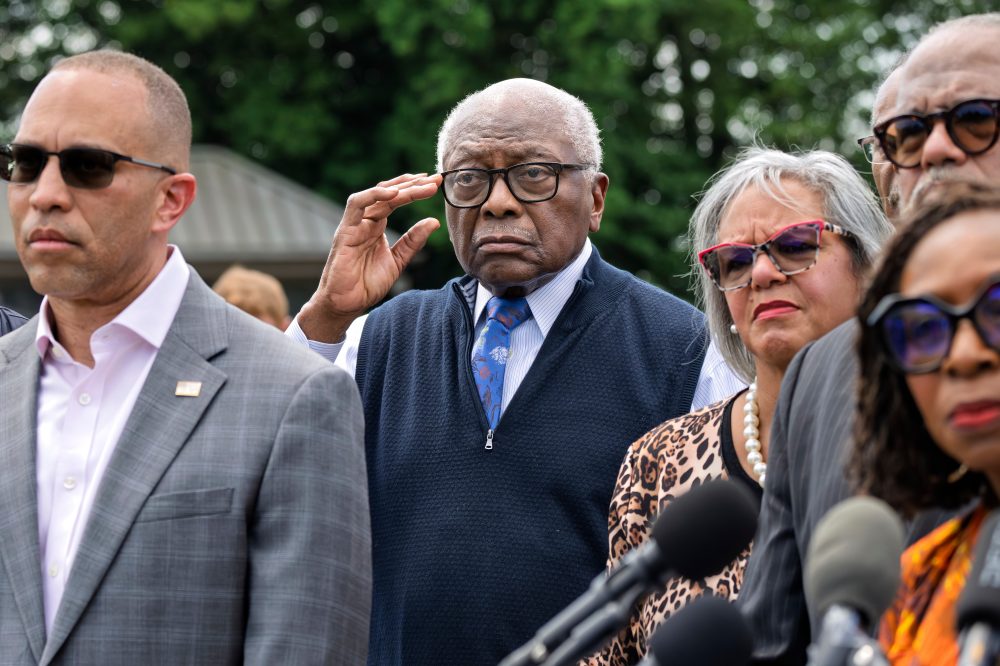
U.S. Rep. Jim Clyburn, the Democratic congressman Republicans aim to unseat through redistricting, was among the initial voters casting early ballots in Orangeburg. The veteran lawmaker declared his intention to seek reelection despite potential changes to his district boundaries.
“I’m OK if it’s Trump plus 20,” Clyburn stated when discussing the possible Republican edge in a redrawn district. “I would be running where I live.”
This South Carolina political maneuvering represents part of a broader Republican initiative — driven by President Donald Trump — to redraw electoral boundaries favoring the GOP as they attempt to maintain their narrow House majority during midterm elections. Republicans have moved swiftly to capitalize on a recent U.S. Supreme Court decision that reduced minority protections under federal Voting Rights Act provisions.
However, Republicans encountered a significant obstacle Tuesday in Alabama, where a three-judge federal panel issued a preliminary injunction preventing the state from implementing a Republican-designed congressional map that could secure the GOP an additional seat. The court determined the Republican proposal “intentionally discriminated based on race” by establishing only one Black-majority district and mandated continued use of a court-imposed map featuring two districts with substantial Black populations.
Alabama Attorney General Steve Marshall, a Republican, pledged a swift appeal to the U.S. Supreme Court and predicted ultimate success.
Democrats, who have experienced their own losses in the nationwide redistricting conflict, celebrated the Alabama development.
The “fight for justice is far from over in states across the country where politicians are enacting gerrymanders on top of gerrymanders to erase equal representation for communities of color,” said Marina Jenkins, executive director of the National Redistricting Foundation, a nonprofit affiliate of the National Democratic Redistricting Committee.
Electoral districts are customarily redrawn following a census at each decade’s beginning. However, Trump has encouraged Republican-controlled states to redistrict before November elections to counter political challenges, which typically cause the president’s party to lose congressional seats during midterms.
Following Trump’s initial push for Texas to redraw its electoral districts last summer, Republicans have also implemented new House districts in Missouri, North Carolina, Ohio, Florida and Tennessee. Simultaneously, California voters approved new Democratic-drawn districts, and a court imposed a favorable map for Democrats in Utah. Democrats faced disappointment in Virginia, where the state Supreme Court invalidated a voter-approved redistricting plan that might have helped Democrats secure additional seats.
Redistricting conversations continue in Louisiana after an April high court decision that overturned a majority-Black congressional district as an illegal partisan gerrymander. The Louisiana House may vote this week on a new map that could eliminate a seat held by Democratic U.S. Rep. Cleo Fields and enhance Republicans’ prospects of winning six of the state’s seven seats.
The Congressional Black Caucus on Tuesday urged major corporations throughout the U.S., including those that previously supported voting rights and racial justice, to oppose redistricting efforts by Republican-led states seeking to eliminate majority-Black U.S. House districts. This follows the caucus’s previous call for Black athletes to boycott public universities in states gerrymandering congressional maps to eliminate districts held by Black lawmakers.
Over 26,000 ballots were cast in South Carolina by midday Tuesday during the first day of early voting for the June 9 primary after Democrats urged opponents of the proposed new map to vote in large numbers. In 2022, approximately 125,000 early votes were cast during the entire two-week period.
The Republican-controlled House has already approved a proposal that would restructure Clyburn’s district, invalidate current congressional primary results and conduct new U.S. House primaries in August.
Trump has advocated for the proposal, placing at least two phone calls to Republican state Senate Majority Leader Shane Massey and also calling into a private Republican senators’ meeting earlier this month. He has also continued applying pressure through social media.
Discussion has stalled in the Senate, where Democrats strongly oppose the plan and some GOP legislators worry that aggressive redistricting might backfire by making certain Republican-held seats vulnerable to losses due to adding Democratic voters.
Clyburn observed that when state lawmakers previously redrew congressional districts following the 2020 census, they spent months conducting statewide meetings to collect public input. Although that map created a 6-1 seat advantage for Republicans over Democrats, the process was systematic and equitable, he explained.
“When the map was challenged, the U.S. Supreme Court said, yes, this is constitutional,” Clyburn said. But now, “this White House says, to hell with the process, to hell with the Constitution, just do what we want done.”