
WASHINGTON — Federal officials announced Tuesday they will accept an additional 10,000 white South Africans as refugees this year, expanding the nation’s historically limited annual ceiling while continuing to deny entry to people from other nations seeking refuge.
The administration halted the refugee program on its first day and has since transformed it into a pathway specifically for Afrikaners — white South Africans primarily descended from Dutch colonists — to enter the United States. Advocacy organizations argue that directing a program with decades of history toward a single demographic has stranded individuals worldwide who are escaping violence and conflict with limited alternatives.
Officials claim Afrikaners face persecution in their homeland, an allegation that South Africa’s government rejects.
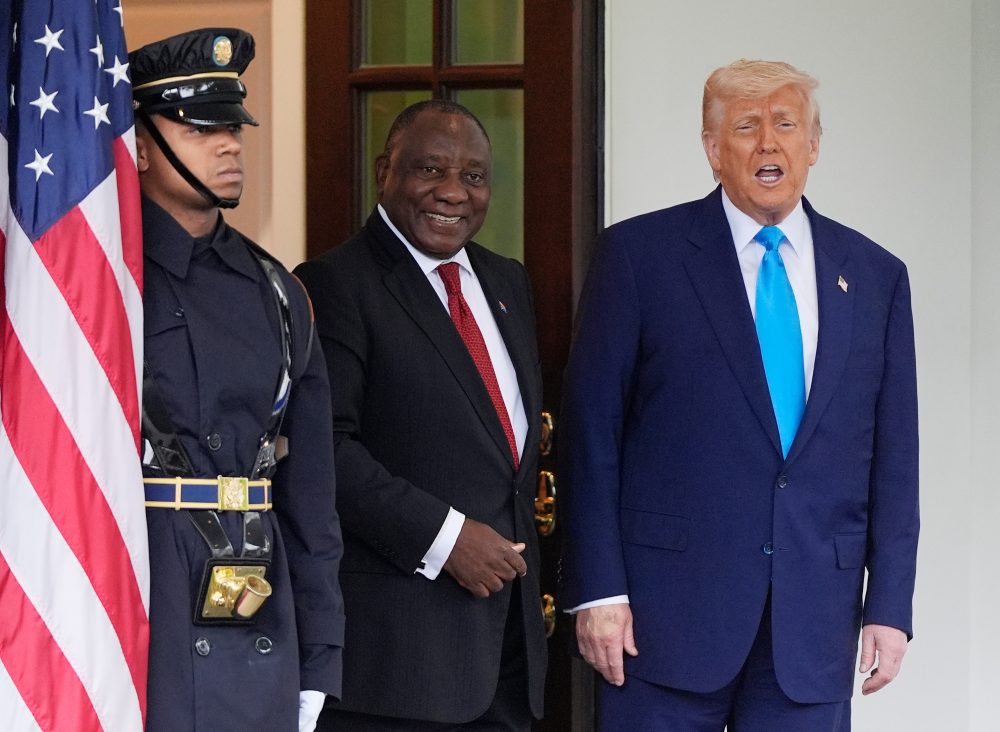
In Tuesday’s Federal Register announcement, President Donald Trump cited “an unforeseen emergency refugee situation” as justification for expanding the refugee ceiling. He criticized South Africa’s government for “recent increases in the incitement of racially motivated violence” without providing specific details.
“I hereby determine that the admission to the United States of Afrikaners from South Africa in response to this emergency is justified by the grave humanitarian concerns and is otherwise in the national interest,” Trump stated in the announcement.
Officials previously indicated they would accept up to 7,500 individuals, primarily Afrikaners, during the fiscal year running from October 2025 through September 2026. However, in a recent congressional notification about the increase, the administration cited “unforeseen developments in South Africa created an emergency refugee situation.” The revision increases the ceiling to 17,500.
The State Department has already processed more than 6,000 individuals through the refugee program since the fiscal year began in October, according to government statistics. All but three of those individuals came from South Africa, with the remaining three originating from Afghanistan.
Presidential authority determines annual refugee admission limits, and traditionally, these numbers have been distributed across different global regions while considering conflicts or wars that create humanitarian crises worldwide.
The refugee program, overseen by the State Department and Department of Homeland Security, operates separately from asylum procedures. Refugee applicants must reside outside the United States and complete screening and verification processes before admission, while asylum seekers are already present on American territory.
During his previous term, the administration dramatically reduced annual refugee admissions. The subsequent administration rebuilt the system, establishing a goal of accepting 125,000 refugees in its final year.
Organizations that have spent decades assisting refugee resettlement in America have filed lawsuits seeking admission for individuals who were undergoing the refugee application process but are now stranded.
“For nearly half a century, the U.S. Refugee Admissions Program embodied a simple but powerful, bipartisan idea: that the United States would offer safety to the world’s most vulnerable refugees,” said Beth Oppenheim, President & CEO of HIAS, in a statement. “This administration is now dismantling that legacy in plain sight.”