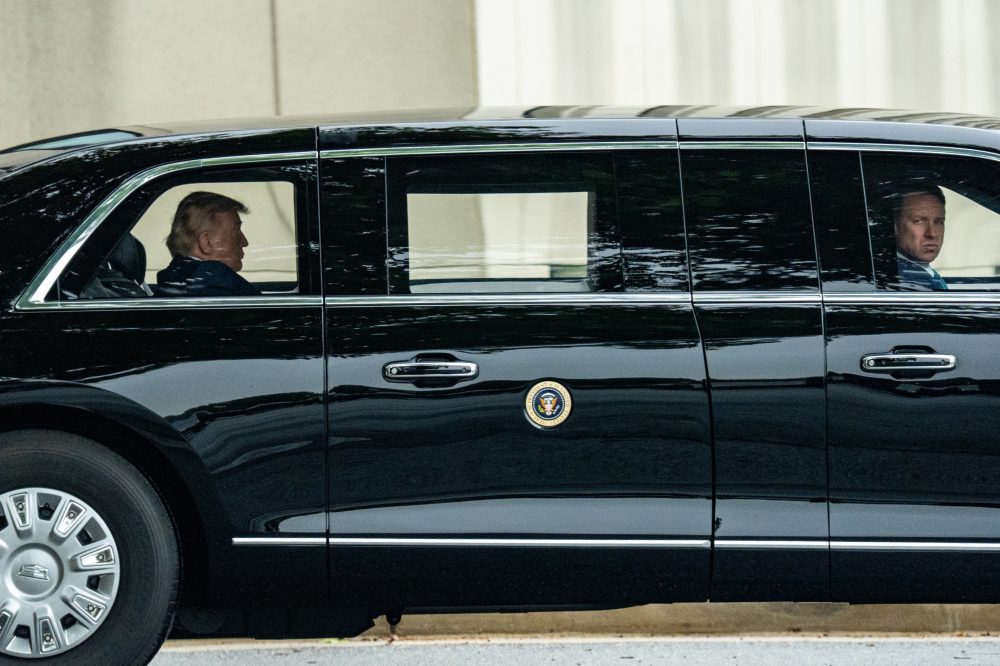

WASHINGTON — President Donald Trump plans to convene his Cabinet Wednesday during a critical juncture in discussions aimed at concluding the Iran conflict, coming just days after he declared his administration and Tehran had “largely negotiated” an agreement, though negotiations remain unstable.
While preparing to meet with his senior advisors, Trump expresses optimism about finalizing an agreement that would reopen the Strait of Hormuz and give him grounds to claim Iran’s nuclear threat has been sufficiently reduced to declare success, bringing to a close a conflict that has proven politically damaging for Republicans.
However, Trump also faces the possibility that ending his chosen war may result in an unsatisfying conclusion.
The developing agreement postpones numerous crucial matters for future resolution and has already subjected the president to sharp criticism — including from his own allies — who argue Iran’s extremist leadership will exit the conflict damaged yet strengthened. This situation unfolds as midterm congressional elections approach and Republicans express concern that increasing expenses and fuel costs are souring American voters’ attitudes.
Negotiations became more complex following U.S. military strikes on missile facilities and mine-laying vessels in southern Iran Monday, which the Pentagon described as “defensive” actions. The U.S. claimed it showed “restraint” given the ongoing ceasefire, while Iran condemned the strikes as evidence of “bad faith and unreliability.”
Secretary of State Marco Rubio stated Tuesday that discussions with Iran regarding strait reopening and ceasefire extension — time the administration says could be used to work out nuclear agreement details — will require several additional days. “He’s either going to make a good deal or no deal,” Rubio told reporters.
Trump used social media Tuesday to complain that even if Tehran offered complete surrender, news outlets would portray the conflict’s end as Iran achieving “a Masterful and Brilliant Victory.”
Although Trump maintains an agreement is achievable, significant differences appear to exist between the U.S. and Iran on multiple important matters. The president also faces criticism from Republican allies, including Sens. Roger Wicker of Mississippi, Lindsey Graham of South Carolina and Ted Cruz of Texas, who believe the terms favor Tehran too heavily.
They oppose publicly revealed deal aspects they claim too closely mirror the nuclear pact former President Barack Obama made with Iran, which Trump eliminated during his first presidency.
The proposed agreement would have Tehran surrender its highly enriched uranium stockpile — a central Trump requirement — in exchange for sanctions relief. This information comes from two regional officials and one senior Trump administration official, all speaking anonymously about the sensitive talks.
One regional official with direct negotiation knowledge said the method for Iran’s uranium surrender would be determined during a 60-day period. Some would likely be diluted, while the remainder would go to a third nation, the official explained.
Iran possesses 440.9 kilograms (972 pounds) of uranium enriched to 60% purity, just a short technical step from weapons-grade 90% levels, according to the International Atomic Energy Agency. Iran has not publicly agreed to surrender its uranium.
Trump stated Monday on Truth Social that the uranium, believed buried beneath nuclear facilities damaged by U.S. airstrikes last year, would either be given to the U.S. or “destroyed in place or, at another acceptable location, with the Atomic Energy Commission, or its equivalent, being witness to this process and event.” This comment indicates Trump is softening his previous demand that the U.S. control Iran’s uranium stockpile.
Another unresolved matter is whether the ceasefire will include Israel’s operations against Hezbollah, the Iranian-supported militant organization in Lebanon. Iran has demanded that Lebanon be included in any ceasefire agreement with the United States.
The administration appears to maintain flexibility on Lebanon. The developing memorandum calls for a ceasefire between the U.S. and its allies against Iran and its proxies like Hezbollah, but also emphasizes Israel’s right to act against immediate threats and in self-defense.
Prime Minister Benjamin Netanyahu announced Tuesday that Israeli forces are “deepening its operation” in Lebanon.
Jonathan Conricus, a former spokesperson for the Israel Defense Forces, said Israel anticipates Iran would quickly use sanctions relief to rebuild military capabilities and support proxy groups, including Hezbollah and Hamas in Gaza.
“We’re not done fighting, because the Iranian regime isn’t done,” said Conricus, who is a senior fellow with the Foundation for Defense of Democracies, a hawkish Washington think tank.
Trump said Monday that any Iran war agreement should require several additional nations, including Saudi Arabia, Qatar and Pakistan, to join the Abraham Accords, the U.S.-facilitated agreements from Trump’s first term designed to normalize diplomatic and economic relations with Israel.
Trump’s confidence that other Middle Eastern and majority Muslim nations could quickly join the accords may be overly optimistic.
For instance, Saudi Arabia, the most powerful Arab nation and long considered the most valuable target for normalization efforts, has maintained that establishing a guaranteed pathway to a Palestinian state remains a requirement. This is something Israel strongly opposes.
Trump promoted the Abraham Accords during a weekend call with Middle Eastern allied leaders.
Barbara Leaf, a retired U.S. ambassador to the United Arab Emirates and senior State Department official during the Biden administration, said officials from Gulf nations on the call informed her that Trump’s proposal was met with “stunned silence.” Someone familiar with the call disagreed with that description and said some regional allies responded favorably to the president’s invitation to join the accords. This person spoke anonymously about the private discussion.
Leaf, a distinguished diplomatic fellow at the Middle East Institute, said Middle Eastern U.S. allies understand that Iran will probably use sanctions relief money to strengthen its military capabilities. Nevertheless, they have supported Trump’s efforts to end the conflict.
“They see no other way out,” Leaf said of American regional allies. “And they see no other way out because of many of these early mistakes that the president and the administration made in conducting the war.”