
Louisiana faces a deadline to create new congressional district boundaries after the U.S. Supreme Court determined its current map constitutes illegal racial gerrymandering. State legislators are now grappling with how to accomplish this redistricting task.
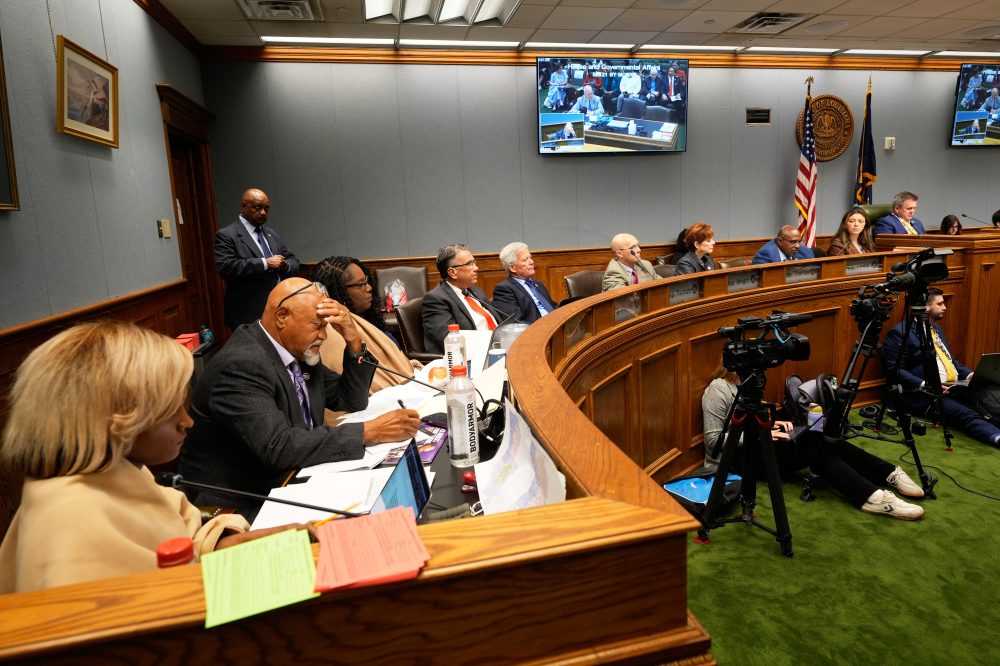
On Thursday, the House examined a proposal that varies from legislation the Senate has already approved. However, both plans from the GOP-controlled legislative chambers would remove a majority-Black district that was central to the Supreme Court’s decision. Each proposal would also create opportunities for Republicans to gain another seat in the upcoming midterm elections.
“We drew the map to improve Republican strength,” state Rep. Beau Beaullieu said while opening Thursday’s debate.
Following the Supreme Court’s late April decision, multiple Southern states have moved quickly to take advantage of a diminished federal Voting Rights Act to redraw their congressional boundaries. This represents the most recent escalation in an intense nationwide redistricting fight leading up to November’s elections, encouraged by President Donald Trump.
Currently, Republicans are prevailing in the redistricting competition. However, this advantage doesn’t guarantee they will control the U.S. House after November. Democrats require only a small number of additional seats to gain chamber control. Trump is dealing with unfavorable approval numbers. Additionally, midterm elections historically result in congressional losses for the sitting president’s party.
In 2022, Louisiana’s Republican-controlled Legislature overturned Democratic Gov. John Bel Edwards’ veto to implement new congressional boundaries based on 2020 census data. Under those district lines, five Republicans and one Democrat secured victories in 2022. However, federal courts ruled the map violated the Voting Rights Act by failing to create a second district with a majority-Black population.
The Legislature addressed this in 2024 by establishing a second majority-Black district that extended over 200 miles (321 kilometers) northwest from Baton Rouge to Shreveport. This configuration led to the election of Democratic U.S. Rep. Cleo Fields. Yet this map also faced legal challenges, and the Supreme Court overturned it as an unlawful racial gerrymander.
Republican Gov. Jeff Landry has delayed the state’s May 16 congressional primary until later in the summer to provide time for another redistricting effort. The state House and Senate are attempting to reach agreement on a plan before their session concludes on Monday.
Beaullieu explained that Republicans rejected a map designed to capture all six of the state’s U.S. House seats because it would have necessitated incorporating more Democratic voters into Republican-held districts, potentially creating problems by threatening the reelection chances of House Speaker Mike Johnson or Majority Leader Steve Scalise.
Louisiana legislative committees have received extensive public testimony from citizens opposing the Republican redistricting proposals.
On Wednesday, Democratic state House leaders from Georgia and Texas joined their Louisiana counterparts to demonstrate regional unity and opposition to Republican redistricting initiatives.
Georgia House Minority Leader Carolyn Hugley characterized Louisiana’s attempt to eliminate one of its two majority-Black districts as regression for Black Americans across the South.
Historically, “the government was used as a weapon against our community. It used the law, it used courts, it used maps to make sure that people who look like me would never have real representation, that we would never be heard, that we would be present but never powerful,” said Hugley, who is Black. She continued, “Republicans are redrawing voting maps to lock in one-party control.”
Democratic state Rep. Edmond Jordan, who chairs the Louisiana Legislative Black Caucus, indicated the congressional district dispute would return to the courts once lawmakers approve a new map.
“We are going to continue to fight for the African Americans, not only of this state but throughout the whole country,” Jordan said.
Since the Supreme Court’s ruling one month ago, several Southern states have already taken redistricting action.
Florida’s Republican-controlled legislature approved new congressional districts within hours of the ruling, finishing a redrawing process that was already underway in anticipation of the decision. A state judge this week refused to prevent the use of those districts, which could provide Republicans with up to four additional seats in the midterm elections.
Tennessee enacted new U.S. House districts one week after the ruling, dividing a majority-Black district centered in Memphis as part of a Republican effort to secure an additional seat.
Alabama also tried to modify its congressional districts, though a federal judicial panel this week stopped a Republican-drawn map that it found intentionally discriminates against Black people. The state’s Republican attorney general has requested that the U.S. Supreme Court allow the map to be used this year. Republican Gov. Kay Ivey also extended a deadline to certify candidates for an Aug. 11 special congressional primary from Friday to next Wednesday, hoping the Supreme Court will render a decision by then.
Despite pressure from Trump, South Carolina’s Senate this week chose against congressional redistricting. Some senators argued it was too late to implement changes since in-person early voting had already begun. Other Republican lawmakers expressed concerns that the plan might backfire by enabling Democrats to win more seats.