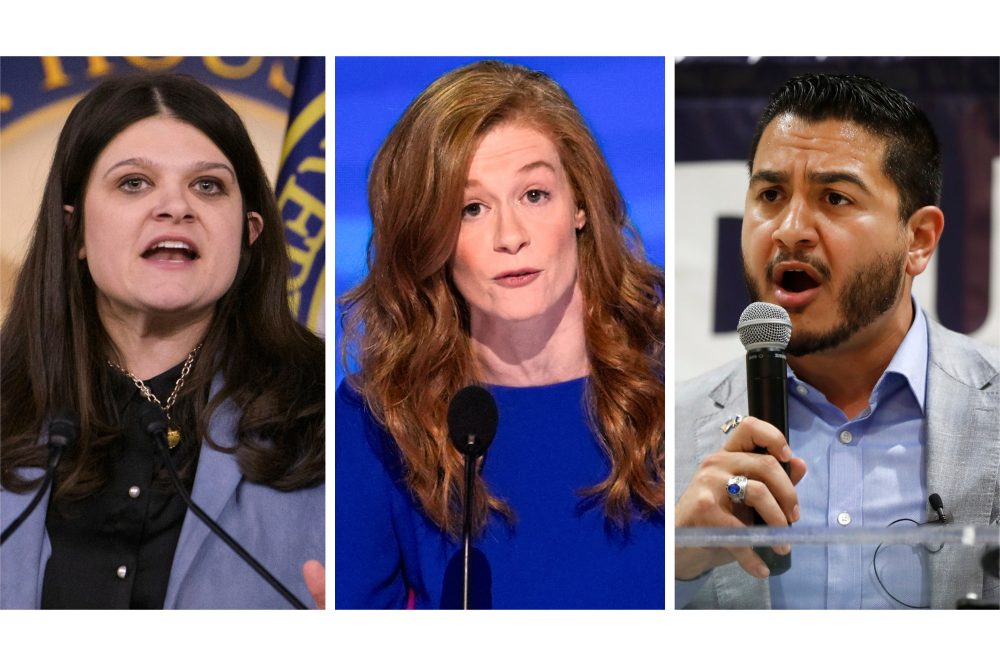

Democratic candidates in Michigan are working to maintain control of an available U.S. Senate position while their party attempts to regain congressional power in Washington. However, internal disagreements must be resolved first.
Three leading contenders for the nomination will participate in a debate Thursday during the state party’s yearly policy gathering on August 4th. This represents a significant early chance for the candidates to highlight their differences to voters statewide.
As primary elections conclude nationwide, Michigan’s competitive race has become viewed as an indicator of the party’s direction heading into November’s general election and future campaigns.
Taking the stage will be U.S. Rep. Haley Stevens, state Sen. Mallory McMorrow, and former public health official Abdul El-Sayed. Their Republican opponent is Mike Rogers, a former congressman who lost the 2024 Senate race to Democrat Elissa Slotkin. Democrat Gary Peters is not seeking a third Senate term this year. No Michigan Republican has been elected to the U.S. Senate since 1994.
A difficult primary battle for a crucial Senate position was not what Democrats had hoped for.
Thursday’s debate will highlight the philosophical splits that have challenged Democrats since presidential nominee Kamala Harris and the party experienced major defeats in 2024.
Stevens, serving her fourth congressional term representing an area near Detroit, is viewed as the more centrist, establishment-backed option. She has received support from senators in competitive states, including Ruben Gallego of Arizona and Catherine Cortez Masto of Nevada. Stevens has described herself as a “staunchly pro-Israel Democrat.”
El-Sayed has positioned himself as the progressive choice, receiving early support from U.S. Sen. Bernie Sanders, I-Vt. El-Sayed has advocated for “Medicare for All” and increased taxes on wealthy individuals, while characterizing Israel’s actions in Gaza as a “genocide.” He has faced criticism, including from party members, for appearing with controversial streamer Hasan Piker.
McMorrow won her first Michigan Senate election in 2018 and received national recognition for speeches criticizing Republicans. She has established herself between her two primary competitors. She has questioned the Democratic establishment and stated she would not back New York’s Chuck Schumer for Democratic leader in the U.S. Senate again.
Rogers was defeated by then-U.S. Rep. Slotkin by less than 20,000 votes in a state that Republican Donald Trump won while securing a second presidential term.
Rogers will not have the advantage of Trump leading the ticket this time. However, Rogers enters the general election with his own benefits, including facing no primary opposition.
During a Wednesday phone conversation, Rogers recognized the previous campaign’s challenges, noting that the financial disadvantage following a difficult primary “made it really difficult” to succeed in the general election.
However, he emphasized this year presents different circumstances.
“This is a change election. People want to talk about Washington. This is about Michigan,” Rogers said.
Focusing on local issues may prove challenging in a race influenced by national concerns like tariffs and gas prices, both significantly affecting Michigan. External spending is anticipated to reach nine figures. The Republicans’ U.S. Senate campaign organization has allocated $45 million for advertisements, while Democrats have committed $20 million.
“They’re going to spend a lot of money trying to make you not like me. We’re going to spend our money trying to tell people what we’re going to do for them and make their lives in our state better,” Rogers said.