
A Washington federal judge has refused to stop President Donald Trump’s executive order that would establish a federal voter registry and restrict mail-in voting, allowing the controversial directive to proceed as midterm elections approach.
U.S. District Judge Carl Nichols, who was appointed by Trump, turned down the emergency request late Wednesday from Democrats and civil rights organizations. The groups had contended that Trump’s directive would likely violate the Constitution since states and Congress, rather than the president, hold authority over election procedures. Nichols sided with the Trump administration’s argument that it was premature to block the order since no implementation has begun.
“The Court recognizes that the Postal Service may ultimately issue a final rule that directly affects Plaintiffs or their members, or that the Government may develop State Citizenship Lists that omit specific individuals due to particularized flaws,” Nichols wrote. “Plaintiffs may, of course, renew their motions if and when those future actions occur. Until then, however, Plaintiffs cannot show that preliminary injunctive relief is warranted.”
The court fight now moves to Boston, where voting rights advocates have filed another federal lawsuit challenging the executive order.
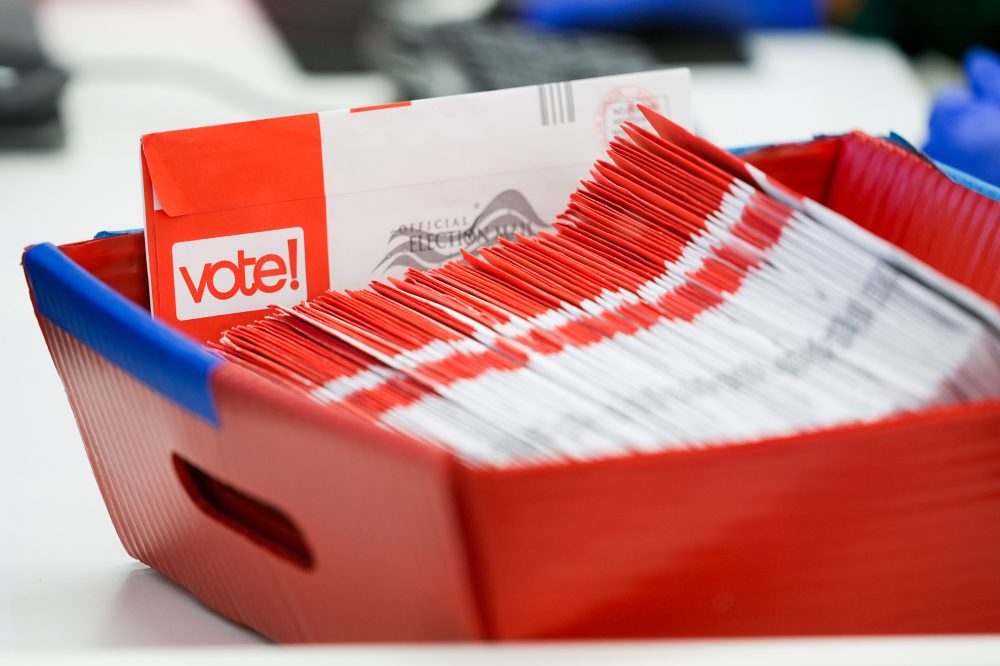
Trump signed the directive in March following congressional stalling of a voting reform bill he had backed. The order would establish a federal registry of qualified voters and instruct the U.S. Postal Service to mail ballots exclusively to individuals on that registry. Election administrators have warned the plan could lead to widespread problems and potential misuse.
Following his 2020 election defeat to Democrat Joe Biden, Trump has repeatedly made unsubstantiated claims about mail voting fraud and initiated a federal probe into that election, despite numerous audits and reviews, including Republican-led ones, confirming no significant fraud occurred. Trump has also expressed intentions to “take over” election oversight in Democratic regions.
Democrats and civil rights advocates had pressed Nichols for an immediate restraining order, citing the ongoing primary season and states’ preparations for November midterm contests.
This marks Trump’s second executive directive aimed at election reform. His first election order, signed early in his second term, remains blocked by several federal judges. That initial directive sought to mandate documentary citizenship proof for voter registration, along with additional requirements.