Category: Politics

  • New Conservative PAC Targets GOP Lawmakers Supporting Immigration Reform

    New Conservative PAC Targets GOP Lawmakers Supporting Immigration Reform

    A recently established conservative super PAC is setting its sights on Republican House members who have endorsed comprehensive immigration reform, potentially creating primary challenges for the 2026 midterm elections.

    The Homeland Political Action Committee, led by founder Ryan Girdusky, is specifically targeting GOP lawmakers who have thrown their support behind the bipartisan DIGNIDAD Act, a sweeping immigration reform measure crafted by Florida Republican Representative María Elvira Salazar.

    Girdusky characterized the legislation as going against both the president’s agenda and core party principles. While he would prefer to challenge all Republicans backing the measure, he acknowledged that such an approach would be impractical given the party’s narrow House majority.

    “We’re not here to burn the party down,” Girdusky explained. “It’s to challenge pro-amnesty Republicans in safe Republican seats and to defend Republicans in challenging seats or in swing districts that need support.”

    The DIGNIDAD Act currently has backing from 19 Republican co-sponsors and would permit undocumented immigrants to remain, work, and reside in the United States provided they lack criminal backgrounds. The legislation requires annual fines for those without legal status but stops short of offering citizenship pathways. Additionally, the measure allocates billions in funding to the Department of Homeland Security for border security technology improvements.

    Girdusky previously established the 1776 Project PAC, which has accumulated over $5 million primarily from small-dollar contributions since early 2025 to support conservative school board candidates nationwide, based on federal records.

    The political operative also hosts a podcast titled “It’s a Numbers Game with Ryan Girdusky.” He gained notoriety in 2024 when CNN banned him following comments to Muslim journalist Mehdi Hasan, saying “I hope your beeper doesn’t go off,” referencing deadly Israeli strikes against Hezbollah operatives in Lebanon, which Girdusky later claimed was meant as humor.

    The strategy aims to force House Republicans into a difficult position: either support Trump’s immigration stance or potentially face primary opposition from candidates endorsed by Homeland PAC.

    Beyond Salazar, Girdusky’s target list encompasses Republicans in secure GOP districts who support the DIGNIDAD Act, including Representatives Lloyd Smucker from Pennsylvania, along with Marlin Stutzman and Jim Baird from Indiana.

    Each of these four lawmakers currently faces primary challengers in their respective contests. While Girdusky has not yet endorsed or financially backed any opponents in these races, he indicated plans to do so if their positions match his organization’s values.

    Additional Republicans supporting the DIGNIDAD Act are either stepping down from office, such as Representatives Dan Newhouse from Washington and Neal Dunn from Florida, or competing in competitive races like Representatives Young Kim and David Valadao from California.

    None of the Republican representatives’ offices provided responses to requests for comment.

    According to Girdusky, Homeland PAC will likely resonate with conservative voters who prioritize immigration enforcement or border security as their primary concerns.

    This effort against the legislation underscores a strategic dilemma facing the Republican Party, which finds itself balancing Trump and his supporters’ demands for stringent immigration policies while avoiding the alienation of Latino voters.

    Girdusky revealed that Homeland PAC has not secured endorsement from House Speaker Mike Johnson, who faces his own challenging battle to maintain chamber control in November, based on discussions with Johnson and his political advisors.

    Johnson’s political operation representatives did not respond to comment requests.

    Latino voters demonstrated significant movement toward Trump in 2024, primarily driven by economic concerns including inflation and elevated living costs. Trump secured approximately 48% of Latino support in 2024, representing a 12-point increase from his 36% showing in 2020, according to Pew Research Center data.

    However, most Latinos reported increased difficulty affording daily expenses compared to previous years, based on a national survey of 2,413 Latinos conducted by civic participation organization Voto Latino during late March and early April this year.

    A recent Reuters/Ipsos poll indicated that Trump’s aggressive deportation campaign could negatively impact Republicans in November’s elections. Approximately 52% of Americans stated they would be less inclined to support candidates who endorse Trump’s deportation approach.

    While Salazar expressed confidence about maintaining her coalition, which includes 20 Democrats, she voiced concerns about Republicans potentially losing House control in November.

    “There is a very important coalition of Hispanics, the largest and fastest growing minority in the country,” Salazar stated. “These people feel targeted, and they feel that they are not welcome in the Republican Party and that concerns me.”

    Latinos have historically avoided monolithic voting patterns in the United States, noted Daniel Alegre, CEO of Spanish-language media company TelevisaUnivision. However, in recent electoral cycles, Latino voters have emphasized economic issues over partisan allegiance.

    “Ignore the Hispanic vote at your own peril,” Alegre warned. “It’s the Hispanic vote in so many of the key races that will determine the control of Congress.”

  • Military Families, Veterans Demand End to Iran Conflict in Capitol Demonstration

    Military Families, Veterans Demand End to Iran Conflict in Capitol Demonstration

    Military families and veterans took their message directly to the nation’s capital, staging a demonstration demanding an end to the ongoing conflict with Iran. The protest at the U.S. Capitol resulted in dozens of arrests and captured widespread media coverage across the country.

    According to NPR reports, several demonstrators expressed concerns that the United States cannot financially sustain involvement in another military conflict. The protesters, many with personal military experience or family members in service, made their voices heard on Capitol Hill as they called for peace.

    The demonstration represents growing opposition to military action from those most directly affected by warfare – service members and their loved ones who understand the true cost of armed conflict.

  • Fed Chair Nominee Warsh Faces Complex Challenge in Rethinking Inflation Measurements

    Fed Chair Nominee Warsh Faces Complex Challenge in Rethinking Inflation Measurements

    WASHINGTON – Kevin Warsh, nominated to lead the Federal Reserve, has proposed a comprehensive overhaul of inflation measurement methods, but economists warn he may discover the challenge lies not in finding new approaches but in selecting among numerous existing alternatives that often contradict each other.

    Recent February data illustrates this complexity perfectly. The Fed’s primary inflation gauge registered nearly a full percentage point above the central bank’s 2% goal. However, the Dallas Federal Reserve’s calculations, using Warsh’s preferred methodology that eliminates extreme outliers such as moving services’ 384% annualized price spike or calculators and typewriters’ 50% price collapse, indicated inflation was much closer to target at just 2.3%.

    Meanwhile, the Cleveland Fed’s Center for Inflation Research examined median price increase rates and found results similar to the Bureau of Economic Analysis’ main figure. The New York Fed’s sophisticated statistical model painted an even grimmer picture, suggesting underlying inflation trends were worsening at 3.1%.

    Omair Sharif, who leads Inflation Insights as president and founder, criticized the notion that a perfect inflation measure exists but has been ignored by Fed officials. This perspective “sounded like somebody who has not been in the building for a while and has not looked at inflation research since he left the Fed” in 2011 following his term as governor, Sharif observed.

    Sharif pointed out that Warsh’s favored alternative during Tuesday’s Senate confirmation hearing – the trimmed mean approach – currently shows the lowest inflation rate among standard measurements, aligning with President Donald Trump’s expectations for rate reductions. However, this same measure failed to detect inflation’s broadening and acceleration in 2021, a critical oversight that conventional inflation statistics successfully identified.

    The Dallas Fed’s trimmed mean calculation, which removes items showing extreme price movements before averaging remaining data, may currently underestimate inflation due to shifts in the comparative distribution between the fastest and slowest price changes.

    Krishna Guha, Evercore ISI’s vice chair, noted in his analysis of Warsh’s inflation framework comments that maintaining established measures like the personal consumption expenditures price index excluding food and energy, or core PCE, offers advantages because “it is better known in the market and possibly easier to explain with limited reference to statistics.”

    Though core PCE serves as the preferred indicator for inflation trends, the Fed bases its 2% target on headline PCE. Warsh stopped short of explicitly proposing target modifications but suggested focusing should remain “left of the decimal point,” implying acceptance of inflation somewhat above the established goal.

    During his hearing, Warsh emphasized his commitment to challenging what he termed “the tyranny of the status quo,” though developing successful “new framework, new tools, and new communications” won’t be straightforward.

    The Federal Reserve’s structure makes change difficult, encompassing the Washington-based Board of Governors, an influential economics team, 12 regional banks with distinct staffs and philosophies, plus numerous former officials and staff frequently consulted for research and policy discussions. Current Chair Jerome Powell, despite sharing some of Warsh’s communication concerns, faced significant resistance from colleagues and staff when proposing modifications last year.

    However, Fed thinking isn’t completely rigid. When mainstream economists warned in 2022 that rapid rate increases could trigger massive unemployment, research by Governor Christopher Waller and staff economist Andrew Figura demonstrated why such outcomes were improbable, helping ease policymakers’ concerns about aggressive rate hikes to combat inflation.

    The Fed completely abandoned its previous approach in 2020, adopting a new framework that demonstrated both its capacity for innovation and the associated risks. This framework was discarded last year after it underestimated inflation at a crucial moment and delayed officials’ response.

    Similar to how Powell’s Fed attempted to improve economic outcomes by boosting inadequate inflation to test maximum employment limits through lower rates, Warsh believes he can explore the boundaries of non-inflationary economic growth with reduced rates, based on expectations that artificial intelligence will enhance productivity and reduce price pressures.

    During his hearing, Warsh remained cautious about timing specifics, keeping his short-term rate outlook uncertain.

    His direction was clear nonetheless. AI could “increase the potential output of the economy,” Warsh told lawmakers concerned that misinterpreting its impact might lead to policy errors and higher inflation. “We don’t know that. We can’t bank on that, but considerable work needs to be done by the Federal Reserve in evaluating this productivity wave.”

    Current Fed officials have expressed similar views: AI will bring changes, but at an uncertain pace and magnitude that’s difficult to incorporate into present policy.

    Regarding inflation measurement, Warsh will discover extensive ongoing research aimed at improving calculations, plus abundant opinions about optimal methods for distinguishing temporary price fluctuations from the sustained upward movement economists define as inflation.

    Separating broad, persistent trends from narrow, temporary changes represents a well-established challenge. Fed officials during the pandemic inflation surge developed numerous approaches to analyze available data for meaningful signals and explored alternative “big data” sources similar to those Warsh mentioned during his hearing.

    Government agencies have already integrated additional real-world pricing data from private sources into their indexes, Sharif noted. He suggested that if Warsh seeks rapid improvements to inflation statistics, he should focus on persuading Congress to increase funding and staffing for existing projects at agencies like the Bureau of Labor Statistics.

    “I think what he was going for was we need to understand the data collection for all types of prices. That is a laudable goal. It is what BLS has been doing for many years,” Sharif explained. “But I don’t think you get to some big new trend you never thought of. What he should have said is what everyone says. We will look at a variety of things to get a handle on inflation.”

  • New Poll Shows Americans Concerned About Pesticides as Roundup Case Hits Supreme Court

    New Poll Shows Americans Concerned About Pesticides as Roundup Case Hits Supreme Court

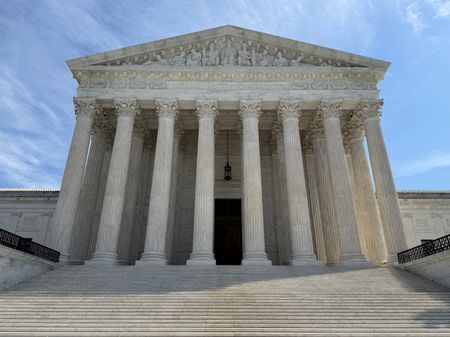
    A new national survey reveals widespread public anxiety about pesticide safety as the Supreme Court prepares to hear arguments in a major case involving Bayer’s Roundup weedkiller on Monday.

    The Reuters/Ipsos poll, which surveyed 4,557 American adults, found that 78% of respondents expressed concern about pesticide use in food crops. The worry crossed party lines, with 81% of Democrats, 78% of Republicans, and 77% of independents sharing these concerns.

    The survey comes as German pharmaceutical giant Bayer seeks to limit thousands of lawsuits claiming its Roundup product causes cancer. The Trump administration has sided with the company in the legal battle.

    Additionally, 63% of those polled opposed giving companies protection from lawsuits when they sell products that cause cancer, even if warning labels are included. This opposition was strongest among Democrats at 71%, with 57% of Republicans and 61% of independents also opposing such protections.

    Bayer faces tens of thousands of legal claims alleging the company failed to adequately warn users that glyphosate, Roundup’s main ingredient, may cause cancer. While the Environmental Protection Agency has not concluded that glyphosate causes cancer, the World Health Organization has labeled the chemical as “probably carcinogenic to humans.”

    The case centers on John Durnell, a Missouri man who won a $1.25 million jury verdict after claiming he developed non-Hodgkin lymphoma following years of glyphosate exposure. Glyphosate ranks among the most widely used herbicides in American farming.

    At the heart of the legal dispute is whether consumers can pursue state-level lawsuits over inadequate safety warnings when federal agencies have already approved a product’s labeling.

    Bayer maintains that state-level lawsuits should be blocked because the EPA has determined Roundup poses no cancer risk and requires no cancer warning. The company argues federal regulations prevent it from adding warnings beyond what the EPA mandates.

    Trump administration lawyers have supported Bayer’s position, arguing that federal law takes precedence over state laws that have formed the basis for many lawsuits against the company.

    Some state Farm Bureau organizations have warned the Supreme Court that ruling against Bayer could harm farmers if the company stops selling Roundup due to liability concerns.

    The poll also revealed broader health anxieties, with 79% of respondents worried about health impacts from chemicals, food additives, and microplastics in drinking water. The online survey, conducted April 15-20, has a margin of error of 2 percentage points.

    The bipartisan nature of these concerns could create political challenges for Republicans heading into November’s congressional elections, where the party aims to maintain narrow control of both chambers.

    Health and Human Services Secretary Robert F. Kennedy Jr., appointed by Trump, has been promoting administration efforts to restrict food dyes and encourage healthy eating at campaign events nationwide.

    Trump’s support for Bayer has created tension with some supporters of the Make America Healthy Again movement, who prioritize pesticide concerns. Kelly Ryerson, co-executive director of American Regeneration and known online as “The Glyphosate Girl,” attended White House meetings on April 9 where MAHA leaders discussed pesticide issues with Trump and senior officials.

    Ryerson warned administration officials that glyphosate represents a major concern for MAHA voters and that backing Bayer could cost Republican votes in the midterms.

    MAHA activists have also criticized Trump’s February executive order aimed at increasing domestic glyphosate production, viewing it as another potential threat to midterm support.

    Ryerson, scheduled to speak at Monday’s rally outside the Supreme Court, said Trump “has a full understanding of how important the MAHA vote is to midterms.”

    Other planned rally speakers include social media personality Vani Hari, known as “The Food Babe,” anti-vaccine activist Del Bigtree, and Democratic Representative Chellie Pingree.

  • Lawmakers Push to Limit Corporate Purchases of Single-Family Homes

    Lawmakers Push to Limit Corporate Purchases of Single-Family Homes

    Purchasing a home across America has become increasingly challenging for families, and federal lawmakers believe they have identified part of the problem. Congressional representatives are now proposing legislation that would place limits on how many single-family residences corporations can acquire.

    The proposed restrictions target corporate entities that have been purchasing residential properties in large numbers, potentially making it more difficult for individual families to compete in the housing market.

    Whether these proposed limitations will actually improve home affordability and accessibility for average American families remains to be seen as the legislation moves through the congressional process.

  • House Speaker Johnson Presents New Proposal for Surveillance Powers Extension

    House Speaker Mike Johnson has introduced a fresh proposal to renew controversial surveillance authorities after facing two unsuccessful attempts in recent votes.

    The Louisiana Republican revealed his latest strategy to extend the FISA 702 surveillance program as lawmakers work against an April 30 deadline.

    The program has generated significant debate among members of Congress, with previous efforts to reauthorize the intelligence-gathering tool falling short of the votes needed for passage.

    Johnson’s new approach represents another attempt to find common ground on the contentious surveillance legislation before the current authorization expires at month’s end.

  • Federal Government Moves Medical Cannabis to Less Restrictive Classification

    Federal Government Moves Medical Cannabis to Less Restrictive Classification

    Federal officials have announced an immediate reclassification of medical marijuana under national drug scheduling laws, moving it into a category with reduced restrictions.

    The directive from the Trump administration marks a significant shift in how the United States handles cannabis policy at the federal level, representing what many consider a landmark change in the nation’s approach to marijuana regulation.

    The rescheduling affects medical cannabis specifically, placing it under less stringent federal oversight than it previously faced under current classification systems.

  • Texas Governor Warns Cities: Cooperate with ICE or Lose $150M in Funding

    Texas Governor Warns Cities: Cooperate with ICE or Lose $150M in Funding

    Three major Texas cities face the potential loss of nearly $150 million in state funding after Governor Greg Abbott issued an ultimatum regarding cooperation with federal immigration authorities.

    Abbott has warned Houston, Dallas, and Austin that they must modify their police departments’ current policies for working with Immigration and Customs Enforcement or risk having their state grants revoked.

    The governor’s demand puts significant financial pressure on the cities, as the threatened funding represents a substantial portion of their state assistance.

  • Trump Moves Medical Marijuana to Less Restrictive Federal Category

    Trump Moves Medical Marijuana to Less Restrictive Federal Category

    President Trump has moved forward with reclassifying state-licensed medical marijuana as a less dangerous substance, delivering substantial benefits to the cannabis industry through tax relief, reduced research obstacles, and potential international export opportunities.

    However, this action may represent just the beginning of broader changes. An upcoming administrative proceeding scheduled for late June could extend similar reclassification benefits to state-licensed recreational cannabis markets as well.

    “This is a signal that this administration means business on getting this done,” stated Jesse Alderman, a cannabis industry lawyer from Boston working with Foley Hoag.

    Thursday’s executive order doesn’t make marijuana federally legal for medical or recreational purposes and will likely encounter court challenges.

    The directive does transform cannabis regulation by moving licensed medical marijuana from Schedule I classification — designated for substances deemed medically useless with high abuse potential — to the more lenient Schedule III category.

    This represents a major policy reversal for the federal government, which has maintained strict marijuana prohibition even as 48 states have embraced some form of cannabis since California pioneered medical marijuana approval in 1996.

    Twenty-four states and Washington, D.C., have legalized adult recreational marijuana use, generating billions in tax income. Forty states operate medical marijuana programs, while eight additional states permit low-THC cannabis or CBD oil for medical purposes.

    The executive order acknowledged that medical marijuana oversight has evolved significantly, with most states implementing thorough licensing frameworks covering everything from growing to retail sales.

    Douglas Hiatt, a veteran Seattle marijuana defense lawyer, remembered the AIDS crisis of the 1980s and 1990s, when law enforcement frequently targeted cultivation operations supporting patients.

    He accompanied one client, disabled medical marijuana advocate JoAnna McKee, to clandestine meetings with Hells Angels members in wooded areas to obtain cannabis for other patients following police raids — illustrating the extreme measures sometimes necessary to secure marijuana during that era.

    “We were watching all these guys die from this horrible disease, and the only thing that helped them keep their pills down was marijuana, and the cops were going after anyone who helped them get it,” Hiatt explained in a Thursday phone conversation. “It was crystal clear from the beginning that it had medical uses. For the feds to admit that now is great. It’s surreal.”

    Some medical professionals argue that state legalization has produced increasingly potent cannabis products requiring research rather than looser classification.

    Moving marijuana from Schedule I to Schedule III suggests therapeutic value, but there aren’t “massive medical indications for cannabis,” according to Dr. Smita Das, a Stanford University addiction psychiatrist. Additionally, cannabis use disorder — affecting roughly 3 in 10 users per CDC data — continues increasing.

    “We’ve already had kind of a decrease in risk perception related to cannabis over the years with the state legalization,” Das explained. “This will probably just add to that.”

    The reclassification falls short of what prohibition critics ultimately seek: complete legalization with measures addressing prohibition’s damage, particularly in minority communities that faced disproportionate impacts. Many states have already implemented reforms like criminal record expungement.

    State-licensed medical operators can now deduct business expenses on federal taxes for the first time, providing crucial financial relief.

    However, in numerous recreational marijuana states, licensed dispensaries serve both markets — creating complex accounting challenges to determine which business expenses qualify for medical-related deductions.

    “If this artificial distinction between medical and recreational is maintained, it raises all sorts of questions,” observed sociology professor Josh Meisel, who helped establish the Humboldt Institute for Interdisciplinary Marijuana Research at California State Polytechnic University, Humboldt.

    Trump directed his administration in December to expedite marijuana reclassification, building on stalled initiatives from the Biden era. Last Saturday, while signing an unrelated executive order regarding psychedelics, the Republican president appeared frustrated with the pace of progress.

    American Trade Association for Cannabis and Hemp president Michael Bronstein described the order as “the most significant federal advancement in cannabis policy in over 50 years.”

    However, marijuana legalization opponent Kevin Sabet, CEO of Smart Approaches to Marijuana, argued that while cannabis research is important, “there are many ways to increase our knowledge without giving a tax break to Big Weed.”

    Trump has prioritized fighting other drugs, particularly fentanyl, during his second term, authorizing military strikes against Venezuelan and other vessels the administration claims transport narcotics.

  • Pennsylvania Governor Shapiro Flexes Political Influence Ahead of Midterms

    Pennsylvania Governor Shapiro Flexes Political Influence Ahead of Midterms

    LOCK HAVEN, Pa. — Pennsylvania Governor Josh Shapiro may be expected to cruise to reelection, but the Democratic leader has much more at stake this election cycle than just his own political future.

    As Shapiro begins ramping up his campaign activities, he’s working to help Democrats secure control of Pennsylvania’s state legislature for the first time in decades. He’s also backing his preferred candidates in competitive congressional primary races, attempting to shape his party’s roster for the midterm elections that will decide control of Congress.

    These efforts mirror those of other potential Democratic presidential contenders who are testing their political influence in ways that could impact both their futures and their party’s direction.

    Other governors have had mixed results with similar strategies. Illinois Governor JB Pritzker successfully supported his preferred candidate in his state’s U.S. Senate primary. Maryland Governor Wes Moore was unsuccessful in convincing lawmakers to redraw congressional maps, while California Governor Gavin Newsom secured redistricting through a voter referendum last year.

    When questioned about potentially building his resume for a future White House bid, Shapiro dismissed both inquiries and Republican attacks on the subject.

    “The only thing I am focused on is beating my opponent for governor and helping other Democrats get elected here and sending a clear message to Donald Trump that the chaos, cruelty and corruption that he’s been engaged in is not something that we support here in Pennsylvania,” Shapiro told The Associated Press after addressing Democrats at a crowded coffee shop in small-town Lock Haven.

    While Shapiro has never publicly stated interest in a presidential run, he does express desire to influence his party’s direction. Democrats must learn how to “get stuff done” to improve people’s lives, he explained, and he wants to be “part of that conversation.”

    Republican state treasurer Stacy Garrity, who is challenging Shapiro for governor, accused him of being unable to conceal his presidential ambitions — which she claims hurts Pennsylvania.

    “We all know that he’s more interested in Pennsylvania Avenue than helping Pennsylvania families,” she said in an interview. “He thinks if he can hand Pennsylvania on a platter to the Democratic Party, then maybe they take a harder look at him.”

    That strategy might work.

    Pennsylvania presents unique political challenges, and Democrats nationwide are watching Shapiro’s success there, according to Paul Begala, a Democratic campaign strategist, commentator and former senior aide to President Bill Clinton.

    This election provides Shapiro with a chance to showcase his political strength.

    “Right now, Democrats, the thing they want the most is a winner, and a very close second is a fighter,” Begala said. “This election is an opportunity for him to show that.”

    Before this year’s campaign season, Shapiro consolidated his influence over the Pennsylvania Democratic Party by securing the election of his chosen chair and contributing over $900,000 this election cycle to party coffers.

    He’s positioned to surpass his own state fundraising records and regularly tells voters that Pennsylvania represents the “center of the political universe” in the battle for U.S. House control.

    Democrats aim to capture four House seats in Pennsylvania. Shapiro has endorsed candidates including Scranton Mayor Paige Cognetti, state firefighters’ union president Bob Brooks, and former television news anchor Janelle Stelson, who came close to winning two years ago.

    Shapiro has already produced a campaign advertisement for Brooks, who faces a competitive four-candidate primary to challenge freshman Republican Congressman Ryan Mackenzie.

    Shapiro’s endorsements haven’t deterred other Democratic candidates from running.

    Ryan Crosswell, a former federal prosecutor competing against Brooks, released a campaign statement that indirectly referenced the governor, stating Crosswell has “no party machine behind him, no power broker network, no favors to call in.”

    Regarding his endorsement strategy, Shapiro stated: “I’m just focused on trying to elevate good people. Hopefully they’ll all win.”

    Republicans are deploying their own high-profile supporters.

    Garrity revealed that the White House requested a list of people she wants to visit Pennsylvania.

    President Trump, Vice President JD Vance and several Cabinet members have already toured the state’s competitive congressional districts. House Speaker Mike Johnson recently conducted a fundraising tour through Pennsylvania.

    “We know the majority runs through Pennsylvania and the speaker is focused on doing everything he can to help those members defend their seats,” said Greg Steele, a spokesperson for Johnson’s political operation.

    Johnson will likely return to Pennsylvania, having made it his final campaign stop before the 2024 election.

    Trump and Vance may also return, while the president continues monitoring Pennsylvania developments. Tuesday evening, he used social media to claim credit for a decision by coal-fired power plant owners not to close their facilities, calling it a “BIG WIN for the Great Commonwealth of Pennsylvania, which I love.”

    As Shapiro launches his campaign efforts, he’s proving to be a significant draw even in Pennsylvania’s remote areas. This month, he helped fill a ballroom for Centre County Democrats and the coffee shop for Clinton County Democrats.

    “I saw brand-new people, I saw people who have not been engaged in the party in years,” said Bre Brannan, Clinton County’s Democratic Party chair. The audience included Republicans and independents as well, she noted.

    Shapiro tells audiences that with a Democratic “trifecta,” he could accomplish more, pointing to legislation Republicans have blocked. This includes increasing Pennsylvania’s extremely low minimum wage and expanding legal protections for LGBT residents. He’s also promoting a housing affordability initiative this year.

    Gaining complete control of the state Legislature would represent a significant achievement. Democrats maintain a one-seat majority in the state House and haven’t controlled the state Senate in more than 30 years.

    Few Democrats being considered for the 2028 presidential race have opportunities to demonstrate political strength and party-building skills in swing states.

    This opportunity could help Shapiro establish his credentials when presidential campaign season begins and potential candidates seek institutional support, endorsements and donor commitments.

    Investing money in down-ballot races and flipping seats may not impress average voters, but activists, donors and other elected officials value such efforts greatly, strategists explain.

    Success would enhance Shapiro’s position as candidates compete in the “perception campaign” to appear as the strongest contender, said Democratic campaign strategist Mike Mikus.

    “It doesn’t guarantee anything,” Mikus said. “But it is definitely something to bring to the table when you’re lining up donors, endorsements and finance chairs, things like that. It’s compelling to them.”

  • President Trump Set to Address Cryptocurrency Conference in Florida This Saturday

    President Trump Set to Address Cryptocurrency Conference in Florida This Saturday

    President Donald Trump is scheduled to address a cryptocurrency conference this Saturday at his Mar-a-Lago resort in Palm Beach, Florida, according to a White House announcement made Thursday evening.

    The exclusive gathering at the private club has drawn sharp criticism and examination from Democratic lawmakers. Since taking office again in January 2025, Trump has implemented several policies favorable to the cryptocurrency industry.

    According to the conference website, Trump will serve as the main speaker for the event. Attendance is reportedly restricted to only the top 297 holders of a digital currency called $TRUMP, a meme coin created in honor of the Republican president.

    When details about this conference became public earlier this month, several Democratic senators voiced concerns about potential ethical issues. They stated that Congress needs to “take steps to prohibit and prevent these egregious conflicts of interest.”

    Democratic Senators Elizabeth Warren, Adam Schiff, and Richard Blumenthal issued a joint statement saying: “It is essential that Congress fully understand the extent to which President Trump and his family are profiting off of his cryptocurrency ventures.”

    The president has business interests in multiple cryptocurrency projects, including the meme coin bearing his name and a company called World Liberty Financial that is managed by his family members.

    Trump has rejected any allegations of improper conduct regarding these business activities.

  • Mother, Five Children Freed After Record 10-Month Immigration Detention

    Mother, Five Children Freed After Record 10-Month Immigration Detention

    A mother and her five children walked free Thursday after spending more than 10 months in federal immigration detention, setting a record for the longest family detention period during President Trump’s current term in office.

    Federal Judge Fred Biery from the Western District of Texas issued the release order Thursday for Hayam El Gamal and her children, who range in age from 5 to 18 years old.

    The family was placed in federal custody last June following a firebombing incident in Boulder, Colorado, where El Gamal’s former husband, Mohamed Sabry Soliman, faces charges. The attack targeted an event honoring Israeli hostages held by Hamas, and resulted in injuries to an 82-year-old woman who later died from her wounds.

    “The El Gamal family is free,” declared Eric Lee, the attorney representing the family during their detention in Texas.

    As part of their release conditions, both El Gamal and her oldest daughter, 18-year-old Habiba Soliman, must wear electronic ankle monitoring devices.

    The Department of Homeland Security, which oversees Immigration and Customs Enforcement, strongly opposed the court’s decision. Officials characterized the ruling as coming from an “activist judge” who was “releasing this terrorist’s family onto American streets.”

    According to NBC News reports, El Gamal ended her marriage to Soliman following his arrest and publicly denounced the attack. Federal investigators have been examining “to what extent” the family may have known about the planned assault, though the family’s legal representatives maintain they had no advance warning of Soliman’s intentions and argue the detention was unlawful.

    The family’s attorneys raised serious concerns about deteriorating health conditions during the extended detention, claiming inadequate medical treatment was provided. Lee reported that El Gamal required emergency room treatment earlier this month due to “excruciating pain,” where a CT scan revealed “fluid around the heart.” The legal team also stated that all five children were experiencing depression.

    Homeland Security officials countered that the family received proper medical attention and due process throughout their detention.

    Civil rights organizations have consistently criticized conditions within ICE detention facilities, describing them as inhumane based on detainee complaints.

    Since Trump resumed office, at least 47 individuals have died while in ICE custody. Civil rights advocates have condemned the administration’s immigration enforcement approach, citing violations of due process and free speech protections, while arguing the policies create dangerous conditions especially for minority communities.

    The Trump administration defends these measures as essential for controlling unauthorized immigration and strengthening national security.

  • Trump’s Million-Dollar Visa Program Approves Only One Person Since December Launch

    Trump’s Million-Dollar Visa Program Approves Only One Person Since December Launch

    Commerce Secretary Howard Lutnick disclosed Thursday that President Donald Trump’s new “gold card” visa initiative, requiring foreign nationals to invest a minimum of $1 million for U.S. residency and work authorization, has successfully processed only a single applicant since its December debut.

    When the program first launched, Lutnick announced that the administration had generated $1.3 billion in sales within mere days, while Trump displayed the golden certificate and declared it “essentially it’s the green card on steroids.”

    During Thursday’s congressional committee hearing, Lutnick did not explain the seeming contradiction between the reported sales figures and actual approvals when questioned by a representative.

    The president had promoted this concept throughout the previous year, originally proposing a $5 million price point, claiming it would attract international talent to America while boosting government revenue. The initiative serves as a replacement for the existing EB-5 program, which has operated for decades by providing U.S. visas to individuals investing approximately $1 million in businesses employing at least 10 people.

    While acknowledging only one approval to date, Lutnick expressed satisfaction with the program’s progress, stating “there are hundreds in the queue that they are going through.”

    “They’ve just set it up, and they wanted to make sure they did it perfectly,” he explained.

    Previously, Lutnick claimed during a cabinet meeting that the gold card initiative would generate $1 trillion in revenue and assist in balancing the federal budget. However, current public debt stands at $31.3 trillion, with the Committee for a Responsible Federal Budget projecting this year’s deficit at roughly $2 trillion.

    The commerce secretary detailed that each candidate must pay a $15,000 processing fee in addition to their million-dollar investment, enabling thorough background checks for participants in the program that ultimately provides a pathway to American citizenship. Companies can alternatively invest $2 million for foreign-born workers, plus an annual 1% maintenance charge.

    The program features an elaborate government website displaying “Unlock life in America” above an image of the gold card, showcasing Trump’s portrait alongside a bald eagle, the Statue of Liberty, and his signature. The site also promotes the forthcoming $5 million “Trump Platinum Card,” allowing up to 270 days in America without taxation on foreign income.

    Although Trump has built much of his political brand around removing undocumented immigrants, he has consistently advocated for skilled immigration to the United States, which this gold card program aims to encourage.

    Regarding how the revenue will be utilized, Lutnick stated: “That will be determined by the administration, and its terms are for the betterment of the United States of America.”

    Similar programs exist worldwide, with numerous nations including the United Kingdom, Spain, Greece, Malta, Australia, Canada and Italy offering various forms of investment-based visas to wealthy individuals.

  • Trump Replaces Lincoln Memorial Pool Surface with Blue Coating

    Trump Replaces Lincoln Memorial Pool Surface with Blue Coating

    WASHINGTON — The iconic Lincoln Memorial Reflecting Pool is receiving a new blue surface coating under a renovation project announced by President Donald Trump during a Thursday White House event.

    Trump revealed that workers have already started applying an “American flag blue” coating to address what he described as severe water leakage from the existing granite surface. The president said the current pool was “leaking like a sieve” and needed immediate attention.

    The renovation idea came after a German visitor complained to Trump about the pool’s poor water quality and unsightly appearance, the president explained. Trump said he personally visited the site with Secret Service protection to assess the situation.

    “And I went over there with Secret Service in tow, and I said, isn’t that a shame? That’s terrible,” Trump told reporters while displaying photographs of the ongoing work.

    This latest renovation adds to Trump’s efforts to modify Washington D.C.’s landmarks according to his preferences, including the White House East Wing demolition to create space for a new ballroom.

    The reflecting pool sits between two of America’s most recognizable monuments and holds significant historical importance as the location where Martin Luther King Jr. delivered his “I Have a Dream” speech in 1963.

    Trump characterized the project as an example of smart business practices, explaining that he rejected the original proposal to replace the granite entirely. That plan carried a $301 million price tag and would have required at least three years to complete.

    Rather than pursuing the costly granite replacement, Trump contacted swimming pool contractors from his previous real estate ventures. “I have a guy who’s unbelievable at doing swimming pools up the road,” the president stated.

    The alternative approach involves cleaning the existing granite and installing a new “industrial grade pool” surface for $1.5 million, with completion expected within weeks. Trump emphasized the project will finish well ahead of the July 4th celebration marking America’s 250th independence anniversary.

    During a White House drug pricing event, Trump spontaneously discussed the pool renovation for several minutes. He initially considered a turquoise color “like in the Bahamas” before settling on the contractor’s “American flag blue” suggestion.

    “You’re going to end up with a beautiful, beautiful reflecting pool,” Trump promised, “the way it’s supposed to be, much better than it ever was.”

  • Trump Vows Investigation Into Banks After LA Wildfire Meeting

    Trump Vows Investigation Into Banks After LA Wildfire Meeting

    WASHINGTON – President Donald Trump announced Thursday that his administration plans to investigate banking institutions following the devastating Los Angeles wildfires, specifically targeting Wells Fargo for its handling of fire victims’ financial situations.

    The announcement came after Trump held discussions with Los Angeles Mayor Karen Bass and Los Angeles County Supervisor Kathryn Barger about wildfire recovery efforts.

    “Wells Fargo, in particular, has been very difficult to deal with,” Trump wrote on Truth Social. “The Banks must treat those people, who so horribly lost their Homes in this tragic fire, very fairly and well.”

    Bass and Barger released a joint statement Wednesday on Bass’s X account describing their meeting with the president. They said “they had a very positive discussion about FEMA and other rebuilding funds, as well as the support of the President to continue joining us in pressuring the insurance companies to pay what they owe – and for the big banks to step up to ease the financial pressure on L.A. families.”

    The catastrophic Palisades Fire and Eaton Fire that struck Los Angeles and Altadena earlier this year resulted in 22 deaths and obliterated approximately 12,000 residences. The blazes caused property damage exceeding $50 billion, making them among the most destructive fires in California history.

  • White House Targets Chinese Firms Over AI Technology Theft Allegations

    White House Targets Chinese Firms Over AI Technology Theft Allegations

    WASHINGTON — White House officials announced plans Thursday to combat what they describe as systematic theft of American artificial intelligence technology by foreign companies, with particular focus on Chinese firms as competition intensifies in the global AI sector.

    Michael Kratsios, serving as the president’s top science and technology advisor, issued a memo Thursday targeting foreign organizations “principally based in China” for conducting organized, large-scale efforts to “distill,” or steal capabilities from, top-performing AI systems developed in America and “exploiting American expertise and innovation.”

    According to Kratsios’ memo, the administration plans to collaborate with U.S. AI developers to detect these activities, strengthen protective measures, and establish penalties for violators.

    This announcement comes as China increasingly challenges American leadership in artificial intelligence development, a sector the White House considers crucial for establishing international standards and securing economic and defense advantages. However, recent analysis from Stanford University’s Institute for Human-Centered AI indicates the performance difference between U.S. and Chinese top AI systems has “effectively closed.”

    Chinese officials in Washington rejected the accusations, with embassy spokesperson Liu Pengyu stating the country opposes “the unjustified suppression of Chinese companies by the U.S.”

    “China has always been committed to promoting scientific and technological progress through cooperation and healthy competition. China attaches great importance to the protection of intellectual property rights,” Liu Pengyu said.

    The memo’s release coincided with unanimous bipartisan House Foreign Affairs Committee approval of legislation establishing procedures to identify foreign actors extracting “key technical features” from privately-owned U.S. AI models and impose sanctions as punishment.

    “Model extraction attacks are the latest frontier of Chinese economic coercion and theft of U.S. intellectual property,” stated Rep. Bill Huizenga, R-Mich., the bill’s sponsor. “American AI models are demonstrating transformative cyber capabilities, and it is critical we prevent China from stealing these technological advancements.”

    The controversy intensified last year when Chinese startup DeepSeek disrupted U.S. markets by launching a competitive large language model at significantly lower costs than American AI companies.

    David Sacks, who previously served as President Donald Trump’s AI and cryptocurrency advisor, alleged DeepSeek copied American models. “There’s substantial evidence that what DeepSeek did here is they distilled the knowledge out of OpenAI’s models,” Sacks stated.

    OpenAI, which develops ChatGPT, made similar claims in a February letter to Congress, arguing China should not advance “autocratic AI” by “appropriating and repackaging American innovation.”

    Anthropic, creator of the Claude chatbot, accused DeepSeek and two additional China-based AI companies in February of conducting operations to “illicitly extract Claude’s capabilities to improve their own models” through distillation methods that involve “training a less capable model on the outputs of a stronger one.”

    While Anthropic acknowledged distillation can serve legitimate training purposes, the company expressed concern when competitors “use it to acquire powerful capabilities from other labs in a fraction of the time, and at a fraction of the cost, that it would take to develop them independently.”

    However, technology sharing occurs in both directions. San Francisco startup Anysphere, which creates the popular Cursor coding tool, recently revealed its newest product relies on an open-source model developed by Chinese company Moonshot AI, maker of the Kimi chatbot.

    Kyle Chan, a fellow at The Brookings Institution and specialist in Chinese technology development, compared detecting unauthorized distillation to “looking for needles in an enormous haystack” among legitimate data requests. Chan suggested information sharing and coordination between U.S. AI companies could help, with federal government facilitation playing a crucial role in anti-distillation efforts across laboratories.

    While the House legislation’s ultimate impact remains uncertain, Chan noted Trump may avoid confrontation with Chinese President Xi Jinping before a scheduled mid-May state visit to Beijing.

  • Trump Stands By Claims of Drug Price Cuts Exceeding 100% During White House Event

    Trump Stands By Claims of Drug Price Cuts Exceeding 100% During White House Event

    WASHINGTON (AP) — President Trump stood by his mathematically questionable assertions about prescription drug savings during a White House announcement Thursday, defending statements that medication costs have been slashed by more than 500%.

    At an Oval Office event unveiling an agreement with pharmaceutical company Regeneron to reduce drug costs, Trump addressed his previous statements claiming prescription price reductions of “500%, 600%.” He acknowledged making such claims but also mentioned citing “50%, 60%” reductions, describing these as representing a “different kind of calculation” that could reach “70, 80 and 90%.”

    “People understand that better,” Trump stated. “But they’re two ways of calculating” and “either way, it doesn’t make any difference.”

    However, mathematical experts point out that while there may be different calculation methods, only one approach follows correct mathematical principles. Price reductions cannot mathematically exceed 100% without dropping to zero and then requiring companies to pay customers to use their products.

    The president’s unconventional mathematics extended beyond drug pricing during Thursday’s event. He defended his earlier prediction that the Iran conflict would last four to six weeks, arguing he met that timeline because Iran’s military was “decimated” within that period, despite the war continuing past 7½ weeks.

    Health Secretary Robert F. Kennedy Jr. attempted to explain Trump’s calculation method during the same event, referencing his previous day’s congressional hearing exchange with Senator Elizabeth Warren of Massachusetts. Warren had suggested that claiming price cuts above 100% might mean “companies should be paying you to take their drugs.”

    Kennedy told reporters that Trump “has a different way of calculating” during the hearing.

    On Thursday, Kennedy offered his interpretation, suggesting that when drug manufacturers increase prices by more than 100%, Trump calculates his reductions based on those inflated costs. “If the drug was $100, and it raised the price to $600, that would be a 600% rise,” Kennedy explained. “And the president used that mathematical device.”

    Mathematical principles, however, don’t support such a “device” for the way Trump describes it. While products can increase by more than 100% – a $1 item rising to $2.10 represents a 110% increase – reductions cannot exceed 100% without reaching zero cost and entering negative pricing territory.

    During the media session following the drug pricing announcement, Trump also revisited his 2017 inauguration attendance figures while discussing Lincoln Memorial Reflecting Pool renovations. He compared his crowd to Martin Luther King Jr.’s 1963 “I Have a Dream” speech audience, claiming “I had the same exact crowd. Maybe a little bit more.”

    “I actually had more people,” Trump added. “But that’s OK.”

    The U.S. and Iran established a ceasefire this month, which Trump announced he was extending this week. Neither country has declared the conflict concluded, contradicting Trump’s assertion that his original timeline prediction was accurate.

  • Federal Government Reduces Restrictions on Medical Cannabis

    Federal Government Reduces Restrictions on Medical Cannabis

    Federal officials are reducing barriers to medical cannabis access through new regulatory changes. The acting attorney general released a memorandum announcing plans to reclassify cannabis products from their current position in the most restrictive federal category.

    This policy shift represents a significant change in the federal government’s approach to medical marijuana regulation. The reclassification would ease current restrictions that have limited research and access to cannabis-based medical treatments.

  • Federal Officials Reduce Restrictions on Medical Cannabis Products

    Federal Officials Reduce Restrictions on Medical Cannabis Products

    Federal officials have announced a significant policy change regarding medical cannabis regulations. The acting attorney general has released a memorandum detailing plans to reclassify medical marijuana products, moving them away from the most stringent regulatory tier.

    This policy adjustment represents a shift in the federal government’s approach to cannabis-based medical treatments, potentially making these products more accessible to patients and healthcare providers.

  • Georgia GOP Figure Enters Not Guilty Plea in $156M Investment Fraud Case

    Georgia GOP Figure Enters Not Guilty Plea in $156M Investment Fraud Case

    ATLANTA — Federal prosecutors have filed wire fraud charges against a well-known Georgia Republican accused of orchestrating a massive investment fraud scheme worth $156 million, with the defendant entering a not guilty plea Thursday.

    Edwin Brant Frost IV faces his first criminal charge stemming from an investigation that launched following the June collapse of First Liberty Building and Loan.

    Before entering his not guilty plea, Frost chose to waive his right to an indictment, a procedural move that often signals an eventual guilty plea in federal proceedings. The 68-year-old Newnan resident has already issued a public apology for his involvement and remains out of custody on bail.

    Federal prosecutor Theodore Hertzberg revealed to The Associated Press that Frost plans to “not contest the charges” and will likely change his plea to guilty in early May. Hertzberg indicated that additional defendants could face charges based on ongoing evidence review.

    While the wire fraud charge could result in up to 20 years behind bars, sentencing guidelines will largely depend on the final dollar amount a judge determines was stolen. Court-appointed receivers report that although First Liberty collected $156 million from investors, actual losses total at least $65 million since some participants received payouts.

    Hertzberg indicated prosecutors will seek a sentence near the maximum 20-year term for Frost.

    “The loss here is very significant,” he said.

    First Liberty marketed itself as a company that collected investor funds to provide short-term, high-yield business loans, promising annual returns as high as 18%. Federal authorities allege that while the company did issue some business loans, Frost operated a classic Ponzi scheme by using new investor money to pay earlier participants. Prosecutors further claim Frost diverted over $5 million in investor funds for personal expenses, including jewelry purchases exceeding $140,000, vacation home rental costs of more than $230,000 over several years in Kennebunkport, Maine — the coastal community known as a summer retreat for the Bush family — and credit card payments totaling over $2 million.

    The Securities and Exchange Commission initiated civil proceedings against both Frost and his company last year. Some investors had expressed frustration over the delay in criminal prosecution, but Hertzberg explained his office was methodically developing the case and that Frost’s expected guilty plea will expedite the punishment process.

    “We were operating in the background, and we’ve now come out of the shadows to ensure that Mr. Frost faces full consequences for his actions,” Hertzberg said, commending investigative work by the SEC and Georgia Secretary of State Brad Raffensperger’s office.

    Victims of the scheme include a business owned by former Georgia GOP Chairman David Shafer, Alabama state Auditor Andrew Sorrell, and a political action committee under Sorrell’s control. Republican party organizers report that numerous grassroots party members also suffered losses, with many initially attracted through advertisements on programs featuring conservative hosts such as Erick Erickson, Hugh Hewitt and Charlie Kirk.

    Raffensperger’s office has imposed $500,000 in civil penalties against three individuals allegedly involved in soliciting investments for First Liberty and has requested state prosecutors to pursue criminal charges against them.

    A court-appointed receiver is working to recover funds for investors and held $5.16 million in cash as of March 23, while pursuing collection efforts on nearly 30 outstanding First Liberty loans.

  • President Trump Fast-Tracks Psychedelic Drug Research for PTSD Veterans

    President Trump Fast-Tracks Psychedelic Drug Research for PTSD Veterans

    On April 18, 2026, President Donald Trump issued an executive directive instructing federal agencies to fast-track studies of ibogaine, a psychedelic substance that could help veterans battling post-traumatic stress disorder and related mental health challenges.

    The executive action targets ibogaine, a Schedule I controlled substance extracted from an African plant, which researchers believe may effectively treat PTSD, brain injuries from trauma, depression, anxiety, thoughts of self-harm, and addiction to opioids. The directive commands federal departments to eliminate bureaucratic obstacles hampering research progress, enhance inter-agency collaboration and information sharing, and make clinical testing a top priority.

    The Food and Drug Administration has been assigned responsibility for creating secure treatment guidelines under this new policy, while roughly $50 million in fresh federal resources will fund ibogaine and similar psychedelic studies. Officials anticipate government-approved therapeutic programs could launch by the summer of 2026.

    “I’ve always believed in ensuring that the American patients have access to breakthrough treatments and therapies … Today’s order will ensure that people suffering from debilitating symptoms might finally have a chance to reclaim their lives and lead a happier life. They’ve been through so much,” President Trump said during the signing.

    The executive order has garnered backing from military veteran organizations, media personality Joe Rogan, former Texas Governor Rick Perry, and Representative Dan Crenshaw, who stated he knows individuals who remain alive today due to ibogaine treatment. Dr. Mehmet Oz characterized the decision as “an entire paradigm shift away from a one-pill-a-day model, which has failed so many.”

    This policy change emerges amid persistent struggles with veteran mental health issues, as government data shows over 6,000 military veterans take their own lives annually, while millions of Americans continue battling mental health conditions that resist conventional treatment methods.

  • GOP Lawmaker Wants to Give Virginia’s Democratic Areas Back to Washington DC

    GOP Lawmaker Wants to Give Virginia’s Democratic Areas Back to Washington DC

    A Republican congressman from Georgia has filed legislation aimed at transferring Democratic-stronghold areas of Virginia back to Washington DC, following the state’s recent redistricting decision that could favor Democrats.

    Rep. Rich McCormick announced Thursday his introduction of the Make DC Square Again Act, which would reverse a land transfer from the 1800s that gave southwestern portions of the nation’s capital back to Virginia in what historians call retrocession.

    “The Make DC Square Again Act restores the original ten-mile-square District and ends the artificial advantage Virginia Democrats have recently gained from all the federal bureaucrats moving into Virginia,” McCormick stated.

    The legislation faces slim chances of passage in a Congress struggling with basic governance issues. However, it represents another partisan maneuver as both parties jockey for control in the tightly contested House during this election cycle.

    Advocates for DC statehood have condemned the proposal, arguing it demonstrates how the federal district gets treated as a “political football.”

    “The residents of the district are not fully participating in the democracy of this country because we are not allowed to,” stated Alicia Yass, advocacy director at the American Civil Liberties Union of D.C. “Bills like this that mess around with the district just show how important it is for D.C. to have the full benefits and rights of a democracy.”

    Some opponents of Virginia’s redistricting referendum want President Donald Trump to sign an executive order declaring the pre-Civil War transfer of Alexandria and Arlington to Virginia as unconstitutional.

    “This order would be on better legal footing than many of President Joe Biden’s most egregious orders,” former Trump Justice Department chief of staff Chad R. Mizelle argued in a Fox News editorial.

    The historical context involves Congress’s 1846 decision to return 31 square miles of DC territory to Virginia. This included Alexandria city and areas now housing the Pentagon and Arlington National Cemetery.

    Both Virginia and Maryland had originally donated this territory for the federal capital, but local residents pushed for the 1847 return due to economic concerns and fears Congress might abolish slavery in the district, according to Alexandria city records. Virginia later joined the Confederacy with Richmond as its capital.

    Debate over undoing this land transfer has persisted for decades. Some argue Congress lacked authority to return the territory and that local voting procedures didn’t meet congressional requirements for retrocession.

    The feasibility of Congress reclaiming Virginia territory remains questionable. George Derek Musgrove, a University of Maryland Baltimore County history professor, expressed doubt about McCormick’s initiative, particularly since it stems from Virginia’s redistricting outcome potentially helping Democrats.
    “It’s not even a retrocession bill. It’s really a Virginia voter suppression bill,” Musgrove observed.

    The bill’s specific language was not immediately accessible.

    The targeted region encompasses Alexandria city and Arlington County, both Democratic strongholds. During the 2024 presidential race, Kamala Harris captured 77% of votes in both areas, while Donald Trump received approximately 20%.

    These blue voters supported Virginia’s redistricting referendum, which passed Tuesday and could help Democrats secure four additional House seats. However, returning this territory to DC would diminish that electoral benefit and require new district maps reflecting Virginia’s reduced size.

    The affected region’s roughly 400,000 residents would likely forfeit complete representation in both congressional chambers.

    McCormick’s bill references restoring the district’s “square” shape on maps. Other proposals exist as well.

    The American Capital Project, an obscure organization supporting the territory’s return to DC, advocates for a presidential executive order invalidating the original legislation. This approach would eventually bring the matter before the Supreme Court to determine the original law’s constitutionality.

    The American Capital Project’s funding sources and leadership remain unclear, as its website provides no contact details or organizational information.

    Democrats have also pursued DC statehood initiatives. The Democratic-controlled House approved such legislation in 2021, though the Senate took no action. Some Senate Republicans then suggested incorporating the current district into Maryland to provide residents full congressional representation.

  • Federal Investigation Finds No Evidence of Voting Machine Hacking Despite Ongoing Claims

    Federal Investigation Finds No Evidence of Voting Machine Hacking Despite Ongoing Claims

    WASHINGTON – By late summer, Kurt Olsen’s frustration had reached a breaking point.

    President Donald Trump had brought Olsen aboard months before to hunt for proof of foreign meddling in American elections and to reexamine Trump’s 2020 defeat. The former Navy SEAL and attorney, known for disputing election results, was determined to validate the unfounded theory that voting machines from Dominion Voting Systems contained harmful software controlled by Venezuela, according to three individuals with knowledge of the situation.

    However, a classified federal examination of Puerto Rico’s Dominion equipment revealed no signs of tampering after officials confiscated the machines in May and had a cybersecurity firm analyze them for several months.

    When presented with these findings, Olsen lashed out at the contractor, Virginia-based Mojave Research Inc., in a September communication to Trump, the three sources revealed. In his anger, Olsen claimed the company was obstructing his efforts, working for the “deep state,” and secretly receiving funds from billionaire George Soros, a Democratic supporter frequently targeted by conservatives.

    Mojave had been hired by Trump’s director of national intelligence, Tulsi Gabbard, to examine potential weaknesses in the machines Puerto Rico utilized during its 2024 gubernatorial race.

    Olsen’s effort to undermine Mojave’s credibility has not been previously disclosed. Five individuals familiar with Olsen’s investigation told Reuters that when no evidence emerged from the Puerto Rico machines, the administration broadened its scope to Georgia, where FBI agents confiscated 2020 election ballots, and Arizona, where the FBI has requested voter documentation through subpoenas.

    This reporting reveals the extensive authority Trump has given Olsen to utilize federal funds and personnel to pursue debunked election conspiracy theories – even after numerous court decisions rejected similar claims made by Trump supporters following the 2020 election.

    Olsen’s investigation has employed personnel and resources from Gabbard’s ODNI, the Justice Department, and the FBI, four sources confirmed. At Trump’s direction, the CIA provided Olsen with “intelligence related to the 2020 election,” a CIA representative told Reuters. The official refused to elaborate on the intelligence specifics.

    This investigation occurs as the Trump administration attempts to obtain state voter databases and impose requirements for voter registration and voting systems – powers the U.S. Constitution primarily assigns to states to prevent excessive federal control.

    With Trump’s approval ratings declining due to increasing costs and the Iran conflict, Republicans are anticipated to face setbacks in November’s congressional midterm elections. This situation raises alarm among Democrats and election security specialists that the administration is preparing to contest the election’s validity.

    White House representative Davis Ingle dismissed the Reuters coverage as “misinformation” from “a few disgruntled leakers,” stating it didn’t accurately represent the government’s efforts to ensure “critical infrastructure across all risk sectors remains secure.” He didn’t address questions about other administration actions to protect future U.S. elections. Olsen didn’t respond to interview requests.

    Trump gave serious consideration to Olsen’s allegations about Mojave serving deep-state interests, two sources indicated.

    In reaction, the company revealed its financial records to demonstrate it received no Soros funding, according to a September 8 company document to Gabbard reviewed by Reuters.

    The document described Olsen’s Soros theory as “patently absurd and ridiculous.”

    Olsen recommended ending the company’s contract, which occurred in October. Around the same period, Trump named Olsen as Director of Election Security and Integrity. He operates from the White House and answers directly to the president, two sources confirmed.

    DNI representatives stated Mojave’s agreement concluded only because it had finished analyzing voting machines and that Gabbard would continue election security efforts.

    “We believe, strongly, that this work has been shelved for reasons that have nothing to do with the mission of ensuring every American can trust our election outcomes,” Mojave responded to inquiries, without providing additional details.

    Soros’ Open Society Foundations stated to Reuters that neither he nor the organization had ever collaborated with or hired Mojave Research and had never encountered the company.

    MILLER ADVOCATED FOR FBI PARTICIPATION

    Trump’s Homeland Security Advisor Stephen Miller shared Olsen’s disappointment with Mojave’s inability to demonstrate vote tampering in Puerto Rico, two sources reported, revealing previously undisclosed information.

    They described an October 3 White House gathering where the Mojave team and Gabbard informed Miller, Chief of Staff Susie Wiles, and White House Spokesperson Karoline Leavitt about their technical examination of Puerto Rico machines.

    Miller, the sources indicated, advocated for expanding the investigation and including the FBI.

    In January, federal agents confiscated ballots in Georgia’s Fulton County during a raid Gabbard attended, which FBI search documents show stemmed from an Olsen referral. In March, the FBI acquired Arizona election documentation through subpoena related to a 2021 Republican-commissioned audit of Maricopa County that verified Trump’s defeat.

    Mojave began collaborating with Olsen last spring. Mojave CEO Jason Wareham stated Olsen became obsessed with claims like vote manipulation in Arizona but never provided supporting evidence. “I lost count the number of times Olsen said ‘Maricopa is a crime scene,’” Wareham wrote in the company’s statement to ODNI responding to accusations it was a Soros operation.

    Eventually, what Wareham characterized as Olsen’s “cacophony” of speculation and conjecture caused Mojave to cease working with him, he noted in the statement.

    Olsen launched his investigation focusing on a thoroughly discredited conspiracy theory – that software from Smartmatic USA Corp, a Florida company established by Venezuelans, has enabled foreign control of machines from Dominion Voting Systems, a separate Canadian-founded company. Dominion equipment was deployed in 27 states in 2024.

    The theory stems from Dominion’s 2010 purchase of assets formerly owned by Smartmatic. Despite this transaction, Dominion and Smartmatic functioned as two separate entities. Dominion was acquired last year by Liberty Vote.

    Neither Liberty Vote nor Smartmatic provided responses to comment requests.

    Despite all his work, Olsen has produced no concrete evidence that Dominion machines were ever compromised, three sources confirmed. Reuters couldn’t determine whether Olsen has since expanded his investigation’s scope.

    KNOWN VULNERABILITIES, NOT BREACHES

    Mojave, the cybersecurity firm, identified software weaknesses in Puerto Rico’s Dominion machines but found no indication they had been exploited.

    Recognizing these vulnerabilities could impact machines throughout the U.S., Mojave suggested a comprehensive plan to address them. The company recommended analyzing additional machines, creating a task force to guide states on software updates, providing financial assistance for implementation, and imposing penalties on non-compliant states. One source believed states would need to start implementing these recommendations in May to finish before November’s midterm elections.

    Another source said Mojave discovered problems similar to those identified in a 2021 study by Alex Halderman, a University of Michigan computer science professor, and a 2022 warning from the U.S. Cybersecurity and Infrastructure Security Agency (CISA). These flaws affected a specific Dominion touchscreen voting model called ImageCast X used in Georgia and three other states in 2020.

    Like Mojave, neither Halderman nor CISA discovered evidence that Dominion systems had ever been compromised.

    Dominion created fixes for the vulnerabilities CISA identified in 2022. States are responsible for implementing changes to their voting systems. Reuters couldn’t confirm which states had installed the patches.

    The three sources said they weren’t aware of any administration efforts to address potential problems Mojave found in Puerto Rico. “The administration has ignored real evidence of severe vulnerabilities,” one source stated. The White House didn’t respond to questions about plans to address report findings. Puerto Rico’s election board didn’t respond to comment requests.

    In 2023, Fox News agreed to pay Dominion $787.5 million to resolve a defamation lawsuit regarding false vote-rigging allegations involving Smartmatic. In 2024, conservative media company Newsmax agreed to pay $40 million to settle a defamation case filed by Smartmatic, admitting that its claims about the company manipulating the 2020 election were “untrue.”

    Professor Halderman told Reuters the concept of Smartmatic software in Dominion machines is “technically incoherent,” since the two companies’ products use different platforms and programming languages.

    TAMPA HOTEL GATHERING

    Nevertheless, Olsen maintained his theory. On June 19, he met with at least three former Smartmatic employees at a Tampa hotel to discuss it, according to three sources familiar with the meeting.

    Also attending this previously unreported session, two sources said, were an FBI agent assigned to ODNI, a computer engineer from Olsen’s team, and Andrew “Mac” Warner, an attorney and political DOJ appointee who has alleged CIA interference in the 2020 election. The DOJ didn’t respond to questions about Warner’s participation.

    The former Smartmatic workers provided no proof that Dominion machines were compromised in any election, sources said. Instead, they presented a computer demonstration claiming to show how foreign actors could exploit Dominion equipment using a previously classified hacking tool called “Eternal Blue” developed by the U.S. National Security Agency, two sources reported.

    This meeting occurred shortly after ODNI’s May seizure of Dominion machines in Puerto Rico, first reported by Reuters.

    In briefings between June and October, Olsen pressured Mojave to search more intensively for suspicious software in the Puerto Rico machines, one source said. When Mojave found no trace of such code, the person said, Olsen repeatedly told the team it was “clearly doing it wrong.”

  • Wyoming Abortion Laws Spark Population Debate

    Wyoming Abortion Laws Spark Population Debate

    Supporters of Wyoming’s abortion laws currently being challenged in court believe these measures could help address the state’s population decline. However, critics argue that restricting reproductive rights won’t solve the fundamental problem of young residents departing due to limited economic prospects.

    The debate highlights a broader discussion about what factors truly influence population growth and retention in rural states facing demographic challenges.

  • Trump Selects Contracting Executive to Lead Transportation Security Agency

    Trump Selects Contracting Executive to Lead Transportation Security Agency

    WASHINGTON – President Donald Trump has selected a business executive with extensive government contracting experience to lead the Transportation Security Administration, according to sources who spoke with Reuters on Thursday.

    The president intends to nominate David Cummins for the position. Cummins currently serves as a senior vice president at Serco North America, where he manages the company’s portfolio of federal, state, and local civilian government clients. His nomination follows Trump’s recent proposal to privatize significant portions of TSA operations while eliminating close to 10,000 positions.

    The TSA leadership position has remained vacant for over 15 months since Trump dismissed David Pekoske, the former administrator, during his first day back in the White House in 2025.

  • Trump Administration Moves Medical Marijuana to Less Restricted Drug Category

    Trump Administration Moves Medical Marijuana to Less Restricted Drug Category

    The Trump administration has shifted medical marijuana into a less restrictive drug category, marking a significant step toward greater federal recognition of cannabis already approved in most states.

    Acting Attorney General signed the directive Thursday, moving state-licensed medical marijuana from Schedule I to Schedule III classification under federal drug regulations.

    This change could open new opportunities for scientific research into cannabis treatments and boost profitability for marijuana businesses, though federal prohibition remains in place.

    Under current federal law, marijuana possession carries penalties including fines and incarceration. Distribution and growing operations face even harsher consequences, with potential prison terms ranging from five years to life based on quantities involved. Thursday’s directive doesn’t alter these criminal penalties.

    Instead, the order modifies how federal agencies oversee state-approved medical marijuana programs.

    The reclassification moves medical cannabis from Schedule I status — shared with heroin and LSD as substances with high abuse potential and no accepted medical value — into Schedule III alongside ketamine and certain anabolic steroids. Schedule III substances are considered to have moderate to low dependency risks.

    Recreational marijuana remains classified as Schedule I even in states permitting adult use. However, the Justice Department has set a June 29 hearing to evaluate broader marijuana reclassification to Schedule III.

    Current tax law prohibits business expense deductions for companies involved in Schedule I or II drug trafficking.

    Moving medical marijuana to Schedule III status could generate substantial savings for licensed retailers by allowing deductions for advertising, marketing, facility costs, and employee wages related to sales operations.

    However, many licensed operators serve both medical patients and recreational customers, creating challenges in determining which expenses qualify for deductions.

    “In a lot of ways, it’s kind of nonsensical because these medical products are the same cannabis, the same methods of creation,” said Chicago attorney Irina Dashevsky, who oversees cannabis-related business for the Greenspoon Marder law firm.

    “From a business perspective, there’s a lot of complications,” added Rachel Gillette, a Denver attorney who leads that cannabis industry practice at the Holland & Hart law firm. “It just makes it extremely messy.”

    Questions remain about whether tax benefits apply only going forward or retroactively. The Justice Department has urged the Treasury Department to extend deductions back to full tax years when businesses operated under state medical marijuana licenses.

    American attitudes toward marijuana have shifted considerably over recent decades, though support varies by political affiliation. Gallup polling shows legalization support climbed from 23% in 1985 to 64% last year.

    This represents a slight decrease from 70% support recorded a few years earlier, driven primarily by changing Republican opinions. GOP support for marijuana legalization fell from 55% to 40% since 2023, while Democratic backing remained relatively stable, dropping slightly from 87% to 85%. Independent voter support declined modestly from 69% to 66%.

    More than 20 Republican senators, including several close Trump supporters, wrote to the president last year requesting marijuana remain Schedule I. They maintained cannabis poses ongoing dangers and claimed reclassification would “undermine your strong efforts to Make America Great Again.”

    Medical marijuana programs currently operate in 40 states plus Washington, D.C. Recreational adult-use laws have expanded rapidly over the past 12 years to include 24 states and the nation’s capital.

    Cannabis use has grown alongside state legalization efforts.

    Federal surveys from 2024 by the Substance Abuse and Mental Health Services Administration found over 64 million Americans aged 12 and older — representing 22% of the population — used marijuana within the previous year. This marked an increase from 19% in 2021.

    The reclassification could drive further increases in usage rates.

    Dr. Smita Das, an addiction psychiatrist at Stanford University, noted rising rates of cannabis use disorder nationwide.

    “We’ve already had kind of a decrease in risk perception related to cannabis over the years with the state legalization, both for medical and recreational purposes, and this will probably just add to that,” Das said.

  • Health Secretary Kennedy Disputed Over Medicaid Funding Claims in Congress

    Health Secretary Kennedy Disputed Over Medicaid Funding Claims in Congress

    During multiple congressional hearings, Health Secretary Robert F. Kennedy Jr. consistently pushed back against lawmakers who mentioned Medicaid reductions included in President Donald Trump’s comprehensive 2025 tax and spending legislation.

    Democratic representatives expressed worries about potential impacts on rural medical facilities and the possibility of vulnerable populations losing healthcare coverage during budget discussions. Kennedy repeatedly interjected to dispute the existence of any reductions.

    “There are no cuts to Medicaid,” Kennedy stated. “We are increasing Medicaid spending by 47% over the next 10 years. Increasing spending by 47%. How is that a cut? That is only a cut in Washington, D.C.”

    Healthcare policy specialists characterize Kennedy’s statements as misleading political rhetoric, noting that natural spending increases driven by demographic shifts and healthcare cost inflation don’t eliminate the reality of funding reductions.

    Trump’s legislation from last year implemented substantial Medicaid modifications, including new employment requirements and eligibility adjustments, to help compensate for revenue losses from extensive tax reductions and additional spending. These changes are projected to reduce the healthcare program’s expenditures by approximately $1 trillion across ten years.

    Kennedy’s position relies on projections showing year-over-year Medicaid spending growth over the coming decade, arguing this proves no reductions occurred. His team referenced a February Congressional Budget Office analysis demonstrating 47% growth across ten years to support this stance.

    However, policy analysts clarify that without the tax and spending legislation, Medicaid expenditures would have experienced greater growth.

    “This is an old, sort of tired argument that’s been used by conservatives to justify spending cuts by saying, well, if spending is still growing in nominal terms, somehow there wasn’t a cut,” explained Edwin Park, a research professor at Georgetown University. “The federal government is spending nearly a trillion dollars less than it otherwise would have in the absence of the legislation.”

    Sara Rosenbaum, professor emerita at George Washington University’s public health school, noted Kennedy’s assertions represent a familiar pattern from Medicaid critics throughout her five-decade career studying the program.

    “It’s absurd,” Rosenbaum stated. “They cut a trillion dollars.”

    Republicans and the Trump administration defend the Medicaid changes as essential for eliminating fraudulent use of government resources by ineligible individuals. They frame these modifications as part of their healthcare fraud prevention efforts to improve program affordability.

    “To be clear, HHS is taking steps to ensure Medicaid serves those it is intended to support,” said Department of Health and Human Services spokesman Andrew Nixon. “These actions are not cuts — they are focused on addressing waste, fraud, and abuse to better position the program for those who rely on it.”

    Park warned that the legislation’s stricter enrollment processes would also impact qualified Americans, leading to “many more uninsured people, and people going without needed care.”

  • Federal Government Moves Medical Marijuana to Less Restrictive Drug Category

    The federal government has reclassified medical marijuana under a less restrictive drug category, marking a significant policy shift in how the substance is regulated at the national level.

    Acting Attorney General Todd Blanche announced the immediate reclassification of medical marijuana from Schedule I to Schedule III status. This change places medical cannabis in the same category as substances such as ketamine, codeine-containing Tylenol, and anabolic steroids.

    The reclassification represents a departure from the previous federal stance that categorized marijuana alongside the most heavily restricted controlled substances. Schedule I drugs are typically defined as having no accepted medical use and a high potential for abuse, while Schedule III substances are recognized as having accepted medical applications despite some potential for dependency.

  • PA Treasurer Blocks $1M Security Payment for Governor’s Private Home

    PA Treasurer Blocks $1M Security Payment for Governor’s Private Home

    HARRISBURG, Pa. — Pennsylvania’s state treasurer has blocked approval for over $1 million in taxpayer-funded security enhancements installed at Governor Josh Shapiro’s private residence, improvements that were implemented following last year’s arson attack at the official governor’s mansion.

    Republican Treasurer Stacy Garrity announced Thursday that she cannot authorize public funds to cover security system installations and other protective measures at private property, even when that property belongs to the state’s governor.

    Pennsylvania State Police had requested Treasury Department reimbursement for the contractor payments, but Garrity stated during a press conference at her office that authorities “appear to have simply ignored the statutory limits and restrictions on spending and procurement.”

    According to Garrity, law enforcement officials have alternative pathways to secure taxpayer funding for the completed work, which included constructing a protective fence. These options involve seeking explicit legislative approval for the expenditures or utilizing the state’s dispute resolution system for contractor-agency disagreements.

    Governor Shapiro, widely viewed as a potential presidential candidate for 2028, is seeking a second gubernatorial term this year. After surviving last year’s assassination attempt, he became a leading advocate against political violence.

    Garrity, who holds the state GOP endorsement and faces no primary challenger in Pennsylvania’s May 19 election, is anticipated to be Shapiro’s primary challenger this fall. She insisted her decision was not politically motivated, stating “I don’t play these kind of political games.” State police officials did not immediately respond to inquiries about the treasurer’s ruling.

    The residential security improvements remained largely confidential until state police disclosed them to legislators last fall. A Cabinet member overseeing state property explained to lawmakers that “the threat to a high-profile elected official like Governor Shapiro does not end when he leaves the Governor’s Residence.”

    State authorities have declined to specify the exact nature of these security enhancements for safety considerations. Shapiro continues to reside in his private Abington home in suburban Philadelphia with his wife and two of their four children.

    The residential modifications have triggered legal disputes between the Shapiro family and a neighboring property owner regarding ownership rights to land situated between their properties.

    Last year, legislators authorized more than $22 million for renovations and security enhancements at the official governor’s residence, where the Shapiro family frequently stays. These improvements included installing a tall “anti-climb” iron barrier, significantly higher than the fence previously scaled by attacker Cody Balmer.

    Balmer entered a guilty plea last year for attempting to murder Shapiro. Through his plea agreement, Balmer received a 25 to 50-year prison sentence, considerably less than the potential penalty if the case had proceeded to trial.

    The attacker scaled a 7-foot iron security barrier during nighttime hours, avoided two state troopers positioned at the residence, and ignited the building using gasoline-filled beer bottles. This occurred just hours after Shapiro had conducted a Passover seder celebrating the Jewish holiday’s opening night.

    The blaze forced Shapiro, his family members, and visiting relatives to evacuate as emergency responders fought the fire. The 1960s-era residence along Harrisburg’s Susquehanna River sustained significant damage but has since undergone complete restoration.

  • Rights Groups Rally Behind SPLC After Federal Criminal Charges Filed

    Rights Groups Rally Behind SPLC After Federal Criminal Charges Filed

    WASHINGTON — Civil rights organizations across the nation are rallying together after federal prosecutors filed criminal charges against the Southern Poverty Law Center, with activists calling the move a politically driven attack on civil liberties.

    Following the indictment announcement, civil rights leaders immediately began coordinating their response through conference calls, discussing strategies to defend the Alabama-based organization that has monitored hate groups since its founding in 1971. The SPLC has gained recognition for its work tracking white supremacist organizations and advocating on issues including voting access, immigration policy, and police reform.

    During these strategy sessions, organizers emphasized the importance of winning public support alongside the legal battle, resulting in numerous statements backing the SPLC and plans for demonstrations.

    Legal counsel for various civil rights organizations warned activists to brace themselves for potential similar prosecutions, lengthy court battles that could drain their finances, and government reviews of their personnel and internal records.

    This coordinated effort marks a significant escalation in the ongoing tension between advocacy groups and the Justice Department since President Donald Trump returned to office last year. Movement leaders say they’re committed to standing with the SPLC throughout its legal challenges.

    “This represents a transparently obvious assault on civil rights and freedoms designed to protect those who promote replacement theory ideology and other extremists. Our coalition will not remain silent,” stated Maya Wiley, who leads the Leadership Conference on Civil and Human Rights, which represents hundreds of advocacy organizations.

    More than 100 activist organizations released a joint statement Tuesday pledging support for groups facing what they called “unjust targeting” by federal authorities, with the SPLC among the signatories.

    “An attack on one is an attack on all,” the coalition stated. “We will share knowledge, resources, and support with any organization threatened by abuses of power.”

    Federal prosecutors allege the SPLC, known for pursuing legal action against hate organizations like the Ku Klux Klan, broke federal law by operating a network of paid sources within extremist movements. The Justice Department contends these payments essentially funded hate groups while misleading the organization’s supporters.

    The charges include wire fraud, bank fraud, and conspiracy to commit money laundering, filed in federal court in Alabama where the SPLC operates.

    “The SPLC is manufacturing racism to justify its existence,” Acting Attorney General Todd Blanche declared during a news conference announcing the prosecution. Blanche pledged the department “will hold the SPLC and every other fraudulent organization operating with the same deceptive playbook accountable.”

    Veteran civil rights leaders characterized the allegations as a dishonest and partisan action that could embolden extremist movements.

    “The indictment is transparently political and represents the Justice Department attacking itself,” said Marc Morial, who heads the National Urban League. “It places the Justice Department in the position of essentially defending white supremacist groups like the Ku Klux Klan and others.”

    Activists also see the prosecution as part of the administration’s wider dismantling of civil rights protections and the Justice Department’s targeting of Trump’s political adversaries.

    The SPLC has become a frequent target of conservative criticism in recent years, with critics objecting to the watchdog organization’s designation of several right-wing groups involved in Republican politics as hateful or extremist.

    Last October, FBI Director Kash Patel ended the bureau’s longstanding anti-extremism collaborations with both the SPLC and the Anti-Defamation League, which fights antisemitism. Patel described the SPLC as a “partisan smear machine.”

    Neither the Justice Department nor the SPLC provided responses to requests for comment.

    Advocates reject the Justice Department’s portrayal of the SPLC’s mission, which civil rights activists credit with combating extremist organizations nationwide.

    “The issue is that the indictment essentially argues that using donor funds to fight the Klan, Neo-Nazis and other white supremacist groups constituted fraud against SPLC’s supporters, when that is precisely why people contributed to the organization,” explained Norm Eisen, who founded Democracy Defenders Action, a legal organization that assists groups in disputes with the Trump administration.

    Eisen continued: “The idea that using informants and protecting their identities to prevent white supremacist violence is problematic is contradicted by the fact that this approach is not only what the SPLC employed, but also standard practice for the FBI itself.”

    Civil rights groups are now bracing for additional legal action targeting organizations that oppose or challenge the Trump administration. Over the past year, organizations have examined their record-keeping practices, tax compliance procedures, and audit policies to protect against potential investigations or lawsuits.

    Some advocacy groups have also discussed establishing new organizational frameworks that might better resist legal challenges. During recent strategy calls, activists have considered restructuring certain groups as for-profit entities or creating new financial channels for donations to ensure staff compensation if an organization’s assets face seizure or freezing.

    This preparation represents a dramatic change for many civil rights leaders who previously viewed the Justice Department under both Democratic and Republican leadership as a dependable partner in major civil rights cases.

    “What we are witnessing in real time is an administration attempting to leverage its authority to target individuals and organizations that disagree with its political ideology,” said NAACP President Derrick Johnson, who described the Justice Department as being “weaponized by dangerous forces.”

    For other leaders, the SPLC prosecution evokes memories of an earlier period when the Justice Department surveilled — and sometimes prosecuted — civil rights leaders to disrupt their work.

    “We’re not retreating, but we are realistic. Anyone could face some type of risk if you’re targeted by this administration,” said Juan Proaño, who leads the League of United Latin American Citizens, a civil rights organization challenging the Trump administration over executive actions concerning birthright citizenship and mail-in voting.

    “That’s their goal; they want this to create a chilling effect,” Proaño added.

  • Trump Announces Partnership with Regeneron to Reduce Medication Costs

    Trump Announces Partnership with Regeneron to Reduce Medication Costs

    President Donald Trump is set to reveal on Thursday a new partnership with pharmaceutical company Regeneron designed to reduce medication costs as part of his administration’s most-favored-nation drug pricing program.

    Under the terms of the agreement, Regeneron will reduce prices for both existing and upcoming medications within Medicaid and offer its cholesterol medication Praluent for $225 through the White House’s discount drug platform TrumpRx, according to details first reported by NOTUS and verified by White House press secretary Karoline Leavitt.

    This announcement arrives as the Trump administration continues highlighting economic relief efforts before November’s midterm elections, with American families reporting financial strain from elevated healthcare, fuel, grocery, and other essential living costs.

    The partnership represents one of several most-favored-nation agreements the Trump administration has negotiated with pharmaceutical companies to align U.S. drug costs with those in other developed countries. Following Trump’s public correspondence last July to leadership at 17 major pharmaceutical firms regarding this matter, Regeneron becomes the last of those companies to reach an agreement with his administration.

    The deal also includes Regeneron’s pledge to invest approximately $10 billion in domestic pharmaceutical manufacturing, according to NOTUS reporting. Trump’s previous agreements have typically provided companies with tariff relief in exchange for such manufacturing commitments.

    While Trump and his Department of Health and Human Services have promoted his drug-pricing agreements as groundbreaking, the specific terms of these contracts have remained confidential.

    When congressional members requested contract details this week, Health Secretary Robert F. Kennedy Jr. indicated his department would release available information that doesn’t contain proprietary data or trade secrets. Both Trump and Kennedy have encouraged Congress to make these agreements legally binding.

    Medication costs for American patients vary based on multiple elements, including market competition for treatments and insurance benefits. The majority of Americans receive coverage through employment, individual insurance markets, or government programs such as Medicaid and Medicare, which provide protection from most expenses.

    While Medicaid patients, covered under the joint state and federal program for low-income individuals, currently pay minimal co-payments of just a few dollars for prescriptions, reduced drug prices could benefit state budgets that support these programs.

  • DOJ Inspector General Launches Review of Epstein Files Release Process

    DOJ Inspector General Launches Review of Epstein Files Release Process

    WASHINGTON — The Justice Department’s inspector general announced Thursday it has launched an investigation into how officials handled the congressionally mandated disclosure of Jeffrey Epstein investigation documents.

    The watchdog’s examination will scrutinize the department’s methods for gathering, examining and censoring materials before their public release, as well as how officials responded to privacy issues that emerged once the files became available. Survivors of Epstein’s crimes voiced concerns that inadequate redactions had revealed their private details.

    This investigation represents one of the first major reviews by the inspector general since Trump began his second presidency, targeting what became a politically charged issue during his previous administration. At that time, Justice Department leaders initially resisted releasing the documents but eventually yielded to congressional legislation and public demands to disclose millions of pages of previously classified records.

    The Epstein matter has created ongoing challenges for the department over the past year. Federal investigators and Justice Department officials initially stated in an unsigned declaration that no additional records from the sex trafficking probe would be disclosed, but they changed their position after Congress enacted legislation that Trump signed into law.

    When the department eventually published the documents, it faced criticism from multiple directions. Victims argued that careless redaction work had revealed their identities, while others alleged that potentially damaging information about Trump had been deliberately excluded from the release.

    Epstein died by suicide in a New York detention facility in August 2019, approximately one month following his indictment on federal charges related to sex trafficking.

  • Trump’s White House Correspondents’ Dinner Attendance Sparks Media Debate

    Trump’s White House Correspondents’ Dinner Attendance Sparks Media Debate

    NEW YORK — President Donald Trump’s anticipated presence at this weekend’s White House Correspondents’ Association dinner has sparked fresh debate about the annual Washington gathering that celebrates journalism while bringing reporters together with the officials they cover.

    The administration’s hostile relationship with news media throughout Trump’s second term — including verbal attacks on individual journalists, ongoing legal battles with major outlets like The New York Times, Wall Street Journal and Associated Press, and limiting media access at the Pentagon — makes his attendance particularly controversial.

    The annual event, nicknamed the “nerd prom” for its spectacle of formally-dressed reporters, already faces criticism for creating uncomfortable dynamics between journalists and their subjects.

    “This is sort of a critical moment for these dinners and it will be interesting to see what happens going forward,” said Lisa Stark, a former ABC News reporter.

    Stark and longtime colleague Ian Cameron have organized a petition calling on journalists attending Saturday’s event to “speak forcefully” in defense of press freedom with Trump present. More than 350 former journalists, including Dan Rather and former ABC White House correspondent Sam Donaldson, have signed the petition. Some reporters are discussing visible demonstrations such as wearing First Amendment-themed lapel pins.

    Since Calvin Coolidge became the first president to attend in 1924, chief executives have traditionally appeared at the dinner, often enduring comedic roasting from entertainers like Stephen Colbert, Colin Jost and Trevor Noah. Trump previously attended as a guest in 2011, visibly uncomfortable as President Barack Obama made jokes at his expense. This marks his first attendance as sitting president.

    “The only thing more insulting for the press than Trump not coming is Trump coming,” Kelly McBride, NPR ombudsman and head of the Poynter Institute’s ethics and leadership center, wrote last week.

    “This man mocks you, sues you, and targets you for prosecution,” former AP White House correspondent Ron Fournier wrote on Substack, questioning why journalists would share dinner with Trump after detailing his actions against the press. HuffPost announced its journalists won’t attend Saturday as a form of protest.

    WHCA president Weijia Jiang of CBS News declined immediate comment. However, Todd Gilman, former White House bureau chief for the Dallas Morning News and current Arizona State University journalism professor, argued that avoiding Trump wouldn’t be appropriate for the press. He noted the president will generate news regardless, depending on his remarks at the event.

    Gilman emphasized that correspondents aren’t honoring Trump by including him at the dinner, addressing what he called a common misunderstanding.

    Separately, CBS parent company Paramount is reportedly hosting a dinner Thursday honoring Trump at the Institute of Peace, which was renamed for Trump last year. Paramount is currently seeking government approval for its acquisition of Warner Bros. Discovery.

    Should Trump remain for the entire dinner Saturday, he’ll witness awards being presented to journalists he has criticized, including CNN’s Kaitlan Collins. The Wall Street Journal will be recognized for reporting on Trump’s birthday message to convicted sex offender Jeffrey Epstein — a story that prompted Trump to sue the publication. The Associated Press, currently in court battles with Trump over access issues, will also receive honors.

    Questions about journalists socializing with powerful figures they cover aren’t new. The New York Times stopped participating in 2011 for these reasons. The Atlantic magazine described the “slow, awkward death” of the correspondents dinner in 2018.

    McBride suggested correspondents should recognize that “a red-carpet schmoozefest with the powerful sources they cover was never a good idea.” News organizations will face scrutiny this weekend for hosting administration officials at their tables, such as CBS News reportedly inviting Defense Secretary Pete Hegseth.

    Many attending journalists defend the event’s networking opportunities as professionally valuable. Gilman has brought Mexican ambassadors as guests — important contacts for a Texas newspaper reporter. NPR journalist Eric Deggans wrote on Substack about securing an interview with media mogul Byron Allen through a WHCD connection.

    “Even if you’re not sitting with an administration official, you have the opportunity to walk up to someone, say hi, break the ice and give them a business card,” Gilman explained. “It puts a face to the name, so maybe they’ll return your call the next time.”

  • Mentalist to Replace Traditional Comedian at White House Press Dinner

    This year’s White House Correspondents’ Dinner will break tradition by featuring a mind-reader rather than the typical stand-up comedian as its main entertainment.

    Oz Pearlman, a professional mentalist, will take center stage at the annual Washington D.C. event that brings together political figures and members of the press corps.

    In an interview with NPR, Pearlman expressed his goals for the performance, saying he aims to “unify, delight and puzzle the crowd” during his act. However, he remained secretive about his planned tricks and methods.

    The mentalist recently appeared on Fox Business Network’s “Varney & Co.” show, demonstrating his abilities on television before his upcoming White House appearance.

    This departure from the dinner’s usual comedy format represents a unique approach to entertaining the gathered politicians and journalists at one of Washington’s most high-profile annual events.

  • Delaware Governor’s Office Opens Applications for Summer Intern Positions

    Delaware Governor’s Office Opens Applications for Summer Intern Positions

    WILMINGTON – Delaware Governor Matt Meyer’s administration has opened the application process for student interns to work in the governor’s office during the summer of 2026.

    The governor’s office is seeking Delaware students interested in gaining firsthand experience with state government operations through the newly launched internship initiative.

    “We’re excited to launch our office’s Summer 2026 internship program, giving students from across Delaware critical knowledge about what it takes to manage state government,” Governor Matt Meyer said. “We’re looking for folks who understand the importance of [the content appears to be cut off in the original source].

    Students interested in applying for the internship positions can now submit their applications to the governor’s office.

  • Biden Administration Set to Reveal Regeneron Drug Price Agreement Thursday

    Biden Administration Set to Reveal Regeneron Drug Price Agreement Thursday

    WASHINGTON – The Biden administration is preparing to reveal a pharmaceutical pricing agreement with Regeneron Pharmaceuticals this Thursday, according to an individual with knowledge of the negotiations.

    Among 17 major pharmaceutical corporations that received correspondence from former President Donald Trump last July regarding drug pricing negotiations, Regeneron remained the only company that had not yet finalized such an arrangement.

    When contacted by Reuters for a statement, Regeneron did not provide an immediate response.

    The pharmaceutical company’s stock price climbed more than 2% during Thursday morning market activity.

  • Federal Government Moves to Reclassify Marijuana as Less Dangerous Drug

    Federal Government Moves to Reclassify Marijuana as Less Dangerous Drug

    The U.S. Department of Justice announced on April 23rd that it is reducing restrictions on specific cannabis products while speeding up efforts to reclassify marijuana as a less harmful substance. This development represents one of the most significant changes to American drug policy in decades.

    The reclassification effort would mark an initial step toward bridging the substantial gap between state and federal cannabis regulations, given that marijuana is already permitted in various forms across more than 40 states nationwide.

    Currently, marijuana is classified in the same category as heroin and LSD. The proposed reclassification would shift it to Schedule III, placing it in the same group as codeine-containing Tylenol and ketamine.

    Medical cannabis has been legalized in various forms across 47 states, three U.S. territories, and the District of Columbia.

    The following breakdown shows which states permit recreational marijuana use versus those allowing only medical applications:

    States permitting recreational use: Alaska, Arizona, California, Connecticut, Delaware, Illinois, Maine, Massachusetts, Michigan, Minnesota, Missouri, Montana, Nevada, New Jersey, New Mexico, New York, Ohio, Oregon, Rhode Island, Vermont, Virginia, Washington, Maryland, and Colorado. Washington D.C., Guam, and the Northern Mariana Islands also allow recreational use.

    States allowing medical use only: Alabama, Arkansas, Florida, Hawaii, Kentucky, Louisiana, Mississippi, New Hampshire, North Dakota, Oklahoma, Pennsylvania, South Dakota, Texas, Utah, West Virginia, Tennessee, North Carolina, South Carolina, Georgia, Indiana, Wisconsin, Iowa, and Wyoming.

  • Lawmakers Push Bill to Let SNAP Recipients Buy Hot Rotisserie Chicken

    Lawmakers Push Bill to Let SNAP Recipients Buy Hot Rotisserie Chicken

    A bipartisan group of lawmakers has proposed new legislation that would expand food purchasing options for Americans receiving government nutrition assistance.

    The Hot Rotisserie Chicken Act, filed by Senators Jim Justice of West Virginia, John Fetterman of Pennsylvania, Shelley Moore Capito of West Virginia, and Michael Bennet of Colorado, seeks to allow people using Supplemental Nutrition Assistance Program benefits to buy hot rotisserie chicken at grocery stores.

    Representative Rick Crawford of Arkansas has filed matching legislation in the House of Representatives.

    Currently, SNAP regulations prohibit the purchase of prepared hot foods, limiting recipients to cold or uncooked items. The proposed change would specifically add hot rotisserie chicken as an exception to this rule.

    According to the bill’s sponsors, the legislation would not require additional government spending or expand overall SNAP funding levels.

  • Democratic Senators Call for Investigation Into FAA Chief’s Stock Sales

    Democratic Senators Call for Investigation Into FAA Chief’s Stock Sales

    WASHINGTON – Three Democratic senators are calling for a federal investigation into whether the administrator of the Federal Aviation Administration broke his ethics commitments by postponing the sale of airline company shares following his tenure as Republic Airways’ chief executive.

    On Thursday, Senators Maria Cantwell, Tammy Duckworth, and Ed Markey requested an inquiry into whether FAA Administrator Bryan Bedford provided misleading information to Congress about his failure to completely sell his substantial ownership interest in Republic by the October 7 deadline specified in his ethics commitment.

    The lawmakers contended that “Bedford intentionally held on to his shares until the airline completed a lucrative merger, likely significantly boosting the value of his holdings.”

    Bedford finalized the sale of his stock holdings in February. The FAA indicated it would provide a direct response to the senators’ concerns. When he was confirmed for his position, Bedford disclosed Republic Airways stock valued between $6 million and $30 million. Republic Airways finalized its merger with Mesa Air Group on November 25.

  • Online Betting Sites Cash In on Trump’s Iran Threats, Including Son’s Companies

    Online Betting Sites Cash In on Trump’s Iran Threats, Including Son’s Companies

    NEW YORK (AP) — Questions swirl around President Donald Trump’s next moves: Will he deploy military forces to Iran? Could he rebrand the Strait of Hormuz with his own name? Might he post another message praising Allah?

    While these answers remain unknown, digital gambling platforms allowing wagers on Trump’s policy decisions and public statements are seeing significant profits — including several companies with connections to his eldest son.

    Online prediction markets thrive on the president’s erratic behavior and his tendency to keep observers uncertain about his upcoming actions or social media activity, driving increased betting activity and higher revenues for these platforms. This includes Polymarket, where Donald Trump Jr. holds an investment, and Kalshi, where he serves in an advisory capacity.

    These platforms must constantly develop new betting opportunities based on current events, and Trump Jr.’s notoriously unpredictable father has become an abundant source of speculative questions.

    When Polymarket offered odds on Trump potentially deploying troops to Iran, approximately 100,000 wagers were placed on April 8, creating the platform’s largest trading volume of the year at that point.

    Trump’s policy positions and online statements fuel betting activity beyond military matters: Which candidate will Trump endorse for Venezuela’s leadership? Will his criticism of Pope Leo XIV persist? Could he attempt to acquire Greenland?

    “Trump is the guy. He makes the market possible,” said Kwok Ping Tsang, a Virginia Tech economist who has studied Polymarket. “He’s so unpredictable.”

    While sports gambling represents the largest segment of prediction market activity, political wagering ranks as a close runner-up, according to cryptocurrency analysis company Dune.

    Bettors place “Yes” or “No” wagers on diverse topics — gold prices, “Survivor” winners, and weather patterns. Wager costs, expressed in cents per dollar, indicate betting consensus, with a 49-cent “Yes” price representing 49% probability.

    This gambling activity has attracted criticism from both political parties for potentially enabling insider trading, yet the president appears supportive, implementing minimal regulatory oversight and facilitating industry growth. The Trump Organization is developing its own prediction platform called Truth Predict.

    Trump’s Iran strategy has generated substantial betting fees recently, particularly following his April 5 Truth Social message demanding the country “Open the F—- Strait.”

    Polymarket trading surged with invasion-related wagers, according to Dune, only to be exceeded on April 7 by ceasefire betting following Trump’s ominous post that a “whole civilization will die tonight.”

    Between Sunday, April 5, and Wednesday, April 8 — the day after Trump announced a ceasefire — 413 million Iran war bets were placed, risking over $100 million, Dune reported.

    Following this surge, Dune labeled Trump an “unpredictability machine” and noted how his “governing-by-tweet” approach drives trading volumes higher.

    When questioned about the president’s son profiting from businesses that benefit from his father’s decisions, a Trump Jr. spokesperson dismissed the inquiry as “fact-free Democratic propaganda.”

    “Don does not interface with the federal government as part of his role with any company that he invests in or advises and has no influence or involvement with administration policies relating to prediction markets,” said spokesman Andrew Surabian.

    Polymarket declined to provide comment.

    These betting platforms gained popularity following Trump’s November 2024 reelection victory, partly because they accurately forecasted his decisive win while many experts predicted otherwise.

    Since taking office, the Trump administration has challenged states attempting to prohibit prediction markets through anti-gambling legislation. The Commodity Futures Trading Commission’s leadership has publicly endorsed the industry, with one official describing online betting as “exciting products” in a Wall Street Journal opinion piece.

    Polymarket has particularly benefited from this environment. The platform faced a U.S. operating ban in 2022 after the Biden administration penalized it for running an unregistered exchange. Following recent approval to resume operations, its valuation has skyrocketed.

    The company now carries a $9.6 billion valuation according to research firm PitchBook, representing nearly a ten-fold increase over eight months since a venture capital fund with Trump Jr. as a partner made its latest investment.

    The extent of Trump Jr.’s financial gains from this valuation increase remains unclear due to Polymarket’s private status and undisclosed ownership details. Kalshi, which appointed Trump Jr. as an adviser last year, also maintains private ownership.

    Beyond prediction markets, Trump Jr. has additional potential profit sources from conflict and warfare.

    His venture capital fund holds investments in aerospace, defense, and technology firms pursuing Pentagon contracts and other federal funding. Additionally, he and brother Eric recently secured ownership stakes in a military drone manufacturer that sells to U.S. forces while also marketing to Gulf nations under Iranian threat who depend on their father for American military protection in a conflict he initiated.

    When asked last month about the drone company potentially benefiting from his father’s presidential position, Eric Trump provided The Associated Press with a statement saying, “I am incredibly proud to invest in companies I believe in.”

    Congressional critics, predominantly Democrats, have condemned what they view as blatant presidential profiteering and await midterm elections to take action, possibly pursuing impeachment.

    Whether such action occurs remains uncertain — or more precisely, the subject of tens of thousands of individual predictions.

    On Polymarket, bettors initially assessed Trump’s impeachment chances at 13% for the year’s beginning. However, these odds shifted dramatically following his “civilization wipe out” threat and Democratic calls for his removal.

    By Tuesday, impeachment probability had risen to 66%.

  • Federal Government Moves Medical Marijuana to Less Restricted Drug Category

    Federal Government Moves Medical Marijuana to Less Restricted Drug Category

    WASHINGTON — In a significant policy change Thursday, Acting Attorney General Todd Blanche issued an order moving state-licensed medical marijuana into a less restrictive federal drug classification, fulfilling a longstanding goal of cannabis advocates who argued the substance shouldn’t be regulated alongside heroin.

    While Blanche’s directive doesn’t make marijuana federally legal for medical or recreational purposes, it transfers licensed medical cannabis from Schedule I — designated for substances with no accepted medical value and high abuse potential — to Schedule III’s less stringent regulations. The change provides substantial tax relief for licensed medical marijuana businesses and removes certain research obstacles.

    In December, Trump directed his administration to expedite marijuana reclassification efforts. Last Saturday, while signing a separate executive order on psychedelics, the Republican president appeared frustrated with the timeline’s length.

    “This rescheduling action allows for research on the safety and efficacy of this substance, ultimately providing patients with better care and doctors with more reliable information,” Blanche stated Thursday, emphasizing the Department of Justice was “delivering on President Trump’s promise” to broaden Americans’ medical treatment access.

    The action essentially validates medical marijuana programs operating in 40 states. It establishes a streamlined registration process for state-licensed medical cannabis producers and distributors with the Drug Enforcement Administration.

    The order clarifies that cannabis researchers won’t face penalties for obtaining state-licensed marijuana or cannabis-derived products for studies. Additionally, it provides state-licensed medical marijuana companies their first opportunity to claim business expense deductions on federal tax returns — creating significant financial benefits.

    FDA-approved marijuana-derived medications receive similar Schedule III classification under the order.

    This directive marks a substantial shift for federal policy, which has maintained marijuana prohibition since the Marijuana Tax Act of 1937, despite nearly every state approving some form of cannabis use. Twenty-four states plus Washington, D.C., permit adult recreational marijuana use, 40 operate medical marijuana programs, and eight others allow low-THC cannabis or CBD oil for medical purposes. Only Idaho and Kansas maintain complete marijuana bans.

    Blanche noted medical marijuana regulation has evolved dramatically since California pioneered state programs in 1996.

    “Today the vast majority of States maintain comprehensive licensing frameworks governing cultivation, processing, distribution, and dispensing of marijuana for medical purposes,” Blanche wrote. “Taken as a whole, they demonstrate a sustained capacity to achieve the public-interest objectives … including protecting public health and safety and preventing the diversion of controlled substances into illicit channels.”

    Marijuana products outside state medical programs remain classified as Schedule I substances. Beginning in June, the Trump administration will launch new administrative hearings to examine broader marijuana rescheduling possibilities.

    Schedule III substances are characterized as having moderate to low physical and psychological dependence potential. Some industry critics argue state legalization has produced increasingly potent cannabis products requiring research rather than reduced regulatory classification.

    Under President Joe Biden’s Democratic administration, the Justice Department had proposed marijuana reclassification, generating nearly 43,000 public comments. The Drug Enforcement Administration was still reviewing when Trump assumed office in January, prompting his order to accelerate the process legally.

    Blanche’s order bypassed the review process using federal law provisions allowing the attorney general to classify drugs the U.S. must regulate under international treaties.

    The order’s impact on states where licensed recreational marijuana dispensaries also serve medical patients remains uncertain. In Washington state, which legalized adult marijuana use in 2012, 302 of 460 licensed stores hold endorsements for tax-free cannabis sales to registered patients.

    Many Republicans oppose relaxing marijuana restrictions. More than 20 Republican senators, including several Trump allies, signed a letter last year urging the president to maintain existing standards.

    Trump has prioritized combating other drugs, particularly fentanyl, during his second term, ordering military strikes on Venezuelan and other vessels allegedly transporting drugs. He signed another executive order designating fentanyl as a weapon of mass destruction.

  • Trump Approval Drops Among Key Voter Groups Who Helped Elect Him

    Trump Approval Drops Among Key Voter Groups Who Helped Elect Him

    WASHINGTON — President Donald Trump is facing declining approval ratings from several voter demographics that were instrumental in his 2024 election victory, a recent survey from The Associated Press-NORC Center for Public Affairs Research reveals.

    The comprehensive poll of over 2,500 American adults shows that Trump’s diverse coalition of supporters has grown increasingly critical of his presidency after more than a year back in office. Key demographics showing dissatisfaction include Hispanic voters, Americans under 45, and male voters.

    Conducted between April 16 and Monday during a period of volatile oil markets and rising gas costs, the survey captures public sentiment at a challenging time for the Republican president.

    Trump’s difficulties have intensified recently as his economic approval ratings have dropped amid the Iran conflict driving up energy costs. However, polling data indicates that dissatisfaction has been steadily growing among crucial voter segments throughout the past year.

    Among Hispanic voters, Trump’s overall approval has plummeted 16 percentage points since March 2025, while his support among men has decreased by 9 percentage points.

    Although Trump’s core Republican base continues to support him, there are emerging indicators that his second presidency may be falling short of supporter expectations.

    The polling data reveals significant concerns among four critical voter groups:

    Hispanic American voters have shown mounting dissatisfaction with Trump’s performance over the past year.

    Currently, approximately 25% of Hispanic adults approve of his presidential handling, a notable drop from roughly 40% in March 2025.

    This downward trend began in late 2025, indicating that factors beyond the Iran conflict or recent gas price increases are contributing to this demographic’s displeasure.

    Trump’s hardline immigration policies may be contributing to this decline. Just 25% of Hispanic voters approve of his immigration approach, down from 36% when his term began.

    These immigration policies are especially unpopular among younger Hispanic voters, a group where Trump had made electoral gains in 2024. Only 18% of younger Hispanic adults support his immigration performance, compared to 40% of all Americans.

    Economic concerns are also widespread among Hispanic voters. Roughly 25% approve of Trump’s economic management, while only about 20% support his cost-of-living approach. Few Hispanic adults, approximately 20%, characterize the national economy as positive.

    Trump’s support among Americans under 45 has declined over the past year, dropping from 39% in March 2025 to 28% in the current survey.

    Younger women hold particularly negative views of Trump’s economic management.

    Approximately 20% of women under 45 approve of Trump’s economic handling, including just 7% of younger Hispanic women who support his economic policies. About 30% of younger men approve of his economic approach.

    Trump’s challenges with younger voters extend across racial lines. Only about one-third of white adults under 45 approve of his overall performance, compared with 45% of white adults 45 and older.

    Throughout his 2024 campaign, Trump actively courted male voters, and a majority of men supported him over Democratic candidate Kamala Harris. He made notable gains with Black and Hispanic men, attracted by his economic revival promises.

    However, since returning to office, American men have become less supportive of his performance, with approval declining from 47% at his second term’s start to 38% in the latest poll.

    Black men appear particularly disappointed with Trump’s economic promises. Black men are more likely than white or Hispanic men to disapprove of Trump’s presidential approach, as well as his handling of the economy, cost of living, and Iran. Only about 10% of Black men approve of his cost-of-living management, and roughly 20% support his economic handling.

    Hispanic men also hold relatively negative views of Trump’s overall performance. About 30% approve of his presidential handling, regardless of age. White men show stronger support, with approximately half approving of Trump.

    While Trump has historically benefited from Republican loyalty, recent signs suggest growing frustration even within his base.

    Roughly two-thirds of Republicans approve of Trump’s job performance, down slightly from 82% near his second term’s beginning and generally matching the GOP low point from his first presidency.

    However, only about half of Republicans overall approve of Trump’s cost-of-living approach, and a majority of Republicans under 45 disapprove of him on this issue.

    Trump continues to receive strong support from his MAGA base, despite criticism from some conservative media figures regarding his recent Iran actions.

    Approximately 90% of MAGA Republicans — those identifying as “Make America Great Again” movement supporters — approve of Trump’s job performance, with similar approval for his Iran handling.

    While Trump’s most dedicated supporters remain loyal, not all Republicans identify with MAGA. About 54% of Republicans consider themselves MAGA supporters.

    Among non-MAGA Republicans, Trump’s approval is significantly lower at 44%.

    The AP-NORC poll surveyed 2,596 adults from April 16-20 using NORC’s probability-based AmeriSpeak Panel, designed to represent the U.S. population. The margin of sampling error for all adults is plus or minus 2.6 percentage points.

  • Senators Push Bill to Let SNAP Recipients Buy Hot Rotisserie Chicken

    Senators Push Bill to Let SNAP Recipients Buy Hot Rotisserie Chicken

    WASHINGTON — A cross-party coalition of senators is working to expand what families can buy with government food assistance by allowing the purchase of hot rotisserie chicken from grocery stores.

    The lawmakers unveiled legislation this week dubbed the Hot Rotisserie Chicken Act, designed to make these popular prepared birds available for purchase through the Supplemental Nutritional Assistance Program, previously called food stamps.

    “America’s best (and delicious) affordability play is Costco’s $4.99 rotisserie chicken,” stated Pennsylvania Democratic Senator John Fetterman, who teamed up with West Virginia Republican Senator Jim Justice and other colleagues to back the measure. “It’s one of my family’s favorites, and I’m proud to join this bill with Sen. Justice for all to try. SNAP funds would be well spent to feed our nation’s families who need it.”

    Current SNAP regulations provide monthly allowances for low-income households to purchase groceries, but exclude hot prepared meals from coverage. This restriction, established many years ago, was designed to encourage cooking at home. However, opponents argue the rule is no longer relevant and unfairly impacts families already facing financial hardship by blocking access to convenient and healthy meal options.

    Food eligibility under SNAP has remained a contentious issue among policymakers at both state and federal levels. Health and Human Services Secretary Robert F. Kennedy Jr. has encouraged states to remove junk food items like soft drinks and sweets from approved purchases. Currently, 22 states, predominantly under Republican leadership, have sought or obtained approval to restrict certain food items.

    The SNAP program serves as a crucial component of America’s social support system, helping nearly 42 million people — roughly one in eight Americans — afford groceries. Monthly household benefits average approximately $350, while individual recipients receive around $190 per month on average.

    The bipartisan legislation includes co-sponsors Republican Shelley Moore Capito from West Virginia and Democrat Michael Bennet from Colorado, alongside Fetterman and Justice. In the House of Representatives, Republican Representative Rick Crawford from Arkansas has championed comparable legislation.

    “We have to give people the option to put a healthy, protein-dense choice on the table that actually tastes good and doesn’t take an hour and a half to cook,” Justice explained in his statement.

  • Federal Education Dept. Warns Kansas Schools Over Transgender Policies

    Federal Education Dept. Warns Kansas Schools Over Transgender Policies

    The Department of Education has issued a federal warning to four school districts in Kansas, claiming their policies regarding transgender students break federal regulations and could result in the loss of government funding. The districts have implemented various practices that federal officials say cross legal boundaries, including permitting male students access to female restrooms and locker facilities, as well as allowing boys to participate on girls’ athletic teams. Additionally, some districts have been criticized for enabling students to present as a different gender during school hours while keeping parents uninformed about these changes.

  • GOP Groups Hold Cash Edge Despite Democratic Fundraising Success

    New campaign finance filings reveal a tale of two fundraising strategies as the political season heats up across the nation.

    While Democratic candidates are showing strong individual fundraising performance in crucial House and Senate competitions, Republican organizations are sitting on substantially larger reserves of cash that could be deployed in future campaign efforts.

    The financial reports demonstrate Democratic voter enthusiasm translating into campaign contributions for specific races, but the broader picture shows national GOP groups have amassed considerably more money in their accounts for potential use down the line.

    Among the standout performers is Texas state Representative James Talarico, the Democratic Senate candidate who brought in $27 million during the first quarter of 2026. His impressive haul puts him at the front of a group of Democratic contenders who have managed to out-fundraise their Republican opponents in several pivotal Senate battles.

    The contrasting fundraising patterns highlight different strategic approaches between the parties as they prepare for what promises to be highly competitive races nationwide.

  • Iran Rejects Trump’s Extended Ceasefire as President’s Approval Ratings Drop

    Iran Rejects Trump’s Extended Ceasefire as President’s Approval Ratings Drop

    President Trump announced an extension to the current ceasefire arrangement, but Iranian leadership has rejected the move as insufficient to address ongoing tensions between the two nations.

    The development comes as Trump’s approval ratings have plummeted to near-historic lows, with the president facing pressure from multiple fronts including the Iran situation and various domestic political controversies.

    In a separate Pentagon development, military leadership has dismissed the Navy secretary from their position amid the broader national security challenges facing the administration.

    The combination of foreign policy difficulties and political turmoil has created a challenging environment for the Trump administration as it attempts to navigate complex international relationships while managing domestic opposition.

  • Defense Secretary Hegseth Fires Navy Secretary John Phelan

    Defense Secretary Hegseth Fires Navy Secretary John Phelan

    Defense Secretary Pete Hegseth has fired Navy Secretary John Phelan, marking another high-profile removal within Pentagon leadership.

    Phelan’s termination adds to a growing list of senior military officials who have been dismissed since Hegseth took control of the Defense Department. The shake-up represents a continuation of significant personnel changes at the highest levels of military command.

  • Maryland Moves to Block Stores from Setting Custom Prices Based on Your Data

    Maryland Moves to Block Stores from Setting Custom Prices Based on Your Data

    Maryland lawmakers are pushing forward with groundbreaking legislation that would make the state the first in the nation to prohibit what experts call ‘surveillance pricing’ in retail establishments.

    The proposed law would stop stores from using customers’ personal information to create individualized pricing schemes. This practice involves retailers analyzing shopping data, purchase history, and other personal details to set different prices for different customers.

    Consumer Reports expert Grace Gedye discussed the implications of this legislation during an interview with NPR’s Michel Martin, explaining how the law would protect shoppers from having their personal data used against them in pricing decisions.

    The Maryland initiative represents a significant step in consumer privacy protection, as retailers increasingly turn to sophisticated data analysis to maximize profits through personalized pricing strategies.

    If passed, the legislation would prevent grocery stores and other retailers from customizing prices based on individual customer profiles, ensuring more uniform pricing across all shoppers.

  • Former Navy Leader Weighs In on Secretary Phelan’s Departure

    Former Navy Leader Weighs In on Secretary Phelan’s Departure

    National Public Radio host Michel Martin conducted an interview with former Rear Admiral Mark Montgomery to discuss his perspective on John Phelan’s recent exit from his position leading the Navy.

    The conversation centered on Montgomery’s analysis of Phelan’s departure from the Secretary of the Navy role and what it means for the military branch moving forward.

    Montgomery, who served as a rear admiral before retiring, provided his professional insights into the leadership transition at the highest levels of naval command.

  • Federal Officials Transport Utah Child from Cuba in Custody Dispute

    Federal Officials Transport Utah Child from Cuba in Custody Dispute

    Federal authorities under President Trump’s administration deployed a government aircraft this week to retrieve a 10-year-old child from Utah who had become the center of an international custody dispute in Cuba.

    The Department of Justice coordinated the transport of the child, whose case has drawn attention due to disagreements among family members regarding the child’s gender identity. The youngster was successfully returned from the Caribbean nation following the federal intervention.

    The custody battle highlights ongoing tensions surrounding parental rights and gender identity issues that have become increasingly prominent in family court proceedings across the United States.

  • Georgia GOP Governor Race Turns Nasty Between Trump Pick and Billionaire Rival

    Georgia GOP Governor Race Turns Nasty Between Trump Pick and Billionaire Rival

    ATLANTA — Despite his family’s considerable wealth, Lieutenant Governor Burt Jones cannot match the spending power of billionaire Rick Jackson in Georgia’s Republican gubernatorial primary. Instead, Jones has leveraged his role leading the state Senate to gain an advantage over his deep-pocketed rival.

    In his capacity as lieutenant governor, Jones promoted legislation that would have barred Jackson’s business from securing government contracts funded by taxpayers. Although the measure was unsuccessful, Jones is now airing television commercials criticizing Jackson on this issue while simultaneously promoting himself as a “proven leader.”

    This development represents another chapter in what has become a surprisingly bitter fight for the Republican nomination. While Jones secured President Donald Trump’s backing last year, Jackson has emerged as a serious contender by investing over $50 million in his campaign.

    However, Jones’ strategy may have created unintended consequences, as tensions within the state legislature could damage his campaign prospects.

    The state House declined to take up the measure targeting Jackson, while state senators rejected a House proposal to cap property taxes in favor of their own alternative. Jones also frustrated House leadership by disregarding a plan to extend the use of Georgia’s current voting machines for another year while replacements are secured, potentially forcing a problematic special session during election season.

    House Speaker Pro Tem Jan Jones, a leading Republican in the lower chamber, has now backed Jackson, stating “we can count on Rick to do the right thing to make our lives better and more affordable.”

    Jackson contended that Burt Jones’ legislative actions provide additional proof that the lieutenant governor engages in corrupt practices, a theme the healthcare executive is also promoting through his advertising campaigns.

    “From my standpoint, Burt is more concerned about things that are self-interested for him and his family, and he uses the power of that position to enhance his financial situation like he’s done in the past,” Jackson told The Associated Press on Tuesday.

    Along with Jones and Jackson, the other leading contenders in the May 19 primary include Attorney General Chris Carr and Secretary of State Brad Raffensperger.

    During the legislative session, Jones attempted to achieve victories that would resonate with Republican primary voters, including some he could deploy against Jackson.

    “I’m the one who has actually has the legislative background and legislative experience on knowing how to get things done,” Jones told reporters Tuesday.

    However, the significance of that track record remains uncertain, according to Martha Zoller, a conservative radio host who has been backing Carr.

    “I think what Burt’s got is the Trump endorsement,” Zoller said. “I don’t think he has much more than that.”

    Jackson expressed even greater skepticism about Jones’ accomplishments.

    “I don’t know anything he’s actually accomplished ever,” Jackson said.

    Jan Jones’ support for Jackson could signal the beginning of a broader rejection of the lieutenant governor by state House Republicans, who have grown frustrated with his repeated efforts to control the lower chamber.

    These tensions trace back to 2023, when Jones initiated a conflict over hospital licensing legislation, resulting in corruption allegations due to his family’s financial stake in a company planning to construct a hospital. Jones has maintained that his advocacy wasn’t intended to benefit his family’s business interests but rather to enhance healthcare services.

    This year’s legislation targeting Jackson became the subject of extensive speculation throughout Georgia’s Capitol. An initial version surfaced in the House but failed to meet a procedural deadline. Then on March 18, Jones delivered an uncommon address to the Senate, alleging that Jackson’s company, Jackson Healthcare, bears responsibility for increasing state costs through its staffing contracts.

    On April 2, a proposal emerged to prohibit anyone conducting business with the state from seeking statewide office, which would have eliminated Jackson from consideration. Jones is now broadcasting advertisements labeling Jackson “a fraud who got filthy rich off Georgia’s taxpayers and seniors,” referencing the $930 million in contracts Jackson Healthcare has secured with Georgia’s government in recent years, including a substantial no-bid agreement to supply additional healthcare personnel during the COVID-19 pandemic.

    “When you get over $1 billion in state contracts and it goes through a no bid process, you tell me where else that’s possible,” Jones said Tuesday, holding state agencies accountable for facilitating Jackson’s success.

    State Sen. Matt Brass, among Jones’ closest supporters, described the proposal as demonstrating Jones’ direct leadership approach.

    “I think he’s done what he’s always done, and that’s lead from the front,” Brass said. “When we go into battle and we take on tough issues, the lieutenant governor, he doesn’t send us in there to do his work, he leads.”

    Jackson explained that he responded to Gov. Brian Kemp’s request to assist with pandemic response efforts and was prioritizing Georgia’s welfare.

    “I don’t see how responding to what a governor asks you to do as being corrupt,” Jackson said Tuesday.

    Additional complications may arise regarding Georgia’s voting equipment, which has generated controversy and conspiracy theories since Trump falsely claimed Joe Biden stole the 2020 presidential election.

    The state must meet a July 1 deadline to discontinue ballot counting using computerized bar codes. Jones, along with other grassroots Trump supporters controlling the state Republican Party organization, argued in an April 14 letter that Georgia should switch to a hand-marked paper ballot system.

    Nevertheless, many election officials warn that state law has become contradictory and vulnerable to legal challenges. They also caution that the alternative paper ballot system would be extremely costly and potentially unworkable.

    Even Jones now acknowledges that a special session may be required this summer to resolve the legal complications.

    Jones also promoted his objective to eliminate Georgia’s income tax, but an ambitious reduction plan faltered after receiving criticism from Kemp, who is completing his final term, and state House Republicans.

    A compromise was negotiated to further reduce — though not eliminate — the tax over nearly ten years.

    The House, meanwhile, sought significant property tax limitations. Following extended negotiations, the Senate instead implemented more modest restrictions, leaving House Republicans feeling betrayed.

    State Rep. Steven Sainz, a Republican who has endorsed Jackson, said generally that “volatility” dominated the Capitol this year.

    “I could not think of a more extreme session, of the process becoming more distracting than the policies we’re looking at,” he said.

  • Senate Burns Midnight Oil to Fund Immigration Agencies, Reopen DHS

    Senate Burns Midnight Oil to Fund Immigration Agencies, Reopen DHS

    WASHINGTON — Senate Republicans pushed forward with an overnight session Wednesday as they attempt to secure funding for two key immigration enforcement agencies and end the Department of Homeland Security shutdown that has stretched beyond two months.

    The marathon session marks the beginning of a complex legislative maneuver as GOP lawmakers try to circumvent Democratic opposition to funding Immigration and Customs Enforcement and Border Patrol operations. The standoff began when Democrats insisted on policy reforms following deadly shootings of two demonstrators by federal officers.

    GOP leadership has turned to budget reconciliation — the same procedural tool they employed to advance former President Donald Trump’s tax and spending reduction package without any Democratic support. While the Senate has already approved reopening other DHS divisions on a bipartisan basis, House Republican leaders refuse to consider that legislation until the Senate makes headway on ICE and Border Patrol funding.

    The reconciliation approach allows Republicans to advance legislation with just a simple majority vote, avoiding filibuster rules that would otherwise require 60 votes when the GOP controls only 53 Senate seats. However, this path involves extensive review by the Senate parliamentarian and potentially endless amendment votes that could continue throughout the night.

    Democratic lawmakers plan to introduce amendments targeting healthcare expenses and other living costs, creating a sharp contrast with the Republican emphasis on Trump’s immigration enforcement agenda.

    “Republicans are ‘bending the knee to Donald Trump,’” declared Senate Democratic leader Chuck Schumer before the voting commenced.

    Senate leaders anticipate passing the budget framework following the extended vote series, likely early Thursday morning, before sending it to the House. After House approval and Senate Parliamentarian clearance, both chambers can proceed with final passage.

    The $70 billion measure would provide three years of funding for ICE and Border Patrol, covering the remainder of Trump’s presidential term. Senate Majority Leader John Thune of South Dakota and fellow GOP leaders express hope to maintain narrow focus on these two agencies and deliver the legislation to Trump by month’s end, alongside the remaining DHS funding already approved by the Senate.

    However, complications may arise as many party members view this budget bill as their final opportunity this year to advance key priorities. Republicans in both chambers have advocated for additional provisions, including agricultural funding and Trump’s citizenship verification voting legislation known as the SAVE America Act.

    Louisiana Senator John Kennedy temporarily disrupted the vote proceedings late Wednesday, expressing frustration over the bill’s exclusion of SAVE America Act components and other priorities.

    “This is the last train leaving the station,” Kennedy stated, warning they would lack opportunities to pass additional legislation before November’s midterm elections. Despite his concerns, Kennedy eventually withdrew his objections and permitted voting to continue.

  • DeSantis Bans Diversity Programs in Florida Local Governments

    DeSantis Bans Diversity Programs in Florida Local Governments

    Florida Governor Ron DeSantis enacted new legislation Wednesday that blocks local governments throughout the state from supporting diversity, equity and inclusion programs, arguing these initiatives unfairly target white men.

    The Republican governor’s action comes amid a broader conservative movement against DEI practices, with GOP officials and President Trump’s administration working to eliminate such programs nationwide.

    “I would think with DEI the disfavored groups, number one obviously, would be white males and I think they’ve been discriminated against,” DeSantis stated Wednesday.

    Civil rights organizations defend DEI programs as necessary tools to combat historical discrimination against women, LGBTQ individuals, and minority communities.

    Under the new Florida law, municipalities cannot create or operate DEI departments or initiatives, according to the governor’s office. The measure also mandates that organizations receiving grants must confirm taxpayer dollars won’t advance diversity programs.

    Officials who break the law face penalties through enforcement provisions included in the legislation.

    Conservative lawmakers nationwide have targeted diversity programs, describing them as merit-based discrimination against white Americans and men. Meanwhile, Trump has issued federal directives dismantling DEI policies across government agencies and private contractors, while attempting to withhold university funding over such programs.

    These diversity initiatives typically encompass anti-discrimination training, addressing wage gaps based on gender or race, and expanding opportunities for underrepresented communities.

    DeSantis simultaneously signed separate legislation targeting climate change programs, preventing new carbon emission-related taxes, fees or fines.

    Advocacy groups have condemned Republican efforts to restrict DEI programs, climate action, transgender rights and pro-Palestinian demonstrations regarding Israel’s Gaza operations. These organizations argue such measures violate constitutional protections for free speech and due process, while Republicans characterize their actions as opposing “woke” and “far-left” ideologies.

    Earlier this month, DeSantis approved another controversial measure granting him and state officials authority to classify organizations as “terrorist groups.”

  • FBI Probed NY Times Reporter Over Story About Director’s Girlfriend

    FBI Probed NY Times Reporter Over Story About Director’s Girlfriend

    The New York Times reports that federal investigators examined whether journalist Elizabeth Williamson broke anti-stalking statutes following her February story detailing how FBI personnel were assigned to safeguard and transport Director Kash Patel’s romantic partner.

    Federal authorities confirmed Wednesday they spoke with Patel’s girlfriend, country music artist Alexis Wilkins, after she raised concerns about threatening messages she received following publication of Williamson’s report. However, officials took no additional steps in the matter.

    According to the Times’ Wednesday online report, the FBI searched federal records for details about Williamson and suggested moving forward with the probe, though the Justice Department prevented further action.

    The publication learned of these developments only after reporter Michael S. Schmidt received an anonymous tip. Newspaper leadership characterized the federal response as deeply troubling.

    “The FBI’s attempt to criminalize routine reporting is a blatant violation of Elizabeth’s First Amendment rights and another attempt by this administration to prevent journalists from scrutinizing its actions,” declared executive editor Joseph Kahn. “It’s alarming. It’s unconstitutional. And it’s wrong.”

    The newspaper appears to have limited options beyond requesting a federal inspector general examine whether the government’s actions were inappropriate.

    During her reporting process, Williamson conducted a short interview with Wilkins, though the performer demanded their discussion remain confidential. The journalist also contacted individuals familiar with Wilkins or who had professional relationships with her.

    Williamson’s February 28 article examined how federal resources were being utilized for personal services benefiting administration officials. Her reporting revealed that Patel had designated four agents for Wilkins’ round-the-clock protection, including accompanying her to events in Britain, Illinois and Nashville.

    FBI representative Ben Williamson stated on social media that while investigators “were concerned about how the aggressive reporting techniques crossed lines of stalking, no further action regarding Williamson or the reporting was ever pursued by the FBI.”

    Patel has shown willingness to challenge unfavorable media coverage. This week, he initiated a $250 million defamation case against The Atlantic over their reporting on accusations regarding his drinking habits and agency leadership issues.

  • Kennedy Center Prepares for Major $257M Renovation Project

    Kennedy Center Prepares for Major $257M Renovation Project

    WASHINGTON, DC — A comprehensive renovation project is set to begin at the nation’s Kennedy Center, with congressional funding of $257 million allocated for the extensive two-year effort.

    On Wednesday, Matt Floca, who serves as the facility’s new executive director, guided members of the media through the iconic performing arts venue to showcase the deteriorating conditions that necessitated the major restoration work. The tour revealed significant water damage throughout the building along with aging, obsolete equipment that requires replacement.

    President Donald Trump has described the current state of the Kennedy Center as “tired, broken, and dilapidated,” underscoring the urgent need for the planned improvements.

    The renovation timeline spans two years, during which crews will address the structural issues and modernize the facility’s infrastructure to restore the venue to its former prominence as a premier destination for the performing arts.

  • AI Company Anthropic Challenges Pentagon’s Security Risk Label in Federal Court

    AI Company Anthropic Challenges Pentagon’s Security Risk Label in Federal Court

    WASHINGTON — AI technology firm Anthropic filed a 96-page court document Wednesday arguing that its Claude artificial intelligence system operates beyond the company’s control once integrated into the Pentagon’s classified military networks. The filing represents the company’s effort to challenge the Trump administration’s classification of the firm as a potential supply chain threat.

    The legal brief submitted to the U.S. Court of Appeals in Washington D.C. offers insight into the strategy Anthropic’s legal team plans to pursue in their lawsuit, which emerged from a disagreement over the use of AI in fully autonomous weapons systems and possible domestic surveillance applications.

    The California-based technology firm argues that defense officials are unlawfully punishing the company by applying a security designation typically reserved for preventing foreign interference with critical national security infrastructure.

    The appeals court previously denied Anthropic’s emergency motion to halt Pentagon actions during the ongoing evidence-gathering phase of the case.

    Wednesday’s submission directly responds to judicial inquiries in preparation for May 19 oral arguments. Federal attorneys representing the Trump administration will submit their counter-arguments prior to the scheduled hearing.

    Anthropic experienced a procedural loss in the Washington proceedings despite winning a related case on identical issues in San Francisco federal court. That victory led the Trump administration to withdraw the controversial designations, according to legal documents.

    However, the absence of a comparable ruling in the Washington case continues to create uncertainty for Anthropic, which has emerged as a major player in the AI sector alongside competitor OpenAI. Following the Pentagon’s cancellation of a $200 million Anthropic contract due to their dispute, OpenAI secured an agreement to supply AI technology to military operations.

  • Betting Platform Penalizes Three Congressional Hopefuls for Wagering on Own Races

    Betting Platform Penalizes Three Congressional Hopefuls for Wagering on Own Races

    A prediction betting platform has disciplined three congressional candidates who violated company rules by placing wagers on their own election races, the company announced Wednesday.

    Kalshi imposed five-year suspensions and financial penalties on the trio, marking another significant incident involving potential insider trading on prediction markets that have drawn increased attention from lawmakers calling for tighter oversight.

    The company’s enforcement action targeted Mark Moran, an independent candidate seeking Virginia’s U.S. Senate seat; Ezekiel Enriquez, who competed in a Texas Republican House primary; and Matt Klein, a Democratic state legislator from Minnesota pursuing a U.S. House position.

    According to Kalshi’s findings, both Klein and Enriquez wagered amounts under $100 on outcomes involving their own campaigns. Moran acknowledged on social media that he placed a $100 bet on his own candidacy.

    The financial consequences varied based on each candidate’s cooperation with the investigation. Moran, who declined to negotiate a settlement with Kalshi, received the steepest penalty exceeding $6,200. Klein and Enriquez, who agreed to settlements, face fines of more than $530 and $780 respectively. The disciplinary measures represent company enforcement rather than government regulatory action.

    Rather than disputing the accusations, Moran used social media Wednesday to defend his actions as a deliberate attempt to spotlight problems with prediction markets.

    “We live in a Country destroyed by vice, which Kalshi directly contribute to,” Moran posted on X, explaining his trade aimed to “highlight how this company is destroying young men.”

    Klein similarly acknowledged the company’s conclusions in his own social media statement Wednesday. He described his $50 October wager as his initial experience with prediction markets, driven by curiosity about their operations.

    “This was a mistake and I apologize,” Klein stated, adding that the incident demonstrated the need for enhanced market regulation.

    Enriquez, commonly called Zeke, was unsuccessful in his House bid, securing less than two percent of votes when his race concluded in early March. Attempts to reach Enriquez for response were unsuccessful.

  • Navy Secretary John Phelan Steps Down, Pentagon Announces Immediate Departure

    The Department of Defense announced that Navy Secretary John Phelan is stepping down from his role as the Navy’s highest-ranking civilian leader, effective immediately.

    Pentagon spokesperson Sean Parnell confirmed Phelan’s exit, stating he is “departing the administration, effective immediately.” Navy Undersecretary Hung Cao has been named to serve as acting secretary of the Navy.

    This departure marks another significant change in the Pentagon’s senior leadership ranks, with Phelan’s exit adding to a series of high-level defense official departures in recent months.

  • Civil Rights Groups Challenge Alaska’s Voter Data Sharing with Federal Government

    Civil Rights Groups Challenge Alaska’s Voter Data Sharing with Federal Government

    Civil rights organizations filed legal action Wednesday against Alaska’s election administrators, claiming the state’s decision to turn over complete voter registration records to federal authorities violates constitutional privacy protections.

    According to the Brennan Center, Alaska joins at least 12 states that have handed over or committed to providing comprehensive voter information — including birth dates, driver’s license numbers, and partial Social Security numbers — to the Trump administration. Both Alaska and Texas entered into formal agreements when transferring this data, allowing the federal department to conduct its own voter file analysis, identify potential issues with voter rolls, and provide guidance for removing voters considered ineligible.

    While several additional states complied with data requests, they declined to sign similar agreements as part of the Justice Department’s broad initiative to collect detailed voter information from all 50 states. Some election administrators have voiced concerns that this information could be used by the Trump administration to identify potential non-citizens on voter rolls.

    The League of Women Voters of Alaska and Alaska Black Caucus brought the state court case against Division of Elections leadership. Their complaint argues that releasing personal voter information breaches privacy rights guaranteed under Alaska’s constitution. The filing also contends that the memorandum of understanding undermines due process by permitting the Justice Department to mark voters for removal “without any apparent notice or process for impacted voters to challenge those decisions.”

    Republican Lt. Gov. Nancy Dahlstrom, who supervises the division, and division Director Carol Beecher are named as defendants in the case. Division spokesperson Steve Kirch directed comment requests to the Alaska Department of Law, which has not yet responded.

    Legal representation for the plaintiffs comes from the American Civil Liberties Union of Alaska, ACLU Voting Rights Project and the Electronic Privacy Information Center.

    The Brennan Center reports that the Justice Department has initiated lawsuits against at least 30 states plus the District of Columbia attempting to compel data release. Courts have denied these federal efforts in California, Massachusetts, Michigan, Oregon and most recently Rhode Island. A Georgia judge dismissed one Justice Department lawsuit for being filed in an incorrect jurisdiction, though it was later refiled.

    During the Rhode Island proceedings, Justice Department lawyers admitted the agency wanted unredacted voter data for sharing with the Department of Homeland Security to verify citizenship status.

    Beyond Alaska’s state court challenge, at least four federal cases have been filed nationwide aimed at blocking the Justice Department from gathering unredacted voter registration information or preventing states from canceling voter registrations based on this federal initiative.

    At a legislative hearing in Alaska last month, state Department of Law attorney Rachel Witty informed lawmakers that Alaska had a “compelling interest” in responding to the federal data request.

    “To ensure the integrity of elections, there was a mutual interest in maintaining voters rolls that were accurate and current,” she said.

    The Alaska complaint outlines state procedures for maintaining voter registration lists and notes that only specific circumstances allow for immediate voter registration cancellation — “upon death or conviction of a felony involving moral turpitude.” While election officials claim they will only remove voters “to the extent allowed by state and federal law,” the lawsuit argues this interpretation conflicts with “the plain language” of the Justice Department agreement.

    The legal challenge asks a judge to invalidate the agreement and order the elections division to make “reasonable efforts” to ensure immediate destruction of all physical and electronic copies of the shared voter list by the Justice Department.

    “Rather than fiercely defending the rights of Alaska’s voters, our Division of Elections acceded to federal overreach,” Eric Glatt, legal director for the ACLU of Alaska, said in a statement. “Now, we are asking the court to step in and ensure that DOE upholds its constitutional and legal obligations to Alaskans.”

  • Navy Secretary John Phelan Steps Down in Latest Defense Leadership Shakeup

    Navy Secretary John Phelan Steps Down in Latest Defense Leadership Shakeup

    WASHINGTON — Defense Department officials confirmed Wednesday that Navy Secretary John Phelan has stepped down from his position, marking another significant change in military leadership.

    Pentagon spokesman Sean Parnell released a statement on social media confirming that Phelan was “departing the administration, effective immediately.”

    Navy Undersecretary Hung Cao has been named as the interim Navy secretary, according to Parnell’s announcement.

    The timing of Phelan’s exit is notable, occurring just one day following his participation at the Navy’s yearly conference in Washington, D.C., where he spoke to numerous sailors and defense industry representatives and discussed his priorities with members of the media.

    This latest leadership change follows a series of similar departures in recent weeks, including Defense Secretary Pete Hegseth’s dismissal of Army’s top commander, Gen. Randy George. Hegseth has removed multiple high-ranking generals, admirals and other defense officials since assuming his role last year. Similar to previous dismissals, Pentagon representatives have not provided specific reasons for Phelan’s exit.

    The departure occurs during a critical period as the U.S. Navy maintains a blockade against Iranian ports and continues operations against Tehran-linked vessels globally amid an unstable ceasefire in the Iran conflict.

    Prior to President Donald Trump’s nomination of him for the Navy secretary position in late 2024, Phelan lacked both military service experience and previous civilian leadership roles within the armed forces.

    Phelan contributed significantly to Trump’s campaign and established the private investment company Rugger Management LLC. His military-related experience primarily came through an advisory role with Spirit of America, a nonprofit organization supporting Ukraine’s defense efforts and Taiwan’s security.

    Attempts to contact Phelan’s office for comment were unsuccessful.

    Cao previously mounted an unsuccessful 2024 Senate campaign in Virginia against Democratic incumbent Tim Kaine. Trump endorsed Cao during the competitive Republican primary race.

    A Navy veteran with 25 years of service including combat deployments, Cao’s personal story includes escaping Vietnam with his family during the 1970s. During his Senate campaign, he drew parallels between Vietnam’s communist government during the Cold War era and President Joe Biden’s administration.

    “We are losing our country,” Cao stated in a campaign video that criticized Biden for the criminal charges against Trump and featured images of border crossings and retail thefts. “You know it. But you also know that you can’t say it. We’re forced to say that wrong is right. We’re forced to lie.”

  • DOJ Pays $1.25M to Former Trump Campaign Aide Over FBI Surveillance Errors

    DOJ Pays $1.25M to Former Trump Campaign Aide Over FBI Surveillance Errors

    WASHINGTON – Federal authorities have agreed to pay $1.25 million to resolve a legal dispute with Carter Page, a former aide to Donald Trump’s 2016 presidential campaign who challenged FBI surveillance conducted during the Russia investigation.

    Page filed his legal challenge in 2020, claiming federal agents subjected him to “unlawful spying” while investigating potential coordination between Trump’s campaign and Russian officials to influence the 2016 election. His lawsuit pointed to numerous mistakes and missing information in documents that FBI and Justice Department personnel presented to the Foreign Intelligence Surveillance Court in 2016 and 2017 when seeking permission to monitor Page based on suspicions he was working as a Russian operative.

    Page strongly rejected any allegations of inappropriate connections to Russia and never faced criminal charges.

    Lower courts dismissed Page’s case, with appeals court judges ruling in 2023 that he had filed his complaint beyond the allowable time limit. However, while Page’s appeal was before the Supreme Court, Trump administration officials notified the high court on Wednesday that they had reached an agreement with Page regarding his claims against the federal government. The resolution does not address Page’s separate claims against individual former FBI personnel he also sued.

    The Supreme Court filing did not disclose the financial terms, but a source with knowledge of the matter, who requested anonymity to discuss confidential information, confirmed the settlement amount was $1.25 million.

    Page’s legal action came after a scathing Justice Department inspector general review that identified substantial flaws in all four surveillance requests. Former FBI and Justice Department executives who approved the monitoring have since stated they would not have authorized it if they had understood the scope of the problems, and the FBI has implemented over 40 reforms designed to enhance the precision and completeness of future applications.

    While the warrant application issues were serious, the surveillance of Page represented only a small fraction of the broader investigation into connections between Trump’s campaign and Russia.

    Special counsel Robert Mueller’s investigation determined that Russia had interfered in the 2016 election to benefit Trump and that the campaign accepted this help. Mueller’s prosecutors concluded they lacked adequate evidence to prove a criminal conspiracy between the campaign and Russian officials.

    In March, the Justice Department resolved another case stemming from the Trump-Russia investigation, agreeing to pay approximately $1.2 million to Michael Flynn, Trump’s former national security adviser who admitted to lying to federal agents about his communications with a senior Russian official before receiving a presidential pardon.

  • California Senate Advances Bills to Shield ICE Detainees in Hospitals

    California Senate Advances Bills to Shield ICE Detainees in Hospitals

    State legislators in California, troubled by reports of mistreatment involving immigration detainees at medical facilities, are advancing measures designed to enhance safeguards for patients brought to hospitals by federal immigration officers.

    Two pieces of legislation currently progressing through California’s Senate aim to stop immigration enforcement personnel from cutting off detained patients from family contact and blocking access to legal representation. Legislative analyses for both proposals reference investigative reporting by KFF Health News that documented significant challenges faced by relatives and lawyers trying to locate and assist hospitalized individuals held in immigration detention.

    The KFF Health News investigation revealed that certain medical facilities have enabled patient isolation through what are termed blackout policies, which may involve registering individuals using false names, excluding their names from hospital directories, and barring staff from alerting patients’ families about their location and medical status.

    Legislation introduced by Democratic state Sen. Caroline Menjivar from the San Fernando Valley, designated SB 915, would mostly ban blackout policies for immigration detainees and guarantee their right to have family members and others informed about their location and medical condition. Such policies would only be permitted when healthcare providers determine a patient poses a documented credible threat to themselves or others, with that risk recorded in medical files. The measure would also guarantee patients’ visitation rights.

    The proposal addresses documented cases of Immigration and Customs Enforcement officers standing guard over patients during medical examinations and physician consultations, meddling in treatment decisions, and pressuring for early discharge to detention centers lacking adequate follow-up medical capabilities.

    “These are actions that have no place in health care, and it is a clear violation of the patients’ rights,” Menjivar said.

    Menjivar’s legislation would bar agents from entering patient rooms unless they can demonstrate legal authority for their presence. When agents remain present, medical staff would be required to request their departure during examinations and care discussions. Healthcare facility personnel would need to document instances when agents refuse to leave.

    SB 1323, introduced by state Sen. Susan Rubio, a Democrat representing the San Gabriel Valley, would mandate that healthcare providers educate staff and appropriate volunteers about responding when patients request family notification, and require posting notices at facility entrances detailing visitation and access procedures. While existing law permits patients to consent to family notification of their hospitalization, Rubio’s measure seeks to ensure staff understand this applies to immigration detainees as well.

    The federal Department of Homeland Security, which manages immigration enforcement operations, did not provide comment when contacted.

    Both measures passed Senate Health and Judiciary committees on party-line votes and await consideration by the Senate Appropriations Committee.

    Over 20 immigrant advocacy organizations and healthcare professionals expressed support for enhanced patient protections during a recent committee hearing.

    “This state must do everything in its power to protect against these abuses and ensure detainees have the right to contact their loved ones when they are hospitalized and in critical conditions,” said Hector Pereyra, political manager with the Inland Coalition for Immigrant Justice.

    Representatives from the California Hospital Association and California Medical Association expressed concerns to lawmakers that requiring healthcare workers to record agents’ identification numbers and ask them to exit patient rooms could generate confrontations and create safety hazards.

    “While we understand that this is an important issue, we want to ensure the bill strikes the right balance and does not create conflicting or unclear obligations for hospitals and their staff and clinicians, particularly in real-time interactions with federal officers,” said Vanessa Gonzalez, a vice president of state advocacy for the hospital association.

    KFF Health News documented the case of 43-year-old Julio César Peña, who remained at a Victorville hospital for nearly two weeks before his legal counsel and family discovered his whereabouts. Peña, who suffered from terminal kidney disease, was restrained to his hospital bed, monitored by immigration agents, and instructed not to reveal his location, his wife reported. He subsequently experienced a seizure requiring intubation and rendering him unconscious, yet his family received no notification. Peña passed away on February 25, fewer than two months after being released to return home.

    Immigration advocates, healthcare professionals, and legislators worry similar situations are occurring throughout California.

    Menjivar explained her legislation “seeks to close the gap between existing law and practice by empowering health care provider entities with the tools to uphold the privacy, health, and visitation rights of a patient brought in under immigration custody.”

    SB 915 would prevent hospitals and clinics from permitting immigration officers to make patient treatment decisions or serve as interpreters. Medical facilities would be required to document and verify immigration officers’ identities when feasible, ensure patients have access to communication devices, and educate patients about their rights. Facilities would also need to conduct discharge planning that includes coordination efforts with receiving facilities like detention centers to guarantee continued patient care.

    These measures follow legislation enacted last year designed to restrict immigration enforcement at medical facilities, including prohibiting healthcare establishments from admitting federal agents lacking valid search warrants or court orders into private areas. However, that previous law did not cover circumstances involving patients already in immigration detention.

    “ICE has instilled fear in our hospitals and has kept us from doing our job,” said SatKartar Khalsa, an emergency medicine resident at a safety net hospital in San Francisco who has treated detained patients and testified in support of SB 915. “This has all led to worse care for our patients and has added another layer of fear among health care workers.”

  • Former VP Candidate Tim Walz Announces Book About Minnesota Immigration Crackdown

    Former VP Candidate Tim Walz Announces Book About Minnesota Immigration Crackdown

    Former Democratic vice presidential candidate Tim Walz plans to publish a book next year that draws inspiration from his state’s response to federal immigration enforcement operations and community resistance efforts in the Minneapolis-St. Paul region.

    The Minnesota governor’s upcoming book, titled ‘Good Neighbors,’ will be released by W.W. Norton & Company, the publisher announced to The Associated Press on Wednesday.

    In a statement, the 62-year-old Democrat reflected on his state’s response to the federal actions. ‘Last winter, Minnesotans from all walks of life showed up for one another with compassion, courage and resilience,’ Walz said.

    ‘Here in Minnesota, it’s simple — we call it being a good neighbor. I’ve always been fascinated by the ways in which we keep community in America, and how we interweave our lives,’ he added.

    Walz gained national recognition in 2024 when Vice President Kamala Harris selected him as her vice presidential running mate for their unsuccessful campaign against President Donald Trump and Senator JD Vance. A publisher representative would not confirm whether the book will include details about the presidential campaign, stating that no further information was available beyond the initial announcement.

    The governor had been an outspoken opponent of federal immigration enforcement operations, particularly following the deadly shootings of Renee Good and Alex Pretti in January. Minnesota has filed a lawsuit against the federal government, claiming that immigration enforcement activities caused more than $600 million in economic harm to the state.

  • RFK Jr. Defends Budget Cuts, Denies Responsibility for Measles Outbreaks

    RFK Jr. Defends Budget Cuts, Denies Responsibility for Measles Outbreaks

    Health Secretary Robert F. Kennedy Jr. wrapped up an intense week of congressional testimony on Wednesday, facing tough questions about rising measles cases and defending President Trump’s proposed budget that would slash funding to his department by more than 12%.

    During multiple hearings before Senate and House committees this week and last, Kennedy found himself defending Trump’s 2027 budget proposal, which increases military spending while reducing Department of Health and Human Services funding. The cuts total more than $100 billion from his agency’s budget.

    Lawmakers from both political parties expressed alarm about reduced funding for programs and research initiatives. Kennedy admitted the reductions were “painful” but argued they were essential to tackle the federal government’s unprecedented $39 trillion deficit.

    When facing aggressive questioning from Democratic members, Kennedy grew increasingly confrontational, sometimes shouting his responses. He frequently accused Democratic lawmakers of playing politics, fabricating claims, and prioritizing media attention over substantive dialogue.

    A major point of contention centered on accountability for declining childhood immunization rates and measles outbreaks that have swept the nation in recent months, putting America’s measles-free status at risk. Kennedy consistently refused to accept blame for these developments.

    “It has nothing to do with me,” Kennedy stated Tuesday regarding the nationwide increase in measles cases over the past year. He pointed to rising measles infections globally, including in countries like Canada, Mexico and the United Kingdom.

    Kennedy, who previously campaigned against vaccines for years before entering government service and once told people to “resist” CDC vaccination schedules for children in 2021, rejected claims that he opposes vaccines. He described himself as “pro-science.”

    During the hearings, he attempted to highlight HHS programs unrelated to immunizations, reflecting the administration’s strategy to emphasize less divisive health issues such as proper nutrition.

    Kennedy maintained that declining vaccination rates stem from Americans losing confidence in government health recommendations during the COVID-19 pandemic. He claimed to be working toward rebuilding that confidence, though polling data indicates trust in federal health agencies has continued dropping during his time in office.

    Democratic Representative Kim Schrier from Washington suggested Kennedy’s vaccine positions have created a “spillover effect” leading mothers to refuse vitamin K shots typically given to newborns to prevent brain hemorrhaging.

    “I’ve never said anything about vitamin K,” Kennedy responded.

    “That’s exactly the point,” Schrier replied.

    However, Kennedy did receive praise from Republican Senator Tim Scott of South Carolina, who credited him with helping manage a serious measles outbreak in his state over the past year.

    “We would not be on the right side of this outbreak without your leadership,” Scott told Kennedy.

    Whenever Democrats mentioned nearly $1 trillion in Medicaid reductions over ten years, primarily through new work requirements for beneficiaries, Kennedy forcefully disputed characterizing these changes as cuts to Medicaid.

    “Only in Washington is it considered a cut,” Kennedy told Democratic Senator Ben Ray Luján from New Mexico on Wednesday.

    Kennedy referenced a Congressional Budget Office analysis showing Medicaid spending projected to grow approximately 47% over the coming decade. However, policy experts argue his interpretation of that data is misleading and politically motivated, noting the spending increases reflect normal factors like inflation and population growth.

    “This is an old, sort of tired argument that’s been used by conservatives to justify spending cuts by saying, well, if spending is still growing in nominal terms, somehow there wasn’t a cut,” explained Edwin Park, a research professor at Georgetown University. “The federal government is spending nearly a trillion dollars less than it otherwise would have in the absence of the legislation.”

    Healthcare affordability emerged as a significant concern, particularly with the 2026 midterm elections approaching. Lawmakers from both parties raised questions about soaring medical and insurance costs.

    On Tuesday, Republican Representative Cliff Bentz from Oregon shared his brother’s situation, paying $26,000 annually for health coverage.

    “What in the world can I go back to him and say? ‘Hey, the administration is working on trying to drive these prices down?’” Bentz asked Kennedy.

    Kennedy highlighted several Trump administration efforts to reduce costs, including the White House’s TrumpRx website offering discounted medications and Trump’s negotiated deals with pharmaceutical companies for favorable pricing.

    When senators pressed for details about these agreements, Kennedy promised to share information that wouldn’t compromise proprietary data or trade secrets. Some Democrats demanded more aggressive action.

    “Why don’t you do an agreement yourself?” he challenged Democratic Senator Ron Wyden from Oregon. “You’ve had power to do that for 20 years and haven’t done it.”

    To achieve the proposed 12% reduction in HHS’s budget exceeding $100 billion, the Trump administration plans to eliminate approximately $5 billion from the National Institutes of Health while cutting numerous other programs, including assistance for low-income households’ energy costs.

    Multiple senators questioned Kennedy about the rationale behind various cuts. The NIH reductions particularly sparked bipartisan criticism.

    “There’s an argument to be made that we’re handing China our lunch,” said Republican Senator Thom Tillis from North Carolina.

    Kennedy acknowledged that neither he nor his agency staff supported the cuts, describing them as “painful.”

    “There’s a lot of cuts to the agency that nobody wants,” he admitted.

  • Kennedy Center Set to Close for Major Two-Year Renovation Starting July

    Kennedy Center Set to Close for Major Two-Year Renovation Starting July

    WASHINGTON — The Kennedy Center is gearing up for an extensive two-year closure starting this July as the iconic performing arts venue tackles widespread structural problems that have plagued the building for years.

    President Donald Trump has described the facility as “tired, broken, and dilapidated” and requiring immediate attention. Meanwhile, performers including Jane Fonda and Billy Porter view the venue as a focal point for demonstrations against the current administration’s influence over cultural organizations.

    Matt Floca, who serves as the Kennedy Center’s newly appointed executive director and chief operating officer, recently led members of the media on a comprehensive walkthrough of the facility. The tour included stops at the outdoor terrace with views of the Potomac River, parking structures, loading areas, electrical systems, and the Opera House performance space.

    Throughout the inspection, one issue became consistently clear: significant water damage has affected nearly every section of the building. Evidence includes visible staining and standing water in various locations. Critical infrastructure, including multiple 800-ton cooling units that regulate the building’s temperature, has reached the end of its operational life after decades of use.

    The sheer scale of the structure — encompassing over 1.5 million square feet — means comprehensive repairs will take considerable time to complete. Specifically, two full years.

    Congressional funding of approximately $257 million will cover the renovation costs, with additional private contributions expected to support upgrades to premium spaces like exclusive member lounges.

    This extensive renovation places the Kennedy Center among other prominent Washington landmarks that have undergone major restoration projects. The Smithsonian Castle has remained closed for repairs since 2023, while the Washington Monument required scaffolding from 1998 to 2001 and again in 2013 and 2014 following earthquake repairs.

    However, no previous renovation has involved such direct presidential oversight. Trump has taken an unusually active role in the Kennedy Center’s operations during his second administration, removing former leadership and installing a personally selected board that designated him as chairman. His name now appears alongside John F. Kennedy’s on the building’s exterior.

    Trump is simultaneously pursuing other ambitious construction projects, including a ballroom addition to the former East Wing of the White House and a proposed triumphal arch near Arlington Cemetery.

    “It’s a public building, and I completely acknowledge that, but the president is really great at this, and I think his input is invaluable,” Floca stated. “He’s in the details, and it’s amazing. I really respect the input he’s given.”

    The president’s increased involvement has coincided with numerous artists distancing themselves from the institution, raising questions about whether declining ticket sales may have influenced the closure decision. The Kennedy Center has not made attendance figures public.

    The facility tour represents an opportunity for institutional renewal following more than twelve months of upheaval. Similar presentations have been provided to bipartisan congressional delegations and staff, representatives from Washington Mayor Muriel Bowser’s office, and various corporate and individual supporters.

    Construction scaffolding will surround the building during renovations, though the work won’t be so extensive that the structure’s interior becomes visible from outside. This clarification addresses Trump’s previous suggestions that supporting steel might become “fully exposed” during the process.

    The extent of visible changes for future visitors remains uncertain. Most structural work, scheduled for the renovation’s initial year, will occur in non-public areas of the building.

    Public spaces, including the Opera House’s distinctive red color scheme, will largely remain unchanged aside from modest updates. Current plans do not include modifications to the presidential viewing boxes.

    Existing Kennedy quotations will remain displayed throughout the building, and the renowned bust of the former president positioned outside the Opera House will return to its location when the facility reopens.

    “I can’t think of any JFK changes,” Floca confirmed.

    Whether additional Trump commemorations will be added alongside Kennedy tributes remains undetermined, particularly given that his presidency will be nearing its conclusion when the building becomes accessible to the public again.

  • Virginia Democrats Score Redistricting Victory, But Legal Battles Continue

    Virginia Democrats Score Redistricting Victory, But Legal Battles Continue

    Virginia Democrats marked a significant victory Wednesday following a ballot measure success that positions them favorably in the nationwide redistricting battle initiated by President Donald Trump to maintain Republican control of the House during this year’s midterm elections, though the fight is far from over.

    The Virginia Supreme Court must now determine if Democratic legislators broke procedural guidelines when they placed a constitutional amendment on the ballot that authorizes new U.S. House districts potentially helping Democrats secure up to four extra seats statewide. Should the court find violations, it could nullify the map that voters approved by a narrow margin on Tuesday.

    Upcoming developments in Florida will also play a crucial role.

    Florida’s Republican-dominated Legislature plans to convene in special session next week, called by GOP Governor Ron DeSantis partly to create a new map that would increase the party’s congressional representation in that state. The U.S. Supreme Court expects to deliver a ruling by late June on a Louisiana case that might eliminate a critical section of the Voting Rights Act, potentially triggering redrawn political boundaries throughout the South, although most changes couldn’t take effect until 2028.

    Following Virginia voters’ approval of the amendment, Democrats can provisionally assert they gained 10 seats nationwide through mid-decade redistricting, versus the nine Republicans claim. Even if circumstances shift back toward the GOP, the ultimate outcome of Trump’s initiative would represent only a modest gain in Republican-friendly House districts during a period when his approval numbers are declining and Republican concerns about losing congressional control in November are mounting.

    “We have successfully blunted Trump’s attempt to completely hijack the midterms,” stated John Bisognano, president of the National Democratic Redistricting Committee.

    Numerous Republicans expressed similar sentiments.

    “The GOP will now lose net seats across the country. If you’re going to pick a fight, at least win it,” posted Ari Fleischer, former spokesman for President George W. Bush, on social media platform X following the Virginia vote. “All this was foreseeable and avoidable. We should not have started this fight.”

    Adam Kincaid, executive director of the National Republican Redistricting Trust, contended it’s premature to name either party the winner.

    “It’s an ongoing process with many legal challenges pending, and it’s far too early for sweeping statements on the final outcome,” he explained.

    Trump attempted to discredit the Virginia outcome Wednesday by making baseless fraud allegations similar to those he voiced after his 2020 presidential election defeat. He labeled the Virginia vote “RIGGED” and “Crooked” on his social media platform, adding: “Let’s see if the Courts will fix this travesty of ‘Justice.’”

    Redistricting normally occurs once per decade following each census, unless a court mandates changes. However, last summer Trump advocated for redrawing maps in Texas, encouraging the state’s Republican-controlled Legislature to create up to five winnable House seats for his party. Trump subsequently began urging other Republican-led states to take similar action. Missouri, North Carolina and Ohio have since established more GOP-favorable districts alongside Texas.

    Democrats initiated their counteroffensive, despite facing greater limitations because several Democratic-controlled states had maps created by independent commissions rather than elected officials.

    To respond to Texas, California’s Democratic Governor Gavin Newsom urged the Democratic-controlled Legislature to include a redistricting measure on last fall’s ballot. After voters overwhelmingly supported it, the initiative will substitute a commission-approved map with one potentially giving Democrats five additional seats.

    Democrats regained control of both the Legislature and governor’s office in Virginia during November elections and quickly moved to mirror California’s strategy with an even more ambitious redistricting proposal. It substitutes a congressional map imposed by a court following the previous census that resulted in a 6-5 Democratic advantage with one allowing Democrats to potentially capture as many as 10 seats.

    “We are not going to let anyone tilt the system without a response,” declared state Senate President L. Louise Lucas during a Wednesday news conference.

    In Washington, U.S. House Democratic leader Hakeem Jeffries of New York issued a warning to Florida Republicans, who have shown open anxiety about redrawing their district lines and potentially diluting their core voter base before an election that seems to be moving against them.

    “Our message to Florida Republicans right now is, ‘F around and find out,’” Jeffries stated.

    House Majority Forward, the nonprofit division of the super political action committee supporting House Democrats, has invested nearly $60 million to counter Republican redistricting initiatives. Approximately $40 million of that amount went toward the Virginia campaign.

    Florida faces an additional hurdle in the form of an anti-gerrymandering constitutional amendment that state voters passed in 2010. Any new Florida map would likely prompt substantial legal action, though six of the seven state Supreme Court justices received appointments from Republicans.

    The Virginia initiative carries its own legal complications. Republicans have contested the procedure Democrats employed to place the measure on the ballot, and the state Supreme Court chose to postpone scheduling arguments until after the vote occurred. The timing of a potential ruling remains uncertain.

    “The ballot box was never the final word here,” Virginia House Republican leader Terry Kilgore said in a statement following Tuesday’s vote. “Serious legal questions remain about both the wording of this referendum and the process used to put it before voters.”

    The U.S. Supreme Court holds the most significant legal uncertainty. Its conservative majority might eliminate a Voting Rights Act requirement that mapmakers in areas with substantial minority populations create districts more conducive to electing minority candidates.

    This provision has resulted in the establishment of several majority-minority congressional seats, particularly throughout the South. Without it, Republicans in conservative states could further reduce the number of U.S. House seats Democrats could win.

    However, it’s improbable that any state besides Louisiana, which filed the lawsuit the high court will decide, could modify its congressional boundaries before November even if the court strikes down that provision, known as Section Two. This is because the November election has already officially begun in most states, with candidate filing deadlines and, in some instances, primary elections already completed.

  • Delaware Governor Creates New Task Force to Protect Election Integrity

    Delaware Governor Creates New Task Force to Protect Election Integrity

    DOVER — Delaware Governor Matt Meyer has created a new task force dedicated to protecting the integrity of elections throughout the First State by signing Executive Order 19.

    The newly formed Delaware Task Force on Free, Fair, and Secure Elections represents a coordinated initiative designed to strengthen election security measures, boost citizen confidence in how Delaware conducts its elections, and shield the state from any unconstitutional federal intervention.

    “The U.S. Constitution is clear: elections are run by the states, not the federal government,” Meyer stated. “That’s a responsibility we take seriously.”

    The executive order establishes a framework for maintaining Delaware’s electoral processes under state control while ensuring voters can trust in the security and fairness of their elections.

  • Maryland Approves $1.66M for Park Improvements Across Four Counties

    Maryland Approves $1.66M for Park Improvements Across Four Counties

    State officials have given the green light to more than $1.66 million in funding from Maryland’s Department of Natural Resources to help local communities enhance their recreational facilities across four counties: Allegany, Caroline, Frederick, and Prince George’s.

    The Board of Public Works also authorized an additional $340,000 through the Program Open Space – Stateside initiative to purchase approximately 137 acres of property next to Potomac-Garrett State Forest in Garrett County. This land acquisition will expand opportunities for public outdoor activities such as hunting, hiking, and observing wildlife.

    Several specific improvement projects received Program Open Space – Local funding approval:

    • Allegany County plans to enhance the swimming pool and baseball field facilities at Frostburg Community Park.

    • Caroline County will build a brand new bicycle pump track at North County Regional Park.

    • Frederick County will advance its Kim Weddle Park renovation by installing walkways, fencing, protective surfacing beneath swing sets, and new signage.

    • Prince George’s Equestrian Center will receive upgrades including audio equipment, outdoor arena and stable enhancements, a shade structure, scoreboard, and paved surfaces.

    Complete details about these funding decisions can be found in the Board of Public Works meeting agenda from April 22, 2026. The board consists of three members: Governor Wes Moore, Treasurer Dereck E. Davis, and Comptroller Brooke E. Lierman.

    The Program Open Space – Local initiative supports county and municipal governments in planning, purchasing, and developing recreational lands and facilities. Created in 1969 under the Department of Natural Resources, this program demonstrates Maryland’s ongoing dedication to environmental conservation while ensuring quality outdoor recreation access for residents. Property transfer taxes provide the program’s funding source.

    The Program Open Space – Stateside component focuses on protecting natural areas throughout Maryland for public recreation, watershed conservation, and wildlife habitat through land purchases and conservation easements. Properties acquired through this program become state parks, forests, and wildlife management areas under department oversight.

  • Georgia Congressman David Scott Dies at 80 While Running for 13th Term

    Georgia Congressman David Scott Dies at 80 While Running for 13th Term

    ATLANTA — Georgia Democratic Congressman David Scott has passed away at the age of 80 while in the midst of campaigning for what would have been his 13th term in the U.S. House of Representatives.

    The veteran lawmaker held the position of ranking Democrat on the House Agriculture Committee and previously made history as the committee’s first African American chairman, even though his district encompassed the Atlanta metropolitan area rather than rural farmland. Scott became a key Democratic voice on agricultural assistance programs and consumer food aid initiatives, while also serving as a notable member of the moderate Blue Dog Coalition.

    In recent years, the congressman encountered criticism and questions about his ability to serve effectively due to health issues, leading to primary election challenges in 2024 and another brewing contest at the time of his passing.

    Congressional Democratic leaders offered tributes to Scott following news of his death.

    House Minority Leader Hakeem Jeffries expressed his sorrow to reporters, saying, “The news of Congressman Scott’s passing is deeply sad.”

    Jeffries continued his remarks by highlighting Scott’s achievements: “David Scott was a trailblazer who served district that he represented admirably, rose up from humble beginnings to become the first African American ever to chair the House Ag Committee. He cared about the people that he represented. He was fiercely committed to getting things done for the people of the great state of Georgia, and he’ll be deeply missed.”

    The representative had maintained a limited presence during the 2026 campaign season but had rejected calls for his retirement from office.

    In 2024, Scott had responded to retirement pressure by stating, “Thank God I’m in good health, moving and doing the people’s work.”

    Scott’s passing creates a slightly larger Republican advantage in the closely divided House of Representatives as the midterm election season intensifies.

  • Thief Gets 3 Years for Stealing Homeland Security Secretary’s Purse in DC

    Thief Gets 3 Years for Stealing Homeland Security Secretary’s Purse in DC

    WASHINGTON — A Chilean national received a three-year prison term Wednesday for taking then-Homeland Security Secretary Kristi Noem’s designer handbag during a theft spree across Washington, D.C.

    According to federal prosecutors, Mario Bustamante Leiva was unaware of Noem’s identity when he snatched her Gucci purse from beneath a restaurant table in April 2025. Noem was dining with family members while under Secret Service protection at the time. The stolen bag contained credit cards and approximately $3,000 cash, which officers later found in Leiva’s motel room.

    U.S. District Judge Trevor McFadden handed down the sentence to the 50-year-old, who now faces removal from the country following his incarceration.

    “Bustamante Leiva came to Washington illegally to prey on citizens of the district,” stated U.S. attorney for the District of Columbia Jeanine Pirro. “His pattern of theft ends here.”

    In a previous statement, Noem described Bustamante Leiva as “a career criminal who has been in our country illegally for years.” Court documents identify the former secretary only by her initials.

    The defendant entered guilty pleas in November to three wire fraud counts and one first-degree theft charge. Prosecutors say he also victimized two additional people, stealing from them and making unauthorized purchases with their payment cards.

    A co-defendant, Cristian Montecino-Sananza, received 13 months behind bars in March for participating in one of the other robberies.

    Law enforcement officials traced Bustamante Leiva to the crimes after he purchased items using a stolen gift card.

  • Political Map Drawing: America’s Centuries-Old Practice Remains Controversial

    Political Map Drawing: America’s Centuries-Old Practice Remains Controversial

    Political manipulation of voting district boundaries is intensifying throughout the United States, continuing a practice that has shaped American elections for more than two centuries.

    The term “gerrymander” originated in America over 200 years ago, describing the controversial practice of redrawing legislative district lines for political benefit. This concept has endured because American political competition remains intense, and advancing technology has made politicians increasingly skilled at creating districts that favor their own parties.

    Most states assign redistricting responsibilities to their legislatures, with governors holding approval or veto power over the final maps. These boundaries must be redrawn following each decade’s census to ensure equal voter representation across districts.

    However, several states allow more frequent redistricting beyond the required decennial updates.

    To combat gerrymandering, some states have established independent citizen commissions or bipartisan political panels to handle the redistricting process.

    When one political party dominates both the legislature and governor’s mansion — or holds sufficient legislative seats to override vetoes — they can essentially design districts to maximize their electoral advantages.

    Politicians typically employ two main gerrymandering strategies: spreading opposition voters across multiple districts to weaken their influence, or concentrating opposing party supporters into fewer districts to secure victories in the remaining areas.

    This practice traces back to 1812, when Massachusetts Governor Elbridge Gerry approved legislation redrawing state Senate boundaries to help the Democratic-Republican Party. Critics noted that one strangely shaped district resembled a salamander, prompting a newspaper to label it “The Gerry-mander” — creating the term we use today for politically motivated district drawing. Despite losing his gubernatorial reelection bid in 1812, Gerry successfully won the vice presidency under President James Madison that same year.

    The U.S. Constitution does not prohibit this practice.

    In 2019, the Supreme Court determined that federal courts lack jurisdiction over partisan gerrymandering disputes in a case stemming from North Carolina. Chief Justice John Roberts explained the ruling by stating: “The Constitution supplies no objective measure for assessing whether a districting map treats a political party fairly.”

    The Court emphasized that state courts could still address partisan gerrymandering under their own state constitutions and legal frameworks. However, some state courts, including North Carolina’s Supreme Court, have also declared they cannot rule on partisan redistricting disputes.

    The motivation for gerrymandering intensifies when political control hangs in the balance. Following the 2024 elections that produced a narrow Republican House majority, President Donald Trump encouraged Texas Republican leaders to redraw congressional maps for additional seats in 2026. California Democrats responded by redesigning their own congressional districts to gain more seats — a strategy approved by California voters. This redistricting activity in America’s two largest states prompted officials in other states to similarly redraw House districts for partisan advantage.

    Political scientists and statisticians have created various methods to measure the partisan benefits potentially gained through gerrymandering.

    Republicans, controlling redistricting in more states than Democrats, leveraged 2010 census data to establish significant gerrymandered advantages. An Associated Press examination of that decade’s redistricting revealed Republicans achieved greater political benefits in more states than either party had secured over the previous five decades.

    Democrats adopted similar gerrymandering tactics following the 2020 census to counter Republican advantages. AP analysis of 2024 election results indicated significant political bias in congressional districts across one-third of all states, suggesting widespread gerrymandering. Nevertheless, the total House seats won by both Republicans and Democrats nearly matched expectations based on each party’s vote share across all U.S. districts.

  • Rhode Island Moves Primary Election to Wednesday Over Labor Day Concerns

    Rhode Island Moves Primary Election to Wednesday Over Labor Day Concerns

    PROVIDENCE, R.I. — Rhode Island has rescheduled its upcoming primary election to Wednesday, September 9, pushing the date back one day from the traditional Tuesday voting schedule due to complications with the Labor Day holiday weekend.

    Democratic Governor Dan McKee approved the scheduling change this week. The primary had originally been set for September 8, which would have followed immediately after the Labor Day holiday.

    Election administrators across the state had lobbied for the adjustment, citing logistical challenges in preparing voting locations with such a tight timeline. Despite the date change, candidate filing requirements and deadlines will stay unchanged under the new law.

    Nick Lima, who serves as Cranston’s registrar and elections director, explained the operational difficulties to state legislators during January hearings. “We have to set up over 400 polling places around the state on the day before the election,” Lima said. “That’s very difficult to do on a holiday because many of our polls are schools, social halls and churches.”

    Election date modifications are fairly common among states. Massachusetts lawmakers recently moved their 2026 primary from September 15 to September 1, citing goals to boost voter participation.

    September primaries are held by just four states nationwide: Rhode Island, Massachusetts, New Hampshire, and Delaware. Delaware conducts the nation’s final primary election, scheduled for September 15 this year.

    While Delaware legislators have proposed moving the state’s primary several months earlier, past efforts to advance such changes have failed to gain traction in the statehouse.

  • High Court Allows Afghan War Veteran’s Lawsuit Against Defense Contractor

    High Court Allows Afghan War Veteran’s Lawsuit Against Defense Contractor

    WASHINGTON — The nation’s highest court has given the green light for an Afghanistan war veteran to move forward with his legal case against a defense contractor following a devastating suicide attack that left him permanently disabled.

    In a 6-3 decision Wednesday, the Supreme Court sided with Winston Hencely, a former Army specialist who sustained life-altering injuries while preventing a suicide bomber from reaching a Veterans Day 5K run at Bagram Airfield in 2016.

    The attacker, Ahmad Nayeb, detonated his explosive device after Hencely confronted him, resulting in five deaths and injuries to more than a dozen others, according to legal filings.

    The blast sent projectiles into Hencely’s skull and brain tissue, causing permanent damage to the left side of his body. Medical records show he now suffers from irregular brain activity, seizures, and traumatic brain injury, his legal team stated.

    Following an Army probe that blamed Fluor Corporation for inadequate oversight of Nayeb, who constructed the explosive device while employed at the military installation, Hencely filed his state-level lawsuit against the company.

    The Texas-based construction and engineering firm, headquartered in Irving, contended it should be shielded from legal action because it operated under government contract during active combat operations, which typically grants immunity from civil suits.

    However, the Supreme Court rejected this argument. The court’s majority determined that while contractors receive protection when properly executing government agreements, Fluor allegedly breached its supervisory responsibilities regarding Nayeb.

    Justice Clarence Thomas authored the majority decision, with support from Justices Sonia Sotomayor, Elena Kagan, Neil Gorsuch, Amy Coney Barrett and Ketanji Brown Jackson.

    The three dissenting justices — Samuel Alito, John Roberts and Brett Kavanaugh — opposed the ruling. Alito expressed concern that Hencely’s legal action could interfere with military authority and wartime strategies, including policies that encouraged hiring Afghan nationals as contractors.

  • Former WWE Executive Tapped to Lead Effort to Eliminate Education Department

    Former WWE Executive Tapped to Lead Effort to Eliminate Education Department

    President Trump has selected Linda McMahon, the former chief executive of World Wrestling Entertainment, to head the Department of Education with the specific goal of eliminating the federal agency entirely.

    McMahon, who spent decades in the professional wrestling industry, now faces the task of overseeing the very department Trump wants to abolish. According to New Yorker journalist Zach Helfand, her extensive background at WWE has uniquely positioned her for this unprecedented assignment.

    Helfand examines the connection between McMahon’s entertainment industry leadership and her current mission to dismantle federal education oversight, highlighting how her corporate experience shaped her approach to this controversial government role.

  • White House Ballroom Project Allows Anonymous Donors, Limits Ethics Reviews

    White House Ballroom Project Allows Anonymous Donors, Limits Ethics Reviews

    Recently disclosed documents reveal the Trump administration established a structure that permits anonymous private contributions totaling hundreds of millions of dollars for a proposed White House ballroom, while restricting federal ethics oversight of the initiative.

    The October agreement between the White House, National Park Service, and Trust for the National Mall outlines the legal and funding structure for the approximately $400 million initiative, which would represent the most substantial modification to the White House grounds in decades.

    President Trump has positioned the White House ballroom as a signature achievement of his second presidential term, describing it as a transformative improvement financed through private contributions instead of public funds.

    However, the magnitude of the undertaking and how the administration has managed fundraising and transparency has prompted growing concerns from oversight organizations and legal scholars, who question the project’s openness, potential donor influence, and compliance with established ethical standards.

    Public Citizen, a watchdog organization, secured the document through litigation against the Park Service and Interior Department following a public records request, subsequently sharing it with news organizations.

    “The Trump Administration’s failure to disclose this contract was flatly unlawful,” stated Wendy Liu, Public Citizen attorney and lead counsel on the lawsuit. “The American people are entitled to transparency over this multi-million-dollar project, and this win gets us a bit closer to knowing the truth.”

    When requested for response, White House spokesman David Ingle indicated the ballroom contributors encompass numerous corporations and individuals donating “to make the People’s House better for generations to come.”

    “The same critics who are alleging fake conflicts of interest would also complain if American taxpayers were footing the bill for these long-overdue renovations,” Ingle stated.

    The agreement allows contributors to maintain anonymity and contains clauses limiting the revelation of their identities, based on the document. It also creates a review mechanism for possible conflicts of interest concerning the Park Service and Interior Department, but excludes similar requirements for the White House or president.

    The proposed ballroom would overshadow other sections of the White House complex, with administration representatives describing an approximately 90,000-square-foot building designed to accommodate major state functions and receptions.

    The initiative aims to substitute activities normally conducted in temporary structures on the South Lawn and would substantially increase capacity for formal dinners, diplomatic meetings, and official events. Proposals include a multi-level facility featuring service spaces, security enhancements, and integrated connections to the current executive residence grounds.

    Trump has indicated roughly $300 million has been collected for the initiative, part of his wider effort to transform Washington.

    Numerous identified contributors revealed by the White House following agreement to publicize their names — including Amazon, Lockheed Martin, Palantir Technologies, and Google — maintain billions of dollars in government contracts collectively.

    A federal appeals court recently permitted ballroom construction to proceed while a legal dispute continues. The case, filed by the National Trust for Historic Preservation, contends the administration failed to obtain proper authorization before starting East Wing demolition and launching the project.

    The recent decision temporarily overturned a ruling issued the previous day by U.S. District Judge Richard Leon in Washington, who determined the ballroom project violated the law without Congressional approval.

  • Trump Administration Proposes New Rules for Contract Worker Pay Liability

    Trump Administration Proposes New Rules for Contract Worker Pay Liability

    The Trump administration introduced new regulations Wednesday aimed at reducing corporate responsibility when contractors or franchise partners fail to follow federal wage requirements.

    Federal labor officials announced a proposed regulation that would limit when businesses can be held accountable as “joint employers” of workers employed by other companies under laws governing minimum wage and overtime compensation.

    This regulation mirrors a similar measure implemented during Trump’s previous presidency that received support from business organizations but was later overturned by former President Joe Biden’s administration.

    Acting Labor Secretary Keith Sonderling explained that the proposed changes aim to simplify legal compliance for employers, which he believes will ultimately help workers.

    “A clear standard on joint employment would give businesses more confidence to invest in partnerships, help employees understand their rights, and make the department’s investigations more efficient,” Sonderling stated.

    The regulation will shape how the department conducts enforcement activities and may influence private legal cases, although courts are not required to follow the guidelines.

    Officials plan to publish the proposal formally on Thursday, followed by a 60-day period for public feedback. A finalized version could be implemented before the end of this year.

    The announcement comes after Trump-appointed Labor Secretary Lori Chavez-DeRemer stepped down this week following misconduct allegations, including accusations of an inappropriate relationship with a security team member and misuse of department resources for personal travel. Chavez-DeRemer did not respond to these claims in her resignation statement.

    The joint employment issue has sparked significant debate in labor law circles over the past ten years, resulting in multiple competing regulations from various federal enforcement agencies.

    In February, the National Labor Relations Board, which operates independently from the Labor Department and oversees union organizing rights, eliminated a Biden-era joint employment rule and restored standards from Trump’s first administration.

    Similar to the labor board’s approach, the Labor Department’s new proposal states that companies qualify as joint employers only when they maintain direct authority over hiring decisions, worker supervision, compensation, and personnel documentation.

    Worker advocacy organizations have criticized this framework. The Economic Policy Institute, a progressive research group, argued in 2020 that Trump’s original rule would hinder efforts to combat wage theft and result in workers losing over $1 billion each year.

  • Parent Rights Group Claims 200 Schools Hide Student Gender Changes From Families

    Parent Rights Group Claims 200 Schools Hide Student Gender Changes From Families

    A nationwide investigation by parent advocacy organization Defending Education has identified roughly 200 public school districts that maintain policies preventing families from learning when their children present as a different gender while at school. The organization contends these policies represent a breach of federal regulations.

    According to the group’s findings, many of these same educational institutions permit male students to access female restroom facilities and changing areas, while also allowing participation on girls’ athletic teams. The policies impact approximately 52,000 students across the identified school systems.

    Defending Education maintains that withholding this information from parents constitutes a violation of existing federal statutes governing parental rights in education.

  • Trump’s White House Ballroom Fight Reveals Underground Bunker Secrets

    Trump’s White House Ballroom Fight Reveals Underground Bunker Secrets

    WASHINGTON — A contentious legal dispute over President Donald Trump’s massive $400 million ballroom construction project has unexpectedly revealed information about the White House’s secretive underground security facilities.

    The legal battle involves the National Trust for Historic Preservation, which is fighting the enormous 90,000-square-foot ballroom planned for the location where the former East Wing once stood before its demolition last fall. Last week, a federal appeals court allowed Trump to proceed with construction while the case continues.

    The appeals court decision suspended a lower court judge’s ban on above-ground building but allowed security-related work to move forward. Court documents from the Republican administration’s appeal detailed plans for what officials describe as a “heavily fortified” complex, featuring enhanced bomb shelters, military facilities, and medical installations below the ballroom.

    The White House’s underground bunker system traces back to Franklin D. Roosevelt’s era, when the first bomb shelter was constructed in 1942 following America’s entry into World War II. Security concerns have kept most details about these facilities classified.

    Historian and national security expert Garrett Graff explained that the Presidential Emergency Operations Center located under the East Wing was designed for temporary protection only.

    “The whole point of the sort of presidential evacuation and continuity of the presidency is you want to get the president out of the place where everyone knows that he is and get him into a place where people don’t know where he is,” Graff said.

    The bunker gained public attention during the September 11, 2001 attacks when Vice President Dick Cheney was forcibly taken there by Secret Service agents.

    A Secret Service officer rushed into Cheney’s West Wing office, physically grabbed him by his belt and shoulder, and escorted him to the underground facility. “He didn’t say, ‘Shall we go?’” Cheney recalled to NBC News years afterward. “He wasn’t polite about it.”

    Trump himself was moved to the White House bunker during 2020 when protesters gathered following George Floyd’s death. Demonstrators at Lafayette Park could be heard from inside the building as Secret Service and police worked to manage the crowds.

    Secret Service Deputy Director Matthew Quinn emphasized in court papers that completing the ballroom project is essential for White House security operations.

    “An above-ground slab and topping structure is needed to ensure that key underground structures with a security purpose are properly protected and strengthened,” Quinn stated in his filing.

    Quinn further noted: “Leaving the project site unfinished imperils the ability of the Secret Service to meet its statutory mission to protect the President.”

    Last month, Trump detailed various security improvements being implemented during the ballroom’s construction.

    “The roof is droneproof. We have secure air-handling systems. You know, bad things happen in the air if you have bad people,” the president said. “We have biodefense all over. We have secure telecommunications and communications all over. We have bomb shelters that we’re building. We have a hospital and very major medical facilities that we’re building.”

    Trump used social media to condemn the initial court ruling against his project, arguing that the underground components cannot function properly without the surface structure.

    The National Trust for Historic Preservation contends that Trump exceeded his executive powers by advancing the project without obtaining required approvals from federal agencies and Congress.

    U.S. District Judge Richard Leon sided with the preservation organization in late March but temporarily stayed his ruling while permitting underground construction to continue. The administration subsequently filed an appeal.

    The U.S. Court of Appeals for the District of Columbia Circuit has scheduled a hearing for June 5 to examine the case.

    While taxpayers will fund the security components of the project, Trump has stated that private donations from wealthy individuals and corporations will cover the ballroom expenses. He has characterized it as a necessary enhancement to the White House grounds that has been delayed too long.

    “The underground portion is wedded to, and serves, the upper portion,” the president wrote on social media.

    The practical implications of this connection remain uncertain and will likely depend on how the ongoing legal proceedings conclude.

  • Michigan GOP Congressman Faces Heat Over Gas Prices After Campaign Promises

    Michigan GOP Congressman Faces Heat Over Gas Prices After Campaign Promises

    A Michigan Republican congressman who successfully campaigned against rising fuel costs is now finding himself in the hot seat as gas prices climb once again, creating new political challenges ahead of the midterm elections.

    Tom Barrett leveraged voter anger over expensive gasoline during his winning 2024 congressional campaign in Michigan. However, the GOP lawmaker now faces criticism from Democrats who see an opportunity to reclaim his seat using the very same issue Barrett once wielded against them.

    “Gas in Michigan is four bucks a gallon,” Barrett declared while recording himself at a gas pump in August 2023. “When I’m elected to Congress, we’ll produce our own energy. We’ll get gas under control so that this will be a lot more affordable for families like yours and families like mine.”

    Almost three years later, Michigan’s average gas prices have returned to similar levels, briefly exceeding $4 in early April before settling around $3.80 this week – a 27% increase since the Iran conflict started on February 28.

    This price surge has placed GOP members who criticized high fuel costs during Joe Biden’s presidency in a difficult position as they approach November’s midterm contests, with House control hanging in the balance and potential Senate implications.

    Barrett faces particular vulnerability since he represents one of America’s most competitive congressional districts and is already encountering Democratic criticism on fuel prices.

    During a Reuters interview, Barrett admitted that gasoline costs were straining his constituents financially but defended the war on national security grounds while expressing optimism that prices might decrease.

    “Gas is an issue that affects people’s livelihoods, the affordability of things … I’m not dismissing any of that,” he stated following a new campaign office launch in Brighton, located 45 miles west of Detroit. “But that doesn’t mean gas is going to be the same price on Election Day as it is today.”

    This hopeful outlook has been challenged by both President Donald Trump and Energy Secretary Chris Wright, who have admitted that gasoline prices might stay elevated through Election Day.

    Republicans nationwide are struggling with campaign strategies amid high gas prices after using the issue as a political weapon during Biden’s term, when costs peaked above $5 per gallon in June 2022 due to Russia’s Ukraine invasion affecting global energy markets. The recent price increases have worsened GOP electoral prospects, with Americans already frustrated by expensive food, housing, and healthcare.

    For numerous Republican candidates, rising gasoline costs have disrupted core campaign plans. While they intend to emphasize Trump’s comprehensive 2025 tax legislation during November elections, higher fuel expenses have complicated efforts to promote promised economic relief for cost-burdened Americans.

    A strategist working with a GOP candidate in a competitive House race explained that nominees must support Trump and the war during primaries attracting conservative voters but might need to distance themselves during general elections.

    “When the campaign focus becomes independent voters, soft Republicans, folks like that, then Republican candidates may be forced to be critical of the president,” said the strategist, speaking anonymously.

    While gasoline wasn’t Barrett’s only 2024 campaign focus, he frequently addressed the topic as part of his anti-inflation platform under Biden. The 22-year Army veteran captured his district by nearly four points, exceeding Trump’s one-point presidential victory margin.

    In late July 2024, Barrett shared X platform photos showing gas price displays from four stations, all around $4 per gallon.

    Democrats now view fuel prices as a powerful tool for flipping Barrett’s predominantly white district, which centers on Lansing and extends through farmland and small communities toward Detroit’s outer metropolitan area.

    On April 13, local Democrats, farmers, and activists assembled at a Lansing-area gas station to protest high fuel and fertilizer costs while demanding war’s end. Protesters carried signs reading “Tom Barrett + Iran War and We Pay” and “Got Gas Pains? Vote Democrat for Relief.”

    Bridget Brink, the Democrat who has raised the most funds before her party’s August primary, said she would target Barrett’s war support and resulting gas price spikes if nominated.

    Brink, who served as Biden’s Ukraine ambassador, argued that tax relief from Trump’s 2025 legislation covering tips, Social Security benefits, and overtime pay was being negated by rising gas costs.

    “When Republicans say they’re cutting your taxes, all of that gets lost in bigger prices on gas, healthcare, groceries, and housing,” she explained. “We’ll be talking about gas prices every week, because we all see it and feel it.”

    Earlier this month, Barrett criticized Trump’s threat to destroy Iran’s “whole civilization” as violating human dignity.

    Nevertheless, Barrett opposed a congressional resolution limiting Trump’s war powers and supports preventing Iran from acquiring nuclear weapons, arguing current high gas prices result from justified foreign policy decisions, unlike Biden-era increases he attributes to domestic oil production restrictions.

    When a Reuters reporter mentioned interviewing a constituent who could only afford $14 worth of gas, Barrett shifted discussion to national security, repeatedly questioning whether she had been asked about Iran’s nuclear program.

    “Did you ask her if she thought Iran should develop a nuclear weapon?” Barrett inquired.

    Reuters didn’t question the constituent, Danielle Lewis, about Iran’s nuclear capabilities but discussed the war’s gas price impact. Lewis, 39, said she supported Barrett and would probably vote for him in November.

    Recent Reuters/Ipsos polling indicates only 36% of Americans support the Iran war.

    Beyond war issues, Barrett’s campaign office opening revealed Republicans’ midterm messaging. The congressman promoted the 2025 tax bill, highlighting expanded child tax credit benefits, while fellow House member Lisa McLain outlined attack strategies for attendees.

    “I think we make this election a contrast election between normal and crazy, because they are crazy,” McLain said, characterizing Democratic positions on transgender rights and other cultural matters as political weaknesses.

    Neither Barrett nor McLain addressed gas prices in their speeches.

    Democrat Christine Waugh-Fleischmann, who spends up to $200 weekly on gas for grandchildren visits, believes the district could flip after discussing inflation with Republican friends.

    “I do see a lot of people in my conservative neighborhood here who are very upset,” said the 70-year-old art teacher while fueling her SUV at the same Charlotte, Michigan Quality Dairy station where Barrett made his 2023 social media video.

    “It’s gas. It’s grocery prices, it’s healthcare costs.”

    Alexander Melton, 38, an HVAC technician, said he still planned supporting Barrett despite higher gas prices increasing his expenses, citing alignment with his conservative principles.

    However, he recognizes a warning from the 2024 election for all politicians campaigning on high gas prices.

    “We don’t dictate the price of gas. We’re getting it from overseas, and at this point now we’re at the mercy of everybody else,” Melton observed.

  • New Poll Shows Immigration Stance May Hurt GOP in Midterm Elections

    New Poll Shows Immigration Stance May Hurt GOP in Midterm Elections

    A new national survey suggests President Trump’s hardline immigration enforcement strategy may create challenges for Republican candidates in the upcoming midterm congressional elections.

    The Reuters/Ipsos poll, conducted over six days and concluded Monday, revealed that 52% of American voters would be less inclined to back candidates supporting Trump’s deportation policies. In contrast, only 42% indicated they would be more likely to vote for such candidates.

    Independent voters showed even stronger resistance to Trump’s immigration approach, with 57% saying they would favor candidates opposing the president’s deportation strategy, while just 32% preferred supporters of his policies.

    The GOP faces potential difficulties maintaining control of both House and Senate chambers this November, already dealing with public frustration over rising fuel costs linked to the ongoing U.S.-Israeli conflict with Iran. Nearly all Republican legislators have endorsed Trump’s strict immigration stance, demonstrating the president’s increased influence within the party following his 2024 victory on promises to target undocumented immigrants.

    Public opinion on Trump’s immigration policies has shifted significantly since he took office. Initial support stood at 50% in polling conducted shortly after his January 2025 swearing-in ceremony. However, following more than twelve months of intensive enforcement actions — including nationwide deployment of masked federal officers and two civilian deaths during operations — approval has dropped to 40% in the most recent survey.

    The online poll captured responses from 4,557 adults across the United States, with a margin of error of 2 percentage points.

    Sarah Pierce, who serves as director of social policy at the center-left Third Way organization, believes Trump’s enforcement campaign has left a significant mark on public consciousness.

    “People were being pulled out of cars, a priest shot with pepper balls, and Americans killed before our eyes,” Pierce stated, referencing incidents from streets in Los Angeles, Chicago and Minneapolis during Trump’s initial year. “I don’t think those images are going to go away anytime soon.”

    Recent weeks have seen the Trump administration apparently reduce its domestic immigration arrests. Immigration and Customs Enforcement detained slightly more than 1,000 individuals daily in early March, down from approximately 1,300 per day in December, though still more than twice the January 2025 daily arrest figures, based on ICE data obtained by the Deportation Data Project and reviewed by Reuters.

    While only 25% of survey participants described current immigration detention efforts as less intensive than the previous month, 70% indicated that reducing enforcement aggression would represent a positive development.

    Americans continue to support border security measures broadly, with 84% stating that maintaining secure borders holds at least some importance and 87% emphasizing the significance of immigration law enforcement.

    However, the public also backs providing pathways to legal status for many undocumented residents. Approximately 76% of poll respondents believe unauthorized immigrants with employment and clean criminal records should have opportunities to obtain legal standing.

    Several Congressional Republicans have advocated for more moderate deportation policies.

    Representative Maria Elvira Salazar, a Republican from a South Florida district with substantial Hispanic populations including recent immigrant families, has recently promoted legislation offering legal status to certain undocumented immigrants. Despite criticism from Republican hardliners, Salazar maintains her bill “respects Trump’s agenda” through border security provisions.

    “I’m very concerned about what’s happening within the party with immigration,” Salazar commented earlier this month during an appearance on Fox News’ “Brian Kilmeade Show,” addressing divisions among party hardliners.

  • Six Candidates Set for California Governor Debate After Swalwell Drops Out

    Six Candidates Set for California Governor Debate After Swalwell Drops Out

    California’s gubernatorial contest will reach a pivotal moment Wednesday evening when six candidates face off in their first major debate since former frontrunner Eric Swalwell suddenly withdrew from the race.

    The debate begins at 7 p.m. Pacific Time and will feature four Democratic and two Republican candidates competing under California’s unique “jungle primary” system, where the top two vote-getters advance to November’s general election regardless of party affiliation.

    Nexstar Media Group will air the debate across six major California markets, providing significantly broader coverage than February’s initial televised debate that only appeared on two Fox affiliates.

    Recent polling data used to determine debate participation shows Republican Steve Hilton, a former Fox News personality, leading all candidates with 17 percent support. Republican Riverside County Sheriff Chad Bianco holds second place with 14 percent, while nearly a quarter of voters remain undecided.

    The unconventional primary format could create interesting strategic dynamics, with candidates potentially targeting opponents both within their own party and across party lines.

    Political observers expect Hilton, considered the most experienced debater, to face attacks from all directions. However, his response strategy toward Bianco could prove crucial, since advancing alongside another Republican might offer his best chance in the heavily Democratic state.

    Republican strategist Rob Stutzman, who previously advised former Governor Arnold Schwarzenegger, offered his perspective on the Republican dynamic. “Strategically, Hilton should let Bianco beat him, I suppose, but the reality is these two don’t really like each other. I wouldn’t be surprised if they go at each other pretty hard,” Stutzman explained.

    The Democratic candidates are now competing for supporters and financial backing previously committed to Swalwell, who left the race and resigned from Congress following sexual assault allegations, which he has denied.

    Among Democrats, billionaire hedge fund manager Tom Steyer leads with 14 percent in the Nexstar-Emerson College survey. Former state attorney general and cabinet member Xavier Becerra and former U.S. Representative Katie Porter each garnered 10 percent support, while San Jose Mayor Matt Mahan received 5 percent.

    A separate Independent Voter Project poll later showed Becerra moving into the overall lead with 23 percent, compared to Hilton’s 20 percent.

    Mark Baldassare from the Public Policy Institute of California anticipates strong voter interest in the debate. “The voters have been telling us all along that they’d like to see more town halls and debates, and I think in the last few weeks that interest has become even stronger with a frontrunner dropping out,” Baldassare noted.

  • Federal Government Postpones School Disability Access Requirements

    The federal government has extended the timeline for educational institutions to comply with new disability accessibility standards for their digital platforms and online materials.

    The Justice Department announced the postponement of requirements that would have taken effect this week, mandating that schools, colleges, and other public educational facilities ensure their web-based content is accessible to students with disabilities.

    The delay affects a wide range of educational institutions across the country that were preparing to meet the original compliance deadline. These organizations will now have additional time to implement the necessary changes to their online systems and digital learning materials.

    The accessibility standards are designed to help students with various disabilities better navigate and utilize educational websites, online coursework, and digital resources that have become increasingly important in modern education.

    No new timeline for compliance has been announced by the Justice Department, leaving schools and colleges uncertain about when they will be required to fully implement these accessibility measures.

  • Virginia Redistricting Vote Gives Democrats Upper Hand Against GOP Map Strategy

    Tuesday’s redistricting referendum results in Virginia have shifted the balance of power in the national map-drawing battle, giving Democrats a significant advantage against President Trump’s redistricting strategy designed to boost Republican chances in the midterm elections.

    The Virginia outcome has effectively neutralized and potentially exceeded the Republican Party’s redistricting gains that were part of Trump’s broader national effort to redraw congressional maps in favor of GOP candidates.

    This development marks a crucial turning point in the ongoing redistricting battles across the country, as both parties fight to control the map-drawing process that will determine electoral boundaries for the next decade.

  • Iran Ceasefire Extended, Virginia Redistricting Approved, Fed Nominee Testifies

    Iran Ceasefire Extended, Virginia Redistricting Approved, Fed Nominee Testifies

    President Trump has announced an extension to the ceasefire deadline involving Iran, providing additional time for diplomatic negotiations. The decision comes as tensions continue in the region.

    In Virginia, state officials have given their approval to a Democratic-backed initiative aimed at redrawing the commonwealth’s congressional district boundaries. The redistricting effort marks a significant political development for the state.

    During confirmation proceedings on Capitol Hill, Federal Reserve chair nominee Kevin Warsh made a commitment to safeguard the central bank’s operational independence. Warsh addressed lawmakers’ concerns about maintaining the Fed’s autonomy during his testimony before the confirmation panel.

  • Justice Department Charges Civil Rights Organization With Federal Fraud

    Federal authorities have brought fraud charges against the Southern Poverty Law Center, accusing the civil rights organization of illegally soliciting donations worth millions of dollars.

    According to the Justice Department, the organization unlawfully collected these funds to compensate informants who were tasked with penetrating white supremacist organizations, including the Ku Klux Klan and similar extremist movements.

    The charges represent a significant legal challenge for the Montgomery, Alabama-based organization, which has built its reputation on tracking hate groups and pursuing civil rights cases across the United States.

    Federal prosecutors allege that the fundraising activities violated federal law, though specific details about the nature of the alleged violations have not been fully disclosed.

    The case highlights questions about how civil rights organizations conduct their monitoring operations and the legal boundaries surrounding their fundraising practices for such activities.

  • DOT Updates National Air Traffic Control Modernization Plans

    DOT Updates National Air Traffic Control Modernization Plans

    Department of Transportation officials have provided new details about their nationwide effort to modernize America’s air traffic control systems, almost one year after the comprehensive initiative was first announced.

    The ambitious modernization program aims to completely transform how the country manages air traffic infrastructure. Among the key developments revealed in the recent update is a proposed software system that would utilize artificial intelligence technology to enhance operations.

    The comprehensive overhaul represents a significant federal investment in updating aging aviation infrastructure across the United States. Officials indicated that the AI-powered technology would be a central component of the upgraded system design.

  • Louisiana Senator’s Medical Background Clashes with Political Future in RFK Jr. Hearings

    Louisiana Senator’s Medical Background Clashes with Political Future in RFK Jr. Hearings

    Louisiana Senator Bill Cassidy faces a critical political test Wednesday when he questions Health Secretary Robert F. Kennedy Jr. during two important Senate committee hearings.

    The Republican lawmaker holds leadership positions on Senate committees overseeing Kennedy’s department, positioning him to challenge the secretary’s plans for the nation’s health programs and research initiatives. Cassidy’s medical background has put him at odds with Kennedy’s stance against vaccines, despite his earlier support for Kennedy’s confirmation.

    Meanwhile, Cassidy battles for his political survival in an upcoming primary election, where President Donald Trump has backed one of his challengers in a rare move against a fellow Republican incumbent.

    The senator’s approach during these hearings could significantly impact his reelection prospects and establish how Congress will monitor the country’s health policies amid widespread skepticism and false information.

    Cassidy last confronted Kennedy publicly in September. Since then, Kennedy has pursued sweeping changes to vaccine guidelines that could weaken safeguards against illnesses including influenza, hepatitis B, and RSV, though legal challenges have stalled these efforts.

    Following criticism, Kennedy has shifted focus toward discussing less divisive subjects such as nutrition, though he continues promoting questionable assertions about dietary cures for various health conditions.

    Wednesday’s hearings will test whether Cassidy challenges Kennedy on vaccination issues that matter deeply to him professionally, or whether he sets aside their disagreements to demonstrate loyalty to the Trump administration.

    “He’s taken a risk showing any sort of resistance to RFK,” said Claire Leavitt, an assistant professor at Smith College who studies congressional oversight. “He may pay an electoral price for that.”

    Cassidy has maintained a delicate political balance for years. He remains among the few Republican senators who supported Trump’s conviction during impeachment proceedings following the January 6, 2021 Capitol attack.

    His experience as a liver specialist led him to champion hepatitis B vaccinations for newborns, a measure that could have prevented the disease among his former patients. However, when Trump selected Kennedy, a prominent vaccine opponent, Cassidy backed the nomination after obtaining various assurances, including Kennedy’s commitment to work within existing vaccine approval processes and support childhood immunization schedules.

    Supporting Kennedy’s confirmation didn’t earn Trump’s favor. The president has endorsed U.S. Representative Julia Letlow, one of Cassidy’s primary challengers.

    Cassidy also confronts resistance from Kennedy supporters within the “Make America Healthy Again” movement, which encompasses vaccine critics and various health and environmental advocates. The MAHA PAC has committed $1 million to Letlow’s campaign, with some observers suggesting this support targets Cassidy for his criticism of Kennedy’s vaccine policies.

    “I’m not really sure what MAHA’s beef is,” Cassidy told reporters earlier this month. “Let me point out that I am the reason that Robert F. Kennedy is now the secretary of HHS. He would not have gotten there otherwise.”

    Cassidy maintains he has “strongly supported” the MAHA platform, particularly regarding ultraprocessed food concerns. The physician-turned-politician acknowledged disagreements with MAHA regarding vaccines.

    “We’ve seen, frankly, that I am right,” Cassidy added, pointing to recent measles-related deaths of children who were not vaccinated.

    During September hearings, he criticized Kennedy’s decision to reduce funding for mRNA vaccine research. He questioned Kennedy about replacing vaccine committee members, suggesting potential conflicts of interest among new appointees. He also expressed concern that Kennedy’s vaccine decisions were complicating COVID-19 vaccination access for Americans.

    That same month, Cassidy organized a hearing featuring former U.S. Centers for Disease Control and Prevention Director Susan Monarez, whom Kennedy removed less than a month into her role after vaccine policy disputes, and former CDC Chief Medical Officer Debra Houry, who resigned in August citing scientific integrity concerns at the agency.

    “I want to work with the president to fulfill his campaign promise to reform the CDC and Make America Healthy Again. The president says radical transparency is the way to do that,” Cassidy said at the time.

    Political strategists anticipate Cassidy’s primary rivals, Letlow and Louisiana Treasurer John Fleming, will use any statements from Wednesday’s hearings to portray Cassidy as opposing the Trump administration.

    However, Dorit Reiss, a vaccine law expert at UC Law San Francisco, believes the political risks of supporting vaccines among Republicans may be overstated.

    “He’s probably not alienating voters by focusing on the issue and calling it out,” she said.

    Louisiana political consultant Mary-Patricia Wray thinks committed MAHA supporters have already chosen their candidate, likely not Cassidy.

    She suggests he could still attract Democrats who change party registration for the primary, plus undecided Republican voters concerned about healthcare affordability issues he champions in Congress.

    “If I was advising Bill Cassidy, I would tell him your goal here is not to get out unscathed,” Wray said. “Your goal is to prove that your consistency on issues regarding public health is an asset in your campaign, not a detriment.”

    Cassidy’s potential primary defeat would also affect oversight of the massive U.S. Department of Health and Human Services, given his role as chair of the Senate Health, Education, Labor and Pensions committee.

    Leavitt, the Smith College professor, noted that seniority typically determines Senate committee leadership. She suggested another Republican in today’s polarized Congress might be less inclined than Cassidy to challenge Kennedy’s authority.

    Reiss, the vaccine law expert, wishes Cassidy had conducted more hearings or proposed legislation to limit Kennedy’s influence. She holds the senator responsible for enabling Kennedy to introduce unsubstantiated vaccine concerns into government.

    “His original sin, of course, was voting for Kennedy at all,” Reiss said.

  • Six California Governor Candidates Set for Crucial Wednesday TV Debate

    Six California Governor Candidates Set for Crucial Wednesday TV Debate

    LOS ANGELES (AP) — A pivotal televised debate is set for Wednesday featuring six frontrunners in California’s gubernatorial contest — each hoping to achieve a standout performance in a wide-open race lacking a definitive frontrunner.

    Time is running out for candidates to establish themselves as contenders, with mail-in ballots set to reach voters in early May ahead of the June 2 primary contest. California’s electoral system allows only the two highest vote recipients to proceed to November’s general election, irrespective of party affiliation. For months, Democratic Party officials have expressed concern that the packed candidate field might allow two Republican nominees to advance to November — an outcome that would represent an unprecedented disaster for Democrats in this traditionally liberal state.

    Wednesday’s debate will feature the two Republican frontrunners — political commentator Steve Hilton and Riverside County Sheriff Chad Bianco — alongside four Democratic contenders: former U.S. Representative Katie Porter, wealthy businessman Tom Steyer, ex-Biden administration health secretary Xavier Becerra, and San Jose Mayor Matt Mahan.

    As candidates vie for advantage before a statewide television audience, the debate could potentially deteriorate into an hour and a half of heated exchanges, accusations, and personal attacks as participants fight for viewer attention.

    The race has experienced significant turbulence recently, with U.S. Representative Eric Swalwell — a prominent Democratic candidate — withdrawing from both the gubernatorial race and Congress amid sexual assault accusations he disputes. Additionally, former state controller Betty Yee ended her campaign Monday following poor polling performance since launching her 2024 bid, subsequently backing Steyer. Concurrently, Becerra secured an endorsement from Democratic Assembly Speaker Robert Rivas.

    Both Becerra and Mahan joined the debate roster after Swalwell’s departure from the race. Each candidate has gained renewed attention and endorsements in the reshuffled competition.

    Rivas announced his support for Becerra on Tuesday. Mahan has simultaneously launched advertising efforts to boost his campaign visibility.

    Democratic candidates largely share policy positions, including efforts to reduce living expenses and oppose President Donald Trump’s political agenda. Consequently, they’ll seek opportunities to differentiate themselves during the debate, either by highlighting their achievements or questioning their opponents’ records.

    Porter, who gained internet fame by using whiteboards during congressional hearings while questioning corporate executives, could become California’s first female governor. Steyer, a former hedge fund executive turned progressive advocate who mounted an unsuccessful 2020 presidential campaign, is recognized for his environmental activism. Becerra brings the most extensive political background to the field, having served in the Biden administration, as state attorney general, congressman, and state legislator. Mahan has emphasized his progress addressing homelessness and criminal activity while governing Northern California’s most populous city.

    California’s challenges will likely dominate the discussion.

    Democrats have controlled government in America’s most populated state for years. Republicans haven’t secured a statewide victory in twenty years, so Hilton and Bianco will likely emphasize established campaign messages, including criticizing Sacramento’s one-party dominance for the state’s problems. These arguments include highlighting how billions in government spending has failed to address the persistent homelessness crisis; the state maintains some of America’s highest tax rates, utility costs, and gasoline prices; excessive government oversight is eliminating employment opportunities; and skyrocketing housing costs remain unaffordable for numerous families.

    The competition remains completely unpredictable.

    Surveys conducted in late March and early April by the nonpartisan Public Policy Institute of California revealed several candidates in tight competition: Democrats Steyer and Porter, Republicans Hilton and Bianco, and Swalwell. Other contenders were lagging behind. The polling occurred before Swalwell’s withdrawal.

  • Cuban Exile Families Revive Property Claims as Trump Pressures Island Regime

    Cuban Exile Families Revive Property Claims as Trump Pressures Island Regime

    A vivid family memory remains burned into Raul Valdes-Fauli’s mind from November 1960 — the moment an armed revolutionary agent arrived at his family’s Pedroso Bank in Havana with a machine gun and ordered them out.

    The agent called his father and uncle “gusanos” — worms, Castro’s derogatory term for those fleeing Cuba — before seizing the financial institution and instantly stripping away property held by a family whose roots in Cuba traced back to 16th-century Spanish settlers.

    “They told them this was now the people’s bank,” recalled Valdes-Fauli, a lawyer and former Coral Gables mayor. “They couldn’t even take family pictures off the walls of their office.”

    Now, seven decades after such devastating seizures, these painful memories are gaining renewed relevance as President Trump’s military threats and naval blockade of fuel deliveries have crippled Cuba’s struggling economy and triggered talks between Washington and Havana. Numerous Cuban Americans believe 2026 might finally bring the end of communist rule on the island.

    Yet this careful optimism among exile communities comes with significant worry about being excluded from any final agreement. Their worst fear centers on a repeat of recent events in Venezuela, where Trump removed Nicolás Maduro but then partnered with his former associates in arrangements that prioritize oil deals over democratic reforms.

    “I hope that he doesn’t do what he did in Venezuela, which is keep the thieves in power,” said Valdes-Fauli, whose wife is Venezuelan.

    Among the most emotionally charged and complex issues in ongoing discussions involves hundreds of thousands of potential legal claims from Cuban Americans whose properties, enterprises and land were confiscated following Castro’s 1959 takeover.

    Nick Gutiérrez’s residence contains yellowing property deeds, vintage photographs and rare publications including a damaged book titled “The Owners of Cuba, 1958” that catalogs the 550 largest fortunes seized by revolutionary forces.

    Serving as president of the National Association of Cuban Landowners in Exile, Gutiérrez counsels Cuban exile families on pursuing compensation for forced collectivization. For years this remained an isolated cause pushed to legal margins, since no realistic prospect existed for compelling Cuba to provide payment.

    “A lot of it just fell on deaf ears,” Gutiérrez said.

    However, with growing speculation about possible governmental change, genuine interest in this matter has surged among those who previously dismissed expensive litigation as futile, along with younger Cuban American business leaders eager to help reconstruct a nation they scarcely know but whose legacy they proudly embrace.

    “Now we’re talking about the existential issue of whether the Cuban dictatorship will survive until next month,” said Gutiérrez, whose parents escaped the island two years before his birth.

    Resolving property claims in Cuba resembles fighting a many-headed monster, according to Robert Muse, a Washington lawyer specializing in U.S. laws concerning Cuba.

    Among property losses, those with strongest legal standing under American law include 5,913 claims certified by the Justice Department in 1972 totaling $1.9 billion. These encompass corporations like ExxonMobil and Marriott International whose holdings were confiscated during Castro’s nationalization campaign affecting everything from petroleum facilities and telecommunications to beauty shops and shoe-shine businesses.

    Under American law, these claims — valued at $10 billion currently — must be settled for complete restoration of economic and diplomatic ties. In reality, the executive branch holds authority to take control of private losses through lump-sum payments and incorporate disputes into any Havana settlement.

    Breaking from previous positions, Cuba has indicated willingness to address these claims — as part of broader discussions over its demands for compensation regarding damages from the U.S. trade embargo implemented in 1962.

    A more complicated matter involves Title III of the 1996 Helms-Burton Act, which permits exiles to file lawsuits against any company considered to be “trafficking” in property seized by Cuba.

    Previous U.S. presidents suspended Title III due to objections from American allies conducting Cuban business. Many exiles also viewed this legislation as hollow threats given slim chances of collecting from an insolvent government.

    Trump ended the suspension in 2019, leading to approximately 50 filed lawsuits. Additional claims could emerge soon depending on two cases argued before the U.S. Supreme Court this year.

    One case, initiated by Exxon, pursues $1 billion from Cuban state entities. The other was filed by Delaware-based Havana Docks against four cruise companies that paid Cuba’s government to dock nearly 1 million tourists at a port it previously operated after President Obama restored diplomatic relations.

    Muse compared the legal risks of Cuban business to a “stalactite” built over decades, discouraging investment and political compromise.

    “You can’t have a restitution remedy for hundreds of thousands of claimants,” Muse said. “It’s unworkable.”

    Nevertheless, if Havana genuinely seeks to attract foreign investment, it has reasons to negotiate deals with Cuban Americans prepared to invest domestically, Gutiérrez noted. A template exists in former Communist Eastern European nations that provided property seizure compensation after the Cold War, helping their economies advance rapidly.

    Trump, Muse suggested, may possess the right combination of business acumen, impatience with tradition and political independence as a second-term president to navigate this complicated situation. Evidence that he won’t be hindered by legal disputes, Muse added, came when he hosted oil executives at the White House following Maduro’s removal and instructed them to abandon unpaid claims from Venezuelan asset seizures.

    Gutiérrez worries that Trump’s desire for an achievement that has escaped 12 previous Democratic and Republican presidents might overwhelm his judgment. But he finds reassurance in the president’s established relationships with Cuban Americans who rank among his strongest supporters.

    “Trump doesn’t have moral qualms of doing business with bad guys,” Gutiérrez said. “But he knows how important this is to us, and that gives us some comfort he won’t sell us out.”

  • Military Wife Detained by ICE Despite Active Duty Husband’s Service

    Military Wife Detained by ICE Despite Active Duty Husband’s Service

    The spouse of an active-duty Army sergeant is currently being held at an immigration detention center in El Paso, Texas, highlighting the Trump administration’s reduced consideration for military families facing immigration issues.

    Army Sergeant Jose Serrano, who completed three deployments to Afghanistan, reported that immigration officers took his wife into custody on April 14 during what was supposed to be a routine meeting with immigration officials to advance her permanent residency application.

    “A person opened the door, escorted us through the hallway, and at the end of the hallway, my wife got arrested,” Serrano said. “Arrested without any order, any warrant … They took away my wife. They don’t tell me anything.”

    Deisy Rivera Ortega, originally from El Salvador, has since filed a legal challenge in federal court to contest her detention and prevent deportation to Mexico, a country where she has no connections and where active military personnel face travel restrictions.

    Her legal representative, Attorney Matthew James Kozik, noted that Rivera Ortega possessed valid employment authorization and had previously received protection from removal to El Salvador.

    The Department of Homeland Security responded via email that Rivera Ortega crossed into the United States without authorization in 2016 and received a final removal order from a judge in December 2019.

    “Work authorization does not confer any legal status to be in the country. Rivera-Ortega remains in ICE custody pending removal,” the department stated, without clarifying whether deportation to Mexico was being considered.

    Rivera Ortega is currently housed at the El Paso Service Processing Center, where Serrano was permitted to visit on Sunday, speaking with his wife through a protective barrier.

    The couple had sought relief under the “parole in place” program, which previously offered military spouses a potentially faster route to permanent legal status.

    However, last April, DHS rescinded a 2022 directive that treated military service by immediate family members as a “significant mitigating factor” when making immigration enforcement decisions. The current policy declares that “military service alone does not exempt aliens from the consequences of violating U.S. immigration laws.”

  • DSU Hosts Second Annual ‘Unapologetically Black’ Conference for State Lawmakers

    DSU Hosts Second Annual ‘Unapologetically Black’ Conference for State Lawmakers

    Delaware State University served as the venue for the Delaware Legislative Black Caucus’s second annual ‘Unapologetically Black’ conference this week.

    The event marked the return of the gathering to the Dover campus, bringing together state lawmakers and community participants for discussions and programming focused on Black legislative priorities and community engagement.

    This year’s conference represents the continuation of an annual tradition established by the caucus to create space for dialogue around issues affecting Delaware’s Black communities and to strengthen connections between elected officials and constituents.

  • Delaware Challenges Federal Court Ruling on Worker Data for ICE

    Delaware Challenges Federal Court Ruling on Worker Data for ICE

    DOVER — Governor Matt Meyer revealed Monday that Delaware officials will challenge a federal court ruling that compels the state’s Department of Labor to hand over worker wage and identification information to U.S. Immigration and Customs Enforcement.

    The Delaware Department of Justice will file the appeal on behalf of the state, Meyer announced from Dover. The contested court decision would force Delaware labor officials to share employee records with ICE agents.

    “I will continue to go as far as the law allows to” protect Delaware workers, Meyer stated in his announcement.

    The governor’s office did not immediately provide additional details about the timeline for the appeal or the specific legal arguments the state plans to present to higher courts.

    The dispute centers on federal immigration authorities’ efforts to access state-maintained employment records, which contain personal and financial information about Delaware workers.

  • Florida Rep. Faces Potential Expulsion Over Ethics Violations, COVID Fund Theft

    WASHINGTON — Florida Democratic Representative Sheila Cherfilus-McCormick finds herself at a pivotal crossroads Tuesday as House Ethics Committee members deliberate potential disciplinary measures following their determination that she violated House regulations and ethical guidelines on 25 separate occasions, including breaches of campaign finance legislation.

    GOP members are already demanding Cherfilus-McCormick’s removal from office. The third-term congresswoman, who represents a district in southeastern Florida and is seeking reelection, also faces federal criminal accusations of misappropriating $5 million in pandemic disaster relief money for personal purchases, including a 3-carat yellow diamond ring.

    The representative has entered a not guilty plea to the criminal accusations and maintains her innocence regarding the ethics infractions as well.

    The charges against the congresswoman focus on her receipt of millions from her family’s healthcare company after Florida accidentally provided the business with approximately $5 million in excess COVID-19 relief funding. Prosecutors allege she channeled this money into her 2022 congressional race through various businesses and family connections.

    During a prior Ethics Committee proceeding, Cherfilus-McCormick refused to provide testimony, invoking her constitutional protection against self-incrimination. Her legal counsel, William Barzee, engaged in heated exchanges with committee members and contended they should have permitted a complete ethics trial where he could have presented witnesses and evidence to challenge the House investigators’ findings.

    Community advocates from Cherfilus-McCormick’s district have contacted Ethics Committee leadership on her behalf. They emphasized that the panel’s ruling might leave hundreds of thousands of constituents without congressional representation during a crucial period for their state, urging committee heads to exercise careful judgment.

    “Our communities deserve stability. Our voices deserve to be heard. And our right to representation must be protected,” stated one correspondence to the committee bearing signatures from approximately a dozen local religious leaders, union representatives and other community figures.

    The committee’s two-year inquiry resulted in 59 subpoenas being issued, 28 witness interviews conducted, and examination of over 33,000 document pages.

    Florida Republican Representative Greg Steube has announced his intention to initiate expulsion proceedings against Cherfilus-McCormick following the Ethics Committee’s punishment recommendation.

    Such action might trigger Democrats to pursue the removal of Representative Cory Mills, a Florida Republican currently under comprehensive Ethics Committee investigation for potential campaign finance violations, misuse of congressional resources, and allegations of sexual misconduct or dating violence. Mills’ investigation continues, and he has rejected all accusations.

    This scrutiny of congressional misconduct follows last week’s resignations of two representatives amid ethics probes into alleged sexual impropriety. California Democrat Eric Swalwell and Texas Republican Tony Gonzales avoided potential expulsion votes by stepping down.

    House Democratic leadership has refrained from criticizing Cherfilus-McCormick, stating their preference to allow the ethics process to conclude. Available sanctions include reprimands or censures, which constitute public rebukes. The committee might also impose financial penalties. Expulsion represents the harshest punishment, though the House traditionally hesitates to determine a member’s career fate, typically deferring such decisions to voters.

    Just six House members have faced expulsion throughout history. Three served the Confederacy during the Civil War and were removed for disloyalty. Two others had criminal convictions. The most recent was George Santos, the controversy-ridden freshman subjected to a scathing ethics report and federal indictment. The New York Republican served prison time for defrauding campaign contributors before receiving clemency from President Donald Trump, and has since apologized to former constituents.

    Constitutional requirements mandate at least two-thirds House approval for expulsion, establishing a demanding standard requiring substantial bipartisan backing.

    House Speaker Mike Johnson, a Louisiana Republican, informed reporters last week of his belief that the House will vote to expel Cherfilus-McCormick.

    “The facts are indisputable at this point, and so I believe it’ll be the consensus of this body that she should be expelled,” Johnson stated.

  • Florida Rep. Faces Potential Expulsion After Ethics Committee Finds 25 Violations

    Florida Rep. Faces Potential Expulsion After Ethics Committee Finds 25 Violations

    WASHINGTON — Florida Democratic Representative Sheila Cherfilus-McCormick faces a pivotal Tuesday as House Ethics Committee members deliberate potential penalties following their determination that she violated House regulations and ethical guidelines 25 times, including breaches of campaign finance law.

    GOP members are already demanding Cherfilus-McCormick’s removal from office. The third-term congresswoman, who represents a district in southeastern Florida and seeks reelection, also confronts federal criminal allegations claiming she misappropriated $5 million in COVID-19 disaster relief money for personal purchases, including a 3-carat yellow diamond ring.

    Cherfilus-McCormick has entered a not guilty plea to the criminal accusations and maintains her innocence regarding ethics violations as well.

    The charges against the representative focus on how she obtained millions from her family’s healthcare company after Florida accidentally overpaid the business approximately $5 million in pandemic disaster relief money. Prosecutors claim she channeled those funds into her 2022 congressional campaign through a web of businesses and relatives.

    During a prior Ethics Committee session, Cherfilus-McCormick refused to provide testimony, invoking her Fifth Amendment protection against self-incrimination. Her lawyer, William Barzee, clashed with committee members and contended they should have permitted a complete ethics trial where he could present witnesses and evidence challenging the House investigators’ findings.

    Supporters from Cherfilus-McCormick’s congressional district have contacted Ethics Committee leadership on her behalf. They emphasized that the committee’s ruling could deprive hundreds of thousands of constituents of congressional representation during a crucial period for their state, urging committee leaders to exercise careful judgment.

    “Our communities deserve stability. Our voices deserve to be heard. And our right to representation must be protected,” stated a letter to the committee signed by approximately twelve local religious leaders, union representatives and others.

    The committee’s two-year probe resulted in 59 subpoenas being issued, 28 witness interviews conducted, and examination of over 33,000 document pages.

    Florida Republican Representative Greg Steube has announced plans to initiate expulsion proceedings against Cherfilus-McCormick following the Ethics Committee’s punishment recommendation.

    Such action might prompt Democrats to pursue the removal of Representative Cory Mills, a Florida Republican currently under extensive Ethics Committee investigation for potential campaign finance law violations, misuse of congressional resources, and alleged sexual misconduct or dating violence. Mills’ investigation continues, and he denies all allegations.

    This attention on congressional misconduct follows last week’s resignation of two lawmakers amid ethics probes into alleged sexual impropriety. Democratic Representative Eric Swalwell of California and Republican Representative Tony Gonzales of Texas avoided potential expulsion votes by stepping down.

    House Democratic leadership has refrained from criticizing Cherfilus-McCormick, stating they prefer to await the ethics process conclusion. Possible sanctions include reprimands or censures, which constitute public rebukes. The committee might also impose financial penalties. Expulsion represents the harshest punishment, though the House traditionally hesitates to determine a lawmaker’s fate, preferring to leave that decision to voters.

    Just six House members have faced expulsion throughout history. Three fought for the Confederacy during the Civil War and were removed for disloyalty. Two others had criminal convictions. George Santos, the scandal-ridden freshman subject to a scathing ethics report and federal charges, was the most recent. The New York Republican served prison time for defrauding campaign contributors before receiving clemency from President Donald Trump, and has apologized to former constituents.

    Constitutional requirements mandate at least two-thirds of House members vote for expulsion, establishing a demanding standard requiring substantial bipartisan agreement.

    House Speaker Mike Johnson, R-La., informed reporters last week he expects the House will vote to expel Cherfilus-McCormick.

    “The facts are indisputable at this point, and so I believe it’ll be the consensus of this body that she should be expelled,” Johnson stated.

  • LGBTQ+ Advocacy Group Launches $15M Campaign Targeting GOP in Key Districts

    LGBTQ+ Advocacy Group Launches $15M Campaign Targeting GOP in Key Districts

    WASHINGTON — A leading LGBTQ+ advocacy group is making a major financial push in upcoming midterm elections, committing $15 million to challenge Republican candidates in competitive congressional races following a string of recent political defeats.

    The Human Rights Campaign, among the country’s most prominent organizations fighting for LGBTQ+ equality, plans to focus their resources on eight crucial House districts that could determine which party controls Congress. Additionally, the group will back Democratic Senate candidates across Georgia, Michigan, Minnesota, New Hampshire, Ohio and Texas through advertising campaigns, community events and door-to-door outreach efforts.

    “I think that this is the election that’s going to be the sea change, not only for getting to a pro-equality majority but for changing the momentum on this fight for equality,” organization president Kelley Robinson told The Associated Press. “This movement is ready for its next wind, its second wind.”

    The LGBTQ+ community has faced significant challenges in recent election cycles and court battles, leaving Democratic allies searching for effective strategies to reverse course.

    Under President Donald Trump’s administration, Republicans eliminated various protections for transgender individuals, including military service restrictions and limitations on gender-affirming medical care for minors. Meanwhile, the Supreme Court’s conservative justices have supported GOP-led state restrictions while overturning prohibitions on conversion therapy practices in states controlled by Democrats.

    “I believe that our movement made ourselves believe that we were closer to equality than we actually are,” Robinson explained. “The last few years, we’ve been doing an incredible amount of listening, of learning, also of repositioning this work.”

    Following the 2024 presidential race, Democratic leaders debated how much LGBTQ+ issues contributed to their electoral losses. Trump’s campaign aired multiple advertisements criticizing Vice President Kamala Harris for backing medical gender transitions for prisoners and emphasizing concerns about transgender athletes in women’s sports.

    “Kamala Harris is for they/them,” one nationwide advertisement declared. “President Trump is for you.”

    Robinson contended the advertisement succeeded due to underlying economic messaging rather than its transgender policy criticism. However, conservative commentators and some centrist Democrats believe such positions alienate moderate voters.

    “There’s a real disconnect between most voters and the party elite,” noted Leor Sapir, who works with the Manhattan Institute, a conservative research organization.

    “If I’m a Democrat consultant, my advice would be: Do everything in your power to keep this issue off the public agenda,” he continued.

    Robinson acknowledged her organization has been examining how to develop more effective messaging strategies around LGBTQ+ rights.

    “Our job is to move away from the fireballs that our opposition wants to talk about and instead find a way to get back to the things that are impacting folks every day,” she stated.

    This past January, the Human Rights Campaign released messaging recommendations for countering conservative criticism of LGBTQ+ policies, highlighting successful campaigns by Virginia Governor Abigail Spanberger and Kentucky Governor Andy Beshear.

    While the guidance advises candidates to “lead with your values” and “address concerns directly,” it also suggests they should “go big” and rapidly shift conversations toward everyday issues like living costs.

    “I think the number one way to shut out a voter is to try to make them believe that their fears are not real. So what we coach candidates on doing is listening,” Robinson said. “For folks who have questions about the issues, that’s OK. We’re in a moment where the stakes in front of us are too high to look away.”

  • Supreme Court to Review FCC’s Authority to Fine Major Wireless Companies

    Supreme Court to Review FCC’s Authority to Fine Major Wireless Companies

    The nation’s highest court will examine on Tuesday whether federal telecommunications regulators violated constitutional protections when they levied massive financial penalties against major wireless companies before allowing them to contest the charges in court.

    At the center of this legal battle is the question of whether the Federal Communications Commission overstepped its constitutional boundaries by imposing tens of millions of dollars in fines against telecommunications giants including Verizon Communications and AT&T without first providing the companies access to a jury trial.

    The Trump administration is backing the FCC’s internal penalty enforcement system in this case.

    This legal challenge represents another examination of whether federal agencies’ internal enforcement mechanisms violate constitutional guarantees of jury trial rights, following the Supreme Court’s 2024 decision that restricted the Securities and Exchange Commission’s in-house proceedings.

    The telecommunications case originated from approximately $200 million in penalties that the FCC levied in 2024 against wireless companies after determining they illegally provided third-party access to customer location information without obtaining proper user authorization.

    The financial penalties included $80 million assessed against T-Mobile, $12 million against Sprint (which T-Mobile purchased in 2020), $57 million against AT&T, and nearly $47 million against Verizon Communications.

    Both Verizon and AT&T satisfied their penalty payments while simultaneously pursuing legal challenges that ultimately created disagreement among federal appeals courts regarding the constitutionality of the FCC’s internal penalty process, called forfeiture orders.

    The 2nd U.S. Circuit Court of Appeals in New York sided with the FCC’s penalty against Verizon, determining that the Constitution allows the FCC to issue preliminary penalty assessments provided accused parties can challenge government collection actions in court. This decision led Verizon to petition the Supreme Court.

    Regarding AT&T’s situation, the 5th U.S. Circuit Court of Appeals in New Orleans determined that the FCC’s preliminary finding of violations and penalty assessment violated the company’s constitutional jury trial rights. This ruling prompted the FCC to seek Supreme Court review.

    Justice Department attorneys representing the Trump administration contend that the FCC’s assessments carry no binding force. They argue in legal documents that if the government pursued court enforcement action, it would provide companies the opportunity to present their defense to a jury.

    The wireless companies counter that the FCC’s system inappropriately shifts court-based proceedings to internal agency processes, denying them jury trial rights. They further contend that the FCC’s preliminary assessments cause reputational damage before accused parties receive fair hearings.

    The Supreme Court, which maintains a 6-3 conservative majority, has consistently limited federal agency authority through several significant recent decisions.

    In its 2024 SEC decision, the court struck down as unconstitutional that agency’s internal enforcement of investor protection laws against securities fraud. The 6-3 decision, driven by the court’s conservative members, concluded that agency proceedings seeking fraud penalties handled by the SEC rather than federal courts violate the Constitution’s Seventh Amendment jury trial guarantee.

    However, the Supreme Court delivered a favorable outcome for the FCC last year with a 6-3 decision supporting the agency’s funding mechanism for its multi-billion-dollar program aimed at expanding telephone and broadband internet access to low-income Americans and other recipients.

  • Fed Nominee Warsh Faces Senate Hearing Amid Powell Criminal Probe Dispute

    Fed Nominee Warsh Faces Senate Hearing Amid Powell Criminal Probe Dispute

    WASHINGTON – Former Federal Reserve Governor Kevin Warsh faces senators Tuesday in his bid to become the nation’s top central banker, though his confirmation path remains complicated by an ongoing criminal investigation into current Fed Chair Jerome Powell.

    The Senate Banking Committee hearing begins at 10 a.m., where the 56-year-old financier nominated by President Trump will present his opening remarks before facing questions from lawmakers who will determine whether to advance his nomination to the full Senate.

    In prepared remarks released Monday, Warsh committed to making interest rate decisions “strictly independent” of political pressure or commentary from elected officials. He also indicated the Fed should become more “reform-oriented” and promised to collaborate “with the administration and Congress on non-monetary matters that are part of the Fed’s remit.”

    “Monetary policy independence is essential,” Warsh stated, despite Trump’s previous comments suggesting he wouldn’t select someone for the Fed leadership who wasn’t planning to reduce borrowing costs.

    Warsh believes rate reductions are justified because artificial intelligence-driven technological advances will boost productivity. However, other central banking officials argue this may prove accurate long-term but doesn’t necessarily support immediate rate cuts while inflation continues exceeding the Fed’s 2% objective.

    Senator Tim Scott, the Republican Banking Committee chairman, plans to “frame the hearing around affordability” according to his spokesperson, focusing on the Fed’s role in maintaining price stability at the central bank’s inflation target.

    The Federal Reserve has fallen short of its 2% inflation goal for over five years, initially due to COVID-19 disruptions but recently because of Trump administration tariffs and elevated oil prices connected to Middle Eastern conflicts – potentially problematic for Republican legislators approaching November’s midterm elections.

    The timing for committee and Senate floor votes remains unclear due to political complications.

    Republican Senator Thom Tillis, a committee member, has pledged to obstruct Warsh’s nomination until the Justice Department abandons its Powell investigation, which Tillis considers baseless and part of Trump’s strategy to pressure the Fed into cutting rates or forcing Powell’s resignation.

    With next week’s policy meeting potentially being Powell’s final one as Fed chief, this standoff creates the possibility he could continue serving beyond his May 15 tenure expiration.

    U.S. Attorney for the District of Columbia Jeanine Pirro, a Trump supporter, shows no indication of ending the Powell investigation, and the president isn’t pressuring her to do so – meaning he might accept keeping the current central bank leader for additional months or risk another legal fight by attempting to name an interim replacement from the remaining six Fed governors.

    When lacking a confirmed successor, the central bank has previously appointed its own “pro tem” Fed chair. Since Powell’s governor term runs until 2028, he could continue as an influential policymaker even with Warsh’s confirmation.

    Trump has also suggested he might dismiss Powell if he doesn’t resign his governor position. Such action would likely trigger legal challenges, similar to the president’s unsuccessful attempt last summer to remove Fed Governor Lisa Cook.

    This represents an extraordinary situation for the U.S. central bank, where leadership transitions have traditionally been cooperative, and senators will likely question Warsh extensively about this dynamic.

    Warsh, who has significantly expanded his considerable family fortune during the 15 years since departing the central bank’s board, will have opportunities to explain how his extensive Fed criticism and leadership critiques will result in different monetary policy approaches or new organizational management methods.

    The Federal Reserve encompasses a Washington-based board and staff plus twelve regional banks, tens of thousands of system employees, and responsibilities spanning national interest rate setting, payments system management, bank supervision and regulation, foreign central bank swap line administration, and research covering topics from digital currencies to rural healthcare.

    Warsh has sharply criticized Powell’s leadership, and the hearing provides a platform to elaborate on his planned changes.

    “The Fed must stay in its lane,” Warsh wrote in his committee statement, reflecting conservative arguments that the central bank’s climate change work, economic equity initiatives, or fiscal spending commentary exceed appropriate boundaries.

    Republicans, including Tillis, have generally endorsed Warsh’s nomination.

    Democrats indicate they have substantial concerns to address, ranging from Warsh’s Fed role during major bank bailouts in the 2007-2009 financial crisis to questions about his recent financial disclosures promising to sell portions of his over $100 million portfolio rather than providing detailed asset information.

  • Virginia Voters Decide on Congressional Map That Could Shift Four GOP Seats

    Virginia Voters Decide on Congressional Map That Could Shift Four GOP Seats

    Virginia residents are casting their votes today on a newly designed congressional district map created by Democrats that has the potential to change control of four Republican-held seats in the U.S. House of Representatives during November’s midterm elections. The referendum comes after both political parties invested tens of millions of dollars in campaigns leading up to this vote.

    This Virginia contest represents the most recent front in an extraordinary nationwide battle over redistricting that started last summer when former President Donald Trump successfully pushed Texas Republicans to adopt new congressional boundaries targeting five Democratic office holders.

    Following that move, states under control of both major parties have initiated their own redistricting processes, resulting in what amounts to a stalemate so far. Control of just a handful of seats could be crucial: Democrats require only three additional Republican districts out of the 435 total House seats in November to gain majority control, which would enable the party to launch investigations into Trump’s presidency and halt his policy initiatives.

    Currently, Democrats control six out of Virginia’s 11 House seats, but the proposed new boundaries would position them favorably in all districts except one.

    The redistricting process normally takes place every ten years to account for demographic shifts documented in the U.S. Census. State legislators have traditionally utilized this opportunity to create districts more advantageous to their political party, a practice called partisan gerrymandering.

    Given what’s at stake, both parties have invested heavily in the Virginia contest, with Democrats outspending their Republican counterparts significantly. The majority of funding has originated from so-called “dark money” political organizations that don’t have to reveal their financial backers.

    The primary organization supporting the ballot measure, Virginians for Fair Elections, collected $64.1 million through April 13, based on campaign finance documentation. Over $38 million of that amount came from House Majority Forward, the main political nonprofit organization for House Democrats.

    The top Republican opposition organization, the similarly titled Virginians for Fair Maps, had accumulated nearly $20 million as of April 13.

    Republicans have additionally pursued legal action questioning the referendum’s validity. The state Supreme Court permitted the voting to continue while considering these legal challenges.

    Most public opinion surveys indicate the Democrats’ “yes” campaign holds a slight advantage.

    Virginia has shifted toward Democratic candidates in recent election cycles, with the party’s presidential nominee carrying the state in every election since 2008. Today’s special election occurs just five months following Democrat Abigail Spanberger’s gubernatorial victory by a 15-point margin.

    “In a blue state, it’s still going to be spun as an up-or-down vote on Trump,” stated J. Miles Coleman, an analyst at the University of Virginia’s Center for Politics.

    Democrats have contended the new district boundaries are essential to counteract Texas and other Republican-controlled states that have employed redistricting to target Democratic seats. Republicans have charged Democrats with inconsistency, highlighting their earlier opposition to partisan gerrymandering.

    Demonstrating how Democratic messaging has evolved in reaction to Trump’s redistricting strategy, both Republicans and Democrats are incorporating former Democratic President Barack Obama’s words to support their positions.

    Republicans have broadcast advertisements opposing the ballot initiative that include Obama’s past anti-gerrymandering remarks, while Obama has created videos encouraging voters to support the referendum to prevent a Republican “steal” of Congress.

    Following Virginia’s decision, the national redistricting battle continues; Republican Florida Governor Ron DeSantis has scheduled a special legislative session for next week to examine redrawing that state’s districts.

    Additionally, the U.S. Supreme Court is expected to release a ruling in the upcoming months that might allow Republicans in Southern states to pursue additional Democratic seats.

  • Federal Reserve Nominee Faces Senate as Labor Secretary Steps Down

    Federal Reserve Nominee Faces Senate as Labor Secretary Steps Down

    Several major political developments are unfolding in Washington as the week begins, with international relations and domestic leadership changes taking center stage.
    A ceasefire agreement between the United States and Iran has reached its conclusion, though the future of diplomatic negotiations to extend the truce remains uncertain. Officials have not provided clear details about ongoing discussions between the two nations.

    In domestic political news, the Trump administration’s labor secretary has announced their departure from the position. The resignation adds to ongoing changes within the executive branch leadership.

    Additionally, the nominee for Federal Reserve chair is scheduled to appear before a Senate committee as part of the confirmation process. The hearing represents a crucial step in filling the key economic leadership position.

  • Virginia Redistricting Vote Could Reshape Congressional Balance

    Virginia Redistricting Vote Could Reshape Congressional Balance

    Voters in Virginia headed to the polls Tuesday to weigh in on a contentious redistricting proposal that could significantly improve Democratic prospects for gaining control of the narrowly split U.S. House of Representatives, marking Virginia as the newest battleground in a nationwide fight over congressional maps.

    The constitutional amendment, supported by Democratic leaders, would circumvent Virginia’s nonpartisan redistricting commission and implement new congressional boundaries that state legislators approved during this year’s midterm cycle.

    This ballot measure evaluates Democrats’ capacity to counter President Donald Trump, who initiated interstate competition over gerrymandering after successfully encouraging Texas Republicans to redraw their congressional maps favorably last year. Virginia represents the second state, following California this past fall, to present this question directly to voters.

    The vote also examines voters’ acceptance of politically motivated district boundaries — occurring just six years after Virginians approved changes designed to reduce such partisan manipulation by removing redistricting authority from the legislature.

    Should Democrats prevail Tuesday, the public decision may not represent the final outcome. The state Supreme Court is reviewing whether the redistricting proposal violates the law in a case that could nullify the referendum results.

    Congressional map redrawing normally occurs once every ten years following each U.S. census. However, Trump encouraged Texas Republicans to redistrict before November elections, hoping to secure several additional seats and preserve the GOP’s slim House majority against political challenges that typically benefit the opposition party during midterm elections.

    The Texas strategy sparked redistricting efforts across the nation. Republicans currently believe they can secure up to nine additional House seats through newly drawn districts in Texas, Missouri, North Carolina and Ohio.

    Democrats anticipate winning up to five additional seats in California, where voters endorsed mid-decade redistricting last November, plus one more seat through new court-mandated districts in Utah. Democrats aim to close the remaining gap in Virginia, where they dramatically captured 13 state House seats and reclaimed the governor’s mansion last year.

    Leadership from both major parties view Tuesday’s election as vital to their prospects for House control this fall. Former Virginia Gov. Glenn Youngkin, a Republican, joined opponents at a Monday night rally, describing the redistricting proposal as “dishonest” and “brazenly deceptive.” House Minority Leader Hakeem Jeffries told reporters at the Capitol earlier that day that approving the redraw “will serve as a check and balance on this out-of-control Trump administration.”

    “He said he expected the election to be close,” Jeffries added.

    The ongoing congressional district disputes are anticipated to extend to Florida, where the Republican-controlled legislature is set to meet April 28 for a special session that might produce a more advantageous map for Republicans.

    Currently in Virginia, Democrats control six of 11 U.S. House seats under districts established by the state Supreme Court in 2021 after a bipartisan commission couldn’t reach agreement on a map using the most recent census information.

    The proposed plan could enable Democrats to capture as many as 10 seats. Five would be centered in Democratic-stronghold northern Virginia, including one configured like a lobster that extends into Republican-favoring rural territories.

    Changes to four additional districts spanning Richmond, southern Virginia and Hampton Roads would weaken conservative voting strength in those regions. A redesigned district covering portions of western Virginia combines three Democratic-leaning university towns to counterbalance other Republican voters.

    The Virginia redistricting proposal is “pushing back against what other states have done in trying to stack the deck for Donald Trump in those congressional elections,” Democratic Gov. Abigail Spanberger stated during an online rally last week.

    Television advertisements supporting the “yes to redistricting” campaign and featuring former President Barack Obama have saturated local media.

    Opposition groups have circulated campaign literature highlighting previous statements from Obama and Spanberger condemning gerrymandering, though those comments preceded Trump’s push for Republican states to redraw congressional boundaries ahead of this year’s midterms.

    Democrats “were all against gerrymandering before they were for it,” Virginia Republican Party Chairman Jeff Ryer stated.

    Virginia legislators approved a constitutional amendment permitting their mid-decade redistricting last fall, then passed it again in January as part of a two-phase process requiring an intervening election before an amendment can appear on the ballot.

    In February, they approved a new U.S. House map to become effective pending the redistricting referendum outcome. Republicans have filed numerous legal challenges against the initiative.

    A Tazewell County judge determined that the redistricting effort was illegal for multiple reasons. Circuit Court Judge Jack Hurley Jr. stated lawmakers failed to follow their own procedures for adding the redistricting amendment to a special session.

    He determined that their initial vote failed to occur before the public started casting ballots in last year’s general election and therefore didn’t count toward the two-phase process. He also concluded that the state failed to publish the amendment three months before that election, as legally required.

    If the state Supreme Court upholds the lower court ruling, Tuesday’s vote results could become meaningless.