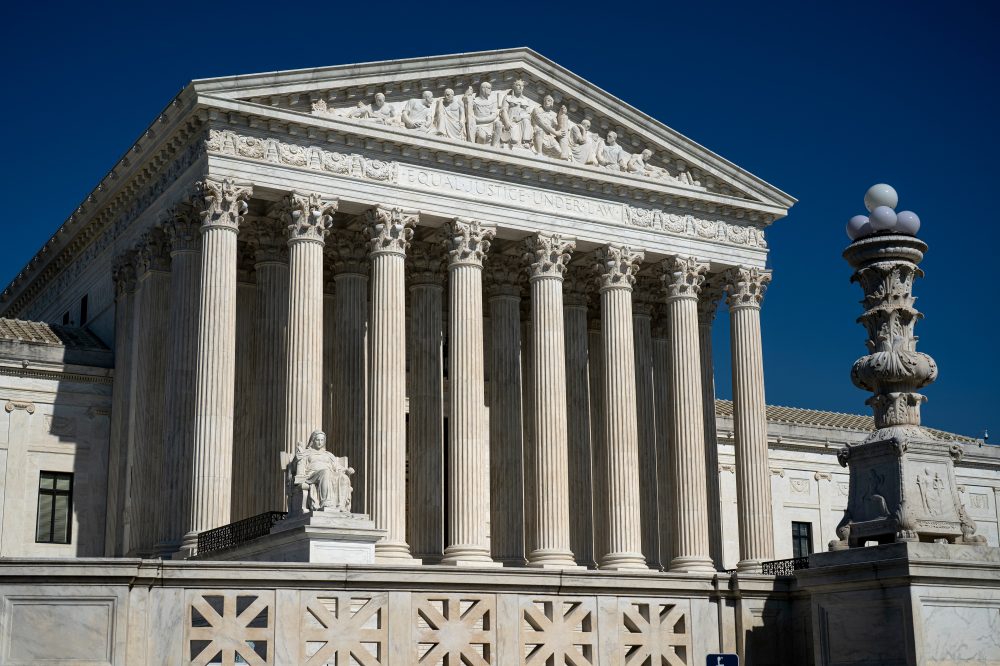

WASHINGTON — Alabama’s Republican leadership petitioned the U.S. Supreme Court on Wednesday to permit the state to implement a congressional district map that benefits the GOP for upcoming elections, even though a federal court determined the redistricting plan deliberately targets Black voters with discrimination.
State officials submitted an emergency petition to the high court one day after a panel of three judges declined to approve a map the state created three years earlier, which contains only one district with a Black majority among Alabama’s seven congressional seats.
Instead, the judicial panel mandated that Alabama must continue utilizing a court-imposed map that was implemented for the 2024 elections, featuring two districts where Black voters represent a majority or near-majority of the population.
Attorney General Steve Marshall argued before the court that the state did not deliberately target Black residents with discriminatory practices and should be permitted to conduct this year’s elections using a map selected by state legislators rather than federal judges.
This petition represents the most recent chapter in the aftermath of last month’s Supreme Court decision that eliminated a Black-majority district in Louisiana and diminished the strength of the federal Voting Rights Act. Following that decision, Republican officials across multiple Southern states, including Alabama, have initiated efforts to redraw voting districts containing substantial minority populations that have historically supported Democratic candidates.
This redistricting activity forms part of a wider effort by President Donald Trump to maintain Republicans’ narrow House majority heading into November’s elections.
Alabama’s redistricting battle has been ongoing for several years. In 2023, the three-judge panel determined that a map created by Republican state legislators deliberately weakened the electoral influence of Black citizens. The court noted that Alabama, with approximately 27% Black population, should contain two districts where Black voters hold majority or near-majority status. The court-selected map was implemented in 2024.
Following the Supreme Court’s recent Louisiana decision, Alabama officials attempted to put their 2023 state-drawn map into effect. The Supreme Court’s conservative majority agreed to remove the injunction blocking the map’s implementation and returned the case to the three-judge panel for fresh consideration based on the Louisiana decision.
During this period, Alabama voters participated in May 11 primaries, and Republican Gov. Kay Ivey scheduled new special primaries for Aug. 11 in four congressional districts impacted by the map change.
After additional review, the judicial panel maintained its original determination that there was “undisputed evidence” of deliberate racial discrimination, a conclusion that remained separate from and uninfluenced by the Supreme Court’s Voting Rights Act ruling.
The panel stated that the special congressional primaries should move forward using the previously court-approved districts.
Implementation of the court-mandated map resulted in the 2024 election victory of U.S. Rep. Shomari Figures, a Black Democrat. State Republicans are pushing to implement a map that would provide the GOP with a chance to regain the south Alabama congressional seat.