
SACRAMENTO, Calif. — California’s crowded gubernatorial primary has Democratic voters struggling to make their choice as the election approaches its final stretch.
Despite voting starting in early May before the June 2 primary election, Democratic voters have been slower than usual to submit their ballots following a turbulent campaign season filled with unexpected developments. This gubernatorial contest differs from previous ones, lacking a clear leading candidate or celebrity figure comparable to Republican Arnold Schwarzenegger or Democrat Jerry Brown in past races.
“I’m kind of pinching my nose and voting this go-around rather than being excited,” said Colin Culver, a 21-year-old San Diego resident who ultimately voted for Tom Steyer, a billionaire hedge fund manager turned climate activist.
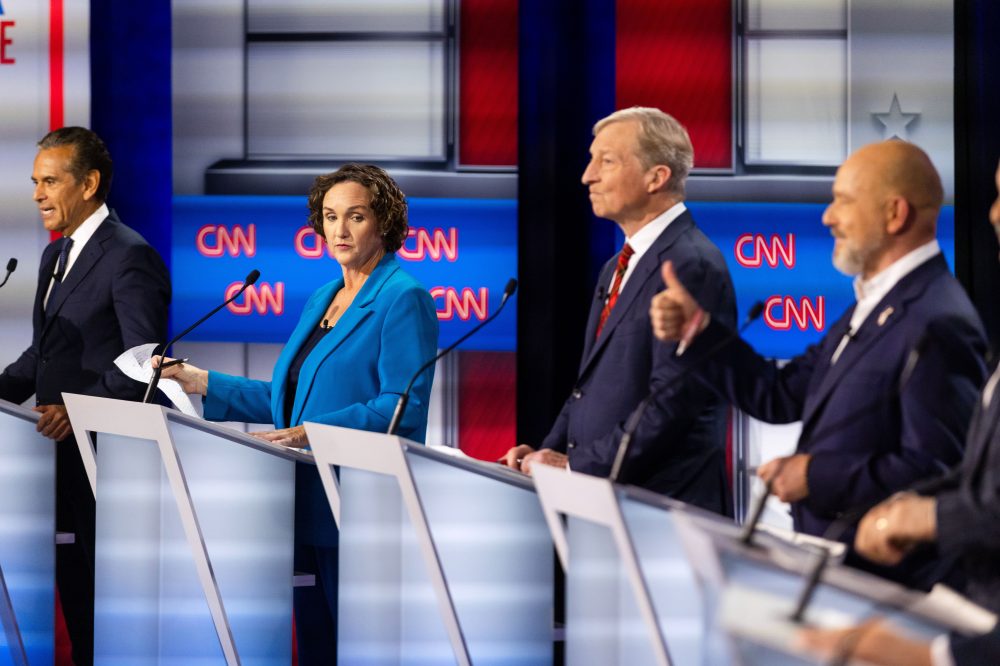
The confusion among Democratic voters stems partly from California’s top-two primary format, which puts all candidates on one ballot without regard to party affiliation. Approximately 60 candidates are competing to replace the termed-out Democratic governor. The field features six major Democratic contenders and only two well-known Republicans.
Due to the large Democratic field, party officials worried months earlier that the two leading Republican candidates, Riverside County Sheriff Chad Bianco and conservative commentator Steve Hilton, might both advance to the general election, eliminating Democrats entirely. This possibility became less probable after former Rep. Eric Swalwell withdrew from the race following sexual assault allegations, though the controversy added to Democratic voters’ unease. President Donald Trump’s April endorsement of Hilton may have unified Republican voters behind him and reduced chances of a Republican surprise in a state that last elected a Republican governor in 2011.
However, voter anxiety persists. Some Democrats are delaying their vote submissions, hoping one candidate will emerge as the clear choice in the final days, using polling data to guide their decisions. Others have found it challenging to decide, reluctantly selecting a candidate after finding the entire field underwhelming.
Even typically reliable Democratic primary voters — usually older, white constituents — have been hesitant to submit their ballots, according to Paul Mitchell, a Democratic strategist who monitors ballot returns.
“My joke is: Call your Democratic parents and tell them to turn in their ballot,” he said. “They are holding onto the ballot because they have seen this kind of topsy-turvy governor’s race. They’re waiting to make sure they’re making the right choice.”
As of Wednesday, approximately 10% of the state’s roughly 23 million registered voters had cast ballots, based on Mitchell’s tracking system. This includes about 15% of Republicans, 10% of Democrats, and 7% of unaffiliated or third-party voters. This pattern is atypical, as Democrats have historically voted early in recent elections while Republicans typically wait until Election Day.
Among the leading Democratic candidates voters are considering are former state attorney general and federal Health secretary Xavier Becerra and Steyer.
A mid-May survey by the Public Policy Institute of California showed that Becerra and Hilton each garnered support from approximately 2 in 10 likely California primary voters. Steyer, Bianco, and former Congresswoman Katie Porter each received backing from 10% to 15% of likely voters in the poll. No other candidates reached double-digit support.
Becerra’s support has grown significantly from just 5% in a PPIC survey conducted in late March and early April, when Swalwell remained in the race.
Some voters are making their decisions independent of polling data. San Francisco native Mary O’Neal chose former Los Angeles Mayor Antonio Villaraigosa based on her approval of his leadership record from 2005 to 2013. Despite participating in debates, he has struggled to build substantial support.
Fresno native Alexa Duran, 22, a recent University of California, Berkeley graduate, said she’s considering Becerra, though she has reservations about his decision as attorney general not to investigate the 2020 killing of a Latino man by a police officer in the San Francisco Bay Area.
“I know he has tons of political experience, but I’m just not sure if he’s the right candidate,” Duran said.
Amber Larson, 41, a judicial analyst for the state living in Chico, favors Ramsey Robinson, a socialist candidate. However, she believes voting for him would be a “waste” given his minimal chances of success.
She’s reluctant to support a career politician like Becerra and has doubts about billionaire candidates like Steyer.
“Are we at a point where only a billionaire can beat an establishment, career politician?” Larson said, referencing Steyer spending millions to largely self-fund his campaign.
Despite her reservations, she planned to vote for Steyer because she supports his energy affordability proposals and recognizes him as one of the frontrunners.
“I don’t want to throw my vote away,” she said.