
WASHINGTON — While President Donald Trump anticipates his Federal Reserve chair nominee will rapidly slash interest rates upon taking office, Delaware residents and other Americans shouldn’t expect immediate relief on mortgage, car loan, or business loan costs.
Kevin Warsh’s chances of becoming Fed chair before Jerome Powell’s term expires on May 15 improved significantly Friday when Washington D.C. U.S. Attorney Jeanine Pirro announced she would abandon her investigation into Powell regarding his testimony about expensive Fed building renovations last summer.
However, even if confirmed, Warsh would encounter multiple obstacles preventing rate reductions, including climbing gasoline prices that fuel inflation concerns, doubts about his political independence, and 11 fellow Fed policymakers with voting power who largely oppose cuts.
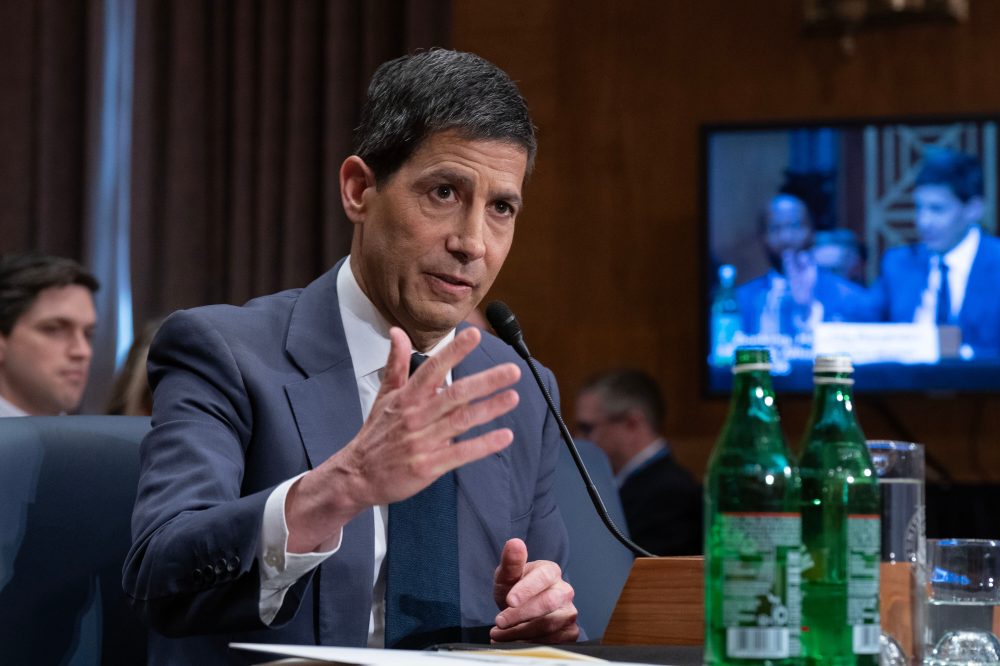
During Tuesday’s Senate confirmation hearing, Warsh committed to maintaining independence from White House influence but offered minimal details about his intended rate policy direction. While economists suggest he was exercising prudence, he failed to present a compelling case for rate reductions.
“Warsh’s stated outlook is much more consistent with an extended hold than additional cuts,” wrote Aditya Bhave, head of U.S. economics at BofA Securities, in a client note.
Trump has maintained his pressure campaign. During a recent Fox Business interview about whether he still anticipates declining interest rates, Trump responded, “when Kevin gets in, I do … interest rates should be much lower.”
Here’s what Delaware residents should understand about Warsh and the challenges awaiting the prospective Fed chair:
Warsh, who served on the Fed’s governing board between 2006 and 2011, consistently advocated for rate reductions throughout last year while pursuing Trump’s nomination to succeed Powell. Since his late January appointment, however, he has remained silent and made no public statements since the Iran conflict began February 28.
The conflict has driven up petroleum and gasoline costs, causing inflation to jump to a two-year peak of 3.3% in March, exceeding the Fed’s 2% goal. The Fed traditionally maintains its short-term rate — currently around 3.6% — at elevated levels to fight inflation, or even increases it.
The Fed lowers its rate to encourage increased spending and employment, and earlier this year multiple Fed officials expressed concern that declining job growth indicated the rate was excessive. However, recent weeks have shown signs of job market stabilization, potentially reducing the justification for rate cuts.
Christopher Waller, a Fed governor who supported a January rate cut, recently voiced worries that rising inflation might force the Fed to maintain current levels. He also noted that with unemployment remaining low at 4.3%, rate reductions might be unnecessary.
Treasury Secretary Scott Bessent stated last week that if the Fed chose “to wait for some clarity” before implementing cuts, “I understand that,” a comment widely interpreted as giving Warsh flexibility to keep rates steady for several months.
Currently, Wall Street investors anticipate minimal chances for rate cuts until October 2027, based on futures market pricing.
Certainly, if inflation decreases in upcoming months and unemployment deteriorates, additional Fed officials might support rate reductions. The economy has experienced significant volatility over the past year, alternating between appearing robust and weak.
Another obstacle for Warsh involves being merely one of 12 voters on the Fed’s rate-setting committee, which convenes eight times annually to determine overnight interest rate levels. Most members have signaled through recent speeches or votes their reluctance to reduce borrowing costs given current inflation levels. The committee voted 11-1 to maintain rates in March.
At next week’s meeting, likely Powell’s final session, the committee is broadly expected to keep rates unchanged.
Stephen Miran, a governor Trump appointed last September, cast the sole vote for rate cuts in March and has consistently voted for reductions at every meeting he’s attended. However, Warsh will replace Miran. Another Trump-appointed governor from his first term, Michelle Bowman, has also occasionally dissented in favor of cuts.
Nevertheless, a larger committee faction wants the Fed to consider potential rate increases rather than cuts at future meetings, according to their March meeting minutes.
Fed board members typically support the chair, former Fed officials note. However, chairs rarely can single-handedly and quickly influence entire committees toward their preferred direction.
Jon Faust, a Johns Hopkins economist and former Powell adviser, explained that the last time a chair achieved something similar occurred in the late 1990s, when then-chair Alan Greenspan successfully convinced the committee that Internet-driven productivity gains would prevent inflation surges, eliminating the need for rate increases.
Yet that occurred after Greenspan had chaired for several years and cultivated committee support, Faust noted.
“Warsh comes in with essentially none of the gravitas that Greenspan had,” Faust explained. “Instead, Warsh comes in with the baggage that Trump has really loaded on him. It’s not Warsh’s fault, but Trump has led to legitimate questions about whether he’ll act independently.”
One method to demonstrate independence would involve Warsh avoiding immediate rate cuts, economists have suggested.
In Tuesday’s hearing remarks, Warsh acknowledged that “we have a short window to try to bring inflation back down to where it should be,” which some economists interpreted as favoring rate increases rather than cuts.
Warsh also stated that the job market essentially represents what the Fed considers “maximum employment,” or the lowest unemployment rate possible before triggering inflation increases. This also suggests the Fed doesn’t need cuts to stimulate hiring.
Before his nomination, Warsh frequently argued that artificial intelligence would accelerate growth and improve economic efficiency. Similar to the Internet, he often claimed, it would enable the Fed to reduce interest rates without inflation concerns.
At his hearing, Warsh reiterated his AI claims but added, “we don’t know that, we can’t bank on that,” which many economists viewed as retreating from his previous position.
Warsh’s views “didn’t have a lot of clarity going in,” said Claudia Sahm, chief economist at New Century Advisers and former Fed economist. “And then he muddied the waters. There were so few specifics.”