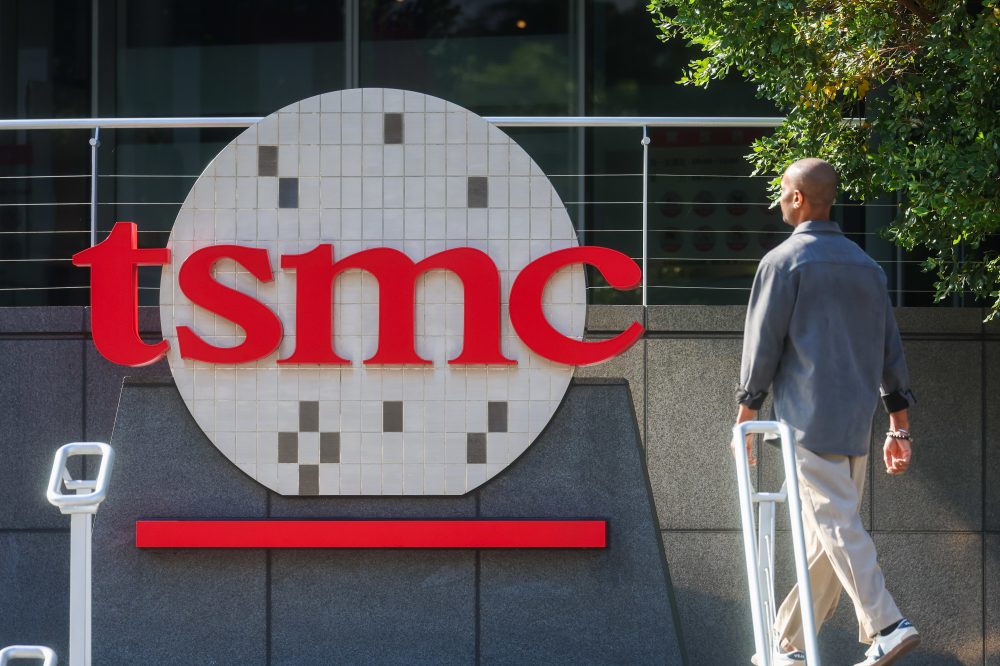

NEW TAIPEI CITY, Taiwan — A Taiwan court delivered a 10-year prison sentence Monday to a former Tokyo Electron worker in a significant case involving stolen trade secrets from Taiwan’s premier semiconductor manufacturer TSMC.
The Japanese equipment company also received a hefty fine of 150 million new Taiwan dollars (approximately $5 million), while four additional defendants were given prison terms of up to six years.
The severe penalties handed down under Taiwan’s national security legislation highlight the island nation’s determination to safeguard its cutting-edge technology and semiconductor manufacturing capabilities, which serve as cornerstones of its export-driven economy during the current artificial intelligence surge.
Taiwan Semiconductor Manufacturing Corp., commonly known as TSMC, ranks among the globe’s most valuable corporations and serves major clients including Nvidia and Apple.
Judge Chang Ming-huang of Taiwan’s Intellectual Property and Commercial Court explained that defendant Chen Li-ming, who previously worked at TSMC before joining Tokyo Electron’s Taiwan division, allegedly exploited his connections with former TSMC coworkers to unlawfully obtain and gather the semiconductor company’s proprietary information.
According to court findings, Chen captured photographs, made copies, and distributed these materials to assist Tokyo Electron in enhancing its technology and strengthening its proposals as a TSMC vendor.
While Chen’s primary goal was to “improve his personal work performance,” Judge Chang noted, his actions threatened Taiwan’s competitive edge and the economic stability of its semiconductor sector.
TSMC has not yet responded to Monday’s court decision.
Taiwanese prosecutors brought charges against Chen and his co-defendants in August for allegedly stealing trade secrets. Tokyo Electron acknowledged at that time that it had terminated an employee connected to the investigation, though the company stated its internal review had not verified evidence of confidential information being compromised.
In a Monday statement, the Japanese corporation said it regards “the court’s finding with the utmost seriousness” and plans to enhance its “information management systems and other relevant measures.” However, the company emphasized that neither the court nor its own investigation discovered any institutional participation by Tokyo Electron in the alleged misconduct.