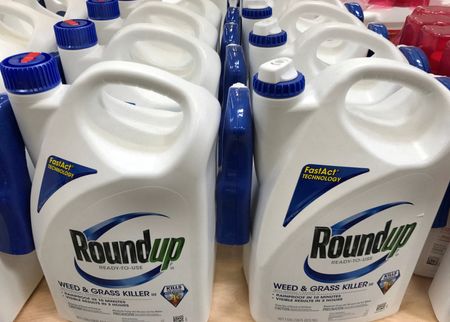

The nation’s highest court began hearing arguments Monday in a pivotal case that could reshape the legal landscape for thousands of people suing Bayer over claims that Roundup weedkiller caused their cancer.
The Supreme Court is reviewing Bayer’s challenge to a Missouri appeals court decision that upheld a $1.25 million jury award to John Durnell, who developed non-Hodgkin lymphoma after years of using the popular herbicide.
The central question before the justices involves whether federal pesticide labeling regulations supersede state warning requirements. Bayer contends that plaintiffs cannot successfully argue the company violated state disclosure laws since the Environmental Protection Agency has determined Roundup poses no cancer risk and doesn’t mandate warning labels about such dangers.
The Trump administration has backed Bayer’s position in this legal battle.
Currently, the German pharmaceutical giant faces litigation from roughly 65,000 individuals across state and federal courts nationwide. These lawsuits, which began filing in 2015, involve plaintiffs who claim they developed non-Hodgkin lymphoma and other cancers following residential or occupational exposure to the widely-used herbicide.
Bayer maintains that extensive research spanning decades demonstrates both Roundup and its primary component, glyphosate, are safe for human contact.
Should the Supreme Court rule in Bayer’s favor, it would significantly undermine the majority of pending cases by eliminating plaintiffs’ ability to argue the company violated state warning laws. However, such a decision wouldn’t automatically dismiss all remaining litigation, as many lawsuits include additional allegations of negligence, misleading marketing practices, and product defects.
The company could still attempt to use a favorable Supreme Court ruling to challenge these remaining claims and potentially overturn several trial losses on appeal.
Earlier this year, Bayer announced a massive $7.25 billion class-action settlement designed to resolve most existing cases and cover potential future claims from individuals already exposed to Roundup who may develop cancer later. A Missouri state judge provided preliminary approval in March, though final authorization remains pending with a July hearing scheduled.
The Supreme Court’s eventual ruling won’t affect settlement terms for those choosing to participate. However, individuals who reject the settlement to pursue individual litigation could face restricted legal options if Bayer prevails.
Plaintiffs have until June 4 to decide whether to accept the settlement or continue their court cases. This deadline may occur before the Supreme Court announces its decision, forcing some to make critical choices without knowing the final outcome.
The justices are expected to issue their ruling by the end of June.