
Global financial markets showed little movement Tuesday as investors assessed ongoing Middle East tensions, while Japan’s currency gained strength following the Bank of Japan’s decision to maintain current interest rates despite internal pressure for increases.
Japan’s central bank kept short-term interest rates unchanged at 0.75% in a widely anticipated decision, though three of the nine board members voted to raise borrowing costs, highlighting growing concerns about inflation stemming from the Middle East war.
Market participants are now watching for guidance from Bank of Japan Governor Kazuo Ueda regarding how the extended Iran conflict might influence future rate decisions.
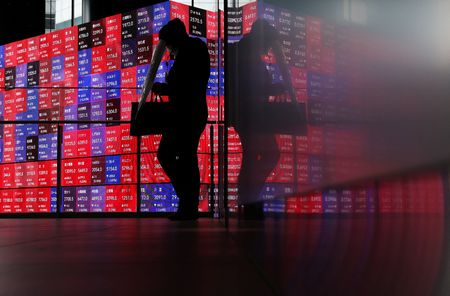
The Japanese yen gained slightly against the U.S. dollar, trading at 159.21, though it remains close to the 160 threshold that has concerned traders who fear Tokyo might intervene to bolster its currency. The yen has hovered around 159 since mid-March, while Japan’s Nikkei index fell 0.5% after reaching new highs in Monday’s session.
“A close call for the BOJ,” said Fred Neumann, chief Asia economist at HSBC, noting the three dissenting votes highlight the tensions monetary officials face, with Japan not alone in facing the dilemma whether to tighten policy into an energy price shock.
“Still, today’s message from the Bank of Japan is that it remains poised to tighten policy sooner than later.”
On the geopolitical front, Washington continues evaluating Tehran’s most recent proposal to end the Middle East war, though a U.S. official indicated President Donald Trump expressed dissatisfaction with the offer since it fails to address Iran’s nuclear program.
This ongoing impasse leaves the two-month conflict unresolved, with energy and other shipments through the vital Strait of Hormuz completely halted, maintaining oil prices well above $100 per barrel.
Asian stock markets showed mixed performance, with MSCI’s Asia-Pacific index excluding Japan declining 0.22% while remaining near Monday’s record high. The index is tracking toward a 17% April increase after falling 13.5% in March.
The S&P 500 managed small gains Monday and appears headed for roughly a 10% monthly increase. U.S. futures remained flat during Asian trading hours Tuesday, while European futures indicated a positive opening.
Central bank decisions from multiple major economies will dominate this week’s financial calendar, with the Federal Reserve, Bank of England, and European Central Bank all scheduled to announce policy decisions following Japan’s move. All are expected to maintain current rates, though investors will closely watch policymaker commentary on inflation pressures.
The euro held steady at $1.1716, while the dollar index measuring the U.S. currency against six major counterparts stood at 98.498.
The dollar gained in March from safe-haven demand as Middle East warfare began but lost most of those gains on peace deal optimism this month. It has stabilized recently after U.S.-Iran negotiations stalled.
The conflict has driven oil prices higher, increased inflation, and created uncertainty about global economic growth, with the Strait of Hormuz closure eliminating a fifth of worldwide oil and gas shipments and representing a major risk factor.
Brent crude futures rose to $109.19 per barrel, approaching a three-week peak. U.S. West Texas Intermediate traded at $97.22. Oil prices remain well above pre-war levels though have retreated from peaks on peace deal hopes.
Investors are also concentrating this week on earnings reports from technology leaders Microsoft, Alphabet, Amazon, Meta Platforms, and Apple, which will test the AI-driven market surge in April.
Anthony Saglimbene, chief market strategist at Ameriprise, noted the earnings will give markets real-time insight into whether artificial intelligence investments are producing commercial returns.
“The divergence between equity market optimism and the more cautious signals from bond and oil markets, however, reinforces the view that geopolitical developments remain an active and important variable in risk management,” Saglimbene said.