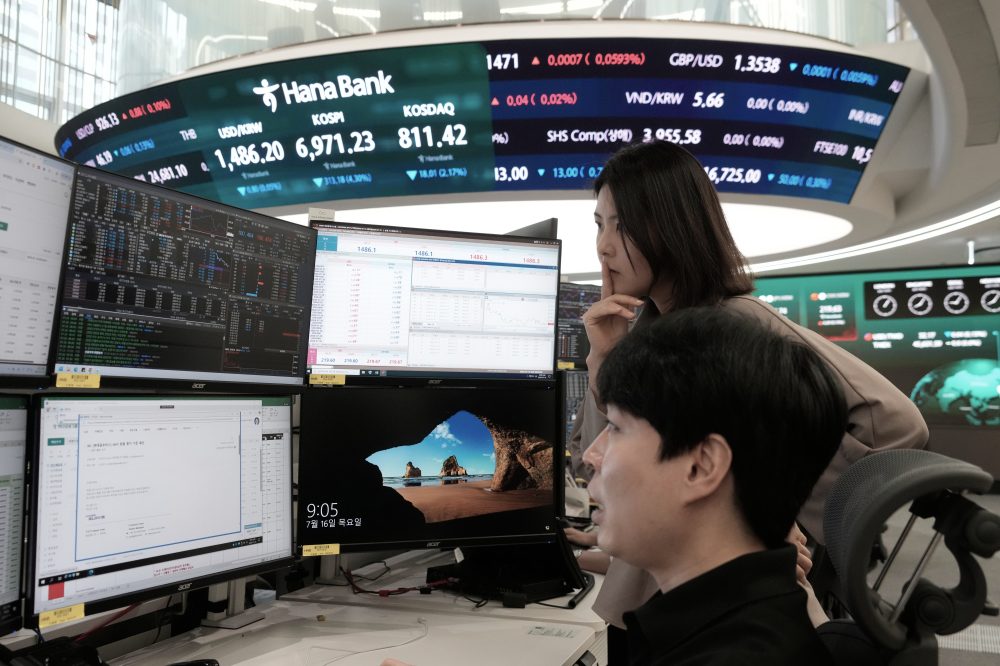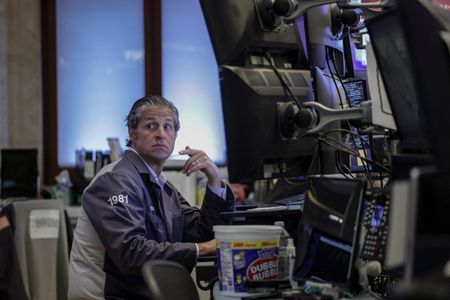

Financial markets showed uncertain direction Friday morning as the ongoing diplomatic crisis between the United States and Iran continued to create anxiety among investors, bringing a turbulent week of trading to a close.
Expected negotiations between Washington and Tehran failed to materialize despite widespread anticipation of a second round of diplomatic discussions, leaving the timeline for future talks completely unclear.
President Donald Trump chose to unilaterally extend the current ceasefire agreement with Iran while keeping the naval blockade of Iranian ports in place. Meanwhile, Iran has been intercepting vessels trying to navigate through the Strait of Hormuz.
Market watchers are also experiencing signs of exhaustion from the prolonged uncertainty. While Trump successfully facilitated a three-week extension of the ceasefire between Israel and Lebanon, investors remain cautious and want to see more concrete evidence of sustainable diplomatic progress.
Positive quarterly reports from multiple major companies provided some relief to nervous investors. However, since these financial results only reflect one month of war-related disruptions, some market analysts are questioning whether they accurately predict future performance.
Early morning trading showed the Dow E-minis declining 177 points or 0.36% at 5:19 a.m. ET, while S&P 500 E-minis remained unchanged and Nasdaq 100 E-minis gained 162.25 points or 0.60%.
Energy prices continue to be the primary concern for market stability, with Brent crude futures maintaining levels approximately 47% higher than before the conflict began due to shipping disruptions in the vital Strait of Hormuz passage.
However, some analysts view the current market decline as a potential investment opportunity, suggesting that stock valuations have become more attractive.
Both the S&P 500 and Nasdaq Composite recently reached new record peaks as investors maintain confidence that underlying economic conditions remain strong despite ongoing international conflicts.
“Optimal market entry points rarely emerge during periods of comfort or clarity. Rather, the most appealing investment opportunities typically occur during times of market uncertainty,” explained Jeff Schulze, who serves as head of economic and market strategy at ClearBridge Investments.
Individual companies drawing attention in pre-market trading included Intel, which surged 23.3% following predictions of second-quarter revenue exceeding analyst expectations. Competitor AMD also gained 7.3%.
Educational technology company Coursera dropped 10.2% following disappointing first-quarter financial results.
Chinese artificial intelligence company DeepSeek, whose affordable AI model created significant industry disruption last year, unveiled a preview of its anticipated new system designed specifically for Huawei processor technology.
However, American technology stocks that were negatively impacted by the previous model showed resilience in current trading. Microsoft, which backs ChatGPT, increased 0.7%, while semiconductor company Marvell Technology climbed 3.5%.