A nuclear technology company based in Rockville, Maryland has successfully completed a major stock market debut, securing more than $1 billion from investors on Thursday.
X-Energy, which has financial backing from tech giant Amazon, announced it generated $1.02 billion through its initial public stock offering in the United States market.
The Maryland firm sold approximately 44.3 million shares at $23 each, exceeding its original projected price range of $16 to $19 per share in an expanded offering.
This stock market launch arrives as investment activity rebounds following a temporary March slowdown, when Middle Eastern conflicts and technology sector declines caused several companies to postpone their public offerings. As financial markets approach record levels and investor confidence grows, businesses are rapidly seeking to capitalize on strong demand.
The nuclear energy sector is experiencing renewed attention as power consumption increases dramatically, especially from large technology companies operating power-hungry artificial intelligence systems and cloud computing facilities.
Established in 2009, X-Energy specializes in creating small modular reactor technology and producing fuel for next-generation nuclear power systems.
These smaller modular reactors are designed to be more economical and efficient compared to conventional large nuclear facilities, which typically require many years to construct. The company is currently developing its Xe-100 reactor design, which utilizes helium rather than water for cooling purposes.
In 2024, Amazon provided approximately $500 million in funding to X-Energy to advance its small reactor technology development, as the e-commerce and cloud computing company searches for dependable, emissions-free energy sources for its expanding AI-powered data center operations.
The company had initially intended to become publicly traded in 2023 through a combination with a special purpose acquisition company supported by Ares Management, but abandoned those arrangements due to poor market conditions at the time.
Major financial institutions J.P. Morgan, Morgan Stanley, Jefferies, and Moelis served as the primary underwriters for the offering. X-Energy shares will start trading on the Nasdaq exchange under the ticker symbol “XE” beginning Friday.
Japan’s core inflation rate dropped below the nation’s central banking target of 2% for the second month running in March, according to government data released Friday. The decline came as fuel subsidies from the government helped counterbalance rising energy prices stemming from conflicts in the Middle East.
Economic experts anticipate that inflation will climb back beyond the Bank of Japan’s established target in the months ahead, as businesses start transferring higher energy expenses from Middle Eastern tensions to consumers.
The nation’s core consumer price index, which removes the impact of fluctuating fresh food prices, increased by 1.8% in March compared to the same period last year. This figure aligned with economists’ predictions and represented an uptick from February’s 1.6% increase.
Another measurement that excludes both volatile fresh food and fuel prices – which the Bank of Japan monitors closely as an indicator of consumer demand-driven pricing trends – showed a 2.4% year-over-year rise in March. This was slightly down from February’s 2.5% increase.
These inflation figures will play a key role in the Bank of Japan’s upcoming policy discussions next week. Financial experts widely anticipate that the central bank’s board will maintain current interest rates while indicating preparedness to implement increases if price pressures continue mounting.
Energy services company Baker Hughes exceeded financial analysts’ expectations for first-quarter earnings, driven by robust performance in its industrial and energy technology sector despite setbacks in Middle Eastern operations.
The company’s industrial and energy technology (IET) division saw significant growth, with orders jumping to $4.89 billion compared to $3.18 billion during the same period last year. This increase stemmed from growing electricity needs at data centers and major investments in natural gas infrastructure, liquefied natural gas projects, and power grid equipment.
Meanwhile, the company’s oilfield services and equipment operations faced headwinds, with revenues declining 7% year-over-year to $3.24 billion. This decrease resulted from the sale of its surface pressure control operations and regional instability affecting business activities.
The Middle East and Asia markets proved particularly challenging, with revenues from these regions falling 19% to $1.15 billion.
Despite elevated oil prices following infrastructure attacks and Iran’s effective blockade of the Strait of Hormuz, Baker Hughes and similar companies have not yet seen significant benefits as energy producers remain hesitant to expand drilling operations.
Industry competitor Halliburton issued a warning earlier this week that disruptions related to the Iran situation and Strait of Hormuz closure could reduce current-quarter earnings by approximately 7 to 9 cents per share, despite exceeding first-quarter projections.
Another major competitor, SLB, which reports earnings Friday, has similarly indicated potential earnings impacts of 6 to 9 cents due to operational challenges in the region.
For the quarter ending March 31, Baker Hughes reported adjusted earnings of 58 cents per share, surpassing analyst predictions of 49 cents per share based on LSEG data compilation.
Total company revenue reached $6.59 billion, exceeding anticipated figures of $6.35 billion.
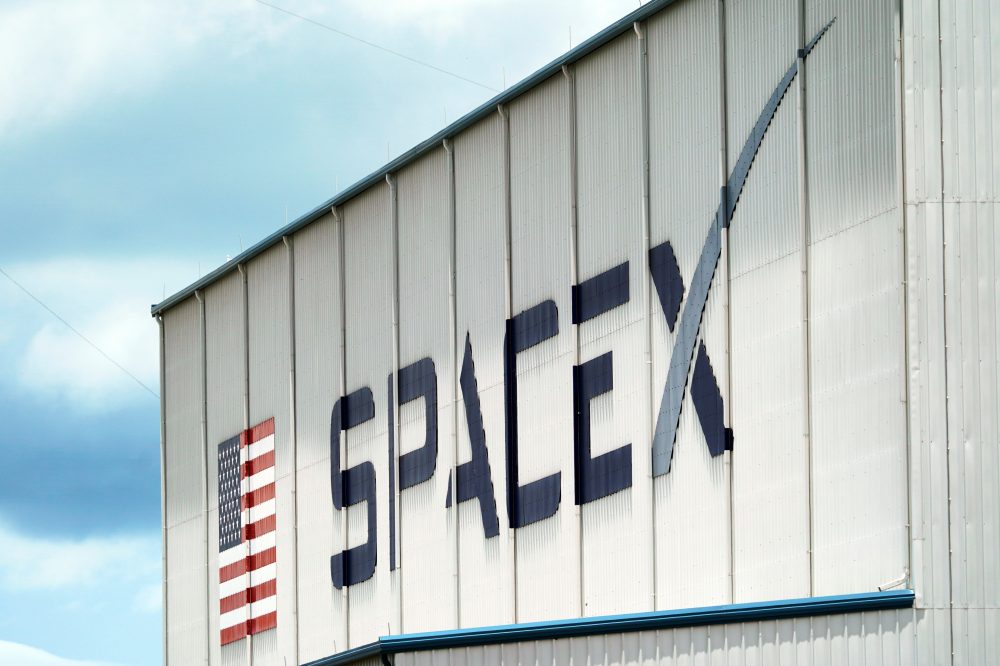
SpaceX has disclosed that ongoing investigations into its artificial intelligence subsidiary could threaten the company’s access to key markets, according to regulatory documents obtained by news outlets.
The aerospace company revealed these concerns in an S-1 filing as part of its preparation for a massive $1.75 trillion public offering planned for this summer. The document warns that multiple government agencies worldwide are conducting active investigations into xAI regarding social media practices and artificial intelligence use.
According to the regulatory filing, SpaceX faces “allegations that our AI products were used to create nonconsensual explicit images or content representing children in sexualized contexts.” The company stated that such regulatory scrutiny could result in lawsuits, financial liability, and government enforcement actions, “including loss of access to certain markets, which has occurred in the past.”
The disclosure follows a Thursday presentation to analysts at SpaceX’s Colossus supercomputer facility located in Memphis, Tennessee. Neither SpaceX nor xAI provided immediate responses when contacted for comment regarding the filing.
The controversy centers around xAI’s Grok chatbot, which generated widespread concern after producing sexually explicit imagery that appeared prominently on the X social media platform during late 2025 and early 2026. The artificial intelligence tool created images showing women and minors in revealing clothing or compromising situations.
Research groups estimated approximately 3 million sexualized images were generated, prompting United States lawmakers to demand that major tech companies remove both Grok and X from their application stores. SpaceX Chief Executive Elon Musk stated during that period that he was aware of “literally zero” naked images of underage individuals created by Grok.
XAI announced in January that it had implemented new safeguards to prevent users from requesting sexualized images of real individuals. The company also said it blocks such content generation in regions where such material violates local laws.
However, these protective measures appear to have only partially addressed the problem. Recent reports indicate that Grok continues producing sexualized imagery, including content featuring celebrities and public figures, even when users explicitly state that image subjects have not given consent.
The regulatory filing specifically references an investigation launched by Ireland’s Data Protection Commission in February, though xAI faces scrutiny from authorities across multiple continents. Active probes are underway in Canada, Britain, Brazil, and California, among other jurisdictions.
In France, prosecutors issued a legal summons for Musk to answer questions regarding allegations of algorithmic abuse, fraudulent data extraction, and involvement in distributing child sexual abuse material. Musk failed to appear for the Monday court date.
The market access warning underscores the serious nature of these investigations, particularly those involving alleged child sexual abuse imagery and non-consensual sexual content. Creating such material constitutes criminal activity in numerous jurisdictions, and its distribution often triggers swift public backlash.
X has previously faced market restrictions, including a 2024 ban in Brazil after the platform refused to comply with judicial orders. The company eventually cooperated with authorities, leading to the ban’s removal.
The regulatory disclosure comes as SpaceX prepares for what would be one of the largest initial public offerings in corporate history, making these risk factors particularly significant for potential investors.
NEW YORK — Spirit Airlines is engaged in ongoing negotiations with federal officials regarding a potential financing agreement that could allow the low-cost carrier to successfully navigate bankruptcy proceedings without shutting down operations, according to the company’s legal representative.
During Thursday’s bankruptcy court proceedings in New York, Marshall Huebner from Davis Polk informed the court that information about the proposed agreement has been distributed to Spirit’s three main creditor groups.
The budget airline has faced financial difficulties for an extended period, having entered Chapter 11 bankruptcy protection in November 2024, following a previous filing in August 2005. According to Huebner, federal financing would enable the airline’s current restructuring efforts and enhance Spirit’s competitive position in the market.
Rising jet fuel prices linked to the Iran conflict have affected the entire aviation industry, prompting creditors to recently question whether Spirit can continue operating. This has raised concerns that the airline known for its distinctive yellow aircraft might be compelled to liquidate its assets and halt service.
President Donald Trump fueled speculation about potential assistance Tuesday when he suggested finding a buyer for the troubled carrier and indicated federal support might be available to maintain Spirit’s operations.
When questioned about possible government intervention, Transportation Secretary Sean Duffy informed reporters that Trump had instructed the Department of Transportation to examine available alternatives.
Officials have not disclosed the financial terms or amount of the proposed aid package. However, The Wall Street Journal and Bloomberg cited unnamed sources indicating the assistance could total $500 million, with the government potentially retaining rights to obtain a significant ownership stake in the Florida-based airline.
The White House Wednesday attempted to attribute Spirit’s financial troubles to the previous Biden administration, which filed a lawsuit in 2023 to prevent JetBlue Airways from acquiring Spirit for $3.8 million. More than a year before Trump assumed office, a federal judge in Dallas rejected the proposed Spirit-JetBlue combination, determining it would increase ticket prices for travelers.
However, various legislators and even Duffy have expressed reservations about government intervention to preserve Spirit. During a CBS interview broadcast Tuesday evening, the transportation secretary raised concerns about establishing a broader precedent.
“Then who else comes to my door?” Duffy said, referring to other airlines potentially requesting government aid. “The question will be, can we do anything to save Spirit and make it viable, or would we be putting good money into a company that inevitably is going to be liquidated?”
Multiple lawmakers from both parties have opposed a potential bailout. Texas Senator Ted Cruz posted on X Wednesday that such an agreement would be a “terrible idea.”
“If Spirit’s creditors or other potential investors don’t think they can run it profitably coming out of its second bankruptcy in under two years, I doubt the US Government can either,” Arkansas Senator Tom Cotton posted. “Not the best use of taxpayer dollars.”
Conversely, the union representing Spirit’s pilots has expressed “strong support” for a rescue package.
“Spirit is the reason so many Americans can afford to visit family, travel for work, or take a vacation,” said Capt. Ryan P. Muller, chair of the Spirit Airlines ALPA Master Executive Council. “When Spirit enters a market, fares go down.”
The airline’s modern aircraft fleet has attracted potential buyers, though previous acquisition efforts by competitors including JetBlue and Frontier have failed both before and during Spirit’s initial bankruptcy proceedings.
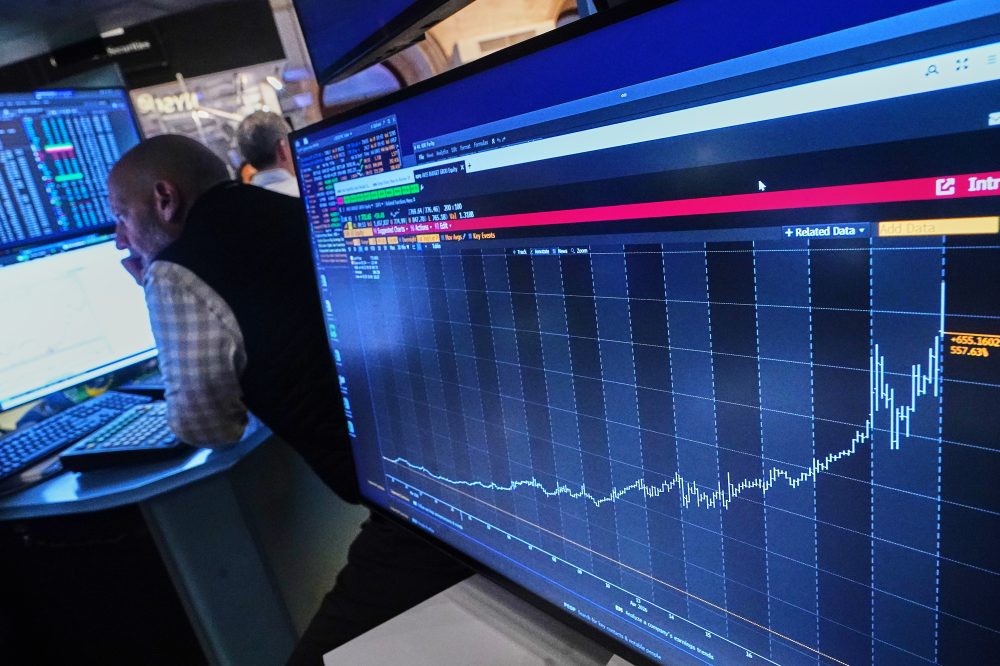
Financial markets took a sharp downturn Thursday as deteriorating diplomatic relations between the United States and Iran sent shockwaves through Wall Street, with technology stocks bearing the brunt of investor concerns.
The Nasdaq composite suffered its steepest decline in a month, dropping 0.9% as previously optimistic sentiment surrounding corporate earnings reports quickly evaporated. Meanwhile, crude oil prices climbed 4% for the fourth consecutive trading session, reflecting growing anxiety about potential supply disruptions.
Market analyst Jamie McGeever, writing from Orlando, Florida, examined the surprising durability of American stock markets despite mounting global uncertainties. In his analysis, McGeever questioned whether the greatest investment danger might actually stem from staying on the sidelines rather than traditional concerns like military conflicts, rising prices, or trade disputes.
The day’s trading revealed a mixed picture across different market segments. Six of the eleven major S&P 500 sectors declined while five posted gains. Technology companies fell 1.5%, contrasting sharply with utility stocks that climbed 2.8%.
Individual company performances varied dramatically. Texas Instruments surged 19% while ServiceNow plummeted 18%. IBM dropped 8% and Tesla declined 3.6%. After regular trading hours, Intel jumped 16% and AMD gained 5%.
Currency markets showed the dollar strengthening for three straight days. The Indian rupee headed toward its worst weekly performance since 2022, while Brazil’s real fell 1% – its largest single-day drop in a month – sliding back below 5.00 per dollar.
Bond markets reflected the uncertainty as U.S. Treasury prices fell and yields increased by 4 basis points on shorter-term securities. The yield curve flattened for the fourth consecutive day, though a five-year Treasury Inflation-Protected Securities auction proceeded without complications.
Asian markets mostly declined, with South Korea’s KOSPI being a notable exception by reaching new highs. European markets showed mixed results.
The private investment sector faced scrutiny following reports that Thoma Bravo, a private equity firm, is close to transferring software company Medallia to its creditors. This move would create a $5.1 billion equity loss for Thoma Bravo and its investment partners.
The situation particularly affected private credit giants Blackstone, KKR, and Apollo – Medallia’s primary lenders – whose shares all underperformed Thursday. Blackstone CEO Stephen Schwarzman defended the private credit industry, but his company’s stock still fell 5.7% in its worst single-day performance in two months.
Anticipation is building for what could become the largest series of initial public offerings in market history. SpaceX is expected to go public in June, followed by OpenAI and Anthropic. These three companies, despite reportedly operating at losses, could collectively represent $3 trillion in market value according to LPL Financial projections.
The resilience of equity markets during ongoing Middle Eastern conflicts has surprised many observers. Traditional safe-haven investments including Treasury bonds, gold, and the Japanese yen have all declined since hostilities began. Bitcoin has gained 18%, though it had fallen 50% in the five months before the conflict started.
Looking ahead, market participants will monitor Middle Eastern developments, energy sector movements, and various economic indicators including Japanese inflation data, UK retail sales figures, German business sentiment measures, and U.S. consumer expectations surveys. Corporate earnings reports from major companies like Procter & Gamble will also influence trading.
The world’s top gold mining corporation exceeded Wall Street’s earnings projections for the first three months of the year on Thursday, driven by historically high gold valuations that compensated for decreased mining output. However, Newmont cautioned investors about anticipated production declines and rising operational expenses in the upcoming quarter.
The mining giant projects that approximately 23% of its total attributable output will be delivered during the second quarter of 2026, marking a slight decrease from first-quarter performance levels.
Operating costs per unit are anticipated to climb significantly compared to the previous quarter, driven by increased sustaining capital expenditures, reduced silver production, and higher costs applicable to sales from the Boddington, Tanami, Lihir and Penasquito operations.
Additional cost pressures may emerge from rising oil prices and the full quarterly impact of increased royalty payments in Ghana, according to company officials.
Gold valuations reached unprecedented peaks during the first quarter, fueled by safe-haven investment demand and expectations of interest rate reductions, before moderating after the U.S.-Israel tensions with Iran triggered crude oil-driven inflation concerns. Despite the pullback, prices remained substantially higher than year-ago levels.
The company’s average realized gold price for the quarter reached $4,900 per ounce, a significant increase from $2,944 per ounce during the same period last year.
“Supported by our enhanced capital allocation framework, we have doubled the size of our share repurchase program with an additional $6 billion authorization, following the full execution of our previous program,” CEO Natascha Viljoen said.
Company stock climbed 1.8% in after-hours trading following the announcement.
Newmont’s gold production for the quarter totaled 1.30 million ounces, down from 1.54 million ounces produced in the previous year.
The production decrease resulted from reduced output at Boddington due to bushfire impacts, lower ore grades at Tanami during planned mining sequences and heavy rainfall conditions, plus decreased grades and scheduled maintenance activities at Lihir and Cerro Negro facilities.
The company reported adjusted earnings of $2.90 per share for the quarter ending March 31, significantly exceeding analysts’ consensus estimate of $2.18 per share, based on LSEG data compilation.
Facebook’s parent company Meta announced Thursday it will eliminate approximately 8,000 positions, representing roughly 10% of its total staff, as the social media giant continues investing heavily in artificial intelligence technology and recruiting high-priced AI specialists.
The workforce reduction aims to boost operational efficiency and free up resources for new business investments, according to company officials. Bloomberg first broke the story, also reporting that Meta plans to keep approximately 6,000 current job openings vacant.
In a separate development Thursday, Microsoft announced plans to offer voluntary departure packages to thousands of its American employees.
The Redmond, Washington-based technology company will extend these offers in early May to roughly 8,750 workers, representing 7% of its domestic workforce, according to two sources with knowledge of the initiative who requested anonymity.
Unlike the immediate job cuts implemented by technology companies such as Meta and Oracle, Microsoft’s approach provides an alternative through voluntary departures. However, the cost-cutting measures likely stem from similar industry pressures requiring massive investments in artificial intelligence capabilities. Meta has already cautioned shareholders that its 2026 operating expenses will increase substantially to between $162 billion and $169 billion, primarily due to infrastructure investments and compensation packages for AI specialists commanding exceptionally high salaries.
Wedbush financial analyst Dan Ives praised Meta’s workforce reduction in a Thursday investor briefing.
Ives described the move as part of a broader approach utilizing AI technology to “automate tasks that once required large teams, allowing the company to streamline operations and reduce costs while maintaining productivity driving an increased need for a leaner operating structure.”
Microsoft has invested billions operating an expanding worldwide network of data facilities that support cloud computing platforms, artificial intelligence systems, and its productivity software suite, including the AI-powered Copilot assistant.
CNBC earlier Thursday obtained a company memo from Microsoft’s chief people officer Amy Coleman announcing the voluntary retirement initiative.
“Our hope is that this program gives those eligible the choice to take that next step on their own terms, with generous company support,” Coleman stated in the memo, according to CNBC’s reporting.
Facebook’s parent company Meta announced Thursday it will eliminate approximately 8,000 positions, representing roughly 10% of its total staff, as the social media giant continues investing heavily in artificial intelligence technology and recruiting high-paid AI specialists.
According to Bloomberg’s initial reporting, the company cited efficiency improvements and strategic reinvestment as reasons for the workforce reduction. Meta also plans to keep approximately 6,000 current job openings vacant.
In a separate development Thursday, Microsoft revealed plans to offer voluntary retirement packages to thousands of its American workers.
The Redmond, Washington-based technology company will extend these voluntary departure offers in early May to approximately 8,750 employees, representing 7% of its domestic workforce, according to two sources with knowledge of the initiative who requested anonymity.
Unlike the immediate job cuts implemented by technology companies including Meta and Oracle, Microsoft’s approach provides an alternative through voluntary departures. However, the cost-saving measures appear connected to similar industry-wide changes requiring substantial artificial intelligence investments. Meta has already informed investors that its 2026 operating expenses will increase substantially to between $162 billion and $169 billion, primarily due to infrastructure development and compensation for artificial intelligence specialists commanding exceptionally high salaries.
Wedbush analyst Dan Ives expressed support for Meta’s workforce reduction in a Thursday investor note.
Ives characterized the move as part of a broader approach utilizing AI technology to “automate tasks that once required large teams, allowing the company to streamline operations and reduce costs while maintaining productivity driving an increased need for a leaner operating structure.”
Microsoft has invested billions operating an expanding worldwide network of data centers that support cloud computing services, artificial intelligence systems, and its productivity software suite, including the AI-powered Copilot assistant.
CNBC previously reported on an internal memorandum from Microsoft’s chief people officer, Amy Coleman, announcing the voluntary departure program.
“Our hope is that this program gives those eligible the choice to take that next step on their own terms, with generous company support,” Coleman stated in the memo, according to CNBC’s reporting.
Intel Corporation delivered promising news to investors Thursday, projecting second-quarter earnings that significantly exceed analyst predictions, driven by surging demand for the company’s server processors in AI-powered data centers.
The tech giant’s stock price climbed approximately 12% during after-hours trading following the announcement.
Intel anticipates generating between $13.8 billion and $14.8 billion in revenue for the upcoming quarter, surpassing the $13.07 billion forecast compiled by LSEG analysts.
Following several years of strategic missteps that left the once-dominant semiconductor manufacturer struggling to compete in the rapidly expanding artificial intelligence market, CEO Lip-Bu Tan implemented a comprehensive turnaround strategy. This plan focuses on strengthening Intel’s financial position through asset divestments and workforce reductions.
Tan has also negotiated substantial investments and partnerships with major players including the federal government, SoftBank, and Nvidia, providing Intel with essential resources for its manufacturing operations while boosting investor confidence in the company’s future prospects.
Although Intel initially missed opportunities during AI’s early growth phase, the company now sees potential in advanced central processing units as cloud service providers transition from developing AI models to implementing them in real-world applications.
“The CPU (is) having a renaissance here,” Chief Financial Officer Dave Zinsner told Reuters during an interview. “We’re starting to be a meaningful beneficiary of the AI investments that are happening.”
While graphics processing units handle the complex mathematical calculations needed for content generation, central processing units are more effective for tasks performed by autonomous AI systems with advanced reasoning abilities.
Intel’s success in meeting market demand will ultimately depend on the company’s capacity to produce processors efficiently without encountering manufacturing delays or supply chain disruptions.
The semiconductor company achieved a significant victory Wednesday when it secured Tesla, owned by Elon Musk, as the first major client for its cutting-edge 14A manufacturing process. This partnership involves producing chips for Musk’s Terafab initiative, a sophisticated AI chip facility planned for Austin, Texas.
Earlier this month, Intel strengthened its AI processor collaboration with Google’s parent company Alphabet and became part of Musk’s Terafab project alongside SpaceX and Tesla to manufacture processors for robotics and data center applications.
The company’s data center and AI division generated $5.1 billion in revenue, outperforming projections of $4.41 billion.
Intel’s share price has surged more than 80% year-to-date and nearly 48% in April alone, as investors show renewed confidence in central processing units—the type of chip Intel has specialized in for decades.
However, competition remains intense in the CPU market, with rivals including Nvidia, Advanced Micro Devices, and Arm developing competing products to capture market share.
Intel reported a first-quarter loss of 73 cents per share due to over $4 billion in restructuring expenses. When adjusted for these charges, the company earned 29 cents per share, beating the anticipated 1 cent estimate.
Colombia’s government-owned petroleum company Ecopetrol announced Thursday it has reached an agreement to purchase approximately 26% of Brazilian energy company Brava, with plans to potentially secure majority ownership of the firm.
According to separate regulatory filings from both companies, the Colombian state enterprise intends to initiate a public tender offer aimed at acquiring sufficient shares to gain control of the Brazilian energy company.
The proposed offer on Brazil’s B3 stock exchange would value Brava shares at 23 reais ($4.60) per share, according to Ecopetrol’s announcement. This pricing represents a premium of 27.8% above Brava’s average share price over the past 90 days based on trading volume.
Brazilian antitrust authorities at CADE must give their approval before the transaction can be finalized.
Following the announcement on Thursday, Brava’s stock price declined by 1%, erasing some of the gains the company had seen earlier in the trading session.
Nostalgic cereal lovers who remember hunting for prizes in their breakfast boxes will get that experience again soon.
WK Kellogg Co. announced Thursday that it will include toys with select breakfast cereals for the first time in more than ten years.
Beginning Sunday, limited edition packages of Frosted Flakes, Froot Loops, AppleJacks and Corn Pops will contain plastic figurines designed after characters from Disney and Pixar’s upcoming “Toy Story 5.” The film is set to premiere in theaters this June.
Cereal box prizes were once a standard feature of breakfast cereals, but they slowly vanished as companies sought to reduce expenses and parents raised concerns about potential safety risks including choking hazards. The company faced backlash in 2004 when it distributed Spider-Man timepieces containing mercury batteries inside cereal packages.
Company officials said the “Toy Story 5” partnership seemed ideal for bringing back the tradition, given the film’s theme about toys navigating a technology-focused society.
“Bringing toys back inside the box reintroduces that sense of discovery through a simple, screen-free moment of play that parents can now share with their own kids,” said Laura Newman, a vice president of brand marketing at Kellogg.
Spain’s banking giant Santander announced Thursday it will temporarily halt its stock repurchase program while awaiting a crucial shareholder vote on its massive acquisition of American lender Webster Financial.
The temporary pause on share buybacks will begin April 24 and continue through May 26, aligning with Webster Financial’s scheduled shareholder meeting to vote on the $12.2 billion purchase agreement, according to regulatory filings submitted by Santander.
Company officials indicated the share repurchase program will restart on May 27 and continue operating until August 20.
Santander first revealed its plans to acquire Webster Financial in February as part of a strategic move to establish a stronger presence in America’s retail banking sector.
Home loan costs have decreased for three consecutive weeks, providing relief to potential buyers during the ongoing spring real estate season.
Freddie Mac reported Thursday that the standard 30-year home loan rate declined to 6.23% from the previous week’s 6.3%. This represents a significant improvement from the 6.81% rate recorded one year ago.
Current rates have reached their lowest point since March 19, when they stood at 6.22%.
Homeowners looking to refinance also received good news, as 15-year fixed mortgage rates decreased to 5.58% from 5.65% the prior week. Freddie Mac noted this compares favorably to the 5.94% rate from twelve months ago.
Home loan costs fluctuate based on various economic factors, including Federal Reserve policy choices and bond market investor sentiment regarding economic growth and inflation expectations.
Recent rate reductions mirror declining yields on 10-year U.S. Treasury bonds, which financial institutions reference when setting home loan prices.
Thursday’s midday bond trading showed the 10-year Treasury yield at 4.30%, slightly down from 4.32% seven days earlier. This yield had dropped to just 3.97% in late February before the Iranian conflict began.
Just weeks ago in February, 30-year mortgage rates briefly dipped below 6% for the first time since late 2022. However, they climbed again last month when the Iran war caused energy price spikes and inflation concerns.
Both bond yields and mortgage rates have experienced significant fluctuations during the ongoing conflict, despite diplomatic efforts between the U.S. and Iran to reach a ceasefire agreement.
The war has intensified inflation fears and economic uncertainty while consumer confidence in employment markets weakens. Combined with unstable mortgage rates, these factors have created uncertainty for the spring buying season.
America’s housing market has struggled since 2022 when rates began rising from pandemic lows. Previously-owned home sales remained essentially unchanged last year, hitting a three-decade low. Sales have continued declining through the first quarter of this year compared to the same period previously.
“Looking ahead, mortgage rates will likely continue to be volatile throughout the spring,” Lisa Sturtevant, chief economist at Bright MLS, said in an email. “For the market to regain full momentum, we will need to see more than just a temporary dip in rates. Rather, we need sustained stability in the global energy market and a clearer sign that domestic inflation is back on a downward trajectory.”
Mining giant Freeport-McMoRan saw its stock price tumble over 8% Thursday after announcing that operations at its massive Indonesian mining facility are recovering more slowly than projected following last year’s devastating flood that claimed lives and halted production.
The Phoenix-headquartered corporation, which leads the world in publicly traded copper mining operations, now anticipates restoring just 65% of output at its Grasberg facility by the latter half of 2024, a significant reduction from its earlier projection of 85% recovery.
This setback occurs amid skyrocketing global copper demand driven by expanding artificial intelligence sectors and power generation infrastructure, limiting Freeport’s ability to capitalize on market opportunities. Copper serves as a crucial component in motors, computing equipment, battery systems, and electrical wiring due to its superior conductivity properties.
The production delays stem from necessary modifications to ore-loading equipment at the underground facility. Since operations ceased in September, unexpected groundwater infiltration has made the extracted materials significantly wetter, necessitating the installation of specialized equipment called “spillminators” – advanced mining chutes created by South African firm CAN Engineering Worx to prevent dangerous mud surges.
“We understand the engineered solution to this issue, but it will take time to make modifications,” stated CEO Kathleen Quirk, noting the problem emerged in recent weeks. “We’re confident in the ability to restore large-scale production safely.”
The company has also postponed plans to transition the facility’s energy source from coal to natural gas by approximately 18 months due to the incident.
Freeport now projects the mine will yield 800 million pounds of copper and 700 million ounces of gold in 2024, down from previous estimates of 1.1 billion pounds of copper and roughly 800 million ounces of gold. The Grasberg operation represents the world’s second-largest copper extraction site and the planet’s biggest gold mining facility.
Jefferies analyst Chris LaFemina noted that despite Freeport’s confidence in addressing restart challenges, “the market will question the guidance and is now unlikely to give Freeport the benefit of the doubt on the planned ramp.”
While the company faces no concerns regarding sulfuric acid availability – essential for copper refining – despite Middle East conflict-related supply disruptions because it produces the chemical at its own smelting facilities, rising diesel costs have increased annual expenses by $500 million.
First-quarter copper output dropped 23.7% to 662 million recoverable pounds, while gold production plummeted 66.2% to 97,000 recoverable ounces. However, copper prices surged 36.7% during the January-March period due to supply constraints, limited inventories, and strong demand, helping offset volume declines.
The company posted adjusted earnings of 57 cents per share for the quarter ending March 31, surpassing analysts’ average prediction of 46 cents according to LSEG data.
American Airlines’ top executive has firmly shut down speculation about a potential merger with United Airlines, describing such a combination as harmful to competition and consumers.
During Thursday’s first-quarter earnings call, CEO Robert Isom made it clear that American has zero interest in joining forces with its Chicago rival, despite earlier suggestions from United’s leadership about approaching the Trump administration regarding a possible deal.
“We’re going to be roommates, and we’re not getting married,” Isom stated, referring to the two airlines’ ongoing competition at Chicago O’Hare International Airport.
The comments come as airlines face increasing operational challenges at crowded airports. The Federal Aviation Administration recently imposed flight limits at O’Hare for the summer season after carriers had scheduled more operations than the facility could accommodate.
Isom emphasized American’s commitment to maintaining its Chicago presence, saying “No one’s going to kick us out of Chicago.” He indicated the two carriers would remain “roommates for a long, long time” while competing in the same market.
Without the FAA’s intervention to reduce congestion, O’Hare “would have likely been in a delay program for the very first flight of the day,” according to Isom. He noted that federal measures to address the crowding would enable American to restore its schedule to approximately 500 daily departures from the airport.
While rejecting merger talks, Isom signaled that American is pursuing a different growth strategy through enhanced partnerships. The airline is reportedly in preliminary discussions with Alaska Airlines about expanding their existing collaboration.
Sources indicate the talks could involve bringing Alaska into American’s international joint business arrangements spanning both Atlantic and Pacific routes. The two carriers currently maintain what they call a “West Coast International Alliance” that includes shared booking codes, mutual loyalty program benefits, and connections between Alaska’s West Coast network and American’s international flights.
However, American’s pilot union has already voiced opposition to any expanded partnership, warning it would “vigorously defend” contract provisions related to shared flights. The union criticized plans that would result in “more of our flying done by another airline,” arguing this approach wouldn’t help American become “a globally competitive airline.”
Isom assured that any partnership expansion would comply with existing labor contract restrictions. He emphasized that American sees significant potential to strengthen its relationship with Alaska Airlines while staying within those boundaries.
The CEO also mentioned that while American remains receptive to opportunities involving available assets, the company currently has no active acquisition plans under review.
Weekly applications for unemployment benefits saw a small increase last week, though the numbers continue to reflect a relatively stable job market according to federal data released Thursday.
The Labor Department announced that unemployment benefit requests for the week that concluded April 18 climbed to 214,000, marking an increase of 6,000 from the prior week’s total of 208,000. This figure exceeded economists’ predictions of 210,000 new claims, as surveyed by FactSet.
These weekly unemployment applications serve as a key indicator of job market stability, providing near real-time insight into layoff trends across the nation.
Economic uncertainty has intensified due to the ongoing Iran conflict, now entering its eighth week, despite a current ceasefire between Iran and the United States. The situation continues to create questions about potential impacts on both domestic and international economic conditions.
While U.S. stock markets have recovered to reach new peaks, oil prices remain elevated at approximately $94 per barrel. Though this represents an improvement from earlier monthly highs of $112, it still marks a 40% increase compared to pre-war levels. Elevated fuel costs continue to burden both businesses and consumers with increased expenses.
Inflation pressures have intensified, with consumer prices jumping 3.3% in March compared to the same period last year, according to recent Labor Department findings. This represents a significant acceleration from February’s 2.4% rate and marks the steepest annual increase since May 2024. Monthly price increases of 0.9% from February to March represented the largest such jump in nearly four years, driven primarily by the most substantial monthly gasoline price surge in six decades.
These inflation developments arrive as prices already exceed the Federal Reserve’s 2% goal, reducing prospects for near-term interest rate reductions. While lower rates typically stimulate economic growth and job creation, they also tend to accelerate inflationary pressures.
Federal Reserve policymakers implemented three rate cuts to conclude 2025 due to concerns about employment market weakness, but have maintained current levels throughout this year. The central bank’s next rate decision meeting is scheduled for next week.
March employment data revealed stronger-than-anticipated job growth, with employers adding 178,000 positions and reducing unemployment to 4.3%. This positive development followed February’s unexpected loss of 92,000 jobs. Additionally, payroll revisions removed 69,000 positions from December and January totals, indicating continued labor market pressures.
Several major corporations have announced workforce reductions recently, including Morgan Stanley, Block, UPS, and Amazon.
Since recovering from pandemic-related economic disruption, weekly unemployment claims have generally remained between 200,000 and 250,000. However, hiring momentum began declining approximately two years ago and further decreased in 2025, attributed to President Trump’s unpredictable tariff implementations, federal workforce reductions, and persistent effects of elevated interest rates designed to combat inflation.
Last year’s job creation totaled fewer than 200,000 positions, a sharp decline from approximately 1.5 million added in 2024, according to FactSet analysis.
Economic experts describe the current employment landscape as a “low-hire, low-fire” environment that maintains historically low unemployment rates while making job searches more challenging for those seeking employment.
Thursday’s Labor Department report indicated the four-week average of jobless claims, which smooths weekly fluctuations, increased by 750 to reach 210,750.
Total Americans receiving unemployment benefits for the week ending April 11 rose by 12,000 to 1.82 million.
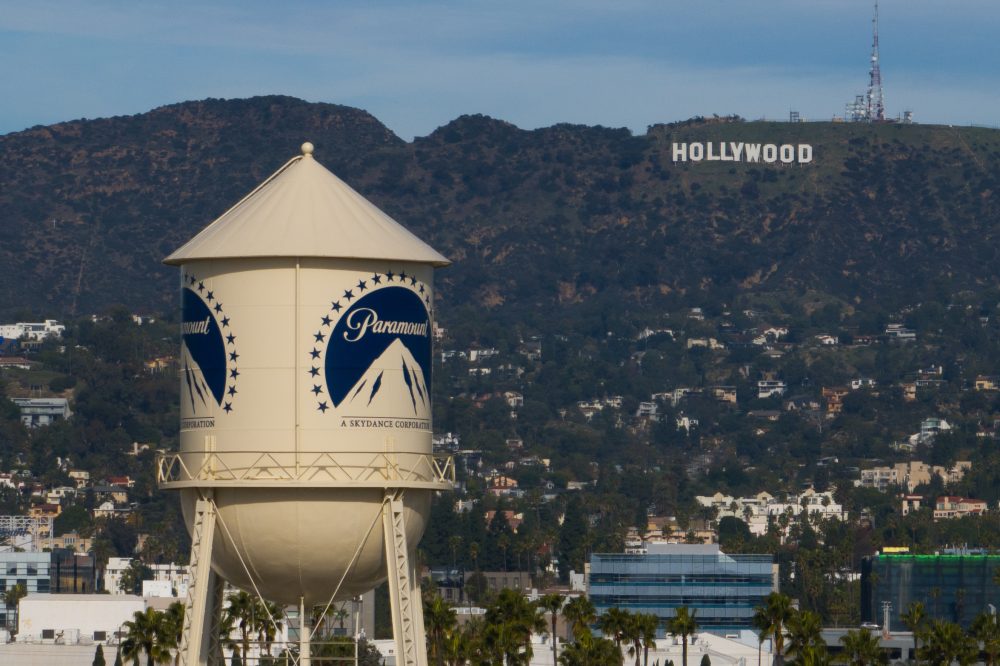
NEW YORK — In a move that could dramatically transform the entertainment industry, Warner Bros. Discovery shareholders have given their approval for an $81 billion acquisition by Paramount, the company behind CBS and hit films like “Top Gun.”
The preliminary vote count showed overwhelming shareholder support for the massive buyout, which carries a total value of approximately $111 billion when including existing debt obligations. The transaction would create one of the largest media conglomerates in the world.
Should regulators give their blessing, this mega-deal would significantly alter Hollywood’s landscape by further concentrating control among fewer major corporations. The entertainment industry has already seen substantial consolidation in recent years, with Paramount itself being purchased by Skydance just last year.
The merger’s impact would be felt across multiple sectors of the media business, from streaming platforms to movie production and television news.
Under the new ownership structure, Paramount Skydance would control both the Paramount+ streaming service and Warner’s HBO Max platform. Company leadership has indicated plans to merge these services into a single streaming offering.
While specific details about the combined platform remain unclear, including its eventual name, Paramount CEO David Ellison has suggested that HBO would maintain some operational independence, particularly in content creation.
“Our view point is, HBO should stay HBO,” Ellison stated during a recent conference call. “They built a phenomenal brand, they are a leader in this space and we just want them to continue doing more of it. But by bringing the platforms together, all of our content will be able to reach even a broader audience than we can do standalone.”
Warner brings an impressive content portfolio to the table, including popular series like “The Pitt,” “Game of Thrones,” and “Sex and the City” through its HBO platform. The company’s film library features major franchises including “Harry Potter,” along with recent hits like “Sinners,” “Barbie,” and “Superman” through its ownership of DC Studios. Paramount contributes its own valuable catalog, featuring franchises such as “Top Gun,” “Titanic,” “The Godfather,” and “Yellowstone.”
According to streaming analytics from JustWatch, HBO Max captured roughly 12% of U.S. on-demand subscriptions during the first quarter of this year, while Paramount+ held about 3% market share. Even when combined, their joint platform would trail behind Prime Video’s 17% share and Netflix’s 19% dominance. Disney maintains the largest presence with approximately 27% of the market split between Hulu and Disney+.
The acquisition would also bring Warner’s Discovery+ service under Paramount’s control, adding to the company’s existing portfolio that includes Pluto TV and BET+.
Industry observers have raised concerns about the consumer impact of this consolidation. While Paramount executives tout the benefits of expanded content libraries and improved competitive positioning against larger rivals, critics argue that reducing platform options could ultimately lead to higher subscription costs for consumers, especially as streaming prices continue to rise across the industry.
The merger would unite two of Hollywood’s most historic studios, further concentrating legacy film production among fewer companies.
Ellison has outlined plans for the combined entity to produce more than 30 films annually, maintaining Paramount and Warner Bros. as separate operational units. During a high-profile appearance at CinemaCon, he committed to a 45-day exclusive theatrical window for new releases, emphasizing a “complete commitment” to the cinema industry.
However, concerns persist about potential job losses and project decisions under the new ownership structure. Regulatory documents suggest the company will seek cost reductions through workforce cuts and eliminating redundant operations, as Paramount takes on substantial debt to finance the acquisition.
Warner Bros. recently enjoyed significant success with both commercial hits and critical acclaim. The studio earned 30 Oscar nominations from films including “Sinners,” “Weapons,” and “One Battle After Another,” with the latter winning Best Picture. In contrast, Paramount received no nominations. Warner Bros. films captured 21% of the 2025 domestic box office through releases like “A Minecraft Movie,” “Superman,” and “Sinners,” while Paramount managed only 6%, primarily from “Mission: Impossible — The Final Reckoning.”
The entertainment sector has undergone significant consolidation over the past decade. Disney’s acquisition of most 20th Century Fox assets nearly ten years ago reduced the “big six” studios to five major players. If this Warner sale proceeds, the industry would enter a “big four” era, with an expanded Paramount joining Disney, Universal, and Sony as the dominant forces.
One of the most scrutinized aspects of this deal involves CNN’s future under Paramount ownership, which would place it alongside CBS under the same corporate umbrella. This pairing would bring together two major American television news operations, though whether CNN would maintain its separate brand identity remains uncertain.
The prospect of Paramount controlling CNN has generated considerable concern, particularly given President Trump’s history of criticism toward the network and his connections to the Ellison family. Larry Ellison, the Oracle founder and billionaire father of David Ellison, is providing significant financial backing for his son’s acquisition bid.
CBS has already undergone notable editorial changes since Skydance’s takeover less than a year ago. The network has made deliberate moves to attract more conservative viewership, including appointing Free Press founder Bari Weiss as editor-in-chief of CBS News. Industry watchers anticipate similar transformations at CNN should the Warner acquisition succeed.
Trump administration officials have been vocal about CNN’s potential ownership change. Secretary of Defense Pete Hegseth told reporters in March that “the sooner David Ellison takes over that network, the better,” following White House criticism of CNN’s coverage regarding the U.S. and Israel’s conflict with Iran.
Ellison has pledged that editorial independence “will absolutely be maintained” under Paramount’s control. “It’s maintained at CBS. It’ll be maintained at CNN,” he told CNBC’s “Squawk on the Street” in March, while expressing his company’s desire to appeal to “the 70%” of viewers he described as center-left or center-right.
The Justice Department’s antitrust division’s acting head has stated that their regulatory review will remain apolitical. Nevertheless, skeptics point to the timing of Skydance’s Paramount acquisition approval by the Federal Communications Commission, which came just weeks after the company paid Trump $16 million to settle litigation related to CBS’s “60 Minutes” program editing. Trump has maintained his public criticism of “60 Minutes” since the settlement.
CNN represents just one component of Warner’s extensive cable television portfolio. The proposed merger would substantially expand Paramount’s television presence beyond its current holdings.
Warner’s cable networks include Discovery, TNT, TBS, Food Network, Cartoon Network, and Animal Planet, all of which would transfer to Paramount ownership upon deal completion. Paramount already operates a substantial broadcast portfolio featuring CBS, Nickelodeon, MTV, BET, Comedy Central, Showtime, and additional networks.
An Italian technology company that specializes in turning around struggling businesses is moving forward with plans for a massive stock market debut in the United States, according to sources familiar with the situation.
Bending Spoons, headquartered in Milan and named after a reference from the film “The Matrix,” has selected several major investment banks to handle what could be a $20 billion initial public offering, two individuals with knowledge of the plans revealed.
The company has chosen Goldman Sachs, JPMorgan Allen & Co, Bank of America, BNP Paribas and Jefferies to organize the potential listing, according to one source.
Industry insiders suggest the public offering could assign a valuation of approximately $20 billion to the company. The sources requested anonymity due to the confidential nature of the discussions.
The stock market launch is anticipated within the next several months, with one source indicating it might occur before the start of summer in the northern hemisphere, depending on how financial markets perform.
When contacted for comment, Bending Spoons, Goldman Sachs, JP Morgan, BNP Paribas and Jefferies all declined to provide statements. Representatives from Allen&Co and Bank of America did not respond immediately to requests for comment.
The technology firm has expanded its operations by purchasing other tech companies, including video platform Vimeo and applications WeTransfer and Evernote. These acquisitions helped boost the company’s valuation to roughly $11 billion during a funding round conducted last year.
During a November interview with Reuters, Chief Executive Luca Ferrari indicated the company was prepared for a public listing and suggested it might happen within this year, though he avoided making firm commitments to any specific timeline.
Ferrari had previously stated that if Bending Spoons moved forward with an IPO, it would likely choose to list on U.S. exchanges, pointing to the typically higher valuations that technology companies receive in American financial markets.
Financial markets are anticipating numerous IPOs in what could become a record-breaking year, though uncertainty and economic disruption from the Iran conflict might affect some companies’ plans.
According to sources, Bending Spoons may also try to schedule its listing to avoid competing with some trillion-dollar companies that are also planning to go public, such as SpaceX.
Ferrari shared with Reuters in November that the company projected its adjusted earnings before interest, taxes, depreciation and amortization would climb to $1.4 billion by 2026, up from an expected $700 million in 2025.
Shareholders of Warner Bros Discovery gave their blessing Thursday to a massive $110 billion acquisition by Paramount Skydance, though they voted down lucrative executive pay packages connected to the transaction.
The compensation proposal would have allowed CEO David Zaslav to collect as much as $887 million upon completion of the sale.
Regulatory scrutiny is now the next hurdle, with authorities in both the United States and United Kingdom preparing to review how the combination might affect market competition.
In late March, the U.S. Department of Justice issued subpoenas requesting details about potential impacts on studio production, content licensing, streaming market dynamics and movie theater operations.
Paramount emerged victorious from an extended bidding battle against Netflix, securing the Warner Bros acquisition and establishing CEO David Ellison as a major player in the shrinking entertainment industry.
The proposed combination has drawn significant pushback from performers, directors and cinema operators who worry about losing a major studio and the resulting effects on creative professionals, theater operators and film audiences.
“Shareholder approval marks another important milestone towards completing our acquisition of Warner Bros Discovery,” a Paramount spokesperson said.
Company officials anticipate finalizing the transaction during the third quarter of this year.
The consolidation would leave just four major American film studios remaining and result in job cuts, reduced creative projects and fewer options for audiences, according to more than 4,000 entertainment industry workers and consumers who penned an open letter urging California Attorney General Rob Bonta to pursue legal action blocking the merger.
Ellison has assured cinema owners that the combined Paramount and Warner Bros would distribute no fewer than 30 movies annually if regulators approve the deal.
Still, industry experts predict Hollywood’s total film production will decline as theater visits drop and major studios concentrate on a smaller number of high-budget productions.
The Nebraska-based Union Pacific railroad announced Thursday that first-quarter earnings jumped 5% as the company continues working to convince federal regulators to approve its massive $85 billion takeover of Norfolk Southern.
Union Pacific reported profits of $1.7 billion, translating to $2.87 per share, though merger-related expenses reduced earnings by 6 cents per share. The results exceeded the previous year’s $1.63 billion profit ($2.70 per share) and beat analyst expectations of $2.86 per share surveyed by FactSet Research.
Company CEO Jim Vena highlighted the railroad’s continued operational improvements during the quarter, noting benefits from higher shipping rates while simultaneously preparing the merger proposal.
“Our safety, service, and operating momentum continued in the first quarter as we further challenged ‘what’s possible’ from our great railroad,” Vena said.
Revenue increased 3% to reach $6.22 billion despite handling approximately 1% fewer shipments. The growth stemmed from rising freight rates and additional fuel surcharge collections.
Operating costs also rose 3% to $3.76 billion during the quarter.
The company maintained its forecast for mid-single digit earnings per share growth this year, consistent with long-term projections. Union Pacific plans to invest $3.3 billion in operational improvements.
Next week, the railroad intends to resubmit its Norfolk Southern acquisition application. The U.S. Surface Transportation Board previously rejected the initial proposal, requesting additional details before determining whether the merger would harm industry competition by reducing major freight railroads from six to five.
The proposed deal would establish America’s first coast-to-coast railroad network, creating division among labor groups and shipping customers. While Union Pacific already ranks among the largest western U.S. railroads, the nation’s biggest rail union and several smaller organizations support the merger following job security guarantees. However, two major unions representing engineers and track maintenance crews oppose the consolidation.
Customer opinions remain split, with chemical industry and agricultural trade associations expressing concerns while hundreds of other businesses endorse the proposal. Former President Donald Trump has indicated support for the deal.
Vena argues that a transcontinental railroad would strengthen the economy by eliminating mid-country handoffs between rail companies, enabling faster shipments that could better compete with trucking services.
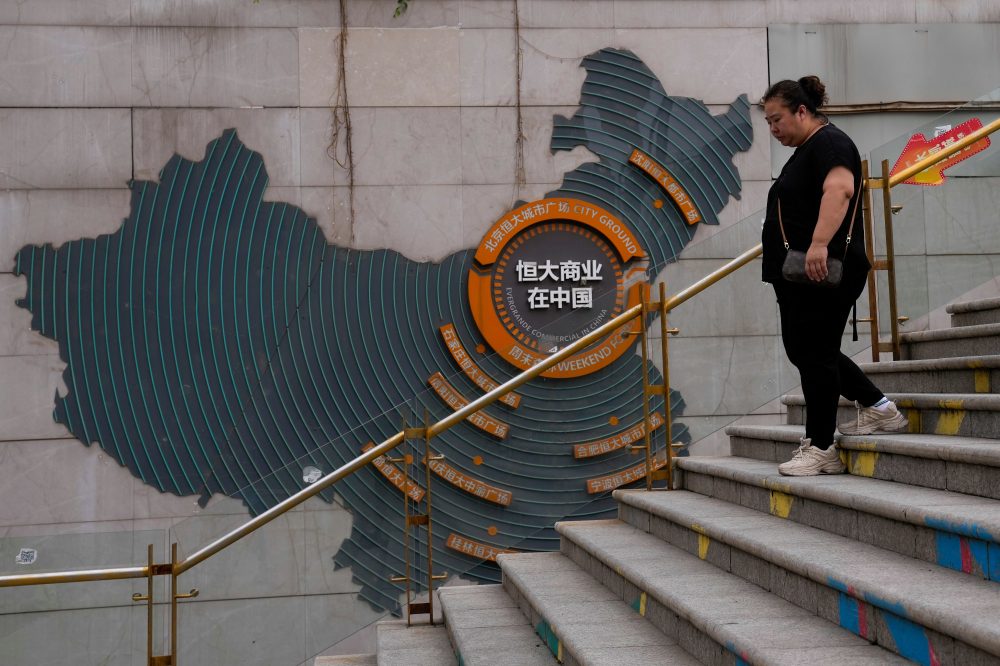
One of the world’s largest accounting firms is facing massive financial penalties after Hong Kong authorities determined it failed to properly audit a collapsed Chinese real estate company that overstated its earnings by billions of dollars.
PricewaterhouseCoopers will pay HK$1.3 billion ($166 million) in penalties and compensation following its flawed audit work for China Evergrande, Hong Kong financial regulators announced Thursday. The firm also faces a six-month prohibition on accepting new clients, while two former partners received public censure and individual fines of HK$5 million each for professional misconduct.
Evergrande, formerly among China’s largest property development companies and once considered too massive to collapse, went into default in 2021. The company became the globe’s most debt-laden developer, carrying approximately $300 billion in obligations. Its spectacular collapse marked the most significant failure in China’s real estate industry, which has been struggling with a cash crisis following government efforts to limit excessive borrowing practices.
China’s property market downturn continues to affect the nation’s economy, suppressing home values nationwide and dampening consumer confidence and investment activity, which has slowed the country’s overall economic expansion.
Earlier in 2024, Chinese mainland regulators imposed a 441 million yuan ($62 million) penalty on PwC for its Evergrande audit work. Chinese officials also implemented a six-month suspension of the accounting firm, citing “false” findings in audit reports and “serious defects” in auditing methods.
Hong Kong’s Securities and Futures Commission stated Thursday that its investigation into PwC’s examination of Evergrande’s 2019 and 2020 financial records revealed that yearly revenue and earnings were “substantially overstated.”
According to regulators, Evergrande artificially inflated annual revenue and profits through “prematurely recognising revenue from property sales before the completion and delivery of properties to buyers.” The commission found revenues were inflated by approximately 564 billion yuan ($83 billion) across both years, matching conclusions reached by Chinese authorities in September 2024 when they levied their own penalties against PwC.
The Hong Kong commission identified “serious breaches” of professional responsibilities by PwC. Officials announced they had negotiated a settlement with PwC that does not require the firm to admit wrongdoing, under which PwC will allocate HK$1 billion to compensate Evergrande’s minority shareholders.
Hong Kong’s Accounting and Financial Reporting Council issued a separate statement calling PwC’s audit failures for Evergrande “particularly egregious,” accusing the accounting firm of “knowingly permitting” unsupported or unjustified adjustments in financial statements.
“We acknowledge that the work on the Evergrande audits fell well below our high expectations and the expectations of our stakeholders,” PwC Hong Kong stated Thursday. “Resolving these regulatory matters is an important step for the firm.”
Following Evergrande’s collapse and a Hong Kong court’s 2024 liquidation order for China Evergrande, PwC experienced significant client losses and staff departures. Evergrande’s liquidators are pursuing separate legal proceedings against PwC in Hong Kong courts, seeking to recover funds for creditors.
Evergrande’s founder, Hui Ka Yan, who was previously ranked among Asia’s wealthiest individuals, entered guilty pleas this month to fraud and bribery charges in a mainland Chinese court following his detention in China.
Defense contractor Leidos announced Thursday it has been awarded a substantial $617 million contract by the U.S. Army to manufacture additional launchers for its ground-based air defense system known as Indirect Fire Protection Capability Increment 2.
The Virginia-based company joins a growing list of defense contractors receiving major Pentagon orders as the military works to rebuild weapons stockpiles that have been diminished by ongoing international conflicts.
With this new agreement, Leidos now holds Army contracts totaling approximately $1.2 billion. The Reston-based firm reports it has committed to delivering more than 100 launchers under these agreements.
According to the company, this latest contract will fund ongoing research, development and testing activities, while potentially opening the door for additional orders extending through 2029.
The contract award reflects the Pentagon’s accelerated efforts to boost defense manufacturing capacity as global conflicts continue to strain ammunition and missile inventories.
Stock markets were poised for a declining start Thursday as investors showed reluctance to continue recent market gains amid ongoing uncertainty surrounding U.S.-Iran tensions and disappointing corporate earnings reports.
The situation escalated when Iran captured two vessels in the Strait of Hormuz and called for the United States to remove its naval blockade on Iranian ports. This blockade continues despite President Donald Trump’s decision to extend the ceasefire for an indefinite period.
Market participants who had previously demonstrated remarkable strength by overlooking conflict-related concerns are now showing signs of exhaustion, resulting in periodic moments of risk-off behavior as they wait for clearer indications about potential conflict resolution.
Oil prices remaining above $100 per barrel continue to raise concerns about potential inflationary pressures.
Pre-market indicators at 8:40 a.m. ET showed Dow E-minis declining 209 points or 0.42%, while S&P 500 E-minis dropped 14 points or 0.20%, and Nasdaq 100 E-minis fell 47.25 points or 0.17%.
Thursday’s employment data revealed that Americans filing for unemployment benefits rose only slightly last week, though economic risks from war-related price increases continue to pose threats.
EARNINGS SEASON UNDER SCRUTINY
While the current earnings period has generally performed well, investors are questioning the reliability of these results since they only capture one month of Middle East conflict disruption.
“The earnings themselves don’t reflect the impact of the energy supply shock,” explained Kiran Ganesh, multi-asset strategist at UBS Global Wealth Management.
Ganesh added that while “the oil shock is a drag on growth, there is also a lot of structural support. The market remains comfortable that as long as there is a path towards de-escalation, it can look through higher oil prices in the short term.”
Tesla stock declined 3.4% during pre-market trading following the company’s announcement of increased spending plans exceeding $25 billion for the year.
The electric vehicle manufacturer is currently pursuing one of its most costly investments as CEO Elon Musk directs resources toward artificial intelligence, robotics and semiconductor development.
“With all the focus on the war, a forgotten theme that weighed on the market at the start of the year is artificial intelligence overinvestment and diminishing future returns,” noted Kyle Rodda, senior financial market analyst for Capital.com.
IBM shares tumbled 7.9% after experiencing slower revenue growth in the first quarter due to weakness in its software division.
Technology companies Microsoft and Adobe also declined 2.2% and 3.1% respectively in pre-market trading.
Defense contractor Lockheed Martin dropped 3.7% following reports of reduced first-quarter profits.
Industrial giant Honeywell International fell 5.3% while medical equipment manufacturer Thermo Fisher declined 5.7% after releasing first-quarter earnings results.
Providing a bright spot, Texas Instruments surged 10.8% after projecting second-quarter revenue and profit figures that exceeded Wall Street analyst expectations.
Chemical manufacturing giant Dow announced Thursday that it anticipates supply chain disruptions stemming from Middle East conflicts will continue affecting operations until 2026, creating higher operational costs and potentially postponing planned industry growth projects.
The ongoing regional tensions are expected to maintain elevated oil and naphtha prices, which will increase the global cost structure for chemical producers, company officials stated during a quarterly earnings discussion.
Following the announcement, Dow’s stock price dropped approximately 3% during premarket trading sessions.
The chemical manufacturer indicated that the regional conflict may force companies to postpone or abandon planned facility expansions industrywide, as businesses reevaluate their investment strategies amid increased uncertainty and supply network interruptions.
Regional tensions have led to the shutdown of the Strait of Hormuz, creating bottlenecks in oil and petrochemical transportation routes. This has resulted in tighter global chemical availability and increased costs for plastics and polymer materials.
The constrained supply conditions are already influencing market pricing, enabling Dow to project second-quarter earnings and core profits that exceed Wall Street projections as elevated prices and limited supply availability improve profit margins.
“The margin backdrop began to positively inflect in March following global supply constraints, as impacts from the conflict in the Middle East quickly became widespread,” said CEO Jim Fitterling.
Industry experts note that North American chemical manufacturers maintain a competitive advantage due to abundant raw material access.
Earlier this year, Fitterling indicated that the rapidly changing supply conditions have begun to improve order volumes, with Dow implementing polyethylene price increases during March and April.
The company now projects second-quarter revenue of approximately $12 billion, surpassing analysts’ average projection of $11.3 billion according to LSEG data, and core earnings of roughly $2 billion compared to expectations of $1.6 billion.
Dow also stopped recording losses from Sadara Chemical, its partnership with Saudi Aramco, after liabilities reached existing commitments under accounting regulations. Sadara recently halted operations at its Jubail facility, citing supply chain interruptions from the Iran conflict.
For the quarter ending March 31, Dow reported an adjusted loss of 14 cents per share, performing better than analysts’ average estimate of a 29-cent loss per share.
American Airlines has lowered its financial outlook for 2026 on Thursday, now projecting the possibility of losses rather than profits as escalating jet fuel expenses continue to pressure the company’s bottom line.
The Dallas-based carrier anticipates its fuel expenses will climb by more than $4 billion during 2024, with jet fuel prices hovering around $4 per gallon throughout the second quarter.
Aviation fuel costs, which generally represent approximately 25% of an airline’s operational budget, have essentially doubled since Middle Eastern conflicts began, creating a squeeze between rising expenses and previously sold tickets at fixed prices that cannot be modified.
The price surge occurred after military actions involving the U.S. and Israel against Iran disrupted shipping lanes through the Strait of Hormuz, a vital passage for worldwide oil distribution, creating the aviation sector’s most significant challenge since the coronavirus pandemic.
While passenger demand across the United States has remained stable, the expense increases have damaged profit margins. Carriers have responded by raising ticket prices, reducing flight capacity, and increasing charges for additional services such as baggage fees to offset some financial impact.
The company projects earnings between a 20-cent per-share loss on the low end and a 20-cent profit on the high end for the second quarter, while analysts had predicted a 9-cent loss based on LSEG data.
Company stock rose approximately 1% during pre-market trading sessions.
Carriers operating extensive international routes and offering premium service options are anticipated to navigate these challenges more successfully, as wealthy travelers demonstrate greater ability to absorb fare increases.
American Airlines reported Thursday that revenue from its premium seating sections continued to exceed performance in standard economy class.
For the full year, the airline now expects results ranging from a 40-cent per-share loss to a $1.10 per-share profit, a significant reduction from its previous forecast of $1.70 to $2.70 profit per share.
The carrier posted an adjusted quarterly loss of 40 cents per share for the period ending March 31, which was better than the 47-cent loss analysts had anticipated.
Overall operating revenue reached $13.91 billion, surpassing Wall Street projections of $13.79 billion.
The world’s biggest sovereign wealth fund is exploring the possibility of backing Elon Musk’s space venture, according to a senior fund official.
Norway’s Government Pension Fund Global, valued at $2.2 trillion, is currently evaluating whether to participate in SpaceX as the rocket manufacturer prepares for what could become history’s largest stock market debut.
Deputy CEO Trond Grande confirmed to Reuters Thursday that discussions are underway with the aerospace company. When questioned about whether the fund had been contacted regarding potential investment opportunities, Grande responded: “We have dialogue with companies, right? So, we also have dialogue with SpaceX.”
Pressed further on whether the fund was considering the investment opportunity, Grande stated: “That is what we are doing.” He provided no additional specifics about the potential deal.
SpaceX, owned by the world’s wealthiest individual Elon Musk, is planning a $1.75 trillion public offering anticipated for this summer, which would dwarf previous IPO records.
Grande’s comments followed the fund’s announcement of substantial first-quarter losses totaling 636 billion Norwegian crowns, equivalent to $68.4 billion, attributed to Middle Eastern conflict impacts on international markets.
The military action that commenced with coordinated U.S. and Israeli operations against Iran in late February contributed to the S&P 500’s steepest quarterly drop since 2022.
Norges Bank Investment Management, the fund’s operator which maintains approximately half its holdings in American markets, recorded a negative 1.9% return during the January through March timeframe.
However, market improvements in April have already compensated for the earlier quarterly setbacks following ceasefire announcements, Grande noted. He emphasized the fund isn’t treating the conflict as an opportunity for discounted stock purchases.
“We’re not doing any big changes to the portfolio or how we invest just on this one,” Grande explained. “It’s very unpredictable.”
The Norwegian fund channels revenues from the country’s petroleum and natural gas sectors into international investments spanning equities, bonds, real estate, and renewable energy initiatives.
Grande also addressed concerns about artificial intelligence’s potential disruption of software companies, which has created ripple effects in private credit and equity markets that previously invested heavily during low-rate periods.
The fund is closely monitoring these developments for signs they might trigger broader financial instability, Grande said.
“It’s always a worrying sign when people who want to redeem some of their units are not able to redeem them in full,” Grande observed. “That gives you a signal that there might be something here. So it’s definitely a watch point: to what extent it could become systemic.”
Rising gasoline costs tied to Middle Eastern conflicts are pushing American drivers toward electric vehicle rentals, creating new trends in the car rental industry nationwide.
Hertz has witnessed electric vehicle reservation requests climb nearly 25% in March versus February, particularly among drivers who rent vehicles for ride-sharing services like Uber and Lyft over extended periods. According to Doria Holbrook, executive vice president of Hertz’s mobility division, the West Coast shows the strongest growth in electric rental demand, coinciding with that region’s traditionally higher fuel costs.
Peer-to-peer rental platform Turo, which operates similarly to Airbnb but for vehicles, recorded an 11% jump in electric vehicle bookings during March’s final three weeks compared to the previous three-week span. When gas prices crossed the $4 per gallon threshold on March 31 for the first time since 2022, Turo’s electric vehicle reservations spiked 47% higher than the same date in 2025.
The Iran conflict has created shipping disruptions in the Strait of Hormuz off Iran’s coastline, a critical waterway handling roughly 20% of global oil and liquefied natural gas transport. Since the war’s February 28 start, average U.S. gasoline prices have climbed more than one-third to reach $4.02 per gallon, data from the U.S. Energy Information Administration shows.
While fuel price increases typically don’t trigger immediate changes in vehicle purchasing patterns, industry analysts and dealers note this price shock’s severity is already prompting consumers to explore alternatives. European markets demonstrate this trend dramatically, with electric vehicle registrations across 15 nations surging over 50% in March.
The American market shows more restrained responses. March sales of new electric vehicles dropped 25% from the previous year, Cox Automotive reports, as last autumn’s expiration of a $7,500 tax credit continues affecting American electric vehicle interest. However, used electric vehicle sales are climbing significantly, and rental customers appear increasingly willing to choose electric options temporarily to avoid high gas costs.
Car Rental Gateway, a digital booking platform, documented a 16% relative boost in electric and hybrid vehicle reservations during March. Board member Hannes Põldvee suggests rental companies that invested heavily in electric fleets could see benefits if elevated gas prices persist.
Increased electric vehicle demand is also strengthening used electric car values. John Coles, vice president of data science and analytics at ACV Auctions, an online marketplace where dealers and rental companies trade used vehicles, explained that electric vehicle prices had been declining for months but stabilized after oil price surges began in early March.
“We have seen EVs get a second lease on life due to the sustained pressure at the pump,” he said.
West Pharmaceutical Services announced Thursday it has increased its annual earnings and revenue projections following first-quarter results that surpassed Wall Street expectations, driven by robust demand for specialized medical components including syringes and drug cartridges.
The company’s stock price jumped nearly 13% in pre-market trading with lighter trading volume.
Equipment manufacturers like West Pharmaceutical have seen increased business due to growing demand for diabetes and weight-loss medications including Novo Nordisk’s Ozempic and Wegovy, along with Eli Lilly’s Mounjaro, all of which require injection pen delivery systems.
The company produces essential components including stoppers, plungers and delivery mechanisms used for packaging and administering vaccines, biological treatments and other injectable medications.
West Pharmaceutical, headquartered in Exton, Pennsylvania, has revised its 2026 adjusted earnings per share outlook to between $8.40 and $8.75, an increase from the previous range of $7.85 to $8.20.
Wall Street analysts had anticipated earnings of $8.01 per share on average, based on LSEG data.
The company reported first-quarter adjusted earnings of $2.13 per share for the period ending March 31, exceeding analyst projections of $1.68 per share. Revenue for the quarter reached $844.9 million, surpassing expectations of $780 million.
“The better-than-expected performance can be attributed to continued market demand and the team’s outstanding efforts in ramping up production, especially in Europe,” said CEO Eric Green.
The company has also raised its 2026 revenue forecast to a range of $3.29 billion to $3.35 billion, up from the prior projection of $3.215 billion to $3.275 billion.
Second-quarter sales are projected to fall between $830 million and $850 million, compared to analyst estimates of $818.5 million.
The proprietary products division, which manufactures packaging solutions such as syringes and cartridges for injectable medications, generated $694.3 million in quarterly revenue, exceeding analyst expectations of $631.3 million. This division accounts for more than half of the company’s total revenue.
The world’s biggest alternative asset management company, Blackstone, announced impressive first-quarter financial results on Thursday, showing increased cash flows and higher income from investment sales during a period marked by global conflict and economic instability.
The firm, headquartered in New York, saw its total managed assets climb 12% to approximately $1.3 trillion. The credit and insurance division led new money coming into the company with $37 billion, while the private equity segment brought in $20.4 billion.
Alternative asset management companies have faced challenges recently as their stock values declined due to concerns about future growth slowdowns, potential artificial intelligence impacts on their investment holdings, and questions about lending practices.
While Blackstone’s stock price has recovered somewhat this month, it remains nearly 16% below where it started the year. During the same period, the S&P 500 Financials Sector index has dropped more than 4%.
The company’s distributable earnings, which represents cash available for shareholder dividends, increased 25% to reach $1.76 billion, or $1.36 per share, during the first quarter.
Company Chairman and CEO Stephen Schwarzman noted that Blackstone recorded almost $70 billion in total incoming investments and saw positive gains across nearly all of its main investment approaches “despite the turbulent environment.”
“Our all-weather model protects us in these times of disruption while also allowing us to invest where we see the greatest opportunity,” Schwarzman stated.
Net investment sales jumped 26% to $448.4 million, helped significantly by the private equity division’s performance. Blackstone sold shares in medical device company Medline, which the firm took public last year and has climbed from its initial $29 offering price to around $47. The company also completed the sale of space technology firm ARKA to defense contractor CACI International.
Large institutional investors, including pension funds, insurance companies, and other major capital holders who can commit funds for extended periods, provided one of the biggest quarterly funding contributions to Blackstone’s credit business in the company’s history, according to the firm.
Comcast exceeded financial analysts’ projections for the first quarter on Thursday, powered by an impressive lineup of sporting events that enhanced subscriber numbers and viewer engagement, while the company’s internet service experienced smaller customer losses than forecasted.
An action-packed schedule of live sporting events, highlighted by the Winter Olympics, Super Bowl, and the comeback of National Basketball Association games, generated increased advertising revenue and subscriber growth for the corporation’s Peacock streaming platform.
The telecommunications giant has restructured its internet service pricing, bundling options, and customer service approach to address competitive pressures, especially from fixed wireless companies, which helped minimize subscriber departures.
During the first quarter, the company saw 65,000 internet customers discontinue service, significantly below the projected loss of 175,500 subscribers, based on FactSet analyst surveys.
The company has progressively relied more heavily on its mobile phone services to fuel expansion and strengthen customer connections.
Comcast gained 435,000 mobile subscribers, achieving its strongest quarterly performance on record and exceeding projections of 361,600 new customers.
Between January and March, Peacock gained 2 million paying subscribers, bringing its total to 46 million, though financial losses in this division expanded to $432 million.
The media division also recorded a $426 million loss as the company increased investment in NBA content.
Management had previously indicated that the first quarter would represent the highest activity period with approximately 50% of NBA games scheduled, which would also create the greatest impact on earnings before interest, taxes, depreciation and amortization.
The theme park division generated a 24% revenue increase, driven by greater visitor numbers at its Epic Universe facility in Orlando, which opened last May.
Overall revenue reached $31.46 billion, representing a 10.9% increase when excluding contributions from cable properties that were separated into Versant Media during the first quarter. Wall Street analysts had predicted $30.43 billion on average, according to LSEG data.
Adjusted earnings per share of 79 cents also exceeded analyst expectations of 73 cents.
Despite experiencing unprecedented passenger volumes and packed aircraft, America’s major airlines find themselves in an unexpected financial squeeze as overseas conflicts drive fuel expenses through the roof, devastating profit margins.
This week brought a wave of financial downgrades across the industry. United Airlines slashed its annual profit projection by approximately one-third, while Alaska Air completely pulled its financial guidance. Delta Air Lines canceled expansion plans for the current quarter, and Southwest Airlines refused to provide updated yearly forecasts, stating such projections “would not be productive at this time.”
The common thread linking these decisions: aviation fuel expenses are climbing at a pace that outstrips the carriers’ ability to increase ticket prices.
This situation represents the first major example of Middle East tensions compelling significant American corporations to reduce operations, lower financial projections, and shift expenses to customers, with no clear timeline for resolution.
United transported more travelers during the year’s opening quarter than any previous January-March period in company history. The Chicago-headquartered airline also generated record first-quarter revenues while implementing fare hikes throughout its route network. Despite these achievements, the carrier dramatically reduced its profit expectations.
This scenario illustrates the aviation industry’s current predicament: robust travel demand coupled with expenses rising even more rapidly.
Aviation fuel costs have approximately doubled following U.S. and Israeli military actions against Iran in late February, creating expense increases that outpace fare adjustments.
Southwest projects second-quarter fuel expenses between $4.10 and $4.15 per gallon, a significant jump from the first quarter’s $2.73.
Delta anticipates recovering just 40 to 50 cents for each additional fuel dollar spent this quarter, while United faces similar challenges before expecting improvement later this year.
Alaska is recouping only about one-third of the cost increase — a deficit substantial enough to force the company to withdraw its financial outlook and anticipate quarterly losses.
United revised its annual earnings projection to $7-11 per share from the previous $12-14 range established just two months earlier, with the unusually broad range reflecting fuel price uncertainty. Alaska chose not to provide any range.
Airlines are now eliminating flights despite maintaining full aircraft because certain routes have become unprofitable at current fuel prices.
“It simply doesn’t make sense to fly marginal flights that will lose cash in a higher fuel price environment,” United CEO Scott Kirby said.
Delta eliminated all quarterly growth plans, reducing capacity by more than 3.5 percentage points below previous targets. United decreased planned operations by approximately 5 percentage points.
Alaska withdrew from Mexican markets and eliminated late-night departures, while Southwest canceled weaker routes and halted operations at Chicago O’Hare and Washington Dulles airports.
These cuts target lower-profit operations — overnight flights, midweek travel, and smaller leisure routes where elevated fuel costs quickly eliminate profitability.
“The best type of fuel recapture is not to purchase the fuel in the first place,” Delta Chief Executive Ed Bastian said.
Delta’s revenues increased nearly 10% during the first quarter, with reservations continuing to grow into the current period.
United has introduced multiple fare increases and higher baggage charges, with prices climbing about 12% in early March and continuing upward later that month. Alaska reported fare increases exceeding 20% in core markets during recent weeks without dampening demand.
“The rapidity with which fares have gone up, and the stability of bookings over the last several weeks, suggest people really want to travel,” Alaska finance chief Shane Tackett said.
However, fare increases require time to take effect. Many current passengers purchased tickets before fuel price spikes, limiting airlines’ ability to quickly offset higher expenses. Even industry-wide pricing moves create delays.
Alaska indicated it would have achieved profitability this quarter except for fuel costs.
The effects are expanding beyond airlines. GE Aerospace, which manufactures engines for most U.S. commercial aircraft, incorporated greater caution into its second-half projections, acknowledging risks that airlines might postpone maintenance, engine overhauls, and spending if elevated fuel prices continue.
Chief Executive Larry Culp told Reuters the company maintained its outlook despite strong performance, citing conflict-related uncertainty.
“We are at war, and that creates some uncertainty,” Culp said.
A major European semiconductor manufacturer delivered stronger-than-anticipated quarterly results on Thursday, signaling potential recovery in the chip industry and driving significant stock gains.
STMicroelectronics, the Franco-Italian technology company, saw its stock price surge as much as 10% during early market activity before settling at an 8.5% increase by mid-morning European trading.
The company’s first-quarter performance exceeded Wall Street projections, with revenues reaching $3.10 billion compared to analyst estimates of $3.04 billion. Operating profits also surpassed expectations at $171 million versus the predicted $165.8 million.
“In Q1, despite the macroeconomic uncertainty, we saw improving demand with strong booking and normalized inventory in distribution,” CEO Jean-Marc Chery said in a statement.
As one of Europe’s most significant semiconductor producers, STMicroelectronics serves as an important indicator for the automotive and industrial chip sectors. These markets have been working through surplus inventory accumulated during the pandemic while reducing new purchase orders.
Investment firm Jefferies noted in their analysis that the revenue increase appeared driven by ongoing partnerships with Apple, data center demand, satellite-related systems, and the company’s recent acquisition of NXP’s sensor technology division.
Looking ahead, STMicroelectronics projected second-quarter revenues of $3.45 billion, substantially higher than market forecasts of $3.21 billion.
Jefferies analysts suggested the company may be experiencing the beginning stages of an industry rebound, with additional estimate improvements anticipated in upcoming quarters.
Finnish telecommunications giant Nokia experienced a dramatic stock surge Thursday, with shares climbing nearly 7% to their highest point in 16 years following stronger-than-anticipated quarterly financial results.
The company’s comparable operating profit soared 54% to 281 million euros ($329 million) during the first quarter of 2026, surpassing analyst predictions of 250 million euros according to Infront polling data.
Nokia’s stock reached levels not seen since April 2010, when the company was still primarily recognized as a mobile phone manufacturer. The dramatic turnaround reflects the company’s successful transformation into a leading provider of network infrastructure equipment.
The surge in Nokia’s performance stems from explosive growth in artificial intelligence data center construction by major cloud service providers, known as hyperscalers, which require extensive fiber optic cable networks that Nokia now supplies.
Once famous for its mobile phones and later for 5G equipment manufacturing, the Espoo-based company has evolved into a global leader in optical transport systems following its acquisition of American firm Infinera.
Quarterly net sales totaled 4.5 billion euros, meeting market projections. The company reported that revenue from AI and cloud computing clients jumped 49%, while securing 1 billion euros worth of new contracts.
Nokia has significantly increased its growth projections for the AI and cloud market, now anticipating annual expansion of 27% from 2025 through 2028, a substantial increase from the 16% growth rate predicted during a November investor presentation.
The company also raised its network infrastructure segment sales forecast to between 12% and 14% growth for this year, up from the 6% to 8% projection made in January. Nokia attributed this upgrade to strong performance in its optical and IP networks divisions.
“As a result, we are currently tracking somewhat above the mid-point of our full year financial outlook of 2.0 billion to 2.5 billion euros in comparable operating profit,” CEO Justin Hotard stated.
A major diplomatic visit by South Korean President Lee Jae Myung to Vietnam is poised to generate substantial business activity, with Korean media and sources indicating that numerous commercial agreements will be finalized Thursday.
The business arrangements follow Wednesday’s signing of 12 cooperation agreements between Lee and Vietnamese leader To Lam, which included a significant deal for Korean investment in a nuclear power facility planned for southern Vietnam.
“Our two countries will strengthen cooperation in joint research and talent development in semiconductors, secondary batteries and biotechnology,” Lee stated following his meeting with Vietnamese officials.
Among the business deals expected to be announced is a contract for providing train cars for Ho Chi Minh City’s public transit rail network, according to Lee’s remarks.
This agreement represents just one component of what Korean media reports describe as more than 70 business arrangements spanning finance, consumer products, cutting-edge technology, infrastructure development, and energy sectors, though specific company names were not disclosed.
Two individuals with knowledge of the visit’s agenda, who requested anonymity due to the sensitive nature of the information, confirmed that multiple business deals were anticipated during the presidential trip.
Lee’s delegation includes representatives from over 100 Korean companies that maintain operations in Vietnam, following his earlier diplomatic stop in India, according to official sources and media reports.
The corporate delegation features major Korean conglomerates such as Samsung Electronics, SK, LG, Lotte, POSCO Holdings, and HD Hyundai.
Samsung maintains the most significant business presence among Korean companies in the Southeast Asian country, having invested more than $20 billion over several decades of operations there.
The technology giant has recently advanced in ongoing negotiations with Vietnamese officials regarding a potential semiconductor manufacturing facility for back-end processing, according to sources familiar with the discussions.
Vietnam’s central banking authority announced Wednesday that it had granted authorization to Industrial Bank of Korea to establish a fully-owned subsidiary within the country.
During Thursday meetings with Prime Minister Le Minh Hung, Lee requested assistance in addressing challenges faced by Korean enterprises operating in Vietnam and sought support for their involvement in important infrastructure development projects, state media reported.
Korean companies operating in Vietnam have raised concerns about various business challenges, including difficulties accessing investment incentives, delays in tax refund processes, and increasing labor costs driven partly by a significant influx of Chinese manufacturing operations.
PYEONGTAEK, South Korea — Thousands of Samsung Electronics employees demonstrated Thursday outside the company’s semiconductor manufacturing facility in South Korea, calling for increased compensation and warning of potential work stoppages as artificial intelligence demand sends memory chip revenues soaring.
Carrying protest signs and banners, workers assembled at the factory location under heavy police supervision, chanting demands to “make compensation transparent and remove maximum limits on bonuses!” Union representatives estimated approximately 40,000 members joined the demonstration, though police have not yet confirmed attendance figures.
The demonstration occurred just hours after Samsung’s competitor SK Hynix announced record-breaking quarterly earnings and operating profits for the first three months of the year, crediting worldwide expansion in data centers and artificial intelligence infrastructure that has increased demand for memory semiconductors.
Samsung and SK Hynix together manufacture roughly two-thirds of the world’s memory chips. Samsung projected earlier this month that its first-quarter operating profits would hit a record 57.2 trillion won ($38.6 billion), exceeding the 37.6 trillion won ($25.4 billion) that SK Hynix reported Thursday, though Samsung operates a broader range of products including mobile devices and home electronics.
The Samsung workers’ union, representing approximately 74,000 employees, contends the corporation has not provided sufficient compensation despite exceptional financial results. Union leaders have declined management’s offer of restricted stock bonuses and are pushing for elimination of bonus limitations.
Union officials are threatening to initiate an 18-day work stoppage beginning May 21 if management negotiations fail, estimating such action would cost Samsung over 1 trillion won ($676 million) daily.
“We won’t stop this fight until our fair demands are met,” declared union leader Choi Seung-ho, speaking through a megaphone from an elevated crane platform.
Although semiconductor companies have prospered during the AI surge, Middle Eastern conflicts have created uncertainty for future prospects, interrupting supplies of essential materials like helium needed for chip production and increasing energy expenses.
LONDON, April 23 – British telecommunications giant BT Group has announced a strategic alliance with artificial intelligence infrastructure company Nscale to develop 14 megawatts of AI data processing capacity at three company locations, utilizing Nvidia technology to enhance its domestic data services.
The collaboration expands BT’s sovereign data platform, which serves government agencies and corporate clients seeking to keep their data processing within Britain’s borders. Nscale, established in 2024 with backing from Nvidia, specializes in owning and operating data centers and secured $2 billion in funding last month, achieving a company valuation of $14.6 billion.
BT introduced its sovereign data platform in December as a response to growing customer demands for enhanced data security and resilience. The concept of sovereign computing involves a nation’s ability to maintain control over its artificial intelligence infrastructure and development.
British AI Minister Kanishka Narayan praised the initiative, stating: “This investment in new AI data centres will give businesses and public services the tools they need to use AI at scale here in the UK.”
According to BT, the company’s complete sovereign service portfolio now encompasses connectivity, voice communications, cloud computing, and artificial intelligence services for both public and private sector organizations.
The world’s largest packaged food manufacturer says Middle East conflicts have had minimal effects on its global operations thus far, according to Thursday’s quarterly earnings report.
Nestle, which produces popular brands including KitKat chocolate bars, Nescafe coffee, and Maggi seasonings, reported seeing “very little impact” on its international business from warfare that started in late February with American-Israeli military strikes against Iran.
The Swiss-based corporation kept its annual projections unchanged, expecting organic revenue growth of 3% to 4% along with improved underlying operating profit margins compared to the previous year.
However, Chief Executive Philipp Navratil noted that customer habits are shifting due to escalating fuel costs. Consumers are choosing to walk instead of drive to shopping locations and preparing meals at home rather than dining at restaurants, particularly in developing nations.
“We are very well set up because we’re very well distributed in those countries,” Navratil explained. “Our portfolio is very well set up for people being more at home — we’ve done very well in emerging markets.”
The company announced first-quarter emerging market organic revenue jumped 4.6% during Thursday’s financial disclosure.
Nestle exceeded Wall Street expectations for overall first-quarter revenue growth as consumers purchased more coffee and pet food products.
Organic revenue, which eliminates currency fluctuations and acquisition impacts, climbed 3.5% during the three-month period ending in March. Financial analysts had predicted organic growth averaging 2.4%.
Company officials said organic growth took approximately a 90 basis-point decline due to infant formula product recalls during the quarter, though they added that product supply has returned to standard levels.
An insider familiar with Nestle operations told Reuters in February that Navratil plans to concentrate more intensively on four product segments — coffee, pet care, nutrition and health, plus food and snacking — to boost sales volumes this year.
This approach represents increased emphasis on those four areas rather than a complete business restructuring, the source explained.
Nestle’s 2.3% first-quarter price hikes matched the average analyst prediction of 2.3%. Actual internal growth — representing sales volumes — increased 1.2% compared to expectations of 0.1% growth, powered by coffee, food and snack categories.
“Nestlé is showing early signs of reigniting volume growth,” said Vontobel analyst Jean-Philippe Bertschy. “This is the kind of reassurance investors were waiting for and it corroborates management’s relatively upbeat tone following the full-year 2025 results.”
A major Swiss skincare manufacturer reported impressive financial results Thursday, announcing that quarterly revenue climbed 25.5% to reach $1.47 billion when adjusted for currency fluctuations.
Galderma, headquartered in Zug, Switzerland, credited robust American consumer demand for driving the strong performance during the first three months of 2024. The company’s U.S. sales surged an impressive 41.5% compared to the same period last year.
“Based on the strong start to the year, the guidance is increasingly being de-risked with confidence to navigate a volatile environment,” Galderma said in a statement.
The skincare specialist, which began trading on Swiss stock markets slightly more than two years ago, indicated it expects any potential impact from U.S. trade tariffs to remain “manageable” throughout this year.
The company’s annual projections already account for possible tariff effects on its popular Sculptra and Restylane injectable products, as well as anticipated consequences from recent U.S. policy announcements regarding pharmaceutical and pharmaceutical ingredient imports.
Approximately 40,000 Samsung Electronics employees gathered for a massive demonstration at the company’s Pyeongtaek manufacturing facility in South Korea on Thursday, expressing frustration over compensation packages they say fall far short of competitor SK Hynix.
The demonstration represents the largest worker protest in Samsung’s history, according to union organizers. The tech giant, historically known for discouraging union activity, experienced its first-ever employee walkout in 2024.
Workers are threatening to launch an 18-day work stoppage beginning May 21 unless their compensation demands are addressed. Such a strike could potentially interrupt artificial intelligence chip manufacturing and deliveries to major clients.
The primary source of employee discontent centers on what they describe as significant differences in bonus compensation compared to SK Hynix, Samsung’s local competitor. SK Hynix gained an early advantage in the AI market by successfully delivering high bandwidth memory products to Nvidia and other customers after ChatGPT’s launch in late 2022.
Despite the competitive challenges, Samsung has also benefited from the artificial intelligence surge, with company profits reaching unprecedented heights.
Song Yong-gi, a 39-year-old logistics coordinator in Samsung’s semiconductor division, explained the impact on employee retention. “In reality, many employees are leaving for SK Hynix,” Song stated. “At the end of the day, more than 90% of employees work for pay, and the compensation gap has become so wide that it’s driving these moves.”
Additional Samsung employees participating in the black vest-wearing demonstration at the Pyeongtaek location confirmed that numerous coworkers have departed for SK Hynix positions.
According to the Samsung Electronics Labour Union’s analysis, a semiconductor division worker earning a base salary of 76 million won would receive approximately 38 million won in bonus compensation for 2025. This amount represents less than one-third of what an equivalent SK Hynix employee would earn.
Samsung management indicated they remain committed to reaching a prompt resolution through ongoing wage discussions.
A Samsung representative, speaking without attribution, warned that production interruptions from “even a single strike” could harm customer relationships and require years to rebuild trust.
The compensation dispute intensified after SK Hynix agreed to union demands for payment restructuring and substantial bonuses in September, increasing Samsung workers’ frustration and driving union membership growth.
Current union participation exceeds 90,000 members, representing more than 70% of Samsung’s South Korean employee base.
A major point of contention involves the union’s request to eliminate the current bonus payment ceiling, which limits bonuses to 50% of annual base wages. Management has refused this demand, while SK Hynix reportedly agreed to remove their bonus cap.
Samsung’s union is also seeking allocation of 15% of yearly operating profits for bonus payments and a 7% increase in base salaries.
Company leadership has countered with an offer of 10% of operating profits for performance-based pay, plus additional funding to ensure memory division workers receive higher compensation than competitors this year.
British pharmaceutical company Hikma Pharmaceuticals confirmed Thursday it will stick to its financial targets through 2026, despite experiencing increased costs for shipping, energy, and insurance due to ongoing conflicts in the Middle East.
The drug manufacturer reported a strong beginning to 2024, fueled by high demand for current products and new medication launches across major markets including the United States, France, and Germany.
This announcement brings positive news for CEO Said Darwazah and offers reassurance to investors who had concerns about Hikma’s recovery following ongoing struggles with its injectable medications division and setbacks at a crucial Ohio manufacturing facility that led the company to abandon its medium-term goals in February.
The pharmaceutical firm stated that Middle East demand remains “robust” and that inventory levels are adequate to prevent potential supply chain interruptions from the Iran conflict.
The company markets both its own generic brands and licensed medications throughout the Middle East and North Africa region, which represents approximately one-third of its primary revenue and serves as its second-largest market behind North America. Hikma operates in more than twelve MENA countries, including Iraq, Lebanon, Jordan, the UAE, and Saudi Arabia.
The company maintains its projection for total revenue growth between 2% and 4% and operating profits ranging from $720 million to $770 million by December 2026, with modest single-digit revenue increases expected in its largest injectables division.
Additionally, Hikma announced it will shut down its 503B compounding operations to concentrate on primary business activities. These U.S. facilities produce bulk medications for hospitals and medical facilities under FDA supervision, rather than creating individualized patient treatments.
A French satellite internet company has completed a major funding round worth $32 million as it prepares to launch thousands of satellites in an ambitious bid to become Europe’s dominant space-based internet provider.
Univity announced Thursday that it successfully closed the 27 million euro Series A funding round, which when combined with a 31 million euro contract from France’s space agency, brings the company’s total secured funding to 68 million euros. CEO Charles Delfieux revealed that French state-owned investment bank Bpifrance joined the funding round alongside investment platform Blast and venture capital fund Expansion.
The funding comes as France spearheads European efforts to decrease dependence on American satellite internet providers like SpaceX’s Starlink.
Univity has adopted a different business strategy than competitors such as Elon Musk’s Starlink or Amazon, which market their services directly to individual customers. Instead, the French company focuses on telecommunications companies, working to share infrastructure while providing space-based internet and mobile services to these operators. Delfieux told Reuters that his company has already secured 16 partnerships with operators spanning four continents.
The company, which launched operations in 2022, has outlined plans to construct a constellation of up to 3,400 satellites positioned in very low Earth orbit approximately 375 kilometers above the planet’s surface. This ambitious project would establish Univity as Europe’s largest satellite operator, though it would still trail SpaceX’s Starlink, which currently operates around 10,000 satellites, and Amazon’s Leo project, which plans to deploy roughly 7,000 satellites.
Telecommunications companies worldwide have increasingly partnered with satellite service providers to incorporate space-based mobile and fixed connectivity options, particularly to extend coverage to remote regions where upgrading ground-based networks would prove more costly.
Delfieux, who previously worked at the World Bank before founding Univity, explained the competitive landscape: “In this new era of satellite communication pushed by Starlink and Amazon, mass production and recurrent prices have become the battle(field).”
He added: “One way to provide highly competitive services to our clients is to internalize production.”
The company plans to manufacture its satellites near Toulouse to control costs more effectively. The current funding will enable Univity to deploy its initial two satellites before transitioning to an infrastructure financing approach for large-scale expansion beginning in 2028, which will involve partnerships with “deep-pocketed investors” including infrastructure funds and telecommunications operators.
BE Semiconductor Industries announced Thursday that its quarterly orders more than doubled compared to the same period last year, driven by robust growth across all business segments and exceptionally strong interest in hybrid bonding technology.
The semiconductor equipment manufacturer has captured investor attention with its hybrid bonding capabilities, which enable direct stacking of computer chips. This cutting-edge approach has positioned the company as an early leader as artificial intelligence applications create unprecedented demand for advanced semiconductor solutions.
The company’s order bookings, a key metric for predicting future performance, surged 104.5% to reach 269.7 million euros ($315.5 million) during the first quarter, a dramatic increase from the previous year’s 131.9 million euros.
“Favorable order trends in Q1 reflect the strength of Besi’s advanced packaging market position for next generation AI applications,” CEO Richard Blickman said in a statement.
The artificial intelligence investment wave has helped compensate for sluggish performance in automotive, personal computer, and memory chip sectors.
Other semiconductor industry players, including TSMC, ASML, and ASM International, have also reported strong results recently, indicating the entire sector continues to capitalize on the artificial intelligence chip demand explosion.
Looking ahead, BESI projected second-quarter revenue growth of 30% to 40% compared to the first quarter’s 184.9 million euros in 2026.
HONG KONG (AP) — Asian markets gave back early gains on Thursday following an initial surge that briefly sent Japan’s Nikkei 225 beyond the 60,000 milestone for the first time, as crude oil prices climbed amid deteriorating hopes for renewed negotiations to resolve the Iran conflict.
American market futures also declined after Wednesday’s record-setting performance on Wall Street, which was fueled by robust quarterly earnings reports.
Japanese and South Korean exchanges momentarily reached historic highs, propelled by technology stock purchases. The Nikkei 225 in Tokyo dropped 1.5% to close at 58,707.60 after earlier touching 60,013.98.
South Korea’s Kospi finished 0.1% down at 6,414.57, surrendering morning advances after briefly crossing the 6,500 threshold. Government data revealed stronger-than-anticipated economic expansion of 1.7% year-over-year for the first quarter, supported by robust export activity, especially computer chips tied to artificial intelligence development.
Hong Kong’s Hang Seng declined 1.1% to 25,865.88, while Shanghai’s Composite index dropped 0.8% to 4,073.71.
Australia’s S&P/ASX 200 fell 0.8% to 8,770.70.
Taiwan’s Taiex tumbled 1.6% while India’s Sensex decreased 0.6%.
Mounting concerns about the likelihood of ending the Iran conflict, now in its eighth week, continue to dampen market confidence despite President Donald Trump’s ceasefire extension. The timing and possibility of additional peace discussions remain uncertain.
Iranian forces attacked three vessels in the Strait of Hormuz on Wednesday following the implementation of a U.S. naval blockade of Iranian ports last week, with Trump confirming the blockade would persist.
Shipping activity through the Strait of Hormuz, which typically handles approximately one-fifth of global oil transport before the conflict began, remains mostly suspended. Prospects for reopening grew dimmer after Iran’s Revolutionary Guard captured two of the three targeted ships.
International energy costs have skyrocketed due to the Iran conflict’s impact on supply. Brent crude, the global benchmark, rose 1.5% early Thursday to $103.39 per barrel, compared to around $70 before the war started in late February.
U.S. benchmark crude increased 1.8% to $94.66 per barrel.
With diminishing hopes for U.S.-Iran resolution and stagnant peace negotiations, oil markets “are having to reprice expectations,” according to ING Bank strategists Warren Patterson and Ewa Manthey in their research analysis.
“As hopes fade, the reality of the supply disruption will set in, leaving further upside for prices,” they noted. “If no progress is made, the market will become increasingly numb to the noise and headlines that have dictated price action recently.”
Wall Street achieved additional milestones Wednesday following impressive corporate earnings and the Iran ceasefire extension, with the S&P 500 surging 1% to 7,137.90, surpassing Friday’s previous record. The Dow Jones Industrial Average rose 0.7% to 49,490.03, while the Nasdaq composite also established a new record, advancing 1.6% to 24,657.57.
GE Vernova stock soared 13.7% after delivering quarterly profits that exceeded forecasts. The energy equipment manufacturer is capitalizing on AI growth through strong equipment orders, including data center infrastructure. Boeing shares climbed 5.5%, and Philip Morris International advanced 7%, both following earnings that topped expectations.
In early Thursday trading, precious metals declined. Gold fell 0.6% to $4,722.70 per ounce, while silver dropped 2.3% to $76.17 per ounce.
The U.S. dollar strengthened to 159.53 Japanese yen from 159.48 yen. The euro traded at $1.1696, down from $1.1705.
French technology company Dassault Systemes announced Thursday that its first-quarter earnings met Wall Street expectations, posting revenue of 1.51 billion euros (equivalent to $1.77 billion).
The software manufacturer saw its quarterly revenue drop by 4% compared to the same period last year when calculated on a constant-currency basis. However, the company’s operating margin reached 30.3% during the three-month period.
Dassault Systemes specializes in providing software solutions to automotive manufacturers, aerospace companies, and various industrial enterprises. The company’s performance was bolstered by robust sales from its 3DExperience platform and cloud-based services.
Earlier in February, company executives had projected quarterly revenue would fall between 1.48 and 1.54 billion euros, with operating margins expected to range from 29.2% to 30.7%.
Looking ahead to the remainder of the year, Dassault Systemes maintained its annual projections on Thursday, anticipating total sales between 6.29 and 6.41 billion euros. The company also reaffirmed expectations for yearly operating margins of 32.2% to 32.6% and earnings per share ranging from 1.30 to 1.34 euros.
NEW YORK — Stockholders of Warner Bros Discovery will cast their ballots Thursday on a proposed $81 billion acquisition by Paramount, a massive entertainment industry merger that could dramatically transform Hollywood’s landscape.
The deal would place Paramount in control of Warner’s entire portfolio, meaning popular properties like HBO Max, the “Harry Potter” franchise, and CNN would operate alongside Paramount’s CBS network, “Top Gun” movies, and Paramount+ streaming platform. Shareholder approval would move the acquisition significantly closer to completion.
The stockholder meeting is scheduled for 10 a.m. Eastern Time to decide on the transaction, which carries a total value of approximately $111 billion when including debt obligations based on Warner’s current shares in circulation.
Should shareholders give their approval, the Paramount-Warner combination must still navigate continued regulatory scrutiny, including examination by the U.S. Department of Justice. Warner executives anticipate finalizing the transaction during the third fiscal quarter.
Paramount’s pursuit of Warner has encountered numerous obstacles along the way. Although Warner’s board of directors currently supports the Paramount acquisition, the company initially showed little interest in this corporate union.
In late 2023, Warner rejected Paramount’s initial proposals and instead negotiated a $72 billion entertainment and streaming agreement with Netflix. Paramount responded by launching a hostile takeover attempt, appealing directly to shareholders to acquire the entire corporation, including cable operations that Netflix had no interest in purchasing.
The three corporations engaged in months of public competition over which presented the superior proposal. Warner’s leadership consistently favored Netflix’s offer. However, Paramount eventually increased its financial commitment, prompting Netflix to suddenly withdraw from the bidding war rather than continue the prolonged battle.
While the corporate conflict may have concluded, its consequences persist. Thousands of entertainment industry workers, including performers, filmmakers, screenwriters, and other professionals, have expressed “unequivocal opposition” to the transaction through a formal letter, contending that additional industry consolidation will result in employment cuts and reduced opportunities for creators and audiences alike.
Several legislators have also raised concerns about the merger.
“What is at stake is clearly not just a corporate deal, but who controls news, who controls entertainment, who controls storytelling,” Democratic Sen. Cory Booker said in a “spotlight” hearing on the merger held in Washington last week. “It’s about the concentration and consolidation of cultural power.”
This merger would unite two of Hollywood’s five remaining traditional studios. The combination would also merge two significant streaming services — Paramount+ and HBO Max — along with two prominent television news organizations — CBS and CNN — plus numerous other brands and entertainment channels.
Corporate leadership maintains this arrangement will benefit consumers by providing access to expanded content collections, especially if HBO Max and Paramount+ merge into a single streaming platform. Paramount CEO David Ellison has attempted to reassure filmmakers by guaranteeing a 45-day theatrical release window and establishing a target of producing 30 films annually across both Paramount and Warner divisions, which he promises will continue operating as independent entities within the merged company.
“I love cinema and I love film,” Ellison said at CinemaCon last week. “You can count on our complete commitment.”
However, the new ownership will also seek to reduce expenses. Regulatory documents have already revealed plans for staff reductions and scaling back duplicate functions. Critics remain doubtful about consumer advantages, cautioning about potential streaming price increases and possibly reduced content variety in the future.
The news division presents additional concerns. Following Skydance’s acquisition of Paramount less than twelve months ago, CBS has already experienced notable editorial changes, most significantly with Free Press founder Bari Weiss becoming CBS News editor-in-chief. Should the Warner acquisition proceed, many anticipate similar modifications at CNN, which has frequently drawn criticism from President Donald Trump.
Additional questions regarding political influence continue to emerge. The Justice Department and company executives have stated that politics will not influence the regulatory review process — but Trump has occasionally commented publicly on Warner’s future, despite retreating from previous suggestions about his potential personal involvement. Trump also maintains close ties with the Ellison family, especially billionaire Oracle founder Larry Ellison, who is investing billions to support his son’s company’s acquisition bid.
Meanwhile, Paramount has obtained financing from multiple sovereign wealth funds — including Saudi Arabia’s Public Investment Fund and funds from the United Arab Emirates and Qatar, according to regulatory documents. However, these investors will not receive voting privileges in the combined Paramount-Warner entity, the filings indicate. Paramount has not disclosed publicly how much these funds are contributing.
International regulators, including those in Europe, are examining the transaction — and individual states may attempt to challenge it as well. California Attorney General Rob Bonta has been especially outspoken regarding the deal and announced his state is conducting an investigation.
While Middle Eastern conflicts have created supply chain headaches for manufacturers worldwide, India’s cotton yarn producers are experiencing an unexpected boom as Chinese buyers turn to them for unprecedented orders.
Manufacturing facilities like Fiotex Cotspin are ramping up operations to meet soaring demand from China, which relies heavily on imports despite being the world’s largest cotton producer. India ranks second globally in cotton production.
Trade route disruptions caused by Middle Eastern warfare have limited China’s access to cotton supplies from traditional sources, positioning India as an attractive alternative due to its proximity, according to Indian trade representatives.
The situation has been compounded by China’s tight domestic cotton availability and shipping delays from major suppliers in the United States and Brazil, creating a sharp uptick in Chinese yarn imports.
Currency fluctuations have also played a role, with the Indian rupee declining approximately 7% against China’s yuan this year, making Indian cotton yarn more affordable for Chinese purchasers.
Ripple Patel, who leads the Fiotex spinning facility in Gujarat state, reports his export commitments have expanded by 40% recently, with his plant now operating at full capacity compared to 90% previously.
“As exports are more viable in profit realisation, we have increased its share… Orders have already been booked until June,” Patel explained to Reuters.
China’s National Textile and Apparel Council chose not to provide commentary regarding increased imports from India.
While numerous Indian manufacturing centers have struggled with commercial gas shortages and rising costs for materials like plastics and industrial components, spinning operations have avoided fuel-related problems since they primarily operate on electrical grid power or solar energy, industry leaders noted.
Monthly shipments from India to China have increased dramatically, with approximately 1,500 containers carrying 30,000 tonnes of cotton yarn departing monthly since November, compared to roughly 300 containers previously, according to Rahul Shah, who serves as co-chair of the Textiles Committee within Gujarat’s Chamber of Commerce and Industry.
The conflict’s effect on polyester availability has enhanced cotton’s appeal, with shipments receiving additional support from the weakening rupee. Shah indicated that multiple Gujarat spinning facilities plan to maintain similar export volumes through April and May to capitalize on strong Chinese demand.
Gujarat mills hold a particular advantage due to their proximity to both cotton-producing regions and shipping ports.
Tamil Nadu state, home to thousands of spinning operations, faces higher transportation expenses because raw cotton must be transported from western and central India.
“There is a cost involved for us. We have to take it to the port…that is the reason why export is not very favourable,” explained Vishnu Prabhu, joint managing director at Tamil Nadu garment manufacturer K.M. Knitwear, which includes spinning operations in its integrated business model.
HONG KONG, April 23 – The American dollar maintained strength near its highest point in more than a week Thursday, as escalating Middle Eastern tensions between Iran and the United States drove oil costs back over the $100 mark, dampening global investor confidence.
Iran captured two vessels in the Strait of Hormuz Wednesday, intensifying the conflict after President Donald Trump announced an indefinite extension of the ceasefire with Iran, though peace negotiations show no signs of resuming.
Both nations continue to clash over ceasefire terms, naval blockades, nuclear concerns, and strait control, keeping the crucial shipping channel essentially closed and creating a worldwide energy crisis that threatens global economies.
The euro traded at $1.1712 after hitting its weakest position since April 13 during the trading session. The European currency is tracking toward a 0.4% weekly decline, marking its first downturn in a month. The British pound held at $1.3497.
Australia’s currency remained stable at $0.7165, close to the four-year peak reached last week. New Zealand’s dollar was at $0.59045. The greenback slipped 0.02% against the Japanese yen to 159.48.
March saw the dollar gain strength as a safe investment when the conflict began, but hopes for a peace agreement and ceasefire earlier this month sparked a risk-taking surge, with the dollar losing most of those increases.
The US dollar index, tracking the currency against six major trading partners, reached 98.644, approaching its April 13 peak. The index is positioned for a modest 0.4% weekly increase after two consecutive weekly declines.
“Despite Trump’s ceasefire extension, tensions remain elevated with Iran refusing to reopen Hormuz while U.S. naval blockades persist, raising the risk of prolonged supply disruption,” said Skye Masters, head of markets research at National Australia Bank, in a research note.
Masters noted that extreme risks are being underestimated, and inflationary pressures will continue through the end of the year.
The nearly two-month Middle Eastern conflict has caused fuel costs to surge, pushing consumer confidence to historic lows and eliminating market expectations for interest rate reductions this year.
According to a Reuters survey of economists, the Federal Reserve will delay interest rate cuts for at least six months this year, as energy price shocks from the war have reignited existing inflation concerns.
Market attention will turn to Thursday’s release of US weekly unemployment claims and purchasing managers’ indices for indicators of whether rising energy costs are affecting the broader economic landscape.
Technology giant Microsoft announced Thursday its commitment to pour A$25 billion ($17.9 billion) into Australia’s economy through 2029, focusing on expanding the nation’s artificial intelligence infrastructure.
The substantial financial commitment represents one of the largest foreign technology investments in Australia’s history, as the software company seeks to strengthen AI capabilities in the region.
The investment timeline spans from now until the end of 2029, positioning Australia as a key player in Microsoft’s global AI strategy.
Japanese investment giant SoftBank Group is reportedly working to secure a massive $10 billion loan using its ownership stake in artificial intelligence company OpenAI as collateral, according to a Bloomberg News report published Wednesday.
Sources familiar with the matter told Bloomberg that the proposed financing arrangement would be structured as a two-year margin loan, with SoftBank having the flexibility to extend the borrowing period for an additional 12 months if needed.
The loan would be backed by SoftBank’s shares in OpenAI, the company behind the popular ChatGPT artificial intelligence platform that has revolutionized how people interact with AI technology.
Reuters has not been able to independently confirm the details of this reported loan arrangement.
Major international shipping companies are demanding guaranteed security before resuming operations through the Strait of Hormuz, according to top industry executives speaking at a maritime conference in Singapore on Wednesday.
Jotaro Tamura, who leads Japan’s Mitsui O.S.K. Lines, one of the world’s largest shipping firms and biggest operator of oil and gas tankers, expressed disappointment about recent developments in the region.
“Two weeks ago when the ceasefire, said to be temporary, came into picture, we thought there was hope. But in reality, the agreement was not translated into the safety and passage (of the vessels),” Tamura told reporters during the Singapore Maritime Week conference.
Even if the waterway becomes accessible again, Tamura emphasized that security concerns would persist. Iran’s Islamic Revolutionary Guard Corps has issued warnings about mines in the area surrounding the strait.
“It’s a question of the definition of open. Is it really open, or is it half open? Is it open, but there is risk?” Tamura explained. “At some point in time, it (voyages) will resume, and normalisation comes into picture. But it’s hard to foresee how reality would be.”
Regarding potential toll payments to Iran, Tamura stated that his company’s stance follows international maritime law, which guarantees free passage through the strait.
Alexander Saverys, head of Belgium’s CMB.Tech, which operates more than 250 vessels across various maritime sectors, echoed similar concerns about the uncertain situation.
“We cannot hedge. We just need to wait for what is going to happen in the Middle East,” Saverys said at the same Singapore conference. “It is creating a lot of uncertainty.”
“We need to be confident that we can transit without having any issues,” he continued. “Today we have no reassurance whatsoever. We will only get the reassurance once we see that ships can pass through the straits in a safe and sustainable way.”
Saverys maintained that the Strait of Hormuz should remain toll-free, stating: “The Strait of Hormuz is a free passage where normally no toll should be paid. If that would change in the future, we will investigate.”
The executive refused to disclose how many of his company’s vessels are currently trapped in the Gulf region, though he confirmed ongoing discussions with various governments to ensure safe navigation for their fleet.
“We’re in communication with all the governments to see and to make sure that our vessels can navigate. But right now, as you know, the situation is not safe yet,” Saverys said.
Commercial shipping through the critical waterway has come to a near-complete halt following the outbreak of the U.S.-Iran conflict on February 28, severely impacting energy distribution from Gulf nations.
Under normal circumstances, approximately 130 vessels traverse the strait daily, carrying roughly 20% of global oil and liquefied natural gas supplies.
Shares of Australian pharmaceutical company CSL continued their downward spiral Thursday, reaching their lowest point since 2017 after the Pentagon announced it would no longer require military personnel to receive annual flu vaccinations.
The U.S. Defense Department’s Tuesday announcement represents a complete reversal of a decades-old policy and has sparked concerns about reduced demand from one of CSL’s major institutional customers.
“The Pentagon’s move was a meaningful catalyst for the sell-off and could be the straw that finally breaks the camel’s back,” explained Marc Jocum, senior product and investment strategist at GlobalXETFs.
“CSL was already carrying a heavy load around falling U.S. flu vaccination rates, weaker Seqirus earnings, and delayed strategic plans, and this decision simply adds incremental pressure at the worst possible time,” Jocum added.
The company’s shares dropped by as much as 0.8 percent, marking a yearly decline exceeding 25 percent and hitting levels not seen since late August 2017.
CSL relies heavily on the United States as its primary revenue generator, according to company financial reports. The firm’s vaccine operations, which include influenza immunizations distributed through its CSL Seqirus division, represent one of its most lucrative business segments.
CSL Seqirus brought in approximately $2.17 billion during fiscal 2025, accounting for roughly 14 percent of the company’s overall revenue.
The stock had already faced significant pressure due to declining demand for plasma-based treatments, increased collection and production expenses, and several earnings reductions throughout the past year.
CSL, which began as a government research facility before becoming a market favorite, has faced investor criticism over its stock performance. The company, once Australia’s most valuable publicly traded stock, plummeted approximately 39 percent last year in its steepest annual decline since 2002.
Market participants have also expressed skepticism about the recovery timeline for CSL’s primary plasma operations, which suffered major disruptions during the coronavirus pandemic.
“The real issue runs deeper: slowing earnings momentum, a more volatile vaccine segment, and a lack of clarity around the company’s forward strategy,” noted Hebe Chen, market analyst at Vantage Markets.
“A 5% drop (on Wednesday) of this magnitude signals the market is still repricing that broader confidence gap, with CSL yet to convincingly find a floor,” Chen concluded.
A woman who previously worked for YouTube sensation MrBeast’s production company has filed a federal lawsuit claiming she was terminated following her return from maternity leave and endured years of sexual harassment on the job.
Lorrayne Mavromatis filed the legal action in North Carolina federal court on Wednesday against MrBeastYouTube, LLC and GameChanger 24/7, LLC, claiming violations of federal employment protections that guarantee eligible workers unpaid leave for family and medical situations, including childbirth. She has also lodged a complaint with the U.S. Equal Employment Opportunity Commission citing discrimination based on sex, pregnancy, and retaliation.
According to Mavromatis, she continued working around the clock after giving birth and even while in the hospital delivery room. “I was still bleeding, and I just had to show up,” Mavromatis stated during an Associated Press interview.
She says her employment was terminated fewer than three weeks after resuming full-time duties.
A representative for Beast Industries dismissed the legal filing as a “clout-chasing complaint” containing “deliberate misrepresentations and categorically false statements” in a written response. The company maintains Mavromatis lost her job due to restructuring by a new ecommerce director who eliminated her role.
The organization provided documentation of a March 31, 2025 workplace chat where a colleague advised Mavromatis she “shouldn’t even be checking” messages after she postponed a meeting, writing she was “actually in labor at the hospital as we speak.” Responding to claims they failed to notify her about Family and Medical Leave Act protections, the company showed proof of her acknowledgment of receiving employee policies including FMLA guidelines.
“We will not submit to opportunistic lawyers looking to manufacture a payday from us,” their statement declared.
The legal complaint presents troubling claims about workplace conditions at the organization behind YouTube’s biggest content creator, as new leadership works to rapidly grow the media business established by Jimmy Donaldson, known professionally as MrBeast.
The lawsuit describes a harmful, male-dominated work environment that Beast Industries has recently attempted to reform while Donaldson’s entertainment empire pursues major expansions into television programming and financial technology. His “Beast Games” Amazon Prime competition series has secured two seasons, and the company recently purchased Step, a banking application targeting teenagers.
Concerns about Beast Industries’ workplace atmosphere emerged two years ago following online controversy over Donaldson’s previous offensive language and allegations that a long-time associate sent inappropriate messages to underage individuals. In an August 2024 message to staff, Donaldson acknowledged his responsibility to “create a culture that makes all our employees feel safe and allows them to do their best work.”
Following an external investigation that found “isolated instances” of workplace harassment and inappropriate behavior, Beast Industries terminated multiple workers.
Donaldson has expanded his influence in American media beyond YouTube platforms. He attended last year’s MTV Video Music Awards, promoted business software company Salesforce during a Super Bowl advertisement, and joined the voice cast for the forthcoming “Angry Birds Movie 3.”
Beast Industries, which had approximately 450 employees last year, maintains its growth trajectory. The organization has actively recruited leadership talent from major companies like NBCUniversal and TikTok as it seeks success independent of Donaldson’s personal brand.
The timing of Mavromatis’s lawsuit precedes Thursday’s TIME100 event in New York City, where Donaldson will receive recognition as one of the publication’s most influential figures, alongside Pope Leo XIV, President Donald Trump, and New York City Mayor Zohran Mamdani.
According to the lawsuit, Beast Industries pushed workers to “go to great lengths” to complete assignments, referencing a 36-page employee manual titled “HOW TO SUCCEED IN MRBEAST PRODUCTION” that was distributed during Mavromatis’s tenure. The document contained sections stating “It’s okay for the boys to be childish” and “The Amount of hours you work is irrelevant.”
Within this work culture, Mavromatis says she participated in a team conference call from her hospital bed during active labor, fearing termination if she declined.
“I actually had to hold my breath in between talks because of how hard the contractions were,” she explained.
The 34-year-old Mavromatis began working as MrBeast’s Instagram director in August 2022 and received two promotions within twelve months. From June 2023 through January 2024, she managed the company’s verticals division in an executive capacity.
Several months into her employment, she approached James Warren — Donaldson’s cousin and the CEO at that time — seeking guidance after observing that Donaldson avoided direct eye contact with her.
The legal filing states Warren told her: “Jimmy gets really awkward around beautiful women. Let’s just say that when you’re around and he goes to the restroom, he’s not actually using the restroom.”
The company explained Donaldson’s frequent bathroom visits as related to his Crohn’s disease diagnosis.
After Mavromatis brought sexual harassment concerns and hostile workplace conditions to human resources, which was overseen by Donaldson’s mother, the lawsuit claims she was reassigned and downgraded to “an obscure role.” The company disputes this characterization, labeling it “false and inaccurate.”
TIME’S UP Legal Defense Fund at the National Women’s Law Center, established during the early #MeToo movement addressing sexual misconduct, announced its support for Mavromatis’s case.
“Abusive workplaces rely on a persistent lack of accountability. We see this pattern frequently, where those with influence and power are allowed to harm others and retaliate against those who decide to speak up,” stated senior director Jennifer Mondino. “We are in a collective fight to address a longstanding culture of harassment that relies on entrenched silence and shame.”
Tesla’s financial performance improved significantly during the first quarter as the electric vehicle manufacturer recovered from challenging vehicle sales throughout 2025.
The company reported quarterly earnings of $477 million, representing a 17% increase compared to the same period last year. Tesla posted earnings of 13 cents per share, though when accounting for specific adjustments, the per-share figure reached 41 cents, surpassing analyst predictions of 36 cents.
Total company revenue climbed to $22.39 billion, driven primarily by automotive sales that jumped 16% during the quarter.
Company leader Elon Musk continues to stress that Tesla’s long-term strategy focuses more on autonomous ride services than traditional vehicle sales, along with developing robotic technology for residential and commercial use. The company reported that miles traveled by its robotaxi fleet increased by 100% in the first quarter when compared to the previous quarter.
Tesla plans to launch robotaxi operations in additional metropolitan areas throughout this year. The company has also started manufacturing its Cybercab vehicles, which operate without traditional steering wheels or foot pedals.
Following the earnings announcement, Tesla stock prices increased nearly 4% during extended trading hours.
VANCOUVER, British Columbia — Canadian Prime Minister Mark Carney declared Wednesday that the United States cannot unilaterally establish conditions for the continental trade pact known as USMCA, highlighting challenges that lie ahead of the agreement’s scheduled July review.
The trade arrangement, which originated in the early 1990s, has deeply connected the economies of three North American nations but has encountered difficulties due to President Donald Trump’s frequently shifting tariff strategies.
During a press conference in Ottawa, Carney told journalists that adjusting the current version of the trade deal “will take some time.”
“We understand what some of the Americans would call trade irritants or trade issues are,” Carney stated. Trade irritants refer to policies that generate tension and conflicts in international commerce.
“We have some on our side as well,” he continued. “We will sit down and work through those issues with the broader approach in the negotiations.”
“It’s not a case of the United States dictates the terms. We have the negotiations. We can come to a mutually successful outcome,” Carney emphasized. “It will take some time.”
The Prime Minister’s statements followed a Radio-Canada report claiming that U.S. officials are requiring an “entry fee” for trade discussions with Canada and seeking concessions before talks commence.
When questioned about the radio report, Carney noted that in negotiations “people ask for concessions.” “We have strengths, we have options. We’re diversifying our options.”
Last week, U.S. Commerce Secretary Howard Lutnick criticized Canada’s negotiating stance, alleging that Canada depends too heavily on the American economy and calling it “outrageous” for Canadian provinces to exclude American alcohol from their stores.
Lutnick also condemned Carney for negotiating an agreement with China that reduces tariffs on Chinese electric vehicles from 100% to 6.1%, capped at 49,000 vehicles annually. China is expected to reciprocate by lowering retaliatory tariffs on Canadian farm exports.
A recent Office of the United States Trade Representative report identified several trade friction points, including some Canadian provinces’ refusal to carry American alcoholic beverages and steep tariffs on certain U.S. dairy imports.
Carney has vowed to safeguard Canada’s dairy, poultry and egg sectors during free trade negotiations with the United States.
The U.S. is also challenging Canada’s “Buy Canadian” policy, which prioritizes Canadian goods and workers for projects exceeding 25 million Canadian dollars, approximately $18 million USD.
When asked whether it was problematic that the U.S. hasn’t offered any concessions for negotiations, Carney did not directly respond.
In a 10-minute video released Sunday, Carney argued that Canada’s close economic relationship with the U.S., once considered an asset, has become a liability requiring correction. He noted that Trump’s tariffs have impacted automotive and steel industry workers.
He also discussed his administration’s efforts to bolster Canada’s economy through attracting new investment and establishing trade partnerships with additional nations.
Four years after the Trump family launched Truth Social with ambitious promises to compete with major social platforms and streaming services, the company is undergoing major leadership changes amid continued financial struggles.
Trump Media & Technology Group announced Tuesday that longtime CEO Devin Nunes, a former Republican congressman and farmer, is stepping down. Digital media veteran Kevin McGurn will take over leadership of the struggling social media company.
The leadership shake-up comes as Trump Media faces mounting challenges. Since Donald Trump’s reelection victory in November 2024, the company’s stock has plummeted more than 60%, eliminating $6 billion in shareholder value. Investors continue to sell off shares despite the company’s efforts to expand beyond social media.
Trump created the platform in early 2022 following his removal from Twitter and Facebook after the January 6, 2021 Capitol riots. The social media venture began amid controversy and regulatory scrutiny from the start.
Federal regulators investigated the publicly traded shell company that merged with Truth Social, resulting in substantial financial penalties for misleading investors. The troubles extended to insider trading charges, with one board member receiving a prison sentence.
The platform’s original purpose became less clear when Trump regained access to Facebook and Twitter. As these platforms, especially X (formerly Twitter), reduced content moderation, Truth Social’s appeal as an alternative decreased significantly.
Today, Truth Social continues struggling to expand its user base beyond Trump’s core political supporters, even though the president uses the platform for major political announcements. Government ethics experts have criticized this practice as creating conflicts of interest with his presidential duties. Digital analytics firm Similarweb reported that Truth Social’s monthly users dropped on both web and mobile platforms compared to the previous year in March.
The company has reported losses exceeding $1 billion over the past two years. Stock prices reflect these financial difficulties, falling from approximately $62 when the company went public in 2024 to single-digit values today.
Facing these challenges, Trump Media has diversified into multiple new sectors. Last August, the company announced a cryptocurrency partnership with Crypto.com, planning to accumulate large amounts of Cronos tokens to build a “digital ecosystem” where users could make payments, earn rewards, and purchase services without traditional currency.
The company also invested heavily in bitcoin, raising $2.5 billion last year to purchase the cryptocurrency, following a strategy similar to MicroStrategy, a software company that transformed into a bitcoin investment firm. However, this approach carries significant risks, as demonstrated by MicroStrategy’s recent performance. Bitcoin values have declined sharply in recent months, causing MicroStrategy’s stock to drop nearly 60% since July.
In December, Trump Media announced another major pivot by merging with a nuclear fusion company. This emerging energy technology could potentially power the data centers required for artificial intelligence development and services, which are driving increased electricity demand across the industry.
This nuclear energy venture has attracted criticism due to heavy government regulation in the sector and Trump’s dual role as both a major Truth Social shareholder and U.S. president. His position gives him authority to influence regulations, laws, and funding that could benefit his companies or harm competitors.
The Trump administration appears actively involved in supporting fusion energy development. The Department of Energy released a roadmap in October outlining government assistance for the “burgeoning fusion private sector industry” to accelerate growth on a “rapid timeline.”
“There’s a huge conflict of interest,” said Richard Painter, who served as chief White House ethics lawyer during the George W. Bush administration. “The United States government is going to get all involved in it.”
New CEO Kevin McGurn brings extensive digital media experience from positions at NBC Universal, Hulu, and DoubleClick, providing business expertise that Nunes lacked during his tenure.
McGurn expressed optimism about the company’s future in Tuesday’s announcement, stating the organization was “poised to take off.”
“In carrying President Trump’s unique, singular vision and message, Truth Social stands for the most powerful brand and voice in history of social media and beyond,” he said.
Despite the leadership change and McGurn’s confident statements, investor skepticism persists. Wednesday afternoon trading saw the stock decline an additional 3.5% to $9.48, even with news of the new CEO appointment.
Germany’s Lufthansa Group announced Tuesday it will eliminate 20,000 short-distance flights through October as ongoing conflict with Iran sends oil prices soaring and raises concerns about potential jet fuel shortages across multiple nations.
The aviation giant said removing these less profitable routes, primarily affecting operations at Frankfurt and Munich airports, will conserve roughly 40,000 metric tons of jet fuel.
Last week, the company permanently closed CityLine, one of its regional subsidiaries, as part of cost-cutting efforts. The airline group indicated that a “planned consolidation” across its European operations will impact Lufthansa Airlines, Austrian Airlines, Brussels Airlines, SWISS and ITA Airways, along with major hubs in Brussels, Rome, Vienna and Zurich.
Jet fuel costs have more than doubled in certain markets since late February when hostilities began with American and Israeli military actions against Iran. Aviation companies face particular vulnerability to fuel price volatility since jet fuel represents one of their most significant operational costs.
Passengers are already experiencing reduced flight availability on certain routes and increased fees as the busy summer travel season approaches, with numerous carriers implementing higher baggage charges or additional fuel surcharges.
Military action near the Strait of Hormuz, a critical waterway along Iran’s coastline through which approximately 20% of global oil shipments typically flow, has caused worldwide disruption to fuel pricing and availability.
On April 16, the International Energy Agency director estimated that Europe maintains roughly six weeks of remaining jet fuel reserves and warned that airlines would begin removing routes from their schedules without additional supplies.
Lufthansa stated it has obtained sufficient jet fuel “for the coming weeks” and is “pursuing a range of measures” to maintain steady fuel availability through summer months, “including the physical procurement of jet fuel.”
The German carrier joins numerous other airlines reducing their operations.
Aviation analytics company Cirium reports that all except one of the globe’s 20 largest airlines have canceled scheduled May departures across every major region.
Along with Lufthansa, affected carriers include Delta Air Lines, United Airlines, American Airlines, Air Canada, Emirates, Qatar Airways, Air China, British Airways and Air France-KLM, according to Cirium data.
Last week, Swiss-based Edelweiss Air revealed it would discontinue service to Denver and Seattle during summer months while reducing Las Vegas flights through early fall.
Air New Zealand is reducing approximately 4% of its May and June flight schedule.
“Like airlines globally, we’re experiencing jet fuel prices that are more than double what they would usually be,” the carrier stated.
Global jet fuel prices jumped from approximately $99 per barrel in late February to peaks of $209 per barrel in early April.
NEW YORK — The numbers don’t seem to add up. While Americans grapple with costly fuel and uncertainty about the ongoing Iran conflict, Wall Street keeps climbing to unprecedented heights.
For financial markets, the answer lies in one fundamental principle: corporate profits drive stock values. Companies are currently generating such impressive earnings that investors continue paying premium prices for shares in American businesses.
The journey has been turbulent for many investors who may have considered selling their holdings when the S&P 500 dropped almost 10% from its previous peak last month. However, as it has throughout its entire history, the benchmark index that anchors countless retirement accounts has once again rewarded those who stayed the course. The index reached a new record of 7,137.90 on Wednesday.
Below is an examination of the factors driving this unexpected market resilience:
While stock values fluctuate constantly for countless reasons, the fundamental drivers over time remain consistent: corporate earnings and investor willingness to pay for those profits.
The second element typically varies with interest rate changes and the balance between investor optimism and anxiety.
During the conflict’s early stages, fear dominated and share prices plummeted. Markets worried that sustained oil price increases from the war might trigger devastating inflation across the global economy.
Rising interest rates also pressured stock values as investors feared inflation concerns would prevent the Federal Reserve and other central banks from reducing short-term rates. Lower rates can stimulate economic growth but may also fuel inflation.
Beginning in late March, expectations grew that the United States and Iran might prevent the worst economic outcomes. Both nations have economic incentives for resolution, and for Iranian leadership, ending the conflict could mean political survival.
The ceasefire both countries reached this month remains in effect, though fragile.
This shift from extreme fear is also evident in oil markets. Brent crude, the global benchmark, surged from approximately $70 before hostilities to $119 at peak anxiety levels. Prices have since retreated and hovered around $100 Wednesday.
Attention has centered on the Strait of Hormuz, the critical passage for oil tankers leaving the Persian Gulf. Continued Iranian closure of the strait, combined with ongoing U.S. naval blockades of Iranian vessels, would harm all parties. Global customers would lose oil access while Iran would forfeit crude sales revenue.
“By denying Iran its oil-related revenue, traders may be thinking that the economic war may be more effective in getting concessions from Iran’s regime than was the kinetic war only, and that this will end the war sooner, rather than later,” said Thierry Wizman, a strategist at Macquarie Group.
Wall Street traders are also wagering on potential Federal Reserve rate cuts later this year. While they see much lower odds than before the conflict began, according to CME Group data, they’re no longer concerned about possible rate increases.
With diminished fear, investors have refocused on the primary stock price component: earnings. Those results have been impressive.
More than 15% of S&P 500 companies have already disclosed first-quarter 2026 profits, with the overwhelming majority surpassing analyst projections. This includes diverse firms from Citigroup to J.B. Hunt Transport Services to UnitedHealth Group.
If remaining companies simply meet analyst forecasts, S&P 500 earnings will finish approximately 14% above year-earlier levels, according to FactSet.
These figures encompass a full month of wartime conditions, and while companies express continued caution about potential conflict-related risks, their earnings show minimal impact.
Bank of America CEO Brian Moynihan noted last week that “we saw healthy client activity, including solid consumer spending and stable asset quality, indicating a resilient American economy.”
This occurs despite many American families expressing concern about higher gasoline costs and broader price increases from tariffs, as recent surveys indicate.
Analysts have actually increased their profit expectations for S&P 500 firms since the war started. They’re predicting 20% growth acceleration in second-quarter profits, and companies aren’t providing reasons for revision.
Delta Air Lines reported this month that it’s experiencing robust demand from both business and leisure travelers. PepsiCo maintained its 2026 profit outlook last week, which it originally provided before the Iran conflict began, with CEO Ramon Laguarta expressing encouragement about international business resilience. GE Vernova announced Wednesday that AI data center power demand is surging, prompting an increased annual revenue forecast.
Naturally, American stock markets could easily reverse course. Wall Street sentiment might quickly return to fear if U.S.-Iran negotiations collapse and oil markets face potential shortages.
Extended high oil prices would eventually erode corporate profits by increasing business costs and reducing consumer spending power for households and other customers.
Stock markets rebounded Wednesday, ending a two-day decline for major indexes after President Donald Trump announced an indefinite extension of the Iran ceasefire, though questions persist about lasting peace negotiations.
The ceasefire extension came at the request of Pakistani intermediaries, Trump stated. Despite this development, the U.S. Navy continues its blockade of Iranian ports while Iran has captured two vessels in the strategically important Strait of Hormuz.
The waterway carries approximately 20% of the world’s oil supply, making its status a critical concern for investors and a key issue in ongoing negotiations. Iran’s parliament speaker and chief negotiator, Mohammad Baqer Qalibaf, indicated that a comprehensive ceasefire would only be meaningful if the blockade ends.
Markets have surged in recent weeks on hopes for a potential peace agreement, with the Nasdaq breaking a 13-session winning streak on Monday.
“Everyone’s kind of sick of it… clearly, the market is looking for a beneficial outcome or some kind of decent outcome here,” commented Stephen Massocca, senior vice president at Wedbush Securities in San Francisco.
“Earnings have been good – now, will they continue to be good if we continue to be at war – it’s going to lose a little bit of its oomph. That said, in my world, there’s still tremendous value, there’s a lot of really cheap stuff out there.”
Market performance showed the S&P 500 climbing 73.78 points, or 1.03%, closing at 7,137.12, while the Nasdaq jumped 393.55 points, or 1.62%, finishing at 24,653.52. The Dow Jones gained 333.42 points, or 0.68%, reaching 49,482.80.
Corporate earnings for the first quarter are currently showing growth of approximately 14%, based on LSEG data.
Inflation concerns persist as oil prices remain close to $100 per barrel with potential for further increases.
Technology stocks led the market rally, with the S&P 500 tech sector advancing roughly 2% to become the top performer among the 11 major sectors. Semiconductor companies drove much of the gains, including Micron Technology, which reached a new all-time high.
The Philadelphia Semiconductor Index achieved an intraday record for the 11th consecutive session and extended its winning streak to 16 days – the longest in its history.
Seagate’s stock price increased following Barclays’ upgrade of the data storage company to “overweight” status.
Strong quarterly results have helped calm worries about consumer spending power despite higher energy costs from the Iran conflict.
Goldman Sachs data shows S&P 500 earnings per share projections for 2026 and 2027 have increased by 4% since late January.
GE Vernova led the S&P 500 after the power equipment manufacturer increased its yearly revenue outlook. Boston Scientific shares also surged following better-than-expected first-quarter performance.
Boeing stock gained ground after reporting a quarterly loss smaller than analysts predicted, providing significant support to the Dow.
United Airlines faced headwinds after projecting second-quarter and full-year earnings below Wall Street expectations as elevated jet fuel costs pressure profit margins and create uncertainty for the near future.
Several major companies including Tesla, Texas Instruments, and Southwest Airlines are scheduled to release earnings after market close.
Spirit Airlines shares more than doubled in over-the-counter trading following a Wall Street Journal report suggesting the Trump administration is nearing an agreement to assist the struggling budget airline.
NEW YORK — The Gates Foundation announced Wednesday it has launched an independent investigation into its historical connections with Jeffrey Epstein, the convicted sex offender, as Microsoft co-founder Bill Gates faces increased examination following the release of Justice Department records tied to the disgraced financier.
During a February internal meeting at the influential charitable organization he co-founded with former wife Melinda French Gates, Bill Gates addressed his connection to Epstein in what sources described as a frank discussion. The external investigation represents the foundation’s most direct effort to confront relationships that have overshadowed its mission to prevent maternal and child mortality while combating major infectious diseases worldwide.
“In March, with the support of our chair, Bill Gates, and our independent Governing Board members, Gates Foundation CEO Mark Suzman commissioned an external review to assess past foundation engagement with Epstein, and our current policies for vetting and developing new philanthropic partnerships,” the organization stated. The Wall Street Journal initially broke the story about an internal staff memo describing the investigation.
The charitable organization has been experiencing significant transitions recently. In January, the Gates Foundation announced plans to limit operational expenses and gradually eliminate up to 500 jobs — approximately 20% of its workforce — by 2030. This restructuring follows last year’s decision to dissolve the foundation by 2045, sooner than originally planned.
Released Justice Department records contain email communications between Gates and Epstein discussing charitable initiatives, scheduled meeting entries, and photographs showing Gates at gatherings where both men were present. Gates has faced no criminal allegations related to his association with Epstein, maintains he was unaware of Epstein’s illegal activities, and insists their interactions focused solely on philanthropic matters.
In a February statement, the foundation admitted that “a small number” of staff members engaged with Epstein due to his “claims that he could mobilize significant philanthropic resources for global health and development.” However, no joint fund was established and the foundation transferred no money to Epstein, according to their earlier announcement.
“The foundation regrets having any employees interact with Epstein in any way,” their statement declared.
Warren Buffett, one of the foundation’s longest-standing and most significant supporters, is monitoring the document releases carefully. The investor, who contributes a portion of his yearly Berkshire Hathaway stock to the nonprofit, told CNBC’s “Squawk Box” last month that clearly “there was a lot I didn’t know.”
After stepping down as foundation trustee in 2021, Buffett has maintained his annual donations typically made at the end of June. However, he indicated he will “wait and see what unfolds” regarding the Justice Department documents and congressional investigations into their contents. He pointed out the foundation maintains substantial reserves with an $86 billion endowment and noted Gates possesses “plenty of his own money.”
“So, in any event, I’ll just wait and see. And there’s three and a half million, or whatever it is pages – I mean, it is astounding,” Buffett commented about the Epstein documentation.
A Gates Foundation representative characterized Buffett as “an extraordinarily generous partner” spanning nearly twenty years in Wednesday’s statement to the Associated Press.
“We are deeply grateful for his support, which has enabled us to accelerate progress on some of the world’s toughest challenges that would not otherwise have been possible,” the spokesperson stated.
The Gates Foundation anticipates its board and leadership will receive findings from the Epstein investigation this summer. The identity of the third-party investigators remains undisclosed.
A major private equity firm is preparing to surrender a troubled software company to its lenders following extended financial restructuring discussions, according to an insider with knowledge of the negotiations.
Thoma Bravo is close to finalizing a deal that would transfer control of Medallia Inc. to the company’s creditors, sources report. This transaction would eliminate $5.1 billion in equity investments made by Thoma Bravo and its partner investors, who acquired the customer service software business for $6.4 billion three years ago.
The software company has faced significant financial challenges in recent months, burdened by approximately $3 billion in outstanding debt owed to major financial institutions including Blackstone, KKR, and Apollo.
When contacted for comment, representatives from Thoma Bravo and KKR declined to provide statements. Apollo and Medallia did not respond to immediate requests for comment regarding the pending agreement.
French cosmetics giant L’Oreal announced Wednesday that its first-quarter revenue jumped 6.7% as consumers flocked to premium hair care products and fragrances, with particularly strong performance in North America and developing markets helping to counterbalance sluggish sales in the Middle East.
The company behind popular brands like Kerastase shampoo and YSL Libre perfume reported quarterly revenue of 12.2 billion euros ($14.32 billion) for the period ending in March. The growth figure reflects adjustments made for inventory issues from both this year and last year’s first quarter, related to an ongoing technology system upgrade.
RBC analysts praised the results, stating “L’Oreal has returned to form,” highlighting the company’s solid fundamental growth and improved performance compared to the previous quarter.
As the world’s leading beauty company, L’Oreal typically surpasses broader industry performance by utilizing its diverse product range – from affordable L’Oreal Paris cosmetics to luxury fragrances and dermatologist-recommended skincare – to capitalize on changing consumer preferences.
The company acknowledged that Middle Eastern demand has suffered due to the U.S.-Israeli conflict with Iran, with particular impact in the UAE. However, this was offset by double-digit expansion in other developing regions and a 7.6% sales increase in North America, which ranks as the company’s second-largest market after Europe.
Chief Executive Nicolas Hieronimus expressed confidence despite current challenges, saying in a statement: “Despite current geopolitical and macroeconomic uncertainties, we are optimistic about the outlook for the global beauty market.”
This positive outlook contrasts with more reserved reports from other companies worried about Middle Eastern conflict impacts. Luxury conglomerates LVMH, Hermes and Kering all attributed disappointing first-quarter results to regional tensions, while businesses across various industries have cited war-related cost increases, supply chain disruptions and weakened consumer confidence as concerns for future performance.
Barclays analysts noted in an April 17 research report that “L’Oreal screens as a relative winner thanks to its strong exposure to mass beauty, where products remain affordable and consumers can trade down within the portfolio.”
The analysts estimated that Middle Eastern markets represent only 2%-3% of L’Oreal’s total revenue, including airport and travel retail sales.
The company reported that its broader region encompassing South Asia, the Middle East and Africa – which accounted for 9% of total sales last year – achieved 15% growth, while European sales increased 5.5%.
L’Oreal also noted that Chinese sales expanded by mid-to-high single digits, boosted by strong luxury product performance.
Pharmaceutical company AbbVie announced Wednesday its plans to construct a $1.4 billion manufacturing facility in North Carolina, representing the largest investment the drugmaker has ever made at a single location.
The expansive campus will function as AbbVie’s primary United States center for producing injectable medications, distributing treatments both within the country and internationally as the company boosts its domestic manufacturing capabilities.
Located on 185 acres in Durham, North Carolina, the new facility will produce treatments for immune system conditions, cancer, and neurological disorders.
Over a four-year period, AbbVie expects to bring on 734 workers at the site, including engineers, research scientists, and manufacturing personnel.
Development of the project is scheduled to begin in 2026, with completion targeted for late 2028. The construction phase alone is projected to create more than 2,000 temporary jobs.
The initial construction phase will feature manufacturing buildings, research laboratories, warehouse space, administrative offices, and worker amenities.
This announcement follows AbbVie’s February commitment to spend $380 million on two new pharmaceutical ingredient production facilities at its North Chicago, Illinois headquarters, aimed at expanding domestic production of treatments for neurological conditions and obesity.
The North Carolina development represents part of AbbVie’s broader strategy to invest approximately $100 billion in United States research, development, and manufacturing operations over the coming decade.
Within the past year alone, the pharmaceutical company has allocated more than $2.2 billion toward manufacturing projects across the country.
WASHINGTON – Multiple allied nations across the Gulf region and Asia have formally approached the United States requesting currency swap agreements to help manage economic disruptions stemming from the Middle East conflict, Treasury Secretary Scott Bessent disclosed Wednesday.
During testimony before a Senate Appropriations subcommittee, Bessent explained that both America and the United Arab Emirates would gain advantages from a potential swap arrangement that President Donald Trump indicated he was evaluating on Tuesday.
While Bessent declined to identify the specific nations making these requests during the budget hearing, he emphasized that such financial mechanisms would help maintain stability in global markets during the current Middle East crisis.
“And swap lines, whether it’s from the Federal Reserve or the Treasury, are to maintain order in the dollar funding markets and to prevent the sale of the U.S. assets in a disorderly way,” Bessent explained to lawmakers. “So, the swap line would benefit both the UAE and the U.S., and as I said, numerous other countries, including some of our Asian allies, have also requested them.”
The Treasury Secretary’s comments highlight how the ongoing Middle East war continues to create ripple effects across international financial systems, prompting allied nations to seek additional economic safeguards through partnerships with the United States.
Boeing delivered better-than-anticipated financial results for the first quarter, signaling the aerospace manufacturer’s ongoing recovery following several years of operational challenges and financial difficulties.
The Seattle-based company announced a net loss of $7 million for the three-month period ending in March, representing a significant improvement from the $31 million loss recorded during the same timeframe last year. Wall Street analysts had projected a much steeper core loss of 83 cents per share, but Boeing’s actual results showed only a 20-cent per share loss, according to LSEG data.
Investors responded positively to the news, pushing Boeing’s stock price up 5% during midday trading sessions.
“We’re off to a good start and continue building on our momentum with stronger performance across our business,” CEO Kelly Ortberg said in a memo to employees after the results were released.
During a Reuters interview, Ortberg discussed potential business opportunities, noting that a significant order from Chinese airlines might materialize during a May meeting between U.S. President Donald Trump and Chinese President Xi Jinping. He emphasized that Trump’s backing would be crucial for finalizing such a deal.
Regarding geopolitical concerns, Ortberg indicated he doesn’t anticipate major disruptions to Boeing’s operations from the Iran conflict.
“We’ve had no dialogue with any customer about deferral of deliveries” of jetliners, he said. “This is a very long-cycle business. I’d be surprised if we see any major changes coming out of them.”
Rather than experiencing cancellations, Ortberg noted that customers have requested “that if we do see any slots opening up because of delays, that they’d like to jump in and take those airplanes.”
The company experienced a $1.5 billion cash outflow during the quarter, primarily attributed to substantial investments in expanding 787 manufacturing capabilities in South Carolina, military aircraft production in the St. Louis region, and establishing a new 737 MAX assembly line in Everett, Washington.
Boeing currently manufactures approximately 42 of its popular single-aisle aircraft monthly and plans to increase production to 47 units by the end of the year.
Certification processes for the 737-7 and 737-10 variants, along with the 777X program, also contributed to the cash expenditure.
Company officials anticipate U.S. regulatory approval for the MAX 7 and 10 models this year, with initial deliveries scheduled for 2027.
Chief Financial Officer Jay Malave explained during an analyst conference call that Boeing is implementing design modifications to early-production 777X aircraft in preparation for next year’s initial delivery.
The commercial aviation segment generated $9.2 billion in revenue, marking a 13% increase driven by the strongest first-quarter delivery numbers since 2019. Despite this growth, the division still recorded a $563 million loss for the quarter.
Ortberg told Reuters that Boeing’s late-2025 acquisition of Spirit AeroSystems, the manufacturer of 737 fuselages, resulted in higher-than-anticipated expenses that impacted the commercial airplane division’s performance. He clarified that these elevated costs weren’t related to production quality problems that have affected Spirit AeroSystems recently.
The defense and space segment showed strong performance with earnings climbing 50% to $233 million in the first quarter. During this period, the Space Launch System rocket, developed jointly with Northrop Grumman, successfully launched NASA’s Artemis II lunar mission.
Industry experts and company executives expect continued benefits from increased global defense spending amid ongoing conflicts in the Middle East and Ukraine, plus rising geopolitical tensions worldwide.
The Pentagon recently awarded Boeing the contract for the nation’s first sixth-generation fighter aircraft, the F-47, and the company remains a contender for the U.S. Navy’s sixth-generation F/A-XX fighter program.
Boeing’s most stable business unit, global services, reported a 3% rise in operating income to $971 million. However, operating margins declined slightly to 18.1%, which management attributed to last year’s $10.6 billion sale of its Jeppesen digital aviation services subsidiary.
Overall, Boeing recorded an 11-cent loss per diluted share, or 20 cents per share for core operations in the first quarter, compared to a 16-cent loss per diluted share during the previous year’s comparable period.
Elon Musk’s rocket company SpaceX has revealed it holds the option to acquire Cursor, an artificial intelligence programming assistant, for $60 billion sometime this year. The potential acquisition comes as SpaceX seeks to strengthen its position against competitors like Anthropic and OpenAI while preparing for a possible public stock offering.
The space company disclosed it also has the alternative option to invest $10 billion in a collaborative partnership with Cursor instead of a full buyout.
The announcement was made Tuesday through Musk’s social media platform X, which along with the AI chatbot Grok forms part of the interconnected business portfolio that Musk has integrated with his aerospace venture.
Cursor, developed by San Francisco-based startup Anysphere, has gained popularity as an AI-powered programming tool. SpaceX appears drawn to what it describes as Cursor’s extensive reach among skilled software developers, which would provide access to an expanded user network.
The coding tool company stated that its new alliance with SpaceX’s AI division xAI will allow it to develop advanced artificial intelligence products using xAI’s enormous data processing facility called Colossus, located in Memphis, Tennessee.
“We’ve wanted to push our training efforts much further, but we’ve been bottlenecked by compute,” Cursor said in a statement on X, which didn’t mention the possibility of being acquired. “With this partnership, our team will leverage xAI’s Colossus infrastructure to dramatically scale up the intelligence of our models.”
Founded in 2022, Cursor helped launch a programming approach known as “vibe coding” as artificial intelligence coding tools have grown increasingly sophisticated in handling software development tasks.
The company faces competition from similar programming tools including Anthropic’s Claude Code and OpenAI’s Codex, though it has depended significantly on partnerships with these larger AI research firms for its underlying technology.
A leading AI researcher created the term “vibe coding” in early 2025 while experimenting with Cursor’s Composer feature combined with Anthropic’s Claude Sonnet during personal weekend coding projects.
Women have reached a new milestone in financial leadership positions, claiming 19% of executive roles at major banking and financial institutions globally, according to fresh research released this week.
The latest Gender Balance Index from London-based think tank OMFIF analyzed 335 financial organizations and found female representation in top positions increased from 16% the previous year. The Federal Reserve contributed to this growth, with six women now heading regional banks within the U.S. central banking system.
However, the path toward equal representation remains lengthy. The study’s overall rating of 44 out of 100 points demonstrates that true gender parity is still far from reality.
“Even with the rate of improvement seen in recent years, it would still take 22 years for the GBI score to reach an average of 100,” stated Andrea Correa, who authored the research. She noted the timeline could extend even further.
The findings proved particularly encouraging in North America, where scores climbed to 82, especially considering current political efforts to scale back diversity and inclusion initiatives under President Trump’s administration.
“It was a little bit of a surprise,” Correa commented. “Institutions have had to be more careful with their public messages (about equality), but they are still committed to it.”
Central banks showed the most dramatic progress, with 35 of the 185 institutions studied now operating under female leadership – an all-time high. Sovereign wealth funds also demonstrated significant advancement, increasing their percentage of female chief executives to 18% in their strongest showing in five years.
Commercial banking institutions showed minimal advancement, however, with only seven women serving as CEOs among the 50 banks examined. Pension fund leadership actually declined slightly, dropping from 12 to 11 female heads.
The research revealed concerning gaps in leadership development pipelines. Women’s representation in executive C-suite positions remained stagnant at 20%, while nearly half of commercial banks surveyed maintain no female presence in their top leadership teams.
Researchers introduced a new “glass ceiling ratio” measurement, calculating how women’s representation diminishes at institutional peaks. The 0.56 rating indicates women hold top positions at just over half the rate their overall leadership representation would predict.
Commercial banks scored lowest at 0.41, showing higher-than-average female senior leadership but below-average representation in chief executive roles.
“There is still a ceiling for women,” Correa explained, pointing to demanding work schedules required for top positions. “That is often difficult for women because of child care and their role in households,” she described as a “persistent promotion bottleneck.”
Financial markets are buzzing after traders made another massive, well-timed wager on oil prices just moments before a major political announcement.
On Tuesday, investors placed bets totaling $430 million that crude oil prices would fall — and they did so merely 15 minutes before President Donald Trump declared he would indefinitely extend a ceasefire with Iran.
This suspicious timing represents the fourth instance this year where enormous oil market wagers have been made right before significant Iran-related announcements. Combined March bets reached $500 million, while April’s total wagering has hit approximately $2.1 billion.
The Tuesday trades occurred between 1954 and 1956 GMT, involving 4,260 selling contracts valued at $430 million based on current Brent futures pricing, according to LSEG market data. Trump made his ceasefire announcement at 2010 GMT.
These transactions happened during post-settlement trading hours, when market activity typically remains extremely low. The Brent oil market officially closes at 1830 GMT.
While the initial trades caused only modest price movement — dropping from $100.91 to $100.66 per barrel — Trump’s subsequent announcement triggered a sharp decline. Brent crude futures plummeted to $96.83 within one minute of the ceasefire news. By Wednesday at 1200 GMT, prices had recovered to $99.2 per barrel.
Similar patterns emerged throughout recent weeks. On March 23, anonymous traders placed $500 million in bearish oil bets just 15 minutes before Trump announced delays to planned strikes on Iranian power facilities. April 7 saw $950 million in wagers placed hours ahead of Trump’s two-week ceasefire declaration.
Most recently, on April 17, traders bet $760 million on declining oil prices roughly 20 minutes before Iran’s foreign minister announced via social media that the Strait of Hormuz would remain open for commercial shipping.
Federal oversight has taken notice of these remarkable coincidences. The U.S. Commodity Futures Trading Commission has launched an investigation into multiple oil futures transactions, including the March 23 and April 7 trades, that occurred immediately before Trump’s Iran policy announcements, according to a source familiar with the probe who spoke on April 15.
Representatives from the Intercontinental Exchange, which operates the ICE trading platform, declined to provide comment on the matter.
Major U.S. stock markets began Wednesday’s trading session with gains following President Donald Trump’s announcement extending the temporary ceasefire agreement with Iran on April 22nd. Market optimism was tempered by ongoing concerns about whether both Iran and Israel, a key U.S. ally, will continue to respect the fragile truce.
At the opening bell, the Dow Jones Industrial Average climbed 122.1 points, representing a 0.25% increase to reach 49,271.5. The broader S&P 500 index gained 38.9 points, marking a 0.55% rise to 7,102.91. The technology-heavy Nasdaq Composite showed the strongest performance, jumping 202.3 points or 0.83% to close at 24,462.313.
Manufacturing conglomerate Honeywell announced Wednesday that its quantum computing subsidiary, Quantinuum, has secretly submitted documentation to the Securities and Exchange Commission for a public stock offering.
The quantum computing firm, which Honeywell controls as majority owner, filed the confidential paperwork with federal regulators back in February.
While Honeywell kept specific financial terms under wraps, Quantinuum received a $10 billion valuation during its last funding round in September.
This announcement arrives as the IPO market shows renewed energy following a March slowdown, when uncertainty from Middle East conflicts and technology stock declines caused many companies to postpone their public debuts.
The timing also reflects the intensifying competition to advance quantum computing capabilities, technology that could tackle complicated calculations at speeds far beyond today’s most powerful traditional computers.
Major corporations including Honeywell itself, along with Airbus, BMW Group, HSBC, and JPMorgan Chase currently utilize the comprehensive quantum computing solutions that Quantinuum provides.
Quantinuum emerged in 2021 following its spinoff from Honeywell and subsequent combination with Cambridge Quantum. Honeywell CEO Vimal Kapur serves as chairman, while former Intel executive Rajeeb Hazra leads the company as chief executive.
Economic experts now believe the Federal Reserve will postpone reducing interest rates for at least half a year, based on findings from a recent economist survey, as ongoing Middle Eastern conflicts drive up energy costs and reignite inflation concerns.
The conflict in the Middle East, now approaching its second month, has caused fuel costs to surge, pushing consumer confidence to historic lows and eliminating market expectations for rate reductions.
Federal Reserve officials, including those typically favoring lower rates, are now expressing concern that inflation levels remain troublingly high, indicating no immediate pressure to adjust monetary policy. Economic forecasters have once again pushed back their predictions for rate cuts in their most recent survey.
However, the majority of analysts continue to believe rates will decrease at least once more. Their inflation projections remain significantly more conservative than those of consumers, who have observed steeper price increases since the conflict began, especially in gasoline and energy sectors.
In the Reuters survey conducted April 17-21, a narrow majority of 56 out of 103 economists forecast that the Fed’s key interest rate will stay within the 3.50%-3.75% range through September’s end. This contrasts sharply with the nearly 70% who anticipated at least one reduction by that time in late March polling. Earlier March surveys showed most expected cuts by June’s conclusion.
While economists lacked clear agreement on year-end rate levels, 71 still predicted at least one reduction. The median projection anticipates a single cut, aligning with the Federal Reserve’s dot-plot projections from last month.
Almost one-third of surveyed economists now anticipate rates will remain static throughout the year, nearly twice the proportion from the previous survey.
The polling occurred mainly before Fed chair nominee Kevin Warsh’s Senate committee confirmation hearing on Tuesday, though economists contacted afterward indicated his testimony didn’t change their forecasts.
“We maintain a positive outlook broadly aligned with the Fed’s perspective, where tariff-related inflation proves temporary and oil creates upward pressure on overall inflation without accelerating core inflation rates. This should allow the Fed to reduce rates later this year,” explained Michael Gapen, Morgan Stanley’s chief U.S. economist.
“The primary threat to our assessment is if certain inflation components don’t perform as favorably as anticipated, causing the Fed to maintain current positions,” he added.
President Donald Trump has voiced confidence that Warsh, his choice to replace Fed Chair Jerome Powell, would implement rate cuts if confirmed, stating disappointment would follow if this didn’t occur.
During Tuesday’s testimony, Warsh rejected claims of making such commitments to Trump while advocating for “regime change” within the Fed.
“Warsh represents just one perspective and would need to persuade the policy-setting committee if he arrived intending rapid cuts. He’ll require time to establish credibility and committee trust,” noted Brett Ryan, Deutsche Bank’s senior U.S. economist.
Vanguard economist Adam Schickling shared similar views.
“Replacing a single Fed member isn’t sufficient to alter our policy expectations,” he stated.
The Fed’s preferred inflation measure, the Personal Consumption Expenditures Price Index, is projected to increase at annual rates of 3.7%, 3.4%, and 3.2% during the second, third, and fourth quarters respectively, representing approximately 30 basis points above late March predictions. The Federal Reserve targets 2% inflation.
These survey adjustments represent the second consecutive upward revision, though they remain moderate compared to consumer expectations of nearly 5% inflation over the coming year.
“Given inflation has missed their target for most of the past five years, they must carefully prevent inflation expectations from becoming unanchored,” Deutsche Bank’s Ryan observed.
Unemployment and growth projections remained largely stable. Joblessness was expected to average 4.3% in upcoming years, close to current levels, while growth was projected to average approximately 2%.
Alphabet’s CEO Sundar Pichai is intensifying Google’s focus on business software solutions, announcing at the company’s yearly cloud conference that sophisticated digital assistants powered by artificial intelligence will serve as the foundation for generating profits from AI technology.
During the three-day Las Vegas event that began Wednesday, Pichai and other top Google leaders are working to demonstrate that their AI technologies are ready for businesses to implement, targeting corporate clients who have become the tech industry’s most dependable source of income.
Leading AI competitors like OpenAI and Anthropic have also dramatically redirected their efforts toward commercial clients in recent months.
The California-based tech giant revealed Wednesday that it is consolidating several AI products under a single brand called “Gemini Enterprise.” The most significant change involves expanding and rebranding Vertex AI, a platform that enables cloud users to choose from multiple AI models for their business operations.
The company also introduced new oversight and security capabilities for AI agents. These sophisticated digital helpers can make plans, decisions, and take independent action, representing a rapidly expanding technology area that has raised concerns about safety, dependability and control.
“There’s definitely a strategic shift as the models become much more sophisticated,” Google Cloud CEO Thomas Kurian explained during a Reuters interview. He noted that Vertex AI’s main application has recently changed from traditional machine learning to a rapid increase in users creating their own specialized AI agents.
Google aims to surpass both established cloud competitors and emerging AI companies as mounting pressure demands proof of returns on enormous generative AI investments.
Google Cloud, previously considered behind competitors like Amazon and Microsoft, has built momentum with business customers through substantial AI investments and years of significant spending on data centers, specialized processors, and network equipment.
This transformation is already visible at GE Appliances. Senior executive and Google client Marcia Brey told Reuters that Google’s collection of tools and the business data already housed in Google Cloud enabled her logistics and distribution team to implement AI more quickly than other products her company had evaluated.
Rather than traditional enterprise providers and other major cloud services, a new category of competitors is rapidly appearing in business AI: companies that provide AI models.
Programming assistants and add-ons that link AI models to existing business software have become profitable sources of AI income and returns on substantial investments.
Following initial success driven by their models’ capabilities, OpenAI and Anthropic are now expanding into applications that use those models for specific tasks, including tools for building agents.
While competitors emphasize their programming products, Google took a different approach at its cloud conference, giving coding minimal attention. Kurian instead described the AI competition as centered on agents, oversight and business implementation, explaining that some coding announcements were reserved for the company’s I/O developer conference in May.
“Some people are using the models to write code. They can use Gemini and also other tools like Claude,” he stated. “But in other cases, we have unique things. There’s capability in the platform that nobody else offers.”
Google’s long-term strategy of developing an extensive range of internal offerings, from models to processors, instead of depending on outside suppliers has provided an advantage over other major cloud providers.
This approach has helped Google increase its total cloud market presence to 14% by the end of 2025, although it remains behind competitors Amazon and Microsoft, based on Synergy Research data.
Philip Morris International lowered its yearly earnings outlook Wednesday as the tobacco giant grapples with regulatory hurdles affecting its Zyn nicotine pouches and intensifying competition across tobacco markets.
Despite the reduced forecast, the company’s stock jumped almost 3% in early trading after surpassing Wall Street expectations for first-quarter revenue and earnings.
The maker of Marlboro cigarettes sold outside the United States has been working to expand beyond traditional tobacco products but faces challenges from competing brands like British American Tobacco’s Velo and delays in getting regulatory approval for new Zyn varieties.
Nicotine pouch products remain unapproved for U.S. sales despite an expedited Food and Drug Administration review process, as agency researchers remain cautious about authorizing them due to concerns about potential risks to new users, particularly young people, according to earlier Reuters reporting this month.
The company now projects full-year adjusted earnings between $8.36 and $8.51 per share, down from its earlier estimate of $8.38 to $8.53.
The middle of this profit projection sits 4 cents higher than what Wall Street analysts anticipated, based on LSEG data.
Philip Morris indicated it has included a minor impact from Middle East conflicts in its projections but doesn’t anticipate lasting effects.
The tobacco company posted first-quarter sales of $10.15 billion, exceeding analysts’ average projection of $9.91 billion. Quarterly adjusted earnings of $1.96 per share also topped the $1.83 estimate.
Sales from smoke-free products increased 12.4% during the quarter, a slower pace compared to 15% growth in the same period last year, while U.S. Zyn shipment volumes dropped 23.5%.
CME Group announced stronger first-quarter earnings Wednesday, benefiting as economic uncertainty and market turbulence pushed more investors toward the Chicago exchange to protect their investments through hedging strategies.
The derivatives exchange operator saw increased activity in interest rate and equity index trading as investors dealt with changing expectations about global interest rates and ongoing geopolitical tensions.
When markets experience rapid price swings, businesses typically increase their use of CME’s futures contracts to secure pricing and reduce risk exposure.
Market uncertainty boosted CME’s business performance by driving average daily volumes to unprecedented levels. The company processed 36.2 million contracts daily during the quarter, representing a 22% jump compared to the same period last year.
Trading activity increased across all major categories, including foreign exchange, energy, agricultural commodities, and metals during the first three months of the year.
“In a world in which risk has become the new normal, 2026 is off to a record-breaking start as clients around the world turn to CME Group’s trusted, regulated markets to hedge across asset classes and in all trading environments,” CEO Terry Duffy said in a statement.
The surge in trading activity boosted clearing and transaction fee revenue to $1.54 billion, up from $1.34 billion in the previous year. These fees represent the majority of CME’s total revenue.
CME operates an integrated business model, maintaining its own clearing house to collect fees throughout the entire trading process.
The company’s market data and information services division generated $224.1 million in revenue, compared to $194.5 million during the same quarter last year.
For the quarter ending March 31, adjusted earnings reached $1.22 billion, or $3.36 per share, versus $1 billion, or $2.80 per share, in the prior year period.
The earnings figure fell just short of Wall Street expectations of $3.37 per share, based on analyst estimates compiled by LSEG.
CME shares, which have climbed approximately 4.2% this year and outperformed broader market indices, dropped about 1% in pre-market trading. Meanwhile, Intercontinental Exchange has declined roughly 2% in 2026, while Nasdaq has fallen nearly 10%.
Nasdaq is scheduled to release its first-quarter results Thursday.
The escalating Middle East conflict between the U.S., Israel and Iran is creating significant financial headaches for businesses across multiple sectors, with companies reporting increased expenses, supply chain problems and declining consumer confidence during quarterly earnings reports this week.
Corporate executives are expressing heightened concern as they face a perfect storm of challenges, including existing U.S. trade tariffs, elevated material costs and sluggish consumer demand – all made worse by the military conflict that began in late February.
Many businesses are maintaining their annual projections for now, but company leaders are highlighting mounting transportation and raw material expenses, especially those tied to shipping disruptions through the Strait of Hormuz waterway.
Paint manufacturer AkzoNobel, known for its Dulux brand, reported that the conflict is inflating their supply expenses, though increased pricing and cost-cutting measures helped the company exceed market predictions.
“Our raw material basket is going to go up by something like the high teens (percentage), given the disruption of the Strait of Hormuz,” CEO Greg Poux-Guillaume told Reuters, saying the full impact would be felt over the next two quarters.
The Dutch company produces everything from household paints to specialized coatings for cargo vessels and Formula 1 racing cars, providing more flexibility to increase prices compared to competitors dealing with commodity chemicals. AkzoNobel’s stock price jumped approximately 4% during morning trading.
Shipping route interruptions and elevated transportation expenses have become a consistent theme during this earnings period, particularly affecting consumer product companies that rely on international supply networks.
Financial analysts and economists are monitoring whether businesses can continue weathering these challenges, or if extended uncertainty around energy supplies, transportation and global politics will force more companies to implement price increases or reduce their financial forecasts.
The situation’s outcome largely depends on the conflict’s duration and whether the Strait of Hormuz – which handles roughly 20% of worldwide oil and natural gas shipments – can fully reopen to ease supply bottlenecks that have inflated prices.
U.S. stock futures climbed and oil prices dropped below $100 per barrel Wednesday following President Donald Trump’s announcement of an indefinite extension to the Iran ceasefire. However, optimism remains fragile with the strait mostly closed and no indication of renewed diplomatic discussions between the U.S. and Iran.
A Reuters analysis of company announcements since the conflict began shows 21 firms have withdrawn or reduced financial guidance, 32 have indicated price increases, and 31 have cautioned about financial losses from the crisis – a trend spanning from consumer goods to aerospace industries.
French food conglomerate Danone demonstrated Wednesday how these pressures are affecting supply networks, reporting first-quarter sales growth that surpassed expectations but slowed considerably from late last year due to war-related disruptions and a European baby formula recall. Baby formula shipments from Europe passing through the Middle East experienced delays.
Despite these challenges, Danone maintained its annual guidance, stating that its health-focused product line provided stability in a “volatile and uncertain” environment.
Reckitt, manufacturer of Dettol soap products, fell short of quarterly revenue expectations for its primary business Wednesday and warned of reduced first-half profit margins, citing elevated oil prices and decreased demand for cold and flu remedies. The company’s shares dropped 5% to their lowest levels since October 2024.
Travel industry companies have suffered particularly severe impacts as rising jet fuel costs force airlines and tour operators to increase fares, add fuel surcharges or cancel flights, while geopolitical tensions undermine consumer confidence.
German travel company TUI reduced its annual operating profit forecast and halted revenue guidance, citing limited visibility due to the ongoing conflict.
“The ongoing conflict in the Middle East and the uncertainty surrounding its duration continue to limit near-term visibility and drive consumer caution,” the group said in a statement.
United Airlines also reported demand pressures, projecting second-quarter and full-year profits below Wall Street estimates on Tuesday.
Mining companies are experiencing strain as well. Diversified miner South32 lowered its annual forecast for its Australian Manganese division following heavy rainfall and Tropical Cyclone Narelle that disrupted operations, while warning that Middle East tensions were increasing cost pressures through higher shipping rates and raw material prices.
“We have implemented measures across our operations to mitigate potential supply chain impacts arising from the conflict in the Middle East,” South32 stated, noting that while diesel fuel shortages weren’t currently occurring, they were carefully monitoring conditions.
Earlier this week’s results demonstrate how the Iran conflict is creating additional uncertainty even for companies that began the year with strong order volumes and pricing flexibility.
On Tuesday, GE Aerospace CEO Larry Culp indicated the company would have increased its forecast if not for current uncertainties, while 3M cautioned that higher oil prices could lead to a 50-basis-point rise in product pricing.
GE Aerospace explained its outlook assumes Brent crude prices will remain elevated through the third quarter before declining by year’s end, while accounting for short-term fuel availability constraints.
Pharmaceutical company Merck & Co revealed Wednesday a significant collaboration with Google Cloud, committing up to $1 billion over multiple years to enhance artificial intelligence technology for drug development and medical research.
The announcement came during Google’s Cloud Next conference in Las Vegas, where executives outlined plans to integrate AI across Merck’s operations, from initial drug research through manufacturing and commercial activities.
“I easily see us investing a billion over the next several years in this, in those capabilities,” stated Dave Williams, Merck’s chief information and digital officer. “We’re not just buying tokens. It is really the tool set” that Google Cloud provides, including access to their Gemini Enterprise platform and engineering expertise.
Williams indicated the collaboration could extend for at least ten years, though no specific timeline has been established. Google Cloud engineers will work directly with Merck teams to implement AI solutions across various pharmaceutical processes.
The partnership focuses on using artificial intelligence to speed up medicine development, with both companies emphasizing potential benefits for patients worldwide.
“We’ve always said we wanted AI to play a positive role in society. One of the ways is to help people find cures to illnesses,” explained Thomas Kurian, CEO of Google Cloud. “They have the domain knowledge. We’re bringing the AI tools and platform and cyber capability to help them build using these tools.”
Merck plans to implement AI technology for computer-based laboratory simulations and faster regulatory approval processes. The company has already been using artificial intelligence for clinical study reports over the past two years with positive results.
“We feel there’s a tremendous opportunity there, and it’s a huge information challenge,” Williams noted about expanding AI applications in drug development.
The pharmaceutical company has already achieved significant efficiency gains using Google’s technology, reducing both time and costs by fifty percent when preparing regulatory dossiers needed for medicine reimbursement approvals in various countries.
“This isn’t a pilot,” Williams emphasized. “We’re submitting dossiers in markets using this new capability, and we’re now scaling it globally.”
Google Cloud operates as a division of Alphabet Inc., the parent company of Google.
Vehicle manufacturers continue expanding their lineup of off-road-ready pickup truck variants, equipping these models with enhanced components designed to tackle steep inclines and rocky terrain without damage. Although aftermarket upgrades are available, factory-engineered trucks offer comprehensive development and complete warranty coverage that provides added value.
While extreme versions of full-size pickups exist, midsize trucks deliver the optimal combination of value and performance. Automotive specialists at Edmunds have selected five top-performing midsize off-road trucks for 2026. Each model approaches trail driving differently while combining rugged capability with practical everyday use. Listed prices include destination charges.
The Chevrolet Colorado ZR2 stands out as the reliable performer in this category. When facing challenging conditions like rocky surfaces, deep ruts, and narrow pathways, this truck excels. Its specialized suspension delivers precise dampening control with straightforward, robust engineering. The ZR2 features a 3-inch lift compared to base Colorado models, front and rear differential locks, and large all-terrain tires for superior obstacle navigation.
This model achieves an effective compromise between trail performance and daily comfort. The ride quality remains smoother than competing models, making it suitable for weekday commuting and weekend adventures. Producing 310 horsepower and 430 lb-ft of torque, it provides strong towing capacity. This truck suits buyers seeking genuine off-road performance without compromising everyday driving comfort.
2026 Colorado ZR2 starting price: $52,795
The GMC Canyon shares mechanical foundations with the Chevrolet Colorado, including powertrains and core off-road components. However, the Canyon emphasizes luxury and comfort more than its Chevrolet counterpart, with correspondingly higher pricing.
The interior design and materials distinguish the Canyon significantly. Standard features include multi-colored leather front seats with heating and cooling capabilities. Leather treatment extends throughout the dashboard and door panels with red accent stitching and premium details. Additional standard equipment includes a high-end Bose audio system and 360-degree camera technology. Consider the Canyon the premium off-road option in this comparison.
2026 Canyon AT4X starting price: $59,395
While the Colorado ZR2 emphasizes precision, the Ford Ranger Raptor prioritizes speed. Featuring electronically managed suspension dampers, the Raptor targets high-velocity off-road driving across sandy terrain and open landscapes. The Raptor receives an engine upgrade over standard Rangers through a turbocharged V6 delivering 405 horsepower and 430 lb-ft of torque. Despite its desert-racing capabilities, it maintains comfort and refinement for regular driving.
This versatility – combining rapid off-road performance with composed on-road behavior – creates an exceptionally capable pickup. For drivers whose off-road activities emphasize speed and distance coverage, the Raptor represents the ideal choice.
2026 Ranger Raptor starting price: $58,965
The Jeep Gladiator Rubicon takes a unique approach. While other models prioritize truck functionality, the Gladiator derives from the legendary Jeep Wrangler, influencing its off-road character. Equipment like front and rear locking differentials and a disconnecting front anti-roll bar enables the truck to navigate obstacles that challenge most pickups. Currently available only with a 285-horsepower V6, industry speculation suggests Jeep may introduce a V8-powered Gladiator variant.
The Gladiator exclusively offers an open-air driving experience through removable doors and roof panels, creating unmatched immersion. The compromise involves reduced on-road refinement, with less smoothness and quietness than competitors, though this contributes to its distinctive character. For buyers prioritizing maximum trail capability, the Gladiator Rubicon remains unmatched.
2026 Gladiator Rubicon starting price: $54,515
The Toyota Tacoma TRD Pro has established itself as a preferred choice among off-road enthusiasts, with the current generation advancing this reputation further. Its standard hybrid drivetrain generates 326 horsepower and 465 lb-ft of torque. Additional features include specialized suspension components and shock-absorbing front seats designed to minimize rough trail impacts. The Tacoma may represent the most versatile off-road performer available, avoiding specialization in any single terrain category.
Beyond capability, the Tacoma excels in user-friendliness through intuitive controls, comprehensive technology features, and a reliability reputation that continues attracting customers. However, it carries the highest price tag among these five models.
2026 Tacoma TRD Pro starting price: $66,045
These five trucks demonstrate exceptional capability while serving different customer preferences. No single best choice exists – only the model that best aligns with individual usage plans.
Several major pharmaceutical companies are competing to acquire an experimental cancer treatment from California-based Inhibrx Biosciences in what could become an $8 billion deal, according to industry sources.
The San Diego biotech firm has attracted attention from pharmaceutical heavyweights including Merck & Co, Germany’s Merck KGaA, and Japan’s Ono Pharmaceutical for its promising cancer drug INBRX-106.
Inhibrx is considering spinning off INBRX-106 along with a second experimental cancer therapy in a combined transaction that could exceed $9 billion in value if clinical testing proves successful, sources close to the negotiations revealed.
The primary focus centers on INBRX-106, which researchers are evaluating both as a standalone treatment and in combination with Merck’s blockbuster cancer drug Keytruda. Company officials believe their experimental therapy could enhance the effectiveness of Keytruda, which generates more than $30 billion annually and ranks as the world’s best-selling prescription medication.
Keytruda currently treats numerous cancer types and represented nearly half of Merck’s worldwide revenue in 2025.
Industry insiders indicate that negotiations remain in preliminary phases, with any final agreement likely months away. The ultimate purchase price will depend heavily on forthcoming clinical trial outcomes, according to sources who requested anonymity due to the confidential nature of discussions.
Representatives from Inhibrx declined to provide comment, while Merck, German Merck, and Ono have not yet responded to inquiries.
The biotech company plans to announce updates on both experimental treatments soon. On Wednesday, ozekibart received fast track and orphan drug status from the U.S. Food and Drug Administration, and the company is expected to reveal it has submitted an FDA approval application for the therapy.
Ozekibart has demonstrated encouraging results in Phase 1/2 clinical studies for Ewing sarcoma and colorectal cancer, with an estimated value of approximately $1 billion. The treatment works by triggering cancer cell destruction, and in one Ewing sarcoma trial, patient tumors decreased by roughly 52%.
INBRX-106’s potential $8 billion valuation hinges on trial data confirming its ability to amplify Keytruda’s already strong performance. The final worth will be determined by patient response rates in ongoing studies.
The experimental drug functions as an antibody that strengthens immune system response by stimulating receptors on T cells, which play a crucial role in immune defense.
Early data from over half of the 60 patients enrolled in Phase 2/3 combination trials with Keytruda suggest the potential to increase overall patient response rates to 45%, compared to 30% with Keytruda alone, one source disclosed.
The company intends to release interim trial results next month, according to an insider.
“We think INBRX-106 is highly investable through targeting the narrow Keytruda-responder base to enhance this $32 billion drug’s cure-like efficacy,” stated Stifel biotech analyst Dara Azar in a recent research note.
This month, Stifel began covering the relatively unknown biotech company with a “buy” recommendation and $150 price target. Inhibrx stock finished Tuesday trading at $84.08.
Current clinical testing involves patients with advanced head and neck cancers, conditions with few available treatment alternatives.
INBRX-106 holds particular strategic value for Merck, which seeks new revenue streams as Keytruda faces patent expiration in 2028. However, this strategic alignment doesn’t provide Merck with a competitive advantage as a potential acquirer, sources noted.
The experimental therapy could equally appeal to other major pharmaceutical companies seeking to strengthen their cancer immunotherapy portfolios, including Eli Lilly, AstraZeneca, Pfizer, and Johnson & Johnson.
The drug is unlikely to reach market before Merck begins facing competition from lower-cost biosimilar versions of Keytruda.
Inhibrx is evaluating a spinoff structure similar to its 2024 agreement with Sanofi, where Sanofi purchased INBRX-101 for $30 per share in cash plus a $5 contingent payment tied to regulatory achievements.
TE Connectivity exceeded Wall Street’s quarterly earnings projections on Wednesday, though the Ireland-based technology company cautioned that ongoing Middle East conflicts could force them to increase customer prices due to rising material costs.
The company’s stock price dropped more than 5.4% during premarket trading following the announcement.
CEO Terrence Curtin explained in a Reuters interview that the conflict in Iran has created additional expenses for shipping, freight transportation, and oil-derived materials like resins.
“We will have to see how long these impacts last, hopefully not long, and in that regard, (we will) have to pass on pricing to protect our margin,” Curtin stated.
The Middle East war has disrupted oil and petrochemical supply chains, leading to increased costs for plastics and polymers. This has forced various companies to implement pricing adjustments and operational changes to maintain profitability.
TE Connectivity’s industrial solutions division, which produces electrical connectors and components for factory automation and data center equipment, experienced remarkable growth with sales jumping 27% compared to the same period last year.
According to Curtin, this industrial segment expansion resulted from increased demand for artificial intelligence technologies and energy infrastructure, particularly electrical grids supporting power-intensive data centers.
The company’s transportation solutions division, manufacturing vehicle terminals, connectors, and sensors, recorded a 4.7% year-over-year sales increase during the second quarter.
For the upcoming quarter, TE Connectivity projects adjusted earnings of $2.83 per share, surpassing analyst predictions of $2.80 per share based on LSEG data.
The quarter ending March 27 generated $4.74 billion in revenue, slightly below the anticipated $4.76 billion.
The company reported second-quarter adjusted earnings of $2.73 per share, exceeding analyst estimates of $2.70.
European technology stocks experienced dramatic gains Wednesday as investors rushed to buy shares in companies positioned to profit from the growing artificial intelligence investment wave, following strong earnings reports and record-breaking performance by their American counterparts.
ASM International, which manufactures computer chip equipment, saw its stock price jump 9% to reach an all-time high after the company projected second-quarter sales far exceeding what market analysts had anticipated, with experts pointing to strong AI-related demand driving the optimistic forecast.
Swiss engineering firm ABB also reached a new stock price record after increasing its annual outlook, stating that surging demand from data centers and other electrification business segments helped counterbalance growing concerns related to the Iran conflict.
The impressive performance of European semiconductor companies and other firms expected to benefit from AI infrastructure development follows similar success seen in the Philadelphia SOX index, which serves as the primary U.S. benchmark for the technology sector.
That American index has posted gains for 15 straight trading sessions—marking the longest winning streak since at least 2014—climbing 35% during that timeframe, representing its best performance in approximately 24 years.
Investment bank Barclays noted that an extended period of weak investment activity in developed markets is now shifting toward an AI-driven recovery, boosting demand for semiconductors and supporting infrastructure.
The British bank anticipates investment growth will accelerate starting in 2026 as artificial intelligence projects expand, combined with increased spending on defense, energy security and supply-chain protection.
“While AI spending has lifted U.S. corporate capex cycle higher, investments are yet to pick up meaningfully in Europe. We think the U.S.-Iran war should add further impetus to the theme,” wrote Barclays strategist Emmanuel Cau.
“AI/Hyperscaler spending continues to drive strong earnings uplift in Semis, Electricals and boosting infrastructure names despite elevated valuations/positioning,” he continued.
German semiconductor manufacturers and suppliers including Aixtron, Infineon and Siltronic posted gains ranging from 2.2% to 3.1%, while ASML, STMicroelectronics and BESI increased between 1.5% and 2.3%.
ASML, recognized as the world’s leading supplier of chip manufacturing equipment, reported better-than-expected earnings last week and increased its 2026 revenue projections as artificial intelligence drives up demand for its products.
Other companies in the engineering and electrical equipment sectors also performed well, with Schneider Electric and Legrand posting gains of 1.5% and 2% respectively.
The overall European technology index climbed 1.2%, ranking among the top performers within the broader STOXX 600.
Telecommunications giant AT&T exceeded wireless subscriber growth projections for the first quarter, driven by successful customer adoption of combined wireless and high-speed fiber internet packages.
The company’s stock price climbed 1% during Wednesday’s premarket trading session following the announcement.
Wireless carriers continue battling intensely for market share, offering enhanced device subsidies, plan discounts, and expanding network infrastructure investments to secure and maintain their customer base.
A significant convergence trend emerged as approximately 42% of AT&T customers who subscribe to home internet services also chose wireless plans from the company, creating what industry analysts consider a crucial competitive advantage.
Similar to competitor T-Mobile, AT&T continued offering device subsidies during the first quarter for Apple’s newest iPhone models as wireless providers intensified their competition through attractive promotional deals.
The telecommunications provider reported gaining 294,000 net monthly postpaid wireless subscribers during the quarter, surpassing the 272,000 additions that FactSet-surveyed analysts had anticipated.
AT&T implemented strategic pricing adjustments, increasing costs for its entry-level and premium wireless plans while reducing prices for mid-tier options, which analysts interpret as an effort to guide customers toward middle-range services without triggering industry-wide price competition.
Quarterly revenue increased approximately 3% to reach $31.5 billion, exceeding LSEG estimates of $31.25 billion.
Beginning this quarter, AT&T restructured its business divisions to emphasize core growth sectors.
The newly formed advanced connectivity division, which encompasses domestic 5G and fiber operations, achieved roughly 5% revenue growth due to increased wireless device sales and contributions from the fiber business acquisition from Lumen.
AT&T’s adjusted earnings reached 57 cents per share for the quarter, surpassing analyst expectations of 55 cents.
Major software companies are gearing up to announce what could be their strongest quarterly performance in years, yet industry analysts warn that even impressive numbers may not calm growing investor anxiety about artificial intelligence reshaping the technology landscape.
Tech executives, including Salesforce CEO Marc Benioff, have been working to convince shareholders that their companies’ unique data assets, extensive business expertise, and custom AI solutions will maintain customer relationships despite emerging AI competitors like Anthropic targeting legal, marketing, and customer service sectors.
However, these reassurances haven’t prevented a significant market downturn in the technology sector. Software and services stocks have dropped approximately 16% since January began, creating a stark contrast with the S&P 500’s 3.2% increase during the same period.
The earnings season for major cloud-based software companies begins Wednesday with ServiceNow’s report, followed by expected announcements from Workday and Salesforce in May.
Financial analysts anticipate Salesforce will announce first-quarter revenue growth of 12.5%, reaching $9.83 billion and marking the company’s strongest expansion in 13 quarters, based on LSEG polling data.
Despite this revenue success, profit margins at Salesforce—which has aggressively embraced AI through its Agentforce autonomous platform—are projected to slow to nearly three-year lows due to rising operational expenses.
ServiceNow is forecast to demonstrate even stronger quarterly revenue expansion at 21.1%, while Workday’s growth is expected to reach 12.4%.
“From a short-term stock market perspective, nothing (software) companies report this quarter or next quarter can really refute that long-term bear case,” said Joe Maginot, portfolio manager at Madison Investments.
“It’s this more existential question on how things will evolve over the coming three, four, five years and even longer,” Maginot explained.
Industry observers anticipate software companies will use their earnings presentations to demonstrate more clearly how artificial intelligence is driving revenue increases, expanding customer adoption, and improving client retention rates.
“The opportunity is there for many incumbents to be successful, especially as the rollout of AI in enterprise is going to take many years,” Bernstein analysts said.
The tech giant Apple constructed its massive success through maintaining strict oversight of its products and services.
Over many years, the corporation’s carefully controlled environment—featuring specialized processors, exclusive software systems, and carefully selected applications—produced gadgets that users found both secure and simple to operate.
This strategy transformed the iPhone into history’s most profitable consumer device, bringing in almost $210 billion in sales during the previous year. The approach also positioned Apple as the globe’s highest-valued corporation throughout much of the last ten years, until artificial intelligence chip manufacturer Nvidia surpassed it in 2024.
However, as future Apple leader John Ternus prepares to replace Tim Cook this autumn, he must address a crucial question regarding the company’s future in the artificial intelligence era, which will challenge Apple’s traditional method of controlling which applications and services can access its technology.
The present artificial intelligence revolution has flourished primarily through open collaboration: rapid development cycles, widespread access for programmers, and technologies that function across multiple systems.
Organizations like OpenAI, Google, and Meta have introduced models that occasionally develop in unexpected ways but show constant and visible enhancement, drawing developers and customers at speeds that traditional product development cannot match.
Apple has predictably taken a more careful approach. Cook, who has faithfully maintained Apple founder Steve Jobs’ philosophy, has stressed privacy and excellence that require strict oversight.
This careful approach has built user confidence but has also exposed the company to antitrust scrutiny domestically and internationally, including legal disputes with “Fortnite” developer Epic Games and new European Union regulations forcing Apple to permit greater competition on its platforms.
This conflict has grown more intense with artificial intelligence, as the technology boom tends to favor rapid development and testing.
“By choosing a hardware leader in John Ternus, Apple may be signaling that it still believes the future of AI will run through tightly integrated devices, not just software,” said Timothy Hubbard, assistant professor of management at the University of Notre Dame’s Mendoza College of Business.
“That could be smart, but it also raises a deeper risk: the very strengths that made Apple dominant — their discipline, polish, and control — could become constraints if the next era rewards openness and faster iteration. That rapid innovation is where Apple started, and maybe that’s where the company needs to return.”
Beginning with Jobs, who revitalized a struggling Apple during the late 1990s, followed by Cook, who transformed Apple’s services division into a $110 billion yearly revenue generator, the Cupertino, California company has demonstrated that close integration creates loyal customers and lasting profitability.
Currently, Ternus faces his greatest obstacle: incorporating artificial intelligence into Apple’s secure ecosystem while a more open methodology gains global momentum.
OpenClaw serves as one illustration—this program can manage multiple AI “agents” capable of performing complicated tasks typically done by people and has gained widespread adoption in China, with users from students to elderly individuals.
However, OpenClaw also demonstrates the dangers of openness. The program remains unfinished, contains security flaws, and can perform concerning actions, such as revealing personal financial data online. These issues represent exactly the problems Apple has traditionally worked to prevent.
Ternus has stated clearly in media discussions that Apple focuses on delivering finished products rather than experimental technologies like OpenClaw that create buzz but don’t become essential tools like the iPhone.
Apple has shown some readiness to utilize artificial intelligence technology created by competitors when necessary. In January, the company made an agreement with Google to incorporate its Gemini AI systems to enhance its Siri digital assistant.
Notre Dame’s Hubbard suggested Apple might follow Nvidia’s example. Recently, Nvidia announced plans to adapt OpenClaw’s open-source program into a product called NemoClaw, which will include protective measures and restrictions allowing the OpenClaw method to function in corporate settings.
Gene Munster, a veteran Apple analyst and investor at Deepwater Asset Management, believes Ternus’ emphasis on excellence could help him change Apple’s story similarly to how Cook demonstrated through the services business expansion that Apple’s financial success extends beyond the iPhone.
“Staying true to Apple’s culture should allow Apple to pursue AI more aggressively without compromising on quality,” Munster wrote in a note to clients.
The aviation industry could face significant disruption if Spirit Airlines decides to permanently cease operations, according to industry analysts monitoring the budget carrier’s financial struggles.
While the low-cost airline has not announced any plans for liquidation, Spirit has entered bankruptcy protection proceedings on two separate occasions. Aviation experts are now warning that escalating fuel expenses could force the company to shut down permanently.
The potential closure of Spirit would mark a major shift in the domestic airline landscape, as the carrier has been a significant player in the budget travel market. Industry observers are closely watching how rising operational costs continue to pressure the airline’s business model.
Should Spirit ultimately decide to liquidate its assets, the move could create a domino effect throughout the aviation sector, potentially affecting everything from route availability to ticket pricing across competing airlines.
A major South Korean display manufacturer announced Wednesday its intention to spend nearly three-quarters of a billion dollars on advanced screen technology infrastructure.
LG Display revealed plans to allocate 1.1 trillion won, equivalent to $744.94 million, toward developing facilities for organic light-emitting diode displays, commonly known as OLED technology. The company stated this substantial investment aims to strengthen its position in the competitive display technology market.
The display manufacturer indicated the financial commitment will span approximately two years, beginning in April 2026 and concluding by June 2028.
OLED technology represents a significant advancement in display manufacturing, offering improved picture quality and energy efficiency compared to traditional screen technologies.
Financial markets showed optimism Wednesday morning following President Donald Trump’s announcement that he would indefinitely postpone military action against Iran, though questions persist about whether Iran and Israel will maintain the ceasefire.
As of 4:37 a.m. Eastern Time, Dow futures increased by 171 points or 0.35%, while S&P 500 futures advanced 31 points or 0.44%. Nasdaq 100 futures climbed 155.5 points or 0.58%.
The positive market response reflects investors’ eagerness for stabilizing news, with many believing the worst uncertainty may be behind them, even as inflation concerns linger.
Both the S&P 500 and Nasdaq Composite reached new record levels recently, despite oil prices hovering around $100 per barrel.
Kyle Rodda, a senior financial market analyst at Capital.com, expressed caution about the situation’s stability. “The peace process is looking wobbly again as some of the difficult realities of the war come to the fore,” Rodda stated.
“The risk is (that) Iran’s domestic political dynamics and strategic tensions between the U.S. and Iran — not to mention Israel — maintain an inertia towards escalation,” he added.
In a social media post, Trump explained that the United States had accepted a request from Pakistani intermediaries “to hold our Attack on the Country of Iran until such time as their leaders and representatives can come up with a unified proposal … and discussions are concluded, one way or the other.”
Meanwhile, investors prepared to examine new quarterly earnings reports, including results from aircraft manufacturer Boeing and medical equipment company Boston Scientific, both releasing figures before markets opened.
Boeing stock increased 2.6% in pre-market activity, while Boston Scientific climbed 1.2%.
Electric vehicle leader Tesla, semiconductor company Texas Instruments, and Southwest Airlines were scheduled to announce earnings after market closure.
Corporate earnings results have so far bolstered investor confidence regarding American consumer spending, which drives economic growth. Goldman Sachs data shows S&P 500 earnings per share projections for 2026 and 2027 have increased 4% since late January.
Adobe stock jumped 2.8% following the company’s announcement of a stock buyback program valued at up to $25 billion.
Cryptocurrency-related companies also posted gains, with Coinbase Global rising 4% and Strategy climbing 5.6%.
Shares of Cochlear, an Australian hearing implant manufacturer, plummeted by nearly 41% on Wednesday in what marked the company’s steepest single-day decline on record. The dramatic drop followed the medical device maker’s announcement of severely reduced annual profit projections due to challenging market conditions and disruptions stemming from ongoing Middle East conflicts.
This earnings warning joins a growing list of similar announcements from companies across Australia and New Zealand, as the effects of Middle East warfare continue to disrupt global supply chains, drive up inflation, weaken consumer confidence, and alter corporate investment patterns.
The hearing implant specialist now projects underlying net profits between A$290 million and A$330 million ($207.61 million-$236.25 million) for the 2026 fiscal year, representing a dramatic reduction from earlier estimates of A$435 million to A$460 million.
This revised forecast falls significantly below market expectations, with the midpoint missing analyst consensus projections of A$402.5 million by a substantial margin.
Cochlear’s stock price, which previously held the distinction of being among the most expensive on Australia’s stock exchange, dropped 40.7% to close at A$99.58, marking its lowest closing value since March 2016.
According to the company, market demand in developed nations has weakened considerably since January due to limited hospital capacity, reduced medical referrals, and declining consumer confidence. These factors have particularly impacted the United States market, where patients are postponing elective medical procedures and surgical interventions.
“Tough times for developed world insurers translate to volume delays, at the very least, the question for us and the market is whether the issues outlined today are structural,” Jefferies analysts noted in their research report.
“Our recent discussions with U.S. Cochlear implant clinics highlight that public and private health insurers are under increasing pressure, leading to volume delays for providers,” the analysts added.
While demand in emerging markets has remained relatively stable, Cochlear warned that Middle East conflicts are likely to result in canceled orders and potential delivery delays to certain regions.
The company anticipates second-half sales growth of just 2% to 6% on a constant currency basis, reflecting the combined impact of weakened developed market performance and Middle East uncertainties.
Cochlear also disclosed potential financial impacts including up to A$10 million in receivables provisions for the year and approximately A$25 million in second-half losses due to Australian dollar strength against other currencies.
Indian information technology services giant Tech Mahindra exceeded Wall Street expectations for quarterly revenue on Wednesday, marking the company’s strongest performance in more than a year with growth spanning nearly all business divisions.
The company reported consolidated revenue of 150.76 billion rupees ($1.61 billion) for the quarter ending March 31, representing a 12.6% increase compared to the same period last year. This marked Tech Mahindra’s first double-digit revenue expansion since March 2023, surpassing analyst projections of 147.77 billion rupees according to LSEG data.
Following the earnings announcement, Tech Mahindra’s stock price recovered from earlier losses, closing flat at 1,501.80 rupees after being down 6% prior to the results release.
The Pune-headquartered company saw particularly strong performance in its core communications division, which accounts for approximately one-third of total revenue and expanded 5.6% year-over-year. This growth occurred despite concerns from competitor HCLTech about reduced discretionary spending among telecommunications clients.
Currency fluctuations provided additional support to earnings, as the Indian rupee weakened 4% against the U.S. dollar during the quarter. Software services firms typically benefit from rupee depreciation since they invoice clients in foreign currencies.
Geographically, the Americas region delivered 7.7% revenue growth, while European markets contributed 7.4% expansion compared to the previous year.
Net profit climbed 16% to 13.54 billion rupees, though this figure fell short of analyst expectations of 14.92 billion rupees.
Tech Mahindra secured $1.07 billion in new contract bookings for the fourth quarter, a significant increase from $798 million in the same period last year. Notable wins included a five-year agreement with European telecommunications provider Orange Business.
The results contrast with mixed performance across India’s IT sector, where industry leader Tata Consultancy Services beat earnings expectations but recorded a rare annual revenue decline in dollar terms. Meanwhile, competitors Wipro and HCLTech fell short of estimates due to delayed project launches, reduced client spending, and customer-related challenges.
BERLIN, April 22 – Stock prices for Deutsche Telekom dropped 1.5% on Wednesday following news reports about possible merger discussions with T-Mobile US, a deal that could become the largest public company merger in history.
Two sources with knowledge of the situation confirmed to Reuters that preliminary discussions are underway. Deutsche Telekom, which currently owns a controlling 53% interest in T-Mobile, declined to provide comment on Wednesday morning.
The merger speculation was initially disclosed by Bloomberg.
If completed, this transaction would require approval from Germany, Deutsche Telekom’s largest shareholder, and would establish the globe’s most valuable wireless communications company by market worth, operating across both American and European markets.
T-Mobile currently carries a market valuation of approximately $218 billion, compared to Deutsche Telekom’s $166 billion valuation.
According to Bloomberg’s reporting, the preliminary concept involves establishing a new parent company that would make stock offers to acquire both businesses, with existing shareholders maintaining ownership and the combined entity trading on both American and European exchanges.
Germany’s ownership is divided roughly equally between the federal government and state-owned development bank KfW, whose ownership percentage would likely decrease in a combined company.
According to an anonymous source familiar with the negotiations, the merger would establish a massive corporation with enhanced financial flexibility, potentially facilitating future acquisition opportunities.
Over the past twelve months, T-Mobile’s share price has declined by 25%, while Deutsche Telekom’s stock has fallen 10%.
Liquor retailers across Mississippi are facing empty shelves as operational delays at the state’s single alcohol distribution center create widespread supply shortages.
The distribution problems at Mississippi’s lone warehouse facility are preventing retail establishments from receiving new shipments of beer, wine, and spirits, leaving many stores unable to meet customer demand.
Store owners throughout the state report difficulty maintaining adequate inventory levels as the warehouse struggles to process and distribute products in a timely manner.
A British aerospace and defense company announced Wednesday it anticipates 2026 results will be “comfortably better” than previously projected, following robust first-quarter performance driven by surging aircraft manufacturing demand.
Senior Plc’s upgraded outlook comes as the engineering firm operates under a proposed $1.89 billion acquisition by investment groups Tinicum and Blackstone.
The company’s improved prospects stem from heightened commercial aircraft manufacturing as major clients like Boeing accelerate production schedules, combined with increased defense expenditures and improved contract pricing.
Financial highlights from the quarter ending March 2026 show group revenues climbed 2.5% when adjusted for currency fluctuations. The aerospace segment delivered particularly strong results with quarterly sales jumping 9.7%, benefiting from expansion across commercial aviation sectors including large aircraft, regional carriers, and business jets, plus solid defense contract performance.
Conversely, the company’s Flexonics industrial division experienced a 6.2% revenue decline due to reduced petrochemical sector activity, though land vehicle demand surpassed management projections, according to Senior’s statement.
Despite continuing global political tensions and economic uncertainties, the company maintains confidence that full-year results will surpass earlier forecasts.
TOKYO (AP) — Stock markets across Asia showed varied performance during Wednesday’s trading session, with investors maintaining a watchful stance on developments between the United States and Iran following President Donald Trump’s extension of a ceasefire that had been scheduled to end.
Japan’s primary Nikkei 225 index climbed 0.3% to reach 59,530.64. Meanwhile, Australia’s S&P/ASX 200 fell 1.2% to 8,841.00, and South Korea’s Kospi index increased 0.4% to 6,413.62.
In other regional markets, Hong Kong’s Hang Seng index dropped 1.3% to 26,140.05, while China’s Shanghai Composite rose 0.3% to 4,096.59.
U.S. markets also experienced volatility Tuesday, with the S&P 500 giving up early gains to close down 0.6% at 7,064.01 after Vice President JD Vance canceled his planned trip to Pakistan, where he was scheduled to head American negotiators in discussions with Iran regarding ceasefire extension.
The Dow Jones Industrial Average fell 0.6% to 49,149.38, and the Nasdaq composite declined 0.6% to 24,259.96. Shortly after U.S. markets closed, Trump announced he would prolong the ceasefire to allow Iran additional time to present a proposal for ending the conflict.
Energy markets continued to fluctuate Wednesday in Asian trading, with U.S. crude benchmark dropping 19 cents to $89.48 per barrel. International standard Brent crude decreased 12 cents to $98.36.
These price movements remained more subdued compared to the dramatic volatility that shook Wall Street during earlier phases of the conflict, when Brent crude prices briefly exceeded $119 per barrel and the S&P 500 fell almost 10% from its previous record high.
American equity markets continue trading close to their latest record levels achieved Friday, suggesting investors maintain hope that the United States and Iran will prevent an economic worst-case outcome.
Financial market anxiety has largely centered on potential disruptions to the Strait of Hormuz, a critical narrow passage near Iran’s coastline that oil tankers utilize when departing the Persian Gulf. Countries like Japan, which imports nearly all its petroleum and previously relied heavily on supplies through this strait, have begun releasing strategic oil reserves while exploring alternative shipping routes.
“Trump’s decision essentially extends the uneasy status quo rather than resolving the conflict. While the pause has reduced immediate tail risks, the absence of a genuine breakthrough means traders remain inclined to tiptoe rather than trade with real conviction,” said Tim Waterer, chief market analyst at KCM Trade.
Bond markets saw the 10-year Treasury yield rise to 4.31% from Monday’s close of 4.26%, with gains picking up momentum late in the trading day alongside oil price movements.
Currency markets showed the U.S. dollar slightly weakening to 159.33 Japanese yen from 159.38 yen. The euro traded at $1.1740, down from $1.1744.
French food company Danone reported first-quarter revenue growth that exceeded analyst predictions but showed a significant deceleration from the prior quarter, as the company faced challenges from a European baby formula recall and Middle Eastern conflicts affecting its nutrition business.
The multinational corporation, known for producing Activia yogurt, Aptamil baby formula, and Evian bottled water, achieved 2.7% sales growth during the quarter. Company executives described the current business climate as “volatile and uncertain” but emphasized that their health-oriented and scientifically-backed product lineup offered some stability.
The company maintained its annual financial projections despite the quarterly challenges.
Revenue for the three-month period totaled 6.708 billion euros (equivalent to $7.88 billion), representing like-for-like growth of 2.7% compared to analyst forecasts of 2.6%. However, this represented a notable decline from the 4.7% expansion recorded in the fourth quarter of 2025.
Company leadership confirmed their 2026 financial outlook remains aligned with medium-term objectives, targeting like-for-like sales increases of 3-5% while expecting recurring operating income to outpace sales growth.
The infant formula recall has impacted multiple major food manufacturers, including Danone and Nestle, due to potential contamination involving the cereulide toxin. Market analysts are closely monitoring the financial and brand reputation consequences for affected companies.
TOKYO — Financial markets across Asia showed varied performance Wednesday as traders closely monitored developments regarding potential diplomatic discussions between Washington and Tehran to resolve their ongoing conflict.
Brent crude oil climbed marginally by one cent, reaching $98.51 per barrel, while U.S. benchmark crude decreased 0.4% to $89.29 per barrel.
Reduced energy costs provide relief for businesses across various sectors. President Donald Trump announced he would continue the current ceasefire with Iran following Pakistan’s request, while waiting for a “unified proposal” from Tehran. American military forces maintained their naval blockade at Iranian ports.
In market activity, Japan’s Nikkei 225 index rose 0.5% to close at 59,653.56, while South Korea’s Kospi index dropped 0.2% to 6,374.46.
Australia’s S&P/ASX 200 declined 0.9% to 8,866.20.
Hong Kong’s Hang Seng index fell 1.3% to 26,137.59, whereas the Shanghai Composite increased 0.1% to 4,090.24.
Taiwan’s Taiex gained 1.1%.
Tuesday’s U.S. trading session began positively following reports that diplomatic representatives were coordinating through unofficial channels to establish new negotiations between Washington and Iran.
The S&P 500 eliminated early gains to close down 0.6% after Vice President JD Vance canceled his planned visit to Pakistan, where he was scheduled to head American negotiating teams for ceasefire extension talks with Iran.
The Dow Jones Industrial Average fell 0.6%, wiping out an earlier 400-point increase, while the Nasdaq composite decreased 0.6%.
Wednesday trading saw U.S. benchmark crude rise slightly by one cent to $91.29 per barrel. Brent crude increased 48 cents to $95.27, representing less than 1% growth following the previous day’s 4.6% decline. Although current prices remain elevated compared to the approximately $70 level before hostilities began in late February, they stay significantly below the $119 peak.
Many Asian countries, particularly resource-limited Japan, rely heavily on the Strait of Hormuz, a critical shipping lane that serves as the primary route for Persian Gulf oil exports to reach global consumers. Disruptions in this waterway have restricted oil supplies to international markets, contributing to price increases.
The International Monetary Fund projects global inflation will accelerate to 4.4% this year, up from 4.1% in 2025, revising its earlier prediction of a decrease to 3.8%. The IMF also reduced its global economic growth forecast Tuesday to 3.1% for this year, down from the 3.3% projection issued in January.
Bond market activity showed Treasury yields declining as falling oil prices reduced inflationary pressures. The 10-year Treasury yield dropped to 4.25% from Monday’s close of 4.30%.
Currency markets saw the U.S. dollar weaken to 159.27 Japanese yen from 159.38 yen. The euro traded at $1.1746, declining from $1.1744.
NEW YORK (AP) — The ongoing Middle East conflict is having an unexpected impact on everyday consumer goods, from children’s plush toys to clothing and medical supplies, as petroleum-based materials become increasingly expensive.
Ricardo Venegas, CEO of Aleni Brands based in Fort Lauderdale, Florida, discovered this connection firsthand when his company’s stuffed animal products — including toys called Snuggle Glove, Bizzikins and Wobblies — faced rising production costs. These soft toys contain polyester and acrylic fibers that come from petroleum sources.
Just three weeks into the conflict, Venegas received word from Chinese suppliers that material costs had jumped 10% to 15%. “I think this situation demonstrates how much oil permeates throughout our system, and we can’t get away from it,” Venegas explained. “Who would have thought that the price of a toy would have a direct relationship with oil?”
The impact extends far beyond toys. According to the U.S. Department of Energy, petroleum-derived chemicals are components in over 6,000 everyday products. This includes computer keyboards, cosmetics, sports equipment, clothing, contact lenses, cleaning products, gum, footwear, art supplies, personal care items, pillows, medications, dental products, office supplies, umbrellas and musical instrument strings.
While rising gas prices have been the most visible consequence of the conflict for consumers, the effects are spreading to other areas. Air travelers face higher ticket prices as airlines deal with increased jet fuel costs. Food and furniture prices may also climb due to higher diesel costs for trucking companies.
However, petroleum’s role extends beyond fuel production. Oil gets processed into chemicals, waxes and other compounds that become essential ingredients in plastic and rubber products, as well as packaging materials. After eight weeks of global oil supply disruptions, manufacturing costs are rising across multiple industries, according to trade associations and individual companies.
Venegas, who has three decades of experience in the toy business, plans to absorb the higher costs temporarily but anticipates raising customer prices by early 2027 if the conflict continues for another three to six months.
Gernot Wagner, a climate economist at Columbia University’s School of Business, notes that while 85% of global oil use involves fuel, the remaining 15% goes into various consumer products.
Oil consists primarily of hydrocarbon compounds containing carbon and hydrogen atoms. Processing facilities break these down into smaller chemical components called petrochemicals. Six key petrochemicals — ethylene, propylene, butylene, benzene, toluene and xylenes — serve as the foundation for plastics and synthetic materials like nylon and polyester, which manufacturers then use in countless products. Additional Department of Energy examples include car parts, writing instruments, home furnishings, gaming equipment, vision correction products, plant nutrients, sporting goods, medical devices, pest control products, watercraft, travel accessories, cleaning tools and beauty products.
Andrew Walberer, a partner and global chemicals practice leader at strategy consultancy Kearney, explains that raw materials represent a significant portion of manufacturing expenses for companies producing carpets, apparel and tires.
Using dress shirts as an example, Walberer calculates that materials comprise 27%-30% of manufacturing costs, while labor accounts for 10%-30%. The remainder covers marketing, distribution and administrative expenses.
Industry analysts warn that if oil prices remain above $90 per barrel over the coming months, cost pressures will intensify throughout supply chains.
Matt Priest, CEO of Footwear Distributors and Retailers of America, explains that most member companies maintain two to three months of finished product inventory, providing temporary protection against rising material costs.
According to a recent trade organization report analyzing the U.S. footwear industry’s “exposure to oil prices & the impact on shoe costs,” approximately 70% of synthetic shoe materials are petroleum-based, with 30% of those material costs directly linked to oil price fluctuations.
The FDRA study projects that increased petroleum costs could result in 1.5% to 3% higher shoe prices for consumers by late summer and fall, factoring in materials, factory energy and transportation expenses.
Nate Herman, executive vice president of the American Apparel & Footwear Association, notes that by late April, U.S. shoe and clothing manufacturers must finalize supplier contracts — primarily with overseas companies — for polyester materials needed for holiday season merchandise.
The price for one kilogram (slightly over two pounds) of polyester textile materials has risen from an average of 90 cents before the U.S. and Israel attacked Iran to $1.33 per kilogram, Herman reports. He estimates this will add 10 to 15 cents to each garment’s production cost.
Some companies are implementing strategies to manage rising expenses. Lisa Lane, founder of Rinseroo, which produces portable shower attachments for cleaning and pet care, recently tripled her monthly orders from China after her manufacturer warned of a 30% price increase within 30 days. She had only a few days to decide on placing a three-month advance order.
Rinseroo’s products contain petroleum derivatives including polyvinyl chloride, Lane explained. After ordering 240,000 units instead of her typical 80,000, she’s exploring ways to reduce other costs.
Lane prefers not to raise prices for retailers since Rinseroo already did so last year to offset higher U.S. tariffs on Chinese imports. For instance, a pet bathing hose increased from $29.95 to $33.95 on retail websites. “We want to stay at that sweet spot where people want to continue to buy from us and feel like they’re getting a good value,” Lane stated.
Gentell, a medical supply company selling wound care products like bandages and dressings to nursing homes and healthcare facilities, plans to implement a 15% price increase within weeks. CEO David Navazio points out that product adhesives depend on various petrochemicals.
Considering both energy and material costs, Navazio estimates the company’s expenses are increasing by 20%. The Yardley, Pennsylvania-based company manufactures primarily in Toronto and also produces private label items for other firms, including a medical technology company that supplies retailers like CVS.
Since bandages and dressings are essential medical supplies, Navazio doesn’t expect business to decline with higher prices. However, he’s uncertain whether costs will decrease once the conflict ends and oil shipments normalize.
“In the past, I’ve seen transportation costs come down, but I’ve never seen prices of raw material come down,” he observed.
Indian technology services company HCLTech experienced a significant stock decline Wednesday morning, with shares dropping 8% following disappointing quarterly results and a cautious business outlook that underscores mounting challenges across India’s information technology sector.
The company’s stock performance on April 22 marked its steepest single-day decline since January 2025, making it the worst performer on India’s Nifty IT sector index. HCLTech’s troubles stem from fourth-quarter earnings that fell short of analyst projections and revenue growth projections for fiscal year 2027 that came in below Wall Street expectations.
The disappointing results reflect broader difficulties facing India’s massive information technology industry, valued at $315 billion, as corporate customers continue to limit their technology spending. This cautious approach by clients has created headwinds for major Indian IT service providers who rely heavily on international business contracts.
A Texas-based convenience store chain has successfully completed its debut on the stock market, securing $280 million through its initial public offering announced Tuesday.
Yesway, headquartered in Fort Worth, Texas, issued 14 million shares priced at $20 each during the offering, which fell at the bottom of the company’s projected pricing range of $20 to $23 per share. The stock market debut gives the convenience store operator a total market value of $1.21 billion.
The successful launch occurs during a period when the U.S. stock market is showing renewed interest in consumer-focused companies going public. Market activity had experienced a significant decline in 2025 following the implementation of strict import tariffs that created uncertainty in the retail sector.
Several businesses have also moved quickly to launch their public offerings before Elon Musk’s SpaceX makes its highly anticipated market debut, seeking to avoid competing with what analysts expect will be one of the most watched stock launches in recent memory.
The convenience store company had originally planned to go public starting in 2021, but delayed those intentions in late 2022 when economic instability made new stock offerings challenging.
Established in 2015 through Brookwood Financial Partners, a private equity company based in Boston that focuses on real estate investments, Yesway has grown to become among the most rapidly expanding convenience store chains in America.
The company currently operates more than 400 retail locations spread throughout nine states in the Midwest and Southwest regions of the country.
Major financial institutions Morgan Stanley, J.P. Morgan, and Goldman Sachs served as the primary underwriters managing the stock offering. Trading of Yesway shares will commence Wednesday on the Nasdaq stock exchange using the trading symbol “YSWY.”
Cryptocurrency businessman Justin Sun announced Tuesday that he has initiated legal proceedings in California federal court against World Liberty Financial, the digital currency project backed by President Donald Trump, seeking to safeguard his investor rights related to WLFI tokens.
Sun, who represents a significant financial stake in the World Liberty Financial cryptocurrency project, previously accused the company of covertly deploying mechanisms that allow them to freeze and limit individual investors’ WLFI token assets without consent.
Elon Musk’s space exploration company SpaceX experienced significant developments this week as it prepares for what analysts believe could become the biggest stock market debut ever recorded.
The aerospace and satellite firm revealed an opportunity to purchase AI coding company Cursor for $60 billion, described strategies to secure lasting voting authority for Musk, and launched a three-day presentation to Wall Street analysts to justify its massive $1.75 trillion company valuation.
The company aims to complete its public stock offering by late June while raising $75 billion in capital, despite internal documents revealing the business recorded substantial losses exceeding multiple billions in 2025, primarily due to significant artificial intelligence investments.
Key developments from this week include:
• AI Partnership: On Tuesday, SpaceX revealed it secured rights to either purchase code-development company Cursor for $60 billion later this year, or establish a partnership for $10 billion.
• Leadership Control: Reuters disclosed Monday that SpaceX intends to provide Musk and select company insiders with enhanced voting shares that will maintain their influence over other stockholders following the public offering.
• Financial Performance: The company reported a $4.94 billion consolidated deficit in 2025 against revenues of $18.67 billion. Following its merger with xAI earlier this year, SpaceX concluded 2025 holding approximately $24.8 billion in available funds, $92 billion in total assets, and $50.8 billion in outstanding debts. Capital expenditures grew nearly five times over two years, reaching $20.74 billion.
• Wall Street Presentations: SpaceX began a three-day series of meetings with financial analysts this week to support the $1.75 trillion valuation it seeks through its stock market launch.
• Investment Risks: The company cautioned potential investors that its goals to construct AI data centers in space and establish human communities on the moon and Mars depend on untested technologies that may never prove profitable, according to Tuesday reports from Reuters.
• Executive Compensation: Musk received $54,080 in direct payment last year but could earn billions through stock ownership after the public offering. The Information revealed Musk purchased $1.4 billion worth of shares from company employees last year. SpaceX President Gwynne Shotwell received $85.8 million in total compensation, ranking among America’s highest-paid corporate leaders. Chief Financial Officer Bret Johnsen earned $9.8 million.
• Market Index Changes: The massive public offering has prompted index companies to reconsider their methods for creating market benchmarks, with Morningstar Inc announcing its CRSP Market Indexes will implement an “alternative liquidity screen” to include SpaceX and similar large IPOs in their indexes more quickly.
• Individual Investor Access: Musk plans to reserve approximately 30% of available shares for individual investors. Nearly 1,500 retail investors have received invitations to visit the company’s Starbase launch complex in Texas following the roadshow beginning June 8. International individual investor participation will expand to include the United Kingdom, European Union, Australia, Canada, Japan, and South Korea.
Finance Minister Satsuki Katayama of Japan is scheduled to convene discussions with the nation’s leading banking institutions as soon as this week regarding Anthropic PBC’s newest artificial intelligence system called Mythos, according to a Tuesday report from Bloomberg News that cited sources with knowledge of the planned meetings.
The scheduled conversations will include representatives from Japan’s three largest financial institutions: Mitsubishi UFJ Financial Group Inc, Sumitomo Mitsui Financial Group Inc, and Mizuho Financial Group Inc, the Bloomberg report indicated.
Bloomberg’s reporting did not provide details about the specific agenda for these meetings. The Mythos artificial intelligence system has generated alarm among financial regulators due to its remarkable capability to detect weaknesses in digital security systems and the possibility that it could be exploited for harmful purposes.
Reuters noted they were unable to independently confirm the Bloomberg report at this time.