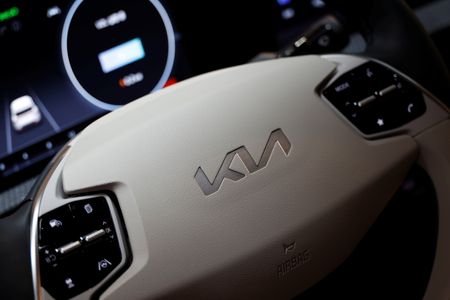

South Korean automaker Kia has implemented significant price reductions across European markets this year as the company works to stay competitive against increasingly aggressive Chinese vehicle manufacturers, according to company leadership.
Kia CEO Song Ho-sung revealed during the company’s recent Investor Day presentation that the automaker has successfully narrowed the pricing difference between its vehicles and Chinese competitors in Europe. The gap has shrunk from a previous 20-25% to the current 15-20%, varying by specific markets.
This pricing strategy has helped Kia, which ranks third globally in vehicle sales alongside partner Hyundai Motor, maintain revenue growth even as the broader automotive market experiences declining sales, Song explained.
European markets have emerged as a critical competitive arena where established automakers face mounting pressure from Chinese electric vehicle companies like BYD, which are aggressively expanding internationally as domestic Chinese sales weaken and U.S. market access remains limited.
The impact of Chinese expansion is evident in recent sales figures. BYD registered nearly 150% growth in European car registrations during March, significantly outpacing the overall market’s 11% increase and the 6% growth achieved by Kia and Hyundai combined.
This surge in Chinese vehicle sales has compelled competing manufacturers to implement discount programs and develop more budget-friendly vehicle options to maintain market position.
Song indicated that Kia’s strong financial position would enable the company to sustain its competitive pricing approach against Chinese rivals. However, the strategy has come at a cost – Kia reported decreased quarterly profits on Friday, partially attributed to the European sales incentives implemented to counter Chinese competition.
During an earnings conference call, company representatives acknowledged the challenge: “Chinese companies launched an aggressive push with low-priced EV models, and in some European countries their market share has been rising much faster than we had anticipated.”
Looking ahead, Song predicts that China’s automotive industry restructuring will occur sooner than many expect, as Beijing redirects its strategic priorities from automotive manufacturing toward emerging sectors like artificial intelligence and robotics.
The Chinese government signaled in October its intention to reduce electric vehicle subsidies after years of support that created a boom resulting in significant oversupply in the world’s largest automotive market – a key factor driving Chinese manufacturers’ international expansion efforts.
“Since they would no longer be able to receive support from the Chinese government, Chinese automakers lack the firepower needed to push forward further,” Song told investors. “It appears the time for restructuring may be approaching. Until then, we should continue pursuing a growth strategy, leveraging our … war chest.”
Hyundai Motor CEO Jose Munoz echoed similar sentiments about Chinese competitors last week, emphasizing his company’s capacity for profitable growth.
“We are not able to grow at the same pace as they’ve been growing all together, but we’ve been able to grow to be very profitable,” Munoz stated. “We do it all by ourselves. So we only get our own support.”
Supporting Song’s predictions about Chinese market challenges, automotive sales in China dropped 18% during the first quarter compared to the previous year, with forecasts suggesting continued flat or declining performance in the near future.