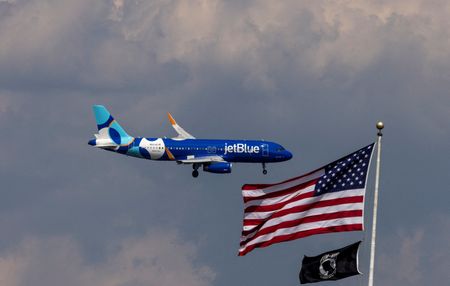

JetBlue Airways finds itself confronting mounting financial challenges just as the carrier appeared positioned for its first profitable year since COVID-19 devastated the aviation industry. Rising fuel costs have cast doubt on the airline’s recovery strategy, compelling management to secure additional financing while addressing concerns about potential bankruptcy.
The New York-headquartered budget airline began 2024 with optimism about its comprehensive restructuring program launched that year, citing reduced operational expenses and sustained passenger demand. However, jet fuel prices have climbed dramatically following Middle Eastern conflicts, while a possible federal rescue of Spirit Airlines threatens to complicate JetBlue’s delicate financial turnaround.
Industry analysts question whether the carrier can weather what has become the aviation sector’s most severe fuel supply disruption, an unexpected result of ongoing international tensions. Although passenger demand remains robust across U.S. airlines, escalating fuel expenses are devastating profit margins.
FINANCIAL PERFORMANCE UNDER SCRUTINY
The airline will release its quarterly earnings report Tuesday, with investors closely examining how dramatically increased jet fuel expenses have impacted the company’s already negative profit margins. JetBlue has posted yearly losses consistently since 2019 and had committed to achieving break-even status on a net income basis this year.
The company’s recovery initiative, called Jet Forward, generated approximately $300 million in earnings before interest and taxes in 2025, with similar projections for 2026 based on fuel costs averaging $2.27 per gallon. However, the airline recently updated its first-quarter fuel cost projection to between $3.01 and $3.06 per gallon.
Reuters analysis indicates that if JetBlue uses 826 million gallons of fuel in 2026, matching 2025 consumption, at the revised price of $3.04 per gallon, the company would spend approximately $2.5 billion. This represents roughly $450 million, or 21%, above 2025 expenditures. Such increases would eliminate savings from reduced fuel consumption that the company had highlighted previously, which would have assisted in reducing its approximately $9.5 billion in debt and lease commitments.
Seaport Research equity analyst Daniel McKenzie anticipates JetBlue’s fuel expenses will increase 40% compared to last year, reaching $2.9 billion. His analysis suggests JetBlue will offset roughly 30% of these additional costs through increased revenue, but still face a pre-tax loss of approximately $1.1 billion in 2026.
JetBlue representatives declined to provide comments for this report.
CASH FLOW REMAINS STABLE FOR NOW
Beyond fuel price pressures, JetBlue faces additional competitive threats. A government intervention to save Spirit Airlines could intensify competition on overlapping budget routes targeting leisure passengers, who represent JetBlue’s core customer base.
Nevertheless, the budget carrier is implementing corrective measures.
JetBlue CEO Joanna Geraghty informed staff last week that the company was not exploring bankruptcy options this year, following the airline’s successful arrangement of $500 million in debt financing secured by up to 22 aircraft. Despite carrying substantial debt relative to its size, JetBlue concluded the year with $2.3 billion in available cash.
The airline also possesses considerable assets available for collateral, and Fitch’s North American airlines analyst Joseph Rohlena indicated that immediate liquidity concerns were not pressing for JetBlue. Earlier this month, Fitch reduced the airline’s credit rating to CCC+, citing concerns about the company’s capacity to cover fixed costs through operational earnings.
“If either fuel stays very high or if demand starts to falter, and (they) start burning more cash, they may have to go back to the markets,” Rohlena said, referring to raising capital.
Compared to larger competitors, JetBlue operates fewer international routes and offers limited premium seating options that attract high-spending travelers.
Even major carriers have acknowledged significant strain from rising fuel costs.
Delta reported expecting to recover only 40 to 50 cents for every additional dollar spent on fuel this quarter, with United experiencing similar challenges before anticipated improvement later in the year. Alaska Airlines is recovering approximately one-third of the increase, prompting the company to withdraw its financial forecast.