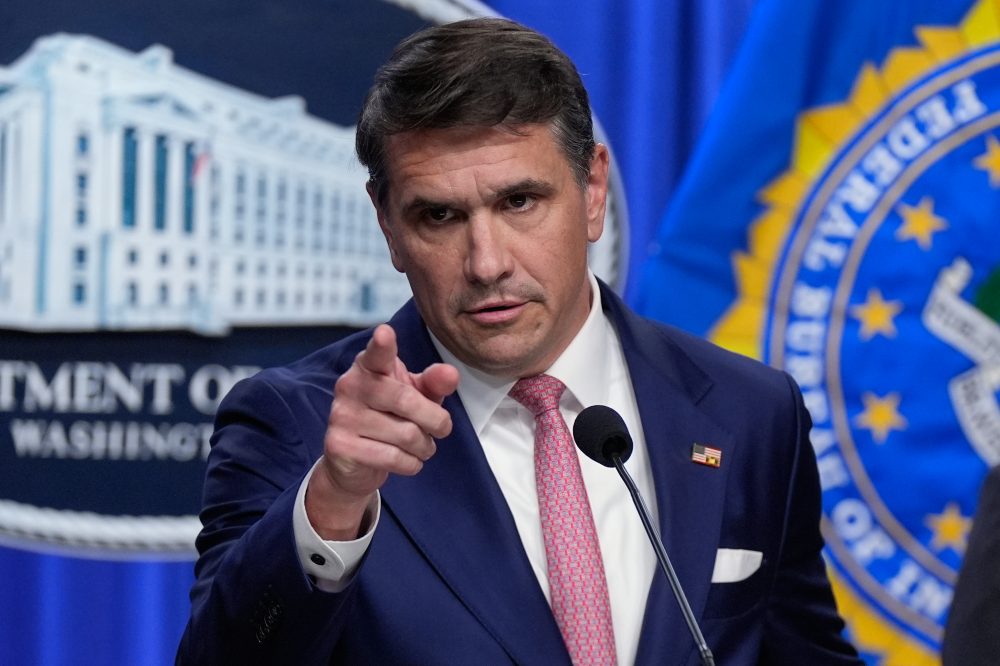

A high-stakes legal battle between Tesla CEO Elon Musk and artificial intelligence company OpenAI is set to unfold in federal court this week, with jury selection beginning Monday in Oakland, California.
Musk, who helped establish OpenAI, is pursuing $150 billion in damages from the AI firm and Microsoft, claiming they abandoned the organization’s founding principles as a nonprofit dedicated to benefiting humanity.
Internal company records released during litigation proceedings include revealing diary entries from OpenAI President Greg Brockman, who wrote in fall 2017: “This is the only chance we have to get out from Elon. Is he the ‘glorious leader’ that I would pick?”
These private documents provide unprecedented insight into the personalities and conflicts that shaped OpenAI’s transformation from a small research operation in Brockman’s residence to a technology powerhouse valued at over $850 billion.
The lawsuit alleges that OpenAI executives, including CEO Sam Altman, concealed their intentions to create a profit-generating business structure in March 2019, more than a year after Musk stepped down from the company’s board.
According to Musk’s legal team, the defendants used his reputation and financial backing to build what they describe as a “wealth machine” while keeping him uninformed about their commercial plans.
Musk is demanding that OpenAI return to its nonprofit status and seeking the removal of both Altman and Brockman from their leadership positions.
OpenAI’s defense attorneys argue that Musk’s true motivation stems from his desire to dominate the company and advance his competing AI venture xAI, which he established in 2023 following ChatGPT’s successful launch.
The company maintains that Musk participated in conversations about restructuring and sought the chief executive role for himself. Microsoft, also named in the suit, denies any wrongdoing and states its partnership with OpenAI began only after Musk’s departure.
Several prominent technology leaders are expected to provide testimony, including Musk, Altman, and Microsoft CEO Satya Nadella. Shivon Zilis, a former OpenAI board member who is also the mother of four of Musk’s children, may serve as a crucial witness, with OpenAI alleging she shared confidential company information with Musk.
The timing proves challenging for both parties, as OpenAI confronts intense competition from companies like Anthropic while investing heavily in computing infrastructure. The firm is also considering a potential public stock offering that could reach a $1 trillion valuation.
Meanwhile, Musk’s businesses face similar pressures. His xAI operation, now integrated into SpaceX, significantly lags behind OpenAI in user adoption. SpaceX is also planning what could become the largest initial public offering in history.
Court records indicate Musk contributed approximately $38 million in startup funding to OpenAI between 2016 and 2020, primarily before his board departure.
In 2019, OpenAI reorganized as a for-profit subsidiary under nonprofit oversight, allowing external investment while maintaining accountability to its original humanitarian goals.
Last year, the company restructured again as a public benefit corporation, with the nonprofit retaining a 26% ownership stake plus additional warrants tied to valuation milestones.
Musk’s legal team calculated their damage claim by analyzing OpenAI’s current worth and determining what portion of the nonprofit’s ownership could be traced to Musk’s early contributions, estimating between 50% and 75% of the nonprofit’s stake.
The partnership began when Altman contacted Musk in May 2015 about creating what he called the “Manhattan Project for AI,” designed to develop artificial intelligence for humanity’s benefit while competing against companies like Google.
Musk’s participation helped OpenAI recruit leading researchers, including former chief scientist Ilya Sutskever.
However, by mid-2017, Musk began questioning the organization’s future prospects, at times withholding promised funding during disputes with Altman, Brockman, and Sutskever. Email evidence suggests tension arose partly because Musk wanted to serve as CEO, making other founders uncomfortable.
During this period, Brockman’s diary entries revealed his frustration with Musk’s position and his consideration of profit-making possibilities.
“Financially, what will take me to $1B?” Brockman wrote. “Accepting Elon’s terms nukes two things: our ability to choose (though maybe we could overrule him) and the economics.”
Musk’s attorneys point to these writings as evidence that OpenAI leadership prioritized financial gain over their stated mission.
By January 2018, Musk appeared to lose confidence entirely, writing in an email: “OpenAI is on a path of certain failure relative to Google.”
OpenAI launched ChatGPT in late 2022, sparking the current artificial intelligence revolution.