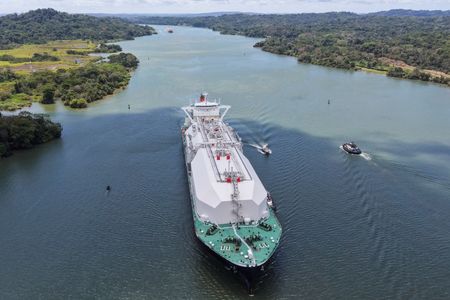

Shipyards across South Korea and China are experiencing a surge in new contracts for liquefied natural gas tankers, marking a significant recovery following last year’s downturn in orders, according to industry experts and market analysts.
This upward trend in vessel construction comes even as the ongoing conflict with Iran creates uncertainty about shipping routes and demand in the near term.
Maritime consulting firms Poten & Partners and Drewry report that 35 new liquefied natural gas carrier contracts were signed during the first three months of this year. This represents a dramatic improvement compared to the entire previous year, when only 37 such vessels were ordered globally. The peak year was 2022, which saw a record 171 orders placed.
Each of these specialized tankers carries a price tag between $250 million and $260 million, with construction timelines extending beyond three years.
Pratiksha Negi, who leads LNG shipping analysis at Drewry, points to several factors driving this demand surge. “Upcoming LNG production in the U.S., Africa, Canada and Argentina will generate tanker demand, along with a push towards fuel efficiency and accelerated vessel demolitions,” she explained, noting that older steam turbine and diesel-electric carriers are being retired.
The worldwide fleet of LNG carriers currently includes more than 700 vessels, which transport over 400 million tons of liquefied natural gas annually.
Fraser Carson, a principal analyst specializing in global LNG at Wood Mackenzie, highlighted the scale of upcoming production increases. Last year saw approval for 72 million tons per year of new LNG capacity globally, while more than 120 million tons per year of additional U.S. supply is expected to enter the market within the next three to four years.
“The growth of U.S. LNG and flexible LNG supply creates trading patterns that require more shipping,” Carson noted. American LNG typically sells on terms that allow buyers flexibility in destinations, enabling route changes during voyages that can keep vessels occupied for extended periods.
Jotaro Tamura, chief executive of Japan’s Mitsui O.S.K. Lines, which operates the world’s largest LNG carrier fleet with 107 vessels, anticipates that expanding U.S. production will continue driving tanker orders. His company aims to expand its fleet to approximately 150 vessels by 2035.
The retirement of older, steam-powered carriers has accelerated significantly since 2022, reaching a record 15 vessels last year due to poor operating economics and stricter environmental regulations, Drewry’s data indicates.
Uma Dutt, vice president for LNG operations at Anglo-Eastern ship management, explains that proposed emission reduction standards from the International Maritime Organization are also spurring demand for new construction. “The industry is switching to dual-fuel vessels that can run on LNG,” she said.
However, the Iran conflict presents conflicting implications for LNG shipping markets. While supply disruptions are pushing Asian buyers toward Atlantic basin suppliers, increasing voyage distances, the war has also disrupted flows through the Strait of Hormuz and taken 12.8 million tons per year of Qatari capacity offline for three to five years.
This could reduce shipping demand and pressure freight rates at a time when Carson describes an “avalanche” of new vessel supply approaching the market.
Qatar, which operates more than 100 LNG carriers, plans to add 70-80 new vessels over the next three to four years, while the UAE’s ADNOC expects to double its fleet to 18 ships within 36 months.
“Most of these new build vessels were earmarked to serve under-construction LNG projects that are now facing delays,” Carson explained. “The longer those delays persist, the more likely it is that these ships are offered to the market on sublet arrangements – softening rates considerably.”
Industry forecasts from Poten & Partners and Drewry anticipate a record 90-100 LNG carrier deliveries this year, up from 79 in the previous year.
Drewry’s Negi noted that seven of nine carriers originally scheduled for delivery this year but now postponed to 2027-28 are connected to QatarEnergy projects.
Irwin Yeo, a senior LNG analyst at Poten & Partners, suggests some companies may postpone major new construction orders due to war-related uncertainties. “Market uncertainty and rising shipbuilding costs, including labour and raw materials amid the current Middle East crisis could deter some from placing orders,” he said.