
China’s top automotive exporter is drawing lessons from two automotive giants as it sets its sights on international markets, according to company leadership.
Chery’s chairman Yin Tongyue revealed during a Monday interview that the automaker is exploring expanded manufacturing capabilities in Barcelona, Spain, through its existing joint venture operations. The company is also actively pursuing opportunities to collaborate with European car manufacturers on shared production facilities.
Established in 1996 along the Yangtze River, the automaker produced its inaugural vehicle in 1999. Initially marketed as “Cheery” with a focus on affordability and positivity, the brand has since evolved its vision to mirror the reliability associated with Toyota and the technological advancement characteristic of Tesla.
“Our strategy, we call it ‘double T,’” Yin explained from Chery’s worldwide headquarters in Wuhu. “Toyota plus Tesla.”
This approach involves manufacturing vehicles that combine dependable quality for long-term customer satisfaction with cutting-edge technology designed to appeal to younger consumers, according to Yin.
Chery joins fellow Chinese manufacturers BYD and Geely in revolutionizing the international automotive landscape through advanced electric vehicles offered at competitive pricing that established automakers struggle to match. China’s automotive exhibition, taking place in Beijing this year and opening to public attendance this week, has become the world’s premier event of its kind.
Sales figures show Chery moved 2.8 million vehicles in the previous year, representing an almost 8% increase compared to the prior year, based on industry statistics. The company manufactures its Ebro vehicle line in Spain through a local partnership at a Barcelona facility previously operated by Nissan.
“Right now it’s very good,” Yin commented regarding the Spanish operations, noting that Chery aims to “enlarge this capacity in Barcelona” while potentially distributing vehicles to additional markets.
Nevertheless, shipping automobiles internationally in high volumes lacks sustainability, he noted. Rather than relying on exports, Chery prefers establishing local manufacturing and is actively seeking European automotive partnerships for facility sharing, though Yin declined to specify target countries.
“We can share profits, we can share models,” he stated regarding potential collaborative arrangements.
Chery’s international sales have experienced dramatic growth recently, increasing nearly four times from 2020 to 2025. Despite this progress, the manufacturer still trails domestic competitor BYD, which achieved 4.6 million vehicle sales in 2025, securing the fifth position globally by volume.
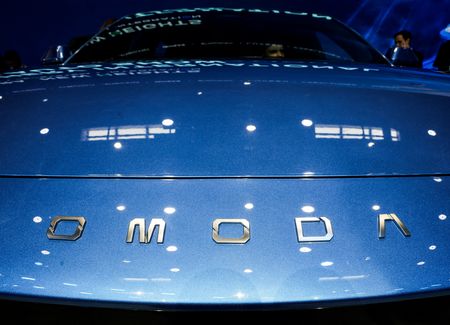
The company introduced two international brands, Omoda and Jaecoo, during 2023. Combined sales of these brands reached 380,000 units last year, with company officials announcing to dealers and employees over the weekend in Wuhu that they’re pursuing combined sales of 1 million vehicles by 2027.
Chery organized an “international business summit” in Wuhu recently, with company representatives reporting approximately 4,000 attendees, including international dealers and suppliers.
The Jaecoo 7 SUV has achieved notable success in certain markets, becoming Britain’s best-selling vehicle during March.
Sport utility vehicles dominate Chery’s portfolio, accounting for 2.3 million of the 2.8 million vehicles sold globally last year. The company is currently developing smaller models to diversify its offerings.
This shift toward compact vehicles reflects Chery’s global aspirations, as Chinese buyers typically favor larger automobiles unlike European consumers, Yin observed.
Similar to other domestic competitors, Chery faces intense pricing competition domestically, where over 100 automotive brands compete. However, Yin expressed confidence that a long-anticipated industry consolidation is approaching.
“In a couple of years, maybe a very few can survive and be healthy,” he predicted. “Right now, it’s coming.”