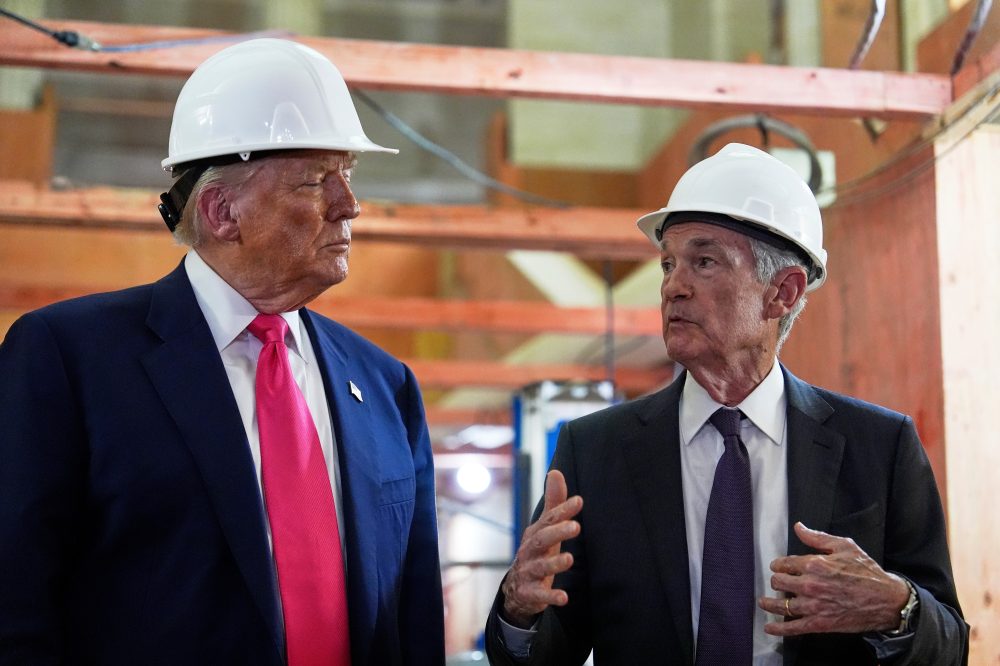

WASHINGTON — The Federal Reserve faces a crucial week as uncertainty swirls around an upcoming leadership change, with Wednesday’s press conference expected to provide much-needed clarity on the transition.
On the same day, the Senate Banking Committee is scheduled to vote on confirming Kevin Warsh, President Trump’s choice to replace current Fed Chair Jerome Powell. Warsh’s confirmation is anticipated to move forward to a full Senate vote.
During Wednesday’s afternoon press conference, Powell may announce his decision about staying on the Fed’s governing board once his chairmanship concludes on May 15. While Powell holds a separate governor position extending through January 2028, departing chairs traditionally leave the board entirely. However, Powell has hinted he might break with this tradition, which would mark the first instance of a former chair remaining as a governor since 1948.
Should Powell choose to remain, it would prevent Trump from selecting a replacement and filling another position on the Fed’s seven-member governing board. Currently, three of the seven governors were appointed by Trump. However, this decision could create friction with the Trump administration and establish what some experts call a “two Popes” situation, potentially causing internal conflicts with both current and former chairs serving together.
The choice may have limited impact on interest rate policies. Powell has consistently favored rate reductions and would likely support similar moves once current inflation pressures from the Iran conflict’s effect on gas prices subside.
While Warsh advocated for rate cuts previously, he’s unlikely to implement immediate reductions, as most Fed officials prefer waiting to assess the war’s economic consequences.
Warsh’s confirmation path became clear Sunday when Senator Thom Tillis of North Carolina announced his support. Tillis had previously threatened to block the nomination until a Justice Department probe into Powell concluded. On Friday, U.S. Attorney Jeanine Pirro announced the investigation’s closure.
Powell stated in March he wouldn’t resign from the board until the Trump administration’s investigation ended “with transparency and finality.” Pirro indicated her office could reopen the probe “if the facts warrant doing so.” Additionally, the Justice Department plans to appeal a court decision that dismissed subpoenas from its Fed investigation.
Sunday on NBC’s “Meet the Press,” Tillis explained he received assurances that the appeal challenges the ruling’s principle rather than continuing the investigation. Justice Department officials confirmed the probe would only resume if the Fed’s inspector general discovers evidence of criminal behavior.
“We worked a lot over the weekend to make sure that we were very clear that we had the assurances from the DOJ that I needed to feel like they were not using the DOJ as a weapon to threaten the independence of the Fed,” Tillis stated.
Tillis also suggested Powell might delay his departure beyond May 15, saying: “I suspect Mr. Powell wants to see what happens with the appeal and to make sure that it is fully settled.”
When asked Monday if Trump would oppose Powell remaining on the board, White House press secretary Karoline Leavitt responded, “I think the president will be satisfied once Kevin Warsh is confirmed as the Fed chair,” indicating Trump may not pursue his previous threats to dismiss Powell.
Powell mentioned last month that even with the investigation’s conclusion, he wouldn’t automatically leave the board.
“I will make that decision based on what I think is best for the institution and for the people we serve,” Powell explained.
This leadership uncertainty occurs during a particularly challenging economic period for the Fed. Inflation has risen to 3.3%, reaching a two-year peak as the Iran conflict drives up fuel costs. This complicates the central bank’s ability to lower rates, as the Fed typically maintains or increases rates during inflationary periods. Officials are virtually certain to keep their benchmark rate steady at approximately 3.6% Wednesday.
Meanwhile, March unemployment figures declined and jobless benefit claims remain minimal, suggesting the employment market may be recovering from earlier weakness this year. Steady job growth reduces pressure for rate cuts, which the Fed typically uses to stimulate borrowing, spending, and employment.
In a significant development this month, Christopher Waller, an influential Fed board member, expressed concern that rising inflation might require maintaining current rates. He also noted that with unemployment at a relatively low 4.3%, rate reductions might not be needed soon. Waller had previously dissented in favor of a January rate cut.
Economists will closely examine whether the Fed modifies its post-meeting statement to indicate their next action could be either a rate decrease or increase. Currently, the statement suggests any rate change would be a reduction. According to March meeting minutes, many of the 19 rate-setting committee members support considering an increase, though this likely doesn’t represent a majority position.