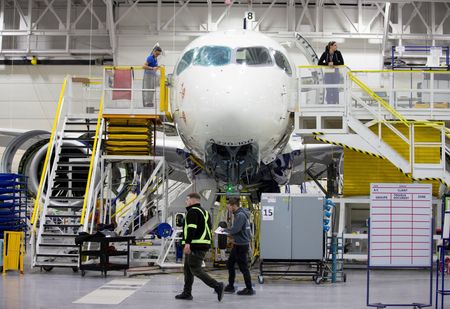
Southwest Airlines announced Saturday that Boeing’s troubled 737 MAX 7 aircraft won’t begin commercial flights until 2027, as the airline continues backing Boeing despite ongoing delays.
Chief Operating Officer Andrew Watterson shared the timeline during an interview at the International Air Transport Association’s annual conference in Rio de Janeiro. He emphasized that Southwest remains committed to Boeing’s MAX aircraft series instead of exploring alternatives like Airbus’s A220.
“Diversification doesn’t come through a second fleet type,” Watterson explained to Reuters. “A second fleet type can increase your risk.”
“It doesn’t make sense to lose focus on that,” he continued.
The MAX 7 continues waiting for approval from the U.S. Federal Aviation Administration. Once certified, Southwest plans approximately six months of internal preparation, including updating operating procedures and training materials.
“The clock starts when they certify it,” Watterson noted.
According to Watterson, the prolonged MAX 7 delays haven’t prevented Southwest from launching specific routes, but have hampered the airline’s ability to properly match aircraft capacity with passenger demand. The consequence involves operating larger planes when smaller jets would better serve certain markets or time periods with reduced demand.
Meanwhile, Southwest continues implementing Starlink-powered internet service, though Chief Customer and Brand Officer Tony Roach said the airline hasn’t eliminated Amazon’s Leo satellite network as an option.
Roach indicated Southwest anticipates having a Starlink-equipped aircraft operational this month. The airline aims to install Starlink on 300 planes by December, though the timeline depends on equipment delivery from Starlink.
“Our tech ops can retrofit as fast as Starlink can deliver,” Watterson stated.
Addressing criticism from activist investor Elliott Investment Management, Watterson acknowledged the company had been slow to implement changes, despite ongoing improvement efforts.
“What Elliott was unequivocally correct about is we were too slow,” he admitted.
Watterson believes investors have undervalued Southwest customers’ appetite for new services, suggesting revenue per available seat mile will serve as the “litmus test” for measuring the success of company changes.
Airlines are putting off decisions about exercising aircraft purchase options as the ongoing conflict in Iran creates uncertainty and drives up jet fuel costs, according to the head of Brazilian aircraft manufacturer Embraer.
CEO Francisco Gomes Neto spoke with Reuters during the International Air Transport Association’s annual conference in Rio de Janeiro on Saturday, explaining that while his company hasn’t experienced delivery postponements or slowdowns in active sales efforts, carriers are showing hesitation when it comes to additional commitments.
“Some companies that could be exercising previously signed options are leaving that a bit further ahead to better understand how the situation will evolve,” Gomes Neto explained during the aviation summit.
The aircraft maker maintains a commercial order book that extends nearly five years into the future and is actively pursuing various sales opportunities for its E2 aircraft series, with hopes of securing new contracts at next month’s Farnborough Airshow in the United Kingdom.
Following a successful 2025 that included contracts with Finnair for 18 planes and lessor Azorra for 15 aircraft, Embraer is working to capitalize on recent momentum. The company believes its E2 series’ fuel-efficient design will drive increased interest in the aircraft family.
“There are several campaigns under way,” the CEO stated, noting that the timing for potential agreements largely depends on customer decisions. “I don’t know if it will be as strong as last year, but it should still be a good year for commercial aviation.”
Embraer is working toward increasing production levels, with internal goals to manufacture between 95 and 100 commercial planes by 2027. This year’s delivery target ranges from 80 to 85 aircraft.
The CEO emphasized that achieving this production increase relies more heavily on supply chain improvements than on resolving geopolitical issues like the Iran conflict.
However, the supply chain challenges that have plagued the aviation industry since the pandemic are showing signs of gradual improvement, Gomes Neto noted.
“It’s about getting the cadence right,” he explained.
The company is also working to enhance profit margins within its commercial aviation division. Gomes Neto indicated that Embraer has renegotiated certain older agreements that had lower profitability and anticipates that increased demand for new contracts will enable better pricing strategies.
Escalating jet fuel expenses stemming from Middle East conflicts are expected to force additional airlines into financial collapse and accelerate industry mergers throughout this year and the next, according to the leader of the global airline trade organization who spoke on Saturday.
Airlines worldwide are confronting elevated fuel expenses caused by the U.S. and Israel’s conflict with Iran, which has restricted jet fuel availability and disrupted major air routes, requiring expensive route changes.
Low-cost carriers have faced particularly severe challenges, as they lack diversified revenue sources like premium seating, high-value passengers and credit card rewards programs.
The financial pressure is already evident: U.S. budget carrier Spirit Airlines went bankrupt last month, and additional failures are anticipated, according to Willie Walsh, director general of the International Air Transport Association, the industry’s primary trade organization.
“Unfortunately I think there will be some carriers that will find this high fuel price very difficult to cope with,” Walsh told Reuters at IATA’s annual summit in Rio de Janeiro, adding he expects some airlines to go out of business and others to be acquired by larger carriers.
Despite these pressures, the challenges don’t signal the demise of the budget airline business model, which remains successful beyond the United States, where the three major carriers, United Airlines, Delta Air Lines and American Airlines, are eliminating low-cost competitors, Walsh noted.
“I don’t see that the low-cost model is broken, in fact, quite the opposite,” he said, highlighting Ryanair’s strong performance in Europe as an example.
One major merger Walsh doesn’t anticipate: United Airlines CEO Scott Kirby’s bold suggestion to purchase rival American Airlines and form a massive U.S. aviation company. The concept, which emerged earlier this year, didn’t materialize despite Kirby discussing it with President Donald Trump.
“I don’t think that’s going to happen. I think the regulatory hurdles would be very significant. I don’t know whether that was a genuine effort to pursue consolidation or Scott just trying to stir up some media,” Walsh said.
The Iran conflict has disrupted passenger flows through Middle Eastern aviation centers including Dubai, Doha and Abu Dhabi, presenting serious obstacles for Gulf airlines such as Emirates, Qatar Airways and Etihad.
Walsh indicated he didn’t believe the conflict would cause lasting harm to the Gulf region as an aviation center, given its strategic location and the importance of the prominent Gulf carriers, which represent 14% of worldwide capacity.
“That capacity cannot be replaced by airlines from other regions around the world,” Walsh said.
“Once things settle down, I would expect the Gulf carriers to regain their important position in the market.”
Compounding the difficulties is the delayed delivery schedule from Boeing and Airbus, combined with engine production delays from GE Aerospace and Pratt & Whitney, a unit of RTX, restricting airlines’ capacity to expand their fleets and enhance operational efficiency.
Walsh noted the industry’s growing frustration with these delays, especially as engine manufacturers report substantial profits while airlines face financial difficulties. He calculates that supply chain disruptions cost airlines approximately $11 billion last year.
“We’re disappointed that they’re not moving faster. We’re disappointed that they’re not sharing the pain that the airline industry is sharing,” he said.
Aircraft and engine manufacturers have stated that many delays are beyond their control, resulting from post-pandemic supply chain problems and political trade conflicts.
As airlines experience financial pressure and environmental policies lose support in the U.S. under Donald Trump, industry executives have become more cautious about achieving a 2050 net zero emissions objective.
Walsh stated IATA isn’t prepared to abandon this target.
“I certainly believe it’s more challenging to achieve net zero in 2050 because we’ve not made the progress that we had expected to see on the development of sustainable fuels,” he said.
Airlines are becoming more hesitant to commit to new aircraft purchases as ongoing conflict in Iran drives up fuel costs and creates uncertainty in the aviation industry, according to the head of Brazilian aircraft manufacturer Embraer.
Francisco Gomes Neto, who serves as CEO of the company, shared these observations during an interview on Saturday. He explained that while the aircraft builder hasn’t experienced requests to postpone deliveries or seen its active sales efforts slow down, there’s growing hesitation when it comes to additional aircraft commitments.
“Some companies that could be exercising previously signed options are leaving that a bit further ahead to better understand how the situation will evolve,” Gomes Neto explained during the International Air Transport Association’s annual summit taking place in Rio de Janeiro.
The executive pointed to rising jet fuel costs as a key factor behind the cautious approach airlines are taking toward expanding their fleets. These increased fuel expenses stem from the ongoing war in Iran, which has created ripple effects throughout the global aviation sector.
Air New Zealand’s leadership revealed Saturday that the carrier has managed to counteract just one-quarter to two-fifths of the financial impact from rising fuel expenses through protective hedging strategies and ticket price adjustments, according to Chief Executive Nikhil Ravishankar speaking with Reuters.
During the International Air Transport Association’s yearly conference in Rio de Janeiro, Ravishankar indicated the airline is preparing for jet fuel costs around $150 per barrel based on Singapore Jet Index pricing through the company’s 2027 fiscal year. While fuel availability isn’t an issue for the carrier, he emphasized that price volatility continues to be their primary obstacle.
The company has already implemented two separate rounds of ticket price increases and may consider additional targeted fare adjustments in markets where passenger demand stays strong, according to Ravishankar.
“You can’t just infinitely keep raising prices. The market will respond and demand will soften and then you fly less,” he said in an interview.
The chief executive stated that Air New Zealand doesn’t anticipate needing to seek additional funding from financial markets, noting that the company’s financial position and collection of debt-free aircraft provide sufficient resources to weather prolonged periods of high fuel costs.
Should fuel expenses remain at current levels, the airline would employ a mix of expense reductions, vendor contract renegotiations, fare adjustments and flight schedule cuts, he explained.
The carrier is also working to recover from mechanical issues with engines and delayed aircraft deliveries that previously left up to 20% of its planes unable to fly. Ravishankar reported this figure has dropped below 5%, with the majority of aircraft anticipated to return to service within the coming two to three months.
While financial settlements from Boeing, Rolls-Royce and Pratt & Whitney have provided some relief, he noted these payments have only partially covered the economic losses sustained.
Economic conditions, rising prices, and their potential effects on American families took center stage during the previous week. Visits to supermarkets and fuel stations have become more expensive compared to last year, with increasing costs affecting choices made by both families and companies.
Below is an overview of significant economic information and developments from the past week and their possible implications for consumers.
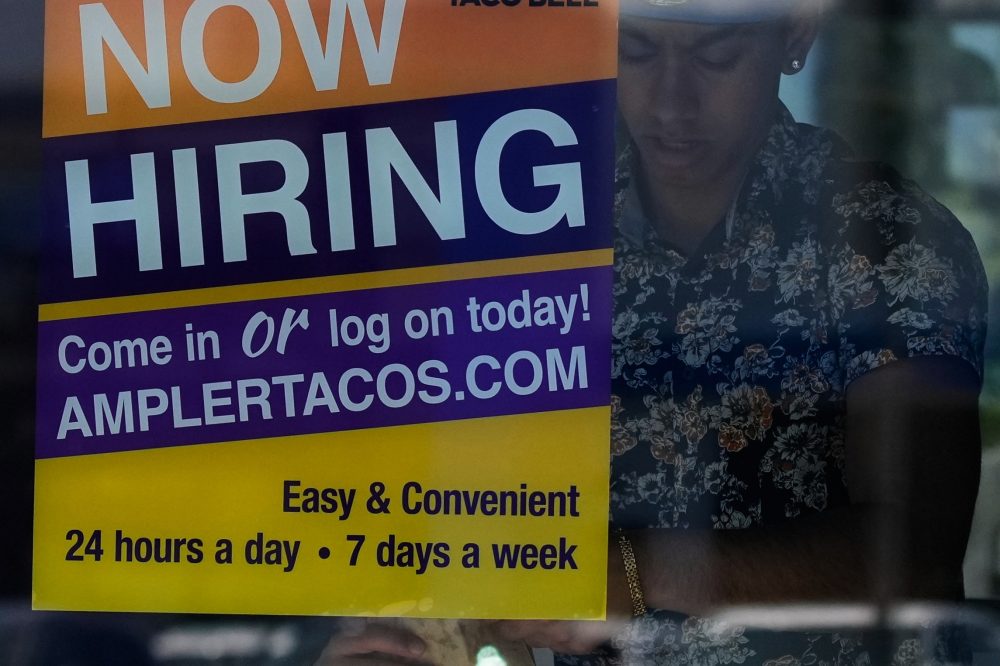
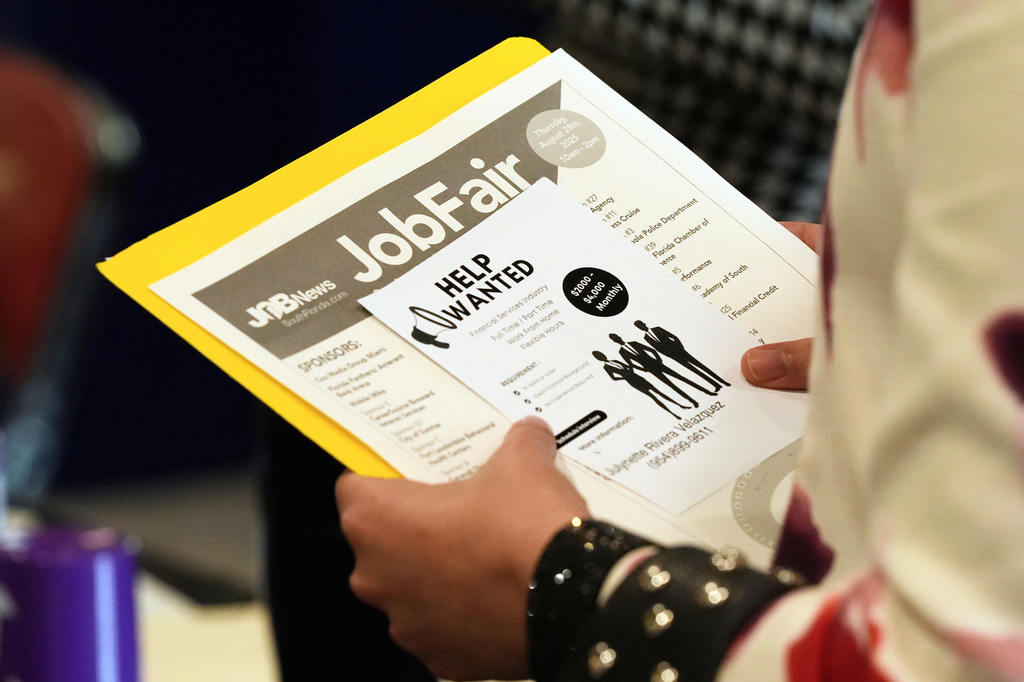
American companies hired an unexpected 172,000 workers in May while the employment sector demonstrated continued strength despite increasing expenses from the Iran war.
Friday’s report from the Labor Department showed employment growth decreased modestly last month compared to a revised figure of 179,000 in April. The jobless rate remained at a low 4.3%.
Employment has recovered this year following a difficult 2025, displaying surprising durability amid economic uncertainty and severely elevated energy costs resulting from the Iran war.
The jobless rate held at a low 4.3% during May.
Available positions in the U.S. increased during April, suggesting to some degree that Americans became more confident about quitting their current employment to seek better compensation elsewhere.
American companies advertised 7.6 million open positions in April, according to Tuesday’s Labor Department announcement, rising from 6.9 million in March and representing the highest figure since May 2024. Economic analysts had predicted only 6.8 million openings.
The department’s Job Openings and Labor Turnover Survey (JOLTS) revealed that workforce reductions decreased while the count of Americans leaving their positions voluntarily also declined. The report’s measurement of total hiring also fell in April, indicating that businesses are avoiding significant layoffs but also not pursuing aggressive recruitment.
Americans applying for unemployment assistance reached their peak level in four months during the previous week, although weekly employment statistics can experience significant fluctuations.
U.S. unemployment benefit applications for the week concluding May 30 rose by 13,000 to 225,000, the Labor Department announced Thursday. This represents the highest total since early February, prior to U.S. and Israeli military actions against Iran, though it remains at a historically low point. Experts polled by FactSet anticipated 211,000 new claims.
Weekly unemployment benefit filings serve as an indicator for U.S. workforce reductions and provide nearly immediate insight into employment market conditions.
The standard long-term U.S. home loan rate decreased this week from its peak level in nine months, offering some relief for potential home purchasers.
The standard 30-year fixed rate mortgage dropped to 6.48% from 6.53% the previous week, according to Thursday’s announcement from mortgage purchaser Freddie Mac. The current rate stays below 6.85%, last year’s level, but represents double the pandemic-era rates.
Declining mortgage rates provide home purchasers with increased buying capacity.
Rates have generally moved upward since the conflict with Iran started, interfering with oil tanker movement from the Persian Gulf to global customers. This disruption has driven oil prices significantly higher, serving as a major inflation factor.
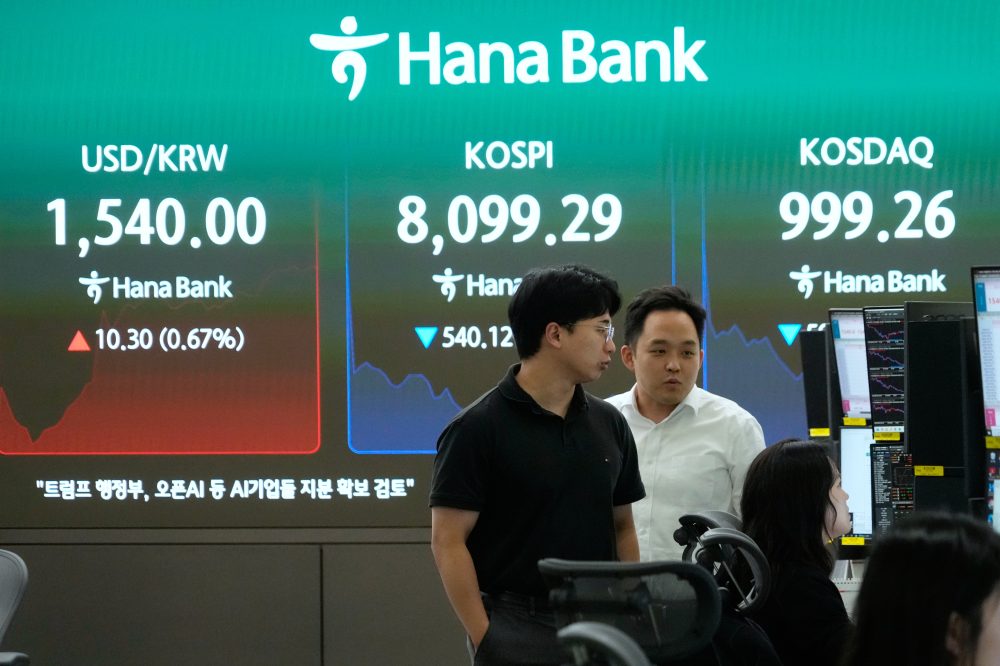
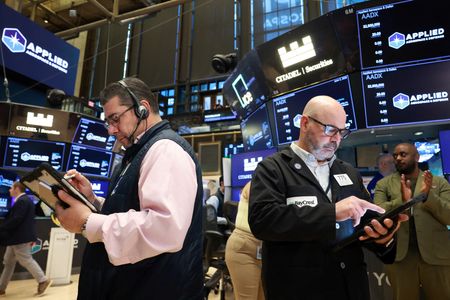
Stock markets concluded the week with declines on Friday as major technology corporations experienced sell-offs and pulled down the overall market.
Simultaneously, bond yields increased as positive employment data continued reducing expectations that the Federal Reserve would lower its primary interest rate this year.
Nvidia and Broadcom posted losses. These companies were among the largest negative influences on the broader market, offsetting wider gains. More securities increased than decreased within the S&P 500. Many larger technology stocks have experienced dramatic value increases and can significantly impact the overall market.
A major Brazilian airline is implementing additional flight reductions as soaring jet fuel costs continue to impact operations amid ongoing international conflict.
Azul’s chief executive John Rodgerson announced the carrier will expand its capacity reductions beyond initial cuts made earlier this year, citing fuel price increases connected to the Iran war. The airline is taking steps to preserve cash flow during the uncertain period.
Speaking with Reuters ahead of a gathering of international airline executives in Rio de Janeiro, Rodgerson explained that major carriers across the industry are scaling back operations to better match demand with elevated operating costs.
“When we made our initial cuts, we thought the war would be over by now,” Rodgerson stated during Friday’s interview. “But it’s continuing, so we’re going to continue to opportunistically cut some frequencies, make sure that we’re only flying things that make sense.”
The airline focused most of its second-quarter reductions on international service, according to Rodgerson. Future adjustments will target domestic flight frequencies rather than eliminating service to entire cities.
“Do you fly to Curitiba six times a day? Maybe with these fuel prices, it should be four,” he explained. The company is concentrating resources on its primary hub operations in Campinas, Belo Horizonte and Recife.
“We’re yet to pull cities, but that’s always on the table. But you first start with utilization and cutting frequencies,” Rodgerson said. “You don’t want to be utilizing an aircraft 13, 14 hours a day when fuel prices double.”
The CEO noted that Azul’s financial position following a significant debt restructuring gives the company advantages over some competitors in adapting to current conditions. The airline completed Chapter 11 proceedings in February with support from United Airlines and American Airlines.
While Azul anticipates continued pricing pressure during the traditionally slower second quarter, Rodgerson sees potential for higher ticket prices to hold as travel demand increases in the third and fourth quarters.
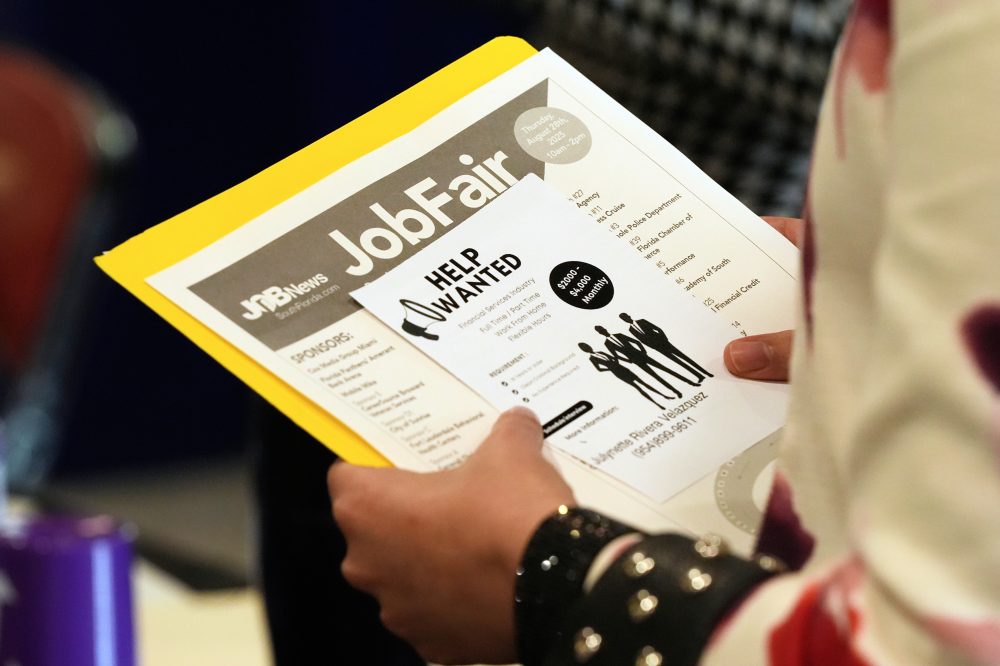
Young people seeking seasonal employment this summer are encountering a difficult job market. However, experts say the advantages of landing work during the summer months can be substantial for teenagers.
While the competition for available positions remains intense, career counselors emphasize that the experience and skills gained from summer employment provide lasting value that extends well beyond the paycheck.
Independent gas station operators nationwide are confronting serious economic challenges as fuel price volatility continues amid the ongoing Iran conflict. NPR’s Eyder Peralta conducted an interview with Jivtesh Gill, an owner of multiple gas stations located in California, to discuss the financial pressures facing small station operators during this period of market uncertainty.
Airline industry leaders from around the world convened in Rio de Janeiro on Saturday for their yearly conference, confronting intensified challenges to the sector’s recovery from the pandemic as conflict in Iran pushes fuel prices higher and disrupts flight paths while carriers attempt to offset costs through increased ticket prices and reduced capacity.
The International Air Transport Association’s annual gathering, running from June 6-8, takes place as rising fuel expenses intersect with another issue airlines struggle to resolve quickly: a lack of available new planes.
Delivery setbacks from Boeing and Airbus have compelled numerous airlines to operate older, less efficient aircraft for extended periods, increasing both maintenance expenses and fuel consumption as oil prices have risen.
IATA, representing over 370 airlines that handle approximately 85% of worldwide air travel, had projected record industry profits of $41 billion for this year prior to the war. Industry leaders and experts anticipate this forecast will be revised downward during the conference.
A Deloitte study of 21 international airline CEOs released this week revealed that fluctuating fuel prices and inflation top the industry’s list of concerns, prompting carriers to emphasize cost management and financial stability more heavily.
“Together, they’ve turned what was supposed to be a record year into a fight for margin,” the survey said.
Airlines face two main expenses: fuel and personnel costs. Unexpected fuel price spikes are difficult to manage since many tickets are purchased weeks or months ahead of departure. Extended routes also consume more fuel and reduce aircraft and crew productivity.
The key question is how much of the recent fuel cost increase can be transferred to passengers before elevated fares begin to reduce demand.
Until now, travel demand has remained strong in multiple major markets, particularly among premium and business travelers, providing airlines greater flexibility to increase prices.
In the United States, domestic published ticket prices as of May 25 demonstrated solid demand and effective transfer of higher fuel costs, with fares for departures one week out rising 35.8% compared to the previous year and four-week advance fares climbing 39.4%, according to Raymond James data.
“The willingness to pay over the past few years, crisis and no crisis, from the premium side has been really strong, and we see that strength continuing,” Alexandre Lefevre, Air Canada’s vice president of network planning and global sales, told Reuters.
However, limitations exist. While higher fares can help airlines recover portions of their fuel expenses, they also risk deterring travelers with limited budgets. This risk increases in areas where local currencies are weak, consumer spending faces pressure, or airlines lack the pricing advantages of major network carriers.
Some carriers continue planning expansion. Singapore Airlines is discussing potential orders for at least 50 large wide-body aircraft, while Qantas is considering purchasing approximately 20 Airbus or Boeing wide-body planes, Reuters reported this week.
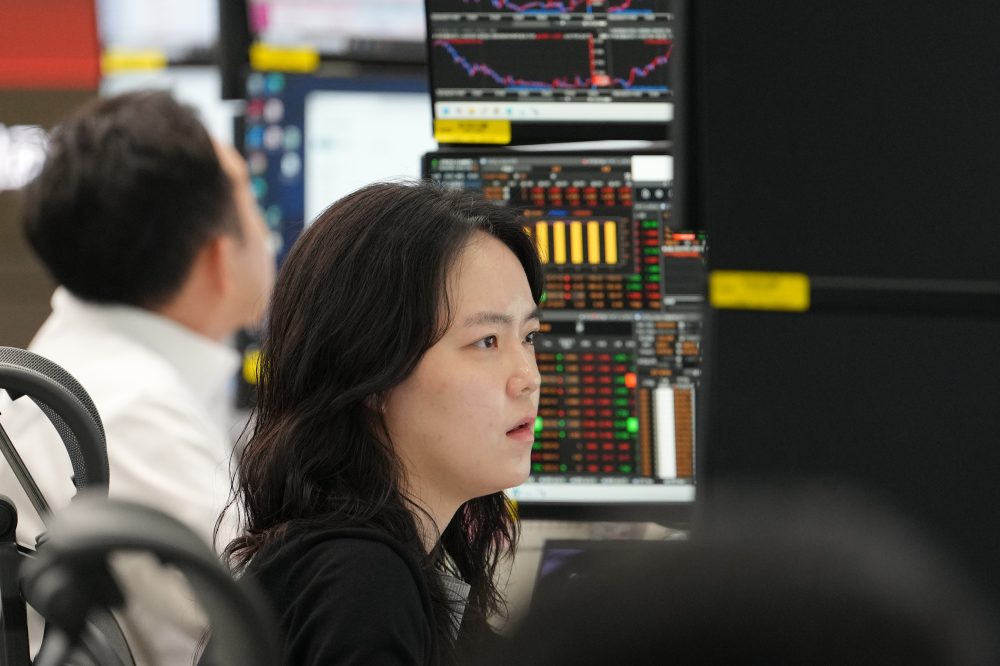
The leader of China’s securities regulatory agency delivered a message Saturday calling on the nation’s massive $13 trillion investment fund sector to back homegrown innovation while cautioning against risky speculation and market hype.
Wu Qing, who heads the China Securities Regulatory Commission (CSRC), addressed a conference where he emphasized that investment managers should avoid making reckless wagers on specific industries or creating new funds during market peaks to generate quick profits.
The remarks arrive during intense technology rivalry between China and the United States, alongside worldwide investor enthusiasm for artificial intelligence developments.
“China’s booming emerging and future industries urgently needs capital support,” Wu said in a speech posted on the watchdog’s website.
According to Wu, the nation’s fund sector should concentrate on national priorities while working to “improve global competitiveness and the ability to cope with external shocks.”
Wu delivered his address one day following the CSRC’s decision to strengthen monitoring of the nation’s $3.4 trillion private fund sector, coming weeks after Beijing restricted “illegal” international investment activities.
At the same time, market instability is growing worldwide. U.S.-listed semiconductor companies dropped sharply Friday, eliminating approximately $1.3 trillion in market capitalization.
“External uncertainties are rising, global financial markets are fluctuating at high levels and global assets are undergoing a major rebalancing,” Wu said.
“At the same time, a new wave of technological revolution led by artificial intelligence urgently needs a more compatible financial system.”
Wu called on the country’s private equity companies to assume a more “strategic and fundamental” position in backing innovation, while increasing long-term investments in early-stage, advanced technology startups.
Investment managers should also adopt emerging technologies like AI to enhance their operations, Wu noted. However, he cautioned against market hype, complex investment frameworks and excessive speculation.
Oversight agencies will also strengthen monitoring of automated program trading to establish fairer market conditions and prevent improper technology usage, Wu stated.
Individual investors throughout Europe are rushing to secure positions in SpaceX’s highly anticipated stock market debut, though financial experts caution that everyday buyers may face significant challenges that large institutional investors can better navigate.
The space company is contemplating dedicating up to 30% of its offering to regular investors — an exceptionally high percentage for retail participation — with shares being made available across the UK, Germany, Denmark, France, the Netherlands, Norway, Spain, Sweden and Switzerland.
Across Britain, eight digital investment platforms have started accepting applications from UK residents for shares in the $75 billion fundraising effort, which some view as the most important retail stock offering in the nation since Royal Mail’s privatization in 2013, potentially reviving sluggish investment participation.
“The retail interest here is unlike any other deal, investors want to be part of the dream,” said Ygal El Harrar, BNP Paribas’ global head of equity capital markets, technology.
New stock offerings in Europe have declined dramatically since 2021, and household financial securities ownership stands at merely 17% according to European Union data, significantly trailing the 43% rate in the United States.
Four experts including three academics and one consumer advocate recommended proceeding carefully given SpaceX’s elevated $1.75 trillion valuation despite ongoing losses, while the limited float size under 5% and absence of voting rights could create additional hazards.
SpaceX declined to provide comment when contacted. Company founder and chief executive Elon Musk stated Thursday that he felt “pretty good” about the company’s revenue projections and that revenue had become “much more predictable.”
Discussion across investment forums and platforms like Reddit shows divided opinions, with some showing excitement while others express concern about the steep valuation or Musk’s management style.
Hargreaves Lansdown reported that 35,000 clients have signed up for IPO notifications since SpaceX’s potential offering first emerged in April rumors.
Revolut’s specialized British webpage for the stock sale, designed to attract new customers, displays a full-screen SpaceX rocket launch video before detailing risks including the possibility that applicants might receive no shares whatsoever.
Meziane Lasfer, Professor of Finance at Bayes Business School in London, explained that while institutional investors possess databases and financial analysts to assess a company’s actual worth, retail investors would face a “very big risk.”
“It is a company that is making huge losses and at the price it’s coming to market, it’s at 100 times price to sales, which is extremely high…Normally about twice to three times is very good.”
The CEO of JPMorgan, part of the extensive banking syndicate handling the IPO, stated the goal was treating “individual investors the same way institutions are treated.”
UK-based Marex Financial operates a public offering platform where the eight retail platforms — including AJ Bell, CMC Markets, eToro, Freetrade, Interactive Brokers and interactive investor — can submit potential investors’ orders.
Mike Coombes, chief operating officer of British retail investment platform PrimaryBid, indicated this innovative approach might establish a model for other international companies seeking UK purchasers.
One executive from a participating retail platform noted the positive aspect of ordinary investors gaining early IPO access instead of only purchasing shares on the secondary market.
eToro announced in a press release that its platform requires a minimum $750 application, while Hargreaves Lansdown requests £1,000 ($1,334).
BNP Paribas’ El Harrar observed that retail involvement in IPOs has become a new focus for technology companies, which have moved from allocating perhaps 15% maximum of their order books to such investors, to doubling that amount.
Although UK regulations have been modified to simplify retail investor IPO participation, available deals remain scarce amid a worldwide decline in new listings.
Among the 15 largest UK IPOs in 2021, only one included retail participation according to Coombes. Deliveroo offered regular investors a 50 million pound portion of its £1.5 billion IPO through PrimaryBid. The shares dropped as much as 30% during the first trading day.
A major defense technology company is facing mounting safety questions following a series of drone accidents, including a May incident that seriously injured a Romanian Navy official during training exercises off the Texas coast.
The Romanian official suffered two severed fingers and a fractured third digit when her hand became caught in the propeller of a V-BAT drone manufactured by Shield AI during a May 12 training session. Romania’s Ministry of National Defence confirmed the accident to Reuters, marking the second such finger injury involving the company’s aircraft.
The injured official underwent surgery at University Medical Center New Orleans on May 12 and May 16 to reattach her fingers. When her condition worsened, she was transferred to Walter Reed National Military Medical Center in Maryland, where she remained hospitalized as of May 25, according to the ministry.
This latest accident follows a previous incident where a U.S. Navy official’s fingers were partially severed during testing of the same drone model. Ryan Tseng, who previously led Shield AI, had claimed the company addressed safety issues with improved landing gear and warning labels.
“(The) aircraft is, tip to tail, just a radically better airplane,” Tseng told Forbes last year following the earlier incident.
However, Reuters investigation reveals the V-BAT has crashed more than 50 times over the past 18 months, according to interviews with 21 former employees, industry executives and investors. The news organization also reviewed a whistleblower complaint and lawsuit documents detailing workplace environment concerns.
Among the troubling incidents was a near-miss involving a Cessna aircraft carrying a Shield AI employee and his child, which had to take evasive action to avoid colliding with a V-BAT drone during testing.
Shield AI acquired the V-BAT technology when it purchased Martin UAV in 2021. The vertical takeoff and landing unmanned aircraft, designed for military applications, carries a price tag of approximately $1 million.
In response to the latest incident, Shield AI attributed the May 12 accident to “a violation of established safety procedures, not from a product defect,” though the company declined to specify what safety protocol was breached.
The company defended its overall safety record, stating that “operational mishaps are common” for drones like the V-BAT. Shield AI emphasized the aircraft “remains one of the most operationally proven VTOL aircraft in service today,” noting it has logged 18,000 flight hours since 2019.
Romania’s defense ministry said it continues investigating the incident and considers it premature to determine fault or whether the accident could have been prevented. Despite the injury, Romania’s Naval Forces confirmed their $30 million contract with Shield AI for V-BAT drones remains active.
Shield AI has positioned itself as a leading defense technology company, achieving a $12.7 billion valuation in a March funding round co-led by JPMorgan. The company markets itself as a crucial supplier of drones and autonomous software to modernize Pentagon capabilities amid ongoing conflicts in Ukraine and the Middle East, plus rising tensions with China over Taiwan.
The company’s profile received a boost in February when U.S. Vice President JD Vance toured Armenia and was shown the latest V-BAT model, recently sold under Washington’s first arms agreement with that nation.
“Holy shit. Look at this thing!” Vance exclaimed in a LinkedIn video, walking around the drone in an ornate hall. “It’s going to do great things for you guys.”
However, former product manager Jacob Miller has filed both a whistleblower complaint and lawsuit alleging he was terminated after raising air-safety concerns. Miller claims Shield AI adopted a “Silicon Valley mindset, that ‘fake it ’til you make it’” approach that proves dangerous when “being applied to equipment that can cause severe immediate harm to people and war fighters.”
Miller’s whistleblower complaint, submitted in May to the Department of Labor’s Office of Administrative Law Judges, alleges the company concealed technical problems with the V-BAT to secure military contracts. He claims Shield AI misled the Greek military about a drone’s autonomous capabilities and manipulated crash reports to present favorable performance data.
According to Miller’s allegations, the falsified information helped secure deals with Naval Air Systems Command and militaries in Greece, Japan, Norway, Taiwan and Ukraine.
The company has experienced numerous crashes during testing and training. In February, Shield AI suspended flights for several weeks following a particularly severe series of accidents, including one that sparked a grass fire in Texas consuming more than 40 acres before firefighters contained it.
During a NATO demonstration in Portugal last September, a V-BAT crash-landed on a runway, according to witness accounts and video footage reviewed by Reuters.
Shield AI acknowledged only 10 “operational mishaps” by customers since early 2025 when it upgraded the V-BAT, without providing details about these incidents.
The company has also faced internal workplace challenges. At least three employees who raised safety concerns over the past 18 months have been fired or left the company, according to sources familiar with the situation. Shield AI hired law firm Littler Mendelson to investigate claims of hostile work environment and air safety concerns, though the investigation’s findings remain unknown.
Founded in 2015 by Ryan Tseng, a tech entrepreneur who previously sold a phone-charging company to Qualcomm, and his brother Brandon, a former Navy SEAL, Shield AI emerged among the first venture-backed startups challenging traditional defense contractors like Lockheed Martin and RTX for Pentagon business.
Despite ongoing V-BAT issues, Shield AI is advancing development of its X-BAT, a larger drone expected to cost around $30 million and designed to operate as a “loyal wingman” alongside fighter jets. The Pentagon’s Defense Innovation Unit recently awarded the company a contract for X-BAT development.
According to an April pitch deck, Shield AI requested $500 million from the Pentagon to develop four X-BAT prototypes by 2029, with additional company investment bringing total costs to $1.3 billion. The X-BAT is expected to utilize the same flight control systems as the problematic V-BAT.
When asked about concerns regarding X-BAT’s reliance on V-BAT technology, a Pentagon spokesperson said the department “recognize[s] that risk is inherent to technology development and innovation, viewing it as a critical learning process essential to fulfilling our Department’s mandate to embrace risk, break things, and deliver capabilities at speed and scale.”
As warm weather draws boat enthusiasts to the water, rising fuel costs are forcing many to reconsider their summer plans on lakes and waterways across the nation.
Brothers Malik Amine and his sibling faced this reality recently while preparing their family’s pontoon boat at Portage Lake in Michigan. Standing on a narrow wooden dock with their boat’s 52-gallon tank to fill, they had to decide how much gasoline to purchase with prices significantly higher than last year.
Boat owners nationwide are experiencing the same financial pressure affecting drivers at gas pumps. According to motor club AAA, regular gasoline averaged 34% more per gallon on Friday compared to the same time last year, while diesel fuel prices have jumped 53% annually. The conflict involving Iran has contributed to these elevated costs.
Marine fuel presents an even greater expense. Ethanol-free gasoline, preferred by many boat operators, classic car enthusiasts, and lawn equipment users, costs between 20 cents and $1 more per gallon than standard fuel, according to the National Association of Convenience Stores. Near Portage Lake, located 60 miles west of Detroit, one gas station is charging $7 per gallon for ethanol-free fuel.
Amine decided against filling his boat’s tank completely before Memorial Day weekend. “The cost is going to be a lot more than it was last year,” Amine said. “I think it’s probably a little bit smarter to do what you need and fill it as much as you need, because who knows when this conflict’s going to end.”
The National Marine Manufacturers Association reports that 100 million Americans participate in boating annually, supporting a $230 billion industry. The trade organization, representing boat manufacturers, marine engine producers, and equipment suppliers, indicates that while most boaters still intend to enjoy the water this season, fuel costs are influencing their activities.
“There were a number of people within that who said, ‘I am going to have to change my behavior’,” said Ellen Bradley, the association’s chief brand officer. “I may not go as far. I may not as fast. I may spend more time anchored and swimming. I may spend more time at the dock.”
Neil and Kathleen Donohoe have made boating their lifestyle, selling their Colorado home to live aboard their 50-foot diesel vessel named Granuaile, after the Gaelic name for Grace O’Malley, a 16th century Irish sea captain known as Ireland’s pirate queen. For seven years, they’ve navigated the East Coast and traveled to the Bahamas.
While boat maintenance typically represents their largest expense, Neil Donohoe explains that fuel costs have become shocking. Their vessel holds 1,500 gallons, and they now research other boaters’ recommendations and use marine applications to locate the most affordable fuel options.
“It’s not driving us not to cruise, but it’s making a difference,” he said.
This summer, the couple plans to remain in the Chesapeake Bay region rather than traveling further north. Having previously visited Maine and Canada, they don’t feel compelled to return while fuel prices remain elevated.
“It seems a little gross to spend that kind of money when so many people are struggling,” Kathleen Donohoe said.
Marine businesses are also feeling the impact. The Seattle Sailing Club, offering instruction, chartered excursions, and rentals, reports a 10.7% increase in fuel expenses since the conflict began.
Lindsey Brown, the club’s office manager, explains that while their 30-boat fleet primarily uses wind power, all vessels have gasoline or diesel backup engines. In April, the marina charged $6.50 per gallon for diesel, rising to $7.99 per gallon by late May.
“We are just heading into our busy season, so we may see a more dramatic effect on our business if the price of fuel doesn’t change or continues to increase,” Brown said. Brown, who resides on a sailboat at the marina, noted that her wastewater pumping service recently added a fuel surcharge.
The busy season is also beginning for Melissa Kunnert, owner of NautiMi On the River, an ice cream and gift shop near Portage Lake. She operates a tiki-themed pontoon boat for parties and conducts three-hour evening cruises for $50 per person starting after Memorial Day.
Despite higher fuel costs for her pontoon, Kunnert chose not to increase prices this summer. She speculates whether elevated gas prices affecting all travel might actually help her business by encouraging potential customers to stay closer to home.
“I’m interested to see if we’ll have the same amount as previous years (or) if we will have more because people don’t want to use their gas, they want ours,” Kunnert said.
In Traverse City, Michigan, several hours north of Portage Lake, Robert Hinds added a $50 fuel surcharge to fishing excursions offered through his business, Central Coast Angling. As owner and operator, he transports his 22-foot boat between Lake Michigan ports depending on fishing conditions, requiring fuel for both his truck and boat.
Hinds reports multiple trip cancellations as customers calculate their own gas expenses. One regular customer from Nebraska skipped their usual spring visit.
“It’s really tough. People do want to get out and I still believe people will,” he said. “But everybody comes from different walks of life.”
Hinds recently canceled his own fishing trip to Wisconsin after calculating $400 in diesel fuel costs for his truck.
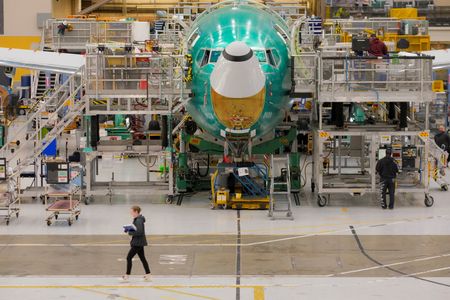
The aerospace giant Boeing is examining whether it can push production of its popular 737 MAX aircraft to an unprecedented 70 units per month, company CEO Kelly Ortberg revealed during a Friday interview with CNBC.
“We’ll look at that to understand where our constraints are, what the resilience is of the supply chain, but that’s a study activity right now,” Ortberg said.
The aircraft manufacturer is currently in the process of boosting monthly production from 42 to 47 planes, while working toward its established target of 63 aircraft per month.
According to The Air Current trade publication’s Thursday report, Boeing is developing plans and evaluating whether its network of suppliers could handle the increased demand for the single-aisle aircraft at 70 units monthly.
Ramping up 737 MAX manufacturing is essential for Boeing’s path to financial stability following losses exceeding $30 billion in recent years and accumulating record-high debt levels.
The company has carefully increased production since resuming 737 manufacturing in December 2024. Following a door panel failure on a nearly new 737 MAX that exposed significant quality control and safety issues, the U.S. Federal Aviation Administration imposed a production ceiling of 38 aircraft monthly. This restriction was removed in October 2025.
“We’ve made sure that we’re not moving (the rate up) until the production system is stable,” Ortberg said.
Following discussions with the FAA, Boeing announced in May its intention to increase monthly production to 47 units during the mid-summer period.
Ortberg informed CNBC that the company plans to begin work on the first aircraft at its new 737 manufacturing facility in Everett, Washington, on July 6.
This new production line plays a crucial role in the company’s strategy to advance 737 manufacturing to the subsequent phase of 52 aircraft monthly, according to Ortberg.
During an April first-quarter earnings call, Ortberg noted that suppliers will need to expand their capacity to accommodate Boeing’s increased manufacturing goals.
Meanwhile, European competitor Airbus has maintained its objective of producing 75 A320neo-family aircraft monthly but has repeatedly postponed this target due to supply chain limitations. The company anticipates reaching 70 to 75 units per month by late 2027, with intentions to maintain steady production at 75 units afterward.
Marvell Technology will be added to the prestigious S&P 500 index, according to an announcement Friday from S&P Dow Jones Indices, causing the semiconductor company’s stock to jump 6% in after-hours trading.
The chipmaker will officially become part of the benchmark index later this month after successfully meeting a crucial profitability requirement amid a surge driven by artificial intelligence demand.
Starting before trading opens on June 22, Marvell will take the place of PoolCorp, a distributor of swimming pool equipment, in the index.
The inclusion became possible after Marvell achieved GAAP profitability during its December quarter and across its last four quarters combined, a standard the company had previously been unable to reach, which had prevented its inclusion in the index.
Shares of the company have increased more than threefold this year, benefiting from widespread gains in semiconductor stocks as investors anticipate explosive growth in AI-related demand.
Just this week, the stock climbed approximately 29%, partially driven by comments from the CEO of Nvidia, Jensen Huang, who described the chipmaker as the “next trillion dollar company.”
Both Marvell and its bigger competitor Broadcom specialize in creating customized chips for cloud computing companies’ particular data center requirements, a sector that has expanded quickly as major technology firms seek alternatives to Nvidia’s expensive and hard-to-obtain AI processors.
During its latest quarterly earnings report, Marvell projected that its custom chip division would exceed $10 billion in revenue by fiscal 2029.
The addition demonstrates how the artificial intelligence surge is transforming major U.S. stock indices, with semiconductor and data center infrastructure firms gaining larger representation as investors anticipate continued demand from cloud service providers and AI applications.
Joining the benchmark index will automatically generate purchases from index funds and exchange-traded funds that mirror the S&P 500, since passive fund managers must maintain holdings that match their benchmark allocations.
A massive initial public offering from SpaceX is scheduled for next week, representing a crucial test for the ongoing U.S. stock market surge as investors remain cautious about potential market overheating.
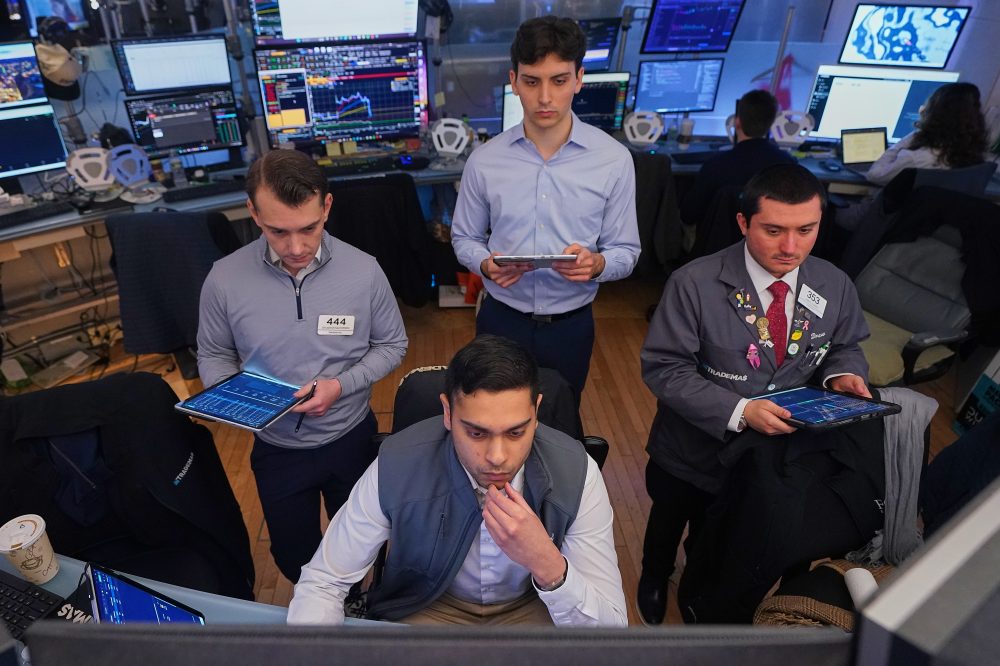
Market indices dropped on Friday following robust employment figures that sparked concerns about aggressive monetary policy, while semiconductor stocks plummeted after their recent strong performance. The primary S&P 500 index recorded a weekly drop following nine consecutive weeks of increases.
Despite the decline, the S&P 500 remained approximately 8% higher in 2026, including a 16% recovery from its late-March yearly low.
“Nothing has stuck in terms of pessimism in the last two months,” stated Mark Hackett, chief market strategist for Nationwide. “There is just this underpinning of momentum, this insatiable appetite for tech holdings and just the technical buying spree that is really dwarfing almost all other inputs.”
During the upcoming week, market participants will examine new information regarding consumer and producer pricing, following the employment report that sparked worries the Federal Reserve might concentrate on controlling inflation, possibly resulting in interest rate increases. The approaching week also features earnings announcements from major technology sector companies, which has powered the market’s recent climb despite a negative week ending.
Several investors have been preparing for a halt, if not a decline, following the steep rally. Potential risks include the U.S.-Israeli conflict with Iran and the possibility of renewed energy price surges if Middle East conflicts escalate.
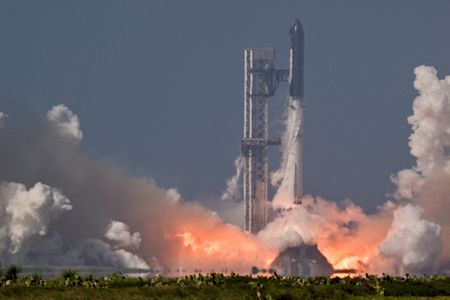
The space company led by Elon Musk plans to collect $75 billion, representing the largest amount ever sought in an IPO, through a transaction that would establish its worth at $1.75 trillion. Price setting is anticipated on June 11, with market trading beginning on the Nasdaq the following day.
The enterprise operates an uncommon and varied collection of businesses, encompassing rockets, satellite communications and AI computing. Including Musk’s involvement — the leader of Tesla and the globe’s richest individual — makes SpaceX’s worth challenging to determine, reaching extremely high levels according to certain measurements. The business recorded a net deficit of $4.94 billion in 2025, while revenue increased 33% to $18.67 billion.
The public offering might attract considerable attention from individual investors and offer another prominent method to access the AI market.
“We’ve got one of the biggest IPOs in history coming … which I think is the focus of everybody’s interest,” commented Jason Pride, chief of investment strategy and research at Glenmede. “The question mark surrounding it is whether it’s an indication of market froth.”
The SpaceX launch is anticipated to precede other large-scale IPOs in upcoming months from Anthropic and OpenAI, two leading AI companies. Anthropic, creator of the Claude chatbot, announced this week it has privately submitted documents for a U.S. IPO.
The SpaceX public offering represents “an important benchmark,” according to Matt Wittmer, a portfolio manager at Allspring Global Investments, noting that “the company itself will be playing in some of those key areas that people are looking for to find new secular growth opportunities.”
The May Consumer Price Index, scheduled for Wednesday, will reveal how increasing oil and gasoline costs are impacting inflation. A primary concern involves the degree to which elevated energy prices might affect other CPI elements, Pride noted, before the Federal Reserve’s meeting this month.
“The Federal Reserve is going to be watching this like a hawk,” Pride explained. “They’re going to want to see those pieces continue to remain stable and not increase as a pass-through from the energy and food prices.”
Following the energy price increase, futures markets are calculating a higher probability the Fed will raise interest rates this year instead of reducing them, after markets had expected equity-favorable rate decreases at 2026’s beginning.
Additional economic information next week includes Thursday’s producer price report.
Quarterly earnings from technology firms Oracle and Adobe will also receive attention. Technology has historically controlled the U.S. stock market, but the sector’s recent superior performance elevated it to over 39% of the S&P 500’s market value this week, representing its highest portion ever recorded.
The financial results will examine the technology trade’s durability and the software industry’s recovery, which suffered significantly early in the year due to AI disruption concerns. Oracle shares have risen more than 9% this year, while Adobe has declined 28%.
“Getting more data points from some of the AI value chain is going to be important,” Wittmer stated.
NEW YORK — The final three correspondents at CBS’s embattled ’60 Minutes’ program have announced their decision to remain with the show, declaring they refuse to let the iconic broadcast disappear.
In a staff memo, Lesley Stahl, Jon Wertheim and Bill Whitaker revealed they struggled with whether to continue at the network following recent dismissals, but ultimately chose to stay put.
“Here’s why we are staying: We don’t want to see ’60 Minutes’ die,” the trio stated in their joint message, which The Associated Press obtained on Friday.
The correspondents voiced frustration about recent staff cuts ordered by Bari Weiss, CBS News’s new editor-in-chief, and Nick Bilton, the executive producer she brought in last week. Bilton took over from Tanya Simon, who was dismissed after more than three decades with the program, along with correspondents Sharyn Alfonsi and Cecilia Vega and other senior staff members. Scott Pelley was subsequently terminated this week following a heated exchange with CBS News leadership.
“We want to express how sorry we are that these principled, fair and honest journalists were treated so shabbily, with such indecency,” the three correspondents wrote. However, they indicated they are “working to build trust” with Bilton and kept the door open for potential future departures if necessary.
“If we can continue doing the work that made this show what it is — committing acts of independent, fearless journalism and storytelling — we’re here for it,” they stated. “If not, we leave.”
“Here’s to Season 59!” their message concluded.
Convincing the three to remain represents a vital achievement for Bilton as he works to stabilize the program ahead of its September season premiere.
The broadcast now faces a shortage of four correspondents. Beyond the three who were let go, Anderson Cooper — whose main role involves on-air duties at CNN — announced earlier this year he would depart voluntarily after two decades.
Challenges at “60 Minutes” have been mounting for over a year. Many stem from President Donald Trump’s legal action against the program regarding its editing choices in a 2024 interview with then-Democratic presidential candidate Kamala Harris.
This controversy became part of wider changes at CBS News after Weiss received her new editor-in-chief position from parent company Paramount late last year, following David Ellison’s emergence as the network’s corporate chief.
Ellison’s company, Skydance, combined with CBS parent company Paramount, which subsequently resolved the Trump legal matter for $16 million. This decision frustrated some at “60 Minutes” and indirectly contributed to last month’s exit of popular longtime CBS late-night host Stephen Colbert, who had described the settlement as “a big fat bribe.”
CBS News has served as a cornerstone of American broadcast journalism since its radio era before television existed, though Weiss announced earlier this year the end of CBS News’s radio operations. The network’s evening newscast was regarded for decades as among the nation’s most trusted institutions under longtime anchorman Walter Cronkite.
The company that manages the S&P 500 index announced Thursday it will maintain its current standards for when massive corporations become eligible to join its collection of stock market indexes.
S&P Dow Jones Indices revealed that its index committee reviewed feedback from a “wide range of market participants” before choosing to keep its existing standards for determining when a business qualifies for the S&P 500, S&P MidCap 400, or S&P SmallCap 600 indexes.
Current requirements for joining these indexes include being headquartered in the United States, trading on NYSE or Nasdaq, and showing profits during the previous year.
S&P currently mandates that businesses completing initial public offerings must trade on an “eligible exchange” for a minimum of 12 months before being considered for index inclusion. The committee evaluated reducing this timeframe to six months but chose against making this change.
The committee also rejected creating special exceptions to its standards based solely on market capitalization, which represents how the stock market values a company.
This decision by S&P follows actions by other leading U.S. index managers who have implemented measures to include very large corporations shortly after their stock market launches.
Last March, Nasdaq revealed new standards allowing for faster inclusion of large companies that recently completed initial public offerings into its flagship Nasdaq 100 Index.
Nasdaq’s revised guidelines aim to ensure the index, which follows the 100 biggest non-financial companies on the Nasdaq exchange, better represents the market immediately rather than potentially months after a major company goes public.
In explaining its choice, S&P acknowledged potential compromises in maintaining its current index eligibility standards, but stated its present method gives its indexes “substantial market coverage and sector balance.”
Numerous pension funds and mutual funds rely on S&P and Nasdaq indexes as investment benchmarks.
These actions by S&P and Nasdaq occur as multiple leading artificial intelligence companies in the U.S. are preparing for major IPOs this year.
Elon Musk’s SpaceX is anticipated to go public this month with intentions to raise up to $75 billion, potentially making it the biggest stock market launch ever.
Additionally, Anthropic, which creates the Claude chatbot, revealed Monday its intentions for a planned IPO, while OpenAI, the company behind ChatGPT, is scheduling an IPO potentially as early as this fall.
WASHINGTON — Price increases are climbing once more after a period of gradual cooling in recent years, putting financial strain on American families and driving up costs for fuel, food, and daily essentials. Consumer prices jumped 3.8% in April compared to the previous year, marking the steepest rise in three years.
During a Wednesday discussion on Fox Business, financial commentator Larry Kudlow questioned Kevin Hassett, director of the National Economic Council, about the severity of current economic conditions. Hassett offered an optimistic perspective, suggesting price increases were experiencing a significant decline, especially when excluding blue states from the analysis.
Economic data, however, contradicts this assessment.
Here’s what the numbers reveal.
HASSETT: “Inflation is really out of control in the blue states. If you take out New York and California the story is radically different. So these really high costs, high regulatory states are driving inflation as well.”
THE FACTS: This statement is inaccurate and seems to rely on outdated information. Price increases are elevated across all nine Census Bureau regions nationwide, fueled by rising fuel costs linked to Middle Eastern conflict, which have also increased airline ticket prices. Higher energy expenses have boosted transportation costs, driving up food prices. Apparel costs have also surged, potentially reflecting delayed effects from President Trump’s tariffs.
“It’s not a blue state story,” said Omair Sharif, chief economist at Inflation Insights. “Gas is going up in every state.”
Hassett referenced a White House Council of Economic Advisers report showing slightly elevated price increases in blue states. However, this report utilized November data, predating the Iran war that started Feb. 28. Since then, skyrocketing fuel costs — climbing over 40% nationally per AAA — have eliminated those regional differences.
Simply put, excluding blue states from calculations has minimal impact, since numerous red states are experiencing higher price increases as well. The Labor Department produces the most widely tracked inflation measure, the consumer price index, publishing regional breakdowns. The Pacific region, comprising primarily Democratic-governed states like California, Washington, Oregon, Hawaii, and Alaska, recorded a 3.5% annual inflation rate in April — below the 3.8% national figure.
The East South Central region consists entirely of Republican-governed red states, posting a 4.5% annual inflation rate in April, exceeding the national average. This region includes Mississippi, Alabama, Kentucky, and Tennessee.
Certain red states are experiencing lower price increases than the national figure. The West South Central region, encompassing Texas, Oklahoma, Arkansas, and Louisiana, recorded a 3.2% price increase in April year-over-year. However, before the pandemic this region typically saw approximately 1% annual inflation, indicating deterioration even there.
Blue states like California or New York do typically maintain higher overall price levels than red states. For instance, Thursday’s gas prices averaged $3.72 per gallon in Texas according to AAA, compared to $5.98 per gallon in California.
Yet inflation tracks price changes, not absolute levels. Texas gas prices have surged since the Iran war began, mirroring California’s experience. Compared to last year, Texas gas prices have climbed nearly 36%, while California prices rose 26%.
HASSETT: “It’s on a deep downward dive if you look at the trimmed mean or the core, it’s headed right towards the Fed’s target.”
THE FACTS: This characterization is misleading. Core inflation measured by the consumer price index has actually increased this year, rising from 2.5% annually in January to 2.8% in April, the most recent available data. This figure remains below the overall 3.8% rate because core calculations exclude volatile food and energy prices to better capture underlying trends. The headline figure typically follows core movements over time, explaining why the Federal Reserve and economists emphasize core measurements.
Using the Federal Reserve’s preferred gauge — the personal consumption expenditures price index, or PCE — annual core inflation similarly climbed to 3.3% in April from 3.1% in January.
“There’s no deep dive happening in core inflation anywhere,” Sharif said.
A White House official, speaking anonymously, noted that CPI-measured core inflation remains below January 2025 levels.
The trimmed mean Hassett referenced represents one of numerous specialized alternative measurements, gaining recent attention through citations by Kevin Warsh, the new Federal Reserve chair appointed by President Trump. This calculation essentially eliminates many of the largest price movements, both upward and downward, attempting to determine whether price increases are spreading across diverse categories.
Hassett correctly noted that the Dallas Federal Reserve Bank’s PCE trimmed mean has declined modestly since year-start, dropping from 2.5% to 2.3%, approaching the Fed’s 2% target. Yet Dallas Fed president Lorie Logan cautioned Wednesday that this measure might mislead during inflationary surges due to calculation peculiarities. It remained low well into 2021’s inflation spike, for example.
The Cleveland Fed produces a separate CPI-based trimmed mean calculation, which recently increased to 2.8% from 2.6%.
A federal bankruptcy judge has given the green light to Saks Global’s restructuring plan, paving the way for the high-end retailer to emerge from Chapter 11 proceedings with reduced debt and fewer store locations.
U.S. Bankruptcy Judge Alfredo Perez granted approval to the company’s reorganization plan during Friday’s court session in Houston, Texas, praising the retailer for doing an “extraordinary” job stabilizing operations following a difficult bankruptcy filing in January.
The approved restructuring will eliminate the company’s existing equity and transfer ownership to senior lenders who have backed the reorganization effort.
Through its bankruptcy proceedings, Saks Global will eliminate most of its previous debt obligations and continue operating as a downsized entity. The company used the Chapter 11 process to rebuild relationships with high-end brand suppliers, shutter discount retail outlets, and close more than half of its Saks Fifth Avenue locations.
The reorganized company will operate 49 upscale retail sites, consisting of 33 Neiman Marcus locations, 15 Saks Fifth Avenue stores, and Bergdorf Goodman. When the bankruptcy began, Saks Global operated 33 Saks Fifth Avenue stores.
The restructuring agreement gives senior lenders ownership of Saks Global following their provision of $1 billion in fresh financing during bankruptcy proceedings, plus a commitment of another $500 million once the company completes its Chapter 11 exit.
Saks Global secured backing from junior creditors by establishing a litigation trust funded with $20 million initially, designed to pursue legal actions that could generate additional creditor recoveries. These junior creditors, collectively owed approximately $1.5 billion, would receive nothing without the litigation trust arrangement, court documents indicate.
Saks Global initiated bankruptcy proceedings on January 13 carrying $3.4 billion in debt, following a problematic merger with Neiman Marcus that created cash flow problems, hindered store inventory restocking, and damaged relationships with key suppliers including Chanel, LVMH and Kering.
Multiple U.S. states are gearing up to file legal action aimed at stopping the massive $110 billion deal between Paramount Skydance and Warner Bros, according to two sources with knowledge of the situation who spoke with Reuters on Friday.
The specific states planning to join the legal challenge have not been identified, though California’s top prosecutor had indicated Thursday that a decision on potential action would come soon. On Friday, representatives from that office refused to provide additional comment.
Stock prices reflected investor concern following the news, with Warner Bros shares dropping 1.8% while Paramount stock fell 4%.
The entertainment and financial sectors have been monitoring this significant transaction closely, as it would combine several of the industry’s most iconic and long-standing franchises.
The merger proposal has generated opposition from performers, screenwriters and other industry professionals who worry it could lead to widespread job cuts.
Company officials have pushed back against claims that employment in creative roles would decline, arguing that the combined entity would actually need to produce additional content following the merger to draw more streaming platform users.
Aircraft manufacturer Airbus finds itself uncertain about timing for the debut of an expanded A220 aircraft following tepid interest from major leasing firms and ongoing discussions about flight range and capabilities, according to six industry insiders.
The company had previously generated excitement among potential customers earlier this year by suggesting a possible announcement during this summer’s Farnborough Airshow, but has since backed away from those expectations.
A high-ranking Airbus official indicated that an announcement at Farnborough, scheduled for late July, was now “not probable,” though the company hasn’t completely eliminated the possibility of a 2024 launch.
“We are studying all the options; no decisions have been made,” an Airbus spokesperson stated.
An expanded A220 model would allow Airbus to rework agreements with suppliers and reduce manufacturing expenses, potentially helping the company address losses from the program it acquired for one dollar in 2018 after Canada’s Bombardier faced financial difficulties.
The A220 program continues to operate at a loss and has been dropping orders to Brazilian competitor Embraer.
Industry insiders report that Airbus has been promoting a relatively minor enhancement described as a “simple stretch” that wouldn’t increase maximum takeoff weight or require expensive Pratt & Whitney engine improvements.
The aircraft would accommodate approximately 180 passengers, an increase from the current 160-passenger capacity, resulting in roughly 10% lower per-seat costs but reduced flight range, according to two individuals with knowledge of the project.
Not all carriers are willing to sacrifice range, which limits the number of potential buyers. Airlines meeting in Brazil for an IATA conference this weekend also remain concerned about reliability issues with current Pratt & Whitney engines.
“Airlines are possibly sold on the economics, but not necessarily the performance,” aviation analyst Rob Morris commented.
RTX, Pratt & Whitney’s parent company, chose not to provide comment.
Airbus displayed greater optimism in January, informing financial professionals at the Airlines Economics conference in Dublin that 2026 would represent a “big year” for the A220, sources reported.
Five months later, prospective customers indicate they haven’t received the detailed information typically expected when an aircraft launch is imminent.
“One of the questions we’ll have to examine is the range of the aircraft,” Air Canada’s chief operations officer Mark Nasr shared with Reuters this week.
The urgency to develop something new also diminished when AirAsia committed to purchasing 150 units of the current model.
“It remains a matter of when … rather than if, but it’s not now,” Airbus CEO Guillaume Faury informed reporters in April, discussing the larger A220’s launch timeline.
Airbus is additionally evaluating potential effects on sales of its crucial A320neo narrow-body series, which is positioned slightly above the proposed A220-500 in terms of size, two sources familiar with the situation revealed.
Leasing companies also express concern about negatively affecting A320neo values.
“Lessors are so exposed to the A320 that the last thing they need is a new anything; the less disruption the better off they all are,” a senior industry source explained.
Aviation analyst Morris suggested this shouldn’t postpone the project indefinitely.
“The A320 lessors should be okay: the market for the plane has sufficient liquidity and a strong customer base,” he noted.
The world’s most prominent cryptocurrency is on track for its weakest showing at this stage of the year in more than ten years, as surging artificial intelligence investments and attractive new stock offerings including SpaceX draw money away from digital assets.
The digital currency’s value has dropped approximately 15% over the past week, marking its steepest decline since November 2022 when the FTX exchange collapsed. Currently trading near $63,000, the cryptocurrency has shed roughly one-third of its worth during 2026, representing its largest loss at this point in any year since 2015 at minimum, according to LSEG data.
The situation worsened when Michael Saylor’s Strategy, which holds more bitcoin than any other corporation, announced Monday it had offloaded some of its digital currency holdings for the first time since 2022.
“It is instructive to see how assets can struggle as they move from being the flavour of the month to being suddenly out of fashion,” RBC BlueBay Asset Management chief investment officer, fixed income, Mark Dowding said in a blog.
The changing environment for the cryptocurrency, which reached unprecedented peaks above $125,000 in late 2024, shows several key shifts.
PRICING PRESSURES MOUNT
The digital asset now trades roughly 40% below its level when U.S. President Donald Trump assumed office in January 2025, despite his pledge to establish America as the global cryptocurrency hub. Multiple appointments of crypto-supportive officials to important regulatory and financial positions had initially lifted market confidence.
However, increased participation by major institutional investors and banks, along with readily available exchange-traded products, has reduced the very characteristics that made the cryptocurrency attractive as a portfolio diversifier – namely its extreme price swings and independence from traditional asset movements.
The DVOL index from crypto options platform Deribit, which measures expected volatility in bitcoin options, currently sits around 47, its peak since early April but only slightly above a record low of approximately 31 reached in late May. From the index’s 2021 debut through roughly April of last year, it rarely dropped below 50.
Regarding correlation patterns, before 2020 the cryptocurrency showed no consistent relationship with the S&P 500. However, throughout most of the past six years, both have moved together. This connection has recently reversed dramatically, with AI-powered stock gains continuing while the digital currency stagnates.
RIVALRY WITHIN DIGITAL ASSETS
The era when bitcoin dominated the cryptocurrency landscape has ended. The digital asset space now features major competing currencies including ether, solana and BNB, plus smaller “alt-coins” that collectively represent one-fifth of the total market, CoinGecko reports.
Stablecoins, which maintain fixed values tied to traditional currencies like the U.S. dollar, have also eroded bitcoin’s market position.
CoinGecko data shows bitcoin now represents 56% of the cryptocurrency market, down from 63% twelve months ago. While ether and alternative coins have maintained relatively stable market shares, stablecoins now comprise nearly 13% of the market compared to roughly 7% a year earlier.
Daily trading volume in the leading stablecoin tether now exceeds the combined volume of bitcoin and ether, while trading in second-place USDC matches the volume of the next ten digital currencies combined, CoinGecko data indicates.
CAPITAL MIGRATION PATTERNS
Bitcoin faces competition not only from other digital currencies but from traditional investments seeking investor funds. When artificial intelligence began gaining momentum following ChatGPT’s late 2022 debut, bitcoin initially benefited from investment flows targeting technology-related assets.
AI now commands stock market attention, with capital flowing into companies building data centers, semiconductor manufacturers, chip producers and even copper wire suppliers.
Over the past year, U.S. semiconductor stocks have jumped 170% while bitcoin has declined 40%. The money entering AI-focused investments must originate from existing positions.
Investors are withdrawing funds from major bitcoin ETFs at unprecedented rates, with more than $2.7 billion in net withdrawals during the week ending Thursday, LSEG data reveals. Total net outflows for 2026 have reached $3.1 billion.
The four largest semiconductor ETFs – VanEck’s Semiconductor ETF, the Roundhill Memory ETF, State Street’s SPDR S&P Semiconductor ETF and iShares Semiconductor ETF – have attracted over $3 billion in June’s first week alone and an impressive $21 billion year-to-date.
WASHINGTON — The nation’s employment sector displayed remarkable durability in May, weathering the financial burden of the Iran war with stronger-than-anticipated results.
Companies nationwide created 172,000 new positions last month — nearly twice what economic analysts had predicted — while unemployment remained steady at 4.3%.
Friday’s Labor Department data revealed that May’s employment growth dipped modestly from April’s revised figure of 179,000 jobs. The jobless rate held at the same low 4.3% mark.
Employment creation has recovered this year following a disappointing 2025, demonstrating durability amid economic instability and severely elevated fuel costs stemming from the Iran war.
May’s employment increases spanned multiple sectors. Municipal governments brought on 55,000 new employees, while dining establishments and taverns hired 48,000 workers, and medical facilities added 35,000 positions.
Additional evidence of labor market vigor came through Labor Department adjustments that incorporated an extra 93,000 positions across March and April. Employment expansion averaged 188,000 monthly from March to May, representing the strongest three-month hiring period since early 2024.
“The hiring recession is over. American firms are hiring again,” said Heather Long, chief economist at Navy Federal Credit Union. “The job rebound is happening in almost every industry … This is encouraging news for job seekers and for the U.S. economy. The labor market has stabilized and is showing early signs of a genuine rebound.”
With five months remaining until significant midterm elections in the U.S., citizens have expressed mounting dissatisfaction over increasing expenses, leaving uncertainty about whether this year’s robust employment figures will offset those concerns.
Recent inflation statistics revealed that beyond fuel costs, grocery prices, apparel, and utility bills are climbing, suggesting inflation could be becoming more deeply rooted.
Despite increased hiring activity, salary improvements remained limited. Average hourly compensation increased 0.3% from April and 3.4% compared to May 2025, aligning with the Federal Reserve’s 2% inflation objective.
Employees, job hunters, and companies remain trapped in an uncomfortable “no-hire, no-fire” employment environment. “Those who have jobs are clinging to them, while those without are left wanting,” Diane Swonk, chief economist at the tax and consulting firm KPMG, wrote in a commentary ahead of the jobs report. “The result is a sense of being frozen or left in a sort of labor market purgatory.”
Numerous young adults face difficulties entering a stagnant employment landscape. Workers who experienced layoffs encounter challenges returning to employment. Almost 28% of jobless individuals in April remained without work for over six months, the largest proportion since December 2021.
Recognizing diminished opportunities, citizens hesitate to abandon current positions for potentially better alternatives. In April, voluntary departures fell to the lowest point since the alarming period of August 2020, when COVID-19 was spreading widely.
During the previous year, companies created 9,700 positions monthly, the smallest increase outside a recession since 2002.
This year, recruitment has improved, generating an average of 114,000 new positions monthly from January through May. Substantial tax refunds — resulting from President Donald Trump’s 2025 tax reductions — have boosted the economy, counteracting higher energy costs since the United States and Israel launched attacks on Iran in late February. However, most refunds have been saved, while gasoline prices stay above $4 per gallon.
Medical companies have led much of the hiring activity over the past year.
Martha Gimbel and Ryan Nunn of Yale University’s Budget Lab note that strong healthcare hiring isn’t surprising as Americans age and need more prescriptions and trips to the doctor. In fact, the industry’s job growth is in line with Labor Department predictions from a decade ago. “The question is not why healthcare has kept hiring—it is why other industries have not,” they wrote in a report published Tuesday, suggesting that one explanation might be an immigration crackdown that has reduced the supply of foreign-born workers.
At minimum, the United States requires fewer new positions than previously. Declining immigration and increasing Baby Boomer retirements mean fewer individuals compete for employment. Consequently, the break-even threshold — new jobs needed to maintain stable unemployment — has likely fallen to nearly zero, down from the typical 155,000 monthly positions required two or three years ago, according to a Federal Reserve report.
Some experts worry that artificial intelligence will eliminate entry-level positions. However, economists Gregory Daco and Lydia Boussour of the tax and consulting firm EY-Parthenon wrote in a commentary Tuesday that AI “adoption is proving more gradual and costly than many anticipated. Firms are increasingly using AI to enhance productivity and control labor costs.” But AI, they wrote, has reduced hiring rather than “triggering broad-based layoffs.”
Additionally, a new study by the Federal Reserve Bank of New York identified a different culprit for young people’s struggle to land jobs after college: the rise of remote work. Businesses, it seems, are reluctant to hire new grads for work-at-home jobs because it is harder to train and mentor them when they aren’t coming into the office.
U.S. financial markets declined following the positive employment data as expectations for Federal Reserve interest rate reductions continue diminishing.
Financial turbulence in private lending markets is now affecting private equity firms, with major investment managers restricting client withdrawals this week. Swiss investment firm Partners Group, which manages approximately $185 billion in assets, implemented withdrawal limits after experiencing increased redemption requests driven by market-wide instability in private credit sectors that typically provide financing for private equity deals.
The asset management company cited growing withdrawal demands from its investment funds and acknowledged being impacted by industry-wide turbulence from private credit markets. Until now, such financial strain had been limited to specific situations in the equity sector, such as software company Medallia, which private equity firm Thoma Bravo is transferring to its creditors.
Declining share prices for Partners Group triggered similar drops among comparable firms across Europe and the United States, demonstrating widespread investor skepticism about the asset category.
Similar to other private investment platforms, Partners Group confronts obstacles to its accelerated expansion, as growing investor concerns about asset valuations, market transparency, and liquidity in private markets affect its growth path.
Reuters previously documented mounting concerns about Partners Group’s performance over several months, especially regarding its evergreen funds, an industry innovation created to provide clients with easier access to their investments.
Private credit investment funds are also facing ongoing withdrawal pressure during the second quarter of 2026.
Blackstone’s private credit fund limited withdrawals to 5% after receiving requests for 10% of outstanding shares. Likewise, Cliffwater’s $31.3 billion fund received 17% in redemption requests, which were also restricted to 5%.
These developments follow $7.1 billion in withdrawals across eight major investment vehicles during the first quarter, demonstrating continued investor interest in removing capital from private markets.
The swift growth of private credit has also stalled temporarily, with U.S.-focused direct lending activity dropping 40% to $44.76 billion in the second quarter of 2026. Market data shows reduced fundraising activity and heightened withdrawal requests from investors, indicating a cautious period for the sector.
This pattern may reduce revenue for private credit managers by restricting asset expansion and transaction fees, particularly as funds maintain cash reserves while managing withdrawal demands.
Investment firms are identifying major profit opportunities across multiple industries as the 2026 FIFA World Cup approaches, with analysts predicting the massive soccer tournament will drive billions in economic activity.
The upcoming championship, running from June 11 to July 19, represents the largest soccer competition in history and could stimulate consumer spending during a period when overall economic demand remains uncertain.
This marks the first World Cup hosted by three countries simultaneously — the United States, Canada and Mexico — and FIFA’s economic impact study, developed alongside the World Trade Organization, projects the event will add roughly $41 billion to worldwide GDP.
Investment research firm B. Riley projects approximately 13.1 million people will attend the World Cup, including both ticket holders and other visitors, resulting in 21.3 million hotel reservations through digital booking platforms.
Financial experts identify major U.S. hotel chains Marriott, Hilton and Hyatt, plus online booking services Airbnb, Booking Holdings and Expedia, as companies positioned to gain from increased travel demand.
Marriott anticipates World Cup-related business momentum will extend into the third quarter, while Airbnb predicts property owners in the New York-New Jersey region, Boston and Los Angeles will see the highest earnings during the competition.
Goldman Sachs views the World Cup as potentially beneficial for domestic airlines, noting that “June is typically a seasonally lower inbound leisure and corporate travel period, with a meaningful amount of peak July/August outbound travel season occurring after the WC is over.”
However, rising jet fuel costs linked to conflict with Iran have pushed airlines to increase ticket prices, causing cost-conscious travelers to postpone or abandon summer vacation plans.
Jefferies research estimates over 1 billion beer servings will be consumed worldwide during the tournament, providing a 0.3% volume increase for the brewing industry, with improvements anticipated in markets including the U.S., Mexico, Brazil and China.
“After five successive years of volatility, beer should be better in 2026,” Jefferies analysts stated.
The tournament’s scheduling and location work favorably for beer consumption, with approximately 75% of games taking place in the U.S. and 84% of participating team matches occurring in time zones where beer drinking is culturally common.
Multiple investment firms including Bernstein, Goldman and Jefferies expect Anheuser-Busch InBev, which produces Corona beer and serves as the official tournament beer sponsor, to see the greatest gains. Heineken, the globe’s second-largest brewing company, should also benefit through its presence in Latin America and Europe.
Goldman Sachs anticipates increased fan merchandise purchases will boost revenue at Dick’s Sporting Goods and Academy Sports.
Athletic apparel companies including Adidas, Puma and Nike stand to gain through enhanced brand recognition and marketing opportunities during the World Cup, analysts noted.
Goldman highlighted that Adidas, serving as the official match ball sponsor with team uniform agreements across several squads, is well-positioned to capitalize on global tournament exposure.
Citi identified conventional grocery chains like Albertsons and Kroger, along with major retailers Walmart and Target, as likely beneficiaries of increased household spending throughout the World Cup period.
Restaurant sales are also expected to climb, supported by tourism and group viewing events, potentially benefiting McDonald’s, Domino’s Pizza, Wingstop and Chipotle, alongside food distribution companies Performance Food Group, US Foods and Sysco.
“We expect the 2026 men’s World Cup to generate the highest US advertising revenue in the event’s history,” Deutsche Bank analysts predicted.
Morgan Stanley estimates the tournament could produce approximately $300-$400 million in advertising income for Fox, which owns English-language broadcasting rights. Deutsche Bank identified Comcast-owned Telemundo, holding Spanish-language rights, as another beneficiary.
Digital companies like Alphabet’s YouTube and Meta Platforms’ Instagram may see gains from heightened user engagement, according to Citi.
Deutsche Bank expects online sports wagering companies Flutter Entertainment and DraftKings to outperform competitors, as World Cup betting activity will likely increase overall gambling volumes.
Macquarie projects global betting will surpass $50 billion — approximately $0.5 billion per game — for the tournament, compared to more than $35 billion during the 2022 competition.
A Swiss construction chemicals company is repositioning its business strategy to capitalize on China’s building renovation sector and American infrastructure development, according to comments from the firm’s chief executive published June 5.
Thomas Hasler, CEO of Sika, discussed the company’s evolving approach during an interview with Finanz und Wirtschaft that appeared Friday. He explained that the manufacturer has broken down its Chinese operations into smaller segments to better serve the diverse local markets across the country.
The company has adjusted its Chinese business model, which previously concentrated heavily on new construction projects, to now emphasize renovation work as well. This shift is particularly important in cities like Shanghai, Beijing and Guangzhou, where markets have reached near-saturation levels.
Despite the elimination of electric vehicle subsidies, Hasler noted that the company continues to see steady expansion in China’s automotive sector.
In the United States, Hasler identified infrastructure construction as a promising area for growth, noting that such projects remain largely unaffected by President Donald Trump’s resistance to renewable energy initiatives.
The company is gaining market share in traditional infrastructure development including roads and bridges, though it has experienced a decline in commercial construction where reshoring had been a major growth factor before tariff tensions increased.
Regarding data centers, Hasler called them “a definite growth driver,” explaining that operators seek the most secure facilities to prevent operational interruptions.
The executive reported that the company’s data center project pipeline is at capacity, as the sector experiences rapid growth across Europe and Asia as well.
Despite continued challenges, Hasler expressed optimism about potential improvements in markets like Germany and France, pointing to increased building permit numbers as an encouraging sign among the company’s customer base.
Financial markets faced a turbulent week as investors’ high expectations for both artificial intelligence growth and resolution of international conflicts fell short of reality.
Technology stocks, which had been driving market gains for weeks, hit a significant roadblock when major chipmaker Broadcom failed to meet revenue expectations. Despite generating more than $22 billion in quarterly sales, the company’s results disappointed Wall Street, causing its stock to plummet over 12% and eliminating approximately $300 billion in market value.
The semiconductor company’s shares had climbed 55% through Wednesday before the earnings announcement sent ripples through the Nasdaq index. While the S&P 500 managed to recover by Thursday’s close, Asian markets declined Friday morning and Wall Street futures pointed to a lower opening.
Nevertheless, excitement around artificial intelligence technology continued with several major developments throughout the week. On Monday, Nvidia introduced a revolutionary chip that incorporates AI functions directly into personal computers, which analysts believe could transform how people interact with artificial intelligence.
The AI sector saw additional activity as Anthropic submitted paperwork for a public stock offering, joining an already crowded field of upcoming listings that includes SpaceX’s record-breaking $75 billion initial public offering.
Google’s parent company Alphabet made headlines Monday by announcing plans for an $80 billion equity offering, with investment giant Berkshire Hathaway purchasing $10 billion of the shares. Meanwhile, chip designer Marvell Technology’s stock surged more than 25% Tuesday after Nvidia’s CEO Jensen Huang suggested the company could become the “next trillion-dollar company.”
Microsoft also contributed to the AI buzz by unveiling a new quantum computing chip designed using artificial intelligence, with the company expressing confidence it will have commercially viable quantum machines operational by 2029.
Currency markets drew attention as Japan’s yen approached the critical 160-per-dollar threshold that previously triggered government intervention to support the currency. Authorities reportedly invested more than $73 billion in recent weeks attempting to strengthen the yen, raising questions about the effectiveness of this approach.
Energy markets remained focused on fluctuating peace negotiations between the U.S. and Iran. Oil prices jumped more than 4% Monday following Iranian reports that peace discussions had stalled, though American officials later challenged this claim. Brent crude stayed below $100 per barrel, responding to news developments as military actions continued in the Gulf region.
The fragile ceasefire between Israel and Lebanon appeared increasingly unstable after Hezbollah, the Iranian-supported militant organization currently fighting Israel, announced Thursday it would not honor the agreement terms.
Despite these geopolitical tensions, markets showed relatively little concern even as the risk of a major energy shortage intensified due to rapidly declining global oil inventories. U.S. gasoline reserves have dropped at nearly record speed just as summer driving season approaches.
China has emerged as a stabilizing factor in global energy markets, with its seaborne crude oil imports falling to nearly 10-year lows in May. This helped Asia adapt to losing at least 10 million barrels daily from Strait of Hormuz blockades, though questions remain about the sustainability of this trend.
Interestingly, more oil appears to be moving through the contested strait through unofficial channels, with increasing numbers of vessels transiting “under the radar” of satellite monitoring systems. Rather than signaling a return to normal operations, these covert shipments may preview the opaque energy market structure likely to emerge from the Iran conflict.
Domestic employment data painted a mixed picture this week. Tuesday’s JOLTS report revealed job openings increased by the largest amount in five years during April, while private sector employment exceeded forecasts with 122,000 new positions added in May.
However, initial weekly unemployment claims unexpectedly rose 6.1%, and corporate layoff announcements jumped 11% in May according to Challenger, Gray & Christmas data, with nearly 40% of those job cuts attributed to artificial intelligence implementation.
Attention now turns to Friday’s May nonfarm payrolls report, where a projected net gain of 85,000 jobs would represent a strong result compared to earlier pessimistic predictions.
This complex employment landscape could present challenges for new Federal Reserve Chair Kevin Warsh ahead of the central bank’s upcoming meeting. His policy direction may differ from previous expectations, particularly given persistent inflation pressures.
Beyond Iran-related energy costs threatening global price increases, the current artificial intelligence investment surge appears likely to create short-term inflationary pressure, even if AI proves deflationary over time.
The coming summer months may prove challenging across multiple economic fronts.
Investment funds worldwide experienced their strongest weekly performance in three weeks during the period ending June 3, as artificial intelligence enthusiasm and impressive technology sector earnings drove investor confidence to new heights.
Data from LSEG Lipper reveals that stock funds globally pulled in $21.44 billion in net investments during the week, marking the highest total since May 13.
Technology companies Dell and HP delivered exceptional financial results, with their stock prices jumping 42.6% and 7.1% respectively throughout the week.
The technology sector’s strong performance pushed the MSCI World Index to an all-time peak of 1,138.3 during the early part of this week.
European investment funds dominated regional performance, capturing $11.16 billion in net investments for the week. American funds drew $7.43 billion while Asian funds brought in $760 million in net inflows.
Technology sector funds received the largest investor interest, attracting $9.02 billion in their strongest weekly performance since May 13. Industrial sector funds and metals and mining investments also performed well, gaining $1.61 billion and $747 million respectively.
Bond funds worldwide continued their positive streak, drawing $24.23 billion for their ninth consecutive week of growth.
Dollar-based medium-term bond funds attracted $3.13 billion, while short-term bond funds and high-yield bond investments brought in $2.89 billion and $2.53 billion respectively.
Money market funds worldwide saw massive interest, pulling in $159.83 billion in net investments, representing the largest weekly total since January 7.
However, gold and precious metals funds experienced their third straight week of losses, with investors withdrawing $1.94 billion.
Emerging market equity funds faced continued challenges, losing $2.42 billion in their sixth consecutive week of net withdrawals. Bond funds in these markets showed resilience, attracting $787 million in net investments, according to data covering 28,972 funds.
A financial journalism team has documented the complete journey of how tax loopholes emerge and are ultimately eliminated by authorities.
The investigation follows the entire process from the initial creation of these tax strategies through their discovery by financial professionals and their widespread exploitation, culminating in their eventual closure by regulators.
The Federal Reserve’s diminishing worries about employment, which earlier this year drove many officials to support lowering interest rates, face a crucial test Friday when new employment figures are released. The data will also set the stage for Kevin Warsh’s first policy discussions as the new leader of the nation’s central bank.
Reuters polling shows economists anticipate employers added 85,000 positions in May, down from April’s surprisingly robust increase of 115,000 but sufficient to maintain the jobless rate at 4.3%.
Following a monthly average of less than 10,000 new positions throughout 2025, with hiring hampered by uncertainty surrounding import tariffs, the Trump administration’s immigration enforcement and economic prospects, job creation during 2026’s initial four months has averaged 76,000. While this would have represented weak performance in previous years, given the immigration policy changes, it has maintained relatively stable unemployment levels.
This performance has also shifted interest rate expectations away from additional reductions, with influential policymakers like Fed Governor Christopher Waller indicating they now view the employment situation as largely steady and consider fighting stubbornly high inflation the Fed’s primary focus – a perspective that may represent the majority position as Warsh leads his first policy session on June 16-17.
“I can no longer rule out rate hikes further down the road if inflation does not abate soon,” Waller stated in remarks last month that marked a decisive move away from employment concerns that had led him to support rate reductions in 2025 and advocate for them through early this year when he was also being considered for Fed leadership. “Recent jobs data show that the labor market appears to be stabilizing and the unemployment rate is fairly low and stable.”
This reasoning has gained traction among Fed policymakers recently. Without a significant negative development in Friday’s employment report or inflation figures due June 10, Warsh may confront a challenging decision in two weeks.
Warsh, who succeeded former Fed Chair Jerome Powell in mid-May, contended during his nomination process by President Donald Trump that interest rates could decline because the president’s policies and artificial intelligence expansion would generate higher productivity and accelerated growth while slowing inflation.
Current data trends differently, with inflation appearing stuck one percentage point or more above the Fed’s 2% goal and heading toward a sixth consecutive year exceeding that benchmark. The persistence of these price pressures has made Warsh’s colleagues increasingly concerned about potential damage to the central bank’s credibility.
External observers also anticipate elevated inflation continuing longer. The International Monetary Fund now projects inflation won’t reach the Fed’s 2% target until late 2027 rather than mid-next year due to effects from the U.S.-backed conflict with Iran.
“So we’ve now delayed a bit further the return to target,” IMF spokesperson Julie Kozack stated Thursday. “We do see sort of upside risk to inflation, and that it implies that the Fed’s policy actions will need to proceed with caution and will need to be carefully calibrated to incoming data.”
Three Fed policymakers opposed the April 28-29 meeting outcome, favoring a shift toward a more aggressive stance that would enable rate increases rather than suggesting cuts as the next likely move. Waller has indicated he now supports this approach and other policymakers have spoken more openly about potentially tightening policy – contrary to Trump’s expectations that rates will fall under Warsh.
Market participants expect a rate increase by early next year, with roughly even odds the Fed will act at its December 8-9 meeting, according to CME Group’s FedWatch tool.
Comments by Fed officials before this month’s meeting stressed “a reduced focus on labor market risks and a much heavier emphasis on inflation,” with rate increases likely later this year even if inflation simply holds at current levels, Stephen Brown, chief North America economist for Capital Economics, wrote in analysis. “For Warsh in particular, it remains to be seen whether he will adopt a less dovish tone than was the case when he was seeking the nomination.”
The situation is delicate given Trump’s expectations, pressure from some of Warsh’s colleagues for tougher monetary policy, and November’s U.S. midterm elections that may depend on economic conditions.
Some current inflation stems from the Iran conflict, now in its fourth month and causing an oil shock that continues affecting the economy. Benchmark crude prices have declined recently, but traffic through the vital Strait of Hormuz near Iran remains disrupted and a conflict resolution has not been achieved.
In economic analysis from the Fed’s 12 regional districts released Wednesday, business and community contacts described the lasting impact of surging oil prices that appears to have encouraged other price increases as executives transfer higher costs for items like fertilizer, shipping, and metals to consumers.
Employment appeared stable even as companies maintained a cautious “low-hire, low-fire” approach.
“The big question now is do we stay patient?” Kansas City Fed President Jeffrey Schmid asked Thursday at an economic forum in Oklahoma. “Our inflation numbers have probably crept up into the 3.50% range, which nobody likes. Is it temporary … Or do we act? Do we say, ‘okay, now it’s time to raise rates a quarter (of a percentage point) or two and see if we can’t tamp this thing down?’”
Travis Arcamone received recognition as flight attendant of the year at Spirit Airlines’ Orlando, Florida location in April. Just one month afterward, he found himself unemployed when the airline went through a second bankruptcy and shut down in early May.
The collapse of Spirit has created a challenging job market for thousands of former workers seeking employment in an aviation sector where finding new positions can require several months. Airlines typically establish fixed annual quotas for pilot and flight attendant recruitment and have already completed hiring for the busy summer travel period. The industry faces immediate capacity reductions due to increasing jet fuel expenses while simultaneously preparing for future expansion.
According to Sara Nelson, president of the Association of Flight Attendants-CWA, AFL-CIO, several hundred of Spirit’s 3,500 flight attendants may need four to five months to begin working at different airlines, even under optimal circumstances.
Arcamone, who lost his position just one month before reaching his ninth year with Spirit, has taken a position selling automobiles while continuing his search for aviation opportunities.
Aviation professionals face distinct challenges compared to other sectors, as newly hired pilots and flight attendants lose their accumulated seniority and begin at entry-level compensation rates, sacrificing control over work schedules and base assignments.
“My nearly decade of experience at Spirit might help me get a job somewhere else, but it means absolutely nothing when it comes to how good that job will be when I walk in the door,” a former Spirit pilot explained to Reuters, requesting anonymity to protect employment opportunities.
“I’ll be a peer to someone who has never flown a jet before,” the pilot added, representing one of approximately 1,800 pilots employed by Spirit when operations ceased.
A class-action legal case was initiated by former Spirit employees last month, claiming the company failed to provide adequate termination notification. The lawsuit seeks 60 days of compensation and benefits for roughly 17,000 workers, according to their legal representative. Spirit must file a response by mid-July. During court proceedings, a company attorney stated the airline provided notification as quickly as possible.
INDUSTRY RESPONSE
Bureau of Labor Statistics data shows approximately 130,000 flight attendants in the United States receive average annual compensation of $77,440, while just over 100,000 airline pilots, copilots, and flight engineers earn an average yearly salary of $288,650.
Leading airlines have expressed openness to hiring displaced Spirit personnel, though recruitment opportunities remain constrained, particularly for flight attendants.
Airlines generally establish recruitment strategies at the beginning of each fiscal year based on anticipated retirements, fleet expansion, and operational requirements, which limits how quickly they can increase hiring efforts. Certain positions are connected to busy travel seasons, creating narrow recruitment windows, while unpaid training periods delay regular income.
United Airlines, planning to recruit 1,300 pilots in 2026, reported receiving 2,800 applications from former Spirit workers for different positions. Delta Air Lines announced intentions to hire hundreds of pilots and flight attendants during 2026.
Most other domestic airlines declined to reveal specific hiring plans, citing competitive considerations.
American Airlines reported that 2,000 former Spirit employees have submitted job applications, while Southwest Airlines created a specialized website for Spirit workers to examine available positions. Frontier Airlines indicated it will continue recruiting former Spirit staff as positions become available, and JetBlue Airways announced a temporary hiring suspension.
The flight attendants’ union noted that airlines have reduced training programs or suspended recruitment, creating additional obstacles for quickly integrating displaced workers.
“Some of these airlines had been doing weekly classes of around 100 people per week. That has been cut back at the major airlines to 30 every other week or so,” Nelson explained.
Pilots may find returning to cockpit duties somewhat easier as airlines plan long-term capacity growth and prepare for upcoming retirement waves. Those with specialized qualifications such as check airmen — authorized to evaluate, train, and certify other pilots — or simulator instructors are expected to face higher demand.
However, pilots face significant financial consequences unless they obtain uncommon direct-entry captain positions.
“It’s a huge pay cut and a huge change from your previous quality of life,” explained Taylor Brown, a former Spirit pilot who departed the struggling airline in October for a position with UPS. UPS indicated to Reuters that current pilot staffing meets their needs.
The Japanese yen approached the critical 160-per-dollar level on Friday, prompting stern warnings from officials, while the dollar maintained strength ahead of important U.S. jobs data and Middle Eastern conflicts supported safe-haven currency demand.
Diplomatic efforts between the U.S. and Iran remain deadlocked, and renewed conflict this week has pushed oil prices above $90 per barrel, creating concerns about global economic growth.
Japan’s currency was heading toward its fourth consecutive weekly decline versus the dollar, reversing earlier gains from government intervention in late April and early May. By Friday’s close, the yen was approaching the 160-per-dollar threshold that has previously triggered official action, leading Finance Minister Satsuki Katayama to issue another warning that Japan stands prepared to act at any moment and maintains the authority to take “decisive action” against extreme market swings. The currency traded at 159.93 per dollar.
“Markets are probably a bit reluctant to try to test the BOJ too much” before the U.S. nonfarm payrolls report later Friday, given that officials have demonstrated renewed readiness to step in, according to Khoon Goh, head of Asia research at ANZ.
Even with intervention risks present, traders have established their most significant negative yen positions since July 2024 in recent weeks. Absent substantial changes in Japan’s interest rate and economic growth prospects, market watchers believe there’s limited reason to reverse those bets, currently valued at approximately $9 billion based on LSEG information.
Japan’s central bank is broadly anticipated to increase interest rates this month, as higher energy import expenses contribute to inflationary pressures. Financial markets also indicate a potential second rate increase before year’s end.
The dollar emerged as the week’s strongest performer in currency markets, climbing roughly 0.4% against a collection of major currencies and approximately 1.3% during the past month. It has benefited from robust U.S. economic indicators, anticipation of Federal Reserve rate increases, and safe-haven buying amid worries about elevated energy costs affecting importing nations like the euro zone, Japan and China.
The U.S. economic surprise index from Citi reached a three-year peak as employment, consumer spending and business activity figures exceeded predictions, rekindling the “American exceptionalism” theme. U.S. 10-year Treasury yields have climbed 50 basis points since the Iran conflict began, outpacing other major economies except Britain where yields increased 66 basis points.
“The U.S. is still providing positive economic surprises … with two-year yields north of 4%, you end up with a scenario where suddenly the conditions for the dollar remain reasonably supportive. And conversely, from a euro perspective, the perpetuation of elevated energy prices remains a drag on activity there,” said Jeremy Stretch, CIBC Capital Markets head of G10 FX.
The euro, which dropped 1% over the past month despite projections of up to three European Central Bank rate hikes this year, rose 0.2% Friday to $1.1634. The pound increased slightly to $1.345.
Financial markets now focus on U.S. nonfarm payrolls data scheduled for later in the day. A Reuters survey predicted an 85,000 job increase in May following April’s 115,000 gain, with unemployment expected to hold steady at 4.3%.
Service industry employees in sought-after vacation destinations are finding themselves pushed out of local housing markets as living expenses continue to climb. Popular coastal regions such as the Florida Keys are experiencing a crisis where workers can no longer afford to live in the communities where they are employed, creating significant challenges for those trying to balance their budgets.
The Taiwan-based technology manufacturer Foxconn announced Friday that its financial performance for the second quarter will surpass the company’s earlier projection of “significant” growth.
The company, which serves as Nvidia’s largest server manufacturer and Apple’s primary iPhone assembly partner, traditionally avoids releasing specific numerical projections for its financial outlook.
Investors in China and Hong Kong are finding themselves locked out of what could become the largest initial public offering in history, as SpaceX’s website and investment materials remain inaccessible in those regions.
Elon Musk’s rocket and satellite company is seeking to raise $75 billion through its public stock offering, which would establish a company valuation of $1.75 trillion and immediately place it among the ten most valuable firms trading on U.S. exchanges.
The aerospace company launched its investor marketing campaign Thursday in New York, posting IPO documentation on its corporate website. While the materials can be viewed by users across most major Asian markets, a review revealed that access remains blocked for those in mainland China and Hong Kong.
Investment professionals and individual investors typically rely on these marketing materials to evaluate the business fundamentals and financial performance of companies preparing to go public, helping them make informed decisions about potential investments.
The reason behind the website restrictions for SpaceX, which operates in rockets, satellites, and artificial intelligence, remains unclear, as does the timeline for when the blocks were implemented.
SpaceX has not responded to requests for comment made outside regular U.S. business hours.
Representatives from the major financial institutions leading the IPO – Bank of America, Citigroup, Goldman Sachs, JPMorgan, and Morgan Stanley – also have not provided immediate responses to inquiries.
The SpaceX public offering has attracted worldwide attention and could mark the first time a U.S. company debuts on the stock market with a valuation exceeding $1 trillion, instantly making it one of the globe’s most valuable publicly traded corporations.
Beyond the prominent Wall Street investment banks, Japan’s Mizuho and Australia’s Macquarie Capital are handling the IPO marketing efforts across the Asia Pacific region, according to presentation materials.
Users attempting to visit the company’s website and access marketing documents from both mainland China and Hong Kong encounter an “Error 1009” message.
According to web security company Cloudflare, this error typically indicates that the website operator “has banned” access from the specific country or region associated with the user’s internet address.
Francis Fong, honorary president of the Hong Kong Information Technology Federation, explained that such blocking measures are generally implemented as corporate decisions.
Fong noted that while Hong Kong users have experienced restricted access to certain U.S. government websites in recent years, such limitations are uncommon for major private companies.
Musk enjoys significant recognition in China, the world’s second-largest economy, where his Tesla electric vehicle company’s success has made him among the most well-known foreign business leaders.
Earlier this year in February, two Democratic senators from the U.S. called on the Pentagon to conduct an immediate examination of SpaceX following allegations that Chinese investors had covertly obtained ownership stakes in the privately held rocket manufacturer, raising concerns about potential national security implications.
Financial markets are preparing for a busy week ahead, with Elon Musk’s rocket company SpaceX set to make its stock market debut in what could become one of the largest initial public offerings in recent history.
The space exploration and satellite firm is scheduled to begin trading on the Nasdaq exchange on June 12, with plans to raise a massive $75 billion and target a company valuation of $1.75 trillion. If successful, the offering would position SpaceX among the ten most valuable publicly traded companies in the United States.
Market analysts expect the SpaceX launch to be the first of several major tech company debuts, with artificial intelligence companies OpenAI and Anthropic also preparing for public listings. Anthropic announced on June 1 that it had privately submitted paperwork for a U.S. stock offering.
Meanwhile, central banking decisions are drawing attention overseas. The European Central Bank appears ready to raise interest rates by 25 basis points on Thursday, making it the first major central bank to hike rates since the Iran conflict began. Officials view the expected rate increase as “insurance” against inflation rather than the beginning of an aggressive tightening cycle.
The 2026 FIFA World Cup begins Thursday across Mexico, Canada and the United States. While the tournament is expected to boost revenues for beverage makers like Molson Coors and Heineken, sports gear companies such as Adidas, and travel-related businesses, economists say the overall economic impact tends to be temporary. Goldman Sachs’ prediction model gives Spain a 26% chance of winning, followed by France, Argentina and Brazil.
Oil markets are watching for OPEC+ ministers to meet Sunday and likely approve increased production targets for July. The group has signaled it plans to continue normal operations despite ongoing Middle East tensions. Oil prices dropped more than 19% in May amid hopes for diplomatic progress.
Economic data from China is also on tap, with May trade figures due Tuesday and inflation numbers expected Wednesday. Investors want to see how Asia’s largest economy has handled the third month of the Iran conflict.
Back in the U.S., monthly consumer price data will be closely watched as investors monitor inflation concerns tied to higher energy costs. Technology company Oracle’s earnings report will also keep focus on the artificial intelligence investment trend.
A major Australian data center company revealed plans Friday to pour $30 billion into India’s technology infrastructure over the coming four years, targeting the construction of 5 gigawatts worth of new data center facilities across the South Asian country.
AirTrunk, which operates from Sydney and receives financial backing from Blackstone and Canadian Pension Plan Investment Board, made its entry into India’s market this past April through acquiring Lumina CloudInfra.
The company currently has 600 megawatts worth of capacity projects in development across Mumbai, Chennai and Hyderabad, but plans to significantly expand this portfolio through the massive new investment commitment.
Following a Friday meeting with Prime Minister Narendra Modi, Chief Executive Robin Khuda described India as among the Australian firm’s most important long-term investment targets.
“One of the strongest messages we took away from this week was a genuine sense of urgency. There is a recognition that AI investment is a global race and that capital will flow to places that are prepared to compete for it,” Khuda said.
“Every market has strengths and challenges. What investors consistently look for is certainty, coordination and speed.”
India has positioned itself as an attractive destination for artificial intelligence development by providing tax incentives to international companies that operate through local data centers.
Major Indian business groups are also ramping up their technology infrastructure investments, with Reliance and Adani announcing commitments of approximately $110 billion and $100 billion respectively in February.
A British single-board computing manufacturer announced Friday it has upgraded its profit expectations for the full year 2026, citing robust artificial intelligence-driven demand that is projected to push adjusted core earnings “significantly ahead” of what analysts had predicted.
The firm anticipates first-half core earnings will reach a minimum of $38 million, alongside unit deliveries surpassing 4 million during the six-month period concluding June 30. This strong showing is attributed to increased shipment volumes, an advantageous product portfolio, and stockpiled inventory from fiscal year 2025.
The computing company cautioned, however, that per-unit profit margins will likely decline during the latter half of the year as memory chip reserves dwindle. Officials indicated the company plans to utilize debt financing for strategic memory component acquisitions to ensure adequate supply during what they described as an exceptional shortage caused by skyrocketing artificial intelligence demand.
A major American investment firm has walked away from a multi-billion dollar acquisition deal involving a British industrial company, according to announcements made Friday by both organizations.
Apollo Global Management confirmed it will not proceed with a formal takeover bid for Bodycote, a thermal processing services firm based in the United Kingdom. The proposed deal was valued at £1.52 billion, equivalent to approximately $2.04 billion.
Last month, the alternative asset manager had put forward a conditional cash proposal following multiple earlier attempts to engage the company. The offer of 885 pence per share represented a substantial premium of nearly 27% above market value, causing Bodycote’s stock price to jump significantly.
Apollo provided no explanation for abandoning the acquisition attempt. Under British regulations governing corporate takeovers, the firm is now prohibited from making another bid for the next six months, except under certain specified circumstances.
“Apollo continues to hold Bodycote and its management team in high regard, is appreciative of the discussions with them and Bodycote’s board of directors,” the group said in a statement.
Television and movie performers have overwhelmingly endorsed a new four-year agreement with studios and streaming platforms, following negotiations that union leaders say secured safeguards against digitally-created actors using artificial intelligence technology.
The approval was anticipated and contract talks proceeded smoothly without threats of work stoppages, but the ratification ensures the entertainment industry won’t face a repeat of the damaging 2023 strikes by actors and writers.
Over 90% of Screen Actors Guild-American Federation of Television and Radio Artists members who participated endorsed the agreement, with approximately 19% of qualified members submitting votes.
Similar to the Writers Guild of America, which ratified their own agreement on April 24, the performers’ contract extends for four years rather than the typical three-year term, adding another level of workplace stability to the industry.
SAG-AFTRA president Sean Astin stated in a release that the agreement “delivers meaningful gains in compensation, strengthens protections around artificial intelligence and digital identity, reinforces the long-term security of members’ benefit plans and recognizes the realities of how performers work today.”
The agreement stipulates that artificial intelligence performers must provide “significant additional value” beyond what a live actor or digital recording of them could offer before producers can utilize them. Union officials believe this requirement and other clauses will limit AI actor usage.
The Alliance of Motion Picture and Television Producers, representing a group of Hollywood’s leading studios, streaming services and production companies, praised the union for the ratification.
“SAG-AFTRA’s leadership brought a genuine commitment to partnership, and together with the WGA agreement, these deals demonstrate what is possible when the industry works toward practical solutions,” the alliance stated.
Alliance negotiators have been conducting contract discussions with the Directors Guild of America since May 11. These talks mark the first negotiations under new DGA president Christopher Nolan. That agreement expires June 30.
Aircraft manufacturer Boeing is considering plans to significantly increase monthly production of its most popular 737 aircraft, according to a Thursday report from the Air Current.
The company is developing strategies and evaluating whether its supply partners could handle boosting manufacturing of its single-aisle planes to approximately 70 units each month, sources with knowledge of the situation told the publication.
Such an ambitious manufacturing goal would challenge the strength of Boeing’s supplier network and move the company’s production objectives much closer to competitor Airbus’s manufacturing targets for its comparable single-aisle aircraft lineup.
According to the report, these evaluations remain in preliminary phases and the increased production rate might not be implemented.
Last month, the American aircraft manufacturer announced it would increase 737 MAX production to 47 units monthly, up from 42, following discussions with the U.S. Federal Aviation Administration.
“We’re off and rolling at the 47 rate, and we should be there in the next couple months,” CEO Kelly Ortberg stated during the Bernstein conference in May.
Boeing representatives directed inquiries to Ortberg’s previous conference statements when asked for additional comment.
Airbus has maintained long-standing goals of producing 75 A320neo-family aircraft monthly but has consistently delayed this timeline due to supply chain challenges. The company now projects reaching 70-75 monthly units by late 2027, with intentions to maintain steady production at 75 units afterward.
Currently, Airbus manufactures approximately 60 single-aisle jets per month on average.
Stock markets throughout Asia experienced significant losses Friday, with South Korea’s primary index plummeting more than 5% following steep drops in major artificial intelligence companies on Wall Street.
Futures trading in the United States also showed declines.
Thursday’s trading session on Wall Street saw computer chip manufacturer Broadcom experience a 12.6% decline after the company issued forecasts that disappointed investor expectations, sparking worries about the broader artificial intelligence and technology industries.
Memory chip producer Micron Technology saw its shares fall 7.7%, while cybersecurity firm CrowdStrike Holdings declined 3.8%.
Despite these losses, the S&P 500 benchmark managed to rise 0.4% and the Dow Jones Industrial Average climbed 1.7% to reach a new record. The technology-focused Nasdaq composite slipped 0.1%.
However, Asian investors sold off major AI-related stocks, with South Korea’s SK Hynix tumbling 8.4% and Samsung Electronics losing 5.4%.
The Kospi index dropped 5.1% by midday trading to reach 8,185.62. This index has approximately doubled over the past year, boosted by gains in major technology companies.
Japan’s Nikkei 225 decreased 1.4% to 66,532.35, with technology stocks leading the downturn, despite official data revealing that Japan’s real wages increased for the fourth consecutive month. Chip equipment manufacturer Tokyo Electron saw its shares decline 7.2%.
Hong Kong’s Hang Seng fell 0.8% to 25,047.83, while the Shanghai Composite index rose 0.4% to 4,075.31.
Australia’s S&P/ASX 200 dropped 0.5% to 8,639.50.
Taiwan’s Taiex lost 1.5%, while India’s Sensex gained 0.2%.
Petroleum prices found stability after Thursday’s declines. Brent crude, the international benchmark, increased 0.4% to $95.42 per barrel. It had fallen to approximately $95.03 per barrel Thursday, compared to roughly $70 per barrel before the conflict began in late February.
U.S. crude benchmark traded 0.1% higher at $93.15 per barrel.
Robust corporate earnings and enthusiasm surrounding AI demand have helped drive some stock markets to record levels, despite ongoing disruptions from the Iran war. Oil prices remain pressured as the Strait of Hormuz, a critical waterway for global oil and natural gas shipments, stays effectively blocked, and the war-related energy crisis threatens to hamper economic growth and increase inflation across many nations.
American and Iranian negotiators achieved a preliminary agreement last week to extend their ceasefire, but the deal remains unfinished, while developments in Lebanon have raised questions about prospects for a lasting resolution to the conflict.
Thursday saw the Iran-backed Lebanese militant organization Hezbollah refuse the most recent ceasefire agreement between Lebanese and Israel governments.
“While there are few signs of progress in US-Iran talks, the oil market continues to trade on expectations of an imminent deal that would resume flows through the Strait of Hormuz,” ING commodities strategists Warren Patterson and Ewa Manthey wrote in a report.
Expectations regarding the U.S.-Iran negotiations may have been “overly optimistic,” they said.
In early Friday currency trading, the U.S. dollar declined to 159.97 Japanese yen from 160.03 yen. The euro traded at $1.1614, up from $1.1610.
A recent analysis shows German automobile manufacturers faced significant challenges during the opening months of 2024, experiencing revenue drops while international rivals posted growth.
Global automotive industry revenues climbed 2% during the first quarter, with Japanese and American companies driving the increase, according to research released Friday by EY. However, German automakers bucked this trend, recording a 4% drop in revenue.
“The entire German automotive industry is undergoing a profound structural transformation,” said Constantin Gall, an EY sector specialist. He pointed to declining performance in crucial markets including the U.S. and China, along with expensive excess production capacity, substantial software development costs, and challenges transitioning to electric vehicle production.
Additional uncertainty stems from the Iran crisis, which analysts expect will drive up fuel costs and inflation, potentially reducing European consumer demand.
Gall predicts German automakers will continue facing headwinds, stating: “2026 will be another crisis year for the automotive industry.”
The chief executive of technology company Nvidia told journalists on Friday that he believes robotics will emerge as South Korea’s next significant industry sector.
Jensen Huang made these comments while speaking with members of the press following his arrival at Gimpo airport in South Korea, where he had flown in from Taiwan.
During his visit to the country, Huang indicated he has arranged meetings with several major Korean corporations, including Hyundai, LG, SK, Samsung and Naver.
When asked by reporters about whether he had brought any gifts to Korea, Huang responded: “Did I bring any gifts for Korea? I brought a lot of business for Korea.” He also mentioned: “I have some surprises.”
NEW YORK (AP) — Scott Pelley’s career at CBS already included international assignments, prestigious awards, and a substantial salary that most could only dream of. Now the veteran journalist has achieved something else that stirs workplace envy: publicly confronting his superiors in spectacular fashion.
The “60 Minutes” reporter delivered a blistering criticism of CBS leadership during a recent staff meeting, challenging his supervisors’ qualifications and decisions. While this confrontation reportedly led to his termination, it represented the kind of workplace rebellion that employees across the country fantasize about but rarely execute.
“That’s the American dream — to be able to tell off your boss and walk out the door,” says Zach Tyra, a 40-year-old data analyst from Jones, Oklahoma, who found a kindred spirit in the newsman, recalling his own experience with a former boss he said was clueless. “I couldn’t do what Scott Pelley did because I didn’t have the safety net or the resources or the network that he has. I couldn’t tell my boss to stick it. I just had to sit there and eat it.”
While Pelley delivered his criticism in the polished tone of a seasoned broadcaster, his bold confrontation resonated with countless workers who have experienced frustration with incompetent management turning their professional lives into daily struggles.
“It’s also kind of weird, like, Pelley isn’t some blue-collar hero. There’s a wide gap between, like, Pelley and your local everyday guy down at the hardware store,” Tyra says. “But I think everyone can relate to standing up for what they believe.”
The dramatic confrontation occurred during a Monday staff meeting with the new executive producer of “60 Minutes,” Nick Bilton, brought aboard by Bari Weiss, who became CBS News’ editor-in-chief in October. The correspondent reportedly grilled Bilton about the firings last week of Bilton’s predecessor, Tanya Simon, and correspondents Sharyn Alfonsi and Cecilia Vega, accusing management of “murdering” the program, a revered cornerstone of TV journalism and a mainstay of Sunday nights for nearly six decades.
“She has no qualifications for her job,” Pelley said of Weiss, according to the media news site Status, which reported he then turned his ire at Bilton. “You have slender qualifications for this job.”
In firing Pelley, Bilton called his outburst an “ambush” of “remarkable incivility and contempt.” But, with Pelley becoming a proxy for the American worker, others cheered.
Parry Headrick, who runs a public relations firm in Boston, was immediately transported to his days as a young reporter at a small newspaper, where he had been carefully chronicling the trials of people who fell ill from what was believed to be exposure to toxic waste.
He had earned the trust of one family only to find editors plastered a headline on the story that reduced the sick child to a “toxic boy” and caused Headrick to lose all faith in his bosses. He screamed at the paper’s publisher and editor-in-chief before quitting.
“I lost my goddamn mind when they did that. And the story with Pelley resonated so hard specifically because of that,” says 57-year-old Headrick, who thinks many people can see Pelley’s point of view. “There exists in most Americans the desire to speak truth to power.”
That such an outburst arose in the news business may be no surprise; journalists pride themselves as a truth-to-power, voice-for-the-voiceless bunch. Staff meetings with reporters sassing editors are common, and in newsrooms everywhere, managers have been subjected to the type of tough questions they pay their people to ask others.
The line separating acceptable discourse with fireable offense is as different in each workplace as the settings themselves, whether a dive bar or diocesan chancery.
“In the real world, there are layers of politeness and cordiality that don’t really exist in journalism,” says Headrick, who cheered Pelley “pushing back on something larger.”
Clare Haynes had a middle-management role at a nonprofit when she had her Pelley moment two decades ago. She was three weeks into a job where she thought she’d been brought aboard to institute changes that would achieve an innovative work culture. But every suggestion she made was dismissed. Her boss said his boss wouldn’t buy the idea.
“Are you saying you’re too weak to ask?” she snapped. His mouth fell open. He stared at her silently for a full minute.
Haynes survived, lasting three more years at the firm, but things were never the same.
“I didn’t lose my job, but I paid the price, being seen as maverick,” says 55-year-old Haynes, of Royal Leamington Spa, England, who now runs a coaching firm that trains executives how to handle difficult workplace conversations.
Johan Konst was working at a Swedish media company when he felt pushed to the limit seven years ago. After years of high-stress, hard-selling days pushing advertising he didn’t believe in, he finally said his piece, delivering a blunt, profanity-dotted message to his boss.
He was promptly shown the door.
“It’s the best thing that ever happened to me,” says 34-year-old Konst, of Amsterdam, who walked away with a nice severance check. “At some point, this had to happen.”
WASHINGTON — The nation’s employment sector has emerged from a difficult period, yet continues moving forward at a sluggish pace, leaving young workers and job hunters feeling discouraged.
Economic forecasters surveyed by FactSet anticipate the Labor Department will announce Friday that employers across private companies, nonprofits, and government sectors created 105,000 new positions in May. While this figure represents decent progress given recent modest employment trends, it marks a decline from April’s 115,000 job additions.
Employment growth has recovered this year following a disappointing 2025, demonstrating surprising strength despite economic instability and severely elevated energy costs stemming from the Iran war.
The unemployment rate is projected to hold steady at 4.3% for May, according to FactSet projections. However, even with improvements since last year, job creation remains significantly below the surge that occurred after pandemic restrictions ended.
Employees, job hunters, and business owners find themselves trapped in an uncomfortable “no-hire, no-fire” employment environment. “Those who have jobs are clinging to them, while those without are left wanting,” wrote Diane Swonk, chief economist at the tax and consulting firm KPMG, in analysis released before the employment report. “The result is a sense of being frozen or left in a sort of labor market purgatory.”
Numerous young adults face difficulties entering a stalled job market. Workers who have lost their positions also encounter challenges returning to employment. Over 25% of unemployed individuals in April had been without work for more than six months, an increase from under 20% two years earlier.
With diminished opportunities, Americans hesitate to leave current positions to pursue better options elsewhere. The number of people voluntarily leaving jobs fell to its lowest point since August 2020’s concerning period when COVID-19 was spreading widely.
During the previous year, businesses created just 9,700 positions monthly, the smallest increase outside a recession since 2002.
Employment has improved this year, generating an average of 76,000 new positions monthly from January through April. Substantial tax refunds resulting from President Donald Trump’s 2025 tax legislation have boosted the economy, balancing out higher energy costs since the United States and Israel launched attacks on Iran in late February. However, most refunds have been saved, and gas prices continue exceeding $4 per gallon.
Medical sector companies have been supporting the employment market.
During the past year, they have created over 456,000 positions while all other American employers combined have eliminated 205,000 jobs.
Martha Gimbel and Ryan Nunn from Yale University’s Budget Lab observe that robust healthcare employment growth is expected as Americans age and require more medications and medical visits. The sector’s job expansion aligns with Labor Department forecasts from ten years ago. “The question is not why healthcare has kept hiring—it is why other industries have not,” they stated in research released Tuesday, proposing that an immigration enforcement campaign reducing foreign-born workers might explain this trend.
At minimum, the United States requires fewer new positions than previously needed. Decreased immigration and increasing Baby Boomer retirements mean fewer people seek employment. Consequently, the break-even threshold—new jobs needed to maintain stable unemployment—has likely fallen to nearly zero from the typical 155,000 monthly additions required two or three years ago, a Federal Reserve analysis indicates.
Some experts worry artificial intelligence will eliminate entry-level positions. However, economists Gregory Daco and Lydia Boussour from tax and consulting firm EY-Parthenon noted Tuesday that AI “adoption is proving more gradual and costly than many anticipated. Firms are increasingly using AI to enhance productivity and control labor costs.” Yet AI has decreased hiring rather than “triggering broad-based layoffs.”
A recent Federal Reserve Bank of New York study identified another factor behind young people’s difficulty securing post-graduation employment: remote work expansion. Companies appear hesitant to hire recent graduates for home-based positions because training and mentoring becomes more challenging without office presence.
Employment experts anticipate that the United States added jobs at a more measured pace during May, following two consecutive months of robust hiring activity, though the rate would likely continue reflecting steady labor market conditions.
Economic analysts expected the Labor Department’s highly anticipated employment data released Friday to show that the ongoing Middle East conflict, which has driven up inflation through rising oil costs, has not yet significantly affected employment trends.
Government financial support through tax and tariff refund programs has strengthened business earnings and enabled companies to avoid widespread workforce reductions, according to analysts.
Companies have remained hesitant to expand their workforce while navigating uncertainty, initially from sweeping tariffs implemented last year and currently from the U.S.-Israeli conflict with Iran. Minimal job cuts are stabilizing the employment market, maintaining what analysts describe as a “slow-hire, slow-fire” balance that allows the Federal Reserve flexibility to maintain current interest rates while observing inflation effects from the conflict.
“I’m a bit surprised that things have held up as long as they have, but there’s a couple of things that are playing out, tariff and tax refunds, those two factors, at least so far, have been sufficient to offset the higher gasoline and fuel prices,” stated Brian Bethune, an economics professor at Boston College.
“Tariff refunds, which are playing out probably to the tune of $150 to $200 billion, support corporate profits, so corporations are not really under severe pressure. The environment remains positive, although not terrific.”
Employment outside of farming sectors likely grew by 85,000 positions last month following an increase of 115,000 in April, according to a Reuters economist survey. Projections for employment growth varied from 50,000 to 125,000. Job numbers jumped by 185,000 in March. May’s expected increase would exceed the monthly average of 76,000 recorded this year.
Analysts anticipated minimal adjustments to previous employment figures after the Bureau of Labor Statistics updated its “birth-death” calculation method used to estimate job changes from business openings and closures during specific periods.
Economic experts calculated that the economy requires between zero and 50,000 new positions monthly to match working-age population growth. This threshold has decreased due to immigration restrictions that have reduced available workers, limiting unemployment rate increases.
The jobless rate was projected to remain at 4.3% for three consecutive months, though some economists thought it might increase to 4.4%, which wouldn’t alter the stable labor market outlook. The workforce has decreased by approximately 500,000 since February, and recovery was possible, potentially raising unemployment figures.
Financial markets anticipate the central bank will maintain its primary overnight interest rate between 3.50%-3.75% through next year. The Supreme Court eliminated the tariffs in February and various companies have requested refunds. Business earnings rose by $40.4 billion during the first quarter and have increased since the second quarter of 2025.
The Middle East situation, now in its fourth month, has increased gasoline costs by over 40%. Price increases reached their fastest rate in three years during April, according to last week’s government data.
Considering oil market volatility, recruitment remains limited, and historically minimal layoffs contribute significantly to employment growth. The Fed’s Beige Book report Wednesday observed that “hiring remained selective and primarily focused on critical roles or attrition replacement” during May.
“The stability is going to persist, but we’re not betting on a strong rebound,” explained Stephen Douglass, chief economist at NISA Investment Advisors. “The risk is tilted toward the unemployment rate creeping higher over the next 12 months or so, and that will be enough to get the Fed to deliver a few more cuts after the war is resolved conclusively.”
The expected employment growth slowdown last month would reflect diminishing benefits from good weather conditions in April. A work stoppage by 4,000 Harvard Graduate Students Union members was also anticipated to limit job increases. Transportation sector losses following federal restrictions on commercial driving permits for non-citizens were likely, with analyst estimates around 10,000 monthly.
Additional federal workforce reductions are expected. The administration launched an extensive effort last year to reduce government employment as part of restructuring plans. However, some agencies have recently begun rebuilding their staff numbers.
Economists disagreed on when Spirit Airlines’ bankruptcy would appear in employment statistics. The healthcare field was expected to continue supporting job numbers due to population aging. Growth was anticipated in leisure and hospitality sectors, partially connected to early preparations for soccer World Cup events.
Economists at JPMorgan observed that recent hiring acceleration focused on industries employing significant numbers of non-citizens and believed this trend could continue.
“Although immigration enforcement remains high, it is not in the headlines as much these days, and immigrants at risk of deportation could have become more focused on finding work given limited savings,” they noted.
Australia’s financial watchdog announced Friday it has begun a formal investigation targeting three KPMG partners following whistleblower accusations that the accounting giant improperly accessed confidential client information to secure profitable audit deals.
The Australian Securities and Investments Commission revealed it started preliminary inquiries into KPMG in April before escalating to a full investigation following last week’s departure of the company’s chief executive and head of auditing.
“We have commenced our formal investigation earlier this week and I should also make clear that we have issued multiple compulsory notices throughout that period to KPMG,” ASIC Chair Sarah Court testified before a Senate committee Friday.
“There are three registered company auditors that are currently within the scope of what we were looking at, but I have to say this is an ever-moving feast at the moment as more information comes our way. So I don’t know that will be the end of it.”
KPMG representatives did not provide immediate comment when contacted.
The controversy began in March when Deborah O’Neill, a senator from Australia’s ruling Labor party, presented whistleblower accusations of wrongdoing at KPMG to parliament. The allegations included claims that private board documents from real estate firm Lendlease were inappropriately utilized to support proposals for significant audit contracts with Westpac, a major bank, and Dexus, a property company.
While KPMG completed an internal review of these accusations, the firm found no evidence of wrongdoing. The company has now hired law firm Allens to perform an independent external review.
Court expressed “deep concerns” regarding the alleged misconduct but noted that ASIC lacks authority to directly regulate the firm because of its partnership structure, limiting oversight to individual auditors only.
ASIC CEO Scott Gregson stated the regulatory agency has also requested guarantees from KPMG that no partners connected to the controversy are working on the regulator’s current contracts with the firm.
The Reserve Bank of Australia’s Governor Michele Bullock revealed Thursday that KPMG operated a whistleblower program for the central bank under a contract valued at A$10,000 ($7,121) annually.
“I don’t think we’ll be reappointing them to the whistleblower service,” she told a Senate committee hearing.
Bullock added that another KPMG contract for managing international employee recruitment would also be put out for new bids.
Wall Street experienced significant gains Thursday as declining oil prices and lower bond yields provided relief to investors. The Dow Jones Industrial Average jumped 1.7% to reach a new record high, while the S&P 500 climbed 0.4% for its tenth positive day in the past eleven trading sessions, recovering from Wednesday’s drop from its peak. The Nasdaq composite edged down 0.1%. Banking stocks and smaller companies drove much of the rally after crude oil dropped nearly 3% and Treasury yields decreased. These gains offset declines in several major artificial intelligence stocks, which fell despite strong earnings from Broadcom.
In a significant legal decision, the Supreme Court ruled 8-1 in favor of the Trump administration regarding federal oversight of telecommunications firms. The ruling Thursday maintained a crucial enforcement mechanism for the Federal Communications Commission. Verizon and AT&T had contested multi-million dollar fines levied after regulators found the companies failed to protect customer location information. The telecommunications giants argued the FCC’s procedures violated constitutional standards and sought to expand recent Supreme Court decisions that have curtailed federal agency authority. However, the court rejected their arguments, even as the administration indicated companies wouldn’t need to immediately pay the penalties.
A dangerous agricultural pest has returned to threaten America’s $113 billion cattle sector for the first time in over fifty years. The New World screwworm fly, whose flesh-consuming larvae pose serious risks to livestock, has been detected in south Texas. Officials confirmed the infestation in a three-week-old calf located in La Pryor, roughly 100 miles southwest of San Antonio. Federal and state authorities had been working to prevent the parasite from entering Texas following its emergence in southern Mexico in late 2024. Previously, the pest had been confined to Panama for many years. The United States eliminated this threat in the early 1970s through a program that bred sterile male flies and released them from aircraft to mate with wild females, and millions are now being deployed weekly in this renewed effort.
President Donald Trump unveiled a nearly $700 million initiative Thursday aimed at revitalizing America’s coal sector. The plan would provide funding for coal-fired power facilities and coal export operations. According to a White House official, the administration will invoke Cold War-era national defense legislation to support thirteen coal plants nationwide and assist in constructing new facilities in Alaska and West Virginia. These would mark the first new American coal plants built since 2013. The funding will also help reactivate a coal plant in Maryland and support development of a long-delayed coal export facility in Oakland, California. Environmental groups criticized the proposal, stating it would “put polluters first” and endanger public health.
Tyco Fire Products has reached a $10 million agreement with Wisconsin to resolve claims over PFAS chemical contamination that affected the state’s water supply for decades. The state’s governor and attorney general, both Democrats, revealed the settlement Thursday. Gov. Tony Evers described the agreement as a “historic and important milestone” in efforts to secure clean water access. The resolution addresses contamination from firefighting foam that polluted northeast Wisconsin’s water systems. This settlement occurs as communities nationwide grapple with PFAS pollution. These substances are commonly called “forever chemicals” due to their persistence in groundwater and environmental systems.
American unemployment benefit applications reached their highest point in four months last week, though layoffs continue at historically low levels despite economic concerns related to the Iran conflict. Applications for the week ending May 30 rose by 13,000 to 225,000, the Labor Department announced Thursday. This represents the peak level since early February, before American and Israeli military actions against Iran began, yet remains at historically modest levels. Weekly unemployment filings serve as an indicator of American layoffs and provide near real-time insight into employment market conditions.
The Supreme Court unanimously supported a broad interpretation of Securities and Exchange Commission powers to recover fraudulent profits Thursday. The justices ruled against Ongkaruck Sripetch, who had pleaded guilty to selling unregistered securities in a high-risk penny stock scheme. The Los Angeles resident had contested a court directive to repay over $3 million, including interest. The central question was whether the SEC needed to demonstrate that individual investors suffered losses from purchasing the securities. The Supreme Court determined such proof was unnecessary.
Indian Prime Minister Narendra Modi conducted discussions with Venezuela’s acting President Delcy Rodriguez Thursday as India has boosted Venezuelan crude oil purchases in recent months. Rudrendra Tandon, a senior foreign ministry official, indicated the talks emphasized strengthening energy partnerships as New Delhi aims to expand relationships with the oil-rich country following global energy supply disruptions from the Iran war. Venezuela has emerged as India’s third-largest crude oil provider in recent weeks. Rodriguez plans to tour Indian energy, pharmaceutical, and automotive facilities during her visit.
The average American long-term mortgage rate decreased this week from its nine-month peak, providing welcome news for potential homebuyers. Mortgage purchaser Freddie Mac reported Thursday that the standard 30-year fixed mortgage rate dropped to 6.48% from the previous week’s 6.53%. The current average stays below the 6.85% rate from one year ago. Declining mortgage rates enhance homebuyers’ purchasing capacity. Multiple factors influence mortgage rates, including Federal Reserve policy decisions and bond market investors’ economic and inflation expectations.
Markets across Asia tumbled Friday as investors stepped back from technology investments and adopted a cautious stance heading into the weekend, concerned about rising tensions in the Middle East while diplomatic efforts between the United States and Iran remain stalled.
The Iran-supported Hezbollah militia turned down a fresh ceasefire proposal in Lebanon Thursday, while Israel announced it would keep its military forces in the country. This development has complicated efforts by U.S. President Donald Trump to end the conflict and negotiate a peace agreement with Tehran.
At the same time, the artificial intelligence boom that had lifted markets earlier this week came to an abrupt halt after chipmaker Broadcom delivered disappointing financial results.
These developments pushed MSCI’s comprehensive Asia-Pacific stock index (excluding Japan) down 1.6% during early trading hours. South Korea’s technology-focused Kospi index plummeted more than 6%, while Japan’s Nikkei dropped 1.3%.
“(It) seems like quite a risk-off today,” said Charu Chanana, chief investment strategist at Saxo.
“Korea has been one of the biggest beneficiaries of the AI memory supercycle, so when Broadcom disappointed on AI expectations, investors quickly de-risked the whole semiconductor chain.
“The issue is not that AI demand has disappeared – it is that expectations had become extremely high, and even good numbers are no longer enough unless guidance keeps moving higher.”
U.S. market futures also showed weakness, with Nasdaq futures dropping 1% and S&P 500 futures declining 0.5% following a volatile session on Wall Street the previous day. European market futures showed similar weakness, with EUROSTOXX 50 futures down 0.2%, DAX futures falling 0.5%, and FTSE futures remaining unchanged.
CRUDE OIL POISED FOR WEEKLY GAINS
Energy markets showed minimal movement Friday as investors waited for developments in U.S.-Iran diplomatic discussions, though crude prices were positioned for weekly increases due to earlier conflict-related supply concerns.
Brent crude futures held steady at $95 per barrel and appeared headed for a weekly increase exceeding 3%, while U.S. crude slipped 0.3% to $92.73 per barrel but remained on course for a weekly gain surpassing 6%.
Kristian Kerr, head of macro strategy at LPL Financial, warned that markets were failing to grasp the challenges involved in returning shipping operations through the Strait of Hormuz to normal levels, even if Washington and Tehran successfully negotiate an agreement.
“Any early increase in barrels is likely to come from already produced crude, including crude sitting on stranded or floating vessels and Iranian cargoes in storage, rather than a sustained restart in production or exports,” he said.
“In other words, this is more about clearing existing bottlenecks than reflating the supply base.”
ATTENTION TURNS TO EMPLOYMENT DATA
Currency markets saw the dollar positioned for a 0.5% weekly increase, bolstered by Middle East instability.
The Japanese yen remained weak near the 160 per dollar mark, trading at 159.96, as Japanese authorities intensified their warnings about the struggling currency, keeping market participants alert for potential government intervention.
Friday’s data revealed that Japan’s foreign currency reserves decreased by $77 billion during May.
Among other major currencies, the euro traded at $1.1611, while the British pound remained relatively stable at $1.3421.
Market attention now shifts to the highly anticipated U.S. nonfarm payrolls report scheduled for release later Friday.
Economic forecasters predict a robust employment increase of 85,000 positions, with the unemployment rate expected to hold at 4.3%. Results exceeding expectations would likely reduce speculation about potential Federal Reserve interest rate increases.
Gold prices edged lower, with spot gold declining 0.2% to $4,465.23 per ounce.
HONG KONG, June 5 (Reuters) – Japan’s currency approached a crucial 160-per-dollar threshold on Friday, triggering warnings from Japanese authorities, as the American dollar gains strength from Middle Eastern conflict concerns driving investors toward safer assets.
The yen dropped to the significant 160-per-dollar benchmark during early trading hours, reaching this level for three consecutive sessions despite official cautionary statements from authorities. Market observers widely regard the 160 threshold as a potential trigger point for government market intervention.
Finance Minister Satsuki Katayama stated Friday that Japan stands prepared to act appropriately whenever necessary regarding foreign exchange matters and maintains authority to implement “decisive action” to counter extreme market volatility.
The Japanese currency now faces its fourth consecutive week of losses, a pattern unseen since February, essentially eliminating intervention-driven gains accumulated over recent weeks at an expense of $73 billion.
“The critical question remains whether officials are willing to resume their battle against formidable macro headwinds” including elevated energy prices, robust U.S. data, and higher yields, wrote Tony Sycamore, market analyst at IG.
Earlier intervention attempts in late April produced only temporary effects, he noted, adding that the dollar would require sustained weakness below 155 to meaningfully challenge the current upward trajectory.
Japanese real wages increased 1.9% in April compared to the previous year, according to Friday’s government statistics, representing the fourth straight month of growth. The Bank of Japan, scheduled to examine interest rates June 15-16, views consistent wage and price increases as fundamental requirements for additional rate increases.
Sources informed Reuters that the BOJ anticipates raising interest rates unless significant Middle East conflict escalation disrupts markets, as rising fuel expenses from energy disruptions contribute to growing economic price pressures.
MIDDLE EAST CONFLICTS STRENGTHEN DOLLAR APPEAL
U.S. President Donald Trump’s initiatives to end Middle Eastern fighting and establish peace with Tehran encounter new challenges after Iran-backed Hezbollah militia dismissed a fresh Lebanese ceasefire Thursday while Israel announced it would maintain troop presence in the country.
This week’s renewed hostilities, including confrontations between Iranian and American forces, have driven Brent futures solidly above $90 for weekly gains while supporting dollar strength through safe-haven investment flows.
The euro remained at $1.1612, gaining 0.02% during Asian trading, while sterling held steady at $1.34228. Both currencies approach minor weekly decreases.
The risk-sensitive Australian dollar declined 0.1% to $0.71265, and the New Zealand dollar stayed flat at $0.5867 despite a 2% weekly increase.
The dollar index, measuring the greenback against multiple currencies including the yen and euro, showed minimal change at 99.434, tracking toward a 0.5% weekly gain.
Regarding upcoming data, markets eagerly anticipate nonfarm payroll figures scheduled for release later globally. A Reuters economist survey projected an 85,000 job increase for May, slower than April’s 115,000 rise. The unemployment rate forecast remains unchanged at 4.3%.
Crude oil markets remained relatively stable Friday morning after experiencing substantial losses during the prior trading session, as the likelihood of a swift resolution to the ongoing U.S.-Iranian conflict appeared to decrease following Hezbollah’s dismissal of a proposed ceasefire agreement in Lebanon.
Brent crude futures dropped 21 cents, representing a 0.22% decline to $95.24 per barrel by 0003 GMT, coming after a 2.84% decrease in the previous trading period.
West Texas Intermediate crude traded at $92.94 per barrel, falling 10 cents or 0.11%, after experiencing a 3.1% decline on Thursday.
Despite the recent drops, both oil contracts appear positioned to record their first weekly increases in three weeks, with WTI climbing more than 6%. This rise followed escalated Middle Eastern hostilities as peace negotiations between the U.S. and Iran continued without resolution, while shipping through the Strait of Hormuz – a critical passage for one-fifth of global oil supplies – remained restricted.
Market experts have raised alarms about declining worldwide oil stockpiles that could trigger significant price increases during the third quarter.
On Thursday, Hezbollah leader Naim Qassem turned down a U.S.-facilitated arrangement between Israel and Lebanon’s government aimed at ending hostilities. Tehran has established a Lebanese ceasefire as a prerequisite for any peace agreement with Washington.
The president stated Thursday that he saw advancement occurring between Israel and Lebanon, expressing his belief that Lebanon should experience peace.
“Any optimism remains heavily clouded by a tangled web of headlines and counter-headlines,” IG market analyst Tony Sycamore said in a note.
“From a technical perspective, as long as (WTI) crude oil remains above trendline support in the low $80s, the risks remain skewed to the upside.”
OPEC maintains its projection for oil demand growth of 1.2 million barrels daily this year, Secretary General Haitham Al Ghais announced Thursday, despite ongoing Middle Eastern tensions and the Strait of Hormuz restrictions.
According to maritime data, Iranian oil shipments have reached their lowest point in six years, primarily attributed to the U.S. naval blockade, though reduced Chinese demand has kept prices for that oil suppressed.
Leading Chinese solar panel manufacturers are expanding their operations into battery storage production as traditional photovoltaic sales experience a downturn, according to industry reports from Shanghai.
Major companies in the solar sector are facing challenges from reduced domestic installations, declining export numbers, and historically low pricing, with industry leaders anticipating a drop in worldwide demand by 2026.
This market pressure has prompted companies such as JinkoSolar, JA Solar, LONGi Green Energy and Trina Solar to speed up their entry into battery storage markets, according to company representatives speaking with Reuters.
JinkoSolar is planning to expand its battery production capacity nearly threefold, growing from 5 gigawatt-hours (GWh) to 13-14 GWh before year’s end, as energy developers work to solve renewable energy’s intermittency challenges, according to a company representative at SNEC, a solar industry conference that drew over half a million attendees.
“We are seeing some goodwill from our company’s directors’ point of view, in that we are having massive investments,” Titus Koech, a regional technical head for energy storage systems, told Reuters.
Nations with significant renewable energy adoption, such as Japan, Vietnam and India, along with Germany, the Netherlands, the U.S. and Australia, ranked among the top battery importers from China in 2025, based on data from energy research organization Ember.
Energy storage products dominated JA Solar’s exhibition space, representing a departure from the photovoltaic-centered presentations of past conferences, according to Gloria Gao, marketing director of its storage division.
“If you only own a solar business, it’s not helping your business grow because the margins are really small. That’s why we started our energy storage business, because we foresee the future,” Gao told Reuters.
Export sales of solar panels, which generally provide higher profit margins than domestic transactions, increased by 4.7% in 2025, marking the most sluggish growth rate since 2018, according to Ember statistics. Growth during the May through December period is projected to fall short of the performance seen in the year’s opening four months, noted Rystad Energy analyst Fei Chen.
In contrast, battery exports for energy storage applications are projected to surge 30% to reach 150 GWh in 2026, according to Rystad projections.
Chinese solar manufacturers are moving into a sector currently controlled by battery industry leaders including CATL and BYD, but are counting on their supply chain knowledge and capacity to provide combined solar-and-storage systems.
This integration approach has transformed energy storage into “the second growth curve” following photovoltaics, according to a Trina Solar representative.
The company’s energy storage deliveries during the March quarter, with approximately 90% going to export markets, increased more than four times compared to the previous year, the representative noted, though they requested anonymity as they lacked authorization to speak with media.
CATL, the global leader in battery manufacturing, anticipates energy storage will represent half of its worldwide sales by 2030, rising from the current 25%, fueled by requirements to support variable renewable energy sources.
LONGi’s combined solar-and-storage initiative was featured on a massive, curved LED display that spanned nearly the full width of its exhibition space, taking priority over individual PV products at SNEC.
Research firm Wood Mackenzie indicated this trend demonstrates changing purchasing behaviors.
“When you’re buying solar and storage, you’re getting married to these companies for the next 20 years,” said Yana Hryshko, head of solar supply chain research.
“LONGi and JA just joined (the energy storage business) because you don’t buy your solar from one manufacturer and your storage from another. In the next two years, we’re not going to talk about solar without storage.”
SpaceX has informed financial institutions that it remains firm on its $135 per share pricing for its massive $75 billion initial public offering, according to sources who spoke with Reuters.
The aerospace company revealed this pricing in an updated IPO document filed on Wednesday, and sources indicate the firm has no intention of adjusting the figure despite traditional Wall Street practices that typically involve price modifications based on investor input.
This approach represents another example of Elon Musk conducting what would be the largest initial public offering in history according to his own terms, breaking from established financial industry customs. However, sources cautioned that this stance could still shift before the public offering occurs. The company has not yet provided a response to requests for comment.
The company kicked off investor meetings Thursday as part of its IPO roadshow, a standard process where companies and their banking partners usually collect feedback from potential investors before setting final share prices in meetings held one day prior to trading launch.
Three individuals with knowledge of the roadshow characterized investor interest as extremely strong. Investment analysts handling the offering have been receiving up to 20 daily calls from interested investors, which exceeds the typical 10 to 15 calls seen during high-demand offerings, according to one source.
SpaceX shares are anticipated to begin trading on Friday, June 12.
The nation’s largest retailer is broadening its rapid delivery options by incorporating Subway restaurant meals into its mobile app service, as competition intensifies in the online shopping marketplace.
On Thursday, Walmart announced plans to roll out quick delivery for Subway food to roughly 1,400 locations before summer ends. The service is currently operating in select states and represents the retailer’s effort to capitalize on its biggest in-store restaurant partnership.
This move could signal broader ambitions for the company’s delivery strategy.
“Subway is a great starting point … but naturally for us, we want to make sure that any in-tenant location for our customers has the ability to have delivery via express,” said Tracy Poulliot, Walmart’s executive vice president of U.S. e-commerce and marketing, speaking Thursday during the company’s annual Associates Week event.
The Arkansas-based company finds itself in intense rivalry with Amazon as both companies vie for control of the delivery market. Walmart has been experimenting with drone deliveries and artificial intelligence improvements for inventory management while pursuing more affluent shoppers.
Using its network of more than 4,600 locations to handle online orders, Walmart extended its half-hour delivery service for groceries and various products to approximately 33 cities this year.
Company leadership reported in May that this rapid delivery option represents their fastest-growing service as shoppers increasingly prioritize convenience. Sales through store-based delivery have more than doubled in the past two years, according to Walmart CFO John David Rainey’s May presentation to Wall Street analysts.
This development occurs as the U.S. economy becomes increasingly divided, with lower-income families – traditionally Walmart’s core customers – reducing their overall spending.
Subway restaurants have operated inside Walmart supercenters since 2004. Other fast food brands including Taco Bell, McDonald’s and Wendy’s also maintain locations within Walmart stores, alongside regional chains like Auntie Anne’s.
Stock markets surged Thursday as traders seized on hopeful developments regarding potential peace in the Middle East, driving share prices up while sending oil costs down. Technology companies faced pressure from artificial intelligence worries, but other market sectors provided strong support as investors await Friday’s jobs report.
Market analyst Jamie McGeever examined the U.S. employment situation ahead of the payroll numbers, noting that while the job market cannot be described as robust and some recent figures raise concerns, overall data trends suggest improvement and indicate a positive shift may be underway.
Wall Street demonstrated remarkable strength Thursday. The Nasdaq recovered from opening losses of more than 1% to finish unchanged, while the S&P 500 also staged an impressive comeback. The Dow avoided any downturn entirely, accelerating throughout the session to close 1.7% higher at a fresh record.
Market activity showed widespread buying across most sectors. Only two S&P 500 segments declined: technology fell 1.4% and consumer staples dropped 0.1%. Nine sectors posted gains, with financial companies leading at 2.7% higher and healthcare advancing 3%. Individual standouts included Blackstone gaining 7.5% and Humana rising 6.8%, while Broadcom tumbled 12.6% and Micron Technology fell 7.7%.
Currency markets saw the dollar weaken slightly, with the USD/JPY pair hovering near 160.00. Bitcoin dropped 2% to reach a four-month low. Bond yields decreased 2-4 basis points as the yield curve steepened. Oil prices declined 3%.
Traders continue purchasing during market dips regardless of geopolitical tensions, AI developments, or economic news. Financial conditions remain at their most accommodating levels in years, with volatility measures near yearly lows. Three-month euro/dollar implied volatility fell below 5% this week for the first time since 2021, reflecting calm market conditions.
Private credit markets faced renewed scrutiny as withdrawal requests increased. Investors in Blackstone’s main $79 billion private credit fund requested to withdraw 10% of shares in the second quarter, up from 7.9% in the first quarter. The firm limited withdrawals to 5%. Similarly, Cliffwater reported Tuesday that investors in its $31 billion fund attempted to redeem 17% of shares in Q2, also capped at 5%.
Bitcoin reached a four-month low around $61,000 Thursday, losing half its value since peaking above $126,000 in October and declining 20% over two weeks. The selloff accelerated after Michael Saylor’s Strategy, the largest corporate bitcoin holder, announced its first sale since 2022.
However, some analysts remain optimistic. Geoff Kendrick at Standard Chartered, a prominent cryptocurrency supporter, maintains his prediction of $100,000 by year-end. “When we look back at the end of 2026 with bitcoin at $100k we will say this was the buying zone we all wanted,” he stated.
Friday’s market focus includes potential Middle East developments, central bank communications from New Zealand and Australia officials, economic data from Japan, Taiwan, and South Korea, India’s interest rate decision and GDP figures, revised eurozone GDP numbers, Bank of England speeches, Canadian employment data, and U.S. nonfarm payrolls.
Property values across Australia are projected to experience their most sluggish expansion since 2022, according to a recent survey of real estate experts conducted by Reuters. The slowdown stems from elevated mortgage rates and rising living expenses that are pricing out numerous first-time homebuyers from the market.
This represents a dramatic deceleration from approximately 10% growth recorded in 2025, following the Reserve Bank of Australia’s decision to increase interest rates by 75 basis points this year in an effort to combat ongoing inflation. The rate hikes have compressed affordability and reduced buyer demand.
During 2022, property values dropped more than 5% when the RBA launched an aggressive campaign of rate increases.
The survey, conducted between May 21 and June 4, revealed that median property values are expected to increase by 1.0% this year. Predictions varied widely, ranging from a 5.0% decrease to a 7.0% increase. Looking ahead, experts anticipate prices will climb 2.1% in 2027.
Despite the slower pace of price increases, housing affordability continues to be problematic, with median property values reaching approximately A$940,000 ($670,126) – roughly eight times the average household income. High inflation and borrowing costs are anticipated to keep pressuring household finances and buyer demand.
“There was only a short period where interest rates dropped last year and they’ve been increased three times this year. But that’s happened at the same time other factors have also affected the housing market, including reduced consumer confidence because of concerns about rising inflation and the cost of living, and then there was the Iran war,” explained Michael Yardney, founder of Metropole, a real estate advisory firm.
“This does affect the housing market because people don’t make big decisions like buying a new home, moving house, or buying an investment property when they’re not confident,” Yardney added.
Market performance is expected to differ significantly among Australia’s largest cities. Median projections indicate Sydney and Melbourne property values will decline 2%-3%, while Adelaide, Brisbane and Perth are forecast to see increases of approximately 6%-11% this year.
The Albanese government has implemented tax changes designed to address intergenerational inequality, substituting the 50% capital gains tax discount with inflation-indexed taxation and restricting negative gearing benefits.
Several economists caution that these policy changes might decrease rental housing availability, drive up rental costs and worsen affordability challenges, especially for first-time buyers.
Rental prices in urban areas are projected to increase 4%-6% over the next year, up from 3%-5% in a March Reuters survey, exceeding Australia’s 4.2% headline inflation rate recorded in April.
Economists remain divided regarding the outlook for first-time buyer affordability, with five anticipating improvement and four predicting worsening conditions.
A comparable situation is developing in New Zealand, where property prices are expected to remain largely unchanged this year as the Reserve Bank of New Zealand is anticipated to raise interest rates in the upcoming quarter.
Prospective homebuyers received encouraging news this week as the typical 30-year home loan rate dropped slightly after hitting its peak level in nine months.
Mortgage buyer Freddie Mac reported Thursday that the standard 30-year fixed mortgage rate decreased to 6.48% from the previous week’s 6.53%. Despite this decline, current rates still sit below the 6.85% level recorded one year ago.
Lower mortgage rates provide homebuyers with increased purchasing power when shopping for properties.
Rate increases have been the dominant trend since the conflict with Iran started, which has disrupted oil tanker routes through the Persian Gulf to global markets. This disruption has driven oil prices significantly higher, becoming a major factor in rising inflation.
Multiple elements affect mortgage rates, including Federal Reserve policy choices and bond market investor sentiment regarding economic growth and inflation prospects. These rates typically mirror movements in the 10-year Treasury yield, which serves as a benchmark for lenders when setting home loan prices.
Continued expectations of rising oil costs due to the prolonged conflict have maintained elevated long-term bond yields, pushing mortgage rates generally upward.
Thursday’s midday bond market trading showed the U.S. 10-year Treasury note yield at 4.47%, climbing from 4.45% the previous week. This represents a significant increase from the 3.97% level recorded in late February before the conflict started.
In late February, the typical 30-year mortgage rate had dropped just below 6% for the first time since late 2022, but hasn’t returned to that level since. The previous week saw rates jump to their highest point since August 28, when they reached 6.56%.
Although current long-term mortgage rates remain below last year’s levels, their recent climb has negatively affected home sales throughout this year.
April sales of existing U.S. homes remained virtually unchanged after decreasing compared to the previous year during the first quarter, continuing a national housing downturn that began in 2022 when rates started rising from pandemic-era lows. Next week will bring the May existing home sales report.
The major carrier American Airlines has announced it will halt certain flight routes during the summer months as escalating jet fuel prices continue to put financial pressure on airlines during the ongoing conflict with Iran.
The Texas-based carrier released a statement explaining that service adjustments would affect certain routes during August and September. Passengers whose travel plans are disrupted will receive options for alternate flights or full refunds. The airline pointed to rising fuel expenses as the reason for these modifications, noting that similar adjustments are happening throughout the aviation industry.
The company emphasized that none of these route cancellations would be permanent and highlighted its commitment to maintaining what it called an “industry-leading network with more flights than any other U.S. airline.”
These summer route suspensions may add to the challenges already facing air travelers, who are dealing with reduced flight availability and increased costs across the board. Airlines worldwide have been forced to cancel flights or reduce their schedules in the coming months, with many also raising fees or eliminating customer benefits as cost-cutting measures.
The root cause is the dramatic increase in jet fuel prices, which typically represent approximately 30% of an airline’s total operating costs. According to the International Air Transport Association, fuel reached nearly $142 per barrel last week. While this represents a decline from April’s peak, it remains significantly higher than the $99 per barrel price before the U.S. and Israel began their military campaign against Iran in late February.
The majority of shipping through the Strait of Hormuz, a crucial channel for global oil transportation, has been effectively stopped for the past three months. Although prices have moderated somewhat as markets anticipate the eventual reopening of this passage, the U.S. and Iran have not yet negotiated a definitive agreement. Extended disruption of this shipping route could worsen the energy shortage.
The impact extends beyond air travel, with consumers experiencing higher costs for gasoline, food, and other daily necessities due to these supply disruptions.
American Airlines has not yet provided details to The Associated Press about which specific flights will be canceled in August and September. However, other news sources have indicated that six routes will be impacted, with most departing from Los Angeles and serving various North American destinations.
Two major investment management companies are restricting investor withdrawals from their funds as financial pressures mount across private market investments.
Partners Group, a Swiss alternative asset manager, announced Thursday that withdrawal requests from its funds have increased, while Blackstone implemented limits on withdrawals from its main private credit fund. These moves highlight growing strain in private funding markets.
Sources familiar with the situation indicate Partners is likely to restrict a second major investment pool, coming one day after the company’s stock price dropped significantly following news of fund limitations.
The company reported that withdrawal requests at a $16 billion fund based in Delaware hit 6% of total assets, surpassing the 5% quarterly threshold it permits. When this limit is exceeded, withdrawals must be capped, according to two sources who spoke with Reuters.
Partners Group, which manages approximately $185 billion in assets, attributed the situation to industry-wide instability affecting open-ended evergreen funds. The volatility began in private credit and has expanded into private equity markets. Market participants are examining issues with loans made by private credit funds operated by major asset management firms, questioning valuations, lending practices, and how technology companies will navigate artificial intelligence challenges.
Demonstrating ongoing pressure in private credit markets, Blackstone, the world’s largest alternative asset manager, restricted withdrawals from its primary private credit fund after redemption requests spiked during the second quarter.
The Wednesday announcement from Partners Group about capping redemptions represents one of the first indicators of how stress in private credit markets, which typically provide loans for private equity deals, is expanding to other areas.
Numerous newer unlisted private credit funds, called business development companies, use an evergreen structure that provides investors with periodic opportunities to withdraw their money at scheduled intervals.
“Evergreen is a difficult proposition to fulfill,” stated Virinchi Narayan, managing director of Dubai-based Three Pins Capital Limited.
“The best approach for these funds has always been and continues to be closed-ended structures. Easy money and the promise of expanding the investor base has provoked a diversification into evergreen and redemption-driven structures — because investors asked for these.”
Withdrawal periods for major U.S. non-traded private credit funds closed last Friday for the second quarter, with industry observers monitoring redemption request rates closely.
Cliffwater became the first to announce that withdrawal requests at its primary $31.3 billion private credit fund increased to 17% in the second quarter, up from 14% in the first quarter.
Investors in the $79 billion Blackstone Private Credit Fund sought to withdraw 10% of shares during the second-quarter offering, compared to 7.9% in the prior quarter.
Different from the previous quarter when Blackstone and staff members invested to fulfill all redemption requests, the fund restricted withdrawals to 5%, which is the standard limit for these investment vehicles.
“BCRED’s structure is a fundamental feature, with investors exchanging some liquidity at times for long-term outperformance,” the company said in a statement.
Partners Group announced Wednesday it had restricted withdrawals from its $8.6 billion private equity fund after redemption requests at the Luxembourg-based Partners Group Global Value SICAV reached 9.8% of assets.
Three additional established evergreen funds, totaling $9.7 billion and primarily from institutional investors, are projected to experience redemptions ranging from 3.5% to 5%, Partners Group reported Thursday.
The company stated that anticipated new client demand could reach $26 billion to $32 billion by 2026, backed by “a large and visible pipeline of fundraising opportunities across mandates, evergreens and traditional closed-ended programmes.”
This announcement helped Partners Group shares recover partially after dropping 16% to a six-year low on Wednesday.
The decline in Partners Group stock affected European competitors on Wednesday, including Sweden’s EQT, CVC Capital Partners and Bridgepoint Group. In the United States, shares of asset managers Blackstone, KKR, TPG and Ares Management also declined.
Stock prices rebounded Thursday, with Blackstone rising 7%.
A Wall Street investment bank is projecting explosive growth for SpaceX’s artificial intelligence operations, forecasting revenues could climb to $322 billion by 2030 from an anticipated $3.2 billion in 2025, according to a Thursday report from the Financial Times.
The same financial institution estimates SpaceX’s overall revenue will jump to $474 billion in 2030, compared to $18.7 billion recorded last year, the report stated.
The bank’s analysis suggests the AI segment could see revenue climb 388% year-over-year to $15.6 billion in 2026, then reach $34.5 billion by 2027, citing an individual with knowledge of the projections.
Goldman Sachs did not immediately respond to a Reuters request for comment. Reuters could not independently confirm the report.
The investment bank is serving as lead underwriter of the offering. Other underwriters for SpaceX’s massive share sale include Morgan Stanley, BofA Securities, Citigroup and J.P. Morgan.
Elon Musk’s company aims to raise $75 billion, the most ever for an IPO, with a valuation of $1.75 trillion, immediately placing it among the top 10 most valuable U.S.-listed firms.
The company publicly set a $135 price for shares in its IPO on Wednesday and kicked off its roadshow today, with pricing expected on June 11. Trading in shares will begin on the Nasdaq the next day.
Despite the lofty valuations, investors are expected to scramble to secure a position in the deal, drawn by Elon Musk’s track record.
However, Morningstar analysts pegged SpaceX’s valuation at $780 billion, less than half the company’s IPO target.
Prospects for the company’s AI business, which includes xAI and social media platform X, were uncertain given unclear economics and competition from OpenAI and Anthropic, according to Morningstar.
The head of Swiss pharmaceutical company Roche delivered sharp criticism of American tariff strategies during a television interview Thursday, describing the approach as ‘blackmail’ and highlighting growing tensions between major economies.
During questioning about a pricing agreement his company reached with the Trump administration last year, Severin Schwan expressed frustration with the negotiation tactics used by U.S. officials. The deal required the pharmaceutical giant to reduce medication costs in America after officials warned of potential steep tariffs on drug manufacturers.
‘If someone points a gun at you and says if you don’t sign, there’ll be 200% tariffs tomorrow, I wouldn’t necessarily describe that as a deal,’ Schwan stated during the interview from an event in the Swiss city of Interlaken, which aired on Swiss television.
‘So in a legal sense that’s perhaps an agreement, but it’s basically cold-blooded blackmail,’ he continued.
The Trump administration has maintained that international companies have exploited the United States by charging American consumers excessive prices for medications, and has worked to promote increased domestic production.
In additional comments, Schwan pointed to protectionist policies from both the United States and China as representing his company’s primary geopolitical challenge moving forward.
The nation’s highest court delivered a unanimous decision Thursday strengthening the Securities and Exchange Commission’s power to force fraudsters to return profits from illegal stock schemes.
The justices ruled against Ongkaruck Sripetch, a Los Angeles resident who served 21 months behind bars after admitting guilt for peddling unregistered securities in a penny stock operation. Sripetch had fought a judicial order requiring him to surrender more than $3 million in profits plus interest.
The central question before the court was whether securities regulators must demonstrate that specific investors suffered financial losses from purchasing the fraudulent stocks. The high court determined they do not need such proof.
The court found it sufficient to demonstrate that Sriptech profited from unlawful deals and that “an investor may qualify as a victim of an offender’s wrongdoing entitled to compensation,” Justice Neil Gorsuch explained in the court’s opinion.
Court documents show Sripetch participated in fraudulent activities across at least 20 penny stock enterprises, according to Gorsuch’s writing. Several involved “pump and dump” tactics, where Sripetch and accomplices purchased shares, artificially inflated their value through promotion, then quickly sold them for profit, Gorsuch detailed.
Current federal statutes and previous high court decisions allow the SEC to demand disgorgement up to the total amount of unlawfully earned profits in securities fraud matters. When practical, these recovered funds typically go back to affected investors.
The Ultimate Fighting Championship and Paramount Skydance revealed Thursday they have reached a six-year streaming agreement that will make Paramount+ the exclusive home for UFC’s numbered event main cards in Canada beginning next year.
This partnership represents another significant move in Paramount’s strategy to establish itself as a major destination for live sports streaming, as entertainment companies increasingly rely on live programming to attract viewers and grow their subscriber base in an increasingly competitive streaming landscape.
The new Canadian deal expands upon the massive $7.7 billion agreement reached in August of last year, which gave Paramount exclusive broadcasting rights in the United States to carry all 13 numbered UFC events and 30 “Fight Nights” annually.
The UFC represented one of the first major investments made by David Ellison after assuming the role of Paramount CEO when the company merged with his production studio Skydance.
Through this expanded agreement, all 13 UFC numbered events featuring championship fights and the sport’s top athletes will be available for live streaming on Paramount+ annually. This arrangement marks the end of UFC’s longtime pay-per-view system in Canada.
According to company data, since UFC programming launched on Paramount’s platforms across the United States and Latin America, more than 10 million households have consumed over 100 million hours of UFC content on Paramount+.
The UFC, which operates under TKO Group Holdings, is a mixed martial arts promotion that stages more than 40 live events each year. The company plans to announce which specific events will kick off the Canadian service later in 2026.
This Canadian expansion occurs as the media company moves forward with completing its $110 billion purchase of Warner Bros Discovery, which brings additional live sports programming including TNT Sports’ Major League Baseball and NASCAR broadcasting agreements.
The social media platform Pinterest announced Thursday it will spend $4 billion on cloud computing services from Amazon Web Services through 2031, marking the company’s most significant partnership agreement to date.
Wall Street responded positively to the news, with Pinterest stock climbing nearly 5% while Amazon shares gained 1.7%.
Under the expanded agreement, Amazon.com’s cloud division will supply Pinterest with specialized processors, including Graviton and Trainium chips, designed to support the platform’s artificial intelligence development efforts.
“This expanded commitment with AWS gives us the compute flexibility, hardware optionality, and infrastructure efficiency to accelerate our AI vision,” Pinterest’s Chief Technology Officer Matt Madrigal said in a statement.
The social media company has been pouring resources into artificial intelligence technology, enhancing its Performance+ advertising platform as it faces growing competition from rivals like TikTok and Meta’s Instagram and Facebook platforms.
Pinterest revealed it has maintained a working relationship with AWS dating back to 2010, using the services to enhance reliability and performance across its main operations.
The company, which recently projected second-quarter earnings that exceeded analyst expectations, indicated it will use Amazon’s specialized processors to enhance cost efficiency for its AI operations.
The partnership will enable Pinterest to utilize AWS Trainium technology for advanced language and visual recognition models that drive features such as customized visual search and AI-powered content discovery across the platform.
A federal regulatory official informed Congress on Thursday that the cash-strapped U.S. Postal Service should avoid bankruptcy in the upcoming year, though serious financial challenges remain.
Robert Taub, vice chair of the Postal Regulatory Commission, delivered written testimony to a U.S. House committee stating that recent financial relief measures have pushed back the agency’s “reported insolvency” by several additional years, provided USPS makes crucial spending decisions. “Given the Postal Service’s severe and worsening financial situation, we as a nation must respond. I do not believe that we can leave it up to the Postal Service to save itself,” Taub’s testimony states.
The testimony highlights ongoing concerns about the long-term viability of the postal agency despite the temporary reprieve from immediate financial collapse.
WASHINGTON — Weekly unemployment benefit applications across the United States climbed to their highest point in four months, though job cuts continue to stay at historically low levels amid economic turbulence linked to the ongoing conflict in Iran.
Applications for unemployment assistance rose by 13,000 to reach 225,000 for the week that concluded May 30, according to Thursday’s Labor Department data. This marks the peak level since early February, prior to when the U.S. and Israel began military operations against Iran, yet remains at a historically modest figure. Financial experts polled by FactSet had anticipated 211,000 new claims.
These weekly unemployment benefit requests serve as a gauge for layoffs across the nation and provide nearly immediate insight into job market conditions.
Even with job cuts staying historically minimal, the employment landscape appears stuck in what economic experts describe as a “low-hire, low-fire” situation. This dynamic has maintained unemployment at 4.3%, though it has created challenges for jobless individuals seeking new positions.
While American companies added an unexpected 115,000 positions in April, the Iran conflict has created significant uncertainty regarding the overall U.S. economic outlook and employment conditions.
The Strait of Hormuz, a critical passage for one-fifth of global oil transport, continues to be blocked. Oil costs have surged approximately 50% since the conflict started in late February, pushing average U.S. gasoline prices to $4.24 per gallon from under $3 in late February. Beyond impacting household budgets, these elevated costs can discourage business hiring decisions.
Government statistics revealed that consumer-level inflation climbed 3.8% from April 2025, representing the largest increase in three years. Food costs have also risen, though analysts suggest they may not yet completely reflect increased energy expenses from the Iran conflict.
A separate analysis indicated wholesale prices jumped 6% year-over-year, hitting the highest level in over three years.
These developments occur while U.S. inflation already exceeds the Federal Reserve’s 2% goal. The Fed chose to maintain its benchmark rate unchanged during its most recent session, pointing to economic uncertainty from Middle Eastern instability and persistent inflation. Most financial analysts don’t anticipate Fed rate reductions in the near future.
Reduced interest rates could stimulate economic growth and job creation, but they typically fuel inflation, prompting several Fed officials to indicate they would consider raising rates this year.
Additionally, the current artificial intelligence surge and necessary investment for its advancement could transform or eliminate certain positions.
Companies that have recently implemented workforce reductions include Verizon, UPS, Amazon, Disney, Starbucks and Walmart.
Weekly unemployment benefit requests have remained stable within a 200,000 to 250,000 range since the U.S. economy recovered from the pandemic downturn. Nevertheless, hiring activity started declining approximately two years ago and decreased further in 2025 due to President Donald Trump’s unpredictable tariff implementations, federal workforce reductions and continuing effects of elevated interest rates designed to manage inflation.
Companies created fewer than 200,000 positions last year, compared to roughly 1.5 million in 2024, based on FactSet data.
The government will release its May employment report on Friday.
Thursday’s Labor Department findings showed the four-week rolling average of unemployment claims, which smooths weekly fluctuations, increased by 6,500 to 214,750.
The overall count of Americans seeking unemployment benefits for the prior week ending May 23 decreased by 8,000 to 1.78 million, matching analyst predictions.
New research reveals a notable decline in corporate Pride Month visibility during 2024. According to findings from LifeSiteNews.com, a markedly smaller number of major companies are prominently featuring Pride Month celebrations this year compared to previous years.
The study shows that before President Trump’s 2024 election victory, large corporations typically incorporated rainbow imagery and other Pride-related symbols into their online presence and marketing campaigns, particularly across social media platforms. However, current research indicates only a handful of major firms are maintaining this practice.
The reduced visibility extends beyond the corporate sector. Military services have opted not to participate in Pride Month observances this year, while participation among professional sports organizations has also declined significantly.
A gas engine manufacturing company completed a massive $2.43 billion stock market launch and is preparing to start trading on the Nasdaq exchange following overwhelming investor demand.
Wall Street investors are increasingly backing companies that support artificial intelligence infrastructure, expanding their focus beyond computer chip manufacturers to include the supporting businesses that provide essential equipment for the technology sector’s growth.
The manufacturer sits at the center of the artificial intelligence expansion, tackling the technology’s enormous power needs by supplying energy generation systems to data centers.
“The market backdrop is very supportive for companies building the physical backbone of AI, with investors rewarding firms that can show revenue and a link to data-center demand – including power, cooling, grid equipment, renewables and so forth,” IPOX Research Associate Lukas Muehlbauer said.
“This strong interest also comes from the fact that it is not a speculative early-stage ‘AI story’ but has an established history with GE heritage.”
U.S. buyout firm Advent International carved out General Electric’s distributed power business in a $3.25 billion deal to form Innio in 2018.
The Munich, Germany-based company’s main shareholder, AI Alpine, co-owned by funds managed by Advent and the Abu Dhabi Investment Authority, sold 90 million shares at the highest price in the marketed range of $24 to $27 each.
The manufacturer produces gas engines under the Jenbacher and Waukesha brands for data centers, microgrids, grid stabilization, industrial energy, and gas compression.
One of the company’s key customers is the German city of Kiel, where it provides power and heat to thousands of people.
Orders for the company’s gas engines have skyrocketed as data center operators increasingly look for backup power systems to minimize dependence on grid limitations.
Artificial intelligence’s power demands are enormous, with generative AI consuming significantly more electricity than conventional computing operations.
The company’s data center equipment orders jumped to $1 billion as of March 31 from $309 million a year earlier. It has secured major contracts, including an agreement for a multi-gigawatt power plant.
“The key for the company will be to show that the growth in equipment orders can continue and turn into long-term service revenue. For data centers, reliability is important and gas engines need maintenance over many years,” Muehlbauer said.
Coca-Cola’s chief financial officer addressed investor concerns about shifting consumer spending patterns during a Thursday industry conference, explaining how the company is modifying its approach to maintain product accessibility and attractiveness amid varying demand across different economic segments.
CFO John Murphy spoke at the Deutsche Bank consumer conference in Paris, where he discussed the beverage company’s response to ongoing geopolitical tensions. The company, which increased its yearly earnings forecast in April, described its handling of disruptions from the U.S.-Israeli war on Iran as proceeding “not perfectly well, but without fear, without trepidation.”
Murphy expressed uncertainty about future developments in the region, telling attendees that “The outlook… of the Middle East situation is still not clear.” He emphasized that the situation “is going to be a topic on all of our agenda as we go into 2027.”
The beverage manufacturer is implementing a diverse strategy involving various package sizes, product formats and pricing tiers to serve different consumer segments. This approach includes both smaller, budget-friendly single-serving products and larger premium options designed to maintain affordability for cost-conscious customers.
Financial reports from leading U.S. retail companies indicate that while consumers continue showing strength, their purchasing decisions have become more selective due to increased fuel expenses related to the Iran conflict and ongoing inflation pressures.
Murphy reinforced this assessment, warning that “the narrative on the consumer being resilient is a nuanced narrative… because they’re not all the same.”
The CFO specifically highlighted challenges facing certain portions of Coca-Cola’s customer base, particularly individuals with annual incomes ranging from $50,000 to $60,000. He noted that “we have segments… that are under pressure, and we have a choice to stay relevant with them or not.”
“The math is pretty obvious. It doesn’t work… they just don’t have the purchasing power,” Murphy explained.
Company stock showed positive movement in early trading, rising approximately 1.5% before market opening.
Singapore Airlines is currently negotiating with major aircraft manufacturers Airbus and Boeing for a potential purchase of no fewer than 50 large passenger aircraft as the carrier prepares for its next expansion phase starting in the coming decade, according to industry sources.
The Southeast Asian carrier is requesting proposals for additional 400-seat Boeing 777X aircraft, which represents the largest model currently available in the industry, or alternatively for the somewhat smaller Airbus A350-1000, sources indicated. The negotiations remain in preliminary stages but may encompass additional options for many more aircraft.
Both Airbus and Boeing refused to provide comments on the matter. Singapore Airlines has not yet responded to requests for comment.
A quantum computing company backed by industrial conglomerate operations launched its stock market debut Thursday following a successful $1.68 billion initial public offering that exceeded expectations.
The Colorado-based firm sold 28 million shares priced at $60 each, surpassing its initial target range of $53 to $55 per share. Strong investor demand led the company to increase the number of shares offered earlier this week to 26.5 million.
Recent advances in quantum technology have sparked investor enthusiasm about the possibility that these specialized machines could eventually surpass traditional computers in handling certain complex calculations.
Market confidence received an additional boost last month when federal officials unveiled a $2 billion program to purchase equity positions in nine quantum computing firms, including a proposed $100 million investment in the newly public company.
“The investment case is centered on the long-term potential of quantum computing and its potential role in future computing infrastructure,” said IPOX Schuster analyst Kat Liu.
“The support is meaningful because quantum computing is increasingly viewed as a strategic technology with implications for national security, AI, communications and advanced computing,” Liu added.
Growing sophistication in artificial intelligence systems has heightened expectations that quantum computer demand could eventually accelerate, as these AI applications require increasingly powerful computational resources.
Competitor IonQ has seen its stock price jump approximately 52% this year, reaching a market capitalization of roughly $25.47 billion, based on data from LSEG.
This market entry occurs as the U.S. initial public offering market shows renewed activity, though investor interest remains focused primarily on technology companies and other rapidly expanding sectors.
The Broomfield, Colorado-based company emerged in 2021 from combining quantum computing divisions of an industrial technology company with software specialist Cambridge Quantum. The merged entity creates quantum hardware and software systems aimed at tackling complex computational challenges.
“Quantinuum also benefits from Honeywell’s backing and has expanded beyond hardware into software, cybersecurity, and quantum networking applications. Commercial adoption remains limited, but investors are primarily buying into the long-term opportunity,” Liu explained.
Following the offering’s completion, the industrial technology company will control approximately 48.1% of voting power in the quantum computing firm, according to regulatory documents.
However, the company’s commercial revenue shows significant concentration among a limited customer base.
Japan’s RIKEN research institute represented roughly 60% of the company’s 2025 revenue, demonstrating the sector’s ongoing dependence on government and research institution spending.
Edward Best, a partner at Willkie Farr & Gallagher, suggested investors should watch whether the company diversifies its customer base and expands both the quantity and value of commercial agreements going forward.
The quantum computing sector continues to face obstacles including substantial development expenses, technical complexity, and unclear timelines for broad commercial implementation.
J.P. Morgan and Morgan Stanley served as the primary active book-running managers for this public offering.
WASHINGTON, June 4 – Three leading federal banking regulators will appear before Congress Thursday to defend their ongoing efforts to reduce banking regulations and oversight, claiming these changes will boost economic growth and encourage innovation while keeping appropriate protections in place.
The heads of the Federal Reserve, Federal Deposit Insurance Corporation and Office of the Comptroller of the Currency are scheduled to appear before the House Financial Services Committee, where they will provide updates on their wide-ranging review and relaxation of multiple banking regulations enacted after the 2008 financial crisis.
“By tailoring requirements to actual risk, focusing supervision on what truly matters, and integrating innovation into the regulatory framework, the Federal Reserve is creating conditions for banks to thrive while maintaining the robust safeguards,” said Fed Vice Chair for Supervision Michelle Bowman in prepared remarks posted Wednesday.
Bowman and her counterparts have been actively reviewing stricter standards implemented in recent years, contending that excessive regulatory oversight has limited banks’ capacity to support economic growth. As an example, Bowman explained that the Fed has discovered examiners have identified many bank shortcomings that were merely procedural or paperwork issues, rather than genuine financial threats.
“For over a year, we have been reforming supervision to focus on material financial risks rather than on process-oriented, check-the-box requirements,” said FDIC Chairman Travis Hill in his prepared remarks.
The regulators also plan to inform lawmakers about their desire to promote innovation within the financial industry, both through banks adopting blockchain technologies and artificial intelligence, and through nonbank entities.
“Our job is to facilitate, not stymie, responsible innovation,” said Comptroller Jonathan Gould in prepared testimony.
Nevertheless, they also cautioned that emerging technologies create new risks for banks. Bowman pointed out that new AI models have “dramatically accelerated” the identification of vulnerabilities in the banking system.
Market futures dropped Thursday morning as disappointing earnings from a major semiconductor company weighed heavily on technology stocks, interrupting Wall Street’s recent surge to all-time highs.
The chipmaker’s shares plummeted 12.4% in early trading after the company failed to meet revenue expectations, despite maintaining its ambitious $100 billion sales projection for artificial intelligence semiconductors. The stock, which had surged nearly 55% during the current quarter, faced potential market value losses exceeding $270 billion if the decline continued throughout the trading day.
“Broadcom is finding that meeting and even slightly beating forecasts is not enough when the market is holding it to such a high standard,” said AJ Bell, head of markets Dan Coatsworth.
The market’s impressive run came to a halt this week, threatening to end the S&P 500’s streak of nine consecutive weekly advances. Investors remained cautious amid escalating tensions between the United States and Iran.
Despite reaching a ceasefire agreement in early April, negotiations to conclude the conflict and reopen the Strait of Hormuz have shown minimal advancement, raising concerns about sustained elevated oil prices and increased inflation pressures.
As of 5:16 a.m. Eastern Time, Dow E-mini contracts gained 120 points or 0.24%, while S&P 500 E-minis declined 37 points or 0.49%. Nasdaq 100 E-minis fell 376 points or 1.23%.
Wednesday’s ISM survey revealed growth in the U.S. services sector during May. Thursday’s weekly unemployment claims report will provide the final economic indicator before Friday’s comprehensive monthly jobs data.
These employment figures will offer Federal Reserve Chairman Kevin Warsh new insights into the labor market as he prepares for his inaugural policy meeting this month, occurring while American consumers face pressure from conflict-related price increases.
Market participants anticipate a 75% probability of a 25 basis point interest rate increase before year-end, according to LSEG data.
Federal Reserve Bank of Richmond President Thomas Barkin and San Francisco Fed President Mary Daly are scheduled to speak Thursday, representing their final public appearances before the Fed enters its pre-meeting quiet period.
In other market movements, cybersecurity firm CrowdStrike dropped 10% following reports of increased first-quarter operational costs.
An investor presentation for Elon Musk’s SpaceX launches Thursday in preparation for its June 12 market debut. The company seeks to raise $75 billion through a record-setting initial public offering that would establish a $1.75 trillion valuation, positioning it among the nation’s top 10 publicly traded companies.
Shares of cybersecurity company CrowdStrike tumbled 11% during Thursday’s premarket session as investors expressed disappointment with the firm’s revenue performance, despite significant investments in artificial intelligence technology.
The sharp decline followed a remarkable 60% surge in the stock’s value throughout May.
The company reported that its annual recurring revenue climbed 22% compared to the previous year, reaching $4.44 billion. During the first quarter alone, the firm added $193.8 million in net new annual recurring revenue.
Analysts from Morgan Stanley attributed the stock selloff to a “relatively skinnier net new ARR beat this quarter and elevated expectations following the stock’s 60% move over the last month.”
Companies in the cybersecurity sector, including CrowdStrike and Palo Alto, have seen benefits from businesses increasing their spending on AI-powered security solutions, while concerns about artificial intelligence’s impact on the broader software sector persist.
Palo Alto’s stock also declined, falling nearly 3% during the session.
CrowdStrike has made substantial commitments to AI technology, introducing new products including Falcon Data Security and Charlotte AI AgentWorks Ecosystem, a platform requiring no coding that was created in partnership with AWS, Nvidia, and OpenAI.
The company’s significant AI expenditures contributed to rising operational costs, with quarterly total operating expenses increasing 15% to $1.07 billion, up from $934.3 million in the same period last year.
Meanwhile, Palo Alto improved its annual profit projections earlier this week, citing robust demand for cybersecurity services.
Wall Street analysts maintained positive outlooks for CrowdStrike’s future performance despite the recent setback.
“While near-term expectations may have been a bit elevated following the recent rally, we continue to see room for further multiple expansion… as investors gain confidence in the durability of accelerating ARR growth through FY27,” Morgan Stanley analysts noted.
According to LSEG data, CrowdStrike’s current trading multiple stands at 137.81 times projected earnings over the next twelve months, significantly higher than Palo Alto’s 68.91 times and Okta’s 31.03 times.
Broadcom experienced a significant stock decline of approximately 12% during premarket trading Thursday, following the company’s failure to achieve anticipated quarterly revenue figures and its inability to satisfy investor expectations for enhanced artificial intelligence market performance.
The technology firm faces potential market capitalization losses exceeding $285 billion at its current trading price of $418.83, should these declines persist.
The company competes directly with Nvidia, whose graphics processing units continue to set industry standards for artificial intelligence applications, highlighting the fierce rivalry within the top tier of the AI semiconductor sector.
According to Matt Britzman, senior equity analyst at Hargreaves Lansdown, the stock decline represents “a classic case of very high expectations meeting a market that wanted perfection,” noting that investors are penalizing performance that doesn’t meet their demands.
Chief Executive Officer Hock Tan of Broadcom slightly increased delivery projections to exceed 10 gigawatts of AI semiconductors by 2027, while maintaining the organization’s extended goal of achieving $100 billion in artificial intelligence revenue.
Analysts from TD Cowen noted that repeating previously bold AI revenue objectives without increasing them in a marketplace expecting “material beats and raises” will likely frustrate investors, stating the quarter creates “lingering questions” regarding implementation and scaling schedules.
Rising memory semiconductor costs caused by supply shortages have pressured the entire industry. Nevertheless, company leadership stated Broadcom feels “very comfortable,” having obtained supply agreements through 2026 and 2027.
Market confidence also suffered from Broadcom’s pessimistic third-quarter AI semiconductor revenue projections, strengthening worries that despite continued robust demand, expansion might not accelerate as rapidly as markets expected.
Industry rivalry is intensifying as competitors like Marvell Technology broaden their specialized semiconductor operations and strengthen relationships with hyperscaler customers.
Marvell stock prices declined approximately 4%.
Broadcom’s primary operations showed strength, with AI semiconductor sales increasing 143% annually to $10.8 billion during the reporting period.
The company’s shares trade at 29.90 times forward earnings projections, compared to Marvell’s 61.70 multiple and the overall S&P 500 index’s 27.94, based on LSEG information.
The world’s second-largest rare earth mining company announced Thursday that its Chief Operating Officer Pol Le Roux will step into the interim CEO position starting June 30th.
Le Roux will replace Amanda Lacaze, who is stepping down after leading the Australian mining company for 12 years.
The new interim chief executive has been with the company since late 2010, arriving several years before Lacaze took the helm. During his tenure, Le Roux has managed company operations spanning both Australia and Malaysia.
His background includes various positions with French chemical manufacturer Rhône-Poulenc, which later became part of Belgium-based Solvay.
Company Chair John Humphrey praised the appointment, stating: “Pol has over 20 years of experience in the rare earths industry and is recognised among our customers, investors and industry for his extensive knowledge of Lynas’ operations and the rare earths market.”
Memory chip manufacturer SK Hynix received overwhelming investor enthusiasm for its planned U.S. stock exchange listing, according to a source with knowledge of the discussions.
During meetings with investors this week, the South Korean semiconductor company reported “tremendously positive” responses to its proposal for trading shares in the United States, the source revealed Thursday.
The chip manufacturer submitted a confidential application earlier this year to list on a U.S. exchange, with sources indicating in March the offering could generate as much as $14 billion in funding.
This fundraising effort comes after the company’s stock price skyrocketed 250% this year amid an artificial intelligence-driven market surge. The firm’s market capitalization exceeded $1 trillion last week, making it the third Asian company to reach this benchmark, joining Taiwan’s TSMC and Samsung Electronics.
According to the source, SK Hynix informed investors during recent presentations that stockholder response has been “tremendously positive” regarding the U.S. listing strategy, citing artificial intelligence demand and the company’s strong position in the memory chip sector.
As a key supplier to Nvidia, the company anticipates that a U.S. listing will expand its shareholder base, particularly since certain American institutional investors are restricted to purchasing only U.S.-traded securities due to internal policies, the source explained.
The company also informed investors that it cannot share detailed updates about the listing timeline since the U.S. Securities and Exchange Commission review process is still ongoing.
“SK Hynix plans to issue ADRs within 2026, but the details, including the size and timing, have not yet been decided,” the company stated in response to questions.
The growing demand for memory semiconductors to support AI data centers has created significant supply shortages, affecting sectors including smartphones and computers. Meanwhile, leading memory chip producers like Samsung and SK Hynix have benefited from rising semiconductor prices.
The source said SK Hynix told investors it anticipates favorable pricing conditions for its high-bandwidth memory chips to persist through next year, as negotiations with customers continue regarding future pricing for these advanced semiconductors used in AI systems.
The company also noted that robust demand for LPDDR memory – low-power chips typically used in phones and tablets – from Nvidia for the company’s upcoming Vera Rubin AI platform could create tighter supply conditions across the broader memory market starting in 2027, according to the source.
To address this challenge, SK Hynix indicated it plans to modify investments and product combinations to maximize production capacity, the source said.
However, SK Hynix also cautioned investors that it would be challenging to guarantee complete satisfaction of all demand, with anticipated demand significantly outpacing supply availability, the source reported.
Aviation industry leaders are convening in Rio de Janeiro this weekend to tackle what experts are calling the sector’s most significant challenge since the coronavirus pandemic, as ongoing conflict involving Iran pushes jet fuel prices higher and forces airlines to reroute flights.
The International Air Transport Association’s annual conference, scheduled for June 6-8, serves as the aviation sector’s premier gathering, drawing hundreds of senior executives from airlines, aircraft manufacturers, suppliers and financial institutions.
The trade organization represents over 370 airlines that handle approximately 85% of worldwide air traffic, positioning it as a key player in an industry that had projected record profits of $41 billion this year before the Iran conflict escalated.
Aviation executives and industry analysts anticipate that profit projection will be revised downward during the summit, where conversations are likely to focus on climbing fuel expenses and supply concerns, Middle Eastern airspace restrictions, worsening aircraft manufacturing delays, and questions about whether carriers can achieve their environmental targets.
Carriers worldwide have already begun implementing fare increases, eliminating less profitable flight paths, and preserving cash reserves while waiting for conditions to improve, creating additional uncertainty about reaching IATA’s 2050 net-zero emissions target amid expensive and scarce sustainable aviation fuel supplies.
Credit rating agency Moody’s Ratings recently revised its global airline industry outlook from stable to negative, stating that fuel expenses related to the Iran conflict and disruptions near the Strait of Hormuz would “materially reduce” operating profits this year. The agency projected profits could decline by more than 35% in 2026 before rebounding the following year.
Statistics from IATA revealed that worldwide passenger traffic decreased in April for the first time since the post-pandemic recovery began, with Middle Eastern airlines experiencing particularly steep declines.
Campbell Wilson, the departing chief executive of Air India, explained that elevated fuel prices and restricted airspace access were making certain flight routes financially unsustainable.
“When you take on all those competitive dynamics, the added cost of this extra flying, the added cost to fuel, it just makes some routes uneconomic,” he said.
Airlines operating with stronger passenger demand and more premium travelers have greater flexibility to increase ticket prices, though the capacity to offset fuel expenses varies significantly across different markets and business approaches.
Bob Jordan, chief executive of Southwest Airlines, which became an IATA member last year, noted that American carriers had implemented fare increases seven times since February without experiencing reduced demand. However, he indicated that current prices were still “not close” to offsetting existing fuel costs.
Middle Eastern carriers face particularly challenging circumstances. Emirates and Qatar Airways depend heavily on their operational centers in Dubai and Doha, while Etihad Airways is pursuing expansion from Abu Dhabi after previously reducing its international operations.
While the Iran conflict hasn’t dismantled the Gulf hub business model, required flight detours have highlighted its dependence on open airspace and reliable routes, extending flight durations and increasing fuel consumption.
These disruptions are also creating opportunities on certain long-distance routes for airlines providing direct service between Asia and Europe, including Lufthansa Group, Air France-KLM, Singapore Airlines and Cathay Pacific.
European carriers face varying impacts. Some may gain advantages from Gulf airline difficulties on international routes while avoiding the most affected airspace, but higher fuel costs are intensifying pressure from closed Russian airspace, air traffic control problems, and sustainable aviation fuel requirements.
Across Asia, Air India confronts increased fuel expenses and extended flight paths, while IndiGo continues dealing with aircraft shortages and Pratt & Whitney engine problems. Currency devaluation is magnifying fuel costs for Japanese airlines, while Air New Zealand has cautioned about significant earnings impacts.
In Latin America, the fuel price surge is combining with currency fluctuations and consumers who have limited capacity to absorb fare increases, even as reduced competition provides some carriers more opportunity to transfer costs to customers. LATAM has lowered its earnings projection due to fuel expenses, while Brazil’s Azul remains vulnerable to fuel price and currency instability.
Delayed aircraft deliveries from Boeing and Airbus are compelling airlines to maintain older, less fuel-efficient planes in operation, increasing pressure on profit margins.
Scott Kirby, chief executive of United Airlines, identified engines and components as the primary bottleneck, estimating that 800 to 900 aircraft globally were out of service due to engine problems.
“There are not enough engines and they’re not going to be for many, many years,” Kirby said at a Bernstein conference last week.
The fuel crisis is also spurring discussions about industry consolidation, as airlines with smaller profit margins and limited pricing flexibility struggle to manage higher costs, highlighted by last month’s bankruptcy of U.S. budget airline pioneer Spirit Airlines.
American investment firm Castlelake, which leases aircraft and has invested in Scandinavia’s SAS, has indicated it’s exploring a potential bid for British low-cost carrier easyJet, while United’s recent unofficial merger overture to American Airlines has renewed attention on U.S. deal-making, despite American’s rejection and Washington’s apparent opposition.
Major artificial intelligence companies are preparing for stock market launches this year with massive valuations that could reshape Wall Street. Companies like Anthropic, SpaceX, and OpenAI are positioning themselves for initial public offerings as they seek additional funding in the competitive race to advance AI technology.
The enormous costs associated with developing and operating artificial intelligence systems, combined with the goal of creating artificial general intelligence that could outperform humans across various tasks, has generated significant market enthusiasm. This excitement has contributed to pushing stock markets to new record levels.
“These companies are now burning through cash to win the AI race, and public equity is the cheapest source available, particularly in a rising interest rate environment,” said Michael Field, chief equity analyst at Morningstar.
However, concerns about a potential AI market bubble are emerging as billions and trillions of dollars are at stake. Some analysts worry that technology companies and investment firms may be investing excessive amounts in technology that remains relatively new and unproven.
Despite these concerns, the market continues to show strong momentum. Here’s an examination of the major AI companies preparing for public offerings.
SpaceX, owned by Elon Musk, reached a valuation of $800 billion last year before jumping to $1.25 trillion following its February merger with Musk’s AI company, xAI. The space exploration firm is now planning what could become one of the largest stock offerings in history, despite currently operating at significant losses. According to May regulatory documents, SpaceX recorded operational losses of $2.6 billion last year against $18.7 billion in revenue, with losses continuing into this year. The xAI division, which operates the Grok chatbot, reported $6.4 billion in operational losses last year based on company records.
The SpaceX acquisition of xAI earlier this year faced opposition from some SpaceX investors who characterized it as an improper bailout, given Musk’s controlling interest in both companies.
SpaceX announced Wednesday its intention to raise up to $75 billion through its upcoming public offering this month, potentially creating the largest stock market debut ever and positioning Musk to become the world’s first trillionaire. This offering would significantly surpass the current IPO record held by Saudi Aramco, which raised $26 billion in 2019.
Anthropic, which develops the Claude chatbot, was established in 2021 by former OpenAI executives. The company recently achieved a valuation of $965 billion, ranking among the world’s most valuable startup companies. This represents remarkable growth for what began as a relatively unknown research facility. The San Francisco company is moving toward a public offering, having announced June 1 that it submitted confidential paperwork to the U.S. Securities and Exchange Commission for a proposed IPO.
Anthropic reports generating $47 billion in annual revenue by licensing its technology to individuals and organizations who use Claude for coding and various professional and personal applications.
OpenAI, creator of ChatGPT, started in 2015 as a nonprofit organization focused on developing AI for public benefit. The company now carries a valuation of $852 billion and is planning an IPO potentially as early as this fall.
Despite OpenAI’s role in sparking the current AI surge, Anthropic’s rapid growth and Claude’s increasing market share have put the ChatGPT developer in a position of playing catch-up.
Elon Musk, who co-founded OpenAI, filed an unsuccessful lawsuit against the company and its leadership, alleging that it abandoned its original mission for profit motives. OpenAI responded by suggesting Musk was attempting to gain a larger ownership stake in the company. OpenAI has not yet announced filing initial IPO documentation with the SEC.
Google developed its Gemini AI assistant as a response to competitive pressure from OpenAI’s ChatGPT, which launched in late 2022. Gemini AI technology is now incorporated into Google search and other services including Maps. Alphabet, Google’s parent company based in Mountain View, California, saw its market value rise to $4.54 trillion at the start of June, up from $2.3 trillion the previous year. This increase suggests that Alphabet’s substantial AI investments are generating returns, despite investor concerns about similar spending by other companies.
Meta has integrated its AI assistant, Llama, throughout its business operations, including advertising and consumer tools such as a digital assistant for daily tasks and image and video generation. Unlike competing models, Llama operates as open source software, making it accessible to the public and developers. Meta AI functions as a standalone application and is built into the Menlo Park, California company’s smart glasses. Meta’s market value reached $1.55 trillion in early June, down from $1.76 trillion a year earlier as investors expressed concerns about the company’s significant AI expenditures.
Microsoft, which became publicly traded 40 years ago, would likely be trailing in the AI competition without its strategic multibillion-dollar investment in OpenAI. Microsoft supplied the computing infrastructure and financial support that enabled OpenAI to create ChatGPT. This partnership allowed Microsoft to use the same underlying technology for its own AI assistant, now known as Copilot. The previously exclusive partnership has since broadened as both companies seek additional partners to further their AI objectives.
Stock markets across Asia declined Thursday after Wall Street experienced drops that ended a nine-day winning streak for the S&P 500.
Crude oil prices dropped after climbing Wednesday when renewed conflict jeopardized the U.S.-Iran ceasefire.
During early Thursday trading in Asia, Brent crude declined $1.17 to $96.64 per barrel, while benchmark U.S. crude oil dropped $1.08 to $94.94 per barrel. Crude prices had risen the previous day after both the United States and Iran reported launching retaliatory strikes for previous attacks or attempted strikes.
In equity markets, Japan’s Nikkei 225 dropped 1.9% to 67,101.83 as investors sold technology stocks to secure profits. Energy and technology conglomerate SoftBank Group plummeted 10.4%, while Shin-Etsu Chemical declined 3.8%.
Hong Kong’s Hang Seng decreased 1.3% to 25,299.29, and the Shanghai Composite index dropped 0.4% to 4,067.46.
In South Korea, the Kospi fell 1.7% to 8,651.87, while Australia’s S&P/ASX 200 slipped 1.5% to 8,657.40.
On Wednesday, the S&P 500 declined 0.7% from its record high for its first decrease in 10 days, ending at 7,553.68. The Dow Jones Industrial Average slipped 1.2% to 50,687.07, while the Nasdaq composite dropped 0.9% to 26,853.98.
Palo Alto Networks contributed to the market decline, falling 5.6% despite reporting quarterly earnings that exceeded analyst projections.
Equities also faced pressure from rising bond market yields, which increased alongside oil prices. The 10-year Treasury yield climbed to 4.49% from 4.46% late Tuesday and from just 3.97% before the war started.
Elevated yields globally threaten to slow economic growth and reduce values for stocks and various other investments. They have already pushed the average long-term U.S. mortgage rate to its highest level in nine months, and they may limit companies’ borrowing for artificial-intelligence data centers that have recently supported U.S. economic expansion.
Costlier loans can particularly impact smaller companies because many require borrowing for growth. The Russell 2000 index of the smallest U.S. stocks declined 1.3%, exceeding broader market losses.
Wednesday’s U.S. economic data showed mixed results. A report from the Institute for Supply Management indicated that growth accelerated more than economists anticipated last month for U.S. construction, agricultural and other services businesses.
The survey also revealed businesses are experiencing pressure from higher costs due to tariffs and increased oil prices.
Nevertheless, stocks remain close to record levels, despite all the global economic pressure from higher inflation.
Crude prices stay below their war-time peaks with Iran, and optimism appears to persist on Wall Street that the United States and Iran will eventually agree to reopen the Strait of Hormuz to oil tankers. This would enhance global crude flow and hopefully reduce prices.
GameStop gained 6% after the video-game retailer reported its latest quarter revenue increased 14% from the previous year. The company also revealed a plan to return up to $2 billion to investors through stock buybacks.
Macy’s rose 0.6% after fluctuating between gains and losses throughout the day. The retailer posted quarterly profit that significantly exceeded analyst expectations, while stating that a merchandise overhaul and improved customer service is connecting with shoppers.
In other early Thursday trading, the U.S. dollar declined to 159.90 Japanese yen from 160.08 yen late Wednesday. The euro increased to $1.1610 from $1.1600.
An Idaho-based precious metals company successfully completed its debut on the U.S. stock market Wednesday, securing $270 million from investors as part of a wave of new companies seeking public investment.
Sunshine Silver Mining & Refining Company, headquartered in Kellogg, Idaho, offered 20 million shares priced at $13.50 each, which fell at the bottom of the company’s projected price range.
This public offering reflects a broader trend of increased stock market debut activity in 2026, with notable companies like Elon Musk’s SpaceX and artificial intelligence company Anthropic preparing their own market launches in coming days. Mining companies are particularly active in this trend, with CopperTech Metals submitting paperwork for a New York exchange listing just Tuesday.
Data shows at least 18 companies—primarily from Canada and Australia, plus several American startups—have either finished or are working toward dual U.S. stock exchange listings this year, compared to only three companies in 2025.
Established in 2010, Sunshine Silver specializes in buying, redeveloping and operating precious metal mining properties throughout North America. The company is currently working to reopen and expand a previously closed mining operation in Idaho’s Silver Valley, which ranks among the most historically productive silver mining areas in the United States.
Investment firms Electrum Group and Ospraie Management back the company. Regulatory documents indicate Electrum will maintain ownership of more than 50% of Sunshine Silver’s total shares following completion of the public offering.
The company will begin trading Thursday on the New York Stock Exchange using the ticker symbol “SSMR”, joining other prominent new listings including Honeywell’s Quantinuum division and gas engine producer Innio.
Morgan Stanley, Scotiabank and BMO Capital Markets served as the primary underwriters managing Sunshine Silver’s stock offering.
Australian wine producer Treasury Wine Estates announced Thursday a comprehensive restructuring strategy aimed at streamlining operations and restoring investor confidence through a focus on premium wine labels.
The company revealed plans to dramatically reduce its brand portfolio from the current 76 labels to fewer than 30 within five years, concentrating efforts on what it calls “Regional Heroes” and “Power Brands” categories.
Treasury Wine aims to achieve approximately A$100 million ($71.33 million) in annual cost reductions through operational changes and supply chain improvements.
Three flagship brands — Penfolds, DAOU and Matua — represent only 25% of production volume but drive 54% of total net sales revenue for the company.
The restructuring plan allocates the majority of marketing and promotional spending to these premium brands, with investment targeted at 12% of net sales revenue.
The company identified significant issues within its Americas operations, citing excessive inventory from recent wine harvests and surplus capacity throughout its vineyard, winery and packaging facilities.
Treasury Wine outlined plans to sell its facilities in Paso Robles and San Luis Obispo, terminate vineyard lease agreements in Napa Valley, Sonoma and the Central Coast, while concentrating luxury wine production at its St Helena Winery location.
Performance in the Americas division has struggled due to weakened wine demand and operational disruptions following distribution network changes.
The winemaker has increasingly relied on its premium wine collection, particularly the Penfolds brand — a high-end red wine label with strong market positioning — to maintain profitability and margins.
Company stock prices surged as much as 12.6% to A$4.640 following the announcement, reaching the highest level since May 25 and marking the strongest trading session since April 22.
Treasury Wine projects earnings before interest, taxes and SGARA items will range between A$480 million to A$490 million by 2026, down from A$770.3 million in the prior year.
A German manufacturer of gas engines announced Wednesday it successfully completed a $2.43 billion initial public offering in the United States, benefiting from strong investor appetite for businesses that support artificial intelligence infrastructure development.
The Munich-based company’s main shareholder AI Alpine, which is jointly owned by funds operated by Advent International and the Abu Dhabi Investment Authority, placed 90 million shares at $27 per share during the offering. This pricing hit the maximum of the company’s projected range between $24 and $27.
The stock market debut occurs during a positive period for businesses connected to AI infrastructure development, as investors eagerly seek companies that facilitate the technology’s expansion, including electrification services and data center supply chains.
The gas engine manufacturer joins multiple companies from various industries including software and insurance that are scheduled to debut on New York exchanges Thursday, buoyed by improving market conditions and accumulated appetite for fresh public offerings.
Goldman Sachs, J.P. Morgan and Morgan Stanley served as the primary underwriters managing the stock offering.
Trading will commence Thursday on the Nasdaq exchange using the ticker symbol “INIO.”
The company was established after Advent International agreed to acquire General Electric’s distributed power division in a $3.25 billion transaction during 2018. The sovereign wealth fund ADIA acquired a minority ownership position in the business five years afterward.
During Advent’s control, the manufacturer has concentrated on high-growth market segments and expanded its presence across North America, increasing investments in domestic manufacturing and assembly operations.
The company produces gas engines through its Jenbacher and Waukesha product lines for essential infrastructure applications, including data centers, microgrids, electrical grid stabilization, industrial power generation and gas compression systems.
Market demand for the company’s gas engines has expanded as data center operators increasingly combine new facilities with on-location distributed power systems.
The manufacturer’s yearly data center equipment orders jumped to $2.28 billion in 2025, compared to $27 million during 2023. The company has secured significant contracts, including a deal for a multi-gigawatt power facility serving a major data center.
The world’s leading contract semiconductor manufacturer expressed strong confidence in its future expansion prospects during Thursday’s annual shareholder gathering, citing sustained demand for artificial intelligence technology and high-performance chips.
Speaking at the company meeting held in Hsinchu, a northern city in Taiwan, Chief Executive C.C. Wei noted that clients remain optimistic about the artificial intelligence sector’s trajectory.
“We continue to see increasing adoption of AI models across consumer, enterprise and sovereign AI applications. This trend is driving demand for greater computing power, which in turn supports strong demand for advanced semiconductor chips,” Wei stated.
The island nation has become a focal point this week as it hosts the yearly Computex technology conference, drawing top executives from major global tech firms including companies like Nvidia and Intel, who have highlighted Taiwan’s crucial position in worldwide supply chains.
Back in April, the chipmaker, which serves as a key supplier to Nvidia, increased its yearly revenue projections and announced plans to boost capital investments this year to satisfy overwhelming product demand.
The US dollar maintained its position near a two-month peak Thursday as renewed tensions in the Gulf region drove oil prices upward and reduced investor willingness to take on risk, while Japan’s currency stayed close to critical levels that have market watchers anticipating possible government action.
Attacks by Iranian forces on Kuwait resulted in airport damage and dozens of injuries Wednesday, while American military forces conducted operations near the Strait of Hormuz, putting additional strain on an already fragile ceasefire and reducing prospects for a peaceful resolution to the conflict.
European currencies showed little movement in Asian trading, with the euro holding at $1.1604 and the British pound remaining at $1.3424.
The Australian dollar, which typically reflects market risk sentiment, stayed unchanged at $0.7132, while New Zealand’s currency gained 0.2% to reach $0.5872, recovering from its lowest point in a week.
The dollar index, which tracks the American currency’s performance against multiple international currencies including the yen and euro, edged slightly higher to 99.47, following its strongest showing since April 7 during the previous trading session.
“The USD’s safe haven status appears to be strengthening again” with oil prices and global yields rebounding on geopolitical tensions, said Sim Moh Siong, FX strategist at OCBC.
“There is no strong case for a bearish USD,” he said, adding the bank stays neutral and expects a firm but rangebound greenback.
Economic data released Wednesday revealed that price pressures faced by American service sector companies surged to their highest point in nearly four years during the previous month, reinforcing expert predictions that the Federal Reserve will maintain current interest rates well into the following year.
Japan’s currency traded at 159.91 against the dollar, pulling back from Wednesday’s lows that pushed it beyond the significant 160-per-dollar threshold for the first time since April 30, prompting cautionary statements from government officials.
Market participants widely view the 160 level as a critical boundary that could prompt official government action.
Bank of Japan Governor Kazuo Ueda indicated the central bank needs to weigh the advantages and disadvantages of increasing interest rates if inflation concerns become more significant than economic downturn risks, suggesting a strong possibility of a rate increase this month.
“He did as much groundwork as possible at this stage” despite stopping short of explicitly signalling a hike at the June meeting, wrote Naohiko Baba, head of Japan research and chief Japan economist at Barclays.
“The hawkish tone has strengthened further, including a clear expression of concern about behind-the-curve risk. We stick to our June rate hike call.”
Cryptocurrency markets saw significant declines, with Bitcoin dropping to a four-month low and falling 2.8% to $63,119.5, while ether reached a similar four-month bottom at $1,786.
The parent company of Facebook and Instagram has formally accused Australia of breaking its free trade agreement with the United States over a proposed tax targeting major technology platforms.
Meta claims Australia’s plan to impose a 2.25% tax on tech companies that refuse to strike payment deals with local news organizations violates international trade commitments and could spark diplomatic tensions between the allied nations.
The proposed levy would apply to all Australian revenue generated by these platforms, not just income tied to social media activities. Meta described this approach as “indefensible” in a blog post released Thursday.
“The tax plainly violates the commitments Australia and the United States made in their bilateral Free Trade Agreement, which commits Australia to grant American companies ‘treatment no less favourable’ than Australian peers,” the company stated.
Meta argued the tax structure goes beyond similar digital service taxes that have already prompted the U.S. government to consider trade retaliation against other countries.
“We encourage any government considering a similar approach to look carefully at what this model actually represents,” the company added.
Officials from Assistant Treasurer Dan Molino’s office, which would oversee the tax implementation, did not respond immediately to requests for comment.
The conflict over requiring social media platforms to compensate news publishers for content that generates user traffic has been ongoing since 2021. That year, Australia became the first nation to enact legislation forcing these companies to negotiate payment agreements or face government-imposed arbitration.
Following a brief period where Meta blocked all news content in Australia, the company eventually reached agreements with most major news outlets. However, in 2024, Meta announced it would cease making payments for news content. Rather than appointing an arbitrator, Australia’s government decided to implement the tax-based system instead.
The government also broadened the scope of affected companies, expanding from Meta and Google to include TikTok as well. While Google had previously negotiated deals under the original framework, the company has expressed opposition to the proposed tax structure.
Under the current administration, Australia’s efforts to regulate predominantly U.S.-based technology companies have become a source of tension. A congressional committee has requested that Australia’s internet regulator testify about what lawmakers characterize as restrictions on American free speech rights.
The regulator has not yet indicated whether she will comply with the request.
A California technology company backed by investment giant Blackstone announced Wednesday that it successfully raised $437 million through its debut on the U.S. stock market, as the summer season brings increased activity in new public offerings and encourages more businesses to gauge investor interest.
The Redwood City, California-based firm distributed 19 million shares at $23 each, surpassing its initial target range of $20 to $22 per share.
Based on the shares disclosed in its public offering documents, the company received a valuation of $3.83 billion.
This market debut occurs during a difficult period for software companies, as many have experienced reduced investor excitement due to concerns about how artificial intelligence might change competition and future profits.
Nevertheless, strong stock markets and several successful recent offerings have energized IPO activity, creating conditions for what could be one of the most active summers for new listings in recent years.
The business was created when Blackstone merged two of its portfolio companies, Liftoff and Vungle, in 2021. The combined entity offers mobile application developers marketing and monetization solutions to gain users, increase engagement and create revenue.
The mobile advertising technology industry operates at the heart of the application economy, delivering software that assists developers in attracting users, tracking advertising effectiveness and producing income.
Interest in these solutions has increased as businesses invest more to differentiate themselves in competitive app marketplaces, though the sector has needed to adjust to stricter privacy rules from platform operators and swift changes in digital advertising influenced by AI.
The company will begin trading on the Nasdaq Thursday using the ticker symbol “LFTO”.
Goldman Sachs, Jefferies and Morgan Stanley served as the primary underwriters for the stock offering.
Steel shipments from the European Union to the United States have dropped by 34% following Washington’s decision to raise tariffs to 50%, according to the steel industry association Eurofer, which released the findings Thursday.
The decline occurred over three quarters after the Trump administration increased import duties on steel and aluminum from 25% approximately one year ago, bringing total shipments down to 1.94 million metric tons.
European Union manufacturers sent 3.4 million tons to the United States in 2025, a decrease from 4.1 million tons in 2024 and 4.7 million tons in 2017, according to Eurofer’s data.
The industry group emphasized the importance of fully implementing the trade agreement reached between the EU and US last July.
The deal, negotiated at President Donald Trump’s Turnberry golf course in Scotland, outlines that the EU would eliminate duties on most American goods imports in exchange for a comprehensive 15% US tariff on EU exports.
The agreement also calls for discussions between both parties regarding potential tariff-free steel and aluminum quotas and collaboration to tackle global overcapacity issues.
“The U.S. needs to fulfil its commitment to work with the EU to find a solution,” said Axel Eggert, Eurofer director general.
EU manufacturers have also encountered difficulties with US tariffs on ‘derivative’ products, where the metal components were initially hit with a 50% tariff. Trump expanded the scope of affected products one month following the Turnberry agreement.
The Trump administration has subsequently reduced several tariff rates, with Monday’s proclamation lowering rates to 15% for certain EU products. However, items such as refrigerators, lawn mowers, and rail components still face a 25% rate.
The EU may withdraw certain concessions if the rate doesn’t decrease to 15% by year’s end.
A pioneering investment company has made financial history as its flagship exchange-traded fund became the first ETF ever to cross the $1 trillion asset threshold, the firm announced Wednesday.
The Vanguard S&P 500 ETF reached this historic benchmark on Tuesday, marking another significant achievement in the rapid growth of exchange-traded funds. This milestone came fewer than 18 months after the fund surpassed State Street Investment Management’s SPDR S&P 500 ETF in total assets, as investors seeking broad market exposure gravitated toward the most affordable options. The Vanguard product charges just a 0.03% management fee, significantly lower than the 0.09% fee imposed by the State Street fund, which currently ranks third among the top competitors including BlackRock Inc.
The world’s largest asset manager, BlackRock, holds the second position in the S&P 500 ETF market with its iShares Core S&P 500 ETF, which has accumulated $860 billion in assets while also charging 0.03% in fees, according to VettaFi data. Meanwhile, SPY, the groundbreaking fund that helped establish the ETF marketplace when it debuted in 1993, currently holds $785 billion in assets.
Todd Rosenbluth, head of research at VettaFi, emphasized the significance of this achievement. “This is a key milestone,” said Rosenbluth. “Investors continue to turn to low-cost broad market exposure to gain access to the S&P 500 using VOO.”
The chief executive of JPMorgan Chase will lead a conversation about SpaceX’s upcoming stock market debut with thousands of the financial institution’s wealthy clients this week, Bloomberg News reported Wednesday.
Jamie Dimon will conduct a “live interactive discussion” from JPMorgan’s main offices, joined by Mary Callahan Erdoes, who heads the bank’s asset and wealth management operations, according to the report.
Two SpaceX executives – President Gwynne Shotwell and CFO Bret Johnsen – will also participate in the conversation.
The presentation will be broadcast simultaneously to roughly 90 JPMorgan offices spanning 26 states, with over 2,500 bank clients anticipated to participate, the report stated, referencing someone with knowledge of the plans.
On Wednesday, SpaceX announced an IPO share price of $135, a decision that sidesteps conventional Wall Street pricing methods and demonstrates CEO Elon Musk’s approach of establishing his own conditions for fundraising efforts.
The space exploration firm seeks to collect $75 billion through this offering – which would break IPO records – in a transaction that would establish the company’s worth at $1.75 trillion, instantly positioning it among America’s ten most valuable publicly traded corporations.
Several prominent global financial institutions, including Mizuho, Deutsche Bank, UBS and Barclays, have been encouraged to concentrate on attracting affluent individual investors within their respective regions.
Financial institutions frequently organize roadshow presentations for potential investors before stock offerings launch. These roadshows typically allow companies and their banking partners to gauge investor interest and establish pricing ranges for share sales.
Investment professionals have rushed to obtain stakes in this transaction, motivated by Elon Musk’s business history and the opportunity for the deal to produce substantial fee income for Wall Street companies.
JPMorgan serves as one member of the extensive group of banks handling the SpaceX public offering.
Space Exploration Technologies Corp. announced Wednesday its intention to go public this month with a stock offering that could reach $75 billion, potentially creating the largest initial public offering in market history and positioning CEO Elon Musk to become the planet’s first trillionaire.
The rocket manufacturer will offer 555.6 million shares priced at $135 each, according to company filings. This public debut would establish a company valuation of $1.77 trillion, placing it among an elite group of corporations. Currently, only six businesses in the S&P 500 exceed this worth, with Nvidia leading at $5.2 trillion.
Beyond the massive scale and anticipated revenue, the company’s updated filing reveals details about Musk’s control structure. Serving as CEO, chief technical officer and chairman, Musk will maintain authority primarily through his 5.22 billion Class B shares, which provide 10 voting rights per share. This arrangement grants Musk 82.4% of the company’s voting control.
Financial publication Forbes currently estimates Musk’s total wealth at $826 billion, with his SpaceX holdings valued at $542 billion.
The projected earnings from this stock market launch would significantly surpass the previous record holder, oil company Saudi Aramco, which raised $26 billion in 2019.
Market performance remains uncertain, though Musk’s vision for the company matches the extraordinary fundraising goals.
The IPO documentation presents an unusually vivid narrative compared to standard offering materials, outlining ambitious plans to use sale proceeds for lunar missions and potential Mars exploration. One portion describes establishing “a permanent human colony” on Mars housing “at least one million inhabitants” to protect humanity from extinction events that could result in “the same fate as the dinosaurs.”
SpaceX isn’t alone in preparing major market entries. Artificial intelligence company Anthropic filed confidential paperwork with the U.S. Securities and Exchange Commission earlier this week to begin its own IPO process.
While OpenAI hasn’t yet submitted initial SEC documentation, industry observers widely anticipate a public offering from the ChatGPT developer.
Growing conflicts in the Middle East combined with investors selling off artificial intelligence and technology stocks created widespread market disruption Wednesday, sending stock and bond values lower while boosting the dollar and oil prices.
Market analyst Jamie McGeever examined why Japan might be benefiting from its foreign exchange interventions, challenging the common belief that the yen’s return to previous intervention levels shows Tokyo’s currency support efforts have failed.
Several major market developments highlighted Wednesday’s volatility across different sectors and regions.
Stock markets showed mixed results globally, with Japan’s Nikkei climbing 2.5% to reach a new peak while Brazil dropped 2%. U.S. markets declined with the Dow falling 1.2% and the Nasdaq down 0.9%.
Within the S&P 500, seven sectors declined while five gained ground. Technology stocks fell 1.5% while energy shares rose 1.4%. Individual company moves included IBM dropping 7%, Nvidia declining 4%, and Walmart advancing 3.5%. Broadcom reached a record high before plummeting 7% in after-hours trading.
Currency markets saw the dollar index achieve its highest U.S. close in two months. The USD/JPY pair touched the 160.00 level considered an “intervention zone” threshold. The New Zealand dollar and Swedish krona both dropped 1%, making them the biggest decliners among major currencies.
Bond markets experienced rising U.S. yields, up 4 basis points at the short end, with increased probabilities for Federal Reserve rate hikes in 2026.
Commodity trading showed oil prices gaining 2% while gold fell 1%. Other precious metals declined between 3% to 5%.
Massive initial public offerings are generating significant discussion on Wall Street. SpaceX’s planned IPO could value the company at $1.75 trillion, while Anthropic and OpenAI listings might each reach $1 trillion valuations. Questions remain about whether markets can handle such large new stock offerings.
Historical data suggests caution regarding major IPOs. Sam Grelck at Truist Advisory Services points to inconsistent performance in the weeks, months, and year following major U.S. listings, with each experiencing significant declines within 12 months of going public.
The Japanese yen fell below 160 per dollar Wednesday, crossing the unofficial threshold many experts believe triggers Tokyo’s foreign exchange market intervention to prevent further currency weakness. The last time the yen dropped below 160 per dollar was April 29, leading Japan to sell a record $73.5 billion. Despite this massive intervention just weeks ago, the currency has returned to similar levels, though the situation may be more complex than simple intervention failure.
Three U.S. economic reports Wednesday all exceeded expectations. Private sector employment in May reached its highest level since January of last year, factory orders in April posted their largest increase in 11 months, and service sector activity in May expanded more rapidly than anticipated. The U.S. economic surprises index now stands at its highest point since October 2023.
Thursday’s potential market-moving events include Middle East developments, Australia’s April trade data, euro zone April retail sales, speeches by European Central Bank President Christine Lagarde and Bank of England Governor Andrew Bailey, UK May PMI data, U.S. weekly jobless claims, U.S. May job layoffs data, revised first-quarter U.S. productivity and labor costs, and remarks from Federal Reserve officials including Richmond Fed President Thomas Barkin, San Francisco Fed President Mary Daly, and Vice Chair for Supervision Michelle Bowman.
A quantum computing company with ties to industrial giant Honeywell completed a massive $1.68 billion stock market debut on Wednesday, signaling growing investor confidence in cutting-edge computing technology.
Quantinuum, headquartered in Broomfield, Colorado, successfully sold 28 million shares at $60 per share according to a source with knowledge of the transaction. The company has not yet provided public comment on the offering details.
The stock market launch represents another gauge of how much investors are willing to bet on quantum computing firms, as technological advances fuel speculation that quantum machines may one day surpass traditional computers in handling certain complicated calculations.
Just days before the offering, the company bumped up its expected share price to a range of $53-$55 and expanded the total number of shares being sold to 26.5 million – moves that typically indicate robust demand from investors.
The public offering arrives as the American stock listing market builds fresh momentum, though investor interest continues to focus heavily on technology companies and other rapidly expanding industries.
Trading for Quantinuum shares will commence Thursday on the Nasdaq exchange using the stock symbol “QNT”. J.P.Morgan and Morgan Stanley are serving as the primary underwriters for the deal.
The business emerged in 2021 when Honeywell’s quantum computing division combined with Cambridge Quantum. Although still in early phases of commercial development, Quantinuum has documented increasing order activity in recent months as sector interest grows.
Even with rising investor enthusiasm, quantum computing enterprises across the field still confront obstacles including expensive development costs, technical complexity, and unclear timelines for broad commercial use.
Following completion of the offering, Honeywell – which maintains a market value of approximately $150 billion – will hold roughly 48.1% of the company’s total voting control, according to Quantinuum’s regulatory filing.
Market analysts anticipate Quantinuum’s public debut will significantly influence the quantum computing industry, considering the small number of publicly traded firms operating in this space.
“More quantum names reaching the public markets deepens the universe, improves price discovery, and draws sellside and institutional coverage to a space that has thus far been thinly followed,” analysts at Wedbush said in a note this week.
“We expect Quantinuum’s valuation and early share-price action to set the tone in the first day or two of trading, and to ripple across listed peers, particularly in light of the strong cross correlation of quantum asset prices,” the brokerage said.
Last month, the Trump administration announced plans to acquire $2 billion in ownership stakes across nine quantum-computing enterprises.
Quantinuum creates quantum computers engineered to tackle intricate problems that would require conventional computers thousands of years or more to complete.
A top Federal Reserve official warned Wednesday that the central bank may need to implement an interest rate increase this year as economic indicators suggest current monetary policy isn’t doing enough to control inflation.
Lorie Logan, who leads the Dallas Federal Reserve, expressed growing concern about strong economic performance and corporate profits that are “going gangbusters,” which could complicate efforts to bring inflation down to the Fed’s 2% objective.
Logan’s comments arrive just two weeks before Kevin Warsh leads his inaugural Fed policy meeting, as inflation pressures mount and his new colleagues increasingly believe more aggressive action may be required to address these challenges.
Current financial conditions remain supportive, Logan noted Wednesday, with artificial intelligence investments continuing to surge and drive economic demand without yet providing the productivity improvements that could help reduce inflation. Warsh has previously supported the view that AI technology could help lower inflation.
Despite rising energy costs that particularly impact lower-income families, consumer spending remains robust, Logan observed.
“These conditions indicate that monetary policy is not restraining the economy,” Logan stated in prepared remarks for a speech in El Paso, Texas.
Inflation continues to climb, driven not only by previous tariff implementations and this year’s oil price increases due to the Iran war, but also by additional underlying factors, she explained.
After examining various measures of core inflation, Logan said price increases appear to be moving toward the mid-2% range rather than reaching the Fed’s precise 2% target.
“I am increasingly concerned that higher interest rates could be necessary later this year to fully restore price stability and appropriately balance both sides of the Fed’s dual mandate,” Logan declared.
At the Fed’s most recent policy meeting, Logan joined two other officials in dissenting, advocating that the central bank should indicate a rate increase, not just a rate reduction, could be their next policy move.
A space and defense hardware company saw its stock price climb during its first day of trading on Wednesday, giving the business a market value of $3.54 billion.
Applied Aerospace & Defense, headquartered in Huntsville, Alabama, watched its shares gain 3.8% during its initial trading session on the New York Stock Exchange. The company’s stock began trading at $20.75 per share, higher than its initial offering price of $20.
The company successfully sold 32.5 million shares priced between $18 and $21 each, generating $650 million in capital through the public offering.
Market activity for new stock offerings has picked up steam over the last two months following a slowdown in March. Several major companies are preparing to launch their own public offerings this week, including Quantinuum, a quantum computing business owned by Honeywell, and gas engine maker Innio.
Recent tensions involving the U.S.-Israeli conflict with Iran have contributed to increased interest in defense and aerospace company stock launches in recent weeks.
The food manufacturing giant Kraft Heinz is planning to intensify its product development efforts in the upcoming year, according to CEO Steve Cahillane in a recent interview with Reuters. This strategic move is part of the company’s broader initiative to recover from a decade of declining market position.
Since assuming leadership in January, Cahillane has allocated $600 million toward marketing and research and development initiatives this year. The investment targets rebuilding the company’s innovation capabilities and revitalizing its primary U.S. operations, which account for nearly 70% of total revenue.
“Next year is going to be better because we’ve put a lot of changes in place around the R&D, around process improvement, around resource allocation that will lead to a better innovation pipeline for 2027 than we had in 2026,” Cahillane stated, though he declined to elaborate on specific details.
The company’s strategy includes expanding into healthier product categories, including items with higher protein content and reduced sugar levels. Recent launches include a protein-enhanced version of its well-known Mac & Cheese in March, electrolyte-boosted Capri Sun beverages, and additional products in its sugar-free Heinz Zero line to appeal to health-conscious consumers.
“You’ve got to be willing to step out there and extend your brand a little bit and try things,” commented Ross Glotzbach, CEO and director of research at Southeastern Asset Management, a Kraft Heinz investor who endorses these strategic changes.
This renewed emphasis on innovation follows an extended period during which the company ranked among the food sector’s poorest performers. Over the past ten years, it has surrendered market share to both established competitors and emerging brands like Goodles, largely due to insufficient investment, budget reductions, and increased competition from healthier alternatives and store-brand products.
While the company’s stock has declined 3.8% this year, it has performed considerably better than competitors including Conagra Brands and Campbell’s, whose shares have dropped approximately 25%, indicating investor confidence in the current approach.
One of Cahillane’s most significant early decisions as CEO involved halting plans to divide the company into separate entities—one concentrating on grocery items and another on condiments and spreads—a move that preserved $300 million.
Industry analysts suggest that sustainable growth for the unified organization will require ongoing investment, given that Kraft Heinz operates in slow-growth market segments.
Recent performance data shows U.S. sales volumes decreased 4.1% in the four weeks ending May 16 compared to the previous year, while dollar sales dropped 1.9%, according to BNP Paribas analyst Max Gumport, referencing Nielsen statistics.
“That’s not going to be a sustainable outcome after $600 million of investment,” Gumport observed. “When you get to the end of this year, they will need to invest more, because what you need is volumes to be flat and dollar sales up for this business to work.”
The company is also committing to absorbing approximately 80% of inflation costs this year rather than transferring them to consumers, which constrains its ability to balance expenses and increases dependence on new product launches for revenue growth.
Cahillane indicated the company would increase spending further if initial results from new product introductions remain positive.
Company data from May revealed that 58% of its products were maintaining or gaining market share in March, up from 21% at the close of 2025.
“Some of the early returns we’re seeing gives us optimism that we might have the opportunity to invest even more,” he explained.
Google’s parent company Alphabet has boosted its equity fundraising goal to $84.75 billion on June 3, demonstrating robust investor enthusiasm for major technology firms as they build out artificial intelligence capabilities and computing infrastructure.
The company initially announced plans on Monday to secure $80 billion in funding, as major tech corporations work to surpass one another in constructing AI data centers amid what industry leaders view as a transformational artificial intelligence competition.
According to a June 2 regulatory filing, Alphabet now seeks to generate $18 billion by selling Class A and C shares alongside $16.75 billion from depositary shares. The company’s original strategy involved raising $30 billion through simultaneous public offerings supported by investment banks, with equal amounts allocated to both share types.
Alphabet’s strategy to secure $10 billion via private share placement to Berkshire Hathaway and an additional $40 billion through an at-the-market offering program during the third quarter continues as previously outlined.
The share offerings are scheduled to complete on June 4, with depositary shares wrapping up one day afterward, according to company statements.
In April, Alphabet increased its yearly capital expenditure projection by $5 billion, setting the range between $180 billion and $190 billion.
Major global technology corporations are accessing debt markets and pursuing equity funding to strengthen AI infrastructure, representing a departure for Silicon Valley companies that historically used cash reserves for investment purposes.
The collective spending by technology giants is now projected to surpass $700 billion this year, exceeding previous estimates of approximately $600 billion.