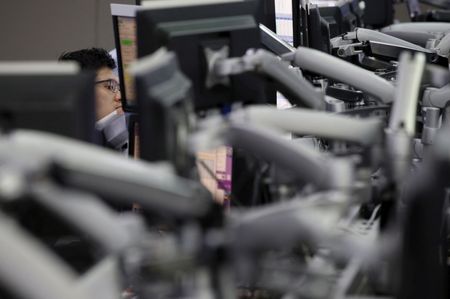

Markets across Asia tumbled Friday as investors stepped back from technology investments and adopted a cautious stance heading into the weekend, concerned about rising tensions in the Middle East while diplomatic efforts between the United States and Iran remain stalled.
The Iran-supported Hezbollah militia turned down a fresh ceasefire proposal in Lebanon Thursday, while Israel announced it would keep its military forces in the country. This development has complicated efforts by U.S. President Donald Trump to end the conflict and negotiate a peace agreement with Tehran.
At the same time, the artificial intelligence boom that had lifted markets earlier this week came to an abrupt halt after chipmaker Broadcom delivered disappointing financial results.
These developments pushed MSCI’s comprehensive Asia-Pacific stock index (excluding Japan) down 1.6% during early trading hours. South Korea’s technology-focused Kospi index plummeted more than 6%, while Japan’s Nikkei dropped 1.3%.
“(It) seems like quite a risk-off today,” said Charu Chanana, chief investment strategist at Saxo.
“Korea has been one of the biggest beneficiaries of the AI memory supercycle, so when Broadcom disappointed on AI expectations, investors quickly de-risked the whole semiconductor chain.
“The issue is not that AI demand has disappeared – it is that expectations had become extremely high, and even good numbers are no longer enough unless guidance keeps moving higher.”
U.S. market futures also showed weakness, with Nasdaq futures dropping 1% and S&P 500 futures declining 0.5% following a volatile session on Wall Street the previous day. European market futures showed similar weakness, with EUROSTOXX 50 futures down 0.2%, DAX futures falling 0.5%, and FTSE futures remaining unchanged.
CRUDE OIL POISED FOR WEEKLY GAINS
Energy markets showed minimal movement Friday as investors waited for developments in U.S.-Iran diplomatic discussions, though crude prices were positioned for weekly increases due to earlier conflict-related supply concerns.
Brent crude futures held steady at $95 per barrel and appeared headed for a weekly increase exceeding 3%, while U.S. crude slipped 0.3% to $92.73 per barrel but remained on course for a weekly gain surpassing 6%.
Kristian Kerr, head of macro strategy at LPL Financial, warned that markets were failing to grasp the challenges involved in returning shipping operations through the Strait of Hormuz to normal levels, even if Washington and Tehran successfully negotiate an agreement.
“Any early increase in barrels is likely to come from already produced crude, including crude sitting on stranded or floating vessels and Iranian cargoes in storage, rather than a sustained restart in production or exports,” he said.
“In other words, this is more about clearing existing bottlenecks than reflating the supply base.”
ATTENTION TURNS TO EMPLOYMENT DATA
Currency markets saw the dollar positioned for a 0.5% weekly increase, bolstered by Middle East instability.
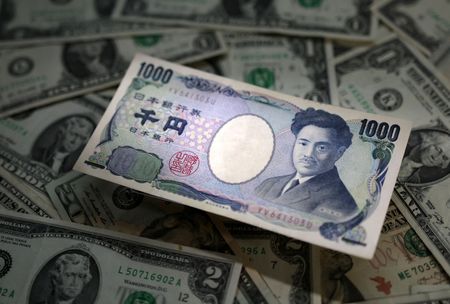
The Japanese yen remained weak near the 160 per dollar mark, trading at 159.96, as Japanese authorities intensified their warnings about the struggling currency, keeping market participants alert for potential government intervention.
Friday’s data revealed that Japan’s foreign currency reserves decreased by $77 billion during May.
Among other major currencies, the euro traded at $1.1611, while the British pound remained relatively stable at $1.3421.
Market attention now shifts to the highly anticipated U.S. nonfarm payrolls report scheduled for release later Friday.
Economic forecasters predict a robust employment increase of 85,000 positions, with the unemployment rate expected to hold at 4.3%. Results exceeding expectations would likely reduce speculation about potential Federal Reserve interest rate increases.
Gold prices edged lower, with spot gold declining 0.2% to $4,465.23 per ounce.