

This is a business report placeholder for Monday, June 1st, 2026. No additional market data, financial news, or business information was included in the source material.

This is a business report placeholder for Monday, June 1st, 2026. No additional market data, financial news, or business information was included in the source material.

FedEx Freight will finalize its separation from FedEx Corp on Monday and launch trading as an independent company on the New York Stock Exchange using the ticker symbol “FDXF.”
The company holds the top position among less-than-truckload service providers across the United States. The timing of its independence coincides with potential recovery in freight rates following a four-year decline, influenced by multiple operators leaving the industry due to financial difficulties and federal regulatory efforts to severely limit commercial driver licenses to U.S. citizens exclusively.
BMO Capital Markets analyst Fadi Chamoun noted in a recent report that “As a newly separated, pure-play entity, the company offers a sizeable margin improvement opportunity, though this is highly dependent on execution.”
According to Chamoun, this potential improvement relies on management’s capacity to convert network strengths into enhanced service quality, increased revenue per shipment, and consistent operating ratio gains.
J.P. Morgan analyst Brian Ossenbeck indicated he assigns FedEx Freight a lower valuation multiple than competitors XPO, Saia and Old Dominion Freight Line, “given execution risk and transition costs related to the spin as well as persistent underperformance on service and volume metrics.”
Chief Financial Officer Marshall Witt stated in April that FedEx Freight anticipates medium-term average revenue growth between 4% and 6%.
Witt also projected that the company expects medium-term average core profit growth ranging from 10% to 12%.
According to Witt, investments in business modernization and separation from FedEx will reduce profits in the near term, but expense management, automation and increased high-profit cargo will enhance margins over the long run.


Stock market futures opened Monday’s trading session with gains as June began, driven by artificial intelligence breakthroughs that helped investors look past continuing Middle East conflict worries.
Shares of Nvidia jumped 1.6% before regular trading hours after the world’s most valuable corporation announced a new processor designed to bring artificial intelligence features to personal computers and laptops, scheduled for launch this autumn.
The processor stems from a three-year collaboration with Microsoft to “reinvent the PC” for the AI era, Nvidia CEO Jensen Huang said. Microsoft stock climbed 2.8%.
Competing PC processor manufacturers saw declines. AMD and Intel dropped 3.4% and 2.9%, respectively.
Market sentiment turned more cautious and petroleum prices increased following recent military exchanges between the U.S. and Iran that heightened worries about diplomatic efforts to resolve the three-month-old conflict.
Major stock indexes finished May at all-time peaks, buoyed by optimism about a potential conclusion to Middle East hostilities and exceptional first-quarter corporate profits.
Market participants now await Friday’s employment data before Kevin Warsh’s first policy meeting as the chairman of the U.S. Federal Reserve this month, amid growing inflation concerns tied to the Iran conflict.
Market participants estimate nearly a 70% probability of a quarter-point interest rate increase by year-end.
As of 05:18 a.m. ET, Dow E-minis advanced 143 points, or 0.28%, while S&P 500 E-minis gained 17.5 points, or 0.23%. Nasdaq 100 E-minis increased 86.75 points, or 0.29%.
Following AI server manufacturer Dell’s positive earnings forecast last week, attention will move to Broadcom’s financial results Wednesday. Broadcom ranks as the nation’s second-largest semiconductor company by market capitalization behind Nvidia.
Statements from multiple Fed officials and a beige book publication will draw attention this week before the central bank begins its pre-meeting silence period Saturday.
In additional corporate developments, Cadence Design Systems climbed 8.2% after introducing an autonomous engineer for semiconductor design, utilizing Nvidia technology.
Micron jumped 5.3% to $1,022, surpassing the $1,000 threshold for the first time. The stock has risen almost 90% during May.

A committee from Japan’s governing political party has urged the government to expand the use of yen-backed digital currencies across Asia and establish legal guidelines for cryptocurrency exchange-traded funds, according to a proposal delivered on Monday.
The recommendation states that crypto-ETFs would offer investors accessible investment opportunities, encouraging officials to recognize these products as legitimate investment vehicles within the financial system.
The Liberal Democratic Party’s blockchain technology advancement committee presented their recommendations to Finance Minister Satsuki Katayama, who supervises the Financial Services Agency.
Japan has an opportunity to showcase yen-backed digital currencies and its blockchain developments when hosting the Asian Development Bank’s annual conference next May, according to committee member Junichi Kanda, who spoke with media following the meeting with Katayama.
“We urged the government to take steps to promote yen stablecoins for settlement in Asia in the future,” he said.
Cryptocurrency ETFs are investment products that enable individuals to invest in digital currencies without directly purchasing or managing the actual digital assets.
The Financial Services Agency has been encouraging domestic banks to adopt blockchain technology for innovation and operational improvements.
The country’s three major banking institutions have launched a Financial Services Agency-supported initiative to jointly test stablecoin issuance. A domestic company called JPYC started releasing yen-pegged stablecoins in October, marking a notable development in a nation where consumers typically favor conventional payment systems.
Dollar-backed stablecoins have experienced significant growth with strong support from U.S. President Donald Trump. Financial officials have expressed concerns that stablecoins might enable money transfers outside traditional banking oversight and threaten commercial banks’ roles in international payments.
Bank of Japan Deputy Governor Ryozo Himino recently advocated for a comprehensive strategy in developing the global monetary system’s future that doesn’t limit choices to central bank digital currencies and stablecoins.


Major South Korean technology companies experienced significant stock gains Monday as news broke of upcoming meetings between the CEO of Nvidia and Korean business leaders, sparking optimism about potential partnerships in artificial intelligence and robotics sectors.
Samsung Electronics saw additional support from data showing South Korea’s semiconductor exports reached an all-time high in May due to the artificial intelligence surge, contributing to the nation’s largest export increase in more than 40 years.
The Nvidia chief executive is anticipated to travel to South Korea later this week for discussions with the chairman of LG Group and other Korean business leaders, according to a source familiar with the plans.
The graphics chip company also has scheduled a “Korean Partner Night” gathering alongside the COMPUTEX technology conference in Taipei on Monday, featuring the CEO and representatives from memory chip manufacturers Samsung and SK Hynix along with other firms.
Samsung Electronics stock climbed 10.1% to achieve a record closing price, while LG Electronics jumped by its maximum daily increase of 29.9% for the second consecutive trading session, reaching an all-time peak. Internet company Naver gained 16% as its senior leadership is set to meet with the Nvidia CEO on Friday.
“Jensen’s visit to Korea has a major implication. Nvidia needs Korea,” analyst Jeff Kim from KB Securities stated.
The artificial intelligence chip maker announced last year it would deliver more than 260,000 of its most sophisticated AI processors to South Korea’s government and several of the nation’s largest corporations, including Samsung Electronics and Hyundai Motor Group.
In a separate development, Samsung Electronics announced Friday it began distributing samples of its newest high-bandwidth memory chip to clients, gaining an advantage over competitors in rolling out an updated version of the component essential for AI data processing facilities. Samsung’s client base includes major artificial intelligence companies like Nvidia.
Samsung has traded at lower valuations compared to SK Hynix because of its reduced competitiveness in high-bandwidth memory, but this development seems to be driving stock price increases, according to BNK Investment & Securities analyst Lee Min-hee.


The worldwide smartphone industry is experiencing its most devastating year on record, with new research projecting sales will crash by 13.9% in 2024 to just 1.08 billion devices, according to data released Monday by Counterpoint Research. The dramatic downturn stems from an intensifying shortage of memory chips that’s reshaping the entire market.
This grim outlook represents a worsening from earlier predictions of a 12.4% drop made in February, with the global semiconductor supply crisis being aggravated by the Iran war.
Budget smartphones are bearing the brunt of the crisis as chip manufacturers redirect their production capabilities toward AI-focused processors, making affordable handsets increasingly unprofitable to manufacture.
During the first quarter of this year, wholesale smartphone costs jumped 14% while actual device shipments dropped 3.1% compared to the same period last year. Industry experts anticipate this pattern will persist as existing inventory stockpiles run low, potentially forcing some smartphone models priced under $150 to completely exit the marketplace.
“Smartphone makers in the low and mid-tier are caught between cost increases they cannot absorb and consumers with limited spending power,” explained Wang Yang, a principal analyst at Counterpoint, an independent research company that publishes quarterly smartphone shipment data.
“The question is no longer how to grow shipments or market share, but whether to remain in the market at all,” Wang added.
According to Wang, this memory chip crisis represents the most devastating supply chain disruption the smartphone sector has ever encountered, with manufacturers finding themselves powerless to counteract the effects through price adjustments or product modifications.
However, high-end smartphone segments are demonstrating greater durability during this turbulent period. Apple achieved unprecedented revenue during the year’s first quarter, boosted by customers switching to its iPhone 17 series. Counterpoint’s analysis suggests Apple’s 2026 shipments will hold steady before climbing 5% the following year.
Thanks to more dependable chip access and higher profit margins compared to competitors, Apple appears positioned to capture additional market territory and may face reduced pressure to implement price hikes.
Samsung Electronics maintained consistent sales volumes during the first quarter and Counterpoint anticipates the company will experience only a 4% shipment decrease for the entire year, performing better than the broader industry due to reliable supply chains and a steady product portfolio.
Transsion, which depends heavily on smartphones priced below $150, faces projections of a devastating 32% shipment collapse this year. Meanwhile, competitors Xiaomi and Honor are expected to experience annual decreases of 28% and 20% respectively, according to Counterpoint’s analysis.


A former Bank of Japan board member is warning that the nation could be heading toward another prolonged period of economic stagnation if policymakers don’t act quickly to raise interest rates.
Makoto Sakurai, who previously served on the central bank’s board and maintains connections with current officials, said Monday that Japan faces the possibility of repeating the same policy errors that contributed to decades of economic decline.
The concern stems from inflation pressures created by the Iran conflict, which Sakurai believes could eventually compel the Bank of Japan to implement dramatic rate increases if preventive measures aren’t taken promptly.
Current Bank of Japan Governor Kazuo Ueda has referenced historical energy crises from 1973 and 1979-1980 as examples when discussing potential responses to the current situation caused by the conflict.
However, Sakurai points to a different historical lesson – Japan’s asset bubble that formed partly due to extensive monetary stimulus starting in 1986, which was implemented to counter a strengthening yen. The central bank maintained loose policies even as asset values climbed dramatically before changing direction in 1989. The subsequent sharp rate increases contributed to the bubble’s collapse and are widely blamed for three decades of economic weakness.
According to Sakurai, the Bank of Japan faces similar risks if it maintains low rates for an extended period, potentially creating conditions that would require aggressive policy tightening as inflation accelerates.
“Given broadening price pressures from the Iran war, stagflation is inevitable,” Sakurai told Reuters on Monday.
“There’s a serious risk of the BOJ falling behind the curve. Forgoing a rate hike in June is unthinkable,” he said.
The central bank moved away from a decade-long massive stimulus program in 2024 and has implemented multiple rate increases, including one in December. Despite these moves, the short-term policy rate remains at just 0.75% while inflation has surpassed the bank’s 2% target for four consecutive years.
Financial markets are currently anticipating an approximately 80% probability of a rate increase to 1% in June, following recent hawkish communications from the Bank of Japan.
The Iran conflict has created complications for central bank officials as they consider the timing and magnitude of rate adjustments, since higher energy prices both drive inflation and strain an economy that relies heavily on oil imports.
Economic data doesn’t indicate an overheating economy. Although first-quarter growth reached an annualized 2.1%, analysts anticipate slower expansion ahead as elevated fuel costs and supply chain disruptions impact business earnings.
Nevertheless, inflationary forces are strengthening as currency weakness and worker shortages encourage companies to raise prices.
While government subsidies have kept core consumer inflation under the Bank of Japan’s 2% target recently, Sakurai predicts it will climb to approximately 3.5% starting in autumn as businesses transfer war-related cost increases to consumers.
Sakurai also highlighted emerging signs of asset bubbles in Japan’s equity and real estate sectors, which the central bank identified as potential risks in its April semi-annual financial system assessment.
Japan’s Nikkei stock index reached a record high above 67,000 on Monday, driven by artificial intelligence-related stocks, while property values increased at their fastest rate in 34 years during 2024.
“If the BOJ holds reservations over raising rates now, it will be forced to do so at a rapid pace later and hurt the economy,” Sakurai said. “We’re only a step away from repeating the mistake that led to Japan’s lost decades.”

The Wall Street investment firm has increased its yearly forecast for the STOXX 600 European stock index to 660, according to an announcement made on June 1st. The firm pointed to strong corporate profit performance as the primary reason for the optimistic outlook, even as conflicts in the Middle East continue.
The European stock benchmark has been trading near all-time highs and posted a 2.5% increase during May, though Middle Eastern conflicts have created some investor uncertainty and prevented even stronger gains.
The updated forecast suggests potential growth of approximately 5.4% compared to the index’s most recent closing price of 626.
The investment firm also increased its shorter-term projections, setting three-month and six-month targets at 640 and 645 respectively, based on a Friday report. The company’s previous target figures were not immediately available.
“Solid nominal growth, positive revisions in energy, and resilient margins across the rest of the market have underpinned the move (rally),” the firm stated, noting that artificial intelligence enthusiasm has also contributed to the market’s strength.
However, the brokerage warned that inflation concerns and expectations of prolonged higher interest rates are preventing stock valuations from reaching even higher levels.
Unlike the U.S. market, Europe’s rally hasn’t been dominated by just a few large companies, though AI-related stocks and energy companies have led the gains while consumer-focused sectors have fallen behind.
The STOXX 600’s forward price-to-earnings ratio for the next 12 months currently sits at 17.55, making it significantly less expensive than the S&P 500’s ratio of 27.94.
The firm projects earnings-per-share increases of 10% in 2026 and 5% in 2027 for the index, with growth expected to moderate as rising energy costs pressure profit margins.
Regarding investor behavior, the brokerage noted that international investors are continuing to put money into European markets seeking value and portfolio diversification, while European investors remain hesitant due to sluggish economic growth and market uncertainty.
“At the same time, concerns around equity supply look overdone, with appetite for the market to absorb more,” the firm added.


A major American cryptocurrency trading platform has launched rupee-based transactions for customers in India, representing a significant move into one of Asia’s largest markets.
Coinbase announced Monday that Indian users can now deposit and withdraw rupees through an immediate payment service system. The platform will offer direct trading across multiple digital assets, plus perpetual futures contracts for leading cryptocurrencies.
The exchange had previously shut down its Indian operations in 2023 but returned to the market last year following registration with the Financial Intelligence Unit.
John O’Loghlen, the company’s regional managing director for Asia Pacific, emphasized India’s importance in the cryptocurrency sector.
“India has long been one of the most important markets in crypto: in terms of developer talent, trading activity, and the broader adoption of blockchain technology,” O’Loghlen stated.
Indian regulations require cryptocurrency platforms to follow anti-money laundering protocols. The nation imposes a 30% tax on cryptocurrency trading profits, ranking among the world’s highest rates, though comprehensive regulations for digital assets remain pending.
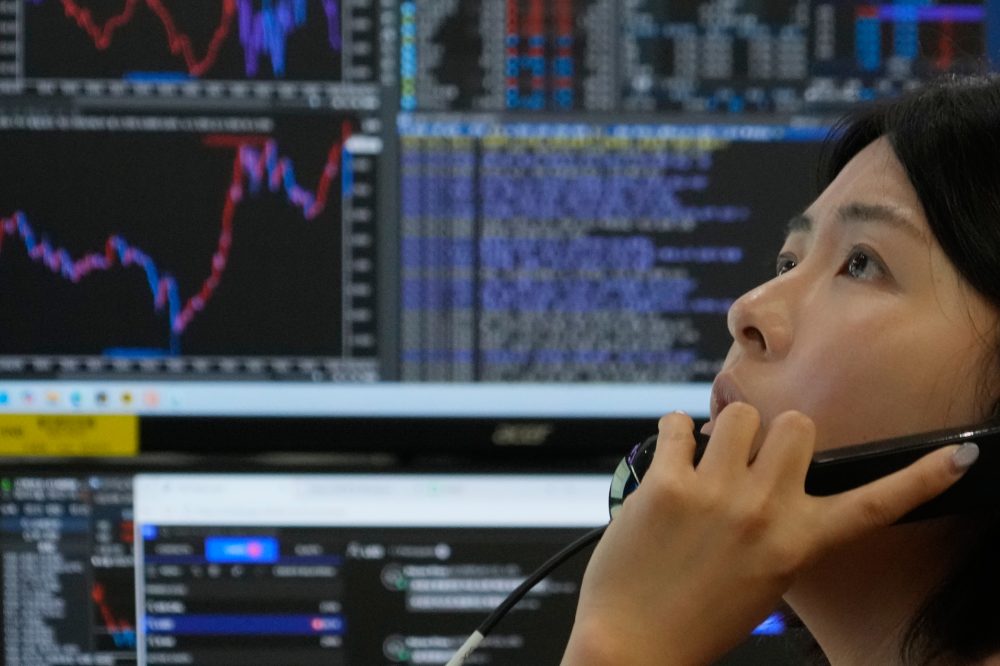

HONG KONG (AP) — Markets in Japan and South Korea achieved new all-time highs on Monday, fueled by excitement surrounding artificial intelligence developments and as traders monitor potential decisions regarding Iran conflict ceasefire negotiations.
Energy prices jumped over 2% while discussions between the U.S. and Iran persist, particularly concerning the potential reopening of the Strait of Hormuz, a critical passage for worldwide oil and natural gas shipments.
U.S. market futures showed modest gains.
Markets across Asia generally moved upward, with Japanese and South Korean indices reaching record levels during Monday’s trading session, propelled by technology sector stocks as investors remain optimistic about artificial intelligence and cutting-edge technology expansion.
Tokyo’s Nikkei 225 climbed over 1.3% and surpassed 67,000 points for the first time, closing at 67,231.28. SoftBank Group shares, the investment firm with significant AI focus, increased more than 9% after setting records the previous week.
South Korea’s Kospi index surged nearly 5% to an unprecedented high of 8,874.16. Samsung Electronics, the nation’s largest corporation, rose over 9%. Government statistics released Monday revealed South Korea’s exports jumped 53% compared to the same period last year in May, supported by worldwide semiconductor demand.
The Nikkei 225 has climbed more than 12% in the past month, while the Kospi has skyrocketed over 27% during the identical timeframe.
Hong Kong’s Hang Seng traded 0.9% higher at 25,408.96. The Shanghai Composite index declined 0.1% to 4,063.72, following China’s weekend report that manufacturing activity weakened in May with indicators of declining export demand.
Australia’s S&P/ASX 200 dropped 0.1% to 8,720.30.
Taiwan’s Taiex rose 1.4%, while India’s Sensex gained 0.6%.
Three months since the Iran conflict started, uncertainties about a lasting resolution continue influencing market behavior and causing oil price volatility, despite optimism about strong AI demand and solid corporate profits driving stock rallies, including on Wall Street.
On Friday, U.S. President Donald Trump conducted meetings with advisers in high-level discussions but hadn’t reached a decision on a preliminary proposal to extend the Iran conflict ceasefire for 60 days, while Iran indicated no agreement had been completed. The Strait of Hormuz reopening remained uncertain. The waterway has been mostly blocked and the U.S. has established a naval blockade at Iranian ports.
Brent crude oil, the global benchmark, increased 2.4% early Monday to $93.33 per barrel. It traded around $70 per barrel in late February, prior to the conflict’s beginning.
U.S. benchmark crude gained 2.8% to $89.76 per barrel.
Friday saw Wall Street indices achieve additional records driven by major technology companies, with the benchmark S&P 500 rising 0.2% in its seventh consecutive advance to 7,580.06.
The Dow Jones Industrial Average advanced 0.7% to 51,032.46, while the tech-focused Nasdaq composite increased 0.2% to 26,972.62.
Dell Technologies jumped 32.8% after reporting better-than-anticipated earnings and raising its forecast based on robust AI-related demand. Microsoft climbed over 5.4%, while Broadcom gained 4.7%.
In currency trading, the U.S. dollar strengthened to 159.48 Japanese yen from 159.25 yen. The euro traded at $1.1645, declining from $1.1667.


Major technology corporations are demonstrating that international bond markets can compete with U.S. dominance in the massive $40 trillion corporate debt sector, with record-breaking debt offerings spanning from Europe to Asia and Switzerland.
The parent company of Google, Alphabet, has emerged as one of the largest active borrowers in both sterling and Swiss franc corporate bond markets. Meanwhile, Amazon completed a massive 14.5 billion euro ($16.88 billion) fundraising effort in March through an eight-part transaction, marking the largest euro corporate bond deal ever recorded, based on LSEG data.
These international debt offerings by major technology firms, known as “hyperscalers,” represent a strategic effort to broaden their funding sources early in their expansion plans, according to banking professionals. The companies are preparing to finance massive AI infrastructure investments worth trillions of dollars over the coming years, with particular focus on data center construction.
International currency borrowing also allows these corporations to protect against currency fluctuations from their worldwide operations while capitalizing on comparatively lower interest rates in regions such as Europe.
Alphabet established new benchmarks across multiple markets, with its transactions in yen, Canadian dollars, Swiss francs, and sterling all breaking previous borrowing records in their respective currencies.
“If you look at the pace of investment of these companies and if you fast forward 12 months, some of these companies are already going to become among the biggest issuers globally in any currency,” said Giulio Baratta, co-head of investment-grade finance at BNP Paribas.
Within Europe, both Alphabet and Amazon have contributed to pushing borrowing by non-financial American companies beyond 60 billion euros ($69.85 billion) this year, establishing another new record.
Morgan Stanley projects approximately 50 billion euros in total hyperscaler borrowing in euro debt this year, potentially positioning the United States to surpass France as the euro zone’s largest source of corporate debt overall.
“A lot of these markets, including euro, have evolved and now offer a lot more depth and opportunity for larger capital raising than was historically the case,” said John Servidea, global co-head of investment grade finance at JPMorgan, which led recent deals for the two hyperscalers.
International corporate bond sales tracked by LSEG have experienced dramatic growth in markets including Swiss franc and yen this year, driven by these major technology deals.
Other American companies beyond the technology sector are taking notice of these successful large-scale international fundraising capabilities, according to Servidea.
“They’re definitely looking at other markets more seriously than they would have previously.”
Corporate borrowing has also increased significantly in currencies including Australian and Hong Kong dollars as international companies seek diverse funding options.
Investment professionals are simultaneously focusing on reducing dependence on U.S. dollar investments due to geopolitical concerns and policy uncertainties.
According to Bank of America data, hyperscalers have increased their non-dollar bond issuance to 30% of total bond funding this year, doubling from previous levels.
International fundraising enables major technology companies to extend intervals between accessing U.S. markets, JPMorgan’s Servidea explained, while securing interest rates that are sometimes lower than U.S. dollar markets, or at minimum comparable.
Extensive borrowing can negatively impact a borrower’s existing bonds, and market analysts observe signs that hyperscalers are underperforming compared to the broader U.S. corporate bond market. Reducing frequency of U.S. market access may help minimize this negative effect.
BNP Paribas’s Baratta, whose firm also managed transactions for Alphabet and Amazon, indicated these companies primarily retain funds in the currencies they raise rather than converting them back to dollars.
Investment professionals are eager to gain exposure to artificial intelligence themes in international bond markets, where technology companies previously maintained limited presence.
Nicolas Forest, chief investment officer at Candriam, is purchasing euro-denominated deals from hyperscalers to increase technology sector exposure within European bond markets.
By April’s conclusion, Alphabet had already achieved fourth-largest borrower status in ICE BofA’s sterling corporate bond index following just one issuance round, and sixth-largest position in Swiss francs.
As technology sector issuance expands, corporate bond markets outside the United States will face increased exposure to technology sector developments, both positive and negative.
“If there are any problems with (AI), it will probably create more volatility,” said David Zahn, head of European fixed income at Franklin Templeton.


Global investors appear to be prioritizing artificial intelligence opportunities over concerns about oil supply disruptions stemming from ongoing Middle East conflicts.
Market watchers suggest that silence from recent Gulf peace negotiations may be viewed positively by traders. President Trump had indicated he would meet last Friday to determine whether to extend a ceasefire agreement, but no announcements have emerged since that time.
Defense Secretary Hegseth recently stated that the United States might resume military action against Iran without a satisfactory agreement. Weekend reports confirmed U.S. forces conducted strikes on Iranian positions, while Iran reported hitting an air base it claims was used in American operations. Kuwaiti defense systems were also said to be intercepting incoming missiles and drones.
Maritime traffic through the Strait of Hormuz has dropped dramatically, with only eight ships departing on May 30, including just two oil tankers. Before the conflict, approximately 136 vessels passed through daily.
Energy market experts have long warned that global oil reserves could face serious shortages by mid-June, yet Brent crude remains below $100 per barrel despite gaining 2.5% to reach $93.40.
Asian financial markets continue their artificial intelligence-driven rally, seemingly unconcerned about energy supply issues. South Korea’s primary stock index soared 28% during May, while Taiwan gained 15% and Japan’s Nikkei rose 12%. Samsung Electronics alone jumped 10% on Monday as the company started delivering advanced, high-speed computer chips.
South Korea’s remarkable trade figures highlight the technology sector’s explosive growth, with exports climbing 53% year-over-year in May to nearly $88 billion. Semiconductor shipments increased 169% while computer exports surged 291%.
Despite these strong export numbers, the Korean currency remains near historic lows, indicating that dollar revenues are staying in U.S. currency rather than being converted. Much of these funds likely flow into Treasury securities, meaning the AI expansion indirectly supports American government financing.
The head of Nvidia is scheduled to open the Computex technology conference in Taipei on Monday with an artificial intelligence presentation. The executive is expected to showcase the company’s newest offerings and announce significant investment plans for Taiwan.
Several economic indicators could impact Monday’s trading sessions, including European Union unemployment data for April, manufacturing surveys, and German retail sales figures. American markets will watch for the ISM manufacturing report for May and purchasing managers’ index data.


Hundreds of young students travel annually to northern China’s steppes to study rare earth minerals at institutions like the Inner Mongolia University of Science and Technology.
Upon finishing their undergraduate education, these graduates can walk just a few kilometers down the six-lane Rare Earths Street in Baotou to find employment with government-owned refineries. These facilities transform essential minerals into magnets that drive jet engines, electric cars, and wind turbines. Alternatively, graduates may continue their education at the nearby Baotou Rare Earth Research Institute, situated roughly 150 kilometers from the globe’s largest rare earth mining operation.
While former U.S. President Donald Trump and other Western officials have committed billions in funding to challenge China’s dominance over rare earth processing—a strategic weapon Beijing has used in its trade disputes with Washington—China maintains a substantial edge through its talent development system built over many decades in locations like Baotou.
China has established a network of over 40 specialized rare earth laboratories conducting advanced research, supported by no fewer than 11 universities and technical schools that together admit more than 500 students each year to rare earth degree programs, according to a Reuters investigation. This accumulated knowledge base reinforces Beijing’s control over global refined rare earth supplies.
Some American institutions have started integrating more rare earth focus into their academic programs, though Reuters found no school outside China offering a dedicated undergraduate degree in the field. The Ames National Laboratory in Iowa, which covers areas beyond mineral sciences, is also recognized for its rare earth research.
However, the mining sector has traditionally attracted few American students, who often view it as unclean and outdated, according to industry leaders and educators. American institutions granted slightly more than 200 general undergraduate mining and metallurgical engineering degrees in 2023, the most recent year with complete national statistics, based on data from the Colorado-based Society for Mining, Metallurgy and Exploration.
Reuters has compiled the first comprehensive assessment of China’s rare earth research and educational infrastructure, using research publications, academic materials, and conversations with 11 Western mining executives and researchers with extensive China experience. This analysis shows a tight connection between academic institutions and industry that enables Chinese companies to manufacture rare earths efficiently and affordably.
“In China, I used to hire kids right out of university and they’re immediately productive,” said Constantine Karayannopoulos, former chief executive of rare earths companies Neo Performance Materials and Molycorp. “Anywhere else I need to train them for three years.”
Beijing now strictly protects this knowledge base: It has progressively tightened restrictions on rare earth technology and equipment exports. China has also reduced interactions between industry professionals and foreigners, with some technicians ordered to surrender their passports, according to three sources familiar with the situation. They did not identify the government entity that confiscated the travel documents but said the crackdown intensified after Trump’s “Liberation Day” tariffs in April 2025.
The National Development and Reform Commission, which handles macroeconomic planning, and China’s industry ministry did not respond to questions about the crackdown and how the country develops rare earth specialists. None of the Chinese research institutes mentioned in this story responded to comment requests.
U.S. Department of Energy spokesperson Olivia Tinari said in response to questions about Washington’s rare earth competition with Beijing that the agency was “investing in American workers, scaling innovation, and expanding domestic production of critical materials.”
Billions in federal funding have poured into American mining schools, research programs and related areas since 2024 as the nation attempts to rebuild mining knowledge. The U.S. Congress is also reviewing legislation that would finance international cooperation with allies for mining education.
Rare earths present difficult and expensive processing challenges. Refineries must handle 17 different rare earth elements with nearly identical chemical characteristics, a complexity that makes separating them from each other extremely challenging.
Isolating neodymium and praseodymium for electric vehicle use, for instance, requires first eliminating the less-valuable lanthanum and cerium that exist in greater quantities in the Earth’s crust. This separation procedure involves a complex mixture of acids, bases and other chemicals.
Western nations controlled rare earth refining until the late 20th century. The process can cause environmental harm, creating byproducts that can contaminate soil and water without proper storage. Excessive contact with certain rare earth types can also damage respiratory and nervous systems.
Chinese researchers have recorded groundwater contamination around a major storage location in Baotou, situated near one of China’s major rivers. The government has also admitted that refining had caused “severe damage” to the environment.
China’s rare earth sector gained from generous tax benefits and plentiful cheap labor during the 1980s and 1990s. The government and related organizations continue funding research institutes, while state lenders have provided financing on favorable terms to companies mining critical minerals.
By the 1990s, the processing industry was “wiped out” in the West, said Ed Richardson, chief executive of U.S. magnet producer Thomas & Skinner. “Therefore, the schools have not been educating mining students for this task.”
In comparison, researchers, universities and industry maintain close collaboration in China. Scientists at the National Engineering Research Center for Rare Earths in Beijing created new technology, which state-owned Gansu Rare Earth New Materials implemented in 2023 at a refining facility capable of producing 50,000 metric tons of highly processed rare earths annually.
That represents five times what Australia’s Lynas Rare Earths, the largest rare earth company outside China, manufactured in the 2025 fiscal year.
China generates over 90% of the world’s processed rare earths and rare earth magnets.
Gansu Rare Earth New Materials did not return a request for comment.
A spokesperson for Lynas, which has previously employed Chinese consultants, said that China has “excellent facilities and research capability.” The company has since built its own technical knowledge, the spokesperson said.
Academic materials published by some universities and examined by Reuters also demonstrate a strong emphasis on serving industry requirements.
Students pursuing rare earth engineering at Inner Mongolia University complete more than 100 hours of instruction in subjects including rare earth chemistry and material science. One foundational course operates in partnership with rare earth laboratories and companies, with students having the opportunity to attend classes at corporate locations.
The 70 students that Jiangxi University of Science and Technology (JXUST) announced to state media will join its newly established rare earth degree program will examine the supply chain from processing and metallurgy to magnets. Prior to graduation, students will also participate in research projects with companies.
David Parker, a rare earth specialist at Britain’s Durham University who examined the Chinese institute’s course outline for Reuters, called it “highly specialized” and representative of the “pre-eminent position of China in rare earth science and engineering.”
The education offered at the school “ensures a supply of knowledgeable and informed young people, who are well placed to find employment,” he said.
Chinese rare earth engineering graduate students often focus more narrowly in their research areas than would occur elsewhere, said Portuguese physicist Luís Carlos, who has toured research institutes in the country for nearly 20 years.
“But if you think about people as small parts of a big machine, then this is good for the machine,” he said.
Some Chinese universities have openly recognized that they are developing geopolitical resources.
Rare earths are “core bargaining chips” in global politics, Li Chaozhong, dean of JXUST’s rare earth program, told state broadcaster CCTV in April.
The university’s new program serves not only scientific purposes, he said. It is “also to ensure that China continues to maintain its global leading position in the development of rare earth resources.”
There are some instances of innovative work in the West. Valor Metals, for example, is utilizing processes created by the University of Illinois at Urbana-Champaign that the company claims are potentially 10 times less expensive and faster than those used in China. The technology, however, has not been proven at large scale.
The Colorado School of Mines, widely considered one of the world’s premier mining schools, is building two new critical minerals research facilities with the Energy Department to supplement existing programs. It anticipates the first will open in 2027.
The school’s mining-related undergraduate programs have recently received more attention and enrollment.
“The U.S. minerals industry needs to be clear that we need the talent and that this is a great career path,” said Kunal Sinha, Valor’s CEO.


Gaming authorities in New South Wales announced Monday they have imposed a $7.2 million fine on Star Entertainment’s Sydney casino for deficiencies in financial crime risk management technology and operations.
The NSW Independent Casino Commission (NICC) levied the A$10 million penalty while also requiring an additional A$5 million be set aside through an enforceable agreement to improve the casino’s systems.
This financial penalty follows the ongoing suspension of Star’s Sydney operating license, with the facility continuing to operate under supervision from a NICC-appointed manager.
According to the NICC, Liquor and Gaming NSW’s investigation uncovered thousands of violations at The Star Sydney during the previous year, spanning from December 2018 through September 2025.
The commission noted that many violations were discovered through the casino’s own remediation efforts and follow-up investigations, with some infractions voluntarily reported by The Star itself.
NICC Chief Commissioner Philip Crawford acknowledged that while violations of the Casino Control Act 1992 raised concerns, many occurred before comprehensive remediation measures were put in place, including technological improvements like carded play systems.
“These financial penalties combined with the enforceable undertaking emphasize how seriously the NICC views any violations that expose customers to gambling risks or make casinos susceptible to criminal activity,” Crawford stated.
Star Entertainment did not provide an immediate response when contacted for comment.
The struggling casino company recently reported a third-quarter loss after previously showing profits, affected by seasonal downturns and reduced revenue from table games.

DBS Group announced Monday its plans to establish 18 new wealth management centers throughout Asia before the end of 2027, while also enhancing 36 current locations within the next year and a half. This represents the banking institution’s most ambitious physical growth initiative for its wealth management division.
The initiative will cover Singapore, Hong Kong, mainland China, India, Indonesia, and Taiwan. Within Singapore specifically, DBS reported that its Treasures wealth center presence will grow by half through these new locations.
This strategic decision aligns with projections showing Asia’s affluent demographic – households possessing between $100,000 and $1 million in investible funds – is anticipated to total $4.7 trillion by 2026.
Research conducted in Hong Kong and Singapore reveals that approximately 45% of customers continue to prefer in-person meetings with financial advisors, despite increasing adoption of digital platforms.
DBS has transformed its wealth management division into a primary growth driver and emphasized that these new facilities will focus on strengthening client relationships rather than processing standard transactions.
Within Singapore and Hong Kong, the two dominant wealth markets, these centers will mainly accommodate Treasures clients, while locations in other regions will serve both Treasures and the premium Treasures Private Client categories.
This growth strategy builds upon robust performance in DBS’s wealth management sector. The bank reported that wealth assets under management totaled S$492 billion during the first quarter of 2026.
“What clients tell us… is that the relationship should feel personal, familiar and close to home,” stated Sanjoy Sen, group head of consumer banking.
Initial openings are scheduled to begin in the third quarter, with additional launches planned in phases extending through 2027.


Auto workers in Michigan are preparing to walk off the job at midnight following a strike order from United Auto Workers President Shawn Fain on Sunday.
The work stoppage will affect a Three Rivers, Michigan facility operated by Dauch Corp, which manufactures axles for General Motors pickup trucks – among the automaker’s highest-earning vehicles.
The Detroit-based union announced the midnight strike late Sunday, targeting the plant that employs roughly 1,000 unionized workers. Dauch Corp, previously known as American Axle, specializes in producing driveline components.
Company representatives from Dauch were not available for immediate response Sunday evening.
General Motors stated it was keeping close watch on developments and “assessing any potential impact.”
Union officials say they are demanding better wages after workers accepted concessions to prevent the facility’s closure in 2008. Current maximum pay reaches $22 per hour following a five-year advancement timeline, representing a decrease from peak wages of $29 hourly in 2008, union representatives reported. Workers overwhelmingly supported strike authorization in early May, with 98% approval.
“For 18 years, these members have built you an empire of profit while getting treated like dirt. They’ve taken wage cuts, benefit cuts, they poured their souls into this plant,” Fain said on a livestream announcing the midnight strike.
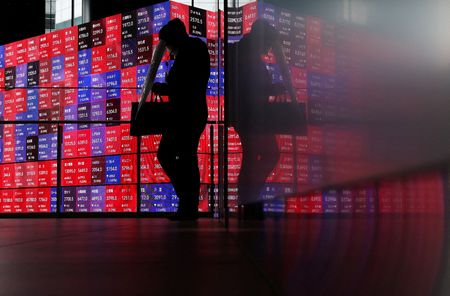

Asian stock exchanges posted gains Monday as the artificial intelligence sector’s continued expansion provided investor confidence, helping to counterbalance concerns over stalled Middle East peace negotiations that have pushed oil prices higher.
Diplomatic representatives from Washington and Tehran continue working toward an agreement, though President Donald Trump has remained quiet about any developments. Defense Secretary Pete Hegseth stated Saturday that the United States stands prepared to resume military action against Iran should negotiations fail.
Regional tensions have intensified with Israel’s expanded military operations in Lebanon targeting the Iranian-supported Hezbollah organization.
“While uncertainties remain, the acute risk phase for the global economy should be over if tankers can begin moving again,” said Michael Feroli, head of U.S. economics at JPMorgan.
“Still, not everything would return to its pre-conflict place — oil prices are likely to remain elevated for some time, as inventories get rebuilt and the supply infrastructure in the Middle East is repaired,” he added.
The ongoing uncertainty pushed Brent crude prices up 1.9% to $92.89 per barrel, while U.S. crude increased 2.4% to $89.46.
Technology and semiconductor companies continue driving Asian market performance, with Japan’s Nikkei climbing an additional 0.5% after gaining nearly 5% the previous week to reach record levels.
South Korea’s markets rose 1.3% following an 8% surge last week, while Taiwan gained almost 6% during the same period. The MSCI Asia-Pacific index excluding Japan added 0.2%.
Nvidia boss Jensen Huang begins the Computex technology conference in Taiwan Monday with an artificial intelligence presentation where he’s anticipated to discuss his company’s newest developments and Taiwan’s key position in the sector.
European markets showed weakness with EUROSTOXX 50 futures declining 0.3%, DAX futures dropping 0.2%, and FTSE futures falling 0.5%.
U.S. market futures pointed higher with S&P 500 futures up 0.2% and Nasdaq futures gaining 0.4% after reaching new highs last week.
However, the market rally has been concentrated among a small group of companies, with the top 10 AI-related firms representing 40% of the S&P 500’s value and only 21 stocks out of 500 hitting record highs. Technology shares jumped nearly 16% in May while consumer discretionary and healthcare sectors managed gains of just over 2%, and consumer staples declined more than 3%.
Rising oil prices continue pressuring bond markets as U.S. 10-year Treasury yields increased 3 basis points to 4.470%. Financial markets suggest equal odds that the Federal Reserve may need to raise interest rates before year-end to prevent inflation expectations from becoming entrenched.
Multiple Federal Reserve officials are scheduled to speak this week, with key economic data including the ISM manufacturing survey and Friday’s May employment report.
Economists predict employment will increase by 85,000 jobs, keeping unemployment steady at 4.3%. Stronger job growth would likely increase expectations for interest rate increases.
The dollar’s strength has been supported by hawkish market sentiment, while the Japanese yen and euro face pressure due to their regions’ dependence on energy imports.
The dollar edged slightly higher against the yen to 159.42, though traders remain cautious about potential Japanese intervention if the currency breaks through 160.00.
The euro traded at $1.1645, remaining within its recent range between $1.1585 and $1.1661.
Gold prices held steady at $4,535 per ounce, showing limited appeal as either a safe-haven asset or inflation protection.
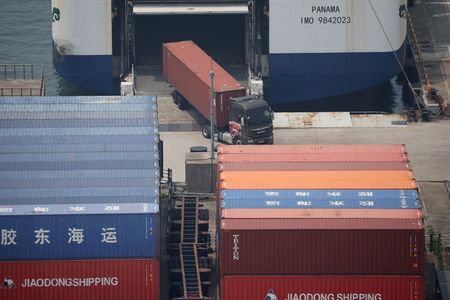

South Korea achieved its most robust export performance in more than 40 years during May, with international sales climbing at a pace not seen since the 1980s, driven primarily by unprecedented demand for computer chips used in artificial intelligence applications.
The Asian nation’s overseas shipments increased by 53.2% compared to the same period last year, reaching a record $87.75 billion according to preliminary government trade figures released Monday. This growth exceeded analyst projections, which had anticipated a 48.4% gain based on a Reuters survey.
The May results marked the twelfth straight month of year-over-year export increases and represented the largest percentage growth recorded since January 1984.
Semiconductor shipments experienced dramatic growth, skyrocketing 169.4% to an unprecedented monthly total of $37.16 billion. The trade ministry attributed this surge to rising memory chip prices fueled by increased spending from American technology companies.
Computer equipment sales also demonstrated remarkable growth, climbing 290.7% due to demand for AI server technology. Petroleum product exports advanced 46.6% on elevated oil prices. However, automobile shipments declined 5.9%, affected by supply chain disruptions in the Middle East and the impact of American tariffs.
Regional export patterns showed significant variation, with deliveries to the United States increasing 59.1% and shipments to China rising 80.9%. Conversely, exports to Middle Eastern markets dropped 7.7%.
The country’s central bank recently revised its annual economic growth projection upward to 2.6% from an earlier estimate of 2.0%, following the trade-dependent economy’s strongest quarterly performance in nearly six years, powered by booming semiconductor exports.
Import activity also strengthened, rising 20.8% in May to reach $60.80 billion. While this fell short of economist expectations for a 21.5% increase, it still represented the highest import growth since August 2022.
The nation recorded a trade surplus of $26.95 billion, expanding from the previous month’s $23.75 billion surplus and setting an all-time record.

The American dollar remained stable on Monday after experiencing losses the previous week, as financial markets focused on ongoing Middle East diplomatic efforts and anticipated guidance from central banking authorities regarding interest rate policies.
Currency markets showed optimism last week over potential agreements between the United States and Iran that could reopen the critical Strait of Hormuz oil shipping corridor, causing the dollar index to decline.
Energy prices surged during early trading sessions following Israel’s directive for military forces to advance deeper into Lebanon amid ongoing conflicts with Iranian-backed Hezbollah forces.
U.S. President Donald Trump announced on Friday his intention to make a decision soon regarding a proposed agreement to extend the current Iran ceasefire arrangement.
Upcoming U.S. employment statistics will draw significant attention this week as Federal Reserve policymakers indicate the central bank might implement rate increases if the ongoing conflict worsens existing inflationary pressures.
“USD will be heavily influenced by developments in the US-Iran war and the U.S. non-farm payrolls report for May,” said Joseph Capurso, head of FX at Commonwealth Bank of Australia.
“Once the Strait is reopened, over time the oil price will fade and interest rates will return as a greater influence on the USD,” he added in a note.
The dollar index measuring the currency’s performance against major international currencies including the yen and euro remained unchanged at 99.00, following the previous week’s 0.4% decline. The euro decreased 0.08% to $1.165.
The Japanese yen lost 0.08% reaching 159.41 per dollar. The British pound dropped 0.07% to $1.3449.
The potential agreement would extend the current U.S.-Iran ceasefire for an additional 60 days while permitting shipping traffic to resume through the strategic waterway, which typically handles one-fifth of worldwide crude oil and LNG shipments during peacetime, as negotiators address remaining disputed matters.
A senior Iranian source told Reuters an agreement was close but had not yet been approved.
Employment data for U.S. nonfarm payrolls scheduled for June 5 are projected to reveal an unemployment rate of 4.3% along with 85,000 new jobs added, based on a Reuters survey conducted through Friday.
Financial markets anticipate the Federal Reserve’s next action will involve raising its benchmark rate from the current 3.50% to 3.75% range, likely before year’s end. Central bank officials had previously considered rate reductions before the Iran conflict began.
The European Central Bank should raise rates this month even if a U.S.-Iran peace deal is reached, Isabel Schnabel, an ECB board member, told Reuters last week. She is set to speak in South Korea on Monday.
Bank of Japan Governor Kazuo Ueda’s Wednesday address is eagerly awaited for indications about whether the central bank will move forward with a rate increase the following week.
Although consensus has not emerged within the BOJ regarding this decision, postponing the central bank’s reduction of government bond purchases appears increasingly favored, according to two sources familiar with internal discussions.
Japan’s finance ministry announced on Friday that the government invested 11.7 trillion yen ($73.40 billion) in currency market interventions during the past month to strengthen the yen, confirming traders’ widespread expectations.
The Australian dollar remained unchanged at $0.7181 against the U.S. currency. New Zealand’s dollar fell 0.17% to $0.5978.


A top European Central Bank official warned Monday that growing adoption of digital currencies pegged to the U.S. dollar could strengthen America’s financial dominance around the world and weaken other nations’ control over their monetary systems.
European Central Bank board member Isabel Schnabel expressed concerns that stablecoins – digital currencies designed to maintain steady values by being tied to specific assets – could have far-reaching consequences for global finance, even potentially reducing the euro’s international influence.
Although stablecoin usage remains relatively limited today, it has grown rapidly, and financial analysts predict this trend will accelerate significantly in coming years.
Most stablecoins currently in circulation are tied to the U.S. dollar, and rapid expansion of these digital currencies could halt or even reverse a twenty-year decline in the dollar’s worldwide influence, according to some financial experts.
Speaking at a Bank of Korea conference in Seoul, Schnabel explained that increased stablecoin adoption would strengthen America’s currency position through technological advantages and market momentum rather than underlying economic strength. “The dollar’s dominance would be reinforced, not necessarily owing to stronger economic fundamentals but due to network effects, scale and first-mover advantages,” she stated.
Data from the International Monetary Fund shows the dollar’s share of global foreign exchange reserves dropped below 57% last year, down from 70% two decades ago, as smaller currencies gained market presence.
While countries with less credible monetary policies would face the greatest impact from dollar-based stablecoin growth, Schnabel noted the trend could also affect the euro’s position in international finance.
She warned of a potential downward spiral where citizens in countries with weak policy credibility might increasingly turn to dollar-based digital currencies, further undermining their central banks’ ability to implement effective economic policies.
Even regions with strong monetary credibility could face negative consequences over time if dollar-based stablecoins continue to dominate, potentially increasing use of the U.S. currency for international transactions and global financial holdings, Schnabel cautioned.
“From a European perspective, this could eventually limit the euro’s role in emerging forms of tokenised finance and in the international monetary system more generally,” she concluded.


Workers at South Korean technology company Kakao Corp announced Monday they will conduct a four-hour work stoppage and demonstration in Pangyo on June 10, responding to concerns about job security during potential company restructuring.
Union representatives indicated they might intensify their labor actions based on how ongoing negotiations progress, though they emphasized there are currently no plans to disrupt services on a large scale at the technology firm.


Australian mining company Syrah Resources announced Monday that Tesla has rescinded its intention to cancel their graphite supply contract, concluding extended discussions between the two firms that resulted in four deadline extensions.
Under the 2021 agreement, Syrah planned to deliver 8,000 metric tons of graphite anode materials to the electric vehicle manufacturer Tesla across four years from its Louisiana-based Vidalia facility.
The Vidalia operation represents the sole vertically integrated, major-scale manufacturer of anode materials located outside China, supporting efforts to decrease American reliance on Chinese suppliers who control the marketplace.
Electric vehicle lithium-ion batteries require graphite as a key component.
The company led by Elon Musk delivered a default notice in July 2025, pointing to quality problems with active anode material samples shipped from the Vidalia location.
Through an ASX filing Monday, Syrah announced that Tesla now acknowledges the mining company has shown its ability to produce qualifying active anode material samples and has achieved adequate advancement.
The mining operation noted that Tesla maintains its existing authority to end the supply contract if final approval of Vidalia’s active anode material is not completed.
During March, both Tesla and Syrah had reached agreement to postpone the resolution deadline for the fourth occasion regarding the claimed default in their graphite supply contract until June 1.

Dell has introduced its most budget-friendly laptop offering on Sunday, launching the XPS 13 at $699 as the computer manufacturer works to gain ground against Apple’s MacBook Neo by targeting students and young working professionals.
Priced at $699 for general consumers and discounted to $599 for students 16 years and older during back-to-school promotions, the XPS 13 aims to deliver enhanced performance compared to Apple’s MacBook Neo, according to Dell.
This bold move into budget-friendly computing demonstrates Dell’s strategy of following Apple’s approach to expand market presence in a cost-conscious sector experiencing memory chip supply constraints.
According to Dell, the XPS 13 represents the company’s slimmest and most lightweight design to date, weighing approximately half a pound less than Apple’s MacBook Neo while incorporating a bigger screen.
Apple launched its MacBook Neo series in March with a starting price of $599, which contributed to stronger fiscal second-quarter performance the following month. The Neo retails for $500 to students and rivals Chromebooks along with budget-friendly Windows computers.
“I’ll give them (Apple) credit. It’s a good product and it validates the market we’ve been talking about. Students and consumers deserve better options at accessible price points, and we agree,” Dell Chief Operating Officer Jeff Clarke said.
This laptop introduction follows Dell’s January announcement at the Consumer Electronics Show in Las Vegas, where the company expressed intentions to compete across multiple price ranges in the consumer computer market and revealed plans for the XPS 13 launch.
The company also reintroduced its well-received XPS laptop series in January. These initiatives are designed to offset anticipated declines in computer unit sales during the year’s second half due to increasing memory chip expenses.
The XPS 13 featuring Intel Core Series 3 processors will become available shortly, while the version equipped with Intel Core Ultra Series 3 processors and Storm color option is scheduled for release later this summer.


Global petroleum markets experienced significant gains exceeding 2% during Monday morning trading sessions following Israeli military orders for troops to advance deeper into Lebanese territory in ongoing conflicts with Hezbollah forces backed by Iran, occurring despite a ceasefire declaration made over six weeks prior.
American crude contracts climbed $2.37 or 2.71% reaching $89.73 per barrel at 1017 GMT. Meanwhile, Brent contracts increased $2.07 or 2.27% to $93.19 per barrel.
Both Brent and WTI contracts had declined 1.8% and 1.7% respectively during Friday’s session amid market anticipation that the United States and Iran had achieved a ceasefire arrangement.


Several Israeli government agencies are working together to prevent a massive shipping company acquisition, citing national security threats and concerns about the country’s ability to maintain essential supply routes during crises, according to reports from Calcalist.
The ministries of Economy, Agriculture and Transport, along with the Shipping and Ports Authority, are opposing the planned acquisition of ZIM by German shipping company Hapag-Lloyd and the FIMI fund for $4.2 billion.
The contested acquisition received approval from ZIM shareholders in late April. The deal values the company at approximately $1 billion more than its current trading price on Wall Street and would result in ZIM being removed from public trading.
According to the acquisition terms, Hapag-Lloyd would assume control over ZIM’s global operations, while FIMI fund, led by Ishay Davidi, would oversee the company’s domestic Israeli activities.
Government authorities have expressed strong disapproval of the plan to split the company’s operations. The Ministry of Economy released a statement expressing concern that the structure “raises concerns that the framework would create a crippled company incapable of surviving independently from a business and operational standpoint.”
The ministry also cautioned that what remains of the Israeli operations would become “a tiny operational shell disconnected from the global logistics network.”
Those opposing the deal maintain that handing over the majority of ZIM’s operations to an international entity would diminish Israel’s maritime transport capabilities and compromise the nation’s ability to respond effectively during future emergencies. Government representatives argue the arrangement would establish a smaller domestic shipping operation designed to meet state ownership requirements while significantly diminishing operational effectiveness.
Government agencies have also raised red flags about Hapag-Lloyd’s investor base, pointing out that Qatar and Saudi Arabia maintain ownership stakes in the German company.
“The assumption that the State of Israel could rely during a national emergency on a shipping company whose significant shareholders include countries with interests that are opposed or hostile to Israel is completely detached from strategic reality,” the Ministry of the Economy wrote.
Government representatives have emphasized ZIM’s critical importance in serving Israeli markets, noting that the company handles approximately one-third of all food products shipped by sea into the country.
The ministry issued an additional warning that “during a security crisis, when foreign companies may reduce their activity in Israeli ports, the state could find itself struggling to import essential raw materials for industry, basic consumer goods, and other products transported by sea.”


Warren Buffett’s investment giant announced Sunday it will purchase Taylor Morrison Home Corporation through an all-cash transaction worth approximately $8.5 billion, according to a joint statement from both companies.
The deal structure calls for Berkshire Hathaway to pay $72.50 in cash for each share of common stock, putting Taylor Morrison’s total equity value at roughly $6.8 billion. This purchase price gives shareholders a 24% boost compared to Friday’s final trading price of $58.50.
Once the transaction is finalized, Taylor Morrison will transition to private ownership while maintaining its current leadership structure, with Chief Executive Sheryl Palmer remaining at the helm. The company’s stock will be removed from New York Stock Exchange trading when the deal concludes.
Both organizations anticipate completing the purchase during the latter portion of 2026. Goldman Sachs and Moelis provided financial guidance to Taylor Morrison throughout the transaction process.


Federal regulators moved Sunday to shut down a regulatory gap that potentially allowed Chinese companies to obtain America’s most advanced artificial intelligence processors through their international subsidiaries.
The Commerce Department published new guidance on its website targeting a loophole that may have permitted Chinese entities to acquire cutting-edge semiconductors, including Nvidia’s latest Rubin and Blackwell processors and AMD’s MI350x chips, by operating through locations such as Malaysia.
This regulatory oversight suggests that America’s top-tier AI semiconductors could have been reaching Chinese artificial intelligence companies for nearly twelve months, despite ongoing federal efforts to restrict Chinese access to critical semiconductor technology.
The scope of chip exports during this period remains unknown, though one industry insider with extensive supply chain expertise estimated the number could reach hundreds of thousands of units.
In the weekend announcement, federal regulators declared they would apply licensing requirements to advanced semiconductors destined for China-based entities, regardless of where those companies maintain physical operations.
Neither the Commerce Department, Nvidia, nor AMD provided immediate responses to requests for comment.
The regulatory opening emerged when the Commerce Department announced in May 2025 that it would suspend enforcement of the AI Diffusion rule, which had been implemented during the final period of the Biden administration to control worldwide AI chip access.
Technology expert and former State Department official Chris McGuire described the situation in a social media post Sunday, stating: “This is a HUGE problem.” He explained that the gap enabled overseas branches of Chinese corporations to purchase Nvidia Blackwell processors without proper licensing.
“Chinese companies have been buying these chips, very likely at scale,” McGuire stated.
The updated guidance includes an unusual provision that does not mandate data centers to discontinue using the processors or halt maintenance services for advanced computing equipment like servers.
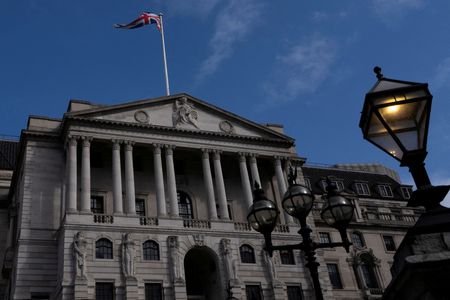

DUBROVNIK, Croatia – A Bank of England official predicts the current enthusiasm for stablecoins may be short-lived, with digital bank deposits eventually taking their place in the financial landscape.
Speaking at a financial conference in Dubrovnik, Croatia on Sunday, Bank of England policymaker Megan Greene suggested that tokenized deposits – electronic versions of conventional bank accounts – will likely overtake stablecoins in the coming years.
“I think tokenised deposits are probably going to take over from stablecoins and five years from now, I suspect we might wonder why we were talking about stablecoins,” Greene said during the conference.
Stablecoins are cryptocurrency assets created to hold steady values and have gained traction recently, though their growth has plateaued in recent months while some experts still anticipate future increases.
Greene acknowledged there’s room in the market for central bank digital currencies, stablecoins, and digital deposits, but believes the latter will ultimately prevail once traditional banks realize they risk losing conventional deposits otherwise.
However, U.S. Federal Reserve policymaker Christopher Waller, who appeared on the same discussion panel, offered a contrasting perspective. He championed stablecoins as beneficial financial innovation that could lower costs and shouldn’t face overly restrictive regulations.
“I’ve always just looked at stablecoins as a payment instrument; there’s nothing evil about it, nothing dangerous about it,” Waller stated. “They are just bringing competition into the payments world.”
Greene explained that digital deposits “haven’t taken off because commercial banks don’t want to lose the fees … But they’re going to lose them anyhow and when they realize this, they will put more (effort) into developing these.”
She raised concerns about stablecoins’ actual stability, regulatory uncertainties, and their use in illegal activities. Additionally, she noted that stablecoins draw deposits from traditional banks, potentially weakening monetary policy effectiveness.
Waller countered that stablecoins serve cross-border payment needs and pose enough of a competitive threat that banks are actively lobbying against them.
“These things are used for cross-border payments, and they are scaring the banks,” Waller said. “If you think banks don’t think this is a threat, then why are they lobbying so hard to stop it?”
Despite the debate, Greene maintained her position that stablecoins face significant challenges that may limit their future prospects.
“I like to think of it as a massive race between the tortoise, the hare and the rhino,” she explained.
“The tortoise is the central bank digital currency …the hare is stablecoins and the rhino is tokenised deposits. We’ll probably end up with all three, but if I had to put money in one … it would be the rhino, tokenised deposits, which I think will probably take off.”

Market watchers will focus on crucial employment data next week as they assess whether rising inflation concerns and possible interest rate increases might halt the current surge in U.S. stock markets.
The upcoming earnings announcement from Broadcom will also serve as a crucial test for the artificial intelligence trading trend that has been driving market gains. During this week, U.S. stock indices extended their upward momentum, with the S&P 500 achieving its ninth consecutive weekly increase. The benchmark index has risen over 10% this year, while the Nasdaq has surged 16%.
Technology companies have spearheaded the market recovery based on strong earnings forecasts fueled by artificial intelligence growth, following significant losses in March that affected tech and other major companies.
“That group really had a significant correction,” said Chuck Carlson, CEO at Horizon Investment Services. “What has really been a fuel for this market was investors going in looking at the values that had been restored in that group, seeing that earnings were still growing at pretty rapid rates, and going to buy them.”
Market sentiment has also improved recently due to expectations for resolution of the Iran conflict, which has continued for three months. Financial markets remain vulnerable to developments in this situation as next week approaches.
The monthly jobs data, scheduled for release on June 5, arrives amid growing investor concerns about persistent inflation and the possibility of rate increases that could negatively impact stock performance.
Thursday’s data revealed that the Personal Consumption Expenditures Price Index increased 3.8% over the 12-month period ending in April, marking the highest increase since May 2023, attributed to elevated energy costs related to the Iran conflict. The Federal Reserve uses PCE inflation measurements to guide its 2% target.
“If you were to get a hot employment report alongside still-rising inflation numbers, I think it continues to change the outlook for Fed policy,” said Liz Ann Sonders, chief investment strategist at the Schwab Center for Financial Research. “If it were to be a weaker-than-expected report, then maybe it calms fears that the Fed is going to have to shift to a tightening stance.”
Forecasters anticipate May’s employment report will show a 4.3% unemployment rate and 85,000 new jobs, based on a Reuters survey conducted through Friday.
Job growth exceeding 150,000 positions could create problems for stock markets if it raises concerns about an overheated economy that also pushes Treasury yields upward, according to Angelo Kourkafas, senior global investment strategist at Edward Jones.
“We have enough indications that economic activity remains solid,” Kourkafas noted, pointing to the Atlanta Federal Reserve’s GDPNow model projecting 3.8% second-quarter growth, following exceptional first-quarter corporate earnings.
He suggested markets should focus less on recession possibilities and more on whether “we talking about a potentially overheating economy.”
Wednesday’s quarterly earnings from semiconductor company Broadcom, ranked as the sixth-largest U.S. corporation by market value, could create significant market movements. Semiconductor stocks have soared recently on expectations of increased chipmaker earnings driven by massive AI infrastructure development.
From the March 30 yearly market bottom, the Philadelphia SE Semiconductor Index has climbed approximately 80%, while Broadcom stock has gained over 50%. The S&P 500 has increased more than 19% during the same period.
Additional U.S. economic reports next week will cover manufacturing and services sector performance. Another significant inflation report the following week will provide final data before the first Fed meeting under chair leadership on June 16-17.
Futures markets suggest higher probability of rate increases this year rather than cuts, contrary to expectations for Federal Reserve policy easing.
The possibility of rate hikes combined with increasing inflation has contributed to recent bond yield increases.
While benchmark Treasury yields have retreated somewhat, with the 10-year yield near 4.45%, rising yields pose risks for stock markets, Carlson explained. Elevated bond yields typically result in higher borrowing costs for consumers and businesses while creating additional investment alternatives to stocks.
“If you saw a real spike in interest rates that was maintained … that would be the thing that I think would be most disconcerting for investors,” Carlson stated.


During the busy summer travel period, NPR received exclusive access to witness Delta Air Lines’ massive luggage handling operation at Atlanta’s airport, where the carrier processes over 100,000 pieces of baggage daily at what’s known as the globe’s most active aviation hub.


An artificial intelligence company from China announced Sunday it’s considering going public on a major Shanghai stock exchange.
MiniMax Group disclosed in documents filed with the Hong Kong Stock Exchange that it’s investigating the possibility of listing on the STAR Market, Shanghai’s technology-focused trading platform.
The company revealed it has brought on financial advisors to help navigate the listing requirements for the STAR Market and has signed an advisory agreement with them.
MiniMax noted that any potential stock offering using Chinese currency would be subject to favorable market conditions and obtaining required government approvals.


A new investigation by NPR explores how people across the United States are changing their food habits in response to rising grocery costs.
The report, part of NPR’s “What’s Eating America” series, features work by reporter Joe Hernandez, who looked into the various ways Americans are adjusting their eating and shopping patterns to deal with elevated food prices.
The investigation focuses on the different tactics people are employing to manage their food expenses during this period of increased costs.


The Japanese technology conglomerate SoftBank Group has unveiled plans for a massive €45 billion investment over the coming five years to develop artificial intelligence infrastructure across France, according to founder Masayoshi Son in a weekend interview with La Tribune Dimanche.
Son described this commitment as Europe’s largest AI infrastructure investment to date, focusing on the northern Hauts-de-France region. The company’s total investment commitment in France is expected to reach €75 billion, Son revealed.
Officials plan to formally reveal these investment details on Monday during the annual Choose France business conference.
La Tribune Dimanche reported that two data center locations at Le Bosquel and Dunkirk are scheduled to begin operations in 2028 and 2031 respectively, delivering a combined computing capacity exceeding 5 gigawatts.
When questioned about selecting France for this venture, Son explained, “The fact that the country is a producer and exporter of energy is absolutely decisive for investments in AI infrastructure.”
This French investment represents part of SoftBank’s worldwide AI infrastructure expansion efforts. The company has already committed more than $30 billion to OpenAI, securing approximately an 11% ownership stake.
France has utilized the Choose France summit as a platform to attract international investors since President Emmanuel Macron established the event in 2018.


Companies across the nation have begun receiving money back from tariffs that the U.S. Supreme Court determined President Donald Trump did not have constitutional power to impose on imports from nearly all other nations.
However, this refund process may come to a stop after the Trump administration announced Friday its intention to challenge a federal judge’s decision that expanded eligibility for refunds to all businesses that paid the invalidated duties, rather than limiting it to companies that pursued legal action.
Before the Department of Justice notified the court of its appeal plans, the refund program managed by U.S. Customs and Border Protection had been operating relatively smoothly. The first successful claimants received their money on May 12, approximately three weeks after importers and their customs brokers began submitting requests through an online portal, CBP reported.
As of May 22, refund requests totaling $85 billion had been accepted for review – representing more than half of the $166 billion that the agency calculated the government owes to businesses that paid tariffs on imported merchandise, according to a CBP court document filed this week. The agency stated it had already instructed the Treasury Department to distribute $20.6 billion in refunds.
The administration disclosed its appeal intentions while challenging a request by Judge Richard K. Eaton for CBP Commissioner Rodney Scott to testify before the U.S. Court of International Trade regarding timelines for repaying all 330,000 importers who could qualify for refunds. The judge has set a June 9 hearing to consider why he should not order the government to take all necessary steps to accelerate the process.
Justice Department attorneys requested that Eaton permit one or two of Scott’s subordinates to testify instead, contending that as a senior presidential appointee, the CBP leader could not be forced to give court testimony. They also maintained that Eaton overstepped his authority in March when he ruled that the Supreme Court’s decision granted “all importers of record” the right to refunds.
“For that reason, defendants intend to appeal the court’s universal injunction,” the attorneys stated, noting that CBP would continue moving “as quicky as it can to process refunds in a phased approach” for companies that filed approximately 485 ongoing trade court cases to claim their refund rights.
In a brief response Friday, Eaton stated he required direct testimony from Scott about whether the government would return all funds collected from when Trump implemented what he termed “reciprocal” tariffs on most nations in April 2025 until the Supreme Court invalidated them in late February.
“This case involves $166 billion,” the judge stated. “It is undisputed that the remedy for this unlawful collection is for the United States government to refund the unlawfully collected duties.”
Several major retail chains indicated they would use their tariff refunds to reduce prices for customers on certain products. Walmart Chief Financial Officer John David Rainey informed analysts last week that the company would cut prices despite the maximum refund it could receive representing less than half of 1% of Walmart’s $483 billion in annual U.S. revenue.
Various smaller businesses told The Associated Press that the partial refunds they have received would help pay remaining or future tariffs, reduce debt, or simply maintain operations after more than a year of uncertainty and additional import expenses.
Jay Foreman, CEO of toy company Basic Fun, reported receiving approximately $450,000, representing 7% of his total claim, during two consecutive days this month. While he viewed the initial payment positively, he described the process as a “total slow roll” after receiving less than $10,000 since then.
“It’s time to release the funds back into the economy, especially given how much we and others need these funds to support our businesses and fund our operations,” Foreman said.


Economic pressures and rising prices dominated headlines this past week, making everyday purchases at supermarkets and fuel stations more expensive than a year ago. These increasing costs are influencing decisions made by both families and companies across the nation.
Below is an overview of significant economic developments from the past week and their potential impact on consumers.
An important inflation measurement closely watched by the Federal Reserve rose in April to its peak level in three years, putting financial strain on Americans and presenting political hurdles for President Trump and congressional Republicans as midterm elections approach in just five months.
The inflation rate climbed to 3.8% in April when compared to the same period last year, according to Thursday’s announcement from the Commerce Department. This represents an increase from March’s 3.5% and marks the highest reading since May 2023. Monthly price increases reached 0.4%, which was lower than March’s 0.7% surge but still exceeds what Federal Reserve officials fighting inflation would like to see.
Thursday’s inflation data revealed that beyond gasoline costs, prices for food items, apparel, and electricity are also climbing, indicating that inflation might be becoming more firmly established.
American consumer confidence dropped modestly this month due to persistent high fuel costs and continued elevated inflation, creating a stark difference with climbing stock markets that have approached record territory.
The Conference Board’s consumer confidence measurement fell 0.7 points to 93.1 in May, marking the first decrease following three consecutive months of improvements.
This measurement follows another consumer sentiment indicator released the previous week by the University of Michigan, which dropped to an all-time low this month. Increases in fuel prices along with higher grocery costs have intensified inflation, which has exceeded average wage growth, diminishing most Americans’ buying power. Polling data shows Americans have become more critical of President Trump’s economic strategies, potentially causing difficulties for Republicans as they head toward midterm elections.
The typical long-term U.S. home loan rate increased once more this week, hitting its peak level in nine months and creating another obstacle for potential home purchasers.
The standard 30-year fixed rate home loan climbed to 6.53% from the previous week’s 6.51%, according to Thursday’s report from mortgage purchaser Freddie Mac. Even with this recent rise, the average rate stays under the 6.89% level from one year ago.
Rising mortgage rates can increase monthly expenses for borrowers by hundreds of dollars, diminishing their ability to make purchases.
Interest rates have generally moved upward since the conflict with Iran started, interfering with oil tanker traffic carrying crude oil from the Persian Gulf to global customers. This disruption has driven oil prices significantly higher, serving as a major inflation contributor.
Additional Americans filed for unemployment assistance last week, though job losses remain minimal despite economic uncertainty stemming from the Iran conflict.
Thursday’s Labor Department data showed jobless claims increased to 215,000, rising from 210,000 in the prior week. The four-week average of claims, which reduces weekly fluctuations, climbed by almost 6,300 to 209,000.
The count of Americans applying for unemployment benefits, which serves as an indicator of job cuts, has remained steady within a low range of primarily 200,000 to 250,000 weekly since the U.S. economy recovered from a short but severe pandemic-related recession in 2020.
The overall count of individuals receiving unemployment assistance increased by 15,000 to 1.79 million during the week ending May 16.
The consistently low claim numbers indicate that most American businesses have avoided implementing layoffs. However, while companies aren’t eliminating positions, they also haven’t been creating many new ones. During the past year, corporations, nonprofit organizations, and government entities added under 10,000 positions monthly, representing the weakest job creation outside of recession periods since 2002.
Wall Street stocks gained ground Friday, building upon the record highs established the day before.
The S&P 500 posted modest gains. The benchmark is following six consecutive increases and appears set for a ninth straight winning week, which would represent the longest such run since 2023.
All major indexes are positioned for record levels and strong May finishes, despite concerns about the U.S. conflict with Iran and its inflationary effects.
European and Asian markets generally posted gains as well.


Financial institutions worldwide are experiencing mounting political pressure as they implement unpopular policies to combat rising prices, potentially undermining their independence and worsening economic conditions, according to current and former officials.
Price increases have accelerated globally following the conflict in Iran that drove up oil costs, compelling financial institutions to increase borrowing costs or postpone previously announced reductions to prevent temporary economic disruption from becoming permanent.
“It’s easy to be an independent central banker member when inflation is low … and it’s much more complicated when inflation is up and you have to do things that people do not like,” Helge Berger, deputy director at the IMF’s European Department, told a conference on Saturday.
“It’s hand to hand combat,” he said. “We need to get the current situation right.”
The most prominent challenge to autonomy has come from U.S. President Donald Trump’s repeated calls for lower interest rates, though political interference has been widespread and often more subtle elsewhere, officials noted.
Various financial institutions face requests to adjust policies supporting industrial objectives, while others encounter demands to transfer earnings to government budgets or receive contradictory directives.
Elevated government borrowing levels also create practical limitations on independence, restricting the ability to implement tighter policies since higher borrowing costs – the standard remedy for inflation – could spark a debt emergency.
When markets question whether a financial institution operates independently to combat inflation, they start anticipating accommodative policies, making price control even more challenging.
“Independence is often taken for granted when it works, but difficult to rebuild once it has been damaged,” Bundesbank board member Burkhard Balz said. “Monetary policy needs protection from short-term political incentives if it is to deliver price stability.”
Some participants argued that financial institutions’ delayed reaction to the 2021-22 inflation surge also damaged their reputation.
Officials characterized the economic disruption as temporary for months before understanding its magnitude and initiating one of the most rapid policy tightening periods in history.
“Why did they come from behind? One of the reasons, I think, is our inclination and fixation to be what is called data dependent,” former Bank of Israel Governor Jacob Frenkel said.
“Data dependence is saying, until I see this happening, I’m not going to respond. By definition, when things are already there, you’re coming from behind.”

Meta Platforms is reportedly developing plans to test an artificial intelligence pendant over the coming year, according to a Friday report from The Information. The initiative represents part of a comprehensive strategy for wearable technology designed to address significant financial losses within the company’s hardware operations.
The parent company of Facebook and Instagram intends to substantially broaden its artificial intelligence glasses offerings while introducing a workplace-oriented program titled “Wearables for Work,” according to the report, which referenced an internal company document.
Reuters was unable to immediately confirm the details of the report.


A school district in Kentucky has obtained roughly $27 million through settlements with major social media platforms following allegations that these companies contributed to a mental health crisis among students, according to documents obtained by Reuters that disclosed the financial details for the first time.
The Breathitt County School District reached a settlement with Meta Platforms for $9 million on May 21, just weeks ahead of a scheduled June trial. This followed previous agreements with other defendants including Snap Inc, Alphabet (YouTube’s parent company), and ByteDance (TikTok’s parent company). The terms of these agreements had remained confidential until now.
According to copies of the settlement documents that Reuters acquired through a public records request from the school district, Alphabet agreed to pay $2.01 million, while both Snap and ByteDance each paid $8 million to resolve the case.
All companies have rejected the accusations and maintain they implement comprehensive measures to protect teenagers and young users on their platforms.
Following the announcement of the settlements, Meta, Snap and YouTube stated they had amicably resolved the claims. Legal representatives for the plaintiffs indicated after the announcement that they are now concentrating on pursuing comparable claims filed by 1,200 additional school districts.
The rural Appalachian school district in Breathitt County alleged that these companies deliberately designed their platforms to create addictive experiences for young users, resulting in increased rates of anxiety, depression and self-harm among students while forcing schools to address the resulting problems.
The school district had sought more than $60 million to cover expenses related to addressing social media’s effects on student mental health and to establish a 15-year mental health initiative. They also requested a court mandate requiring the companies to alter their platforms to eliminate addictive elements.
Breathitt’s lawsuit was positioned to become the first among the school districts’ cases to reach trial, as these cases have been combined in federal court in California. Legal experts had been monitoring it closely as a test case for the school districts’ allegations in the extensive litigation. Bellwether trial outcomes are frequently used by judges and lawyers to evaluate the potential worth of remaining claims and inform settlement negotiations.
While Breathitt is a small district educating approximately 1,600 students across six schools according to federal statistics, the litigation encompasses much larger districts as well. The Tucson Unified School District in Arizona, which serves about 40,000 students and has a trial scheduled for February, is pursuing more than $1.1 billion for a 15-year mental health program, plus over $100 million in damages for time educators and staff have invested in managing social media’s impact. Both the Los Angeles Unified School District and the New York City public school system — collectively serving more than 1.2 million students — have also filed lawsuits.
Meta has cautioned investors that legal and regulatory consequences in the European Union and the United States regarding youth social media concerns “could significantly impact our business and financial results.”
Over 3,300 lawsuits involving addiction allegations are currently pending against social media companies in California state court. An additional 2,400 cases filed by individuals, municipalities, states, and school districts are pending in California federal court.
In a significant trial outcome, a Los Angeles jury determined on March 25 that Meta and Alphabet’s Google were negligent in creating social media platforms that harm young people. The jury awarded a total of $6 million to a 20-year-old woman who claimed she developed a social media addiction as a child. Snap and TikTok were also named in that lawsuit but reached settlements prior to trial.


The parent company of Pizza Hut is reportedly engaged in advanced negotiations to sell the popular pizza chain to LongRange Capital, according to a source with knowledge of the discussions.
The talks between Yum Brands and the investment firm are progressing toward a potential agreement that could be finalized within the coming weeks, the source revealed on Friday. However, the source cautioned that reaching a final deal remains uncertain.
Representatives from both Yum Brands and LongRange declined to provide immediate comment when contacted about the reported negotiations.
Stock prices for Yum Brands, the company that also operates KFC, climbed approximately 4% during after-hours trading once news of the potential sale emerged. The development was initially reported by Bloomberg News.
The reported sale discussions occur as the quick-service restaurant sector faces ongoing challenges with weakened consumer demand. The growing popularity of GLP-1 weight-loss medications has influenced dining habits, with customers increasingly choosing healthier meal options.
Economic pressures from inflation and deteriorating consumer confidence, which hit record lows in May, have further intensified these challenges. These factors are causing customers to reconsider their dining-out frequency. Pizza chains across the United States are additionally confronting intense market competition and escalating ingredient prices.

A mobile marketing company supported by Blackstone is making a second attempt to go public, aiming for a market value of as much as $3.66 billion in its U.S. stock market debut.
Liftoff Mobile’s decision to move forward with its public offering follows an earlier cancellation when the stock market experienced widespread skepticism toward software companies viewed as vulnerable to disruption from emerging artificial intelligence technology.
Following Liftoff’s initial withdrawal, the new stock listings market faced additional uncertainty as volatile trading linked to Middle East conflicts dampened investor risk appetite. However, expectations of a brief conflict have since helped stock markets recover.
The company plans to generate as much as $418 million by selling 19 million shares at a price range of $20 to $22 per share. This represents a significant reduction from its earlier goal of raising up to $762 million.
Based in Redwood City, California, the business was created in 2021 when Blackstone merged two of its investment holdings, Liftoff and Vungle. The combined entity offers marketing and revenue-generating solutions for mobile application developers, helping them attract users and boost user interaction.
The company’s public offering follows the recent successful market debut of SoftBank-supported PayPay, where the Japanese digital payments platform secured approximately $880 million in funding.
Investment firms are pushing forward with plans to take their portfolio companies public, particularly as excitement builds around major anticipated stock offerings from companies like SpaceX and OpenAI expected later this year.
Goldman Sachs, Jefferies and Morgan Stanley will serve as the primary underwriters for the stock sale, after which Liftoff plans to trade on the Nasdaq exchange using the symbol “LFTO.”

British financial institutions continue to face barriers in obtaining access to Anthropic’s Mythos artificial intelligence system for cybersecurity assessment purposes, more than six weeks after initial concerns surfaced, according to Bank of England Governor Andrew Bailey’s statements on Friday.
During an interview with Bloomberg TV, Bailey explained that while Anthropic has expressed willingness to provide the models for testing purposes, political complications appear to be creating obstacles.
“It hasn’t happened yet and I think this has been somewhat caught up in the process with the U.S. administration,” Bailey commented during the interview conducted at a central banking conference in Reykjavik.
“Quite why the process is a bit different from one company to another, I’m afraid I can’t explain to you. Obviously, from our point of view, given our concern about the risks involved in this, it’s very important that there is access,” he stated.
The AI company has been engaged in disputes with the U.S. administration regarding safety measures for potential military applications of its artificial intelligence technology.
In previous statements last month, Bailey warned that “Anthropic may have found a way to crack the whole cyber risk world open.”
However, cybersecurity professionals have since informed Reuters that concerns about unlimited hacking capabilities using this model may be exaggerated.
President Donald Trump recently delayed the signing of a comprehensive AI executive order that would have established voluntary guidelines for AI companies to collaborate with federal authorities before releasing advanced AI systems to the public.
Bailey, who serves as head of the international Financial Stability Board, emphasized the need for worldwide coordination in addressing hacking vulnerabilities.
“Spillovers from this sort of cyber risk are so big that we can’t just have a single sort of national approach,” he explained.
“Anybody who thought, ‘Well, I’ve dealt with my banks, that’s okay’, I’m afraid that won’t work, because they’re all so heavily interconnected.”


A North Miami kosher restaurant has made culinary history by becoming the first kosher establishment ever to receive a Michelin star, achieving one of the food industry’s most prestigious accolades in under two years of operation.
Mutra, owned by Israelis and helmed by Jerusalem-born chef Raz Shabtai, launched in February 2025 and has now earned recognition from Michelin inspectors for its innovative approach to kosher cuisine.
The Michelin Guide noted that this selection was unexpected, given that kosher dietary laws inherently limit certain ingredients typically used in high-end restaurants. Despite these constraints, Michelin praised Mutra for its kosher food interpretation, commending the establishment’s success in developing diverse, rich, and unique flavors while maintaining strict farm-to-table principles.
The restaurant’s unique dining format also caught inspectors’ attention, who emphasized the communal setting where diners sit around a bar and sample various dishes together.
Chef Shabtai celebrated this historic moment through an Instagram post featuring video footage from the announcement ceremony.
“First, thank you, God. For every blessing, every challenge, and for giving me the strength to keep going when the road seemed impossible,” he wrote.
The chef also recognized his restaurant team’s contributions.
“To my team – this honor belongs to you. Every long day, every late night, every sacrifice, every detail, every plate. Your passion and dedication turned a dream into reality. I am forever grateful to walk this journey beside you,” Shabtai stated.
In his message to patrons and supporters, he expressed: “To our guests, friends, and supporters – thank you for believing in us and allowing us to share our story through food.”
Chef Shabtai also revealed the personal significance behind his restaurant’s name in another social media post, explaining that Mutra honors his grandmother.
“The woman who raised me. The woman whose love, strength, and values shaped the person I am today. I named this restaurant after you so that your spirit would live on through every guest we welcome and every dish we serve. This moment carries your name, your legacy, and your love,” he shared.
This recognition represents a groundbreaking achievement for kosher restaurants in Michelin Guide history.


A digital asset company backed by Nomura has received preliminary approval to operate as a national trust bank, marking another milestone in the cryptocurrency industry’s push into traditional banking.
Laser Digital, which operates as Nomura’s cryptocurrency subsidiary, announced it has obtained conditional approval for a national trust bank charter. The approval would permit the company to manage and oversee tokenized assets, digital currencies, and traditional investments within the United States under federal regulatory oversight once it receives final authorization from the Office of the Comptroller of the Currency.
To receive complete approval, the company must meet specific requirements, including establishing adequate capital reserves. The firm has stated it will not offer deposit accounts or lending products to customers.
Based in Zurich, Laser Digital separated from Nomura in 2022 and focuses on serving institutional clients through cryptocurrency trading services and investment opportunities in digital assets, overseeing more than $250 million in client funds.
The planned U.S. operation, called Laser Digital National Trust Bank, intends to assist customers with transferring funds between traditional currencies, stablecoins, and other digital assets, while also processing international payments and managing collateral across both cryptocurrency and conventional financial markets.
Recent legislative developments, including policies like the GENIUS Act, have provided clearer guidance on cryptocurrency regulations, boosting institutional investor confidence in stablecoins and tokenized assets by establishing a more defined regulatory structure in the United States.
This regulatory clarity has become apparent as digital currencies have entered mainstream finance, attracting significant investment in related technology from established financial institutions across the industry.
Earlier this year, BNY, recognized as the world’s largest custodian bank, introduced a tokenized deposit platform that attracted attention from Intercontinental Exchange, which owns the New York Stock Exchange, and trading company Citadel Securities.
The growing interest has prompted numerous companies to pursue national trust bank charters. According to information gathered by S&P Global, digital asset companies have filed at least 15 applications for banking charters under OCC supervision since early 2025.


Universal Music Group’s board rejected a massive buyout attempt on Friday, turning down an unsolicited acquisition offer from Bill Ackman’s investment firm Pershing Square.
The investment company had put forward a combined cash-and-stock deal in April through its acquisition arm, pricing Universal Music shares at approximately €30.40 each in a transaction valued at €55.75 billion ($65.03 billion), based on Reuters analysis.
The music company dismissed Pershing’s offer, declaring that the proposal “fundamentally and materially undervalues UMG and will not deliver superior value creation.”
Universal Music Group represents some of the world’s biggest recording artists, including Taylor Swift, Billie Eilish and Kendrick Lamar. The company plans to relocate its stock listing from Amsterdam to New York, which should open doors for additional investors such as index funds to purchase shares and potentially boost earnings while increasing the company’s market value.
($1 = 0.8573 euros)

State officials have awarded more than $700,000 in funding to 28 Delaware businesses and organizations working to address food access challenges across the state.
The Delaware Division of Small Business distributed the grants through two programs – the Delaware Grocery Initiative and First State Food System Program. Both initiatives focus on bringing healthy, affordable food options to communities that have been designated as food deserts or are at risk of losing access to grocery stores.
The funding will help expand food access in areas where residents currently struggle to find fresh, nutritious groceries within a reasonable distance from their homes.


Prediction market platform Kalshi has brought aboard former FBI official Tyler Neff to bolster its surveillance operations, responding to growing legislative pressure on prediction markets to address insider trading violations on their platforms.
Neff came on board with Kalshi in early May, based on his LinkedIn announcement. He will work under Robert DeNault, the company’s head of enforcement and legal counsel, as part of the team overseeing all monitoring activities, according to a company spokesperson.
Before joining Kalshi, Neff spent seven years as an intelligence analyst working on white-collar crime cases at the FBI’s New York field office. After his federal law enforcement career, he held positions at the New York Stock Exchange, Wedbush Securities, and Canaccord Genuity.
The company has expanded its surveillance staff throughout this year, bringing in several other executives from major Wall Street firms including Morgan Stanley and Nasdaq.
These personnel additions follow a wave of questionable trading activity across leading prediction market platforms in recent months. Kalshi has examined and reported more than 400 suspicious trades since January began, representing over double the number of trades the company investigated during the entire previous year, according to earlier Reuters reporting from May.
This week, federal prosecutors charged a software engineer at Google with leveraging inside information to manipulate bets related to Google’s most-searched terms on the Polymarket platform.


A leading organization representing America’s travel sector issued a warning Friday that pulling immigration personnel from Newark airport would inflict “immediate and lasting harm” while potentially costing the nation’s economy $8 billion each year in tourist expenditures.
The U.S. Travel Association highlighted that customs personnel at the New Jersey airport, located near New York City, handle processing for 5 million Americans returning to the country each year.
“Millions of international visitors will face the same disruption, and with the FIFA World Cup weeks away, the damage to America’s reputation as a welcoming destination would be significant and lasting,” the organization stated.

American technology company Intel and 3DGS Inc. USA announced Friday their plan to invest approximately $3.3 billion in establishing a substrate manufacturing facility in India’s Odisha state, according to the Indian government.
Key details of the investment include:
• The facility is projected to generate more than 1,800 direct high-skilled employment opportunities.
• Substrates serve as the foundation material where semiconductor device components are mounted.
• India’s government has committed billions in subsidies to attract semiconductor facilities and related manufacturing as part of Prime Minister Narendra Modi’s broader initiative to increase domestic production.
• The facility, scheduled for construction in the Bhubaneswar-Khurda area over five to six years, will specialize in advanced packaging glass core substrates, high-density interconnect substrates and related semiconductor technologies.


Worldwide investors put money back into stock funds during the week ending May 27 following a period of withdrawals, as artificial intelligence-related shares surged and renewed market confidence, though ongoing geopolitical tensions limited some investment activity.
Stock funds worldwide received $457.57 million in new investments, a sharp turnaround from the $6.56 billion that flowed out the week before, according to LSEG Lipper tracking data.
The MSCI World Index reached an all-time high of 1,129.06 on Friday, coinciding with news that the U.S. and Iran had agreed to extend their ceasefire while awaiting final approval.
Technology shares have gained significant investor interest since the previous week following reports from Nvidia about strong demand for its primary AI processing chips.
Looking at different regions, U.S. stock funds received $1.97 billion in new money, while European funds also saw positive flows of $678 million. Asian funds bucked the trend with $3.92 billion flowing out.
Sector-focused funds overall attracted $5.14 billion, with technology and financial sectors leading the way at $4.98 billion and $1.05 billion in new investments respectively.
Bond funds worldwide continued their positive streak for an eighth consecutive week, drawing in $18.15 billion in new money.
Short-term bonds, euro-based bond funds, and corporate debt funds topped investor preferences, bringing in $3.67 billion, $3.16 billion, and $1.4 billion respectively.
Money market funds experienced $4.46 billion in withdrawals, a complete reversal from the previous week’s $18.12 billion in deposits.
Precious metals funds, including those focused on gold, lost $584 million as investors pulled money out for the fourth time in five weeks.
In developing markets, stock funds lost $4.45 billion for the fifth week running, while bond funds gained $1.08 billion, according to data covering 28,882 investment funds.
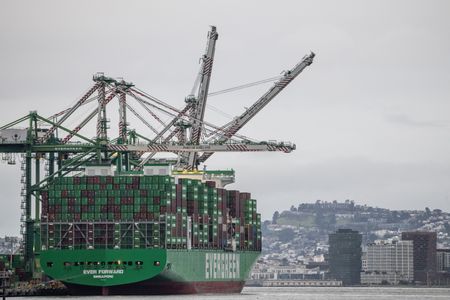

WASHINGTON – America’s trade imbalance for goods shrank in April as export growth outweighed increased imports, creating a positive trend that could boost economic expansion in the current quarter if it continues.
The Commerce Department’s Census Bureau reported Friday that the goods trade imbalance decreased 3.4% to $82.4 billion during April. Economic forecasters surveyed by Reuters had predicted the deficit would reach $86.5 billion.
Export sales of goods jumped by $8.5 billion to reach $219.7 billion. Meanwhile, goods brought into the country climbed $5.6 billion to $302.1 billion.
Trade activity reduced gross domestic product by 1.25 percentage points during the first quarter. The nation’s economy expanded at a 1.6% annualized pace in that period, following growth of 0.5% in the October through December quarter.

TURIN, May 29 (Reuters) – The automotive manufacturer Stellantis does not intend to significantly extend its newly formed partnerships with Jaguar Land Rover and Tata Motors into European markets, according to the company’s Europe chief Emanuele Cappellano, who made the statement on Friday.
The car manufacturer revealed a collection of collaborative agreements last month as part of its fresh long-term strategy, which included working with Jaguar Land Rover in the United States market and partnering with Tata Motors in India.
Industry experts have suggested these alliances might also help Stellantis in Europe, where the company continues to evaluate technology choices, particularly for bigger vehicle models.
Cappellano indicated that bringing the JLR and Tata collaborative ventures to Europe was not currently a top concern.
“We didn’t think to develop these JVs for the United States and India with Europe in mind,” he stated during a media conference in Turin, where he outlined the European elements of the business strategy Stellantis unveiled last week.
“If there were any benefit to it – say, a product opportunity – we might well consider it, but at the moment it’s not our main focus”.
Earlier this week, Cappellano mentioned that Stellantis was examining possibilities to support future large models of its European luxury brand Alfa Romeo, whether through internal development or with a collaborator.
Alfa Romeo intends to introduce two new mid-sized vehicles by 2030, though it has pulled back specific timelines for updated versions of its larger Giulia sport sedan and Stelvio SUV.
On Friday, Cappellano also said Stellantis was exploring the possibility of marketing in Europe a specialized, limited-production Jeep model that would be manufactured in China alongside local partner Dongfeng.
Stellantis and Dongfeng signed a $1.2 billion agreement this month to manufacture Peugeot- and Jeep-branded vehicles in China, targeting both local sales and international export.
The two firms also revealed plans for collaboration in Europe, including manufacturing activities, which adds to Stellantis’ existing partnership with Chinese electric vehicle producer Leapmotor.


NEW YORK (AP) — The humble tomato, found in countless dishes from casual dining to fine restaurants, has emerged as an unexpected symbol of America’s growing cost-of-living crisis.
These red vegetables have experienced the steepest price increases among all food items in the past year, establishing themselves as a prominent example of today’s consumer financial pressures.
“The tomato has become a symbol of something much deeper,” says Isaac Bernal Carbajo, a New York City chef who lamented life’s “simplest pleasures” falling victim to price increases. “Something as basic as buying fresh vegetables is starting to become a serious financial decision for many families.”
According to the most recent Consumer Price Index data, tomato costs have climbed roughly 40% compared to last year, significantly outpacing price jumps for other grocery items such as coffee (increased 18.5%), beef roasts (up 17.8%) and frozen fish and seafood (rising 12%), all of which have also become emblematic of the nation’s affordability challenges.
A different inflation measurement released Thursday revealed that general prices rose 3.8% in April compared to the previous year, marking the highest level in almost three years.
Beyond agricultural production factors, analysts attribute tomato price surges partly to two key elements of President Donald Trump’s second-term agenda: the Iran war and tariffs. The conflict drove up fuel costs and transportation expenses. Additionally, the U.S. ended an agreement that permitted tariff-free tomato imports from Mexico, the source of most American tomato supplies.
Usha Haley, a Wichita State University economist, says it’s “a perfect storm of trade policy, extreme weather and Mideast policy.”
Domestic tomato producers applauded ending the Mexican tomato agreement last July, arguing it would help revitalize their declining sector. However, consumers have felt significant financial strain. While the U.S. terminated the Mexico tomato arrangement in July, grocery store impacts took months to materialize, with increased imports during late winter and early spring months.
Upon arrival, these tomatoes faced a 17% tariff assessment.
“Tariffs are undeniably a big driver of the price inflation,” says Brett Massimino, a Virginia Commonwealth University business professor. “Because the U.S. relies on Mexico for the majority of its tomato supply, any changes in trade policy can have a large impact.”
Federal records show U.S. tariff collections on tomatoes exploded from merely $16,424 in 2024 to approximately $4.6 million, representing an astronomical 27,879% jump.
As expenses filter down to consumers, frustrated shoppers have documented their grocery store experiences on social media, recording videos expressing dismay over costs they claim have quadrupled, with some promising to start home gardens rather than pay up to $8 per pound. However, the most significant effects have hit businesses that depend heavily on tomatoes in their food preparation.
MarginEdge, a restaurant price tracking service, reports grape tomatoes have seen the largest increases — 65% within just one month — though all tomato varieties have experienced price escalation.
Phillip Coles, a professor of supply chain management at Lehigh University, says prices should drop later in the year when domestically grown tomatoes are harvested. Higher prices, he says, will also “induce farmers to increase planting to meet the demand, but this takes longer because of the lead time.”
Currently, these increases are creating substantial financial challenges for operations like Snarf’s Sandwiches, which includes tomatoes in virtually every sandwich they prepare.
Wayne Humphrey, chief operating officer of Snarf’s, which operates dozens of stores in Colorado, Missouri and Texas, said cases of tomatoes went from costing him $27 to $93 in the space of a year, piled on top of rising expenses for other ingredients including bread and beef, as well as increased labor costs.
“That single ingredient now costs us more than $1.7 million in additional spend annually,” says Humphrey. “The math is getting harder to ignore.”


MILAN, May 29 – Italy’s central bank is working directly with international artificial intelligence technology companies as new AI systems prepare to enter the financial industry, according to Governor Fabio Panetta during his yearly address on Friday.
The coordination efforts focus on making sure emerging AI technologies are safely integrated when they become available for public use.
Italy’s central bank has recently begun conversations with domestic regulators, financial institutions and their technology service providers regarding this matter.
Financial institutions must maintain responsibility for protecting and maintaining their systems, and when they utilize external providers, those companies share the same obligations.
According to Panetta, addressing these challenges requires more than just technical solutions – it demands leadership from executive teams who must establish robust oversight and control systems.

International bond markets experienced dramatic swings throughout May as the Iran conflict continued to create uncertainty among investors, driving borrowing costs to levels not seen in decades before economic concerns brought them back down.
The volatility highlights how sensitive financial markets remain to both inflation worries and mounting government debt burdens worldwide, even as potential diplomatic progress offers hope for stabilization.
TREASURY TURBULENCE
U.S. Treasury bonds faced severe pressure during the month, with 30-year bond yields climbing to approximately 5.2% by May 20 – the highest level recorded since 2007. The $28 trillion U.S. government bond market was shaken by stalled diplomatic efforts that drove oil prices back over $110 per barrel, combined with concerning American inflation figures.
The selloff wasn’t limited to American markets. British bond yields reached their highest points in 20 to 30 years, Japanese yields hit all-time records, and Germany’s 10-year yields climbed to their peak since 2011.
“The market’s concerned that inflation may be here a bit longer than we had anticipated,” explained David Zahn, who serves as Franklin Templeton’s head of European fixed income.
ECONOMIC HEADWINDS
Market conditions shifted as diplomatic talks between the U.S. and Iran showed advancement, causing oil prices to retreat and borrowing costs to decline. Disappointing economic indicators, especially from European nations, also reduced expectations for aggressive interest rate increases.
Data released last week revealed that Euro zone business activity contracted at its steepest pace in two and a half years during May, as the region struggled with escalating energy expenses.
“With this level of yields it’s becoming attractive for an investor,” noted Nicolas Forest, chief investment officer at Candriam. “We have a slowdown of the economy and that’s supportive for the bond markets.”
AMERICAN DIVERGENCE
While energy-dependent economies including the Euro zone, Britain and Japan had previously suffered the most during bond market declines, the United States stood out as the worst performer in May.
American 10-year yields increased by 6 basis points between April 30 and May 29, while German equivalent yields dropped by 6 basis points.
European economic weakness reduced rate increase expectations there, but the American economy maintained its strength, supported by increased artificial intelligence investment spending.
Market participants completely eliminated expectations for any Federal Reserve rate reductions this year and temporarily anticipated a full 25 basis point rate increase by December.
Thursday’s data revealed the Fed’s preferred inflation gauge rose 3.8% annually in April, marking the fastest increase in three years.
BRITISH BOND CONCERNS
May proved particularly challenging for the UK government bond market, which has remained vulnerable to sharp declines since the 2022 crisis during Liz Truss’s tenure.
Thirty-year British government bond yields surged to 5.87% in mid-May, their highest since 1998, as global market turmoil combined with concerns that a potential successor to struggling Prime Minister Keir Starmer might increase government spending.
British bonds later recovered as peace prospects improved, UK economic data weakened, and leading candidate Andy Burnham committed to maintaining the government’s fiscal guidelines.
Between April 30 and May 29, 10-year British government bond yields outperformed both German and U.S. equivalents, falling approximately 21 basis points, though they remain 58 basis points higher since the conflict began.
“If we look at Bank of England pricing, we’ve gone from two cuts at one point to nearly three hikes, so that’s been the main driver (of UK bonds),” said Matthew Amis, investment director at Aberdeen.
“But also in the background the political volatility has clearly not helped.”
LONG-TERM DEBT PRESSURES
Longer-term government debt, which responds more strongly to economic and budget concerns than shorter-term bonds, experienced the heaviest selling during mid-May.
Inflation-adjusted ‘real’ yields also increased in both the U.S. and Europe, demonstrating that price pressures weren’t investors’ sole worry.
Bank of America analysts identified what they called “ever-worsening fiscal dynamics” as a primary factor behind the U.S. Treasury selloff.
Despite the Federal Reserve’s committee-based decision making, some investors expressed concerns about the independence of new Fed Chair Kevin Warsh, who received his appointment from U.S. President Donald Trump.
“Let’s imagine that he decides to cut rates despite higher inflation,” Forest said. “That’s not very supportive for U.S. Treasuries.”


Italy’s central bank governor Fabio Panetta announced Friday that artificial intelligence technology holds tremendous potential to address the nation’s struggling worker productivity challenges.
Speaking during the Bank of Italy’s yearly assembly, Panetta outlined how AI adoption could transform the country’s economic outlook through significant productivity gains.
According to Panetta’s projections, even gradual implementation of AI technology could deliver annual productivity increases of 0.2 percentage points. However, with aggressive and widespread deployment, those gains could exceed one full percentage point each year.
The central bank chief emphasized that strengthening Italy’s venture capital and private equity sectors would be essential to supporting AI innovation across the economy.
Current statistics reveal that while 30% of Italian companies have incorporated some form of AI technology, only approximately 5% are using it extensively, Panetta observed.
He highlighted that Italy’s AI adoption rates fall below international benchmarks, making government intervention necessary to accelerate implementation.
Panetta also disclosed that the Bank of Italy maintains ongoing communications with major global AI technology developers and has recently initiated discussions with banking institutions regarding AI integration strategies.

Japanese financial institutions have received access to an advanced artificial intelligence system from OpenAI to bolster their defenses against cyber threats, according to Japan’s finance minister.
Finance Minister Satsuki Katayama announced Friday that select Japanese banks were granted access to OpenAI’s GPT-5.5 model following discussions with the American AI company’s leadership in Tokyo.
“This is a welcome development and a big step forward in strengthening Japanese financial institutions’ ability to defend against cyberattacks,” Katayama told reporters after meeting with Jason Kwon, OpenAI’s chief strategy officer.
The finance minister declined to identify which specific financial institutions would receive access to the technology.
According to reports from the Nikkei newspaper published Thursday, Japan’s three largest banking institutions – MUFG Bank, Sumitomo Mitsui Banking Corp and Mizuho Bank – are anticipated to receive access to OpenAI’s newest model. The advanced system is reportedly available exclusively to trusted partners and is considered comparable to competing technology from Anthropic’s Claude Mythos.


Honda Motor has announced a safety recall affecting 98,892 vehicles throughout the United States due to a malfunction that could cause airbags to deploy when they shouldn’t, according to the U.S. National Highway Traffic Safety Administration (NHTSA) announced Friday.
The safety recall affects specific models including Honda Acura TLX, Accord Hybrid, and 2022 Accord vehicles, according to the federal auto safety agency.
The problem stems from a defective front passenger seat weight sensor that can develop cracks and experience electrical shorts, NHTSA explained.
This malfunction could result in airbags deploying unexpectedly even when passengers such as infants in car seats or children are present – situations where the airbag system should normally prevent deployment for safety reasons.
To fix the problem, authorized dealers will install replacement seat weight sensors free of charge to vehicle owners, according to NHTSA.


Federal safety officials announced Friday that an electric vehicle manufacturer is pulling more than 2,000 cars off the road nationwide due to concerns about sudden power loss that could lead to accidents.
The National Highway Traffic Safety Administration reported that the recall affects 2,039 vehicles across the United States. The safety agency identified the following key points about the recall:
• Certain 2024-2025 Air model vehicles are included in the recall action, according to the NHTSA.
• Federal regulators explained that problems with the car’s inverter component could cause damage leading to complete loss of driving power.
• The manufacturer plans to address the problem through remote software updates to diagnose the defect, with the NHTSA noting that faulty inverters will be replaced at no cost to vehicle owners.

The parent company of Chrysler announced Friday it will pull more than 419,000 vehicles from American roads due to a computer glitch that could prevent side airbags from functioning correctly during accidents, according to the U.S. National Highway Traffic Safety Administration.
Federal safety regulators explained that this software malfunction could cause delays in side airbag activation during collisions, making these vehicles fail to meet required U.S. Federal Motor Vehicle Safety Standards.
The safety recall impacts several vehicle models, including 2022-2026 Jeep Grand Cherokee and 2023-2025 Jeep Grand Cherokee L models, according to the federal transportation safety agency.
Authorized dealerships will provide software updates for the occupant restraint controller module at no cost to vehicle owners, safety officials confirmed.


A major British supermarket chain has announced a new technology partnership aimed at strengthening its online shopping capabilities and competing more effectively with larger competitors.
Asda, which ranks as the third-largest grocery retailer in Britain, revealed Friday that it has formed an alliance with technology company Ocado to enhance its digital commerce operations throughout the United Kingdom. The move comes as the chain works to regain ground lost to its bigger competitors, including market leader Tesco and second-place Sainsbury’s.
The supermarket chain currently operates approximately 1,100 locations and maintains a significant online grocery presence in Britain, processing over 700,000 digital orders each week.
Under the new arrangement, the partnership will concentrate on rapidly replacing and enhancing Asda’s current digital commerce systems. Ocado’s technology solutions are scheduled to be implemented across both traditional stores and specialized fulfillment centers beginning in 2027.
“These solutions include Ocado’s front-end (webshop), in-store fulfilment, and software to support last mile planning and route efficiency,” the companies stated in their announcement.

Japan’s currency has slipped back to concerning levels that triggered official market intervention just one month ago, raising questions about Tokyo’s remaining financial resources and determination to support its struggling yen.
Japanese authorities deployed approximately $63 billion in suspected currency-buying operations during late April and early May, representing just a small portion of the nation’s $1 trillion reserve fund. However, market participants believe using all or even a significant portion of these reserves would be impractical. As speculative positions against the yen begin building again, government officials are working to maintain market uncertainty.
“The more foreign reserves shrink, the more vulnerable Japan looks to speculators,” said Daisaku Ueno, chief foreign exchange strategist at Mitsubishi UFJ Morgan Stanley Securities. With pressure to sell the yen showing no signs of diminishing, “the war of nerves between the authorities and the market looks set to continue.”
Currency-buying intervention requires selling foreign assets, of which Japan possessed approximately $1 trillion at April’s end. After subtracting roughly 10 trillion yen ($62.78 billion) used in the April and May operations, based on Bank of Japan money market calculations, approximately 150 trillion yen remains, providing enough resources for “around 30 rounds” of intervention, according to Goldman Sachs economist Yuriko Tanaka.
‘CRUCIAL’ UNDERSTANDING
However, depleting Japan’s entire foreign asset portfolio wouldn’t be practical, especially since it would harm U.S. Treasury values at a time when American cooperation remains essential. The U.S. Treasury conducted “rate checks” that helped push the dollar-yen rate lower in January.
“U.S. understanding is crucial” to maintaining intervention effectiveness, said Takeshi Ueno, a senior economist at NLI Research Institute. If Washington opposed such activities, it “could invite speculative yen selling.”
FREE-FLOAT RULES
Another potential limitation on intervention involves International Monetary Fund standards where countries that intervene too frequently risk losing their “free-floating” exchange rate designation. However, chief currency diplomat Atsushi Mimura has stated the IMF rules don’t constrain how frequently the government can intervene.
“The thinking is that curbing excessive volatility takes priority,” said Akira Moroga, the chief market strategist at Aozora Bank. Even if Japan lost its free-floating currency classification, “I don’t think they care at all,” he added.
The yen weakened to 159.65 on Thursday, its lowest point since April 30 when Japan allegedly conducted its first intervention in nearly two years. The Ministry of Finance plans to announce at 1000 GMT on Friday the total spending on foreign exchange intervention since April 28.
Japanese Finance Minister Satsuki Katayama on Friday once again refused to comment on whether her agency had intervened, reiterating that officials were prepared to take “decisive action.”
CAUTIOUS BOJ
The yen has been weakened by the three-month Middle East crisis, with rising energy costs creating a trade shock for Japan, which imports nearly all its oil. This worsened an existing decline amid the BOJ’s careful approach to interest rate increases and expectations of expanded fiscal stimulus under Prime Minister Sanae Takaichi.
While previous Japanese governments focused on the pace of change when deciding to intervene, the current administration appears more focused on protecting the 160 per dollar threshold. Rather than avoiding intervention, some market participants are now positioning for it.
A dealer at a domestic bank reported buy orders for dollars are concentrating in the 155-157 yen per dollar range, reflecting genuine dollar demand from importers and speculative positions. On the upside, market expectations suggest the next intervention will occur before the 162 level.
“The government will want to defend that level at all costs,” said a dealer at a domestic bank.
($1 = 159.2800 yen)


A recent survey indicates that China’s residential property market may be experiencing a less severe downturn than experts previously predicted, with signs pointing toward potential recovery by 2027.
According to a Reuters housing market survey conducted between May 18-28, residential property values are projected to decrease by 3.5% this year, which represents an improvement from the 4.0% drop that was anticipated in March. The outlook extends further into the future, with prices expected to climb 0.3% in 2027, contrasting with earlier predictions of no movement, and a 1.8% increase anticipated for 2028, up from the previously forecasted 0.5% gain.
Lulu Shi, director of Asia-Pacific corporate ratings at Fitch Ratings, explained that the nation’s construction sector will likely continue shrinking through 2026, though the rate of contraction should gradually moderate as government support measures persist, risks from defaults and contagion diminish, and new housing sales reach more sustainable long-term volumes.
The central government’s recent efforts to restrict new developments and reduce housing stock, announced during the annual parliamentary session in early March, have prompted various Chinese municipalities to introduce buyer incentives, including financial subsidies.
In late April, Shenzhen relaxed purchasing restrictions in its central areas, while Guangzhou implemented subsidies for home purchases.
Shi noted that recent policy adjustments could speed up market stabilization in prime locations within major cities, while “suburban districts and lower-tier cities facing population outflows and industrial decline may remain under greater pressure.”
The survey reveals that property investment is anticipated to decline 12.0% this year, a steeper drop than the 10.3% decrease predicted in March, while sales are expected to fall 8.3%, worse than the previously estimated 6.5% decline.
Huang Yu, executive vice president of the China Index Academy, pointed to diminished household confidence regarding employment, income, and housing value expectations as continuing factors that will suppress market demand.
Industry analysts emphasized that policymakers are focused on market stabilization and preventing chaotic deceleration rather than attempting to revitalize the sector through aggressive stimulus measures.
Yingxue Ren, associate director of corporate ratings at S&P Global (China) Ratings, described the primary policy goal as working to “prevent the risk of a sharp loss of momentum,” while noting that officials retain the capacity to expand support measures if circumstances require it.


A Chinese technology executive announced Friday that a semiconductor division’s operational independence has been largely achieved, according to local media reports from Shanghai.
Wingtech Technology Chairperson Yang Mu told China Star Market that the Chinese division’s manufacturing output and shipping abilities are showing steady improvement. Yang made these comments during a Shanghai business event.
The situation stems from Wingtech’s ownership of Dutch semiconductor company Nexperia, though the Chinese firm’s control remains limited following Dutch government action in October 2025 that prevented the chipmaker from relocating operations to China.
The dispute has created a rift between the Netherlands-based parent company and its Chinese subsidiary, with the Chinese division announcing its separation from the Dutch operation. In response, the European division stopped sending semiconductor wafers to China.
Yang emphasized Friday that the Chinese operation’s leadership and research teams are firmly established in China and maintain full decision-making power over business operations.
The executive also noted that partnerships have been formed with several Chinese suppliers. “A stable supply model based on multiple nodes and multiple sources has now been formally implemented,” Yang stated.

Stock prices for Wipro climbed 4.67% in pre-market trading Friday morning following the information technology services firm’s announcement of a broadened collaboration with ServiceNow, a software company based in the United States.
The expanded alliance will focus on implementing agentic artificial intelligence workflows throughout essential business operations, according to the Indian technology company.


A federal judge has rejected the California Department of Parks and Recreation’s request to halt oil transportation by Sable Offshore Corp through a controversial pipeline beneath the Santa Ynez offshore platform on Thursday.
The court’s decision represents a significant blow to California’s campaign against the Santa Ynez project, which Sable resumed operations on in March following federal government intervention. For Sable, the ruling delivered a substantial victory, boosting the company’s stock price by almost 12%.
The Department of Parks and Recreation had requested preliminary injunctive relief, arguing they would face irreparable damage from the operation of a portion of Sable’s pipeline running beneath the Gaviota State Park.
The U.S. District Court for the Central District of California determined that the department “manifestly failed to demonstrate that it will suffer irreparable harm in the absence of preliminary injunctive relief.”
A spokesperson for California State Parks expressed disappointment with the court’s ruling and stated they would persist in fighting Sable’s “egregious trespass on public land” in a released statement.
Multiple additional legal battles from various California state agencies, including litigation against the U.S. Department of Energy, remain ongoing. The district court observed in Thursday’s order that most of these cases are still in early phases.

Workers responsible for electrical operations at a major iron ore shipping facility in Western Australia are warning they may walk off the job before the financial year concludes on June 30, according to union representatives who made the announcement Friday.
The facility in question is BHP’s Port Hedland bulk export terminal, where tensions between management and electrical workers appear to be escalating.
Union leader Adam Woodage delivered a direct message to company executives, stating: “BHP needs to take notice and Tim Day needs to take notice that he needs to negotiate with us.” Woodage was addressing Tim Day, who serves as the mining company’s head of iron ore operations in Western Australia.
The potential work stoppage comes as negotiations between the union and BHP management have apparently reached an impasse, prompting workers to consider strike action as leverage in their dispute.
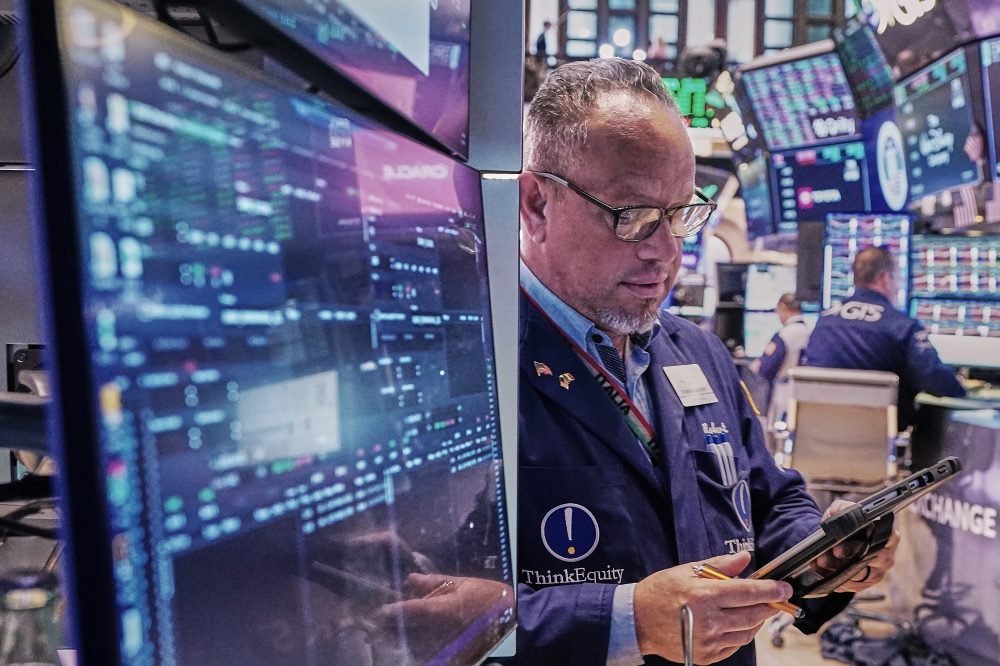

Markets across Asia posted gains Friday as investors reacted to prospects of a potential agreement between the United States and Iran to prolong their existing ceasefire for an additional 60 days.
Petroleum prices declined on growing confidence about conflict de-escalation, though they continue trading well above levels seen before hostilities began. Market experts cautioned that any potential ceasefire prolongation should be approached carefully, noting that petroleum supply restoration will require significant time.
Futures markets in the United States showed slight declines.
Japan’s Nikkei 225 surged 1.8% to reach 65,814.96 following Friday’s release of data indicating Tokyo’s core inflation rate for May increased at a slower pace than economists had predicted.
The Kospi in South Korea climbed 2.3% to 8,369.81.
These two major indices are currently trading close to their all-time peak values.
The Hang Seng in Hong Kong rose 0.4% to 25,098.68, while Shanghai’s Composite index declined 0.2% to 4,092.22.
The S&P/ASX 200 in Australia increased 1% to 8,681.80.
Taiwan’s Taiex showed gains of 2.3%.
Representatives from the United States and Iran achieved a preliminary agreement Thursday regarding ceasefire extension and scheduling fresh discussions about Iran’s nuclear program, according to a U.S. official. Iran had not yet publicly acknowledged the agreement, and the preliminary deal still required approval from U.S. President Donald Trump.
Brent crude, the global benchmark, dropped 0.8% in early Friday trading to $91.97 per barrel. This commodity was priced around $70 per barrel in late February prior to the conflict’s start. U.S. benchmark crude decreased 1.2% to $87.85 per barrel.
Market participants are monitoring closely for potential reopening of the Strait of Hormuz. The U.S. official indicated the preliminary agreement specifies that Iran would be prohibited from charging fees to vessels passing through the strait, while the United States would progressively remove its maritime blockade of Iranian ports.
“The oil market continues to edge lower amid growing optimism that the U.S. and Iran are moving toward a deal,” ING commodities strategists Warren Patterson and Ewa Manthey wrote Friday. “A reopening of the strait would offer some immediate relief to the oil market with tankers leaving the Persian Gulf. However, the recovery is still uncertain.”
Vessel operators may hesitate to dispatch ships into the Persian Gulf initially due to concerns that the ceasefire might collapse, they noted. Additionally, restoration of oil and gas production would probably occur gradually rather than immediately.
Wall Street achieved new records Thursday with the benchmark S&P 500 reaching another all-time peak, advancing 0.6% to 7,563.63. The Dow Jones Industrial Average increased less than 0.1% to 50,668.97, while the technology-focused Nasdaq composite rose 0.9% to 26,917.47.
Dollar Tree discount retail chain stock jumped 17.9% following its report of better-than-expected earnings, while department store chain Kohl’s surged 20.6% after also delivering results that exceeded forecasts.
In early Friday currency trading, the U.S. dollar strengthened to 159.30 Japanese yen from 159.24 yen. The euro declined to $1.1646 from $1.1651.
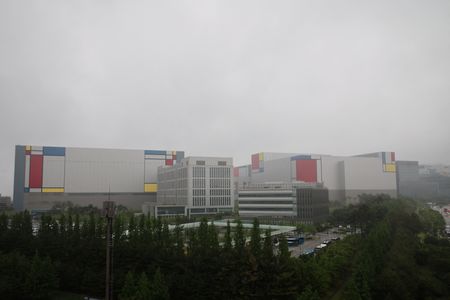

A labor organization representing Samsung Electronics workers in consumer products will seek court intervention to block a compensation agreement that mainly favors the company’s semiconductor employees, according to legal representatives.
This week, two other labor groups at the global technology giant, including the largest union, approved a compensation package offering substantial bonuses to memory chip division workers, who have benefited from increased profits during the artificial intelligence surge.
The Samsung Electronics Co Union (SECU), representing approximately 13,000 members primarily from smartphone, television, and home appliance departments, had previously attempted to halt the voting process through legal action.
The last-minute government-brokered deal’s approval prevented an anticipated 18-day work stoppage, though workers outside the semiconductor division received less favorable treatment.
Following the vote’s completion, SECU plans to request judicial suspension of the compensation agreement’s implementation, union legal representation stated during Friday’s court proceedings.
SECU’s legal team indicated they would file revised injunction documentation next week, anticipating a judicial decision within 30 days.
Representatives from Samsung Electronics’ largest union refused to provide statements.
The corporation was unavailable for immediate response.
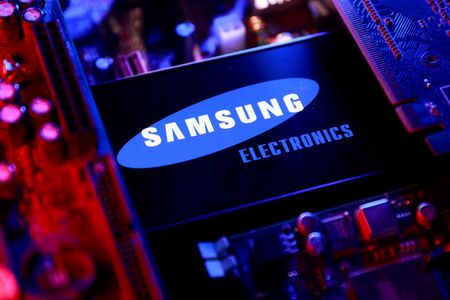

Samsung Electronics announced Friday that it has begun delivering samples of its newest high-bandwidth memory chips to clients, gaining a competitive advantage over rivals in providing updated versions of components essential for artificial intelligence data centers. The announcement caused the company’s stock to rise.
The technology giant from South Korea reported that its new 12-layer HBM4E chip delivers performance improvements of more than 20% compared to earlier HBM4 models.
According to Samsung, the chip incorporates its newest 1c DRAM process technology — sixth-generation, 10-nanometer-class DRAM — combined with Samsung’s 4-nanometer foundry logic base die.
This launch represents Samsung’s push to recover ground in the HBM marketplace after losing position to competitors like SK Hynix and Micron in providing cutting-edge artificial intelligence memory components, especially to Nvidia.
The development occurs just three months following Samsung’s February launch of HBM4 chip deliveries to clients, demonstrating the corporation’s commitment to enhancing its standing in the future AI memory sector through early distribution of its newest product samples.
In April, Samsung announced its intention to deliver initial HBM4E chip samples during the second quarter.
Samsung’s client base encompasses significant AI companies including AMD, Nvidia and Google, as well as others, amid growing demand for sophisticated memory components utilized in AI servers and processing units.
Stock prices for Samsung Electronics climbed up to 6.5% during morning sessions, outpacing the benchmark KOSPI’s 2.3% increase. SK Hynix shares gained 1.2% at 0207 GMT.
Market experts attributed the increases to Samsung’s recent HBM announcement and positive sentiment regarding its AI chip division prospects, following Anthropic’s designation of Samsung as a strategic infrastructure partner in its recent funding round.
Anthropic reported securing funding at a post-money valuation of $965 billion, identifying Samsung, Micron and SK Hynix as partners whose technologies serve crucial functions in supplying memory, storage and logic components.
Among the three companies, Samsung received specific recognition for its logic chip capabilities, heightening investor hopes that this partnership could eventually generate additional foundry contracts following Samsung’s $16.5 billion supply agreement with Tesla, announced last year.
“In the HBM market, early movers tend to secure the bulk of orders, so gaining market share in the initial stages is critical,” said Jeff Kim, head of research at KB Securities-Jefferies.
Kim observed that Samsung had joined the HBM3 and HBM3E markets behind competitors, which restricted the order volume it could obtain.
“But if Samsung successfully completes the qualification process for HBM4E, the HBM vendor structure, which has largely centred on SK Hynix and Micron, that could shift toward SK Hynix and Samsung, considering Samsung’s manufacturing capacity,” Kim added.
SK Hynix commanded the worldwide HBM market with a 57% share in the fourth quarter of 2025, with Samsung holding 22% and Micron at 21%, based on Counterpoint Research data.
Kim also suggested Samsung could gain advantages in foundry operations, as Taiwan’s TSMC anticipates having its advanced-node capacity completely reserved for upcoming years.
“That raises expectations that Samsung, as one of the few companies capable of producing advanced chips, could win more orders for advanced-node manufacturing,” he said.


The world’s largest contract electronics manufacturer expressed strong optimism about its future expansion prospects on Friday, with leadership citing surging artificial intelligence demand as a primary driver.
Speaking at the company’s annual shareholder gathering in New Taipei, Chairman Young Liu said the Taiwan-based firm maintains tremendous confidence in its growth trajectory. The electronics giant, which serves as the primary server manufacturer for Nvidia and top iPhone assembler for Apple, recently posted impressive financial results with first-quarter profits jumping 19% compared to the previous year.
Liu highlighted the substantial investment activity among major cloud service providers, noting their capital expenditures have already surpassed $700 billion this year. “Their capital expenditure is our market. It has already reached $700 billion, and their capital expenditure next year is expected to potentially reach $1 trillion. This gives us immense confidence in our future growth momentum,” Liu stated.
The company, officially known as Hon Hai Precision Industry, announced earlier this month plans to increase its own capital spending by 30% this year from the previous year’s T$174 billion ($5.55 billion) figure. This investment will support expanded manufacturing capabilities for AI servers to meet growing market demand.
Despite the positive outlook, the company’s stock performance has lagged behind the broader market, rising 19% year-to-date compared to Taiwan’s main index gaining 54%.

The US dollar maintained its downward trend against other major world currencies Friday, positioning itself for a weekly decline amid emerging reports of a potential ceasefire agreement between the United States and Iran.
According to four sources who spoke with Reuters, the proposed agreement would extend the current Middle East truce by an additional 60 days and restore normal shipping traffic through the Strait of Hormuz. The deal remains subject to Trump’s approval while negotiators work to address more complex matters including Iran’s nuclear program.
Oil markets declined and investors showed less interest in the traditionally safe-haven dollar, though trading remained cautious as market participants expressed uncertainty about achieving a permanent solution. This hesitation followed contradictory messages from both Washington and Tehran throughout the week.
Currency markets showed the euro trading at $1.1653, gaining 0.03% during Asian trading hours, while the pound remained unchanged at $1.3445.
The Australian dollar held steady at $0.7164, and the New Zealand dollar climbed 0.2% to $0.5946, reaching its highest point in over two weeks.
The dollar index, which tracks the greenback’s performance against multiple currencies, stayed relatively flat at 98.997 following Thursday’s 0.2% decline. The index appears ready to break a two-week winning streak and finish the week down 0.3%.
“It might well be that once this crisis in Iran, in the Middle East, is behind us, we expect the U.S. dollar to remain weak,” said Massimiliano Castelli, head of strategy in the global sovereign markets team at UBS Asset Management.
Castelli explained that while the Middle East conflict temporarily halted dollar weakness due to safe-haven demand, many investors continue seeking alternatives to U.S. dollar assets.
The Japanese yen gained strength, reaching 159.27 against the dollar amid broader greenback weakness, moving away from the psychologically important 160-per-dollar threshold that has previously triggered intervention by Japanese authorities.
Economic data revealed that U.S. inflation accelerated to its fastest rate in three years during April, fueled by rising energy costs related to the Iran conflict. This development reinforces economists’ expectations that the Federal Reserve will maintain current interest rates well into the following year.

Two top executives at KPMG Australia have resigned their positions after the accounting firm’s internal investigation into whistleblower complaints about client data sharing failed to meet company standards, the firm announced Friday.
Andrew Yates, who has been with the company since 1990 and served as chief executive since 2021, stepped down after the firm’s probe into the whistleblower’s concerns “fell short of the firm’s expectations, those of the whistleblower and the broader community,” according to a company statement.
Julian McPherson, the firm’s managing partner of audit and assurance, also resigned and will depart the company following an organized transition period, the statement said.
“It is clear that in this case we have let ourselves down and I take accountability,” Yates stated in the announcement.
McPherson acknowledged his role, saying: “Matters have arisen for which I am responsible, and I take accountability.”
The departures represent a significant setback for Australia’s professional services industry as the accounting firm grapples with the fallout from the whistleblower allegations.

Electrical workers at BHP’s Port Hedland bulk port terminal are preparing to vote on potential work stoppages after half a year of unsuccessful contract negotiations with company management, according to a Friday statement from the Electrical Trades Union.
The union characterized the six-month negotiation period as involving company representatives who either lacked authority to reach agreements or showed unwillingness to engage in meaningful discussions.
According to the union, workers are attempting to address major inequalities in their employment terms, as they were brought on under vastly different common-law contracts through two distinct legal entities that are both controlled by BHP.
The Electrical Trades Union represents over 70,000 electricians, apprentices and electrical workers throughout Australia, based on information from the organization’s website.
Workers are also pursuing clear job classifications and advancement criteria, along with equal compensation for employees doing identical work.
“Union members are left to resort to protected industrial action as the only way forward when BHP managers fail to negotiate after multiple meetings,” stated Electrical Trades Union WA Secretary Adam Woodage.
Woodage further noted that BHP workers throughout the Pilbara region have experienced a consistent pattern of conduct that has made lawful protected industrial action their sole remaining option.
Port Hedland ranks among the world’s largest iron ore loading facilities and stands as Australia’s biggest such port. The facility connects to several BHP mining operations throughout the Pilbara region.
BHP has not yet provided a response to Reuters’ request for comment.

A major pharmaceutical partnership was announced Friday as Pfizer and Chinese biotechnology company Innovent Biologics revealed a comprehensive licensing and collaboration agreement valued at up to $10.5 billion for developing 12 experimental cancer treatments.
The financial structure includes an immediate $650 million payment to Innovent, with an additional $9.85 billion possible through development, regulatory approval, and sales milestone achievements.
The collaboration focuses on a collection of antibody-drug conjugates featuring novel differentiated payloads and multi-specific antibodies, incorporating eight early-stage assets originated by Innovent and four discovery programs proposed by Pfizer.
According to the agreement terms, Innovent will spearhead the development of all 12 programs through Phase 1 clinical testing, after which Pfizer will assume responsibility for worldwide development activities.
The partnership operates through three distinct tiers. Four programs will involve joint development and commercialization, with shared profits in the United States and Europe while Innovent maintains rights in Greater China.
For an additional four programs, Pfizer obtains exclusive licensing rights outside Greater China, while securing exclusive global licensing and assuming all worldwide development expenses for the final four programs.
Innovent confirmed in an exchange filing that the company, along with its wholly-owned subsidiaries Innovent Biologics (Suzhou) and Fortvita Biologics (USA), has entered into this agreement with Pfizer.

An investment management company based in Rhode Island has introduced a new exchange-traded fund strategy aimed at capitalizing on the automatic stock purchases that occur when companies join major market indexes.
Hedgeye Asset Management unveiled the Hedgeye Index Adds ETF on May 28, targeting the mandatory buying activity from index funds and portfolio managers who must adjust their holdings when benchmark providers modify major U.S. market indexes such as the Standard & Poor’s 500.
The fund’s launch comes just two weeks before the highly anticipated public stock offering of shares in the SpaceX company owned by entrepreneur who also founded Tesla. This upcoming deal could potentially value SpaceX at $1.75 trillion and is already influencing established rules about which companies qualify for inclusion in major market indexes. Earlier this year in late March, just before SpaceX announced its intention to trade publicly on the stock exchange, officials announced changes to listing requirements designed to prevent newly public large-scale companies from experiencing extended delays before joining major indexes.
This situation echoes a previous scenario involving another company founded by the same entrepreneur. When Tesla shares became publicly traded in 2010 and Standard & Poor’s later announced the company’s inclusion in the S&P 500, the decision sparked more than $50 billion in purchasing activity from index-tracking investors.
According to the investment firm’s prospectus, this type of market activity is exactly what Hedgeye aims to predict and profit from. The company plans to maintain positions in no more than 40 publicly traded companies whose shares either already qualify for index inclusion or may soon meet those requirements, then liquidate those positions on the first day of trading after the stocks join a target index.
“For decades this index inclusion trade has been the preserve of a small subset of the investment industry,” said Brooks Cutright, the new fund’s manager. He noted that this market opportunity has historically been unavailable to most individual investors.


A major American law firm is making a massive financial commitment to artificial intelligence technology, announcing plans to spend $500 million developing its own custom AI system.
Kirkland & Ellis, which reported $10.6 billion in revenue last year, revealed Thursday it will spread the investment across three to four years, beginning with $100 million in 2026. The Chicago-founded firm employs thousands of attorneys worldwide.
While the company plans to continue using some existing third-party AI software, officials declined to specify which generative AI technology would power their custom platform.
The legal industry has become a major battleground for AI adoption as firms seek to improve efficiency in their operations and legal services. Some major firms have partnered with AI startups to create specialized legal tools. Last month, London-based Freshfields announced a collaboration with Anthropic’s legal team to build AI applications for legal services.
Kirkland’s new platform will incorporate input from 250 of the firm’s attorneys and involve more than 180 technology specialists both within and outside the organization. The Financial Times initially reported details of the initiative.
Legal industry executives recently told Reuters there’s growing interest in custom-built AI solutions for specific business and legal functions, along with ongoing discussions about internal versus external development approaches.
Andrew Johnson, chief information officer at law firm Brownstein Hyatt, noted the shift in thinking about custom development.
“I would say that’s largely not the case anymore,” he said, referring to previous resistance to in-house development five years ago.
However, increased AI usage among attorneys brings significant challenges, including data protection issues and the technology’s tendency to create false case references, misrepresent legal precedents, or generate fictional legal sources. Federal judges have penalized lawyers in numerous instances where attorneys relied on AI for research or document preparation without proper verification.
Wall Street firm Sullivan & Cromwell issued an apology to a federal judge last month after submitting court documents containing incorrect citations and other AI-generated mistakes.


NEW YORK (AP) — CBS News has made significant leadership changes at its flagship program ’60 Minutes,’ installing technology journalist Nick Bilton as the new executive producer while announcing the departure of several key personnel.
Tanya Simon, who had led the program for approximately one year following three decades with the renowned Sunday broadcast, is stepping down from her role.
CBS News Editor-in-Chief Bari Weiss and CBS News President Tom Cibrowski announced the changes in a Thursday staff memo, stating their objective was “building a show that thrives in the 21st century.”
“That requires a new approach,” the executives wrote, describing their vision as “expanding ’60 Minutes’ beyond a one-hour television broadcast, deepening its role across CBS News, and holding everything we produce to the ambition, fairness, and fearlessness that have defined ’60 Minutes’ at its best.”
The leadership praised Bilton, describing him as someone who “embodies the energy and ambition that animated the founders of the show. We cannot imagine a better fit.” Bilton previously worked as a technology columnist for the New York Times and has experience in documentary filmmaking.
The changes also affected on-air talent, with correspondents Sharyn Alfonsi and Cecilia Vega departing the program, according to an anonymous source with knowledge of the situation. Alfonsi had previously experienced editorial tensions when her investigative piece about torture in Salvadoran prisons was temporarily shelved by Weiss before airing a month later.
These major organizational shifts were anticipated following Weiss’s arrival in October under Paramount’s new leadership structure. The founder of the Free Press website has quickly established herself as a prominent and sometimes controversial figure in the journalism industry.
In his own detailed staff communication, Bilton acknowledged his lack of traditional television broadcasting background while emphasizing the program’s significance. He called ’60 Minutes’ “without exaggeration, the most important television journalism brand this country has ever produced.”
“The fact that this show has remained a fixed point in a culture is part of why this show still matters as much as it does,” Bilton explained. “I don’t want to lose that. But the world we are reporting on, and the world we are reporting to, where people consume their news, has moved. And if we don’t move with it, in the ways that matter, we won’t be here for the next sixty years. I want to do everything humanly possible to ensure that we are.”


An artificial intelligence startup announced Thursday it has secured $65 billion in private investment, boosting the company’s worth to $965 billion and making Anthropic one of the globe’s most valuable new companies as it moves toward a potential public stock offering.
The funding milestone puts Anthropic beyond its primary competitor, the company behind ChatGPT, in both market worth and reported earnings. The firm reports it now generates $47 billion annually by licensing its technology to individuals and businesses that use Claude for coding and various professional and personal tasks.
Founded in 2021 by former leaders from its main rival, Anthropic joins two other major tech companies expected to go public soon. All three firms currently spend more than they earn, raising questions about whether AI valuations represent a market bubble.
The latest investment round received backing from Altimeter Capital, Dragoneer Investment Group, Greenoaks Capital and Sequoia Capital, according to the company’s announcement.
“This funding will help us serve the historic demand we are experiencing, stay at the research frontier, and bring Claude to more of the places where work happens,” Krishna Rao, the company’s chief financial officer, said in a written statement.
The AI firm also unveiled its latest technology model Thursday, dubbed Claude Opus 4.8, claiming superior performance in coding and professional applications compared to earlier versions.
The ChatGPT creator last reported in March it was moving toward an $852 billion valuation following a $122 billion fundraising effort. SpaceX held an $800 billion value last year, but that figure jumped to $1.25 trillion after the space company combined with Musk’s xAI in February.

A major data center hub has put the brakes on tax incentives that helped attract massive computing facilities used for artificial intelligence development.
Republican Gov. Mike DeWine announced Wednesday that Ohio will temporarily halt its tax break program for new data center applications. The decision follows mounting pressure on the AI industry to cover the full expenses of their energy-intensive operations and growing public opposition to these facilities.
The tax incentive program’s costs have exploded beyond all forecasts, prompting state lawmakers to launch a study committee examining the impact of data centers. Meanwhile, citizens are working to place a ballot measure on November’s midterm election that would implement what could be the nation’s most restrictive statewide prohibition on hyperscale data centers.
DeWine’s administration pointed to the dramatic increase in tax break usage and the legislature’s ongoing research as reasons for implementing the temporary suspension.
“The governor felt it was the right time to let the citizens know, let businesses know that we’re going to pause on new offers of this tax incentive while that process plays out,” said Dan Tierney, DeWine’s spokesperson, on Thursday.
Despite the pause, DeWine continues to advocate for data centers, describing them as essential to the modern economy. He has defended the approximately $37 billion in data center investments flowing into the state during 2024 and 2025 as beneficial.
The financial reality has far exceeded state projections. Officials had estimated the tax exemption would reach $136 million in fiscal 2025 and $142 million in fiscal 2026, based on historical patterns. Instead, the actual costs hit $554 million in 2024 and approached $1.6 billion in 2025.
The future of Ohio’s tax incentive program may depend on the next governor, as DeWine cannot seek reelection due to term limits. Republican candidate Vivek Ramaswamy, an Ivy League-educated biotech billionaire, has expressed interest in transforming the Ohio River Valley into a technology hub similar to Silicon Valley.
Both Ramaswamy and Democratic candidate Amy Acton may share the November ballot with the citizen-driven initiative to ban data center construction statewide. Organizers face a July 1 deadline to collect more than 400,000 voter signatures.
Criticism of state tax incentives for data centers is spreading among elected officials nationwide. The financial burden appears to be growing as data center and AI investments fuel increased consumer spending and technology companies expand their commitments to large-scale facilities.
Virginia has experienced similar challenges, with state House and Senate negotiations stalled for months over Senate Democrats’ proposal to eliminate roughly $1.6 billion in annual tax breaks.
According to the National Conference of State Legislatures, thirty-eight states currently offer some form of sales tax exemption for data centers. Most of these programs received approval over five years ago, when data centers represented a smaller economic sector and before OpenAI’s ChatGPT launch in late 2022 sparked an accelerated expansion of increasingly large facilities.
Ohio’s exemption covers a wide range of expenses, including construction materials and costly equipment like server racks and cooling systems used in data centers. Operators frequently purchase new server racks every few years as technology advances.
The governor’s announcement caught many by surprise. Dorsey Hager, executive secretary-treasurer of the Columbus/Central Ohio Building and Construction Trades Council, expressed frustration with DeWine’s decision. Union members in his organization frequently work on data center construction projects.
Hager expressed concern that developers currently finalizing project plans or permits might reconsider their commitments.
State legislators recognized the growing opposition when they announced their joint data center study committee on May 13.
“We’re well aware of initiatives to limit Ohio data center development during this critical point in America’s history,” state Rep. Adam Holmes stated at a news conference. “This public concern has become a priority issue for us and could have dramatic impact on Ohio and American’s future.”


The U.S. Postal Service announced Thursday it has secured a massive $10 billion partnership with DHL eCommerce, the online division of the German shipping giant, to handle final package deliveries to customers.
Back in December, the postal service revealed plans to open its final delivery network to both major and smaller shipping companies, building on existing partnerships it maintains with Amazon and UPS.
The final delivery phase involves transporting packages from nearby distribution facilities directly to customers’ homes, representing the most demanding and labor-heavy portion of the shipping process.
During a media briefing, Postmaster General David Steiner emphasized the postal service’s unique position, noting that with deliveries to 170 million addresses six days weekly, “we are the best last-mile provider by default.”
“For us, this is a matter of meeting the customers where they are and meeting the customers’ needs,” he said.
Both organizations confirmed the partnership spans multiple years but declined to provide additional specifics about the timeline.
Steiner has been working to diversify revenue streams for the postal service, which has operated for 250 years. Earlier this year in March, he warned The Associated Press that without congressional action to remove longstanding borrowing restrictions, the agency could face a cash shortage within twelve months.
Scott Ashbaugh, CEO of DHL eCommerce Americas, explained the partnership will boost DHL eCommerce’s expansion efforts across the United States.
“Working with USPS allows us to serve communities nationwide in a highly efficient way, minimizing additional vehicles on the road and supporting our commitment to reducing emissions,” he said.

NEW YORK — Throughout America’s 250-year history, one cultural influence has remained constant through times of both friendship and friction: France.
America’s fascination with French luxury items and their prestige and artistry has persisted throughout the nation’s existence, and a fresh exhibition tells the story of how these prized objects created a cultural dialogue spanning two and a half centuries of French-American ties.
Notable pieces in the display’s collection include the Givenchy jacket worn by former first lady Jacqueline Kennedy, a Cartier replica of the Apollo 11 lunar module, and a commemorative piece created by Benjamin Franklin at the “Hidden Treasures” exhibition at The Shed in Manhattan.
The exhibition’s organizers, Comité Colbert, represent France’s premier luxury “maisons,” or houses — covering fashion, fragrance, jewelry, hospitality and spirits. They requested 65 luxury houses and cultural organizations to search their archives and discover items that represented the French-American connection.
The display, running until May’s conclusion, arrives as American buyers represent a significant portion of demand for French luxury products. These luxury brands are paying attention — and growing their presence in America.
“American people love French elegance — the ‘je ne sais quoi’ of French luxury,” said Bénédicte Épinay, president and CEO of Comité Colbert. “It’s a deep link starting at the 18th century and still alive.”
While Comité Colbert celebrates France’s relationship with the U.S., America marks its own 250-year milestone — its semiquincentennial.
“The U.S. is a relatively young country,” said James Burroughs, professor of commerce at the University of Virginia’s McIntire School of Commerce. “For much of our existence, we were a relatively modest economy. We were overshadowed by dominant cultures like France.”
The connection between both nations appears in perhaps America’s most famous symbol, the Statue of Liberty, France’s gift dedicated in 1886. But even earlier — and before French historian Alexis de Tocqueville penned his famous work about American democracy in the 1830s — Americans looked to France as taste leaders.
To honor France’s assistance during the Revolutionary War, Founding Father Benjamin Franklin worked with French artists and the Paris mint to create the Libertas Americana medal in 1782. Exhibition visitors can examine the medal’s details closely. Every displayed item was presented in shipping containers representing the ocean journey between the nations.
To promote French luxury products to American customers, one French Champagne maker’s distinctive strategy appears in the exhibition. A 1964 advertisement from Champagne producer Veuve Clicquot demonstrates how the brand matched its Champagne with hamburgers to attract American buyers and move beyond the tradition of reserving Champagne for special events.
“Luxury,” Burroughs said, “is always about status and signaling.”
Similar to its influence in the French luxury industry, fashion provided the exhibition’s star attractions.
Givenchy contributed Kennedy Onassis’s pink, brushed-cashmere wool jacket from her 1961 French visit for the display. Madonna’s provocative pinstriped Jean Paul Gaultier gown from his 1992 runway show benefiting AIDS research is also featured.
French luxury brands are serving their American customers by bringing their creations to America as well. French fashion houses including Dior, Louis Vuitton and Chanel have all presented their runway presentations in the U.S. recently.
“European luxury goods companies are in the process of getting deeper into the USA,” Luca Solca, luxury goods senior analyst at Bernstein, said in an email. “In the past, only the two coasts and Las Vegas had luxury stores. American consumers are step by step warming up to European luxury. In a similar vein to what Chinese consumers did many years ago.”
These companies are not only hosting elaborate runway presentations in the U.S. but are expanding their operations nationwide. Hermès opened a new Nashville location last year.
“What the French have done really well … in the last 15 years, is that they have opened up their range of products to create offers that are very relevant to the mass American consumer,” said Thomaï Serdari, New York University marketing professor and director of the luxury and retail MBA.
French jewelry maker Boucheron displayed an elaborate diamond Belle Époque style necklace at the exhibition recreated after the piece the company sold to Irish-American pair Marie-Louise Mackay and her husband, John William Mackay in 1899. The couple, who built their wealth through silver mining, ordered 50 pieces from the house.
Seeking to attract a new generation of buyers, the brand now operates three American stores since opening on Madison Avenue in 2024. Hélène Poulit-Duquesne, Boucheron’s CEO and incoming president of the Comité Colbert, told The Associated Press that the company plans to open a fourth American location by year’s end.
Following increased growth from pandemic spending, the luxury industry now faces tariffs from the Trump administration and economic uncertainty. The European Commission reached an agreement with President Donald Trump on a 15% tariff on products last year before the Supreme Court rejected Trump’s appeal in February.
For the luxury houses, Épinay said, tariffs are behind them.
“Politics and economics, it’s up and down,” she said. “We’re here to celebrate this strong cultural link between us.”

An artificial intelligence-powered insurance company announced Thursday it has secured $106 million in new investment funding, pushing the firm’s total worth to $2.6 billion.
Corgi, which uses AI technology to modernize insurance services, completed the funding round with investment firm TCV serving as the lead investor. The significant investment demonstrates how eager investors have become to back startups that are applying artificial intelligence to transform traditional financial services.
The Series B1 funding round included money from Prime Capital, Kindred Ventures and additional investors, the company reported.
This latest financial backing follows remarkably quickly after the San Francisco-based company’s previous major funding announcement. Just three weeks ago, Corgi revealed it had completed a $160 million Series B round that valued the business at $1.3 billion.
Company CEO Nico Laqua shared that Corgi achieved profitability last month and explained the fresh capital will fuel the company’s growth into new market areas. “The new funding would help the company expand into additional segments, including trucking, small business and sports,” Laqua said.
Corgi operates as an insurance technology business, delivering underwriting services, claims processing and embedded insurance solutions designed for commercial clients.


Two officials from Ocean City, Maryland’s tourism department have achieved the industry’s most prestigious professional certification, according to a announcement from the city’s Department of Tourism & Business Development.
Jessica Waters and Kim Mueller have successfully obtained the Certified Destination Management Executive (CDME) designation, which represents the tourism sector’s top individual educational accomplishment and serves as the sole certification program created specifically for destination management professionals.
The achievement was announced on May 28, 2026, highlighting the professional development within Ocean City’s tourism leadership team.


Federal authorities have filed insider trading charges against a Google software engineer this week, accusing him of exploiting internal company data to earn more than $1.2 million through bets placed on the prediction market platform Polymarket.
Court documents unsealed in New York reveal the accused is Michele Spagnuolo, a 36-year-old Italian national living in Switzerland who has been employed by Google since 2014. Prosecutors claim that operating under the username “AlphaRaccoon,” Spagnuolo accessed Google’s 2025 “Year in Search” information prior to its public release and used it to place bets on which individuals would become the most searched people of the previous year.
“This week’s charges reinforce a decades-old message: corporate insiders cannot use confidential business information to turn a profit in our markets,” stated Jay Clayton, U.S. Attorney for the Southern District of New York, on Wednesday. “Insider trading compromises the integrity of our markets, and the American people want this greed-driven conduct investigated and prosecuted.”
According to the criminal complaint, Spagnuolo continued placing fresh Polymarket bets as Google’s internal search statistics changed throughout October and December of last year. The filing indicates that Spagnuolo first bet on Kendrick Lamar — who performed at the 2025 Super Bowl halftime show — expecting him to lead search trends. However, when internal Google information revealed that alt-pop artist D4vd was actually generating more searches, he shifted his betting strategy. D4vd, whose real name is David Burke, faces murder charges from last month in connection with the death of 14-year-old Celeste Rivas Hernandez.
Through Polymarket’s “yes” or “no” betting system, Spagnuolo placed multiple wagers on various people who might appear in Google’s 2025 search trend rankings, according to prosecutors. Following the public release of the search data on December 4, the AlphaRaccoon account collected substantial winnings. Federal investigators later tracked the account’s cryptocurrency transactions.
No legal representative for Spagnuolo has been publicly identified. Google, headquartered in California, confirmed to The Associated Press that the employee has been suspended.
“The employee accessed our marketing material using a tool available to all employees, but using such confidential information to place bets is a serious breach of our policies,” a Google spokesperson stated — noting the company is cooperating with law enforcement and “will take the appropriate action.”
Polymarket also emphasized its cooperation with investigators. A company spokesperson highlighted that Polymarket “is the only prediction platform to date whose cooperation has led to insider trading charges in the United States” — and stressed that blockchain-based trading, which Polymarket employs, is “transparent, traceable, and bad actors leave footprints.”
This case marks the second insider trading prosecution connected to Polymarket activity. Federal prosecutors charged a special forces soldier last month who allegedly earned more than $400,000 through Polymarket bets on former Venezuelan President Nicolás Maduro’s political fate. That soldier reportedly used classified intelligence related to a January U.S. military operation in which he participated.
These controversies have highlighted growing concerns about the expanding world of round-the-clock speculative trading platforms online. Prediction markets offer event-based contracts — placing them under different regulatory frameworks than conventional gambling operations. This distinction has sparked debates about consumer safeguards and government oversight authority.
The current administration under President Donald Trump has backed industry operators — even filing lawsuits against states attempting to regulate these platforms. The industry is working to rebuild public confidence through enhanced oversight measures. Polymarket recently updated its terms of service to explicitly prohibit users from trading on contracts where they might have access to confidential information or could affect an event’s outcome.
Spagnuolo faces charges under the U.S. Commodity Exchange Act, along with wire fraud and money laundering violations. If convicted, he could receive several years in federal prison.


Homebuyers across the nation are facing another financial obstacle as mortgage rates have climbed to their highest point in nine months, according to new data released this week.
Freddie Mac reported Thursday that the standard 30-year fixed rate home loan increased to 6.53% from the previous week’s 6.51%. While this represents the highest rate since late August, it still sits below the 6.89% rate from one year ago.
Higher mortgage rates can significantly impact monthly payments for borrowers, potentially adding hundreds of dollars to their costs and limiting how much home they can afford to purchase.
The upward trend in rates has been largely driven by the ongoing conflict with Iran, which has disrupted oil tanker traffic through the Persian Gulf. This disruption has caused crude oil prices to surge, becoming a major factor in rising inflation.
Multiple elements affect mortgage rate movements, including Federal Reserve policy choices, bond market investor sentiment about economic conditions, and inflation projections. Home loan rates typically mirror the movement of 10-year Treasury yields, which serve as a benchmark for lenders when setting rates.
Rising oil price expectations have pushed long-term bond yields upward, which in turn has driven mortgage rates higher.
This week has seen some relief in bond markets as investors express optimism about potential negotiations between the United States and Iran to reopen the Strait of Hormuz and restore normal oil flow. Thursday’s midday trading showed the 10-year Treasury note yield at 4.46%, down from 4.57% the previous week. This compares to just 3.97% in late February, before the conflict erupted.
Homeowners looking to refinance also face higher costs, as 15-year fixed-rate mortgages increased to 5.87% from 5.85% last week. Freddie Mac noted this rate was 6.03% one year ago.
The 30-year mortgage rate had briefly dropped below 6% in late February for the first time since late 2022, but hasn’t returned to that level since. The current rate represents the highest since August 28, when it reached 6.56%.
Although current long-term mortgage rates remain lower than last year’s levels, the recent uptick has dampened the spring homebuying season’s momentum.
Home sales data shows previously owned properties sold at essentially flat rates last month, following year-over-year declines in the first quarter. This continues a nationwide housing market downturn that began in 2022 when mortgage rates started climbing from their pandemic-era lows.

The European Commission is developing a strategy to encourage government agencies to purchase semiconductors manufactured by European startups, as part of efforts to decrease the continent’s dependence on American and East Asian suppliers, according to a document obtained by Reuters.
The initiative, called Chips Act 2.0, builds upon the initial semiconductor legislation enacted three years ago, which has not met its objectives of bringing advanced manufacturing to Europe and increasing the region’s global semiconductor market presence to 20% by 2030.
On June 3, EU tech chief Henna Virkkunen will present specifics of this new effort to advance and manage essential technologies and services, a strategy largely motivated by conflicts with the United States and China and their control over these sectors. Currently, Europe produces approximately 10% of the world’s semiconductors.
The original legislation concentrated on supply-side initiatives, while the new version will emphasize demand-side approaches, according to the EU document.
“Through Demand Accelerators, the Chips Act 2.0 will also aim to boost the use of EU-designed and EU-made chips by linking suppliers with users via offtake agreements and a demand forum,” the document said.
“To stimulate demand and support EU-based start-ups and scale-ups, the Chips Act 2.0 will deploy public innovation procurement, as a strategic tool,” the paper said.
The Commission has also suggested expediting environmental clearances for semiconductor manufacturing facilities.


A property management software company based in Utah has submitted paperwork for a public stock offering on Thursday, showcasing impressive financial gains that may indicate technology firms are preparing to return to the initial public offering marketplace.
The Lehi-based company posted profits of $23.3 million with total revenues reaching $143.5 million during the first quarter ending March 31, marking substantial growth from the previous year’s figures of $13.9 million in profits and $116.6 million in revenues.
This public offering submission could serve as an important gauge for how willing investors are to support software company stock launches, given that the technology sector has been notably missing from IPO activity this year due to concerns about artificial intelligence disruption.
Another technology firm backed by asset manager investment also resubmitted its IPO paperwork in April, after previously withdrawing its offering attempt when software stocks experienced significant declines.
“Technology has been the missing pillar of the 2026 IPO market, largely due to the Q1 software selloff, but the start of a rebound now looks imminent based on these filings from Entrata and Liftoff,” said Matt Kennedy, senior strategist at Renaissance Capital, a provider of IPO-focused research and ETFs.
“Investors will still scrutinize the extent to which AI could disrupt these businesses, so they’d better have a convincing answer to that question.”
The company’s technology platform enables property managers and tenants to complete various activities including monitoring maintenance requests, overseeing financial matters, and handling digital payment transactions. The business concentrates on the United States apartment housing market and has provided services to 2.5 million housing units as of March 31.
Established in 2003, the company’s primary financial supporters include investment companies Silver Lake, TPP Capital Advisors, and Dragoneer Investment Group.
During 2025, the firm obtained $200 million in minority funding from asset manager investment at a company valuation of $4.3 billion.
Major financial institutions Goldman Sachs, J.P. Morgan and Barclays are serving as the lead underwriters for the offering. The company plans to trade on the New York Stock Exchange using the ticker symbol “ENT.”
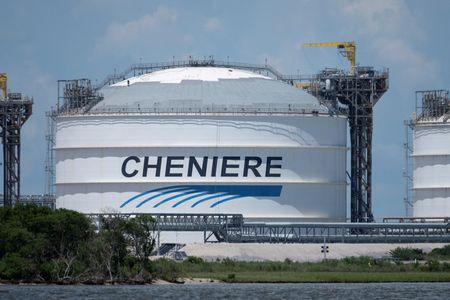

Cheniere Energy Partners announced Thursday that it has entered into an agreement with Bechtel Energy to handle engineering, procurement and construction work for the initial phase of expanding its Sabine Pass LNG facility located in Cameron Parish, Louisiana.
Key project details include:
• The existing Sabine Pass LNG facility currently operates natural gas liquefaction equipment capable of producing more than 30 million tonnes annually of LNG.
• This facility enables the United States to ship its plentiful shale gas resources from the Permian and Haynesville regions overseas, strengthening America’s trade position while offering allied nations an option beyond Russian or Middle Eastern gas supplies.
• The initial development phase will add Train 7, along with a boil-off gas re-liquefaction system and supporting infrastructure connected to the current Sabine Pass LNG facility.
• Cheniere anticipates making a final investment decision for the first phase sometime in early 2027.
• The company has also provided Bechtel with a limited notice to proceed, enabling preliminary engineering and procurement activities to get underway.
• The first phase is projected to have a total production capacity exceeding 6 mtpa of LNG.


Chinese electric vehicle manufacturer Xpeng announced Thursday that it anticipates second-quarter revenue will fall short of market predictions, highlighting the ongoing challenges facing the electric vehicle industry in China due to weakening demand and intense market competition.
Car sales within China have declined for seven consecutive months through April, with industry analysts predicting that electric vehicle and plug-in hybrid sales growth will likely decelerate in 2026 following several years of rapid market expansion.
Despite these challenges, Chinese electric vehicle manufacturers are focusing on sophisticated driver-assistance technology, feature-packed vehicles, and expanded product offerings to weather the current market downturn.
Key highlights from Xpeng’s first-quarter financial results include:
• The company anticipates total revenue ranging from 19.60 billion yuan ($2.89 billion) to 20.80 billion yuan during the second quarter, marking a year-over-year increase of 7.3% to 13.8%.
• This projection falls below the analyst consensus estimate of 21.71 billion yuan, according to LSEG data compilation.
• First-quarter revenue totaled 13.03 billion yuan, exceeding analyst expectations of 12.93 billion yuan.
• The company delivered 62,682 vehicles during the first quarter, representing a 33.3% decline from the 94,008 units delivered in the corresponding period last year. Xpeng anticipates delivering between 100,000 and 106,000 vehicles in the June quarter.
“Kickstarted by the successful launch of the GX, Xpeng will deliver four new models this year, positioning us for a robust sales growth trajectory,” CEO Xiaopeng He said.
• The company’s U.S.-traded shares, which have dropped nearly 19% year-to-date through the previous close, showed slight gains in early morning trading.
• Xpeng reported a first-quarter net loss attributable to ordinary shareholders of 1.78 billion yuan, expanding from a 664 million yuan loss in the same quarter last year and contrasting with a 383.2 million yuan profit recorded in the preceding quarter.
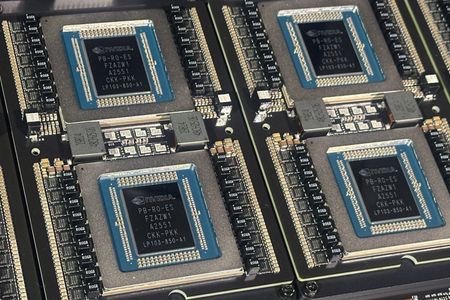

An artificial intelligence chip company called Groq is seeking to secure as much as $650 million in new funding from its current investors, according to a Thursday report from Axios. This fundraising effort follows the company’s December agreement with Nvidia worth $17 billion in licensing arrangements.
The company has been changing its business strategy, moving away from hardware production and instead concentrating on AI inferencing services. This specialized field involves helping trained artificial intelligence models process and respond to requests from users.
According to the Axios report, Groq’s current investors have already received financial returns, with additional cash payments expected to be distributed soon as part of the Nvidia agreement.
The publication reported that investors are being invited to join what’s being called Groq 2.0, with current backers Disruptive and Infinitum prepared to guarantee the full $650 million funding round if other investors don’t fully participate.
Existing shareholders will first receive their remaining cash distributions before being given the chance to invest in the restructured company, Axios reported.
When Reuters reached out to Groq for comment, the company did not provide an immediate response.
In March, two sources with knowledge of the situation told Reuters that Nvidia is developing a modified version of its Groq AI chips specifically designed for sale in the Chinese market.
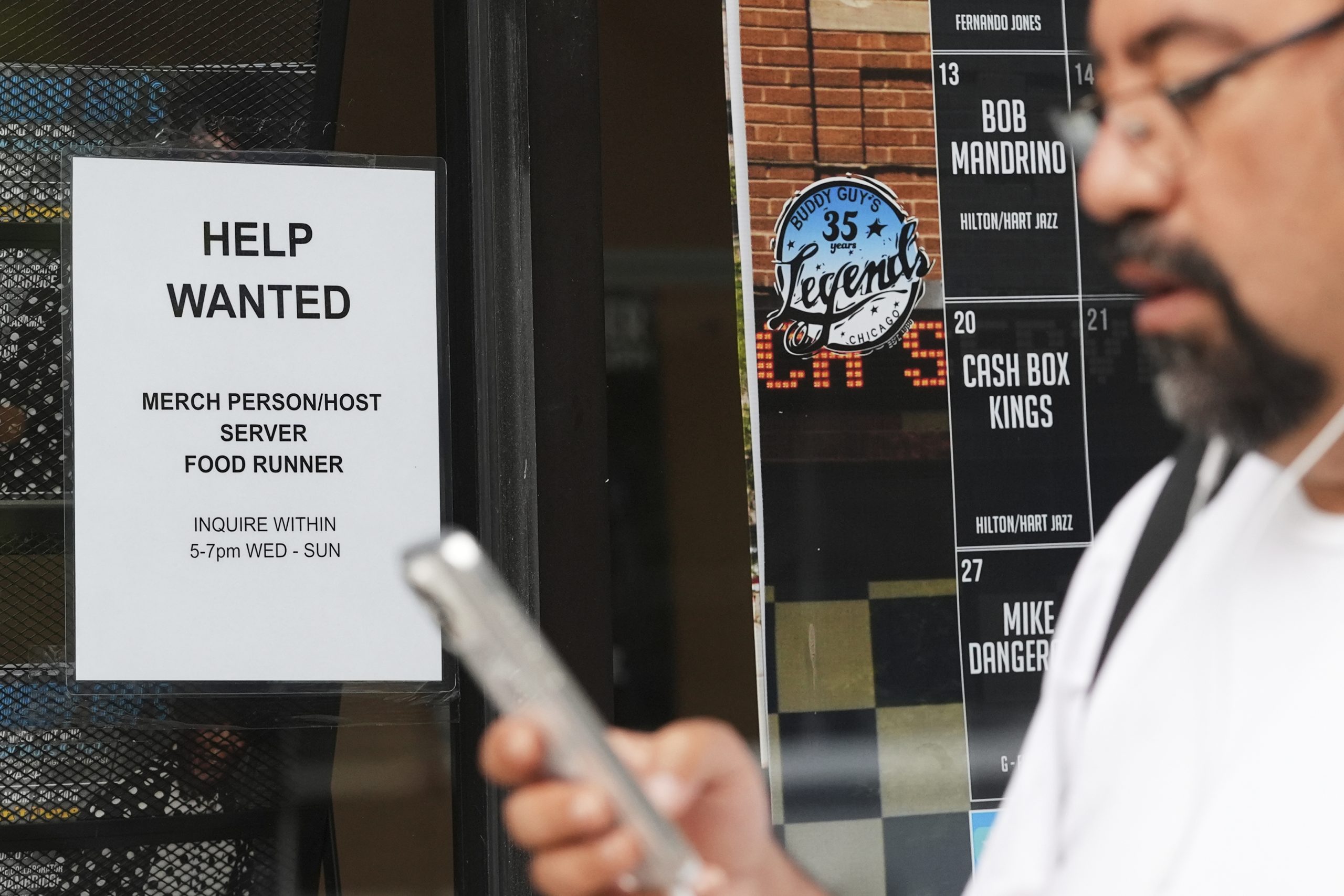

WASHINGTON — The nation’s economic expansion decelerated during the opening quarter of the year, with the gross domestic product advancing at an annualized pace of 1.6 percent. Consumer purchasing patterns remained consistent and corporate capital expenditures showed strength, but reduced government expenditures and negative trade impacts limited overall progress. This growth rate fell short of certain analyst projections, indicating measured economic activity without signs of overheating. Such moderate performance may reduce expectations for aggressive Federal Reserve interest rate increases, prompting financial markets to monitor future developments carefully.
In related economic news, a critical measure of price increases surged in April to its peak in three years, representing another indication that escalating gasoline costs and elevated grocery expenses are straining household budgets. Price pressures climbed to 3.8% in April when measured against the previous year, the Commerce Department announced Thursday, rising from March’s 3.5% and marking the steepest increase since May 2023. Monthly price growth registered 0.4%, declining from March’s 0.7% jump. The data revealed widespread price increases beyond fuel costs, suggesting inflation may continue and create challenges for congressional Republicans during this year’s midterm elections.
Additionally, initial unemployment benefit applications increased last week among Americans, though job losses continue at minimal levels despite economic concerns related to the Iran war. Thursday’s Labor Department figures showed jobless claims reached 215,000, climbing from the previous week’s 210,000. The four-week rolling average, which eliminates weekly fluctuations, increased by approximately 6,300 to 209,000. Weekly unemployment benefit filings — an indicator of workforce reductions — have remained within a narrow band of primarily 200,000 to 250,000 since the nation’s economy recovered from a short but severe pandemic-induced recession in 2020.


ARLINGTON, Va., May 28, 2026 – Federal transportation regulators have given conditional approval to a major railroad merger application, following established merger guidelines set by the Surface Transportation Board.
The Board announced today it has conditionally approved the revised merger proposal between Union Pacific and Norfolk Southern Corporation, though the companies must provide additional documentation before final clearance.
Based on the Board’s ruling, both railroad companies have until July 27, 2026, to submit supplementary materials addressing several key areas including competitive improvements, shipper access concerns, service reliability plans, gateway and equipment supply matters, market projections, potential merger consequences, passenger rail considerations, and technical documentation issues. Due to these additional information requirements, regulators have not yet established a timeline for the review process.
The National Grain and Feed Association issued a response to the federal decision:
“As the process moves forward, the National Grain and Feed Association (NGFA) will continue to examine the application and gather feedback and perspectives from its members to help determine what position, if any, it will take in this matter. NGFA has consistently maintained that any agreement must deliver tangible benefits for rail customers and the agricultural supply chain. NGFA looks forward to future engagement with the Surface Transportation Board and the applicants in this matter.”
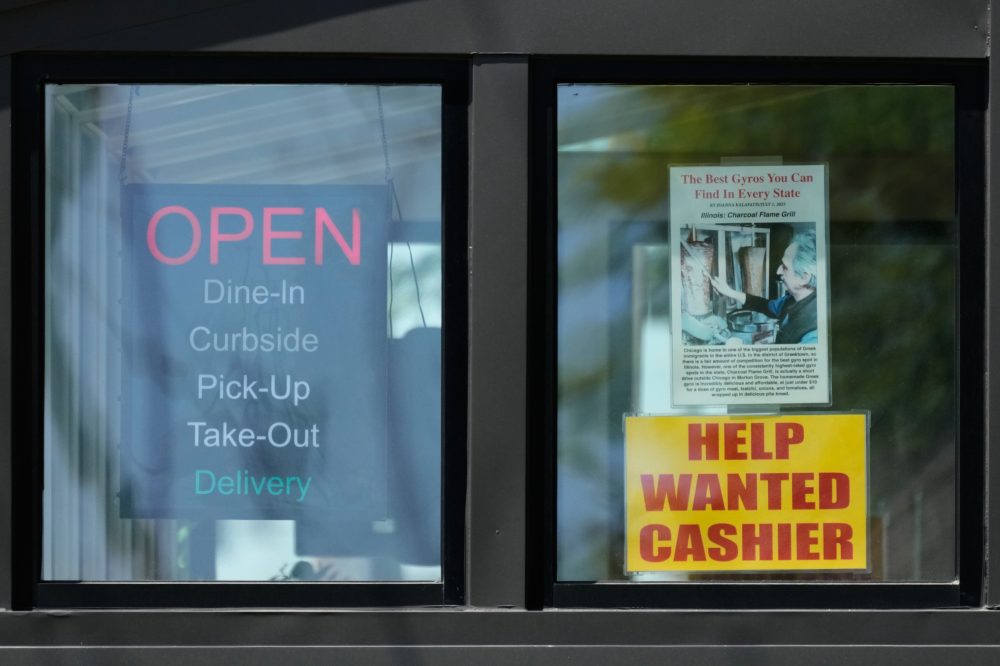

WASHINGTON — Weekly applications for unemployment benefits saw a modest increase, though job losses continue to stay at historically low levels even as the Iran war creates economic uncertainty.
Thursday’s report from the Labor Department showed that unemployment benefit filings climbed to 215,000, marking an increase from the previous week’s total of 210,000. The rolling four-week average, which helps eliminate weekly fluctuations, increased by nearly 6,300 to reach 209,000.
“Initial claims are still impressively low, near historic lows,” Carl Weinberg, chief economist at High Frequency Economics, wrote in a commentary. “The uptick from last week to this week is trivial in a labor market of 159 million workers.″
Weekly unemployment benefit applications — which serve as an indicator of job cuts — have remained steady within a low band of primarily 200,000 to 250,000 per week ever since the U.S. economy recovered from a short but severe pandemic recession in 2020.
Americans receiving unemployment assistance increased by 15,000 to reach 1.79 million during the week ending May 16.
The consistently low claim numbers indicate that most American businesses have avoided resorting to workforce reductions. However, while companies aren’t eliminating positions, they also haven’t been creating many new ones. During the previous year, businesses, nonprofits and government agencies created less than 10,000 positions monthly, representing the weakest job growth outside of recession periods since 2002.
Monthly job growth has shown some improvement this year — reaching an average of 76,000 positions per month between January and April. This compares to employers creating 122,000 jobs monthly in 2024 and averaging close to 400,000 monthly from 2021 through 2023 during the economy’s strong recovery from COVID-19 restrictions.
However, the United States currently requires fewer new positions to prevent unemployment rates from climbing. President Donald Trump’s immigration crackdown and continuing Baby Boomer retirements means that the monthly “break-even rate″ for new hiring could be as minimal as zero. The unemployment rate — standing at 4.3% in April — has actually stayed low by historical measures.
The Iran war has created uncertainty for economic forecasts as elevated energy costs pressure both consumers and businesses. Iran responded to U.S. and Israeli attacks by launching economic warfare — shutting down the Strait of Hormuz, through which a fifth of global oil travels, and triggering the largest worldwide oil supply disruption in history. As a result, American gasoline prices have jumped to an average of $4.43 per gallon from an average $2.98 per gallon before the conflict began, according to AAA.


WASHINGTON — An important inflation measure reached its peak level in three years during April, providing fresh evidence that climbing gasoline and grocery prices are putting financial pressure on American households.
The Commerce Department reported Thursday that inflation climbed to 3.8% in April when measured against the same period last year, rising from March’s 3.5% and marking the steepest increase since May 2023. Month-to-month, costs increased 0.4%, which represents a slowdown from March’s 0.7% surge.
The data revealed that numerous products beyond gasoline have experienced price increases, suggesting that inflation may continue and create challenges for congressional Republicans during this year’s midterm elections. The inflation rate also remains well above the Federal Reserve’s 2% goal, potentially leading Fed officials to avoid reducing their primary short-term interest rate this year. Several officials have indicated their next action might involve raising rates instead of lowering them.
When removing the unpredictable food and energy sectors, core inflation increased to 3.3% in April from the prior month’s 3.2%. This represents the steepest core measurement since November 2023. However, the report contained one encouraging element: Core prices advanced only 0.2% from March to April.
Rising costs are also diminishing consumers’ purchasing power, as incomes remained flat between March and April. When accounting for inflation, incomes actually decreased by 0.1% during the month.


WASHINGTON – Manufacturing orders for essential business equipment took an unexpected downturn in April, despite continued strong investment in artificial intelligence technology driving demand across multiple sectors.
The Commerce Department’s Census Bureau reported Thursday that non-defense capital goods orders excluding aircraft – a key indicator of business investment – declined 1.1% last month. This followed a revised 3.9% increase in March.
The April decrease caught economists off guard, as Reuters polling had predicted a 0.4% rise following what was initially reported as a 3.4% March increase. These core equipment orders had also surged in February, contributing to double-digit equipment spending growth during the first quarter.
Companies continue expanding their artificial intelligence investments, driving up demand for information processing equipment and related technology products.
This AI investment trend is helping support manufacturing activity and offsetting challenges from disrupted supply chains caused by the U.S.-backed conflict with Iran, along with rising costs for commodities including oil and aluminum. Certain manufacturing sectors continue facing impacts from import tariffs.
Computer and electronic product orders decreased 0.7% in April. However, several categories saw growth, including electrical equipment, appliances, components, machinery, primary metals, and fabricated metal products. Core capital goods shipments increased 0.4% during the month, following a 1.3% March gain.
Overall durable goods orders – covering products from household appliances to aircraft designed to last at least three years – jumped 7.9% last month after a 1.3% March increase.
Aircraft orders drove much of this growth, with non-defense aircraft and parts orders surging 165.9%. Boeing’s website showed the company received 136 orders in April, mostly for higher-priced aircraft models, compared to 33 orders the previous month.


Fertitta, the entertainment company behind Las Vegas’ Golden Nugget casino and restaurant chains including Rainforest Cafe and Morton’s, is purchasing Caesars Entertainment in a nearly $6 billion deal.
The casino company gained legendary status following the 1966 launch of Caesar’s Palace on the Las Vegas Strip, though the business traces its origins to 1930s Reno, Nevada.
Under the acquisition terms, Fertitta Entertainment will provide $5.7 billion in cash while assuming nearly $12 billion of Caesars’ existing debt, bringing the complete transaction value to approximately $17.6 billion.
The purchase agreement includes a provision allowing Caesars to solicit alternative offers until July 11.
Shareholders of Caesars will receive $31 per share in cash, representing a 49% increase above the stock price before acquisition discussions surfaced in February.
Caesars Entertainment Inc. stock, which has climbed 15% since merger speculation began, gained nearly 2% in pre-market trading Thursday.

Casino giant Caesars Entertainment announced Thursday it has agreed to be acquired by a company owned by hospitality billionaire Tilman Fertitta in a massive $17.6 billion transaction that will expand his entertainment holdings.
The acquisition will make the prominent Las Vegas Strip casino company a private entity and includes approximately $11.9 billion in debt that will be taken on, according to the announcement.
Stock prices for the casino company jumped 2.5% during premarket hours and have climbed roughly 16% since news of the potential deal first emerged in February.
Fertitta, who serves as the U.S. ambassador to Italy and San Marino and heads Fertitta Entertainment, has proposed paying $31 for each share — representing almost a 50% increase over the stock price before the deal became public knowledge.
Key leadership, including CEO Tom Reeg and CFO Bret Yunker, are anticipated to remain in their positions. The agreement features a “go-shop” provision lasting until July 11, giving Caesars the opportunity to explore and discuss other potential offers.
Fertitta Entertainment, which operates the Golden Nugget Hotel and Casinos along with the Houston Rockets basketball franchise, had previously contacted Caesars in 2018 regarding a possible merger with his gaming operations, according to earlier reports.
His restaurant and hospitality business encompasses more than 600 locations spanning 36 states and over 15 nations, featuring popular dining chains like Rainforest Café and Bubba Gump Shrimp.
Caesars merged with competitor Eldorado Resorts in 2020, creating one of America’s largest casino and entertainment corporations — a transaction initiated after activist investor and billionaire Carl Icahn acquired shares and advocated for a company sale.
The company operates more than 50 gaming facilities throughout North America, including properties like Caesars Palace, Harrah’s and Eldorado. It also manages retail and digital sports betting platforms.
Caesars is experiencing increased challenges as declining Las Vegas tourism — its primary revenue source — reduces income from its resorts, hotels and gaming venues, while its digital betting division lags behind major competitors like FanDuel and DraftKings amid intensifying market competition from prediction platforms.

European Union officials have imposed a hefty 200 million euro ($232 million) penalty on the Chinese e-commerce platform Temu following an investigation that revealed the company failed to safeguard shoppers from dangerous merchandise including harmful toys and risky electronic devices.
The punishment from the 27-country European Union comes after initial research last year showed Temu was putting customers at significant risk by allowing items such as infant toys and small electronic gadgets that violated EU safety standards to be sold through its marketplace.
Officials issued the financial penalty using authority granted under the Digital Services Act, a comprehensive set of regulations that mandates online marketplaces take greater responsibility for protecting users from dangerous content and questionable merchandise, with substantial fines as enforcement.
In response, Temu stated it disagreed with the ruling and viewed the penalty as “disproportionate.”
“The decision relates to the commission’s first DSA evaluation of Temu in 2024 and does not reflect the current state of our systems,” the company said.
“Temu engaged constructively with the Commission throughout the process and has since taken further steps to strengthen risk assessment, platform governance, and user protection,” it said in a statement.
The marketplace has gained popularity by offering inexpensive merchandise ranging from apparel to household items delivered from Chinese vendors. The service has attracted 92 million European users and operates under PDD Holdings Inc., the same company that runs the well-known Chinese shopping website Pinduoduo.
European Commission officials determined that Temu failed to properly identify, examine and evaluate the systematic dangers posed by prohibited merchandise available through its platform and the potential damage to European customers.
Regulators conducted a “mystery shopping exercise” that discovered numerous “non-compliant” items, including multiple electronic device chargers that couldn’t pass fundamental safety evaluations. They also discovered an extremely high proportion of infant toys that created safety hazards, either due to chemical content exceeding permitted levels or detachable components that could create choking dangers.
The commission emphasized that inadequate risk evaluation represents an especially severe violation of the region’s digital regulations.
“Risk assessments are not box‐ticking exercises,” European Commission Executive Vice-President Henna Virkunnen said.
“Temu’s risk assessment underestimates concrete risks, lacks specificity, is not grounded in solid evidence, and is not comprehensive,” she said in a prepared statement. “It leaves regulators, users, and the public in the dark about the true scale of potential harm posed by illegal products sold on Temu. Now it is time for Temu to comply with the law.”
Temu must provide an “action plan” to address the issues by the end of August. The company could face additional ongoing penalties if it doesn’t meet compliance requirements.


Electronics giant Best Buy delivered stronger-than-expected first-quarter results on Thursday and issued an optimistic sales forecast for the upcoming quarter, driven by consistent consumer appetite for laptops and smartphones along with expansion in advertising and marketplace operations.
The retailer announced that CEO Corie Barry will depart at the end of October, with company veteran Jason Bonfig taking over leadership. Bonfig is anticipated to prioritize growth in the company’s higher-profit advertising and marketplace segments.
Best Buy’s stock price, which has declined roughly 10% over the previous year, jumped more than 6% in pre-market trading following the earnings announcement.
The electronics chain has intensified its focus on services like Geek Squad technical support and premium memberships as customers continue upgrading and replacing essential technology devices while remaining cautious about major purchases.
“We’ve been scaling new profit streams like Best Buy Ads and Marketplace that we expect to provide considerable benefit over time,” Barry stated.
Sales on a comparable basis increased 2% during the quarter that concluded May 3, recovering from a 0.7% decrease in the same period last year and surpassing analyst projections of approximately 1%, based on LSEG data.
CFO Matt Bilunas noted that May sales growth reached a high-single-digit rate but anticipates a slowdown to roughly 1% for the second quarter following last year’s robust Nintendo Switch 2 launch. This projection still exceeds analyst expectations of a 0.4% decline.
The company reaffirmed its fiscal 2027 guidance for comparable sales ranging from a 1% decrease to a 1% increase, with adjusted earnings per share projected between $6.30 and $6.60.
Future CEO Bonfig detailed strategies to concentrate on the company’s retail, media and technology platform, broaden marketplace reach, and improve customer service experiences.
These initiatives come as consumer spending patterns remain unpredictable and the company depends heavily on electronics replacement cycles.
Best Buy has also increased imports of computers and other electronic devices to counter rising memory costs, as global shortages linked to artificial intelligence demand push up component pricing.
The retailer posted first-quarter earnings of $1.28 per share, surpassing analyst estimates of $1.23 per share.


A Swedish investment firm has announced a collaboration with Alphabet’s Google Cloud division to accelerate artificial intelligence adoption across more than 300 businesses in its portfolio, the companies revealed on Thursday.
The partnership will provide EQT’s portfolio businesses, which operate across industries ranging from enterprise software to healthcare, with access to artificial intelligence development tools including the Gemini Enterprise Agent platform for building applications, along with cybersecurity solutions.
Additionally, these businesses will receive priority access to select Google Cloud artificial intelligence products as they become available in the future, according to a joint statement from the companies.
As organizations rush to incorporate AI technology into their daily operations, the need for skilled engineers and consultants who can implement and customize these systems has skyrocketed. These types of partnerships also assist AI technology creators in growing their client base.
Engineers from Google will collaborate directly with EQT’s artificial intelligence transformation unit, which employs approximately 85 specialists. EQT and the companies it invests in will also gain access to Google Cloud’s extensive partner ecosystem, featuring more than 330,000 experts from consulting firms including Accenture, Deloitte and KPMG.
In April, Google established comparable AI implementation agreements with investment firms Vista Equity Partners and Thoma Bravo, both of which focus on software companies.
These arrangements also provide software businesses within the portfolios of EQT, Thoma Bravo and Vista the opportunity to market their own solutions through Google Cloud’s digital marketplace to other organizations.
Additional major private investment companies, including Blackstone and TPG, are pursuing independent collaborations with OpenAI and Anthropic to bring their technologies to hundreds of additional organizations.
Bert Janssens, who serves as EQT’s co-head of private capital in Europe and North America, stated the agreement would assist “management teams future-proof their businesses and be more competitive in an increasingly AI-driven economy”.