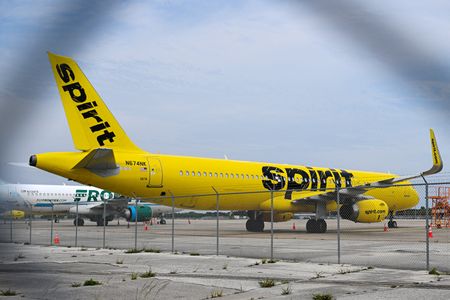

Travis Arcamone received recognition as flight attendant of the year at Spirit Airlines’ Orlando, Florida location in April. Just one month afterward, he found himself unemployed when the airline went through a second bankruptcy and shut down in early May.
The collapse of Spirit has created a challenging job market for thousands of former workers seeking employment in an aviation sector where finding new positions can require several months. Airlines typically establish fixed annual quotas for pilot and flight attendant recruitment and have already completed hiring for the busy summer travel period. The industry faces immediate capacity reductions due to increasing jet fuel expenses while simultaneously preparing for future expansion.
According to Sara Nelson, president of the Association of Flight Attendants-CWA, AFL-CIO, several hundred of Spirit’s 3,500 flight attendants may need four to five months to begin working at different airlines, even under optimal circumstances.
Arcamone, who lost his position just one month before reaching his ninth year with Spirit, has taken a position selling automobiles while continuing his search for aviation opportunities.
Aviation professionals face distinct challenges compared to other sectors, as newly hired pilots and flight attendants lose their accumulated seniority and begin at entry-level compensation rates, sacrificing control over work schedules and base assignments.
“My nearly decade of experience at Spirit might help me get a job somewhere else, but it means absolutely nothing when it comes to how good that job will be when I walk in the door,” a former Spirit pilot explained to Reuters, requesting anonymity to protect employment opportunities.
“I’ll be a peer to someone who has never flown a jet before,” the pilot added, representing one of approximately 1,800 pilots employed by Spirit when operations ceased.
A class-action legal case was initiated by former Spirit employees last month, claiming the company failed to provide adequate termination notification. The lawsuit seeks 60 days of compensation and benefits for roughly 17,000 workers, according to their legal representative. Spirit must file a response by mid-July. During court proceedings, a company attorney stated the airline provided notification as quickly as possible.
INDUSTRY RESPONSE
Bureau of Labor Statistics data shows approximately 130,000 flight attendants in the United States receive average annual compensation of $77,440, while just over 100,000 airline pilots, copilots, and flight engineers earn an average yearly salary of $288,650.
Leading airlines have expressed openness to hiring displaced Spirit personnel, though recruitment opportunities remain constrained, particularly for flight attendants.
Airlines generally establish recruitment strategies at the beginning of each fiscal year based on anticipated retirements, fleet expansion, and operational requirements, which limits how quickly they can increase hiring efforts. Certain positions are connected to busy travel seasons, creating narrow recruitment windows, while unpaid training periods delay regular income.
United Airlines, planning to recruit 1,300 pilots in 2026, reported receiving 2,800 applications from former Spirit workers for different positions. Delta Air Lines announced intentions to hire hundreds of pilots and flight attendants during 2026.
Most other domestic airlines declined to reveal specific hiring plans, citing competitive considerations.
American Airlines reported that 2,000 former Spirit employees have submitted job applications, while Southwest Airlines created a specialized website for Spirit workers to examine available positions. Frontier Airlines indicated it will continue recruiting former Spirit staff as positions become available, and JetBlue Airways announced a temporary hiring suspension.
The flight attendants’ union noted that airlines have reduced training programs or suspended recruitment, creating additional obstacles for quickly integrating displaced workers.
“Some of these airlines had been doing weekly classes of around 100 people per week. That has been cut back at the major airlines to 30 every other week or so,” Nelson explained.
Pilots may find returning to cockpit duties somewhat easier as airlines plan long-term capacity growth and prepare for upcoming retirement waves. Those with specialized qualifications such as check airmen — authorized to evaluate, train, and certify other pilots — or simulator instructors are expected to face higher demand.
However, pilots face significant financial consequences unless they obtain uncommon direct-entry captain positions.
“It’s a huge pay cut and a huge change from your previous quality of life,” explained Taylor Brown, a former Spirit pilot who departed the struggling airline in October for a position with UPS. UPS indicated to Reuters that current pilot staffing meets their needs.