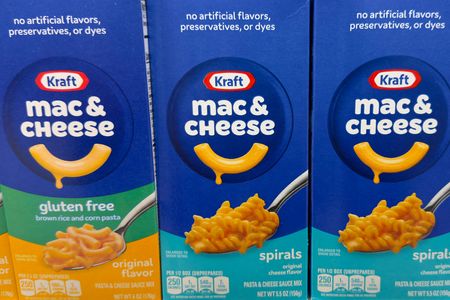

The food manufacturing giant Kraft Heinz is planning to intensify its product development efforts in the upcoming year, according to CEO Steve Cahillane in a recent interview with Reuters. This strategic move is part of the company’s broader initiative to recover from a decade of declining market position.
Since assuming leadership in January, Cahillane has allocated $600 million toward marketing and research and development initiatives this year. The investment targets rebuilding the company’s innovation capabilities and revitalizing its primary U.S. operations, which account for nearly 70% of total revenue.
“Next year is going to be better because we’ve put a lot of changes in place around the R&D, around process improvement, around resource allocation that will lead to a better innovation pipeline for 2027 than we had in 2026,” Cahillane stated, though he declined to elaborate on specific details.
The company’s strategy includes expanding into healthier product categories, including items with higher protein content and reduced sugar levels. Recent launches include a protein-enhanced version of its well-known Mac & Cheese in March, electrolyte-boosted Capri Sun beverages, and additional products in its sugar-free Heinz Zero line to appeal to health-conscious consumers.
“You’ve got to be willing to step out there and extend your brand a little bit and try things,” commented Ross Glotzbach, CEO and director of research at Southeastern Asset Management, a Kraft Heinz investor who endorses these strategic changes.
This renewed emphasis on innovation follows an extended period during which the company ranked among the food sector’s poorest performers. Over the past ten years, it has surrendered market share to both established competitors and emerging brands like Goodles, largely due to insufficient investment, budget reductions, and increased competition from healthier alternatives and store-brand products.
While the company’s stock has declined 3.8% this year, it has performed considerably better than competitors including Conagra Brands and Campbell’s, whose shares have dropped approximately 25%, indicating investor confidence in the current approach.
One of Cahillane’s most significant early decisions as CEO involved halting plans to divide the company into separate entities—one concentrating on grocery items and another on condiments and spreads—a move that preserved $300 million.
Industry analysts suggest that sustainable growth for the unified organization will require ongoing investment, given that Kraft Heinz operates in slow-growth market segments.
Recent performance data shows U.S. sales volumes decreased 4.1% in the four weeks ending May 16 compared to the previous year, while dollar sales dropped 1.9%, according to BNP Paribas analyst Max Gumport, referencing Nielsen statistics.
“That’s not going to be a sustainable outcome after $600 million of investment,” Gumport observed. “When you get to the end of this year, they will need to invest more, because what you need is volumes to be flat and dollar sales up for this business to work.”
The company is also committing to absorbing approximately 80% of inflation costs this year rather than transferring them to consumers, which constrains its ability to balance expenses and increases dependence on new product launches for revenue growth.
Cahillane indicated the company would increase spending further if initial results from new product introductions remain positive.
Company data from May revealed that 58% of its products were maintaining or gaining market share in March, up from 21% at the close of 2025.
“Some of the early returns we’re seeing gives us optimism that we might have the opportunity to invest even more,” he explained.