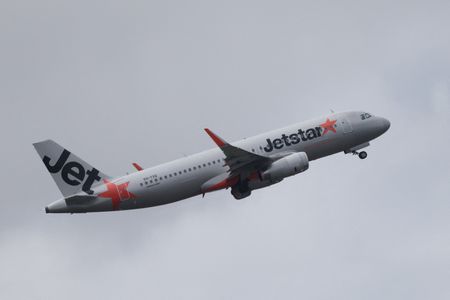
Australian airline Qantas Airways announced Wednesday that both the main carrier and its budget subsidiary Jetstar will begin passenger operations at Western Sydney International Airport when the facility opens on October 25 this year.
The flight schedules include several key routes:
• Jetstar will begin operations immediately when the airport opens, offering up to 14 weekly flights to Melbourne, plus four weekly flights to the Gold Coast and three to Brisbane.
• Qantas will start its passenger service on March 28 next year, providing four weekly flights each to Melbourne and Brisbane.
• The carrier’s first freight service will depart from the airport’s round-the-clock cargo facility on the evening of July 27.
• “WSI will also become a key hub for Qantas Freight, with more than 850 tonnes of freight expected to move through our new terminal each week,” CEO Vanessa Hudson said.
• Singapore Airlines previously announced in March that it would begin daily direct flights to the new airport starting November 23.
• Air New Zealand began selling tickets in April for three weekly round-trip flights that will start operating from the airport beginning October 26.
• New Zealand’s flag carrier had signed an agreement with the airport in June 2025.
General Motors has announced a new software upgrade that will enable electric vehicle owners across the United States to sell electricity back to power companies, marking another step by automakers into the energy business sector.
The software enhancement expands capabilities for owners who already have GM’s vehicle-to-home energy systems, which currently allow electric cars to supply power to houses during outages. Now, these same drivers will be able to send electricity back to the power grid and receive compensation from utilities during peak demand periods, with GM taking a portion of those payments.
According to a GM spokesperson, the company currently has thousands of customers using the vehicle-to-home technology, though specific numbers were not disclosed. The success of this grid-selling feature may depend on whether drivers are willing to use their car’s battery power for the grid rather than keeping it fully charged for driving.
The rollout faces several challenges, as very few utility companies currently offer this type of service, and the practice remains largely experimental. GM Energy Chief Revenue Officer Aseem Kapur told Reuters during a San Francisco event that the company is currently in talks with approximately 10 utility providers.
Kapur indicated that commercial availability of the grid-selling technology will likely begin within the coming months, with California and Texas expected to be the first states to offer the service. In Michigan, GM has partnered with utility DTE Energy to test the vehicle-to-grid concept with 30 company employees.
Utility companies have shown caution regarding vehicle-to-grid programs due to concerns about required investments, technological uncertainties, and questions about user adoption rates.
GM joins other major automakers, including crosstown competitor Ford Motor, in developing energy-related business ventures, following the path established by Tesla in expanding beyond traditional vehicle manufacturing.
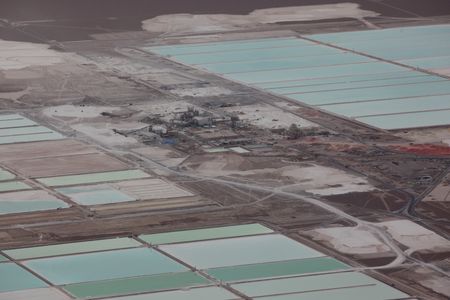
Shares of Chilean lithium manufacturer SQM jumped more than 3% during Tuesday trading in Santiago following renewed support from financial analysts at Scotiabank.
The banking institution said recent discussions with company leadership strengthened their confidence in robust lithium demand expansion and highlighted SQM’s competitive cost structure at Chile’s Salar de Atacama facility.
Following discussions with SQM Chief Financial Officer Gerardo Illanes and Head of Investor Relations Isabel Bendeck, Scotiabank kept its “Sector Outperform” rating and $105 price target unchanged, naming SQM among its preferred investments for 2026.
According to the analyst report, SQM anticipates lithium incentive pricing around $18 per kilogram, falling within a broader $15-to-$20 range, and projects demand will continue growing substantially through 2030, necessitating additional supply from new market participants.
The analysis revealed SQM’s comprehensive lithium production costs, not including payments to state development agency Corfo, stand at approximately $4,500 per metric ton, maintaining its status among the sector’s most cost-effective producers.
Scotiabank reported that SQM plans to make a decision in the upcoming months regarding potential expansion of the Mt. Holland project in Australia, which could increase capacity to 100,000 metric tons, with SQM holding rights to half that amount.
The bank noted SQM identified attractive financial prospects in battery energy storage systems, or BESS, where the company believes lithium demand growth is becoming more influenced by cost advantages than consumer preferences.
According to Scotiabank, SQM acknowledges it cannot sustain its current market position permanently, with company officials stating that industry expansion is occurring too quickly for any individual producer to maintain pace.
SQM identified environmental permitting as the primary bottleneck limiting new lithium supply development.
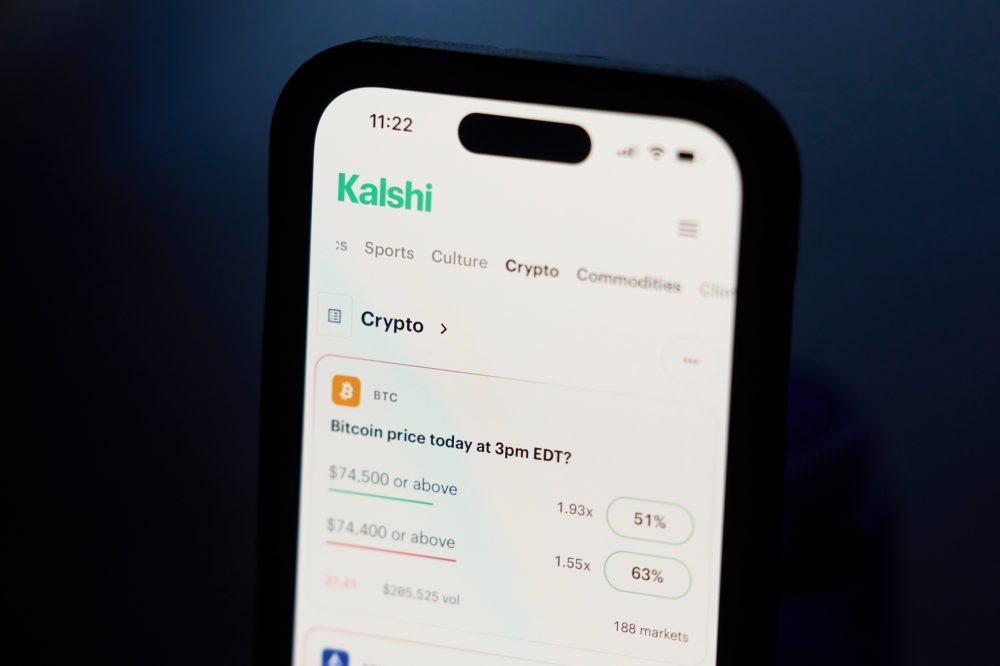
A prediction market platform has announced new measures to combat insider trading by requiring employment details from customers who want to participate in certain high-risk betting markets.
Kalshi revealed Tuesday it will implement a scoring system to identify markets with elevated risks of insider trading or manipulation. Users wanting to trade in these flagged markets must provide workplace information, and those identified as potential insider traders will face trading bans in those specific areas.
The decision comes after multiple cases where individuals exploited confidential information for financial gain on prediction platforms. Recent examples include former Congressman George Santos, who faces investigation for allegedly placing illegal bets about his attendance at President Donald Trump’s State of the Union address. Additionally, a U.S. Army soldier was charged in April for using classified intelligence to earn $400,000 on Polymarket by betting on U.S. military operations timing in Venezuela.
“By implementing these new integrity measures, we continue to lead the industry on the issue of market integrity among federally regulated prediction markets,” said Robert DeNault, head of enforcement at Kalshi, in a statement.
The company emphasized that collected employment data will only be accessed when suspicious trading patterns emerge in specific markets.
“This lets us identify presumptive insiders – people who have material, nonpublic information about a market’s outcome – and screen them out before a trade is ever placed,” Kalshi said in a statement.
Prediction markets are working to establish credibility with the public and regulators as legitimate platforms for wagering on various outcomes ranging from sports and weather to political events. Kalshi has been positioning itself as distinct from major rival Polymarket, which operates primarily outside U.S. regulatory oversight. The company has also reported making at least 20 referrals to law enforcement and securities regulators regarding market manipulation and insider trading concerns.
In February, Kalshi established an Independent Surveillance Audit Committee to address market manipulation and insider trading issues. The company stated that this week’s announced changes stem partially from that committee’s recommendations.
Mississippi residents have launched a class action lawsuit against Elon Musk’s xAI and SpaceX, alleging that a power facility supporting data centers in their area generates relentless noise that has damaged their well-being and property worth.
The legal action, revealed Tuesday in federal court in Oxford, Mississippi, accuses Musk’s enterprises of failing to address the disturbance and establishing a public nuisance through excessive sound levels. Three local residents initiated the suit representing a class of more than 10,000 people.
“The artificial intelligence (AI) boom is wreaking havoc on communities across the United States” by subjecting thousands of residents to near-constant noise and vibrations, the lawsuit said.
Those bringing the case want compensation for claimed emotional harm, decreased home values and other damages, plus an undetermined amount of profits to be returned.
Neither xAI nor SpaceX provided immediate responses to comment requests. The lawsuit also names xAI subsidiary MZX Tech as a defendant, though Musk himself is not named in the case.
Attorney Robert Wiygul, representing the residents, stated: “Our homes are supposed to be a sanctuary for us against the world,” but “when they are invaded by noise 24 hours a day, it takes that fundamental peace of a good and decent life away from us.”
The company invested over $20 billion in constructing the Southaven facility with support from Mississippi Governor Tate Reeves. Gas-powered turbines at the Southaven location supply electricity to data centers in and around the area, according to the filing.
In April, the NAACP filed its own lawsuit against xAI regarding the facility and data centers, claiming the company broke federal environmental regulations. That case remains active.
The U.S. Justice Department indicated in a court document last month that it might join the NAACP lawsuit, noting the matter involves important legal and policy issues about the government’s involvement in AI infrastructure development.
Dramatic fluctuations in artificial intelligence stocks created chaos on Wall Street Tuesday, leading to mixed performance across major market indexes.
The S&P 500 dropped 0.3% after experiencing wild swings that saw the index jump 1% in early trading before plunging 2.3% by midday. Meanwhile, the Dow Jones Industrial Average managed a slight 0.2% increase, while the Nasdaq composite declined 1%.
Market volatility intensified when businesses involved in semiconductors, memory components, and other foundational AI technologies reversed course from morning gains to afternoon declines. The weakness in artificial intelligence stocks overshadowed benefits from falling crude oil prices, even though the majority of S&P 500 companies posted gains. Bond market activity showed Treasury yields declining slightly.
Tuesday’s closing numbers:
The S&P 500 declined 19.08 points, or 0.3%, finishing at 7,386.65.
The Dow Jones Industrial Average gained 86.10 points, or 0.2%, closing at 50,872.11.
The Nasdaq composite dropped 250.84 points, or 1%, ending at 25,678.82.
The Russell 2000 index of smaller companies increased 11.60 points, or 0.4%, to 2,867.02.
Weekly performance:
The S&P 500 has gained 2.91 points, or less than 0.1%.
The Dow has risen 5.33 points, or less than 0.1%.
The Nasdaq has fallen 30.61 points, or 0.1%.
The Russell 2000 has climbed 33.52 points, or 1.2%.
Year-to-date results:
The S&P 500 has advanced 541.15 points, or 7.9%.
The Dow has increased 2,808.82 points, or 5.8%.
The Nasdaq has gained 2,436.83 points, or 10.5%.
The Russell 2000 has jumped 385.12 points, or 15.5%.
A major pharmaceutical company and a leading medical center’s innovation division have joined forces in a partnership aimed at advancing healthcare technology and helping startups reach international markets.
Late last month, Teva Pharmaceutical Industries Ltd. and ARC Innovation, the worldwide innovation division of Sheba Medical Center, finalized an agreement to work together on innovation projects, medical research, and digital health initiatives. The partnership is intended to support local startups in expanding internationally, speed up healthcare innovation, and enhance patient care.
According to Igal Gurevich, head of strategic partnerships and corporate affairs for Teva, both organizations share a common goal of improving patient outcomes. He told The Media Line that if artificial intelligence or other technologies can enhance medication adherence or other care aspects, it benefits both entities. “This should significantly accelerate the adoption of new technologies,” he stated. “And ultimately everything comes back to the patient.”
Gurevich further explained the mutual benefits: “Teva benefits because patients use medications more effectively. Sheba benefits because patients receive better care. The startup benefits too. But most importantly, the patient benefits. Technology can improve the effectiveness of both hospital treatment and pharmaceutical treatment.”
Angela Rabinovich, ARC’s chief business officer, shared comparable views. Speaking to The Media Line, she described the partnership as “about bringing together two organizations with a global innovation mindset and a shared drive to change healthcare. ARC and Teva each bring different strengths, and the structured model we’ve built allows us to create something bigger than the sum of its parts.”
The partnership gained traction after both entities received grants from the Israel Innovation Authority in December to create pilot locations for Israeli technology companies. Moving forward, the two organizations plan to collaborate on joint projects involving open innovation, research and development partnerships, and initiatives throughout the healthcare value chain.
“The idea is that we’re opening the doors of both Teva and ARC to Israeli startups so they can validate technologies that are relevant to our organizations,” Gurevich explained.
ARC has previously launched and invested in over 100 healthcare startups and currently functions in 10 countries globally through partnerships with major hospitals and medical centers.
The collaboration also supports Teva Rise, Teva’s new worldwide open innovation platform created to utilize emerging technologies, including artificial intelligence, Industry 4.0 smart manufacturing, digital health, and biotechnology, by linking startups and advanced technology companies with Teva’s business divisions.
“We each identify challenges and tell startups, ‘If you have an interesting technological solution, whether AI-based or not, we’d like to hear from you.’ We can then work together on projects,” Gurevich noted.
Under the agreement, a joint steering committee has been formed and will convene quarterly to assess potential projects. The organizations have also established working groups to advance these initiatives.
To date, Teva and ARC have identified three main collaboration areas.
The first involves working with startups. If a startup contacts Teva, for instance, the company can now provide broader opportunities beyond access to the pharmaceutical industry. While Teva operates throughout the entire value chain, from research and development to manufacturing and logistics, Gurevich said startups will now also gain access to Sheba Medical Center.
“A startup can potentially test and deploy its technology at Teva sites in Israel and around the world, as well as at Sheba,” he said. “The same works in reverse. Startups coming through Sheba can be referred to Teva.”
The second area involves clinical research and development collaboration. Teva develops medications, conducts molecular searches, and performs research. Technology can make these processes faster and more efficient. ARC has researchers, physicians, and laboratories, creating opportunities for collaboration between two major research and development entities through joint studies, experiments, and innovation projects.
The third area concentrates on logistics and operations. Here, Gurevich said, the organizations encounter many similar challenges. For instance, Teva may be working to solve a problem related to cold-chain storage and transportation of medications, while hospitals face comparable challenges in moving those medications from the warehouse to the patient.
“At Teva, through Teva Rise, we appointed about 60 innovation leaders around the world,” Gurevich said. “They identify challenges that, if solved, could shorten drug-development timelines, improve manufacturing processes, improve supply chains and logistics, increase patient adherence and compliance, or advance personalized medicine. ARC has a similar process. Then we compare notes and look for overlaps.” He noted that working groups meet to review challenges and identify where collaboration makes sense.
Sometimes, he said, Teva has a challenge that ARC’s researchers or startups may be able to solve, and vice versa.
Teva and ARC did not apply for the Innovation Authority grants together. Neither organization knew the other was applying. But after the authority announced the awards, discussions accelerated, both sides said.
“I actually give a lot of credit to the Innovation Authority,” Gurevich commented. “Through one government program, they unintentionally connected two major organizations.”
Few organizations in Israel are both deeply rooted in the country and globally successful. Teva and Sheba are both well-established in Israel and abroad. Gurevich said that when two organizations like that collaborate, it matters.
“The startup ecosystem isn’t interested only in Israel,” Gurevich explained. “It wants to expand globally. We’re serving as enablers. We’re giving startups access not only to two major institutions in Israel but also, through us, to opportunities around the world.”
The Innovation Authority program runs through the end of 2028. Each organization funds its own activities, and no specific budget was set for the partnership itself. Gurevich said budgets will be determined on a project-by-project basis. Some projects may cost tens of thousands of dollars. Others could cost millions.
“Together, we’re building a comprehensive platform that connects both worlds in a way neither could achieve alone,” Rabinovich concluded.
Egyptian Prime Minister Mostafa Madbouly has officially opened multiple industrial developments in New Borg El Arab City, Alexandria, featuring a significant textile production facility and expanded garment manufacturing operations as the country works to boost exports, draw foreign investment, and create more industrial jobs.
The centerpiece of the new developments is the Jade Textile facility, run by Turkey’s Yesim Group. Company representatives stated that investment in the manufacturing plant is nearing EGP 500 million.
Once operating at maximum capacity, the facility is anticipated to play a major role in Egypt’s clothing exports, with yearly export income estimated between $250 million and $500 million.
Spanning roughly 60,000 square meters, the plant was built as a comprehensive garment production center. The facility handles fabric cutting, embroidery, sewing, and finishing processes, all supported by state-of-the-art manufacturing equipment.
The development has generated substantial employment opportunities. Over 6,000 positions have been established at the Alexandria location, while Yesim Group’s nationwide Egyptian operations provide work for more than 15,000 individuals. Beyond this new location, the company operates production sites in 10th Ramadan City and Ismailia.
Madbouly additionally opened an expanded section of the Şahinler Egypt 2 ready-made clothing project. This new expansion features dedicated cutting and finishing production lines designed to facilitate exports worth $55 million.
During his visit, the prime minister also launched the initial phase of the El-Gharably Industrial Complex, another major manufacturing development in New Borg El Arab City.
Government representatives reported that the complex covers 315,000 square meters and maintains yearly production capability surpassing 100,000 tons. The operation currently provides employment for roughly 3,000 workers, with expansion plans targeting 5,000 employees.
The industrial complex houses a steel construction facility, an engine repair and maintenance operation characterized as Egypt’s largest, and a dedicated plant manufacturing industrial and medical gases.
Under the leadership of Moataz El-Gharably, the project is exploring collaborative opportunities in railway wagon production, agricultural machinery, and pipe manufacturing.
These new industrial facilities represent part of wider initiatives to strengthen Egypt’s manufacturing and logistics infrastructure through comprehensive production systems aimed at supporting industrial growth and export expansion.
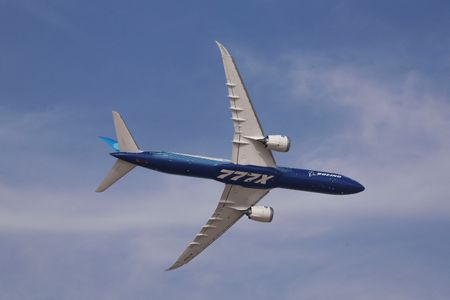
The Middle East’s largest airline is showing confidence about finally receiving its long-awaited Boeing 777X aircraft, with delivery expected by June of next year, according to statements made at an industry conference in Berlin.
Emirates, which holds the distinction of being the globe’s biggest purchaser of wide-body aircraft, has endured extended postponements for Boeing’s flagship model while simultaneously expressing frustration with engine reliability issues on Airbus’ largest offering, which has prevented the airline from placing orders.
“Anything can go wrong … but it’s in good shape,” Emirates President Tim Clark stated when discussing the 777X order during the Berlin conference.
The Dubai-based carrier anticipates taking delivery of its initial 777X between May and June of 2025, marking 14 years since Emirates spearheaded the original ordering surge for the 400-passenger aircraft. The GE-powered aircraft’s development has faced numerous setbacks, including certification holdups.
Clark restated his airline’s worries regarding the performance of the Rolls-Royce Trent XWB-97 engine in the harsh, sandy conditions typical of Gulf region operations. This engine powers the somewhat smaller Airbus A350-1000, and Emirates has maintained it will not purchase this aircraft until durability concerns are addressed.
“The story of the (XWB-)97 is as it was. I know they (Rolls-Royce) are working hard to get it sorted,” Clark explained.
The Emirates executive, who has previously engaged in public disagreements with Rolls-Royce, also criticized a compensation package potentially exceeding £100 million ($134 million) granted to Rolls-Royce CEO Tufan Erginbilgic.
Erginbilgic has received recognition for implementing comprehensive organizational changes, leading to significant improvements in both profitability and stock performance.
While Rolls-Royce refused to address questions about executive compensation, a company representative responded to Clark’s engine durability comments by noting that their Trent XWB-97 technology enhancement program is boosting both durability and operational time.
“These enhancements will double the durability of the Trent XWB-97 in hot and dusty environments and provide a 50% improvement for flying in benign environments,” the spokesperson explained.
The manufacturer is also making investments to increase its maintenance, overhaul and repair capabilities by 2030 to meet rising customer needs and deliver engine improvements to clients “as quickly as possible,” according to company statements.
The aviation industry is currently experiencing widespread tensions between airlines and engine manufacturers regarding elevated costs and delivery postponements.
Clark showed little understanding for engine producers who have struggled to meet demand, resulting in grounded aircraft.
“I can’t say to my government, I can’t fly because I haven’t got this; they’d kick me out. So it’s brutal, but that’s the way it is. You need to do better than you’re doing, but it’s not only him (Erginbilgic), it’s all the others as well.”
The International Air Transport Association recently accused engine manufacturers of “gouging” airlines through parts pricing. Engine companies defend themselves by citing substantial financial risks taken to achieve fuel efficiency gains and attribute some delays to supply chain complications.
“Listen, guys, that’s not my problem, that’s your problem,” Clark stated, directing his comments toward engine manufacturers regarding supply limitations.
British health and beauty retailer Boots is reportedly exploring a $10 billion sale that would abandon its planned London stock market debut, according to a Financial Times report published Tuesday citing sources with knowledge of the discussions.
The pharmacy chain’s current owner, private equity firm Sycamore Partners, has been in discussions with potential buyers since before Easter, the report indicates. Sycamore Partners gained control of Boots in the previous year through a $10 billion purchase of parent company Walgreens Boots Alliance.
Two key parties have emerged in the negotiations: the Canadian branch of the billionaire Weston family and Australian pharmacy group Sigma Healthcare. The Weston family maintains ownership interests in grocery retailer Loblaws and pharmacy chain Shoppers Drug Mart through their investment vehicle Wittington Investments.
The potential sale represents a shift from earlier strategic planning. In April, Reuters had reported that Boots’ ownership was collaborating with advisors on restructuring plans in preparation for a possible London IPO as early as 2027, though a sale remained an option at that time.
Boots maintains a significant presence across Britain with more than 1,800 locations providing pharmacy services, health products, and beauty brands such as Soap & Glory. The company also serves as a major provider of pharmacy services funded by the National Health Service.
When contacted for comment, Sycamore Partners declined to respond to the report. Boots and Sigma Healthcare did not provide immediate responses to requests for comment, while Wittington Investments could not be reached for comment.
European Union officials have mandated that Meta Platforms must allow competing artificial intelligence chatbot companies to use WhatsApp while regulators complete their antitrust probe.
The European Commission, which serves as the primary competition authority for the 27-member union, announced Tuesday it was implementing measures to safeguard competition in the rapidly expanding AI assistant sector.
Officials said they were establishing “interim measures” as they continue examining WhatsApp’s artificial intelligence policies amid concerns the social media giant is violating EU regulations by preventing competitors from providing their AI services through the messaging platform.
Meta announced plans to challenge the decision.
“The European Commission has decided that OpenAI and some of the largest companies in the world can use the paid-for WhatsApp Business product for free,” the company said in a statement. “This is regulatory overreach subsidized by the many European companies that pay.”
Brussels has sometimes implemented temporary directives after receiving criticism that lengthy antitrust examinations of major technology corporations moved too slowly to limit their market dominance.
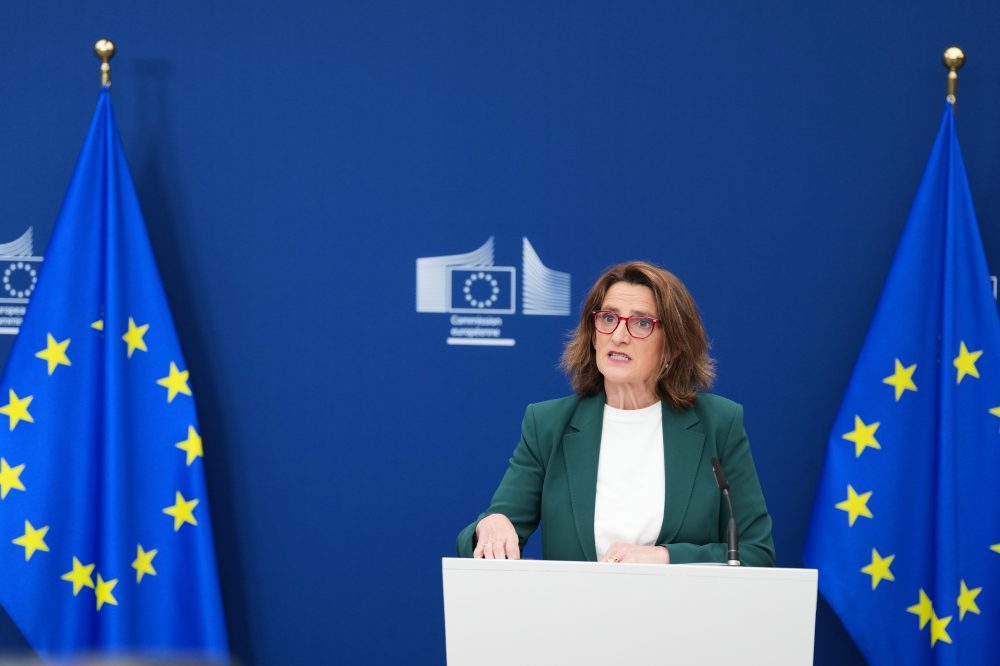
“AI markets are developing exceptionally fast, and AI assistants are expected to become an important way for consumers all across Europe to access and use AI,” the commission’s executive vice-president overseeing competition, Teresa Ribera, told reporters in Brussels.
“Therefore, when the damage can happen quickly and there is a risk of companies being forced to leave the market, we need to use our tools.”
EU officials began examining revised terms and conditions for Meta’s commercial clients who use AI assistants to interact with customers through WhatsApp last year.
Regulators worried that the updated agreement blocked third-party AI firms from providing their services on the messaging service, allowing only Meta’s chatbot offering to remain available for users.
Meta tried to address the investigation by implementing charges for competitor access, but regulators remained unsatisfied and warned in April they would compel the company to restore free access.
Ribera stated Meta’s pricing was so expensive it was “not economically sustainable for competitors,” though she did not elaborate on specific amounts. The commission’s directive will stay active until June 2029 or when the investigation concludes, with no set timeline for completion.
Meta could face penalties reaching 10% of yearly revenue if it fails to follow the order.
A top executive at Bank of America indicated Tuesday that the financial giant’s trading operations may outperform earlier projections calling for 15% revenue growth during the second quarter, with equity trading driving much of the increased activity.
Co-President Jim DeMare told attendees at a Morgan Stanley U.S. financial services conference that while credit market conditions have remained stable, the equity side of the business has generated significantly more trading volume and revenue.
“While credit spreads and the like have remained firm, a lot more of the activity and revenues have been coming from the equity business,” DeMare explained during his conference remarks.
The optimistic outlook builds on previous guidance from Bank of America CEO Brian Moynihan, who indicated last month that the company anticipated trading revenues would climb 15% in the current quarter compared to the same period last year, when market turbulence from elevated U.S. trade tariffs impacted performance.
Jio BlackRock Asset Management is targeting an August timeframe to introduce its inaugural exchange-traded funds in India, aiming to duplicate BlackRock’s worldwide passive investment achievements in a marketplace where ETFs remain in early development stages.
The partnership between Mukesh Ambani’s Jio Financial Services and the globe’s biggest asset management firm has accumulated approximately 180 billion rupees ($1.9 billion) in managed assets in about one year since beginning operations by establishing a foundation in cash, debt-index and active equity funds.
The company intends to begin with equity-centered ETF approaches.
BlackRock manages roughly $5.1 trillion in ETF assets worldwide, representing more than one-third of its complete assets under management, highlighting how crucial this product category is to its business operations. Jio BlackRock presently holds the position of India’s 29th-biggest asset management company.
“ETFs are a long-term play. While it is a predominantly institutional heavy market (in India), retail are starting to get more involved in ETFs. And we can see from global trends how well ETFs have been adopted as a choice for investing,” Sid Swaminathan, managing director and chief executive officer of Jio BlackRock Asset Management, told Reuters.
According to mutual fund industry association data, passive mutual fund assets in India reached 15.20 trillion rupees in April, representing approximately 18.5% of the sector’s 81.94 trillion rupees in average assets under management.
In contrast, equity index funds and ETFs represent roughly 45.3% of long-term mutual fund and ETF assets in the United States.
Swaminathan indicated that narrower bid-offer spreads and more creative strategies could enhance liquidity and increase retail involvement in Indian ETFs.
The firm also intends to introduce products in Gujarat International Finance Tec-City (GIFT City), India’s reduced-tax financial center that competes with hubs like Singapore and Dubai, over the coming months.
For more sophisticated offerings, including special investment funds and GIFT City products, Jio BlackRock has embraced a distributor-focused model instead of a digital-first strategy, demonstrating the ongoing importance of advisers in marketing higher-priced products.
Swaminathan explained that the choice to emphasize those launches was partially influenced by market circumstances. India’s benchmark Nifty 50 has declined 11.1% thus far in 2026 due to foreign capital outflows, elevated oil costs and slowing earnings expansion, while MSCI’s Asia-Pacific ex-Japan index has risen 18.2%.
The major aircraft manufacturer announced Tuesday that it shipped 60 commercial jets during May, representing a 33% surge compared to the same month last year, though falling short of the 81 aircraft delivered by its European competitor.
Among May’s shipments were 51 of the company’s 737 MAX aircraft, marking the largest monthly delivery total for the single-aisle model since manufacturing operations resumed in December 2024 after a worker strike ended.
The aerospace giant is ramping up production of the 737 series from 42 aircraft monthly to 47 per month during the summer months.
New business activity included 27 fresh orders, with 14 of those being 737s destined for military conversion for an unnamed customer. The German airline ordered 10 of the wide-body 787 jets. However, the company also saw 16 MAX orders cancelled, bringing the net new orders for May to 11 aircraft.
Year-to-date figures show the manufacturer has shipped 250 jets through May’s conclusion, with 198 of those being MAX variants. The month’s remaining deliveries consisted of six 787 jets, which face ongoing delays related to premium seating certification issues, along with one 777 cargo plane and one 767 freighter.
The company’s order book shows 324 new contracts secured through May, offset by 29 cancellations or conversions, resulting in 295 net orders. The U.S. manufacturer’s total backlog stood at 6,178 aircraft at May’s end.
WASHINGTON, June 9 – American wholesale inventories climbed by a larger margin than originally reported in April, as businesses appear to be building up stock reserves to protect against supply shortages and elevated costs related to the ongoing conflict with Iran.
The Commerce Department’s Census Bureau announced Tuesday that wholesaler stock levels grew by 0.6%, an upward revision from the previously estimated 0.5% increase reported last month. This marks the third consecutive month of robust growth in wholesale inventories.
The data comes after a recent Institute for Supply Management survey revealed that inventory levels at service sector companies reached a decade-high point in May. The conflict between the U.S. and Israel against Iran, which has entered its fourth month, has caused disruptions to oil and commodity shipments, pushing costs higher.
The growth in wholesale stock levels was primarily driven by a 0.9% surge in durable manufactured goods inventory, particularly professional equipment and electrical products.
Non-durable goods inventories expanded by 0.2%, with grocery and petroleum stock increases partially balanced out by decreases in clothing and pharmaceutical inventories.
Inventories represent a significant component of gross domestic product and showed a 3.6% increase compared to the same period last year in April. Business inventory levels had no effect on GDP growth during the first quarter, following four consecutive quarters of inventory reductions. Economic growth reached a 1.6% annualized rate in the first quarter, up from the fourth quarter’s 0.5% pace.
Wholesaler sales jumped 2.0% in April following a 3.0% increase in March. Based on April’s sales rate, it would require 1.19 months to empty current inventory levels, the shortest timeframe since December 2013 and an improvement from March’s 1.21 months. The inventory-to-sales ratio stood at 1.30 months in April 2025.
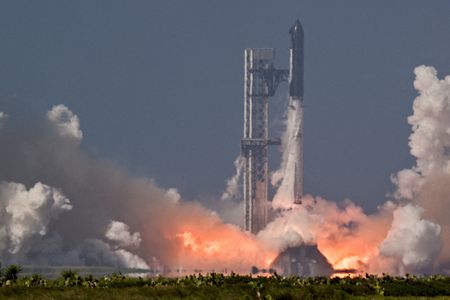
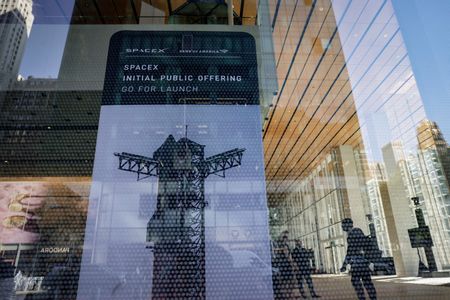
The aerospace company founded by Elon Musk is preparing for what could be a historic stock market debut this week, with a massive $1.77 trillion price target that would place it among America’s seven most valuable publicly traded corporations.
This groundbreaking initial public offering will serve as a crucial test of what market watchers call the “Elon premium” – the extra value investors have been willing to pay for companies associated with Musk, which has helped drive Tesla to become one of the nation’s most highly valued firms and a favorite among individual investors.
While supporters of Musk argue his proven success record makes purchasing SpaceX stock at its IPO launch an obvious choice, several market experts and investment professionals warn that the costly valuation multiples could present excessive risk.
“Its fundamentals are really tough. If there weren’t lofty expectations, there wouldn’t be an IPO here,” said Ed O’Gorman, CEO at River Wealth Advisors, which has invested in Tesla.
The confidence that Musk can generate exceptional returns has historically justified elevated price tags throughout his corporate holdings.
John Plassard, head of investment strategy at Swiss-based wealth manager Cité Gestion, a Tesla shareholder, said he was comfortable paying 20%-30% more for shares in a well-run Musk company than for a comparable rival.
Yet the doubts surrounding SpaceX highlight that even Musk’s celebrity status might not overcome worries about its cost, as certain investors resist paying amounts that presume years of accelerated expansion and perfect implementation.
The rocket manufacturer reported a $4.94 billion net deficit in 2025, yet its desired market value represents 94.53 times revenue for that same timeframe, based on calculations by Reuters.
In contrast, Tesla currently trades at 16.73 times its 2025 revenue figures, according to LSEG data.
“We see Tesla and SpaceX as complementary businesses. We feel confident that both of these companies can succeed,” said Tejas Dessai, director of research at Global X.
Tesla’s achievement in transforming electric cars from specialized products into a mass-market sector has strengthened its reputation, establishing it as the globe’s most valuable automotive manufacturer.
“If you’re betting on Elon the man, why not have both stocks in your portfolio?” said Adam Sarhan, chief executive of 50 Park Investments.
Still, Sarhan indicated he wouldn’t purchase SpaceX shares right after their market launch, preferring to wait several months for pricing to stabilize before deciding.
Among the major uncertainties surrounding SpaceX involves its artificial intelligence division, which depends on unverified technologies including orbital data processing centers.
“Space data centers that are very unproven. The physics is the biggest question mark of it all. How are you going to value something that you just simply cannot see or test or have any comparables to?” said Franco Granda, senior research analyst at PitchBook.
Grok, the chatbot developed by xAI, also trails more established rivals from OpenAI and Anthropic.
“We don’t see Grok as one of the leading AI labs today, and while we modeled a range of outcomes for this portion of the business, none of them meaningfully add to or subtract from our valuation of the AI business,” said Nicolas Owens, equity analyst at Morningstar.
The previous week, Owens assigned SpaceX a market value of $780 billion, representing less than half its IPO goal.
Speculation about a potential combination of SpaceX and Tesla has emerged, although most market participants believe such a transaction would involve significant complications.
“At some point in the future, in the event of a successful IPO, Tesla will get absorbed into SpaceX,” said Michael Hewson, senior market analyst at iForex.
Justus Parmar, CEO of Fortuna Investments, which owns both Tesla and SpaceX, sees Tesla’s manufacturing prowess as the impetus for an eventual merger.
“When he’s developing the moon and beyond, you’re going to need real manufacturing capabilities,” he said.
However, investors appear less concerned this time about Musk becoming distracted, given his ongoing dedication to Tesla.
Having overseen both enterprises simultaneously for years, he’s unlikely to reduce his involvement with the car company simply because another of his businesses has entered public markets, according to analysts.
Following SpaceX’s confidential filing of IPO documents, Tesla stock has climbed 10%, contrasting with previous instances when concerns about Musk overextending himself hurt the shares.
The electric vehicle company’s stock dropped over 30% from when Twitter’s board accepted his acquisition offer until the transaction completed. Stock prices also fell nearly 16% during the SolarCity combination in 2016.
Tesla’s numerous individual investors are also evaluating the SpaceX public offering.
Alexandra Merz, a self-described “all-in Tesla investor” since March 2020, said she would need to sell Tesla shares to buy SpaceX stock, which would trigger taxes.
She would rather stay invested in Tesla “with the conviction that there is a merger on the horizon,” she added.
Previously owned home purchases across the nation jumped last month to their strongest monthly performance since December, marking a notable shift in buyer activity following a weak beginning to the traditional spring buying period.
Sales of existing homes climbed 3.2% in May compared to April, reaching a seasonally adjusted annual rate of 4.17 million units, according to Tuesday’s report from the National Association of Realtors. The figure also represents a 3.2% increase from May of the previous year.
Regional data showed sales climbing year-over-year in the Midwest, South and West, while the Northeast experienced a decline, the NAR reported.
The May performance exceeded analyst projections of approximately 4.07 million units, based on FactSet data.
Monthly sales activity has largely remained near the 4-million annual rate since 2023, well below the traditional benchmark of roughly 5.2 million.
The May increase occurred despite mortgage rates continuing their upward trajectory throughout the spring, though current rates remain lower than last year’s levels.
National home values maintained their upward climb last month. The median purchase price nationwide grew 1.3% year-over-year in May, reaching $429,300, the NAR reported. Property values have now increased annually for 35 consecutive months.
The nation’s housing sector has struggled since 2022, when borrowing costs began rising from their pandemic-era lows. Sales of existing homes remained essentially unchanged last year, settling at a three-decade low. Activity has continued at a sluggish pace through this year, with April sales remaining flat after declining year-over-year during the first quarter.
WASHINGTON – The nation’s housing market showed unexpected strength in May as home sales climbed beyond what economists had predicted, according to data released Tuesday by the National Association of Realtors.
Sales of previously owned homes rose 3.2% during the month, reaching a seasonally adjusted annual pace of 4.170 million units. Economic forecasters surveyed by Reuters had anticipated a more modest increase to 4.07 million units.
Regional data showed gains across the Northeast, South, and Midwest, while Western markets remained flat. Compared to the same period last year, home resales were up 3.2% in May, with transactions recorded when contracts reached closing.
“More Americans are on the move, with home sales rising to the highest level since December,” said Lawrence Yun, the NAR’s chief economist. “This is great news for the housing market.”
The May sales figures likely represent purchase agreements completed during March and April. Mortgage interest rates began climbing in March amid Middle East tensions involving the U.S. and Israel’s actions against Iran, before moderating somewhat by late April when a ceasefire took effect. The ongoing regional conflict has contributed to inflation pressures through elevated energy costs and higher prices for goods transported through the Strait of Hormuz, which has pushed up U.S. Treasury yields that mortgage rates typically follow.
Since the conflict began in late February, the standard 30-year fixed mortgage rate has risen approximately 50 basis points. With Federal Reserve rate cuts becoming less likely due to persistent inflation and strong employment numbers, borrowing costs for homebuyers are expected to stay high.
Government economists predict Wednesday’s Consumer Price Index report will show inflation accelerated to 4.2% annually in May, marking the sharpest increase since April 2023. April’s CPI reading was 3.8%.
The NAR’s measure of housing affordability showed improvement, rising to 105.6 in May from 97.5 one year earlier. However, inflation continues to outpace wage increases. The typical existing home sold for $429,300 last month, representing a 1.3% increase from May of the previous year.
Available housing inventory grew 3.3% to 1.55 million units, though supply levels remain significantly below pre-pandemic standards despite the typical May seasonal increase. Year-over-year inventory was up just 0.6%. Based on current sales activity, the existing supply would be exhausted in 4.5 months, slightly faster than the 4.6-month timeline from a year ago.
Properties stayed on the market for a median of 29 days, up from 27 days in May 2023. First-time purchasers represented 35% of all sales, an increase from 30% the previous year. Industry experts indicate that a healthy housing market typically requires first-time buyers to comprise 40% of transactions.
The tech giant Apple and European Union regulators are engaged in a public dispute over who’s responsible for preventing European customers from accessing the company’s enhanced artificial intelligence assistant.
On Tuesday, a representative from the EU’s governing body challenged Apple’s reasoning for excluding European markets from its upcoming AI launch scheduled for later this year.
“We indeed need to set the record straight,” European Commission spokesman Thomas Regnier said. “The decision not to roll out Siri AI in the EU is Apple’s and Apple’s only because absolutely nothing in the DMA prohibits Apple from introducing new products in the EU.”
The spokesman referenced the Digital Markets Act, Europe’s stringent regulatory framework designed to prevent major technology companies from blocking competitors.
The iPhone manufacturer had pointed to these regulations as the reason for the delay, announcing Monday during its yearly developer event that the enhanced AI features would be unavailable to European iPhone and iPad customers, without specifying when they might arrive.
The regulatory framework mandates that major technology companies provide competitors with fair access to their platforms. However, Apple argued that European officials’ “extreme interpretation” of these rules would force the company to grant competing virtual assistants “direct access” to customer information without “essential protections.” The company claimed it developed a rollout strategy spanning 18 months, but European regulators rejected their proposal.
The EU representative offered a contrasting account of events.
“Instead of trying to find a suitable, compliant solution,” Apple merely asked the commission for a 18-month exemption, he told reporters at a regular briefing in Brussels.
“Guess what? That’s not an option, because it would mean that no AI agent other than Siri AI, by the way, powered by Google, would have an equal chance to be chosen by iPhone users.”
European regulations are “non-negotiable,” Regnier said. “The commission won’t give any exemptions, just like a police officer would not exempt a driver from respecting the speed limit.”
NEW YORK (AP) — A Seattle-based charitable organization is committing to donate at least $500 million over the coming decade, effectively doubling what it gives each year as foundation leaders work to encourage more urgent charitable giving across the philanthropy world — particularly given what they describe as the sector’s “suffering” under President Donald Trump’s policies.
Federal funding reductions from the White House, attacks on civil society organizations and the elimination of diversity programs have created what the National Council of Nonprofits describes as an “existential crisis.” However, many nonprofit leaders believe philanthropic organizations’ responses have been inadequate. Some question where the emergency funding initiatives are, similar to those launched during the coronavirus pandemic when nonprofits faced severe challenges.
The majority of private charitable foundations distribute approximately 5% of their assets each year, which represents the minimum threshold mandated by the Internal Revenue Service. Ongoing discussions debate whether this contribution requirement should be raised. The prevailing philanthropic thinking suggests that going beyond this level could jeopardize foundations’ long-term sustainability.
The Marguerite Casey Foundation substantially boosted its donations in 2025, taking the unusual approach of tapping into its endowment to distribute $130 million. This experience validated what Carmen Rojas, its president and CEO, had long believed: Her responsibility to maintain the foundation’s permanence doesn’t conflict with her duty to properly fund the communities they serve.
“A very practical lesson is that we could give out more money and exist for a long time,” she told The Associated Press.
The Seattle-based foundation, established in 2001 using money from United Parcel Service founder Jim Casey, operates with a distinctive approach. Through invitation-only grants, they fund one-fourth of their recipients’ operating budgets across five-year periods.
Their funding targets “community-based organizations” that work to ensure “government works for everybody,” according to Rojas. This encompasses groups addressing economic welfare issues like housing and employment quality, as well as media organizations including the advocacy journalism nonprofit More Perfect Union and the National Trust for Local News.
A separate funding stream supports municipal and state-level initiatives designed to make government more responsive to community needs. The foundation recently provided $3 million to New York City Mayor Zohran Mamdani’s private fund supporting his universal free child care initiative.
Rojas anticipates providing similar unsolicited assistance to current grant recipients and indicated they will probably identify additional beneficiaries as their distribution increases. The new yearly minimum of $50 million represents twice the previous decade’s average, the foundation reports. Public tax documents reveal the foundation distributed between $23 million and $57 million each year from 2019 onward.
This represents part of Rojas’ push for a more “offensive” philanthropic strategy. She noted that the charitable sector frequently adopts a “defensive posture” focused on responding to challenges. Contributions — like their backing of NYC’s Mayor’s Fund — aim to demonstrate to the public “our government can be delivering more for you.”
“We have to be able to deliver for people, in meaningful ways, the things that they need to live a good life,” Rojas said.
Foundation leadership is also making a broader statement.
Many charitable organizations choose not to donate beyond the legally mandated 5% minimum, treating it as a maximum rather than a starting point. Board members, acting on their obligations to ensure perpetual organizational existence for charitable purposes, resist drawing from endowments.
Activist Abigail Disney and other philanthropists have recently advocated for raising the legally mandated minimum by approximately one percentage point. They contend that foundations aren’t simply financial institutions but tax-exempt social welfare organizations with mission-driven obligations — which some argue aren’t fulfilled by current philanthropic practices.
The Marguerite Casey Foundation aims to serve as a demonstration model. Their endowment began around $870 million last year, according to Daniel Gould, its vice president of investments and operations. Within twelve months, he reported, they had recovered the endowment funds used for last year’s expanded grantmaking. As of April 2026, he noted, the endowment value reached approximately $825 million.
During years with robust financial markets — which Gould defines as achieving at least 10% investment returns, the historical U.S. stock market average — they plan to distribute even larger amounts.
“Endowments are resilient,” Gould said. “That resilience should be translated into increased grantmaking.”
They’ve maintained this stability while simultaneously modifying their investment approach. More than half their endowment is overseen by managers from underrepresented racial communities, Gould reported. They’ve also withdrawn investments from private prisons, predatory lending institutions, weapons manufacturers, data center developers and other companies they consider harmful to the communities their nonprofit recipients serve.
According to Rojas, philanthropic organizations should leverage their complete resource capacity to further their missions.
“If it is our job to be charitable organizations, then we should act charitably, right?” she said, adding that “either we are charitable organizations, or we are investment firms that do 5% charity work.”
The Robert Wood Johnson Foundation similarly provided rapid response funding last year as the Trump administration reduced federal research support. In North Carolina, the Kate B. Reynolds Charitable Trust distributed approximately $10 million above their typical amount.
The MacArthur Foundation announced in 2025 its commitment to boost giving for two years, also referencing the “crisis” resulting from the Trump administration’s policies. President John Palfrey stated that last year’s reductions are producing their most severe impacts currently. The foundation intends to maintain its elevated spending level — which reached around 7% last year, or $190 million beyond projections.
Nevertheless, a February survey involving 380 nonprofits revealed that most participants find securing foundation grants increasingly difficult. The Trump administration’s termination of federal grant programs has left nonprofits competing for limited funding from a reduced pool. Simultaneously, many nonprofits are experiencing increased service demand following comprehensive changes to Medicaid and food assistance programs.
Some funders are proceeding more carefully following the White House’s campaign against “left-wing terrorism,” threats to remove universities’ tax-exempt status and efforts to place staff at a criminal justice nonprofit that received congressionally appropriated funds.
Describing nonprofits as “under attack” isn’t exaggerated, according to Center for Effective Philanthropy President Phil Buchanan, whose organization conducted the “State of Nonprofits 2026” report. Enhanced spending represents a “perfectly reasonable” response during times of significant need, he emphasized, noting that adequate resources exist. U.S. foundation assets have more than doubled during the past twenty-five years when adjusted for inflation, Federal Reserve Bank of St. Louis data shows.
“You can’t step up for everybody,” Buchanan said. “But figure out who you can step up for.”
Palfrey views recent federal actions as attacks on “the freedom to give.” He references the Department of Justice indictment against the Southern Poverty Law Center, a civil rights nonprofit whose extremist group monitoring work has triggered a Republican-led congressional investigation into fraud allegations. Major investment companies removed SPLC from their charitable account donation lists.
This precedent could financially destroy “good” nonprofits with just the “mere whiff of an investigation,” Palfrey warned.
“These are powerful and negative chilling effects on the charitable nonprofit sector,” the MacArthur Foundation president told AP in May. “And they are ones that we ought to resist with every fiber of our being.”
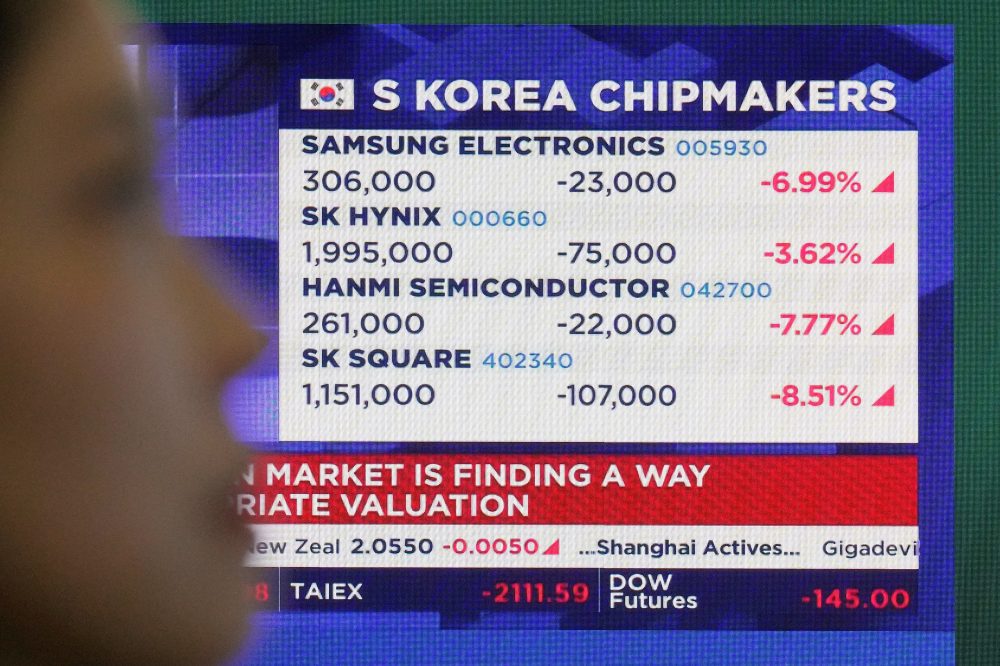
Samsung Electronics is reportedly exploring plans to construct a cutting-edge semiconductor packaging plant in Gwangju, a city located in southwestern South Korea, according to a Tuesday report from the Korea Economic Daily.
Key developments include:
• The tech giant may reveal its investment strategy during an upcoming gathering between South Korean President Lee Jae Myung and executives from the nation’s top business groups scheduled for June 29, the publication reported, referencing anonymous industry insiders.
• The high-level gathering will take place at the presidential office with a focus on implementing a “major shift in growth strategy,” and is anticipated to feature Samsung Electronics Chairman Jay Y. Lee and SK Group Chairman Chey Tae-won among attendees.
• When contacted for comment, Samsung Electronics chose not to respond. Officials from the presidential office stated that investment choices regarding corporate facilities remain within companies’ decision-making authority.
• This potential development represents Samsung’s ongoing push to enhance its sophisticated chip packaging operations, which play a vital role in the artificial intelligence chip manufacturing process as market appetite grows for high-bandwidth memory (HBM) semiconductors utilized in AI server systems.
• The publication noted that such an investment would signal the corporation’s intent to boost capital expenditure in anticipation of an expected industry recovery fueled by artificial intelligence requirements.
• Sophisticated packaging techniques have gained significance as semiconductor manufacturers work to enhance functionality by combining several chips within one unit. Market demand has been especially robust for HBM technology, which layers numerous DRAM semiconductors in a vertical configuration for use with AI processing units from firms like Nvidia.
• Samsung’s client base encompasses leading artificial intelligence companies including Nvidia, AMD and Google, all of which are fueling demand for cutting-edge memory semiconductors deployed in AI server infrastructure and processing equipment.
• The company has been growing its HBM market share while attempting to compete with industry frontrunner SK Hynix. Last month, Samsung announced it had started delivering test versions of its newest HBM semiconductor, the 12-layer HBM4E, to its customers.
BRUSSELS, June 9 – Apple chose to withhold its enhanced Siri artificial intelligence technology from European Union markets after being unable to satisfy regulatory compliance requirements, according to an EU Commission representative who spoke to media on Tuesday.
Commission spokesperson Thomas Regnier emphasized during a Brussels press briefing that the tech giant made the withdrawal decision independently. “The decision not to roll out Siri AI in the EU is Apple’s and Apple’s only,” Regnier told reporters.
According to Regnier, the company could not create connectivity solutions that satisfied the EU’s fundamental privacy and security requirements. “Apple was simply unable to develop interoperability solutions that meet essential EU privacy and security standards,” he explained.
Rather than working to achieve regulatory compliance, Apple sought special treatment from European authorities, Regnier noted. “Instead of trying to find a suitable compliance solution, Apple simply made a request to the European Commission to be exempted from their interoperability obligations. That’s not an option.”
Wall Street experienced a moderate recovery Monday, though the gains were largely limited to the technology sector’s biggest players leading the artificial intelligence revolution. Despite the uptick, more than half of S&P 500 companies still closed lower for the day.
Among Monday’s standout performers, Marvell Technology saw its shares surge 9% following news of its addition to the S&P 500 index.
The market faces significant developments ahead, with several major AI-focused companies preparing to go public. Elon Musk’s SpaceX plans to debut later this week, while OpenAI announced Monday it has submitted confidential paperwork for its own public offering. Anthropic is also expected to launch this summer, creating an unusually heavy wave of new stock offerings.
China’s trade figures released overnight revealed the country benefiting from AI demand, with exports climbing nearly 20% compared to last year. The growth stems largely from strong demand for memory chips and technology equipment, along with rising prices for those components.
This AI expansion brings concerns about potential price increases that could complicate decisions for the Federal Reserve and other central banks. Market watchers expect the ECB to raise interest rates this week, with the Bank of Japan likely following suit this month.
Tensions in the Middle East appeared to ease as both Iran and Israel suggested their recent missile exchanges had paused. This development allowed oil prices to retreat after climbing as much as 5% earlier Monday, also reducing expectations for Fed rate increases and contributing to the stock market’s recovery.
Tuesday brought continued gains in Asian markets and slight increases in U.S. futures trading, while oil prices dropped further. Housing data headlines Tuesday’s economic calendar, with May consumer price information and Oracle’s earnings report due Wednesday.
SpaceX aims to raise $75 billion in its stock market debut this week, seeking a $1.75 trillion valuation that would rank it among the ten most valuable publicly traded U.S. companies. However, only 7% of shares will be available for regular trading when it launches June 12.
Despite reportedly attracting twice the intended investment and reserving up to 30% of shares for individual investors, S&P Global excluded SpaceX from immediate S&P 500 consideration last week, maintaining its profitability requirement. However, MSCI confirmed Monday it will apply existing guidelines for including large new public companies in its Global Standard Indexes, potentially opening the door for SpaceX inclusion.
Tuesday’s key economic events include April trade balance figures at 8:30 a.m. and May existing home sales data at 10 a.m., along with a 3-year Treasury note auction at 1 p.m.
Small business confidence across the nation declined last month as owners increasingly worry about rising costs and plan to hike prices, according to a new survey released Tuesday.
The National Federation of Independent Business reported that its Small Business Optimism Index dropped 0.6 points to 95.3 in May, continuing to fall below the 52-year historical average of 98.0. Meanwhile, the survey’s uncertainty measure climbed three points to 91, significantly higher than the long-term average of 68.
“Uncertainty is the enemy of growth and investment, and it is high,” the NFIB stated. “Much is related to the Iran war and its impact on the global oil supply and other commodities, the sooner it’s resolved, the quicker some ‘normality’ will be restored.”
The ongoing U.S.-Israeli conflict with Iran, now entering its fourth month, has pushed up energy costs and prices for goods traveling through the Strait of Hormuz, contributing to inflationary pressures.
Economic forecasters predict Wednesday’s Consumer Price Index report will show inflation accelerated to 4.2% year-over-year in May, according to a Reuters economist survey. This would mark the steepest increase since April 2023, up from April’s 3.8% rate.
The business survey revealed that 34% of small business owners intend to boost prices over the next three months, jumping seven points and reaching the highest percentage since July 2022. Additionally, 36% of respondents said they already implemented price increases, the most since March 2023 and up six points from the previous month.
These actual price hikes were “well above the historical average of net 13%,” according to the NFIB. Business owners ranked inflation as their second-biggest challenge, trailing only taxes.
Despite last Friday’s Labor Department employment report showing three consecutive months of solid job creation and unemployment holding steady at 4.3% for the third straight month in May, small business owners expressed less enthusiasm about hiring prospects.
The survey’s employment measure decreased slightly to 100.3 from April’s 100.4, marking the third consecutive monthly decline. Only 9% of owners plan to add jobs in the next quarter, down four points and representing the lowest figure since May 2020. The NFIB observed that “plans to hire are now below the historical average of a net 11%.”
Although the percentage of owners reporting unfillable job openings fell five points to 29% – also the lowest since May 2020 – labor shortages persist in certain sectors, particularly wholesale trade and agriculture.
Wholesale businesses in Ohio noted they “have applicants not show up for interviews and others apply, interview, accept, and not show up for work.”
Agricultural operations in Michigan reported that “labor is in short supply for all levels.” Immigration enforcement actions may be contributing to the farm worker shortage.
When evaluating where to place your short-term investments, financial experts recommend focusing on three essential factors.
First, consider the returns you’ll receive. Financial products offering the best interest rates often come with requirements to keep a minimum amount in your account. Some promotional rates only last for the initial months before decreasing. Also, the advertised high rate might only apply to balances below a specific threshold, with lower earnings on amounts exceeding that limit.
Second, think about how easily you can access your funds. When you’re comfortable locking away your money for a set period—such as with certificates of deposit—you can typically secure better returns.
Third, examine the protection offered. FDIC-insured products safeguard your money from loss, covering up to $250,000 per depositor per institution. This protection extends to checking and savings accounts, CDs, money market accounts, and online savings accounts. Money market mutual funds don’t carry FDIC insurance, but those investing in Treasury bonds purchase securities guaranteed by the full faith and credit of the US government.
Certificates of deposit generally provide the strongest returns among cash-based investments while maintaining FDIC insurance protection.
However, there are limitations to consider. The best-yielding CDs may require minimum deposits of $25,000 or more. Early withdrawal typically results in penalties, with longer-term CDs carrying steeper penalties. While banks do offer penalty-free CDs, these come with significantly reduced returns.
People in retirement or those needing regular cash access can use a staggered CD approach, buying certificates with different maturity dates. For emergency funds, however, CDs aren’t ideal since unexpected withdrawals could result in penalty fees.
For daily access to your money combined with solid returns and protection, high-yield savings accounts from online banks or credit union savings accounts typically work best. Online banks provide FDIC coverage within the standard limits, while credit union accounts receive protection from the National Credit Union Administration. These usually require lower minimum investments than CDs, though some may still have minimum balance requirements.
Money market mutual funds from companies like Fidelity, Schwab, and Vanguard provide daily access and the benefit of being alongside your long-term investments. However, money market fund returns currently trail those of online savings accounts. They also lack FDIC insurance, although most funds have successfully maintained steady net asset values in practice.
It’s important not to mix up money market mutual funds with brokerage sweep accounts. While interest rates on sweep accounts, which hold uninvested cash, have increased recently, they remain well below other cash alternatives.
Stable-value funds, available only through employer retirement plans, can offer reasonable returns but don’t provide the same liquidity and guarantee benefits. These invest in bonds without FDIC insurance, using insurance contracts to help maintain steady net asset values and protect investor principal.
These funds have significant limitations. Since they’re only available within 401(k) plans, early withdrawals trigger taxes and penalties unless specific conditions are met. Don’t consider a stable-value fund for emergency savings unless you’re already retired or approaching retirement. Additionally, these assets lack guarantees or FDIC protection.
Unlike other investment options whose returns get eroded by inflation, I bonds represent the only secure investment that guarantees protection against inflation. I bonds are Treasury securities paying both a fixed interest rate and an additional variable rate that adjusts with current inflation levels, measured by the Consumer Price Index. The inflation component updates twice yearly.
I bonds have drawbacks as well. They don’t meet liquidity needs since redeeming an I bond within five years costs three months of interest. Additionally, annual I-bond purchases are capped at $10,000 per Social Security number.
Investors who make money by betting against stocks may want to think twice before targeting Elon Musk’s SpaceX when it goes public.
At first glance, the aerospace company appears to be an attractive candidate for short sellers — those who borrow shares and sell them, hoping to buy them back later at lower prices for a profit.
The company carries an estimated price-to-revenue ratio of 56, which is remarkably high even for rapidly expanding businesses, and faces questions about corporate governance that could justify bearish bets. However, the ongoing market surge — driven by technology companies worth $1 trillion or more, a category SpaceX will join — has proven costly for investors wagering against stocks.
Consequently, market watchers don’t anticipate aggressive short selling when the highly anticipated public offering launches, with SpaceX expected to reach a $1.75 trillion valuation.
“It’s an extremely risky short play,” said Gabriel Shahin, CEO of Falcon Wealth Planning in Los Angeles, whose firm has allowed its investors to buy SpaceX shares on private markets. He said there is too much interest from bullish investors, including retail participants, for a safe short bet.
This doesn’t mean SpaceX lacks features that might appeal to short sellers. The company’s market value surpasses most other large corporations, and questions remain about the financial prospects of its xAI platform and technologies like orbital data centers, according to Morningstar analysts in a recent report.
CAUTIOUS APPROACH
Peter Hillerberg, co-founder of Ortex Technologies, which provides stock lending and short interest analytics, said the high profile of the IPO, retail and institutional interest, and divergent views on its valuation, are “normally ingredients that can create a broad spread of opinion, which is often where short sellers become interested.”
He noted it is too early to gauge actual demand.
One veteran Tesla skeptic plans to observe before acting. “There are large natural buyers in the indexes that will almost immediately add the stock, most notably the Nasdaq 100,” said Mark Spiegel of Stanphyl Capital Partners, who considers SpaceX “grotesquely overvalued.”
The public offering is anticipated to become the biggest on record at $75 billion, though less than 5% of total outstanding shares will be available for public trading.
Spiegel indicated he might consider shorting SpaceX after the “unlock dates,” when additional shares become available for borrowing, rather than immediately following the IPO, when borrowing costs and difficulty would discourage short positions. “Very few people will short an IPO right away.”
Although most newly traded companies impose broad limitations on insider sales for approximately six months after going public, SpaceX has established exceptions for certain participants and plans a gradual release of restricted shares.
THE MUSK ELEMENT
Betting against Musk’s other enterprise, Tesla, has typically resulted in losses. Theoretically, Tesla short sellers have lost $27 billion since June 2021, including both direct bets against Tesla stock and index hedges used to account for Tesla’s inclusion in the S&P 500, according to S3 Partners. Over the past decade, shares have climbed more than 2,500%.
“If you think back the experience of all of that was pretty unpleasant,” said Sam Pierson, director of research at S3 Partners.
Musk has conducted a very public campaign against short sellers, including notable investors like Jim Chanos, David Einhorn, and “Big Short” investor Michael Burry. He has mocked his critics by selling red satin shorts and even sent a box of shorts to Einhorn.
In August 2018, Musk posted his infamous “funding secured” tweet, announcing he was considering taking Tesla private at $420 per share, prompting a surge in Tesla’s share price and dealing about $1.3 billion in mark-to-market losses to shorts.
Musk, Chanos, Einhorn, and Burry did not respond to requests for comment.
DIFFICULT ENVIRONMENT
More generally, short sellers have faced significant challenges over the past ten years due to the extended bull market, with difficulties increasing during the meme stock phenomenon in 2021.
The Goldman Sachs Most Shorted Rolling Index, an equal-weighted collection of the 50 highest short-interest names in the Russell 3000 Index, has gained 29% this year, heading toward its fourth consecutive year of increases.
The activist short seller approach suffered a recent setback with the fraud conviction of prominent investor Andrew Left, a development that could discourage the practice.
Even investors doubtful of market excitement may choose to avoid the difficulties of shorting a new stock like SpaceX.
“As a short seller you want to make a case that the stock has reached a level that’s untenable and that’s much easier to do with trading history,” said Giuseppe Sette, co-founder of AI analytics platform Reflexivity.
With stocks trading near record levels, short sellers have numerous options to consider.
“If SpaceX pops 100% on its IPO, is that still the best short out there in a market where you’ve had absolute parabolic activity across the board?” said Mike Treacy, head of market risk at Apex Fintech Solutions, a clearing and custody platform serving retail brokerages.
Rising fuel costs are creating more than just financial pressure for U.S. airlines — they’re establishing a competitive divide that could persist for years, with financially robust carriers continuing to enhance their services while struggling airlines may find it difficult to keep pace.
During the International Air Transport Association’s annual gathering in Rio de Janeiro, leadership from well-positioned airlines including United Airlines, Southwest Airlines and Alaska Air shared with Reuters that a separation is emerging between carriers capable of maintaining investment in upgrades and those required to preserve cash and reduce spending.
The nation is also experiencing an increasingly divided economy, with affluent consumers maintaining their spending habits while budget-conscious travelers reduce their purchases. Airlines are focusing their investment on premium services to attract these higher-spending customers.
“Air travel is not a commodity,” United CEO Scott Kirby said in an interview. “Customers care about the technology, the service, the reliability, the product. They want a great experience. They don’t just want a seat.”
Kirby indicated United anticipates offsetting the complete impact of elevated fuel expenses through ticket price increases by the end of the year, despite expecting some demand pressure. The carrier continues substantial investment in aircraft, technology and customer services, backed by strong earnings performance, he noted.
IATA’s North American forecast this week predicted an expanding separation between stable network airlines and more restricted budget operators.
The bankruptcy of U.S. discount airline Spirit Airlines last month intensified examination of carriers with weaker profit margins and financial positions as elevated fuel expenses increase cash flow challenges.
S&P Global Ratings downgraded JetBlue Airways’ credit rating further into speculative territory on Monday, pointing to increased fuel costs and substantial debt burden.
In an April internal memo obtained by Reuters, JetBlue CEO Joanna Geraghty stated the airline was not contemplating bankruptcy, but acknowledged fuel prices had created a more difficult operating environment and that “the decks are stacked against smaller carriers like us,” referencing larger competitors’ network, loyalty and credit-card benefits.
United maintains an extensive reciprocal loyalty and network partnership with JetBlue, and Kirby said he didn’t anticipate the smaller airline seeking Chapter 11 protection “any time in the foreseeable future,” pointing to its cash position and unencumbered assets.
JetBlue did not immediately respond to a request for comment.
Fuel cost pressures are determining which airlines can maintain spending on services passengers increasingly value, including premium seating and airport lounge access.
Southwest Chief Operating Officer Andrew Watterson said the investment divide would likely expand as elevated borrowing costs become more burdensome for heavily indebted competitors, especially those depending on aircraft sale-and-leaseback arrangements or new debt.
“If you need to borrow money, interest expense is going up,” Watterson said in an interview. “The higher your costs, the lower your growth rate, the lower your investment in products.”
Strong profitability and a healthy balance sheet, he explained, were enabling Southwest to maintain investment while some competitors adopted defensive strategies.
Southwest is considering services traditionally offered by network carriers — including airport lounges, international flights and enhanced premium seating — representing a possible departure from its conventional low-cost approach. Lounge development is most advanced, with some decision possible this year, Watterson indicated.
Alaska Air Chief Financial Officer Shane Tackett said airlines without robust loyalty programs and premium revenue sources were experiencing the greatest pressure following fuel prices nearly doubling since the Iran war began.
“There are some airlines that have a business model that are really challenged in the current environment,” he said.
For Alaska, demand has remained steady. Corporate reservations for the upcoming 90 days increased 20% to 30% compared to the previous year across most regions and sectors, Tackett reported, while fare increases should offset most fuel cost impacts in the latter half. Operating cash flow could reach break-even or slightly positive if demand continues, he said.
This stability is allowing Alaska to pursue its long-distance and premium expansion following its Hawaiian Airlines acquisition. Tackett said the company intends to upgrade Hawaiian’s Airbus A330 cabins by installing fully enclosed suites and international premium economy.
However, Alaska’s borrowing needs highlight the pressure from higher fuel costs. The airline secured $1 billion earlier this year through $500 million in secured debt and $500 million in unsecured debt, marking its first unsecured offering. Tackett said investors responded favorably and Alaska has no plans to seek additional liquidity or reduce capital expenditures.
He said credit markets were evaluating airlines individually, dismissing concerns that multiple airlines accessing capital markets would automatically increase industry-wide funding costs.
“I don’t believe there’s like a credit benefit or a credit expense that is applied to the industry as a whole,” he said in an interview. “It’s really dependent on your profile, your balance sheet, your operating cash flow generation capability.”
The head of a major Indian technology company believes artificial intelligence agents will eventually make up half of the workforce at tech firms, matching the number of human employees.
During Tuesday’s shareholder meeting, Chairman N Chandrasekaran of Tata Consultancy Services told attendees that his company expects this transformation to happen across the information technology industry. While TCS won’t eliminate current positions, the firm plans to reduce new hiring. The company previously eliminated over 12,000 positions last July.
“If the company has half a million employees, the day is not far when the company will have half a million AI agents… The company’s employees and AI agents will work together and that will be the future,” Chandrasekaran stated.
India’s information technology industry, valued at $315 billion, faces growing pressure from investors worried that artificial intelligence might upend its traditional model that relies heavily on human workers.
The chairman explained that increased adoption of AI technology would decrease hiring numbers at both his company and throughout the broader tech sector, as automation takes over functions previously handled by people.
However, Chandrasekaran noted that companies adjusting to AI-powered operations would create fresh positions and possibilities.
“Some of the work being done will go to AI agents. That will be the nature of the transition that we have to go through not only as a company, as an industry, and as a country,” he explained.
The parent company of Chrysler announced Tuesday it is pulling back more than one million vehicles from American roads due to dangerous power steering problems that federal safety officials say could spark fires.
According to the U.S. National Highway Traffic Safety Administration, Stellantis is recalling 1,076,999 vehicles because of faulty power steering systems that pose fire hazards. The federal regulator explained that wiring in the electric hydraulic power steering pump can become dangerously hot and may ignite vehicle fires, even when cars are sitting idle with engines turned off.
The safety action affects select 2021 through 2025 model year Jeep Wrangler and Jeep Gladiator vehicles, officials confirmed. To fix the problem, authorized dealerships will examine and swap out problematic parts at no cost to owners.
In a related safety move, Stellantis is also pulling back another 17,277 American vehicles because of battery pack flaws that similarly create fire dangers, including when vehicles are shut down, according to NHTSA.
This follows the company’s recall of more than 419,000 vehicles last month stemming from problems with side airbag systems not deploying correctly.
A major Swiss pharmaceutical company is maintaining its commitment to a substantial German investment even as industry rivals retreat from the country due to government policy concerns.
Roche confirmed to Reuters that it will proceed with its €600 million ($692.88 million) project to build a new diagnostic manufacturing facility in Penzberg, Germany, despite recent moves by competitors to reduce their German investments.
The commitment stands in contrast to recent decisions by other pharmaceutical companies. Eli Lilly announced it would cut its German investment from $2.3 billion to half that amount, while German pharmaceutical company Boehringer Ingelberg abandoned its €900 million investment plans entirely. Both companies pointed to the German government’s proposed healthcare cost reduction policies as the reason for their decisions.
However, Roche indicated it will need to take a more cautious approach to future German investments moving forward.
The Penzberg project represents Roche’s most significant single investment in Germany, with planning that began several years ago and construction scheduled for completion by 2027. Daniel Steiners, CEO of Roche Pharma AG, expressed concerns about the policy environment in an interview with Reuters.
“The cabinet decision is creating a new degree of uncertainty regarding investments, research, and production decisions in Germany,” Steiners stated.
Steiners warned that the government’s approach could result in substantial economic harm while providing little advantage for creating a sustainable healthcare system. He suggested that the legislative process still presents an opportunity to maintain Germany’s position as a dependable investment destination.
A French company developing technology to counter drone threats announced Tuesday it has secured €50 million in its latest investment round, driven by increasing demand for air defense capabilities as unmanned aircraft play an increasingly critical role in the ongoing conflict between Russia and Ukraine.
Alta Ares, which specializes in counter-drone systems, completed this significant funding milestone following a €2 million investment round conducted in May 2025. According to CEO Hadrien Canter, who spoke with Reuters, the new capital will be directed toward scaling up manufacturing operations.
The company produces AI-powered ammunition designed to intercept and eliminate drones, missiles, and glide bombs. Alta Ares has set its sights on expanding operations into Poland, Germany, and the United States as part of its growth strategy.
The firm reports that its drone interception systems are currently being used in Ukraine, the Middle East, and Asia. The funding round attracted participation from venture capital firms based in both Europe and the United States, according to company statements.
The investment reflects the growing recognition of drone warfare’s impact on modern conflicts, particularly as inexpensive, mass-produced unmanned systems have become decisive factors in military operations.
A major pharmaceutical acquisition was announced Tuesday as British company GSK revealed plans to purchase American cancer drug developer Nuvalent in a transaction valued at $10.6 billion.
The deal involves the UK-based drugmaker acquiring the U.S.-listed company that specializes in developing cancer treatments.
NEW YORK — A federal court will hear testimony Tuesday from a U.S. Customs and Border Protection official regarding the government’s plans to return billions of dollars in tariffs that businesses paid before the Supreme Court determined certain import taxes imposed by President Donald Trump were illegal.
Judge Richard Eaton of the Court of International Trade has requested specific information to help him determine whether to require the government to accelerate and broaden its tariff refund program. The Justice Department has challenged Eaton’s previous ruling that would make all companies that paid the invalidated import duties eligible for reimbursement with interest.
Justice Department attorneys contended in legal filings that only businesses involved in the more than 2,500 court cases that contested the tariffs should be legally allowed to request refunds.
The dispute has moved to the U.S. Court of Appeals for the Federal Circuit, and Tuesday’s proceedings may offer additional insight into what comes next for the refund program.
In March, Eaton directed Customs and Border Protection to establish a process allowing “all importers of record” to seek their portion of the $166 billion the agency estimates it collected before the Supreme Court invalidated the global tariffs.
The online application system went live April 20, with the agency stating it would initially process requests from importers whose tax obligations remained unfinalized.
By June 1, refund requests worth $89.6 billion had been approved for review, according to CBP, and the agency announced last month that it had instructed the Treasury Department to distribute $20.6 billion in refunds.
The speed and reach of the program became controversial when Eaton ordered CBP Commissioner Rodney Scott to appear in court to explain the agency’s schedule for implementing the judge’s comprehensive directive. Justice Department representatives objected and requested that one of Scott’s subordinates attend instead.
After Eaton maintained his demand to hear directly from the agency’s leader, Justice Department attorneys challenged both that requirement and the judge’s broader decision on refund qualification. Last Thursday, the Federal Circuit temporarily halted the mandate for Scott’s testimony.
Eaton has agreed to receive testimony from Susan Thomas, the agency’s executive assistant commissioner for trade.
Tuesday’s hearing will likely examine CBP’s capacity and commitment to extending the refund program to companies with the oldest tariff payments.
Currently, the agency restricts applications to businesses that either had unfinalized tax bills when the Supreme Court eliminated Trump’s “reciprocal” tariffs in late February, or whose bills were resolved within the previous 80 days.
In a court statement before the hearing, Thomas indicated CBP was creating procedures to address refunds for older shipments but would not handle cases beyond the 80-day period while Eaton’s order covering all duty payers remains under appeal.
“Should the court’s order become final and require reliquidation of entries of all importers, CBP intends to fully comply with the court’s final decision as expeditiously as possible,” she stated.
The matter involves the agency’s complex and time-sensitive procedure for examining and approving customs paperwork on new imports.
When international merchandise arrives in the U.S., importers or customs agents working for them calculate estimated tariff amounts and submit a deposit toward the final payment. CBP then has 314 days — extending to four years if needed — to examine the declared items, establish the actual amount due, and request additional payment or provide a refund based on the deposit.
The taxed goods are then declared “liquidated.” Importers have 180 days to challenge CBP’s decision. Items typically cannot be reevaluated after that deadline.
Eaton stated he is conducting Tuesday’s hearing “to ascertain if it is the government’s policy to return all of the unlawfully collected duties either by complying with the court’s order, or by some other means.”
Legal representatives for the five companies that initiated the lawsuit resulting in the judge’s order argued it would violate constitutional principles for them to pay different tariff amounts than other companies that also paid the invalidated duties, which the Supreme Court determined Trump improperly established by invoking emergency powers legislation to override Congress’s tax-setting authority.
The companies have requested Eaton to designate their case as a class action representing “potentially tens of thousands of identically situated importers.”
Meghann Supino, a partner at law firm Ice Miller, expressed her belief that CBP will continue developing the technology required to refund all tariffs, but “whether they open it up to non-litigants and importers that do not have orders for their own sake is going to continue to be an issue with the appeal.”
An Australian advertising company has found itself at the center of an intense acquisition battle after announcing Tuesday that it received preliminary buyout proposals from Bain Capital and additional financial backers, creating a competitive three-way contest with I Squared Capital and Pacific Equity Partners.
The takeover interest sent oOh!media stock soaring 9.2% to A$1.37 on Tuesday, reaching its peak value since May 29 and recording the most significant single-day gain since the end of April.
According to the advertising firm, Bain Capital’s proposal mirrors the terms offered by I Squared Capital’s A$765.9 million ($540.57 million) acquisition bid valued at A$1.45 per share, though specific details of Bain’s offer were not revealed.
When contacted by Reuters regarding the transaction amount, Bain Capital did not provide an immediate response.
Pacific Equity Partners initiated the acquisition contest earlier this year with a A$1.40 per share proposal, representing a 64.7% premium when announced.
Since Pacific Equity’s initial April offer, oOh!media shares have surged almost 60%.
The Australian Financial Review initially broke the story about Bain Capital’s interest in acquiring oOh!media on Monday.
Chinese technology giant Tencent Holdings has attracted investor orders exceeding $6 billion for its upcoming dual-currency bond offering, according to orderbook data obtained by Reuters on Tuesday.
Investor demand for the company’s offshore yuan bonds, including 10-year and 30-year options, surpassed 20.5 billion yuan (equivalent to $3.02 billion), the data revealed.
Additionally, orders for Tencent’s dollar-denominated bonds, featuring 10-year and 20-year terms, topped $3 billion based on separate orderbook information.
Preliminary pricing details showed the proposed 10-year dollar bond was set at U.S. Treasuries plus 80 basis points, while the 20-year dollar bond carried guidance of U.S. Treasuries plus 90 basis points, according to term sheet documentation obtained by Reuters.
For the yuan-denominated offerings, the 10-year offshore bond carried guidance around 2.95%, with the 30-year bond priced at approximately 3.55%, the term sheet indicated.
According to the documentation, Tencent intends to allocate the bond proceeds toward general corporate uses, including debt refinancing activities.
Sources familiar with the matter told Reuters on Monday that Tencent is targeting $4 billion in total fundraising through this bond issuance.
When contacted by Reuters via email on Tuesday, the company had not provided an immediate response for comment.
Tencent’s stock price gained 3.9% during early Tuesday trading sessions.
The company’s previous foray into international bond markets occurred in September, when it successfully raised 9 billion yuan through an offshore yuan bond. Prior to that, Tencent’s most recent dollar bond was a $4.15 billion offering completed in April 2021.
Exchange rate reference: $1 equals 6.7771 Chinese yuan renminbi
The American dollar maintained its position close to a two-month peak on Tuesday, strengthening against most major currencies as ongoing Middle East tensions dampened investor risk appetite while traders increased their expectations for a Federal Reserve interest rate increase later this year.
Following an appeal from U.S. President Donald Trump, Iran and Israel ceased their attacks against one another on Monday, though tensions remained elevated as Tehran issued warnings to restart strikes should Israel continue targeting Iran-backed Hezbollah forces in Lebanon.
American diplomatic efforts aimed at securing a permanent resolution with Iranian officials to conclude their conflict, which has lasted more than three months, have shown minimal progress, keeping oil prices high and strengthening safe-haven demand for the dollar.
The euro traded at $1.1528 while the British pound reached $1.3335, with both currencies declining approximately 0.05% during Asian trading hours after reaching two-month lows in the prior session.
Risk-sensitive currencies also declined, with the Australian dollar dropping 0.1% to $0.7039 and the New Zealand dollar trading at $0.5804.
The Japanese yen continued its weakness, falling to as much as 160.295, remaining near the 160 level that market observers widely consider a threshold for potential official intervention.
The dollar index, which tracks the greenback’s performance against a collection of currencies including the yen and euro, showed little movement at 100.03, staying close to Monday’s two-month high of 100.21.
“When you think about this idea of a peace deal or some sort of truce… what have we achieved in the past couple of weeks? Not a great deal,” NAB’s senior FX strategist Rodrigo Catril said in a podcast.
“We’ve seen the dollar being stronger because of this uncertainty, but also because of strong data in the U.S.”
The offshore yuan remained steady at 6.7857 per dollar, with traders awaiting trade data scheduled for release later in the day that economists expect will demonstrate strengthened Chinese export growth during May.
Financial markets are closely monitoring Wednesday’s U.S. inflation data for insights into the Federal Reserve’s future policy direction, particularly after last week’s strong employment report increased speculation about a rate increase this year. According to CME FedWatch, Fed funds futures traders now assign a 70% probability to a rate hike by December.
Treasury yields stayed broadly elevated due to rate hike expectations, with two-year note yields remaining near a 15-month high while the benchmark 10-year Treasury yield held firmly above 4.5%.
“Coming hot on the heels of Friday’s robust non-farm payrolls report, a hotter-than-expected CPI print would undoubtedly add to mounting fears of a Fed rate hike before year-end,” said Tony Sycamore, market analyst at IG.
“This scenario would provide fresh support for the U.S. dollar while putting renewed downward pressure on U.S. equities.”
Meanwhile, the European Central Bank is widely anticipated to implement a rate increase this week, with another boost likely in September, as officials work to balance energy-driven inflation pressures against a weakening economic environment.
Business conditions in Australia stopped their downward slide in May as companies reported slightly better sales figures, according to a new survey released Tuesday. However, business confidence continues to remain pessimistic as rising expenses put pressure on company profits.
National Australia Bank’s latest survey found their business conditions measurement stayed at +3 during May, breaking a four-month streak of declining numbers. The confidence reading showed modest improvement, moving to -14 from April’s deeply negative -23.
“With global uncertainty persisting, the domestic backdrop softening and cost pressures remaining elevated, confidence remains very weak and in negative territory across all industries,” said Michael Hayes, an economist at NAB.
“Of note, the profitability sub-component is furthest below its long-run average, suggesting margin pressures persist.”
While cost measurements dropped slightly in May, they continue to run high by historical standards. Business capacity utilization dropped below 82% for the first time since early 2025, reflecting the country’s slower economic expansion.
Australia’s central bank has implemented three interest rate increases, bringing rates to 4.35% in efforts to combat persistent inflation. Officials worry that companies may transfer their increasing energy expenses to customers, potentially fueling expectations for additional price increases.
SpaceX’s chief executive Elon Musk announced Monday that constructing artificial intelligence data centers in orbit won’t pose major technical hurdles, as his company gears up for a massive initial public offering later this week.
The tech mogul explained that most of the necessary technology is already incorporated into the company’s existing Starlink satellite constellation.
“Part of what we want to convey here is that there is not some magic that is necessary, that doesn’t exist,” Elon Musk stated during a company-released video presentation.
“A lot of this is technology we’ve already made for the Starlink V3 satellites. We don’t think this is a super hard problem compared to the things we already do.”
These statements arrive as financial backers examine SpaceX’s orbital AI data center strategy, which represents a crucial component of the firm’s future expansion plans before going public with an anticipated worth of approximately $1.75 trillion.
During the presentation, Musk and company engineer Ian Dahl detailed their vision for AI satellites functioning as computational hubs in space, utilizing solar power and dissipating heat through radiation into the vacuum of space.
SpaceX contends that positioning computational infrastructure in orbit could address power limitations that increasingly challenge ground-based AI data facilities.
Based on their presentation materials, the initial proposed AI satellite would produce approximately 150 kilowatts of maximum power and maintain 120 kilowatts for continuous computing operations.
Musk noted this output is similar to one Nvidia GB300 AI server rack, which generally requires about 140 kilowatts during peak operation.
The company indicated these satellites would extensively utilize technologies currently being implemented in their advanced Starlink V3 satellites, such as solar panel arrays and heat management systems.
Dahl characterized these spacecraft as less complex than Starlink satellites since they wouldn’t need the massive phased-array antennas required for internet communications.
SpaceX stated that their Starship’s completely reusable framework would ultimately enable launching the substantial quantities of solar panels, heat radiators and computer processors required to expand orbital computing operations.
Musk revealed that SpaceX anticipates their AI satellite manufacturing facility in Bastrop, Texas, will achieve significant production levels by late next year.
This space-based computing project represents part of a wider plan to establish SpaceX as not just a rocket launch and satellite communication provider, but also as a leading AI infrastructure company as it transitions to public ownership.
The company behind ChatGPT announced Monday that it has quietly submitted paperwork for a stock market debut in the United States, following competitor Anthropic’s similar move as investors look for ways to capitalize on the artificial intelligence surge.
The artificial intelligence company has not revealed when it might go public or provided details about how much money it plans to raise through the stock offering.
Financial experts weighed in on the announcement:
Michael Ashley Schulman, a partner at Cerity Partners, said: “Undoubtedly, OpenAI is keeping options open as Anthropic edged ahead with its filing after a monster funding round, yet both giants operate on timelines dictated by their own regulatory whirlwinds and internal builds rather than copycat moves. For broader markets, an eventual OpenAI listing could accelerate the narrative that artificial intelligence is infrastructure, pulling more public capital into the sector; until then, expect the company to keep leveraging private advantages to maintain its lead.”
Gil Luria, managing director of D.A. Davidson, commented: “What OpenAI does not want is for the public market capital to exhaust itself. Not only are SpaceX and Anthropic ahead of it in line to IPO, large public competitors could also raise tens of billions of dollars each in public market secondary issuances, as Google just completed last week.”
Josef Schuster, IPOX CEO, noted: “SpaceX, OpenAI and Anthropic are now engulfing onto the public markets to finance their massive growth. While the markets currently welcome the firms with open arms, they will be relentless in rewarding and punishing as their fundamental profile builds over time. Given that their IPO offerings characteristics diverge so much from the average U.S. IPO, including offering size and initial float, it is a given that their life as a publicly traded entity will be highly dynamic.”
Jake Dollarhide, CEO of Longbow Asset Management, said: “With SpaceX, everyone knows Elon Musk, everyone knows what they’re getting or think they’re getting. Anthropic and Open AI will have much more to do with what people are choosing to use personal entertainment or for work, as far as AI. Some use Claude and live and die by it, and some use Chat GPT and live and die by it, and so I think you’re going to get very specific investors who use those services who want to buy that stock.”
Adam Sarhan, chief executive of 50 Park Investments, added: “There’s nothing surprising here. They are likely waiting to see how the market reacts to the other largely anticipated IPOs before announcing the timing.”
Major index provider MSCI announced Monday it will stick with current policies that allow large initial public offerings fast-track entry into its Global Standard Indexes, potentially opening the door for SpaceX when it goes public later this month.
The decision could drive significant demand for SpaceX shares from passive investment funds that follow MSCI’s benchmarks. These funds manage trillions in assets and must purchase stocks when they’re added to the indexes they track.
SpaceX plans to raise $75 billion through its public offering while seeking a massive $1.75 trillion company valuation. That figure would rank the space exploration company among the 10 most valuable publicly traded U.S. companies, despite only about 7% of shares being available for public trading when it debuts June 12.
The aerospace firm run by Elon Musk appears positioned to meet MSCI’s requirements for size and available shares needed for expedited index inclusion.
MSCI’s approach differs sharply from S&P Global’s stance. Last week, S&P Global blocked SpaceX from quick entry into the S&P 500 index, maintaining existing standards that require companies to show profits.
SpaceX reported a $4.94 billion net loss in 2025, though the company’s revenue jumped 33% to $18.67 billion.
The company plans to finalize its IPO pricing June 11, with Nasdaq trading beginning the following day. Under MSCI’s timeline, SpaceX could join the provider’s indexes within 10 trading days after going public.
Passive funds that follow MSCI indexes controlled approximately $5.79 trillion in assets as of February, according to an MSCI blog post.
Nasdaq has already adjusted its rules to smooth the path for SpaceX, Anthropic and other large newly public companies to enter its Nasdaq 100 index.
SpaceX also qualifies for quick inclusion in Russell U.S. Equity Indexes and the FTSE Global Equity Index Series under new fast-track policies from index provider FTSE Russell.
Indonesian markets are experiencing a devastating collapse as President Prabowo Subianto’s ambitious spending programs and unconventional economic policies drive away international investors.
Since assuming office in 2024, the former special forces commander turned politician has implemented sweeping changes including free school meal programs for millions of children while abandoning the fiscal restraint policies that had been in place for decades in pursuit of economic growth.
However, the global energy crisis combined with several controversial policy decisions have severely damaged investor trust. These include placing commodity exports under the control of a massive sovereign wealth fund that answers directly to Prabowo, and imposing new employment and growth requirements on the central bank.
These actions have tarnished what was considered an emerging market success story just two years ago. Credit default swaps now suggest that Southeast Asia’s biggest economy may lose its investment-grade rating.
Indonesian stocks have become the world’s worst-performing market in 2026, plummeting over 42%. The rupiah currency has also taken a severe beating, becoming both a consequence and cause of the economic turmoil as its decline triggers additional selling pressure.
The currency has dropped 8% this year and fallen 7% since the Iran conflict began. It currently trades at 18,190 against the U.S. dollar, marking an all-time low, with its steepest decline in three weeks since 2020.
“Indonesia is suffering from a genuine confidence crisis, with serious governance red flags that overshadow any valuation argument,” said Tan Altundag, investment manager for emerging equities at Pictet Asset Management, which has aggressively cut its exposure to Indonesian stocks.
“The rupiah at 18,000/USD is not just eroding real returns for foreign investors … the currency slide risks becoming a self-reinforcing loop, pushing up inflation … tightening financial conditions, and ultimately weighing on growth.”
The currency continues falling despite a significant 50-basis-point interest rate increase in May and a $12 billion decline in Indonesia’s foreign exchange reserves this year, which the central bank typically uses for currency defense. The negative effects are now spreading throughout the economy.
Foreign stock sales totaling a net $3.2 billion through May represent the largest outflow since 2009. Data reveals that international ownership of government bonds, which reached nearly 40% before the COVID-19 pandemic, has crashed to a nearly 20-year low of just 12.6%.
“It’s true, there is a doom-loop forming,” said John Woods, Asia chief investment officer at Lombard Odier, a private bank.
“Persistent outflows, with foreign holdings in bonds and stocks at multi-year lows, would continue to pressure the rupiah, liquidity, and asset prices – prolonged outflows could slow infrastructure and growth plans.”
Indonesia’s credit and stock ratings face serious threats. Rating downgrades would force investors to sell their holdings and increase borrowing costs for credit.
Index provider MSCI is examining trading and transparency concerns in the equity markets and has warned of a potential downgrade to frontier status, though investors consider this unlikely.
Moody’s and Fitch have downgraded their debt rating outlooks to negative, pointing to diminished policy credibility, while S&P has indicated its rating will depend on efforts to strengthen fiscal reserves.
Markets are particularly concerned that the energy crisis resulting from the U.S.-Israeli conflict with Iran has intensified economic pressure and strained the budget through fuel subsidies, yet Prabowo has intensified his costly agenda.
Indonesia recently enacted comprehensive legislation, not fully disclosed to the public, granting parliament new authority over the central bank and adding “real sector growth” to its responsibilities, which analysts view as undermining its independence.
Earlier this year, Prabowo appointed his nephew as a deputy central bank governor.
Last month, he announced that the government would assume control of commodity exports through Danantara, a sovereign wealth fund he created.
“The underlying concern is that the direction of policy is not great and is becoming less transparent,” said Kieran Curtis, head of emerging markets local debt at Aberdeen in London.
“It is too early to say there has been damage from that policy, but it is not as efficient as exports finding their own market.”
External pressures from the Iran conflict’s impact on energy markets and credit default swaps, which may overstate downgrade risks, have added to the strain. However, investors believe only significant policy changes will reverse the trend.
“Yes, it is possible for countries to pull themselves out of a negative spiral where they have put themselves in that position to begin with,” said Mark Ledger-Evans, Asia-focused emerging markets fixed income portfolio manager at Ninety One, an investment management firm.
“In Indonesia’s case, we believe it stems largely from the idea of pursuing growth rates which are not feasible, which then filters down into execution, and hence it’s not so easy to pull out of the negative spiral without a re-think of the ideas.”
Chinese companies that helped develop Indonesia’s nickel industry into the world’s leading producer are already seeking alternatives due to policy pressures, while returning investors will demand better pricing.
“Indonesia is no longer being priced as a reliably orthodox emerging market,” said Hemant Mishr, chief investment officer at fund manager S CUBE Capital, “but as one carrying rising policy risk.”
Financial markets demonstrated more stability Monday as investors worked to regain ground lost during the previous week’s trading session.
Crude oil values climbed Monday in response to military conflict between Israel and Iran, though energy prices retreated from their peak increases during the day.
The S&P 500 gained 0.3% after experiencing a 2.6% decline on Friday, marking its steepest single-day loss since October. The Dow Jones Industrial Average decreased 0.2%, while the Nasdaq composite advanced 0.9%.
Technology firms specializing in semiconductors, memory components, and other artificial intelligence-related products posted strong gains. These same companies had suffered significant losses Friday as investors questioned whether stock prices had risen too rapidly due to AI excitement.
Monday’s closing numbers:
The S&P 500 gained 21.99 points, or 0.3%, finishing at 7,405.73.
The Dow Jones Industrial Average dropped 80.77 points, or 0.2%, closing at 50,786.01.
The Nasdaq composite increased 220.23 points, or 0.9%, ending at 25,929.66.
The Russell 2000 index of smaller companies advanced 21.92 points, or 0.8%, to 2,855.42.
Year-to-date performance:
The S&P 500 has increased 560.23 points, representing an 8.2% gain.
The Dow has risen 2,722.72 points, up 5.7%.
The Nasdaq has climbed 2,687.67 points, posting an 11.6% increase.
The Russell 2000 has advanced 373.52 points, showing a 15% gain.
The creator of ChatGPT has submitted secret documents to federal regulators that could lead to the company going public on the stock market, joining two other major artificial intelligence firms in a rush toward Wall Street launches.
OpenAI, headquartered in San Francisco, announced Monday that it has submitted confidential documents to the U.S. Securities and Exchange Commission.
“We expect it to leak so we’re just announcing it,” the company said in a written statement. “We have not decided on timing yet; it may be a while because there are things we want to do that are likely easier as a private company. But it’s a complicated set of tradeoffs and this gives us the option to go public sooner if that ends up being best.”
The submission comes after competitor Anthropic revealed on June 1 that it too is pursuing an initial public stock offering. Both companies are now joining Elon Musk’s space company SpaceX, which has begun promoting itself to investors as an AI-focused space enterprise.
OpenAI CEO Sam Altman initially suggested the possibility of going public last fall, calling it the “most likely path” for the organization given its scale and need for enormous amounts of funding to develop its technology.
Starting in 2015 as a nonprofit focused on creating AI for public benefit, OpenAI has transformed into a company worth $852 billion.
The path toward public trading was cleared when OpenAI restructured its operations last year, converting to a public benefit corporation while still remaining under nonprofit oversight.
During an April interview, OpenAI’s chief financial officer Sarah Friar would not provide a specific timeline for a possible IPO but noted the company was already “acting with the good hygiene of a public company,” including tracking revenue in ways that publicly traded companies must report to the SEC.
“I want us to be ready,” she told The Associated Press. “I think it’s good to be able to tap the public markets. They’re much bigger than the private markets if you believe compute is a competitive advantage.”
She noted that OpenAI’s current worth would place it among the 15 largest companies in the S&P 500.
She also mentioned there is a “credentializing moment of being a public company.”
“At that point, people are checking your balance sheet, the SEC is governing you and so on,” she said.
The social media company Meta announced plans to launch a $115 million workforce training initiative focused on preparing technicians for data center construction positions, as the tech giant accelerates infrastructure development to support artificial intelligence projects.
The training initiative, called America’s Workforce Academy, will offer instruction at no cost to participants and guarantee employment opportunities for those who complete the program, according to company officials.
A company representative explained that the academy will offer comprehensive preparation for data center technician positions. Employment opportunities will include full-time positions with general contractors involved in Meta’s data center construction projects, the representative noted.
When asked for specifics about the number of available positions, which companies would be hiring, and whether union positions would be included, the company representative did not provide details.
The Associated Builders and Contractors, a construction trade group, indicated it anticipates providing instruction to thousands of individuals throughout the program’s duration.
“The AI revolution is bringing change but also historic opportunities,” said Dina Powell McCormick, Meta president and vice-chairman.
This training program represents a small portion of the $600 billion commitment Meta has made toward U.S. infrastructure and employment over the coming three years, supporting the construction of large-scale data centers needed for CEO Mark Zuckerberg’s ambitious artificial intelligence initiatives.
Zuckerberg has outlined plans to develop AI assistants capable of operating independently on users’ behalf to develop applications, schedule appointments and handle transactions.
Last year, he launched an extensive recruitment campaign to support his vision of “personal superintelligence,” providing $100 million signing incentives to AI researchers from competing companies like OpenAI.
Recently, he has implemented AI-focused organizational changes within Meta, eliminating 10% of staff positions, approximately 8,000 workers, while reassigning nearly the same number to new departments focused on enhancing the company’s AI systems and capabilities.
Typically, data center projects generate temporary construction activity and limited long-term employment opportunities.
For example, a data center project in Texas where Meta began construction last year — among the largest planned in the nation — is anticipated to employ more than 1,800 workers during peak construction phases but generate approximately 100 positions once fully operational.
A separate Meta data center project in Oklahoma is projected to provide more than 1,000 construction positions at peak activity and roughly 100 operational positions after completion.
Wall Street experienced a tepid bounce-back Monday following Friday’s technology-driven market decline, with major indexes posting mixed results as investors remained cautious about interest rate concerns and artificial intelligence market fever.
The S&P 500 and Nasdaq managed to recover some ground from Friday’s steep losses, helped by news of potential easing tensions between Israel and Iran and bargain-hunting by investors seeking discounted stocks. However, the rebound lacked conviction, indicating persistent anxiety about monetary policy and AI investment enthusiasm.
Market analyst Jamie McGeever examined whether the traditional warning that “economic expansions don’t die of old age, they’re murdered by the Fed” might apply to the current AI-fueled stock rally. Friday’s market retreat following robust employment data suggests this concern may be warranted.
Monday’s trading showed the recovery’s uneven nature across different market segments. While the S&P 500 climbed 0.3% after Friday’s 2.6% drop, and the Nasdaq rose 0.9% following a 4% decline, the Dow Jones continued sliding with a 0.2% loss after Friday’s 1.3% retreat. Only three of eleven S&P 500 sectors managed gains.
The semiconductor sector led the comeback with the “SOX” chip index jumping 6%. Technology, energy, and consumer discretionary sectors were the only areas showing positive movement. Intel surged 11% while Micron Technology gained 10%, though Apple declined 2%.
Global markets showed significant variation, with South Korea dropping 9%, Japan falling 4%, and China declining 3%. European and UK markets remained relatively stable.
Currency markets saw the dollar dip slightly, with the USD/JPY pair holding above 160.00. The South Korean won soared 2% as the biggest emerging market gainer, while the Chilean peso fell more than 1% as the largest decliner.
Bond markets reflected continued uncertainty, with Japanese government bond yields rising 5 basis points and U.S. yields climbing 4 basis points at the long end, creating a bear steepening curve pattern. Oil prices advanced approximately 1%.
The subdued recovery proved surprising given hopes for an Israel-Iran ceasefire. However, investors have experienced numerous Middle East false hopes recently, and longer-dated Treasury bonds actually increased rather than retreating.
Looking ahead, a major IPO development looms as SpaceX prepares to list Friday, targeting $75 billion in what would become the largest initial public offering ever, valuing the company at $1.75 trillion. Despite strong investor demand, concerns exist about insider early exits, Elon Musk’s continued control, and the company’s ongoing losses.
European defense cooperation faced a setback as Germany and France reportedly abandoned their joint next-generation fighter jet development project due to industrial rivalries. This decision affects Europe’s most ambitious defense program at a time when Russian and U.S. threats are pressuring European nations to strengthen their military capabilities.
Tuesday’s market focus will center on potential Middle East developments, along with economic data from Australia, Taiwan, South Korea, Germany, Mexico, Canada, and the United States. The U.S. Treasury will also conduct a $58 billion auction of 3-year notes.
Applied Digital announced Monday it has secured a massive 15-year lease agreement with a major U.S. technology company that will generate approximately $5.2 billion in revenue, causing the company’s stock to surge 8.7% in after-hours trading.
The deal highlights the growing investment by large technology firms in data center infrastructure needed to power advanced artificial intelligence systems, creating increased demand for electricity, computing power and specialized facilities.
According to the company, roughly 70% of Applied Digital’s contracted revenue now comes from U.S.-based investment-grade hyperscalers.
The latest contract involves 210 megawatts of computing power at Delta Forge 2, Applied Digital’s newest AI Factory campus, structured as a take-or-pay lease arrangement.
While Applied Digital declined to identify the customer, the company revealed this marks its third long-term lease with the same investment-grade hyperscaler.
Should all renewal options be utilized, the agreement could potentially bring in around $12.7 billion in revenue across a 30-year timeframe.
Applied Digital’s current contracted portfolio encompasses five campuses, totaling 1.4 gigawatts of critical IT load and approximately 2.15 gigawatts of grid-connected utility power.
The company reported its contracted base-term lease revenue has grown to roughly $36 billion and could reach about $86 billion if all renewal options are executed.
Delta Forge 2 will feature Applied Digital’s waterless cooling technology and high-power density infrastructure specifically engineered for AI workloads. The campus is scheduled to begin initial operations during the first quarter of 2028.
A labor dispute at a key General Motors parts supplier has stretched into its second week as negotiations between management and workers remain stalled.
The work stoppage at Dauch Corp’s Michigan facility involves approximately 1,000 employees represented by United Auto Workers Local 2093. The plant, located in Three Rivers, Michigan, manufactures axles and other parts for GM’s full-size and midsize pickup trucks.
Josh Jager, who serves as bargaining chairman for Local 2093, expressed frustration with the company’s approach to negotiations during a Monday afternoon update.
“Unfortunately, we just walked away from the table. The company is trying to play games with words and not providing anything productive,” Jager stated, though he added that the union is preparing another proposal to present to management.
“We’re still making progress,” he said.
A company representative for Dauch, which was previously called American Axle, indicated that discussions are ongoing.
“We continue to have ongoing discussions with the union in hopes of promptly reaching a mutually beneficial and market-competitive contract,” the spokesman said, adding that the company remains “in close communication with our customers regarding the work stoppage.”
The wage dispute centers on compensation levels that have been a concern since 2008, when plant employees accepted reduced pay. According to Jager, the highest hourly wage has risen by $4 since then to reach $22 per hour. The union is seeking to increase top wages to $30 per hour by 2030.
While sources indicated last week that GM had approximately two weeks of axle inventory to maintain production, a GM representative said Monday that none of the automaker’s facilities have been impacted by the strike so far.
A private credit fund operated by Blue Owl Capital has successfully secured $500 million through an investment-grade bond sale, Bloomberg News reported Monday, according to a source with knowledge of the transaction.
The fund had previously implemented restrictions on investor withdrawals earlier this year following unprecedented redemption requests.
Blue Owl has not yet responded to requests for comment regarding the bond sale.
According to the Bloomberg report, Blue Owl Credit Income Corp (OCIC) set the pricing for five-year notes at 255 basis points above U.S. Treasuries, with a reoffer price of 98.771.
The pricing spread narrowed by approximately 25 basis points from the initial discussions, the report indicated.
The funds raised through the bond sale will go toward debt repayment, according to the report.
OCIC operates as a business development company, which combines equity funding with borrowed capital to provide financing primarily to medium-sized businesses.
In recent months, affluent investors have attempted to pull money from private credit investments due to worries about declining lending quality and artificial intelligence’s potential impact on the software industry, which represents significant exposure for many of these funds.
Earlier this year, the company had restricted withdrawals to 5% of shares across two of its funds following an unprecedented volume of redemption requests during the first quarter.
American airlines faced a massive fuel bill of more than $6 billion in April, marking a 78% increase from the previous year even though they consumed roughly the same amount of fuel, according to government data released Monday. At the same time, the aviation industry’s leading global trade organization cautioned that rising energy costs could slash worldwide airline profits nearly in half by 2026.
The disruption began when Middle East tensions escalated earlier this year following strikes by the U.S. and Israel on Iran, effectively shutting down much of the shipping activity through the Strait of Hormuz — a vital oil transportation corridor that runs along Iran’s border. This disruption has driven up both crude oil and jet fuel prices significantly.
To manage these rising expenses, airlines worldwide have implemented higher ticket prices and additional fees, eliminated various customer benefits, and reduced flight schedules or canceled routes entirely.
Data from the Bureau of Transportation Statistics shows U.S. airlines paid approximately $6.5 billion for fuel in April, a dramatic increase from roughly $3.6 billion during the same month last year. Despite the higher costs, actual fuel usage dropped slightly to 1.573 billion gallons from 1.575 billion gallons in April of the previous year.
These numbers emerged alongside a Sunday report from the International Air Transport Association, which revised its profit projections for airlines globally. The organization now anticipates combined net earnings of $23 billion in 2026, significantly lower than its earlier prediction of $41 billion and down from $45 billion expected in 2025.
“Airlines are bearing the brunt of the fuel price shock,” said Willie Walsh, director general of IATA, which represents most of the world’s carriers. “While airfares are rising, airlines are still absorbing part of the hike in their bottom lines.”
The trade association projects jet fuel will cost an average of $152 per barrel in 2026, representing nearly a 70% increase from 2025 levels. This surge will push the worldwide airline fuel expense to approximately $350 billion, up from $252 billion the year before. The organization estimates fuel will represent more than 31% of airline operational costs in 2026, compared to roughly 25% last year.
Within the United States, jet fuel prices reached $4.11 per gallon in April, according to the Bureau of Transportation Statistics. The same month last year, the price was $2.31 per gallon.
Demonstrating the continuing impact of the regional conflict on travel, American Airlines announced last week it would suspend certain summer routes. Similarly, in April, the group said it would eliminate 20,000 short-distance flights through October, while Air Canada revealed it was halting service to New York’s airport from June until late October.
Additional airlines across different regions — including U.S. carriers and international airlines in Europe and Asia — have responded by reducing flights, modifying their schedules, or putting expansion plans on hold for this year.
NEW YORK, June 8 – Treasury bond yields showed varied performance Monday following Friday’s robust employment report that strengthened expectations for Federal Reserve interest rate increases later this year.
Previously, worries about weakening employment conditions were viewed as limiting potential rate hikes, despite inflation remaining above the Fed’s annual 2% goal. Friday’s employment figures changed this outlook, with fed funds futures traders now assigning a 70% probability to rate increases by December.
“The front end now of the Treasury yield curve has priced in a rate hike,” stated Kevin Flanagan, head of investment strategy at WisdomTree.
However, Flanagan noted, “I don’t think the Fed is there yet.”
“I think you would need to see more jobs reports and CPI reports like we’re going to get this week that would suggest perhaps that the Fed does need to make that move and move policy back into a rate hike mode,” Flanagan explained.
Rising oil costs due to supply interruptions from the Iran war have heightened concerns that inflation could become more deeply rooted in consumer pricing.
However, numerous market watchers view Fed rate increases as improbable unless inflation expectations climb higher and inflation becomes embedded in core consumer costs.
“We do have this obvious push from energy inflation that’s increasing the headline numbers and pushing us further away from target. But I think on the other side of this, there is a pretty steep decline in energy prices that’s eventually going to come,” explained Thomas Simons, chief U.S. economist at Jefferies.
Simons anticipates consumer price inflation will drop below 2% within twelve months as this year’s inflation increases make next year’s numbers appear lower through comparison.
Wednesday’s consumer price inflation figures are projected to reveal that core consumer prices moderated monthly in May to 0.3% from April’s 0.4%, while increasing annually to 2.9% from 2.8% during the period, based on Reuters economist surveys.
Two-year note yields, which generally track Fed rate expectations, decreased 0.9 basis points to 4.153%.
Benchmark 10-year note yields increased 1.4 basis points to 4.55%.
The spread between 2-year and 10-year notes widened to 39.4 basis points.
The Treasury plans to auction $119 billion in new coupon-bearing securities this week, consisting of $58 billion in three-year notes Tuesday, $39 billion in 10-year notes Wednesday, and $22 billion in 30-year bonds Thursday.
A major private equity firm that has worked closely with consumer products giant Nestle SA for years has withdrawn from the competition to acquire the company’s water division, Bloomberg News reported Monday.
PAI Partners, described as Nestle’s longtime private equity partner, is no longer pursuing the water business that features popular brands such as Perrier, according to the report.
Reuters was unable to immediately confirm the Bloomberg report.
The news outlet cited sources familiar with the situation who indicated that Clayton Dubilier & Rice and Platinum Equity, owned by billionaire Tom Gores, continue to compete for a 50% ownership interest in Nestle’s water operations.
Another major player, KKR & Co, also exited the bidding process within recent weeks, the report stated.
When contacted for comment, Nestle refused to provide a statement.
Representatives from Clayton Dubilier & Rice, Platinum Equity, KKR, and PAI Partners did not respond immediately to requests for comment.
The water division of Nestle has attracted attention from various buyers over many years, including both private equity firms and strategic purchasers, according to Sanjay Bahadur, who served as the company’s head of group strategy and business development when he spoke with Reuters in a 2024 interview.
A prominent proxy advisory firm is calling on Warner Bros Discovery investors to reject compensation packages for top company executives linked to the media giant’s proposed Paramount Skydance deal.
ISS delivered its recommendation Monday, targeting CEO David Zaslav and other senior leadership’s pay arrangements connected to the massive corporate merger. Warner Bros investors already gave their approval to the $110 billion deal back in April, though they voted against the executive pay plans in an advisory capacity.
The proxy adviser highlighted several concerning aspects of the compensation structure:
ISS pointed out that Zaslav’s $3 million base salary and $22 million target short-term bonus both exceed what comparable executives typically earn. Should the sale move forward, the CEO stands to collect as much as $887 million under the proposed pay structure, which ISS characterized as “extremely large.”
The advisory firm’s review found evidence of a “misalignment between CEO pay and company performance.” ISS also criticized how the compensation committee handled last year’s failed annual pay vote, where only 40.5% of votes supported the proposals.
The firm is advising shareholders to withhold their backing from five compensation committee members: Paul Gould, Richard Fisher, Debra Lee, Kenneth Lowe and Geoffrey Yang. ISS cited their inadequate response to investor concerns following the unsuccessful pay vote.
The merger faces additional hurdles beyond shareholder approval. Sources told Reuters last week that California, New York and other states are preparing legal action to stop the deal. The European Union has until July 7 to make its decision on whether to approve the transaction.
Some Hollywood celebrities have spoken out against the merger, expressing concerns it could eliminate jobs in the film and television industry.
Vehicle sales in China continued their downward spiral in May, creating significant challenges for international automakers, particularly Volkswagen, which is attempting to revitalize its Chinese operations through locally-developed electric vehicles.
According to data released Monday by the China Passenger Car Association (CPCA), vehicle sales plummeted 22.3% compared to the same period last year, reaching 1.53 million units. This marks the eighth straight month of declining sales.
The trade association has revised its annual forecast downward, now predicting an 11% drop in full-year vehicle sales, a sharp contrast to the previously estimated 1% decline.
Cui Dongshu, secretary-general of the CPCA, attributed the decline primarily to reduced gasoline vehicle purchases caused by rising oil costs related to Middle East tensions. He anticipates a gradual improvement during the latter half of the year that could help offset the current downturn.
January through May sales figures show a 19.7% decrease to 7.18 million vehicles.
The sustained decline highlights a growing disconnect between China’s overall economic expansion and consumer appetite for major purchases like automobiles. Despite Beijing’s economic growth target of 4.5% to 5% for this year, automotive demand has suffered from diminished consumer confidence, reduced government incentives, and market saturation following years of rapid growth.
Electric vehicle and plug-in hybrid sales, representing 62.2% of total sales, decreased 7.5% year-over-year in May, continuing a five-month streak of declines.
“China’s auto market is already the largest in the world at 23 million to 25 million retail sales annually and car ownership levels are relatively high, especially for an emerging market,” said Eugene Hsiao, head of China equity strategy at Macquarie Capital. “This means the market is already at a mature stage of development.”
Hsiao projected that China’s overall retail automotive market would expand at single-digit rates over the coming five to ten years, though top EV manufacturers might continue outperforming the general market as adoption increases.
NIO Chief Executive William Li commented last month that China’s automotive sector had likely passed its “golden era” due to stagnating domestic demand, despite robust export performance.
While NIO maintains its domestic focus, many competitors have shifted toward international markets.
International sales of EVs and plug-in hybrids surged 112.6% in May compared to the previous year, outpacing the 74.7% growth in total vehicle exports.
The domestic market weakness comes at a crucial time for global manufacturers, especially Volkswagen, which is working to maintain its traditional leadership position in China through an accelerated and more localized electric vehicle approach.
Volkswagen has increased its reliance on Chinese partnerships and suppliers, including a notable alliance with Xpeng, as it attempts to narrow the technological divide with domestic EV brands in areas like intelligent cabin systems, driver assistance features, and software-based vehicle design.
However, the initial launch of the first Volkswagen-Xpeng vehicle also demonstrates distribution challenges confronting foreign manufacturers as they attempt to establish EV operations alongside existing joint ventures and traditional combustion engine sales channels, according to industry analysts.
Bill Russo, CEO of Shanghai-based advisory firm Automobility, noted that while separating EV retail operations from traditional dealer networks might make strategic sense, it also introduces implementation challenges regarding brand uniformity, customer outreach, after-sales service, and retail scope.
“Traditional OEMs attempting to build parallel EV sales structures often face organizational fragmentation and slower market responsiveness,” Russo said.
Despite ongoing Middle East warfare pushing prices higher, Americans’ expectations for future inflation remained largely steady last month, according to a Federal Reserve survey released Monday.
The New York Federal Reserve’s monthly survey found the public expects inflation to reach 3.5% one year from now, down slightly from April’s 3.6% projection. Looking further ahead, respondents predicted inflation rates of 3.1% in three years and 3.0% in five years.
Though inflation projections stayed relatively flat in May, the survey detected increased uncertainty about future price trends in the short term, alongside mounting worries about Americans’ current and future financial well-being.
The steady inflation outlook will likely provide comfort to Federal Reserve officials as they approach their June 16-17 policy meeting. Economists anticipate the central bank will maintain its key interest rate between 3.50% and 3.75% during that session, as policymakers await additional economic data regarding the U.S.-backed conflict with Iran.
The Middle East fighting has virtually stopped trade through the Strait of Hormuz and triggered a spike in gas prices, pushing overall inflation measures upward. The conflict is also creating significant supply chain problems that could further fuel price increases.
These inflation concerns have complicated the Federal Reserve’s policy decisions. Several Fed officials have started suggesting interest rates might need to climb higher to bring the central bank’s primary inflation measure – the Personal Consumption Expenditures Price Index – back to its 2% goal. That index hit 3.8% year-over-year in April.
Arguments for raising rates gained strength Friday when May employment data came in stronger than anticipated. The robust job market indicates Fed officials may face fewer difficult choices as they try to support employment while controlling inflation.
Federal Reserve leaders have highlighted the stability of long-term inflation expectations as evidence the public believes prices will eventually return to target levels, though University of Michigan data has painted a more concerning picture of future price trends.
“If we see inflation expectations starting to migrate away from that 2% objective, that’s a signal that this inflationary mindset might be setting in,” Cleveland Fed President Beth Hammack said in a speech on June 2. “I’m not seeing signs of that right now, but it’s something that I’m watching closely.”
The survey showed Americans expect gasoline prices to rise 5% over the next year, a slight decrease from April. Meanwhile, projected home price growth jumped to 3.5% from 3% in April, reaching the highest level since July 2022.
The study revealed conflicting attitudes about employment, with reduced concerns about rising unemployment but increased worry about losing jobs involuntarily. Survey participants also expressed less confidence about finding new work if they became unemployed.
Respondents showed greater anxiety about their financial circumstances in May, with those reporting deteriorating current conditions reaching the highest point since January 2023. The gap between those expecting better versus worse financial futures hit its narrowest margin since October 2022.
State government job seekers will have a new opportunity to explore career options at an upcoming employment event in Wilmington.
The Delaware Department of Human Resources and Department of Labor are organizing a career fair scheduled for June 12, marking the third such statewide event this year. The fair aims to bring together individuals looking for work with available positions across various state government agencies.
Those interested in attending can sign up through the state’s employment website at statejobs.delaware.gov, where registration is currently available.
The event represents an effort to fill open positions within state government while providing job seekers direct access to potential employers and career opportunities.
Investors from Japan pulled money out of international equity markets at their fastest rate in roughly half a decade during May, as worries about conflicts in the Middle East and fears that technology-fueled market gains had gone too far dampened investor confidence.
According to information released Monday by Japan’s Ministry of Finance, these investors withdrew a net 2.72 trillion yen ($16.98 billion) from overseas stocks throughout the month, representing their largest net pullback since April 2021.
The MSCI World Index, which reached a record high of 1,138.3 last week, has declined approximately 2.9% during this month as a strong U.S. employment report sparked selling in popular artificial intelligence-related technology shares.
While pulling back from stocks, Japanese investors purchased a net 2.9 trillion yen in foreign debt securities, marking the highest level since May 2025.
Ministry of Finance figures revealed that trust accounts sold off a net 3.38 trillion yen in international stocks while simultaneously investing 3.16 trillion yen in overseas bond markets.
On the other hand, investment trust management companies and life insurers purchased net amounts of 614.6 billion yen and 77.5 billion yen respectively in foreign equities during the previous month.
Additional data from the Bank of Japan indicated that Japanese investors had acquired 1.91 trillion yen in U.S. equities and 826.4 billion yen in European stocks during the year’s first four months.
During that same January-through-April period, they had purchased 285.5 billion yen in British stocks and 80.1 billion yen in Spanish equities.
Google’s parent company has contracted with Intel to produce more than three million specialized artificial intelligence processing chips scheduled for delivery in 2028, according to a Monday report from The Information that cited sources familiar with the negotiations.
The report also indicated that Nvidia is considering whether Intel’s manufacturing capabilities could produce a specialized processor that merges four graphics processing units into one component, though no formal contract has been established with Intel at this time.
Following the news, Intel’s stock price jumped over 9% during early Monday trading, building on the company’s impressive 169% stock increase throughout this year as investors see signs of recovery under the leadership of Lip-Bu Tan.
When contacted for comment, Intel chose not to discuss the report, while both Alphabet and Nvidia have not yet provided responses to media inquiries. Reuters was unable to confirm the report through independent sources.
This substantial contract for Google’s proprietary artificial intelligence processors would strengthen Intel’s third-party manufacturing division as the company works to reclaim its former dominance in chip production, which it lost to Taiwan’s TSMC after a series of strategic missteps over recent years.
However, the explosive growth in chip demand driven by artificial intelligence applications has created supply shortages at TSMC. This capacity shortage has led multiple major AI chip companies to explore Intel as an alternative manufacturer, according to The Information.
Under Tan’s leadership, Intel has attracted billions in funding from the Trump administration, Nvidia, and SoftBank.
An administration official revealed last month that the Trump administration has actively worked to generate new business opportunities for Intel.
In April, Tesla CEO Elon Musk announced that the electric vehicle manufacturer intends to utilize Intel’s upcoming 14A production technology for chip manufacturing at its proposed Terafab facility, an advanced AI chip manufacturing complex planned for Austin.
The Wall Street Journal reported last month that Intel has negotiated a preliminary agreement to manufacture certain chips for Apple products after more than a year of intensive discussions.
Meanwhile, Google has been working to establish its proprietary AI processors as a competitive option to Nvidia’s market-leading graphics processing units, with revenue from its tensor processing unit sales contributing significantly to the company’s cloud computing division growth.
American shoppers are adjusting their purchasing habits as escalating fuel costs impact household budgets, though consumer spending continues across the country. Corporate leaders and industry experts report that customers are making strategic changes to both their shopping destinations and purchase decisions.
The shifts in consumer behavior remain nuanced but telling. Motorists are increasingly choosing warehouse retailers like Costco and Sam’s Club for fuel purchases, though many are no longer completely filling their vehicles’ tanks. Research companies indicate decreased visitor numbers at apparel and electronics retailers. Leadership at major chains including Walmart, McDonald’s and Dollar General have observed significant reductions in spending among customers with lower incomes.
Economic experts and industry watchers anticipate broader spending pullbacks as the combined effects of higher gasoline, grocery and general merchandise costs impact additional consumer segments.
In technology news, the tech giant is preparing to reveal new artificial intelligence capabilities at its yearly developers gathering starting Monday, marking the final such event with CEO Tim Cook before John Ternus assumes leadership in September. The World Wide Developers Conference draws thousands of software creators from approximately 60 nations to the company’s Silicon Valley campus, traditionally emphasizing software innovations rather than the autumn hardware launches.
Industry observers expect announcements regarding enhanced AI functionality and expanded capabilities, including advances to the Siri voice technology. The iPhone manufacturer has been working to match AI progress made by other major technology companies.
Financial markets showed positive momentum while petroleum prices experienced significant fluctuations amid Middle Eastern military actions. Crude oil costs initially surged over $4 per barrel as tensions between Israel and Iran intensified, before retreating after Iranian military officials announced the cessation of offensive activities.
Pre-market indicators showed S&P 500 futures gaining 0.6%, Dow Jones Industrial Average futures increasing 0.2%, and Nasdaq futures climbing 1.2%. Memory chip manufacturer Micron advanced 7.2%, while server and data storage company Super Micro Computer rose 6.3%. Brent crude, the global benchmark, traded at $94.21 per barrel by 8 a.m. Eastern, up $1.12 after overnight gains of $4.60.
Regional conflict escalated as Iran launched ballistic missiles and drone attacks toward Bahrain and Kuwait, according to Bahraini officials. American forces intercepted multiple projectiles targeting Gulf partner nations and the Strait of Hormuz on Saturday. Bahrain urged Tehran to halt what it termed a “serious escalation.” Iranian officials claimed they targeted American military installations, with their foreign ministry alleging U.S. strikes on surveillance infrastructure at Qeshm Island, calling it a ceasefire violation. The U.S. Treasury Department is exploring options for Gulf allies to access frozen Iranian funds for war damage compensation.
A growing movement against throwaway culture is gaining momentum through community Repair Cafes, offering alternatives to the disposable goods economy that has prevailed for decades. These no-cost gatherings connect skilled volunteers with neighbors seeking to repair household items rather than discard them.
The concept originated in the Netherlands with one location in 2009 and has expanded into an international nonprofit organization. At a recent New Paltz, New York event, volunteers assisted participants in fixing everything from lighting fixtures and kitchen utensils to audio equipment and stuck zippers. Similar initiatives include the Buy Nothing Project and expanding tool-lending libraries, all promoting repair, exchange and donation over traditional commerce.
Armenian citizens participated in parliamentary elections Sunday as their government pursues reduced dependence on Moscow while strengthening Western partnerships. Two political coalitions and 17 individual parties competed in the voting. Prime Minister Nikol Pashinyan and his ruling party sought voter approval for their new international direction.
Political analysts widely predict Pashinyan will maintain his lead, though opposition groups favor maintaining Russian connections, with some openly supporting Moscow. Russian authorities have recently restricted Armenian product exports, while President Vladimir Putin and senior officials have issued implicit warnings.
Medical personnel at the center of Congo’s health crisis report working under difficult conditions with inadequate compensation and minimal rest periods. The mining community of Mongbwalu draws numerous workers to major gold extraction operations, with crowded worker housing facilitating disease spread through close contact with infected individuals’ bodily fluids.
Congolese health officials reported Sunday that confirmed cases reached 488, including 86 fatalities. The Central African country recorded 71 new infections Thursday, indicating ongoing community spread. Neighboring Uganda has documented 19 confirmed cases and two deaths.
Chinese robotics companies are demonstrating impressive humanoid capabilities, from acrobatic movements to traffic management and beverage preparation, while seeking profitable applications for their advanced machines. Government support has aided development efforts, with startups reporting thousands of orders from public and private organizations as China addresses demographic aging and increasing employment costs.
Domestic demand appears robust across industrial and retail applications. While American companies lead in artificial intelligence development for robotic systems, China dominates manufacturing and hardware production, potentially enabling significant price reductions in the near future.
Stock prices for technology firm Marvell Technology rose more than 7% during early Monday trading after the semiconductor company secured a position in the S&P 500 index, adding to recent gains for the rapidly growing stock.
The company’s stock value has increased approximately 59% starting May 27, following management’s projection that their specialized chip division would exceed $10 billion in annual revenue by fiscal 2029. The CEO of Nvidia also praised Marvell as the next “trillion-dollar company.”
Despite recent success, the stock fell 16.7% during Friday’s regular session as part of a wider market decline that eliminated $1.3 trillion from the semiconductor industry’s total worth. The firm’s market capitalization stood at roughly $230 billion at Friday’s closing.
Both Marvell and its bigger competitor Broadcom create customized processors for cloud computing facilities owned by major tech companies, serving a rapidly expanding market as these firms look for options beyond the costly and scarce AI chips from Nvidia.
Officials at S&P Dow Jones Indices announced Friday evening that Marvell would take the place of swimming pool equipment distributor Pool Corp within the major stock index. These modifications become active before trading begins on June 22.
Investment funds that mirror stock indexes must modify their holdings to match any adjustments, forcing them to purchase shares of companies joining the index, which typically boosts those stocks as new investment money flows in during the inclusion period.
The company qualified for inclusion after posting positive earnings under standard accounting rules during the quarter ending in December and across its latest four-quarter period, clearing a significant hurdle that had previously prevented its entry.
Marvell’s entry highlights how artificial intelligence growth is transforming leading U.S. stock market indexes. Semiconductor manufacturers and data center infrastructure companies are gaining larger representation in benchmark indexes due to strong investor confidence.
Semiconductor stocks continue showing gains despite Friday’s decline, with the Philadelphia Semiconductor Index rising more than 72% year-to-date. Marvell’s value has increased by more than triple, reaching all-time peaks.
The graphics chip manufacturer’s launch of its RTX Spark superchip represents more of a risky wager on unproven market demand than a game-changing innovation for everyday computer users, according to industry experts.
During last week’s Computex technology conference in Taiwan, the company unveiled its vision of laptops capable of operating advanced AI systems directly on the device, functioning as personal digital assistants without requiring internet connectivity.
This concept mirrors promises that computer manufacturers HP and Dell have promoted for almost three years, yet both Wall Street investors and everyday consumers have remained doubtful, with expensive price tags failing to justify clear advantages.
However, the chip company appears to be targeting a different market segment than current AI-enabled computers, focusing primarily on software developers and content professionals who have traditionally preferred Apple’s premium MacBook Pro models. Six major manufacturers – Microsoft, Asus, HP, Lenovo, Dell, and MSI – plan to incorporate the new processor into their systems. Share prices for these companies jumped following the June 1 announcement.
“RTX Spark doesn’t make traditional PCs obsolete. It creates a new category between the workstation and the AI server,” said Kevin Hein, analyst at Tirias Research.
The processor integrates a main processing unit, graphics capabilities, and as much as 128 gigabytes of shared memory, enabling it to operate sophisticated AI programs locally – something today’s AI computers cannot accomplish effectively. The company claims this technology could transform computer interaction, with AI assistants managing complex tasks like video creation or software troubleshooting.
Current AI-enabled computers, heavily promoted over recent years, have focused on basic capabilities such as voice transcription or photo enhancement, failing to generate substantial sales increases for manufacturers and their technology partners including Arm and Qualcomm.
COST BARRIERS LOOM
High pricing and a shortage of memory components, which has already increased device costs, will likely restrict RTX Spark computers to specialized markets, analysts predict.
The expense “won’t deter all the big computer makers from working with the chip company on this, but the bulk of PC sales for the next several years will still be more traditional Windows-based PCs with chips from Intel, AMD and Qualcomm,” said Bob O’Donnell, president at TECHnalysis Research.
HP and Dell shares had been rising even before the superchip announcement, gaining 18% and 223% respectively this year. However, this growth stems less from AI computer sales and more from widespread business upgrades to Windows 11, plus surging demand for AI infrastructure equipment, particularly benefiting Dell.
During its most recent financial quarter, HP projected a significant downturn in the PC market during the year’s second half. The company highlighted robust AI computer demand, especially from business clients, though overall PC division revenues continued declining.
The computer sales forecast appears challenging this year, with IDC projecting worldwide PC shipments to drop 11.3% in 2026.
COMPETING WITH APPLE
Whether devices using the new processor will surpass Mac performance remains uncertain. The chip company stated that battery life and other performance details would be revealed closer to the products’ fall release.
Nevertheless, these laptops could make Windows computers competitive with Macs for the first time regarding memory speed, a critical limitation for AI applications that continuously transfer information between processors and memory, creating delays.
This advancement brings Windows machines closer to Apple’s proprietary processors, which have incorporated unified memory architecture since 2020.
“I expect some companies will take the leap to test out the long-term viability of on-device inferencing,” said Tom Mainelli, a group vice president at IDC.
As SpaceX prepares for its highly anticipated public debut on Friday in what analysts expect to be a record-breaking IPO, the milestone represents the culmination of two decades during which founder and CEO Elon Musk worked to revolutionize rocket technology, satellite communications and human space exploration.
Throughout this journey, a largely behind-the-scenes executive has provided crucial leadership: company president Gwynne Shotwell, who has dedicated 24 years to developing and marketing SpaceX using her technical background and business acumen.
During this time, associates say the 62-year-old Shotwell mastered a particularly challenging skill: effectively working with Musk.
Shotwell describes her role in straightforward language, explaining to Time magazine this year that she aims to be “helpful to Elon” and “add value.” However, SpaceX veterans and industry analysts view her as a crucial leader at the aerospace company, whose career advancement has positioned her among the globe’s most influential female business leaders.
“She was a bridge between what Elon wanted and what could be done,” explained Jim Cantrell, a former SpaceX executive who assisted in bringing Shotwell to the company.
This positions her within a recognizable corporate pattern: the reliable deputy who transforms a visionary founder’s concepts into practical results, similar to executives like Tim Cook working with Apple’s Steve Jobs or Sheryl Sandberg supporting Meta’s Mark Zuckerberg.
“When Elon says something, you have to pause and not blurt out ‘Well, that’s impossible,’” Shotwell explained during a 2018 TED conference. “You zip it, you think about it and you find ways to get it done. I’ve always felt like my job was to take these ideas and turn them into company goals, to make them achievable.”
Associates describe how Shotwell established herself as demanding high performance and making tough staffing choices, while maintaining employee dedication and team unity. A former worker noted she could provide harsh criticism “and it would taste like honey.”
This delicate approach faces greater challenges following the IPO as SpaceX pursues increasingly ambitious objectives, goals that have led investors to consider valuing the enterprise at an impressive $1.75 trillion.
Leading up to the stock market debut, Musk has continuously shared on his social media platform X about an expansive new direction that reaches beyond rockets to include artificial intelligence and orbital data facilities.
Shotwell’s efforts have remained more traditional: presenting Starlink at a telecommunications conference in Barcelona, building relationships with policymakers in India as the service pursues regulatory clearance, and discussing with Washington officials the consequences of AI’s increasing power requirements.
SpaceX declined to provide comments or arrange an interview with Shotwell.
A mechanical engineer who studied at Northwestern University, Shotwell started her professional life at Aerospace Corporation in California, combining commercial innovations with government and military space initiatives.
She came to SpaceX in 2002, its founding year, and rapidly became its business development leader. Her industry connections provided access to government agencies, contractors and initial clients when Musk remained relatively unknown in the aerospace field.
She obtained launch agreements even before SpaceX achieved orbital success, contributing to the company’s reputation building. The major breakthrough occurred in 2008, when SpaceX secured a $1.6 billion NASA agreement to supply the International Space Station, which provided stability for SpaceX following multiple Falcon 1 setbacks that had created financial difficulties.
Musk acknowledged her contributions by elevating her to president and chief operating officer.
Her earnings have increased alongside SpaceX’s achievements. In the previous year, her total compensation reached $85 million, primarily from equity grants, based on IPO documentation. For context, Boeing CEO Kelly Ortberg’s compensation package totaled $9.4 million in 2025, even though the aerospace corporation’s revenue exceeds SpaceX’s by more than four times.
In 2010, SpaceX obtained an agreement with satellite company Iridium that represented the largest space launch contract any commercial organization had secured at that point. Former founding engineer Tom Mueller remembered receiving the announcement at a distant testing location: “We all drank the champagne.”
Typically wearing dark blazers and jeans, Shotwell displays an engineer’s modest assurance rather than the showmanship often linked with executive leadership, former staff members observed, with one characterizing her as “the glue” maintaining company cohesion.
Previous colleagues remembered her practice of entering mission control or visiting the production floor to pose very detailed inquiries, covering everything from astronaut preparation exercises to manufacturing operations.
SpaceX’s upcoming chapter will depend on Shotwell’s strength: implementation. Starlink, the satellite internet service Shotwell helped develop commercially, generates the majority of the company’s earnings, and it provides funding for SpaceX’s substantial capital investments in artificial intelligence and experimental projects including orbital data centers and lunar settlements.
These goals, along with supporting NASA’s Artemis initiative to send astronauts back to the Moon and expanding Starlink worldwide, will determine whether the operational excellence Shotwell established for rockets can apply to a much larger business operation.
Elon Musk’s rocket and satellite company SpaceX is revolutionizing how companies go public this week with a groundbreaking $75 billion initial public offering that defies Wall Street conventions in unprecedented ways.
The aerospace manufacturer is shattering traditional investment banking practices through five distinct approaches that have never been attempted at this scale.
Fixed Stock Price Strategy
Rather than allowing market forces to determine share value, SpaceX has established a firm $135 per share price targeting approximately $1.8 trillion in company valuation. This non-negotiable pricing approach eliminates the typical investor roadshow process where companies gauge market interest before setting price ranges.
“This is a real break from the normal IPO process, as typically the price range gives investors a starting point and lets the company adjust based on feedback during the roadshow,” explained Matt Kennedy, senior strategist at Renaissance Capital, a provider of IPO-focused research and ETFs.
“Starting with a set price turns the roadshow from a price-discovery exercise into more of a sales process.”
Musk’s personal involvement in investor presentations remains uncertain, with reports indicating he participated virtually in initial meetings as a last-minute agenda addition.
Expanding Access to Individual Investors
Breaking from standard practice that typically excludes smaller investors, SpaceX plans to reserve up to 30% of available shares for individual retail investors rather than institutional buyers alone. This massive allocation aims to capitalize on Musk’s devoted fan base.
“The retail allocation is so massive that they probably think of the mob of individuals out there clamoring for this as a type of safety net,” noted Brian Jacobsen, chief economic strategist at Annex Wealth Management.
The company has also successfully lobbied for Nasdaq index rule modifications that could enable rapid inclusion in the Nasdaq 100, forcing index-tracking funds to purchase shares. However, S&P 500 inclusion remains blocked due to profitability requirements that SpaceX currently cannot meet.
Modified Employee Share Restrictions
Unlike typical public offerings that lock employee shareholders out for six months, SpaceX workers will receive staged selling opportunities before the standard restriction period expires. This unusual provision suggests company confidence that insider trading won’t negatively impact stock performance. Musk himself faces approximately one year of selling restrictions.
Maintaining Executive Control
Despite selling shares publicly, Musk will retain an extraordinary 85.1% of total company voting power following the offering. The company has implemented additional governance measures making shareholder challenges more difficult, including elevated ownership requirements for legal actions and limitations on shareholder proposals. Notably, Musk cannot be removed as chief executive without his consent.
Investment in Unproven Technologies
Investor enthusiasm has generated roughly $150 billion in demand for the $75 billion offering, despite SpaceX operating at a loss due to substantial artificial intelligence computer investments. The company’s business model centers on unestablished concepts including space-based solar data centers and Mars colonization initiatives.
Current revenue primarily comes from the developing Starlink satellite internet service, while future success depends heavily on the still-testing Starship rocket system.
The company describes its ambitious goals stating: “Our mission is to build the systems and technologies necessary to make life multiplanetary, to understand the true nature of the universe, and to extend the light of consciousness to the stars.”
Final pricing will be determined June 11, with Nasdaq trading beginning the following day.
While survey data suggests public support for LGBTQ initiatives has declined and many companies are pulling back from the most progressive aspects of these campaigns, Delta Air Lines continues its approach. The social media account Libs Of Tik Tok shared on X that the carrier’s employment listings use terms like “birthing parents” and “non-birthing parents” rather than traditional references to mothers and fathers. This comes as numerous businesses have scaled back or toned down their Pride Month activities.
A historic British company with roots dating back to the 1850s has been purchased by an American corporation in a deal worth $3.6 billion. Tate & Lyle, one of Britain’s most established industrial enterprises, accepted a cash buyout offer from US-based Ingredion on Monday, creating what will become a major global player in food and beverage ingredients.
The acquisition represents the latest chapter in a remarkable business story that began more than 160 years ago in London’s East End. Here’s how the company evolved from Victorian-era sugar refining to today’s specialty ingredients business:
1859-1872 Henry Tate began working in the sugar industry, with his family later founding the Henry Tate & Sons refinery following the dissolution of an earlier business partnership.
1875 Henry Tate brought cube sugar to the British market for the first time.
1883 Abram Lyle & Sons began sugar melting operations approximately 1.5 miles from the Henry Tate & Sons’ Thames Refinery location in East London.
1899 Henry Tate died.
1921 The two rival companies, Henry Tate & Sons and Abram Lyle & Sons, combined operations to create Tate & Lyle, which then controlled approximately half of Britain’s sugar production.
1937 Michael Kroyer Kielberg, a businessman originally from Denmark, transferred ownership of his Liverpool sugar refinery to Tate & Lyle in return for partnership rights in the company’s new West Indies sugar operations.
1938 The company went public with shares trading on the London exchange.
1953-1965 Following Kielberg’s retirement, Tate & Lyle purchased his United Molasses company and expanded its molasses trading operations.
1976 Working alongside scientists at Queen Elizabeth College, University of London, Tate & Lyle developed sucralose, a zero-calorie sweetener still widely used today. The product reached consumers as SPLENDA through a partnership with McNeil Nutritionals.
1980s-1990s The company pursued multiple acquisitions to expand beyond its traditional sugar and sweetener operations.
Early 2000s Launched an initiative to eliminate underperforming business units.
Mid- to late-2000s Gained exclusive manufacturing rights for SPLENDA, grew its specialty ingredients division, and reduced its sugar refining and trading activities.
2010 Divested its European Union sugar operations to concentrate on its rapidly expanding food ingredients division. This transaction concluded the company’s direct involvement in refined sugar manufacturing, though the Tate & Lyle Sugar brand continued through licensing agreements.
Early- to late- 2010s Continued selling off various assets while expanding its dietary fiber and sweetener product lines.
2020 Purchased Sweet Green Fields to enhance its capabilities in alternative sweeteners including stevia.
2021 Divested majority ownership in its primary products commercial sweeteners division, establishing Primient as a separate company while refocusing on healthier food and beverage products.
2024 Sold its remaining ownership stake in Primient early in the year, then acquired US-based CP Kelco in June to strengthen its specialty ingredients portfolio and capitalize on growing demand for plant-based products.
Market reports in October indicated that private equity firm Advent was preparing a takeover proposal for Tate & Lyle potentially worth more than £2.8 billion in total market value. That proposed deal never materialized.
May 14, 2026 Ingredion, the US food ingredients manufacturer, announced it was conducting acquisition discussions with Tate & Lyle.
June 8, 2026 Both companies confirmed they had reached agreement on the takeover terms.
A Seoul resident’s investment story illustrates the mounting risks facing South Korea’s stock market as individual investors increasingly use borrowed funds to chase soaring share prices.
Laura Byun, who typically favored American mutual funds over domestic Korean stocks, changed her strategy when the KOSPI index’s dramatic surge made it the world’s top-performing benchmark. Not wanting to miss out on the rally, she borrowed approximately 15 million won ($9,687) through a bank overdraft to purchase a leveraged fund focused on the electronics giant, initially seeing returns of around 20%.
However, her fortunes quickly reversed. Following a technology sector selloff on Wall Street, the KOSPI dropped more than 8%, sending her investment position to negative 17% by Monday morning. The leveraged fund connected to the chip manufacturer plummeted as expectations of a Federal Reserve interest rate increase ended a nine-week winning streak on Wall Street.
“I’m not gonna do anything. I don’t know, I’m gonna wait for a rebound, unless like it halves or something,” Byun said.
Byun’s situation reflects a growing concern in South Korean financial markets, where retail investors known as “ants” are using increasing amounts of borrowed money to participate in a runaway stock rally, causing worry among regulators about heightened volatility and potential sharp corrections.
Data from the central bank released Thursday revealed that leveraged equity investments by individual investors reached an unprecedented 60 trillion won ($39.06 billion) at the end of May, coinciding with the KOSPI more than doubling over six months to claim the title of world’s best-performing index.
Contributing to this debt surge was the May 27 launch of South Korea’s inaugural single-stock leveraged funds tied to semiconductor companies whose earnings have skyrocketed alongside the artificial intelligence boom. These products offer investors double the daily returns of the underlying stocks.
Interest was so intense that the training website required for retail investors crashed on the first day, according to applicants including Byun. More than 350,000 individuals have since completed the mandatory course, the financial investment association reported.
However, leverage amplifies losses just as much as gains. The funds double both positive and negative movements within South Korea’s limit of twice a stock’s daily fluctuation – a characteristic regulators believe many newcomers may not fully understand.
“Investors should be cautious of amplified market volatility during potential downturns, particularly if late comers to the market increasingly rely on leverage to chase stock surges out of FOMO (Fear Of Missing Out),” the central bank warned, noting that margin loans are heavily concentrated in chip stocks.
The finance minister also expressed concerns last week about rising leveraged stock investments, promising to address risks associated with “excessive herd-like behaviour.”
A financial services official, speaking anonymously, said the commission monitors leverage levels and maintains regular contact with brokerages, though no immediate plans exist for additional restrictions beyond current training requirements.
The two major semiconductor companies now represent more than half the index’s market value, and daily swings of 5% to 10% on the KOSPI have become routine.
This leverage trend is part of a broader initiative to attract Korean investors back from U.S. markets, where many had shifted their focus since the pandemic began.
The strategy has succeeded – perhaps excessively so – as ants have shown enormous appetite upon returning to domestic markets. Margin-based equity investment surged 72.5% in 2025 alone, significantly exceeding growth rates of 36.3% in the United States, 36% in China, and 21% in Japan, according to central bank figures.
Daily trading volume reached a record 106.2 trillion won in May, nearly 60% higher than January through April averages and approximately four times the 2025 average.
Brokerage surveys showed investors in their 40s were the largest buyers, representing 28.9% of total inflows into single-stock leveraged funds linked to the chipmakers between May 27 and June 1. Those in their 50s comprised 28.7%, while people in their 30s accounted for 22.2%.
“I used to trade U.S. equities, but I bought SK Hynix just before the war broke out,” said a 40-year-old Seoul housewife who requested anonymity.
“Everyone is talking about the leveraged ETFs. SK Hynix had run up too high to buy outright, so I bought the double-leveraged ETF instead. But the volatility is extreme, and it makes me anxious. I’ll probably sell soon.”
Japanese electronics manufacturer Panasonic Holdings announced Monday its intention to begin large-scale manufacturing of battery cells designed for data center use at a facility in Kansas by fiscal year 2028, which concludes in March 2029.
The Tokyo-based company revealed several key investment details:
• Panasonic will dedicate approximately 350 billion yen ($2.18 billion) from its previously disclosed 500 billion yen AI infrastructure investment spanning fiscal years 2026-2028 to its Energy division, which currently serves Tesla. The remaining 150 billion yen will go toward its Industry segment.
• The company’s Energy division also intends to construct a third manufacturing facility in Mexico, with large-scale production expected to begin in fiscal year 2028.
• Kazuo Tadanobu, CEO of Panasonic Energy, described the division’s 950 billion yen revenue goal for data center energy storage systems in fiscal 2028 as a “minimum commitment,” stating the business would work toward exceeding 1 trillion yen in sales.
The currency conversion rate stands at $1 equals 160.1900 yen.
Swiss drug manufacturer Roche announced Monday it has signed an exclusive partnership and licensing deal with Nurix Therapeutics valued at up to $2.3 billion.
The agreement centers on developing bexobrutideg, a blood cancer treatment that works by breaking down specific proteins. The medication is scheduled to begin phase III clinical testing for chronic lymphocytic leukaemia (CLL) during the summer months.
Under the terms, Nurix Therapeutics will collect $700 million in immediate payments, along with potential additional compensation tied to development progress, regulatory approvals and sales achievements.
“We believe bexobrutideg could represent a major leap forward in the fight against complex blood cancers and other diseases,” stated Levi Garraway, Roche chief medical officer and head of global product development.
The partnership is scheduled to finalize during the third quarter of 2026.
Roche will shoulder 60% of the drug’s development expenses, while Nurix will handle the remaining 40%.
Both companies plan to jointly market the treatment within the United States, sharing profits and losses equally. For international markets outside the U.S., Roche will handle commercialization independently while paying royalties to Nurix.
Stock prices for Zealand Pharma plummeted over 20% during Monday morning trading following the release of clinical trial results that revealed concerning issues with the company’s weight-loss medication survodutide.
The trial data indicated that patients taking the obesity treatment experienced more severe adverse reactions and were more likely to discontinue participation in the study when compared to competing medications in the same therapeutic category.
The Danish pharmaceutical company’s significant stock decline occurred in Copenhagen markets as investors reacted to the disappointing clinical findings on June 8th.
The tech giant Apple is preparing to showcase fresh artificial intelligence capabilities at its yearly developers conference that kicks off Monday, marking the final such gathering under CEO Tim Cook’s leadership before he steps down in favor of John Ternus this September.
The World Wide Developers Conference draws thousands of software developers from approximately 60 nations to Apple’s Silicon Valley campus, typically emphasizing software innovations rather than the autumn hardware launches that introduce new iPhones.
Industry watchers anticipate the company will provide updates on emerging AI functionalities and enhancements, particularly regarding improvements to its Siri voice technology.
“While hardware products are rarely launched at a developer show, we could see hints of Apple’s expansion into foldables, wearables, and smart home products by way of developer and ecosystem updates,” said Emarketer senior analyst Gadjo Sevilla, who called 2026 a “transition year” for the conference.
The company has been working to match its Big Tech competitors in the AI space and currently relies on Google’s Gemini AI model to support its artificial intelligence capabilities.
According to Sevilla, he expects Siri to be transformed into an AI chatbot with enhanced conversational abilities, memory functions to recall past interactions, and the capacity to handle multiple tasks from a single command.
He noted there’s considerable enthusiasm surrounding the possibilities for an improved Siri.
“An upgraded, agentic version of Siri — capable of managing conversations and tasks across iPhones, Macs, and iPads — could become as ubiquitous as features like AirDrop and Handoff, which already unify Apple’s ecosystem,” Sevilla said.
Cook revealed his retirement plans in April, concluding a 15-year tenure during which the company’s market valuation increased by over $4 trillion throughout an iPhone-driven period of growth. Ternus has worked at Apple for 25 years, spending the last five years managing the engineering behind the iPhone, iPad and Mac products, positioning him as a leading choice to replace Cook.
The leadership change occurs during a crucial period for Apple, as artificial intelligence has created the biggest industry disruption since Jobs introduced the original iPhone in 2007. The company has faced challenges in AI development after encountering difficulties delivering promised AI-powered features that were announced almost two years ago.
Despite escalating fuel costs from the ongoing Iran conflict impacting global travel, affluent individuals including business executives, celebrities, and athletes are increasingly turning to private aviation for luxury destinations and prestigious events.
This trend reflects what industry experts describe as a “K-shaped” economic recovery, where wealthy consumers continue spending freely while middle and lower-income travelers reduce their travel budgets, particularly affecting discount airlines.
Aviation fuel expenses have approximately doubled since the conflict began in late February, compelling commercial airlines to eliminate routes and increase fares. Additionally, military strikes near the Gulf region have reduced flights by nearly half in what was previously a major international travel hub.
“The world is in turmoil, but not our passengers,” said Deniz Weissenborn, owner of Platoon Aviation, which operates eight-seat aircraft charters. He explained that their clientele possesses sufficient wealth to handle increased costs.
“If you fly in a private jet, I don’t think you’re bothered by an increase of 1,000 or 2,000 euros,” Weissenborn added.
Data from aviation analytics company WINGX reveals private flight activity has grown approximately 4% worldwide this year, representing thousands of additional trips. Meanwhile, overall global airline capacity has decreased 3-4% during the same timeframe, according to Cirium aviation data.
Charter aviation professionals report increased bookings as wealthy passengers abandon premium commercial seating options to avoid potential flight cancellations and airport disruptions related to the conflict.
Kolin Jones, founder and CEO of Amalfi Jets, noted approximately 25% more booking requests for Cannes compared to the previous year, while Monaco GP requests increased nearly one-third as travelers shifted from commercial options.
“Lots who could afford it but flew commercial are now happy to pay more for the safer option,” Jones explained. “Cannes Film Festival, Monaco Grand Prix, and World Cup-related travel from Europe to the U.S. are driving demand.”
Eight private aviation executives indicated that while Middle Eastern travel has declined due to airspace safety issues, European and U.S. travel demand may reach unprecedented levels this year.
“It is as busy as ever,” commented Andy Spencer, a private jet pilot operating Middle Eastern and Asian routes.
During February’s U.S. Super Bowl in California, private aircraft traffic at surrounding airports tripled normal levels, WINGX reported. April’s Masters Golf Tournament in Augusta saw private traffic increase tenfold, jumping from under 50 flights to over 400.
“Our customers’ flight hours continue to hit record highs month after month,” Francisco Gomes Neto, CEO of private jet manufacturer Embraer, stated at a May executive aviation exhibition in Sao Paulo, Brazil.
Environmental organizations and activists have criticized private aviation, arguing it highlights global inequality, threatens environmental protection, and lacks adequate regulatory oversight.
A European Business Aviation Association representative defended the industry’s role in European connectivity, calling criticism overly simplified. Manufacturers and charter companies maintain that affluent clients simply seek enhanced security during uncertain periods.
“Every time there are world events, private aviation gets a little bit of a bump, every single time,” said Jason Middleton, owner of Silver Air Private Jets, referencing the Iran conflict, COVID-19 pandemic, and South American unrest.
“It’s like a safety thing…People feel safe when they have control,” Middleton concluded.
Italy’s largest banking institution Intesa Sanpaolo revealed Monday its plans to pursue a €30.6 billion ($35 billion) unsolicited acquisition of competitor Monte dei Paschi di Siena (MPS), launching a new wave of industry consolidation.
After capturing one-fifth of Italy’s banking market through its 2020 purchase of mid-sized UBI, Intesa remained on the sidelines during last year’s merger activity across the sector, citing regulatory restrictions that blocked additional domestic growth opportunities.
To overcome regulatory hurdles, Intesa announced it has reached an agreement with insurance company Unipol, which holds the largest stake in BPER Banca, to divest a banking operation that includes 635 MPS locations and the MPS brand name, contingent on the bid’s success.
The partnership between Intesa and Unipol mirrors their collaboration during the UBI transaction.
According to Intesa, the merged organization would rank as the eurozone’s second-largest banking institution by market capitalization, following Spain’s Santander, boasting a valuation of €126 billion and targeting €16 billion in net income by 2029, compared to the combined €13.6 billion earned last year.
MPS, which received government assistance in 2017 before returning to private ownership in 2023-2024, became a central player in Italian banking consolidation following its acquisition of Mediobanca last year.
The Mediobanca purchase positioned MPS as the primary shareholder in insurance firm Generali, a highly sought-after entity within Italian financial circles.
Intesa, which centers its operations around wealth management and insurance services, previously pursued Generali in 2017 but abandoned those efforts and instead expanded its insurance operations independently.
UniCredit, Italy’s second-largest banking institution, established a significant position in Generali during the previous year.
In its announcement, Intesa stated its proposal includes a 12.5% premium above MPS’s Friday closing stock price, representing a total investment of €30.6 billion compared to MPS’s current market valuation of €27.4 billion.
Over the weekend, as speculation grew about Intesa’s potential move, Banco BPM revealed its board had unanimously decided to pursue discussions with MPS regarding a possible equal-partnership merger between the two institutions.
Investment banking giant Goldman Sachs has shifted its Federal Reserve interest rate predictions further into the future, now anticipating the central bank will maintain current borrowing costs through 2026 before implementing reductions in 2027, the firm announced Friday following robust employment data.
The financial institution now projects interest rate decreases in June and December of 2027, replacing its previous timeline that called for 25-basis-point cuts in December 2026 and March 2027.
This revised outlook stems from employment figures that exceeded expectations, demonstrating continued strength in the job market and providing the Federal Reserve additional flexibility to maintain current rates even as inflationary concerns persist due to Middle East tensions.
Goldman Sachs has joined other financial firms anticipating an extended period without rate adjustments, including Nomura, which projected last month that the Fed would maintain its current position through 2026.
“The resilient activity and employment data also lower the bar for a rate hike, less because they suggest a risk of overheating than because a stronger starting point for the economy reduces the risk that a hike could end up looking like a costly mistake,” Goldman said in a note.
The investment bank noted that while increases in borrowing costs remain improbable, such moves are somewhat more conceivable than before.
Goldman Sachs indicated it now anticipates the Fed will postpone rate reductions until the impact of tariffs, elevated oil costs related to the Iran conflict and other war-related economic pressures diminish, and until annual core PCE inflation approaches the 2% goal, combined with a decline in what it considers inflated AI-driven demand.
Market participants anticipate the central bank will implement rate increases with a 75.5% likelihood before year-end, based on the CME FedWatch tool.
Technology shares suffered steep losses across Asian markets Monday as investors hit the pause button on the scorching artificial intelligence investment surge, with South Korea’s KOSPI index plunging more than 8% and activating trading halts.
The downturn mirrored last week’s turbulence on Wall Street, sparked by stronger-than-expected U.S. employment figures that heightened anticipation for Federal Reserve rate increases — which typically hurt growth-oriented stocks.
Financial markets now estimate a greater than 70% probability the Fed will implement a rate hike in December, climbing from 45% odds just one week prior, based on CME FedWatch tool data.
Friday’s employment report arrived shortly after Broadcom delivered disappointing earnings results last week, causing its shares to tumble and pulling down other tech company valuations.
“But that’s the price to pay for perfection – when expectations run so high, even a small miss can deliver a huge blow.”
Market experts and investors have largely characterized the recent decline as a “healthy correction,” noting that concentrated holdings and borrowed investment positions have intensified the market swings, though the duration of the downturn remains uncertain.
In currency markets, the dollar reached a two-month peak, supported by Fed rate increase speculation and U.S. economic strength.
The strengthening dollar drove the yen further into potential intervention levels, keeping investors watchful for additional yen-purchasing measures from Tokyo to halt the currency’s decline.
Updated economic output figures released Monday revealed Japan’s economy slowed during the January-March period compared to the prior quarter due to weak business investment spending.
Monday’s economic calendar remains sparse, though the upcoming week features the major SpaceX public offering and U.S. price inflation statistics, along with a European Central Bank policy decision.
Meanwhile, Middle East conflicts continue, with Israel reporting strikes on military installations in western and central Iran on Monday, despite reports that U.S. President Donald Trump advised Israeli Prime Minister Benjamin Netanyahu to avoid additional attacks.
Important market developments for Monday include:
– Boeing scheduled to announce May delivery and order figures
– International airline executives convening for a conference in Rio de Janeiro
– France conducting reopened auctions for 3-month, 4-month, 6-month and 11-month government securities
– Germany holding reopened sales of 5-month and 11-month government bonds
Investment managers across Asia are facing an unusual problem: their most successful stock picks have become too big to hold onto.
Sam Konrad, who manages Asian investments at Jupiter Asset Management, exemplifies this challenge. Despite stellar performance from artificial intelligence-driven companies in Taiwan and South Korea, his fund’s concentration rules are forcing difficult decisions.
“We have been forced sellers of TSMC, Samsung and MediaTek,” Konrad explained, referring to semiconductor companies that have surged 52%, 159% and 184% respectively this year.
The root of the problem lies in extreme market concentration. Three Asian technology giants – TSMC, Samsung and Korean memory chipmaker SK Hynix – now represent nearly one-third of the MSCI Asia Pacific ex-Japan Index. This level of dominance exceeds what most active investment funds consider acceptable risk.
This mandatory selling by funds like Konrad’s represents just one consequence of a rally driven primarily by a small number of companies. The situation has created market distortions while the required selling has intensified pressure on South Korea’s struggling currency.
Research from HSBC indicates that TSMC has become the largest underweight position among Asian and global emerging-market funds, as the region’s historic rally warps equity benchmarks and makes it difficult for portfolio managers to maintain pace.
The risks of such concentration became evident during recent sharp declines, with South Korean equities dropping 12% and Taiwan falling 6% over three trading sessions from record peaks as investors grew concerned about artificial intelligence valuations.
Profit growth expectations have pushed TSMC to represent 41.5% of Taiwan’s TAIEX index, while Samsung and Hynix constitute 55% of South Korea’s KOSPI. These indexes have essentially become wagers on one or two companies, undermining their purpose as diversified market representations.
This concentration makes it even harder for active managers to outperform these benchmarks.
Herald Van der Linde, who leads equity strategy for Asia Pacific at HSBC in Hong Kong, described the concentration level as creating “structural challenges.”
“As equities continue to outperform, funds will find it increasingly difficult to add exposure, reinforcing a cycle of forced selling and enlarging underweight positions even amid strong fundamentals,” Van der Linde noted in research commentary.
Adding to the complexity, many top alternatives to these three stocks remain connected to artificial intelligence themes, meaning sector diversification hasn’t improved returns. Information technology shares have dominated regional gains with explosive growth, while other sectors including consumer staples and healthcare have underperformed, according to Goldman Sachs analysis.
The same pattern appears at the country level. While the MSCI Asia Pacific ex-Japan index has climbed 27% year-to-date, excluding Korea and Taiwan shows a 4% decline, the bank reports.
This dynamic mirrors developments in the United States, where the “Magnificent Seven” technology stocks represent roughly one-third of the S&P 500 index and have drawn investor money from active funds into passive, market-tracking alternatives.
However, Asia’s concentration is more severe, developed more rapidly, and has accelerated the shift toward passive investing.
During the past five years, Asia’s active funds have experienced $269 billion in cumulative outflows, while passive funds attracted $510 billion, with one-quarter of that influx occurring in just the last six months, according to BNP Paribas analysis of EPFR data.
“The size of recent inflows into the region’s passive funds … has no precedent across the last 10 years,” said William Bratton, who heads cash equity research for Asia-Pacific at BNP Paribas Securities.
In response to these concentration challenges, stock selectors have moved deeper into the artificial intelligence supply chain, purchasing smaller companies while highlighting advantages of investment approaches that don’t passively track imbalanced market indexes.
Isaac Thong, senior investment director for Asian equities at Aberdeen Investments, has recently acquired ASMPT and Grand Process Technology Corp, both mid-sized suppliers to chipmaking companies.
Jupiter’s Konrad favors larger companies and has allocated nearly half his fund to Taiwan and South Korea. His holdings include electronics manufacturers Hon Hai and Quanta, plus SK Hynix, with his largest position in chip designer MediaTek.
“Our funds are very different to the benchmark, and the way we invest very different to our peers, which we think has helped us to outperform,” Konrad stated.
Asia’s concentration risk has grown more severe than when Baidu, Alibaba and Tencent were market favorites and comprised 37.14% of the narrower MSCI China benchmark at their October 2020 peak.
The turbulence driving fund flows is also historically unprecedented in magnitude.
Portfolio rebalancing by foreign investors generated a record $27.9 billion outflow from South Korean stocks in May, exchange data revealed, while simultaneously Nomura tracked an unprecedented $20.4 billion year-to-date inflow from U.S.-based funds into South Korea and Taiwan.
“The relentless rally since April has increased concentration risk in Asian equities that we have never seen before,” said Rupal Agarwal, Asia quantitative strategist at Bernstein.
Major Chinese online shopping platforms are experiencing significant challenges as escalating jet fuel prices and reduced consumer spending power in Western nations connected to Middle Eastern conflicts impact their profit margins.
Popular platforms including Temu, Shein and AliExpress are feeling the pressure from these mounting costs, which affect their business strategy of shipping inexpensive items like $5 dresses directly from Chinese manufacturing facilities to customers worldwide.
These companies were already facing difficulties after the U.S. President introduced new tariffs and eliminated customs exemptions for small-value packages in the previous year.
Rising transportation expenses related to Middle Eastern tensions are creating additional challenges, according to industry data and experts, with shipping companies such as DHL Express implementing substantial fuel-related fees.
Data analysis from the Luxembourg-based consultancy Trade and Transport Group reveals that China’s budget-friendly e-commerce shipments, which had grown dramatically over six years, decreased by 10.9% in April to $9.81 billion, representing the fifth month in a row of year-over-year declines.
Diana Qiao, who operates a women’s clothing business on Temu from Shenzhen, explained that she increased her product prices by $2 due to a $1 rise in shipping costs per item.
“The final burden is ultimately borne by consumers,” Qiao stated, explaining that the price adjustment was necessary to maintain her profit levels, and while sales have dropped somewhat, she hasn’t yet found it necessary to modify her shipping methods.
Industry experts and analysts suggest that declining export numbers indicate not only financial pressure but also signal that the period of explosive growth for major discount shopping platforms may be ending.
Frederic Horst, who serves as managing director at Trade and Transport Group, believes these companies are likely shifting toward storing larger quantities of merchandise in regional warehouses for local distribution instead of flying everything directly from China.
“It would make sense given the air freight cost relative to the value of the product,” Horst explained. “If you’re buying a top that is 300-400 grams you’re getting to the stage where air freight is 60% of the cost.”
Shein has been increasing its European warehouse operations, recently launching its third facility in Cannock, located near Birmingham in Britain.
An Alibaba representative, which owns AliExpress, informed Reuters that the company continues to focus on “maintaining value-for-money pricing for consumers and providing a stable environment for sellers and consumers despite the volatility in global transportation costs.”
Neither Shein nor Temu provided responses to inquiries regarding how air freight expenses are affecting their operations.
While export levels remain significantly higher than two years ago, and early 2025 saw considerable advance purchasing before U.S. tariffs took effect, returning to previous growth rates will prove more difficult.
This challenge stems from Shein and Temu having already captured substantial market portions, while rising fuel costs are straining household finances across the U.S. and Europe. Additionally, the European Union plans to implement a €3 charge on small-value e-commerce packages starting July 1.
A China-based freight forwarding executive, who requested anonymity due to media restrictions, noted that while air freight expenses have an impact, the platforms are also experiencing a period of slower expansion, and international consumer spending is declining due to inflation.
Judah Levine, who leads research at freight platform Freightos, indicated that air freight prices will likely remain elevated due to jet fuel costs and will require time to decrease even if Middle Eastern conflicts resolve.
“If the costs stay very high, or even increase further, companies may switch to other modes of transport or hold back some of their shipments,” said Martin Habisreitinger, chief operating officer of airfreight at Hellmann Worldwide Logistics.
The summer movie season continues to deliver surprises as unconventional films drive ticket sales nationwide.
Following three consecutive weeks where independent horror films ruled theaters, the comedy parody ‘Scary Movie’ claimed the weekend’s top position with $55 million in ticket sales, according to studio projections released Sunday. The performance easily surpassed the disappointing results for ‘Masters of the Universe.’
Movie theaters have witnessed an unusual shift recently, with younger audiences gravitating toward horror films ‘Obsession’ and ‘Backrooms,’ both created by filmmakers who started on YouTube. These productions have even managed to eclipse The Walt Disney Co.’s ‘Star Wars: The Mandalorian and Grogu.’
Comedy emerged as the weekend’s surprise victor. Despite the genre’s struggles in recent theatrical releases, the sixth ‘Scary Movie’ installment achieved the franchise’s strongest opening ever with $105.5 million in worldwide earnings. The Wayans brothers’ latest effort even surpassed its main comedic inspiration, the ‘Scream’ series. Earlier this year, ‘Scream 7’ launched with $97 million globally.
Paramount Pictures handles distribution for both film series, while Miramax served as producer for the newest ‘Scary Movie.’ The sequel features writing contributions from Marlon, Shawn, Keenan and Craig Wayans, signaling the family’s comeback to the series after leaving due to creative disagreements following 2001’s ‘Scary Movie 2.’
‘This is an outstanding opening for a comedy sequel this far into the series,’ said David A. Gross, who runs the movie consulting firm FranchiseRe. ‘It’s a huge bounceback after the last episode crashed in 2013 when Anna Faris and Regina Hall were excluded. The weekend figure is triple the average for the genre.’
Critical reception proved lukewarm with 26% positive reviews on Rotten Tomatoes, while moviegoers gave it a ‘B’ rating through CinemaScore. However, these mixed reactions didn’t prevent the $30-million production from overwhelming its higher-budget rivals.
‘Masters of the Universe,’ an action-adventure film drawing from the 1980s cartoon series and Mattel toy line, struggled to resurrect the inactive property. The Amazon MGM release, serving as the second film in the franchise after a 1987 movie with the same name, earned $29.3 million in domestic theaters.
The film starring Nicholas Galitzine as He-Man brought in an additional $25 million from international markets. Given production costs approaching $200 million, the opening weekend needed significantly stronger numbers to suggest future profitability.
This represents Mattel Studios’ debut release since 2023’s ‘Barbie.’ Following that film’s remarkable $1.45 billion earnings, ‘Masters of the Universe’ appears headed toward disappointment for the toy manufacturer.
A24’s ‘Backrooms,’ which led last weekend’s rankings, experienced a sharp decline in its second frame, falling 68% to $25.9 million. Despite this drop, ‘Backrooms,’ a $10 million production based on 20-year-old Kane Parson’s YouTube content, continues breaking records. The film has become A24’s most successful release ever with $212 million worldwide, surpassing ‘Marty Supreme.’
Nearly tied for third position, Focus Features’ ‘Obsession’ earned $25.6 million during its fourth weekend. This represented just a 7% decrease from the prior weekend for 26-year-old Curry Barker’s horror creation. Without adjusting for inflation, no horror film has achieved better fourth-weekend performance.
‘Obsession,’ following a man hoping for reciprocated romantic feelings, was produced for under $1 million. The film has now accumulated $152.1 million domestically and $224.8 million globally, setting a new record for Focus.
During its third weekend, ‘The Mandalorian and Grogu’ dropped to sixth place with $10 million. It was even overtaken by Fathom Entertainment’s ‘The Amazing Digital Circus: The Last Act,’ which combines the final two episodes of the animated series and collected $12.7 million.
Several other releases reached significant benchmarks.
Lionsgate’s Michael Jackson biographical film ‘Michael’ became the studio’s most successful movie ever with $898 million worldwide. This achievement places it ahead of the top-earning films from both the studio’s ‘Twilight’ and ‘Hunger Games’ series, without inflation adjustments.
Meanwhile, 2026 welcomed its first billion-dollar earner as ‘The Super Mario Galaxy Movie’ surpassed $1 billion globally for Universal.
The weekend’s overall performance jumped an impressive 63% compared to the corresponding period last year, according to Comscore data. Annual ticket sales have increased more than 13%. Steven Spielberg’s ‘Disclosure Day’ is scheduled to debut next weekend.
Final domestic numbers will be announced Monday. The following rankings reflect estimated ticket sales from Friday through Sunday at theaters across the United States and Canada, per Comscore:
1. ‘Scary Movie,’ $55 million.
2. ‘Masters of the Universe,’ $29.3 million.
3. ‘Backrooms,’ $25.9 million.
4. ‘Obsession,’ $25.6 million.
5. ‘The Amazing Digital Circus: The Last Act,’ $12.7 million.
6. ‘Star Wars: The Mandalorian and Grogu,’ $10 million.
TOKYO (AP) — Markets across Asia plummeted Monday following Wall Street’s steepest decline in months, as concerns over technology sector investments and increased likelihood of interest rate increases weighed on investor sentiment.
Japan’s primary Nikkei 225 index tumbled 4.2% to close at 63,804.77. Japanese officials also adjusted their first-quarter economic growth projection downward to an annualized rate of 1.8%, reducing it from the previous forecast of 2.1%.
Energy prices climbed sharply as Israel conducted early Monday airstrikes against central and western regions of Iran, responding to previous missile attacks. Iran’s state-run television confirmed explosions were audible in Isfahan, Tabriz and Tehran, though details were not immediately provided.
While American and Iranian representatives agreed to a preliminary ceasefire extension last week, the arrangement remains incomplete, and Monday’s military actions complicate ongoing peace negotiations.
International benchmark Brent crude oil climbed $3.50 to reach $96.59 per barrel. U.S. benchmark crude increased $3.48 to $94.02 per barrel.
Across other Asian markets, South Korea’s Kospi index dropped 6.8% to 7,605.42, with Samsung Electronics, the nation’s largest corporation, falling 7%. SK Hynix decreased 3.3%.
Taiwan’s Taiex declined 3.8%.
Hong Kong’s Hang Seng index fell 1.3% to 24,631.64. Shanghai’s Composite index decreased 1.1% to 3,984.75.
Australian markets remained closed Monday in observance of the King’s Birthday holiday.
Wall Street concluded last week with the S&P 500 declining 2.6% to 7,383.74, following robust employment data that strengthened predictions the Federal Reserve might implement rate increases this year.
The decline represented the largest single-day loss since Oct. 10, when the Trump administration threatened imposing a 100% tariff on Chinese imports. The Dow Jones Industrial Average decreased 1.4% to 50,866.78. The Nasdaq composite dropped 4.2% to 25,709.43.
Treasury yields rose after Labor Department data revealed the U.S. unexpectedly gained 172,000 jobs in May. The figures represent continued evidence of strong employment conditions despite inflationary pressures affecting businesses and consumers.
The 10-year Treasury yield increased to 4.54% from 4.50% immediately before the employment report’s release. The 2-year Treasury yield, which closely follows Federal Reserve policy, rose to 4.16% from 4.04% prior to the announcement.
The Federal Reserve has maintained current interest rate levels while assessing continuing effects from increasing inflation. Prices had already been rising due to tariff impacts. The U.S. conflict with Iran has effectively prevented crude oil shipments from passing through the Strait of Hormuz.
In early Monday currency markets, the U.S. dollar rose slightly to 160.35 Japanese yen from 160.25 yen. The euro traded at $1.1530, increasing from $1.1515.
The chief executive of technology giant Nvidia announced Monday that his company has formed a partnership with South Korea’s LG Group to develop humanoid robotics and data center technology.
Speaking to members of the press following discussions with LG Group Chairman Koo Kwang-mo in Seoul, Jensen Huang explained the scope of the collaboration.
“We are working with them in motor technology as well as mechanical systems so that we can bring together humanoid robotics and the future of robotics,” he told reporters after a meeting with LG Group Chairman Koo Kwang-mo in Seoul.
The partnership extends beyond robotics into infrastructure development, according to Huang.
“We’re also working with LG in architecting the future data centers,” he said.
SINGAPORE, June 8 (Reuters) — Markets across Asia continued a punishing decline that started last week, with chip manufacturing companies bearing the brunt of losses and South Korea’s KOSPI index falling more than 4.5%.
American markets dropped significantly on Friday after robust employment figures increased the likelihood of an interest rate increase this year, prompting investors to flee from some of the year’s most successful investment strategies.
Financial market experts shared their perspectives on these dramatic movements:
FRANK BENZIMRA, HEAD OF ASIA EQUITY STRATEGY, SOCIETE GENERALE, HONG KONG:
“What you see is some extreme sensitivity of the market to earnings, because what has made this market rise so much … is the fact that the earnings have been constantly revised upwards. So when you start to see some doubt on this positive earnings momentum … you see the market becoming very, very nervous.
“You have some leveraged ETFs which have been bought and by nature of the function of those structures, it is amplifying the decline … so this is creating volatility.”
THOMAS MATHEWS, HEAD OF MARKETS FOR ASIA-PACIFIC, CAPITAL ECONOMICS:
“The weaker-than-expected Broadcom result late last week has probably brought back a few of investors’ nerves around the AI trade. The U.S. labour market data and associated shift in Fed expectations wouldn’t have helped much, either. But the bigger picture is that semiconductor companies are still making lots of money and the broader economy is strong, which isn’t typically a backdrop for a sustained drawdown.”
FABIEN YIP, MARKET ANALYST, IG, SYDNEY:
“The sharp declines have been triggered by the large correction concentrated in tech last Friday in the U.S. If the optimism on the AI trade fades, it will have a toll on the picks and shovels companies in Asia. Further, the weak won and potential tightening from South Korea may potentially add strain for the leveraged positions.
“A correction following a sustained advance can be healthy for the market – for now corporate fundamentals remain solid. Risks linger, however: forced unwinding of leveraged positions could amplify near-term volatility, while upcoming inflation prints may push bond yields higher, applying additional pressure on growth stock valuations.”
MARC VELAN, HEAD OF INVESTMENTS, LUCERNE ASSET MANAGEMENT, SINGAPORE:
“The move looks more like a positioning and momentum unwind than a reassessment of the long-term AI story. Korean technology names have been among the strongest performers globally and were heavily owned, so when rate expectations shifted after the jobs report, they became a natural source of liquidity. The key question is whether hyperscaler AI spending slows. At this stage, we are not seeing evidence of that.”
The US dollar reached its strongest position in two months on Monday following an unexpectedly robust employment report that has traders increasing their expectations for Federal Reserve interest rate increases this year, while the Japanese yen continued its slide toward levels that could trigger government intervention.
Currency trading activity remained relatively quiet early in the session with Australian markets closed for a holiday, though the dollar maintained the significant gains it achieved after the employment data revealed nonfarm payrolls grew by 172,000 positions last month, significantly surpassing forecasts.
The euro dropped to a two-month low of $1.1507 against the dollar, while the British pound struggled at a three-week low of $1.33165.
Both the Australian and New Zealand dollars also declined to two-month lows, reaching $0.7016 and $0.5779 respectively.
“The U.S. payrolls report released… paints a picture of a U.S. labour market that is strengthening despite the ongoing energy price shock,” said Jonas Goltermann, chief markets economist at Capital Economics.
“That combination makes policy tightening by the Fed later this year increasingly probable… we now expect the FOMC to deliver two 25-basis-point rate hikes later this year, in response to the energy supply shock and the re-acceleration of the U.S. labour market.”
Before the employment report’s release, market participants had been steadily increasing their predictions for a Fed rate increase this year, as the worldwide energy crisis connected to the Iran war poses risks of rising inflation.
U.S. President Donald Trump said on Sunday he would tell Israeli Prime Minister Benjamin Netanyahu not to strike back after Iran fired a salvo of missiles at Israeli targets in retaliation for an attack on the outskirts of Beirut, news outlet Axios reported.
Financial markets are now factoring in more than a 70% likelihood that the Fed will implement a rate increase in December, a sharp rise from the 45% probability calculated a week earlier, based on the CME FedWatch tool.
The dollar’s strength has created additional challenges for the yen, which traded at 160.29 per dollar.
Japan’s currency has now given back all the progress it made following Tokyo’s 11.7 trillion yen ($73.01 billion) market intervention just over a month ago, when it dropped to its weakest level since July 2024 at 160.725.
“The yen remains under pressure due to the persistent interest rate disadvantage, with the Bank of Japan still slow to normalise policy despite hawkish shifts at other central banks,” said David Meier, an economist at Julius Baer.
“While the interventions have bought the authorities some time, the outlook hinges largely on monetary policy action.”
Sources told Reuters that the BOJ is expected to raise interest rates this month unless a sharp escalation in the Middle East conflict upends markets.
In digital currency markets, bitcoin gained more than 1% to $62,838.60, recovering after falling to its weakest point since October 2024 last week.
Ether climbed more than 3% to $1,680.87, also bouncing back from a 14-month low reached last week.
Booming AI stocks and a series of glittering upcoming new listings such as SpaceX have lured capital away from bitcoin, leaving the world’s largest cryptocurrency struggling since the start of the year.
Markets throughout Asia were preparing for declines Monday morning following a substantial technology sector selloff that brought Wall Street’s impressive nine-week rally to an end, while escalating Middle East tensions drove oil prices and the dollar upward.
Early indicators including futures trading and Friday’s exchange-traded fund activity suggested significant losses ahead for Japanese and South Korean markets, with S&P 500 futures declining 0.2% during early Asian trading hours.
Friday saw the Nasdaq tumble 4.2%, with semiconductor companies bearing the brunt of the selling pressure after strong employment data heightened expectations that the Federal Reserve will implement additional interest rate increases, effectively halting what had been a remarkable artificial intelligence-fueled market surge.
Treasury yields on two-year notes climbed more than 11 basis points Friday, while benchmark 10-year Treasury futures dropped approximately five ticks during early Monday morning trading in Asia.
“The AI-drives-everything narrative frayed last week,” said Bob Savage, head of markets macro strategy at BNY.
“Whether this is a healthy pause in the nine-week equity rally or a top remains the key question. The IPO focus on SpaceX and Anthropic is part of the pause – whether to make room for the new market cap or to rethink value.”
The upcoming week features the highly anticipated SpaceX public offering, scheduled to price Thursday and begin trading Friday, while also bringing inflation data into focus with U.S. consumer price information expected Wednesday alongside central bank meetings in Canada and Europe.
Bitcoin experienced its worst weekly performance since the FTX cryptocurrency exchange collapse in late 2022, dropping approximately 16% and trading near $63,000 Monday.
The SpaceX launch is anticipated to precede additional major public offerings from Anthropic and OpenAI in upcoming months, with brokers expressing concern that the massive capital raising could pull money away from other investments.
Middle East developments continue creating market uncertainty, with Brent crude futures climbing roughly 2.6% to $95.45 per barrel Monday morning following Israeli operations in Beirut that triggered Iranian missile strikes against Israeli positions.
OPEC+ members agreed Sunday to implement their fourth oil production target increase in four consecutive months.
Currency markets showed dollar strength, with the greenback maintaining levels above 160 yen while pushing the Australian dollar to $0.7038. The euro remained steady at $1.1518.
Chinese financial authorities provided reassurance on June 8 that their recent enforcement action against unauthorized international investment activities will not result in mandatory closure of mainland investors’ foreign accounts or forced selling of assets worth approximately $54 billion.
Following Beijing’s surprise enforcement initiative last month targeting what it called unauthorized international securities trading, mainland Chinese savers have been traveling to Hong Kong seeking ways to preserve their investments in the financial center.
The regulatory enforcement and penalties imposed on international brokerage firms for improperly facilitating Chinese investors’ purchases of foreign securities will not impact their legitimate offshore business operations, the financial watchdog explained in response to Reuters inquiries.
The China Securities Regulatory Commission’s statement represents the most definitive signal to date that international brokerages may continue providing authorized offshore services to mainland customers.
This clarification comes as Chinese investors face mounting uncertainty about managing their funds and holdings in international brokerage accounts, which Kaiyuan Securities estimates at roughly $54 billion in value.
Concerns about mandatory asset liquidation sparked immediate selling of Chinese companies listed in U.S. markets when the enforcement action was announced on May 22.
“Safety of investors’ assets will not be affected by the rectification campaign,” the CSRC said in the statement. “Existing accounts will not be forcibly closed, and assets held in those accounts will not be subject to mandatory cleanup.”
Mainland Chinese investors retain the ability to sell holdings and withdraw funds from the impacted accounts, while brokers must cease providing unauthorized services within China, including through websites and trading platforms, within two years, according to the CSRC.
Tiger, Futu, and Longbridge have informed their mainland Chinese customers that beginning in mid-June, they will no longer be able to establish new accounts, increase positions, or deposit additional funds, though offshore services will continue operating normally.
The CSRC emphasized that its regulatory goals are transparent – the enforcement effort seeks to “purify” China’s financial markets, safeguard investors, and combat unauthorized capital outflows from the nation.
“No country, or region would tolerate overseas institutions conducting illegal activities within its border,” the commission stated, adding that such activities must be addressed decisively as they “seriously disrupt market order, increase financial risks, and harm investors.”
When Reuters asked whether the stricter capital controls also aim to direct investment toward domestic financial markets, the securities regulator described Chinese assets as “appealing” without providing additional details.
“We welcome both domestic and international investors to participate in China’s capital markets and share the dividends of the country’s high-quality economic growth.”
A leading South Korean memory chip manufacturer revealed on Monday that it has formed a long-term technology collaboration with Nvidia to develop cutting-edge memory solutions for artificial intelligence data centers around the world.
SK Hynix stated that this partnership will allow the company to expand into emerging AI sectors, including personal AI and physical AI applications. The agreement is also expected to ensure consistent memory supply availability despite the extended development timelines typically required for advanced memory technologies.
Crude oil futures surged more than $2 per barrel during Monday morning trading sessions following Israeli military strikes in the Beirut region over the weekend.
The strikes, which took place on Sunday, represented the first such military action in the Beirut area since the United States put forward a ceasefire proposal for Lebanon.
U.S. crude futures climbed $2.57 to reach $93.11 per barrel at 2215 GMT, while Brent crude futures increased by $2.67 to hit $95.76 per barrel.
A top executive at Brazilian aircraft manufacturer Embraer expressed optimism Sunday about future opportunities to introduce the company’s E2 aircraft series to the Chinese market.
Speaking at a gathering of airline industry leaders in Rio de Janeiro, Embraer Commercial Aviation CEO Arjan Meijer revealed the company maintains a focused presence in China’s capital.
“We have a dedicated team in Beijing, they’re day-to-day working in China,” Meijer told Reuters during the industry event.
The executive believes Embraer’s aircraft could serve as an ideal addition to China’s domestically manufactured planes.
“We believe the E2 family is the ideal complement to the indigenous products of China,” he stated.
According to Meijer, the company’s E190-E2 and E195-E2 aircraft would bridge the gap between China’s smaller C909 and larger C919 models, providing airlines with greater operational flexibility for connecting various cities throughout the nation.
The Brazilian manufacturer is currently engaged in talks with prospective customers, with Meijer noting that Chinese authorities have already certified the E2 aircraft series.
Embraer has faced difficulties securing new contracts in China following the 2016 shutdown of an executive aircraft joint venture located in Harbin.
The company announced an agreement in 2023 to modify passenger aircraft into cargo planes in Lanzhou, though this fell short of industry expectations for direct airline sales.
“China has its own challenges. So we’re in discussions. We do believe we will find a moment to bring the E2 into China, but we’ll have to give that some time. We’re not there yet,” Meijer acknowledged.
On a separate topic, the CEO indicated Embraer is not prepared to develop larger aircraft models despite increasing customer demand.
The company continues to concentrate on its primary market segment of aircraft accommodating approximately 150 passengers, where it faces competition from Airbus’ A220 series while remaining smaller than the popular A320 and 737 aircraft families from Airbus and Boeing.
“Our customers are asking for a bigger aircraft, it’s no secret. But that’s such a big decision for a company like Embraer. We’re not there. We are currently very satisfied with the segment up to 150 seats,” Meijer explained.
United Airlines’ top executive has ruled out pursuing major airline consolidation deals after American Airlines rejected a merger proposal, though the company remains interested in acquiring airport assets from competitors facing financial pressure.
Chief Executive Scott Kirby revealed in April that American Airlines declined to engage when he approached them about a potential merger – a concept he had previously discussed with U.S. President Donald Trump in February. American CEO Robert Isom turned down the proposal, calling it anti-competitive and harmful to consumers.
Speaking at the International Air Transport Association’s annual gathering in Rio de Janeiro, Kirby stated: “I think consolidation is unlikely for United. That doesn’t mean we won’t still be in the market to buy assets, but consolidation is a low probability.”
The United executive defended his reasoning behind the proposed American Airlines deal, arguing it would have helped consumers. However, he emphasized that such a significant and unusual transaction required backing from American’s leadership team.
Kirby expressed confidence that labor unions, investors, and passengers would have endorsed the merger. American management’s public resistance rendered the deal unworkable, he explained. “You can’t have the management team on record publicly saying it was anti-competitive,” Kirby noted.
When questioned about whether United had abandoned the American Airlines idea permanently or might revisit it later, Kirby consistently emphasized that any agreement would need “a willing partner.”
He also refuted claims that United had explored giving the U.S. government a golden share as part of any merger discussions with the Trump administration.
Rising fuel costs are challenging airline profit margins and creating a larger gap between major carriers with established brands and smaller competitors with limited pricing flexibility.
Kirby indicated United anticipates that increased ticket prices will help the airline recover from fuel cost impacts later this year, demonstrating the carrier’s optimism about travel demand despite higher fares. He noted that demand remains robust, though United expects fare increases will eventually affect passenger behavior.
Multiple airline leaders have observed that fuel price pressures are distinguishing stronger carriers from weaker ones. Kirby characterized this division as separating airlines with customer loyalty from those primarily competing on price.
He dismissed criticism from Willie Walsh, head of the International Air Transport Association, who argued that major U.S. carriers are eliminating competition. Kirby maintained that United and Delta Air Lines are succeeding because they have invested in brands and services that passengers appreciate.
“Customers care about the technology, the service, the reliability, the product,” Kirby explained. “They want a great experience. They don’t just want a seat.” He said United’s competitive edge stems more from its operating profits than its financial position, enabling continued investment while similar-sized competitors barely break even.
Regarding whether JetBlue Airways might become appealing to United if it filed for Chapter 11 bankruptcy protection, Kirby said he considered that scenario improbable, pointing to JetBlue’s cash reserves and unencumbered assets.
He also rejected fuel hedging as a long-term solution to the industry’s vulnerability to fluctuating fuel prices, calling it “ineffective if you lose money over time.”
While acknowledging that Delta’s refinery ownership is benefiting that carrier in current market conditions, Kirby said United has no interest in purchasing a refinery to match its U.S. competitor.
A digital currency exchange platform announced plans to provide everyday investors with access to tokenized initial public offerings at original pricing, beginning with SpaceX as the inaugural offering.
Bybit revealed the new service on June 7th, which will allow retail investors to participate in IPOs through tokenized representations rather than traditional brokerage methods.
Key details of the program include:
• Platform users can access tokenized versions of publicly traded stocks through Payward’s xStocks tokenization service
• SpaceX registration and subscription periods will operate from June 7 through June 11, 2026, with final allocations determined between June 11 and 12
• Trading of tokenized shares is scheduled to commence on Bybit’s spot market starting June 12
• Investors can acquire shares at IPO prices without competing in secondary markets or maintaining traditional brokerage accounts
According to two sources familiar with the situation, SpaceX launched its roadshow last week and has generated approximately $150 billion in investor interest for its IPO, which is double the $75 billion the company aims to raise.
Another cryptocurrency exchange, Kraken, announced earlier this month that it had made SpaceX IPO access available to customers in over 110 countries through the xStocks platform.
Financial industry observers believe 2026 may mark a significant year for the U.S. IPO market, supported by a robust pipeline of prominent private companies and accumulated demand for new public listings.
The chief executive of Italy’s ITA Airways announced Sunday that his company will make a decision in the coming weeks about pursuing legal action against RTX’s Pratt & Whitney division over engine defects that have taken nearly one-fifth of the airline’s 80-plane fleet out of operation.
The engine troubles have affected hundreds of A320neo aircraft worldwide, representing the newest generation of Airbus narrow-body passenger jets.
The widespread grounding has resulted from extended delays in engine maintenance and inspections, combined with production issues at Pratt & Whitney that have affected the supply of GTF engines used in these Airbus aircraft.
Speaking to reporters during an international airline industry conference in Rio de Janeiro, ITA Airways CEO Joerg Eberhart described the timeline for a legal decision as urgent. “It’s imminent,” Eberhart stated. “We will have to decide within the next six to eight weeks.”
RTX has not yet responded to requests for comment regarding the potential litigation.
Residents in West Virginia are experiencing increased electricity costs as a result of Virginia’s expanding data center industry, even though the two states have vastly different approaches to energy production.
While West Virginia remains committed to coal-based power generation, its neighbor Virginia is transitioning away from coal dependency. However, both states share the same electric utility provider, creating complications for reducing customer bills across the region.
The situation highlights the complex challenges utilities face when serving multiple states with different energy priorities and infrastructure needs.
The worldwide airline industry dramatically cut its 2026 earnings outlook on Sunday, reducing projections by nearly half as Middle East tensions drive up jet fuel prices and force costly route changes around restricted airspace.
The International Air Transport Association, representing over 370 carriers that handle roughly 85% of worldwide air travel, announced in its yearly assessment that industry-wide net earnings are now projected at $23 billion for 2026. This marks a significant drop from earlier estimates of approximately $41 billion and falls short of 2025’s anticipated $45 billion.
The revised projections highlight how vulnerable airlines remain to international tensions and fluctuating fuel prices, despite strong passenger numbers, packed flights, and revenues climbing above $1.1 trillion.
“There are two major factors: one is the significant increase in jet fuel prices, which has gone way higher than I think anybody would have expected, and then the disruption to the airlines in the Gulf region, so that combination has led us to reduce the forecast,” IATA Director General Willie Walsh told Reuters at the organization’s yearly conference in Rio de Janeiro.
Walsh predicted that some smaller carriers will face bankruptcy or acquisition by larger airlines this year and next as elevated fuel expenses take their toll. U.S. budget airline Spirit Airlines ceased operations last month, becoming the first carrier casualty of the Iran war.
Carriers are also anticipated to eliminate money-losing routes to safeguard profit margins, while ticket prices that have jumped since the Iran conflict began are expected to stay high, Walsh noted.
“In an environment where demand remains pretty robust, but capacity comes down, that will likely lead to a situation where fares will remain elevated,” Walsh said.
The Middle East crisis, sparked by U.S. and Israeli military strikes on Iran, has compelled airlines to redirect flights around closed or limited airspace, extending flight times, boosting fuel consumption, and putting pressure on already limited aircraft availability.
Simultaneously, crude oil prices have jumped on concerns about supply interruptions, driving jet fuel costs sharply upward and expanding refinery profit margins, creating a substantial increase in airlines’ biggest expense.
Middle Eastern carriers including Emirates, Qatar Airways and Etihad Airways are experiencing the most significant operational challenges following an almost total closure of regional airspace when the conflict started.
Walsh indicated that most global regions should maintain profitability, albeit at reduced levels, while Middle Eastern airlines will likely record losses due to the crisis and decreased travel demand.
IATA projects airlines’ fuel expenses will jump to approximately $350 billion this year from about $252 billion in 2025, with fuel representing nearly one-third of operational expenses.
This development is reducing earnings per traveler, with carriers now anticipated to generate roughly $4.50 per passenger, about half of last year’s amount.
On a positive note, IATA forecasts industry revenues will climb 9.4% to around $1.16 trillion this year, supported by consistent travel demand, increased ticket prices, and growing income from additional services like seat upgrades and onboard amenities.
Aircraft supply shortages are also pressuring the industry. Production delays at Boeing and Airbus are compelling airlines to operate older, less efficient aircraft longer, increasing maintenance expenses and hampering efforts to boost profit margins, Walsh explained.
Computer chip manufacturer Nvidia and South Korea’s SK technology group are preparing to unveil a collaborative partnership agreement on Monday, while Nvidia’s chief executive warns that current memory chip shortages will continue for an extended period.
A representative from SK Hynix confirmed that group chairman Chey Tae-won and Nvidia CEO Jensen Huang are scheduled to present details about their partnership plan to media outlets Monday morning, validating an earlier Newsis report.
Huang confirmed separately that Nvidia may make joint announcements with SK on Monday.
“We’re working across many industries from AI supercomputers to CPUs to new PCs and robotics. So we are here to plan and maybe tomorrow we have some announcements,” he stated to media representatives, declining to provide additional specifics.
The Nvidia executive also indicated he expects memory shortages to continue indefinitely.
“The whole industry supply chain – everything from wafers to packaging to silicon photonics…everything’s in short supply because the demand is so high. It is going to persist for several years.”
The meeting between Huang and SK leadership, including Chey and SK Hynix CEO Kwak Noh-jung along with additional SK management, took place over a traditional Korean meal of fried chicken and beer called “chimaek” at Seoul’s Kkanbu Chicken restaurant.
A Delaware-based pharmaceutical company is reportedly close to finalizing a major acquisition that could be worth as much as $2 billion, according to a Financial Times report published Sunday.
Incyte Pharma is approaching a deal to acquire Star Therapeutics, a company that focuses on developing treatments for blood disorders, according to sources familiar with the negotiations cited by the Financial Times.
Under the proposed agreement, the biotechnology firm would provide $1.25 billion in immediate cash payments to Star’s venture capital investors, with an additional $750 million tied to achieving specific performance targets, the report indicated.
The news report could not be independently confirmed by Reuters at this time.
The much-anticipated stock market launch of SpaceX, projected to achieve a $1.75 trillion company value, has created enormous excitement among individual investors eager to own a piece of Elon Musk’s space, satellite and artificial intelligence business.
This investment opportunity has emerged as one of this year’s most sought-after trades, even though SpaceX currently operates without profits. The overwhelming investor interest has resulted in bankers receiving double the number of purchase requests compared to shares that will be available.
In an unusual step for such a major stock offering, SpaceX has reportedly reserved up to 30% or $22.5 billion worth of shares specifically for individual investors, breaking from the typical pattern where large institutional buyers dominate such launches.
PURCHASING SHARES IN THE OFFERING
The company will trade using the ticker symbol SPCX, and SpaceX has selected several brokerage companies to sell shares directly to individual customers across the United States.
Potential buyers generally must maintain qualifying brokerage accounts, satisfy minimum balance requirements, and express their purchasing intent before the stock price gets set. Each brokerage establishes different standards, and receiving shares is not guaranteed.
Fidelity reduced its qualification threshold from requiring $500,000 in account holdings down to just $2,000 specifically for the SpaceX offering.
The minimum account requirements by brokerage include:
• Fidelity Investments: $2,000 minimum balance
• Robinhood Markets: No minimum required
• SoFi: No minimum required
• E*Trade: No minimum required
• Charles Schwab: $100,000 minimum balance
Investment firms discourage “flipping,” which means quickly selling shares after trading begins. Investors who dispose of their holdings within two to four weeks after the offering may face restrictions from participating in future stock launches.
INTERNATIONAL INVESTOR ACCESS
Although SpaceX’s stock debut will be available to investors across multiple nations, access differs considerably between markets.
Overseas investors must navigate additional qualification standards, restricted share amounts, or regulatory limitations compared to U.S. participants, varying by their location. Eligible investors in Germany, Denmark, France, the Netherlands, Norway, Spain and Sweden can purchase shares after European regulators approve SpaceX’s international documentation.
SpaceX has identified countries where qualified investors may potentially purchase shares, subject to local eligibility standards. All these nations impose limitations on purchaser qualifications, with some restricting investment methods. Local authorities should be consulted regarding specific regulations.
The eligible countries include: Argentina, Australia, Brazil, Colombia, Denmark, European Economic Area, France, Germany, India, Israel, Malaysia, Mexico, The Netherlands, New Zealand, Norway, Peru, Philippines, Qatar, Saudi Arabia, Singapore, South Africa, South Korea, Spain, Sweden, Switzerland, Taiwan, Thailand, United Arab Emirates, and United Kingdom.
OPTIONS WITHOUT IPO ALLOCATION
Investors who don’t receive shares in the initial offering can still purchase SpaceX stock when public trading begins on Friday. However, share prices may fluctuate dramatically at market opening, especially if buyer demand surpasses available shares.
During popular stock launches, shares frequently experience a “pop,” climbing well above their initial price on opening day, as investors who couldn’t secure their desired allocation at the offering price compete for limited available shares.
Investors can also gain SpaceX exposure through index funds such as the Nasdaq 100, which granted the company expedited inclusion in the index that follows the 100 largest companies on the technology-focused exchange.
INVESTMENT RISKS TO CONSIDER
Trading at approximately 110 times past sales figures, SpaceX’s valuation assumes many years of accelerated growth, creating significant pressure if the company underperforms expectations.
Several analysts have warned that SpaceX’s valuation incorporates ambitious growth projections, providing minimal tolerance for setbacks. Additionally, the company operates in a capital-heavy sector where launch activities, satellite installations and regulatory changes can impact financial results.
In its offering documents, SpaceX stated it doesn’t anticipate achieving profitability in the near term. The stock also likely won’t qualify for S&P 500 inclusion soon because that index demands companies satisfy profitability and other qualification standards.
SpaceX’s elevated valuation may face challenges as Anthropic and other prominent AI companies prepare their own public offerings, and as shares owned by early investors and staff members gradually become available once their restriction periods end.
Companies from Switzerland have poured $27 billion into American investments during the opening months of this year, according to a report from NZZ am Sonntag newspaper. The massive investment surge comes as Switzerland works to meet commitments made following a trade deal with the United States.
The investment total was revealed in a private communication from the Swiss-American Chamber of Commerce to its membership, which the publication obtained.
Last November, Switzerland and the United States announced that Swiss businesses would commit $200 billion in American investments over five years. This commitment was part of a deal where the U.S. reduced penalty tariffs on Swiss products from 39% down to 15%, after the higher rates were implemented in early August.
Major pharmaceutical companies are leading the investment wave. Novartis has revealed plans for two American projects, featuring a biomedical research facility in San Diego and a cancer treatment manufacturing plant in Texas. Meanwhile, Roche is boosting production capabilities in North Carolina, and medical technology firm Ypsomed is constructing a manufacturing facility in that state.
The shipping conglomerate MSC has established its new North American headquarters in Miami, with the investment also covering cruise operations and logistics infrastructure spending.
Manufacturing companies are also participating in the expansion, with machine tool producer Pfiffner Group and electronics manufacturer Elma both increasing their American production capabilities.
“We are model students and we fulfil our promises,” said Swiss Amcham Chief Executive Rahul Sahgal.
This week, Washington revealed additional tariffs targeting nations it believes are not adequately addressing forced labor issues. Under these new measures, Swiss goods will face a 12.5% tariff rate, while European Union products will be subject to a 10% rate, the newspaper reported.
American shoppers continue to spend money despite rising fuel costs from the Iran conflict, but many are changing their purchasing patterns and shopping locations, retail executives and industry analysts report.
The shifts in consumer behavior remain modest so far, including different gas purchasing habits and reduced trips to apparel and home goods retailers. These changes vary across different income levels. During recent analyst earnings discussions, leaders from major companies like Walmart, McDonald’s and Dollar General noted that shoppers overall remain resilient while lower-income customers are making noticeable spending cuts.
However, the emerging signs of financial pressure that retailers are reporting, even as generous income tax refunds helped boost their sales, lead some economists and analysts to predict broader spending reductions once refunds end and consumers feel the full effect of costlier fuel and higher prices across food, clothing, insurance and other categories.
Trevor Chapman, a communications executive in West Hills, California, explained that he and his spouse now coordinate their gas purchases around Costco locations with fuel stations instead of visiting their local independent gas station. The pair has also increased their online grocery shopping to prevent unplanned purchases.
“Gas is a kind of catalyst,” Chapman said. “It trickles down into the entire budget. We’re trying to keep everything as normal as possible. But it’s starting to feel like it’s adding up more and more.”
Even before the U.S. and Israel began the war, numerous consumers had already become more selective with their non-essential spending, worn down by multiple years of persistent inflation and import tariffs implemented the previous year.
The U.S. Commerce Department announced last week that increased prices, rather than additional purchases, drove most of the expansion in Americans’ spending during April, when a crucial inflation measure hit its peak since October 2023.
Membership-based warehouse retailers including Costco, Walmart’s Sam’s Club and BJ’s Wholesale Club have experienced increased activity at their gas pumps since the conflict started in late February, the companies report. Fuel generally costs less at these wholesale clubs.
However, numerous drivers are not completely filling their tanks, Walmart Chief Financial Officer John David Rainey informed analysts late last month. For the first time since 2022, Walmart shoppers and Sam’s Club members are purchasing an average of fewer than 10 gallons per visit, he noted.
“That’s an indication of stress,” Rainey said.
Costco members are also adjusting their habits. They are visiting store fuel stations more often to “top up in between what would have normally been a gap between getting the tank to empty because of the concern about what might the gas price be tomorrow,” Chief Financial Officer Gary Millerchip explained in late May.
Meanwhile, the fuel price increase has damaged convenience stores, where 80% of all gas is sold in the U.S., according to Jeff Lenard, a vice president at the National Association of Convenience Stores.
A sales review by the trade organization discovered that pump transactions at locations owned by 130 convenience store companies decreased by nearly 10% during March and April compared to those same months the previous year. Interior store sales at these companies declined by 10.4%, the analysis showed.
“When you lose gallons to the big box, you also lose in-store sales,” Lenard said.
Elevated gas prices did not prevent many Americans from eating out during the first two months of the Iran war. Tax refunds provided assistance, the National Restaurant Association stated. Customer visits to U.S. restaurants in April remained the same as the corresponding month last year, though a 2.6% rise in restaurant spending came mainly from increased menu prices, market research firm Circana reported.
But weaknesses are beginning to appear as budget-minded U.S. residents handle the combined burden of paying more for gas and other consumer items along with rising costs in additional areas from past and current inflation.
Gas prices will not help attract customers with household incomes of $45,000 or below back to U.S. fast-food restaurants, McDonald’s Chairman and CEO Chris Kempczinski stated last month. Individuals in that income bracket started reducing their fast-food purchases after the inflation period that followed the COVID-19 pandemic’s end, and this trend accelerated last year.
U.S.-based restaurant consulting firm Revenue Management Solutions examined 14.6 billion restaurant transactions from the past four years and discovered that as gasoline becomes more costly, restaurant visits slowly decrease, according to Chief Research Officer Sebastián Fernandez. The study showed the effect doubles when gas reaches the $4 level, which occurred as a national average on March 31.
Consumers are also making compromises when grocery shopping, according to Stew Leonard, president of an eight-store supermarket chain his father established, Stew Leonard’s. He has observed customers purchasing meat in large quantities for freezing and showing less interest in products featured during live food demonstrations or available for tasting.
“It’s telling me that people are sticking more to their shopping list,” Leonard said.
Dollar General CEO Todd Vasos also mentioned $4 per gallon gas as a threshold that brought more consumers with household incomes above $100,000 to the discount chain. Vasos informed analysts Tuesday that many of Dollar General’s primary shoppers, who have mid-to-low incomes and live in rural areas, were reducing their food spending.
Sophie Tolsdorf, 29, of La Grange, Kentucky, said she represents one of the consumers purchasing meat in bulk when prices are favorable. She also changed to buying whole fruit rather than pre-cut fruit in packages and reduced purchases of rawhide bones for her dog that cost $40 per pack.
“He might have noticed,” Tolsdorf said. “He’s definitely a little bit bored during the workday now.”
Prior to the war, retailers had used several earnings periods to emphasize consumer caution and selectivity as elements that could impact sales of non-essential items. Shoppers seem to have reduced their discretionary spending further as gas purchasing costs increased, said Marshal Cohen, chief retail advisor at Circana.
From April 25 to May 23, U.S. retailers sold 6% fewer non-grocery items than during the equivalent four-week period of 2025, Cohen reported. Housewares, clothing, footwear and sports equipment experienced the largest decreases, ranging from 5% to 7%. Circana noted that toys and beauty products remained positive areas, showing at least an 8% increase in units sold.
Location intelligence company Placer.ai, which monitors people’s movements through cellphone data, observed visits to BJ’s, Costco and Sam’s Club gas stations begin to increase in early March, coinciding with a steep fuel price rise, according to R.J. Hottovy, the company’s head of analytical research.
By early May, Placer.ai’s information revealed four straight weeks of decreased foot traffic at clothing, electronics and home furnishing stores, and increased trips to grocery stores and dollar stores.
“Consumers are prioritizing value-oriented retailers like warehouse clubs, superstores, and off-price chains,” Hottovy said.
The Abu Dhabi-based carrier Etihad Airways is expanding its fleet with a substantial purchase of widebody aircraft as operations recover from recent regional conflicts, the company’s CEO announced during an international airline industry conference.
Speaking at a gathering of airline executives in Rio de Janeiro on Saturday, CEO Antonoaldo Neves revealed that the Middle East carrier is acquiring widebody jets in double-digit numbers, though he declined to provide specific figures about the purchase.
According to Neves, the airline anticipates operating at approximately 8% above last year’s capacity levels by June 15, marking a significant recovery from service reductions implemented in March.
The carrier had scaled back operations earlier this year when the U.S.-Israeli conflict with Iran expanded regionally, leading to increased fuel costs and operational challenges, Neves explained.
Despite the recent turbulence in the region, the airline executive indicated that Etihad has no current plans to reduce expenses through additional flight cancellations.
“The biggest cost we have is an empty plane,” Neves stated. “So the way I cut cost is I don’t have empty planes.”
Entertainment industry workers gathered in Los Angeles on Saturday to voice opposition to a massive studio merger they believe could devastate their livelihoods.
Stand-up comedian Adam Conover addressed approximately 100 people at Lumiere Music Hall, warning that ongoing media consolidation poses a serious threat to an industry that established the United States as a global cultural leader.
“It’s about to die, and that’s why I feel so passionately about this issue,” Conover told the crowd.
The Saturday event marked the opening of a three-city “Main Street vs. The Merger” tour, bringing together entertainment professionals, small business operators and political figures opposing the proposed $110 billion acquisition of Warner Bros. Discovery by Paramount Skydance. Advocacy organizations, the Writers Guild of America and concerned industry workers organized the gathering.
Federal antitrust officials appear ready to greenlight the combination after receiving assurances from Paramount Skydance that the transaction won’t harm competing studios or creative professionals. CEO David Ellison has promised the merged Paramount and Warner studios would maintain production levels by distributing a minimum of 30 movies annually.
However, multiple U.S. states including California and New York are preparing legal action to prevent the deal, according to sources who spoke with Reuters on Friday.
Conover has experienced the impact of cost-cutting following media mergers firsthand. When AT&T purchased Time Warner in 2018, his TruTV program “Adam Ruins Everything” was terminated, eliminating jobs for employees, “countless” contractors and over 100 additional workers.
These job cuts mirror broader employment declines across the entertainment sector since reaching its highest point in late 2022.
California has faced particularly severe losses, eliminating 17,234 positions between 2019 and 2023, data from the Milken Institute shows. The organization determined that multiple factors — including declining television advertising revenue and slowing streaming service expansion — prompted studios to seek more affordable production locations for films and television series.
Hollywood sound stage utilization dropped to 62% during the first half of 2025, compared to near-complete occupancy in 2016, according to Film LA, the nonprofit group that coordinates filming activities throughout greater Los Angeles. The International Alliance of Theatrical Stage Employees, representing 170,000 behind-the-scenes workers, reported its members logged approximately 36% fewer working hours compared to 2022.
Matt Radecki, who co-founded the Different by Design post-production company in Los Angeles, worries a Paramount Skydance-Warner Bros. Discovery combination will reduce purchasing options for documentary productions like the Academy Award-winning “Navalny,” created by two Warner divisions, HBO Max and CNN Films.
“This is the biggest thing that we’ve faced,” Radecki addressed attendees Saturday. “The places we work with are closed … They’re gone, and they’re never coming back, and we don’t want to see that happen to HBO or CNN or CNN Films.”
Former Federal Trade Commissioner Alvaro Bedoya expressed confidence that California Attorney General Rob Bonta could successfully challenge the merger. Bonta might contend that the Paramount Skydance-Warner transaction reduces competition among film studios, consequently impacting workers.
U.S. law also permits blocking mergers based on arguments they would reduce competition for particular categories of employment. Antitrust officials previously used this approach when stopping publisher Penguin Random House’s attempted acquisition of competitor Simon & Schuster in 2022.
California could reference that case as precedent for any labor-focused legal challenge, according to Ioana Marinescu, a University of Pennsylvania economist who authored the Biden administration Justice Department’s labor market guidelines.
“For some workers it could be that jobs at these two companies are really special, and this is really what they want,” she explained. “And there isn’t necessarily a very close substitute. And those are the people for whom it’s going to make an adverse impact.”
Three major French telecommunications companies reached a formal agreement Saturday to purchase SFR from Altice France in a deal valued at €20.35 billion ($23.44 billion), debt included, according to company announcements.
The purchasing group, spearheaded by Bouygues Telecom and including Orange and Free-iliad Group, had announced Friday they were extending negotiations by 48 hours to complete the transaction terms.
Altice France had previously pushed back the exclusive negotiation window until June 5 from an earlier May 16 cutoff, following the three companies’ decision in April to increase their bid from approximately €17 billion.
Should regulatory bodies give their approval, this transaction would represent one of the largest European telecommunications acquisitions in recent memory.
The breakup of SFR would consolidate France’s mobile carrier market from four competitors to three, creating a significant challenge for antitrust regulators regarding market concentration in Europe’s telecommunications sector.
Orange’s chief executive Christel Heydemann stated in April that regulatory conversations had already begun in preparation for the deal, mentioning behavioral remedies as a potential path toward approval.
The agreed-upon financial structure allocates approximately 42% of the purchase price to Bouygues Telecom, 31% to the Free-iliad Group, and 27% to Orange. The memorandum of understanding includes penalty clauses ranging from €0.1 billion to €2 billion.
Alaska Air Group remains optimistic about reinstating its financial projections when it reports second-quarter earnings, provided jet fuel prices become more predictable, according to Chief Financial Officer Shane Tackett.
Speaking at the International Air Transport Association’s annual conference in Rio de Janeiro on Saturday, Tackett explained that fuel market fluctuations prompted the airline to withdraw its full-year financial outlook. While volatility has decreased in recent weeks, prices continue to swing approximately 5% within just a few days.
“We want to see a little bit more stability in the backdrop,” Tackett stated during the industry gathering.
The airline anticipates a more challenging second quarter than originally projected due to recent fuel price increases. However, Tackett expressed confidence that increased ticket prices and strong passenger demand will help counterbalance most negative impacts during the year’s second half. He projected that operating cash burn could reach zero or become slightly positive in the latter six months.
Alaska recently secured $1 billion in financing through a combination of secured and unsecured debt. Tackett indicated the company has no immediate plans for additional liquidity measures or reductions in capital expenditures.
Business travel bookings for the upcoming 90 days show increases of 20% to 30% compared to the same period last year across most regions and industry sectors, according to Tackett.
The airline is collaborating with energy firms to obtain additional jet fuel for West Coast operations from international markets like Singapore, as refining profit margins remain high in Alaska’s primary operating areas.
Regarding fleet operations, Tackett confirmed no current intentions to retire Hawaiian’s Airbus A330s or A321s, stating the carrier expects to remain an Airbus operator “for a long time.”
A top Boeing services official confirmed Saturday that the aircraft manufacturer has the capability to supply aftermarket parts support for China’s announced purchase of 200 aircraft, a deal that emerged after U.S. President Donald Trump’s visit to Beijing this year.
Chris Raymond, Chief Executive of Boeing Global Services, explained to Reuters that China would face no obstacles in obtaining parts for the agreement “if it’s a part that we’re allowed to sell globally.” He noted that the company maintains a parts warehouse within China.
According to Boeing CEO Kelly Ortberg, China’s agreement to purchase 200 aircraft will be finalized later this year and represents just an “initial tranche” of what could become a significantly larger transaction.
The Chinese commerce ministry has indicated that the United States must offer supply guarantees for aircraft engine parts and components as part of the Boeing agreement.
Raymond reported that flight hours across most regions continue to demonstrate modest to solid growth, with ongoing demand for aircraft modifications despite the conflict in Iran.
The executive noted that engine components distributed by Boeing, along with parts such as flight deck windows, continue to present challenges due to supply chain limitations.
His department plans to reduce expenses through efficiency improvements using analytics rather than workforce reductions, Raymond stated.