Category: Business

  • Major Appliance Maker Whirlpool Raises Prices as Sales Plummet Nationwide

    Major Appliance Maker Whirlpool Raises Prices as Sales Plummet Nationwide

    The major appliance manufacturer Whirlpool Corporation finds itself in an unexpected downturn despite manufacturing roughly 80% of its products in U.S. facilities during an era when domestic production has been prioritized.

    The company reported this week that quarterly revenues fell almost 10%, with North American major appliance sales declining 7% compared to the previous period.

    Whirlpool, which also manufactures KitchenAid and Maytag brand products, attributed the downturn to ongoing international conflicts that have created what they termed a “recession-level industry decline” affecting consumer purchasing confidence.

    The appliance giant implemented a 10% price increase in April – marking its steepest hike in ten years – and plans an additional 4% increase for July to combat what the company describes as “multiyear inflationary cost pressures.”

    Previously, Whirlpool had been absorbing increased operational costs without transferring them to consumers, but this strategy became unsustainable following a first-quarter loss of $82 million, contrasting sharply with the previous year’s profits.

    During a Thursday conference call, CEO Marc Bitzer drew historical comparisons to the current market conditions.

    “This level of industry decline is similar to what we have observed during the global financial crisis and even higher than during other recessionary periods,” Bitzer explained.

    The company also cited challenges from the Supreme Court’s decision to overturn emergency tariffs previously imposed, noting that competing appliance manufacturers are pursuing refunds that further destabilize industry pricing structures.

    According to Whirlpool’s earnings presentation, the tariff impact affected competitors by approximately 10% to 15%, while the company’s own operations saw roughly 5% impact.

    Economic pressures from elevated food costs and increasing fuel prices are causing consumers to postpone major purchases, opting instead to extend the life of existing appliances.

    “People are looking at the price of replacing appliances and realizing it’s not something they want to deal with right now,” stated Mark Stevenson, managing director and product designer at Stove Shield. “Instead, they’re asking how to avoid the damage in the first place.”

    The Michigan-based company has dramatically reduced its annual earnings projection to $3-$3.50 per share, down from the previous forecast of $6 per share. Additionally, Whirlpool has suspended dividend payments as part of debt reduction efforts.

    Company stock prices dropped more than 12% on Thursday following the announcement.

  • Japanese Tech Giant SoftBank Eyes Partnership with Nvidia for AI Server Development

    Japanese Tech Giant SoftBank Eyes Partnership with Nvidia for AI Server Development

    Japanese telecommunications giant SoftBank Corp is exploring partnerships with American semiconductor leader Nvidia and Taiwan-based manufacturing company Foxconn to develop domestic artificial intelligence server technology, according to a Friday report from the Nikkei newspaper.

    The telecommunications conglomerate is reportedly examining the possibility of launching design work and component assembly operations before 2030, the Japanese business publication stated.

    The potential collaboration would bring together SoftBank’s telecommunications expertise, Nvidia’s cutting-edge AI chip technology, and Foxconn’s manufacturing capabilities to create Japan-based AI server infrastructure.

  • Federal Probe Examines $7B Oil Bets Made Before Trump Iran Announcements

    Federal Probe Examines $7B Oil Bets Made Before Trump Iran Announcements

    Federal regulators are investigating suspicious oil market activity totaling $7 billion that occurred just before President Trump made critical announcements regarding Iran policy, according to market data analysis and industry sources.

    The sophisticated trading strategy involved wagering that oil prices would drop, with positions placed across major exchanges including the Intercontinental Exchange and Chicago Mercantile Exchange during March and April. These bets proved remarkably profitable as oil prices tumbled following Trump’s policy statements.

    The investigation has expanded beyond initial reports that focused on $2.6 billion in questionable trades. Market experts and exchange data now show the suspicious activity was far more extensive, involving crude oil, diesel, and gasoline derivatives across multiple trading platforms.

    Unusual market activity first caught traders’ attention on March 23, when large short positions were established just minutes before Trump announced he would delay planned military strikes against Iranian infrastructure. Oil prices immediately fell following the announcement.

    This pattern repeated itself on April 7, when similar trades preceded Trump’s ceasefire announcement with Iran, causing benchmark Brent crude futures to plummet as much as 15 percent. Additional suspicious trading occurred on April 17 ahead of discussions about reopening the Strait of Hormuz, and again on April 21 before Trump extended the ceasefire agreement.

    The U.S. Commodity Futures Trading Commission is conducting an investigation into the trades, though the agency has not officially confirmed the probe. The administration has already issued warnings to staff about using confidential government information for personal financial gain.

    Market investigators have not yet determined who executed the trades or whether they originated domestically or internationally. Both the Intercontinental Exchange and Chicago Mercantile Exchange declined to provide comments about the ongoing investigation.

    The Justice Department, CFTC, and White House have not responded to requests for comment regarding the federal probe into the suspicious oil market activity.

  • Mortgage Rates Climb Back to Month-Old Levels as Iran Conflict Fuels Inflation Fears

    Mortgage Rates Climb Back to Month-Old Levels as Iran Conflict Fuels Inflation Fears

    Home loan rates climbed higher for the second week in a row, driven by unstable bond markets as escalating oil costs from the Iranian conflict spark concerns about rising inflation.

    According to mortgage giant Freddie Mac’s Thursday report, the standard 30-year fixed mortgage rate increased to 6.37% from the previous week’s 6.3%. Despite this uptick, rates remain lower than the 6.76% average recorded twelve months ago.

    These consecutive weekly jumps have pushed the typical rate back to its position from a month earlier.

    Homeowners looking to refinance also face higher costs, as 15-year fixed mortgage rates climbed to 5.72% from 5.64% the week before. Freddie Mac noted this rate stood at 5.89% one year ago.

    Multiple elements shape mortgage pricing, including Federal Reserve policy choices and bond market investors’ outlook on economic growth and inflation trends.

    Home loan rates typically follow the movement of 10-year Treasury bond yields, which serve as a benchmark for lenders when setting mortgage prices.

    Thursday’s midday bond trading showed the 10-year Treasury yield at 4.37%. This represents a significant jump from late February’s 3.97% level, before the Iranian conflict began.

    Rising mortgage costs can burden prospective homebuyers with additional monthly payments of hundreds of dollars, reducing their purchasing power.

    Just weeks ago in late February, 30-year mortgage rates had dropped below 6% for the first time since late 2022, but haven’t returned to that level since.

    Although current rates remain below last year’s levels, the unpredictable rate swings and broader economic impacts from Middle Eastern tensions have dampened what should be the housing market’s busiest season.

    Home sales data shows existing home purchases declined year-over-year during the first quarter, continuing a nationwide housing downturn that began in 2022 when mortgage rates started climbing from their pandemic-era lows.

  • Investment Giant BlackRock Slashes Private Credit Fund Value by 5%

    Investment Giant BlackRock Slashes Private Credit Fund Value by 5%

    Investment management giant BlackRock announced Thursday it has reduced the valuation of its private credit fund, BlackRock TCP Capital Corp, during the first quarter of the year.

    The fund’s net asset value per share declined approximately 5% to reach $6.72 during the quarter, based on fair value calculations disclosed in earnings reports.

    The development comes as investors scrutinize private credit fund portfolios more closely, particularly business development companies, amid concerns that artificial intelligence advances could disrupt software sector business models.

    However, the fund showed improvement in one key metric – its non-accrual rate, representing the portion of its portfolio significantly behind on interest payments, improved to 2.8% at fair value from the previous quarter’s 4%.

    Financial filings reveal the fund experienced $32.7 million in net realized losses during the first quarter. Additionally, it reported $2 million in net unrealized losses, which the company linked to loan losses involving struggling software company Pluralsight and other firms.

    According to the fund, six portfolio companies were responsible for approximately two-thirds of the net asset value decline, with roughly 91% of the reduction stemming from investments made in 2021 or before.

    “Certain of these businesses benefited from high levels of pandemic-era demand but have since seen results soften,” the fund stated.

    “In addition, because these investments were originated in a low base-rate environment, several have struggled to adapt to a period of sustained higher interest rate.”

    As part of its previously approved Company Repurchase Plan, BlackRock TCP has purchased more than 156,000 shares since April 1, spending a total of $600,000.

    The first quarter performance follows a challenging fourth quarter, when company-specific issues led to a 19% net asset value drop, with six portfolio companies again accounting for two-thirds of that decline.

  • Americans Stay Calm About Long-Term Inflation Despite Rising Prices

    Americans Stay Calm About Long-Term Inflation Despite Rising Prices

    Despite mounting price pressures linked to Middle East conflicts, Americans maintained a calm outlook on long-term inflation trends in April, according to new survey data from the Federal Reserve Bank of New York released Thursday.

    The bank’s consumer survey revealed that participants anticipate inflation will reach 3.6% one year from now, representing a small uptick from March’s 3.4% projection. However, inflation expectations for three and five years ahead remained unchanged at 3.1% and 3.0% respectively.

    Survey participants also scaled back their predictions for gasoline price increases, with April’s one-year forecast dropping significantly to 5.1% from March’s 9.4% estimate. Food price inflation expectations similarly cooled during the same period.

    This measured public response stands in stark contrast to current economic data showing accelerating inflation driven by President Donald Trump’s substantial import tariff increases and rising fuel costs from Middle East supply chain disruptions.

    Inflation concerns have grown serious enough that multiple Federal Reserve officials have publicly opposed the central bank’s recent decision to maintain its inclination toward future interest rate cuts.

    March data from the personal consumption expenditures price index showed inflation climbing 3.5% year-over-year, a significant jump from February’s 2.8% annual increase. The Federal Reserve targets 2% inflation.

    Given the unresolved Middle East situation and mounting global economic pressures, many market observers anticipate further inflation increases. Some Fed officials have even suggested the central bank might need to consider raising interest rates to control price pressures.

    The relatively stable inflation outlook in the New York Fed’s findings differs notably from University of Michigan consumer sentiment data, which showed marked deterioration in both three and five-year inflation expectations during April. Market-based inflation forecasts have also increased.

    Meanwhile, gasoline prices continue climbing steadily, with potential for larger increases if war-related disruptions worsen. Wednesday’s New York Fed data revealed significant supply chain disruptions comparable to those experienced during the COVID-19 pandemic, suggesting another source of price pressure.

    New York Fed President John Williams addressed these concerns Monday before the survey’s publication, stating: “inflation expectations have remained well-anchored despite the deluge of shocks,” and noting that market estimates support this assessment.

    “This is critically important, because well-anchored expectations have proven to be invaluable to ensuring price stability during unexpected shocks and extreme uncertainty,” Williams explained.

    The survey also found households expressing divided opinions about their current and future financial situations in April, with respondents viewing credit access as more difficult both now and going forward compared to March.

    Additionally, the data showed mixed expectations regarding employment and earnings, with survey participants forecasting higher unemployment rates one year ahead.

  • Major Banks Make Final Attempt to Reduce Federal Capital Requirements

    Major Banks Make Final Attempt to Reduce Federal Capital Requirements

    Major financial institutions across the country are preparing one final attempt to convince federal regulators to reduce banking capital requirements before the November election, according to four industry sources with knowledge of the discussions.

    In March, the Federal Reserve released revised versions of comprehensive capital regulations that officials estimate would decrease the money large banks must set aside for potential losses by approximately 4.8%. Regulators defended the changes by stating current requirements are damaging the economy.

    Although the banking sector views this as a win compared to the Fed’s initial 2023 proposal that would have increased capital requirements by 20%, the advantages won’t be distributed equally. Several major banks believe they’re being disadvantaged relative to their competitors, sources indicated.

    JPMorgan Chase, America’s biggest bank, announced last month that it anticipates its capital requirements will actually rise, while rival institutions will see theirs decrease.

    Before next month’s comment deadline, JPMorgan along with other major institutions including Wells Fargo, Citigroup, and Bank of America, plus their industry associations, are preparing a final list of requested modifications.

    A primary concern, according to sources, involves a requirement in the “Basel” proposal to maintain capital against 10% of unused credit lines called “unconditionally cancelable commitments,” most commonly unused credit card limits. These credit lines currently require no capital reserves since banks can withdraw them anytime, but regulators contend that realistically, lenders might avoid doing so during economic downturns due to customer relationships or risk management considerations.

    Banks would receive some capital relief on utilized credit lines also proposed in March. However, major banks plan to argue the new requirement could compel them to lower credit card limits and eliminate unused lines, sources said. Regional and smaller banks won’t be impacted since they’ll operate under a proposed simplified capital system, two sources noted.

    “The rational thing to do is cut credit limits closer to approximate usage,” said Matthew Bisanz, a partner at Mayer Brown who is monitoring the proposal closely. He described the amount of affected unused credit as “enormous.”

    Representatives for the Fed, JPMorgan, Wells Fargo, Citi and Bank of America either declined comment or didn’t respond to inquiries. Sources requested anonymity because regulatory discussions are confidential.

    Federal Deposit Insurance Corporation data shows nearly $5 trillion in unused credit card lines existed at the end of 2025, though Reuters couldn’t immediately determine how much might be affected by the proposal.

    The Basel Committee, the international organization that establishes capital standards, initially proposed the new requirement, which was later incorporated into the 2023 plan created by Democratic officials at the Fed and other bank regulators under former President Biden.

    After successfully lobbying to postpone and weaken that draft, banks anticipated President Trump’s Republican regulators would reduce or eliminate the requirement and were dismayed to discover it remained when they examined the details, three sources said.

    Another significant dispute involves a capital penalty the Fed placed on globally systemically important or “GSIB” U.S. banks after the 2008 financial crisis. These institutions have long contended the Fed should update the data it uses to calculate the “GSIB surcharge,” established in 2015, to account for economic growth and more accurately represent banks’ size relative to the global economy.

    The Fed proposed last month a one-time adjustment for recent economic growth and automatic updates for future growth, but banks will again advocate for returning to 2015 calculations, a change that could substantially reduce their surcharges, two sources said. JPMorgan Chase CEO Jamie Dimon described parts of the surcharge as “nonsensical” last month, claiming it penalized the bank for its achievements.

    Additional bank requests will likely address trading book asset treatment and how the rules interact with annual bank stress tests, analysts predicted.

    “A lot of banks have said, look, we think that this is a very good starting point… but there are things in the proposal that they would like to see changed,” said Richard Ramsden, who oversees financial research coverage at Goldman Sachs.

    “At this stage, given just how long this debate has gone on for, it makes sense to just focus on getting this done.”

    Banks are eager to complete the rules before November’s mid-term elections potentially give more influence to Democrats who are skeptical of what some have characterized as a Wall Street handout, three sources said, leaving lenders only months to secure favorable modifications.

    Fed Vice Chair for Supervision Michelle Bowman, who is spearheading the initiative, has stated she wants to complete the proposal by year’s end. She has also informed banks she doesn’t expect them to repeat the aggressive strategies they employed against the 2023 plan, and to focus their responses, Reuters reported.

    Recognizing they may not have such sympathetic regulators for a decade or longer, the industry still plans to seek maximum relief possible, two sources said.

    “It’s an unbelievably complicated proposal,” Greg Baer, CEO of the Bank Policy Institute, which spearheaded the industry opposition initially, told Congress last month. “I don’t even want to know how long our comment letter is going to be.”

  • Worker Productivity Continues Decline in First Quarter Nationwide

    Worker Productivity Continues Decline in First Quarter Nationwide

    WASHINGTON — American worker productivity experienced another slowdown during the opening months of 2024, though economists anticipate a turnaround as companies pour resources into artificial intelligence technology.

    The Bureau of Labor Statistics reported Thursday that nonfarm productivity — which tracks output per worker each hour — rose at an annualized 0.8% during the first quarter. This figure fell short of the 1.0% growth rate that economists surveyed by Reuters had predicted.

    The federal agency also adjusted its fourth-quarter figures downward, showing productivity had grown at 1.6% rather than the initially reported 1.8%. This represents a significant decline from the robust 5.2% jump recorded in the third quarter of last year.

    When compared to the same period in 2023, productivity still managed a healthy 2.9% increase. Economic analysts believe widespread adoption of artificial intelligence will eventually drive productivity higher while helping control labor expenses.

    Meanwhile, unit labor costs — representing what employers pay for each unit of production — climbed 2.3% during the quarter. This increase came in below economists’ expectations of 2.6% growth. These costs rose just 1.2% compared to the previous year.

    Worker compensation per hour advanced 3.1% during the first quarter and showed a 4.2% gain when measured against the same timeframe last year. The Labor Department revised fourth-quarter unit labor cost growth upward to 4.6% from the previously calculated 4.4%.

  • Wall Street Hits New Records as Oil Prices Drop on Iran Peace Hopes

    Wall Street Hits New Records as Oil Prices Drop on Iran Peace Hopes

    Wall Street celebrated new milestones Thursday morning as both the S&P 500 and Nasdaq Composite climbed to unprecedented levels, driven by continued declines in crude oil prices amid growing optimism about diplomatic efforts between the United States and Iran.

    The positive momentum reflected investor confidence that a potential peace deal could help stabilize oil flow through the strategically important Strait of Hormuz shipping corridor.

    By 9:30 a.m. Eastern Time, major market indicators showed strong gains across the board. The Dow Jones Industrial Average climbed 192.59 points to reach 50,091.92, marking a 0.39% increase. The S&P 500 advanced 6.38 points to 7,374.11, representing a 0.09% rise, while the Nasdaq Composite gained 40.33 points to hit 25,879.28, up 0.16% for the session.

  • Chip Designer Arm Stock Plunges on AI Supply Issues, Weak Phone Market

    Chip Designer Arm Stock Plunges on AI Supply Issues, Weak Phone Market

    Shares of British semiconductor designer Arm plummeted Thursday following the company’s warning about declining smartphone demand and potential supply shortages for its latest artificial intelligence processor.

    The stock price dropped 5% to $225.43 on Thursday, eliminating over $12 billion from Arm’s total market worth of $252 billion.

    Despite the decline, the chip design company’s stock value has more than doubled since the beginning of the year, surpassing performance of other major semiconductor firms.

    This year, Arm has intensified its focus on artificial intelligence technology, developing a new data center processor designed for autonomous AI systems that can operate independently. This represents a shift from the company’s traditional role of providing chip blueprints to manufacturers like Qualcomm.

    Chief Executive Rene Haas explained during an investor call that while Arm can meet initial demand worth $1 billion, the company has not yet arranged sufficient manufacturing capacity to handle orders beyond that amount.

    The company requires access to production facilities, silicon wafers, and testing infrastructure to manufacture its AI processor effectively.

    Arm projects the new AI chip will bring in over $2 billion in revenue during fiscal years 2027 and 2028 combined.

    Taiwan Semiconductor Manufacturing Company, the world’s largest contract chip manufacturer, is handling production of Arm’s AI processor using advanced 3-nanometer technology that combines two separate silicon components into one functioning chip.

    During the investor call, Arm executives described smartphone market conditions as “slightly negative.” The company’s technology powers most smartphones globally, but memory chip shortages have hurt the industry by increasing electronic device costs and reducing consumer purchases.

    Following Arm’s announcement of record fourth-quarter revenue totaling $1.49 billion and first-quarter projections that exceeded analyst expectations, at least 14 investment firms increased their stock price targets for the company.

    A significant portion of Arm’s income comes from licensing its chip designs to major technology companies including Nvidia and Apple, then collecting ongoing royalty fees when those designs are used in products.

  • Weekly Unemployment Claims Tick Up to 200,000 But Stay Near Historic Lows

    Weekly Unemployment Claims Tick Up to 200,000 But Stay Near Historic Lows

    WASHINGTON — Weekly applications for unemployment benefits climbed higher but continue to reflect a resilient job market amid persistent inflation and broader economic challenges, federal data revealed Thursday.

    Initial unemployment benefit filings for the week concluded May 2 increased by 10,000 to reach 200,000, according to Labor Department statistics. This figure came in below the 205,000 applications that economists polled by FactSet had anticipated.

    The prior week’s initial claims total, representing the lowest count recorded since 1969, received an upward adjustment of 1,000 to 190,000.

    These weekly unemployment benefit applications serve as a reliable measure of U.S. layoff activity and provide nearly immediate insight into employment market conditions.

    While government statistics show declining dismissals, the ongoing Iran conflict, now entering its fourth month, has created substantial uncertainty regarding potential impacts on both domestic and international economic conditions. This uncertainty persists even as Iran and the United States maintain their ceasefire arrangement, with growing hopes for a war resolution.

    American financial markets have recovered to approach record territory, while U.S. crude oil prices stay elevated near $90 per barrel. Though down from last month’s peak of $112, current prices remain 36% above pre-war levels. Gasoline costs have similarly surged since hostilities began, with AAA reporting Thursday’s national average at $4.56 per gallon, creating additional expense burdens for both businesses and consumers.

    Recent government data showed a critical inflation indicator surged during March as fuel prices climbed, providing fresh evidence that the Iran conflict continues pushing living costs significantly higher.

    The Federal Reserve’s preferred inflation measurement increased 0.7% from February to March, representing a sharp acceleration from the preceding month, Commerce Department figures indicated. Year-over-year, prices advanced 3.5%, marking the largest annual gain in nearly three years.

    When removing volatile food and energy components, core inflation also posted March increases.

    These developments occur while U.S. inflation already exceeds the Federal Reserve’s 2% objective. The Fed chose to maintain its benchmark interest rate unchanged last week, pointing to economic uncertainty stemming from Middle Eastern instability and continuing elevated inflation.

    Reduced interest rates can stimulate economic activity and employment growth, though they typically contribute to inflationary pressures. Federal Reserve officials implemented three rate reductions to conclude 2025 due to concerns about weakening employment conditions.

    Last month’s Labor Department report showed U.S. companies added a surprisingly robust 178,000 positions during March, pushing the unemployment rate back down to 4.3%. This followed February’s unexpected decline of 92,000 jobs. Revisions have also reduced December and January payroll figures by 69,000 positions, suggesting continued labor market pressures.

    Friday will bring the government’s April employment report.

    Several prominent corporations have recently announced workforce reductions, including Morgan Stanley, Block, UPS, Amazon and Disney.

    Weekly unemployment assistance applications have remained relatively stable within a 200,000 to 250,000 range since the U.S. economy recovered from the pandemic downturn. Nevertheless, hiring activity began decelerating approximately two years ago and slowed further in 2025 due to President Donald Trump’s unpredictable tariff implementations, federal workforce reductions, and continuing effects from elevated interest rates designed to combat inflation.

    Companies added under 200,000 positions last year, compared to roughly 1.5 million in 2024, FactSet data indicates.

    Economic analysts describe the American employment landscape as trapped in a “low-hire, low-fire” condition that maintains historically low unemployment rates while making job searches difficult for those seeking work. The current artificial intelligence expansion and associated investment requirements are also making employers hesitant to add staff.

    Thursday’s Labor Department data revealed the four-week moving average of jobless claims, which smooths weekly fluctuations, dropped to 203,250, declining 4,500 from the previous week.

    Total Americans collecting unemployment benefits for the week ending April 25 decreased by 10,000 to 1.77 million.

  • Emirates Airline Protects Against Fuel Price Spikes Through 2029

    Emirates Airline Protects Against Fuel Price Spikes Through 2029

    FRANKFURT, Germany — The CEO of Emirates airline announced Thursday that his company has successfully protected itself against rising aviation fuel costs through the end of the decade, revealing this strategy as the Dubai-based carrier posted its highest-ever annual earnings.

    Speaking alongside the release of financial results, Chairman and Chief Executive Sheikh Ahmed bin Saeed Al Maktoum explained that the airline has locked in both pricing and supply arrangements with fuel providers. “From a fuel perspective, Emirates is well-hedged until 2028-29; and we have worked with our suppliers to secure the volumes required to support our current operations and our scaling up to predisruption levels,” Al Maktoum stated.

    The aviation industry has been grappling with elevated fuel expenses and potential supply disruptions stemming from Iran’s interference with shipping through the Strait of Hormuz, a critical waterway that typically handles one-fifth of global oil transport. These pressures have forced several European carriers, including Air France KLM, SAS and Lufthansa, to eliminate routes from their summer flight schedules.

    The protective strategy involves using financial tools like forward contracts to guarantee future fuel prices and delivery amounts.

    Emirates Group’s financial performance for the year ending March 31 showed pre-tax earnings of 24.4 billion dirham ($6.6 billion), representing a 7% increase over the prior year. Total revenue climbed 3% to reach 150.5 billion dirham ($41.0 billion) compared to the previous fiscal period.

  • Energy Giant Cheniere Reports $3.5B Loss Amid Middle East Shipping Disruptions

    Energy Giant Cheniere Reports $3.5B Loss Amid Middle East Shipping Disruptions

    A major American natural gas producer is cautioning that ongoing Middle East conflicts could continue disrupting global energy markets after reporting significant financial losses in the first quarter.

    Cheniere Energy announced a massive $3.5 billion net loss for the three-month period ending in March, a dramatic reversal from the $353 million profit the company earned during the same timeframe last year. The Houston-based firm’s stock price dropped more than 5% in early Thursday trading following the announcement.

    The substantial losses stemmed primarily from a $4.8 billion negative impact related to derivative contracts tied to the company’s long-term natural gas agreements. These financial instruments, designed to protect against price fluctuations in energy markets, can create significant exposure when global gas markets experience extreme volatility.
    According to company officials, the widening gap between international and domestic natural gas pricing benchmarks, combined with increased global price instability, drove the financial setbacks.

    Chief Executive Jack Fusco previously commented in March that disruptions to the liquefied natural gas market harm demand growth by pushing certain countries out of the market due to elevated prices. He emphasized that recent Middle Eastern conflicts have highlighted the importance of diversified energy supply sources.

    Despite the quarterly losses, Cheniere reported positive developments in its operational expansion. The company’s Corpus Christi Stage 3 export facility in Texas reached 96.5% completion by the end of March, with initial production from Train 6 expected to begin shortly.

    Additionally, the company’s Train 5 facility, which is part of a seven-unit development designed to increase annual export capacity by 10 million metric tons at the Corpus Christi plant, reached full operational capacity in late March.

    The company did see revenue growth in its core business, with liquefied natural gas sales climbing nearly 8% to reach $5.72 billion for the quarter.

    Looking ahead, Cheniere increased its projected adjusted earnings forecast for 2026, raising the range to between $7.25 billion and $7.75 billion from the previous estimate of $6.75 billion to $7.25 billion. The upward revision reflects anticipated higher production volumes and improved market profit margins.

  • Weekly Unemployment Claims Rise Modestly as Labor Market Stays Strong

    Weekly Unemployment Claims Rise Modestly as Labor Market Stays Strong

    Weekly unemployment benefit filings across the nation saw a modest uptick last week, though the increase fell short of what economic experts had anticipated, according to federal labor data released Thursday.

    The Labor Department reported that first-time unemployment claims climbed by 10,000 to reach a seasonally adjusted 200,000 for the week ending May 2. Economic analysts surveyed by Reuters had predicted claims would hit 205,000. This uptick partially reversed the previous week’s drop in applications.

    Recent government statistics from Tuesday revealed nearly one job opening exists for each unemployed American – specifically 0.95 openings per jobless person in March compared to 0.91 in February – indicating a steady employment landscape.

    While major technology corporations have announced significant workforce reductions tied to artificial intelligence implementation in various roles, weekly claims have stayed under 230,000 throughout this year. Economic specialists suggest displaced tech employees likely received substantial severance compensation packages.

    Challenger, Gray and Christmas, an international outplacement company, reported Thursday that American employers disclosed 83,387 position eliminations in April – a 38% jump from March but 21% lower than the same month last year.

    So far in 2024, companies have revealed 300,749 job reductions, representing a 50% decrease from the corresponding timeframe in 2023. Tech firms have dominated these layoffs, frequently citing AI as the driving factor.

    Currently, no evidence suggests that oil price volatility from Middle East conflicts involving the U.S. and Israel versus Iran is impacting employment conditions. However, economists caution about potential negative effects as shipping disruptions in the Strait of Hormuz drive up costs for commodities like fertilizers, petrochemicals, and aluminum.

    Continuing unemployment claims – representing those collecting benefits beyond their first week and serving as a hiring indicator – dropped by 10,000 to a seasonally adjusted 1.766 million for the week ending April 25.

    These unemployment figures will not influence Friday’s highly anticipated April employment report.

    Economic forecasters expect nonfarm payrolls likely added 62,000 positions last month following March’s rebound of 178,000 jobs, according to a Reuters economist survey. The projected slowdown reflects diminishing benefits from mild weather conditions and healthcare workers returning from strikes.

    This anticipated job growth rate would exceed what economists believe is currently necessary to match working-age population expansion. Estimates for this break-even threshold range from zero to 50,000 monthly positions.

    The unemployment rate is expected to hold steady at 4.3% in April, with potential for rounding down to 4.2%. The Chicago Federal Reserve projects the jobless rate at 4.23%, which would round to 4.2%.

    A Conference Board consumer survey released Tuesday found fewer Americans view employment as “hard to get” in April, while the percentage describing jobs as “plentiful” remained largely unchanged.

  • Swedish Electric Car Company Polestar Reports Growing Financial Losses

    Swedish Electric Car Company Polestar Reports Growing Financial Losses

    Swedish electric vehicle manufacturer Polestar announced on Thursday that its financial losses more than doubled during the first three months of 2024, even as the company sold more vehicles than the previous year.

    The automaker, which is primarily controlled by Chinese company Geely Holding, has been offering price cuts across Europe to entice hesitant consumers while dealing with U.S. trade restrictions that have squeezed profit margins and driven up production expenses.

    Although Polestar’s European market focus helped boost vehicle sales by 7% between January and March, the company’s financial losses ballooned to $383 million during the quarter, compared to $166 million in losses during the same period last year.

    Total revenue remained essentially unchanged at $633 million. The company’s earnings were hurt by selling fewer of its expensive Polestar 3 vehicles while moving more of the less costly Polestar 4 models.

    “With implemented steps to improve our cost base being offset by more challenging market conditions, we are accelerating efforts to adjust our business model, become leaner and improve manufacturing efficiencies,” CEO Michael Lohscheller stated, though he declined to provide financial projections for the remainder of the year.

    Looking ahead, Polestar plans to launch a new version of its Polestar 4 model later in 2024, with an updated Polestar 2 scheduled for 2027 and a compact SUV called the Polestar 7 coming after that.

    Similar to other emerging electric vehicle companies, Polestar is spending heavily to develop new models and has recently obtained financing through loans and investments from Geely and banking institutions. Volvo Cars is also converting some of Polestar’s debt into company ownership. Additionally, the automaker received approval for a 50 million euro increase to its environmental financing arrangement.

    The company’s available cash dropped to $676 million by the end of March, down from $1.16 billion three months earlier.

    Operating costs during the first quarter increased due to higher sales commissions, temporary staffing expenses, and advertising spending.

    Polestar announced it will release its second-quarter sales figures on July 9.

  • McDonald’s Falls Short of Sales Targets Despite Discount Menu Push

    McDonald’s Falls Short of Sales Targets Despite Discount Menu Push

    The golden arches couldn’t quite reach their sales goals this quarter, as McDonald’s reported Thursday that their discount strategies fell short of attracting enough customers struggling with tight budgets due to expensive gas and groceries.

    Years of menu price increases across the fast-food sector have now pushed restaurant operators to lean heavily on budget-friendly deals and special promotions in hopes of bringing back diners who are watching their wallets more carefully.

    The global burger giant saw its U.S. restaurant sales climb 3.9% during the first three months of the year, falling below the 4.2% growth that financial analysts had predicted, based on LSEG data.

    This underwhelming performance mirrors challenges facing the broader restaurant industry.

    Other major food chains including Wingstop and Domino’s have also struggled with slower sales growth in recent months, pointing to reduced customer spending as gas prices have surged due to conflicts involving Iran.

    Financial experts note that budget-conscious diners are becoming pickier with their choices, often ordering individual items instead of complete meals to save money.

    Customer traffic at McDonald’s locations across America showed inconsistent patterns throughout the quarter, according to Placer.ai tracking data.

    Store visits dropped 1.3% in January as winter weather kept people home. February saw a strong 3.8% rebound as customers made up for lost time, but March cooled to just 1.2% growth despite new menu items, as climbing fuel costs continued squeezing family budgets.

    In response to price-sensitive customers, McDonald’s broadened its McValue offerings in April by adding new $3 and $4 meal options.

    Worldwide, the company’s restaurant sales increased 3.8%, slightly below the 3.95% analysts had forecast, though this marked significant improvement from the 1% decrease recorded in the same period last year.

    Revenue from restaurants run by local franchise partners grew 3.4%, with Japan leading the gains, while international markets saw 3.9% growth driven by strong performance in Britain, Germany and Australia.

    The company’s profits for the January through March period increased 6% to reach $1.98 billion. When accounting for one-time items, McDonald’s earned $2.83 per share, up from $2.67 in the previous year.

  • Tech Company EPAM Boosts Profit Outlook as AI Demand Drives Business Growth

    Tech Company EPAM Boosts Profit Outlook as AI Demand Drives Business Growth

    Technology consulting company EPAM Systems announced Thursday it has boosted its yearly earnings outlook following better-than-expected quarterly results, driven by robust client demand for software development services as businesses maintain their investment in artificial intelligence upgrades.

    The firm now projects its full-year adjusted earnings will fall between $12.98 and $13.28 per share, an increase from its previous estimate of $12.60 to $12.90 per share.

    For the upcoming second quarter, EPAM anticipates adjusted earnings ranging from $3.10 to $3.18 per share, with the middle point exceeding analyst predictions of $3.10.

    “We are on a multi-year transformation journey, continuing to position ourselves to fully benefit and capitalize on AI growth opportunities as well as accelerate our own AI client zero transformation,” stated CEO and President Balazs Fejes.

    Despite the positive earnings outlook, the company projects second-quarter revenue between $1.40 billion and $1.42 billion, falling slightly short of analyst expectations of $1.43 billion.

    EPAM offers various technology services including business consulting, cloud computing solutions, artificial intelligence transformation, and software development.

    The company’s first-quarter revenue reached $1.40 billion, meeting analyst forecasts exactly.

    For the quarter ending March 31, EPAM reported adjusted earnings of $2.86 per share, exceeding the average analyst estimate of $2.75 according to LSEG data.

    Corporate investment in software development and AI-powered transformation initiatives has remained strong despite widespread economic uncertainty.

    Looking ahead to 2026, EPAM projects annual revenue growth between 4% and 6.5%.

  • Medical Device Giant Boosts Profit Outlook After Strong Quarter

    Medical Device Giant Boosts Profit Outlook After Strong Quarter

    Medical technology company Becton Dickinson boosted its yearly earnings projections Thursday, driven by robust sales of medical delivery systems and surgical tools, while also naming Vitor Roque as its permanent chief financial officer.

    The company’s stock climbed 3% in early trading after reporting second-quarter financial results that exceeded Wall Street expectations. Becton Dickinson manufactures and distributes medical supplies including needles, syringes and disposal equipment.

    The pharmaceutical manufacturing sector appears to be stabilizing for life sciences equipment companies, though they still face challenges from conservative post-pandemic investment in smaller biotech firms and reduced academic research budgets.

    Earlier this year, Becton Dickinson finalized the separation and merger of its biosciences and diagnostic solutions division in a $17.5 billion transaction with Waters Corp.

    The medical device manufacturer now projects annual adjusted earnings per share will range from $12.52 to $12.72, an increase from its prior guidance of $12.35 to $12.65.

    For the quarter ending March 31, the company reported adjusted earnings of $2.90 per share, surpassing analyst predictions of $2.77 according to LSEG data.

    The interventional division, which offers surgical solutions, saw revenue grow 7.3%, while the medical essentials unit experienced a 4.7% uptick.

    Quarterly revenue reached $4.71 billion, topping the anticipated $4.67 billion. The company maintained its annual sales growth projection in the low single-digit range.

    “We would have liked to see more organic earnings upside in the quarter and need to see what drove the stronger other operating income number, but a better top-line performance and Vitor Roque’s formal appointment as CFO still look like small steps in the right direction,” J.P.Morgan analyst Robbie Marcus said.

    Roque, who has worked at Becton Dickinson for over 25 years, has been acting as interim CFO since December 2025. In this capacity, he helped execute major initiatives including finalizing the separation of the biosciences and diagnostic solutions business.

  • Drug Development Company Charles River Surpasses Quarterly Profit Expectations

    Drug Development Company Charles River Surpasses Quarterly Profit Expectations

    Contract research firm Charles River Laboratories announced Thursday that it exceeded financial projections for the first quarter, driven by growing demand for pharmaceutical development services.

    The company’s strong performance signals a potential recovery for contract research organizations as biotechnology and pharmaceutical companies resume drug discovery activities and safety testing following a period of reduced spending.

    Contract research organizations, known as CROs, provide specialized services to biotech companies including managing clinical trial components like patient enrollment, data gathering, and ensuring regulatory compliance.

    Chief Executive Officer Birgit Girshick expressed satisfaction with the results, stating: “We are pleased to deliver on our first-quarter financial targets, and remain well positioned to generate improving results over the course of the year.”

    The company posted adjusted earnings of $2.06 per share for the quarter ending March 28, exceeding the analyst consensus estimate of $1.94 per share based on LSEG data.

    Total revenue reached $995.8 million for the quarter, surpassing Wall Street’s projected $977.5 million.

    The discovery and safety assessment division generated $596.9 million in revenue, representing a 0.7% increase from the previous year’s first quarter.

    Charles River maintained its annual adjusted earnings guidance of $10.80 to $11.30 per share.

    The positive results align with industry trends, as competitor IQVIA Holdings also reported stronger-than-anticipated quarterly performance earlier this week, supported by robust demand for clinical research and technology solutions from pharmaceutical partners.

  • Citigroup Sets Higher Profit Goals Through 2028 Under Fraser’s Leadership

    Citigroup Sets Higher Profit Goals Through 2028 Under Fraser’s Leadership

    Citigroup announced Thursday it’s setting ambitious profitability goals for the next few years, with the financial giant targeting an adjusted return on tangible common equity between 11% and 13% for 2027 and 2028. The bank is counting on CEO Jane Fraser’s extensive restructuring plan to deliver these improved results.

    These new objectives represent a step up from Citigroup’s current goal of reaching a return on tangible common equity of 10% to 11% this year. This financial metric serves as a key indicator in the banking industry for measuring how effectively a company generates profits from its tangible assets.

    The bank revealed these targets just before hosting its investor presentation on Thursday, where executives planned to outline their medium-term strategic objectives across different business units. Financial analysts had been expecting even more aggressive targets, potentially reaching 15% to 18% by decade’s end.

    Fraser, now six years into leading the institution, is conducting her second major investor presentation to showcase the outcomes of an extensive corporate transformation. Her overhaul included divesting retail operations around the globe, streamlining management structure, and strengthening risk management and oversight functions.

    Since Fraser assumed leadership in March 2021, Citigroup’s stock value has surged by more than 80%. This year alone, shares have climbed over 9%, outpacing the broader market’s approximately 7.5% gain during the same period.

    The bank recently exceeded Wall Street projections for its first-quarter earnings, generating strong revenue from trading operations while also capitalizing on increased deal-making activity that boosted investment banking income.

    Citigroup achieved a return on tangible common equity of 13.1% during the first quarter and recorded its strongest quarterly revenue in ten years at $24.6 billion.

  • McDonald’s Beats Expectations with New Big Arch Burger and Value Menu Push

    McDonald’s Beats Expectations with New Big Arch Burger and Value Menu Push

    The golden arches delivered impressive first quarter results that exceeded analyst expectations, thanks to a massive new menu item and strategic pricing moves that drew customers back to restaurants.

    McDonald’s reported that same-store sales at locations operating for at least 12 months climbed 3.8% worldwide during the January through March period. Financial experts surveyed by FactSet had anticipated a 3.7% gain.

    Stock prices for the fast-food giant jumped nearly 3% in pre-market trading Thursday following the earnings announcement.

    The spotlight fell on McDonald’s limited-time Big Arch offering — a massive 1,610-calorie sandwich that launched in American markets last month and quickly became an internet phenomenon. The buzz started when McDonald’s CEO Chris Kempczinski shared a video of himself sampling the burger with what many viewed as an overly cautious bite. The clip drew ridicule online and prompted Burger King’s president Tom Curtis to post his own video enthusiastically chomping into his company’s new Whopper.

    Despite the social media mockery, the Big Arch successfully grabbed consumer attention. McDonald’s reported that American customers increased their average spending per restaurant visit compared to the same three-month period last year.

    The Chicago-based corporation has doubled down on affordable menu options both domestically and internationally as consumers face rising costs, especially at gas pumps. Beginning April 21, McDonald’s locations across the United States introduced a selection of 10 menu items priced under $3 each.

    Total revenue climbed 9% during the quarter to reach $6.52 billion, exceeding Wall Street’s $6.47 billion projection according to FactSet data.

    The company’s net income increased 6% to $1.98 billion. When accounting for one-time adjustments, McDonald’s earned $2.83 per share, beating analyst forecasts of $2.74.

  • Global Tech Surge Spreads as Asian Markets Rally on Chip Stock Boom

    Global Tech Surge Spreads as Asian Markets Rally on Chip Stock Boom

    Technology stocks are driving a worldwide market rally, with Asian exchanges posting dramatic gains as they catch up to the global semiconductor and AI boom that has been sweeping financial markets this week.

    Japan’s Nikkei index soared almost 6% as trading resumed following the Golden Week holiday, powered by SoftBank’s technology-focused shares which jumped nearly 20%. This follows similar tech-driven rallies across Asia as markets return from holiday breaks.

    The surge in Tokyo brings Japan’s year-to-date market gains to an impressive 25%, though that still trails South Korea’s remarkable 75% increase this year. Both Asian markets are significantly outperforming U.S. indexes, with the S&P 500 up 8% and the Nasdaq gaining 11% so far in 2024, highlighting how the global race for chip technology and AI equipment is particularly intense overseas.

    Meanwhile, U.S. markets continued their own upward climb to fresh record highs, with the S&P 500 adding another 1% on Wednesday. The gains came as oil prices tumbled nearly 8% amid growing optimism about potential peace negotiations involving Iran.

    Energy prices continued their decline into Thursday’s trading session, with Brent crude hovering around $99 per barrel and West Texas Intermediate at approximately $93. The drop in oil costs also pushed bond yields lower across major markets.

    European markets joined the rally, with the STOXX 600 index climbing 2% on Wednesday, bringing it within 2% of levels seen before the current Middle East conflict began. However, European trading showed some hesitation in early Thursday sessions.

    The diplomatic developments center on Iran’s current review of the latest U.S. proposal to end hostilities, which reportedly would trigger a month-long period of intensive negotiations aimed at reaching a comprehensive agreement. Despite the renewed hopes for peace, military actions in the Gulf region and Lebanon have continued intermittently.

    On the economic front, upcoming Friday’s U.S. employment report is being closely watched, with early indicators suggesting the labor market has remained resilient despite two months of energy market volatility. Private sector job data from ADP for April exceeded analyst forecasts.

    Other significant events on investors’ radar include the scheduled Trump-Xi summit planned for next week, while Thursday brings local elections in the United Kingdom that could significantly impact Prime Minister Keir Starmer’s leadership position within the ruling Labour Party.

    The artificial intelligence revolution is clearly extending far beyond Wall Street, with semiconductor and technology equipment manufacturers across Asia experiencing substantial gains that are driving benchmark indexes to new heights throughout the region.

    Key economic data releases Thursday include U.S. weekly unemployment claims at 8:30 a.m. and March consumer credit figures at 3 p.m. Federal Reserve officials John Williams from New York, Neel Kashkari from Minneapolis, and Beth Hammack from Cleveland are all scheduled to make public remarks.

    Corporate earnings reports are expected from major companies including Airbnb, CoreWeave, and McDonald’s.

  • Financial Experts Predict Modest Wall Street Bonus Growth Amid Global Tensions

    Financial Experts Predict Modest Wall Street Bonus Growth Amid Global Tensions

    Financial industry compensation experts are forecasting modest growth for Wall Street bonuses in 2026, as ongoing international conflicts and market volatility create economic headwinds.

    According to compensation consulting firm Johnson Associates, bonus payments across the financial sector will likely remain steady with minimal upward movement next year. This projection comes after Wall Street executives received a 9% increase in bonuses during 2025, reaching a record total of $49.2 billion, based on data from New York State Comptroller Tom DiNapoli released in March.

    Johnson Associates had previously predicted that the 2025 bonus distribution would mark the highest levels seen since 2021.

    Alan Johnson, who founded the consulting firm, identified international tensions as the primary concern for the industry. “The biggest risk continues to be geopolitics,” Johnson explained. “Last year we had the tariffs, this year we got the war.”

    The conflict involving Iran, which started on February 28, has created significant market uncertainty. Iran announced Wednesday that officials are examining a new proposal from the United States, with sources indicating that Washington and Tehran are working toward a brief agreement to halt Gulf region hostilities while postponing complex matters like Iran’s nuclear activities.

    While diplomatic progress suggests the conflict may be approaching resolution, Johnson warned that elevated oil prices will persist, contributing to continued inflationary pressures.

    Energy markets have experienced dramatic price increases since the Iran conflict began, as concerns about potential supply interruptions have driven costs higher, affecting fuel and transportation expenses across multiple sectors.

    Despite broader economic challenges, certain financial sectors are positioned for strong performance. Investment banking and commercial banking divisions could see significant gains as traders capitalize on market volatility, while merger and acquisition activity along with initial public stock offerings maintain robust momentum.

    “The two leaders are going to be — the advisory business, and trading,” Johnson noted, highlighting substantial expansion in both IPO activity and M&A transactions. Financial advisors working on merger deals and stock offerings may receive bonus increases as high as 20%, according to the consultancy’s analysis.

    Banking professionals specializing in investment and commercial services could see compensation increases reaching 10% as revenue growth accelerates and trading activity continues its upward trajectory.

    However, the private credit sector faces significant challenges due to recent market disruptions, creating difficulties in fundraising efforts and reducing investment returns. Johnson Associates projects that professionals in what they term “illiquid alternatives” will experience bonus decreases ranging from 2.5% to 7.5%. Average compensation for these specialists is expected to remain flat or increase by no more than 5%.

    Private credit companies have encountered substantial pressure from recent market declines, with many investors pulling back from these investment vehicles due to concerns about asset valuations and lending practices.

    Hedge fund managers are anticipated to receive bonus increases between 2.5% and 10%, while traditional asset management professionals will likely see 5% improvements, supported by market recovery and new opportunities through alternative investment partnerships.

    Wealth management sector bonuses are projected to increase by 5%, driven by increased client assets and intensified competition for skilled private wealth advisors, Johnson Associates reported.

  • Asian Tech Giants Drive Global AI Investment Surge, Seoul Market Soars

    Asian Tech Giants Drive Global AI Investment Surge, Seoul Market Soars

    A dramatic shift in artificial intelligence investment is placing Asian technology companies at the center of a massive financial surge, transforming Seoul’s stock exchange into the world’s top-performing market and generating worker bonuses reaching $680,000 at major semiconductor firms.

    The continent’s three most valuable corporations – Taiwan Semiconductor Manufacturing Co, Samsung Electronics, and SK Hynix – are all chip manufacturers whose exceptional recent financial performance highlights their essential position in the worldwide AI infrastructure.

    Samsung’s semiconductor division experienced revenue growth of nearly 5,000% during the most recent quarter, while South Korea’s primary KOSPI index has increased 100% in approximately half a year.

    Investment activity from both institutional and individual participants has intensified dramatically. Demonstrating widespread concern about missing profitable opportunities, South Korean individual investors – locally nicknamed “ants” because of their group dynamics – reached unprecedented leveraged KOSPI purchases totaling 25 trillion won in April’s final weeks, according to market data.

    “Following the semiconductor stock surge, additional AI-connected companies must now experience similar growth,” stated Kwon Soon-kuk, a 34-year-old office employee pursuing current market opportunities after losing out on 2020’s post-pandemic investment rally.

    Simultaneously, institutional investors are embracing the narrative that Asian chip producers and their supply partners currently generate substantial AI profits, contrasting with Silicon Valley companies whose massive technology and hardware investments create greater financial uncertainty.

    Samsung, SK Hynix, and TSMC all serve the “Magnificent 7” American technology corporations as clients and provide hardware components to Nvidia, the design company that has evolved into AI industry infrastructure.

    “Current conditions favor AI component suppliers,” explained Alex Huang, chairman of Fubon Financial Holding’s investment division, which holds TSMC positions.

    “Beyond pricing considerations, Nvidia’s primary concern involves securing adequate production capacity,” he noted. “Regarding product pricing and cost transfer to clients, Taiwan possesses tremendous influence.”

    Asian semiconductor manufacturers have established long-term customer contracts, which Sam Konrad, investment manager at Jupiter Asset Management, indicated demonstrates the AI market cycle will likely continue far beyond many predictions.

    Nearly 50% of his fund maintains investments in Taiwan and South Korea.

    The outcome has generated enormous cash flows into accounts and stock values for virtually every participant in the AI supply network, with Asia’s central role in chip production making the region the boom’s focal point.

    The area contains what Andy Wong, head of multi-asset investment at Pictet Asset Management, describes as “a shrimp among whales”: small but extremely sophisticated technology centers that have silently become crucial to global AI development.

    “Within specific technology sectors, Asia hosts the world’s leading companies,” he said, referencing areas including memory and foundry operations.

    Samsung’s first-quarter profits rose eight times, with semiconductors accounting for 94% of the record 57.2 trillion won total. Its share price has more than doubled this year and recently exceeded the $1 trillion market capitalization milestone, becoming only the second Asian company after TSMC to achieve this level.

    SK Hynix, a chipmaker valued below $100 billion sixteen months ago, is approaching $800 billion, which would position it near J.P. Morgan, the world’s most valuable banking institution.

    The company agreed to distribute 10% of annual operating profits to employees, which by 2027 could average $680,000 per worker according to Reuters analysis.

    This economic impact is energizing South Korean and Taiwanese economies, with Taiwan’s 13.69% first-quarter GDP increase representing the largest growth in nearly forty years and South Korea’s 1.7% expansion marking the fastest pace in almost six years.

    “Everything stems from AI,” said Chris Lo, vice president for Nomura Asset Management Taiwan, who reported 70% year-over-year capital spending growth from cloud service providers, with potential for upward adjustments.

    “Numerous Taiwan companies have fully reserved production capacity through 2027.”

    However, concerning effects and risks exist.

    Any indication that major AI companies face fundraising difficulties would reduce chipmaker spending and damage future earnings, while rising stock prices are beginning to generate warnings.

    “My assessment suggests conditions are becoming risky,” said Nick Ferres, chief investment officer of Vantage Point Asset Management in Singapore.

    A Hong Kong-listed exchange-traded fund following SK Hynix has become the world’s second-largest single-stock leveraged ETF, attracting HK$40 billion ($5.11 billion) during the seven months since launching.

    Currently, momentum remains strong and positioning appears neither overcrowded nor overvalued. Global investors withdrew nearly $50 billion from South Korean and Taiwanese stocks in March, with only approximately $7 billion returning since then.

    “We’ve increased positions and continue anticipating additional gains,” said Ian Samson, multi-asset portfolio manager at Fidelity International regarding Taiwan and South Korea markets.

    “Regardless of valuation or earnings opinions, near-term positioning determines outcomes, and that situation has improved significantly.”

  • Tesla’s Chinese Factory Sees Strong Sales Growth Despite Market Competition

    Tesla’s Chinese Factory Sees Strong Sales Growth Despite Market Competition

    Electric vehicle giant Tesla experienced continued growth from its Chinese operations in April, with sales climbing 36% compared to the same month in 2023, according to new industry data released Thursday.

    The Shanghai manufacturing facility delivered a total of 79,478 electric vehicles last month, including both Model 3 and Model Y variants destined for domestic Chinese customers as well as international exports to European and other global markets, the China Passenger Car Association reported.

    While the April figures represent the sixth consecutive month of year-over-year sales increases for Tesla’s Chinese operations, the numbers did show a monthly decline of 7.2% compared to March deliveries.

    The positive sales trend comes as Tesla faces growing competitive pressure in China, one of its most important global markets alongside the United States, where numerous domestic and international automakers are expanding their electric vehicle offerings.

  • Polish Electric Vehicle Company Partners with Foxconn for New Manufacturing Hub

    Polish Electric Vehicle Company Partners with Foxconn for New Manufacturing Hub

    A government-supported Polish electric vehicle company has announced plans to collaborate with Taiwan’s technology giant Foxconn in developing an electric car manufacturing and research facility in southern Poland.

    ElectroMobility Poland revealed Thursday that it will work with Foxconn to establish the production hub, marking a significant step in Poland’s efforts to build a homegrown electric vehicle industry as European markets show increased demand.

    According to industry data from ACEA, battery-powered electric vehicle sales across the European Union jumped by approximately one-third during the first quarter, driven partly by rising fuel costs related to conflicts involving Iran.

    ElectroMobility Poland stated it is currently discussing the details of its collaboration with Foxconn and its electric vehicle division, Foxtron Vehicle Technologies. The discussions include the possibility of creating a joint venture, with the goal of finalizing binding contracts during the latter half of 2026.

    The companies expect to complete their partnership agreements in the second half of this year, which would advance the long-awaited project to its next stage.

    “From the outset, we have designed this project around the need for a partner that combines industrial scale with technological depth,” said EMP CEO Cyprian Gronkiewicz.

    Gronkiewicz highlighted that technology sharing, developing domestic vehicle design expertise in Poland, and the opportunity to work with local suppliers were key factors in selecting the Taiwanese company as a partner.

    The proposed joint venture would create a Polish brand and distribute vehicles throughout Europe, beginning with three different models, while establishing manufacturing and technological capabilities within Poland.

    The project includes constructing a facility in Jaworzno, a southern Polish city, featuring body construction and painting facilities, battery and electric motor assembly operations, and final vehicle assembly lines.

    The Jaworzno location will also house a new research and development center specializing in software development, data analysis, and digital transportation solutions.

    ElectroMobility Poland indicated the initiative would include additional investments to support the broader electric mobility industry, including battery manufacturing.

    Financial backing will come from Poland’s National Recovery Plan and the Reprivatisation Fund, which provided new capital to EMP in December 2025. The Taiwanese partner will contribute both technological expertise and financial resources, according to the company.

    ElectroMobility Poland was established in 2016 by four state-controlled utility companies to lead Poland’s domestic electric vehicle ambitions, though the initiative has faced multiple delays and strategic changes over the years.

  • AirAsia Places Record $19 Billion Order for 150 Fuel-Efficient Jets

    AirAsia Places Record $19 Billion Order for 150 Fuel-Efficient Jets

    KUALA LUMPUR, Malaysia — Low-cost carrier AirAsia has committed to purchasing 150 Airbus A220-300 aircraft in a massive deal worth approximately $19 billion at catalog prices, setting a new record as the biggest single purchase ever made for this aircraft model.

    Thursday’s announcement took place at an Airbus manufacturing facility in Mirabel, Quebec, with Canadian Prime Minister Mark Carney in attendance.

    Carriers worldwide are upgrading their aircraft fleets and seeking better ways to control escalating expenses through the acquisition of fuel-saving narrow-body planes.

    The ongoing conflict in Iran has intensified these challenges, driving up fuel costs across the board.

    According to AirAsia’s statement, the A220 aircraft offers superior fuel economy and reduced carbon emissions, which will enhance operational efficiency and provide better protection against expensive fuel and other rising expenses. The plane’s capacity of up to 160 passengers allows for profitability with lower passenger loads, making it possible to serve smaller, rapidly expanding markets and secondary airports that weren’t financially feasible before.

    Tony Fernandes, who co-founded the airline and serves as an adviser, explained that this purchase demonstrates the company’s strategic vision for expansion and commitment to reducing operational expenses.

    “In an environment of high fuel prices and volatility, the answer is not to stand still, it’s to double down on efficiency,” said Fernandes, who is also CEO of Capital A, the majority stakeholder in the airline. “This order reflects our long-term discipline and the scale of our ambitions. The A220 is the perfect tool for our next phase of growth.”

    The agreement includes provisions for AirAsia to expand the purchase to potentially 300 planes, encompassing the broader A220 series and possible future versions. Carriers typically receive substantial discounts from published prices when making large-volume purchases.

    Aircraft deliveries are scheduled to commence in 2028, and AirAsia plans to deploy them on routes throughout Southeast Asia and the broader Asia-Pacific region. This strategy will allow the airline to reassign its larger A320 and A321 aircraft to medium-distance routes while using A330s for extended flights to Europe, Australia and North America.

    This major purchase provides significant momentum for Airbus, bringing total confirmed A220 orders above the 1,000-aircraft milestone. Through the end of March 2026, Airbus reported completing delivery of 501 A220 planes to 25 different airlines.

  • Major Nike Customer JD Sports Backs CEO Elliott Hill Despite Market Struggles

    Major Nike Customer JD Sports Backs CEO Elliott Hill Despite Market Struggles

    The chief executive of one of Nike’s biggest retail partners expressed strong confidence in the sportswear giant’s leadership Thursday, even as the company continues to face market challenges.

    Regis Schultz, who heads British athletic retailer JD Sports, praised Nike CEO Elliott Hill during a Thursday interview, stating Hill is “doing a great job” leading the company’s recovery efforts.

    Hill rejoined Nike as chief executive in October 2024 after spending more than three decades with the company previously. He was brought back to address significant strategic problems that had damaged Nike’s relationships with retail partners.

    Despite Hill’s leadership for the past 18 months, Nike continues to lose ground to competitors while Wall Street grows increasingly frustrated with the company’s inability to reduce excess inventory and create popular new sneaker designs.

    Nike products represent approximately 45% of JD Sports’ total sales, making the retailer’s perspective particularly significant for the athletic wear manufacturer.

    Schultz described JD Sports’ partnership with Nike as “fantastic” and emphasized that Hill simply requires more time to complete his turnaround strategy.

    “Elliott Hill has done the right thing which is to change the culture, to come back to a culture of innovation of product, we feel good about what he’s doing,” Schultz told Reuters following JD Sports’ annual financial results announcement.

  • Indian Space Startup Skyroot Reaches Billion-Dollar Milestone

    Indian Space Startup Skyroot Reaches Billion-Dollar Milestone

    A space technology company based in India has achieved a historic milestone by becoming the nation’s first billion-dollar startup in the aerospace sector. Skyroot Aerospace reached the $1.1 billion valuation mark following a successful $60 million funding round led by Singapore’s government investment fund GIC and California-based Sherpalo Ventures.

    BlackRock, the global investment management giant, also participated in this latest financing effort, which brings Skyroot’s cumulative funding to $160 million since its establishment, according to a company announcement released Thursday.

    The aerospace firm made history in 2022 when it successfully launched the first privately built rocket developed entirely within India and is now preparing for the debut flight of Vikram-1, the nation’s first commercial orbital rocket.

    Lieutenant General AK Bhatt, who serves as director general of the Indian Space Association industry group, believes this achievement delivers a powerful message about India’s space industry capabilities. The valuation and high-profile investors provide a “strong signal to global investors” regarding the legitimacy of India’s space sector, Bhatt stated.

    Skyroot’s emergence comes as India’s national space agency, the Indian Space Research Organisation (ISRO), has experienced a series of unsuccessful orbital missions, creating opportunities for private sector alternatives.

    The company, established in 2018 in Hyderabad, broke new ground by becoming the first private space enterprise to secure access to ISRO’s testing and launch infrastructure when India opened its space sector to commercial companies in 2020.

    Pawan Kumar Chandana, who co-founded and leads Skyroot Aerospace as CEO, emphasized the strategic importance of rocket launch capabilities, noting that only a limited number of nations and private entities possess such technology. “This will promote more and more investments in India,” Chandana commented.

    The investment round brings additional expertise to Skyroot’s leadership, as Ram Shriram, founder of Sherpalo Ventures and an early Google investor, will join the company’s board of directors.

    According to Skyroot officials, the new capital will enable the company to accelerate Vikram-1 launch operations, expand production facilities, and continue developing its next-generation Vikram-2 rocket system.

  • Shell Reports $6.9B Quarterly Profit, Reduces Stock Buyback Program

    Shell Reports $6.9B Quarterly Profit, Reduces Stock Buyback Program

    Energy giant Shell delivered stronger-than-anticipated financial results for the first quarter, announcing Thursday that adjusted earnings reached $6.92 billion.

    The quarterly performance exceeded Wall Street forecasts by a significant margin, with analysts having predicted earnings of $6.36 billion according to a company survey. The results also represented a substantial increase from the same period last year, when Shell reported $5.58 billion in adjusted earnings.

    Despite the strong financial showing, Shell announced a reduction in its stock repurchase initiative, lowering the quarterly buyback program from $3.5 billion to $3 billion.

    The energy company experienced a 4% decline in oil and gas production compared to the prior quarter, attributed to the ongoing U.S.-Israeli conflict with Iran. The hostilities caused damage to Shell’s Pearl gas facility in Qatar, with company officials estimating repairs could take approximately one year to complete.

    Shell’s debt-to-equity ratio, including lease obligations, increased to 23.2% from 20.7% at the end of 2025. The company had previously indicated it expected higher debt levels while navigating price volatility and supply chain disruptions caused by the conflict, though it had previously expressed comfort with maintaining the ratio at 20%.

  • Swiss Drug Giant Roche to Buy Boston AI Company PathAI for $750 Million

    Swiss Drug Giant Roche to Buy Boston AI Company PathAI for $750 Million

    Swiss pharmaceutical company Roche announced Thursday its plans to purchase PathAI, a Boston-based artificial intelligence and digital pathology company, in a transaction valued at $750 million initially, with potential additional milestone-based payments totaling up to $300 million.

    This purchase expands upon an existing five-year collaboration between the two companies, which was enhanced in 2024 to encompass the creation of AI-powered companion diagnostic algorithms.

    The transaction is anticipated to finalize during the latter half of 2026, at which point the Massachusetts-headquartered PathAI will join Roche’s diagnostics division.

    According to Roche, this purchase will bolster its standing in the digital pathology sector, an area that is revolutionizing traditional manual procedures into completely automated, artificial intelligence-powered systems.

    “Digital pathology has the potential to improve precision diagnosis of cancer and enable physicians to offer better tailored treatment regimens,” stated Matt Sause, CEO of Roche Diagnostics.

  • French Tech Company Surpasses Profit Expectations on US Data Center Boom

    French Tech Company Surpasses Profit Expectations on US Data Center Boom

    French infrastructure company Legrand exceeded financial expectations in the first quarter of 2026, posting stronger-than-anticipated earnings powered by explosive growth in the American data center market.

    The electrical and digital building infrastructure firm saw its adjusted operating earnings climb 11.5% compared to the previous year, reaching 524.7 billion euros. This figure surpassed analyst predictions of 519 million euros.

    Revenue increased 11.4% during the quarter, with the company’s largest market – the United States – driving virtually all of that expansion through a remarkable 29.1% jump in sales. Technology corporations continue pouring money into data center infrastructure to support the massive computational needs of artificial intelligence applications.

    “Since the start of the year, we have announced four acquisitions, all in the data centre and energy transition sectors, representing a combined annual turnover of approximately 275 million euros,” CEO Benoit Coquart explained during a media briefing.

    Coquart noted that data center operations are expected to account for roughly 30% of total company sales in 2026, up from 26% in the previous year.

    However, the company faced headwinds from currency fluctuations, which reduced sales by 5.8%, along with ongoing weakness in construction and renovation markets across Europe.

    European operations, representing 36.3% of total sales, saw positive performance in Germany and Italy unable to compensate for declining business in France, Spain, and Britain.

    “We knew the first quarter would be difficult, and it is. Will things improve by the end of the year? That’s still what most experts think, with the big question mark over the impact of the crisis in the Middle East,” Coquart told Reuters.

    The company reported minimal effects from Middle Eastern conflicts, with only 2% of sales originating from that region.

    “We estimate price effects of 2% to 3%,” Coquart stated.

    Legrand maintained its annual forecast, anticipating a 2% negative impact from currency exchange rates.

  • Asian Markets Surge on AI Boom While Oil Hovers Near $100

    Asian Markets Surge on AI Boom While Oil Hovers Near $100

    Asian financial markets experienced explosive growth Thursday as artificial intelligence fever swept through the region, pushing major stock indexes to unprecedented levels while crude oil maintained its position near the critical $100 threshold amid ongoing Middle East tensions.

    Japan’s primary stock index, the Nikkei 225, skyrocketed almost 6% as trading resumed following a holiday break, propelling Asian markets to historic peaks. The surge was driven by strong financial results from technology companies that have embraced AI development.

    This year’s performance numbers tell a remarkable story across Asian markets. While Japan’s Nikkei has climbed 25% in 2026, South Korea’s KOSPI has delivered a stunning 75% increase, making it the globe’s top-performing major exchange for the second consecutive year. Taiwan’s market has also posted impressive gains of 45%.

    By comparison, American markets have shown more modest growth, with the technology-focused Nasdaq rising 11% this year and the broader S&P 500 advancing nearly 8%. The data suggests Asia has become the epicenter of this year’s artificial intelligence investment surge.

    The trillion-dollar milestone became even more exclusive this week as Samsung Electronics joined Taiwan’s TSMC in reaching that valuation, while SK Hynix appears positioned to achieve similar status soon.

    Currency markets showed the Japanese yen holding steady at 156.35 against the U.S. dollar during Asian trading, though investors remained vigilant following recent volatile swings that suggested possible government intervention. Market sources informed Reuters that Tokyo authorities intervened last Thursday, with financial data indicating approximately $35 billion was deployed to strengthen the yen.

    Since that intervention, markets have witnessed three sharp yen rallies, including Wednesday’s surge that reached a 10-week peak of 155 per dollar. Japan’s senior currency official stated Thursday that the country maintains unlimited authority to intervene in foreign exchange markets and communicates daily with U.S. officials on currency matters.

    Geopolitical developments in the Middle East continue influencing global markets as Iran reportedly weighs a U.S.-backed peace proposal. Sources indicate the plan would officially conclude the current conflict but would not address American demands for Iran to halt its nuclear activities and reopen the Strait of Hormuz shipping lane.

    The strategic waterway has remained essentially closed since fighting began in late February, causing oil prices to surge and raising concerns about renewed inflation pressures. Although recent peace negotiations have somewhat reduced oil market tensions, crude prices persist around $100 per barrel, significantly above pre-conflict levels.

    European political developments also captured investor attention as Britain prepared for local elections Thursday. Global bond market participants are monitoring results closely, concerned that poor performance by the governing Labour Party could trigger leadership instability and renewed fiscal policy uncertainties.

    Market participants will be watching several key economic indicators Thursday, including April purchasing managers’ index data from Germany, France, and the United Kingdom, which could provide insights into European economic momentum.

  • Asian Markets Surge on Hopes for Iran Deal to Reopen Key Oil Shipping Route

    Asian Markets Surge on Hopes for Iran Deal to Reopen Key Oil Shipping Route

    Stock markets throughout Asia experienced significant gains Thursday as traders expressed optimism about potential negotiations between the United States and Iran that could restore oil shipments through a crucial Persian Gulf waterway.

    Tokyo’s Nikkei 225 soared 4.6% to reach 62,243.88, while Hong Kong’s Hang Seng climbed 1.2% to 26,531.35. Australia’s S&P/ASX 200 advanced 1.2% to 8,870.90.

    South Korea’s Kospi declined 1.4% to 7,281.37 as investors took profits following the previous day’s nearly 7% surge that pushed the index above 7,000 for the first time. Taiwan’s Taiex rose 1.7%.

    Global markets surged Wednesday after President Donald Trump announced the Strait of Hormuz could be “OPEN TO ALL” if Iran agrees to a proposed deal, though the president provided no specifics about the arrangement.

    Oil prices dropped nearly 8% and the S&P 500 advanced 1.5% for its strongest performance in almost a month, reaching a new record. The Dow Jones Industrial Average rose 1.2%, while the Nasdaq composite gained 2%.

    During early Asian trading Thursday, Brent crude increased $1.06 to $102.29 per barrel, and U.S. benchmark crude added $1.20 to $96.28 per barrel.

    Wednesday’s market rally came amid speculation that Washington and Tehran are approaching an agreement to permit vessels to transport crude through the Strait of Hormuz.

    Brent crude, the global benchmark, plummeted 7.8% to $101.27, down from over $115 earlier in the week.

    The strait’s closure due to ongoing conflict has severely disrupted the world economy by preventing oil tankers from exiting the Persian Gulf. Reopening this vital passage could restore normal oil flow and ease inflationary pressures affecting product prices globally.

    Brent crude initially dropped below $97 per barrel but recovered above $100 after Trump warned of bombing “at a much higher level and intensity” if Iran rejects the proposed agreement.

    American stocks showed strength despite the conflict, supported by robust earnings from major corporations at the beginning of 2026.

    Semiconductor company AMD led Wednesday’s gains with an 18.6% jump after exceeding profit and revenue expectations. CEO Lisa Su credited continued artificial intelligence growth, which requires massive computing power from data centers.

    Super Micro Computer soared 24.5% following better-than-expected earnings results. Nvidia, the chip manufacturer synonymous with the AI revolution, increased 5.7% and provided the largest boost to the S&P 500 due to its massive market value.

    CVS Health advanced 7.6% after reporting first-quarter results that beat analyst projections and raising full-year guidance. The Walt Disney Company gained 7.5% after stating that “Zootopia 2” helped attract customers to its streaming services, theme parks, and cruise operations while delivering stronger-than-anticipated profits. Uber Technologies climbed 8.5% after providing spring booking forecasts that exceeded analyst estimates.

    Beyond earnings announcements, companies with substantial fuel costs rallied on expectations that oil prices would continue declining. United Airlines and Carnival each rose 6.8%, while Royal Caribbean jumped 8.8%.

    Overall, the S&P 500 increased 105.90 points to 7,365.12. The Dow Jones Industrial Average added 612.34 points to 49,910.59, and the Nasdaq composite gained 512.82 points to 25,838.94.

  • Middle East Peace Hopes Drive Asian Markets to New Records, Oil Prices Drop

    Middle East Peace Hopes Drive Asian Markets to New Records, Oil Prices Drop

    Markets across Asia celebrated Thursday as stock indices climbed to unprecedented levels amid growing optimism about potential peace negotiations in the Middle East, though significant challenges remain unresolved.

    Japan’s Nikkei index made a dramatic return from an extended holiday break, surpassing 62,000 points for the first time ever. The surge helped Japanese markets catch up with an artificial intelligence-driven boom that has already pushed South Korean and Taiwan exchanges to record territory following strong corporate earnings reports.

    The broader MSCI Asia-Pacific index, excluding Japan, gained 1% to reach another milestone high. This week alone, the benchmark has climbed 7%.

    Kyle Rodda, a senior financial analyst with Capital.com, acknowledged the market enthusiasm while urging caution about the developments.

    “But we’ve seen this story before, and the rug could get pulled out of the market pretty quickly too. Ultimately, if we keep seeing progress in talks, Asian markets will keep rallying,” Rodda explained.

    Iranian officials confirmed they are examining a peace framework that, according to sources familiar with the matter, would officially conclude the military conflict. However, the proposal reportedly leaves major American demands unaddressed, including Iran’s nuclear activities and the reopening of the strategically vital Strait of Hormuz, whose blockade has contributed to soaring energy costs.

    The war’s potential conclusion, which began in late February, triggered Wednesday’s dramatic 8% plunge in oil markets. By Thursday morning in Asia, Brent crude had recovered slightly to trade at $102.11 per barrel.

    Despite recent declines, petroleum prices remain approximately 40% above pre-conflict levels, while 10-year Treasury bond yields have increased by roughly 40 basis points, highlighting the economic strain from elevated energy costs and inflationary pressures.

    “Even if the strait reopens in coming weeks, oil is likely to stay elevated and slow to ease given damage to energy infrastructure and precautionary stockpiling,” OCBC analysts noted in their research.

    Federal Reserve policymakers have expressed concern that the ongoing conflict increases risks of persistent inflation, citing sustained high oil prices and emerging global supply chain disruptions.

    Currency markets reflected the shifting sentiment, with the euro maintaining overnight gains of about 0.5% to trade at $1.1747. The British pound reached $1.3591 following Wednesday’s 0.4% advance. The dollar index, tracking the American currency against six major counterparts, stood at 98.032.

    Japan’s yen continued attracting attention after recent volatile sessions sparked speculation about possible government intervention to support the struggling currency. The yen traded at 156.29 against the dollar with minimal daily change, after reaching a 10-week peak of 155 in the previous session during a sudden rally.

    OCBC analysts questioned whether Japan’s Ministry of Finance will maintain its currency defense efforts or consider its intervention sufficient.

    “Intervention alone is unlikely to shift the broader trend unless backed by stronger policy support like a more assertive BOJ hiking cycle or better alignment with external drivers such as lower oil prices and U.S. yields,” the analysts wrote, maintaining their year-end projection of 155.

    Soaring energy prices had battered global markets in March, but a tentative ceasefire and peace negotiations have fueled a risk-positive rally since April, further boosted by impressive technology sector earnings.

    American markets joined the celebration Wednesday evening, with both the S&P 500 and Nasdaq reaching record closing levels on strong corporate results. S&P 500 companies are positioned for their most robust profit expansion in over four years.

    Market participants are now focused on Friday’s employment report, with economists surveyed by Reuters predicting 62,000 new jobs in April following March’s rebound of 178,000 positions.

  • Gas Price Surge Hits Low-Income Americans Hardest as Strait of Hormuz Remains Closed

    Gas Price Surge Hits Low-Income Americans Hardest as Strait of Hormuz Remains Closed

    Economic disparities are growing wider as Americans with lower incomes face the heaviest burden from soaring gasoline prices, according to new research released Wednesday by the Federal Reserve Bank of New York.

    Despite dramatically cutting back on fuel purchases after the Iran conflict began, families with modest incomes are still paying more money at gas stations due to price increases, the study revealed. Wealthy households have continued purchasing gas at similar levels while increasing their overall fuel spending. Those with moderate incomes experienced effects somewhere between the two groups.

    The research indicates that rising fuel costs have intensified what economists describe as a “K-shaped economy,” where different income levels experience vastly different economic outcomes.

    National gasoline prices have surged to an average of $4.54 per gallon for regular fuel as of Wednesday, representing a 31-cent increase over the past week alone, AAA data shows. Current prices stand 52% above levels seen before the Iran war commenced.

    The primary driver behind escalating pump prices stems from oil tankers being trapped near the Strait of Hormuz due to the ongoing conflict. While crude oil dropped below $100 per barrel Wednesday amid renewed optimism about potential peace negotiations, energy analysts predict it will require several months for gasoline costs to return to pre-conflict levels.

    Financial markets responded positively to diplomatic hopes, with Asian stock indices climbing sharply as crude oil maintained its position above $100 per barrel. Investors are betting on prospects for a U.S.-Iran agreement that would allow petroleum shipments to resume flowing from the Persian Gulf region.

    Wednesday saw oil prices decline nearly 8% while the S&P 500 gained 1.5% in its strongest single-day performance in almost a month, establishing a new record high. The Dow Jones Industrial Average rose 1.2%, and the Nasdaq composite increased 2%. Global markets rallied after President Donald Trump suggested the Strait of Hormuz could be “OPEN TO ALL” if Iran accepts an undisclosed agreement.

    The media landscape mourned the passing of Ted Turner, whose revolutionary approach to television news transformed both the industry and society. Turner’s concept of continuous, worldwide news coverage arrived at a challenging period for cable news, which faces declining audiences amid numerous entertainment options and streaming platforms.

    Industry professionals emphasized Turner’s profound influence, with some calling discussions about his impact impossible to overstate. The first Gulf War against Iraq served as a crucial moment demonstrating both the technical capabilities and public appetite for 24-hour news coverage.

    Disney Corporation surpassed quarterly projections through robust streaming service performance and increased domestic theme park spending, which compensated for reduced international visitor numbers. The entertainment giant had previously warned that its parks division would likely see limited growth partly due to declining foreign tourism.

    International travel to the United States has decreased for multiple reasons since President Trump returned to office, including trade tariffs, immigration enforcement measures, and diplomatic tensions with allied countries. While overall attendance at U.S. parks dropped 1% compared to the previous year due to fewer international guests, Disney reported strong domestic visitor spending.

    A new investigation reveals European fishing companies have captured one-third of tropical tuna catches in the Indian Ocean by registering vessels under flags from nations like Seychelles and Oman to access larger fishing quotas. The Blue Marine Foundation and Kroll study found this legal but controversial practice makes ownership tracking difficult and complicates regulatory oversight.

    The findings emerge ahead of an upcoming Indian Ocean Tuna Commission gathering. Environmental organizations are demanding increased ownership transparency to ensure fishing regulation compliance, while the European Union maintains that ship registration decisions are private business matters.

    Meanwhile, the Equal Employment Opportunity Commission filed a discrimination lawsuit against the New York Times, alleging the newspaper overlooked a white male employee for promotion in favor of a less qualified female candidate to satisfy diversity objectives. The case involves a Times editor who sought the deputy real estate editor position in 2025 and subsequently filed gender and racial discrimination complaints. The newspaper dismissed the lawsuit as politically driven and vowed a strong legal defense.

  • EU Trade Chief: US-Europe Deal Still Requires More Negotiations

    EU Trade Chief: US-Europe Deal Still Requires More Negotiations

    The chair of the European Union’s parliamentary trade committee announced Wednesday that while lawmakers are moving forward on legislation supporting a trade deal with the United States, significant negotiations remain ahead.

    Bernd Lange reported that a second round of discussions with EU governments has helped reduce disagreements on several aspects of the proposed regulations, particularly regarding protective measures and procedures for reviewing and assessing the agreement.

    According to a statement from the European Parliament, negotiating teams are scheduled to reconvene on May 19 in Strasbourg for their next session.

    “We remain more committed than ever to advance and defend Parliament’s mandate so as to provide additional guarantees that will benefit citizens and companies in both the EU and the U.S.,” Lange stated.

  • Chinese Manufacturers Unfazed by Trump Trade Threats Ahead of Beijing Visit

    Chinese Manufacturers Unfazed by Trump Trade Threats Ahead of Beijing Visit

    Chinese manufacturers say they’ve grown indifferent to former President Donald Trump’s trade threats as he prepares for a visit to Beijing this month, with many companies maintaining their American business relationships despite ongoing tensions.

    Yu Yangxian, who sells electric lockers and vending machines largely to U.S. customers, dismisses Trump’s upcoming trip as irrelevant to her operations. “As long as the United States continues to trade, it will have to do business with us,” Yu explained, noting her company handles increased costs by shifting some expenses to American buyers. “China’s supply chains and the product quality are strong.”

    Yu’s company weathered the challenging period of 2025, when trade penalties temporarily reached triple-digit levels, while keeping most of its American customers and securing new international clients. She credits China’s decades-long focus on building comprehensive domestic manufacturing networks for this resilience.
    “Whether he comes to negotiate or to declare a fight, it does not pose a major threat to us,” Yu said regarding Trump’s visit.

    GLOBAL MARKET EXPANSION

    Yu’s business strategy mirrors China’s national approach: diversifying into Europe, South America, Southeast Asia and Africa to offset Trump’s trade policies and rising raw material costs from the Iran conflict.

    China concluded 2025 with an unprecedented trade surplus of $1.2 trillion – equivalent to the Netherlands’ entire economy – by penetrating new markets with competitive pricing.

    While Chinese shipments to America dropped 20%, exports surged 25.8% to Africa, 7.4% to Latin America, 13.4% to Southeast Asia and 8.4% to the European Union.

    Beijing successfully pressured Washington to reduce tariffs by restricting exports of rare earth elements, which China produces almost exclusively and are essential for semiconductors and defense applications.

    “The rare earth thing really is just the ultimate trump card,” explained Cameron Johnson, a senior partner at supply chain consultancy Tidalwave Solutions.

    Johnson noted Beijing could also limit supplies of pharmaceuticals, industrial equipment, or electrical transformers needed for America’s power grid expansion. While the Iran war gives Trump short-term leverage through U.S. energy exports, China’s manufacturing diversity provides long-term advantages if tensions escalate.

    “That’s why they’re playing nice,” Johnson said of Washington’s approach.

    REDUCED PRESSURE TO RELOCATE

    With tariffs becoming less central to U.S.-China relations, Chinese manufacturers feel less urgency to move production elsewhere.

    Jonathan Chitayat, who heads Asian operations for contract manufacturer Genimex Group, developed supplier networks in Vietnam, Thailand, India and Indonesia during Trump’s first presidency. However, 75% of his 500 suppliers remain in China, with many canceling relocation plans after the U.S. reduced levies on Chinese goods while raising them elsewhere.

    “We’ve all learned not to take drastic action,” Chitayat observed. “Everyone who waited feels pretty good about waiting now.”

    Mike Sagan, sourcing vice-president at Pride Mobility Products, which manufactures wheelchairs and mobility scooters, said his company’s 100-supplier network remains 70% to 80% dependent on China.

    “De-risking and diversification aren’t going to go away, but it doesn’t have to be as rushed,” Sagan noted. “The panic has worn off and people have grown a little tougher skin when it comes to Trump making statements.”

    BUSINESSES SEEK STABILITY

    Companies have stopped overreacting to Trump’s announcements, becoming “numb” to his threats, according to Ren Yanlin, an executive at a Chinese firm handling international factory projects.

    “The mindset is that it doesn’t matter anymore,” Ren said.

    Eric Zheng, president of the American Chamber of Commerce in Shanghai, said the organization’s nearly 3,000 members have modest expectations for Trump’s visit but welcome potential dialogue.

    Members would appreciate an extended pause on tariffs and export restrictions, possibly combined with Chinese commitments to purchase Boeing aircraft, soybeans, or American energy, Zheng explained.

    However, few expect permanent solutions. “A truce is great, better than a trade war, but a truce is temporary,” Zheng said. “We need some certainty. Companies need to plan for the long term, not the next 90 days, not even six months. It has to be several years.”

  • Oil Prices Rise as Investors Watch Middle East Peace Negotiations

    Oil Prices Rise as Investors Watch Middle East Peace Negotiations

    Energy markets saw crude oil futures climb approximately $1 per barrel during Thursday’s early trading session, as investors closely monitored developments in Middle East diplomatic negotiations.

    West Texas Intermediate crude futures increased by 80 cents, representing a 0.8% gain to reach $95.88 per barrel by 2223 GMT, after touching a session high of $96.33 earlier in the day.

    This upward movement came after the benchmark contract experienced a sharp 7% decline on Wednesday, driven by market optimism surrounding potential resolution to Middle East conflicts following reports that the United States and Iran were approaching preliminary peace negotiations.

    According to sources familiar with the mediation process, including one from mediator Pakistan and another briefed on the discussions, negotiators are close to reaching agreement on a single-page memorandum that would officially conclude the ongoing conflict.

    On Wednesday, Iran announced it was examining a peace proposal from the United States that, according to sources, would officially terminate the war but would not address key American demands for Iran to halt its nuclear activities and reopen the Strait of Hormuz.

    Iran’s ISNA news agency quoted an Iranian foreign ministry spokesperson stating that Tehran would provide its official response to the proposal. Meanwhile, U.S. President Donald Trump expressed his belief that Iran was interested in reaching an agreement.

  • Global Markets Soar as U.S.-Iran Peace Deal Rumors Drive Massive Stock Rally

    Global Markets Soar as U.S.-Iran Peace Deal Rumors Drive Massive Stock Rally

    Wall Street celebrated Wednesday as rumors of a potential U.S.-Iran peace agreement sparked a massive rally that pushed global stock markets to record heights while sending oil prices into a steep decline.

    The speculation about diplomatic progress between the United States and Iran created a wave of optimism that lifted benchmark indexes worldwide. Meanwhile, artificial intelligence companies continued their remarkable run following strong earnings reports and news of massive spending commitments in the tech sector.

    Market analyst Jamie McGeever noted the extraordinary strength of emerging markets despite ongoing global energy disruptions. Emerging market stocks reached all-time highs, with bond spreads hitting their narrowest levels in more than ten years. However, questions remain about sustainability if Middle East peace talks fail to materialize.

    The day’s winners included major stock indexes across the globe. The MSCI world index, emerging market benchmark, and Asia ex-Japan measures all posted new records. South Korea’s market joined the S&P 500 and Nasdaq in reaching fresh peaks, while European markets and Britain’s FTSE 100 both climbed 2%.

    Technology led the charge among individual stocks. Nine out of eleven S&P 500 sectors posted gains, with technology, communications services, and industrial companies rising 2% or more. Energy stocks bucked the trend, falling 4% as oil prices tumbled. AMD skyrocketed 19%, Super Micro Computer jumped 25%, Dell gained 10%, Uber rose 9%, and Nvidia added 6%. Chevron declined 4%.

    The dollar weakened 0.5% against major currencies, while the Japanese yen spiked to 155 per dollar for the first time since the Iran conflict began. South African rand and Chilean peso posted significant gains, with South Korea’s won having its strongest day of the year.

    Bond markets reflected the risk-on sentiment, with yields declining across the board. British yields dropped 10 basis points or more, while U.S. yields fell 8 basis points on the short end, flattening the yield curve.

    Oil markets experienced dramatic moves, with crude prices plunging 8% and Brent briefly falling below $100 per barrel. Precious metals rallied, with gold up 3% and silver surging 6%. Despite falling oil prices, average U.S. gasoline costs remained above $4.50 per gallon.

    The VIX volatility index, often called Wall Street’s “fear gauge,” dropped to its lowest level in over three months. The measure fell below levels seen when the Iran conflict started in late February, marking a significant decline from war-time peaks.

    Samsung made headlines by joining the exclusive trillion-dollar market capitalization club, with shares soaring 14% as part of a global AI chip surge. The South Korean giant became the second Asian company after TSMC to achieve the milestone valuation.

    The latest semiconductor rally followed reports that Anthropic plans to spend $200 billion on Google’s cloud services and chips. Industry estimates suggest approximately half of the $2 trillion cloud order book at Google, Microsoft, Oracle, and Amazon comes from just two companies: Anthropic and OpenAI.

    Airlines faced continued pressure from elevated fuel costs. U.S. carriers spent over $5 billion on jet fuel in March alone, representing a $1.8 billion or 56% increase from the previous month. The surge in fuel expenses raises concerns about potential bankruptcies among low-cost carriers, following Spirit Airlines’ collapse last month.

    The collective impact on global airlines reaches into billions of dollars, with thousands of flights already canceled. Beyond higher prices, physical fuel shortages could emerge if key supply routes remain disrupted.

    Looking ahead, several factors could influence Thursday’s trading. Middle East developments and energy market movements top the watch list. Economic data includes Australia’s March trade figures, Taiwan’s April inflation, and eurozone March retail sales.

    Central bank officials scheduled to speak include European Central Bank Vice President Luis de Guindos and board members Isabel Schnabel and Philip Lane. Norway and Sweden will announce interest rate decisions.

    U.S. economic releases feature weekly jobless claims, preliminary first-quarter productivity data, and March consumer credit figures. Federal Reserve officials speaking include New York Fed President John Williams, Minneapolis Fed President Neel Kashkari, and Cleveland Fed President Beth Hammack.

    Corporate earnings continue with reports from McDonald’s, Gilead Sciences, CoreWeave, and Airbnb.

  • DoorDash to Invest $50M+ to Help Drivers Combat Rising Gas Costs

    DoorDash to Invest $50M+ to Help Drivers Combat Rising Gas Costs

    Food delivery giant DoorDash announced Wednesday that it anticipates allocating over $50 million during the spring quarter to assist its drivers with escalating fuel expenses.

    The California-based company launched a temporary compensation program last month for drivers across the United States and Canada to help counter the dramatic surge in fuel costs linked to the conflict in Iran. Current gas prices average $4.53 nationally, representing a 44% jump from the previous year, based on AAA data.

    Despite elevated fuel costs, DoorDash reported that customer appetite for delivery services stayed robust during the first quarter. Order volume climbed 27% to reach 933 million transactions, though this figure came in below Wall Street projections of 954 million orders tracked by FactSet research.

    Financial performance also missed analyst targets. The company reported quarterly revenue growth of 33% to $4.0 billion, falling short of the anticipated $4.15 billion that market experts had predicted.

    DoorDash indicated it will finance the fuel assistance program by reallocating funds from other planned initiatives. Last fall, the company outlined ambitious expansion plans for this year, including integrating restaurant booking capabilities into its platform and launching automated delivery services.

    Quarterly profits decreased 5% to $184 million, equivalent to 42 cents per share, during the three-month period ending in March. This decline was partially attributed to research and development expenses that increased 30% compared to the same timeframe last year.

    However, earnings performance exceeded analyst predictions of 36 cents per share, according to FactSet data.

    Following the earnings announcement, DoorDash stock prices jumped more than 11% during after-hours trading Wednesday.

  • Boston Tech Company PTC Boosts Revenue Outlook on Strong Software Sales

    Boston Tech Company PTC Boosts Revenue Outlook on Strong Software Sales

    Boston-based technology firm PTC Inc announced Wednesday it has increased its annual revenue projections, driven by strong ongoing demand from manufacturing companies adopting its digital design and production software solutions.

    The company’s stock price climbed almost 4% during after-hours trading following the announcement.

    Manufacturing and industrial companies have increasingly turned to PTC’s digital transformation solutions as they seek to boost operational efficiency, cut expenses, and accelerate product development timelines.

    “Customer interest in AI is growing, and our discussions reinforce how AI is driving momentum in PTC’s business,” CEO Neil Barua said in a statement.

    The software company specializes in helping businesses design, manufacture, operate and maintain physical products through what it calls a “digital thread” approach, which creates continuous information flow from initial product concepts through real-world operation and servicing.

    PTC has revised its annual revenue expectations upward to a range of $2.58 billion to $2.82 billion, compared to its previous projection of $2.54 billion to $2.81 billion.

    For the upcoming third quarter, the company anticipates revenue between $580 million and $640 million, while Wall Street analysts had forecast $623.2 million.

    During the second quarter that concluded March 31, PTC reported $774 million in revenue, surpassing analyst predictions of $715.4 million.

    The company also delivered adjusted earnings of $2.69 per share, exceeding analyst expectations of $2.11.

  • TASER Company Boosts Revenue Forecast as Police Technology Demand Surges

    TASER Company Boosts Revenue Forecast as Police Technology Demand Surges

    The company behind TASER devices has boosted its annual revenue projections following robust sales of law enforcement technology and software solutions, Axon Enterprise announced Wednesday.

    Stock prices for the police technology manufacturer climbed 1.4% during after-hours trading following the announcement.

    The firm’s software division experienced significant growth throughout the recent quarter, fueled by an expanding user base and existing clients upgrading to higher-tier software packages.

    Axon now projects its 2026 revenue will increase between 30% and 32%, marking an upward revision from the previously estimated range of 27% to 30%.

    The company serves as a major supplier of police body cameras throughout the United States and provides unmanned aerial systems to law enforcement agencies spanning North America, Europe, and Australia.

    For the quarter ending March 31, Axon reported adjusted earnings of $1.61 per share, slightly exceeding analyst predictions of $1.60 per share based on LSEG data.

    The company’s quarterly revenue reached $807.3 million, surpassing Wall Street expectations of $778.5 million.

  • Insurance CEO Discusses Regulatory Review of Private Credit Investments

    Insurance CEO Discusses Regulatory Review of Private Credit Investments

    The chief executive of insurance company Kuvare told attendees at a California investment conference that his firm has been collaborating with regulatory officials and rating agencies regarding its private credit investment portfolio.

    During Wednesday’s panel discussion at the 2026 Milken Institute Conference in Beverly Hills, CEO Dhiren Jhaveri addressed current market conditions alongside other industry executives. The conversation covered both opportunities and obstacles in private lending, particularly amid ongoing Middle East tensions and investor worries about direct lenders’ ties to software firms facing artificial intelligence disruption.

    Jhaveri expressed support for the increased regulatory attention his company has received concerning its financial position and investment strategy for policyholder funds in private credit markets.

    “This is the power of having a strong, long-duration, long-term balance sheet,” Jhaveri stated. “We have the benefit and curse of trying to figure out how to invest $6 billion of policyholder premiums every year.”

    The insurance giant participated in a February transaction where multiple firms acquired a $1.4 billion loan collection from private credit company Blue Owl to help address fund redemption demands. Jhaveri emphasized the positive returns Kuvare achieved from this acquisition.

    During a separate conference panel focusing on recent private credit market pressures, DoubleLine CEO Jeffrey Gundlach warned about risks associated with increased payment-in-kind arrangements, where borrowers add unpaid interest to their loan principal. He also criticized lenders for inflating loan valuations.

    “They’re not performing, but they’re on the books as performing,” Gundlach explained. “You should be marking that loan down very significantly,” he added.

    PIMCO’s global co-head of asset-based finance, Kristofer Kraus, identified another concern: a significant volume of private credit loans to software and technology companies approaching maturity dates.

    “I think in ’28 and ’29 is when you really begin to have some pretty material sizes that need to work their way through the system,” Kraus explained. “So I think that that’s going to be part of that opportunity set that, I think, has become a lot more interesting as we look at direct lending and how some of these names are, frankly, going to have to be refinanced.”

    Representatives from DoubleLine and PIMCO did not provide immediate responses to requests for additional comment.

  • JPMorgan Offered $1M Settlement Before Sexual Assault Lawsuit Filed

    JPMorgan Offered $1M Settlement Before Sexual Assault Lawsuit Filed

    JPMorgan Chase attempted to negotiate a settlement with a former investment banker before he proceeded with a lawsuit alleging sexual assault and harassment, according to a bank representative who spoke Wednesday.

    According to the Wall Street Journal, the nation’s largest bank proposed a $1 million settlement to resolve the allegations, citing sources with knowledge of the discussions. The report indicated the former banker turned down the offer and sought additional compensation.

    The former employee, identified in court documents as John Doe, filed suit against JPMorgan and leveraged finance executive Lorna Hajdini last week. His lawsuit claims he experienced sexual assault and racial harassment during his employment at the financial institution.

    After being previously withdrawn, the legal action was refiled Monday in New York state court.

    “While we cannot comment on confidential discussions, we did try to reach an agreement to avoid the time and expense of litigation and to support an employee who was being threatened with the very reputational harm now unfolding,” a JPMorgan representative stated.

    The spokesperson added: “We continue to believe these allegations have no merit and new information raised as a result of the public filing only reinforces that conclusion.”

    Daniel Kaiser, the attorney representing Doe, confirmed to Reuters via email that he was not part of the settlement negotiations, which occurred before he took on the case.

    “However, I will note that in my 30-plus year career as an employment litigator I have never had an employer defendant make such a substantial offer if they truly believed the allegations to be a ‘complete fabrication,’” Kaiser stated.

    According to the lawsuit, Doe alleges that Hajdini exploited her position of authority to force him into unwanted sexual encounters. The complaint also claims members of the leveraged finance team used racist language against him.

    The plaintiff, described as a New York resident of Asian heritage, began working in JPMorgan’s leveraged finance division in March 2024 as a senior vice president, court documents show.

    In May 2025, the employee filed an internal grievance with JPMorgan, claiming he faced discrimination based on race and gender, as well as sexual abuse. Following his complaint, John Doe was put on administrative leave, the lawsuit states.

    JPMorgan reported finding no validity to the accusations following an internal review that involved multiple staff members. The bank stated the complainant declined to cooperate with their investigation.

    Legal representatives for Hajdini have rejected the accusations and stated the two individuals never engaged in any intimate or romantic relationship.

    “She maintains that his false claims are entirely fabricated and tarnishing her reputation,” Hajdini’s legal team said.

  • Chicago Fed Chief: Iran Conflict Driving Price Increases Across Economy

    Chicago Fed Chief: Iran Conflict Driving Price Increases Across Economy

    A senior Federal Reserve official warned Wednesday that the ongoing U.S.-supported conflict with Iran is primarily driving up prices across the American economy rather than damaging employment markets.

    Chicago Federal Reserve President Austan Goolsbee expressed mounting anxiety about supply chain disruptions and sustained price increases during a video conference with reporters following his appearance at a Milken Institute conference in Los Angeles on Wednesday.

    According to Goolsbee, the economic effects have not yet reached the level of stagflation, which would simultaneously harm both employment and price stability, forcing the central bank to choose which priority to address first.

    “It has not yet been a stagflationary-direction shock,” Goolsbee explained during the call. “It has just been an inflationary shock. And the longer that continues, the more nervous that makes me.”

    The Fed official noted that while job markets and economic growth have remained relatively stable so far, concerns are mounting about increasingly complex supply chain issues and price pressures that could prove more lasting than initially anticipated.

  • Delaware Drivers Face 52% Higher Gas Prices Due to Iran Conflict

    Delaware Drivers Face 52% Higher Gas Prices Due to Iran Conflict

    Delaware drivers are feeling the pain at the pump as gasoline prices have surged dramatically due to the ongoing conflict with Iran. According to AAA, the average cost for a gallon of regular gasoline reached $4.54 on Wednesday, representing a sharp 31-cent increase over just seven days.

    This current price point marks a staggering 52% increase compared to what Americans were paying before hostilities with Iran commenced. The primary culprit behind these escalating fuel costs is Iran’s effective blockade of the Strait of Hormuz, a critical maritime corridor that typically handles one-fifth of global crude oil shipments.

    The strategic waterway off Iran’s coastline has become a chokepoint for oil tankers, creating significant supply constraints that have driven crude oil prices higher over the past two months. Since crude oil serves as gasoline’s primary component, these increases directly impact what consumers pay at gas stations.

    There was a brief period of relief in mid-April when fuel prices dropped consistently for nearly two weeks as diplomatic efforts suggested the conflict might be de-escalating.

    “After the announcement of the initial ceasefire, there was kind of optimism that this really could be the beginning of the end of the conflict,” explained Rob Smith, who serves as director of global fuel retail at S&P Global Energy. “And so crude prices came down correspondingly, gasoline spot prices followed, and so on … the retailers lowered prices as well.”

    However, that optimistic trend reversed course as tensions escalated once again around the strait, keeping oil supplies severely limited and prices climbing.

    “There’s a fundamental shortfall that will exist globally or fundamental struggle to meet that demand that will drive up price,” Smith noted. “No matter what a government says or what any market person thinks, there is a true kind of upward pressure that’s being exerted on prices every day the Strait of Hormuz is constrained. And it is still severely constrained.”

    While individual gas station operators determine their pricing, multiple factors influence their decisions. According to the Energy Information Administration, crude oil costs account for approximately 51% of gasoline’s price in the United States during 2025.

    This direct correlation means that when oil becomes more expensive, gasoline prices typically follow suit. Reduced oil availability in global markets creates upward pressure on both commodities.

    The International Energy Agency has characterized Iran’s closure of the Strait of Hormuz as the most significant supply disruption in oil market history. This crisis pushed crude oil prices to peak at $112 per barrel during early April.

    Recent diplomatic developments showed some promise, with oil prices dropping below $100 per barrel Wednesday as the United States and Iran appeared to make progress toward a preliminary agreement to end hostilities. If this trend continues, gasoline prices could potentially decline as well.

    Bob Kleinberg, an adjunct senior research scholar at Columbia University’s Center on Global Energy Policy, analyzed the relationship between gasoline prices and WTI crude oil benchmarks over recent weeks, finding their movements closely aligned.

    “Not much of a mystery here,” Kleinberg observed. “It’s not exactly proportional but the shape of the curves follows the same pattern, and really with very little delay.”

    Beyond crude oil costs, federal and state taxes represent about 17% of gasoline’s price, while refining expenses and profits contribute 14%, and distribution plus marketing add another 17%, according to EIA data. States like California experience even higher prices due to increased taxes and refining costs.

    A significant escalation occurred in April when the United States imposed blockades on Iranian ports to prevent the country’s oil exports.

    “Iran had been moving an unusually high amount of oil to global markets, so that was helping moderate prices,” said Jim Krane, an energy research fellow at Rice University’s Baker Institute. “The Trump administration decides they’re going to punish Iran, and try to put more pressure on Iran by blocking their exports, so of course that does put pressure on Iran, but also puts pressure on global oil prices and forces them up. That was probably a big factor.”

    Oil markets demonstrate extreme sensitivity to breaking news about Persian Gulf shipping attacks or stalled diplomatic negotiations. “The oil market is exquisitely sensitive to what’s coming out of the White House,” Kleinberg emphasized.

    When the Iran conflict first erupted in early March, gasoline prices jumped 48 cents within a single week. For comparison, the largest weekly increase occurred in March 2022, when prices rose 60 cents following Russia’s invasion of Ukraine, according to AAA data.

    Predicting future gasoline price peaks remains impossible. Current prices exceed those from early May 2022, and during that period, costs continued climbing through Memorial Day weekend, AAA reported.

    Smith warned that prolonged disruptions to Strait of Hormuz oil flows will result in higher prices and extended recovery periods.

    “Even if there was a true and lasting resolution of the conflict, both sides agree to play nice and truly do commit to keeping Hormuz open, it will still take months to get back to what it was pre-war, if not even longer,” Smith explained. “There will still be within the industry a risk premium associated with going through that region. Not that it was ever a perfectly safe journey, but the past few months have shown that it’ll be hard to convince shippers and insurance companies that the risk level will be similar to what it was in February. It’ll be a long time before anyone can be convinced of that.”

  • Federal authorities indict 30 in massive insider trading conspiracy

    Federal authorities indict 30 in massive insider trading conspiracy

    BOSTON – Federal authorities announced Wednesday that they have filed criminal charges against 30 individuals in connection with a widespread insider trading conspiracy that allegedly used confidential merger information obtained from prominent law firms.

    The defendants include corporate attorneys and financial industry professionals who are accused of participating in the illegal scheme. According to federal prosecutors in Boston, 19 suspects have been taken into custody and are scheduled to appear before federal judges in multiple states including California, Florida, and New York.

    Two additional defendants located in Russia and Israel remain at large and are currently considered fugitives by authorities.

  • Samsung Pulls TV and Home Appliance Sales from China Amid Fierce Competition

    Samsung Pulls TV and Home Appliance Sales from China Amid Fierce Competition

    The South Korean technology giant Samsung Electronics announced Wednesday it will halt sales of certain consumer products in mainland China as the company struggles against fierce local competition.

    “The company will make every effort to minimize any impact on customers resulting from this decision, and is reviewing various support measures for business partners,” Samsung stated following initial reports from South Korean news outlets about the withdrawal of TV and home appliance sales from China.

    The decision comes as Samsung’s consumer electronics face increasing pressure from Chinese competitors both domestically and internationally, even as the company’s memory chip division experiences strong profits driven by artificial intelligence demand.

    Earlier this week on Monday, Samsung announced a leadership change in its television division, replacing the department head for the first time in over two years.

    The company’s struggles became evident last December when Chinese manufacturer TCL temporarily surpassed Samsung as the world’s leading TV seller, according to research firm Counterpoint. TCL has since formed a strategic alliance with Japan’s Sony.

    Samsung’s television and home appliance operations recorded losses totaling 200 billion won, equivalent to $138.31 million, during the previous year due to competitive pressures and tariffs imposed by the United States.

    The global smartphone market’s second-largest player has also seen its Chinese market position weaken against Apple and domestic competitors, while simultaneously facing new challenges from emerging rivals like ChangXin Memory Technologies in the semiconductor sector.

    Despite these withdrawals, Samsung plans to maintain its mobile phone and chip sales operations in China.

  • Media Mogul Ted Turner, CNN Creator, Passes Away at 87

    Media Mogul Ted Turner, CNN Creator, Passes Away at 87

    Media visionary Ted Turner, the bold entrepreneur who revolutionized television journalism by creating CNN and establishing the round-the-clock news format, passed away Wednesday at 87 years old.

    According to Turner Enterprises, which manages his extensive business portfolio, Turner died with family members by his side.

    The Atlanta-based mogul built a media empire while pursuing diverse interests including professional sports ownership, competitive yacht racing, and massive land conservation efforts. Turner’s colorful character earned him memorable monikers including “Captain Outrageous” and “The Mouth of the South,” and he was known for his three marriages, including a high-profile union with actress Jane Fonda.

    “If only I had a little humility, I’d be perfect,” he once boasted.

    Turner’s health declined in recent years due to Lewy body dementia. After stepping away from media operations, he focused his energy on charitable giving.

    Despite his flamboyant public persona often grabbing headlines, Turner possessed shrewd business instincts and appetite for risk. When he sold Turner Broadcasting System to Time Warner Inc. in 1996, he had transformed his inherited billboard operation into a worldwide media giant encompassing seven cable channels, three sports franchises, and successful film studios.

    Former President Donald Trump responded to news of Turner’s passing by describing him as “one of the Greats of All Time.”

    Turner’s most significant contribution to media was launching the Cable News Network in 1980, establishing the first continuous news channel. His own annoyance with limited news availability sparked the concept – he frequently worked beyond 8 p.m. when traditional network evening broadcasts had concluded.

    He launched the venture during cable television’s infancy, even residing in an apartment above CNN’s Atlanta headquarters.

    The network’s defining moment arrived during the 1991 Gulf War with Iraq. While other news organizations evacuated Baghdad, CNN remained to broadcast compelling footage of the conflict’s beginning.

    Following his company’s sale to Time Warner, Turner expected to maintain influence over CNN but found himself gradually excluded, causing lasting disappointment.

    “The mistake I made was losing control of the company,” he reflected later.

    Born Robert Edward Turner III on November 19, 1938, in Cincinnati, Turner relocated with his family to Savannah, Georgia, at age 9. After Brown University dismissed him, Turner moved to Atlanta to join his demanding father’s billboard enterprise, Turner Advertising.

    Following his father’s 1963 suicide, Turner assumed company leadership. In 1970, he purchased a struggling UHF television station with limited Atlanta-area coverage.

    On December 17, 1976, he started broadcasting the station nationwide through satellite transmission to cable providers, creating the TBS SuperStation.

    TBS featured an eclectic mix of classic films and syndicated comedies, enhanced by Turner’s purchase of the Atlanta Braves baseball team. The consistently struggling Braves gradually developed a national following through superstation broadcasts.

    During the 1980s, Turner accumulated substantial debt acquiring MGM, a decision that drew widespread doubt. However, the purchase provided his company with an extensive classic movie collection that later became the foundation for TNT and Turner Classic Movies channels.

    He described his youthful aspirations this way: “I used to tell people I wanted to become the world’s greatest sailor, businessman and lover all at the same time.”

    The athletic, mustached Turner maintained a reputation as a socialite who pursued relationships with prominent women throughout much of his life, marrying three times. His marriage to Fonda lasted from 1991 to 2001, ending when she grew weary of his infidelity, though they maintained their friendship afterward.

    Turner’s deepest passion may have been land ownership. He accumulated millions of acres in ranch properties featuring roaming buffalo herds and became Nebraska’s largest individual landowner. Texas A&M University researchers recognized his 2005 donation of several bulls for helping expand genetic diversity among the remaining southern Plains bison population.

    His wealth reached $2.5 billion in 2023, though he fell from Forbes magazine’s list of America’s 400 wealthiest individuals in 2021.

    “See, my life is more an adventure than a quest to make money,” Turner explained.

    Turner’s direct speaking style frequently caused offense. After becoming atheist following his sister’s lupus death at 17, he labeled Christians as “losers” and “Jesus freaks,” subsequently apologizing for both comments.

    The father of five children established himself as a major philanthropic leader with his September 18, 1997, announcement pledging $1 billion to United Nations charitable organizations.

    He championed numerous humanitarian initiatives. Turner partnered with former U.S. Senator Sam Nunn to establish the Nuclear Threat Initiative, an American nonprofit organization working to minimize dangers from nuclear, biological and chemical weapons.

    While contributing millions to international nonprofits, Turner also enjoyed smaller acts of generosity. He once donated $500 to volunteer firefighters who helped extinguish a blaze at one of his properties.

  • Gas Price Jump Creates Growing Economic Divide for American Families

    Gas Price Jump Creates Growing Economic Divide for American Families

    WASHINGTON — A new Federal Reserve study reveals that America’s poorest families bore the brunt of March’s gas price surge, dramatically cutting their fuel usage while still facing higher costs at the pump, according to research published Wednesday.

    The New York Federal Reserve Bank report shows wealthy families took a completely different approach, maintaining nearly the same driving patterns while significantly increasing their gasoline expenditures. Families with moderate incomes landed somewhere between these two extremes.

    These economic divisions proved more pronounced than during 2022’s fuel price crisis following Russia’s Ukraine invasion, researchers discovered. Four years ago, affluent households reduced their gas usage more substantially than they did this past March, while lower-earning families received greater assistance from federal stimulus initiatives in 2022.

    The data highlights what economists describe as a “K-shaped economy” — a pattern where wealthy Americans continue thriving while working-class families struggle financially. This economic split helps explain why many Americans remain pessimistic about the economy despite strong employment numbers and steady growth.

    “We find that households had very different experiences with gasoline spending,” the New York Fed researchers stated. “With the sharp increases in gasoline prices in March, a K-shaped pattern in gasoline consumption emerged—showing faster consumption growth for high income households relative to low-income households.”

    Following the Iran conflict that started February 28, fuel costs jumped approximately 25 percent in March based on federal consumer pricing information. National gasoline usage dropped 3 percent overall during this period, the Federal Reserve reported.

    Families earning under $40,000 annually slashed their fuel consumption by 7 percent but still faced 12 percent higher gas expenses in March, the study found. Wealthy households making $125,000 or more yearly boosted their gasoline spending by 19 percent in March while decreasing actual fuel usage by only 1 percent. The research did not provide specific data for middle-income earners.

  • Delaware Taxpayers May Get COVID-Era Penalty Refunds Before July 10 Deadline

    Delaware Taxpayers May Get COVID-Era Penalty Refunds Before July 10 Deadline

    Delaware taxpayers who received penalties from the Internal Revenue Service during the COVID-19 pandemic may be entitled to get their money back, but time is running out to file a claim.

    Millions of Americans who were hit with fines for late tax filings or missed payments between January 2020 and July 11, 2023, could qualify for refunds or penalty cancellations following a recent federal court decision. The relief isn’t handed out automatically, though – most people must submit paperwork by July 10 to recover their funds.

    An independent IRS watchdog, the national taxpayer advocate, is sounding the alarm about the approaching deadline after a court ruled late last year that taxpayers weren’t obligated to meet standard filing deadlines during the coronavirus crisis.

    The tax agency imposed over 120 million penalties on tens of millions of people for submitting late returns, missing payment deadlines, or skipping required estimated tax payments throughout the pandemic period.

    The legal case, known as Kwong v. U.S., determined that COVID-19 emergency legislation pushed back filing requirements and that the IRS must return penalty money to taxpayers. Legal proceedings in the case continue.

    The taxpayer advocate describes the situation as “widespread and not limited to a small or specialized group of taxpayers.”

    Ken Kies, assistant secretary at the Treasury Department, shared with The Associated Press that President Donald Trump’s Republican administration considers Kwong “was wrongly decided because it is a misreading of the plain language of the statute.”

    “We will continue to defend the statutory language as written,” he stated.

    Despite the administration’s position, taxpayers should complete the necessary paperwork to protect their interests, according to Alyssa Maloof Whatley, a director at Frost Law, a tax firm operating nationwide.

    “Either it holds up or it doesn’t,” she observed regarding the court decision. “So by preserving your claim, you’re actually preserving your right to that money.”

    Those who may receive refunds or penalty eliminations include individuals who submitted tax returns after deadlines between Jan. 20, 2020, and July 11, 2023; paid fines for late filing or payment during that timeframe; face outstanding IRS penalties whether paid or not; or filed international information returns past their due dates.

    Through multiple blog entries on its website, the taxpayer advocate offers guidance – including suggestions that people examine their IRS tax account records through online portals – to verify penalty charges from those time periods.

    “Many taxpayers affected by this issue have low and moderate incomes,” the taxpayer advocate noted. “These taxpayers are less likely to have professional representation and to learn about complex legal developments like this one. As a result, they face a greater risk of missing the opportunity to claim refunds to which they may be entitled.”

    Maloof Whatley explained that individuals must complete Form 843, available on the IRS website, and mail it through postal service.

    The IRS states that people who received pandemic-era penalties must send the form to the service center where they would normally file their current tax returns.

    Given the approaching July 10 cutoff, “taxpayers should not delay reviewing their situation and considering potential claims for refund and abatement,” the taxpayer advocate urged.

  • Investment Giant Apollo Hits $1 Trillion Milestone, Exceeds Profit Forecasts

    Investment Giant Apollo Hits $1 Trillion Milestone, Exceeds Profit Forecasts

    Investment management firm Apollo Global Management achieved a significant milestone Wednesday, reaching $1 trillion in assets under management while exceeding analyst expectations for first-quarter earnings.

    The company reported record quarterly fee-related earnings, marking success for CEO Marc Rowan’s ambitious strategy launched in 2021. Rowan had established an aggressive five-year goal to double Apollo’s managed assets to $1 trillion through expanded retirement services and credit operations.

    With this achievement, Apollo is now closing the gap with industry frontrunner Blackstone, which manages $1.3 trillion. The company has set its sights even higher, targeting $1.5 trillion in assets under management by 2029.

    Apollo’s adjusted net income climbed 8% to $1.21 billion, translating to $1.94 per share compared to the same quarter last year. This growth was fueled by a 30% surge in earnings from asset management and debt and equity transaction arrangements.

    Wall Street analysts had projected earnings of $1.93 per share, according to LSEG data compilation.

    The company did face some challenges, with its asset-backed finance portfolio recording a 1% decline due to reduced contributions from its Atlas SP division. This unit had provided financing to UK mortgage lender Market Financial Solutions, which collapsed in February, raising questions about lending practices across banks and credit funds. HSBC reported unexpected losses Tuesday, which sources indicated were connected to Atlas lending and MFS financing.

    Apollo stock showed modest gains during volatile morning trading. While shares have recovered 30% from their March 52-week low, they remain approximately 9% lower for 2024, compared to a 5% decline in the S&P 500 Financials sector index.

    The company and its competitors have faced pressure over concerns about lending standards, growth prospects, and private capital’s vulnerability to artificial intelligence disruption in the software sector.

    Despite these headwinds, Apollo saw strong capital inflows totaling $115 billion during the quarter. This influx was partially driven by acquiring UK insurer Pensions Insurance Corporation through Athora, Apollo’s European subsidiary. Wealthy individual investors contributed $4 billion to the inflows.

    On an unadjusted basis, Apollo recorded a net loss of $1.9 billion, contrasting with $418 million in net income from the previous year. This loss stemmed from a $2.1 billion unrealized loss on insurance unit investments.

    The company’s direct lending funds, which have faced increased scrutiny recently, generated modest 0.5% returns in the first quarter, compared to 8.5% over the past year. Competitors Blue Owl and KKR also reported negative performance in this sector during the same timeframe.

    Apollo’s main private equity fund posted a 0.3% loss, while its hybrid value strategy, which CEO Rowan has highlighted as a key growth area, delivered 4% returns.

  • Marriott Boosts Revenue Forecast as Travel Demand Surges Nationwide

    Marriott Boosts Revenue Forecast as Travel Demand Surges Nationwide

    Marriott International has upgraded its annual revenue projections following a surge in travel demand that’s driving bookings at hotels nationwide, the company announced Wednesday.

    The hospitality giant’s optimistic outlook reflects a broader recovery in the U.S. travel industry after a difficult period marked by inflation concerns and economic uncertainty that previously strained consumer spending habits.

    The hotel chain expressed continued confidence in international tourism growth, particularly with the FIFA World Cup providing additional momentum that’s expected to extend through the third quarter.

    Marriott now projects its 2026 revenue per available room – a critical industry benchmark measuring pricing strength – will increase between 2% and 3%. This represents an improvement from the company’s previous forecast of 1.5% to 2.5% growth. Following the announcement, Marriott shares climbed approximately 2%.

    According to CEO Anthony Capuano, consumers across all income levels continue prioritizing travel and experiences over purchasing physical goods, with this trend evident even among lower-income families.

    The company saw its budget hotel segment bounce back during the first quarter, while luxury properties in the United States and Canada maintained strong performance thanks to continued spending by wealthy travelers.

    Marriott exceeded Wall Street expectations with adjusted earnings of $2.72 per share, surpassing analyst predictions of $2.55 according to LSEG data.

    However, ongoing Middle East tensions present challenges that could potentially increase consumer costs and reduce travel spending. While Marriott has factored these continued impacts into its projections, competitors including Hilton and Booking Holdings have also noted effects from the regional conflict.

    Truist analyst Patrick Scholes noted that Marriott faces the highest Middle East exposure among major U.S. hotel corporations at approximately 4%.

    The company reported a 1.9% decline in room revenue for the Middle East and Africa region during the first quarter, with occupancy rates dropping 5.4%.

    New Chief Financial Officer Jen Mason indicated that booking patterns are showing improvement since hitting lows in March. “We are back to kind of pre-conflict trends in terms of domestic versus international travel bookings from the U.S.,” Mason stated.

  • Zee Entertainment Sues Disney-Reliance Joint Venture Over Music Rights

    Zee Entertainment Sues Disney-Reliance Joint Venture Over Music Rights

    An Indian entertainment company has filed a major lawsuit against the country’s largest media conglomerate, claiming millions in damages over alleged music copyright violations.

    Zee Entertainment launched legal action against JioStar, the joint venture created from Disney and Reliance’s $8.5 billion merger, demanding $3 million for what it calls unauthorized use of its copyrighted music catalog.

    According to court documents filed in New Delhi on April 14, Zee claims the Disney-Reliance partnership used its music at least 50 times after licensing deals expired in 2024 and 2025. The companies failed to renew these agreements due to disputes over payment terms.

    “The illegal exploitation thereof amounted to copyright infringement,” Zee stated in its 1,800-page court filing, requesting the court order an immediate halt to any ongoing violations of its music rights.

    The lawsuit represents the latest battle between Zee and the entertainment giant led by Indian billionaire Mukesh Ambani’s Reliance Industries. The two companies are already engaged in separate arbitration proceedings in London, where Reliance is pursuing $1 billion in damages from Zee for allegedly abandoning a cricket broadcasting agreement in 2024.

    Both Zee and JioStar representatives declined to provide statements regarding the music copyright case.

    JioStar operates an extensive entertainment empire, controlling thousands of television programs and broadcasting rights for major sporting events across multiple TV networks and its JioHotstar streaming service, which serves approximately 500 million monthly users throughout India.

    Zee, established as one of India’s pioneering media companies, operates numerous television channels and its own streaming platform while maintaining ownership of more than 19,450 songs across 17 different languages.

    During a brief court session on Tuesday, the presiding judge instructed JioStar to prevent any continued infringement of Zee’s musical works on its platforms and ordered compliance within 15 days, according to a source familiar with the proceedings. The case is scheduled to resume on July 23.

    This legal action forms part of Zee’s broader campaign to protect its music library from unauthorized usage. The company recently filed a separate lawsuit against beauty and fashion retailer Nykaa, alleging the company used Zee’s copyrighted songs in Instagram promotional videos and seeking $210,000 in compensation.

    Court records reveal that Zee claims its music was improperly used in various music and dance programs broadcast on JioStar’s television networks and streaming platform.

    Documentation shows both companies have engaged in months of negotiations, exchanging multiple letters and legal warnings regarding the disputed music usage.

    In December, JioStar informed Zee it had “taken extensive steps to remove any infringing content across its portfolio,” including older programming content.

    However, JioStar argued that maintaining archived content in passive storage did not constitute infringement or illegal distribution, a stance that Zee strongly contests.

    In a March 16 correspondence, JioStar “categorically rejects” what it termed “coercive demands” for financial damages, while expressing willingness to pursue “an amicable and commercially sensible solution.”

  • Media Mogul Ted Turner, CNN Founder, Dies at 87

    Media Mogul Ted Turner, CNN Founder, Dies at 87

    NEW YORK (AP) — Media mogul Ted Turner, the bold television innovator who created CNN and revolutionized round-the-clock news broadcasting, passed away Wednesday at his home surrounded by family members. He was 87 years old.

    Turner Enterprises, which manages his extensive business holdings and investments, confirmed his death.

    The Atlanta-based businessman built a media empire that included yacht racing, vast land ownership across the American West, and the launch of the first 24-hour news network that forever changed how people consume information. Turner owned multiple Atlanta sports franchises, successfully defended yachting’s America’s Cup in 1977, and made headlines with a remarkable $1 billion contribution to United Nations charitable organizations.

    His personal life attracted equal attention through three marriages, most notably to actress Jane Fonda, earning him colorful monikers including “Captain Outrageous” and “The Mouth of the South.”

    “If only I had a little humility, I’d be perfect,” he once boasted.

    In his final years, Turner battled Lewy body dementia and stepped away from television operations to focus on charitable work and managing his extensive property holdings spanning over 2 million acres, home to the country’s largest buffalo population.

    Despite his flamboyant public persona, Turner possessed sharp business instincts and an appetite for calculated risks. When he sold Turner Broadcasting System to Time Warner Inc. in 1996’s massive media merger, he had transformed his deceased father’s advertising company into an international powerhouse encompassing seven major cable channels, three professional sports organizations, and two successful film studios.

    Former President Donald Trump honored Turner’s passing, describing him as “one of the Greats of All Time.”

    “Whenever I needed him, he was there, always willing to fight for a good cause!” Trump wrote on social media.

    Turner’s most significant contribution was establishing CNN, America’s first continuous news television channel in 1980. In today’s era of instant digital information access, it’s difficult to imagine how groundbreaking the concept of viewer-controlled news consumption once was.

    Turner’s personal frustration with traditional news schedules partly inspired the venture. His work often extended beyond 8 p.m., after major network evening broadcasts concluded, and he retired before local 11 p.m. newscasts began.

    He gambled on launching what critics initially mocked as the “chicken noodle network” during cable television’s infancy, even living in an apartment above CNN’s Atlanta headquarters.

    “I was going to have to hit hard and move incredibly fast and that’s what we did — move so fast that the (broadcast) networks wouldn’t have the time to respond, because they should have done this, not me,” Turner explained in a 2016 Academy of Achievement interview. “But they didn’t have the imagination.”

    CNN’s defining moment arrived during 1991’s Gulf War with Iraq. While most television reporters evacuated Baghdad ahead of anticipated American strikes, CNN remained, broadcasting compelling footage of warfare’s beginning, including anti-aircraft fire streaking across nighttime skies and correspondents reacting to nearby bomb explosions.

    Although Turner received assurances of continued CNN involvement following his company’s $7.3 billion stock sale to Time Warner, he was eventually sidelined, causing lasting disappointment.

    “I made a mistake,” he later reflected. “The mistake I made was losing control of the company.”

    That same year witnessed Fox News Channel’s debut and Rupert Murdoch’s emergence as cable news’s new dominant figure. Political commentary became the primary focus for networks like Fox News and MSNBC.

    Robert Edward Turner III entered the world November 19, 1938, in Cincinnati. His family relocated to Savannah, Georgia, when he was nine. After Brown University expelled him for bringing a female student to his dormitory, Turner moved to Atlanta to work as an account representative for his demanding father’s billboard business, Turner Advertising.

    Following his father’s 1963 suicide, Turner assumed company leadership. In 1970, he purchased an independent UHF television station with poor signal strength that barely reached Atlanta.

    On December 17, 1976, he began satellite transmission of the station to cable systems nationwide, creating the TBS SuperStation. “It was the start of something bigger than we ever imagined,” Turner said in 1996.

    TBS’s eclectic programming of vintage films and “The Andy Griffith Show” reruns gained strength through Turner’s acquisition of baseball’s Atlanta Braves. The historically unsuccessful team gradually built a national following through superstation exposure and began calling themselves “America’s Team” during the 1980s.

    Turner, who once wore a uniform and managed a single game, helped initiate baseball’s free-agent spending escalation by signing pitcher Andy Messersmith.

    During the 1980s, Turner accumulated substantial debt purchasing MGM, another decision that faced widespread doubt.

    However, the acquisition provided his company with an extensive collection of classic films that eventually became the foundation for TNT and Turner Classic Movies networks. His dedication to older cinema earned Turner a Hollywood Walk of Fame star in 2004. He faced criticism for colorizing classic films like “Casablanca,” which he defended as making them more attractive to younger viewers.

    TBS also obtained the Hanna-Barbera animation collection, leading to Cartoon Network’s creation.

    “He sees the obvious before most people do,” Bob Wright, former NBC president and CEO, told The New Yorker in 2001. “We all look at the same picture, but Ted sees what you don’t see. And after he sees it, it becomes obvious to everybody.”

    He shared his youthful aspirations: “I used to tell people I wanted to become the world’s greatest sailor, businessman and lover all at the same time.”

    When asked about his success formula, he replied: “Early to bed, early to rise, work like hell and advertise.”

    Throughout much of his life a charismatic socialite who attracted beautiful women with roguish appeal, the slim, mustached sportsman married three times. His union with Fonda lasted from 1991 to 2001. She abandoned acting during their marriage but grew weary of his infidelity and divorced him, though they maintained friendship.

    “He was sexy. He was brilliant. He had 2 million acres by the time I left. It would have been easy to stay,” Fonda said about her relationship with Turner.

    Turner developed an unlikely friendship with Cuban leader Fidel Castro, connecting through hunting expeditions and political debates over rum and cigars. Once a fierce adversary who compared Fox’s Murdoch to Adolf Hitler, they later reconciled over shared environmental concerns.

    Turner constructed a sports empire, simultaneously owning professional baseball, basketball and hockey franchises in Atlanta. He gained particular recognition leading the Atlanta Braves, transforming the struggling team into playoff contenders by the 1990s. Their stadium, constructed for the 1996 Olympics, bore the name Ted Turner Field. The Braves moved to a newer facility north of Atlanta in 2016.

    Perhaps Turner’s greatest passion involved land ownership. He accumulated millions of acres in ranches populated with roaming buffalo and became Nebraska’s largest private landowner. He frequently discussed restoring the West’s bison populations, and in 2002 launched a restaurant chain featuring bison burgers, Ted’s Montana Grill. Texas A&M University researchers credited his 2005 donation of several bulls with enhancing the genetic diversity of the final southern Plains bison herd.

    His net worth reached $2.5 billion in 2023, though he disappeared from Forbes magazine’s 400 wealthiest Americans list in 2021.

    During a stock market collapse, Turner’s wealth plummeted from nearly $10 billion to approximately $2 billion over two-and-a-half years.

    “To put this in perspective, I lost nearly $8 billion in 30 months,” he wrote in his 2008 autobiography, “Call Me Ted.” “That means that, on average, my net worth dropped by about $67 million per week, or nearly $10 million per day, every day, for two and a half years.”

    He retained sufficient time and resources to pursue ambitious objectives like advancing world peace and environmental protection.

    “See, my life is more an adventure than a quest to make money. Adventure is going out and doing something for the pure hell of it,” Turner once explained. “You just want to see if you can do it, period. There’s no thought of gain other than your own satisfaction.”

    Over the years, Turner’s controversial behavior occasionally overshadowed his business achievements.

    Following his yacht “Courageous” to America’s Cup victory in 1977, television cameras captured an extremely intoxicated Turner sprawled on the floor during celebration festivities.

    Turner frequently offended people with his unfiltered speaking style. An atheist since his sister’s death from lupus at age 17, he labeled Christians “losers” and “Jesus-freaks,” later apologizing for both statements.

    He once proposed during a speech that unemployed Black people transport mobile missiles with ropes “like the Egyptians building the pyramids.” Following demands for an apology from civil rights leaders, he claimed he was joking.

    Other times, his wit rescued him from potentially uncomfortable situations, such as addressing a Berlin audience in 1999. “You know, you Germans had a bad century,” Turner said, according to The New Yorker. “You were on the wrong side of two wars. You were the losers. I know what that’s like. When I bought the Atlanta Braves, we couldn’t win, either. You guys can turn it around. You can start making the right choices. If the Atlanta Braves could do it, then Germany can do it.”

    Turner, father of five children, assumed a leadership position in American philanthropy with his September 18, 1997, commitment to donate $1 billion, or $100 million annually for 10 years, to United Nations charities. Even as Turner’s fortune decreased following the AOL Time Warner merger, he continued supporting the U.N., describing it as humanity’s best hope for peace.

    He championed various humanitarian initiatives. Turner partnered with former U.S. Senator Sam Nunn to establish the Nuclear Threat Initiative, an American nonprofit organization dedicated to reducing nuclear, biological and chemical weapon dangers. Turner publicly expressed concern about global challenges.

    “If I had to predict, the way things are going, I’d say the chances are about 50-50 that humanity will be extinct in 50 years,” Turner said in 2003. “Weapons of mass destruction, disease, I mean this global warming is scaring the living daylights out of me.”

    While investing millions in international nonprofits, Turner also enjoyed sharing his wealth through smaller gestures. He once contributed $500 to a volunteer fire department that helped extinguish a blaze on one of his ranches. Another time he loaned personal artwork for a Bozeman, Montana, museum exhibition.

  • Digital Payment Company Paytm Reports Strong Quarterly Earnings

    Digital Payment Company Paytm Reports Strong Quarterly Earnings

    BENGALURU, India – Digital payment company Paytm announced Wednesday that it achieved profitability during the fourth quarter, driven by strong performance in its financial services distribution operations and payment processing divisions.

    The Indian fintech company recorded consolidated net earnings of 1.84 billion rupees (equivalent to $19.45 million) for the three-month period ending March 31. This represents a dramatic turnaround from the same quarter last year, when the company reported losses of 5.4 billion rupees.

    The previous year’s financial results were impacted by a one-time cost related to CEO Vijay Shekhar Sharma’s decision to relinquish his employee stock options.

  • Treasury Department Maintains Current Bond Auction Levels Through 2026

    Treasury Department Maintains Current Bond Auction Levels Through 2026

    The U.S. Treasury Department announced Wednesday that bond and note auction amounts will remain at current levels for multiple upcoming quarters, meeting market predictions as officials outlined a $125 billion refinancing strategy spanning May through July 2026.

    The financing plan will generate $41.7 billion in fresh capital from private investors.

    Treasury officials stated they will maintain existing coupon and floating rate note auction amounts for at least the “next several quarters.”

    Documentation from the Treasury Borrowing Advisory Committee (TBAC), also released Wednesday, revealed that primary dealers broadly anticipate nominal coupon auction increases to begin early next year. These dealers expect Treasury officials to modify their forward guidance multiple quarters before implementing the anticipated changes.

    Next week’s auction schedule includes $58 billion in three-year U.S. notes, $42 billion in 10-year notes, and $25 billion in 30-year bonds, maintaining the same amounts established during February’s refinancing.

    Zachary Griffiths, who leads investment grade and macro strategy at CreditSights in Charlotte, North Carolina, stated that Treasury’s choice to preserve its forward guidance — indicating that coupon issuance will stay consistent for at least multiple upcoming quarters — “matched our expectations…to tread lightly given the recent selloff in nominal Treasuries and widening of inflation expectations.”

    Griffiths noted that the department continues showing willingness to depend significantly on Treasury bills, especially given ongoing Federal Reserve purchase support.

    Treasury officials indicated they plan to expand auction amounts for shorter-term benchmark bills during late May weeks, and expect to release a short-term cash management bill to address anticipated peak liquidity requirements at May’s end related to maturing coupon securities.

    Due to projected revenue from mid-month corporate and non-withheld tax collections, Treasury expects to slightly decrease short-term bill auction amounts in June.

    For July, Treasury projects minor bill auction size increases across all timeframes.

    “As always, Treasury will continue to evaluate near-term borrowing needs and assess additional adjustments to bill auction sizes as appropriate,” officials stated.

    Treasury is projecting a $900 billion cash balance at June’s end, according to financing estimates released Monday. Current refunding quarter projections show the Treasury General Account (TGA) — the department’s cash balance maintained at the Fed — could reach $1 trillion, plus or minus $50 billion, in late July.

    This amount, Treasury explained, aligns with established cash balance policies and reflects substantial outflows expected during that period.

    In a separate announcement, Treasury revealed modifications to settlement timing for 20-year bond reopening auctions. Starting with the June 16 reopening, these auctions will settle on auction week Fridays, while new issues will continue settling at month-end.

    Typically, U.S. 20-year bond reopenings settle at month-end rather than the week following the auction like other coupon auctions.

    The modification reflects “feedback provided by a variety of market participants, including the primary dealers,” according to Treasury officials.

  • Supply Chain Disruptions Reach Highest Level Since 2022, Fed Reports

    Supply Chain Disruptions Reach Highest Level Since 2022, Fed Reports

    Global supply chain disruptions reached their most severe level in nearly two years during April, according to new data released Wednesday by the Federal Reserve Bank of New York.

    The bank’s Global Supply Chain Pressures index jumped dramatically to 1.82 in April, up from 0.68 in March. This represents the highest reading since July 2022, when the index reached 1.86. The month-to-month increase was the steepest recorded since March 2020, when the coronavirus pandemic first disrupted the world economy.

    While the New York Fed didn’t elaborate on specific causes behind the surge, the escalation comes amid ongoing Middle East conflicts that have severely hampered global shipping routes. The war has particularly affected trade through the Strait of Hormuz, bringing commerce through this critical waterway nearly to a halt and pushing energy costs higher worldwide.

    The trade disruptions continue without resolution, keeping shipping lanes blocked and commerce restricted.

    New York Fed President John Williams addressed the situation Monday, describing “notable” supply chain pressures that have started to intensify. Recent information, he noted, “echoes the severe shortages and supply disruptions that the world economy experienced in 2021 as it emerged from the pandemic.”

    Those earlier supply chain problems, combined with pandemic-related government policies, ultimately triggered the worst inflation surge in decades. Even today, with the health crisis behind us, inflation remains above the Federal Reserve’s 2% goal.

    Current inflation data already reflects mounting price pressures from increased import taxes and elevated energy costs related to the conflict. Economic experts warn that inflation could worsen significantly unless war-related disruptions end soon.

    This situation creates a challenging position for Federal Reserve policymakers. Officials have stepped back from earlier expectations of interest rate cuts this year and are increasingly anticipating stable rates for the near term, with potential rate increases if high inflation continues.

    Economists at Evercore ISI project that core inflation, measured by the personal consumption expenditures index, will likely approach 3% in the fourth quarter. They estimate that “roughly 50 basis points of that comes from tariffs, oil and supply chain disruptions, plus another 20 basis points from AI cost spillovers.”

  • Remembering Media Pioneer Ted Turner Through His Most Memorable Quotes

    Remembering Media Pioneer Ted Turner Through His Most Memorable Quotes

    Media pioneer Ted Turner, whose death was reported by CNN on Wednesday, built a reputation for bold statements that earned him the moniker “The Mouth of the South.” The outspoken businessman left behind a collection of memorable quotes that captured his unconventional approach to life and business.

    Turner was known for his self-deprecating humor, once declaring, “If I only had a little humility, I’d be perfect.”

    His patriotic yet critical view of America came through in contrasting statements: “This is America. You can do anything here,” he said, while also noting, “The United States has got some of the dumbest people in the world.”

    When launching CNN, Turner made a bold promise about the network’s commitment: “We won’t be signing off until the world ends. We’ll be on and we will cover the end of the world, live, and that will be our last event.”

    During his CNN years, Turner expressed conflicted feelings about profiting from conflict coverage: “War has been good to me from a financial standpoint but I don’t want to make money that way. I don’t want blood money.”

    The media mogul had a unique perspective on wealth, stating, “Life is a game. Money is how we keep score.” He also spoke about his philanthropy: “Over a three-year period, I gave away half of what I had. To be honest, my hands shook as I signed it away.”

    Turner wasn’t afraid to admit his mistakes, particularly regarding controversial religious comments: “That was probably my most unfortunate comment. I apologized for it. I apologized for a lot of things that I’ve said,” he said after calling Christianity a “religion for losers.”

    His views on gender and leadership were equally provocative: “Men should be barred from public office for 100 years in every part of the world… It would be a much kinder, gentler, more intelligently run world. The men have had millions of years where we’ve been running things. We’ve screwed it up hopelessly. Let’s give it to the women.”

    Even in considering his own mortality, Turner maintained his characteristic wit: “I know what I’m having ’em put on my tombstone: ‘I have nothing more to say.’”

  • Media Mogul Ted Turner, CNN Founder, Passes Away at 87

    Media Mogul Ted Turner, CNN Founder, Passes Away at 87

    Ted Turner, the bold entrepreneur who revolutionized television news by creating CNN, has passed away at age 87, according to a statement from Turner Enterprises released Wednesday.

    Officials did not specify what caused Turner’s death. The media mogul had publicly disclosed in September 2018 that he was battling Lewy body dementia, a progressive neurological condition.

    Turner earned several colorful monikers throughout his career, including “Mouth of the South,” “Captain Outrageous,” and “Terrible Ted” – nicknames that reflected his larger-than-life personality and willingness to speak his mind.

    Born Robert Edward Turner III in Cincinnati on November 19, 1938, he transformed his father’s billboard advertising company into a media dynasty worth billions. His journey began when he took control of the family business at just 24 years old following his father’s suicide.

    Turner’s media ventures started in 1970 when he purchased a struggling Atlanta UHF station for $2.5 million, despite advisors urging against the deal. That station, now known as WTBS, became profitable through innovative 24-hour programming and eventually became America’s first “superstation” when satellite technology allowed cable systems nationwide to carry its signal.

    His most significant achievement came in 1980 with the launch of CNN from Atlanta. Turner positioned the network as an alternative to what he called “sleazy” coverage by established networks CBS, NBC, and ABC. Despite initial mockery and the derisive nickname “Chicken Noodle Network,” CNN became the world’s first 24-hour news service and set new standards for global news coverage.

    “Barring satellite problems, we won’t be signing off until the world ends,” Turner stated in a 2013 CNN interview. However, by 2018, he admitted he rarely watched the network anymore, feeling it had become too focused on politics during President Trump’s administration.

    Time magazine recognized Turner as “Man of the Year” in 1991, calling him a “televisionary” for “influencing the dynamic of events and turning viewers in 150 countries into instant witnesses of history.”

    Turner’s business empire expanded to include sports teams, with ownership of the Atlanta Braves baseball team and Atlanta Hawks basketball franchise. In a memorable moment in 1977, he appointed himself manager of the Braves for one game, resulting in a 2-1 loss to Pittsburgh before baseball officials forced him to step down.

    The entrepreneur also made his mark in sailing, captaining the yacht Courageous to victory in the America’s Cup during the 1970s. His personal life drew attention as well, particularly his decade-long marriage to Academy Award-winning actress Jane Fonda, which ended in 2001.

    In 1996, Turner sold his Turner Broadcasting System to Time Warner for $7.5 billion, creating what was then the world’s largest communications company. However, he struggled to adapt to corporate structure after years of independent operation and eventually lost control of his networks following Time Warner’s merger with AOL in 2001.

    Beyond media, Turner became a prominent environmental advocate and philanthropist. His most notable charitable act was a historic $1 billion pledge to the United Nations in 1997, which he later called “the best investment I’ve ever made” upon completing the final payment in 2017.

    Turner accumulated vast land holdings, becoming one of America’s largest private landowners with more than 1.9 million acres across six states, primarily in Montana. He maintained a herd of approximately 50,000 bison, which supplied his restaurant chain Ted’s Montana Grill, founded in 2002.

    Known for his unfiltered comments, Turner once told The New Yorker: “I don’t have any idea what I’m going to say. I say what comes to my mind.” This approach sometimes created controversy, including conflicts with the Catholic Church and a long-standing feud with media rival Rupert Murdoch that began with a yacht collision in 1983 and escalated when Murdoch launched Fox News as a conservative competitor to CNN.

    Turner also demonstrated self-awareness about his personality, once remarking: “If I only had a little humility, I’d be perfect.”

    According to Forbes, Turner’s wealth was estimated at $2.8 billion. He was married three times and had five children. Throughout his later years, he battled depression and, according to his biographer, frequently discussed thoughts of suicide.

    Turner’s legacy includes transforming how the world receives news, pioneering satellite television, and demonstrating how media can shape global events while maintaining a commitment to environmental causes and international cooperation.

  • Investment Group Calls for SEC Review of Musk’s SpaceX Stock Market Launch

    Investment Group Calls for SEC Review of Musk’s SpaceX Stock Market Launch

    A financial advisory organization representing union pension funds has called on federal securities regulators to carefully examine SpaceX’s financial disclosures as the space exploration company prepares for what could become the largest stock market debut ever recorded.

    The SOC Investment Group sent a letter Wednesday to Securities and Exchange Commission officials, including Chairman Paul Atkins and Commissioners Hester Peirce and Mark Uyeda, expressing concerns about the rocket manufacturer’s upcoming public offering.

    SpaceX plans to go public this year with an estimated company worth of $1.75 trillion and expects to raise approximately $75 billion through the stock sale. If successful, this would break all previous records for initial public offerings and could potentially make CEO Elon Musk the world’s first trillionaire.

    The investment group’s letter highlighted worries about potential regulatory conflicts stemming from Musk’s recent position within President Donald Trump’s Department of Government Efficiency.

    “We are specifically concerned that SpaceX’s IPO will expose numerous investors – many unwillingly – to a company whose value may decline once its financial disclosures can be independently assessed and verified,” the organization stated in their correspondence.

    SOC Investment Group represents affiliates with pension plan assets exceeding $250 billion and has previously challenged corporate governance at various companies, including Musk’s electric vehicle manufacturer Tesla. The group currently holds no ownership stake in SpaceX.

    Their specific concerns regarding the space company include questions about auditor independence, financial dealings between Musk’s various business enterprises, revenue recognition practices, and goodwill impairment issues.

    The organization also questioned whether former Department of Government Efficiency personnel continue to have contact with SEC staff or if any ex-DOGE employees now work at the securities agency. They requested information about safeguards ensuring staff can review SpaceX’s documents independently and “without fear of political retribution.”

    The group urged the SEC to “ensure that review of SpaceX’s registration statement does not involve members of staff with ties to SpaceX control persons.”

    An SEC representative declined to provide comments about any specific company. SpaceX and Musk have not yet responded to requests for comment regarding the letter.

    The SOC Investment Group indicated they are awaiting the public release of SpaceX’s registration statement, which remains confidential at this time, though Reuters has reviewed portions of the document.

  • New York Times Hits 13.1 Million Subscribers as News Demand Surges

    New York Times Hits 13.1 Million Subscribers as News Demand Surges

    The New York Times has reached a milestone of 13.1 million subscribers during the first quarter, as Americans increasingly turn to trusted news sources amid ongoing global conflicts and domestic political uncertainty.

    The media giant gained 310,000 new digital subscribers between January and March, surpassing Wall Street predictions of approximately 270,500 new sign-ups, according to data from Visible Alpha. This growth puts the publication on track toward its ambitious target of 15 million subscribers by 2027’s end.

    International conflicts and changing domestic policies have sparked increased appetite for news consumption, with more Americans flocking to The Times’ online platforms for coverage and analysis.

    In recent years, the newspaper has expanded beyond traditional reporting by offering subscribers access to puzzles, athletic coverage, and lifestyle articles as part of subscription packages designed to attract diverse audiences and keep readers engaged longer.

    The subscriber milestone follows The Times’ recent recognition with three Pulitzer Prize awards, including honors for investigative reporting on the previous Trump administration.

    Media organizations worldwide face challenges as search engines increasingly provide AI-generated answers to user questions, reducing traffic to news websites that traditionally relied on search referrals.

    However, The Times has countered this trend by expanding video content on its main mobile application. CEO Meredith Kopit Levien noted the company’s progress, stating: “We’re continuing to scale output here and more than doubled production of reporter video.”

    Revenue per digital subscriber increased 2.4% to $9.77, reflecting customers moving from promotional pricing to standard rates, along with recent subscription price adjustments, according to Chief Financial Officer William Bardeen.

    Digital subscription income rose 16.1% during the quarter, exceeding Visible Alpha projections of 15% growth.

    Online advertising revenue experienced significant growth, climbing 31.6% to reach $93.3 million.

    The company reported total quarterly revenue of $712.2 million, beating analyst expectations of $699.9 million from LSEG data. Adjusted earnings reached 61 cents per share, well above the predicted 47 cents.

    Looking ahead to the second quarter, The Times anticipates digital subscription revenue growth between 14% and 17%, while analysts had projected 13.8% according to Visible Alpha forecasts.

  • April Jobs Report Shows Strongest Private Sector Growth in Over a Year

    April Jobs Report Shows Strongest Private Sector Growth in Over a Year

    WASHINGTON – April brought the strongest private sector job growth the nation has seen in more than a year, with companies adding 109,000 positions according to a new employment report released Wednesday.

    The monthly job gains represent the most robust hiring activity since January 2023, surpassing economist predictions of 99,000 new positions. March’s employment figures were also revised downward to show 61,000 jobs added, compared to the initially reported 62,000.

    Economic experts describe the current employment landscape as maintaining a “low-hire, low-fire” pattern, where companies aren’t aggressively expanding their workforce but also aren’t conducting significant layoffs.

    “The labor market has been on solid but precarious footing for some time, not exactly growing but also not significantly deteriorating,” explained Elizabeth Renter, who serves as senior economist at NerdWallet. “Amid ongoing global conflict, the fallout of a continuing oil shock and continued economic policy uncertainty, it would take more than one strong report on the labor market to signal we’re facing a different labor environment.”

    Education and healthcare sectors drove much of April’s employment expansion, contributing 61,000 new positions. Construction companies also showed growth with 10,000 additional jobs, while professional business services contracted by 8,000 positions.

    The employment data comes from ADP’s national jobs report, created in partnership with Stanford Digital Economy Lab. However, analysts caution that ADP’s figures don’t always align with official government statistics.

    “Actual private payrolls figures have generally been lower than what ADP predicts,” noted Carl Weinberg, chief economist at High Frequency Economics.

    Despite ongoing Middle East conflicts disrupting shipping routes and driving up commodity costs, mass layoffs haven’t materialized. Recent government data indicates job availability remains steady, with 0.95 openings available for each unemployed person in March, up from 0.91 in February.

    Looking ahead to Friday’s comprehensive employment report from the Bureau of Labor Statistics, economists anticipate overall nonfarm payrolls will show 62,000 new jobs in April, following March’s rebound of 178,000 positions. Private sector growth is projected at 75,000 jobs, while unemployment rates are expected to hold at 4.3%.

    Consumer sentiment about job availability also improved in April, with fewer people describing employment as “hard to get” while the percentage viewing jobs as “plentiful” remained relatively unchanged, according to a recent Conference Board survey.

    The Federal Reserve maintained its benchmark interest rate between 3.50% and 3.75% last week, citing concerns about rising inflation pressures. Financial markets interpret the stable employment data as supporting expectations that interest rates will remain unchanged through 2027.

  • Tech Company Kyndryl Announces Workforce Reductions, Profit Forecast Falls Short

    Tech Company Kyndryl Announces Workforce Reductions, Profit Forecast Falls Short

    Technology services firm Kyndryl announced Wednesday it will eliminate positions as part of a comprehensive cost-reduction strategy, while projecting annual earnings that fall short of Wall Street expectations.

    The company’s stock price dropped more than 12% during early market hours following the announcement.

    Since becoming independent from IBM in 2021, Kyndryl has been working to overhaul numerous unprofitable contracts it took over from the technology giant in an effort to boost its financial performance.

    The workforce reduction initiative is designed to slash yearly operational expenses by approximately $400 million to $500 million by fiscal year 2028, according to company officials.

    Kyndryl anticipates recording roughly $200 million in associated costs, primarily for employee severance packages and benefit payments.

    These job eliminations follow a series of corporate challenges, including a delayed quarterly filing for the October-December period, several executive leadership changes, and an internal accounting investigation into potential control system weaknesses.

    As of March 31, 2025, the company employed approximately 73,000 workers worldwide. Company representatives did not reveal the specific number of positions that will be eliminated.

    For fiscal 2027, Kyndryl projects adjusted earnings before taxes ranging from $600 million to $700 million, factoring in workforce restructuring expenses. The middle point of this projection falls below the analyst consensus of $672.7 million compiled by LSEG.

    However, the company continues to see strong market demand for its services. Businesses have maintained spending on critical software and information technology services despite economic uncertainties related to President Donald Trump’s international trade policy discussions.

    This market trend has provided protection for companies like Kyndryl, whose offerings support essential daily business functions and help organizations implement artificial intelligence solutions throughout their technology infrastructure.

    The company’s fourth-quarter revenue reached $3.77 billion, surpassing analyst projections of $3.75 billion. However, adjusted earnings per share dropped significantly to 18 cents, well below the anticipated 45 cents.
  • Stock Markets Rise on Peace Talks Optimism and AI Investment Surge

    Stock Markets Rise on Peace Talks Optimism and AI Investment Surge

    Major U.S. stock markets began trading Wednesday with solid gains, building on recent positive performance driven by diplomatic optimism and continued investor excitement about artificial intelligence technologies.

    At the opening bell, the Dow Jones Industrial Average climbed 143.9 points, representing a 0.29% increase to reach 49,442.19. The broader S&P 500 index gained 34.9 points, up 0.48% to 7,294.14, while the technology-heavy Nasdaq Composite jumped 169.0 points, rising 0.67% to 25,495.166.

    Market analysts point to two key factors driving investor confidence: emerging possibilities for a peace deal between the United States and Iran in the Middle East, and persistent bullish sentiment surrounding artificial intelligence sector investments.

  • Navigation Tech Company Trimble Boosts 2026 Outlook After Strong Quarter

    Navigation Tech Company Trimble Boosts 2026 Outlook After Strong Quarter

    Navigation technology company Trimble announced Wednesday it has increased its full-year financial projections after delivering better-than-expected first-quarter results, driven by robust demand for its integrated software and hardware solutions in construction and transportation markets.
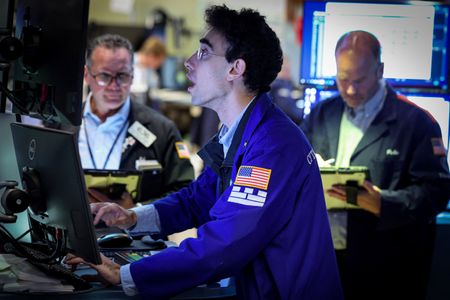
    The Westminster, Colorado-based firm has successfully combined its traditional navigation hardware with advanced software platforms that collect and analyze data, offering customers valuable insights to improve their operational efficiency.

    Trimble now projects total revenue between $3.84 billion and $3.92 billion for 2026, up from its earlier estimate of $3.81 billion to $3.91 billion. The company also increased its annual adjusted earnings per share forecast to a range of $3.47 to $3.64, compared to the previous projection of $3.42 to $3.62.

    The technology company has been transforming its business model, moving away from primarily hardware sales toward a service-oriented software approach.

    For the quarter ending March 31, Trimble reported revenue of $939.9 million, surpassing Wall Street analysts’ average prediction of $905.6 million according to LSEG data. The company’s adjusted earnings reached $0.79 per share, beating analyst estimates of $0.72 per share.

    Trimble has capitalized on what it calls a “connect-to-scale” business approach, which integrates hardware devices, software applications, and cloud-based solutions across construction, geospatial, and transportation industries.

    Looking ahead to the second quarter, the company anticipates revenue ranging from $938 million to $963 million, with the midpoint exceeding analysts’ projections of approximately $946 million. Trimble expects adjusted earnings per share between $0.78 and $0.82 for the upcoming quarter, with the midpoint matching analyst estimates of $0.80.
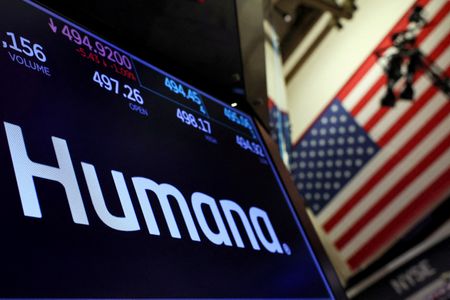
  • Disney’s Streaming Success Helps Offset Decline in International Park Visitors

    Disney’s Streaming Success Helps Offset Decline in International Park Visitors

    The Walt Disney Company surpassed analyst predictions for its second quarter, with robust streaming services and domestic theme park performance helping to balance out a decrease in international tourist visits.

    Back in February, Disney had warned investors that its Experiences segment, encompassing theme parks and resorts, would likely experience only modest profit increases during the second quarter, partly due to declining international visitor numbers to American destinations.

    The reduction in foreign tourism to the United States has been linked to multiple factors, including Donald Trump’s presidency, trade tariffs, stricter immigration policies, and his controversial statements about potentially acquiring Canada and Greenland.

    Disney’s Experiences segment, covering its six worldwide theme parks, cruise operations, merchandise sales, and video game licensing deals, saw operating profits increase 5% to $2.62 billion with revenues reaching $9.49 billion for the quarter. Domestic park operations saw a 5% boost in operating income, while international parks and experiences showed a more modest 1% increase.

    Despite strong financial performance, U.S. park attendance dropped 1% compared to the previous year, primarily due to reduced international visitor numbers.

    Company officials stated Wednesday that domestic parks and resort facilities continue performing well, though they acknowledge customers are dealing with inflation pressures and rising energy costs. Disney anticipates improved year-over-year attendance at its American parks during the current quarter.

    For the quarter ending March 28, Disney reported earnings of $2.25 billion, equivalent to $1.27 per share. This compared to $3.28 billion, or $1.81 per share, during the same period last year.

    When accounting for one-time items, adjusted earnings reached $1.57 per share, surpassing Wall Street’s anticipated $1.49 according to Zacks Investment Research analyst surveys.

    The Burbank, California-based entertainment giant posted revenues of $25.17 billion, slightly exceeding market projections.

    Disney Entertainment, encompassing film studios and streaming platforms, saw revenue grow 10%, while the Experiences division achieved 7% revenue growth.

    The company is gearing up for upcoming film releases including “The Mandalorian & Grogu,” “Toy Story 5,” and a live-action “Moana” adaptation.

    “Franchise films like these strengthen our most strategic asset – our intellectual property – and help fuel our streaming, consumer products, experiences, and games businesses over years and generations,” CEO Josh D’Amaro and Chief Financial Officer Hugh Johnston said in a statement.

    D’Amaro was selected to replace Bob Iger as Disney’s chief executive in February, becoming the company’s ninth CEO in its century-plus history. Since 2020, he has managed the corporation’s theme park, cruise, and resort operations.

    Disney continues to project double-digit growth for adjusted earnings per share in fiscal 2027, not including the impact of an additional week in that reporting period.

    Disney stock prices climbed more than 4% in pre-market trading.

  • Shareholders Slam Ice Cream Giant Over Ben & Jerry’s Social Mission Disputes

    Shareholders Slam Ice Cream Giant Over Ben & Jerry’s Social Mission Disputes

    A coalition of shareholders has delivered sharp criticism to Magnum Ice Cream Company regarding its management of the Ben & Jerry’s brand and its commitment to social causes, according to a shareholder letter obtained by Reuters.

    The investment group, which controls approximately 1.3% of Magnum shares while overseeing billions in assets, is demanding the company clarify its plans for preserving Ben & Jerry’s board autonomy and release separate financial performance data for the brand.

    This shareholder pushback highlights the ongoing difficulties Magnum faces with Ben & Jerry’s, a brand known for its outspoken political positions. The ice cream company became independent when it separated from consumer products conglomerate Unilever and went public in December.

    Throughout its history under Unilever ownership, Ben & Jerry’s leadership and founders frequently disagreed with corporate executives over the brand’s political and social positions. Since the spinoff, Magnum has moved to diminish the authority of Ben & Jerry’s autonomous board, shrinking it to only two people. Previous board members are now fighting back against these changes.

    The May 1st correspondence, delivered to Magnum’s leadership before their May 7th shareholder meeting, was spearheaded by NorthStar Asset Management and voiced serious worries about Magnum’s stewardship of Ben & Jerry’s, warning it could harm both business performance and company worth.

    “They’ve dismantled the brand’s social mission which, for us as investors, is the brand equity,” Whitney Nguyen, director of impact research at NorthStar, told Reuters.

    When Unilever purchased Ben & Jerry’s in 2000, the acquisition terms provided the Vermont-based brand with unusual independence, including its own governing board, while protecting its social activism and philanthropic activities. Unilever maintains a 19.9% ownership stake in Magnum today.

    “While we respectfully disagree with the characterisation presented by NorthStar, we are always happy to engage with shareholders and look forward to doing so,” Magnum, which also owns brands like Wall’s and Cornetto, said in a statement.

    “We remain committed to having a Board, led by an Independent Director, to continue its role of helping guide the social mission and brand integrity, alongside the CEO.”

    Unilever representatives chose not to provide comment on the matter.

    The tensions between Ben & Jerry’s and its corporate parent escalated in 2021 when the Vermont company, known for flavors ranging from Caramel Chew Chew to Bohemian Raspberry, announced it would cease sales in Israeli-occupied West Bank territories.

    As the corporate separation neared completion, Magnum declared that the chairperson of Ben & Jerry’s independent board was unsuitable for the position, subsequently alleging serious professional misconduct.

    The investor coalition is seeking detailed explanations of how Magnum intends to respect the Ben & Jerry’s independent board arrangement, requesting complete disclosure of legal obligations and pending court cases.

    “We are concerned that this independent board agreement has been consistently and systematically disregarded,” stated the investor correspondence, which also received backing from the influential Dutch Association of Investors for Sustainable Development (VBDO).

    NorthStar, which focuses on socially conscious investments, warned that Magnum’s approach to Ben & Jerry’s could make other brands hesitant about potential acquisitions by either Magnum or Unilever.

    “The acquisition agreement has been systematically violated — from overriding board decisions, firing the chair and members who disagreed, to censoring the very social mission they were contractually obligated to protect,” Nguyen said.

    “This is a significant governance failure that erodes shareholder trust and sets a deeply concerning precedent for every brand within the Magnum and Unilever portfolio.”

  • Apple to Pay iPhone Users Up to $95 Each in $250M AI Feature Settlement

    Apple to Pay iPhone Users Up to $95 Each in $250M AI Feature Settlement

    iPhone users across the country are set to receive cash payments ranging from $25 to $95 each after Apple agreed Tuesday to pay $250 million to settle a major class-action lawsuit over misleading artificial intelligence advertising.

    The legal dispute centers on Apple’s promotion of enhanced AI capabilities for Siri when the tech giant launched the iPhone 16 in 2024, marketing these features as part of new software called “Apple Intelligence.”

    However, the California-based company has struggled to deliver on its AI promises while competing with other technology companies during the current artificial intelligence surge, and the promised Siri improvements remain unavailable two years after the initial announcement.

    The federal lawsuit, filed in San Francisco’s Northern District of California court on behalf of American consumers, accused Apple of misleading customers through marketing campaigns that highlighted non-existent features, convincing people to purchase devices under false pretenses.

    Legal representatives for iPhone purchasers have submitted the proposed $250 million settlement agreement to the court for preliminary approval, which would rank among Apple’s largest settlements if a judge gives the green light.

    The agreement encompasses approximately 37 million devices sold in the United States from June 10, 2024, through March 29, 2025, covering all iPhone 16 versions plus the iPhone 15 Pro and iPhone 15 Pro Max models.

    Device owners qualify for a minimum $25 payment per phone, with potential increases up to $95 based on the total number of submitted claims “and other factors,” according to court documents.

    Eligible customers will receive email or postal notifications with instructions for submitting claims through a designated settlement website.

    The Cupertino-based technology company reportedly underestimated consumer enthusiasm for the Siri AI enhancements. Purchasers expressed frustration upon learning the advertised features would arrive much later than anticipated, court filings revealed.

    Customers “would not have purchased the Eligible Devices or would have paid significantly less, had they known Enhanced Siri features were not available,” the legal filing stated.

    While competitors Google and Samsung continue expanding AI technology across their product lines, Apple’s artificial intelligence features remain under development. Industry observers expect the company to reveal its Siri upgrade sometime this year, likely during its annual developer conference scheduled for next month.

  • Budget-Friendly SUV Guide: Safe Used Vehicle Options Under $20K for Teen Drivers

    Budget-Friendly SUV Guide: Safe Used Vehicle Options Under $20K for Teen Drivers

    Motor vehicle accidents represent the primary cause of fatalities and injuries among teenagers between 13 and 19 years old, according to data from the Centers for Disease Control and Prevention. Young drivers face challenges including lack of experience, tendency toward risky behavior, and susceptibility to distractions while operating vehicles.

    Families can reduce these dangers through professional driver education, demonstrating responsible driving habits, and selecting the most secure vehicle within their price range. To assist budget-conscious parents in identifying the safest options, Edmunds has researched and identified five top-rated used SUVs available for under $20,000.

    The recommended vehicles featured below have all received Top Safety Pick recognition from the Insurance Institute for Highway Safety along with five-star overall ratings from the National Highway Traffic Safety Administration. Buyers can locate well-maintained examples with fewer than 60,000 miles within the $20,000 budget. While these crossovers vary in size and features, they share excellent crash test performance. The selections are presented alphabetically.

    Chevrolet’s newest Trailblazer offers compact dimensions paired with distinctive character. Despite its smaller footprint, the vehicle provides unexpected interior space and practicality, while delivering reasonable fuel economy. The recommended model years lack standard blind-spot monitoring with rear cross-traffic alert, which Edmunds considers valuable for young drivers, so buyers should seek examples equipped with this optional feature. All Trailblazer models include Teen Driver technology, allowing parents to track their child’s driving behavior remotely.

    Hyundai completely revamped its midsize SUV beginning with the 2019 model year, incorporating extensive standard driver assistance technologies designed to enhance teen driver safety. Additionally, active subscribers to Hyundai’s Bluelink communication system can establish alerts for vehicle speed limits, curfew violations, and travel outside predetermined geographic boundaries. The standard four-cylinder engine provides adequate performance without the optional turbocharged powerplant that might encourage aggressive driving.

    Mazda introduced a redesigned CX-5 compact crossover SUV for 2017, but 2018 marked the addition of standard blind-spot monitoring and rear cross-traffic alert systems. That model year also achieved the first perfect ratings from both IIHS and NHTSA testing. Regardless of the chosen model year, buyers should verify the CX-5 includes the i-Activsense package, which became standard equipment in 2020 and provides comprehensive driver assistance features. Parents will appreciate the infotainment system’s automatic 911 emergency assistance capability that alerts first responders during collisions.

    For families seeking a compact SUV with excellent visibility, standard all-wheel drive, and elevated ground clearance suitable for outdoor activities, the Subaru Forester represents an ideal choice. This small crossover underwent redesign in 2019, gaining numerous standard driver assistance features, including alerts when stopped traffic begins moving. However, blind-spot monitoring and rear cross-traffic alert were not available on base trim levels, so buyers should locate used Foresters with these safety features within their budget.

    Families considering electric vehicles should examine the Volkswagen ID.4 as a secure option for teen drivers. This compact crossover offers rear-wheel or all-wheel drive configurations and achieves EPA-estimated ranges between 209-275 miles per charge depending on the selected version. Active Car-Net Safe & Secure subscriptions provide emergency assistance and automatic crash notification services, while the electric Volkswagen includes comprehensive standard safety equipment. The Emergency Assist feature can safely stop the ID.4 if it detects an unresponsive driver.

    A $20,000 budget allows families to secure safe, well-maintained used SUVs for teenage drivers. These recommended models offer collision protection while incorporating modern technologies designed to prevent accidents. However, these represent only a sample of suitable options. Families should prioritize crash test ratings during their research, along with standard and available driver assistance features.

  • Musk’s SpaceX Proposes Massive $55B Semiconductor Plant in Texas

    Musk’s SpaceX Proposes Massive $55B Semiconductor Plant in Texas

    Elon Musk’s space exploration company has submitted documentation for a massive $55 billion semiconductor production plant in Texas, according to public filings released Wednesday.

    The proposed manufacturing complex, dubbed Terafab, represents a partnership between SpaceX and Tesla as Musk works to establish internal control over advanced microchip supply chains. Industry experts suggest the ambitious scope outlined would likely demand significantly higher investment levels than initially proposed.

    SpaceX is simultaneously preparing for a June public stock offering that could establish the company’s worth at approximately $1.75 trillion.

    Musk has been consolidating artificial intelligence operations throughout his business empire, with SpaceX purchasing his xAI startup earlier this year in a transaction focused on developing orbital data processing centers. The merged organization received a $1.25 trillion valuation.

    The Terafab initiative would create a multi-stage semiconductor production and computing hub designed to strengthen America’s domestic chip manufacturing capabilities. SpaceX projects total spending could reach $119 billion should all planned construction phases move forward.

    The manufacturing site is proposed for Grimes County within a recently established reinvestment district, where local leaders are scheduled to review a property tax reduction agreement during their June session.

    The planned complex could decrease dependence on outside vendors including Samsung and Taiwan Semiconductor Manufacturing Co.

    SpaceX outlined intentions to “manufacture our own GPUs” within “substantial capital expenditures” detailed in its S-1 registration documents, according to portions examined by Reuters.

    The documentation also noted supply chain vulnerabilities, acknowledging the company currently operates without long-term agreements with numerous direct chip vendors and will maintain significant reliance on external partners. SpaceX cautioned there are no guarantees it will achieve Terafab goals within projected timeframes, if at all.

    The strategy supports broader American initiatives to expand domestic semiconductor production amid international tensions and supply chain vulnerabilities.

    Demonstrating efforts to attract outside manufacturing knowledge, Musk announced during Tesla’s first-quarter earnings presentation last month that Terafab will utilize Intel’s 14A manufacturing process for chip production.

    The complex is designed to provide semiconductors for Tesla’s autonomous driving technology, robotic systems and artificial intelligence processing centers, illustrating the extensive computing requirements across Musk’s various enterprises as he increases investment in comprehensive computing infrastructure.

  • Grocery Delivery Giant Instacart Beats Sales Projections Despite Economic Uncertainty

    Grocery Delivery Giant Instacart Beats Sales Projections Despite Economic Uncertainty

    Online grocery delivery platform Instacart surpassed Wall Street projections for its latest quarterly performance and issued an upbeat outlook for the coming months, driven by robust consumer demand across income levels.

    The delivery service, officially called Maplebear, reported that customer demand has remained consistent from both cost-conscious shoppers and affluent households looking for affordable essentials and rapid delivery options.

    Chief Executive Chris Rogers told Reuters the company was “seeing strength with the consumer” and hasn’t observed anything “materially change” in consumer spending habits despite ongoing economic uncertainties, including international conflicts.

    “Things like higher oil prices can flow through the system, whether that’s transportation, packaging, or eventually food costs,” Rogers explained, noting this reinforces the company’s emphasis on keeping prices affordable.

    Looking ahead to the second quarter, Instacart projected its gross transaction value—a critical measure representing the total worth of merchandise sold through its platform—will reach between $10.10 billion and $10.25 billion. This outlook exceeds the average analyst prediction of $10.07 billion compiled by LSEG.

    The company also anticipated adjusted earnings before interest, taxes, depreciation and amortization will fall between $290 million and $300 million, which aligns closely with analyst expectations of $298.8 million.

    During the first quarter, gross transaction value jumped 13% to reach $10.29 billion, surpassing projections of $10.2 billion. Meanwhile, adjusted core earnings increased 23% to $300 million, exceeding analyst forecasts of $287.4 million.

    The company’s advertising division experienced 16% growth, generating $286 million in the quarter that concluded March 31, an improvement from the 14% growth recorded in the same period last year.

    However, total orders increased by 10%, representing a slowdown compared to the 16% growth seen in the previous year.

  • Uber Projects Strong Q2 Growth Despite Middle East Challenges

    Uber Projects Strong Q2 Growth Despite Middle East Challenges

    Uber Technologies announced Wednesday that it anticipates second-quarter bookings will surpass Wall Street projections, powered by robust demand for ride-sharing and delivery services, despite ongoing Middle East conflicts impacting growth.

    The San Francisco-based company’s stock climbed approximately 8% during premarket trading following the announcement.

    The positive projections indicate that Uber’s approach of maintaining stable pricing while expanding into more profitable sectors like business platform services is succeeding, allowing the company to weather elevated fuel costs and global political instability.

    Robust delivery demand across international markets, particularly in Australia, along with expansion into new territories like Denmark, has contributed to driving growth forward.

    The ride-sharing giant projects gross bookings between $56.25 billion and $57.75 billion for the June quarter, surpassing analysts’ average projection of $56.07 billion, based on LSEG data.

    The company accounts for approximately 60 basis points of negative impact from Middle East conflicts in its calculations.

    Uber also anticipates second-quarter adjusted earnings per share ranging from 78 cents to 82 cents, marginally higher than analyst estimates of 79 cents.

    The company’s first-quarter gross bookings reached $53.7 billion, beating expectations of $52.84 billion.

    According to Uber, increased implementation of artificial intelligence technology is helping control hiring rates by enhancing productivity throughout its operations.

    The company continues expanding beyond ride-sharing into a comprehensive platform covering food delivery, grocery services, travel and local commerce, including recent ventures into hotel reservation services.

    Uber has concentrated on developing its Uber One membership service, which has exceeded 50 million subscribers and now represents approximately half of total gross bookings.

    March quarter revenue totaled $13.2 billion, falling short of $13.62 billion estimates due to harsh winter weather across the United States, Middle East conflicts and increased gasoline costs.

    However, adjusted earnings per share of 72 cents for the first quarter exceeded estimates of 70 cents.

    First-quarter ride-hailing segment revenue of $6.8 billion missed projections of $7.11 billion. Nevertheless, delivery and freight segment sales exceeded expectations, with the freight division achieving growth for the first time in almost two years.

    The company is pursuing collaborative partnerships for autonomous vehicle development, collaborating with over 20 companies to incorporate robotaxis into its platform instead of developing the technology independently.

    Uber expects to enable autonomous vehicle rides in up to 15 cities worldwide by late 2026 as it expands partnerships with autonomous vehicle developers.

  • Corporate Earnings Surge Drives US Stock Market to New Record Heights

    Corporate Earnings Surge Drives US Stock Market to New Record Heights

    Robust corporate earnings are fueling the US stock market’s climb to unprecedented levels, offering encouraging signals for investors as long as the underlying profit drivers remain intact.

    With more than two-thirds of first-quarter earnings reports complete, companies in the S&P 500 are positioned to achieve their strongest quarterly profit growth in over four years. Forward-looking projections have also brightened considerably, with analyst forecasts for the next 12 months climbing more than 10% since January, based on LSEG Datastream data.

    As worst-case economic concerns related to Middle East conflicts have diminished, market participants say Wall Street has been able to concentrate on earnings momentum, bolstered by substantial artificial intelligence technology investments and an overall stable economic environment.

    “Because things have not gotten worse and the ceasefire has been in place for some time now, it’s been earnings that have driven the move higher,” said Chris Fasciano, chief market strategist at Commonwealth Financial Network.

    The S&P 500 benchmark has gained 6% year-to-date, adding to three consecutive years of strong double-digit percentage increases. The index has jumped over 14% since March 30, recovering from a decline triggered by the beginning of the US-Israeli conflict with Iran.

    POTENTIALLY STRONGEST QUARTER IN TWO DECADES

    While investors anticipated generally positive results when earnings season began last month, actual performance has significantly exceeded forecasts. First-quarter S&P 500 profits are projected to have increased 28.2% compared to the same period last year, incorporating results from 350 index companies that have already reported plus analyst projections for remaining companies, according to Tuesday data from Tajinder Dhillon, head of earnings and equity research at LSEG Data & Analytics.

    This growth rate would represent the highest increase since the fourth quarter of 2021, when companies were rebounding from pandemic-related shutdowns.

    “Excluding special factors like favorable base effects and corporate tax cuts, earnings growth is arguably the strongest in two decades,” Binky Chadha, chief U.S. equity strategist at Deutsche Bank, said in a note.

    Outlook for the remainder of 2026 continues improving as well. Full-year 2026 S&P 500 earnings are anticipated to surge 22.6%, with estimates for each of the next three quarters higher than they were on April 1, according to LSEG IBES.

    Major companies yet to report include semiconductor leader Nvidia, retail giants Walmart and Home Depot, and software firm Salesforce.

    BEYOND ARTIFICIAL INTELLIGENCE GAINS

    Enormous technology company investments in AI applications represent a crucial factor supporting American corporate profits. Five AI hyperscalers are projected to spend $751 billion on capital expenditures in 2026, Goldman Sachs strategists report, as these firms channel resources into data centers and related infrastructure.

    Businesses and sectors benefiting from AI have boosted first-quarter earnings by 50%, Deutsche Bank reported Monday, encompassing semiconductor firms and other technology hardware companies, plus electrical equipment and construction businesses.

    AI has been “a tree that spreads a lot of limbs out,” said Chuck Carlson, CEO at Horizon Investment Services. “That spending that is going on in that space is really a pretty significant driver.”

    Investors also highlight widespread solid earnings amid a steady economic foundation. Median company profit growth reached 12.2%, Deutsche Bank notes, while Morgan Stanley strategists observe the median S&P 500 company earnings surprise is the strongest seen in four years. Nine of 11 S&P 500 sectors are tracking toward higher first-quarter earnings, with eight each up at least 10%, LSEG IBES reports.

    Businesses are demonstrating resilience against war-related energy price increases that have pushed oil costs above $100 per barrel, said Keith Lerner, chief investment officer at Truist Advisory Services.

    “It’s definitely hurting some businesses, but companies have gone through so many shocks, they are more equipped to just be able to be agile when these things happen,” Lerner said.

    MARKET VALUATIONS MODERATE AMID RISING EARNINGS

    Strong earnings performance has enabled stock gains even as market valuations have become more reasonable. Though still considerably above its historical average of 16, the S&P 500’s price-to-earnings ratio stood at 21.2 times anticipated 12-month earnings, LSEG Datastream shows. This marks a decline from the 23.5 level reached in late October.

    Markets no longer anticipate equity-favorable interest rate reductions this year, given energy-driven inflation increases, creating pressure on stock valuations and heightening the importance of robust earnings growth.

    As investors assess whether earnings strength will continue, they will monitor the AI trend and any indication of retreat from industry leaders.

    The Middle East conflict remains prominent for investors, who fear more substantial consequences for businesses and consumers as the conflict persists and keeps energy and other costs elevated.

    “For the moment, I think investors are willing to sort of ride the wave of strong earnings and generally decent economic news,” said Robert Pavlik, senior portfolio manager at Dakota Wealth Management. “Eventually, $4.50-a-gallon gasoline is going to catch up to the economy, you would imagine.”

  • Future Fed Chief Wants to Limit Recording of Policy Debates

    Future Fed Chief Wants to Limit Recording of Policy Debates

    WASHINGTON – The incoming Federal Reserve chairman believes that recording fewer policy discussions would lead to better monetary decisions, according to comments he made in an upcoming book that highlight his plans to reform the central bank.

    Kevin Warsh, who is expected to receive Senate confirmation this month as the next Fed chief, told New York University Professor Simon Bowmaker that the current practice of recording and eventually releasing complete meeting transcripts hampers honest debate among policymakers.

    In the interview for Bowmaker’s book “Fed Reckoning: Conversations on America’s Central Bank,” set for publication early next year, Warsh suggested recording only the final decision-making discussions where officials explain their vote rationale.

    “Policymakers do not want to appear wrong with the benefit of hindsight, and so they instinctively tend to hedge their bets” when their comments are taped for release, Warsh explained to Bowmaker.

    The 56-year-old lawyer and former Fed governor from 2006 to 2011 pointed to his work with the Bank of England, where he recommended changes in 2014. “As a result of the work I did in 2014, the recording device has been turned off” for initial policy discussions there, he said, while transcripts of final decision meetings are still released for transparency.

    Warsh emphasized his desire for more vigorous internal debates: “The tape recorder, however, still looms large at the Federal Reserve… If we want that deliberation to be robust, we need a family fight. If people think the decision is 60–40 one way, I would prefer them to argue as if it were 95–5. I want to hear the best arguments.”

    Since the early 1990s, the Fed has published complete transcripts of its policy meetings with a five-year delay, a compromise designed to balance public accountability with concerns that immediate release would discourage frank discussion.

    While current Fed Chair Jerome Powell conducts extensive private consultations with colleagues before meetings, Warsh believes broader group discussions would improve policy outcomes. “It would be preferable if the fierce deliberation happened among a larger group. So, if you want sound policy decisions, you have to create an environment in which sound policy fights can happen,” he said.

    Warsh supports maintaining recordings of final decision sessions, stating the second day of discussions “should be recorded” and “the transcript should be made available because it is a judgment of what each member believes and his rationale. The historical record should ensure accountability for the decisions.”

    The potential changes would reverse decades of increasing Fed transparency that began controversially in the 1990s when Congress discovered the central bank had been secretly keeping meeting transcripts since 1976, drawing comparisons to President Nixon’s White House recordings.

    Former Fed Vice Chair Donald Kohn, who participated in the original transcript policy discussions, acknowledged Warsh’s concerns while noting benefits of the current system. “Did it impede discussion? Yes, to some extent,” Kohn said, but added that the recording requirement also increased policymakers’ preparation levels.

    Warsh may also modify other Fed communication practices, potentially reducing the frequency of press conferences that Powell holds after each policy meeting or eliminating quarterly economic projections that he views as constraining “forward guidance.” During his April 20 confirmation hearing, he didn’t rule out reducing the number of annual meetings from the current eight.

    Michael Arone, chief investment strategist at State Street Investment Management, predicted communication changes under Warsh’s leadership. “Fed communications are not a light switch, on and off, it’s a dial. Powell was incredibly transparent… Should Warsh be confirmed, it will be turned down a few notches,” Arone said. “As a consumer of information, more is better than less. It would increase the risk of misinterpretation.”

    The Fed’s transparency evolution has included more detailed policy statements, regular press conferences, and frequent public speeches by officials, based on the theory that clearer communication makes monetary policy more effective.

    Sarah Binder, a George Washington University political science professor who studies Fed history, warned that reducing transparency could revive old suspicions about the central bank, particularly as President Trump seeks greater influence over Fed operations.

    “Changes on disclosure are hard to take back… The big, broad movement at the Fed is from very little transparency to a pretty broadly transparent institution,” Binder said. “The moment it becomes known that they are turning off the tape recorder, suspicions grow. How did they reach that decision? People’s minds can go pretty conspiratorial.”

  • Musk’s SpaceX IPO Designed to Give CEO Unprecedented Control Over Company

    Musk’s SpaceX IPO Designed to Give CEO Unprecedented Control Over Company

    Elon Musk is preparing to take SpaceX public with a corporate structure that will grant him nearly unlimited executive control while significantly reducing traditional shareholder protections, according to documents reviewed by Reuters.

    The rocket manufacturer has implemented policies that combine multiple control mechanisms – including supervoting shares, forced arbitration requirements, tighter restrictions on shareholder proposals, and incorporation under Texas law – to ensure Musk and company insiders maintain broad authority over business decisions.

    Under this arrangement, Musk becomes the only individual with the power to remove himself from his leadership position, as he will control a majority stake through special voting shares.

    “It closes the voting door, the courthouse door and the proposal door simultaneously. It’s unprecedented in terms of creating a total lack of accountability,” said Bruce Herbert, CEO of Seattle-based sustainability-focused wealth management firm Newground Social Investment, which challenged Musk at his electric-vehicle company, Tesla, with a shareholder proposal that won 49% of the vote in November.

    Despite Musk’s controversial public persona, many investors view him as an innovative leader capable of achieving extraordinary results. Tesla’s board recently approved a decade-long compensation package for him valued at nearly $1 trillion, stating the company would suffer substantial losses “without Elon.” His SpaceX compensation is linked to ambitious goals like establishing massive orbital data centers and Mars colonization.

    SpaceX declined to provide comment on the governance structure.

    The restrictive policies may not deter investment interest in what is anticipated to become the largest initial public offering in market history. SpaceX is targeting up to $75 billion in proceeds with a potential $1.75 trillion company valuation.

    Many investors view accepting reduced rights as an acceptable trade-off for participating in the historic offering, particularly given Musk’s track record with Tesla. The electric vehicle manufacturer’s stock price has climbed to approximately $389 from its 2012 debut price of $17.

    “SpaceX is going to be such a huge part of the market that for most portfolio managers it’s very difficult not to buy, because it’s going to be driving the price of everything,” said Ann Lipton, a professor of law at the University of Colorado Law School. “And if SpaceX soars, and you don’t have a piece of it, then you’re going to look like you’re underperforming the market by comparison.”

    Corporate governance specialists believe Musk is designing SpaceX’s structure to shield the company from the type of shareholder challenges Tesla has faced. Tesla investors have previously contested various decisions, including Musk’s compensation arrangements and the acquisition of his solar energy business, SolarCity.

    Experts warn that Musk’s approach could establish a template for other prominent founder-led companies planning public offerings, including artificial intelligence firms Anthropic and OpenAI.

    “They are all complicated, potentially controversial figures that are also creating history in real time,” Dishmi Capital co-founder Shang Chou said of Musk, OpenAI founder Sam Altman and other founders. “You focus less on valuation and more on the fact that you’ve been offered a seat on a rocket ship.”

    When SpaceX begins public trading later this year, Musk will continue serving as CEO, chief technical officer and chairman of the company’s nine-person board. According to a May 4 regulatory filing, he currently holds 42.5% of company equity and controls 83.8% of voting power.

    The company plans to implement a dual-class share system where Class B shareholders receive 10 votes per share compared to one vote for Class A shares available to public investors. This structure concentrates decision-making authority with Musk and select insiders who possess the special voting shares.

    Musk’s Class B holdings, which will remain unavailable to public purchasers, will maintain his majority voting control after the public offering. This arrangement grants him and other insiders the authority to select most board members and gives Musk the ability to “elect, remove or fill any vacancy” among directors.

    The voting control also extends to other matters requiring shareholder approval, including merger and acquisition decisions, potentially facilitating a future combination with Tesla if desired.

    When supervoting shares are sold, they automatically convert to regular Class A shares, further concentrating power among remaining Class B holders. While the company retains the option to issue additional Class B shares, only Musk, his family members and “certain entities” are eligible to receive them.

    Musk’s voting dominance will classify SpaceX as a “controlled company” under securities regulations. This designation, also used by founder-led companies like Mark Zuckerberg’s Meta Platforms and Rupert Murdoch’s News Corp, allows companies to bypass certain governance requirements for faster decision-making.

    Unlike typical public companies that must have independent directors comprise a majority of their nominating and compensation committees, controlled companies face no such requirement, and SpaceX has indicated it will not voluntarily comply.

    “You will not have the same protections afforded to shareholders of companies that are subject to all of the corporate governance requirements,” the company warned in a list of potential risk factors for investors.

    SpaceX has also severely restricted shareholders’ litigation rights. Company bylaws require anyone owning shares to “irrevocably and unconditionally” surrender all rights to jury trials. Shareholders are also banned from filing class action lawsuits against the company, its leadership, controlling shareholders or investment banks involved in the public offering.

    Instead, disputes will be handled through mandatory arbitration – private proceedings overseen by arbitrators. This practice was previously prohibited in the United States until the Securities and Exchange Commission reversed its position in September, permitting companies to adopt mandatory arbitration policies.

    SpaceX is maximizing benefits from its 2024 decision to reincorporate from Delaware to business-friendly Texas and its largely untested governance laws. Texas adopted amendments to its Business Organizations Code last year that substantially reduce investor protections. Musk moved away from Delaware after a judge there invalidated his 2018 Tesla compensation package worth $56 billion, though that ruling was later overturned.

    The Texas incorporation provides additional defenses against activist investors and hostile takeover attempts. State securities laws also create higher barriers for challengers attempting unsolicited tender offers, proxy contests or management removal.

    Shareholder proposal requirements are also more stringent. Under new Texas rules, shareholders must own at least $1 million in stock or 3% of the company to force a vote on proposals.

    “It’s definitely one of the most restrictive IPOs. He (Musk) is taking advantage of this ownership structure and the Texas provisions,” University of Pennsylvania law professor Jill Fisch said.

    However, some investors support the restrictive approach. Joel Shulman, founder and chief investment officer of ERShares, which manages the $993 million Private/Public Crossover ETF, expressed no concerns about the limitations as a SpaceX investor.

    “I would rather have him making these decisions and be in control,” he said. “He may be controversial and polarizing and he does some crazy, bizarre things sometimes, but he’s a brilliant guy when it comes to building something completely new and building wealth” for himself and shareholders.

  • Wall Street Futures Climb on Middle East Peace Talks, AI Chip Demand

    Wall Street Futures Climb on Middle East Peace Talks, AI Chip Demand

    Stock market futures posted gains Wednesday morning as investors showed renewed confidence in potential Middle East peace negotiations and sustained enthusiasm for artificial intelligence developments.

    Wednesday’s upward movement follows Tuesday’s session that pushed both the S&P 500 and Nasdaq Composite to new record territory. The momentum continued after Advanced Micro Devices reported projected second-quarter earnings that exceeded analyst expectations, driven by strong sales of data center processors.

    “Wall Street continues to double down on its bet that the war in the Middle East will not re-escalate and disrupt the market’s earnings-driven surge to all-time highs,” said Kyle Rodda, senior financial market analyst at Capital.com.

    “The signals sent from the United States appear to offer reassurance that it’s not interested in renewing hostilities.”

    President Donald Trump indicated that “great progress” had been achieved in working toward a peace deal with Iran, while Iranian officials stated they would only consider “a fair and comprehensive agreement.”

    Energy markets responded to the diplomatic developments, with oil prices declining for the second straight session. Brent crude futures dropped 3.3%.

    The market advances demonstrate increased investor willingness to take risks, contingent on continued solid corporate performance and ongoing diplomatic progress.

    However, analysts warn that the higher stock prices climb, the more vulnerable they become to sharp reversals if peace negotiations collapse.

    Early Wednesday trading showed Dow E-minis climbing 126 points or 0.25%, while S&P 500 E-minis advanced 23.25 points or 0.32%. Nasdaq 100 E-minis posted the strongest gains, rising 228 points or 0.81%.

    Technology stocks led the pre-market activity, with AMD surging 18.1% while competitor Intel gained 6.1%. Super Micro Computer also jumped 17.7% after announcing fourth-quarter revenue and profit projections that beat expectations.

    Alphabet shares climbed 1.4%, closing the market capitalization gap with Nvidia in the competition to become the world’s most valuable company. Nvidia stock rose 0.44%.

    Arm Holdings increased 11.3% ahead of its upcoming quarterly earnings announcement.

  • Major Grocery Chain Parent Company Beats Profit Expectations Despite CEO Change

    Major Grocery Chain Parent Company Beats Profit Expectations Despite CEO Change

    A major international grocery company that operates several well-known U.S. supermarket chains exceeded financial expectations for the first quarter, though investor confidence wavered following leadership transition news announced Wednesday.

    Ahold Delhaize, the Dutch corporation behind American grocery stores Stop & Shop, Giant, Food Lion and Hannaford, as well as Albert Heijn and Delhaize chains in Europe, delivered stronger-than-predicted quarterly results driven by robust performance from its U.S. operations.

    However, company stock values declined 3.4% after officials revealed that current CEO Frans Muller will step down in April 2027 following nine years of leadership, with Kingfisher CEO Thierry Garnier selected as his replacement.

    KBC Securities analyst Michiel Declercq explained that Muller’s planned departure primarily drove the stock decline, noting the outgoing executive was “well liked by the investor community, had a strong track record and did an excellent job integrating the Ahold and Delhaize merger” completed in 2016.

    The company’s underlying quarterly operating income reached 896 million euros ($1.05 billion), a slight increase that surpassed analyst predictions of 858 million euros. When accounting for unfavorable U.S. dollar exchange rates, core earnings actually jumped 8.1% compared to the previous year.

    This strong performance occurred despite declining American consumer confidence, with Ahold Delhaize generating more than half its total revenue from U.S. markets. The company joined numerous other European businesses in reporting negative impacts from currency fluctuations.

    American consumer sentiment hit record lows in April as ongoing inflation pressures from the U.S.-Israeli conflict with Iran continued affecting household budgets.

    “Consumers are under pressure, and that impacts the market and in the end also impacts … our sales,” Chief Financial Officer Jolanda Poots-Bijl explained to Reuters.

    The Middle East conflict has disrupted shipping through the Strait of Hormuz, pushing up oil prices and subsequently increasing gasoline and diesel costs. Commodity prices for fertilizers, petrochemicals and aluminum have also risen sharply, with consumer impacts expected to follow.

    “These impacts play out often with a delay in our industry, and could impact us somewhat mid- to longer term,” Poots-Bijl added.

  • Samsung Joins Trillion-Dollar Club as South Korean Markets Soar on AI Boom

    Samsung Joins Trillion-Dollar Club as South Korean Markets Soar on AI Boom

    South Korea’s primary stock market achieved a historic milestone Wednesday, with the KOSPI index climbing above 7,000 points for the first time as artificial intelligence enthusiasm propelled semiconductor companies to record heights.

    Samsung Electronics reached the coveted trillion-dollar market capitalization threshold, becoming just the second Asian corporation to achieve this status after Taiwan Semiconductor Manufacturing Co (TSMC).

    The remarkable surge demonstrates how worldwide appetite for AI technology has emerged as the primary driver transforming global stock markets, elevating South Korea’s semiconductor-focused index among the planet’s top-performing major exchanges.

    Wednesday’s trading session saw the KOSPI finish 6.45% higher at 7,384.56 points, after momentarily triggering an uncommon “sidecar” trading halt and reaching a peak gain of 7.06% at an all-time record of 7,426.60. The rally followed overnight gains in American chip stocks that pushed the Philadelphia Semiconductor Index up 4.2%.

    Samsung Electronics and SK Hynix both soared to unprecedented levels, climbing 14.4% and 10.6% respectively. These two technology giants now represent 44% of the KOSPI’s entire market value.

    Samsung’s achievement places it among only four Asian companies worth more than $500 billion, alongside TSMC, SK Hynix, and China’s Tencent.

    The day’s impressive performance followed a 5.1% surge on Monday, when domestic economic data revealed strong manufacturing activity and trade driven by semiconductor demand amid global AI investment. Markets were closed Tuesday for a national holiday.

    Year-to-date, the KOSPI has skyrocketed 75%, building on a remarkable 76% increase in 2025 that marked the best annual performance since 1999, supported by government market reform initiatives.

    “Despite high oil prices and bond yields sparked by Iran war noises, foreign flow conditions are improving on a jump in the Philadelphia Semiconductor Index and AMD shares,” said Han Ji-young, an analyst at Kiwoom Securities.

    Advanced Micro Devices shares jumped 12% in after-hours trading Tuesday following the company’s forecast of second-quarter revenue exceeding market projections, fueled by strong demand for data-center processors as cloud computing firms increase AI infrastructure spending.

    Currency markets also responded positively, with the won gaining as much as 1.7% to 1,451.5 per dollar on domestic trading platforms, reaching its strongest position since February 27.

    Market confidence received an additional boost when U.S. President Donald Trump announced a temporary pause in operations escorting ships through the Strait of Hormuz, citing “great progress” toward a comprehensive Iran agreement, which sent oil prices tumbling during Asian trading hours.

    Beyond technology stocks, securities companies jumped 13.5% and financial groups rallied 4.2% Wednesday on expectations that the stock market boom would boost profits. However, gainers were outnumbered, with 200 advancing stocks among 893 traded shares, while 679 declined.

    “South Korea’s stock market is still undervalued compared with historical valuations in terms of earnings per share, trading at about nine times this year’s earnings forecasts,” said Seo Sang-young, an analyst at Mirae Asset Securities.

    “If the demand for AI chips continues at this level, the KOSPI could reach 10,000 points by the end of this year – but if the demand collapses with worries over inflation and weak growth due to the Iran war, it could plummet to as low as 4,500 points,” Seo said.

    The index, which traded around 2,000 when President Lee Jae Myung assumed office in early June 2025, crossed 3,000 within a month and powered through 6,000 in late February just before the Iran conflict began.

    “I believe the KOSPI’s jump is due to the recovery of capital market confidence in South Korea, which had been undervalued,” Jung Cheong-rae, the leader of the ruling Democratic Party, said, crediting various government policies for the achievement.

    International investors drove Wednesday’s rally with their largest-ever single-day purchase of Korean shares, totaling 3.1 trillion won ($2.13 billion).

  • German Auto Parts Giant Continental Warns of Major Financial Hit from Trump Tariffs

    German Auto Parts Giant Continental Warns of Major Financial Hit from Trump Tariffs

    German automotive supplier Continental is bracing for significant financial impact after President Trump announced increased tariffs on European imports last week, with potential costs reaching tens of millions of euros if the measures extend to tire products.

    The company’s Chief Financial Officer Roland Welzbacher revealed Wednesday that Continental could face additional expenses in the “mid to high double-digit million euro” range should the new tariff structure include tires in its scope.

    European automotive component manufacturers are experiencing heightened uncertainty following Trump’s decision to raise import duties on vehicles and trucks from the European Union to 25 percent, up from the previously established 15 percent rate. The administration justified the increase by claiming the EU failed to meet obligations under existing trade agreements.

    Welzbacher informed Reuters that Continental’s current financial projections do not account for these potential tariff increases, as the company awaits specific details before determining its response strategy.

    “Would require again to think about measures to offset this cost like we did last year. So we need to focus on cost savings, and obviously we also need to think about commercial measures,” Welzbacher explained when discussing how the company might address the additional financial burden.

  • Tesla Issues Recall for Nearly 219K Vehicles Over Backup Camera Delays

    Tesla Issues Recall for Nearly 219K Vehicles Over Backup Camera Delays

    Electric vehicle manufacturer Tesla is pulling back 218,868 cars across the United States following concerns about malfunctioning backup camera systems, federal transportation safety officials announced Wednesday.

    According to the National Highway Traffic Safety Administration, the backup camera screens in the affected vehicles may experience delays when drivers shift into reverse gear, potentially compromising visibility and raising collision risks.

    The safety recall affects multiple Tesla models, including the Model 3, Model Y, Model S, and Model X vehicles, NHTSA officials confirmed.

    Tesla has already deployed a wireless software update to fix the technical problem affecting the backup camera systems.

    This latest recall follows NHTSA’s recent decision last month to close an investigation into approximately 2.6 million Tesla vehicles concerning a remote movement feature. The agency determined that function was only connected to minor, slow-speed accidents.

  • German Officials Consider Drastic Move to Block Italian Bank Takeover

    German Officials Consider Drastic Move to Block Italian Bank Takeover

    FRANKFURT – German officials are weighing an emergency strategy to prevent Italy’s UniCredit from acquiring Commerzbank by significantly expanding the government’s ownership through state development bank KfW, according to sources familiar with the discussions.

    Currently, Germany holds a 12% ownership position in Commerzbank following a rescue package implemented during the financial crisis twenty years ago. Now, some Berlin officials are exploring whether KfW could purchase additional shares to create a substantial enough ownership block to prevent a complete acquisition, two sources with direct involvement told Reuters anonymously.

    While this approach would encounter multiple obstacles, including securing several billion euros in funding, officials argue it could be warranted given Commerzbank’s importance in financing Germany’s Mittelstand companies that serve as the foundation of Europe’s biggest economy.

    Armand Zorn, a prominent Social Democratic Party member whose party currently oversees Germany’s finance ministry, expressed support for exploring a KfW investment. “A potential KfW stake should certainly be considered,” Zorn stated.

    The vice chair of the SPD’s parliamentary group emphasized the significance of such action: “It should be viewed as a last resort if all other options fail… The impact would go far beyond the symbolic.”

    Both government officials and Commerzbank leadership are becoming increasingly frustrated as efforts to deter UniCredit CEO Andrea Orcel’s 37 billion euro international acquisition attempt continue to fail.

    Since 2024, Orcel has been targeting Commerzbank, accumulating close to 30% ownership while German Chancellor Friedrich Merz and bank CEO Bettina Orlopp have raised concerns about the takeover.

    “The government should continue to signal that a hostile takeover of Commerzbank is not in the interests of Germany’s financial centre,” Zorn explained. “Commerzbank plays a central role for the… economic resilience of Germany.”

    Representatives from KfW, the finance ministry, and Commerzbank refused to provide statements on the matter.

    Given Germany’s current budget constraints, implementing such a strategy would prove challenging, and it remains uncertain whether the free-market oriented Christian Democrats, who share power in an unstable coalition with the more progressive SPD, would support the initiative.

    Nevertheless, the Commerzbank situation has become a measure of the German government’s determination, following repeated warnings from ministers and the chancellor against UniCredit’s pursuit of the acquisition.

    Failing to act could further undermine Berlin’s credibility, particularly after disagreeing ministers have struggled to implement promised economic reforms while Germany’s economy has essentially stagnated.

    Losing control of Commerzbank would represent another setback for Germany, which confronts potential tariffs on exports to the United States, its largest trading partner for products ranging from automobiles to machinery. Adding to the challenge of accelerating job losses in Germany, China has evolved from a low-cost manufacturer to a competitor in some of the country’s most valuable industries.

    The contentious ownership dispute reached a turning point when Orcel officially initiated a takeover bid at an undervalued price on Tuesday. Orcel contends that Commerzbank has failed to reach its full potential and that Europe would benefit from larger banking institutions in an era of unstable global politics.

    This Friday, Commerzbank plans to release a revised business plan that management hopes will demonstrate to investors the benefits of remaining independent. The bank will announce expense reductions that will probably include workforce reductions, according to two additional sources, marking the third round of cuts this decade.

    During a presentation to investors last month, Orcel warned that Commerzbank’s “current trajectory will put at risk its survival in the medium term” and initiated a critical advertising campaign on social media platforms.

    Germany’s financial oversight authority responded by directing UniCredit to cease advertisements attacking Commerzbank, while over 3,000 individuals are participating in a WhatsApp group organized by Commerzbank’s workers’ council to oppose the merger.

    A recent post featured a cartoon depicting a Trojan horse containing UniCredit warriors armed with spears and shields, accompanied by text stating: “Andrea Orcel can’t be trusted.”

    Commerzbank eliminated 10,000 positions, representing one-third of its German workforce, earlier this decade and revealed plans to reduce another 3,900 jobs last year. Orcel has indicated he would significantly reduce the Frankfurt-based headquarters.

    Several established Commerzbank business clients are also voicing opposition to the transaction and threatening to switch banks if UniCredit’s bid succeeds.

    “I see a takeover very critically and don’t see any benefits,” stated Juergen Lindhorst, chairman of Lindhorst Group, which employs 4,000 people and converts farmland into solar installations while developing real estate projects.

    Prior to 2024, Germany maintained an even larger ownership position in Commerzbank, but a mishandled effort to reduce its holdings resulted in shares going to UniCredit instead of a diverse group of institutional investors.

    The government’s present ownership is valued at over 4.5 billion euros. Increasing that amount by more than double to achieve a 25% blocking minority through market purchases could cost at least that amount and might not prevent Orcel’s plans.

    KfW was created in 1948 to fund Germany’s post-World War Two reconstruction efforts. In recent years, it assisted in rescuing Lufthansa during the COVID-19 crisis.

    Michael Wisser, CEO of WISAG, a facilities management company with 60,000 employees and a client of both banks who opposes the transaction, believes the federal government’s position will largely determine whether the takeover proceeds.

    “There will be no deal if the federal government takes a very clear stance,” Wisser declared.

  • Spirits Giant Diageo Beats Sales Expectations Thanks to Guinness and World Cup

    Spirits Giant Diageo Beats Sales Expectations Thanks to Guinness and World Cup

    Global spirits and beer giant Diageo exceeded Wall Street expectations this week, reporting a modest 0.3% increase in quarterly sales when analysts had predicted a 2.3% drop for the three-month period ending in March.

    The company behind popular brands like Guinness beer and Johnnie Walker whisky credited the unexpected positive results to robust Guinness sales in Britain and Ireland, along with retailers in Latin America and the Caribbean building up inventory ahead of the soccer World Cup.

    Despite the overall positive news, Diageo acknowledged ongoing struggles in the United States, which represents its biggest market. North American sales fell 9.4% during the quarter, though this decline was less severe than industry experts had anticipated.

    “North America remains our biggest challenge, where market conditions are soft and our offer needs to be more competitive. Actions are already underway to address this,” stated CEO Dave Lewis, who assumed leadership of the company in January.

    The beverage manufacturer kept its financial projections for 2026 unchanged while noting concerns about how Middle East conflicts might affect energy costs, supply chains, and distribution networks.

    Lewis, who previously earned the nickname “Drastic Dave” for implementing aggressive cost-reduction strategies at retail giant Tesco and consumer goods company Unilever, has moved quickly since taking the helm at Diageo. In February, he reduced the company’s sales outlook and cut dividend payments in half.

    The company had previously warned investors in February that 2026 sales could drop between 2% and 3%.

    Lewis faces the challenge of reducing company debt while reinvigorating growth at the world’s largest spirits producer, as consumer demand for alcoholic beverages faces pressure from rising living costs, the popularity of weight-loss medications, and shifting drinking habits among younger generations.

  • German Pharma Giant Bayer Acquires Biotech Firm for $2.45 Billion

    German Pharma Giant Bayer Acquires Biotech Firm for $2.45 Billion

    German pharmaceutical giant Bayer announced Wednesday its plans to acquire Perfuse Therapeutics, a biopharmaceutical company, in a transaction that could reach $2.45 billion in total value.

    According to the company’s announcement, the acquisition is intended to strengthen Bayer’s eye care treatment development portfolio. The financial structure includes an initial payment of $300 million, with additional payments tied to achieving specific development, regulatory approval, and sales milestones.

    The deal represents Bayer’s continued investment in expanding its medical treatment capabilities, particularly in the field of ophthalmology.

  • Global Watchdog Warns of Financial Risks from Private Credit Market Growth

    Global Watchdog Warns of Financial Risks from Private Credit Market Growth

    An international financial oversight organization has raised red flags about potential threats to worldwide banking stability stemming from the booming private credit market’s expanding connections to conventional financial institutions.

    The Financial Stability Board released a comprehensive assessment on Wednesday detailing emerging vulnerabilities in the private lending sector, which primarily involves non-bank entities providing loans to medium-sized businesses. The organization noted troubling patterns including increased failure rates and insufficient transparency that complicate oversight efforts for both regulators and investors.

    The watchdog’s analysis, titled “Vulnerabilities in Private Credit,” emphasized particular concern about the “retailisation” trend, especially within United States markets where investment products target affluent individual investors rather than institutions.

    According to FSB estimates using 2024 information, the private credit marketplace spans between $1.5 trillion and $2 trillion globally, though the Alternative Investment Management Association calculates a higher figure of $3.5 trillion.

    This lending segment has experienced substantial expansion following the 2007-2009 economic downturn, driven partly by stricter banking regulations. However, recent high-profile borrower failures across the United States and United Kingdom have resulted in significant creditor losses and intensified concerns about inadequate loan evaluation practices.

    HSBC, Europe’s largest banking institution, became the most recent casualty this week, announcing an unexpected $400 million loss connected to the failure of UK-based mortgage provider Market Financial Solutions.

    “The private credit ecosystem is increasingly characterised by deepening interconnections between asset managers, banks, insurers and private equity firms,” said John Schindler, FSB Secretary General.

    “Default rates, though still moderate, are rising. When we include broader measures, such as selective defaults and distressed exchanges, the picture becomes more concerning,” he added.

    The FSB noted that despite recent expansion, overall banking sector exposure remains limited at under 0.5% of total bank holdings.

    Schindler identified priority areas requiring additional attention, including enhanced transparency measures, addressing information shortfalls, examining liquidity imbalances, and promoting regulatory cooperation.

    The organization highlighted growing individual investor involvement in the sector, noting retail participation in managed assets has increased from nearly nothing to approximately 13% over the past ten years.

    Schindler cautioned that the proliferation of open-ended and semi-liquid investment products designed to attract individual investors could create problematic liquidity mismatches. These funds promise regular withdrawal opportunities while maintaining portfolios of long-term, difficult-to-sell assets – a challenge that was less significant when institutional investors dominated the market.

    Major private credit management firms including KKR, Apollo, BlackRock and Blue Owl have all recently restricted individual investor withdrawals as clients seek to exit their positions.

    Market concentration presents another area of concern. The FSB determined that five major asset management companies control roughly one-third of total lending commitments across the combined private credit and private equity sectors.

    The relationship between private credit and insurance companies has also strengthened, with FSB research suggesting approximately 10% of life insurance portfolios may contain private credit investments, compared to around 3% for property and casualty insurers.

  • Chinese AI Company DeepSeek Seeks $45B Valuation in Major Funding Round

    Chinese AI Company DeepSeek Seeks $45B Valuation in Major Funding Round

    A Chinese artificial intelligence company is pursuing a massive funding round that could establish its market value at roughly $45 billion, according to a Wednesday report from the Financial Times.

    DeepSeek, described as a frontier AI laboratory, is engaged in its inaugural major fundraising effort with China’s most significant state-supported semiconductor investment entity, the China Integrated Circuit Industry Investment Fund, reportedly spearheading the financing discussions.

    Four individuals familiar with the ongoing negotiations provided information about the talks to the Financial Times, though the sources requested anonymity due to the sensitive nature of the discussions.

    The potential valuation would place DeepSeek among the most valuable AI companies globally, reflecting the intense competition and massive investments flowing into artificial intelligence development worldwide.

  • German Automaker BMW Profits Drop 25% Despite Beating Wall Street Expectations

    German Automaker BMW Profits Drop 25% Despite Beating Wall Street Expectations

    BERLIN – The German luxury automaker BMW announced Wednesday that its first-quarter profits dropped significantly, falling 25% compared to the same period last year as the company grapples with trade tensions and a challenging Chinese market.

    Despite the substantial decline, BMW managed to surpass Wall Street expectations with pre-tax profits reaching 2.3 billion euros (approximately $2.70 billion) for the quarter. Financial analysts had predicted earnings of 2.2 billion euros according to company-compiled forecasts. However, overall company revenue decreased 8.1% to 31.0 billion euros.

    The Munich-based carmaker joins competitors Mercedes and Audi in reporting challenging first-quarter results for 2026, as automotive manufacturers face mounting pressure from potential tariff increases and intense competition from Chinese rivals.

    BMW, along with other global automakers, has implemented cost-cutting measures to counter the financial strain from trade barriers and elevated raw material expenses in what industry experts describe as a weakened worldwide automotive marketplace.

    The company’s core automotive division recorded an EBIT margin of 5.0% during the first quarter, representing a decrease from the 6.9% margin achieved in the previous year. However, this figure still exceeded analyst projections of 4.7%.

  • Philips Healthcare Giant Exceeds Financial Forecasts in First Quarter

    Philips Healthcare Giant Exceeds Financial Forecasts in First Quarter

    Healthcare technology giant Philips announced Wednesday that its first-quarter financial performance exceeded analyst predictions, driven by increased order volumes from customers in North America and Europe.

    The Netherlands-based company, whose product lineup spans from electric toothbrushes to sophisticated medical imaging equipment, recorded revenue growth of 4% on a comparable basis, reaching 3.91 billion euros (equivalent to $4.59 billion) for the quarter that concluded on March 31.

    The company achieved adjusted earnings before interest, taxes, and amortization of 353 million euros, representing a 9% margin, which the company attributed to effective cost-control measures.

    Financial analysts had projected average sales of 3.88 billion euros, comparable growth of 3.4%, and adjusted EBITA of 325 million euros, based on a company-compiled survey.

    Philips maintained its annual projections for comparable sales growth ranging from 3% to 4.5%, an adjusted EBITA margin between 12.5% and 13%, and free cash flow spanning 1.3 to 1.5 billion euros.

    The company’s annual outlook factors in the ongoing effects of U.S. import tariffs, which Philips indicated in February would continue impacting operations through 2026, though it does not account for possible tariff refunds.

    The U.S. Supreme Court overturned President Donald Trump’s tariffs in February, creating uncertainty about whether companies that previously paid these fees would receive reimbursements.

    Trump stated that “other alternatives” remained available for implementing tariffs and declared a 10% global tariff using different legal authority than what was challenged in the court case, describing it as “over and above our normal tariffs already being charged.”

  • Major Truck Manufacturer Sees Profits Drop by Half Amid Market Struggles

    Major Truck Manufacturer Sees Profits Drop by Half Amid Market Struggles

    One of the world’s largest truck manufacturers experienced a dramatic financial downturn in the first quarter of this year, with company officials announcing Wednesday that operating profits dropped by more than 50 percent compared to the previous year.

    Daimler Truck reported adjusted operating profits of 498 million euros (equivalent to $583.56 million), a steep decline from the 1.08 billion euros recorded during the same three-month period in 2023.

    The German-based manufacturer attributed the financial setback to an unprecedented decline in customer demand combined with the impact of import duties affecting their crucial North American operations.

    The company’s struggles were particularly evident in North America, where vehicle sales dropped dramatically by 25 percent, totaling just 29,432 units sold during the quarter.

    This significant downturn highlights broader challenges facing the commercial vehicle industry as economic uncertainties and trade policies continue to reshape market conditions across the trucking sector.

  • Samsung Reaches $1 Trillion Value, Overtakes Warren Buffett’s Berkshire Hathaway

    Samsung Reaches $1 Trillion Value, Overtakes Warren Buffett’s Berkshire Hathaway

    International financial markets reached unprecedented levels Wednesday as major Asian exchanges reopened following holidays, with investors driving up technology stocks amid continued enthusiasm for artificial intelligence investments.

    South Korea’s main stock index, the KOSPI, broke through the 7,000-point threshold for the first time in history as trading resumed in Seoul. Samsung Electronics led the charge with a remarkable 13% increase, pushing the company’s market value beyond the $1 trillion milestone. The electronics manufacturer has now surpassed Warren Buffett’s Berkshire Hathaway in total value and is approaching retail giant Walmart.

    Meanwhile, crude oil prices dropped for the second consecutive day following comments from U.S. President Donald Trump on Tuesday. Trump announced he would halt operations designed to protect shipping vessels traveling through the Strait of Hormuz, pointing to what he called “great progress” in negotiations toward a broader deal with Iran.

    China’s stock markets also performed strongly, reaching their highest levels since January 2022 when trading resumed. The gains came after private sector data revealed the country’s services industry grew at an accelerated rate in April, boosted by increased new business activity. Japan’s financial markets remained shuttered for a national holiday.

    Several major international stock indices set new records, including MSCI’s comprehensive global index, its emerging markets benchmark, and its Asia-Pacific measure excluding Japanese stocks.

    Currency markets saw significant movement as well, with the Australian dollar climbing 0.7% to nearly $0.72400, marking a four-year peak. New Zealand’s currency gained 0.9% to reach $0.59380, its strongest position in almost eight weeks.

    European market futures indicated positive opening trends, with continent-wide indicators up 0.6%, German DAX projections rising 0.4%, and British FTSE expectations gaining 1%.

  • Blue Origin Revamps Employee Stock Plan Amid Competition with SpaceX

    Blue Origin Revamps Employee Stock Plan Amid Competition with SpaceX

    Jeff Bezos’s aerospace company Blue Origin has rolled out a revised employee stock incentive program aimed at addressing worker complaints and better competing with rival SpaceX, according to a Financial Times report published Wednesday that cited three sources with knowledge of the situation.

    The initiative to enhance employee compensation comes as competition heats up between Blue Origin and Elon Musk’s SpaceX, which recently submitted paperwork for a public stock offering with an estimated value of approximately $1.75 trillion.

    Company leadership presented the updated incentive structure to workers last week following widespread employee frustration with the previous program, particularly as stock options from the original plan began expiring without any financial benefit to workers, according to the newspaper’s reporting.

    Reuters was unable to independently confirm the details of the report.

    Blue Origin has not yet responded to requests for comment from Reuters.

    Multiple current and former Blue Origin workers expressed frustration to the Financial Times that the company was letting options from the initial program lapse after establishing requirements that would only trigger payouts if the company went public or was sold.

    The updated program aims to resolve some of these concerns and establishes a new strike price of $9.50 per share for the stock options, according to the Financial Times report.

    Under the new structure, the stock options will be settled in cash rather than providing employees with actual company ownership, the report indicated.

    The revised program also expands the types of “liquidity events” that would activate payouts to include external investment rounds or tender offers, the Financial Times reported, referencing internal documents they reviewed.

    Blue Origin CEO Dave Limp informed employees that the company has no current intentions to pursue a public offering, according to the Financial Times.

  • Tech Stock Surge Pushes South Korean Market to Historic High Amid AI Optimism

    Tech Stock Surge Pushes South Korean Market to Historic High Amid AI Optimism

    Technology stocks experienced a massive surge Wednesday, propelling South Korea’s main stock index to an unprecedented peak as investors showed strong enthusiasm for artificial intelligence growth prospects and potential diplomatic breakthroughs in the U.S.-Iran situation.

    The Kospi index climbed an impressive 6.7% to reach 7,398.34 after reopening following Tuesday’s holiday closure. Samsung Electronics led the charge with a remarkable 13% jump in share price, while fellow semiconductor manufacturer SK Hynix surged 10% during early trading hours.

    Both technology giants play crucial roles in producing the specialized computer chips essential for artificial intelligence systems, positioning them to benefit significantly from the ongoing AI revolution.

    Market optimism received an additional boost from reports that Iranian representatives were heading to China prior to scheduled talks between President Donald Trump and Chinese President Xi Jinping. This diplomatic development helped stabilize oil market fluctuations and improved overall investor sentiment.

    The positive momentum extended across other Asian trading floors, though Tokyo markets remained closed for a holiday. Australia’s S&P/ASX 200 advanced nearly 1.0% to 8,766.80 during morning sessions, while Hong Kong’s Hang Seng climbed 0.7% to 26,081.52. Meanwhile, the Shanghai Composite posted a 1.0% gain, reaching 4,152.68.

    Energy markets saw some cooling, with benchmark U.S. crude declining $1.37 to $100.90 per barrel. International Brent crude dropped $1.50 to $108.37 per barrel, continuing Tuesday’s downward trend that erased earlier weekly gains. Despite these decreases, oil prices remain significantly elevated compared to pre-war levels of approximately $70 per barrel.

    U.S. military officials have confirmed a ceasefire agreement with Iran is currently active, though considerable uncertainty persists. American forces are working to reestablish safe passage through the Strait of Hormuz, which would enable oil tanker operations to resume from the Persian Gulf region.

    Wall Street also celebrated strong performance, with the S&P 500 advancing 0.8% to establish a new record at 7,259.22, surpassing last week’s previous high. The Dow Jones Industrial Average contributed a 0.7% gain to close at 49,298.25, while the technology-focused Nasdaq composite achieved its own milestone with a 1% rally to 25,326.13.

    Economic indicators from the United States presented a mixed picture. Service sector growth unexpectedly decelerated last month, with some businesses citing war-related impacts on consumer spending. However, a separate analysis revealed that employers posted slightly more job advertisements at March’s conclusion than economists had anticipated, suggesting continued strength in the employment market.

    Currency markets showed modest movement, with the U.S. dollar edging down to 157.88 Japanese yen from the previous 157.89 yen. The euro strengthened to $1.1720, up from $1.1693.

  • Stack Infrastructure Weighs $30B Sale of Asian Data Center Operations

    Stack Infrastructure Weighs $30B Sale of Asian Data Center Operations

    A major data center company is exploring the possibility of selling off its Asian business operations in what could be a massive $30 billion transaction, according to a Bloomberg News report published Tuesday.

    Stack Infrastructure, which is owned by Blue Owl Capital and headquartered in Denver, has been evaluating various options for its Asia-Pacific holdings, sources with knowledge of the discussions told Bloomberg.

    The company specializes in providing digital infrastructure services to businesses and operates data center facilities throughout strategic Asia-Pacific markets, including major hubs in Tokyo, based on information from the company’s website.

    According to the Bloomberg report, Stack has initiated conversations with potential financial advisors regarding either a complete or partial divestiture of its properties located in Australia, Japan, and Malaysia.

    The report noted that while infrastructure-focused investment funds and other industry participants could potentially show interest in acquiring these assets, the discussions remain in early stages with no definitive choices made yet.

    Neither Stack Infrastructure nor Blue Owl Capital provided immediate responses to requests for comment when contacted after regular business hours. Reuters was unable to independently confirm the details of the Bloomberg report.

  • Mining Giant BHP Attracts New Investors Seeking Copper Exposure for AI Growth

    Mining Giant BHP Attracts New Investors Seeking Copper Exposure for AI Growth

    Mining giant BHP is drawing fresh investment interest as artificial intelligence drives up demand for copper, according to the company’s Chief Financial Officer Vandita Pant.

    Speaking at the Macquarie Australia Conference in Sydney on Wednesday, Pant revealed that international investors are increasingly purchasing shares in the world’s largest listed mining company and leading copper producer.

    “What we have seen since half results is that there is a growing interest and what we see in our register is more international generalist investors,” Pant explained during the conference.

    The mining company’s stock reached an all-time high on March 2 before declining during a broader mining sector downturn as Middle East conflicts began. However, shares have recovered some of those losses since then.

    BHP recently delivered half-year profits that exceeded expectations, with copper earnings overtaking iron ore revenues for the first time in company history. This shift occurred as copper prices climbed due to AI-driven demand.

    Pant described the investment strategy behind the new interest: “They like electrification like AI, but they don’t want to pick winners. They are going upstream and saying where’s the bottleneck? Copper is a bottleneck. Who do we invest in where the downside risk can be cut, but we still have exposure to this upside. And for them, BHP seems like a good choice.”

    The trend reflects broader market movements, as major fund managers predict a continuing surge in mining and metals investments. Money is flowing into the sector at unprecedented rates, fueled by AI infrastructure expansion, increased defense spending, and investors moving away from high-priced technology stocks.

  • Rivian CEO Hints at New Electric Vehicle Models Beyond Upcoming R2 SUV

    Rivian CEO Hints at New Electric Vehicle Models Beyond Upcoming R2 SUV

    Electric vehicle manufacturer Rivian’s chief executive has disclosed that the company is creating additional models based on its upcoming R2 electric SUV platform, just days after beginning mass production of the budget-friendly vehicles.

    The automaker, which has built its reputation on premium R1 SUVs and pickup trucks, expects to begin R2 SUV deliveries around June. Industry experts consider a successful launch essential for the company to reach mainstream consumers.

    “There are other variants of R2, which we haven’t shown,” CEO RJ Scaringe told Reuters during a recent interview when questioned about a potential pickup version of the R2.

    “What we’re building in Georgia allows for different variations,” Scaringe explained, mentioning the company’s new manufacturing facility where R2 production will eventually expand. The CEO chose not to reveal specific details about the upcoming model variations.

    Electric vehicle sales have struggled following the elimination of important federal tax incentives, though rising fuel costs have sparked renewed interest in battery-powered cars. Industry observers view affordable electric vehicles as a promising segment, especially given current high interest rates.

    In March, Rivian unveiled several trim levels for the R2 SUV. Production will launch with a $58,000 model, followed by less expensive options later this year and in 2027. A highly anticipated $45,000 version offering more than 275 miles of driving range, expected to significantly expand Rivian’s customer reach, will arrive by the end of 2027.

    The company, which also produces electric delivery vans mainly for Amazon, introduced its R1T pickup trucks in 2021 before adding R1S SUVs. Using its mid-size vehicle platform, Rivian has revealed plans for R2 SUVs, plus a compact R3 crossover and the performance-focused R3X.

    “So clearly there could be an R2X,” Scaringe noted. “There’s going to be combinations,” he added, while cautioning, “I want to be careful not to announce the program.”

    Rivian’s projection of a 53% increase in deliveries this year stems from the R2 launch and suggests approximately 22,000 to 23,000 R2 sales, assuming consistent demand and smooth production scaling.

    The R2 will likely “materially boost sales” and “capture additional EV market share,” benefiting from its lower cost and self-driving capabilities, Cantor Fitzgerald analyst Andres Sheppard wrote in a research note following last week’s quarterly earnings report.

    The vehicle also plays a key role in Uber’s $1.25 billion autonomous taxi partnership with Rivian, where the ride-sharing company will deploy 10,000 fully self-driving R2 vehicles starting in 2028.

  • Asian Markets Soar to New Highs on Middle East Peace Talks, AI Investment Surge

    Asian Markets Soar to New Highs on Middle East Peace Talks, AI Investment Surge

    SINGAPORE – Financial markets across Asia celebrated Wednesday morning as stocks climbed to unprecedented levels following President Donald Trump’s announcement of substantial advancement toward a “final agreement” with Iran, combined with continued investor excitement over artificial intelligence technology.

    Trump revealed plans to temporarily halt ship escort operations through the critical Strait of Hormuz, a waterway that handles approximately 20% of the world’s oil supply and has faced Iranian blockades since February’s end, creating a worldwide energy shortage.

    This development caused Brent crude oil to plummet 1.2% to $108.51 per barrel, while S&P 500 electronic mini-futures climbed 0.3%.

    The MSCI Asia-Pacific stock index excluding Japan rocketed 2.3% to an all-time high, driven by South Korea’s Kospi index which skyrocketed 5.1%, breaking through the 7,000 threshold for the first time in history.

    “Markets embraced a sense of calm and stability overnight, with the risk of escalation in the Middle East conflict viewed as having diminished after U.S. Defence Secretary Pete Hegseth ensured the ceasefire was still in place, despite the U.S. and Iran trading blows yesterday,” Westpac analysts explained in their research report.

    “This put some wind in the sails for risk sentiment, supporting a rebound in equities across the U.S. and Europe at the same time as crude oil prices partially unwound yesterday’s climb,” they added.

    Wall Street also achieved new milestones Tuesday with the S&P 500 advancing 0.8% and the Nasdaq Composite increasing 1%.

    “Investors bought and continue to add to positioning in the 2026 winners,” explained Chris Weston, research chief at Melbourne’s Pepperstone Group Ltd. “There has been some buying in S&P 500 materials stocks, but it’s tech that continues to attract the bulk of flows, notably in Apple and the memory plays.”

    When Seoul’s market resumed trading after a holiday break, Samsung Electronics skyrocketed 12%, achieving over $1 trillion in market capitalization, surpassing Berkshire Hathaway and approaching Walmart’s valuation.

    “Due to the capex spend we are seeing from hyperscalers in the U.S., the earnings growth trajectory for sectors such as semiconductors, tech hardware, industrials and materials in Asia exceeds anything I have seen in a long-time,” stated Rushil Khanna, who leads equity investments for Asia at Ostrum, a Natixis Investment Managers affiliate.

    “This capex is leading to material value creation in Asia as the provider of the picks and shovels to the AI ecosystem,” Khanna noted.

    Advanced Micro Devices shares surged 16.5% in after-hours trading following the company’s Tuesday forecast of second-quarter revenue exceeding Wall Street projections, driven by strong demand for its specialized processors as cloud computing firms increase AI infrastructure investments.

    Currency markets saw the U.S. dollar index, tracking the greenback against six major currencies, end its three-day rally with a 0.1% decline to 98.236.

    The euro reached $1.1724 while the British pound hit $1.3577, both gaining roughly 0.3% during the trading session.

    Australia’s currency rose to $0.7227, climbing about 0.6% to its strongest level since June 2022, supported by increased risk appetite and Tuesday’s third consecutive interest rate increase.

    The 10-year U.S. Treasury yield remained unchanged at 4.424%.

    Gold prices increased 1.2% to $4,609.59. In digital currencies, bitcoin declined 0.9% to $80,881.12, while ethereum dropped 1% to $2,358.09.

  • US Dollar Weakens as Iran Deal Prospects Improve, Japanese Yen Continues Decline

    US Dollar Weakens as Iran Deal Prospects Improve, Japanese Yen Continues Decline

    The U.S. dollar declined against most international currencies Wednesday as diplomatic signals suggested America could be approaching an agreement with Iran, while Japan’s yen continued weakening toward territory that previously prompted government intervention.

    Former President Donald Trump announced he would temporarily suspend operations designed to escort vessels through the Strait of Hormuz, pointing to advancement toward a broad agreement with Iran.

    This development followed Tuesday’s statement from U.S. Secretary of State Marco Rubio, who indicated America has accomplished its goals in its military operations against Iran and was “not cheering for an additional situation to occur.”

    Oil markets responded immediately to Trump’s announcement, with U.S. West Texas Intermediate crude dropping more than $2 Wednesday morning to approach $100 per barrel.

    Kyle Rodda, a senior analyst with Capital.com, explained the market reaction: “The signals sent from the United States appear to offer reassurance that it’s not interested in renewing hostilities.”

    Rodda cautioned, however, that challenges remain with petroleum supplies still restricted and the Strait continuing to face closure issues. “That suggests upward pressure on oil will persist, which could cause a headache for the markets once again down the line,” he noted.

    Currency movements reflected the diplomatic developments, with the euro climbing roughly 0.2% to reach $1.1714, while the British pound gained similar ground at $1.35685.

    The Australian dollar strengthened nearly 0.4% to $0.7208 during early trading, and New Zealand’s currency advanced 0.3% to $0.5905.

    Meanwhile, the dollar index decreased 0.01% to 98.299.

    Financial markets are now focusing on the upcoming non-farm payrolls report, which will indicate whether the American economy maintains sufficient strength to keep Federal Reserve monetary policy unchanged, or if employment weakness might support arguments for interest rate reductions.

    The dollar-yen exchange rate showed the dollar at 157.62 yen, declining 0.17% from previous U.S. trading levels, though still significantly above last week’s intervention threshold despite falling oil costs.

    Analysts from IG suggested this movement indicates the recovery relates more to Japan’s lack of additional intervention measures rather than fundamental economic changes.

  • Chicago Arrest in $450M Fraud Using Fake Astor Family Connection

    Chicago Arrest in $450M Fraud Using Fake Astor Family Connection

    Federal authorities have arrested a 63-year-old man accused of orchestrating an elaborate fraud scheme that netted approximately $450 million from a wealthy Mexican businessman by falsely claiming connections to the historic Astor family fortune.

    Vladimir Sklarov, who operated under several false identities including Gregory Mitchell and Mark Simon Bentley, established a fraudulent business called Astor Asset Group that falsely presented itself as a legitimate lending institution with ties to the renowned Astor dynasty, according to federal prosecutors. The Astor name carries significant weight in American financial history, with John Jacob Astor ranking among the nation’s wealthiest individuals during the 1800s.

    Court documents from related litigation in England identify the victim as Ricardo Salinas Pliego, a prominent Mexican media, retail and banking executive. Salinas publicly acknowledged falling victim to the Astor Asset Group scam during a previous interview with The Wall Street Journal.

    “I feel like an absolute idiot. How could I fall for this?” Salinas Pliego told the newspaper.

    Law enforcement took Sklarov into custody in Chicago over the weekend following his indictment by a New York federal grand jury. Court records show a detention hearing has been set for Friday in Chicago federal court.

    Attempts to reach Sklarov’s court-appointed attorney in Chicago were unsuccessful Tuesday.

    “As alleged, Vladimir Sklarov represented his company to be affiliated with, and have the financial backing of the famed New York Astor family in order to burnish his brand,” Jay Clayton, U.S. attorney for the Southern District of New York, said in a statement. “That was a complete lie. Sklarov used false prestige to gain control of hundreds of millions of dollars in stock and then liquidated those shares for his own benefit.”

    According to the indictment, Salinas sought a $100 million loan in 2021 that would be backed by shares from one of his companies. Operating under the false name Gregory Mitchell and claiming to serve as Astor’s “managing director,” Sklarov worked with unnamed accomplices to persuade Salinas that their company could provide the requested financing. The conspiracy included another individual using the alias Thomas Mellon, borrowing from another famous American family name.

    The defendants told Salinas that their company traced its origins to John Jacob Astor’s wealth and served prestigious clients including universities and major investment funds, prosecutors alleged.

    Through an agreement executed around July 2021, Sklarov committed to providing Salinas with at least $115 million, falsely stating the funds originated from Astor family resources. Salinas pledged company shares valued at no less than $450 million as collateral, with the understanding that these securities would remain untouched.

    Instead of holding the shares as promised, Sklarov liquidated them, using a portion of the proceeds to fund Salinas’s loan while pocketing the remaining hundreds of millions for himself and his co-conspirators, federal authorities said.

    Salinas remained unaware that his company shares had been sold until July 2024. The following day, he received correspondence from Astor falsely alleging he had violated the loan terms. A month prior, the fraudulent company had incorrectly notified Salinas that it possessed the authority to sell his pledged shares, according to prosecutors.

    Federal records list Athens, Greece as Sklarov’s residence. The Wall Street Journal previously reported that Sklarov, born in Ukraine but holding American citizenship, had prior fraud convictions.

  • Graphic Design Giant Canva Fined $571K for Late Financial Filings

    Graphic Design Giant Canva Fined $571K for Late Financial Filings

    Australia’s financial watchdog announced Wednesday that it collected A$792,000 (approximately $571,000) in penalty fees from four subsidiaries of the popular graphic design company Canva for missing deadlines to submit their 2024 financial documentation.

    The Australian Securities and Investments Commission (ASIC) levied fines of A$198,000 against each of the following entities: Canva Pty, Canva Operations Pty, Canva Trading Pty, and Fusion Books Pty. These companies failed to meet the April 30, 2025 deadline for submitting their required financial statements.

    According to ASIC’s announcement, the parent company Canva Pty eventually submitted a comprehensive fiscal year 2024 report covering all four entities on March 27, 2026.

    A company representative addressed the compliance issue, stating: “We take our reporting obligations seriously and regularly share public updates on our business and growth.” The spokesperson added: “We are now fully up to date on all lodgements and have strong processes in place to maintain this going forward.”

    The design platform has been making preparations for a potential public offering, including conducting an employee share sale in August 2025 that assigned the company a $42 billion valuation. The specific number of shares involved in that transaction was not disclosed.

    Founded in 2013, Canva operates as an online design tool that enables users to create various materials including greeting cards, wedding invitations, social media graphics, and business presentations.