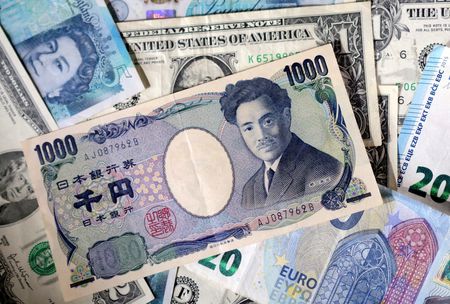

The Japanese yen approached the critical 160-per-dollar level on Friday, prompting stern warnings from officials, while the dollar maintained strength ahead of important U.S. jobs data and Middle Eastern conflicts supported safe-haven currency demand.
Diplomatic efforts between the U.S. and Iran remain deadlocked, and renewed conflict this week has pushed oil prices above $90 per barrel, creating concerns about global economic growth.
Japan’s currency was heading toward its fourth consecutive weekly decline versus the dollar, reversing earlier gains from government intervention in late April and early May. By Friday’s close, the yen was approaching the 160-per-dollar threshold that has previously triggered official action, leading Finance Minister Satsuki Katayama to issue another warning that Japan stands prepared to act at any moment and maintains the authority to take “decisive action” against extreme market swings. The currency traded at 159.93 per dollar.
“Markets are probably a bit reluctant to try to test the BOJ too much” before the U.S. nonfarm payrolls report later Friday, given that officials have demonstrated renewed readiness to step in, according to Khoon Goh, head of Asia research at ANZ.
Even with intervention risks present, traders have established their most significant negative yen positions since July 2024 in recent weeks. Absent substantial changes in Japan’s interest rate and economic growth prospects, market watchers believe there’s limited reason to reverse those bets, currently valued at approximately $9 billion based on LSEG information.
Japan’s central bank is broadly anticipated to increase interest rates this month, as higher energy import expenses contribute to inflationary pressures. Financial markets also indicate a potential second rate increase before year’s end.
The dollar emerged as the week’s strongest performer in currency markets, climbing roughly 0.4% against a collection of major currencies and approximately 1.3% during the past month. It has benefited from robust U.S. economic indicators, anticipation of Federal Reserve rate increases, and safe-haven buying amid worries about elevated energy costs affecting importing nations like the euro zone, Japan and China.
The U.S. economic surprise index from Citi reached a three-year peak as employment, consumer spending and business activity figures exceeded predictions, rekindling the “American exceptionalism” theme. U.S. 10-year Treasury yields have climbed 50 basis points since the Iran conflict began, outpacing other major economies except Britain where yields increased 66 basis points.
“The U.S. is still providing positive economic surprises … with two-year yields north of 4%, you end up with a scenario where suddenly the conditions for the dollar remain reasonably supportive. And conversely, from a euro perspective, the perpetuation of elevated energy prices remains a drag on activity there,” said Jeremy Stretch, CIBC Capital Markets head of G10 FX.
The euro, which dropped 1% over the past month despite projections of up to three European Central Bank rate hikes this year, rose 0.2% Friday to $1.1634. The pound increased slightly to $1.345.
Financial markets now focus on U.S. nonfarm payrolls data scheduled for later in the day. A Reuters survey predicted an 85,000 job increase in May following April’s 115,000 gain, with unemployment expected to hold steady at 4.3%.