
Economic conditions, rising prices, and their potential effects on American families took center stage during the previous week. Visits to supermarkets and fuel stations have become more expensive compared to last year, with increasing costs affecting choices made by both families and companies.
Below is an overview of significant economic information and developments from the past week and their possible implications for consumers.
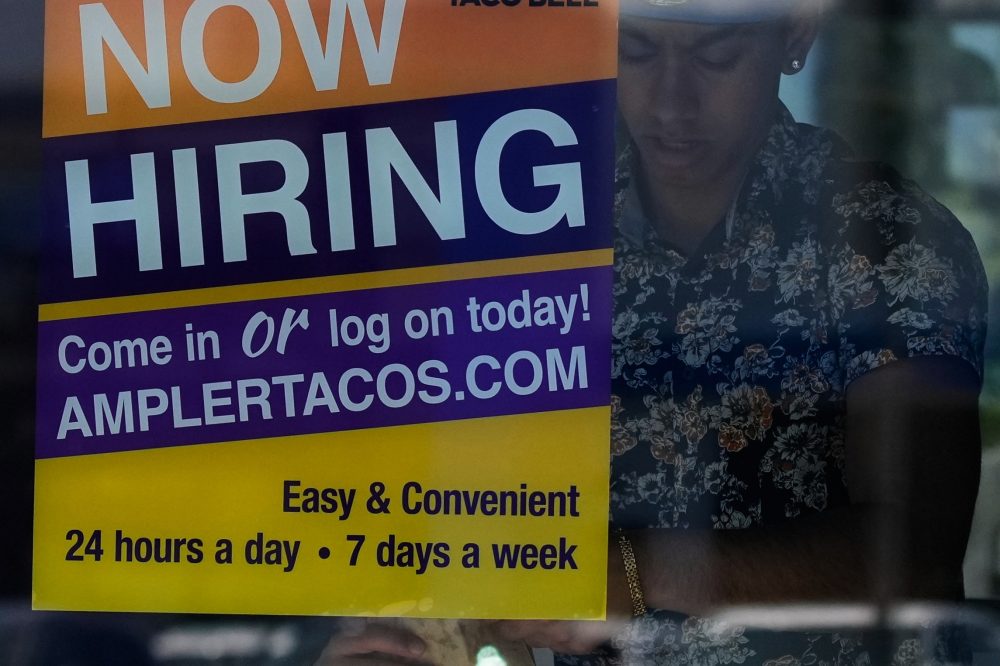
American companies hired an unexpected 172,000 workers in May while the employment sector demonstrated continued strength despite increasing expenses from the Iran war.
Friday’s report from the Labor Department showed employment growth decreased modestly last month compared to a revised figure of 179,000 in April. The jobless rate remained at a low 4.3%.
Employment has recovered this year following a difficult 2025, displaying surprising durability amid economic uncertainty and severely elevated energy costs resulting from the Iran war.
The jobless rate held at a low 4.3% during May.
Available positions in the U.S. increased during April, suggesting to some degree that Americans became more confident about quitting their current employment to seek better compensation elsewhere.
American companies advertised 7.6 million open positions in April, according to Tuesday’s Labor Department announcement, rising from 6.9 million in March and representing the highest figure since May 2024. Economic analysts had predicted only 6.8 million openings.
The department’s Job Openings and Labor Turnover Survey (JOLTS) revealed that workforce reductions decreased while the count of Americans leaving their positions voluntarily also declined. The report’s measurement of total hiring also fell in April, indicating that businesses are avoiding significant layoffs but also not pursuing aggressive recruitment.
Americans applying for unemployment assistance reached their peak level in four months during the previous week, although weekly employment statistics can experience significant fluctuations.
U.S. unemployment benefit applications for the week concluding May 30 rose by 13,000 to 225,000, the Labor Department announced Thursday. This represents the highest total since early February, prior to U.S. and Israeli military actions against Iran, though it remains at a historically low point. Experts polled by FactSet anticipated 211,000 new claims.
Weekly unemployment benefit filings serve as an indicator for U.S. workforce reductions and provide nearly immediate insight into employment market conditions.
The standard long-term U.S. home loan rate decreased this week from its peak level in nine months, offering some relief for potential home purchasers.
The standard 30-year fixed rate mortgage dropped to 6.48% from 6.53% the previous week, according to Thursday’s announcement from mortgage purchaser Freddie Mac. The current rate stays below 6.85%, last year’s level, but represents double the pandemic-era rates.
Declining mortgage rates provide home purchasers with increased buying capacity.
Rates have generally moved upward since the conflict with Iran started, interfering with oil tanker movement from the Persian Gulf to global customers. This disruption has driven oil prices significantly higher, serving as a major inflation factor.
Stock markets concluded the week with declines on Friday as major technology corporations experienced sell-offs and pulled down the overall market.
Simultaneously, bond yields increased as positive employment data continued reducing expectations that the Federal Reserve would lower its primary interest rate this year.
Nvidia and Broadcom posted losses. These companies were among the largest negative influences on the broader market, offsetting wider gains. More securities increased than decreased within the S&P 500. Many larger technology stocks have experienced dramatic value increases and can significantly impact the overall market.