
The Federal Reserve’s diminishing worries about employment, which earlier this year drove many officials to support lowering interest rates, face a crucial test Friday when new employment figures are released. The data will also set the stage for Kevin Warsh’s first policy discussions as the new leader of the nation’s central bank.
Reuters polling shows economists anticipate employers added 85,000 positions in May, down from April’s surprisingly robust increase of 115,000 but sufficient to maintain the jobless rate at 4.3%.
Following a monthly average of less than 10,000 new positions throughout 2025, with hiring hampered by uncertainty surrounding import tariffs, the Trump administration’s immigration enforcement and economic prospects, job creation during 2026’s initial four months has averaged 76,000. While this would have represented weak performance in previous years, given the immigration policy changes, it has maintained relatively stable unemployment levels.
This performance has also shifted interest rate expectations away from additional reductions, with influential policymakers like Fed Governor Christopher Waller indicating they now view the employment situation as largely steady and consider fighting stubbornly high inflation the Fed’s primary focus – a perspective that may represent the majority position as Warsh leads his first policy session on June 16-17.
“I can no longer rule out rate hikes further down the road if inflation does not abate soon,” Waller stated in remarks last month that marked a decisive move away from employment concerns that had led him to support rate reductions in 2025 and advocate for them through early this year when he was also being considered for Fed leadership. “Recent jobs data show that the labor market appears to be stabilizing and the unemployment rate is fairly low and stable.”
This reasoning has gained traction among Fed policymakers recently. Without a significant negative development in Friday’s employment report or inflation figures due June 10, Warsh may confront a challenging decision in two weeks.
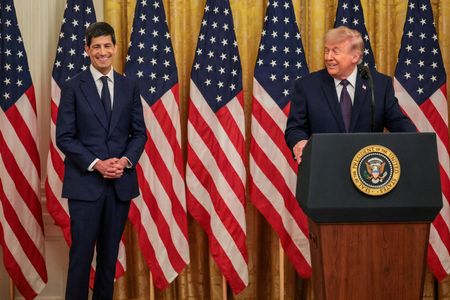
Warsh, who succeeded former Fed Chair Jerome Powell in mid-May, contended during his nomination process by President Donald Trump that interest rates could decline because the president’s policies and artificial intelligence expansion would generate higher productivity and accelerated growth while slowing inflation.
Current data trends differently, with inflation appearing stuck one percentage point or more above the Fed’s 2% goal and heading toward a sixth consecutive year exceeding that benchmark. The persistence of these price pressures has made Warsh’s colleagues increasingly concerned about potential damage to the central bank’s credibility.
External observers also anticipate elevated inflation continuing longer. The International Monetary Fund now projects inflation won’t reach the Fed’s 2% target until late 2027 rather than mid-next year due to effects from the U.S.-backed conflict with Iran.
“So we’ve now delayed a bit further the return to target,” IMF spokesperson Julie Kozack stated Thursday. “We do see sort of upside risk to inflation, and that it implies that the Fed’s policy actions will need to proceed with caution and will need to be carefully calibrated to incoming data.”
Three Fed policymakers opposed the April 28-29 meeting outcome, favoring a shift toward a more aggressive stance that would enable rate increases rather than suggesting cuts as the next likely move. Waller has indicated he now supports this approach and other policymakers have spoken more openly about potentially tightening policy – contrary to Trump’s expectations that rates will fall under Warsh.
Market participants expect a rate increase by early next year, with roughly even odds the Fed will act at its December 8-9 meeting, according to CME Group’s FedWatch tool.
Comments by Fed officials before this month’s meeting stressed “a reduced focus on labor market risks and a much heavier emphasis on inflation,” with rate increases likely later this year even if inflation simply holds at current levels, Stephen Brown, chief North America economist for Capital Economics, wrote in analysis. “For Warsh in particular, it remains to be seen whether he will adopt a less dovish tone than was the case when he was seeking the nomination.”
The situation is delicate given Trump’s expectations, pressure from some of Warsh’s colleagues for tougher monetary policy, and November’s U.S. midterm elections that may depend on economic conditions.
Some current inflation stems from the Iran conflict, now in its fourth month and causing an oil shock that continues affecting the economy. Benchmark crude prices have declined recently, but traffic through the vital Strait of Hormuz near Iran remains disrupted and a conflict resolution has not been achieved.
In economic analysis from the Fed’s 12 regional districts released Wednesday, business and community contacts described the lasting impact of surging oil prices that appears to have encouraged other price increases as executives transfer higher costs for items like fertilizer, shipping, and metals to consumers.
Employment appeared stable even as companies maintained a cautious “low-hire, low-fire” approach.
“The big question now is do we stay patient?” Kansas City Fed President Jeffrey Schmid asked Thursday at an economic forum in Oklahoma. “Our inflation numbers have probably crept up into the 3.50% range, which nobody likes. Is it temporary … Or do we act? Do we say, ‘okay, now it’s time to raise rates a quarter (of a percentage point) or two and see if we can’t tamp this thing down?’”