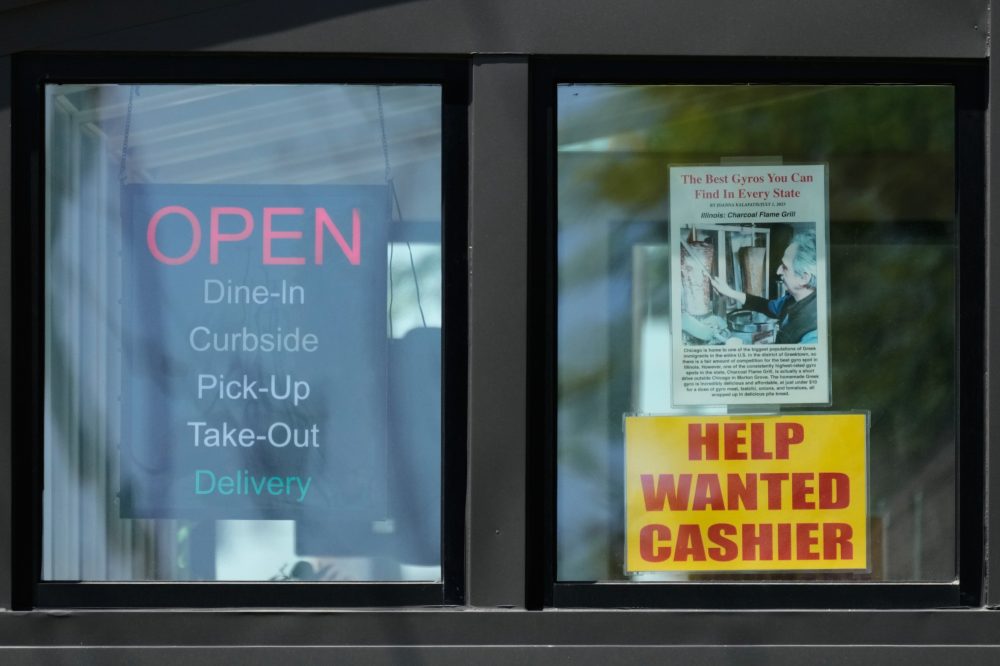

WASHINGTON — Weekly unemployment benefit applications across the United States climbed to their highest point in four months, though job cuts continue to stay at historically low levels amid economic turbulence linked to the ongoing conflict in Iran.
Applications for unemployment assistance rose by 13,000 to reach 225,000 for the week that concluded May 30, according to Thursday’s Labor Department data. This marks the peak level since early February, prior to when the U.S. and Israel began military operations against Iran, yet remains at a historically modest figure. Financial experts polled by FactSet had anticipated 211,000 new claims.
These weekly unemployment benefit requests serve as a gauge for layoffs across the nation and provide nearly immediate insight into job market conditions.
Even with job cuts staying historically minimal, the employment landscape appears stuck in what economic experts describe as a “low-hire, low-fire” situation. This dynamic has maintained unemployment at 4.3%, though it has created challenges for jobless individuals seeking new positions.
While American companies added an unexpected 115,000 positions in April, the Iran conflict has created significant uncertainty regarding the overall U.S. economic outlook and employment conditions.
The Strait of Hormuz, a critical passage for one-fifth of global oil transport, continues to be blocked. Oil costs have surged approximately 50% since the conflict started in late February, pushing average U.S. gasoline prices to $4.24 per gallon from under $3 in late February. Beyond impacting household budgets, these elevated costs can discourage business hiring decisions.
Government statistics revealed that consumer-level inflation climbed 3.8% from April 2025, representing the largest increase in three years. Food costs have also risen, though analysts suggest they may not yet completely reflect increased energy expenses from the Iran conflict.
A separate analysis indicated wholesale prices jumped 6% year-over-year, hitting the highest level in over three years.
These developments occur while U.S. inflation already exceeds the Federal Reserve’s 2% goal. The Fed chose to maintain its benchmark rate unchanged during its most recent session, pointing to economic uncertainty from Middle Eastern instability and persistent inflation. Most financial analysts don’t anticipate Fed rate reductions in the near future.
Reduced interest rates could stimulate economic growth and job creation, but they typically fuel inflation, prompting several Fed officials to indicate they would consider raising rates this year.
Additionally, the current artificial intelligence surge and necessary investment for its advancement could transform or eliminate certain positions.
Companies that have recently implemented workforce reductions include Verizon, UPS, Amazon, Disney, Starbucks and Walmart.
Weekly unemployment benefit requests have remained stable within a 200,000 to 250,000 range since the U.S. economy recovered from the pandemic downturn. Nevertheless, hiring activity started declining approximately two years ago and decreased further in 2025 due to President Donald Trump’s unpredictable tariff implementations, federal workforce reductions and continuing effects of elevated interest rates designed to manage inflation.
Companies created fewer than 200,000 positions last year, compared to roughly 1.5 million in 2024, based on FactSet data.
The government will release its May employment report on Friday.
Thursday’s Labor Department findings showed the four-week rolling average of unemployment claims, which smooths weekly fluctuations, increased by 6,500 to 214,750.
The overall count of Americans seeking unemployment benefits for the prior week ending May 23 decreased by 8,000 to 1.78 million, matching analyst predictions.