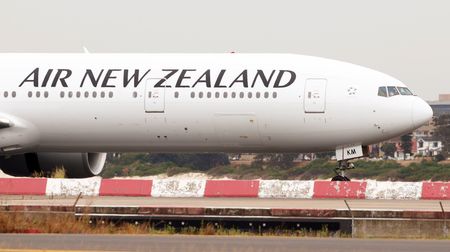

Air New Zealand’s leadership revealed Saturday that the carrier has managed to counteract just one-quarter to two-fifths of the financial impact from rising fuel expenses through protective hedging strategies and ticket price adjustments, according to Chief Executive Nikhil Ravishankar speaking with Reuters.
During the International Air Transport Association’s yearly conference in Rio de Janeiro, Ravishankar indicated the airline is preparing for jet fuel costs around $150 per barrel based on Singapore Jet Index pricing through the company’s 2027 fiscal year. While fuel availability isn’t an issue for the carrier, he emphasized that price volatility continues to be their primary obstacle.
The company has already implemented two separate rounds of ticket price increases and may consider additional targeted fare adjustments in markets where passenger demand stays strong, according to Ravishankar.
“You can’t just infinitely keep raising prices. The market will respond and demand will soften and then you fly less,” he said in an interview.
The chief executive stated that Air New Zealand doesn’t anticipate needing to seek additional funding from financial markets, noting that the company’s financial position and collection of debt-free aircraft provide sufficient resources to weather prolonged periods of high fuel costs.
Should fuel expenses remain at current levels, the airline would employ a mix of expense reductions, vendor contract renegotiations, fare adjustments and flight schedule cuts, he explained.
The carrier is also working to recover from mechanical issues with engines and delayed aircraft deliveries that previously left up to 20% of its planes unable to fly. Ravishankar reported this figure has dropped below 5%, with the majority of aircraft anticipated to return to service within the coming two to three months.
While financial settlements from Boeing, Rolls-Royce and Pratt & Whitney have provided some relief, he noted these payments have only partially covered the economic losses sustained.