Fast-fashion powerhouse Shein has finally received Beijing’s blessing to move forward with a stock market listing in Hong Kong, according to a notice posted Friday on the website of China’s top securities regulator, the China Securities Regulatory Commission (CSRC). The approval clears the path for a public offering that previously fell through in both the United States and the United Kingdom.
A spokesperson for Shein declined to comment on the regulatory green light.
The online clothing retailer spent roughly a year waiting for Beijing’s approval — a process that required sign-off from the highest levels of China’s ruling Communist Party, according to a source with direct knowledge of the situation.
That source indicated Beijing has treated Shein as politically sensitive, citing concerns that the company could cause further embarrassment for China following a scandal in France involving a sex doll and widespread reports of poor working conditions at its supplier factories in China.
VALUATION NOW EXPECTED BETWEEN $40 BILLION AND $50 BILLION
At its peak in 2022, Shein carried a valuation of up to $100 billion. That figure was later scaled back as the pandemic-era surge in online shopping cooled and opposition from politicians, retailers, and regulators grew stronger. The company’s most recent private fundraising round, completed in May 2023, placed its value at $66 billion.
The source said Shein is now likely aiming for a valuation of $40 billion to $50 billion through its Hong Kong IPO. While that would be significantly smaller than its chief rival — Temu’s parent company PDD Holdings, which carries a market capitalization of $117 billion — it would still be roughly double the size of Swedish fast-fashion chain H&M, which is valued at around $24 billion and has lost ground to Shein in recent years.
FAILED ATTEMPTS IN NEW YORK AND LONDON
Shein was founded in 2012 by Chinese-born entrepreneur Sky Xu and originally based in Nanjing, China. The company, which now operates out of Singapore after relocating its headquarters there in 2022, sells items like $5 dresses and $10 jeans in roughly 150 countries worldwide.
Shein first attempted a U.S. stock market listing in November 2023, but that effort stalled in the face of mounting resistance from American lawmakers and regulators. The company then pivoted to London, where British financial regulators approved a draft prospectus — but the CSRC withheld its approval, blocking that path as well.
Shein’s lengthy struggle to go public reflects how geopolitical tensions have complicated the road for Chinese companies seeking international investment. It also illustrates how Beijing has tightened its oversight of major entrepreneurs since it abruptly halted the IPO of Jack Ma’s Ant Group at the last moment in 2020.
Rules adopted by the CSRC in 2023 gave the agency authority to review and block overseas stock listings that it determines could threaten China’s national interests. Even though Shein moved its headquarters to Singapore, it remained subject to those rules because the vast majority of its products are manufactured through a network of third-party suppliers based in China.
CONTROVERSIES OVER LABOR AND TRADE PRACTICES
Shein has faced criticism on multiple fronts. Competitors, regulators, and advocacy groups have raised concerns about its highly addictive app, labor conditions in its supply chain factories, and the environmental impact of shipping low-cost garments around the world by air.
Its business model — sourcing clothing in China and delivering it by air directly to customers’ doors — has also come under pressure as both the U.S. and European governments have moved to close customs loopholes and impose duties on inexpensive imported packages.
A successful Hong Kong listing would be a significant boost for the city, which has emerged as one of the world’s leading IPO destinations this year. Over the past 12 months, the CSRC has approved more than 180 other public offerings, according to public disclosures, helping fuel a surge in Hong Kong’s equity markets.
British pharmaceutical company GSK announced Friday that an experimental drug it is developing for patients with advanced or relapsed small-cell lung cancer has delivered promising results in a late-stage clinical study.
The drug, called Ris-Rez, which GSK obtained through a licensing agreement with China’s Hansoh Pharma covering markets outside that country, demonstrated what the company described as “statistically significant and clinically meaningful” improvements in overall survival when compared to standard treatment options.
Ris-Rez is an antibody-drug conjugate, meaning it is designed to deliver treatment directly to cancer cells by targeting a specific protein called B7H3 found on those cells. Beyond small-cell lung cancer, the drug is also being developed to treat other types of tumors, including prostate cancer.
This is not the first time GSK has highlighted promising cancer therapies from its partnership with Hansoh. Back in April, the company said another experimental targeted cancer drug, known as Mo-rez and also licensed from Hansoh, has the potential to become a blockbuster treatment.
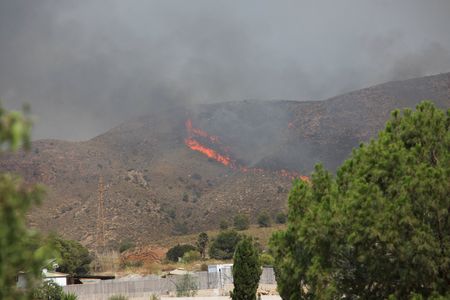
MADRID — Firefighters in southern Spain continued battling one of the country’s deadliest wildfires on Friday, with at least 11 people confirmed dead and 19 others still unaccounted for. The fire swept through rural villages in the Andalusia region near Los Gallardos, sending terrified residents scrambling for any escape route they could find.
As smoke filled the air and flames closed in on their homes, many residents chose to flee — and for some, that decision proved fatal. Officials had instructed residents in certain mountain areas above Los Gallardos to leave via a designated evacuation route, while those in the forested hamlet of Bedar were told to stay inside their homes.
But as the fire moved in fast, some residents in Bedar found it impossible to remain. Antonio Rubio, a handyman who lives there, described leaving on his own initiative Thursday afternoon. “We left the house yesterday afternoon at 5 o’clock. The fire didn’t reach my house — it stopped just short of it — but we could already see so much smoke, even though the fire was some distance away, so we had to leave,” he said. “We did so of our own accord.”
A British woman named Sonia, who lives in Los Gallardos and chose not to share her last name, said she had taken in relatives after authorities told them to evacuate at 7 p.m. local time. She explained that residents were directed away from the main road out of Bedar and instead sent on a back route higher into the mountains before looping toward the coast.
“There are many houses in the middle of the countryside in the mountains, so people would take whichever roads they could,” she said. “The road from Bédar to Los Gallardos was blocked, since the fire had crossed the road and it was impassable.”
Antonio Sanz, who oversees emergency response for the Andalusia region, said residents in Bedar had been given two options: follow the designated evacuation route or remain sheltered in their homes given how close the fire was. He confirmed that some chose a different path — one that proved deadly.
“In situations like this, it is essential that we all follow the routes indicated,” Sanz said. “Unfortunately in this instance a decision was taken to use another route that wasn’t the one recommended for evacuation. Looking for another way out via a dry riverbed turned out to be a trap.”
Sanz said four people — believed to be British based on the right-hand placement of the steering wheel in their car — were found dead inside a single vehicle. Seven additional victims were discovered after apparently getting out of their cars and trying to flee on foot. Of the total confirmed dead, ten appeared to be foreign nationals and one was identified as Spanish.
“The village of Bedar in the end wasn’t affected by the flames in most cases, so that order to shelter in place avoided a more serious situation,” Sanz added.
As officials worked through the early morning hours Friday to identify the dead and locate the missing, worried family members from across the globe turned to social media and local online forums for information. One woman posting from the United States said her brother was among a group of ten people who attempted to escape through a valley near a stream. She shared GPS coordinates and pleaded with emergency responders to search the area.
Regional President Juanma Moreno acknowledged that the impulse to run is a natural human reaction. “When many people see a fire, the first thing they do is run away, don’t they? And of course, they think they know the routes but if they don’t have the right information, those routes can of course turn into a death trap,” he said.
Drivers heading northbound on Whiteleysburg Road should expect a lane restriction due to ongoing construction work in the area.
The right lane on Whiteleysburg Road (Road 59) northbound is currently closed between Vernon Road and Fox Hunters Road. The closure is expected to remain in place until 5 PM.
Motorists traveling through the area are encouraged to allow extra travel time or seek an alternate route to avoid potential delays.
Hastings Farm Road is closed in both directions between Concord Pond Road and Coverdale Road following a crash, according to traffic officials.
Motorists traveling in the area are advised to avoid Hastings Farm Road and plan for alternate routes until the roadway is reopened.
No additional details about the crash or an estimated reopening time have been provided at this time. Drivers should use caution in the surrounding area.
China declared a temporary ban on helium exports Friday, taking effect immediately, as renewed military fighting in the Middle East raises fears of fresh shortages of the gas that plays a vital role in computer chip production.
Conflict earlier this year between the U.S. and Israel against Iran triggered helium shortages that disrupted companies around the world, including those in China, where the artificial intelligence sector increasingly depends on domestically produced chips to train and operate AI systems. Helium plays a key role in managing heat during the semiconductor manufacturing process.
The helium export restriction is the latest move by Beijing to protect its own supplies of critical materials by limiting what leaves the country. China has previously taken similar steps with fuel, fertilizers, and sulfuric acid.
China is also working to expand its domestic chip-making capacity and reduce its reliance on advanced Nvidia semiconductors, which are subject to U.S. export controls.
While China has been working to grow its own helium production, it still relies heavily on imports from abroad. Analysts estimate that China sources roughly 85% or more of its helium needs from other countries. Qatar supplies a large portion of global helium output and has provided more than half of China’s imports in recent years.
The export ban could put additional pressure on global helium availability. Chinese companies have increasingly served as middlemen, buying Russian helium and reselling portions of it to markets overseas, including in Europe.
Helium is drawn from natural gas fields that contain unusually high concentrations of the gas and cannot be quickly produced through other industrial methods. In chip manufacturing, it is used in a range of processes including wafer cooling, plasma etching, chemical vapor deposition, atomic layer deposition, lithography support, and leak detection.
PARIS — The French presidency announced Friday that NATO Secretary General Mark Rutte and Ukrainian President Volodymyr Zelenskiy will both be present at Monday’s “Coalition of the Willing” gathering in Paris, a meeting designed to reinforce international backing for Ukraine.
The session is intended to build on the progress made at the NATO summit held earlier this week. According to the Elysee, discussions are still ongoing regarding security guarantees that would take effect once a ceasefire between Ukraine and Russia is established.
U.S. President Donald Trump has recently signaled a more supportive position toward Kyiv in its ongoing conflict with Russia, a shift that was evident at both the recent G7 and NATO summits.
The Elysee also confirmed that two additional nations — Moldova and North Macedonia — have now joined the coalition. European Union leaders Ursula von der Leyen and Antonio Costa are also expected to be in attendance at Monday’s meeting.
Eastbound travelers on Clay Road are facing intermittent lane closures between McNicol Road and Marsh Road due to active construction work in the area.
The lane restriction is expected to remain in place until 5 PM. Drivers are encouraged to allow extra travel time or consider alternate routes to avoid potential delays.
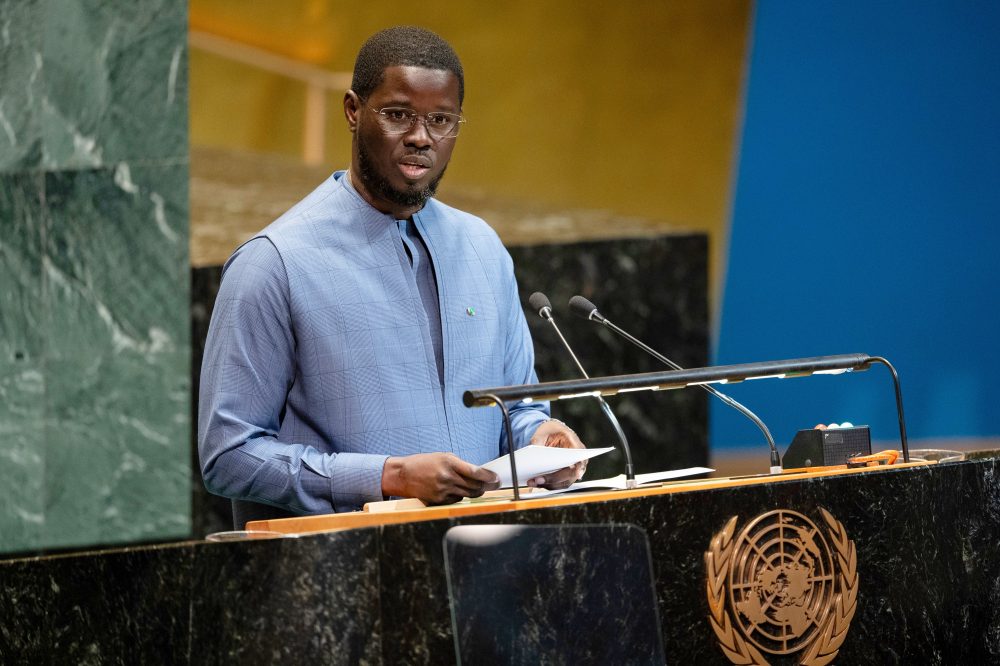
DAKAR, Senegal — Senegal’s highest judicial body has struck down a proposed constitutional amendment that would have expanded the role of parliament while limiting the powers of the country’s president.
The legislation had been approved last month, and the government indicated it would be put to a public vote. However, President Bassirou Diomaye Faye challenged whether the process was legally sound and asked the Constitutional Council to conduct an emergency review.
On Thursday evening, the council determined the law was unconstitutional, effectively killing what had been a central goal of the parliamentary majority.
The dispute over rewriting the constitution is unfolding against a backdrop of rising political friction between President Faye and his former prime minister, Ousmane Sonko. Sonko was removed from the prime minister’s post and subsequently elected as president of the National Assembly earlier this year. The political partnership that had carried both men to power in March 2024 has since fallen apart. A new prime minister has been named, and a new government is expected to be formed.
Critics in the opposition see the amendment push — put forward by Pastef, the party led by Sonko — as a political maneuver by the former prime minister, who continues to hold considerable sway over the parliamentary majority.
The proposed changes would have given parliament greater authority, replaced the Constitutional Council with a newly created Constitutional Court, and placed tighter restrictions on the president’s ability to dissolve the National Assembly.
Sonko responded positively to the council’s ruling, acknowledging it as final and binding. “This cycle reminds us that in a democracy, when institutions play their role, each within its sphere of influence, no crisis can arise,” he said.
Drivers heading eastbound on Clay Road should be aware of a temporary lane restriction currently in place between McNicol Road and Marsh Road.
According to traffic officials, the intermittent lane closure is the result of active construction in the area. The restriction is expected to remain in effect until 5 PM.
Motorists traveling through the affected stretch are encouraged to allow extra travel time or consider alternate routes to avoid potential delays.
A key federal planning body has moved ahead with early approval of plans for a proposed arch backed by President Trump, even after hours of criticism from the public.
The National Capital Planning Commission voted to advance preliminary site and building plans for the project, though commissioners made clear they are not finished with their review. The panel indicated it wants additional details addressed before what could be its final evaluation, currently anticipated to take place in September.
The decision came despite considerable pushback during the public comment period, which stretched on for hours before the commission reached its decision.
Motorists heading eastbound on Clay Road should plan for delays due to an intermittent lane closure currently in effect between McNicol Road and Marsh Road.
The lane restriction is the result of ongoing construction activity in the area. Drivers are advised to use caution and allow extra travel time when passing through the affected stretch of roadway.
The closure is expected to remain in place until 5 PM. No further details regarding the nature of the construction were provided.
Motorists in the area should be aware of an intermittent lane closure currently affecting Alley Corner Road between Underwood Corner Road and Wheatleys Pond Road.
The closure is the result of construction activity in the area. Drivers can expect periodic disruptions to traffic flow as work continues.
The lane restriction is expected to remain in place until 5 PM. Travelers are encouraged to plan accordingly and allow extra time if using this route.
BERLIN (AP) — Volkswagen released disappointing sales figures on Friday, one day after the major German automaker unveiled a sweeping restructuring plan that includes cutting its vehicle model lineup by nearly half amid a sharp decline in sales, especially in China.
The company, headquartered in Wolfsburg, Germany, reported that group-wide sales dropped 8.6% during the second quarter to just under 2.1 million vehicles. Sales in China alone collapsed by more than one-third during that period.
Following a board meeting on Thursday, Volkswagen announced that its ongoing “fundamental realignment” — now in its third year — had entered a new phase. The automaker said it intends to simplify its model offerings by up to 50%, though no specific details were provided.
CEO Oliver Blume outlined a strategy aimed at making the company faster and more competitive. His plan focuses on reducing complexity, honing in on key technologies, better coordinating across regional markets, and cutting excess production capacity. Blume pointed to an “increasingly demanding environment” as the driving force behind the changes.
Looking at individual brands, the core Volkswagen nameplate delivered just over 1 million vehicles in the second quarter — a 14% decline compared to the same period last year. Audi deliveries fell 8%, while Porsche saw an even steeper drop of 18%.
Not all brands struggled, however. Lamborghini, Skoda, and the company’s trucks division all reported sales increases. Sales also grew in both the Americas and Europe.
Volkswagen pointed to a turbulent year marked by geopolitical tensions, higher costs driven largely by tariffs, tighter regulatory requirements, and intensifying competition as factors weighing on its performance.
As recently as December, the automaker had been making major bets on the Chinese market, where electric vehicles have been rapidly gaining ground and competition has grown fierce.
Research firm BernsteinSG responded to Thursday’s announcement with skepticism. “VW stated that it is extending its technology leadership, a claim that will likely raise eyebrows given the pace of innovation among its Chinese competitors,” the firm wrote in a note.
Also on Thursday, hundreds of workers staged a protest outside Volkswagen’s plant in Zwickau, demanding job protections and pushing back against plans to shut down the facility. The factory had already fully transitioned to producing electric vehicles.
WASHINGTON (AP) — Back in December, after Make America Healthy Again activists drafted a petition calling for his removal, EPA administrator Lee Zeldin made a pledge: his agency would release a formal MAHA agenda outlining specific priorities, including protections from harmful chemicals and other public health concerns.
Eight months have passed since that first promise, and despite repeated assurances that the document was being drafted, no such agenda has been released. When reporters asked for an update this week, an EPA spokesperson said MAHA is an ongoing effort — not a single report.
That apparent reversal is the latest in a string of letdowns for supporters of Health Secretary Robert F. Kennedy Jr.’s MAHA movement. Many say they’ve lost confidence that the Trump administration will take meaningful action on pesticides, chemicals, or other issues they believe are driving America’s chronic disease crisis. The situation also highlights how the EPA has continued rolling back environmental regulations even as pressure mounts from a voting bloc that helped put President Donald Trump back in the White House.
“I had really hoped that there would be specific steps that were taken through a MAHA agenda,” said activist Kelly Ryerson, who runs the social media account “Glyphosate Girl,” which focuses on nontoxic food systems. “We haven’t had any of the wins that we were requesting.”
A broad and diverse group of MAHA supporters — whom Trump has credited with helping him reclaim the presidency — say they intend to vote based on issues rather than party in November’s congressional elections, adding political weight to their growing public clashes with the Republican administration.
“People are done with the profits of corporations being prioritized over public health,” said Alexandra Muñoz, a molecular toxicologist who works alongside activists on certain issues. “And I think that will have an important role in the midterms.”
The EPA under Zeldin — which he frequently refers to as “Trump’s EPA” — has aggressively pursued deregulation. Earlier this year, Zeldin proposed overturning the longstanding finding that climate change poses a threat to human health. He moved to dismantle dozens of environmental rules in what he called “the greatest day of deregulation our nation has seen,” froze billions in clean energy funding, and disrupted agency research operations.
The agency has also been working to ease restrictions on pollution from smokestacks, vehicle exhaust, and oil and gas producers during Trump’s second term.
At the same time, Zeldin has pointed to what he calls multiple “MAHA wins” — though activists dispute many of them. As one example, he announced the agency plans to regulate certain chemicals known as phthalates for environmental and workplace risks, but the announcement did not address the thousands of consumer products that contain those chemicals.
This week, the EPA walked back earlier statements that a MAHA report was in its “final stages,” telling the Associated Press via email that the agency’s actions should speak for themselves.
“The notion that MAHA is a single document waiting to be unveiled fundamentally misrepresents how we operate,” an agency spokesperson said, adding that work on MAHA priorities is “active and expanding every day.”
Ryerson and fellow MAHA activists say they have engaged directly with agency officials and occasionally made headway. Her network of farmers, for instance, worked with the administration on a recent executive order aimed at advancing regenerative agriculture. But she said the EPA then used that same order to justify new proposed uses for various herbicides — a move she described as “a slap in the face.”
That same week, the Supreme Court handed MAHA supporters another setback, ruling in favor of pesticide manufacturer Bayer in a case involving its legal liability for alleged health harm caused by its Roundup weedkiller. The Trump administration had sided with the company.
Environmental advocates say the rise of Kennedy and the MAHA movement has had a ripple effect across the administration, bringing greater public attention to pesticide concerns — and raising expectations for action.
“If RFK and the MAHA movement hadn’t put that issue in the center of the public spotlight, no one would be scrutinizing this nearly as closely,” said Sarah Starman, a senior food and agriculture campaigner at the nonprofit Friends of the Earth.
In a high-profile move seen partly as an outreach to MAHA supporters, Zeldin added microplastics and pharmaceuticals in April to a list of contaminants that could potentially be regulated under the Safe Drinking Water Act. Activists had spent months pushing the EPA to crack down on microplastics and other environmental contaminants.
But in a reversal at the end of June, the EPA excluded microplastics and pharmaceuticals from a list of chemicals it plans to test for under a mandatory program designed to identify concerning substances in drinking water that may be harming public health.
That reversal made the EPA’s earlier public health commitments “functionally toothless,” according to Betsy Southerland, a former senior official in the EPA’s water office.
Zeldin posted on social media that “the technology to test and treat for microplastics in drinking water is still in development.” The EPA stated in a Federal Register notice that it was “not feasible to develop a drinking water analytical method within the statutory timeframe.”
Southerland called the situation a “classic Zeldin bait-and-switch,” saying that after making “a big splash in the press” on microplastics, “EPA has quietly stalled that momentum.”
A White House Make America Healthy Again Report, released a few months into Trump’s second term, identified long-term exposure to environmental chemicals — including those commonly found in plastics — as a leading contributor to chronic disease in children.
Jeremy Symons, a senior adviser at the Environmental Protection Network — a group made up of former EPA employees and political appointees critical of the Trump administration — said Zeldin “pays lip service to MAHA, but sadly he is actually making Americans less safe from toxic chemicals.”
While MAHA advocates have tried to influence the EPA, industry lobbyists have also made significant inroads at the agency.
Kyle Kunkler, a former lobbyist for the soybean industry, now heads pesticide policy at the EPA. The agency recently approved continued use of dicamba, a weedkiller that has been linked to an increased risk of certain cancers.
Zen Honeycutt, a MAHA activist and founding executive director of Moms Across America, said the decision is “what happens when the EPA allows itself to be pressured by corporations and by business.”
The EPA also employs other former industry figures. Nancy Beck, previously an executive at the chemical lobbying group the American Chemistry Council, holds a top position in the EPA’s Office of Chemical Safety and Pollution Prevention. Lynn Dekleva, another former executive from the same council, serves as Beck’s deputy.
The EPA said Kunkler and other political appointees have consulted with agency ethics officials to address any potential conflicts of interest. A spokesperson said the MAHA movement has “driven this agency’s work since President Trump’s first day in office,” pointing to initiatives including $945 million in grants to help states and communities reduce PFAS — so-called “forever chemicals” — in drinking water, and identifying 30 drinking water contaminants proposed for nationwide monitoring.
But for Ryerson and others, the absence of a promised MAHA agenda looks like a deliberate strategy to sidestep accountability.
“It absolves them of any failures, especially when it comes to midterms,” Ryerson said. “They won’t have to point to some list that they haven’t been able to achieve really anything on.”
DUBAI, United Arab Emirates — A wave of unexplained, unclaimed airstrikes struck Iran following the U.S. military’s announcement that it had concluded its own campaign of attacks, raising fresh questions about who else may be taking aim at the Islamic Republic.
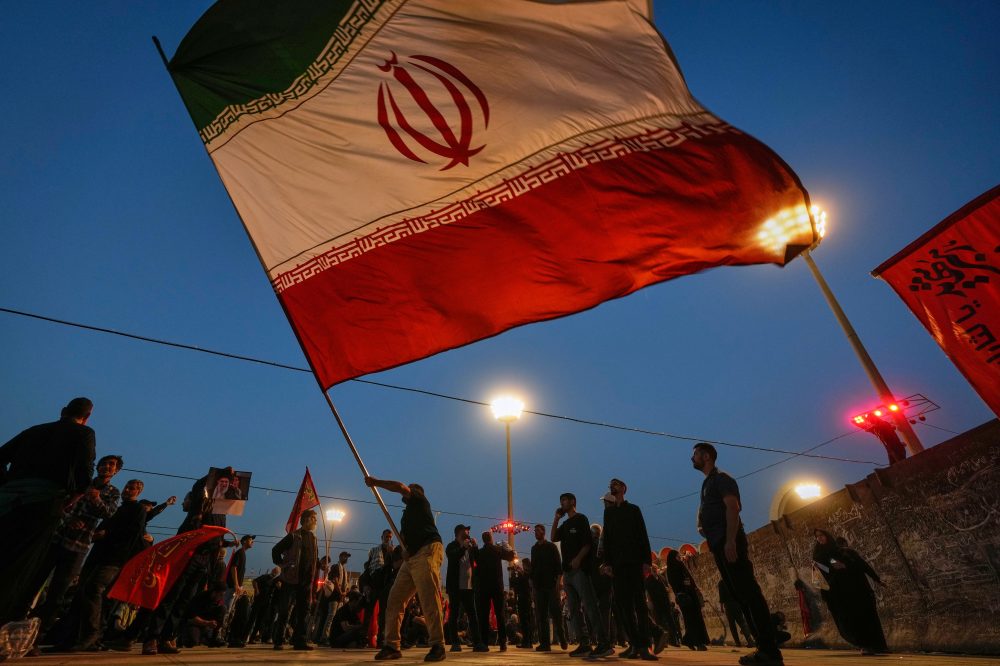
The strikes occurred on Thursday, at the very moment Iran was preparing to hold burial services for the late Supreme Leader Ayatollah Ali Khamenei. The explosions affected multiple locations across southern Iran. Iran’s government has stopped short of directly blaming any particular country, though one member of parliament issued a pointed warning to the United Arab Emirates, accusing it of secretly supporting the United States in its military campaign against Iran.
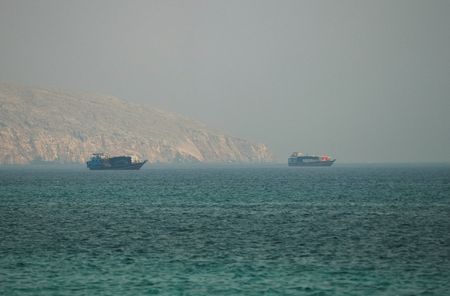
Gulf Arab nations, which have repeatedly been targeted by Iran since the conflict began on February 28, did not immediately respond when asked to comment on Friday about the strikes. Both those countries and the U.S. have been insisting that the Strait of Hormuz must remain open for international shipping. Iran, however, is demanding sole control over the strait — through which roughly one-fifth of the world’s oil and natural gas flows — and has called on vessels to begin paying fees to Tehran, despite the waterway being recognized internationally for decades as open to all.
Iran’s control over the strait during the conflict helped trigger a global energy crisis, though oil prices have fallen sharply from wartime peaks of $120 per barrel.
Israel, which participated in the war against Iran, has also not claimed responsibility for any recent strikes on Iranian territory.
The U.S. military’s Central Command announced around 6:30 a.m. local Iran time on Thursday that it had finished a round of strikes hitting approximately 90 targets. Shortly afterward, Iranian state media and news outlets reported additional explosions and airstrikes targeting the country’s Bushehr and Sistan and Baluchestan provinces, as well as the cities of Ahvaz and Chabahar, among other locations. Central Command did not respond to a request for comment about those additional strikes.
In response to Thursday’s attacks, Iran launched a broader round of retaliatory strikes across the Middle East, sending missiles toward Bahrain, Jordan, Kuwait, and Qatar. Air raid sirens sounded in all four countries, forcing residents to seek shelter. One person was reportedly injured in Kuwait as air defense systems worked to intercept incoming fire across the region.
The leader of the UAE, Sheikh Mohammed bin Zayed Al Nahyan, flew to Kuwait shortly after the Iranian attack to meet with that country’s ruling emir. Gulf Arab nations also held phone calls with Qatar’s foreign minister, who — along with Pakistan — has been playing a central role in mediating negotiations between Iran and the United States over the interim agreement currently in place to prevent a return to open warfare.
Officials say that during the Iran war, both Saudi Arabia and the UAE launched airstrikes against Iran after Tehran struck energy infrastructure inside their borders.
Israel, which under Prime Minister Benjamin Netanyahu has been engaged in an aggressive campaign against Iran, has not struck the Islamic Republic since June. Israel has also typically been quick to claim credit when it carries out attacks on Iran.
Israel’s government said Netanyahu spoke with Trump on Thursday evening, with Trump briefing Netanyahu “on American moves in the Gulf.”
Israel’s defense minister, Israel Katz, also renewed threats that his country was prepared to confront Iran if the situation demanded it. “The Israel military is on alert and ready to renew the campaign, to reestablish aerial superiority, and to carry out a blue-white (Israeli) strike in Iran to remove threats, even for a third time,” Katz said at a military ceremony. “If we will have to return, we will return with even greater force.”
On Friday, Iranian state media reported that Esmail Kousari — a member of the Iranian parliament’s national security committee and a former commander in the paramilitary Revolutionary Guard — warned that the UAE would “pay the price for its cooperation with the United States.” He accused the Emirates of playing a “behind-the-scenes” role in the recent U.S. strikes on Iran.
Throughout the conflict, Iran repeatedly accused Gulf Arab states of actively supporting the U.S. war effort — accusations those nations denied. The U.S. has maintained a significant military presence across Gulf Arab nations since the 1991 Gulf War, including in Bahrain, which serves as the headquarters for the U.S. Navy’s 5th Fleet.
Iran continues to insist it must have exclusive control of the Strait of Hormuz. Meanwhile, the U.S. is urging ships to take an alternate southern route through Oman’s territorial waters to steer clear of Iran. The Joint Maritime Information Center, a multinational body overseen by the U.S. Navy, issued a new advisory on Friday directing vessels to use that route. A similar advisory earlier in the week prompted an Iranian attack on Tuesday that resulted in three ships being struck.
“Notwithstanding recent unprovoked attacks on merchant vessels, mariners are reminded that the southern route of the (strait) has been expanded and remains available for all traffic,” the maritime center stated.
LONDON — The United Kingdom has formally identified Microsoft, Google, Amazon, and Oracle as critical third-party suppliers to its financial sector, placing all four tech giants under direct regulatory supervision for the first time.
The British government announced the designations on Friday, saying the step is intended to strengthen the financial industry’s ability to withstand major technology disruptions, including cyberattacks and service outages.
“As banks, insurers and financial market infrastructures become increasingly reliant on cloud services, disruption at a major supplier could affect multiple firms at the same time, potentially impacting services customers depend on,” the government said in a statement.
The specific entities designated are Microsoft Ireland Operations Ltd, Google Cloud EMEA Ltd, Amazon Web Services EMEA SARL, and Oracle Corporation UK Ltd. The designations officially take effect on July 13.
Going forward, the four companies will fall under the joint supervision of the Bank of England, the Prudential Regulation Authority, and the Financial Conduct Authority. Under the new framework, the firms will be required to conduct resilience testing, perform regular self-assessments, and report any significant incidents to regulators.
The UK’s approach differs from that of the European Union, which designated 19 technology and services companies under a comparable regulatory framework back in November.
A spokesperson for Google Cloud offered a positive response to the announcement, stating: “With effective implementation and meaningful industry engagement, this new Critical Third Party framework can enhance the long-term resilience of the UK’s financial ecosystem and increase understanding, transparency, and trust between all parties.”
SEOUL — When South Korean billionaire Chey Tae-won steps up to ring the bell at SK Hynix’s $26.5 billion Nasdaq listing ceremony on Friday, it will represent the ultimate vindication of a business decision that many once dismissed as foolhardy: purchasing a money-losing chipmaker that has since grown into a dominant force in the artificial intelligence industry.
SK Group’s purchase of Hynix back in 2012 was met with skepticism — even from within the conglomerate itself. Memory chips are known for their boom-and-bust cycles and require enormous capital investment. At the time, the company was bleeding money and lagging behind Samsung Electronics in both market share and technology.
But Chey had a vision. Determined to find an edge over Samsung, he steered SK Hynix toward high-bandwidth memory (HBM) chips — a niche technology at the time — and committed to that direction for more than a decade. That long-term bet proved to be a stroke of genius when HBM emerged as an essential ingredient in Nvidia’s AI accelerator chips, propelling SK Hynix to become the world’s top producer of the technology.
Nvidia CEO Jensen Huang made clear just how important that partnership has been. Speaking to reporters in Seoul in June, with the 65-year-old Chey standing at his side, Huang said: “SK is our largest memory partner. Without SK’s partnership, today’s AI industry would not have developed as wonderfully as it has.”
Kim Dae-il, a former SK Hynix board member and economics professor at Seoul National University, noted that Chey chose to elevate executives from within Hynix rather than importing managers from elsewhere in the SK Group. He pointed to Park Sung-wook, a veteran chip engineer appointed as CEO in 2013, as a key figure who refused to abandon HBM even when board members expressed doubt.
“There was enormous investment behind SK Hynix’s rise to that position. Ultimately, Chairman Chey’s achievement was making the right bets and putting the right people in place,” Kim said.
SK Hynix and SK Group did not respond to requests for comment.
Even as SK Hynix surfs the AI wave, Chey — who studied physics at Korea University and later pursued postgraduate work in economics at the University of Chicago — is grappling with concerns that demand may not keep up with the rapid rise in memory prices.
“We are facing a shortage of memory supply, which in some ways is a welcome problem for me,” Chey acknowledged in a speech delivered in April. “People may say, ‘Isn’t it good because you’re making a lot of money?’ But this situation cannot last forever,” he added.
Earlier this month, both SK Hynix and Samsung announced plans to invest hundreds of billions of dollars in new chip manufacturing facilities in South Korea, responding to surging demand after President Lee Jae Myung called for steps to reduce regional economic inequality. However, those expansion plans have sparked fresh worries about the possibility of oversupply in the notoriously volatile memory chip sector.
Chey serves as chairman of SK Group, a massive conglomerate with business interests spanning telecommunications, refining, and construction. He is not a direct shareholder of SK Hynix, but holds the largest stake in SK Inc., which in turn owns a 32% share in SK Square — SK Hynix’s top shareholder. Forbes estimates his personal wealth at $5.4 billion.
Chey stands out among South Korean business titans, most of whom tend to stay out of the public eye. His career has been marked by both controversy and personal hardship. In 2015, he published a letter in a local newspaper openly admitting he had grown apart from his then-wife and had fathered a child with another woman who had provided him emotional support. The unusually candid confession from a Korean business leader sparked divided reactions in a society where extramarital relationships carry deep social stigma.
Chey is currently embroiled in a bitter divorce lawsuit involving hundreds of millions of dollars — a case with potential implications for the ownership structure of South Korea’s second-largest conglomerate after Samsung Group.
His past also includes a prison sentence of more than two years for embezzling corporate funds. He received a presidential pardon in 2015, with the government at the time stating that freeing Chey and other business figures was intended to allow them to contribute to the country’s economic development.
Yet as SK Hynix takes center stage in the global AI revolution, the story of the businessman once ridiculed for buying a failing chipmaker is increasingly being rewritten as one of the boldest and most successful corporate wagers in South Korean history.
Circle, the company behind one of the world’s largest stablecoins, announced Friday that it has received final approval from the U.S. Office of the Comptroller of the Currency to open a national trust bank — a move that sent its stock price jumping 10% before markets officially opened.
The newly granted charter gives Circle the authority to serve as custodian for its own financial reserves and to hold cryptocurrency assets on behalf of large institutional clients.
Circle’s CEO Jeremy Allaire called the development a landmark moment. “OCC approval to establish Circle National Trust marks a defining step in bringing blockchain technology and digital assets into the core of the U.S. financial system,” he said in an official statement.
With the approval in place, Circle’s trust bank will now operate under direct federal supervision by the OCC, which serves as the main regulatory authority over national lenders and trust banks.
The milestone reflects a broader trend in the digital asset industry. As regulatory barriers have loosened over the past year, crypto companies have been pushing deeper into traditional financial services — seeking banking licenses, custody operations, and payment platforms.
Circle is the issuer of USDC, a stablecoin pegged to the value of the U.S. dollar. Stablecoins are a type of cryptocurrency engineered to hold a consistent value — typically by maintaining a one-to-one ratio with the dollar — and are commonly used to move money between different crypto tokens. According to data from CoinGecko, USDC currently carries a market value of roughly $73.2 billion.
Despite Friday’s surge, Circle shares have had a rough year overall, declining 20.5% since January through their most recent closing price. That performance gives the company a market capitalization of approximately $15.7 billion, based on figures from LSEG.
A Ukrainian court has ordered two men to remain behind bars without the possibility of bail after they were accused of killing a woman who was herself a suspect in a Monaco bombing, Ukraine’s top prosecutor announced Thursday.
The body of Anastasiia Berezovska, a 39-year-old Ukrainian national, was discovered with gunshot wounds to the head, with pistol cartridges found nearby. Ukrainian authorities made the announcement Tuesday, revealing that Berezovska had been sought by Interpol in connection with a June 29 bomb attack in Monaco.
Authorities identified the two men taken into custody as a current officer with Ukraine’s military intelligence agency, known as HUR, and a former law enforcement officer. Both were detained on suspicion of carrying out the killing.
The Prosecutor General’s Office confirmed Thursday that a Kyiv court formally ordered the pair held in detention, with no option for bail.
According to Ukrainian media reports citing court proceedings, the military intelligence officer has since recanted his confession. He claimed the other defendant was the one who fired the shots, and said he had only confessed because he feared for his own life.
The Monaco bombing on June 29 wounded Ukrainian-born property developer Vadym Yermolaiev, along with his partner and son, according to sources familiar with the case. Yermolaiev, who obtained Cypriot citizenship seven years ago, was placed under Ukrainian sanctions in 2023, following Russia’s invasion of Ukraine the year before.
Berezovska faced charges in Monaco that included attempted murder, placing an explosive device in a public location with criminal intent, and criminal conspiracy.
The Strait of Hormuz had slipped out of the headlines in recent weeks, overshadowed by turbulence in chip stocks, World Cup excitement, and sweltering heat waves across the globe. But a fresh series of back-and-forth military strikes between the United States and Iran this week thrust the narrow but critical waterway back into the center of global attention.
Despite the severity of the escalation, financial markets have responded with relative calm. That measured reaction suggests many investors have watched this kind of standoff play out before and believe it will ultimately lead back to the negotiating table rather than a full-blown war.
The United States launched its first wave of strikes against Iranian targets on Tuesday, simultaneously revoking sanctions waivers on Iranian oil exports. The move came after repeated Iranian attacks on shipping vessels in the strait. Iran fired back with strikes on U.S. bases in the region, and both sides continued trading blows on Wednesday and Thursday. At the NATO summit held in Ankara, Turkey on Wednesday, President Donald Trump initially declared that the memorandum of understanding aimed at ending the conflict was “over,” though he later said he did not anticipate a return to full-scale fighting.
This latest flare-up signals how emboldened Iran has grown during the 60-day negotiating window that began with last month’s interim ceasefire agreement — and how fiercely Tehran wants to maintain influence over the strait. For investors, the key question is not just how this particular confrontation gets resolved, but whether periodic outbursts of violence in the Gulf region might become the new normal. If so, that could spell serious trouble for energy producers throughout the region.
Oil prices climbed to a multi-week high on Wednesday before retreating the following day. Brent crude is still trading well below $80 a barrel, a threshold it last crossed on June 19.
Traders are now wrestling with a tangled web of geopolitical and logistical variables as they try to forecast how oil supply and demand will balance out in the months ahead.
On one side of the equation, tanker traffic through the Strait of Hormuz came to a near standstill again on Thursday. That is yet another setback for OPEC+, which recently announced plans to raise its production quotas by 188,000 barrels per day. Two major questions now loom: how much of that oil can actually leave the Gulf, and who will purchase it?
On the other hand, if shipping through Hormuz resumes, the market could actually face an oversupply problem as Gulf producers compete aggressively for market share. Global demand does not appear as strong as many had anticipated, at least in the near term. That has already pushed producers, including Saudi Arabia, to offer steep price discounts. In the end, OPEC+ itself could emerge as the biggest loser in this scramble.
The NATO summit in Ankara also produced significant developments beyond the Iran situation. While Trump’s sharp rhetoric about Iran and his threat to cut off trade with Spain initially dominated the gathering, his Wednesday meeting with Ukrainian President Volodymyr Zelenskiy yielded a major announcement: a commitment to grant Ukraine a license to manufacture Patriot missile interceptors. This represents a significant victory for Kyiv, which has long pushed for permission to produce these defensive weapons domestically.
Ukraine’s ongoing drone campaign targeting Russia’s energy infrastructure — widely seen as Moscow’s most vulnerable pressure point — appears to be taking a toll. Russia announced Wednesday that it was suspending diesel exports in order to shore up its domestic supply. That move could deal a serious blow to the global diesel market, which has little cushion left following the ongoing conflict in the Middle East.
The recent swings in crude oil prices are adding another layer of complexity for central banks and economic policymakers around the world trying to get a handle on inflation.
Minutes from the Federal Reserve’s June meeting, released Wednesday, revealed that a “few participants” saw a possible case for raising interest rates immediately, while several others noted that price pressures were becoming “more broad-based” — suggesting that energy costs are just one of several inflation concerns on policymakers’ radar.
Worries about rising prices are clearly widespread. That sentiment was reflected in a global spike in government bond yields this week, with Japan’s benchmark 10-year bond yield reaching its highest point in 30 years on Thursday.
However, Japanese government bond yields pulled back and the yen strengthened on Friday after the country’s finance minister announced that the government intends to steer its massive state pension funds toward “substantially” increasing investments in domestic assets.
In equity markets, semiconductor stocks continued to be a major story this week, swinging sharply after a massive run-up during the first half of the year. Shares of Samsung Electronics fell even after the company reported a 19-fold increase in second-quarter operating profit on Tuesday. South Korea’s chip-heavy KOSPI index briefly entered bear market territory on Wednesday before recovering on Friday as chip stocks bounced back. The index still sits more than 70% higher on the year.
Whether the market is genuinely reconsidering the artificial intelligence investment narrative, simply rotating out of recent winners, or some blend of both remains an open question.
One signal that enthusiasm for AI remains strong: Samsung rival SK Hynix saw its $26.5 billion U.S. share offering heavily oversubscribed. The South Korean chipmaker is set to make its Nasdaq debut today.
The economic calendar was relatively quiet this week, but that changes next week when U.S. consumer price inflation data for June arrives on Tuesday. Earnings season will also get underway in full force, with major financial institutions including JPMorgan, Bank of America, Goldman Sachs, Wells Fargo, and Citigroup all scheduled to report results.
Whether geopolitical developments will once again overshadow the economic data remains to be seen.
President Donald Trump kicked off this week with a historic first — ringing the stock market’s opening bell from the Oval Office.
That moment reflects a central theme of his second term. Trump has increasingly held up Wall Street’s performance as a measuring stick for his administration, treating record-high stock prices as evidence that his economic agenda is delivering results — even as millions of Americans struggle with elevated living costs and have no money invested in the markets at all.
Some economists say this approach risks confusing the performance of financial markets with the day-to-day financial reality of American households. According to Gallup polling, roughly four out of every 10 Americans have no stock market investments whatsoever.
Trump has pointed to climbing stock values to justify a wide range of policies — from military action against Iran to sweeping global tariffs and major domestic legislation. At the same time, his administration has pushed to expand stock ownership among everyday Americans and has taken an active role in the finances of some of the nation’s largest corporations.
White House officials describe Trump’s emphasis on markets as part of a larger effort to bring more American households into the world of investing — an approach that has drawn praise from investors who say the administration is in tune with the economy.
Trump regularly brings up stock market performance in a variety of settings — during meetings with foreign leaders, at campaign-style rallies, and even at military events. In June, before presenting three service members with the Medal of Honor — the nation’s highest military award — Trump told the audience, “The stock market just hit a new all-time high, the 401(k)s are at a new all-time high, and oil is dropping like a rock.”
The Republicans’ $4.1 trillion “One Big Beautiful Bill” created government-funded investment accounts for newborns, dubbed “Trump accounts.” In February, Trump also announced plans to match up to $1,000 in 401(k) contributions for workers who sign up for so-called “Trump IRA” accounts.
His economic vision has focused heavily on business growth as a stand-in for household financial well-being. The administration has also brokered deals with major corporations — including taking an equity stake in Intel, a “golden share” in U.S. Steel, and revenue-sharing agreements with Nvidia and AMD. Trump points to those companies’ success as signs of a growing economy, rather than the result of significant federal involvement in private markets.
A ‘K-Shaped’ Economy
But some economists say that focus leaves a large portion of Americans behind. About 40% of the country holds no stock, per Gallup data, while the wealthiest 1% control more than half of all U.S. capital market investments.
This divide is what economists call a “K-shaped” economy — one where spending by affluent households keeps markets afloat while middle- and lower-income Americans are pulling back.
The U.S. stock market has added $15 trillion in value since Trump returned to the White House — roughly a 25% increase — and stocks make up about a third of overall household wealth. But those gains are concentrated at the top. For the bottom half of American households, wealth is more likely tied up in real estate and physical goods, meaning stock market rallies do little to improve their immediate financial situation.
The broader U.S. economy is largely stable, with solid growth and low unemployment. However, recent inflation — driven in part by the conflict with Iran — has left some consumers feeling pessimistic about their financial outlook.
White House spokesman Kush Desai said in a statement that Trump was “simultaneously focused on ensuring every American has a stake in the successes of America’s next golden age with their own piece of the pie.”
An Imperfect Yardstick
Trump himself has significant personal exposure to the stock market. In the first three months of 2026, his investment accounts executed 3,600 stock trades valued at between $212 million and $695 million, according to his financial disclosures.
“You know why I’m profiting? Because the stock market’s going up, everybody’s profiting,” he said last week.
Even some of Trump’s strongest supporters admit the metric he leans on isn’t always a reliable gauge of the overall economy. “It’s not a perfect correlation. There are other measures of how businesses are doing,” said Stephen Moore, a conservative economist who periodically advises Trump and White House officials. “But a valuation of their stock is an important indication.”
Critics argue that Trump has reversed major policy decisions in response to market downturns — including walking back portions of his trade war after stocks fell sharply following its announcement.
He has also factored market performance into his thinking on the Iran conflict, mindful of comparisons to President Herbert Hoover, who was in office during the 1929 stock market crash. At the Group of Seven summit in June, Trump noted that “every time we talked about the possibility of peace, the stock market shot up like a rocket ship.”
“This is the way that people can get his attention or society can get his attention,” said Alex Jacquez, chief of policy and advocacy at the liberal think tank Groundwork Collaborative. “Where it’s dangerous is that it only seems to assert itself when corporate or financial interests are at stake.”
Jacquez also noted that using the stock market as an economic barometer leaves out young people with little equity exposure, as well as women and minority groups who are underrepresented in capital markets.
The metric also fails to capture the health of small businesses — which form the backbone of the U.S. labor market — or privately held companies. Many economists prefer to track annual gross domestic product and wage growth as more reliable indicators of economic health. U.S. GDP grew by 2.1% in 2025, and average hourly wages rose 3.5% — a meaningful raise for workers, but not quite enough to keep pace with recent inflation.
Investors who are pleased with the president’s attention to markets say it could help prevent major financial shocks from catching Wall Street off guard. Some Trump administration officials have echoed that view, though certain voices on Wall Street remain skeptical that any president can permanently insulate markets from downturns.
“Having President Trump always focused on the market helps investors sleep well at night,” said Dan Ives, global head of tech research at Wedbush Securities. “It almost creates some natural guardrails.”
A federal agricultural health agency is seeking to continue its authority to collect information tied to the tracking of plant pests and diseases across the country.
The Animal and Plant Health Inspection Service, known as APHIS, has announced its intention to request an extension of approval for an existing information collection program. The data in question is connected to the reporting of plant pests and diseases, as well as activities carried out under the APHIS Asian Longhorn Beetle Program.
The move is being made in accordance with the Paperwork Reduction Act of 1995, a federal law that governs how government agencies gather and manage information from the public.
The European Union took direct aim at Meta on Friday, accusing the tech giant of violating the bloc’s social media regulations by engineering Facebook and Instagram in ways that keep users compulsively engaged — and ordering the company to shut down what it calls “key addictive features.”
The EU’s executive body, the European Commission, issued a new round of charges against Meta Platforms as part of an ongoing investigation under the Digital Services Act — a sweeping set of digital rules that requires technology companies to safeguard internet users or face steep financial penalties.
According to the commission’s preliminary findings, Meta failed to properly evaluate how its platform design affects the physical and mental well-being of users, including children. While Meta does offer tools to help people manage their time on Facebook and Instagram, regulators said those tools are too easy to bypass, too easily dismissed, or too technically complicated for most people to actually use.
The commission said Meta must make structural changes to both platforms — specifically disabling features such as autoplay video and infinite scrolling so they are not switched on by default.
Meta now has an opportunity to respond and make its case before the commission issues a final ruling. If found in violation, the company could face a fine of up to 6% of its total worldwide annual revenue.
In a statement released Friday, Meta said the preliminary findings fail to acknowledge what the company has already done to protect teenagers. “Since this investigation began, we rolled out Teen Accounts that automatically protect teens and put parents in control — allowing them to block access to Instagram at night and cap daily screen time at just 15 minutes,” the company said. “We share the European Commission’s commitment to providing teens with safe, positive online experiences and will continue to engage constructively with them.”
Henna Virkkunen, an executive vice-president at the commission who oversees technology policy, said Europe remains firmly committed to holding platforms accountable for addictive design. “Protecting the physical and mental health of Europeans must be a priority for social media platforms,” Virkkunen said in a written statement.
Regulators described how features such as personalized content recommendations and constant push notifications create a never-ending flow of material that puts users’ brains on “autopilot,” driving compulsive scrolling and viewing habits.
The commission also noted that parental screen time controls can be “easily dismissed” and do not lead to any meaningful reduction in how much time teens spend on the platforms. Regulators added that the controls demand a level of technical knowledge, time, and effort that puts them out of reach for many parents.
Among the additional changes the commission is pushing for: better prompts encouraging users to take breaks from screens, and an overhaul of the content recommendation system to make it less focused on maximizing user engagement.
Friday’s charges are the latest development in an investigation that Brussels launched in 2024 amid concerns that Meta was not doing enough to protect children online. Earlier this year, the EU announced that its probe found Meta was failing to prevent children under 13 — the minimum age required to use Facebook and Instagram — from creating accounts, and was not doing enough to find and remove underage users who had already signed up.
NEW YORK — A frightening structural incident at a major Manhattan construction site this week has put a spotlight on the engineering hurdles involved in converting office buildings into apartments — a trend that has gained momentum across the country as cities struggle with housing shortages.
Two steel columns buckled inside the former Pfizer headquarters in midtown Manhattan, triggering evacuations and bringing work to a standstill on one of the largest office-to-residential conversion projects in the United States.
The ambitious project involves transforming two office buildings — one dating back to 1909 and another built in the 1960s — into roughly 1,600 apartments. The plan includes adding more than a dozen floors on top of the older structure and significantly redesigning and expanding the newer one. The column failure occurred on the 21st floor of the newer building, and crews have since installed temporary supports while an investigation is underway.
Structural engineering experts say the project is extraordinarily complex, requiring careful attention to whether older buildings can handle new weight loads and how office floor layouts can be reconfigured for people to actually live in.
Despite the setback, none of the experts interviewed said the incident should shake public confidence in engineers’ ability to carry out such work.
“I don’t think it really brings into question our understanding of how to do something like this,” said Ben Schafer, a structural engineering professor at Johns Hopkins University.
According to adaptive reuse firm Collaborative Construction Management’s website, the nine-story 1909 building will be “threaded through” with a new concrete addition of roughly 30 stories.
Schafer, who has no involvement in the project, explained that the likely approach is to keep the century-old building bearing its own weight while constructing an entirely new structural system to carry the added floors above it.
“My interpretation would be that they’re going to leave that building carrying its own load, and they’re just going to poke holes in it so that they can take the load from the building that they’ve put above it and bring it all the way down to the foundation,” Schafer said.
For the newer tower, Schafer said the challenge is different — cutting openings in existing floor plates to allow natural light into apartments, while also making sure the steel frame can handle the additional weight being placed on it.
City officials have not yet identified the cause of the column failure. However, both Schafer and Emily Guglielmo, a structural engineer based in San Francisco, believe the buckled columns were most likely caused by the increased load placed on the structure.
Spokespersons for MetroLoft, the project’s developer, did not respond to requests for comment. However, Nathan Berman, the firm’s founder, acknowledged in a Wall Street Journal interview that the extra weight from widening the top 15 or so floors of the building likely caused the damage.
Guglielmo believes the failure may have stemmed from incorrect original design assumptions, an error during the design or construction phase, or construction crews inadvertently overloading or weakening the structure.
She noted that adding floors to existing buildings is a common practice in densely built cities where land is limited, but it demands a thorough review of original construction documents and a careful inspection of the building before any additional stories are attempted.
“In cities and towns that don’t have that available geography, you’re going to see a lot more of this type of a design where there’s an adaptive reuse to an existing building,” Guglielmo said.
Many structural engineers view demolition as a last resort, pointing to both environmental and financial costs.
“Tearing buildings down is a terrible waste,” Schafer said, noting that buildings and the broader construction industry account for roughly 40% of the world’s energy-related carbon emissions. “From a sustainability standpoint, that’s a disaster.”
In addition to the environmental impact, tearing down and removing the debris from large buildings is especially costly in densely packed cities like New York.
James LaFave, a structural engineering professor at the University of Illinois, said a steel-framed building from the 1960s — like the former Pfizer structure — would typically be a “very good” candidate for a conversion project.
In recent years, cities nationwide have looked to office-to-housing conversions as a way to breathe new life into downtown areas that have struggled since the pandemic. New York City has been especially aggressive in this push, making zoning changes and offering tax incentives to encourage housing production. A report from the city comptroller’s office last year found 44 adaptive reuse projects in New York that, as of early 2025, had been completed, were underway, or had been cleared to move forward.
Pfizer vacated the building in 2023 after relocating to a new office near Penn Station, leaving the property empty. Construction on the conversion began in 2024.
Joshua Harris, director of Fordham University’s Real Estate Institute, said office-to-residential conversions remain a critical piece of addressing housing shortages in New York and beyond, even though they carry real risks.
“In a certain sense, it’s not terribly surprising that this happened, and we should have a little bit of grace,” he said. “These are very, very complicated surgical procedures being done to very old buildings.”
“This is part of the reality of fixing the housing crisis,” Harris added. “Things like this can happen. It doesn’t look as complex as putting a rocket into space, but, in a real estate sense, construction in an environment like Manhattan on 42nd Street and Second Avenue is very complex.”
Guglielmo said that strong building codes, regular inspections, and experienced construction crews make structural failures like this uncommon in the United States.
“We’re very fortunate here in the United States that we are not seeing these types of failures on a day-to-day basis,” she said. “We’re privileged to have really robust building codes that explain to us as engineers how to do our designs in a way that’s safe.”
Harris said the incident will likely serve as a wake-up call for the industry, prompting developers to take a closer look at similar projects already in progress.
“If this building has a problem, all the other projects that have been sort of greenlit, they’re going to want to review to make sure that it’s not something similar,” he said.
GENEVA (AP) — A minimum of 1 million women have been denied access to humanitarian assistance and other vital services over the past year and a half, according to the U.N. agency dedicated to women’s issues, which released the findings Friday.
The agency, UN Women, reports that 84% of women’s organizations it surveyed indicated they have seen growing demand for services since January 2025, when the United States — the largest contributor to the U.N. — began scaling back its foreign aid commitments under the Trump administration.
“Every dollar withdrawn from women’s organizations is a dollar withdrawn from survivors of conflict-related sexual violence, displaced mothers, girls forced from school and communities struggling to survive,” said Sofia Calltorp, UN Women’s chief of humanitarian action.
The survey results paint a troubling picture: nearly 90% of women’s groups said they are no longer able to meet current demand, and one out of every five organizations expects to shut their doors — either temporarily or for good — within the coming year.
“UN Women has spoken to 855 women’s organizations working in 52 countries, who have told us that these women and girls have been turned away due to funding cuts that are dismantling their organizations,” Calltorp told reporters in Geneva.
“We know that this number, at least 1 million women and girls, is just the tip of the iceberg,” she added.
UN Women also noted that conflict-related sexual violence doubled last year. The agency pointed to a recent report from the Organization for Economic Cooperation and Development — a group of 38 mostly developed nations — which found that global development assistance dropped by nearly 25% last year to $174 billion, marking the steepest single-year decline ever recorded.
“Without immediate action, the organizations that have kept women and girls alive through the world’s worst crises risk becoming another casualty of war,” Calltorp warned.
Across the broader United Nations system, thousands of jobs have been eliminated and aid programs have been scaled back worldwide over the last 18 months, driven largely by funding reductions from the United States and other major donor nations.
Meanwhile, the U.N. is also weighing whether to merge UN Women with UNFPA, the agency focused on sexual and reproductive health, as part of an ongoing organizational reform effort called UN80.
MIAMI — FIFA President Gianni Infantino’s push to use technology to eliminate refereeing disputes has had the opposite effect at the 2026 World Cup, where video review decisions have been at the center of nearly every major controversy.
The Video Assistant Referee system, known as VAR, has faced criticism ranging from accusations of overreach and inconsistent application to outright conspiracy theories suggesting it was being manipulated to benefit certain teams or players.
Egypt head coach Hossam Hassan voiced all of those concerns on Tuesday after his team lost 3-2 to Argentina in the round of 16. VAR wiped out an Egypt goal due to a foul that occurred at the opposite end of the field, while a potential penalty call for Egypt went unreviewed. “What’s happening isn’t fair,” Hassan said.
FIFA’s top referee official, Pierluigi Collina, pushed back in a Wednesday interview, defending the decision to disallow the Egypt goal. “There is no defined limit regarding either the distance from goal or the amount of time between the incident and the goal,” he wrote. “We believe that a foul is a foul. Regardless of whether the foul appears ‘obvious’, if the referee did not see it on the field of play, the VAR can intervene.”
VAR was originally created to correct glaring refereeing mistakes — the kind exemplified by Diego Maradona’s infamous “Hand of God” handball goal against England at the 1986 tournament. The system was blocked by then-FIFA President Sepp Blatter but was quickly embraced by Infantino after he took charge in 2016.
There were 20 VAR interventions across 64 matches at the 2018 World Cup, and fewer than 30 in the same number of games at the 2022 tournament in Qatar. Those figures have already been surpassed early in the 2026 competition, which features 104 total matches.
The increase was intentional. Collina expanded the scope of VAR in collaboration with the International Football Association Board, the governing body for the rules of the game, adding four new areas where the technology could be applied.
Network scientist Brennan Klein, who along with his team at Northeastern University has been analyzing data throughout the tournament, told Reuters that fans have already hit their breaking point. “This kind of dystopian future of over-refereeing everything kind of fails to address what it’s originally designed to intervene on,” Klein said. “My sense is that fans in the stadium, by and large, just hate this. They’ve sort of been informed that this is the right way to do things, but not really had a say in it. I think fans seem to be voting with their boos.”
One of the most debated moments came during the round-of-32 match between Croatia and Portugal. Josko Gvardiol scored in the 13th minute of stoppage time to level the match for Croatia, but VAR ruled the goal out after determining that the ball had made contact with Igor Matanovic before reaching Gvardiol, putting Matanovic in an offside position.
The contact was invisible to the naked eye and the ball’s path did not visibly change, but a sensor inside the ball registered what may have been a touch from Matanovic’s hair. FIFA defended the call on social media, saying the sensor “is capable of determining any slight contact … allowing officials an unprecedented level of data to make fast, accurate decisions.”
Croatian legend Luka Modric, whose 24-year World Cup career ended with the 2-1 defeat, was not satisfied. “For some things it’s useful, but it’s either being used incorrectly or selectively, depending on the size of the team or whatever else,” he said. “If it’s a 200% mistake, then you intervene. If it’s not, if it’s in a grey area, then there’s no reason to get involved.”
The Croatian football federation, which actually supports the use of VAR, sent a formal letter to FIFA requesting an explanation for the decision, describing it as “an abuse of technology.”
Klein noted that red cards have more than tripled compared to the 2018 and 2022 World Cups, with 13 issued through the end of the round of 16 — though that came across 94 matches versus 64 in each of the two prior tournaments. At least two of those red cards would not have been given without VAR, including ones shown to U.S. striker Folarin Balogun and England defender Jarell Quansah for fouls the on-field referee missed in real time.
The Balogun red card drew international attention when U.S. President Donald Trump revealed he had contacted Infantino directly to push for the one-match ban to be reversed, citing the “unfairness” of the call. Infantino later said he had no role in the ban ultimately being overturned.
England’s VAR troubles didn’t end with Quansah’s red card. A penalty was also awarded against England captain Harry Kane via video review during their round-of-16 match. Despite those setbacks, England still managed a dramatic 3-2 win over Mexico at the Azteca Stadium.
England manager Thomas Tuchel was furious after the match. “VAR overturns (but) is this a clear and obvious error for the penalty? For sure not,” he said. “They overturned a situation where (the referee) doesn’t even give a foul. Referees just not good enough, fourth officials just not good enough.”
Federal Reserve officials are keeping a close eye on inflation and have made clear they are prepared to push interest rates higher if prices don’t come down soon enough, according to the minutes from the central bank’s most recent policy meeting.
The record of the June 16-17 Federal Open Market Committee meeting, released Wednesday, revealed a nearly even division among policymakers — one group largely comfortable leaving rates where they are, and another believing higher borrowing costs are the right move. All of this is playing out against a backdrop of renewed conflict in the Middle East, which is adding pressure to energy and commodity prices.
The core takeaway from the minutes centered on how officials would respond to different economic conditions. If inflation proves stubborn and continues to spread across more sectors of the economy, most Fed officials said they would be ready to act by raising rates. On the other hand, if inflation begins to cool, most said they would be content to hold rates steady or eventually lower them.
New York Fed President John Williams addressed the minutes during a conference at his regional bank on Thursday. “I do think (the minutes) showed that richness of these scenarios,” he said. “There are certain parts of the inflation outlook that are probably maybe a little bit more benign, say on the tariffs, maybe on the energy prices, depending how that plays out. But there are other scenarios where inflation is more persistent and stays higher, which would … call for tighter monetary policy. I think that’s the right way to think about it.”
Williams added: “I think that the minutes actually captured a collective reaction function in a way, even though it’s not designed to do that.”
Economists took note of how brief and sparse the latest minutes were compared to previous releases. Some debated whether that reflected the influence of new Fed Chairman Kevin Warsh, who has been leading a review of how the central bank communicates with the public. Notably absent was a section on risk management that had been a regular feature under former Fed Chair Jerome Powell.
Gregory Daco, chief economist at EY-Parthenon, said the document still sent clear signals. “The minutes provide the clearest articulation yet of the Fed’s reaction function under Chair Warsh, marking a shift from broad risk-management language toward explicit scenario-based policymaking,” he wrote. “Our interpretation is that the Committee wants markets to recognize that additional tightening remains a live possibility if inflation proves more persistent.”
In a follow-up comment to Reuters on Thursday, Daco elaborated: “What struck me was that this scenario discussion was not framed as a risk-management strategy. Rather, it aimed to show consensus amongst policymakers as to their reaction function across different scenarios, even if there is an even split between the two views.”
One economist went so far as to call the June minutes “milquetoast,” saying they offered very little clarity on where interest rates are headed. Michael Feroli, chief U.S. economist at J.P. Morgan, summed up the situation bluntly in an email he titled “Milquetoast minutes reflect divided dots”: “The short version is: if inflation comes down, rates could come down, but if inflation doesn’t come down, rates could go up!”
By contrast, the minutes from the April 28-29 meeting had used stronger language. Those notes said “several” participants believed a rate cut would likely be appropriate once there were clear signs that inflation was heading back toward the Fed’s 2% target or if the job market showed significant weakness. Meanwhile, “a majority” of participants in April felt that “some policy firming would likely become appropriate” if inflation stayed too high. The shift in tone between April and June was notable.
The June minutes described two overlapping groups: “most” policymakers who saw scenarios where inflation could ease soon — in which case “almost all” would support holding rates steady or cutting them — and “most” who saw scenarios where inflation stays elevated, in which case “almost all” would back raising rates.
On a more encouraging note, the June minutes indicated that officials broadly expect inflation to remain elevated in the short term before eventually declining as the effects of tariffs, energy price increases, and supply disruptions tied to the closure of the Strait of Hormuz begin to fade. The April minutes had contained no such overarching expectation for inflation to fall.
Omair Sharif, founder and president of the forecasting firm Inflation Insights, noted that “this suggests somewhat greater confidence that temporary disruptions would fade” and that inflation would be lower down the road. He also pointed out that the June minutes dropped a phrase from April saying a “vast majority” of participants felt inflation would take longer than expected to return to 2%. “This clearly seems more dovish,” Sharif wrote.
Looking ahead, the Fed’s next big test will come from consumer and producer inflation reports for June, due out next week. Oil prices have pulled back to near pre-conflict levels amid ceasefire negotiations, which could mean some relief in those numbers. However, with the Consumer Price Index having risen 4.2% for the year through May and officials expressing concern about inflation spreading in the services sector, the central bank may not be ready to lower its guard anytime soon.
“I’ve spent much of my career as a policymaker talking about being data-dependent,” Williams said Thursday. “I have not changed. I still think we need to be data-dependent.”
Next week will also mark Chairman Warsh’s first appearance before Congress since formally taking over the Fed’s top job in late May. He is expected to face pointed questions — particularly from Democrats — about what the central bank plans to do to bring inflation under control.
Engineer Beth Flippo made a major life change in 2021, moving her family from New Jersey to rural Ohio to lead a grocery drone delivery pilot program for Kroger. The experiment didn’t last long — just eight months before both sides agreed to pull the plug.
“We couldn’t make any money,” said Flippo, who now heads drone company Dexa. The program required workers stationed throughout the community to keep the drones in their line of sight at all times, as federal regulations demanded. “It just couldn’t scale,” she said.
Those obstacles may soon be history. Following an executive order issued by President Donald Trump’s administration in June 2025, the Federal Aviation Administration has put forward new regulations aimed at fast-tracking drone deployment across the country.
U.S. officials have framed the push as part of a broader competition with China. “America – not China – will lead the way in this exciting new technology,” U.S. Transportation Secretary Sean Duffy said in a statement in August.
Flippo says Dexa is now in active discussions with Kroger about reviving the shelved program. A Kroger spokeswoman declined to confirm those talks. Dexa did eventually obtain an FAA waiver allowing it to fly drones beyond visual range — but the approval process dragged on for four years.
If the newly proposed FAA rules are finalized, that kind of lengthy wait could become a thing of the past, potentially opening the door to rapid industry expansion that’s already building steam.
Researchers at PwC estimated in 2024 that the U.S. drone market will grow at 65% per year through 2034. Globally, drone deliveries are projected to surge from roughly 13 million this year to more than 800 million by 2034, according to PwC’s forecasts.
The market is still relatively modest for now — worth a few billion dollars worldwide by most estimates. But retail giants Walmart and Amazon, which launched their drone programs in 2021 and 2022 respectively, are actively building out their networks. Food industry players including Papa John’s, Wonder, and DoorDash are developing earlier-stage programs, partnering with drone operators who have secured regulatory waivers.
“We’re at a commercial inflection point,” said Heather Rivera, chief business officer at Wing, the drone division of Alphabet, which counts Walmart as its largest client. Rivera was brought on board less than a year ago to strengthen commercial ties with retailers and restaurants — the first role of its kind at the 12-year-old company.
At Walmart, which also works with drone provider Zipline, the technology is primarily used for “last-minute, urgent, convenience-driven items,” according to Mike Walden, the retailer’s senior vice president of fulfillment innovation. That includes things like allergy medications, cat food, and condiments a backyard cookout host suddenly realizes are missing.
The Walmart app lets shoppers know upfront whether their purchase qualifies for drone delivery. If they choose that option, the app monitors the cart to ensure the order stays within weight limits. Payload capacity currently ranges from about 3 to 8 pounds depending on the drone, Walden said.
Walmart is “inching toward 2 million” drone deliveries, Walden said, with the bulk of those coming this year as the program accelerates. The company currently has drones operating out of 70 stores — a small slice of its roughly 4,600 U.S. locations — but plans to expand to more than 270 stores by the end of next year.
Amazon, which this week launched its 10th U.S. drone delivery network in Baton Rouge, Louisiana, says its drones can complete deliveries in under 30 minutes.
Challenges persist — some communities have raised concerns about noise and privacy — but the potential cost savings are hard to ignore. PwC researchers estimated that the cost per drone delivery could drop to as little as $2 by 2034, well below traditional delivery costs.
Neither Walmart nor Amazon would discuss their current per-delivery costs. “But if it wasn’t competitive, we wouldn’t be continuing to invest in the technology,” said Amazon’s global head of drone expansion, Matt McCardle.
Most U.S. drone operators and retailers are focusing on suburban areas, where large yards, heavy road traffic, and population density make aerial delivery an attractive option. Speed is a major selling point — Walmart claims to have completed a drone delivery in under five minutes and says drones are generally faster than ground-based delivery. Rivera noted she recently received ice cream via drone and it arrived still cold.
“Everyone is trying to scale as fast as they can,” said Amit Regev of Tel Aviv-based Flytrex, which announced a partnership with Little Caesars in April to deliver pizzas by drone.
The FAA’s proposed rule change, which has not yet been finalized, would allow certified drone operators to fly beyond the visual line of sight without going through a lengthy and sometimes expensive waiver process.
That could trigger “massive, exponential growth of the space over the next few years,” said Andreas Raptopoulous, CEO of California-based drone maker Matternet.
The push comes as China’s so-called “low altitude economy” — defined as aerial commerce below 3,000 meters — is projected to grow to more than 2 trillion yuan, or about $280 billion, by 2030, up from 1.5 trillion yuan in 2025, according to estimates from the Chinese Academy of Sciences, Peking University, and China’s Civil Aviation Administration. Drone deliveries there are concentrated in cities like Shenzhen and Guangzhou.
E-commerce company JD Logistics, which has tested drone delivery networks in Jiangsu, Shaanxi, and Sichuan, has stated publicly that its drones can cut shipping times for rural customers by as much as 70%.
Without the line-of-sight restriction, drone delivery becomes a low-labor operation, Flippo explained. A single controller earning around $25 an hour can monitor 40 drones at once on a screen — handling roughly 160 deliveries per hour — at a fraction of the cost of deploying a fleet of drivers.
Dexa has built smaller partnerships with food delivery services like Wonder, though Flippo acknowledges that going up against industry heavyweights like Alphabet “feels like fighting Goliath.”
Testing by Walmart and its competitors is also pushing the technology forward. “With each cycle, the hardware, battery, range and reliability all improve,” said Marios Savvides, a professor at Carnegie Mellon University’s College of Engineering. Technology matures “in the field — not in the lab,” he added.
European Union regulators took formal action against Meta’s Instagram and Facebook on Friday, accusing the tech giant of violating the bloc’s digital rules by using features designed to keep users endlessly scrolling and engaged.
The European Commission announced its preliminary findings after a two-year probe conducted under the EU’s Digital Services Act — a sweeping law that requires major online platforms to take stronger steps against harmful and illegal content.
The Commission said Meta failed to properly evaluate the addictive dangers posed by highly personalized content recommendations, autoplay videos, and infinite scroll — tools that continuously serve users new material and encourage them to keep watching. Regulators also flagged that reels and stories on both Facebook and Instagram could contribute to compulsive or excessive use.
Officials criticized Meta’s existing safeguards as insufficient, noting that time management tools can be easily ignored and that parental controls demand considerable effort and technical know-how to use properly.
The Commission is calling on Meta to turn off features like autoplay and infinite scroll by default, introduce meaningful screen-time breaks, and make its content recommendation system less focused on maximizing user engagement.
Meta pushed back against the charges. Spokesperson Ben Walters said, “We disagree with these preliminary findings, which don’t accurately take into account the significant steps we’ve taken to protect teens.”
Walters added, “Since this investigation began, we rolled out Teen Accounts that automatically protect teens and put parents in control — allowing them to block access to Instagram at night and cap daily screen time at just 15 minutes.” The company said it would continue engaging constructively with EU officials.
EU tech chief Henna Virkkunen told Reuters the matter is straightforward: “Our starting point is that, based on our findings, this design is too addictive and changes need to be made.” She warned, “The next step is either that Meta changes its design or a non compliance decision will follow.”
Meta could face fines of up to 6% of its total global annual revenue if found in violation. The company has the opportunity to respond to the charges before the Commission issues a final ruling in the months ahead.
The action against Meta comes just months after the Commission brought similar charges against TikTok in February, demanding comparable changes to that platform’s app. Last month, Meta also failed in its attempt to have claims dismissed from 29 U.S. state attorneys general alleging that Facebook and Instagram are addictive to children.
Regulators are separately looking into so-called “rabbit hole” effects caused by Facebook and Instagram’s recommendation algorithms, which can pull users deeper into prolonged viewing sessions through similar content suggestions. A separate case announced in April also directed Meta to do more to stop children under 13 from accessing its platforms.
The Commission is set to receive expert findings on Monday that could help lay the groundwork for a Europe-wide social media ban for teenagers — a move Commission President Ursula von der Leyen is expected to announce during her September state of the union address.
Social media companies are facing increasing pressure worldwide as concerns mount that their platforms are fueling a mental health crisis among young people, with some governments already moving to restrict or ban underage access.
LONDON — A special by-election will be held on August 13 to fill the parliamentary seat vacated by Nigel Farage, the head of Britain’s populist Reform UK Party, according to the local governing authority, which made the announcement on Friday.
Farage stepped down from his seat earlier this week amid a parliamentary investigation into millions of pounds worth of gifts he allegedly received from wealthy donors. In explaining his resignation, Farage said he wanted the voters in his southeast England constituency to be the ones to evaluate his behavior — rather than what he described as a liberal “establishment” that he claimed was working to undermine him.
With rival parties declaring they will sit out the election — dismissing it as nothing more than a publicity stunt — Farage is expected to be the only major candidate on the ballot.
Good morning, Delmarva! We’re heading into a warm and mostly sunny Friday, with temperatures climbing to a high near 89°F. A light west wind at 5 to 10 mph will be with us through the day, but don’t put away the umbrella just yet — a slight chance of showers and thunderstorms moves in late this afternoon, mainly between 4 and 5 PM. Storm chances remain low at just 20%, but if you have outdoor evening plans, keep an eye on the sky.
Tonight, storm chances pick back up as we hold onto a muggy low of 72°F, so keep those alerts handy.
Heading into Saturday, expect a similar setup — a slight chance of rain showers and thunderstorms with a comfortable high of 86°F. Saturday night brings another round of storm chances before skies gradually clear, with lows dropping to a more pleasant 68°F.
Overall, a classic summer Delmarva weekend! Stay cool, stay weather-aware, and we’ll see you back here for your next update. Have a great Friday!
The Interior Department is taking a bold and controversial stance: Washington, D.C.’s well-known height restrictions, which have shaped the city’s skyline for generations, simply do not apply to federal projects.
The argument is being made as part of the review process surrounding a proposed arch championed by President Trump. By challenging what has been accepted practice for about a century, the department is setting up a potentially landmark decision.
Experts say the stakes are high. If the panel currently reviewing the arch proposal agrees with the Interior Department’s position, the consequences for Washington, D.C. could be far-reaching — potentially opening the door to federal construction that towers above the city’s traditionally low-rise landscape.
A coalition of Republican-led states is taking steps to create a brand-new agency to accredit colleges and universities, framing the move as a way to bring greater “intellectual diversity” to higher education.
Accreditation agencies play a key role in higher education, as colleges and universities must be accredited for their students to qualify for federal financial aid. Creating a new accrediting body would give these states an alternative to existing agencies, which some conservatives have criticized as ideologically one-sided.
The push reflects a broader effort by Republican-led governments to reshape the landscape of higher education in the United States.
A federal program that helps schools and libraries across the country afford their monthly internet bills could soon be on the chopping block, as the head of the Federal Communications Commission has called for a review of the subsidy.
The FCC chairman asked for the program to be examined — a move that could ultimately lead to its elimination. Notably, the chairman had already been calling for an end to the program before he was selected for his current position.
The program works by funneling money collected from consumer fees through the federal government, which then helps schools and libraries reduce what they pay for internet service each month. Both public schools and some private schools benefit from the arrangement.
If the subsidy is cut, schools that rely on the program could face much steeper internet bills, potentially affecting students’ access to online resources and technology in the classroom.
Audi, the premium vehicle brand owned by German automaker Volkswagen, announced Friday that its worldwide deliveries dropped 7% during the first six months of this year compared to the same stretch in 2024.
The brand pointed to two major factors behind the decline: fierce market competition in China and the burden of U.S. tariffs, both of which weighed heavily on consumer demand.
In China, deliveries tumbled by nearly one-fifth during the January through June period. North American deliveries also suffered a significant blow, falling roughly 17% over the same timeframe.
The automaker addressed the situation in a formal statement, saying, “The market environment in China remains challenging and highly competitive.” The company cited pricing pressure, climbing fuel costs, and shifts in government subsidy policies as contributing factors to the difficult conditions.
A self-driving taxi company took the unusual step of remotely disabling one of its vehicles and contacting police after two teenage passengers allegedly engaged in troubling behavior during their ride.
The two 15-year-olds were reportedly drinking alcohol and firing toy guns from inside the driverless cab when the company intervened, shutting the vehicle down and alerting authorities.
The incident has reignited debate over how much autonomous vehicle companies monitor their passengers — and what they do with that information. Critics say the episode raises serious questions about rider privacy in an era of increasingly automated transportation.
KHARTOUM — In the year since Sudan’s military recaptured its capital city from a paramilitary group that had seized control at the beginning of the country’s civil war in 2023, more than two million of the five million people who abandoned their Khartoum homes have made their way back.
Despite government promises of a swift return to normalcy following the military victory, the reality on the ground tells a different story. Electricity remains largely unavailable, structures damaged during the fighting still stand in disrepair, and many workers have not received their paychecks. A number of returnees say they came back not by choice, but out of desperation — driven home by a crackdown on refugees in neighboring Egypt.
The government had relocated its ministries and administrative offices to the coastal city of Port Sudan during the conflict. Officials have since ordered civil servants back to their desks in Khartoum. Students, who had been allowed to attend classes online and sit for exams at temporary locations in other cities or even overseas, have now been directed to return to their school buildings.
Nisreen Altayeb was among those who escaped to Egypt with her family. She made the decision to return after authorities there began cracking down on refugees around the beginning of this year.
“We left Sudan in the first place because of the lack of security, but then we started finding the same thing. It wasn’t safe in Egypt,” Altayeb said.
When word spread that conditions back home were improving, she and her family chose to return. Now she is trying to resume her career as a schoolteacher, but like many other government employees, she has yet to receive even her modest salary.
LIMITED SIGNS OF RECOVERY
Whatever recovery has taken shape has been largely confined to Omdurman, Khartoum’s neighboring city on the other side of the White Nile, where the army had kept a partial foothold throughout the conflict. Khartoum itself, along with Bahri city to the north, continues to operate with little to no electricity or basic services.
The RSF paramilitary group has kept up drone attacks on power stations and military sites around the capital, making the road to recovery even harder.
Altayeb Saadeldin, a spokesman for the Khartoum state government, said those ongoing strikes have reduced the capital’s electricity supply to just one-third of what it was before the war.
“That third is being distributed so we can provide people for 8 hours a day,” he said.
The University of Khartoum sits in one of the most heavily damaged sections of the city. Students who were told to return for in-person classes and exams have arrived to find laboratories, lecture halls, and dormitories still bearing the scars of war.
“The city needs work just like the university needs work,” said student Megdad Kammal.
University administrators say repair and rehabilitation work is underway ahead of the new semester expected later this year.
SMALL BUSINESSES CAUGHT IN THE MIDDLE
Small business owners have also felt pressure to reopen, especially in Khartoum’s Souq al-Arabi, a large central marketplace that became a battlefield and was left riddled with land mines when the RSF pulled out.
While the authorities have resumed collecting taxes and other fees, many business owners say they still lack access to basic necessities like electricity.
“Our income is very low right now. They need to help us to come back, to encourage us to come back,” said Mohamed Abdelbasit, who runs a print shop. He argued that tax collection should be put on hold to give shopkeepers a chance to cover their expenses.
Saadeldin, the state government spokesman, acknowledged that some payment deferrals are being granted on a case-by-case basis. However, he noted that the cash-strapped state still needs revenue to keep basic services running, including public safety and the sewage system.
A devastating wildfire in southern Spain has killed at least 11 people, placing it among the most deadly fires ever recorded in the country, officials announced Friday as extreme heat continues to bake much of the nation.
The blaze, burning in the Almeria region, claimed several victims who were found inside charred vehicles. Eight additional people sustained injuries in the fire. A massive response effort is underway, with 150 firefighters and 220 soldiers from Spain’s military emergency unit working to bring the flames under control.
Regional emergency officials indicated that four British citizens appear to be among those killed. Andalusia’s regional leader Juan Manuel Moreno told the Cadena Ser radio station that 19 people remain unaccounted for. Authorities had initially reported 12 deaths but revised that figure down Friday morning.
The fire ignited in a small village situated in a dry, semi-arid zone near the Sierra de Los Filabres mountains. While officials have not confirmed an official cause, callers who first reported the fire told authorities they believed a downed power line had ignited a blaze that quickly spread into a neighboring forest.
In addition to the human toll, the fire forced road closures and prompted the evacuation of approximately 1,000 residents from the area.
Spanish Prime Minister Pedro Sánchez offered his condolences, posting on X that he felt “immense sadness and desolation in the face of the terrible consequences of the fire affecting the province of Almeria.”
Spain has faced increasingly severe and frequent heat waves in recent years, with temperatures regularly climbing above 40 degrees Celsius, or 104 degrees Fahrenheit. Dry conditions, high heat, and strong winds allow small fires to rapidly grow out of control. This past June, Spain endured several days of record-breaking heat, with more than 1,000 deaths linked to the extreme temperatures.
Parts of Western Europe are currently experiencing their third heat wave in just six weeks.
Europe is warming faster than any other continent on Earth, with temperatures rising at twice the global average rate since the 1980s, according to the European Union’s Copernicus Climate Change Service. Globally, 2025 ranked as the third-hottest year on record, bringing multiple intense heat events across the continent.
Scientists caution that climate change, driven in part by the burning of fossil fuels such as gasoline, oil, and coal, is making heat waves and dry conditions more frequent and severe — leaving regions like southern Spain increasingly at risk for catastrophic wildfires.
BEIJING (AP) — China’s space program reached a historic milestone Friday when it successfully recaptured the first stage of a rocket following launch, according to state media reports.
After liftoff, the first stage of a Long March-10B rocket detached from the second stage and made its way back to a platform positioned in the sea, the official Xinhua News Agency reported.
This marks the first time China has ever managed to recover a rocket’s first stage booster. The American company SpaceX has been performing similar recoveries for years as a way to reduce the cost of launches — by bringing back and reusing the booster section that helps propel the rocket’s cargo into space.
The Long March rocket lifted off from Hainan Island, located off China’s southern coast and known as a popular tourist and beach destination.
According to Xinhua, when configured for reuse, the rocket is capable of carrying a payload of up to 16,000 kilograms — roughly 35,275 pounds — into low Earth orbit.
By comparison, SpaceX’s Falcon 9 rocket can carry a maximum payload of 22,800 kilograms, or about 50,265 pounds, according to information on the SpaceX website. The Falcon rocket line is also used to transport astronauts and supplies to the International Space Station.
Search teams with the Pakistan Navy have pulled additional wreckage from the Arabian Sea following the crash of a cargo plane earlier this week, as rescuers pressed into a third day Friday in their effort to find five missing crew members.
The Pakistan Airports Authority announced via social media platform X that the Pakistan Navy and the Pakistan Maritime Security Agency were continuing search-and-rescue operations in deep waters, deploying aircraft and other resources in a coordinated mission to locate the missing crew. The authority indicated further details would be released at a later time, and the cause of the crash is still under investigation.
The aircraft, operated by Karachi-based private carrier K2 Airways, vanished from radar late Tuesday evening while on a flight from Sharjah in the United Arab Emirates bound for Karachi, Pakistan. Before disappearing, the crew reported a malfunction in the plane’s navigation system.
The first pieces of debris were found Wednesday, approximately 100 kilometers — or about 60 miles — off the coastal town of Ormara along Pakistan’s southwestern Makran coast in Balochistan province. Despite those discoveries, the main body of the aircraft and all five crew members have yet to be found.
Pakistan’s Prime Minister Shehbaz Sharif has ordered authorities to deploy every available resource in the search for the missing crew. K2 Airways has also stated it is fully cooperating with civil aviation officials conducting the crash investigation.
Rescuers have faced significant challenges due to harsh weather conditions at sea, including rough waters, powerful winds, and shifting ocean currents that can spread floating debris across a wide area and make it harder to identify the precise crash location.
According to the Pakistan Airports Authority, radar data showed the plane made a sudden change in direction and dropped rapidly in altitude before all radio and radar contact was lost at approximately 9:21 p.m. Tuesday. At that point, the aircraft was roughly 287 kilometers — around 178 miles — west of Karachi.
Pakistan has a history of deadly aviation accidents spanning several decades.
A newly released AP-NORC poll reveals that a large number of Jewish adults across the United States feel increasingly unsafe, with the majority reporting their sense of personal security has declined since Hamas carried out its attack on Israel on October 7, 2023.
The survey, conducted by The Associated Press-NORC Center for Public Affairs Research, documents a significant shift in how Jewish Americans view their own safety during a period when more Americans have grown critical of the close U.S. relationship with Israel. The ongoing war in Gaza has fueled protests across the country over Israel’s military campaign against Palestinians, and has coincided with a rise in violent incidents targeting Jewish communities in the United States.
The results paint a picture of widespread vulnerability among Jewish adults at a time when bipartisan support for Israel is weakening and sharp disagreements are emerging — even within the Jewish community itself — over what should and should not be considered antisemitism, especially when it involves protests directed at Israel.
Approximately 3 in 10 Jewish adults surveyed said that they or a member of their household had experienced some form of discrimination or attack in the past year — including physical assault, verbal abuse, online harassment, or property damage — specifically because of their Jewish identity.
Hal Guberman, a 30-year-old from New Jersey, now thinks twice before wearing a kippah in public after a stranger in a passing vehicle shouted a slur at him while he was walking down the street last year.
“That person, they don’t know anything about me. They don’t know my politics. They don’t know my beliefs. They don’t know my viewpoints,” Guberman said. “But they saw me being visibly Jewish, and they made an opinion about me.”
Roughly 6 in 10 Jewish adults consider antisemitism an “extremely” or “very” serious problem in the country today. That concern is even stronger among those who describe themselves as emotionally close to Israel.
When asked about their current sense of safety, about one-third of Jewish adults say they feel “very” or “somewhat” safe as a Jewish person in the U.S., while another third say they feel “very” or “somewhat” unsafe. The remaining roughly 3 in 10 say they feel neither safe nor unsafe. Jewish adults who have a strong connection to Israel, or who identify as Jewish by religion rather than by cultural or ethnic background alone, are more likely to report feeling threatened.
About 6 in 10 Jewish adults say they feel less safe now than before the October 2023 Hamas attack, a figure that rises to about 7 in 10 among those who practice Judaism religiously. Around one-third say their sense of safety has remained about the same, and very few say they actually feel safer.
Erin Baskin, a 36-year-old from Pennsylvania, said the October 7 attacks did not change how safe she feels because she had already encountered prejudice long before that day.
“I’ve always grown up with antisemitism,” she said. “Among the rural community I’m in, they conflate Judaism with Zionism all the time. Unfortunately, that’s kind of been my experience. It’s nothing new.”
The survey also found that many Jewish adults have become more cautious about visibly identifying themselves as Jewish since the October 7 attacks. About 4 in 10 say they are less likely than before to wear, carry, or display items that might signal their Jewish identity. About half say their behavior in this regard has not changed, while roughly 1 in 10 say they are actually more likely to display their identity.
Caitlin Rosendorn, a 24-year-old from Illinois, said she used to regularly wear a Star of David necklace but now hesitates, concerned that others might mistakenly assume it signals support for Israel’s military actions against Palestinians.
“I don’t want to wear a Star of David to work if that’s going to alienate somebody who sees the Star of David as a symbol of Israel as opposed to a symbol of Judaism,” she said. “I don’t want people to get the wrong idea about my views.”
About 1 in 10 Jewish adults reported that they or someone in their household had been physically assaulted in the past year because of their Jewish background. A similar proportion reported having property damaged or destroyed. Around 2 in 10 said they or a household member had been called a slur, threatened, or verbally harassed, and a similar share reported experiencing online harassment or cyberbullying. In total, about 3 in 10 Jewish adults said they or someone in their household had faced at least one of these incidents.
Jewish adults who attend religious services at least once a month were considerably more likely than the broader Jewish adult population to report experiencing harassment or attacks. Nearly half of frequent attendees said they or a household member had faced verbal harassment, a similar share reported online harassment, and about one-quarter reported physical attacks or property damage — a finding that reflects a pattern of targeted incidents at Jewish religious spaces in recent years.
Jon Kessler, 38, of California, who was raised in the Conservative tradition of Judaism, said many non-Jewish Americans may not realize how much security planning goes into Jewish community gatherings.
“Most people when they go to church don’t have armed security, but every synagogue has an armed security guard,” Kessler said. “My son’s Jewish daycare has an armed security guard.”
Protests connected to Israel-related events — including Israeli Prime Minister Benjamin Netanyahu’s address to Congress and appearances by campus speakers viewed as either too supportive or too critical of Israel — became more frequent in the wake of the Gaza war.
Jewish adults themselves are split on whether anti-Israel protests amount to antisemitism. About half say such protests are not a form of antisemitism, while roughly 4 in 10 say they are.
More than 73,000 Palestinians have died in Gaza since Israel launched its military response to the Hamas attack in 2023, according to the Hamas-run Gaza Health Ministry, which does not separate civilian from militant deaths.
About two-thirds of Jewish adults say criticizing Israel’s military conduct does not constitute antisemitism, though those with a strong emotional attachment to Israel are more likely to view such criticism as antisemitic. Few Jewish adults, however, say that criticizing Israel for any reason at all is inherently antisemitic.
Non-Jewish Americans are generally less likely to label anti-Israel protests or criticism of Israel’s military actions as antisemitism — but they are also far more likely to say they simply don’t have an opinion.
There is broader agreement among Jewish adults on certain behaviors they consider clearly antisemitic: vandalizing synagogues or Jewish-owned businesses over Israel’s actions, denying the Holocaust, blaming American Jews for Israel’s conduct, arguing Israel should not exist as a Jewish state, or claiming that Jewish Americans are more loyal to Israel than to the United States. Non-Jewish Americans show less consensus on these questions, with many saying they are unsure.
Amanda Goldsmith, 53, who lives in Chicago, said she is disturbed by how openly antisemitic views are now being expressed online — content she once believed was confined to extremist corners of the internet.
“Now, it seems like there was an undercurrent, and it’s a free-for-all, and everyone is free to say what they want,” she said. “The freedom with which people say horrible things about Jewish people is appalling.”
The AP-NORC poll was conducted June 11-17 and included 3,040 adults overall, with 1,022 identifying as Jewish. Respondents were drawn from NORC’s probability-based AmeriSpeak Panel, which is designed to represent the U.S. population. The margin of sampling error is plus or minus 2.8 percentage points for all adults and plus or minus 5.0 percentage points for Jewish adults.
Investors chasing the latest market trends are getting a reminder that a popular investment isn’t always a winning one.
The Roundhill Meme Stock ETF has climbed roughly 35% so far in 2026, including a 3.5% jump on Thursday alone. That rise has been fueled in part by gains from companies such as AST Spacemobile, Terawulf, and Lumentum Holdings.
Much of the excitement can be traced to the ongoing artificial intelligence boom, which has sent shares of profitable chip companies soaring while also reigniting a wave of speculative trading. That speculative energy has brought back leveraged ETFs, wild price swings in smaller companies, and a general sense that meme stock mania has returned.
But despite this year’s strong run, the fund — which holds about $20 million in assets — is still trading below the price it launched at in October 2025. That means investors who got in from the very beginning are still in the red, even after the 2026 rebound.
The situation illustrates a point that often gets lost during market booms: short-term investment gains can be driven by hype and popularity, but over time, factors like a company’s profitability, competitive standing, and the price originally paid tend to matter far more.
Olga Bitel, chief investment strategist at William Blair Investment Management, offered this perspective: “If you are looking to invest for the long term, however you define that long term, then you need to really understand the fundamentals of the business and what that business could potentially be worth.”
She added: “Just because retail investors participate en masse in these exciting companies and IPOs, doesn’t mean you shouldn’t do the work and figure out what this thing actually does, where it fits into the ecosystem and whether it can deliver on the promises.”
Those same concerns could apply to some of the most talked-about names in the market right now, including SpaceX and potential future public offerings from AI companies OpenAI and Anthropic. Both have attracted enormous investor interest thanks to rapid growth and their leading roles in emerging technology — but whether their financial results will live up to sky-high expectations remains an open question.
History offers a cautionary tale. During the dot-com boom in 2000, Cisco Systems became the most valuable company in the world as investors bet heavily on its role in the internet’s expansion. Cisco did go on to dominate the networking equipment market, but those who bought near the peak had to wait 25 years before the stock returned to its dot-com high.
Anthropic and OpenAI could face a similar test. Both carry massive private-market valuations despite not yet turning a consistent profit. In May, Anthropic raised money at a valuation of $965 billion — ahead of OpenAI, which was last valued at $852 billion back in March. Anthropic is just now approaching its first quarterly operating profit, while continuing to spend heavily on developing and deploying its AI systems. OpenAI also spent more than it earned in the first quarter of 2026.
As for the meme stocks themselves, the ETF closed Thursday at $8.41 — leaving those who bought at launch down about 15%. Meanwhile, the S&P 500 and the Nasdaq have each gained around 12% over that same period.
The fund’s construction reflects its high-risk nature. Its portfolio turns over nearly five times per year, one of the fastest rates on Wall Street, and nearly 60% of its assets are concentrated in its 10 largest holdings. Those include fuel cell energy developer Bloom Energy, fiber-optic manufacturer Applied Optoelectronics, and Australia-based data center company IREN Limited. Holdings are chosen largely based on implied volatility and retail trading activity, essentially making the fund a wager on investor sentiment.
Dave Mazza, CEO of Roundhill Investments, addressed the fund’s performance in a statement: “The MEME ETF is designed to provide investors exposure to stocks with the potential for meme-like behavior, and that comes with volatility in both directions. The fund’s inception coincided with the peak of the last retail cycle, which speaks to timing rather than to whether these stocks can deliver strong moves on the upside, as we have seen this year.”
Will McGough, chief investment officer at Prime Capital Financial, summed it up this way: “The retail army of traders certainly helps trends happen, but there’s obviously no free lunch in investing.”
A flood of fund managers are racing to get exchange-traded funds tied to SK Hynix into the market just as the South Korean chipmaker prepares to make its U.S. trading debut, according to regulatory filings.
At least 10 fund managers — including major issuers Direxion and ProShares — have submitted registration filings to list single-stock ETFs that would track SK Hynix once the company begins trading in the United States. Nearly all of the filings involve leveraged or inverse strategies tied to the chipmaker’s American Depositary Receipts, which are set to list on the Nasdaq.
SK Hynix is scheduled to begin trading on the Nasdaq on Friday, following a massive capital raise of $26.5 billion earlier this week.
Among those moving quickly is ThemesETFs, which plans to launch a 2x leveraged ETF and a 1x short ETF on the Cboe exchange on July 13 under its Leverage Shares brand, the company announced in a press release.
CorgiFunds has also filed to list a 2x leveraged SK Hynix ETF on the Cboe BZX Exchange, with trading expected to begin on the same date, according to the fintech firm.
Direxion is likewise pursuing a 2x leveraged SK Hynix ETF. The company said in a press release that it will “begin trading shortly after SK Hynix’s ADR lists on Nasdaq.”
The rush comes with some caution in the background. Leveraged ETFs tracking SK Hynix’s shares on the South Korean market have already drawn scrutiny, with the head of that country’s market regulator publicly stating regret over having approved them, citing concerns about their distorting effect on the Seoul market.
Chinese President Xi Jinping met with North Korean Premier Pak Thae Song in the Chinese capital of Beijing on Friday, according to a report from CCTV, China’s official state television broadcaster.
London’s Metropolitan Police are looking into at least £500,000 — roughly $671,300 — in donations made to Nigel Farage’s populist Reform UK party, according to a report from the Times newspaper. The funds in question were allegedly contributed by the mother of a close political associate of Farage who was convicted of wire fraud.
In an official statement, police confirmed the scope of the inquiry, saying they are examining potential violations of laws that govern political party donations. Those violations could include hiding the true source of funding or providing false information to a party treasurer.
“An investigation was launched in February 2025 after a referral was made to the Metropolitan Police by the Electoral Commission relating to donations made to a political party ahead of the 2024 UK General Election,” a Metropolitan Police spokesperson said.
Authorities confirmed that two individuals have been interviewed as part of the investigation but stressed that no arrests have been made. Police declined to identify those connected to the donations under scrutiny.
The Times reported that investigators are focusing on payments made by Fiona Cottrell, the mother of George Cottrell, to Reform UK prior to the 2024 election. George Cottrell, described as a long-standing political ally of Farage, served prison time in the United States in 2017 after pleading guilty to wire fraud. He currently works in the cryptocurrency industry.
Farage has been under growing pressure for weeks over questions surrounding his party’s finances and his own financial dealings. Those questions include undisclosed gifts from a cryptocurrency billionaire investor and ties to Cottrell, who has a fraud conviction in the U.S.
Farage has consistently denied any wrongdoing. He has argued that he received a donation from the crypto investor before he formally announced his candidacy in the 2024 election and therefore was not required to disclose it.
In a surprising move earlier this week, Farage — a leading voice behind Brexit — announced he would give up his parliamentary seat and run for it again, framing the decision as a way to seek a public vote of confidence amid the ongoing scrutiny of his finances.
The Philippines has confirmed a new outbreak of highly pathogenic H5N1 avian influenza affecting backyard poultry in its Oriental Mindoro province, according to the World Organisation for Animal Health, known as WOAH, which made the announcement on Friday.
The virus was identified in a small flock of 39 birds located in the town of Capalan. Philippine authorities reported the case to the Paris-based WOAH, which confirmed that all of the affected birds were destroyed as a precautionary measure to prevent the disease from spreading further.
The continued spread of avian influenza — widely known as bird flu — has put governments and the poultry industry on alert in recent years. The disease has devastated flocks across the globe, straining poultry supplies, pushing food prices higher, and heightening concerns about the potential for the virus to spread to humans.
Thousands of immigrants from Haiti and Syria who hold Temporary Protected Status could soon find themselves unable to legally work in the United States, following a recent decision handed down by the Supreme Court.
The ruling has placed TPS holders — a group that includes many Haitian and Syrian nationals — on the verge of losing the work permits that have allowed them to remain employed while living in the U.S. under the humanitarian protection program.
A potential loss of work authorization for Temporary Protected Status holders could put serious strain on an already struggling healthcare workforce across the country.
TPS holders currently account for 15% of all noncitizen workers employed in the healthcare sector. If their work permits are taken away, industry observers say the impact on staffing levels could be severe.
The U.S. healthcare system has faced persistent workforce shortages in recent years, and the removal of this group of workers could deepen those gaps at hospitals, clinics, and care facilities nationwide.
A closer look at the finances behind one of the country’s most visible white nationalist groups reveals how Patriot Front manages to bankroll its rallies and public demonstrations.
NPR domestic extremism correspondent Odette Yousef has been investigating how the group funds its operations, digging into the money trail that keeps Patriot Front active and organizing events nationwide.
The report examines the financial structure that allows the white nationalist organization to continue staging rallies, raising questions about where the money comes from and how it is used to support the group’s activities.
Two people who experienced the prison system from very different vantage points are now speaking out about what life is like once those prison doors close behind you for the last time.
A former corrections officer — someone who once worked inside a prison facility overseeing inmates — and a former prisoner are sharing their personal reflections on incarceration and the road that follows it.
Together, their stories offer a rare dual perspective on a system that affects millions of Americans, exploring what it means to move forward after time spent inside — whether as a guard or as someone serving a sentence.
Investigators are pressing forward in their effort to determine what happened to a Black teenager in Mississippi whose body was recovered after he was left on an island.
The case centers on Nolan Wells, a young man whose death has prompted an ongoing investigation by authorities. His body was found following reports that he had been left on the island, raising serious questions about the events that led to his death.
Details surrounding the case remain under investigation, and officials have not yet released conclusions about the cause or circumstances of his death.
Listen to the Morning Delmarva Farm Report Update — July 10, 2026
DELMARVA — Weather is front and center for Delmarva crop farmers Friday, with implications that extend beyond harvest planning into integrated pest management decisions. According to Ag Proud, tracking weather patterns helps growers understand when insects are most active and vulnerable, allowing for more targeted pest control and potentially fewer broad pesticide applications. With summer heat building across the peninsula, farm advisors are urging producers to monitor field conditions closely before reaching for the sprayer.
Policy
Financially struggling crop farmers are watching for final rules on the 45Z tax credit. According to Agri-Pulse, those pending regulations could determine whether farm operators can break into the growing low-carbon fuel market — a potential new income stream at a critical time for farm finances.
For dairy producers, the FARM Program has opened a public comment period as it develops its 2028 version, giving stakeholders an opportunity to weigh in on its direction. High input costs continue to pressure dairy farm sentiment, according to Ag Proud.
Markets
Cattle futures fell sharply in Thursday’s session. August live cattle settled at $235.25, down $2.37. August feeder cattle dropped $5.90, closing at $356.15.
At Laurel Grain Company in Laurel, Delaware, corn for September delivery is bringing $4.74/bu. November soybeans are at $11.24.
Forecast
Friday’s high is expected to reach 90°F, mostly sunny with a slight chance of afternoon showers and thunderstorms. Saturday brings a forecast high of 86°F with scattered storm chances continuing.
This article is based on the Delmarva Farm Report Update Morning Edition, July 10, 2026. Hosted by Tom Bradley.
The New Castle County Division of Police has activated a Gold Alert for a missing 77-year-old Wilmington woman identified as Barbara Ellingworth.
Barbara was last seen in the area of the 8600 block of Park Court at approximately 7:00 p.m. on Thursday, July 9, 2026. Since that time, officers have conducted extensive efforts to find her but have been unable to locate or make contact with her.
Authorities have expressed concern for Barbara’s well-being. Anyone with information about her whereabouts is urged to contact the New Castle County Division of Police immediately.
Greek anti-terrorist police announced Friday the arrest of three individuals tied to a string of firebomb attacks targeting conservative politicians — attacks that claimed one life and left four others injured.
The bombings took place in the early morning hours of July 1st in Thessaloniki, a major city in northern Greece. The targets were members of Greece’s ruling conservative New Democracy party. A homemade bomb constructed from camping gas canisters detonated beneath the car of parliamentary candidate Afroditi Nestora, which was parked outside her apartment building. The explosion killed Nestora’s 72-year-old mother.
Nestora herself sustained burns in the attack and remains in the hospital. She briefly left her hospital bed on Thursday to attend her mother’s funeral. Her father and two other residents of the building were also hurt in the blast.
Two additional bombings occurred the same night, also directed at New Democracy party members. Those attacks caused property damage but resulted in no injuries.
Greece has faced politically motivated violence for decades, stretching back to the 1970s. Domestic extremist groups have carried out small-scale bombings over the years, typically going after symbols of authority — including the homes and property of politicians, law enforcement, and other public figures. Crude devices made from camping gas canisters are commonly used, and while the attacks mostly result in material damage, deadly incidents do occur.
Although the most active groups from the 1980s and 1990s have been broken up, new organizations have continued to emerge in their place.
Police said a 29-year-old man was taken into custody in Thessaloniki, while a 26-year-old woman was arrested on the southern island of Crete. Both are suspected of direct involvement in the bombing at Nestora’s home. A third man was arrested on suspicion of sheltering the two suspects at his apartment before and after the attack. Authorities noted that the search for any additional suspects remains ongoing.
This latest incident is part of a broader pattern of politically motivated violence in Greece. In May 2025, a 38-year-old woman died in Thessaloniki when a bomb she was carrying exploded in her hands — authorities believe she had intended to plant it outside a bank. Two months after that, a bomb went off outside the Thessaloniki home of the president of Greece’s prison guards association. He was not hurt, though two bystanders suffered minor injuries from broken glass.
In April of last year, an explosion near the offices of Greece’s main railway company rocked a busy area of central Athens. No one was injured, but the attack came during a period of intense public anger over a 2023 rail disaster that killed 57 people. A newly emerged extremist group claimed responsibility. And in June 2024, a police officer assigned to protect a senior judge’s home in Athens was wounded in a gasoline bomb attack.
MANILA, Philippines — The Philippines marked the anniversary Friday of a 2016 international arbitration decision that invalidated China’s broad territorial claims in the South China Sea — a ruling that Washington and allied nations have repeatedly cited in pushing back against Beijing’s growing influence in the region.
China refused to participate in the arbitration process, which the Philippines launched in 2013, and has dismissed the July 12, 2016 decision by a tribunal formed under the United Nations Convention on the Law of the Sea as illegitimate.
Despite the ruling, Beijing continues to assert control over nearly the entire sea passage — a critical global shipping corridor. Those claims are also disputed by the Philippines, Vietnam, Malaysia, Brunei, and Taiwan, making the South China Sea one of Asia’s most volatile potential conflict zones.
Washington has repeatedly urged China to abide by the ruling. Both the previous Biden administration and the current Trump administration have stated that the United States is bound by treaty to come to the Philippines’ defense if Filipino forces, ships, or aircraft face an armed attack in the contested waters. The Philippines is described as the United States’ oldest treaty ally in Asia.
Clashes between Chinese and Philippine forces, as well as Chinese and Vietnamese forces and fishing fleets, have grown more frequent in recent years.
Philippine Foreign Secretary Maria Theresa Lazaro spoke Thursday, describing the ruling as legally binding and likening it to a navigational beacon.
“When the waters grow turbulent, when unilateral claims cloud the horizon and when the shadow of coercion looms, nations need something far more permanent than political convenience,” Lazaro said. “They need a lighthouse.”
Australian Foreign Minister Penny Wong also weighed in with criticism of China, stating that Australia would “continue to register our concerns about China’s vessels engaging in destabilizing and dangerous conduct in the South China Sea.”
China had not immediately responded publicly, but through a statement issued by its embassy in Manila, Beijing made clear it would never accept the ruling, calling it “illegal, null and void.”
“The award will not alter the historical and factual basis for China’s sovereignty over the islands of the South China Sea and their adjacent waters,” the Chinese embassy in Manila stated, adding that the decision “will not weaken China’s resolve and determination to safeguard its sovereignty and maritime rights and interests.”
The arbitration tribunal ruled largely in the Philippines’ favor, finding under the 1982 U.N. Convention on the Law of the Sea that “there was no legal basis for China to claim historic rights to resources” in the South China Sea beyond the standard territorial boundaries recognized under the convention.
That convention, widely considered the governing treaty for the world’s oceans, took effect in 1994 and has been ratified by more than 170 countries and parties, including both China and the Philippines.
BANGKOK — Three survivors of a deadly attack on a Thai cargo ship in the Strait of Hormuz have taken legal action against the ship’s operator, filing a lawsuit Friday over alleged labor rights violations and wrongful termination.
The vessel, known as the Mayuree Naree, was struck by a projectile north of Oman on March 11. Three crew members died in the attack, while the remaining 20 were rescued and brought back to Thailand roughly a week afterward.
Former crew members Panithi Tumkaew, Noppadon Wongsuvan, and Surades Manpuen have named Precious Shipping Co., two of its affiliated companies, and the ship’s captain as defendants in the case.
According to their attorney, Kunpat Singhathong, the lawsuit claims the defendants put the crew’s lives at risk by choosing to navigate through the strait despite well-known security dangers in the area.
Kunpat explained that all three men were let go before finishing their nine-month employment contracts after the attack disabled the ship. Each received compensation equal to two months’ pay — an amount their lawyer says falls far short of what they deserve.
The reason the compensation is considered inadequate, Kunpat said, is that all three men have since been diagnosed with post-traumatic stress disorder, a condition that has left them unable to return to work as sailors for the foreseeable future.
Greek counter-terrorism police have taken three people into custody in connection with a series of firebomb attacks on homes belonging to individuals linked to the country’s ruling party, according to the citizens’ protection ministry. The arrests were announced on Friday.
The attacks, which occurred earlier this month in the northern city of Thessaloniki, resulted in the death of a 72-year-old woman who was the mother of one of the governing party’s parliamentary candidates. She passed away from burn injuries sustained in one of the attacks, and four other people were also hurt.
Investigators say the attackers placed lit gas canisters outside three separate buildings. The first two incidents resulted in explosions that caused only property damage. The third attack, however, left five people injured, including the woman who would later die from her wounds at a hospital.
Authorities have connected Friday’s three suspects to that third attack but have not released additional details about the investigation.
Two of the buildings that were targeted contained apartments belonging to figures within the ruling New Democracy party, while the third property was owned by a local politician affiliated with the same party.
Political violence through bombings and arson has a long history in Greece spanning several decades, though in more recent years such attacks have generally resulted in property damage rather than casualties.
Deposed Bangladeshi Prime Minister Sheikh Hasina has revealed plans to return from exile in India around December, alongside senior members of her political party, intending to voluntarily appear before the courts — despite facing a death sentence back home.
Speaking in an exclusive telephone interview with Reuters lasting nearly an hour, the 78-year-old said she and fellow members of the Awami League — currently a banned organization in Bangladesh — plan to go back to the country they escaped two years ago and present themselves to the justice system.
“They may arrest me on my return, they may even kill me,” Hasina said during the late Thursday into Friday conversation.
“Still, I have to go,” she continued. “My party leaders and workers are being subjected to tremendous repression. If death comes, I want it to come on my own soil, where my parents are buried and where their blood was shed.”
Hasina fled Bangladesh in 2024 after widespread protests brought an end to her 20-year run as prime minister across several terms. In November, the country’s war-crimes court handed down a death sentence against her in absentia, finding her responsible for ordering a violent crackdown on a student-led uprising. She has denied all charges while living in exile.
Her potential homecoming could deepen political fault lines in the garment-export nation as the government in Dhaka works to restore order after two turbulent years. At the same time, it could help ease the strained relationship between Bangladesh and India, which worsened significantly after New Delhi gave Hasina refuge. Bangladesh has repeatedly called on India to extradite her.
Hasina said she has not consulted any foreign government about the timing or decision to return. This interview represents the first time she has laid out a specific timeframe, stated her intention to surrender, or disclosed that other exiled Awami League figures would do the same. Among those also facing a death sentence is former Home Minister Asaduzzaman Khan Kamal. Reuters was unable to reach the other party members or confirm their whereabouts.
“The authorities in Dhaka want to take me back, they are repeatedly sending letters to India seeking to have me sent back,” she said. “I will go myself.”
Spokespeople for the Bangladeshi government did not respond to requests for comment on Hasina’s statements. India’s foreign ministry also declined to respond, though in April the ministry indicated it was reviewing Bangladesh’s extradition request and expressed a desire to “engage constructively with the new government and further strengthen bilateral ties.”
Hasina spent half a century as a central figure in Bangladeshi politics, first thrust into public life after the assassination of her father — an independence leader — and most of her family during a military coup. She was once celebrated as a champion of democracy and credited with driving significant economic growth in the Muslim-majority country of 170 million people. However, her extended time in power drew accusations that her administration suppressed opposition and weakened democratic institutions — claims she rejects.
A United Nations report found that the crackdown that ultimately led to her removal from power killed as many as 1,400 people.
“Cases have been filed against almost all of our leaders and workers, and many of them are in hiding,” Hasina told Reuters from her exile residence in Delhi. “So I said that this time I am returning home, and one day, all of you should come. All together, we will all surrender in court.”
She stopped short of providing a specific date for her return or identifying which court she would surrender to.
“I believe in justice and I feel that once proceedings start, it will be clear to the people how farcical the court is — and that I want to prove it,” she said.
Numerous Awami League members have reportedly faced arrest, legal action, and physical violence since her government was removed from power, according to media accounts and government officials.
Hasina said she has had no direct communication with Dhaka regarding her return plans. “Democracy, voting rights, the political rights of the Awami League and justice are not subjects for secret talks,” she said.
She expressed no fear about the prospect of imprisonment, noting she has been jailed multiple times throughout her political career. After returning from an earlier period of exile in 1981 following her father’s assassination, she was detained repeatedly while campaigning against military rule. She was imprisoned again in 2007 by a military-backed caretaker government on corruption charges, only to be released and go on to win elections in 2008.
Hasina said threats against her life as crowds moved toward her home were what ultimately drove her to flee Bangladesh this time around.
“When a government works for a long time, mistakes can happen — no government is above error,” she said. “But the right to judge the good and bad, the right and wrong of a government belongs to the people. I leave that judgment to the people.”
She noted that she has been holding virtual meetings covering 125 of Bangladesh’s 300 parliamentary constituencies as part of ongoing efforts to reorganize the Awami League.
“They may have convicted me, and I may not be able to contest elections,” she said. “But why should they suspend the Awami League? If we have done badly, let the people decide.”
South Korean chipmaker SK Hynix made its long-awaited entrance into U.S. markets on Friday, with its American trading debut serving as a major indicator of how confident investors remain in the ongoing artificial intelligence spending wave — even as chip stocks have recently lost some steam.
The $26.5 billion share offering ranks as the second-largest stock sale in U.S. history, trailing only SpaceX’s record-breaking IPO last month. The proceeds will allow SK Hynix to construct new manufacturing facilities while giving the company direct access to the world’s largest pool of investors.
Semiconductor stocks have pulled back somewhat in recent weeks after a remarkable stretch of gains, driven in part by investor concerns that AI spending could slow down. SK Hynix’s own shares have fallen about 25% from the record high they reached just two weeks ago — yet the stock still sits roughly 650% above where it was a year ago.
Thomas Hayes, chairman at Great Hill Capital in New York, described the current climate bluntly: “Global semiconductors is the most crowded trade in the world right now. The bankers and the issuer, in this case SK Hynix, are meeting demand where it is. They’re seeing excessive valuations, and they want to take advantage of it.”
SK Hynix shares climbed 2.2% to 2.233 million won — equivalent to about $1,479.98 — on the Seoul exchange Friday, following the company’s sale of American Depositary Receipts at $149 each. That price represented a 2.7% premium over the stock’s average closing price during the three most recent trading sessions. Every ten ADRs correspond to a single common share.
Based in Icheon, South Korea, SK Hynix holds the top position globally in producing high-bandwidth memory chips, known as HBM chips. These components are critical for the enormous data-processing demands of AI-focused graphics processing units made by companies such as Nvidia and AMD.
As major technology companies pour money into advanced AI processors, HBM chips have become increasingly scarce, pushing prices higher and making their manufacturers some of the most sought-after investments on Wall Street. Investors have come to view these chip suppliers as the essential infrastructure providers — the “picks and shovels” — of the AI revolution.
Giuseppe Sette, co-founder of the investment analysis platform Reflexivity, explained the appeal of the listing: “This is the purest large-cap way for U.S. investors to own the AI-memory theme, and Hynix deliberately picked Nasdaq to tap that demand and the higher valuations U.S. chip names command versus Seoul.” He added a note of caution: “SK Hynix gets its deal done on the strength of the story, but companies coming after it may face a tougher, more selective market.”
SK Hynix’s U.S.-based rival Micron has also surged dramatically, rising 711% over the past year. Analysts believe SK Hynix’s Nasdaq listing could help narrow the valuation gap between the two companies. Despite leading the world in HBM chip production, SK Hynix trades at roughly 6.8 times projected earnings, compared to Micron’s valuation of about 13 times forward earnings, according to data from LSEG.
Technology giants racing to build faster and more capable AI systems are funneling hundreds of billions of dollars into the underlying infrastructure, raising money through both stock offerings and debt markets. Analysts anticipate that spending will keep growing in the near term. A note from BofA Securities this week projected that global cloud and AI infrastructure capital expenditures could near $1.5 trillion by 2027 — a jump of 40% to 50% compared to current annual levels.
Still, questions are mounting about whether those massive investments will ultimately pay off, raising the possibility that major cloud providers could eventually be forced to pull back on spending.
Matt Kennedy, senior strategist at Renaissance Capital — a firm specializing in IPO research and related investment funds — summed up the uncertainty: “Investors will weigh the strength of the past year’s rally against this latest volatility… Oversupply fears are inherent to the industry.”
Preliminary investigations into Tuesday’s twin bombings in Damascus — which occurred near a hotel where French President Emmanuel Macron was staying overnight — suggest the cell responsible was connected to Islamic State, according to a senior Syrian security official.
The two explosions wounded 18 people and cast a shadow over Macron’s visit to the Syrian capital, which marked the first trip to the country by a European Union head of state since the removal of Bashar al-Assad from power.
What Is Islamic State?
Islamic State is a Sunni Muslim extremist organization that rose to prominence in Iraq and Syria, eventually declaring a so-called “caliphate” — a form of Islamic government — and claiming authority over all Muslims worldwide. At its peak, the group largely supplanted al Qaeda as the dominant jihadist force.
Between 2014 and 2017, the group controlled vast stretches of Iraq and Syria, governing millions of people under its harsh interpretation of Islamic Sharia law. It maintained a base just a 30-minute drive from Baghdad and even held the Libyan coastal city of Sirte. The group carried out public executions and torture as tools of control, and its fighters either carried out or inspired attacks in dozens of cities across the globe.
A sustained military campaign led by a U.S.-led coalition eventually dismantled the caliphate in both countries.
Where Does It Operate Now?
After being driven out of its strongholds in the Syrian city of Raqqa and the Iraqi city of Mosul, Islamic State retreated into the rural interiors of both countries. Today, the group maintains a notable presence in Syria, Iraq, parts of Africa, Afghanistan, and Pakistan.
Its fighters are spread across independent cells, its leadership operates in secrecy, and its total numbers are difficult to pin down. The United Nations estimates around 10,000 members remain in the group’s core territories.
Africa has emerged as the primary focus of Islamic State’s activities. The group’s African operations accounted for 86% of its global activity during the first three months of 2026, according to the Armed Conflict Location and Event Data Project, a crisis monitoring organization. The largest faction, known as ISWAP, is based primarily in northeastern Nigeria, while other branches are active across the Sahel region, as well as in Somalia, Mozambique, and Congo.
In July, Morocco’s counterterrorism agency announced it had disrupted attack plots against sensitive sites and public security locations carried out by a cell loyal to Islamic State’s Sahel affiliate.
Many foreign fighters have gravitated toward the group’s Khorasan branch — known as ISIS-K — which takes its name from a historical term for a region encompassing parts of Iran, Turkmenistan, and Afghanistan.
In the Philippines, Islamic State-linked groups remain active in the southern part of the country, particularly in Mindanao, where pro-Islamic State militants seized control of the city of Marawi in 2017.
Recent Attacks
Leaders across the Middle East and their Western allies have raised alarms that Islamic State could use the 2024 fall of Bashar al-Assad’s government as an opportunity to reassert itself in Syria and neighboring Iraq.
The group has declared a new operational phase in Syria, targeting the government of President Ahmed al-Sharaa. Since February, it has carried out a series of attacks, including one that killed four Syrian government security personnel near Raqqa.
Since Assad’s removal from power, Islamic State has been reactivating dormant sleeper cells, scouting potential targets, and distributing weapons including guns, silencers, and explosives, according to sources who spoke with Reuters. A report by the U.N. Office of Counter-Terrorism revealed that President Sharaa and two senior cabinet ministers had been targeted in five foiled assassination attempts by the group.
Islamic State has also been linked to so-called lone-wolf attacks that are difficult to detect in advance. A 2025 shooting at a Jewish Hanukkah event at Sydney’s Bondi Beach — described as Australia’s worst mass shooting in nearly 30 years — raised concerns about the group’s influence on individual attackers. Police said Islamic State appeared to have influenced the gunmen, who killed 15 people.
In 2024, Islamic State-Khorasan claimed responsibility for a mass shooting at a concert hall near Moscow that left 149 people dead. The group has also been connected to several other planned attacks in southern Russia and Azerbaijan in recent years, a pattern that has alarmed intelligence agencies.
Goals and Tactics
Islamic State’s overarching goal remains the spread of its extreme interpretation of Islam and the establishment of rule over Muslims. However, the group has significantly changed its methods following the collapse of its territorial holdings and a series of other setbacks.
Iraqi security officials say the organization has undergone a major shift — transitioning from a conventional military-style force into a dispersed underground movement. Rather than massing fighters in large formations, the group now relies on hidden cells, loosely affiliated operatives, and discreet courier networks to communicate and coordinate attacks.
The group has also moved toward a more decentralized structure, giving smaller units and individual members greater independence and reducing dependence on direct orders from senior leadership. Intelligence sources on the ground in Iraq and Syria say this model has helped the group withstand ongoing counterterrorism efforts in the region.
Authorities in China are investigating a deadly fire at a shoe factory in Fujian province that killed 28 people, once again drawing attention to the country’s long-standing workplace safety challenges.
State-run Xinhua News Agency reported Friday that a search operation had concluded and an investigation into the cause of Thursday’s blaze was now underway. The fire destroyed the Fujian Huiteng factory located in Jinjiang, a major hub for sports shoe manufacturing.
Product listings on online retail and import platforms indicate that Fujian Huiteng produces footwear for both Chinese and international brands.
Video footage from local media captured a harrowing scene — workers stranded on the roof of the five-story building, surrounded by thick black smoke, while fire hoses struggled to reach the flames visible through upper-floor windows. Xinhua reported that the factory’s owner and managers were taken into custody and the company’s financial accounts were frozen.
At the time the fire broke out, 237 factory employees and two visitors were inside the building. Of the 213 people who were rescued, two later died at the hospital. An additional 26 individuals who had been reported missing were subsequently confirmed dead, according to state broadcaster CCTV.
Workplace safety has remained a stubborn problem throughout China. In May, an explosion at a fireworks plant in Changsha, in the central province of Hunan, killed at least 37 people. In 2024, a fire at a refrigeration facility under construction in Xinyu, in the southeastern province of Jiangxi, took 39 lives.
Despite repeated government orders for businesses to identify and address workplace hazards, official figures show that 18,261 people died in nearly 20,000 workplace accidents across China in 2025 — a decrease from the prior year.
Chinese President Xi Jinping called for a rapid investigation into the disaster, stating that authorities would “strictly hold those responsible accountable.”
Jinjiang is home to thousands of shoe manufacturers and has earned the nickname the “shoe capital” of China. The city produces roughly one-fifth of all athletic footwear globally — more than a billion pairs annually — according to state media and industry reports.
The region’s growth from small workshops into a major export powerhouse, which Xi has frequently referenced as the “Jinjiang Experience,” is widely regarded as a symbol of China’s rise as a global manufacturing leader.
CCTV reported that the fire originated on the building’s ground floor, where both a workshop and a warehouse were situated. A local fire department official told the state broadcaster that shoe sole materials that had been stacked in stairwells blocked firefighters from accessing the flames. Those shoe materials were described as highly flammable.
According to CCTV, fire crews deployed 183 personnel and 35 vehicles to the scene, and open flames were brought under control after approximately four hours. Xinhua later reported that more than 500 people participated in the overall rescue and search effort.
HONG KONG — Asian stock markets posted gains Friday, with technology-related shares leading the way higher, even as oil prices edged down and investors kept a close watch on the ongoing Iran war.
U.S. futures were pointing slightly lower heading into the trading day.
Tensions between Iran and the United States intensified this week after President Donald Trump declared that the Iran war ceasefire agreement was “over,” following a series of exchanges of attacks between the two countries.
South Korea’s Kospi index climbed 2.5% to 7,475.94, clawing back some of the ground it lost earlier in the week. Shares of memory chipmaker SK Hynix, which is scheduled to make its Nasdaq debut in New York on Friday, rose 2.2% in Seoul trading.
Japan’s Nikkei 225 advanced 1.9%, finishing at 69,030.35. SoftBank Group, a major investor in OpenAI, surged 10.5%, while chip equipment manufacturer Tokyo Electron added 4%.
Hong Kong’s Hang Seng index was up 1.8% at 24,455.01, while China’s Shanghai Composite reversed early gains to close down 0.5% at 4,017.50.
Australia’s S&P/ASX 200 gained 0.5%, settling at 8,806.00, and India’s Sensex added 0.9%.
Oil prices swung back and forth again on Friday, as global supplies remained constrained by the limited number of ships capable of navigating the Strait of Hormuz, a critical waterway for global energy shipments.
Brent crude, the international benchmark, fell 0.3% to $76.07 per barrel — compared to roughly $72 a barrel before the war broke out in late February. U.S. benchmark crude also dropped 0.3%, to $71.89 a barrel.
On Thursday, U.S. stocks closed higher. The S&P 500 rose 0.8% to 7,543.64, the Dow Jones Industrial Average added 0.3% to reach 52,487.41, and the Nasdaq composite gained 1.3% to close at 26,206.89, with technology stocks driving much of the momentum.
Semiconductor companies were standout performers. Micron Technology jumped 4.5% after announcing plans to expand its U.S. investments, pointing to what it called “surging demand for memory in the AI era.” Shares of Advanced Micro Devices, known as AMD, surged 5.7%. Marvell Technology rose 5%, and ON Semiconductor gained 4.4%.
In currency markets early Friday, the U.S. dollar fell to 161.56 Japanese yen from 162.37 yen the day before. The euro was trading at $1.1444, up slightly from $1.1430.
The yen strengthened against the dollar after Finance Minister Satsuki Katayama told a parliamentary committee that the government intends to push large pension funds to put more money into domestic, yen-denominated investments.
The United Nations Educational, Scientific and Cultural Organization is pushing governments and global lenders to make greater use of debt-for-education swaps, warning that a deepening education financing crisis is leaving hundreds of millions of students without adequate resources.
UNESCO unveiled new guidance on the debt swap mechanism at a global education summit held in Paris on Friday, making the case that the tool could help financially strained nations redirect money toward classrooms, teacher training, and student support programs.
The way these swaps work: a country refinances or buys back costly debt and then channels the resulting savings directly into education spending.
The World Bank has recently begun supporting such arrangements. UNESCO highlighted several bilateral examples already in use, including a 2023 agreement between France and Ivory Coast that helped finance the construction of more than 30 schools, as well as a Spain-Peru initiative that funded 50 education projects over a ten-year period.
The urgency of UNESCO’s push is underscored by alarming new data. According to the agency, 113 countries representing 6.1 billion people currently spend more on debt repayment than on education. In low-income nations, debt payments run nearly four times higher than what is spent on education. In 18 of the most heavily indebted countries, debt payments outpace education budgets by at least five to one.
The crisis is compounded by falling international support. UNESCO’s Global Education Monitoring Report projects that worldwide aid to education could drop by as much as 30% between 2023 and 2027. Aid to education already fell 8% in 2024 compared to the prior year, while funding specifically for basic education dropped 15%.
Low- and lower-middle-income countries have already lost 21% of the education aid they received in 2023. Countries including Afghanistan, Liberia, Mali, and Niger have experienced declines exceeding 40%.
Education’s share of total global development assistance fell to 7.5% in 2024 — the lowest level recorded in twenty years, UNESCO said. The agency estimates that low- and lower-middle-income countries face an annual education funding shortfall of $97 billion.
UNESCO Director-General Khaled El-Enany issued a stark warning about the situation. “Education is the most powerful investment countries can make, yet it is being systematically underfunded,” he said, calling on world leaders to increase political support for scaling up new and creative financing approaches.
The data and guidance were released at the Transforming Education Summit+4, a gathering of government ministers, development banks, and international organizations focused on measuring progress toward the United Nations’ goal of delivering inclusive, high-quality education to all people by 2030.
KYIV — Russia has found a way to defeat Ukraine’s carefully constructed defenses around its electrical infrastructure, using tiny drones guided by fiber-optic cables to slip through protective barriers and destroy critical power equipment in the northern Ukrainian region of Sumy.
Open-source analysis has revealed footage of the new wave of attacks, which was posted on Russian social media platforms and verified by the Centre for Information Resilience, a London-based open-source investigation group. Reuters also independently confirmed the findings.
Throughout the war, Russia has repeatedly targeted Ukrainian energy facilities, particularly in frontline areas. To counter this, Ukrainian authorities built massive concrete protective shells — known as sarcophagi — around high-voltage transformers and draped them with anti-drone netting. The frontline areas are also packed with electronic warfare equipment designed to knock out the radio signals that control enemy drones.
But a new class of small, agile First Person View (FPV) drones connected to operators via fiber-optic cable has rendered those electronic countermeasures useless. As long as the thin, nearly transparent cable remains intact and unobstructed, the drones are completely immune to signal jamming.
Joshua Scriven, an investigator at the Centre for Information Resilience, explained that Russian operators have been punching holes in the protective netting by sending one drone through first to break it open, then guiding a second drone through the gap. Since May, those drones have been maneuvering around the concrete sarcophagi and navigating through ventilation openings to reach the core piece of equipment inside: the autotransformer.
Destroying the autotransformer — valued at approximately $3.5 million in a 330-kilovolt substation — takes down the entire transformer unit, according to Oleksandr Kharchenko, head of the Energy Research Centre in Kyiv.
The Centre for Information Resilience has confirmed at least four successful strikes on large, well-protected 330 kV substations, along with at least four more hits on smaller 110 kV facilities with less protection. According to Deepstate, an independent organization that produces an online battlefield map, the targeted 330 kV substations are located between 16 and 26 kilometers — roughly 10 to 16 miles — from the front lines, highlighting the increasing operational range of these fiber-optic drones.
“I think why they’ve started using them is because of these protective sarcophagi. They protect against missiles and Shaheds,” Scriven said, referring to the heavy-duty drones Russia has previously used in attacks.
A fiber-optic FPV drone can be built for as little as $2,000. “The cost-benefit analysis there is staggering,” Scriven added.
He said the pattern of strikes suggests Russia is pursuing a deliberate strategy: first isolating Ukrainian regions from the national power grid, then blacking them out entirely by hitting local power stations.
The Sumy region has endured intense Russian bombardment since the summer of 2024, when Ukraine launched a cross-border offensive into Russian territory from the province. That push was eventually repelled, after which Russia launched its own incursion into Sumy.
On Wednesday, Ukrainian Defence Minister Mykhailo Fedorov said the security situation in the region had worsened in June. “Russia’s goal is to terrorise people and make life in the border regions unbearable,” he wrote.
The International Criminal Court has issued arrest warrants against senior Russian military commanders in connection with attacks on Ukraine’s power grid between 2022 and 2023. Russia denies deliberately targeting civilians and maintains that all of its strikes serve a military purpose.
China’s military fired a ballistic missile equipped with a dummy warhead from one of its nuclear-powered submarines into the southern Pacific Ocean on Monday, giving the country’s leadership a rare chance to assess some of the most complex and secretive aspects of its growing nuclear deterrent, according to analysts and diplomats.
Experts say the ability to command, control, and maintain communications with nuclear-armed submarines operating in secret presents enormous challenges — a concern that weighs heavily on the Chinese Communist Party leadership, for whom military loyalty is a top priority.
“This aspect is certainly something that would have been very much evaluated, besides looking at the actual technical capabilities of the missile and submarine,” said Collin Koh, a security scholar at Singapore’s S. Rajaratnam School of International Studies.
Koh added: “There are still challenges ahead but it would seem they are getting close to an operational strike capability here…they are probably trying to demonstrate that even if they can’t get into a position to hit the continental U.S., they could still target Guam and Hawaii.”
The United States characterized the weapon as an intercontinental ballistic missile that came down in the southern Pacific Ocean. Chinese state media and government officials, however, described the launch as a “routine” military exercise that was not aimed at any particular country or target and was carried out professionally. China’s defense ministry did not respond to questions from Reuters.
Monday’s test was China’s most notable long-range ballistic missile launch since September 2024, when the People’s Liberation Army fired a missile into the southern Pacific from a mobile launcher located on Hainan Island in the South China Sea.
Analysts and academics identified the submarine involved as one of China’s six Type-094 nuclear-powered submarines, known as SSBNs — large vessels designed to launch nuclear-armed intercontinental ballistic missiles. Chinese state media confirmed it was a strategic missile submarine but did not name the specific class.
Military observers say China’s SSBN operations, which are based out of Hainan Island, are among the most carefully watched components of the country’s military modernization effort. These submarines are central to China’s nuclear deterrent strategy by ensuring what is known as a second-strike capability — meaning China could retaliate even if its land-based nuclear weapons were wiped out in an enemy first strike. This is considered especially significant given China’s official policy of not being the first to use nuclear weapons in a conflict.
The U.S. and its allies work to monitor Chinese submarines using naval ships, underwater sensor networks at key ocean passages, and surveillance aircraft including the P-8 Poseidon, which carries advanced maritime detection equipment. Such monitoring efforts are expected to grow as China’s submarine capabilities improve.
A 2022 Pentagon report stated that China had begun conducting near-continuous deterrence patrols with its SSBNs. The U.S., Russia, France, and Britain have maintained similar nuclear patrol capabilities for decades, and India is currently developing its own fleet of SSBNs.
A study released this week by the Bulletin of the Atomic Scientists, a Chicago-based research organization, noted that while U.S. officials have not publicly confirmed that China’s submarines carry nuclear warheads during patrols, some officials have told the study’s authors so in private conversations.
The study also noted that “President Xi Jinping’s purge of military officials — including leaders of the People’s Liberation Army’s rocket force — make it seem unlikely that nuclear warheads would be handed over to the military under normal circumstances.”
The exact location of Monday’s launch and the specific missile used have not been confirmed. However, analysts note that for a Chinese submarine to reach the continental United States using its most advanced submarine-launched missile — the JL-3 — it would need to travel beyond the South China Sea into the western Pacific, where it could risk detection by rival naval forces.
The JL-3, believed to carry multiple warheads and publicly displayed during a military parade in Beijing in September 2025, has a reported range of 10,000 kilometers, or about 6,214 miles. The Type-094 submarine is expected to eventually be replaced by a quieter, more advanced model currently in development.
China’s state-affiliated Global Times newspaper said the missile launch demonstrated the country’s ongoing effort to strengthen its “nuclear triad” — the capacity to deploy nuclear weapons from land, sea, and air. An editorial in the publication stated: “This will compel external powers and their followers to abandon attempts aimed at forcing Chinese concessions through maximum military pressure or pre-emptive strikes, thereby fundamentally reducing the risk of large-scale conflict.”
Ten years ago, the Philippines scored a major legal win against China’s territorial claims in the South China Sea — but for the fishermen of Masinloc who once relied on Scarborough Shoal for their livelihoods, that victory has meant very little on the water.
The shoal, one of the most fiercely disputed stretches of ocean in Asia, has remained under China’s effective control since 2012. In 2016, the Permanent Court of Arbitration — an international tribunal — determined that Beijing’s broad maritime claims had no legal foundation. The tribunal also noted that the shoal’s waters, known to China as Huangyan Dao, are traditional fishing grounds used by several nations including the Philippines, China, and Vietnam. However, the ruling stopped short of determining which country holds sovereignty over the shoal itself.
Fishermen from the coastal town of Masinloc once tried to access the shoal under the cover of darkness, hoping to avoid Chinese vessels. Now, many say they’ve stopped going altogether, citing an intensified Chinese effort to block and chase them away.
Rony Drio, 59, hasn’t returned to the area since 2024. His fellow fisherman Henrilito Empoc, 47, last visited in 2022. Both men now fish much closer to shore.
When news of the 2016 ruling spread, Empoc said the reaction among fishermen was one of hope. “When we heard that we had won, what came to our minds and hearts was the freedom to fish again and the hope of a better livelihood,” he recalled.
That hope, however, quickly faded. Empoc says he has witnessed Chinese vessels fire water cannons at Filipino fishing boats, and has had his anchor lines cut by Chinese personnel in efforts to force him out. “They took away our right to fish,” said Empoc, who now drives a motorized tricycle taxi to help make ends meet.
Drio described an incident from a few years ago in which Chinese personnel ordered him and another fisherman out of the shoal’s lagoon. Because the water was too shallow for their boat, the two men were forced to drag it over jagged coral. “The coral hurt our feet, but what hurt more was what they were doing to us,” he said.
China’s embassy in Manila did not respond to a request for comment on the fishermen’s allegations. Beijing has consistently refused to recognize the tribunal’s ruling, maintaining that it holds “indisputable sovereignty over Huangyan Island and its adjacent waters.”
Scarborough Shoal has remained a persistent flashpoint between Manila and Beijing. Earlier this year, tensions flared again after China installed a floating barrier at the entrance to the shoal’s lagoon — a structure that was eventually removed following protests from the Philippines. Beijing has also floated a proposal to turn the shoal into a nature reserve, a plan Manila has condemned as a “clear pretext for occupation.”
Diplomats and analysts have expressed concern that ongoing confrontations in the South China Sea could spiral into armed conflict. In June 2024, a Filipino sailor lost a finger during a violent clash with the Chinese coast guard while on a resupply mission to Second Thomas Shoal, where the Philippines maintains a grounded warship.
Philippine officials argue the tribunal’s ruling has bolstered the country’s legal standing and supported a policy of publicly documenting confrontations at sea. The decision has also helped expand defense ties with allies, including deepened military and maritime cooperation with the United States, Japan, and Australia.
Jay Batongbacal, director at the Institute of Maritime Affairs and Law of the Sea at the University of the Philippines, said China’s aggressive behavior has actually worked against its own interests. “Without China’s actions, the number of allies and security partners for the Philippines definitely would not have increased,” he said.
But for fishermen like Drio and Empoc, geopolitical gains offer no comfort. “We won in 2016, but it doesn’t feel like a victory to me,” Drio said.
Bayer announced Friday that it has reached a deal with Apollo-managed funds worth €3 billion — approximately $3.4 billion — in equity financing connected to its long-acting reversible contraceptives, known as LARC, division.
Under the terms of the agreement, Apollo funds and their affiliates will receive a minority, non-controlling stake in a newly created entity that will house the LARC business. Bayer will hold a majority stake and retain what the company described as “complete operational control” over the division.
Despite the new structure, Bayer confirmed the contraceptives business will continue to function as part of its pharmaceuticals division’s core operations and will remain fully consolidated within the company’s overall financial accounts.
Bayer’s Chief Financial Officer Judith Hartmann described the arrangement as a “strategic financing solution” designed to strengthen the company’s balance sheet and improve financial flexibility. She noted the company is managing “increased liquidity requirements this year related to bond maturities and litigation procedures.”
Bayer said the transaction is anticipated to close during the third quarter of 2026, pending antitrust regulatory approval and other standard conditions.
Russian authorities reported Friday that a drone strike set fire to the Ilsky oil refinery located in the southern Krasnodar region, while a separate attack on the city of Taganrog prompted officials to evacuate nearby residents.
According to preliminary reports from local officials, no one was hurt in either incident.
In recent months, Ukraine has intensified its targeting of Russian energy facilities and other key infrastructure as part of its strategy to weaken Moscow’s ability to sustain its war effort. The Ilsky refinery, which has a processing capacity of roughly 138,000 barrels of oil per day, has been the target of multiple attacks in the past.
These repeated strikes on fuel-processing facilities have contributed to fuel shortages throughout Russia, with long lines forming at gas stations and prices rising across the country.
In Russia’s Rostov region, Governor Yury Slyusar announced via Telegram that crews were working to extinguish fires at two separate fuel depots as well as at the Taganrog sea port.
Taganrog Mayor Svetlana Kambulova posted on the Max messaging app that residents living in the affected neighborhoods had been evacuated from their homes. She noted that a private residence sustained damage and that the roof of an administrative building also caught fire.
Russia’s Defence Ministry stated that air defense units had shot down 376 Ukrainian drones during the overnight assault.
UAE telecommunications company E& announced Friday it has agreed to offload its entire ownership stake in British mobile giant Vodafone to the family investment group of French billionaire Xavier Niel in a deal worth $5.95 billion.
Under the terms of the agreement, Vodafone shares are valued at 112.5 pence each — representing a 15% premium above the stock’s most recent closing price of 97.76 pence. E& said the transaction is expected to generate a net cash return of roughly $1.3 billion for the company.
The Abu Dhabi-headquartered firm said its choice to exit the Vodafone investment reflected what it described as the “natural evolution” of its business strategy, aimed at sharpening its focus on core operations while freeing up capital from the sale.
Niel is the founder and owner of French telecommunications company Iliad. Iliad Group had not responded to a request for comment at the time of reporting.
According to E&, the shares will be transferred through off-market block trades to three financial institutions simultaneously. Those institutions will hold the shares until the Niel family group’s acquisition vehicle has satisfied all required regulatory approvals.
E& also confirmed it would no longer seek to play any role in shaping Vodafone’s board decisions or management direction. The company’s representative on Vodafone’s board has already stepped down from the non-executive director position.
Vodafone had not issued any public statement regarding the stake sale at the time of this report.
JOHANNESBURG — Anger over joblessness, crime, and years of sluggish economic growth has been driving a wave of anti-migrant protests across South Africa. But economists are sounding the alarm: pushing out foreign workers could actually harm the very businesses and job markets that protest organizers claim they want to defend.
Anti-migrant feelings have been growing sharply in recent months, reaching a peak with a nationwide demonstration on June 30. While the protests were mostly peaceful, the threat of violence has been enough to send thousands of African migrants packing and leaving South Africa behind.
Their exit, economists say, threatens to leave serious gaps in industries that have depended heavily on foreign labor — including construction, farming, delivery services, and small neighborhood shops — while also weakening the country’s large informal economy.
Mpho Lenoke, a lecturer at North-West University, explained that migrants tend to fill roles that are hard to staff. “Migrants typically find work in sectors where vacancies are difficult to fill, including farming, construction, hospitality, retail, transport and the informal sector,” Lenoke said.
United Nations figures show that approximately 2.6 million migrants were living in South Africa as of 2024, making up roughly 5% of the total population. Although current data on their economic impact is limited, estimates from the OECD and ILO based on 2010 modeling put migrants’ contribution to the country’s GDP at around 9%.
Lenoke also noted the broader benefits migrants bring. “Many foreign nationals are starting businesses that employ South Africans and bring competition, which is good for consumers,” she said. “International experience suggests that restrictions on migrant labour often have unintended economic consequences.”
The protests have already caused visible disruptions in parts of the retail world. Foreign-owned spaza shops — informal convenience stores typically run out of garages, makeshift stalls, or shipping containers — play a significant role in South Africa’s informal economy, supporting wholesalers, property owners, and local workers alike.
Sixty60, the grocery delivery service operated by Shoprite Group, Africa’s largest food retailer, experienced service disruptions during the most recent wave of protests. According to company figures, fewer than one in four of its delivery drivers held South African citizenship.
The anti-migrant movement has been gaining strength for years as South Africa has struggled with weak economic performance. The World Bank lowered its 2026 growth forecast for the country to 1.0% in June, down from a previous estimate of 1.4%. Meanwhile, Statistics South Africa reported an unemployment rate of nearly one-third during the first quarter of the year, leaving 8.1 million people out of work.
Those difficult conditions have stoked resentment toward migrants. However, a study conducted by the International Labour Organization using labor force survey data found that when immigrant participation in the workforce rises, job opportunities for South African-born workers tend to increase as well.
Beyond the labor market, protests themselves can damage the economy through looting and forced business closures, according to Susanna Deetlefs of ACLED. “Supply chains are disrupted, jobs are lost, and access to goods and services is curtailed when tensions escalate,” she said.
So far, investors have not panicked, but they are taking note of the growing unrest as a new risk factor. “It is a significant social problem in South Africa that investors keep hearing about, but they actually haven’t seen an actual real-life impact of it,” said Kaan Nazli, an emerging markets debt portfolio manager at Neuberger Berman. “Now, with these protests, this is a risk.”
The consequences stretch well beyond South Africa’s borders. According to ILO data, South Africa is the region’s primary source of remittances and its largest host of working-age migrants. A joint report from FinMark Trust and the South African Reserve Bank found that money sent out of the country more than tripled between 2016 and 2024, reaching over 19 billion rand — approximately $1.16 billion — in 2024.
Nearly 90% of those transfers to southern Africa went to Lesotho, Malawi, Mozambique, and Zimbabwe, with Zimbabwe alone receiving more than 60% of the total amount.
MIAMI (AP) — Ashleigh Hallam spends her days teaching English to non-native speakers at a library in Indiana. These days, soccer is returning the favor — giving her an unexpected introduction to Spanish.
For Hallam, watching this World Cup on a Spanish-language channel just makes sense.
She’s part of a surprisingly large group of English-speaking Americans who have been tuning into World Cup matches on Telemundo — despite having limited or zero understanding of what the commentators are actually saying.
“I can’t really understand everything they’re saying on Telemundo because they’re speaking in Spanish,” Hallam said. “But you understand what’s going on.”
The numbers tell an interesting story. U.S. Census data shows that approximately 20% of the American population is Hispanic, yet Telemundo, citing Nielsen ratings, says that close to half of all World Cup viewers in the country have watched at least a portion of the tournament in Spanish. Every match has been available in English through Fox or FS1, in Spanish on Telemundo or Universo, and through streaming platforms like Fox One or Peacock.
Viewers who spoke with The Associated Press gave several reasons for making the switch: the thrill of beloved announcer Andrés Cantor’s iconic “¡goooooool!” call; the fact that Telemundo keeps the camera on the field during hydration breaks instead of cutting to commercials like Fox does; a general sense that the Spanish broadcasts are simply more fun to watch; and for some, a financial reason — Peacock, which carries Telemundo, costs less than Fox One.
Jackson Braunius, originally from Michigan, watched a U.S. match from a barstool at a steakhouse in Miami Lakes, Florida. He admitted his Spanish vocabulary is almost nonexistent — “I know ‘cerveza,’” he said, tapping his beer — but said watching on Telemundo didn’t bother him at all.
“I figured out the science here,” Braunius said. “When they’re not talking too loud, nothing is happening. When they get loud, there’s a chance. When they get real loud, it’s probably going to be a goal.”
Comedian Trevor Noah has been hosting World Cup watch parties on YouTube and made the move to Spanish-language broadcasts himself, largely because of the commercial break issue.
“We’re seeing the players on the pitch discussing what’s happening. You see which coach is more stressed. Some players are tapping each other on the back. This is part of the game,” Noah said during one of his YouTube streams. “I feel like when you cut to ads, you lose this — you lose the stress, you lose the joy, the anticipation. So, shout out again, Telemundo: Really, really amazing coverage.”
Telemundo has acknowledged the wave of praise, publicly thanking English-speaking viewers — and Noah personally — for the kind words about its coverage.
Meanwhile, there appear to be plenty of viewers to go around. The tournament’s strong performance could spark a competitive bidding situation for the 2030 World Cup rights, with reports indicating that English-language and Spanish-language broadcast rights may be bundled together in that deal — something that was not the case for this tournament.
Fox Sports reported that the Belgium-U.S. match on Monday night peaked at around 41 million viewers at one point, calling it the “most-watched soccer telecast in U.S. history.” Combined viewership between Fox, which averaged 33 million, and Telemundo, which drew an estimated 12 million, put the average at no fewer than 45 million — making it the most-watched U.S. broadcast event since the Super Bowl. For comparison, the most recent Super Bowl drew an average audience of roughly 125 million, according to Nielsen data.
William Kennedy of Miami is married to a Colombian woman whose first language is Spanish. He says he only knows enough Spanish to order food at a restaurant, yet he frequently finds himself watching World Cup matches on Telemundo.
When Colombia was playing, the Kennedy household was definitely on Telemundo. Even after Colombia was eliminated in a penalty shootout against Switzerland, Kennedy said he still tends to drift toward Telemundo.
“When the American commentators are doing the game, I don’t know what game they’re watching. I just don’t,” Kennedy said. “I’d rather get the excitement in Spanish because essentially what happens is they’re talking, and then they’re talking really, really fast, and then they’re getting loud and your brain is just like, ‘Oh, something’s happening — even if I don’t know what’s happening.’”
Hallam said the World Cup has actually strengthened her connection with her Spanish-speaking students. She only became a serious soccer fan a few years ago when her daughter wanted to join a recreational league for elementary school-aged kids. The league needed coaches, so Hallam literally checked out a “coaching for dummies” book and taught herself the sport from scratch.
She went on to coach her daughter all the way through high school. Now she’s a devoted soccer fan and a devoted Telemundo viewer — and she plans to keep watching Spanish-language broadcasts long after the World Cup wraps up.
“It’s just very comforting,” Hallam said. “We’ve really enjoyed it and I hope we get to continue. The next World Cup, we’re going to watch it just like this.”
As evening fell over the fields of Gurdaspur, India, villagers crowded into the courtyard of a Sikh temple to watch a film that Indian authorities have blocked from public view.
The movie, called “Satluj,” is based on the true story of a human rights activist who uncovered thousands of cases of disappearances and unlawful killings during a government crackdown on a separatist movement in India’s Punjab state during the 1980s and early 1990s.
At the Gurdaspur screening, elderly survivors of the insurgency sat alongside teenagers who were born long after the conflict had ended. When the film began to play, the crowd went completely quiet.
Originally released under the title “Punjab 95,” the movie spent three years in limbo after India’s censor board demanded more than 120 changes. Unable to secure a traditional theatrical release, it eventually debuted on the ZEE5 streaming service — but was pulled from the platform in India just two days later.
That removal sparked an unexpected response.
Throughout villages across Punjab, Sikh organizations, local activists, and ordinary residents began setting up community screenings using copies of the film that had been shared online. Temple grounds and village gathering spaces were transformed into open-air theaters, where audiences came not only to watch a movie but to witness a retelling of one of India’s most painful internal conflicts.
“Satluj” is drawn from the life of rights activist Jaswant Singh Khalra, whose investigation into alleged unlawful killings brought to light one of the darkest chapters in Punjab’s history. The conflict saw Sikh militant groups fighting for an independent Khalistan go up against Indian security forces, with thousands of civilians, militants, and police officers losing their lives.
During that period, human rights groups documented claims of forced disappearances, killings in custody, and secret cremations. Khalra’s investigation alleged that thousands of people who had vanished were cremated by police in secret, without notifying families or keeping any official records.
Khalra was abducted in 1995 and subsequently killed. A number of police officers were later convicted in connection with his murder.
Though the insurgency was ultimately suppressed and support for Khalistan diminished within Punjab, the Indian government still considers separatist sentiment a national security threat. Officials have not publicly explained why the film was removed, but told local media outlets it was taken down for security reasons.
The community screenings are organized through grassroots effort. Residents supply projectors, speakers, and power generators. Sikh temples and village community spaces serve as makeshift outdoor theaters for the evening, and volunteers spread news of each event door to door.
Inderjeet Singh Bains, who helps coordinate screenings in the Gurdaspur district, said the goal is to create spaces where people can come together, watch the film, and reflect on a period of Punjab’s history that still resonates across generations.
“When we screen the film, we see our elders and mothers, many of them 60 or 70 years old, crying because they have lost their sons. Our people have endured immense suffering,” Bains said.
Gurmukh Singh, who attended one of the screenings, said the film gave a voice to stories that younger people in Punjab had only heard in pieces. For families in his village, he said, the insurgency is not a distant historical event but a lived reality — many lost loved ones to the violence.
“After watching the movie, there is a feeling of the grief our earlier generations had to bear,” Singh said.
The removal of “Satluj” has reignited a broader conversation about freedom of artistic expression in India, where films have increasingly faced censorship battles under Prime Minister Narendra Modi’s Hindu nationalist government. Critics say such conflicts have grown more common and accuse the government of favoring films that fit its nationalist message.
“Everything happened right before our eyes, so what is there to oppose? The truth is coming to light, and people should be allowed to see it,” said Balwinder Singh, a Sikh religious leader.
The government maintains that film certification decisions are made independently and in accordance with the law.
In a statement, ZEE5 said the film would no longer be available for viewing in India “in light of current developments,” but added that it would pursue “every appropriate avenue through due process” to have it restored.
Diljit Dosanjh, the lead actor who portrays Khalra in the film, said he is not worried about whether the movie remains available online, because once people have seen it, “it cannot be erased.”
That idea appears to be taking hold across Punjab’s villages.
Inside the temple courtyard in Gurdaspur, viewers watched scenes depicting police killings, crackdowns, and families desperately searching for answers. After the film ended, many stayed behind to talk, comparing what they had seen on screen with memories they had carried for decades.
Pawan Deep Kaur described the film as a heartbreaking portrayal of the suffering endured by the older generation.
LONDON — In what felt more like a scene from a heist film than a museum loan, the Bayeux Tapestry quietly arrived at the British Museum in the middle of the night Friday — marking the first time the irreplaceable medieval masterpiece has been on English ground in nearly a millennium.
The elaborate, high-security operation was shrouded in secrecy from start to finish. Every detail of the tapestry’s transport had been kept tightly under wraps due to security concerns, and the slightest mishap could have had catastrophic consequences for the fragile, ancient work.
“It feels extraordinary that after so much work and planning and care and thought that it’s actually happening,” said British Museum Director Nicholas Cullinan, who was on hand to witness the arrival. “It’s the first time in 1,000 years that such an important piece of British — French too — history is going to be on these shores. It’s incredibly exciting.”
The tapestry, which stretches 70 meters (230 feet) in length, was folded accordion-style and placed inside a climate-controlled case, which was then secured within a shock-absorbing cradle. The whole assembly was loaded onto a truck that made the crossing from France via a vehicle shuttle train through the Channel Tunnel.
The journey covered 350 miles (560 kilometers) over 11 hours, with a police escort accompanying the truck the entire way. Upon reaching the museum, workers carefully lowered the container — roughly the size of a small car — to the ground inside a loading bay. Museum staff, along with British and French diplomats who had gathered in hushed anticipation, erupted in applause when it safely arrived.
Before the tapestry can be unpacked and put on display, it will spend several days adjusting to its new environment. The British Museum expects the exhibition, which opens September 10 and runs through July 2027, to rank among the most popular in the institution’s history. Demand for tickets was staggering — 100,000 were snapped up on the first day they became available this month.
“It was like trying to get tickets to Glastonbury,” Cullinan said. “I don’t take for granted that people care that much about a 1,000-year-old embroidery. I think that’s an amazing thing.”
The artwork, crafted from wool thread stitched onto linen fabric, chronicles the events that led up to the Battle of Hastings in October 1066. That was when William, Duke of Normandy, defeated King Harald’s Anglo-Saxon army, ending Saxon rule and establishing William the Conqueror as the first Norman king of England.
Historians believe the tapestry was commissioned by Bishop Odo of Bayeux, who was William’s half brother, and was likely sewn by women in England — possibly nuns — before being transported across the Channel. For most of the past thousand years, it has resided in the town of Bayeux in northwestern France, with only two brief stays at the Louvre in Paris.
Securing the loan was itself a significant diplomatic achievement. The arrangement was announced during a state visit to the United Kingdom by French President Emmanuel Macron in July 2025, and it coincides with renovation work at the French museum where the tapestry is normally housed.
As part of the agreement, the British Museum will send items from the Sutton Hoo hoard — artifacts recovered from a 7th-century Anglo-Saxon ship burial — along with other objects, on loan to museums in Normandy.
Retired British diplomat Peter Ricketts, who served as the U.K.’s special envoy for the tapestry and helped broker the deal, called it “an extraordinary mark of friendship and confidence in the U.K. to entrust this object to us for a year.”
Ricketts also shared his view of why the French president agreed to the loan: “Macron, when he offered us the tapestry, I think he understood that it would have far more impact in the U.K. than it does in France, because it’s more fundamental to our national story. Everybody (in Britain) knows 1066.”
The tapestry is remarkably detailed, featuring 627 people and 737 animals spread across 58 scenes. The imagery ranges from battlefield combat to mutilated bodies, including the famous depiction of King Harold being struck by an arrow through his eye.
“It has an emotional richness that is really difficult to get from written sources,” said Millie Horton-Insch, the project curator for the British Museum exhibition. “It just brings people closer to this history than any other object can. It’s not the same as reading a text. You are looking at something that was handled by the people who lived through it and felt compelled to record these events in this way.”
Horton-Insch also marveled at the tapestry’s survival across ten centuries of threats she described as “moths, mice, mold damp, fire,” suggesting its humble materials may have actually helped protect it.
“It’s not really made of any blingy fabric,” she said. “It’s not gold, it’s not silver. There wasn’t the same temptation to cut it up and make it into vestments or repurpose it for anything.”
Not everyone supported the move. Some French cultural figures argued that transporting the tapestry posed too great a risk. Cullinan said expert teams conducted two full trial runs of the journey beforehand to confirm the fragile piece could withstand the stress of travel.
“Such care has gone into it. I can’t think of a level of care for any other museum loan,” he said, adding that he understands why people have concerns. “The tapestry arouses great interest and passion. Which is a wonderful thing.”
BEIJING (AP) — China is preparing for yet another powerful storm as Typhoon Bavi approaches the country’s eastern coast, following a brutal week of weather disasters that have left 50 people dead across two separate regions of the country.
Typhoon Bavi is packing maximum sustained winds of 162 kilometers — roughly 101 miles — per hour. Before reaching mainland China, the storm was expected to pass north of Taiwan, dumping heavy rainfall on the island of 23 million residents from Friday evening through Saturday.
Authorities in Taipei, Taiwan’s capital city, shut down schools on Friday, and fishing vessels in northern Taiwan’s ports were secured tightly together as a precaution. Taiwan’s Central News Agency reported that numerous flights to Japan, Hong Kong, and other destinations were called off through Saturday, though some remained on schedule.
The typhoon’s current path to the northwest is projected to carry it over several remote Japanese islands before swinging past Taiwan’s northern edge on Saturday. Forecasters expect it to come ashore Saturday night in an area south of Shanghai, near where Fujian and Zhejiang provinces meet.
In preparation for the storm’s arrival, more than 17,000 residents have been evacuated in Zhejiang province, and 170,000 emergency workers have been placed on standby, according to China’s official Xinhua News Agency. Fujian province has halted certain ferry services due to dangerous wind and sea conditions and ordered fishing boats back to harbor.
Bavi had previously reached supertyphoon intensity earlier in the week, bringing destructive winds to Saipan and other U.S. territories in the Pacific Ocean, before losing some of its strength.
Meanwhile, in southern China, officials confirmed Thursday that Tropical Storm Maysak was responsible for 39 deaths. The storm drenched the Guangxi region with record-breaking rainfall over several days, causing widespread flooding.
The torrential rains overwhelmed reservoirs and triggered the partial collapse of a dam in Hengzhou, sending a surge of fast-moving, muddy water across a large area. Many residents were trapped on the second floors and higher of their homes for days, often without electricity, until rescue teams were able to reach them.
Elsewhere in China, 11 people lost their lives in Hubei province in central China when powerful thunderstorms and tornadoes struck on Monday night.
In a separate and unrelated incident, a landslide in Gansu province in western China killed 21 forestry workers on Tuesday — a tragedy with no connection to the recent storms.
European financial regulators are running into a wall when it comes to getting data from U.S. officials about the private credit market — and the friction is exposing a growing divide between the two sides of the Atlantic on financial oversight, according to officials familiar with the situation.
European authorities have grown increasingly worried about the global private credit industry, which is estimated at approximately $2 trillion and largely concentrated in the United States. Their concerns center on limited transparency, unclear asset valuations, and complicated funding arrangements within the sector.
Those concerns have been amplified by recent stress in the markets, including restrictions placed on withdrawals at certain funds and a string of notable corporate defaults — all of which have raised alarms about unseen risks quietly spreading through the broader financial system.
European supervisors have been pushing for detailed information on the assets that the financial institutions they regulate are exposed to, including specifics on borrowers, how investments are valued, and what guarantees back those investments.
However, U.S. Treasury officials have resisted sharing that data more broadly. Multiple sources say Treasury officials have argued the information is confidential and that requiring additional disclosures would place unnecessary burdens on companies.
Bundesbank board member Michael Theurer described the pushback in an interview, saying: “We feel some resistance from some supervisors around the world. There are arguments that they are not allowed to share — they have legal restrictions. And then there is the general criticism that these are new reporting requirements, a new bureaucratic burden.”
The conversations between U.S. and European supervisors have been taking place within international bodies, including the Financial Stability Board, according to other officials who asked not to be identified because FSB discussions are kept confidential.
A spokesperson for the FSB noted that inconsistent data and varying definitions make it difficult to compare private credit risks from one country to another, pointing to the need for better disclosure and shared reporting standards.
Some European officials have cautioned that if more information is not made available, regulators may have no choice but to impose tougher capital requirements on the banks they supervise in order to account for potential losses.
Spokespeople for both the Federal Reserve and the U.S. Treasury Department declined to comment. A spokesperson for the U.S. Securities and Exchange Commission — which represents the United States at the FSB alongside the Fed and Treasury — said the agency participates in those forums but takes seriously the confidentiality and legal limits around sharing certain information.
The data dispute is part of a broader transatlantic rift that extends across issues including international security, climate change, trade, market regulation, and technology.
At the heart of European regulators’ concerns is what they describe as an inability to truly see through private credit investment structures to understand where risks ultimately end up.
Recent analysis from the European Central Bank suggests that direct exposure among euro zone banks is relatively contained — estimated at around €62.5 billion, or approximately $71.46 billion, which equals just 0.2% of total assets. Insurers hold roughly €211 billion in exposure, while pension funds hold around €52 billion. Those exposures are concentrated among a small number of large institutions, particularly in Germany, France, and the Netherlands.
Still, officials say that looking at the big picture is no longer sufficient. They are especially worried about the risk of contagion spreading from the United States and want granular information on the underlying assets, borrowers, valuations, and guarantees tied to private credit investments.
Regulators say it is becoming harder to track financial risk as private credit assets get repackaged and moved through multiple layers of the financial system, creating complex links between banks, insurance companies, and pension funds.
Theurer of the Bundesbank put it plainly: “There are cascades of different investment layers — collateralised loan obligations, leveraged lending, asset-intensive reinsurances — and it is possible to combine all of them. That makes the underlying risks opaque.”
The ECB recently ran a simulation of a severe shock to global private credit markets and concluded that direct losses would be manageable for banks and investors. However, the exercise also revealed that the most significant damage would likely come not from the private credit loans themselves, but from broader market selloffs and valuation losses rippling through the financial system — a finding that has deepened supervisors’ concerns that aggregate exposure figures may be understating the true level of risk.
One European policymaker summed up the frustration this way: “Where is the money? Where is the risk? What kind of assets are underneath and how are they valued?”
In the United States, Fed Vice Chair for Supervision Michelle Bowman said in May that default and loss rates among non-bank lenders would need to be “abnormally high” before banks would be put at serious risk, adding that bank loans to private credit firms appeared to be well secured. She also noted that the Fed is working to make its reporting requirements more detailed when it comes to bank lending to non-banks, in order to better gauge concentration risks.
MILAN — When you think of cutting-edge artificial intelligence infrastructure, the local post office probably isn’t the first thing that comes to mind. But Italy is doing just that, tapping its national postal service to lead the country’s push into the digital age.
Poste Italiane — the postal organization behind Italy’s 12,600 post offices, which are fixtures in remote communities much like the local church — has placed a €13.5 billion (roughly $15.4 billion) bid to acquire Telecom Italia, known as TIM. The goal is to fast-track its expansion into digital, telecommunications, and cloud services.
The Italian government owns two-thirds of Poste, which began its digital transformation in the early 2000s by moving into electronic payments. Over the last decade, it has enrolled 30 million users — about 70% of the eligible population — into Italy’s digital ID system used to access government services online.
With 46 million customers across banking, insurance, telecommunications, and energy, Poste also uses its branch network — the largest retail network in Italy — to help less tech-savvy citizens with services like passport applications.
The proposed TIM acquisition fits into a wider European trend of building sovereign cloud infrastructure. Countries like Germany and France are developing domestic cloud and AI systems to serve sensitive sectors including defense, healthcare, and public administration.
A person familiar with the plans said Poste believes the combined company could build a distributed computing network across Italy. Even without the massive financial resources of U.S. tech giants like Amazon, Google, or Microsoft, the new entity could position itself as a supplier to those very companies, the source added.
Large technology firms routinely purchase infrastructure services — including fiber networks, data center capacity, and local network access points — from telecom operators.
TIM currently ranks among Italy’s top three data center operators, with 125 megawatts of installed capacity. However, Italy’s overall installed capacity is only about 15% of Germany’s.
According to the person briefed on the plans, a combined Poste-TIM could expand computing power at distributed telecom hubs and repurpose old postal sorting facilities as local edge-computing centers, bringing processing power physically closer to end users. TIM’s mobile network sites could eventually factor into that strategy as well.
Both Poste and TIM declined to offer comment on the plans.
Antonio Capone, dean of the School of Industrial and Information Engineering at Milan’s Politecnico University, said the broader industry is already moving in this direction. “As demand for data centres grows, the industry is increasingly looking at networks of smaller facilities located closer to users rather than just large, centralised sites,” he said.
Capone noted that telecom operators, with assets spread throughout the country, are well-suited to develop such facilities. “This is an emerging trend in the industry, and Poste is right to focus on it. Managing a distributed network is operationally more complex — think of maintenance, cooling or power management — but it is a challenge that makes strategic sense to embrace,” he added.
Europe already trails the United States significantly in AI investment and infrastructure, and Italy faces the additional burden of energy costs that are considerably higher than those in France or Spain.
TIM itself has had a difficult few decades. A troubled privatization roughly 30 years ago left the company weighed down by debt, and it has since faced fierce price competition that squeezed profits and limited its ability to invest in upgrades. While TIM cut its debt-to-profit ratio in half and nearly doubled revenue per employee following the 2024 sale of its fixed-line network to U.S. investment fund KKR, the company would still find it difficult to fund the large-scale 5G and cloud investments needed going forward.
Italy has made some headway on basic 5G, but AI-powered services demand more advanced 5G networks. In the United States, advanced 5G accounts for about one-fifth of all mobile connections. In Europe, only Spain has surpassed the 5% mark.
“Building a 5G network is extremely capital intensive and you need scale to make it viable: you cannot sustain four mobile network operators in a market like Italy,” said a leading TIM investor, who requested anonymity. The investor said the investment case depends heavily on anticipated industry consolidation.
TIM currently competes against Vodafone-Fastweb, WindTre, and Iliad. WindTre, which is owned by Hong Kong conglomerate CK Hutchison, and France’s Iliad began exploring a potential merger — a development Reuters reported last year — though no agreement has been reached.
Poste already holds a 20% stake in TIM. A full takeover would allow Italy to benefit from higher profits at the former phone monopoly if the number of competing operators were to shrink to three through long-discussed consolidation.
The anonymous investor noted that a rise in Poste’s share price following the announcement suggests the market believes the deal’s benefits could surpass the targeted €700 million. The investor also pointed to the potential for a state-backed entity to manage sensitive communications, including in the defense sector, and highlighted Poste’s “low-leverage business with strong cash generation from payments, insurance and financial services.”
Poste has stated that the deal would help TIM grow beyond its traditional consumer telecom business — which has been contracting for over a decade — and move into higher-margin services for corporate clients, including cloud computing and cybersecurity.
Claudio Baretti, a partner at consultancy AlixPartners, said the business logic is compelling. “From a commercial standpoint the combination has a strong rationale: an even wider bundle of services could be offered to an even larger client base. That increases switching costs and helps customer retention,” he said.
Framber Valdez put together an outstanding evening on the mound Thursday, tossing seven innings of one-run baseball to guide the Detroit Tigers past the visiting Athletics by a score of 4-1.
Valdez, who improved to 5-6 on the season, was untouchable early — retiring the first 11 batters he faced. He surrendered only three hits, fanned nine, and did not issue a single walk. Jake Rogers, Zach McKinstry, and Eduardo Valencia each went deep for Detroit, which has now won five games in a row and completed a series sweep over Oakland. The A’s have now dropped six consecutive contests.
Valencia’s home run carried a special significance. Called up to provide catching depth while starter Dillon Dingler nurses a right-hand contusion, Valencia entered as a pinch hitter for Kerry Carpenter in the seventh inning. The 26-year-old Venezuelan launched a shot to center field off Hogan Harris — making him the 10th player in Tigers history to hit a home run in his very first major league at-bat.
For Oakland, Jacob Wilson went 2-for-4, and all five of the Athletics’ hits were singles. Jack Perkins dropped to 2-5 after serving as the bulk reliever on a scheduled bullpen day, giving up three runs across three innings.
Rangers 7, Angels 6
Wyatt Langford singled home Alejandro Osuna with one out in the bottom of the ninth inning, lifting Texas to a walk-off win over the visiting Los Angeles Angels and moving the Rangers into first place in the American League West. The victory came in the rubber match of a three-game series.
Langford had been activated off the injured list earlier that day following a stint on the shelf with a hamstring strain. He lined a 1-1 fastball from Angels reliever Kirby Yates — who fell to 0-4 — over the head of left fielder Jose Siri to plate Osuna. Brandon Nimmo went 2-for-4 with a homer and two runs scored, Justin Foscue homered and doubled with two RBIs, and Ezequiel Duran added a two-run blast for Texas.
Nolan Schanuel was 4-for-4 with two doubles, two RBIs, and a run scored for Los Angeles, while Wade Meckler contributed two hits, two runs, and an RBI. The Angels have now lost eight of their last nine games.
Braves 10, Pirates 5
Mike Yastrzemski crushed his third career grand slam in the ninth inning to blow the game open and secure Atlanta’s first series victory in Pittsburgh in four years.
Rookie Jim Jarvis went 3-for-5 and hit the first home run of his career, while Matt Olson added a solo shot for the Braves. Dylan Dodd improved to 2-0 after throwing a perfect fifth inning in relief of starter Bryce Elder, who gave up four hits and four runs — three earned — in four innings.
Jake Mangum collected four hits including a homer and drove in three runs for Pittsburgh. Bryan Reynolds and Esmerlyn Valdez hit back-to-back solo home runs in the third inning. Pirates starter Mitch Keller fell to 6-7 after lasting just three innings — a season-low — while allowing three runs on four hits.
Red Sox 2, White Sox 1
Caleb Durbin belted a two-run homer and Patrick Sandoval pitched well in his first major league appearance in two years as Boston extended its winning streak to eight games and swept the host Chicago White Sox.
Sandoval had been sidelined by Tommy John surgery and additional injuries since June 21, 2024. Making his Red Sox debut, he scattered five hits and one run over 4 1/3 innings. Tyron Guerrero improved to 1-1 by recording five outs in relief, and Aroldis Chapman earned his 19th save. Boston managed just four hits, with Willson Contreras sitting out to begin serving a five-game suspension.
White Sox starter Anthony Kay dropped to 6-4 after allowing two runs on four hits in 5 1/3 innings. Colson Montgomery had two of Chicago’s seven hits. The White Sox made history in an unwanted way — becoming the first MLB team this season to go an entire three-game series without recording an extra-base hit.
Mets 7, Royals 3
Rookie Carson Benge and Francisco Alvarez each drove in runs with singles during a five-run fifth inning, Sean Manaea went a season-high seven innings, and the host New York Mets beat Kansas City to claim their first series win since mid-June.
Tyrone Taylor sparked the big inning with a tying home run to left field. Juan Soto also homered and reached base three times for New York. Manaea improved to 2-4, giving up three runs — two earned — on six hits. His seven-inning outing was his longest since the 2024 NLDS against Philadelphia.
Lane Thomas hit a leadoff homer and Bobby Witt Jr. also went deep for Kansas City. Starter Michael Wacha fell to 5-7 after turning in his worst outing of the season — 4 2/3 innings, six runs allowed on six hits — dropping the Royals to 4-10 over their last 14 games.
Yankees 12, Rays 4
Ben Rice slugged two home runs and finished with five RBIs and three runs scored as New York hammered Tampa Bay to split a four-game series in St. Petersburg, Florida.
Rice’s first blast came during a six-run Yankees third inning. Austin Wells chipped in a solo homer, and Ryan McMahon contributed two doubles and two RBIs. It marked the first time in 21 games that New York had scored at least six runs.
For Tampa Bay, Junior Caminero homered for the 12th time in 16 games. Chandler Simpson hit two triples, and Ben Williamson and Jonathan Aranda each had a pair of hits.
Orioles 3, Cubs 2
Jeremiah Jackson delivered a pinch-hit, two-run double in the eighth inning to put Baltimore ahead, helping the Orioles avoid a three-game sweep with a 3-2 victory over Chicago.
Tyler O’Neill, who had homered in each of his two at-bats the previous day after entering in the seventh inning, went deep again in the second inning Thursday — his sixth homer of the season, coming in three consecutive at-bats. Starter Trevor Rogers held the Cubs to one run on five hits over six innings.
Seiya Suzuki accounted for both of Chicago’s RBIs, homering in the sixth and delivering a go-ahead double in the eighth. Nico Hoerner and Pete Crow-Armstrong also had doubles for the Cubs, who out-hit Baltimore nine to three. David Peterson limited the Orioles to one run on two hits over five innings before Tyler Ferguson dropped to 0-1 after surrendering two runs in a third of an inning.
Guardians 5, Twins 2
Gavin Williams matched his season best with 11 strikeouts and Cleveland hit three solo home runs in a win over Minnesota in Minneapolis.
Williams improved to 10-4, allowing two runs on three hits over seven innings to snap a five-start stretch without a win. Gabriel Arias homered in the second, rookie Chase DeLauter hit the go-ahead shot in the sixth, and Patrick Bailey went deep in the ninth. Cleveland’s six hits consisted entirely of three home runs and three doubles.
For Minnesota, Royce Lewis scored on Tristan Gray’s RBI single in the fifth and led off the seventh with a home run. Lewis went 2-for-3, accounting for two of the Twins’ three total hits.
Marlins 8, Mariners 4
Janson Junk took the mound for the first time since May 25 and delivered five solid innings, leading a surging Miami squad to a win over the visiting Seattle Mariners.
Miami has now won six games in a row — matching its best winning streak of the season — and has also won 16 of its last 18 home games. Griffin Conine homered and finished with three hits as the Marlins provided Junk with plenty of run support. Junk gave up just one earned run on three hits.
Seattle received home runs from Randy Arozarena and Dominic Canzone but still dropped their third straight game. Bryce Miller fell to 4-3 as his ERA climbed from 1.71 to 2.18 after setting season-high marks across the board — nine hits, four walks, and six runs allowed in five innings.
Phillies 1, Reds 0
Justin Crawford plated pinch runner Derek Hill for the game’s lone run, backing seven masterful innings from Jesus Luzardo as visiting Philadelphia took the rubber game against Cincinnati.
Luzardo improved to 8-4, besting Reds starter Brady Singer — who dropped to 3-9 — and running his road record to 6-0 in 11 starts away from home this season. Jonathan Bowlan threw a perfect eighth inning and Jhoan Duran closed it out for his 23rd save in 24 opportunities.
Luzardo was lifted after seven innings having allowed just two hits, with 11 strikeouts and two walks. His road ERA now stands at 1.38. Singer was sharp as well, going a season-high 7 1/3 innings while allowing four hits, one walk, and striking out five.
Brewers 8, Cardinals 4
Jake Bauers and Brice Turang both went deep for Milwaukee as the Brewers capped a lengthy road trip in St. Louis by beating the Cardinals and winning four of the five games in the series.
Turang went 2-for-5 and Bauers went 2-for-4, joined by Jackson Chourio (2-for-5), Sal Frelick (2-for-4), and Cooper Pratt (2-for-3) in an 11-hit offensive effort. Bauers launched a three-run homer — his 17th of the year — to cap a four-run third inning. Turang hit his 13th home run of the season leading off the seventh, driving in two.
Jordan Walker homered for St. Louis, which managed just five hits and has now lost five of its last six games. Cardinals starter Andre Pallante dropped to 10-6 after surrendering six runs on eight hits and two walks over five innings.
MANILA — The Philippines announced Friday that an upcoming gathering of Southeast Asian foreign ministers will take up Myanmar’s devastating civil war and the question of how the regional bloc might restore ties with the country after a five-year freeze.
As the current chair of the 11-member Association of Southeast Asian Nations, the Philippines will host Sunday’s meeting in Bangkok — the first face-to-face session with Myanmar’s top diplomat since a military coup in 2021 set off a conflict that led to the ruling generals being barred from ASEAN summits.
That coup, carried out by an army that has governed Myanmar for five of the last six decades, unleashed widespread turmoil. A violent crackdown on protesters spiraled into a full-scale civil war, in which an estimated 100,000 people have lost their lives and millions more have been forced from their homes. The military has faced accusations of committing widespread atrocities, allegations it continues to deny.
Myanmar is now governed by a nominally civilian administration following elections held earlier this year. Former armed forces commander and junta leader Min Aung Hlaing now serves as president.
The Philippine foreign ministry emphasized that Myanmar remains a full member of ASEAN and clarified that Sunday’s session will be informal in nature. It will give Myanmar’s foreign minister an opportunity to brief regional counterparts on conditions inside the country.
According to a statement from the ministry, participants “are expected to exchange views on ASEAN’s engagement with Myanmar, as well as on possible concrete steps in which Myanmar may address concerns on the cessation of violence, constructive dialogue among concerned parties, and humanitarian assistance.”
Min Aung Hlaing has been working to break the deadlock with ASEAN and last week made his first official state visit to a fellow ASEAN member nation. A central reason for Myanmar’s exclusion from the bloc has been his failure to follow through on a “five-point consensus” he agreed to with ASEAN after the coup, which laid out a path toward de-escalation and dialogue between the warring factions.
However, efforts to normalize relations face a new obstacle. Myanmar’s military-aligned parliament has advanced a motion pushing back against that peace plan, labeling it interference in the country’s internal affairs and a breach of ASEAN’s foundational principles.
A lengthy front-page article published Friday in the Global New Light of Myanmar, the military’s official newspaper, reported that lawmakers had backed a resolution urging the government to challenge and review ASEAN’s stance.
The newspaper reported that “lawmakers from both houses largely supported the motion, arguing that ASEAN should reassess its position on Myanmar following political developments and the formation of a new elected government.”
BEIJING — China has accomplished a significant milestone in space technology, successfully testing an experimental system designed to recover a rocket booster at sea, according to the country’s state media.
The Long March 10B rocket launched from a commercial space facility in Hainan, a province in southern China. Roughly six minutes after the rocket’s booster separated from its upper stage, the booster descended vertically and was caught by a net mounted on an offshore platform, state broadcaster CCTV reported.
CCTV described the achievement as China’s first successful controlled recovery of a carrier rocket booster — a capability the country hopes will help it challenge the United States’ lead in reusable rocket technology.
A curated photo gallery covering the week of July 3 through July 9, 2026 offers a striking look at some of the most powerful moments across Latin America and the Caribbean.
On the soccer pitch, fans of Mexico and Brazil were left disappointed after both nations fell to England and Norway, respectively, during the World Cup knockout round. Meanwhile, Argentine supporters took to the streets in celebration after their team edged out Egypt in a thrilling 3-2 victory.
In Venezuela, communities continue to reel from twin earthquakes that struck two weeks ago. Recovery teams have pulled additional bodies from the debris as displaced residents work to piece their lives back together.
Across the water in Cuba, residents navigated their daily routines in darkness as a blackout left the entire island without power.
The gallery was put together by photo editor Leslie Mazoch, working out of Mexico City.
HONG KONG (AP) — Dog owners in Hong Kong are celebrating a long-awaited change that lets them bring their pets along when they go out to eat. The city has lifted a restriction that had been on the books since 1994, which limited restaurant access to only guide dogs and animals performing official duties.
The new policy, designed to foster a more pet-friendly culture, took effect Thursday and covers more than 900 restaurants participating in the first phase of the rollout.
This is one of several recent moves Hong Kong has made toward becoming more animal-inclusive. The city now permits pets on select ferry routes and certain metro train lines that serve rural areas, and public hospitals have begun allowing animals to visit patients receiving end-of-life care.
City officials report that more than 240,000 households — roughly 9% of all homes in Hong Kong — have at least one pet cat or dog, with the total number of pets exceeding 400,000.
At Wan Land Cafe, owner Kelvin Chan posted a sign letting customers know dogs are now welcome inside. Before the rule change, dogs could only be in the outdoor seating area, which posed problems during Hong Kong’s sweltering summer months.
Chan doesn’t expect the policy to dramatically increase his business, but as a dog owner himself, he sees it as an opportunity to shift attitudes. He acknowledged that while pet lovers are enthusiastic about the change, people who aren’t accustomed to dining near dogs may need some time to adjust.
He believes that well-behaved pets and responsible owners will gradually help those who are less comfortable with animals come around to the idea.
PROVO, Utah — Defense attorneys representing the man charged with fatally shooting conservative activist Charlie Kirk are set to call their final witness Friday, as they work to cast doubt on the prosecution’s evidence before a judge decides whether the case should proceed to trial.
A Utah judge is weighing whether there is sufficient evidence to try Tyler Robinson on a charge of aggravated murder. Kirk, who was 31 years old, was shot and killed while addressing a crowd of thousands at Utah Valley University on September 10th.
Defense attorney Michael Burt spent Thursday challenging the trustworthiness of ballistics testing conducted on a bullet fragment that was recovered from Kirk’s body. Investigators had hoped to connect that fragment to the suspected murder weapon, but the test results came back inconclusive.
Samantha Karner of the Bureau of Alcohol, Tobacco, Firearms and Explosives testified about those results, saying, “Saying anything but inconclusive was inappropriate.”
Earlier in the week, Burt also took aim at DNA evidence that investigators claimed linked Robinson to the crime scene. Scientific experts have maintained that the underlying methods used in DNA testing are reliable.
Robinson has yet to enter a plea in the case. He turned himself in to authorities one day after the shooting. Kirk had been a close ally of President Donald Trump and was widely credited with helping energize young voters for the Republican Party during the 2024 election.
Friday marks the final day of the weeklong preliminary hearing, during which the defense planned to present one more witness. However, state District Judge Tony Graf has indicated he will not issue a ruling until after September 1st, when he has scheduled oral arguments in the matter.
On Thursday, prosecutors played portions of a recorded interview with Robinson’s roommate, Lance Twiggs. According to a recording aired in court, Robinson allegedly told Twiggs the day after Kirk was shot in the neck that “he wishes he hadn’t done it.”
Investigators also presented messages showing that roughly an hour before turning himself in — and on that same day — Robinson posted in a Discord social media chat room, writing “it was me at UVU yesterday.”
Defense lawyers had attempted to block the public release of both Twiggs’ statements and the chat room messages, arguing that prosecutors would frame the material as a confession, which they said could jeopardize Robinson’s right to a fair trial. That effort was unsuccessful.
Prosecutors are arguing that the shooting put other people at the campus event in danger — a factor that, under Utah law, could make the crime eligible for the death penalty. Robinson also faces potential sentence enhancements based on prosecutors’ claims that he targeted Kirk due to his political beliefs.
In his April interview with prosecutors and investigators, Twiggs said Robinson occasionally brought up politics, including discussions about Trump. However, Twiggs noted he had never heard Robinson mention Kirk prior to the shooting. Twiggs also said Robinson rarely discussed gender issues or LGBTQ rights.
A bus loaded with retired judges rolled through the American Rust Belt this week, stopping in small towns and major cities alike to deliver an urgent message: the rule of law in the United States is in serious jeopardy.
The four-day tour — called “Justice in Motion” — wrapped up Friday with a stop at a library in Grosse Pointe, a well-to-do suburb just outside Detroit. It marked the final destination of an unusual journey that took the judges through corn fields, coal towns, and urban centers across Ohio and Pennsylvania.
The timing was deliberate. Organizers chose the nation’s 250th anniversary as the backdrop for what they described as a dire warning about American democracy and the independence of its courts.
“Looking back in history, we have teetered,” said former Ohio Supreme Court Justice Michael Donnelly. “This is a moment where we can decide to reinstill those beliefs that we are a country of laws and not of men.”
The tour represents a significant break from the traditionally quiet and guarded nature of the judicial branch. Federal judges, in particular, typically confine their public remarks to the courtroom and their written rulings. But that long-standing restraint has been eroding.
President Donald Trump has repeatedly questioned the fairness of the judicial system and called a district judge who ruled against one of his immigration policies “crooked.” He has also suggested, without providing any evidence, that Supreme Court justices who struck down his tariffs were acting in the interests of foreign powers. Meanwhile, the administration has openly defied orders from U.S. district courts and pushed an expansive interpretation of executive authority.
More federal judges have recently come forward to report receiving death threats and offensive messages, though they have stopped short of blaming Trump or any specific officials. U.S. Supreme Court Chief Justice John Roberts addressed the situation in March, warning that personal attacks on federal judges were dangerous and needed to stop. That rare public statement came just two days after Trump’s “crooked” judge comment, though Roberts did not name anyone directly.
According to the U.S. Marshals Service, threats against federal judges reached 564 during the government fiscal year ending in September — up from 509 the previous year.
“I don’t want to say we have moved into an era of lawlessness, but it sometimes feels that way,” said former U.S. District Court Judge Victoria Roberts, who joined the tour at its Michigan stop.
Former federal judge Timothy Lewis, also on the tour, said his worries about the politicization of the courts reached a breaking point about a decade ago, when Senate Republicans blocked President Barack Obama’s nomination of Merrick Garland to the Supreme Court. Lewis, who served seven years on the 3rd U.S. Circuit Court of Appeals, now believes the rule of law faces an “existential threat” from the steady erosion of democratic norms.
“I have fundamental concerns about where we are headed as a nation,” Lewis said.
The tour kicked off Tuesday in Greensburg, a western Pennsylvania town that was once a center of the coal industry. Judges chatted with patrons at a local coffee shop before speaking at the historic Westmoreland County Courthouse. The group then traveled to Washington, Pennsylvania — a town of about 13,000 people where roughly 15% of the population is Black, and which served as both a stop on the Underground Railroad and a regional hub for the Civil Rights Movement.
On Wednesday, the bus headed west to Columbus, Ohio, and then to Wooster in Amish country, with a stop at a Cracker Barrel along the way. Thursday brought events in Cleveland before the group circled north around Lake Erie into Michigan.
The tour was organized by two nonpartisan advocacy groups — the Democracy Rising Collaborative and Keep Our Republic — who drew inspiration from a similar effort in Poland in 2021. After that country’s ruling party seized control of key judicial institutions, independent Polish judges traveled to towns across the country to educate citizens about the constitution and the rule of law.
About 30 judges are participating in the U.S. tour, including two former federal judges and one current federal judge. Of the federal judges, one was nominated by a Democrat and the other two by Republicans. The state judges, some still serving on the bench, come from both parties. They have been joined by former Pennsylvania Gov. Tom Corbett, former Ohio attorneys general, and several lawyers.
Former Ohio Supreme Court Chief Justice Maureen O’Connor said judges who stay silent risk allowing “voices of misinformation” to define the public’s understanding of the judiciary. She pointed to a letter she still keeps from years ago, in which the writer accused her — a Republican — of betraying her party when she repeatedly struck down Republican-drawn legislative maps as illegal gerrymanders.
“There was just a basic misunderstanding of what my role was as a judge,” O’Connor said.
Donnelly put it plainly when describing what is ultimately at stake: “The lifeblood of the judiciary is public confidence. If you lose that, it’s very difficult to get it back.”
Wall Street’s biggest financial institutions have collected a substantial payday following their work on SK Hynix’s enormous share offering, pulling in close to $260 million in fees — a welcome windfall after earning a relatively slim cut from SpaceX’s historic stock market debut just weeks earlier.
According to filings from SK Hynix, the fees represented roughly 0.97% of the total amount raised in the deal. That percentage was actually higher than what bankers received for their work on SpaceX’s initial public offering, where advisors took home $500 million — or about 0.67% — of the $75 billion raised. SpaceX’s IPO broke the previous record set by Saudi Aramco back in 2019, and also surpassed SK Hynix’s own U.S. listing this week in total size.
Citigroup came out on top among the banks advising on the SK Hynix deal, earning more than $70 million — a figure that exceeded what other banks on the transaction received by about 20%, according to a source with direct knowledge of the matter. That source asked not to be identified because the information is confidential. Citigroup served as both a joint global coordinator and the depository bank for the offering. The bank declined to offer any comment on its fee earnings.
Bank of America, Goldman Sachs, and JPMorgan also served as global coordinators on the deal. JPMorgan declined to comment, while Bank of America and Goldman Sachs did not respond to requests for a statement.
South Korean chipmaker SK Hynix raised approximately $26.5 billion through the offering after setting its U.S. stock price at $149 per depository receipt. That price represented a 2.7% premium above the company’s average share price on the Seoul exchange over the prior three trading days.
Chinese gaming and internet giant Tencent is reportedly in discussions to take the top ownership stake in artificial intelligence startup Manus, according to two sources familiar with the situation who spoke on Friday.
The negotiations come after Chinese authorities ordered Meta to reverse its $2 billion purchase of the AI startup, prompting investors to search for other options.
The Financial Times was first to report on the Tencent discussions earlier that day.
According to one of the sources and a third individual who was briefed on the situation, Tencent — along with Manus’ original backers, including ZhenFund and HSG — are working on a plan to repurchase the company from Meta for a price of no less than $2 billion.
Tencent, Manus, Meta, and the two investment firms had not responded to requests for comment at the time of reporting.
Firefighters working to contain a small wildfire in Colorado this week found themselves with an unlikely companion — a goat who decided to join the effort and stick around for hours.
The four-legged visitor, a 4-year-old Nigerian dwarf goat named Goldie — short for Golden Oreo — shadowed crews as they battled the Rock Creek Fire in Colorado Springs and cleared away brush. She even pitched in a little herself, munching on leaves along the way.
According to Colorado Springs Fire Department Lt. Trevor Leland, the brown and white goat led firefighters down a hillside, followed them back to their trucks, watched as they wrapped up for the day, and even trotted behind one of the trucks as it pulled away.
“I don’t know that she necessarily helped with the firefighting effort, but it’s always cool to see an animal like that who doesn’t mind us being there,” Leland said.
Earlier that Thursday, Goldie spotted a U.S. Forest Service crew member eating lunch and tried to poke her head over his shoulder to snag a bite and spend some time with him, Leland added.
Goldie’s owner, Lindsey Glader, described her goat as quite the social butterfly — or, as Glader jokingly put it, a “buttergoat.”
Glader praised the firefighters, saying they did a phenomenal job on the blaze, which was 50% contained by late Friday. Crews were hoping to achieve full containment by the end of Friday, according to Ashley Franco, a spokesperson for the Colorado Springs Fire Department.
That fire is one of several burning across the western United States, with conditions worsened by a record lack of snowfall, elevated temperatures, and unpredictable winds. The Colorado Springs crew was also called to assist with the Aspen Acres Fire southwest of Denver, which forced thousands of residents to evacuate earlier this month.
Glader said Goldie seemed to sense that the crews could use an “extra boost of support” and showed up to deliver it.
“She was able to give some comedic relief and offer some necessary levity for these guys and gals who have worked really, really hard and creating a break for this fire, and keeping a lot of people and a lot of things safe,” Glader said.
A catastrophic wildfire burning in the Almeria region of southern Spain has claimed the lives of 12 people, the Emergency Agency of Andalucía confirmed in an early Friday announcement.
Antonio Sanz, the Minister of the Presidency, Health, and Emergencies, described the disaster in stark terms, calling it “the most devastating fire to date in our region” and labeling the situation an “unprecedented tragedy.”
More than 150 firefighters have been mobilized in an effort to bring the blaze under control.
Initial reports had placed the death toll at six. Juanma Moreno, who leads Spain’s southern Andalusia region, addressed those earlier confirmed deaths in a post on X, writing: “Our deepest condolences to the families of the six people who lost their lives in the Los Gallardos and the affection from all of us to the municipalities affected by the fire.”
Australia has confirmed its first detection of the deadly H5N1 bird flu strain in a native seabird, signaling a new stage in the virus’s expansion across the country.
The infected bird — a greater crested tern — was found in the South Australian coastal town of Robe. Laboratory analysis conducted by Australia’s national science agency confirmed the positive result, Agriculture Minister Julie Collins announced.
Until now, every confirmed H5N1 case in Australia had involved migratory seabirds. This marks the first time the virus has been found in a bird species native to the country.
Friday’s announcement also included confirmation of two additional infections in South Australia and one in Western Australia, pushing the nation’s total number of confirmed detections to 12.
Collins described the situation as “concerning” but said it was not entirely unexpected. She noted that officials have found no evidence of widespread bird deaths or any spread of the virus into the poultry industry or broader agricultural sector.
“Our scientists are undertaking further work to establish the potential pathway that resulted in the Australian sea bird’s infection,” Collins said.
She added, “What we do know is that this is a coastal seabird that has been overlapping coastal range with migratory seabirds that have previously tested positive for H5.”
Australia made history in June as the last continent to record a mainland H5N1 case. The virus had previously been detected on Heard Island, a sub-Antarctic Australian territory located roughly 4,100 kilometers — about 2,600 miles — from the Australian mainland, in late 2025.
Asian stock markets surged Friday morning, driven by gains in semiconductor and artificial intelligence companies, even as tit-for-tat military strikes between the United States and Iran continued to threaten oil flows through the vital Strait of Hormuz.
The ongoing back-and-forth attacks have further weakened a fragile ceasefire that was only about three weeks old, once again putting oil prices, inflation concerns, and the global interest rate outlook under the microscope.
Brent crude futures were on pace for a roughly 5% gain for the week — their strongest weekly performance since early May. However, at $76.03 per barrel, Brent has surrendered most of the price increases it accumulated since the conflict broke out at the end of February.
Nick Twidale, chief market strategist at ATFX Global in Sydney, acknowledged the troubling geopolitical picture but noted that investors appear unfazed. “I’m looking at updates from the Middle East and things don’t look good, but investors seem incredibly resilient to those risks at the moment, with tech again driving markets higher,” he said.
Japan’s Nikkei index climbed 1.8%, while South Korea’s KOSPI — considered the heart of the global AI stock rally — jumped 2.4% in early trading. Chip industry heavyweights SK Hynix and Samsung each gained about 3%. Markets in Taiwan were closed for the session.
The MSCI’s broadest measure of Asia-Pacific shares outside Japan rose 0.76%.
Twidale added a note of caution despite the upbeat start: “We will start on the front foot again in Asia, but I’m still very cautious that we are not pricing in enough event risk that the Strait of Hormuz may be closed again in the coming days.”
Throughout the week, investors have largely set aside concerns about the military escalation, choosing instead to focus on the AI investment theme that has pushed global stock markets to record levels — even as questions grow about whether the scorching rally can be sustained.
Overnight in the United States, the tech-dominated Nasdaq closed sharply higher after Micron Technology announced plans to invest more than $250 billion domestically through 2035, giving chip stocks a major boost. The Philadelphia SE Semiconductor index rose 3%.
Much of Friday’s attention will be focused on SK Hynix’s debut on U.S. markets. The South Korean chip maker priced its American Depositary Receipts at $149 on Thursday, raising approximately $26.5 billion — a sign of robust investor demand for exposure to the AI supply chain.
The massive offering, intended to fund new manufacturing facilities and equipment to keep up with soaring AI chip demand, is expected to rank as the world’s second-largest share sale ever, trailing only SpaceX’s record-breaking IPO last month.
Sam Konrad, investment manager for Asia Equity Income at Jupiter Asset Management, said the U.S. listing could result in the ADR trading at a premium over SK Hynix’s locally listed shares, but could also help boost the valuation of the Korean-listed stock. “If SK Hynix re-rates that should help support a re-rating in Samsung Electronics too, especially when they release details of their shareholder return plans,” said Konrad, who holds positions in both South Korean companies.
SK Hynix’s Korean shares have skyrocketed 238% so far this year, pushing the broader KOSPI benchmark to record highs and making it the world’s best-performing major stock market since the beginning of 2025.
Still, the AI frenzy has also produced sharp market swings in recent weeks as investors grow nervous about lofty valuations and question whether the companies can maintain their extraordinary profit growth.
In currency markets, the Japanese yen remained a focal point, hovering near its lowest point in 40 years as traders watched for potential intervention from Japanese authorities. The yen last traded at 162.18 per U.S. dollar, close to the 1986 low of 162.84 it reached last week.
The U.S. dollar was largely flat as investors waited for new signals on the direction of American interest rates. Traders are currently pricing in 34 basis points of rate hikes for the year, though that calculation could shift depending on how much inflationary pressure the ongoing conflict generates.
In commodities, gold was heading for a roughly 1% weekly loss and was last trading at $4,113 per ounce in early Friday trading.
Motorists traveling westbound on US 40 are being advised of a lane restriction currently in effect between Salem Church Road and Becks Woods Road.
The left lane in that stretch has been closed to traffic as construction crews work in the area. Drivers should plan for possible slowdowns and allow extra travel time if passing through that corridor.
The lane closure is scheduled to lift by 6 a.m. Until then, travelers are encouraged to use caution and follow any posted signs or traffic control instructions in the work zone.
RISHON LEZION, Israel — With GPS coordinates marked and an anchor tossed overboard, an orange buoy bobbed to the surface as a team of Israeli divers geared up on the bow of a research vessel. They pulled on wet suits, ran checks on their oxygen tanks, and slipped beneath the Mediterranean waves.
After spending hours searching the seafloor for yellow-painted practice mortar shells, however, the team came up with nothing.
It was the fifth dive in a multi-year research effort designed to help Israel figure out how to safely remove unexploded grenades and other munitions from the sea — and eventually return a stretch of beach to local residents. But that day in June, the dummy shells the team had placed months earlier were nowhere to be found, offering a preview of the enormous challenges that lie ahead.
“It’s really hard to find things in the sea,” said Roy Jaijel, a researcher in the marine geology and geophysics department at Israel’s National Institute of Oceanography, after surfacing from the dive.
Jaijel is co-leading a project focused on reclaiming roughly 2 kilometers, or about 1.2 miles, of shoreline in the central Israeli city of Rishon LeZion — a stretch that has functioned as a military firing range for decades. The initiative is the first of its kind in Israel and aligns with a worldwide effort to better safeguard oceans and seas as global demand grows for their use in shipping, energy production, and recreation.
According to experts, the issue of underwater munitions has drawn increasing attention in part because of the rapid expansion of artificial intelligence, which depends on millions of kilometers of fiber-optic cables running along the ocean floor to keep the world connected.
Munitions end up underwater in a variety of ways — dumped after wars, lost during active conflict, or, as in Rishon LeZion’s case, left behind from years of military training exercises. Over time, seawater erodes the shells, causing toxic chemicals, explosive compounds, and heavy metals to leak out and contaminate the surrounding environment. There is also the danger of an accidental detonation if someone steps on one — or if a child picks one up, mistaking it for a toy.
Two years ago, Europe launched a program to better detect and remove non-military unexploded ordnance from industrial and commercial sites. In a separate effort in 2024, Germany began a pilot program to collect and dispose of military debris in the North and Baltic Seas, where the German government estimates some 1.6 million tonnes of unexploded munitions from two world wars still rest on the seafloor.
Despite these efforts, there has been comparatively little focus on clearing munitions from Middle Eastern waters, including the Mediterranean, which has historically seen fewer large-scale dumping events than European seas.
Project leaders in Israel say their work is among the first to specifically address the challenge of clearing smaller munitions in complex underwater environments — a task that many countries have steered clear of entirely.
“It’s like looking for a needle in a haystack,” said Israel Faintuch, head of the Maritime Division at Israel’s Ministry of Defense National Mine Action Authority, as he checked his oxygen tank and prepared to dive.
The Israeli government says that nearly half of the country’s 194-kilometer, or 120-mile, coastline is closed to the public, taken up by commercial ports, power stations, desalination plants, military installations, and firing zones.
Since Israel’s founding nearly 80 years ago, 7 kilometers — roughly 4.3 miles and nearly the entire length of Rishon LeZion’s shoreline — has been used as a military firing range. Grenades and both small and large mortars have been launched there over the years, leaving hundreds of thousands of residents squeezed onto a narrow band of accessible beach.
The joint research project, which launched last year, is funded by the Rishon LeZion municipality and is being led by Israel’s National Mine Action Authority alongside researchers from the National Institute of Oceanography. The goal is to identify the most heavily affected areas, map where the munitions are concentrated, and determine how far out to sea and how deep the clearance effort will need to go.
To collect data, divers place fake munitions of varying sizes — some fitted with motion sensors — at depths of 5, 10, and 15 meters (16, 33, and 59 feet) and at distances up to 1.2 kilometers, or about 0.75 miles, from shore. After several months, the team retrieves the devices, studies the data, and then deploys a new set.
In June, Associated Press journalists joined the team underwater as divers placed a fresh round of test munitions and attempted to recover ones left behind in January. The divers used a string or measuring tape to navigate along the seafloor, tapping each other and pointing in different directions as they swept their hands across the sandy bottom in search of the hidden objects.
“You have limited air supply when you go with the divers and you have limited time in the water,” said Dafna Eliahu, a graduate student working on the project. “So with actual live munition I expect it to be very difficult, very hard to locate and to actually be able to find them.”
Eliahu noted that while the data from the sensors is still being analyzed, early results suggest the munitions moved less than anticipated — a potentially encouraging sign that the area requiring clearance may be smaller than originally feared.
Israel’s Defense Ministry is aiming to collect enough data to begin actual clearance operations by the end of next year, with an initial goal of opening up 150 meters, or about 492 feet, of shoreline within a few months after that. Completing the full project will take years and is expected to cost tens of millions of dollars. Progress has already been set back by Israel’s multiple military conflicts — including wars with Hamas in Gaza, Hezbollah in Lebanon, and Iran — since divers cannot work when missiles are being fired and may land in the sea.
During the current war that the U.S. and Israel launched against Iran, as well as a 12-day conflict last June between Israel and Iran, the military acknowledged that missiles aimed at larger cities including Rishon LeZion fell into the sea, though officials declined to say how many.
Israeli authorities say no one has been killed or injured by unexploded sea ordnance, but roughly a dozen sightings of suspicious devices over the past 20 years have prompted responses from police and military units. Most of those objects were found on or near the shoreline.
Beyond expanding beach access for local residents, Israel also hopes the research will generate new knowledge about munitions clearance in this part of the world, where threats exist but relatively little data has been gathered.
According to the Geneva International Centre for Humanitarian Demining, more than half of all global incidents involving unexploded ordnance — including sightings and drifting mines — were recorded in the Middle East between 2014 and 2023. The majority occurred in the Red Sea off the coast of Yemen and in the Bab-el-Mandeb Strait, largely as a result of Yemen’s civil war.
Pedro Basto, research and innovation program manager with the organization, stressed the importance of keeping attention focused on the removal of underwater explosives given how much modern society depends on the seas.
“Both renewable energies based on the sea (wind turbines and harnessing water currents) and the global connectivity that most of the world relies on every minute of every day, depend massively on underwater cable laying,” he said.
As the project moves forward, residents of Rishon LeZion say they are eager for the day when more of their coastline becomes accessible.
Moria Malka, head spokesperson for the city’s municipality, said the clearance effort will triple the amount of available coastline in the area, with much of it set to become a nature reserve as well as residential space near the water. For beachgoers like Mark Kostman, that prospect is welcome news.
“Holidays and Saturdays, all of this place is completely crowded and too dense to even have fun,” Kostman said while playing volleyball with his children near the firing zone. “Having it as public space for leisure and sport … it’s wonderful.”
Travelers along US Route 113 at the intersection of Buccaneer Street are encountering intermittent lane closures as construction work continues in the area.
The lane restrictions are expected to cause periodic delays at the intersection. Drivers are encouraged to use caution when passing through the work zone and to be prepared for changing traffic patterns.
No specific timeline for the completion of the construction work was provided. Motorists should stay alert for flaggers and construction equipment in the area and allow additional time when traveling through this corridor.
The U.S. Department of Justice took legal action against Maryland on Thursday, with the Trump administration arguing that the state’s sanctuary-style policies are standing in the way of its ongoing immigration enforcement push.
The lawsuit was filed in the U.S. District Court for the District of Maryland Northern Division. Acting U.S. Attorney General Todd Blanche had previously directed the DOJ’s civil division to identify state and local laws, policies, and practices that, in the department’s words, “facilitate violations of federal laws or impede lawful federal operations.”
Maryland Attorney General Anthony Brown’s office declined to offer any comment on the lawsuit.
This legal action is part of a wider effort by the Republican administration to challenge laws passed by Democratic-led governments that restrict how much local and state agencies cooperate with federal Immigration and Customs Enforcement, known as ICE. The Trump administration has labeled these jurisdictions “sanctuary” areas and contends their policies are blocking the president’s mass deportation agenda.
ICE, which operates under the Department of Homeland Security, has been at the center of the administration’s immigration crackdown.
The term “sanctuary” has roots going back to the 1980s, when American churches began sheltering Central American migrants who had escaped civil conflict and were afraid of being deported from the United States.
Civil rights organizations have pushed back against the crackdown, arguing it violates due process and free speech rights and fosters an unsafe climate — particularly for ethnic minorities, who have voiced concerns about racial profiling.
While immigration enforcement has been a cornerstone of Trump’s agenda since his 2024 campaign, the administration has also moved to make legal immigration harder — including by adding costly new fees for applicants seeking certain work visas. Trump has maintained that these actions are intended to strengthen national security and preserve jobs for American citizens.
Oil prices ticked down slightly during early trading on Friday, July 10, but both major benchmarks were still positioned to close out the week with significant gains, driven by continued military exchanges between the United States and Iran.
Brent crude futures dropped 6 cents, or 0.08%, to $76.24 per barrel as of 0125 GMT. U.S. West Texas Intermediate crude slipped 4 cents, or 0.06%, settling at $72.04 per barrel. Despite those modest daily declines, Brent was on pace for a 6% weekly gain, while WTI was heading toward a 5% weekly increase.
The price gains were largely tied to escalating tensions in the Middle East. Iranian armed forces launched strikes against U.S. military infrastructure located in Gulf states on Thursday, responding to earlier U.S. attacks on Iran’s southern coastal and eastern provinces. The exchange of strikes put further strain on a ceasefire that had only been in place for about three weeks. Separately, Iranian media outlets reported a series of explosions across southern Iran, including in Bushehr, the site of one of the country’s nuclear facilities.
The renewed hostilities occurred on the same day Iran held burial services for its Supreme Leader, Ayatollah Ali Khamenei, who was killed on February 28 — the first day of the war. His death had been followed by a week of large funeral processions and public rallies across the country.
The ongoing conflict has prevented the full reopening of the Strait of Hormuz, a critical shipping lane that, before the war began, carried roughly 20% of the world’s daily oil and natural gas supplies.
Daniel Hynes, senior commodity strategist for ANZ bank, offered some perspective on why markets weren’t more rattled. “Despite the U.S. ramping up attacks on military sites in Iran, the market drew some reassurance from the Trump administration’s decision to avoid targeting Iranian energy infrastructure,” he said. “This was aided by comments from President Trump, who said he doesn’t expect a return to a full-scale conflict.”
President Donald Trump had stated on Wednesday that he did not believe the war would reignite, adding that “anything that happens is going to be over very quickly.”
On the economic front, the number of Americans filing new unemployment claims fell last week, a sign that the U.S. labor market continues to operate in what analysts are calling a “slow-hire, slow-fire” environment.
Meanwhile, in China — the world’s second-largest economy — producer price inflation jumped to a four-year high in June, squeezing manufacturers’ profit margins as sluggish domestic demand limited their ability to raise prices. That inflationary pressure raised concerns about weaker energy demand from one of the globe’s top oil consumers.
A massive and powerful storm is bearing down on a remote island chain off Japan’s southwestern coast, with officials warning residents that Typhoon Bavi could be the most destructive storm to hit the area in years.
As of early Friday, Typhoon Bavi was closing in on Japan’s Sakishima Islands — a distant chain of islands situated near Taiwan — packing maximum sustained winds of 162 kilometers per hour, or roughly 100 miles per hour. Residents moved quickly to secure homes and businesses ahead of the storm’s arrival.
Air travel in the region took a major hit, with airlines scrapping dozens of flights — including those scheduled for Saturday.
On the island of Ishigaki, one of the more tourist-friendly destinations in the Sakishima chain, locals rushed to stock up on food and supplies. Shelves of instant noodles at a nearby supermarket were wiped clean. Public beaches, coastal parks, and the local ferry terminal appeared to have shut their doors ahead of the storm.
Hiroshi Nomura, a bicycle rental shop owner, was spotted stretching windproof nets across his storefront as the storm approached. “I heard that this one will be pretty big,” he said. “I’m a little concerned about whether our typhoon preparations are enough.”
Similar windproof nets and taped-up windows were visible at businesses throughout Ishigaki as the community braced for impact.
Across the water in Taiwan, financial markets shut down for the day and large portions of the northern and eastern parts of the island were also given the day off. The Taipei city government opened stations where residents could pick up sandbags to protect their properties.
Forecasters say Bavi is not expected to make direct landfall in Taiwan, but the storm is set to unleash heavy rainfall across the island beginning late Friday before eventually moving toward China’s coastline, where it is expected to weaken.
Taiwan’s airlines have called off all Saturday flights from the country’s primary international airport at Taoyuan, located outside of Taipei.
Philadelphia Phillies interim manager Don Mattingly spoke openly Thursday about his desire to remain in the dugout beyond this season, confirming reports that had emerged a day earlier from ESPN.
Mattingly addressed reporters and left little doubt about where he stands. “I like doing it,” he said. “I didn’t come here to do it, but I actually like doing it. I committed to two years, right? And, in my mind, I told Dave (Dombrowski, Phillies president of baseball operations), ‘I’d go two years.’ Right? So at that point you make a commitment with your family and what’s going on with everything that you’re going to do this for two years. So if that’s something that Dave wanted me to do then I’m fine with it.”
Mattingly originally joined the Phillies organization as bench coach. He had previously managed the Los Angeles Dodgers from 2011 to 2015 and the Miami Marlins from 2016 to 2022 before stepping into the interim role on April 28, when Rob Thomson was let go.
At the time Mattingly took the reins, Philadelphia was sitting 10.5 games out of first place in the National League East. Since then, the team has gone 42-23 under his leadership and trimmed that gap to just three games behind the Braves heading into Thursday.
Mattingly’s playing career was equally distinguished. He spent 14 seasons with the New York Yankees from 1982 to 1995, finishing with a .307 batting average, 222 home runs, and 1,099 RBIs across 1,785 games. He was named the American League’s Most Valuable Player in 1985.
On the managerial side, Mattingly earned National League Manager of the Year honors in 2020 with Miami. His overall regular-season record as a manager stands at 931-973, with a 10-14 mark in the playoffs. He led the Dodgers to the 2013 NLCS and three additional NLDS appearances.
Adding a family dimension to the story, Mattingly’s son Preston has served as the Phillies’ general manager since 2024, working alongside Dombrowski in the front office.
Shares of Fast Retailing, the Japanese company that owns the Uniqlo clothing brand, took a steep dive in Tokyo markets Friday, even after the firm announced an upgraded profit forecast — with investors spooked by a warning over the struggling yen.
The stock dropped as much as 5.1% during early trading in Tokyo. The sell-off came after the company announced Thursday, following the close of markets, that it was raising its full-year operating profit guidance to a record 730 billion yen, which equals approximately $4.50 billion U.S. dollars.
Despite the downward move Friday, Fast Retailing’s shares have performed remarkably well this year, climbing more than 42% in 2026.
Jun Kitazawa, Deputy Manager of the Investment Information Section at Miki Securities, offered some context for the decline. “The share price has risen over roughly the past three months, so a sense of the good news being priced in seems to have emerged, but bargain-hunting buying may eventually come in,” he said.
The company reported solid results for the nine-month period ending in May. However, Fast Retailing Chief Financial Officer Takeshi Okazaki flagged concerns about the Japanese yen, which has been hovering near a 40-year low. He cautioned that the currency’s continued weakness is expected to put pressure on both sales and profits in Japan during the company’s fourth quarter.
Okazaki warned that the yen’s decline “could potentially have a significant impact on our performance.”
At the time of reporting, one U.S. dollar was equal to approximately 162.31 yen.
DUBAI, United Arab Emirates — The United States carried out new airstrikes against Iran in the early hours of Thursday, and Iran struck back by targeting American-allied nations across the Middle East — a dangerous exchange that has put a shaky interim ceasefire agreement at serious risk of collapse.
While similar back-and-forth attacks have threatened the ceasefire on previous occasions, Thursday’s round appeared to be the most significant yet. Air raid sirens went off at least three times in Bahrain, which is home to the U.S. Navy’s 5th Fleet headquarters. Missiles were also directed at Kuwait and Qatar. Later that afternoon, sirens sounded in Jordan, where U.S. troops and aircraft are stationed.
An Iranian official alleged that the U.S. launched a strike Thursday targeting the area surrounding Iran’s only nuclear power plant, and additional explosions were reported across the country during the afternoon hours.
In the early hours of Friday, Supreme Leader Ayatollah Ali Khamenei was buried in his hometown of Mashhad following several days of public mourning. Khamenei was killed during the opening strikes of the Iran conflict.
The latest round of strikes came just hours after U.S. President Donald Trump declared that recent Iranian attacks on vessels in the Strait of Hormuz had effectively ended the fragile ceasefire, and warned of further escalation if the attacks did not stop. Those statements raised fears that the region could slide back into full-scale war involving multiple countries — and potentially choke off energy shipments through the strait, which are vital to the global economy.
U.S. Military Strikes 90 Targets Inside Iran
The U.S. military’s Central Command announced it struck 90 locations throughout Iran, releasing black-and-white video footage appearing to show hits on an airport runway and missile launch sites.
According to the U.S., the strikes were aimed at further weakening Iran’s capacity to threaten shipping in the strait. Before the war began with U.S. and Israeli strikes on February 28, roughly one-fifth of the world’s traded oil and natural gas passed through that waterway.
Some shipping activity has resumed since a tentative agreement last month included provisions to reopen the strait. Maritime data firm Lloyd’s List Intelligence reported Thursday that early figures showed at least 576 ships passed through the strait in June, up from 233 in May — though still far below the more than 3,100 vessels that transited the strait in June 2025.
Trump Warns Iran: Next Attack Will Bring Worse Consequences
After departing a NATO summit in Turkey, Trump posted multiple videos to his social media platform showing what he described as explosions inside Iran, and issued a fresh warning to the country.
“This is in retribution for yesterday’s bombing of ships by Iran. If it happens again, it will get much worse!” Trump wrote Wednesday — one day after three tankers were attacked in the Strait of Hormuz.
Trump also repeated earlier threats to strike Iranian infrastructure, including electrical and water desalination facilities, and to seize Kharg Island, through which approximately 90% of Iran’s oil exports flow.
Final Deal Talks Expected After Khamenei Funeral
Trump said Wednesday that the interim ceasefire was “over,” though he indicated he would allow negotiations to continue while expressing doubt that negotiators were making productive use of their time, saying he believed they were “wasting their time.”
Talks aimed at reaching a permanent agreement were scheduled to begin following Khamenei’s funeral. Those negotiations are expected to tackle the most difficult issues, including fully reopening the Strait of Hormuz and dismantling Iran’s disputed nuclear program.