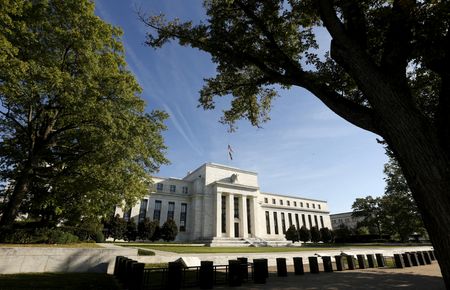

Federal Reserve officials are keeping a close eye on inflation and have made clear they are prepared to push interest rates higher if prices don’t come down soon enough, according to the minutes from the central bank’s most recent policy meeting.
The record of the June 16-17 Federal Open Market Committee meeting, released Wednesday, revealed a nearly even division among policymakers — one group largely comfortable leaving rates where they are, and another believing higher borrowing costs are the right move. All of this is playing out against a backdrop of renewed conflict in the Middle East, which is adding pressure to energy and commodity prices.
The core takeaway from the minutes centered on how officials would respond to different economic conditions. If inflation proves stubborn and continues to spread across more sectors of the economy, most Fed officials said they would be ready to act by raising rates. On the other hand, if inflation begins to cool, most said they would be content to hold rates steady or eventually lower them.
New York Fed President John Williams addressed the minutes during a conference at his regional bank on Thursday. “I do think (the minutes) showed that richness of these scenarios,” he said. “There are certain parts of the inflation outlook that are probably maybe a little bit more benign, say on the tariffs, maybe on the energy prices, depending how that plays out. But there are other scenarios where inflation is more persistent and stays higher, which would … call for tighter monetary policy. I think that’s the right way to think about it.”
Williams added: “I think that the minutes actually captured a collective reaction function in a way, even though it’s not designed to do that.”
Economists took note of how brief and sparse the latest minutes were compared to previous releases. Some debated whether that reflected the influence of new Fed Chairman Kevin Warsh, who has been leading a review of how the central bank communicates with the public. Notably absent was a section on risk management that had been a regular feature under former Fed Chair Jerome Powell.
Gregory Daco, chief economist at EY-Parthenon, said the document still sent clear signals. “The minutes provide the clearest articulation yet of the Fed’s reaction function under Chair Warsh, marking a shift from broad risk-management language toward explicit scenario-based policymaking,” he wrote. “Our interpretation is that the Committee wants markets to recognize that additional tightening remains a live possibility if inflation proves more persistent.”
In a follow-up comment to Reuters on Thursday, Daco elaborated: “What struck me was that this scenario discussion was not framed as a risk-management strategy. Rather, it aimed to show consensus amongst policymakers as to their reaction function across different scenarios, even if there is an even split between the two views.”
One economist went so far as to call the June minutes “milquetoast,” saying they offered very little clarity on where interest rates are headed. Michael Feroli, chief U.S. economist at J.P. Morgan, summed up the situation bluntly in an email he titled “Milquetoast minutes reflect divided dots”: “The short version is: if inflation comes down, rates could come down, but if inflation doesn’t come down, rates could go up!”
By contrast, the minutes from the April 28-29 meeting had used stronger language. Those notes said “several” participants believed a rate cut would likely be appropriate once there were clear signs that inflation was heading back toward the Fed’s 2% target or if the job market showed significant weakness. Meanwhile, “a majority” of participants in April felt that “some policy firming would likely become appropriate” if inflation stayed too high. The shift in tone between April and June was notable.
The June minutes described two overlapping groups: “most” policymakers who saw scenarios where inflation could ease soon — in which case “almost all” would support holding rates steady or cutting them — and “most” who saw scenarios where inflation stays elevated, in which case “almost all” would back raising rates.
On a more encouraging note, the June minutes indicated that officials broadly expect inflation to remain elevated in the short term before eventually declining as the effects of tariffs, energy price increases, and supply disruptions tied to the closure of the Strait of Hormuz begin to fade. The April minutes had contained no such overarching expectation for inflation to fall.
Omair Sharif, founder and president of the forecasting firm Inflation Insights, noted that “this suggests somewhat greater confidence that temporary disruptions would fade” and that inflation would be lower down the road. He also pointed out that the June minutes dropped a phrase from April saying a “vast majority” of participants felt inflation would take longer than expected to return to 2%. “This clearly seems more dovish,” Sharif wrote.
Looking ahead, the Fed’s next big test will come from consumer and producer inflation reports for June, due out next week. Oil prices have pulled back to near pre-conflict levels amid ceasefire negotiations, which could mean some relief in those numbers. However, with the Consumer Price Index having risen 4.2% for the year through May and officials expressing concern about inflation spreading in the services sector, the central bank may not be ready to lower its guard anytime soon.
“I’ve spent much of my career as a policymaker talking about being data-dependent,” Williams said Thursday. “I have not changed. I still think we need to be data-dependent.”
Next week will also mark Chairman Warsh’s first appearance before Congress since formally taking over the Fed’s top job in late May. He is expected to face pointed questions — particularly from Democrats — about what the central bank plans to do to bring inflation under control.