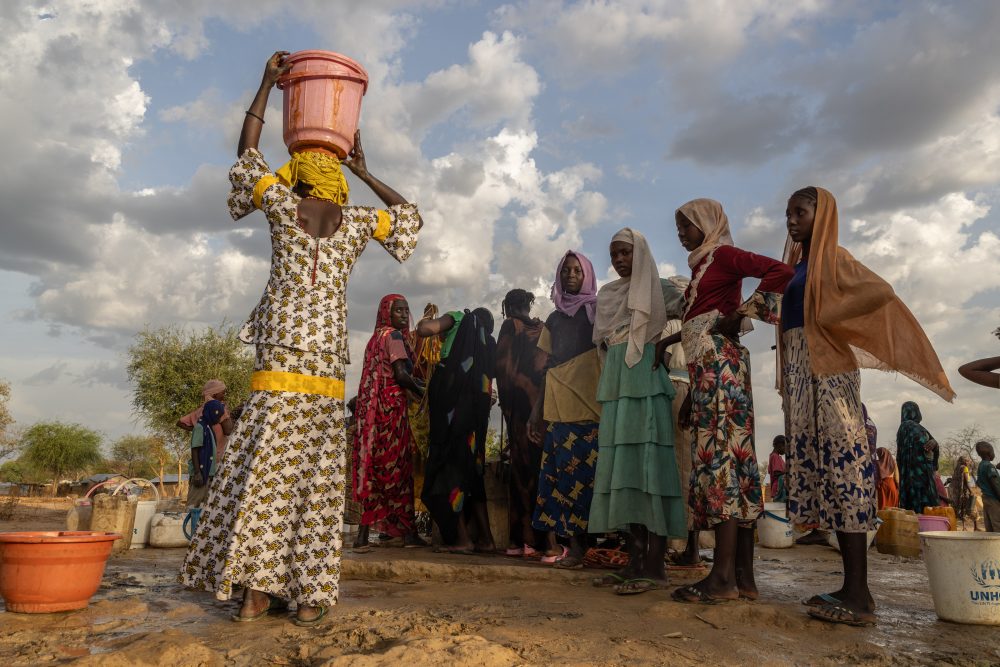

GENEVA (AP) — A minimum of 1 million women have been denied access to humanitarian assistance and other vital services over the past year and a half, according to the U.N. agency dedicated to women’s issues, which released the findings Friday.
The agency, UN Women, reports that 84% of women’s organizations it surveyed indicated they have seen growing demand for services since January 2025, when the United States — the largest contributor to the U.N. — began scaling back its foreign aid commitments under the Trump administration.
“Every dollar withdrawn from women’s organizations is a dollar withdrawn from survivors of conflict-related sexual violence, displaced mothers, girls forced from school and communities struggling to survive,” said Sofia Calltorp, UN Women’s chief of humanitarian action.
The survey results paint a troubling picture: nearly 90% of women’s groups said they are no longer able to meet current demand, and one out of every five organizations expects to shut their doors — either temporarily or for good — within the coming year.
“UN Women has spoken to 855 women’s organizations working in 52 countries, who have told us that these women and girls have been turned away due to funding cuts that are dismantling their organizations,” Calltorp told reporters in Geneva.
“We know that this number, at least 1 million women and girls, is just the tip of the iceberg,” she added.
UN Women also noted that conflict-related sexual violence doubled last year. The agency pointed to a recent report from the Organization for Economic Cooperation and Development — a group of 38 mostly developed nations — which found that global development assistance dropped by nearly 25% last year to $174 billion, marking the steepest single-year decline ever recorded.
“Without immediate action, the organizations that have kept women and girls alive through the world’s worst crises risk becoming another casualty of war,” Calltorp warned.
Across the broader United Nations system, thousands of jobs have been eliminated and aid programs have been scaled back worldwide over the last 18 months, driven largely by funding reductions from the United States and other major donor nations.
Meanwhile, the U.N. is also weighing whether to merge UN Women with UNFPA, the agency focused on sexual and reproductive health, as part of an ongoing organizational reform effort called UN80.